

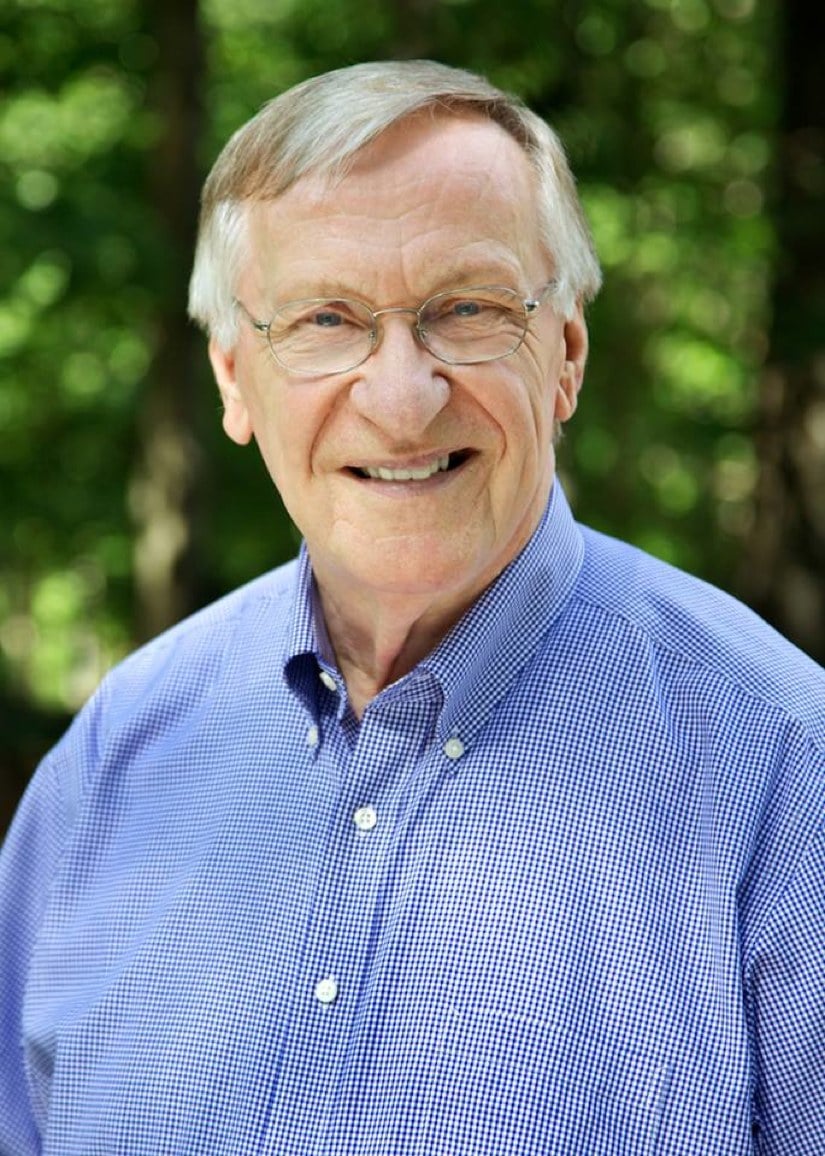
 This is a commentary from Del. Ken Plum (D-Fairfax), who represents Reston in Virginia’s House of Delegates. It does not reflect the opinion of Reston Now.
A Kentucky school administrator recently expressed sentiments that I feel but could not write as clearly as she did. In an op-ed piece in the Lexington (Kentucky) Herald-Leader she wrote:
“Social justice, civil discourse, empathy, historical context and civic engagement are at the heart of preventing and resolving instances like the one we witnessed there (in Charlottesville). … If we subscribe to the belief that hate is a learned behavior, we must also take ownership for failing to provide an educational space to combat the inequality that haunts minorities every day and that paralyzes our nation in times of tragedy. … History matters. Civic engagement matters. And, because of their decline, social justice, civil discourse, and empathy have become lost arts in a nation of people who can no longer talk to one another.”
As a former teacher of history and government, I especially appreciated her call for “a strong social studies curriculum that provides equitable opportunities for civic engagement, civil discourse and historical context.”
The ignorance of history shown by those who have been leading the opposition to removing Confederate statues is appalling. The statues were erected during times when white supremacy efforts termed the “Lost Cause” were at their strongest. Beginning in the late 19th century there were many movements to glorify the Old South and to justify the Civil War, or the “War of Northern Aggression” as they called it, and the erection of statues was part of it. Paralleling those activities was the passage of legislation that virtually took away the right of African Americans to vote and that separated the races in public schools and most every aspect of society. The second surge of erecting statues came when the white supremacists were opposing the Civil Rights movement in the 1960s.
Viewed in their historic context, these statutes represented a repression of social justice, failure of civil discourse and lack of empathy on the part of those supporting them.
Equally as appalling is the lack of knowledge or the unwillingness to admit the central role that immigrants have played in our history. The history of the land we now call Virginia did not begin when the English arrived in 1607; a civilization existed here for at least 15,000 years before that time. That makes all of us except for Native Americans descendant of immigrants.
There is seldom a day that passes that I do not meet someone who may be brand new or first- or second-generation Americans who are making our communities, society and economy stronger and better. Many choose to ignore the history of immigrants especially most recently that of dependent children. They may be undocumented, but they are not “illegals” — people are not illegal.
Certainly, our immigration system needs work. Endless paperwork, complex bureaucracy and an entanglement of laws sometime stand in the way of people who should be given a path to citizenship that can be navigated. I thought that Richard Cohen, head of the Southern Poverty Law Center, expressed it best when he said of the decision to rescind DACA that it was “one of the most senseless, heartless, inhumane acts of any president in recent memory.”
We should know better and certainly we must insist that all act better!
This is a commentary from Del. Ken Plum (D-Fairfax), who represents Reston in Virginia’s House of Delegates. It does not reflect the opinion of Reston Now.
Virginia’s population of 8,382,993 makes it the 12th largest of the states, but the median family household income of $66,262 in the Commonwealth makes it the eighth wealthiest state in the country.
With that introduction of statistics at my most recent State of the Commonwealth Breakfast, one might expect that nothing but good news would follow. Rather, what followed was a list of what might best be described as missed opportunities.
While overall numbers are impressive, the wealth of the state is not uniformly enjoyed. There clearly is a “golden crescent” in the state that runs from Northern Virginia, where it is most bright, south to Richmond and east to Hampton Roads, where it loses some luster. The crescent, if considered by itself, would be one of the wealthiest and best educated in the country. With few exceptions, outside the crescent Virginians are struggling with incomes of one-half to one-third of that in its richest regions. Virginia as a state is doing well, but there are many within the state who are suffering. It would be impossible to replicate the advantages that Northern Virginia has being situated next to the nation’s capital, nor can the misfortunes of the death of industries like tobacco, coal and textiles be easily reversed. Given our overall wealth, there is a legitimate question as to whether we are doing as well as we should.
In public education funding, for example, the state direct aid per student has fallen. According to the Commonwealth Institute for Fiscal Analysis, per student funding of $5,966 in 2009 (in FY 17 dollars) is projected to be $5,326 in 2018. The result is that a greater share of education funding has been shifted to localities. In the 2008-09 school year, the state provided 44.1 percent of public school funding; in the 2015-2016 school year, the state share dropped to 41.3 percent. In past decades when Standards of Quality (SOQ) for schools were first adopted, the expectation was that the state would fund 60 percent of education costs. At the same time funding has decreased, the SOQs have been reduced. In 2016, localities spent $3.5 billion above the required local effort to fund the operation of its schools.
The news does not get much better in other areas. Virginia’s Medicaid program is the 48th stingiest among the states in providing benefits to those in need and one of the most difficult for which to qualify. At the same time, Gov. McAuliffe reminded the legislative money committees that he has “called for Virginia to expand Medicaid for three and a half years now. In that time, we have forever forfeited a whopping $10.4 billion of our federal tax dollars. We have missed an opportunity to cover 400,000 low-income Virginians.”
How can we be so rich as a state and yet so poor in funding programs? Since 2004, Virginia has ranked in the lowest five states in state and local revenue as a percentage of personal income. In state and local revenue as a percentage of gross state product, Virginia ranks 49th. Our state sales tax rate is 41st lowest among the states.
The state of the Commonwealth is that we get what we pay for.
This is a commentary from Del. Ken Plum (D-Fairfax), who represents Reston in Virginia’s House of Delegates. It does not reflect the opinion of Reston Now.
Virginia has more Confederate monuments than any other state in the country, according to the Southern Poverty Law Center (SPLC). With 223 by SPLC count, Virginia tops other states like Texas with 178, Georgia with 174 and South Carolina with 112.
Drive through most any small town in the Commonwealth and the statue of an unnamed Confederate soldier can be found on a pedestal near the center of town, near the courthouse, or sometimes by the cemetery. Messages of valor and honor are often chiseled into the pedestal.
A notable exception is Richmond, once capital of the Confederacy. It has a whole street, Monument Avenue, with five different Confederate leaders — Robert E. Lee, J.E.B. Stuart, Jefferson Davis, Stonewall Jackson and Matthew Fontaine Maury — sculpted at a super-human scale on an extra-high pedestal to ensure that everyone must look up at them.
More and more individuals and communities are raising questions about the appropriateness of the statues. After all, they attempt to put in a place of honor individuals who led armies against the United States of America. They were in armies that fought for the right of Southerners to own slaves. Contrary to the argument that the Civil War was about states’ rights, the right that was being claimed by the Southern states including Virginia was a right to own another human being to be used as slave labor. Why should anyone leading such an effort be glorified?
The role the men depicted in the statues played in defending slavery is repulsive enough, but the events leading up to erecting the statues make them even more problematic. The statues were not erected near the end of the Civil War, but were put in place between 1896 and 1915 during the “Lost Cause” effort to rewrite history and portray the Confederacy’s cause as noble.
In 1896, the Supreme Court upheld that “separate but equal” was constitutional. Following that ruling, Virginia and the other southern states started passing Jim Crow laws that almost eliminated African Americans from voting and separated the races in schools, buses, social events and most of life. Southerners started spinning their tales of how wonderful the South had been before “the War of Northern Aggression” and how honorable were the men who served in the Confederacy, leading to the monuments.
That history is important for all to learn. It should be taught and explored in our schools. Likewise, the artifacts of the period should be preserved in our museums along with the statues of individuals who played a role in the history. Public spaces should be reserved for the comfort and enjoyment of all our citizens. They need not be part of sending an underlying message that it was acceptable to take part in an insurrection for the purpose of being able to enslave others.
The monuments need to be shipped off to museums where they can be viewed in their historic context. Otherwise, we face a monumental problem of demonstrations like the one that took place in Charlottesville happening again.
This is a commentary from Del. Ken Plum (D-Fairfax), who represents Reston in Virginia’s House of Delegates. It does not reflect the opinion of Reston Now.
Recent years have seen a growing number of yellow “Don’t Tread on Me” flags and license plates with the coiled rattlesnake on them. Popular with the Tea Party, the license plates are requested by the car owner as are other vanity plates. The message they are intended to convey has never been entirely clear to me, and I suspect with the recent activities of some alt-right groups there may be some who will roll up their flags and change their license plates.
Certainly, no one would want to be confused with the white supremacists or neo-Nazis when they may have a simple annoyance or personal issue with the government. It is safe to say that the symbols involved are an expression of displeasure with the government. For some time, I have been reviewing the role of government and ways in which the resulting activity might be interpreted as “treading” on citizens. For each, I have made my own judgment as to whether I lose any freedoms as a result of what the government is doing and whether I object to being tread upon.
- I want all children to have access to educational programs that will ensure that they realize their fullest potential. I say to government leaders, tread on me to make that happen.
- I want to live in a community, state and world that are environmentally safe and clean. For the actions that the government must take to accomplish clean air and water and a sustainable environment, I say tread on me. To keep our communities safe from criminals, tread on me to make that happen. To ensure that our constitutional rights and our liberties are protected, tread on me to make sure I can continue to live free.
- To be sure governments at all levels are held accountable to operate within the Constitution; tread on me to accomplish an effective judicial system to keep us protected. There are some inconveniences that may affect me and I will feel tread upon personally, but in an organized society we sometimes make small sacrifices for the greater good. We all need help sometimes in recognizing that we are not the only person in the world and that our moments of feeling tread upon must be looked at in perspective of our shared humanity.
- Tread on me to pay for the rights and privileges and infrastructure of our world through the taxes and fees I pay. They are the price for living in a free and comfortable world. I do want those taxes to be based on income level and shared by those who can afford to pay more. Tread on me to support help for the disabled and for the disadvantaged to become productive members of our society and rise to a level where they can share more of the tax burden.
Maybe it would be nice to live in a world alone with no worry of anyone else, but that is not reality. There are real and reasonable times when we may feel tread upon for the good of society.
This is a commentary from Del. Ken Plum (D-Fairfax), who represents Reston in Virginia’s House of Delegates. It does not reflect the opinion of Reston Now.
The “Unite the Right” event that happened in Charlottesville this past weekend could have happened in any community in America, but apparently it was the discussion about removing a statue of Robert E. Lee from a city park that led to the white supremacists, Nazi sympathizers, and hate mongers to converge on the city. To bring their message of hate from distant places to Charlottesville, where its University has a world-class law school that teaches the rule of law and where its most famous resident who penned the Declaration of Independence and the Virginia Statute of Religious Freedom lived, created a startling contrast.
The photograph widely circulated on social media of the Tiki torch carrying thugs marching on the lawn of the University of Virginia with the Rotunda of the University in the background heightened that contrast of the ignorance of those involved in the march of our history and the rule of law and their shouts of “Heil Trump,” “white power,” and other racist, anti-immigrant, anti-Semitic, homophobic and misogynistic language. They demanded their rights to assemble and speak while waving Nazi flags. They wanted their rights as white persons with no recognition of the rights of anyone who might not look like them. They wanted to use their liberties as Americans to tear at the very fabric of what makes America great.
As the President of the University of Virginia Teresa Sullivan expressed in a letter to alumni, “The University supports the First Amendment rights to free speech and peaceable assembly. Acts of violence, however, are not protected by the First Amendment. Violence and bigotry are not political positions. We strongly condemn intimidating and abhorrent behavior intended to strike fear and sow division in our community.” Too bad the President of the United States did not speak so clearly about the event.
One Nazi sympathizer who seemingly could not control his hate for society as he knows it rammed the only weapon he had available, his car, into a crowd of people, killing one and injuring more than a dozen. Fortunately, none of the agitators fired the guns they were carrying, for certainly a bloodbath would have followed.
Where did these people come from? Apparently, from all over the country. It was a rally to unite right wing causes of white supremacists, alt-right and Nazi sympathizers. They apparently felt safe crawling out from the figurative rocks under which they live and parade in public with torches to spread their revolting messages of hatred. They did not just happen. When leadership at all levels of government support openly and forcefully the rule of law under which we live and there is a general understanding of our history, these people do not have many public displays of their beliefs. But when leaders from the highest levels of government give them a wink and a nod, they move out into the sunlight. They do not represent any of what makes America great. In contrast, their disgusting and vile behavior makes us appreciate the real meaning of freedom for all and should motivate us to fight against those who would seek to take our country down a road of bigotry and exclusion.
This is a commentary from Del. Ken Plum (D-Fairfax), who represents Reston in Virginia’s House of Delegates. It does not reflect the opinion of Reston Now.
Never in my years in politics have I gotten as many questions from people as to what they can do to be more active in political affairs.
While the circumstances at the federal level that have given rise to this question are deplorable, there is a need to take advantage of this new or renewed interest on the part of citizens to get involved with their government. For folks who have been involved as volunteers in political campaigns or as advocates in issue-oriented organizations the lack of awareness and knowledge of the governmental processes on the part of their new helpers and associates is astonishing.
Even so, it is absolutely essential that the new interests be acknowledged and respected and activities and mentoring take place to ensure that the maximum number of people participate in civic affairs and upcoming elections. I was pleased that a civic engagement fair that I sponsored on a Saturday morning earlier this year attracted more than 300 attendees. The goal of the event was to match up organizations with potential volunteers and members. New movements like Indivisible have sprung up around the country, with the local Herndon-Reston Indivisible attracting as many as 400 attendees at one of its early meetings. The group has formed several very active interest groups.
Strong interest in more involvement in civic affairs is of course not limited to this region or state; it is national in scope. The most recent issue of the Council of State Governments publication, Capitol Ideas, has civic engagement as its theme. It looks at such concerns as “the key to repair trust in government” and “how technology reshaped civic engagement.” If one word was used to summarize the articles in this edition of the journal read by state government officials nationwide, it would be education. An article entitled “Civic Education: A Key to Trust” includes a harsh review of the way civics is taught in the public schools: “Unfortunately, the nation’s schools have been generally unhelpful in providing the kind of information that can teach their students how their governments actually work.” The result is that only 23 percent of eighth-graders scored at or above proficiency in civics, according to research by the National Assessment of Educational Progress in 2014.
Improving civic education in our schools is critical to expanding engagement in the future, but action needs to be taken to involve more adults right now. The most obvious place to start is with voter participation in elections. Among the 35 nations involved in the Organisation for Economic Co-operation and Development, the United States ranked a shameful 31st in voter turnout. Laws need to be changed and increased emphasis needs to be given to removing barriers to voting and to getting people to the polls.
The recent influx of citizens interested in working for civic engagement can do a great deal to improve our political system — starting by encouraging others to vote on Election Day.
This is a commentary from Del. Ken Plum (D-Fairfax), who represents Reston in Virginia’s House of Delegates. It does not reflect the opinion of Reston Now.
Taking a break can be good for one’s mental and physical health. If time and resource limitations stand in the way of a traditional vacation, I heartily recommend a staycation or, better yet, several of them over a period of time. These short breaks from routine activities of life and work can be energizing and invigorating. You save the money of a hotel by sleeping at home with short trips away during the day. And you save time by not traveling a long distance.
Virginia is one of the best places I know for a staycation. I offer several examples here and will in future columns, but I in no way will exhaust the list of things to see and do. I’ll leave out amusement parks, for they are well known. Keep an open mind and approach your day away from your responsibilities — with or without others — with a positive attitude and let yourself be entertained and educated by what is around you.
No reservations are needed and on the day of your staycation do not schedule anything in the evening so you won’t be concerned as to what time you return. If you can pay for a night or two away, consider a bed and breakfast or a small cabin or camp, if you are up to it. I have yet to try Airbnb, but it seems like a fine option.
One great example of a staycation is to head south to Jefferson’s home, Monticello. It will take about two and half hours, or longer depending on your stops along the way, to get to this wonderful historic site. Leaving a little early in the morning will allow time for periodic stops and a more relaxing trip.
If you’re heading out early you may not be ready on the way down to stop at Smokin Billy’s Bar-B-Q, but note the location of his trailer alongside Route 29 (5282 Lee Highway) before you get to Warrenton for your stop on the way back. If it’s smoking, stop! Hours are 11 a.m. to 8 p.m., Thursday through Saturday. (www.smokinbillysbbq.com).
Further on down Route 29 past Warrenton is Moo-Thru — “real ice cream from real dairy farmers.” You will recognize it by the lines of people outside. It will make you forget your worries. (www.moothru.com)
Follow the signs in Charlottesville to get to Monticello, Italian for “little mountain,” Jefferson’s home that he spent about 40 years building. Even if you do not like history, you will come to respect even more the genius of Thomas Jefferson: architect, builder, philosopher, scientist, farmer and, as he asked to be remembered, “Author of the Declaration of Independence, Statute of Virginia Religious Freedom, and Founder of the University of Virginia.” Learn the critical role of slaves in building and running his estate. Discuss on the way home the contradictions in his statement that “all men are created equal” and his ownership of slaves.
Head home and get some ice cream or barbecue or stop at Yoder’s Market on Route 29 for some interesting shopping or eating. It will be a full but restful day. I look forward to going on another staycation with you in the near future.
This is a commentary from Del. Ken Plum (D-Fairfax), who represents Reston in Virginia’s House of Delegates. It does not reflect the opinion of Reston Now.
Any report by the Union of Concerned Scientists (UCS) is met with skepticism in some quarters, because these were the same people whose findings found that climate is changing and that human behavior is one of the causes.
The so-called “climate change deniers” continue to insist, regardless of the scientific evidence to the contrary, that humans are not to blame if there is any change in the climate. We can deny the latest report of the UCS, “When Rising Seas Hit Home,” at our own peril, especially in Virginia.
The scientists found that “important consequences of climate change are more subtle and slower moving than disasters. One such consequence is sea level rise. Unlike the catastrophic flooding that can accompany hurricanes, sea level rise impacts can take time to manifest. The final result, late this century and beyond, may be neighborhoods underwater.”
In a state like Virginia, with a major region named “Tidewater,” the impact can be especially great. UCS has identified three Virginia communities that will face chronic inundation by 2035, and 21 more by 2100. In the highest level scenario considered by the scientists, 38 communities would be exposed to chronic inundation by the end of the century. Visit the website to see a list of communities that will be hardest hit. Of little surprise is the finding that in the highest scenario, by 2080, Norfolk, Virginia Beach, Hampton and the Naval Air Station would have up to a quarter of their land chronically flooded.
These findings should come as no surprise to Virginians. In 2015, the Virginia Institute of Marine Science (VIMS) completed a study on this issue at the request of the General Assembly. Its report, “Recurrent Flooding Study for Tidewater Virginia,” found that “recurrent flooding already impacts all localities in Virginia’s coastal zone and is predicted to worsen over reasonable planning horizons of 20 to 50 years due to sea level rise, land subsidence, and other factors.” The scientists wisely did not use the term “climate change,” which continues to be politically charged among some of Virginia’s political leaders.
Earlier this month, the National Oceanic and Atmospheric Administration (NOAA) awarded a grant to VIMS that, along with its match, will total $1.25 million to support “nature-based infrastructure” to help coastal Virginia counter and recover from flood events. Nature-based infrastructure includes tidal wetlands and living shorelines that can help to blunt and even absorb the effects of rising seas and recurrent flooding.
These efforts are important, but the UCS found even bolder policy changes and enhanced coordination among all levels of government must happen to protect our coastal areas. UCS concluded its report, “And even as the Trump administration seeks to withdraw from the Paris Agreement, we must work at state and local levels and with other nations to cut global warming emissions aggressively in order to help slow the pace of sea level rise.” Maybe then we can keep our heads above water!
This is a commentary from Del. Ken Plum (D-Fairfax), who represents Reston in Virginia’s House of Delegates. It does not reflect the opinion of Reston Now.
While there are a myriad of issues facing government, some advocacy groups are working on changes to the basic way government works as a fundamental means to respond to a host of issues. There are many such advocacy organizations; this column describes a few.
Probably most people would agree with the contention that “there is too much money in politics!” If the influence of big money could be removed from political campaigns and from the legislative process, we would have better government and many issues would be resolved. Every Voice is an organization addressing this issue. In its most recent survey of candidates running in Virginia elections the group introduced its survey by stating that “People of all political stripes believe politicians are influenced by their dependency on wealthy donors and therefore don’t always act in the public interest. This perception fuels cynicism and drives distrust of politicians and our government.” Every Voice goes on to point out that “Virginia is one of just a handful of states with absolutely no contribution limits on what wealthy and corporate donors can give to candidates running for office.”
At the same time, there are states like Maine, Arizona and Connecticut that have made reforms in campaign financing, providing candidates the opportunity to raise money for their campaigns through small donations and limited public funds if they agree not to accept big donations. I support such a movement in Virginia. While my political stance on issues has never attracted big donors, I would support a statutory limit on the size of donations, especially those from corporations. While this action is important for Virginia, it is even more critical at the federal level to limit corporate contributions in elections.
Another group working in Virginia to bring about systemic change to the way the government operates is OneVirginia2021 that focuses on legislative redistricting. Under the present system of drawing legislative district boundaries in Virginia and in most states, the organization contends legislators pick their voters rather than the voters picking their legislators. Known for years as “gerrymandering” as boundary lines are drawn around friendly voters to ensure the outcome of elections, OneVirginia2021 has adopted the term “gerryrigged” to describe the same activity. Their documentary by the same name explains the process and its impact on election outcomes and legislative activity (“GerryRIGGED“).
In the early 1980s, I worked with Common Cause, another organization that proposes basic changes to improve governance, on this issue and introduced the first bill in Virginia and one of the first in the nation to propose that an independent, non-partisan commission be given the responsibility of drawing legislative district lines after each federal census. OneVirginia2021 has done a remarkable job of informing citizens and of enlisting voter support for candidates who support independent and non-partisan redistricting.
Working on individual issues facing the government and society is very important. Equally as important is working on reforms that would make our government work better.
This is a commentary from Del. Ken Plum (D-Fairfax), who represents Reston in Virginia’s House of Delegates. It does not reflect the opinion of Reston Now.
During the primary election season when both parties in Virginia were making their selection of a candidate for governor, one candidate who went on to get his party’s nomination proposed the clincher of a policy proposal to secure his success in the election: a billion-dollar tax cut!
For those who have been around the state for some time it may sound familiar; the successful car tax cutting proposal that elected a previous governor is still costing the state about a billion dollars each year. That cut was particularly ironic in that it had the state cutting a local tax by reimbursing the localities for taxpayers. It was great for Northern Virginians as less wealthy downstate taxpayers reimburse the wealthiest jurisdictions in a reverse “Robin Hood” plan.
Before voters jump at a promise of reduced taxes, I hope there will be a serious consideration of the consequences. Virginia prides itself on being a “balanced budget” state; its revenues cover its operational expenses. Borrowing is permitted under the State Constitution for capital projects when approved by voters unless the project raises enough revenue to pay for itself. All that is good with a major exception. At no time does the state quantify its needs in order to determine what the cost of government would be if the state met its responsibility in providing funding. Two examples are offered below to make my point.
The first example is the state’s refusal to fund education at the level it has in the past and that is required by the Constitution. A report by the Commonwealth Institute, “State Cuts Mean Fewer Staff and Resources for Virginia Students,” in April 2017 makes the point.
“Statewide, state support has fallen 11 percent per student since 2009 in real dollars. This has impacted the ability of schools to maintain staffing and facilities. Across the state, school divisions have about 2,800 fewer staff than they had in 2009, despite growing enrollment. If they had kept pace with enrollment growth, Virginia’s schools would have 10,400 more staff instructing students and making sure the schools run smoothly.”
The other example is in health care. The Remote Area Medical (RAM) clinic in Wise County is well known having been featured on an edition of 60 Minutes. There, thousands of Virginians receive their health care for the year in a weekend clinic held on the local fair grounds. The federal Affordable Care Act did not help as the legislature would not take federal monies to expand Medicaid that would have helped these people in need. The state turned its back on nearly $5 billion paid into the federal system by Virginia taxpayers because it did not want to have anything to do with what it termed Obamacare. What has happened in the meantime? A second RAM weekend clinic has been opened in Lee County nearby to Wise in Southwest Virginia, and a new clinic has been started in Emporia in Greensville County in Southside Virginia.
We definitely need to balance our budget, but we need to balance it against our needs. How could we seriously propose to cut our income when there continues to be such extensive unmet needs in the Commonwealth?
This is a commentary from Del. Ken Plum (D-Fairfax), who represents Reston in Virginia’s House of Delegates. It does not reflect the opinion of Reston Now.
Proposals are now before the Congress to change the Affordable Care Act. While there have been years of rhetoric on changing the plan that got dubbed “Obamacare,” changing it in a way that would continue to extend care to the most vulnerable people in our country has proven elusive. The proposals that have come forward look more like tax cuts for the very rich than health care for the very poor.
Recently, the Board of Medical Assistance Services that provides oversight for the various health care programs in Virginia wrote to Gov. Terry McAuliffe with their concerns about the new federal proposals. Their letter (available here) was very frank in its assessment.
The proposals before Congress they wrote “will inflict a serious cost burden to the Commonwealth, will expose Virginia taxpayers to an increased tax burden, will significantly harm Virginia’s Medicaid program, will derail important medical innovation, and will hobble Virginia’s ability to care for our citizens most in need.”
Most of the letter is devoted to the technical changes proposed in the new legislation that would reduce coverage to Virginia residents while increasing costs to the state. Most of the potential damage stems from the proposed shift to per capita block grant funding, but other technical changes will cost the Commonwealth citizens in services and in money. Using 2016 as a baseline would be especially costly to Virginia.
That provision alone would exclude the new Addiction Recovery and Treatment Services (ARTS) program designed to address Virginia’s opioid epidemic, declared a public health emergency by Virginia’s Health Commissioner Marissa Levine, MD, MPH. Another example is that the per capita cap baseline would exclude Virginia’s $46 million developmental disability system investment that also begins this year.
In a tone that is unusual for a Board made up of professionals and citizens, the letter went on to conclude, “We have attempted to provide some high level examples of the financial damage that the AHCA would inflict on Virginia, but cannot lose sight of the reality of what that means. It is not just the impact on Virginia’s fiscal health, it is also the impact on the health of individual Virginians. That, in the end, is the purpose of Medicaid and of all the other health measures we take as citizens. One of our Board members provides a striking example. She would have to choose between no nursing care for her daughter who receives 12-16 hours per day via Medicaid (their primary insurance nursing benefit is only $500 per year) or pay more than $86,000 per year out of pocket for nursing care, in addition to having to pay for items such as durable medical equipment and medical enteral formula that would no longer be covered by Medicaid. There are thousands of such examples within our Commonwealth.
Finally, we wish to emphasize one more issue: providing help to our fellow Virginians in need, who cannot help themselves, is a moral imperative, a moral test that we cannot and should not fail. We, as the Board of Medical Assistance Services, strenuously and unanimously urge you to oppose the AHCA or any similar bill that inflicts such undeniable damage to our Commonwealth and her citizens.”
Thank you Board for telling it like it is. Hopefully members of Congress, especially members from Virginia, will hear your plea and respond appropriately!
This is a commentary from Del. Ken Plum (D-Fairfax), who represents Reston in Virginia’s House of Delegates. It does not reflect the opinion of Reston Now.Among the many actions of the new federal administration in Washington, few have drawn sharper disagreement around the world as has the unfortunate decision to withdraw from the Paris Climate Agreement. Only two nations of the world did not join, with the United States being the first and only to withdraw. The Agreement was difficult to reach and showed real promise to bring nations together to curtail climate change.
The response has been swift and determined among those concerned with climate change as to what can be done to stay the course on dealing with the issue. Recently, I joined with more than 550 legislators from throughout the country, including 11 from Virginia, organized by the National Caucus of Environmental Legislators (NCEL, ncel.net) in sending a letter to the administration indicating our opposition to withdrawal from the Paris Agreement. Following is the text of that letter:
We are state legislators representing 45 states with a total population of over 298 million United States citizens and we stand united in opposition to the president’s decision to withdraw the United States from the Paris Climate Agreement.
We are committed to continuing the United States’ leadership in working toward a clean energy economy and reducing greenhouse gas emissions. Now more than ever, in the wake of this short-sighted decision by the Federal Administration, it is important that state and local governments come together to strengthen our resolve to meet our regional goals to reduce carbon pollution and our national goals to achieve the reductions agreed to in Paris in 2015.
We stand with the 292 United States mayors representing more than 60 million Americans, the governors of 12 states with a total population of over 102 million, and 194 countries committed to upholding the ambitious goals adopted in the Paris Agreement. At the same time, we explicitly refuse to stand with President Donald Trump in his repudiation of the agreement.
Climate change is not a conspiracy, a hoax, or a partisan cause. Climate change will not affect just a few low-lying countries and the polar regions. Climate change is real and caused by human activity. People around the world and here in our own country, in our own states, in our own communities have already experienced the impacts and will see significantly increased impacts in the coming decades.
As state legislators, we declare our commitment to work with our legislative colleagues, our governors, and our constituents to ensure that we continue this country’s leadership role to build a 21st Century clean energy economy and that we meet or exceed all of the deliverables in the Paris Agreement. To this end, we will reach out across local, state, and federal borders to work together for our future. These ties will strengthen our economy as we build upon American ingenuity, entrepreneurship, productivity, and scientific and technological know-how to reduce carbon pollution while producing the next generation of clean transportation, clean power and energy-efficient devices and strategies.
With or without the president’s leadership, our country must continue to lead the fight for climate action. Working together across multiple states, we will ensure our great nation does not go backward and meets or exceeds the Paris Agreement.
If you decide to write a letter as well, please feel free to borrow any or all of the text of this letter.
This is a commentary from Del. Ken Plum (D-Fairfax), who represents Reston in Virginia’s House of Delegates. It does not reflect the opinion of Reston Now.
With the conclusion of the political party primaries last week, the general election is now teed up for Nov. 7.
There were some surprises coming out of the Democratic and Republican primaries. Lt. Gov. Ralph Northam easily won the Democratic primary to be the nominee for governor, even though there was discussion beforehand that polls indicated a tight race. Polling for primaries is notorious for being inaccurate because with a typically light turnout, the universe of potential voters is almost impossible to determine. Former one-term Congressman Tom Perriello has a great deal to offer and will hopefully stay on the scene for future opportunities. Although the term “establishment” was grossly overused in describing Ralph Northam, his service in the state Senate plus his active role as lieutenant governor made him well known and greatly admired throughout the state.
Justin Fairfax gained everyone’s admiration after a primary loss to Attorney General Mark Herring four years ago led to his active campaigning during the interim time, making him well known for this primary. He was also well known for his work as an attorney. If you review the areas where Ralph Northam did well and compare them with where Justin Fairfax was strongest, you create a strong statewide team that will be nearly impossible to defeat. Attorney General Mark Herring was not challenged in a primary and will be on the ballot to succeed himself in November. There is no one-term limitation with the attorney general and the lieutenant governor as there is with the governor.
The greatest surprise of the primaries may have been on the Republican side to pick a candidate for governor. Ed Gillespie who has been mentioned for years as the next Republican governor of Virginia barely got through the primary with a shockingly strong showing by Corey Stewart, who is known for his anti-immigrant work in Prince William County and for campaigning with a Confederate flag. He has the distinction of being so over the top that he was fired by the Trump campaign. Turnout was especially low in the Republican primary, and Stewart was just over a percentage point from taking out Gillespie. It will be interesting to see if the folks who voted for Stewart will vote in the general election or decide to stay home.
The Republican primary for lieutenant governor was a slugfest between two state senators, with Sen. Jill Vogel winning after a mud-slinging campaign that left neither candidate looking good.
All 100 seats for the House of Delegates are up for election this fall with a record number of contested elections. Historically, it has been difficult to recruit candidates to run for the House of Delegates, but events of the past year have brought forth more candidates than ever before. There was a record number 27 seats where the candidates were determined by the primary because there was so much interest in running. Democrats will certainly pick up seats in the House of Delegates getting closer to shifting or sharing power in that legislative body.
While I am uncontested in my race for the House of Delegates, you can still expect to see me campaigning. It is a good way to stay in touch with constituents and to increase turn-out for the statewide elections. Expect a busy fall of campaigning leading up to the fall elections in Virginia that will send a signal to the nation as to the public’s reaction to national events.
This is a commentary from Del. Ken Plum (D-Fairfax), who represents Reston in Virginia’s House of Delegates. It does not reflect the opinion of Reston Now.
One of my favorite classes to teach in the Osher Lifelong Learning Institute (OLLI) at George Mason University is a course I have entitled “A New Look at the Old Dominion.”
It came out of my experiences growing up in Virginia and attending public schools from elementary through graduate school and using state-approved textbooks, at least in the early years. A persistent problem I had was matching up the romanticized version of Virginia’s history with realities I read about in source materials. This problem is not unique to Virginia or its history; every state and every culture always attempts to put its best foot forward. It skews our view of events and may lead us to believe that America was at its greatest in some bygone era. The fact of the matter is that our greatness has been evolving.
Reading early Virginia textbooks could lead one to believe that slavery was good for all, until what some termed the “War of Northern Aggression,” and then there was the Lost Cause movement that restored faith that Virginia was right all along. We still hear remnants of that line of thinking as the debate on Confederate monuments is going on.
I was reminded of this background as I recently visited a new exhibition at Montpelier, James Madison’s home in Orange County. Through extensive archaeological work there is an attempt to tell “a more complete American story.” The title of the exhibition, “A Mere Distinction of Colour,” is a phrase from Madison’s writings: “We have seen the mere distinction of colour made in the most enlightened period of time, a ground of the most oppressive dominion ever exercised by man over man.”
Despite that observation, the Father of Our Constitution was the owner of hundreds of slaves who worked his farms and did his labor allowing him time to be a statesman. He did not free his slaves at his death. Enslaved families were split up and sold to retire the debt he left behind.
Visiting Montpelier today, you can see the mansion beautifully restored, including the upstairs room where Madison probably did his writing about the Constitution. Thanks to important archaeological work, you can visit the area around the mansion where the slave quarters were located, with several reproductions having been added in recent years. A tour of Montpelier can be eye-opening for your children, to contrast the home of the owner with the quarters of the enslaved.
Nearby at Thomas Jefferson’s home Monticello, there is an expansion of the tours to include a slave tour. The tour guide says very clearly what was denied for generations, that Jefferson fathered several children by Sally Hemings. Of the more than a hundred slaves owned by the writer of the Declaration of Independence who said “all men are created equal,” on his death only those slaves that he had fathered were freed.
The historians at Montpelier call it “a more complete American story.” It is being written way past time. While we need to acknowledge and embrace a history that is inclusive of the men and women who did the work in founding our country, acknowledging the arbitrary distinctions of the past will make us stronger as a nation.
This is a commentary from Del. Ken Plum (D-Fairfax), who represents Reston in Virginia’s House of Delegates. It does not reflect the opinion of Reston Now.
The Virginia General Assembly will celebrate its 400th anniversary in a couple of years, making it the longest-running representative legislative body in this hemisphere.
Although not much has changed in the basic procedures of lawmaking with committees and structured floor debate, over the centuries there have been adaptations to the times as the Legislature has sought to best serve those it represents. Most recently, the biggest changes have been to the housing of the legislative functions.
For those interested in details, here is a summary of the major changes — past and present. The General Assembly in 2004 abandoned Mr. Jefferson’s Capitol for the first time since the Civil War to give the place a major renovation that would keep it standing and expand its size underground so as to not take away from its iconic exterior. For that renovation, the Legislature moved to the former state library, whose upstairs had been renovated to be the Governor’s Office but whose reading rooms downstairs had been left intact and became very efficiently the House of Delegates and Senate chambers for several sessions.
Meanwhile, the offices of legislators in the General Assembly Building (GAB) have been crumbling asbestos, explaining the white dust that periodically appeared on the furniture. Legislating should not be considered hazardous duty, at least in a physical sense, nor should failing plumbing and heating and cooling systems cause delays in the work of the Legislature.
For decades, the Life Insurance Company of Virginia had occupied the building before it moved to an office park in the suburbs and sold its aging building to the Commonwealth. The building is currently being demolished, and a new office building will be constructed in its place with a parking garage across the street. That will be good news for those who want to participate in the legislative process but have been prevented from doing so because they simply could not find a place to park.
The last act of legislators this past session was to pack ourselves up for a move down Richmond’s Capitol Hill to the Pocahontas Building, formerly in private hands as the State Planters Bank of Commerce and Trust Building, where we will have temporary but nice and asbestos-free offices for several years while the new building will be constructed. The Pocahontas Building was available to us as the Attorney General and his staff, who had offices there, have recently relocated to the Barbara Johns Building, formerly the Hotel Richmond and later state offices, just across the street from where the new General Assembly Building will be.
Regardless of whether you chose to follow all that, the good news is that when you come to Richmond you will be much more likely to find a convenient place to park, and you will be in a safer setting.
With our physical surroundings taken care of, now we need to go to work on bringing the legislative process up to date by making it more transparent and responsive. Maybe a significant anniversary and a change in working environment should be viewed as a time to start anew.
