

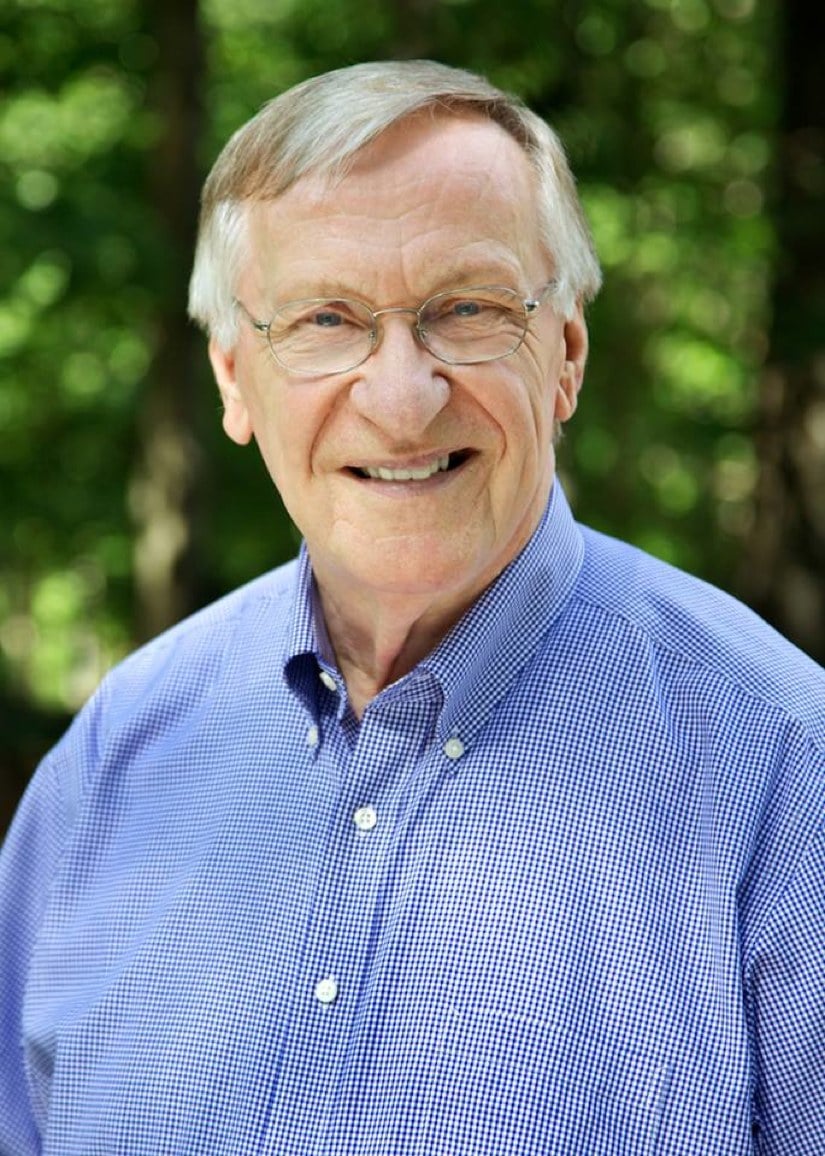
 As you may know, I grew up in a very rural part of Virginia — in Page County near the little town of Shenandoah in the Page Valley that is part of the grander Shenandoah Valley.
At that time there were about 50 people living in nine houses in the less than 10 miles on Crooked Run Road between Comertown Road and River Road. Except for activities around the schools and holiday parades and carnivals in the Town of Shenandoah, there was little or no sense of community as I have come to understand the word.
My parents had limited formal education, and we had very few reading materials in our home. We did subscribe to Southern Planter and Progressive Farmer magazines that I read from cover to cover, even though my interest in many of the articles was not great.
Progressive Farmer was most interesting to me for its continuing theme of needing to develop a sense of community in rural areas throughout the South.
The topic fascinated me, and I sent in the 50 cents required to get a copy of The Community Handbook (Progressive Farmer Company: 1948). I recently acquired another copy from a used book shop to help me recall why I was so enthralled by it and read it dozens of times. It had information on community organization, parliamentary procedure and social and recreational activities. It provided my first lessons in community leadership.
Along with other experiences I had, I developed an interest in government and public service that I have pursued throughout my adult life. Just as the voids in my early experiences gave me an appreciation of the importance of community, the richness of Reston reinforces for me the significance of community in helping to realize success and quality of life. There are few if any places in this country that have the abundance of community organizations and civic and social activities that are found here.
We are a community of great diversity that adds to our richness. I have the great honor and privilege as an elected official to take part in the Fairfax and Greater Reston Chambers of Commerce but also in the Asian American and the Hispanic American Chambers of Commerce as well as the ecumenical church I attend regularly, the All Dulles Area Muslim Society (ADAMS) Center, the local synagogue, and other religious traditions.
I attend a multicultural fair each year, but I also attend the Pakistani American, Korean American, and other racial and ethnic groups’ activities, along with events sponsored by the LGBT community. I apologize in advance to any groups I may have inadvertently left out.
In those early years when I was trying to gain a sense of community, I would never have dreamed that a place could embrace both a strong sense of oneness and at the same time such great diversity that is celebrated in so many ways. I have grown in my appreciation of the importance of community by being part of Reston.
Ken Plum represents Reston in Virginia’s House of Delegates.
The Virginia General Assembly has been in recess since early March, when a special session was called by the Governor to pass a biennial budget that had failed to pass in the regular session.
The impasse, of course, is about expanding Medicaid to provide health insurance to 400,000 of Virginia’s working poor or turning down $5 five million a day because it is related to “Obamacare.”
We will return from our recess whenever there is a compromise proposed or some solution on which to vote. I have already endorsed a compromise offered by three Republican senators that would establish a program similar to those set up in a number of very conservative states that have expanded Medicaid.
In the meantime, I have had more time to spend in my garden than I have had any spring for many years. I had almost forgotten how relaxing and satisfying working in the soil can be. I live on a postage stamp size lot of maybe a third of an acre. When we moved in more than 20 years ago, I loved our new house but was disappointed that the lot was so small. I now find the lot to be plenty big to maintain.
I grew up in rural Page County, Virginia. We did not have a farm, but we did have enough land that Dad and Mom had a wonderful vegetable garden. Dad raised enough vegetables to feed us all summer, and Mom canned or froze enough to last the rest of the year. The unfinished cellar under our house had large bins that kept potatoes year-round.
My parents raised some flowers, but my interest in flowers was piqued by Mr. Johnson, who lived in D. C. but had a weekend home on the Shenandoah River near my home. I was paid $5 a week to mow the lawn but also got to observe him and the multitude of flowers and shrubs he had. He often gave me starts of plants that I could take home for our yard.
I have never lived any place where I could have a vegetable garden like my Dad’s nor was I probably ever willing to do the tremendous amount of work he did to make it successful. I always have had lots of flowers as my Facebook (Kenneth R. Plum) friends can attest with the number of photos I post.
While working in the garden this spring trying to fill in the bare spots in the lawn, putting up new window boxes, pruning and restoring perennials, I remembered a book I used for years as a gardening guide, The Complete Book of Garden Magic by Roy E. Biles (Ferguson: Chicago, 1956). I could not find my original copy, but I was able to purchase a used one through the internet. Though obviously dated in many of its recommendations, it nonetheless reminded me that the magic in gardening comes not only in what you plant and grow but in the soothing effect the process can have on your life.
Ken Plum represents Reston in Virginia’s House of Delegates.
Recently, the New York Times editorial board wrote about the “health care showdown in Virginia.” Their comments were not favorable.
“In Virginia, there are 400,000 low-income people who can’t afford health care coverage but don’t qualify for federal subsidies,” they wrote. “If they lived across the state line in Maryland, West Virginia or Kentucky, which have expanded their Medicaid programs, they could get the coverage they need.”
The reason they cannot; “a group of recalcitrant Republicans in the House of Delegates” have blocked Medicaid expansion at every opportunity.
Highly regarded retired editorial writer for the Virginia Pilot, Margaret Edds, wrote about the current impasse in Virginia two weeks ago. Drawing on her extensive command of Virginia’s history, Edds points out that Virginia was the last state to join Social Security in the 1930s. She argues that there is a moral imperative that “we cannot afford to take this risk” of not expanding Medicaid.
She writes that “designing a health care system that embraces everyone is the right thing to do.” Reston resident, Elliot Wicks, in a recent letter to the editor makes the same argument that closing the coverage gap morally is the right thing to do.
In an unprecedented move, the Virginia Chapter of the American Association of Retired People (AARP) called a press conference to announce that letters sent by the Speaker of the House and other Republican lawmakers to their constituents over age 60 contained “inaccurate information about changes in Medicare.” These letters from Speaker Howell and other lawmakers implied that expanding Medicaid in Virginia would hurt Medicare beneficiaries. “Expanding Medicaid to uninsured Virginians won’t harm the Medicare program or its beneficiaries,” the AARP spokesperson said.
Revenues for the Commonwealth are expected to fall short of projection for this year by as much as $300 million. Ironically, Virginia is losing $5 million a day amounting now to three-fourths of a billion dollars paid by Virginians that could be returned to the state through Medicaid expansion. The money could not be used to balance the budget in the current year, but in future years more than $200 million that Virginia pays for indigent care from its general tax revenue could be paid by Medicaid.
State and local chambers of commerce, medical and health care associations, and editorial boards of the major newspapers in the state have endorsed Medicaid expansion. A major compromise in the form of Marketplace Virginia, proposed by three Republican senators and endorsed by all Democratic legislators, has been introduced.
The compromise proposed in Marketplace Virginia addresses the Republicans’ stated concerns by including a provision to discontinue the program if the federal government reneges on its commitments. It is time for Republicans in the House of Delegates to agree to the compromise.
Their insistence on separating Medicaid from the state budget is a costly stalling tactic that is hurting a large number of Virginians and threatens to hurt even more if the budget stalemate continues.
Ken Plum represents Reston in the Virginia House of Delegates. He writes weekly on Reston Now.
While I enjoy watching college athletic competitions, I do not watch many professional sports on television. For sure I do not watch any of the post-game shows. Panels for these shows seem carefully selected to ensure controversy and banter to fill the time slot.
I have the same feeling about post-election panels that provide an instant analysis with conflicting views of why the voters voted as they did. Some thoughtful commentary after the fact can be useful to understand the mood of voters and implications for the future, but a panel of so-called experts who continue to talk well after they have made their point can get to be irritating. I suppose the same could be said about weekly columnists!
In weeks (not months), the Silver Line extension of Metro will be opening. For someone who has been working on this project for nearly two decades, the setting of the actual date to start service is particularly exciting.
I share the frustration of many that the stations and tracks have appeared to be ready for about six months, yet pesky but important details have prevented the announcement of a start date. As Chairman of the Board of the Dulles Corridor Rail Association, an organization I formed nearly 20 years ago to boost the project when I was the only elected official to endorse it, I am especially eager to see the trains start running.
With the delay in opening, a post-construction analysis has been underway. Contrary to some suggestions, there is no great conspiracy delaying the opening; no one profits from a delay. The system must be deemed safe for it to open. Yes, Bechtel was part of the “big dig” in Boston and its problems, and Bechtel is one of the partners in Dulles Transit Partners that built the Silver Line, but the Silver Line work and outcomes have no correlation to what happened in Boston. Yes, the project manager left early, but he left to take over as head of the Long Island Rail Road.
The Silver Line is the largest infrastructure project underway in this country. The budget is $2.9 billion, and the project will be finished on budget. Some argue that a $150 million increase in the budget to cover costs of updated standards should be considered an overrun. If so, the project would exceed budget by less than two percent. Know any other project of this magnitude that has come that close?
The opening date for the project will be set by the Washington Metropolitan Area Transit Authority (WMATA) which will operate the Silver Line as part of the larger Metro system. The opening date will be seven months beyond the best case projection but still before the December 2014 date the Federal Transit Administration had set for the project.
I continue to nudge the process along to ensure that public dollars are appropriately spent and contractual obligations are met, but you will not see me as part of any panel speculating what may have been. The project will bring immense benefits to our region.
Ken Plum represents Reston in Virginia’s House of Delegates. He writes weekly on Reston Now.
Last month, Gov. Terry McAuliffe announced that Virginia will participate in the Business Incentives Initiative, a joint project of The Pew Charitable Trusts (Pew) and the Center for Regional Economic Competitiveness (CREC) and six other states (Indiana, Louisiana, Maryland, Michigan, Oklahoma and Tennessee) to “reform economic development incentive reporting policies and practices.”
While millions of dollars are spent on tax incentives and grants to lure business to Virginia each year, there is no evidence that the programs are actually working as intended. There is a national debate across the country about the necessity and value of tax incentives to encourage economic development.
In a report issued earlier this year the Pew Research Center issued a fact sheet, “Evaluating State Tax Incentives: How to Measure Economic Impact” (Pew Research Center Fact Sheet), about high-quality evaluations of tax incentive programs in Minnesota, Louisiana, and Massachusetts in what they termed “models for other states to follow when measuring the results of their own incentives.”
In Minnesota, evaluators estimated that 79 percent of the jobs created at companies receiving incentives were likely to have been generated without them. Jobs created cost the state more than $26,000, or about five times more than originally estimated according to the analysts.
Last week, I had the honor of meeting Stan Brock, the legendary Wild Kingdom TV star and founder and president of Remote Area Medical (RAM).
He held a press conference in Richmond to announce the details of expanding the Remote Area Medical program in Virginia. RAM already sponsors a once-a-year health clinic in Wise County in Southwest Virginia where thousands come on a weekend for the only medical care they will receive all year. The expanded effort in Virginia will be headed by Dr. Vicki Weiss, who has been providing volunteer eye care with RAM for over 15 years. Also participating in the press conference was Dr. Teresa Gardiner who serves on the Health Wagon in the region that was featured on 60 Minutes recently.
Stan Brock started RAM in 1985 primarily to help people in South America who did not have access to health care, but as he explained at the press conference, he soon expanded to this country for the needs in Appalachia, Virginia, and other parts of the country are as great as any third world country.
Last year, RAM served nearly 2,000 people in Virginia, but with the expanded program “Stop the Suffering” over the next two years RAM expects to have a clinic within driving distance of everyone living in Appalachia. Stan Brock talked about “the people we do not see but whose health care needs in Virginia could not be greater” with no references to politics, ideology, or partisanship.
In contrast, there were several informational meetings on Medicaid expansion held last week in locations throughout the state, including one in nearby Ashburn. From talking to persons who attended the meeting and reading press accounts, I was struck by the sharp contrast with the press conference I had attended.
These “informational” meetings were sponsored by the Koch Brothers-funded Americans for Prosperity that is spending millions in the state to defeat what it disdainfully refers to as Obamacare. Invited to participate in these meetings were only delegates opposed to any expansion of Medicaid. The meetings focused on legislative maneuvering, constitutional issues and placing blame for the budget impasse. There was talk of a “clean budget.”
By separating the budget negotiations and the expansion of Medicaid, Americans for Prosperity and their legislative puppets hope to defeat expansion of Medicaid in the state. What wasn’t said is that separating Medicaid expansion from the budget would ignore 20 percent of current expenditures and the potential for five million dollars a day in revenue to serve those most in need of health insurance. Noticeably absent from the delegates were real-life references to the people in need of health care.
It is time for legislators in Richmond to stop talking politics and start listening to the people in need of health care and to those in the community who have health insurance but are concerned for the people who do not. The contrast is stark between those who want to wage a partisan ideological battle to deliver a defeat to the President and those who want to help people who desperately need health care.
Last Wednesday, the 2014 session of the General Assembly adjourned sine die at the end of the Reconvened Session that is called at the conclusion of each regular session to consider amendments to legislation proposed by the Governor and vetoes he made of any bills.
Much of the work during the Reconvened Session dealt with technical issues related to the drafting of bills during a fast-paced session. Although the regular session has concluded, the General Assembly is already in special session to consider the biennium budget and closing the gap in health care coverage.
As I wrote in a column a few weeks ago, I give the regular session an “I for Incomplete” grade because it has failed to date to pass the most important work of every session in an even-numbered year–passing a budget for the state for the next two years beginningJuly 1. Otherwise, as I wrote in the same column, the session would be considered a reasonably productive one.
Republicans in the House of Delegates have refused to consider closing the gap in health care coverage even though federal dollars are available to cover 100 percent of the cost. While I have tried to understand their logic for wanting to separate the expansion of Medicaid from consideration of the budget, I can only conclude that separation of the two issues is simply an attempt to defeat any effort to expand Medicaid.
How or why would a legislature consider or pass a budget that ignores $5 million dollars a day in federal revenue available to it? Why would a legislature choose to ignore the nearly two hundred million dollars in state general funds that Medicaid expansion would free up to meet critical needs in education and public safety? How can one argue that separating Medicaid expansion from the budget would make for a “clean” budget when 20 percent of the current budget is the current Medicaid program?
Why would we watch billions of dollars be paid by Virginia businesses to the federal government without adopting the program these dollars were intended to support? Why should residents of the poorest area of our state — the southwest — go without health care when their neighbors in Kentucky and Tennessee are receiving care through Medicaid? Why should we ignore the pleas of our hospitals who suffer serious financial challenges from providing uncompensated care to indigent people when Medicaid expansion would cover these costs? Why are we ignoring the fact that our free clinics have more patients than they can serve?
There are many more questions that could be asked of Republicans in the House of Delegates, but the answer to all is the same: politics. Political considerations are keeping the Republicans from being willing to consider what they term “Obamacare.”
The Koch brothers-funded Americans for Prosperity, along with Grover Norquist and the Tea Party, are actively working against Medicaid expansion, and Republican incumbents fear a primary challenge from the right if they vote for anything related to expanding Medicaid.
Proponents of closing the coverage gap must generate the same kind of fear in the incumbents for the general elections next year.
Ken Plum represents Reston in the Virginia House of Delegates. His column runs Wednesdays on Reston Now.
For many years, Jane and I have used our spring break to visit locations throughout the Commonwealth of Virginia.
This year was no exception as we went to the southwestern region of the state. Although we drove about 225 miles to Roanoke from Reston, we were not yet in what the locals call Southwest Virginia. In fact, only by driving another 134 miles down I-81 to Abingdon did we get to what many consider the doorstep to Southwest Virginia.
It would have been possible to drive another 111 miles west with a short swing into Tennessee to get to the western-most point in Virginia at Cumberland Gap. That point is further west than Detroit. Regardless of how far you travel, the natural beauty of the mountains and streams in this part of the state are unequaled, and the local people are wonderful to meet.
A visit to the Town of Abingdon is always recommended (visitabingdonvirginia.com). Its historic streets in the center of town are lined with beautiful early Nineteenth Century homes.
Its best known attraction is Barter Theatre, with two stages offering professional productions. The name came from the fact that in 1933 when it was first founded attendees often paid in produce for there was little money to be had.
Abingdon is also the beginning of the Virginia Creeper Trail, southwestern Virginia’s equivalent of the W&OD. It is a 34-mile walking and biking trail that runs by the Holston River and through beautiful mountains. Jane and I took a fabulous 8-mile circular hike from nearby Damascus with half the distance on the Appalachian Trail and the remainder on the Virginia Creeper Trail.
To better understand the history and culture of the region a stop at Heartwood, the Southwest Virginia Artisan Gallery, in Abingdon is a must. While the exhibits are very informative and the creative works of the artisans are beautiful, the structure of Heartwood itself is a work of art and fine craftsmanship.
Southwestern Virginia is filled with wonderful country and bluegrass music. Check the schedule at www.myswva.org for festivals and musical entertainment almost every weekend at some location on the Crooked Road, Virginia’s Heritage Music Trail.
From Abingdon near the Tennessee border we headed almost due north with many, many twists and turns on 70 miles of winding mountains roads to Breaks Interstate Park –“the Grand Canyon of the South”– on the Kentucky border. Almost 200 million years ago the Russell Fork River gouged out a five-mile gorge that created a “break” from crossing the mountains for the settlers passing through the region and spectacular geologic formations and views for modern day visitors. As one local resident advised us, be sure to take the geologic trail to view the wonders of the formations from below.
E-mail me at [email protected] if you need help planning your trip to the great Southwest or to other regions of the state. It is a great place to visit.
Ken Plum represents Reston in the Virginia House of Delegates. He writes weekly on Reston Now.
Although President Barack Obama did not come to Reston’s 50th anniversary celebration as President Lyndon Johnson had done at its dedication in 1964, he did send a letter of congratulations to the community’s founder Robert E. Simon
Not that Founder’s Day April 5 was short on dignitaries: Gov. Terry McAuliffe spoke and presented a proclamation; Sen. Tim Kaine spoke at the event, as did Rep. Gerry Connolly, who presented a resolution. Not to be outdone, Sen. Janet Howell and I presented a joint resolution, as did Board of Supervisors Chairman Sharon Bulova and Supervisor Cathy Hudgins.
The occasion was doubly momentous with Robert E. Simon celebrating his 100th birthday a few days later. Congratulations went to Bob Simon for his vision for the community and for his leadership and tenacity in making it happen as well as to the community members who shared the vision and helped to make it a reality over the decades.
Although it was slow in getting started by some business standards, Reston is now recognized as the most successful of planned communities and sets the standard for others. More established cities and communities have their “tower center” with mixed-use development, walkability and plaza, attempting to emulate the success that Reston has found in its recent decades.
Reston is about more than urban design although anyone who studied the subject in college knows about Reston. There are many intangibles that make the community special, and many of them were brought about by Bob Simon’s principles upon which he developed the community. As Kaine indicated in his remarks, Reston had an open housing policy before federal law required it. A recent intergenerational community award demonstrates that the Simon vision of a place to live, work and play for all ages has been achieved. An evening at the Best of Reston program like the one last week gives you a strong sense of the community that exists with an effective partnership between the business and non-profit sectors.
There is a strong sense that Reston has come of age. A significant part of the program time at Founder’s Day was spent on a presentation about the redevelopment of Lake Anne Village Center, the historic heart of Reston. The basic concept of the center will be maintained but expanded to accommodate more people and to ensure its economic viability.
The soon-to-open Wiehle-Reston East Metro station on the Silver Line will be followed in the next four years with two more stations on the Metro system to serve the community. The recently adopted Reston Master Plan takes into account the transit-oriented development that can take place around these transit hubs. In keeping with the Reston spirit, the Wiehle Station has the largest bicycle facility of any station on the Metro system.
Reston is built on a solid vision-strong in human spirit and economically successful. I am proud to call it home.
Ken Plum represents Reston in Virginia’s House of Delegates. He writes weekly on Reston Now.
People who could benefit from an expansion of Medicaid that closes the coverage gap by insuring more of the working poor are found throughout the Commonwealth.
The highest percentages of such persons tend to be in the southside and southwest regions of the state. Impose a map of regions represented by Republicans and Democrats over a map reflecting the highest percentages of the working poor and the two maps are close to identical.
Yet, Republicans who represent areas of great need oppose the expansion of Medicaid, and Democrats who have large numbers of persons but a smaller percentage of those who would benefit from the expansion support it. The historic interest of the two parties explains in part this contradiction, but there are other explanations as well.
Just as the Koch brothers are known for their influence in other states, they are hard at work as well in Virginia. Defeating “Obamacare” as they refer to the Affordable Care Act with a smirk and disgust is one of their major goals.
According to the Virginia Public Access Project (www.vpap.org), Americans for Prosperity that is their organization has 14 individuals who are listed as “registered lobbyists.” Their expenditures for 2013 in the radio and TV markets of Hampton Roads and Richmond with lesser amounts in Washington and Roanoke total $967,731. In 2012 they spent $3,702,232 trying to defeat President Obama in Virginia. They are not required to disclose their donors.
One recent radio ad by Americans for Prosperity asked listeners to call their delegates to “thank them for putting Virginia’s future ahead of Obama’s agenda.” Another ad that ran earlier this year was more emphatic! “Medicaid expansion is Obamacare, and it’s threatening the quality of health care for millions of Americans…In Virginia you could lose your health care, or your doctor.”(Americans for Prosperity VA)
As downstate voters are inundated with this advertising and the repeated distortions of Fox News, it is little wonder that they might at the least be confused and when mixed with the unpopularity of the President in these regions, it is not surprising that many of them would be opposed to the expansion of Medicaid.
Unfortunately the legislative leaders of these areas who should be able to separate more factual information from the Koch-inspired hate campaign against anything associated with President Obama are not willing at this point to stand up for their constituents who could most use the health care.
As Richmond columnist Jeff Shapiro wrote last week, Republican legislators who are generally in gerrymandered safe districts “focus on making themselves even safer in generally safe districts” by working to preclude “a nomination challenge from the right–they stand firm for gun and property rights and against taxes, abortion and, these days, anything that passes for Obamacare.” (Richmond Times-Dispatch, April 2, 2014)
Voters and legislators in Virginia find themselves under the influence of the endless media campaign funded by the out-of-state Koch brothers. When will someone be willing to stand up for Virginians? When will legislators who represent thousands of Virginians who need an expansion of health care be willing to stand up for their constituents?
Ken Plum (D-36th) represents Reston in Virginia’s House of Delegates.
In Virginia, a governor can serve two terms, but the terms cannot be successive. All newly elected governors of Virginia take office at the beginning of a biennial budget cycle where the outgoing governor has proposed a budget for that cycle. Since the General Assembly is considering the budget when the new governor comes into office, the new governor can attempt to influence the legislature’s consideration of the budget.
Gov. Terry McAuliffe took office in early January when the General Assembly was already meeting and was already considering the budget for the next two years as proposed by outgoing Gov. Bob McDonnell. The Republican-controlled House of Delegates refused to consider any budget amendments proposed by Democrat McAuliffe. As it turns out, however, the House and the Senate could not agree on a budget. The General Assembly adjourned without passing a two-year budget to take effect on July 1, 2014.
Gov. McAuliffe immediately called a special session of the legislature to continue work on the budget, and he used the opportunity to propose a budget of his own. The major difference between the budget Governor McAuliffe introduced and the one Gov. McDonnell had proposed that was passed by the House was that McAuliffe included closing the coverage gap through the expansion of Medicaid. It was the proper action for McAuliffe to take and demonstrated clearly the positive impact that Medicaid expansion would have on the entire state budget.
As Gov. McAuliffe’s budget clearly shows, Medicaid expansion frees up a net of $225 million of current dollars that can be used to give a long-overdue two percent increase for state employees, K-12 teachers and support personnel, and college and university faculty; $17 million for the line of duty act for families of first responders; an additional nearly $9 million for mental health; more than $7 million for pre-K funding and a like amount for land conservation; over $5 million restored to Northern Virginia schools; and other benefits to Virginians.
Most significantly, the Governor’s budget provides medical insurance coverage for up to 400,000 working poor Virginians and brings back to the state $5 million a day in federal taxes paid by Virginians.
Last week in a fraternity-like stunt, the Republican leadership of the House marched across the Capitol with the House passed budget to the Senate Chamber that they knew would be empty as the Senate had adjourned in order to hold public hearings on the Governor’s proposed budget.
The rush down the hall to the Senate was symbolic of the House Republicans’ insistence on passing a bill quickly and without a discussion of a program that absorbs more than 20 percent of the budget. Clearly, they are in a panic about what will happen when the general public becomes aware of the positive implications to the entire budget with an expansion of the Medicaid program.
When compared with the Governor’s budget, the budget pushed through by the House majority is woefully deficient. Though not their intent, it was fitting that the House Republican leaders delivered their budget to an empty Senate Chamber.
Del Ken Plum represents Reston in Virginia’s House of Representatives. He writes weekly on Reston Now.
On the 14th of each month, the anniversary of the Sandy Hook tragedy, I join dozens of others at a vigil at the National Rifle Association headquarters in Fairfax to remind everyone of the need for sensible gun safety measures.
After the most recent vigil, I got an email from Erin Nikitchyuk, which I share with her permission to remind us of how we all need to be concerned about this issue.
“I lived in Reston from the age of two and returned after college, settling in Herndon. We landed in New England after graduate school and eventually in the Sandy Hook section of Newtown, Connecticut. It’s a place that reminds us very much of Reston in so many ways. In fact, I know of six other Restonians who ended up here, too. Sandy Hook is very much like a New England version of the Hunters Woods or Lake Anne communities where we have our own “town center” inside the bigger town of Newtown.
I remember your name in the news all the time–it always caught my eye even though I was never very engaged in following politics, especially at a young age. (My maiden name is Pflaum, which is German for Plum, and I always thought how much simpler it would be to just be Plum, too!).
I was the same age as my son is now when you were elected to office. My son, “Bear” as he’s known to just about everyone, was a third-grader last year at Sandy Hook School. On that morning of 12/14, he should have been safe at the back of the school with the rest of the older kids, but he and his classmate had the much-coveted helper assignments of office and cafeteria messengers. He had just dropped off the attendance forms in the office and was turning to head back to class with his classmate when the window a few yards behind them shattered from gunfire. They were shot at and ran down the hall where a teacher broke lock-down to reach out and pull them to safety.
Today on my Facebook feed, someone had shared the photo of you at this month’s protest on 3/14 in front of the National Rifle Association. I wanted to reach out and thank you personally for being there. It is a brave thing for politicians to take such definitive and public actions on issues, especially divisive ones like guns and especially in a state with a healthy and thriving gun culture.
Our town here still reels from the losses. From my house to just about anywhere I drive, I pass seven homes that should have happy second graders in them and one cemetery with a small stone that should not be there. Many days the mental list of names I unintentionally recite as I pass each house still brings me to tears. No town should be like this. There is not a 14th of the month that goes unnoticed now. We realize it is a rare town that has a tragedy like this, but for many of us it drives home the fact that communities suffer these losses daily, just like a slow-motion mass murder, and they grieve and reel as we do.
There are so many common sense things that we can embrace to keep guns only in responsible hands. Thank you so much for standing up with us and doing so publicly, especially standing in front of the organization that works so hard to keep us from common sense change.”
Thank you, Erin, for writing. The issue can affect any of us at any moment.
Ken Plum represents Reston in the Virginia House of Delegates. He writes weekly on Reston Now.
At a time when quality reviews and accountability measures result in more activities being given a letter grade, it is appropriate that legislative sessions receive the same treatment.
At the risk of seeming to cop-out, I give the session an “I” for incomplete because we have not yet completed the basic requirement of passing a biennium budget in the even-numbered years. We are back in Richmond in special session now to meet that requirement.
Taking the budget out of the equation, I would give the session a “B”-a higher grade than I would have given sessions in recent years. Some important work got done. Growing out of the recent tragedy of Senator Creigh Deeds’ family and with lingering memories of Virginia Tech, mental health laws were strengthened.
Legislation extends the time a person can be held involuntarily under a temporary detention order from 48 to 72 hours. The state will maintain a “real time” online registry of available psychiatric beds in public and private hospitals. Emergency custody orders will be extended from six to 12 hours with the state assuming responsibility to find a bed for a patient after eight hours. A four-year study will be undertaken to determine what other reforms are needed.
In significant reform of ethics laws that will continue to be debated as to whether or not they go far enough, a cumulative cap of $250 was put on gifts that elected officials can accept. Gifts given to spouses and immediate family members must be disclosed, and all disclosure forms will be accessible online for public viewing. Disclosure will be required twice rather than once each year. An ethics council will be established to provide oversight to the process.
In the area of education, the General Assembly restrained itself from passing the latest reform fad as it had been doing the last several years and even took a second look at recent reforms by delaying for a couple of years the idea of giving each school a grade, until it can be determined how such a system might work and whether it would be meaningful. State take-over of failing schools will also be delayed. SOL (Standards of Learning) testing that in recent years has come to dominate the school year will be reduced from 22 to 17 in K-8, giving more time for instruction.
The hybrid car tax was repealed, but efforts to roll back other provisions of last year’s transportation bill were rejected. The sodomy law was repealed as court action had already effectively done. A small step forward on bike safety increased from two to three feet the distance cars must leave to pass bicycles. Posting pornography on social media without a person’s consent was made an offense. Sunday hunting will be legal on private lands.
What would have given the session an “A?” Full committee debate on background checks for gun purchases, raising the minimum wage, and repealing the marriage amendment rather than such limited debate and defeat of these measures in subcommittees would have made for a better grade.
Ken Plum represents Reston in the Virginia House of Delegates. He writes weekly on Reston Now.
In a speech on the floor of the House of Delegates recently, I spoke of experiences I had in my first years as a member when others in the House smoked during the daily floor sessions.
One member was notorious for lighting up a long cigar. A cloud of smoke hung over the House chamber. I explained that I was reminded of that cloud of smoke when in recent weeks I have listened to a series of speeches by members of the majority party explaining why they do not support expansion of Medicaid. You can listen to my speech at http://youtu.be/Vl6Bky8zjWE.
Even as reforms are being made based on recommendations of an interim study commission, others are calling for unspecified additional reforms before expansion. There is a call for an audit even though the audit reports of recent years stacked together would measure several feet in height. Doubts are being raised as to whether the federal government can afford the program while Virginians are paying nearly two billion dollars in taxes and fees specifically to support Medicaid expansion. There is a thick smokescreen of explanations and excuses as to why a quarter million Virginians should be denied health insurance.
That the budget for Medicaid has increased in recent years should hardly surprise anyone. People are living longer, many in nursing homes, and their care is costly. Health care costs are generally increasing outside of Medicaid. Our state policy has been to put the most frail and medically needy people into Medicaid. Costs are not high because of the Medicaid program–people with the greatest need have qualified for the program under the current policies.
Virginians are losing three ways: businesses and individuals are paying nearly $2 billion to support the expansion; the program is not being expanded in the Commonwealth costing the state $5 million a day in lost reimbursement; and the legislature is taking money from other programs like education to cover the critical needs for indigent care. Senate Democrats and some Republicans, House Democrats, and the Governor all have agreed to a market-based compromise, but House Republicans are refusing to go along with any plan. Without a resolution there could be a state government shutdown.
If this congressional-style impasse sounds familiar, the reasons for it became clear last week when an ad started running on Virginia radio stations sponsored by the Koch brothers’ Americans for Prosperity. “There is a battle in Virginia between President Obama, Governor McAuliffe and those committed to quality healthcare. Let’s face it: Medicaid expansion is Obamacare and it’s threatening the quality of health care for millions of Americans.” The full ad can be found here.
Not surprisingly, Congressman Eric Cantor — who led the 44 attempts in the House of Representatives to repeal the Affordable Care Act — showed up in Richmond recently to address the house Republican caucus.
The issue in Virginia unfortunately is not the one million Virginians without health care. It is about the nationwide effort to defeat Obamacare at any cost — including closing down the federal or state government.
Ken Plum has represented Reston in the Virginia House of Delegates since 1982. He writes weekly for Reston Now.
As one who has worked on human rights issues for many decades, I am excited about the positive changes that are occurring at such a rapid pace in laws and in peoples’ attitudes about sexual orientation, especially same-sex marriage.
Most of the people I talk to under age 30 don’t understand why this is even an issue. Unfortunately, because of some of my colleagues in the legislature, action by federal courts will be necessary to bring about changes in the law. As time passes, there will continue to be residual harsh and discriminatory feelings on the part of a minority who cling to the past as there has been with every advance in civil rights, but most will look back in bewilderment over what people were thinking in refusing to grant the same rights to all people.
Virginia’s marriage amendment defining marriage as being between a man and a woman has been declared unconstitutional, as have such laws in other states including Texas, Utah, and Oklahoma. Those cases will be appealed to the Supreme Court that has already struck down the federal ban on same-sex marriage.
A recent news story indicated that there were 47 lawsuits challenging same-sex marriage laws in 25 states. Same-sex marriages are now permitted in 17 states and the District of Columbia. As Judge Orlando Garcia said in striking down the Texas ban on same-sex marriage, “equal treatment of all individuals under the law is not merely an aspiration it is a constitutional mandate.”
New laws are being introduced in some states to legalize anti-gay prejudice under the guise of religious freedom. Economic boycotts of these states if they adopted such legislation may like in Arizona prevent these bills from becoming law.
Another argument behind this kind of discriminatory legislation is the right of a state to determine its own definition of marriage, but as we learned through the Civil Rights Movement, individual rights supersede a state’s right to decide.
I voted against Virginia’s marriage amendment when it was before the legislature, I campaigned against it when it was on the ballot to be approved by the people, and I voted against it in the referendum. I am pleased that Reston was one of the few communities in the state that voted against the amendment, but I wish there had been more.
Although we seem to be seeing a tidal wave of getting past the laws and taboos that have prevented same-sex couples from marrying, there are many other areas of discrimination against people in the LGBT community that warrant our immediate attention. Governor McAuliffe has signed an executive order against discrimination in state employment, but the legislature needs to enact such a prohibition into state law. Criminal acts directed at persons because of their sexual orientation or gender identity need also to be included in the State’s hate crime laws. I have proposed legislation in these areas in the past and will continue in the future.
Marriage equality is an important step forward, but there is more to be done to ensure equal rights for all.
