

 Most of us have mentors or authority figures whose example in the way they lived affected our own lives.
In my political life one such person was the late Senator Clive DuVal, who represented parts of Fairfax County in the Virginia Senate from 1971 to 1991. In 1969, when President Richard Nixon announced on the eve of state elections in Virginia that he had a plan to end the hated war in Vietnam, a grateful electorate went to the polls and defeated all Democratic incumbents and voted in all Republicans in Northern Virginia with one exception: Democratic Senator Clive DuVal of McLean.
How did he survive? He was an effective progressive legislator and was the only one that I knew who sent out periodic newsletters. As a member of the Fairfax County Consumer Protection Commission, I was also pleased with his progressive focus on consumer protection issues.
When I was elected to the House of Delegates, I followed Senator DuVal’s example and continue today to send newsletters. The technology has changed considerably from the 1970s when offset printing was essentially a printing plate created from a photograph of a document created on the typewriter and some black and white photographs.
My most recent newsletter that was digitally produced should have arrived in your mail boxes last week. If you did not receive a copy and would like a printed version, send your address to me at [email protected], or you can view or download it.
Just like Senator DuVal, I ask for your opinion on issues before the 2016 General Assembly session. You can pull out the survey page and mail it to me or complete the survey online at www.kenplum.com (on the right side of the home page below the “Keep in Touch” box). Either way, there are open-ended questions for you to address issues of specific concern to you. I do review the results of the survey as important information from my constituents. The results are not necessarily the same as a public opinion poll.
While I attempt to summarize the issues before the upcoming legislative session, my campaign account that pays for the expense to the newsletter would not be able to afford to publish a newsletter with enough pages to fully cover all the issues. I invite persons who are interested in more issues on a continuing basis to subscribe to my weekly e-newsletter at www.kenplum.com or read my weekly column in the Connection newspaper or online on Reston Now.
Following the example of Senator DuVal and other legislators I admire, I also schedule periodic public meetings. Senator Janet Howell and I will hold our annual pre-session public hearing on Thursday, January 7, 7:30 to 9:00 p.m., at the Reston Community Center at Lake Anne Plaza. No registration is needed; just show up and share your views with us.
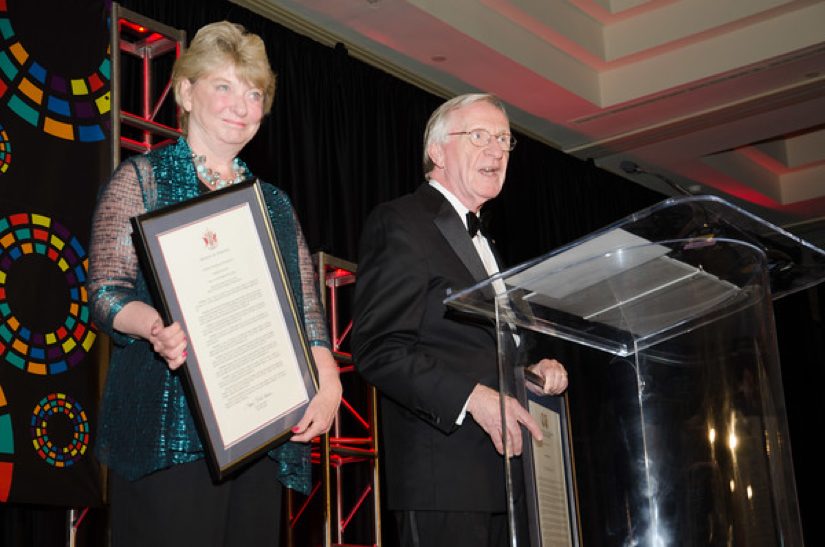 There is a chance to tell Del. Ken Plum (D-Reston) and Sen. Janet Howell (D-Reston) what issues are important to you as the 2016 Virginia General Assembly session nears.
Howell and Plum will hold their annual pre-legislative session town hall on Jan. 7 at 7:30 p.m. at Reston Community Center at Lake Anne. The 60-day legislative session begins in Richmond on Jan. 13.
Plum, in office since 1982, enters the 2016 session as the most senior member of the Virginia House. He is co-sponsoring several pre-filed bills, including one requiring employers with more than 25 employees to offer paid sick leave to employees. He is also co-sponsoring two bills regarding ethics and conflict of interests.
Howell is the chief patron of several bills this session, including one that would alter the sex offender registry by removing employer information from the part of the system available to the public.
Another Howell bill would prohibit a person who is subject to a protective order from possessing a firearm; currently, laws prohibit such people only from purchasing or transporting a firearm.
Other Howell-sponsored bills include establishing a Virginia Student Loan Refinancing Authority and criteria for redrawing election districts, among others.
Howell is also the co-sponsor of bills repealing the Virginia constitutional ban on same-sex marriage and removing the requirement that women undergo an ultrasound prior to an abortion.
Janet Howell and Ken Plum/file photo by Chip McRea
This is an opinion column by Del. Ken Plum (D), who represents Reston in Virginia’s House of Delegates. It does not reflect the opinion of Reston Now.
I often quote from papers written by the staff of the Commonwealth Institute for Fiscal Analysis; they provide the most fact-based, nonpartisan, clear analysis of key issues facing Virginians.
Recently, I attended the 2015 Policy Summit held by the Institute in Richmond. Topics at the Summit included the declining state support for public schools in Virginia, accessing health care, and returning more money to the working poor through the Earned Income Tax Credit. One topic around which there seems to be a high level of political consensus developing was “Criminal Justice Reform: Opportunities to Save Money and Help Communities.”
In a paper published by The Commonwealth Institute, it was reported that Virginia keeps more youth incarcerated than most states. As of 2013, for which the most recent federal data is available, Virginia incarcerated 79 youth in state facilities for every 100,000 youth age 10 or older living in the state. That’s 75 percent higher than the national rate of 45 state incarcerated youth per 100,000 youth in the country.
But that does not mean that Virginians are safer or that more youth are diverted from criminal behavior. In fact, the opposite is true. According to data from the Department of Juvenile Justice, almost three-quarters of youth who have been held in the state’s juvenile prisons are convicted of another crime within three years of release. Of great concern is the fact that youth who are held in the state’s youth prisons for longer periods of time actually have higher rates of re-arrest within a year of release than youth who are held for shorter periods of time!
Virginia’s current youth prison system consists of two youth prisons, Bon Air and Beaumont, in the Richmond suburbs. More affluent areas like Fairfax County have established local alternative programs. The highest rates of commitment to the state youth prisons come from the localities that have the highest poverty levels. As the Institute reported, “not only is Virginia’s current system not working to rehabilitate youth and keep communities safe, it is also very expensive. The per capita cost of incarcerating youth in Virginia’s juvenile correctional centers was $148,214 in FY 2015.” Local programs are lower in cost as well as more effective at reducing recidivism.
Efforts have been underway to reform the current system for a number of years, but that movement needs to be accelerated. Wealthy communities are way ahead in establishing treatment programs, but these programs that are effective in keeping children out of trouble in the future must be extended to all localities regardless of wealth.
The state must resist any effort to dump the problem on localities without providing necessary funds to make alternative programs available. The pipeline from school to prison must be shut off. Alternative solutions that include intensive treatment for offenders and families can keep the community safe, rehabilitate young people before they become criminals, and save money.
There is widespread bipartisan agreement that progress needs to be accelerated in this area. It will bring justice to juveniles.
This is an opinion column by Del. Ken Plum (D), who represents Reston in Virginia’s House of Delegates. It does not reflect the opinion of Reston Now.
Last week, I made a journey to Norfolk to say a final goodbye to a former colleague in the House of Delegates, Thomas W. Moss, Jr., who passed away. He was more than just a member, however; he was Speaker of the House from 1991 to 2000. His service in the House from 1966 to 2002 spanned a passing of an era in Virginia’s history, and he was an important transition figure.
Speaker Moss was first elected to the House of Delegates as an anti-establishment Democrat. His campaign slogan, “Get Norfolk Out of the Byrd Cage,” reflected the fact that while a Democratic-controlled political machine dominated the state since Reconstruction it was not good for urban areas like Norfolk.
That machine was headed from the 1930s by Governor and then Senator Harry F. Byrd, Sr., a tight-fisted conservative who called himself a Democrat but could more appropriately be labeled a Dixiecrat as many white Southerners were known. Byrd vehemently opposed racial desegregation of Virginia’s schools, and his opposition to government spending kept Virginia a backward state for decades.
Mr. Moss was a national Democrat and succeeded in getting himself elected to the House of Delegates where he was in the minority among the more conservative members. Changes in Virginia’s political alignment came about because of the work of leaders like Moss working within the system and federal laws and court decisions influencing the system from the outside.
Getting rid of the poll tax and other restrictive voting laws that kept mostly African Americans from voting, passage of the Voting Rights Act of 1965, and court decisions on redistricting brought about a shift of power where Delegate Moss as a more progressive member became Speaker and the more conservative Democrats switched parties and became Republicans. Eventually this realignment of political allegiance and federally-enforced fairer representation among the regions of the state led to Speaker Moss losing his leadership role in 2000.
He retired from the House after the next term when the new Republican majority drew him into a legislative district with another Democrat. He was elected Treasurer of the City of Norfolk, where he served until January 2014.
Virginia became more progressive during Mr. Moss’s tenure — in the areas of public school spending, investments in higher education, improved mental health and social service programs, and roads. In areas of civil rights, it languished. The Equal Rights Amendment (ERA) for women was opposed by Mr. Moss until he was challenged by a woman who came close to defeating him in a primary. Virginia still has not passed the ERA.
Talk with anyone who knew him and you are likely to get a funny story about him. His sense of humor was always evident no matter how serious the moment. Sometimes his wisecracks challenged the boundaries of social acceptance. During tense times in the legislature his levity helped move the business along.
Not only did Mr. Moss get Norfolk and Virginia out of the Byrd cage, he helped move the state into a modern era where public education and strong institutions of higher education were valued and transportation and infrastructure were recognized as critical investments. Speaker Moss provided leadership during the passing of an era for which he will be remembered.
Whether his legacy will be built upon or neglected is in part in the hands of those who mourned him last week.
This is an opinion piece by Del. Ken Plum (D), who represents Reston in Virginia’s House of Delegates. It does not reflect the opinion of Reston Now.
In the season of giving, when thoughts turn to what can be done to help friends and neighbors in the community who do not make enough to make ends meet, there are many efforts to help them with a basket of food at the holidays, a food and clothes closet and other well-meaning and important giving programs.
With all the heroic efforts of volunteers, faith communities and nonprofits, such programs can be difficult to sustain and can be uneven in their level of support. They also put proud working people in a position of having to accept a hand-out. There is another solution for Virginia that can make a great deal of difference: let working people keep more of the money they earn.
Since 1975, the federal government has offered an Earned Income Tax Credit (EITC). It is one of the largest anti-poverty programs in this country. Qualifying individuals and couples who are working but with limited income as defined in tax regulations may qualify for a tax credit and if they do not use all the credit can get a refund. For specific qualifications including income limits, go to www.irs.gov/EITC.
Nationwide, almost 26.7 million persons received more than $65 billion in EITC for the 2014 taxable year. The average EITC was for $2,447. In Virginia, 612,000 persons qualified for an average credit of $2,314.
The federal EITC has been very helpful to working poor Virginians. But the program as currently administered in Virginia goes only part way to helping working people. The federal calculations of EITC are used on the Virginia income tax form and credit is given to the amount of the tax liability. There is no refund of unused credit as with the federal income tax and in many states. I proposed legislation last session and will again in 2016 to make up to 10 percent of the credit refundable.
There is a simple justification for such a change: putting more money in the pockets of hard-working families will stimulate the local economy as this money will be spent to pay for basic household and personal needs and services. It will also make the tax structure fairer for working people.
According to the Commonwealth Institute, the lowest-earning families in Virginia pay 9 percent of their income in state and local taxes while the highest earners pay 5 percent. The 2013 transportation bill included sales tax increases that disproportionately impacted low-income families since they pay a greater share of their incomes in sales taxes than do the wealthy.
Enactment of a refundable state EITC could give a tax break to 296,000 Virginians of as much as $600 for a working family to use to keep food on the table and gas in the car. I hope the Governor will include a refundable EITC in his budget proposal. Your expression of support to the Governor and to your representatives in the General Assembly could lead to the working people of Virginia contributing to growth in the economy by spending money for which they qualify and for which they have needs.
This is an opinion column by Del. Ken Plum (D), who represents Reston in Virginia’s House of Delegates. It does not represent the opinion of Reston Now.
A recent newspaper headline proclaimed that “Audit finds waste, inefficiencies in Virginia’s Medicaid program.” As often is the case, the real story is beyond the headline.
The audit described in the story is the 62nd audit
of Virginia’s Medicaid program since 2002. This one was conducted by the Joint Legislative Audit Review Commission (JLARC) of the General Assembly. The audit was mandated by the Republican majority of the General Assembly, who oppose the expansion of Medicaid for the working poor. As JLARC explained the context of the audit: “Medicaid eligibility determination in Virginia is undergoing significant changes, including new policies for most Medicaid applicants and a new information system used for all applicants.”
Is it any wonder that under such circumstances there would be some audit findings related to verification of eligibility?
In looking at the details of the report, the biggest problem with eligibility determination occurs where the caseload is highest. In Loudoun County, for example, an eligibility worker is responsible for 1,221 cases; in Chesterfield County near Richmond each eligibility worker is responsible for 1,230 cases. It should be no surprise that with such limited staffing and a changing system there would be delays and errors.
Measured against federal standards, Virginia’s error rate of 0.5 percent in approving Medicaid eligibility was far lower than the national average of 3.3 percent in 2012. Even with the changing standards, the current rate at 2.7 percent is less than the national average.
In 2014, 1.2 million Virginians received Medicaid benefits. Only certain categories of Virginians are eligible for Medicaid. They must fall into one of five primary eligibility categories — children under age 19, parents or legal guardians of a dependent child, pregnant women, persons aged 65 or older, or disabled or blind –and they must have income below the appropriate percentage of the federal poverty level for their eligibility category. Over half of those enrolled in 2014 were children and nearly half of the $7.9 billion in payments went to those who are disabled or blind.
As the JLARC report found, “the eligibility determination process is complex and involves multiple federal, state, and local agencies.” While the goal may be to have no errors, the level of performance in Virginia is much better than the national average and is quite remarkable considering the kind of change the program is currently undergoing. The JLARC report concluded that “the state may have spent between $21 million and $38 million on individuals no longer eligible,” or less than 0.5 percent at a maximum.
No estimate is offered for the cost to the recommended remedies, but certainly they will exceed the cost of the perceived problem — fraud and waste. In addition to costs, the proposed solution opens up a myriad of large data bases on personal finances, real estate holdings, and employment that the General Assembly may not wish to make available to state agencies. The report has no mention of the amount the state will recover; nor does it mention in the case of fraud that the Attorney General’s Medicaid fraud unit was found in 2013 to be the best in the country.
Opponents of closing the coverage gap for an estimated 400,000 working Virginians will no doubt nitpick the latest report and use it as an excuse for not taking action. Such a misuse of information will be felt by the neediest of Virginians.
This is an opinion column by Del. Ken Plum, who represents Reston in Virginia’s House of Delegates. It does not reflect the opinion of Reston Now.
Experts on communications in political campaigns advise that a message needs to be expressed in a matter of seconds — not minutes — if it is to be effective. The best political message should be able to be printed on a bumper sticker.
In a world of complexities and over-loaded communications channels, only the simply-stated message stands a chance of getting through to voters.
Simple messages about complex issues can be misleading and can lead to bad policies. About a million dollars was spent in the most recent cycle to convince voters that certain candidates were part of a plan to put $17 tolls on I-66.
In this instance, voters saw through the falsehoods and re-elected Delegate Kathleen Murphy and elected Jennifer Boysko to the House of Delegates. Republican incumbents who jumped on “no $17 tolls” won re-election, but all incumbents in both parties were re-elected.
The damage done with this campaign message is that it is likely to take off the table a reasonable alternative that could be considered to relieve the massive traffic congestion on I-66. The fact of the matter is that there are $17 tolls on the express lanes on I-95, but they are only imposed as they were proposed for I-66 as part of traffic demand management to keep people off the roads during the worst of the congestion.
What the plan would have done was to allow single-occupant vehicles on I-66 during the morning commute time for a lesser toll that would reduce congestion on other streets and generate funds for improvements in the corridor. The proposal was developed by VDOT and had been discussed extensively with the community.
To listen to the campaign rhetoric one could be led to believe that Democratic candidates had proposed it and every driver would have to pay it. Interestingly, those who ran on the no tolls issue did not offer any alternatives for relieving traffic congestion.
This, of course, is not the first time that simple messages have been used to confuse and mislead voters in Virginia elections. Unfortunately, some of the messages of the past have won elections but with disastrous policy outcomes.
The clever “no car tax” slogan won the governorship for Jim Gilmore many years ago, but the policy impact of the state paying part of the local taxes for persons with the biggest cars cost the state nearly a billion dollars every year since that campaign. The car tax got too high in some suburban communities that faced the expenses of growing school populations and other services, but under the Dillon Rule they had no other options for raising revenue.
The Gilmore proposal had the policy effect of taking from the poor and giving to the rich. The state’s share of school funding went down because of the gimmick to end the car tax. It was a simple message to a complex problem that led to unfortunate results.
The campaign to “end parole” that got George Allen elected has led to jails and prisons being overcrowded with persons who should have alternatives to incarceration. Somehow “use tolling to ease traffic,” “reform the tax structure,” or “reform parole” did not have the same ring to them as the bumper-sticker messages that win elections but can lead to unfortunate consequences.
This is an opinion column by Del, Ken Plum (D), who represents Reston in Virginia’s House of Delegates. It does not represent Reston Now.
A chicken-or-egg kind of debate has been going on in Virginia recently as a result of a report from the Joint Legislative Audit and Review Commission (JLARC). The agency is charged by law with the responsibility of providing an annual report on the growth of state spending over the last 10 years while identifying the largest- and fastest-growing programs and functions in the budget.
The most recent report was for the period FY 2006 through FY 2015. Among its other findings was the fact that the Department of Medical Assistance Services (DMAS) has overtaken the Department of Education (DOE) as having the largest appropriation of any state agency. The appropriation for DMAS represents 18 percent of the total state budget with DOE being 15 percent, Virginia Department of Transportation at 10 percent, and all the other agencies of state government at under 10 percent each.
The largest program increase in total appropriations from FY 2006 to FY 2015 was in the area of medical program services (Medicaid) from $4,672.8 million to $8,148.6, an increase of 74 percent. Some opponents of an expansion of Medicaid have focused on this number as being a reason to not expand Medicaid for presumably it would cost too much.
Fortunately, the Commonwealth Institute for Fiscal Analysis has done some research that puts the increase in context. As the Institute points out, “the growth occurred largely during the worst and most prolonged economic recession since the Great Depression and then a sluggish recovery made worse by federal sequestration.
Most recently, Virginia ranked 48th nationally in economic growth. When you lose your job, you lose your health coverage if you were lucky enough to have it in the first place. At the same time, the number of Virginians 65 years and older grew more than three times as much as the overall population resulting in a 30 percent increase in enrollment.”
Beyond these external factors affecting Medicaid costs, state legislators added more than 4,300 waiver slots over the past 10 years for long-term care services for people who are intellectually and developmentally disabled.
These waivers that are critical to the individuals and families who need them are among the most expensive of medical services. An intellectual disability waiver costs about $71,000 per person per year, and a developmental disability waiver costs nearly $33,000 per person per year. The Institute found that last year alone the waivers added $285 million to the budget. Waivers are not limited to persons of low incomes as the rest of Medicaid programs are.
Is it then the chicken or the egg that came first? Did the availability of medical services run up the cost of Medicaid or was it the growing population of older persons and the extension of services to the most needy that added to the cost? In either case, does it not make sense to use 100 percent federal dollars to meet the needs of the working poor and save the 350 million state dollars that are currently appropriated for the indigent? People who need health care come first making an expansion of Medicaid essential.
This is an opinion piece by Del. Ken Plum (D), who represents Reston in Virginia’s House of Delegates. It does not reflect the opinion of Reston Now.
I know it is a safe assumption that readers of this column are regular voters. There is no need for me to carry on about the importance of voting, outcomes matter, etc. You get it, but it is a bit shocking and disappointing to realize the small percentage of people who do.
If history provides any indication, the election next Tuesday, Nov. 3, will attract just 30 percent or less of registered voters. In this election cycle four years ago, 28.61 percent of registered voters actually went to the polls.
In 2007 the percentage was 30.2. Only in presidential election years do substantial majorities of registered voters get to the polls — 72 percent in 2012 and 75 percent in 2008. Of course, none of these numbers take into account those who do not bother to register to vote.
Those of us who are active voters can help others in the process. There are 19 different reasons for which an absentee ballot can be cast before the election. Check out the details at Fairfax County Absentee Voting and refer others to this site that also includes information on electronic applications for an absentee ballot. The deadline for a mail-in absentee ballot to be received by the Office of Elections is Election Day, Nov. 3, by 7 p.m.
Of course, it is important to know for whom one is voting. I mailed a voter guide to my constituents a couple of weeks ago including my recommendations on candidates, and most recently I mailed a postcard with the Reston Team of myself, Senator Janet Howell, Supervisor Cathy Hudgins, and School Board member Pat Hynes asking for support and listing our recommendations for other offices on the ballot. Send me an email at [email protected] if you have any questions.
The Connection newspaper will print candidate profiles, and the League of Women Voters has information supplied by candidates.
Once again, some of the campaigns have taken on an unfortunate tone. I do not remember television ads in the Washington media market ever being used at all in House of Delegate races because of their expense, but this year there is an effort to mislead voters into believing that Del. Kathleen Murphy in McLean and candidate Jennifer Boysko in Herndon support $17 tolls, which they have made clear they do not support nor do I know anyone who supports $17 tolls.
Equally as concerning is a campaign being run by the Traditional Values Coalition against at-large School Board members Ryan McElveen, Ilryong Moon, and Ted Velkoff, whom I as a retired educator feel have been doing an excellent job. The Traditional Values Coalition is an anti-LGBT group identified by the Southern Poverty Law Center as a hate group.
Thank you for your participation in the electoral process. Take a few minutes to talk with your friends and neighbors about voting on Nov. 3. Election outcomes do matter.
This is an opinion column by Del. Ken Plum (D), who represents Reston in Virginia’s House of Delegates. It does not reflect the opinion of Reston Now.
Every decade after the federal census, state legislatures are responsible for drawing the boundaries of the House of Representatives and the House of Delegates and State Senate districts. By Supreme Court decisions districts are to be equal in population (slight deviations allowed) and are to provide equal protection of the law for all persons.
Even with these limitations, drawing legislative district lines is a division of power as well as population. Going back to Elbridge Gerry in 1812, redistricting has been recognized as a political exercise as well as legislative responsibility when one of the districts proposed looked like a salamander, hence the term gerrymandering.
Virginia’s redistricting in 2011 provided the Republican majority in the House and Senate an opportunity to expand their numbers but also left many people feeling that they were not treated fairly. A challenge to the congressional districts resulted in a federal court finding the districts violated the rights of minorities, especially in the 3rd Congressional district that packed African Americans in a district extending from Richmond to Norfolk, albeit rather narrow in some places.
While such a district virtually ensured the election of an African American congressman, Bobby Scott, it at the same time may have limited African Americans to a single district. When the General Assembly was unable or unwilling to redraw the lines, the federal courts took the responsibility with an expert consultant who is expected to complete the task by the end of October.
Presently, there are several lawsuits that are challenging the House of Delegates districts on the same arguments used against the Congressional districts. It is likely that these districts will be thrown out as well, and I and the other delegates elected in these districts on Nov. 3, 2015, would have to run again in 2016 and to get back on schedule again in 2017.
This is the same series of events that happened over unconstitutional districts in 1981, 1982, and 1983. Once again it is unlikely that the House of Delegates will be able to redraw the lines that might result in unseating incumbents, and the court will need to do the job for the House.
Drawing district lines is the greatest conflict of interest that legislators face. The natural tendency is self-preservation and to hold onto power. That is why I introduced legislation in 1982 to establish a nonpartisan redistricting commission in Virginia, the first such proposed in the Commonwealth. It has never passed, but the most recent challenges in the state on this issue as well as an increasing number of states that are going to commissions may propel it forward. OneVirginia2021 is a group actively working to make it happen in Virginia.
I recently attended a conference, Redistricting Reform: Mapping Our Future, sponsored by Common Cause and the George Washington University School of Law. I was impressed with the amount of research and study that has been done on the process and the methodologies that have been developed to measure partisan gerrymandering.
Under the current system, there are only 38 of 100 House and 23 of 40 Senate seats challenged in the current elections because districts are gerrymandered to determine the outcome. There is adequate information available for Virginia to do a fairer, less partisan job of drawing the lines.
This is an opinion column by Del. Ken Plum (D), who represents Reston in Virginia’s House of Delegates. It does not reflect the opinion of Reston Now.
According to the General Assembly’s own watchdogs, the Joint Legislative Audit and Review Commission (JLARC), Virginia’s local school divisions shoulder the highest share of total K-12 spending in the Southeast region.
The finding is hardly news to school superintendents, school boards, and local governments as the recession took its toll on the economy and tax revenues at all levels, student enrollment increased and the state share of education spending declined.
In FY2014, the average Virginia school division spent 7 percent less to educate each student than it did in FY2005, according to JLARC. Also not news to teachers is the JLARC finding that “divisions reduced per-student spending on instruction through a combination of employing fewer teachers per student, limiting teacher salary growth, and requiring teachers to pay a higher percentage of health insurance and retirement benefit costs.” Parents also are keenly aware that their children are sitting in classrooms with many more students.
Fairfax County Board Chairman Sharon Bulova captured the details of the declining state revenue for K-12 education in a letter to the Governor recently. She wrote that “though the Commonwealth’s budget shortfall was the 20th largest in the nation, the state funding cut to localities was third highest among the states. In fact, since FY2009, structural budget cuts to K-12 have cost localities more than $1.7 billion per biennium statewide. State K-12 funding in FY2016 remains below the FY2009 level.”
She observed that “a state that is in the top ten in income should not be in the bottom ten for state education funding, but that is where Virginia finds itself at present.”
A recent report based on a survey by the Virginia Association of School Superintendents found that 92 percent of school districts in the Commonwealth have cut staff, eliminating more than 10,000 jobs, more than half of which have been teaching positions. Increased class sizes have been reported in 71 percent of school districts. Programs such as fine arts, foreign language, physical education and career and technical education have been reduced at more than half of school districts, and nearly a third of districts have reduced extra-curricular activities such as academic clubs, student clubs, and athletics.
As the president of the Association said, “School divisions simply don’t have the finances or human resources to make the changes we want and need in order to prepare our students effectively for higher education and careers.”
An analysis of the JLARC report by the Commonwealth Institute for Fiscal Analysis concluded that “supporting our schools at a level far below what it takes to meet growing needs, we put our children and our future workforce in a precarious position. Continuing to pretend that teachers and schools can do more with less, year after year, is not sustainable. It’s time to rebuild the damage done to education funding during the recession and invest in our children.”
Governor McAuliffe has said that he will be giving priority to education funding in the budget that he is preparing for the next biennium. The 2016 session of the General Assembly must adopt the same priority.
This is an opinion column by Del. Ken Plum. who represents Reston in Virginia’s House of Delegates. It does not reflect the opinion of Reston Now.
It is not easy to admit that you are not up to a challenge that hundreds of your constituents face each day, but that’s what happened to me last week.
ProgressVA sponsored the “Live the Wage Challenge” asking elected officials, community leaders, advocates, and everyday citizens to walk in the shoes of a minimum wage worker by living on a minimum wage budget for one week. The point of the activity was to help others understand what life is like for low-wage workers and why raising the wage is important to working families and to the economy.
Directions for the simulation provided each participant with a weekly budget of $77, which represents the weekly wages of a full-time worker making the federal minimum wage of $7.25 per hour (minus average taxes and average housing expenses).
Even that budget is generous for the Northern Virginia region, where housing expenses alone would wipe out the entire paycheck. For the activity, I needed only to figure out how to pay for my meals, groceries, transportation, and recreational spending. The rules were very generous in not requiring me to cover the expenses of family members or work travel. The rules however did require me to eat only those items of groceries or eating out paid for within the budget. I was required to record my expenses to see how I made it through the week.
The fact of the matter is that I did not make it through the first day. It was clear to me from the beginning that I was not going to be able to make ends meet. Yet people in my community and throughout Virginia have to face these challenges every day. The simulation included a day when a child in your household gets sick. What do you do? You cannot stay home for you need to work every day to get the income. You cannot afford a baby sitter or a visit to a medical clinic.
I have been conscious of the plight of low-income people, but this activity brought home to me once again how tough life is for some people. Several years ago, I was paired with a woman living in subsidized housing along with her young daughter who had multiple handicaps. I tried to live on the budget of public assistance that she had. I failed that challenge as well. And I grew up in a home with limited income. I admire the resourcefulness of persons in these situations and their ability to live without many of the things we consider basic.
Last legislative session, I introduced a bill to raise the minimum wage in Virginia. It was supported by interfaith, religious, and labor groups. It was unfortunately opposed by business groups including the Virginia Chamber of Commerce and much to my disappointment the Fairfax and Reston Chambers of Commerce. I will introduce the bill again in 2016.
For those who have opposed the bill in the past, I hope you will go to #LiveTheWageVA and tell me and others how you would meet the challenge!
One of the early rites of passage for me and those of my generation was to get a driver’s license. I was pleased to run errands for the family, and my parents were generous in allowing me to use the family car for school and social events.
Now I understand that about a fourth of millennials are not even bothering to get a driver’s license. And when you consider how many communities are developing by transit oriented development (TOD) principles, there is less of a need to own or lease an automobile. These shifts in living patterns have significant public policy implications.
With the opening of the Silver Line to Wiehle-Reston East, I have another alternative for my travels. Within a year residents in the new apartments under construction by Comstock at Reston Station will be able to take the elevator down to the plaza to the bus to Dulles on the Silver Line to points east as well as Maryland.
For weekend travel, a Zipcar or other hourly rentals are available, and a bicycle provides good healthy exercise. A new hourly car rental system allows you to leave the car at your destination without the need to return it to where you picked it up. Some suggest that the driverless vehicle is not that far in the distant future, and with the rapid advances I have seen in recent times, I believe them.
The traditional taxi system got a jolt with the introduction of Uber and other companies that use drivers and their own automobiles to transport passengers. The Virginia General Assembly passed legislation this year to establish a legal framework under which the companies can provide service to consumers in a safe and legal way. I would guess that there is likely to be a melding of these two businesses in the future to provide more convenient car ridesharing.
In the short run, I understand the interests of persons dependent upon automobile travel that our roadway surfaces be repaired and that traffic congestion be reduced.
We suffer from more than a decade of refusal on the part of the legislature to provide adequate funding for highway construction and repair. During that time I co-sponsored and voted for many bills only to see them defeated. Technological advances are helping to reduce congestion with better traffic light systems and with regulated traffic systems as has just been introduced on I-66.
These improvements must take into account the bigger picture of transportation. Road improvements must include bicycle travel lanes. Mass transit will need subsidy just as our roads are subsidized. Public and private incentives need to be offered for car-pooling, and the use of transit. TOD must be given priority.
Our public policy on transportation must recognize that there are many different ways to go.
I don’t know why I was surprised at Reston founder Bob Simon’s passing. After all, he was 101 years old. Few people reach that age, and fewer still live beyond it. Yet Bob was such a prominent figure in his namesake community that unconsciously those of us who were surprised by his death may have thought he would always be there. His passing was so noteworthy that it received coverage in all the major news outlets.
He will be greatly missed by those who knew him and by those whose lives were touched by him: by the little children who huddled around the pedicab when he was brought to the Founder’s Day Program or to the Bike-to-School program at Lake Anne Elementary; by the children at a day care center named for him; by residents and visitors alike as he ambled around Lake Anne; by everyone who saw him in the annual Holiday Parade at Town Center; and by politicians at all levels of government with whom he shared the podium at numerous public events in his town and who witnessed his popularity and couldn’t help but be a bit envious.
Surprise and sadness at the passing of Bob Simon are quickly replaced by overwhelming joy at having known him. Few times in life do we get to know a visionary: a person who can see beyond the immediate to a better society. That sizable chunk of Virginia countryside in which Bob Simon invested in the 1960s could have easily been turned into a subdivision for quick profit, but for Bob and his vision it represented an opportunity to create a better place for people where they could live, work and play.
Better than anyone I know, Bob Simon knew and appreciated community. His plan for Reston did not start with designing a government structure. Some land use laws had to be changed to accommodate his plan, but the governance of that place he named Reston was left to the community.
While there have been healthy debates about issues over the years, there has been a recognition that local neighborhood citizen organizations and nonprofits formed by the residents could resolve those issues without the need for another layer of government or partisan involvement.
While it is difficult to discern the elements that create the sense of community in Reston, it is undeniable that it is there and that it was nurtured by its founder Bob Simon. The basic principles he outlined in the beginning for his new town give us the best insight into what he envisioned. The most radical notion at the time and place of Reston’s founding that people of all races could live together in harmony has become a societal norm.
Robert E. Simon, Jr., our immediate surprise and sadness at your passing have quickly turned to joy at having known you. Rest in peace, inspirational leader, wise counselor and good friend — you made a wonderful difference for all!
Ken Plum represents Reston in Virginia’s House of Delegates. His opinion does not represent Reston Now.
This is a column by Ken Plum, who represents Reston in Virginia’s House of Delegates. It does not reflect the opinion of Reston Now.
A federal court found Virginia’s congressional redistricting to be unconstitutional because it diluted the strength of minorities in elections. Essentially, the redistricting of 2011 packed black voters from Richmond to Norfolk in a single congressional district ensuring the probable election of one black representative while reducing the likelihood of another one being elected.
The court ruled on the fairness of districts related to their being numerically equal in size and in their treatment of classes of voters, but it does not take into account partisan advantages or disadvantages.
The federal court set a Sept. 1 deadline for new district lines to be drawn by the General Assembly. The Assembly was unwilling or unable to draw new lines, at least in part because any new map is likely to increase the Democrats’ chances of winning more than the 3 of 11 congressional seats they currently hold.
A special session called by Governor Terry McAuliffe to take up the issue concluded without taking action. A proposal drawn up by the Democratic minority to address the issue of fair racial representation in the Tidewater and Northern Virginia areas was not considered by the House or Senate. Based on prior voting behavior by the people in these new districts, there would likely have been five Republican, five Democrat, and one swing district. Such an outcome is reflective of how the state has been voting in statewide contests.
This is not the first time Virginia has run afoul of federal courts on the issue of redistricting. As the state grows in size with developing metropolitan areas, those who controlled the legislature have been reluctant to give up their power to the newly emerging suburban and urban areas. Virginia was one of the states in the 1964 Baker v Carr decision establishing the principle of one man, one vote. After the 1981 census, the Supreme Court threw out the redistricting three times before the legislature got it right. With the changing of district lines, I had to run for office in 1981, 1982, and 1983. The same thing could happen again this year.
The same rationale that makes the congressional districts unfair applies to the House of Delegates districts that are now being challenged in federal court. House members could have to run three years in a row just as in the early 80s if the case is successful. House of Delegates elections in 2016 in particular could be interesting as this is a presidential election year with greater voter participation.
It is human nature that political parties in power try to maintain their majorities through gerrymandering districts to their advantage. I first introduced a bill in 1982 that would have given the task over to an independent commission. Neither Democratic nor Republican majorities have been willing to pass it. Several states have such a commission, and I have continued to re-introduce the bill.
I believe it is the only way to get fair, nonpartisan redistricting done. I support OneVirginia, a group that is working for this kind of reform that needs to be put into place right away.
