

 This is an opinion column by Del. Ken Plum (D), who represents Reston in Virginia’s House of Delegates. It does not reflect the opinion of Reston Now.
Virginia and the southern states of the Confederacy lost the Civil War with the surrender of Robert E. Lee to Ulysses S. Grant at Appomattox Court House, Virginia, on April 9, 1865, but for more than another hundred and fifty years it appeared that the South may have won the peace. There was the Emancipation Proclamation, three amendments to the Constitution, and a period of Reconstruction to guarantee the new social order without slavery, but Southerners who favored the old order found ways around the new laws to perpetuate a society of racial segregation and inequalities. Jim Crow laws replaced slave codes, oppressive laws limited the freedoms of Blacks, unequal schools limited their opportunities, and various voting limitations kept Blacks from registering and voting. There were thousands of lynchings to remind Blacks of their status in society and a Lost Cause movement that erected thousands of monuments in celebration of the old order of white supremacy.
After World War II, historian C. Vann Woodward wrote that America went through a Second Reconstruction as Blacks started to win significant victories against racist policies and laws with the various civil rights laws that passed including the Voting Rights Act of 1965 and Supreme Court decisions like Brown v. Board of Education ending school desegregation. Even those advances were short-lived and limited; the Voting Rights Act was repealed, and inequities suffered by Blacks in educational programs and employment persisted. The mistreatment of Blacks by policing authorities became more tolerable than society could stand.
A series of events over many years culminating with a police officer murdering George Floyd from his knee on Floyd’s neck signified that, like the original Reconstruction, the Second Reconstruction left many inequalities and much work to be done. The Black Lives Matter message seems finally to have been heard and finally for many understood. There is no postponing change.
Much of what has been happening to date in what Rev. William Barber II has termed a Third Reconstruction has been symbolic but important. No longer do visitors to the original House of Delegates chamber in the Capitol in Richmond have to walk around a bigger-than-life and impossible-to-miss statue of Robert E. Lee. While his statue on Monument Avenue remains at present, it too will be taken down as soon as the court case about it is resolved. Throughout Virginia and the South more statues have been removed along with other symbols of the old South. Even the state of Mississippi gave up the Confederate flag as part of its flag.
More meaningful changes are coming. As a member of the House Public Safety Committee I am pleased with the public testimony we received last week. Other hearings are scheduled for this week and next to determine the changes we need to make in our policing policies and criminal justice system to remove the racial biases. We will enact important changes at a special legislative session in August. We have had two chances at getting reconstruction right for all our citizens; we must commit ourselves to making this third effort a charm!
File photo
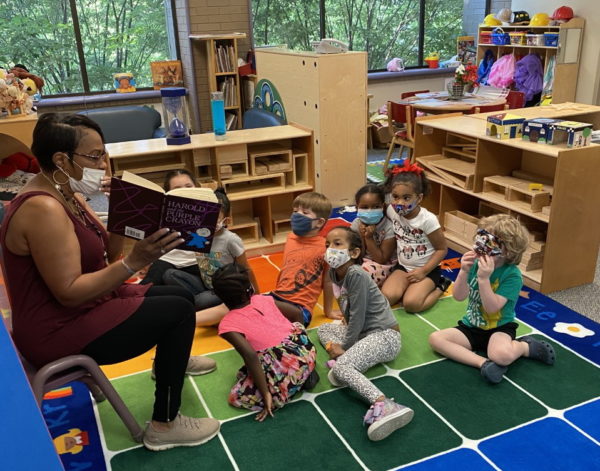
Continuing its series of virtual community meetings, Cornerstones will host a forum with several state officials next month.
The Reston-based nonprofit organization is organizing the event for Thursday, August 13 from 5:30-6:45 p.m. Sen. Janet Howell, Sen. Jennifer Boysko, Del. Ken Plum, and Del. Ibraheem Samirah are expected to attend.
Topics of discussion include: rebuilding economic and social stability, distance learning and the digital divide, getting back to work and living wage economy, and equity and the opportunity divide.
Registration is open online. Log-in information will be sent to registered participants only.
Participants can submit their questions for consideration prior to the forum by emailing [email protected]. The deadline to submit questions is Friday, Aug. 7.
Photo via Cornerstones
This is an opinion column by Del. Ken Plum (D), who represents Reston in Virginia’s House of Delegates. It does not reflect the opinion of Reston Now.
The body of John Lewis will be laid to rest this week, but the legacy of his leadership in the Civil Rights Movement will live on. In his role as chairman of the Student Nonviolent Coordinating Committee, he was the youngest person to speak at the March on Washington in August 1963. While his words that day are not as well remembered as those of the Reverend Dr. Martin Luther King, Jr. who spoke after him that day with his “I Have a Dream” speech, the message of John Lewis is as relevant today as it was then. He exhibited a style of frank speaking that day that became famous over the decades of his leadership in the Civil Rights Movement when he told the crowd:
“We are tired. We are tired of being beaten by policemen. We are tired of people being locked up in jail over and over again. And then you holler ‘be patient.’ How long can we be patient? We want our freedom, and we want it now!”
He must have had some sense of satisfaction when last month with District of Columbia Mayor Muriel E. Bowser he visited the Black Lives Matter Plaza near the White House and stood where the Black Lives Matter message was painted in the street. That day was in sharp contrast to the day in 1965 when he marched with others in the Civil Rights Movement across the bridge in Selma, Alabama, and suffered a skull fracture from being hit in the head with a police baton in what became known as “Bloody Sunday.”
John Lewis was the last of the great civil rights leaders of the 1960s. He lived long enough I believe to realize that his message was being more widely heard than ever before in this country. Should John Lewis be beginning his career today rather than ending it, I have no doubt he would be at the forefront of Black Lives Matter. While Lewis experienced the police batons, dogs and fire hoses, others today have felt the knee of white authority pressing on their necks or bullets hitting them in the back. The words “I cannot breathe” have come to be more than the last words of individuals whose lives were being snuffed out but are the words of generations living under a society of oppression because of the color of their skin. I cannot breathe means to many that they cannot live freely in an unjust and discriminatory society.
John Lewis never gave up through many challenges that are now being chronicled by other writers. In recent years I have appreciated his efforts to get the Congress to take action to end gun violence that affects communities of color disproportionally. What would John Lewis have us do? He offered this advice: “When you see something that is not right, not fair, not just: say something, do something. Get in trouble, good trouble, necessary trouble.” We can participate in making a more just society when we follow John Lewis in getting into necessary trouble!
File photo
This is an opinion column by Del. Ken Plum (D), who represents Reston in Virginia’s House of Delegates. It does not reflect the opinion of Reston Now.
Readers of this column are certainly aware that on more than one occasion I have praised the work of the 2020 General Assembly session as being historic and transformative.
I believe historians will agree with my assessment of the work of the legislature in the early months of 2020 to rid the state of discrimination of all kinds, but I wonder how they will explain the subsequent phase within several months of its adjournment. Within just a few months, the legislature was faced with the need to take even more historic steps to transform the state and to do so with a sense of urgency.
While the COVID-19 pandemic is an historic event that overlays what was happening in the social and political structure, it played a minor role. If anything, the pandemic demonstrated that the federal government under the current office holders is incapable of taking responsible actions regarding the coronavirus or the social and political unrest that abounds in this country. The pandemic has shown that state governments must step up in leadership related to the health crisis and to the stark inequalities in our society.
The pleas of George Floyd that he could not breathe were echoed by Black persons in Virginia and throughout the country that they could no longer live under the suppression of a knee on their necks that they have endured for centuries and has kept them from realizing equality under the law and in society. That is why the Virginia legislature cannot rest on the important steps it took in the opening months of this year towards a more just society but rather now must take significant next steps in the closing months of this year.
The House Courts of Justice Committee and the Public Safety Committee on which I serve will be identifying the next steps that must be taken beginning in a special session of the legislature in the next month or two. The Legislative Black Caucus has outlined next steps, with which I concur.
These steps include declaring that racism is a public health crisis in the state, reinstituting parole, creating a civilian review board of police actions with subpoena power, defining the use of excessive force including banning the use of chokeholds and ending no-knock warrants.
The Caucus also proposes the important step of investing more in community and less in law enforcement, funding mental health professionals to respond to those who may be having mental health crises, replacing resource officers in schools who are often police personnel with mental health professionals, restricting the use of militarization tactics and weapons against citizens and expanding the use of body cameras.
In issuing its agenda, the Legislative Black Caucus said in a printed release, “And on a larger scale, this moment is calling on leaders to combat institutional racism and societal discrimination that exists in the criminal justice system, economic structures, housing, education, in healthcare, mental health, in environmental policy and many other areas.”
Your suggestions on next steps are welcome, [email protected].
File photo
This is an opinion column by Del. Ken Plum (D), who represents Reston in Virginia’s House of Delegates. It does not reflect the opinion of Reston Now.
Back in March, a couple of weeks after the 2020 General Assembly session had adjourned, I wrote in my weekly column that while the annual meeting of the state legislature had been “historic, transformative, and consequential” there was also as I entitled the column “More Work Left to be Done.” At the time it was expected that many of the issues that had not been addressed would be taken up in future legislative sessions. There was no way to know the explosive nature of subsequent events that now make it clear that we must get back to work without delay.
The indelible photo of a policeman choking the life out of a black man without provocation or cause made it clear to me and others that there are injustices in our society that cannot wait to be addressed. The Black Lives Matter movement has made the need crystal clear. The stories of black persons who have come forth to tell what it is like to grow up black in this country make my heart weep. Fellow delegate Don Scott made the case clearly in an opinion piece he wrote last week: “The daily indignities of being black can be burdensome. If we respond to it all, we would have riots daily. Black people, for the most part, have always been tolerant. Even with all of our progress, President Barack Obama and all, we are reminded that George Floyd, Breonna Taylor and Ahmaud Arbery could have been any of us. That is why we are outraged and, truth be told, very afraid.” We cannot have a just society when so many of our citizens live in very real fear.
I am pleased that leadership of the House of Delegates and Senate have announced that the special session of the General Assembly, expected to be held in late August to deal with budgetary adjustments that must be addressed with the current economic depression, will be expanded to include proposed legislation to address injustices in our criminal justice system and in our policing. The Legislative Black Caucus of the General Assembly has proposed an extensive agenda that includes declaring racism a public health crisis, creating a civilian review board of policing action with subpoena power, ending qualified immunity for police officers, expanding the use of body cameras, defining and restricting excessive use of force including banning the use of chokeholds and restricting the use of tear gas and militarization tactics and weapons against civilians, passing “Breonna’s Law” to end no-knock warrants, reducing police presence in schools and replacing them with mental health professionals, reinstituting parole, passing cash bail reform, and more.
At the beginning of the session earlier this year the Speaker of the House of Delegates changed the name and mission of the Militia, Police and Public Safety Committee to be the Public Safety Committee. I am pleased to have been named a member of that committee. With the Courts of Justice Committee we will be having three virtual public hearings on a schedule to be announced. In the meantime, your suggestions on getting this work done would be appreciated.
File photo
This is an opinion column by Del. Ken Plum (D), who represents Reston in Virginia’s House of Delegates. It does not reflect the opinion of Reston Now.
Words have meanings defined in the dictionary that can take on other meaning within the context in which they are being used. Never has it been more important that we understand the meaning and use of words than in present day politics.
Last week I wrote about “Black lives matter” and the importance that we hear the message that is being conveyed with that sentence. It is a group of words whose meaning has been ignored for too long. The current demonstrations literally around the world are intended to place an exclamation point at the end to emphasize that they must finally be heard and understood. I believe with each demonstration of thousands of people and with each statue that comes down the message that black lives matter is finally coming through. We need to get on with the changes that are needed in society and in our laws that show that we understand that black lives do matter. There is no turning back now.
When the grossly disproportionate number of black persons killed by white policemen that videos have made totally clear, the need for major and immediate changes to our policing system have become obvious. We need to make sure that the words we use to bring out those changes are not used against us. The societal needs for which our current police forces have been given responsibility in recent years are too broad and need to be reimagined and redefined. We cannot allow those who view societal challenges in law and order terms to use the term “defund the police” against those who understand that policing policies need to change. While some people mean a total defunding of police departments when they use the slogan, “defund the police,” many of us believe police departments will continue to need to exist but be demilitarized and not be the sole responders to community incidents. We need to define a role for public safety and community personnel who can keep our communities safe without confrontation and expand the availability of mental health workers in our communities. You can be sure that there will be a war of words over public safety and policing in the next several elections, and we must work hard to get our message clear.
In 1993 the first woman attorney general of Virginia was up by 20 points in a race to be the first woman governor of Virginia by defeating the Republican candidate, George Allen Jr. An incident of a person committing a crime while on parole from a Virginia prison during the political campaign led to Allen adopting an “end parole” theme to keep Virginians safe that led to his upset victory. The resulting end parole policy led to filling the jails and prisons, a massive prison building program, and lengthy prison terms for persons who were no longer a threat to society. We have only recently begun to undo the damage done by that simple bumper-strip term “end parole” that led to many lives–disproportionately black–being destroyed by a terrible public policy.
Words do have meaning, but we need to be clear what those words truly mean as they impact public policy.
File photo
This is an opinion column by Del. Ken Plum (D), who represents Reston in Virginia’s House of Delegates. It does not reflect the opinion of Reston Now.
Black lives matter. Period. No further explanation or expansion of the phrase is needed. Do not try to switch the subject by wanting to suggest that all lives matter. For more than four centuries the lives of black people have been degraded. There have been numerous instances during that time when events would have suggested that there might finally be a recognition that black lives do matter. With the American Revolution and the Declaration of Independence proclaiming that all men are created equal one might have concluded that black Americans might finally achieve some semblance of equality, but they did not. With a constitution for the new country, blacks were counted as worth only three-fifths of a person. Virginia and the Southern states seceded from the Union and fought a civil war to be able to keep black people in bondage. After more than 250 years of slavery black people were given a hollow promise with the Emancipation Proclamation. Jim Crow laws replaced slave codes. Many ingenious ways were contrived to keep black people from voting. Lynching was among the ways used to instill fear in black people to keep them “in their place.” Police too often became less public safety protectors and more keepers of a divided society where black lives have less value than that of others.
With all this history and more is there any wonder why leaders who are willing to take a stand are insistent that we keep the message clear: Black Lives Do Matter! Too much has happened to turn our backs on much-needed changes in so many aspects of our society and our governance. When a cop feels that he can grind his knee in the back of the neck of a black man until he dies while three other cops look on, we know that the time has arrived for change. No excuses. Enough is enough.
The General Assembly will take up significant reforms to our policing and criminal justice system when it meets in August. I look forward to cosponsoring and voting for meaningful bills that will redefine policing, shift resources from policing to community and social services, and reform our criminal justice system. The needs are so extensive that one legislative session will not be adequate to deal with all the needed reforms, but there can be no delay in taking the first very big step forward.
Make no mistake thinking that all that is talked about will be popular. Some will think that if black lives matter their lives and their security will somehow be lessened. Politicians will jump on the divisions that exist in our society and suggest that everyone will somehow be less safe if changes are made. They will twist the meaning of the movement to reform policing, referred to as “defund police” by some, as leaving communities unsafe. The white supremacists among us, and they are more numerous than we might like to realize, will be marching and protesting any changes.
Black lives matter. We are on the verge of making the statement a reality. We cannot falter in our resolve to make it true!
File photo
This is an opinion column by Del. Ken Plum (D), who represents Reston in Virginia’s House of Delegates. It does not reflect the opinion of Reston Now.
Finding the words to describe the period of history in which Virginia finds itself is challenging. Readers of this column know that over the past several months I have been using adjectives indicating increasing significance of events that started with the historic (I have used this adjective many times) outcomes of the elections of 2019 to the transformative (future events will prove that this is the correct adjective) legislative session of 2020. Events of the past week add another descriptor of the changes that are taking place in the Old Dominion: monumental. Yes, the word applies to the monuments of which Virginia is home to many, but it applies also to what is happening to these monuments.
Governor Ralph Northam announced last week that the 60-foot high equestrian statue of Robert E. Lee on Monument Avenue is coming down right away! The Mayor and City Council of Richmond agree that the remaining five other grandiose Confederacy-related statues come down as well. The grand boulevard that was named in 2007 as being one of the “10 Great Streets in America” and was in the early 1900’s a significant part of the Lost Cause movement to glorify and justify the South’s position in the Civil War will be left with one statue–that of Arthur Ashe, the Black Richmond native who was an international tennis star. A bill is being introduced to remove the statue of former governor and U.S. senator Harry Byrd from Capitol Grounds. Byrd is notable as the head of a political machine that maintained its power by keeping Black citizens from voting. He also led the “massive resistance” movement that delayed school desegregation in Virginia by a decade. There will be other monuments coming down in other locations as has already happened in Alexandria City.
Monumental but not relating to the statues is the work done by the General Assembly in its 2020 session to remove from the Code “explicitly racist language and segregationist policies.” While no longer in effect, these parts of the Code nonetheless stood as a reminder of the racist history of the Commonwealth. The changes came from recommendations made by a commission appointed by Governor Ralph Northam to remove laws that “were intended to or could have the effect of promoting or enabling racial discrimination or inequity.”
The “Act to Preserve Racial Integrity” that banned interracial marriage was repealed as was the Code provision “no child shall be required to enroll in or attend any school wherein both white and colored children are enrolled.” Other state laws to require segregation of the races in transportation and health care facilities were no longer in effect but remained on the books.
While removing statues of people from the past and repealing laws that were previously replaced by other laws or over-ruled by court decisions may be called symbolism by some, the symbols they represent are important. Virginia leaders along with its citizens must make it clear that the divisions of people of the past are over. We need through our words and actions to demonstrate a monument to openness and acceptance of all people.
File photo
This is an opinion column by Del. Ken Plum (D), who represents Reston in Virginia’s House of Delegates. It does not reflect the opinion of Reston Now.
The image of a man in a uniform pressing his knee down on the neck of a hand-cuffed black man while being protected by three other uniformed individuals is so revolting and repulsive that I cannot get it out of my mind. The picture joins those in my mind of black persons being shot in the back by uniformed individuals without just cause, photos of black persons hanging by ropes around their necks while white persons hidden by white sheets and masks cheered, photos of the backs of black slaves scarred by whip lashes to keep them in their places, and others.
How loud does a black man have to cry out for his already dead momma or for his being able to breathe before the message of racial justice is heard? How many black parents must bury their children before we say that enough is enough? How long can a civilized society be tolerant of such blatant injustices?
Is there any wonder that when these basic questions cannot be answered that people take to the streets with demonstrations to have their voices heard? While some few seek to turn demonstrations into opportunities to loot and burn, we cannot lose sight of the basic message that is being conveyed by the persons in the streets–that it is way past time for change in America.
For those who have been involved in the civil rights movement throughout our lifetime, the incidents of brutality by persons who are supposed to protect us and the hate actions and speech of those who see themselves in some kind of superior position to others are deeply distressing. We can continue to strengthen our laws that protect minorities even as the laws have clear limitations to deter violence. We can support educational programs since so many of the offensive actions come about because of ignorance. We can continue our work to ensure that our laws reflect the kind of justice and fairness that we expect of others. We can speak out in public places to make it clear to all that we stand for justice and fairness for all and that we reject racial superiority. We can join demonstrators who stand for these principles.
Before the brutality in Minneapolis occurred, the pandemic had already pulled off a scab on American society showing economic and racial injustice. The economic injustices that exist in our society have become more obvious, and the inequities of our economic system are becoming more severe. We clearly want the threat to our health from the COVID-19 crisis to pass, but we need to think twice before we seek a return to the unfair system that has developed in our country. We can learn a lot from the observations of our society during a quarantine to seek to improve it as we leave our period of isolation.
With destructive leadership at the national level, we must all step up to fill the breach. We need to work together to stamp out racial injustice in our country.
File photo
This is an opinion column by Del. Ken Plum (D), who represents Reston in Virginia’s House of Delegates. It does not reflect the opinion of Reston Now.
The outpouring of generosity in our community during the COVID-19 pandemic has been incredible. I continue to learn of people who have responded in remarkable ways to the needs that have been brought on by the quarantine or that have been recognized as a result of our having to stay home. The lack of face masks resulted in dozens of persons working alone or as part of groups to sew face masks and make them available to first responders, medical staff and others. Access to food has been a major concern, and numerous food pantries and distribution centers have been expanded or established to make food available to those in need. Food donations have come pouring in. For a list of places where you can respond to the food crisis, my website, kenplum.com, includes a Food Resources Directory. I am so pleased and honored to live in such a caring community.
Just as I am celebrating the goodness of our community, some misguided individual or individuals show up and for whatever their motivation decide to spray paint hate symbols on the sidewalks and buildings in one of our shopping centers. For whatever has happened in their lives to fill them with the hate they express, they are unable to exist in an open society that so many worked hard to establish. Graffiti with the worst of the hate words and symbols is bad enough, but in our state and throughout the country there are too many acts of bullying and violence. The Southern Poverty Law Center tracks more than a thousand hate groups with 36 of them located in Virginia. That is why in the last session of the legislature I introduced a bill that the Governor has signed into law to strengthen our hate crime penalties.
I thank Rabbi Michael G. Holzman of the Northern Virginia Hebrew Congregation for his “Call for Courage” after the recent hate event in Reston for providing me a meaningful perspective: “The solution is to call these symbols what they are, marks of cowardice. While they claim to communicate hate and fear, they really belie the underlying weakness and loneliness of the perpetrator. We are all afraid, and courage is the ability to face a fear and carry on despite it. Cowards allow fear to drive their decisions and actions, undermining one’s duties and purpose.” (Full statement is at www.nvhcreston.org.)
I concur with Rabbi Holzman’s recommendation as to what we should do: “The moment calls for courage. We invite everyone to drown these cowardly messages with the message “Hate has No Home Here.” Write this on sidewalks, take photos, use the hashtag, and post it online. Let us show Reston, Herndon, Vienna, Northern Virginia, the Commonwealth and the Country that we go forward together.” And I would add, let us continue to show through our acts of generosity and support for our neighbors and those in need in this time of a pandemic that we are a caring and compassionate community. Hate has no place here! (Hate Has No Home Here yard signs available for purchase at hatehasnohome.org)
This is an opinion column by Del. Ken Plum (D), who represents Reston in Virginia’s House of Delegates. It does not reflect the opinion of Reston Now.Passing by the elementary and high schools I attended as a youngster was a small yellow bus carrying about six children to a school 12 miles away in Luray. They were black children who by the constitution of the Commonwealth of Virginia were prohibited from attending school with white children. I was reminded of that experience this past Sunday which was the 66th anniversary of the Brown v. Board of Education of Topeka, Kansas, decision by the United States Supreme Court. In this landmark 1954 Supreme Court case, the justices ruled unanimously that racial segregation in public schools was unconstitutional. They ruled that separate facilities were inherently unequal in public education. Among the cases that were heard along with the Brown case was a case coming out of Prince Edward County, Virginia, challenging racial segregation of public schools that I had seen as a young person.
It took more than a decade for black and white children to start attending school together in Virginia and throughout the Nation as state and local government actions and numerous lawsuits sought to reverse the Brown decision. Massive Resistance was the term applied in Virginia to the efforts over a decade of state legislation and court challenges to keep schools segregated.
The Brown decision 66 years ago was as critically important a step in moving towards equality in access to public educational opportunities as it was in helping to ignite the civil rights movement in the United States. Clearly it was a beginning and not a conclusion to the challenges of combating racial inequities in public schools. The concept it helped to foster was that there should be equality in funding among public schools regardless of the zip code in which they might be located.
Performance outcomes by minority students over decades demonstrate that equality of funding is not sufficient. Equal funding suggests that all students start at the same point and given the same support will progress equally. There are many social and economic factors as well as individual differences that affect student performance.
A depiction that has become popular recently demonstrates the differences among equality, equity and justice. Three children of different heights are shown looking over a fence at a sports game. With equality, the three children are given the same height box on which to stand; two children can see the game, but the shortest child cannot see over the fence. With equity the children are given the height box each needs to see over the fence. With justice, the fence barrier to seeing the game is removed.
More than six decades after the Brown decision there are real efforts to move forward on equity funding of our schools. The most recent General Assembly session did more in introducing equity concepts into school funding than ever before. School funding is to be divided along principles that more schools would get the funding they need and not the same as every other school. We cannot let the current economic depression take away that important step in supporting our schools. We have come too far in seeking to achieve equity to let it slip away. With equity in place we can move on to justice!
File photo
This is an opinion column by Del. Ken Plum (D), who represents Reston in Virginia’s House of Delegates. It does not reflect the opinion of Reston Now.
My mom and dad were married in 1928 just before the Great Depression that lasted from 1929 to 1939. They grew up less than three miles apart, and Mom’s father who was a carpenter helped them build a house almost exactly halfway between the homes in which they had grown up. My dad worked for his father on the family farm in rural Page County, Virginia, growing grains and converting some of them into a liquid product (moonshine)!
The Great Depression was the greatest economic disaster the world had ever experienced to that time, and its impact was exacerbated by a drought. Mom and Dad never forgot the hardships they endured during that first decade of married life together, and those early experiences affected their entire lives. They developed skills of self-reliance and frugality that stayed with them even as economic times got easier for them later in their lives.
My dad farmed about an acre of vegetables that fed us throughout the summer and for the rest of the year as my mom canned or later when they had electricity and a freezer froze food for future consumption. We always grew enough potatoes to fill a garner in the cellar (essentially a basement with a dirt floor) to last us all year. In the earliest years of their marriage, more than a decade before I came along as the youngest of their three sons, they had a cow for milk and raised a hog for butchering.
To supplement the meager income Dad had from farming with my grandfather, they would pick huckleberries in the foothills of the Blue Ridge Mountains that are now part of the Shenandoah National Park. They picked wild strawberries and blackberries for home consumption of jams and jellies Mom would make. Their most profitable side-line was selling the meat of black walnuts that they had gathered from the area. Cracking a black walnut takes a lot of force and know-how. They were extremely frugal as they had to be. Well after the Great Depression ended and I was a young person we used our wax paper and tin (aluminum) foil more than once by simply wiping it off after each use.
Dad and Mom never lost their love and appreciation for President Franklin Roosevelt whom they credited with saving the country. They responded to his fireside chats that assured them that they had “nothing to fear but fear itself.” When the Great Depression finally ended and Dad went to work “in the public” meaning that he no longer worked for his father, their economic situation improved with his being in a unionized job and as the entire country improved with the New Deal.
In many of the same ways that my parents experienced the first Great Depression, future generations will have been impacted by the next Great Depression coming on the heels of the COVID-19 pandemic we are now experiencing. With hard work, strong faith, frugality, honest leadership, and perseverance they will be able to share the things they are now having to do to survive.
File photo
This is an opinion column by Del. Ken Plum (D), who represents Reston in Virginia’s House of Delegates. It does not reflect the opinion of Reston Now.
Our personal lives will be returning to what we can call a more usual pattern of living over the next several months as the threat of the coronavirus passes or as a treatment or vaccine is developed. There will at some point be an official lifting of the stay-at-home requirement, hopefully when the medical experts say it is safe rather than when an angry crowd insists on it. In the meantime I think it may be useful to review what we have learned over the past several months and to consider what we have learned that will impact the way we live our lives in the future.
Every story will be different, and I ask that you please understand that as I muse about how my life may have been changed I understand that there are many others whose lives have been changed much more deeply than I can ever fully understand or appreciate. My heartfelt sympathy goes out to those who have lost or will lose family or friends to the coronavirus. My strongest appreciation goes to those who have fought the virus day after day as nurses, doctors, police officers, technicians and others who have had to walk into the face of the virus every day to help others while we stayed away at home. I will never look at all those in the health services the same way again. The bravery, the selflessness, and the dedication leave me in awe.
As someone in government service I have long been aware of the inequities in our economies and in some aspects of our community. The new normal has brought to me a renewed commitment to work for equity in our society. As members of the wealthiest nation ever on the earth, we cannot allow to continue the gross disparities in income and wealth that have grown greater for too many years in our history. We cannot allow people to go hungry and to be without health care. No one should feel comfortable returning to the society of the past once the gross inequities of that society have so glaringly been brought to our attention.
Our neighbors and our friends have become closer even as we have had to maintain a social distance. As we can officially return to a more open society, I trust that we can all make a commitment to reject blaming, hating, and bullying that have become much too evident in recent time. I plan to continue to speak out more strongly for justice and compassion and against inequality and hatred.
On a personal note, I hope that the new normal will leave me with a habit of exercising more with the wonderful programs that are available on streaming media, eating less, and being more mindful of the blessed life I live with a greater appreciation of the amazing people who are my family, friends and supporters. I would be pleased to learn of your hopes for the new normal. Write to me at [email protected].
File photo
This is an opinion column by Del. Ken Plum (D), who represents Reston in Virginia’s House of Delegates. It does not reflect the opinion of Reston Now.
Warren G. Harding was elected president by a landslide in 1920. He promised in his campaign speeches that he would deliver, in a phrase that he reportedly coined, “a return to normalcy” that people eagerly sought after World War I. Harding had a scandal-plagued administration and marital affairs that contributed to rumors that his wife poisoned him leading to the heart attack that killed him before the end of his term. But Harding liked to be liked, and his “normalcy” phrase captured the mood of the people.
Today there is certainly a desire to return to life as normal from the quarantine existence we are experiencing during the pandemic. There are politicians who suggest that a quick return to life as we knew it before the coronavirus is possible and that people should be “liberated” to live without the restrictions that governors have had to impose for public health and safety. At the reconvened session of the General Assembly last week there was a background blare of horns sounding as cars and trucks circled Capitol Square driven by protestors who wanted to let us know that they wanted restrictions lifted.
It would be a tragic mistake to lift health and safety restrictions too early based on politics rather that reliable scientific evidence. Every individual needs to act in a responsible way with social distancing, hand washing, and face masks, and we need to encourage others to do the same. There is no constitutional right to spread your germs around.
The economic crisis brought on in part by the pandemic is another issue that will be addressed in future columns.
An activity that I believe would be helpful to undertake while we are hunkered down is to review the old “normalcy” under which we grew accustomed to living and to ask ourselves if we have learned things over the past several weeks that might be applied to life in the future. Recently there has been a significant reduction in air pollution. We drive our vehicles less. Could we continue to make a list of what we need and make fewer vehicular trips to get those items. Walking and bicycling are on the increase that will contribute to better health in the community.
There has been a strengthening of community as neighbors support each other more, and there has been a wonderful outpouring of contributions and help to those in need. Many are looking at entertainment differently as there is a need to be more inventive and creative in entertaining ourselves.
Technology is being used more frequently to deliver information and services that should be continued into the future. Do not simply go back to the old way if we have been forced to recognize better ways to accomplish a purpose. Certainly teachers and public education have gained support by those who have had to teach their children at home!
I share the desire that a life without restrictions return as soon as medical science says it is safe to do so. In the meantime, let’s think about what we have learned through all of this that might make our life be even better in the future. Share your ideas with me at [email protected].
File photo
This is an opinion column by Del. Ken Plum (D), who represents Reston in Virginia’s House of Delegates. It does not reflect the opinion of Reston Now.
As you are reading this column on Wednesday morning, I will have left home in Reston and be heading south on Interstate 95 for a noon meeting of the General Assembly for its reconvened session, commonly referred to as the “veto session.” A reconvened session can be deemed essential during this stay-at-home period because Article IV, Section 6 and Article V, Section 6 of the Constitution of Virginia and House Joint Resolution No. 99 (procedural resolution) require that the 2020 Reconvened Session convene on Wednesday, April 22, 2020, at noon, to act upon the Governor’s recommendations and vetoes to legislation passed during the 2020 Regular Session. The constitutional requirement for a reconvened session came about after Virginians started electing a Republican Governor ever so often who would have the audacity to veto bills that had been passed by the Democrat-dominated General Assembly. The constitutional amendment establishing the reconvened session gives legislators the last word as to what bills can become law without the Governor’s signature if a two-thirds vote can be gotten in both houses. Also, the reconvened session provides an opportunity to correct technical glitches or provide clarifying language through amendments suggested by the Governor from the bills that are passed in the fast-paced legislative sessions.
Social distancing will be strictly adhered to for the session which will be a challenge for legislators who are accustomed to a lot of handshaking and hugging. The House of Delegates will convene under a temporary tent covering on Capitol grounds that will provide the space for the 100 members to be at least six feet apart. The Senate of Virginia will meet in a large space at the Science Museum of Virginia that will accommodate social distancing for its 40 members. The usual strict requirement that men wear neckties has been relaxed for apparently ties sweep up too many germs. The Governor and his staff are not wearing ties these days. Face masks will be required, and plenty of hand sanitizer will be available. It is suggested that members bring their own lunches.
The Constitution limits the business of the General Assembly at Reconvened Session to consideration of the Governor’s amendments and objections. Of the 1,291 bills presented to the Governor, he signed 1,188 (92.02%), recommended amendments to 102 bills and vetoed one bill. An official summary of the bills passed during the 2020 General Assembly session is available at http://dls.virginia.gov/pubs/ summary/2020/summary2020.pdf.
The effort that legislators have to make to finish our work for the session pales in comparison to the challenges that people worldwide face every day during the pandemic. I continue to be impressed with the ways that social distancing has brought us together. Every day on social media and other outlets I learn of people who are sewing masks, running food pantries, contributing to charities, and doing good deeds for others. Our medical personnel put their lives on the line every day and cannot be thanked enough. On my website, kenplum.com, there is updated information on the pandemic and ways you can help. Stay safe. I will be heading back home immediately upon the conclusion of the one-day session.
File photo
