

 Legislation that is proposed for consideration by the General Assembly is called a bill. A bill that has passed the House of Delegates and the Senate and has been signed by the Governor in identical form becomes a law on July 1 after the adjournment of the legislative session and is included in the Code of Virginia.
To know what the laws of the Commonwealth are, go to the Code at http://leg1.state.va.us/000/
In addition to passing laws, the General Assembly passes a lot of resolutions. When famous or noteworthy people die, the delegate or senator from that person’s community is likely to introduce a memorial resolution. These resolutions pass routinely without discussion or debate and are approved on a voice vote.
After being printed in a formal format, these resolutions are given to family members in appreciation of and respect for the contributions the individuals made to their communities. Commending resolutions that recognize the accomplishments of individuals, organizations or businesses are handled in a similar way but could result in some debate if a person or action is viewed as being controversial.
This year, I will be asking the General Assembly to commend Robert E. Simon on his 100th birthday and will be recognizing Reston on its 50th anniversary. Such resolutions are educational for members of the General Assembly as well as the public. Framed resolutions are often hung in prominent places by the recipients. Resolutions also are used by legislative bodies to direct their own operations and order of business and to establish studies of issues. Resolutions do not take up much time of the legislature, but they do provide an important way to recognize outstanding people and events in the Commonwealth and to have the legislature state a position on an issue for which a new law may not be appropriate or needed.
The legislature does not have a tradition of passing a resolution at the beginning of each year stating as individuals often attempt to do with their “new year resolutions” what will be done that year. Debate on such a resolution would take up the entirety of the session, and if ever agreed upon may likely be forgotten as realities of the year and the session set in
Such a lack of resolve on the part of legislative bodies at all levels mean that attention is focused on the next great crisis until it is forgotten and then attention is turned to the next. Few issues are truly resolved conclusively, and in fact, the matters with which legislative bodies deal do not lend themselves to one-time solutions. Most legislative actions are incremental as agreements can be reached and are built upon over time. Since conclusive solutions are not immediately evident for the most contentious of issues, the gradual approach to resolving an issue may make more sense. There is little evidence to suggest that legislatures would be any better at keeping annual resolutions than we are as individuals.
Ken Plum represents Reston in Virginia’s House of Delegates. He writes weekly on Reston Now. He can be reached at [email protected].
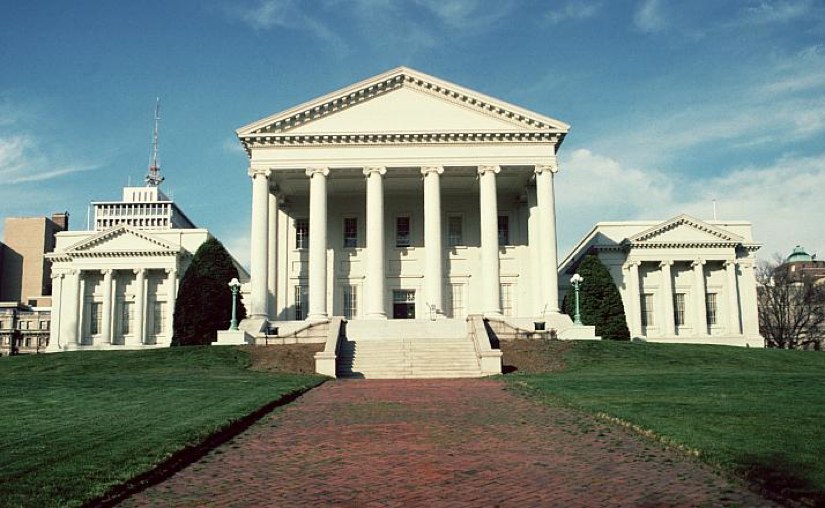 Several hot-button issues will be on the docket when the Virginia General Assembly convenes next week for the 2014 session in Richmond.
Some of the top topics: Abortion, gay marriage and guns.
Sen. Janet Howell, (D-Reston) who has represented the 32nd District since 1992, has co-sponsored Senate Joint Resolution (SJ) 5, which proposes the repeal on the Virginia constitutional amendment that defines marriage as between one man and one woman.
There are three other bills that seek to do the same thing: SJ 1, HJ 3 and HJ 11.
The constitutional amendment was approved in a 2006 referendum.
State government watchers say it is unlikely the resolutions will gain much traction because the General Assembly must vote twice over a two-year calendar on proposed changes to the Constitution. That way, voters get a first say on the Assembly’s action – if they don’t like the change they can vote supporters out, explains the Daily Press.
The usual pattern is for the Assembly to vote for the first time on a Constitutional amendment the second year after an election; followed by a second vote in the first year after the next election. If a proposed amendment gets its two election-separated General Assembly votes of approval, it then goes to voters as a ballot question. Then the voters must approve before the amendment becomes part of the Constitution.
Other legislation to watch:
HB 98 — Outlawing abortion based on sex selection. This bill, introduced by conservative Republican Robert Marshall of Prince William County, says that a person who performs an abortion with knowledge that the abortion is sought solely and exclusively on account of the sex of the unborn child is guilty of a Class 4 felony. The bill also requires that the information that must be provided to a woman seeking an abortion prior to obtaining her informed written consent to the procedure include a statement that the physician would be committing a criminal offense if he performs an abortion solely on account of the sex of the unborn child. Marshall is also the sponsor of HB 20, which says no insurance plan of the Commonwealth or a locality shall provide contraceptive coverage.
HB 21 — Guns at school. Also introduced by Marshall, this bill would require every school board in the Commonwealth to designate at least one qualified person for every school in the district who may carry a concealed handgun on school property. The bill requires all designated persons, including certain school division employees, certain school volunteers who carry valid concealed handgun permits, and certain retired law-enforcement officers, to be certified and trained by the Virginia Center for School Safety or the National Rifle Association in the storage, use, and handling of a concealed handgun.
HB 8 — Decreasing fees for gun permits. Decreases the local law-enforcement background investigation fee from $35 to $10, which includes any amount assessed by the FBI for providing criminal history record information. The total amount assessed for processing an application for a permit is thereby decreased from $50 to $25.
HB 204 — Limits on gifts. This bill would limit the amount of gifts local and state legislators could accept and would require all to report gifts in a centralized database. This bill, sponsored by Rob Krupicka (D-45th), was created in the wake of the scandal clouding outgoing Gov. Bob McDonnell, who allegedly accepted more than $150,000 in wedding catering, clothing, and other items from Star Scientific founder Jonnie Williams.
Howell is also sponsoring a bill that would allow registered voters to vote absentee without having to state a reason and another bill that would create a find to aid victims of sexual and domestic violence. She is co-sponsoring a bill that would make the children who have lived in Virginia and attended school here for at least three years eligible for in-state college tuition, regardless of immigration status or parents’ immigration status.
On the House side, Ken Plum (D-Reston), the longest-serving Virginia house member (32 years), is co-sponsor of the absentee voting bill. He is also a co-patron of HB4, which would repeal the $64 hybrid vehicle tax that went into effect on July 1, 2013.
Howell and Plum will hold their annual pre-session public hearing on Thursday, Jan. 2 at 7:30 p.m. at Reston Community Center Hunters Woods.

Is there something you would like addressed in the Virginia General Assembly this year? Your local Virginia General Assembly members want to know.
There are several opportunities to speak with Del, Ken Plum (D-Reston) and Sen. Janet Howell (D-Reston) before they head to Richmond for the 2014 legislative session, which begins in Jan. 8.
Howell and Plum are hosting a public meeting in Thursday, Jan. 2, 7:30 to 9:00 p.m. at the Reston Community Center at Hunters Woods, 2310 Colts Neck Road, Reston.
Additionally, the entire Fairfax County General Assembly delegation will be at at hearing for public comment on Saturday, Jan. 4, at 9 a.m. at the Fairfax County Government Center. The public is invited to attend and comment.
The Reston meeting will be a very casual format, but organizers of the countywide meeting ask that you register in advance if you want to speak. To sign up contact the Office of the Clerk to the Board of Supervisors at 703-324-3151, TTY 711, by noon on Friday, Jan. 3. Speakers also may sign up at the hearing.
Photo of Sen. Janet Howell courtesy of office of Janet Howell
In a couple of days, Virginia Gov. Bob McDonnell will present a proposed budget to the General Assembly for the next two years. Early announcements about what it contains have been good: critically needed funding for mental health and restoration of funding to education programs.
What is unique about the budget is that Governor McDonnell will not be around to defend or to implement it. The Constitution of Virginia limits the governor to one term. A governor can run a second time as Mills Godwin did in the 1960s, but the terms cannot be successive.
The limitation on executive leadership goes back to the earliest days of Virginia as a state. Concerned about the excesses of the king, the leaders of the newly independent Virginia limited the governor to terms of one year. Patrick Henry was the first governor who served for multiple years, but he had to be re-elected each year. While it is seriously questionable whether Gov. McDonnell could have been re-elected with his serious ethical lapses, he simply was not allowed by the Constitution to stand for re-election. All governors have been constrained in what they were able to do by the necessity that they get their work accomplished in four years.
I have supported several attempts over many years to amend the Constitution to allow the governor to serve two terms, but these efforts have not been successful. If the legislature approved such an amendment, it would have to approve it a second time after an election and then put it before the people in a referendum. Because of the timeline involved, such an amendment would not apply to the governor who was in office at the time. I continue to support a constitutional amendment to permit the governor to serve two terms, recognizing that the electorate can still enforce a one-term limit if it chooses to do so.
The electorate can likewise limit the terms of members of the House of Delegates to two years or any multiple thereof and of the Senate to four years or any multiple of four. Members serve at the will of the people for the amount of time determined by the electorate and not by an arbitrary number in the Constitution.
There is less need for a specific time limitation because the General Assembly is made up of part-time citizen legislators rather than being full time like the governor. While some states have chosen to limit legislators to a set number of years, the experience in these states has been a serious loss of experience in the legislature and an increase in the power of staff and lobbyists.
To ensure that the people are truly free to choose their legislators, an independent non-partisan redistricting process needs to be put into place. Under the current gerrymandering process, legislators choose the people they want to represent rather than the people choosing their legislators. A commission that I first proposed in 1982 and continue to advocate for would take the task of redistricting from legislators and give it to an independent body. Open elections with competitive races are the best form of term limits.
President Franklin Roosevelt once tried to change the date of Thanksgiving to always be later in November, but he was stopped by merchants who wanted maximum time to sell their goods before Christmas. In those days holiday shopping started the day after Thanksgiving rather than the increasing practice of starting on Thanksgiving evening.
However the schedule is arranged, the last month of the year turns out to be very busy for most everyone, but especially for members of the legislature. The General Assembly session gets underway on Jan. 8, but a great amount of groundwork goes into preparing for it. Beyond taking care of our personal and family responsibilities in December, legislators are rushing to survey constituents on their issues and concerns, get bills drafted and move to Richmond for at least 60 days starting in January.
The two-hour trip from Reston to Richmond — when traffic is moving — means I have to find a temporary place to lease during the legislative session.
The revitalization of downtown Richmond has greatly expanded housing options. Besides the usual hotels that give discounts for a longer stay there are furnished apartments and condominiums available for short-term leasing. Many of those housing units are in older buildings that were factories, warehouses, and stores in the past but have been turned into beautiful apartments that retain much of the original brickwork and heavy wood framing that give them real charm.
Miller and Rhoad — the Macy’s of Richmond for many decades — has been converted into a hotel and condominiums. The Canal Lofts apartment building in which I will be living was originally a Lucky Strike cigarette manufacturing plant. The original tobacco warehouses next door are apartments. My legislative assistant will be renting an apartment in a building that used to be a bank.
Beyond finding a place to live is the most important work of deciding what legislation to introduce and what legislation introduced by others is important to co-sponsor. There is no shortage of local governments, interest groups and individuals to make suggestions. Most of the requests to the professional staff of the House of Delegates to turn an idea or concept into the legal language of a bill are placed in December although such requests continue through to the first week of the session.
Please email your recommendations on needed legislation or support to me at [email protected].
Senator Janet Howell and I will be having our usual pre-session public hearing on Jan. 2 at 7:30 p.m. at the Reston Community Center Hunters Woods, 2310 Colts Neck Road. Please complete my legislative survey on my website at kenplum.com, or if you need a printed copy of the survey email me your name and address or leave it in a message on my office phone: 703-758-9733.
On Jan. 11, we will be inaugurating Terry McAuliffe as Governor, along with Senator Ralph Northam as Lieutenant Governor and Senator Mark Herring as Attorney General. For details on inaugural activities, visit www.inauguration2014.com.
Ken Plum (D-36) represents Reston in the Virginia General Assembly. He writes weekly on Reston Now.
Happy Thanksgiving Day to you and your family!
In previous columns on this date, I have presented the historic evidence clearly establishing that the first Thanksgiving celebration took place at Berkeley Plantation in Virginia on December 4, 1619 — several years before the Pilgrims ever left England to come to Plymouth Colony.
Unfortunately the Virginia colony did not survive to keep the tradition alive thereby forfeiting to the Pilgrims the more commonly used date for the celebration of the harvest. Setting aside this minor debate over a historic beginning, there is a much more serious debate that needs to take place as we celebrate our blessings and bounty.
That debate revolves around the fact that while some are celebrating and feasting on Thanksgiving a record number of people in this country are unemployed, hungry and losing hope. The shocking income inequality with the shrinking middle class over the past couple of decades is well documented. Former Labor Secretary Robert Reich has become the chief spokesperson for the cause and has presented the facts very graphically and glaringly. Starting in the 1970s, one percent of Americans have been taking home 20 percent of the country’s income and own 35 percent of its wealth.
It is easy to look at a set of numbers that point to a problem and conclude that the problem is happening someplace else and not here, but a recent report by the Commonwealth Institute for Fiscal Analysis found that the problem exists in Virginia. In a recent press release, “Rising Inequality Lifting Some Virginians, Sinking Others,” the Institute reported that since the recession, the top 10 percent of earners (making at least $47.97 per hour) have seen their wages grow over 8 percent while the wages of the bottom 10 percent (making $8.19 or less per hour) are now over 7 percent below their pre-recession level.
“As a result of these trends, Virginia faces record levels of inequality that threaten the state’s economic stability and long-term prosperity because the middle class and low-income households that make up most of the population aren’t earning enough to buy the goods and services the economy is capable of producing,” according to Michael Cassidy, President and CEO of the Commonwealth Institute for Fiscal Analysis. The report also states that in 2012 the top 10 percent in Virginia made 2.7 times as much as the median worker. Only California had a greater disparity. Over the past 30 years wages for the top 10 percent of earners grew 19 times as fast as those at the bottom.
Thanks to all who contributed to Thanksgiving baskets this year, but the problem is not a one-day challenge. It is time to look beyond Thanksgiving to start to resolve the income inequality that exists in this state and country. As Reich points out, the problem is fixable.
Ken Plum has represented Reston in Virginia’s House of Delegates since 1982. He can be reached at [email protected].
Governor-elect Terry McAuliffe hit the ground running when the day after his election he announced his transition team and a webpage at which he solicits ideas and suggestions and invites resumes from those who want to work in his administration.
His approach of assembling a bipartisan transitional team, moving quickly and seeking input are crucial for Virginia at an important transitional time. Last week, I talked about many of the issues like Medicaid expansion that were debated during the campaign and need immediate attention. There are many other issues that do not get as bright a spotlight but deserve serious attention. One is the natural landscape of Virginia and the quality of its air and water.
More than a month ago, VIRGINIAforever, a coalition of concerned businesses, environmental organizations and outdoor enthusiasts, presented to the gubernatorial candidates a five-year plan, “Investing in the Commonwealth’s Land and Water.” As the report points out, Virginia’s population has doubled in the last 50 years putting great stress on our land and water.
The Commonwealth has a constitutional requirement unique among the states “to protect its atmosphere, lands and water from pollution, impairment, or destruction, for the benefit, enjoyment and general welfare of the people of the Commonwealth.” Virginia currently spends just over one percent of its budget on land conservation and water quality improvements. As the title of the report suggests, it will be necessary to “invest” more greatly if the goals of the report are to be met. But investing also suggests that there is an expected return.
Part of the changing landscape of Virginia is the loss of farmland. Since 1997 nearly 150,000 acres of farmland have been converted to other uses. A drive through the Shenandoah Valley can provide immediate visual evidence of the change. While the new use is justified in economic terms, it needs to be recognized that farming and forestry has nearly a $100 billion impact on Virginia’s economy.
The report calls for Virginia to protect 120,000 acres of farmland over the next five years through the use of tax credits. And, in order to meet the growing demand for state parks at a recommended level of 10 acres of park per 1,000 Virginians it will be necessary to conserve an additional 18,000 acres by 2020.
Only about one-third of Virginia’s 52,255 miles of rivers have been assessed for impairment, and of those assessed waters 71 percent are impaired for one or more uses as are over 80 percent of Virginia’s lakes and the Chesapeake Bay, according to the VIRGINIAforever report.
One of the most important statements in the report is that “concerns about cleaning up our polluted waters often fall back on predictions of negative consequences for the economy. Experience has not just disproven the concern that environmental restoration threatens economic prosperity, it has demonstrated just the opposite—economies cannot thrive in a world of depleted and degraded natural resources, and in fact, innovation, investment, and competition have spurred job growth in new sectors just when traditional sectors were faltering.”
The nature of Virginia must be a priority of the new administration!
Ken Plum (D-36th) represents Reston in Virginia’s House of Delegates. He writes a weekly column for Reston now. He can be reached at [email protected].
By Delegate Kenneth R. “Ken” Plum
Recently, I was asked to participate in a workshop for a group of leaders who were planning a future for their organization. Specifically, I was asked to discuss the characteristics of our community of Reston. While I try to stay on top of trends and am out in the community on a daily basis, I learned a lot preparing for the presentation at the workshop.
While the 400 square miles of Fairfax County are about average size for a county in Virginia, there is little else average about us in the state or in the nation for that matter. Virginia is the 12th-largest state in population among the 50 states, but the 1.1 million people in Fairfax County is larger in population than any other jurisdiction in Virginia. Richmond has just over 200,000 people; Washington, D.C. just over 600,000.
Virginia is the eighth-wealthiest state in household income, but the Northern Virginia jurisdictions of Fairfax, Loudoun, and Arlington have the highest level of household income in the nation. In fact, the median household income in Fairfax County is more than twice that of the United States.
That is not to say that everyone in Fairfax County is wealthy. We have the same income gap between the top and bottom incomes as exists throughout the country. While Fairfax County has a seemingly low rate of poverty at six percent, that rate translates into 72,000 individuals; a low rate but a high number! Eight percent of children under eight were below the poverty level compared with four percent of people 65 years and over. Thirteen percent of families with only a female head of household present had incomes below the poverty level.
Just as our county’s population has gone from about 454,000 in 1970 to 1.1 million today with an expected growth to 1.37 million in 2040, the population has become more diverse. Thirty percent of the people living in Fairfax County are foreign born. Of the foreign born, just over half were born in Asia, about 30 percent in Latin America, and the rest from throughout the world.
The diversity of our population by ethnicity and race can best be seen in our schools that are themselves diverse in different ways. Hunters Woods Elementary is 33 percent Asian while nearby Dogwood Elementary is 60 percent Hispanic. Lake Anne Elementary is 37 percent white, 29 percent Hispanic and 21 percent black. Nearby Forest Edge is 40 percent white, 18 percent Asian, 20 percent black and 15 percent Hispanic. Demographic information is available on each public school’s website.
The population of Fairfax County is among the best educated in the country. Of persons age 25 and older, 28 percent have advanced degrees beyond the bachelor’s, 30 percent have bachelor’s degrees, and only about eight percent have less than a high school education.
All these characteristics make our community unique and special. A wonderfully diverse population with very different backgrounds and needs contributes to our special culture. I would not want to live anywhere else in the world.
Reston resident Ken Plum has represented Virginia’s 36th District in the Virginia House of Delegates since 1982. Plum’s campaign is Reston Now advertiser.
