

The public can get a closer look at Fairfax County’s efforts to combat climate change with an updated Climate Action Dashboard.
The dashboard updates, released yesterday (Dec. 18) by the Fairfax County Office of Environmental and Energy Coordination (OEEC), include a new interactive map and sector-specific landing pages, so community members interested in buildings, for example, can view those metrics separately ones about waste.
Overall, the updated dashboard aims to highlight how data informs county decision-making and how positive results come to be through “collective effort,” per a county press release.
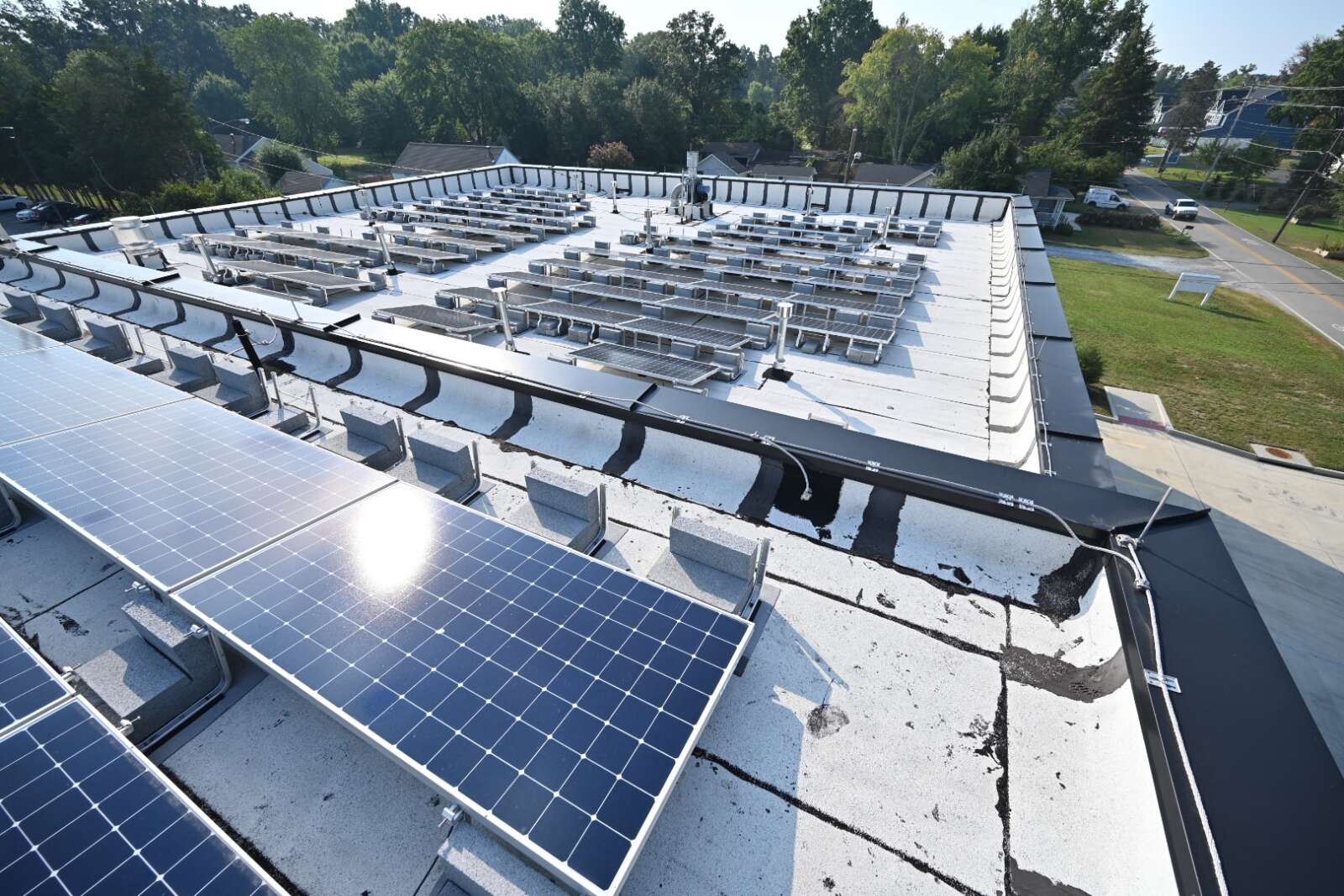
So far, progress includes a 30% reduction in greenhouse gas emissions between 2005 and 2020 and an increase in solar installations.
The county has an extensive set of climate-related goals, outlined in three plans. Two of those plans — the Community-wide Energy and Climate Action Plan and the Operational Energy Strategy — focus on emissions, while the third focuses on climate resilience against natural disasters like flooding and heat.
“Resilience means being able to bounce back fully from shocks and stressors that come our way without suffering permanent loss,” OEEC acting director John Morrill told the Board of Supervisors at an environmental committee meeting last Tuesday (Dec. 12).
The county is making progress on a variety of its environmental goals, according to a high-level summary Morrill presented at the meeting.
For example, it’s ahead of where it needs to be to retrofit at least 100,000 housing units with energy efficiency by 2030, and it has surpassed a goal of increasing telework and non-motorized commuting, though the OEEC acknowledges that could “regress” as more workers return to offices after the pandemic.
In other metrics, however, the county is behind its benchmarks. Just 10% of energy in the community comes from clean sources, when it should be at 20% to reach its goal of all clean energy by 2045, and 48% of waste is being diverted from landfills or incineration, a rate that should be closer to 60% to reach 90% by 2040.
Morrill noted that the county has more control when it comes to developing resilience than when reducing emissions.
“Emissions reduction is a national and global effort, and much is beyond our control or even influence,” Morrill said. “We’ll be more clearly defining the factors beyond county control to better calibrate our efforts and expectations to ensure that we are focused on making the most of what the county can do best.”
Morrill compared climate resilience to running on a treadmill as its speed increases, and said it may not be possible to reach 100% resilience.
“Nevertheless, the county’s resilience efforts are crucial to ensuring we do not fall off the back of the treadmill, which in this metaphor would mean permanent loss of life, property and resources,” Morrill said.
At the meeting, Board of Supervisors Chairman Jeff McKay said community engagement would be key to achieving the county’s climate action goals, including its target date of 2050 for achieving carbon neutrality.
“Without their engagement and involvement, we can’t achieve these overall goals,” McKay said.
An addendum to Morrill’s presentation provided updates on several county initiatives. For example, Charge Up Fairfax — a pilot program that assists residential communities with electric vehicle charging — launched with five neighborhoods this year. Another five neighborhoods were recently added.
Fairfax County’s cooling centers, which got revamped earlier this year, had 251 visits in 2023.
The OEEC will regularly add new and more up-to-date information to its Climate Action Dashboard, according to the press release. The board will receive more detailed information about the county’s progress on its goals early in the new year, Morrill said.

Next Phase of Dulles Airport Taking Shape — “A team of planners at the Metropolitan Washington Airports Authority is working on a new vision for Dulles — one that could vastly expand the airport’s footprint and include construction of a new runway, concourses and completion of the AeroTrain system. The new master plan also could incorporate the next generation of transportation options…known as air taxis.” [Washington Post]
Burke Man Charged With Indecent Exposure — “At 12:46 p.m. on December 16, officers responded to a sex offense at the intersection of Coffer Woods Court and Blincoe Court in Burke. A victim observed a man running on a nearby trail exposing himself.” Police arrested a 53-year-old man, who “may have exposed himself on multiple other occasions along the Pohick Stream Valley Trail.” [FCPD]
Merrifield Design Company Lays Off Hundreds — “Custom Ink LLC is eliminating all in-house production of its custom printed shirts and other swag, resulting in the closure of its remaining production facility in Dallas and hundreds of layoffs. Custom Ink notified 490 employees on Dec. 8 that their jobs are being eliminated,” including 83 employees based in Virginia. [Washington Business Journal]
Woodlawn Furniture Showroom to Close — “For 37 years, Duane Collie has owned and operated the Keeping Room, a two-floor custom furniture store located at Potomac Square.” After sharing in September that he will retire, Collie is looking to clear the store’s remaining inventory before a jewelry store takes over the space in late February. [On the MoVe]
County Board Updated on Major Road Projects — The Virginia Department of Transportation’s acting megaprojects director Michelle Shropshire gave the Fairfax County Board of Supervisors updates on “a host of projects that are finished, under construction or the drawing board” last week. Highlights include more than 1 million trips per month on the new I-66 Express Lanes since they opened outside the Capital Beltway last year. [Gazette Leader]
Herndon Satellite Company Makes First Acquisition — “Fresh off raising $68 million from a number of big-name investors, Herndon-based analytics company HawkEye 360 Inc. has struck an acquisition that will expand its data-gathering capacity. The company…has acquired RF Solutions from its parent company, Maxar Intelligence. Its first-ever deal gives HawkEye 360 two additional satellites, named Charlie and Delta, to go along with the 21 it has in orbit.” [DC Inno]
Chantilly Man Wins $125K With Lottery Scratch-Off — “Alfredo Ochoa of Chantilly scratched his way to $125,000 in holiday money with a Virginia Lottery ticket he purchased recently at Giant Foods located at 13043 Lee Jackson Highway in Fairfax…He told lottery officials that he plans to use his winnings to take case of his family.” [Patch]
Fire Department Has Tips for Keeping Pets Warm — “Winter can be a difficult time for pets, but with some preparation and vigilance, pet owners can help ensure their furry friends stay happy and healthy when temperatures drop. Here are some tips for keeping your pets safe and comfortable during the colder months.” [FCFRD]
It’s Wednesday — Expect a sunny day with temperatures reaching nearly 46°F and a northwest wind of 5-7 mph. The night will be mostly clear with temperatures dropping to around 31°F and a west wind of 3-6 mph. [Weather.gov]
Reston Association’s Board of Directors selected the web development company CivicPlus as the vendor for its website redesign — a project that has been in the works since 2020.
At a Dec. 14 board meeting, RA Chief Operating Officer Peter Lusk said staff have been working on fine-tuning the details of the new design.
“There was an extensive effort in June, both on the staff side and in collaboration with the IT committee, to select the right vendor and keep this project moving to start work,” he said.
Lusk said the new website will be fully customized with new menu structures and improved communication tools.
RA’s website was abruptly taken down in 2020 due to outdated technology and stability issues. Financial records were lost in the process, and some information was not backed up.
RA moved to establish an information technology committee in March 2021 to navigate the website and other tech issues, which were outlined by consulting firm Wipfli last year.
Earlier this year, the association said it hoped to launch the website by the end of the first quarter of 2024.
“We’re all very excited to get it moving,” Lusk said.
Since the website was taken down, RA’s platform has been running on Squarespace.
Fairfax County is moving forward with updates to its landscaping and screening requirements along streets and parking lots.
The Fairfax County Planning Commission recommended the approval of changes to the ordinance at a meeting on Dec. 6. If fully approved, it would be the first major change to the ordinance in 40 years and could make parking lots greener.
Planning staff proposed the update to the Fairfax County Board of Supervisors at a land use policy committee meeting back in May.
At the planning commission public hearing, Sara Morgan with the Department of Planning and Zoning, said the introduction of “street frontage landscaping” would require developers to provide a planting strip on private property parallel to a public or private street. Single-family dwellings would be exempted.
“It is on private property. It’s 10-foot wide with one tree for every 30 feet,” Morgan said.
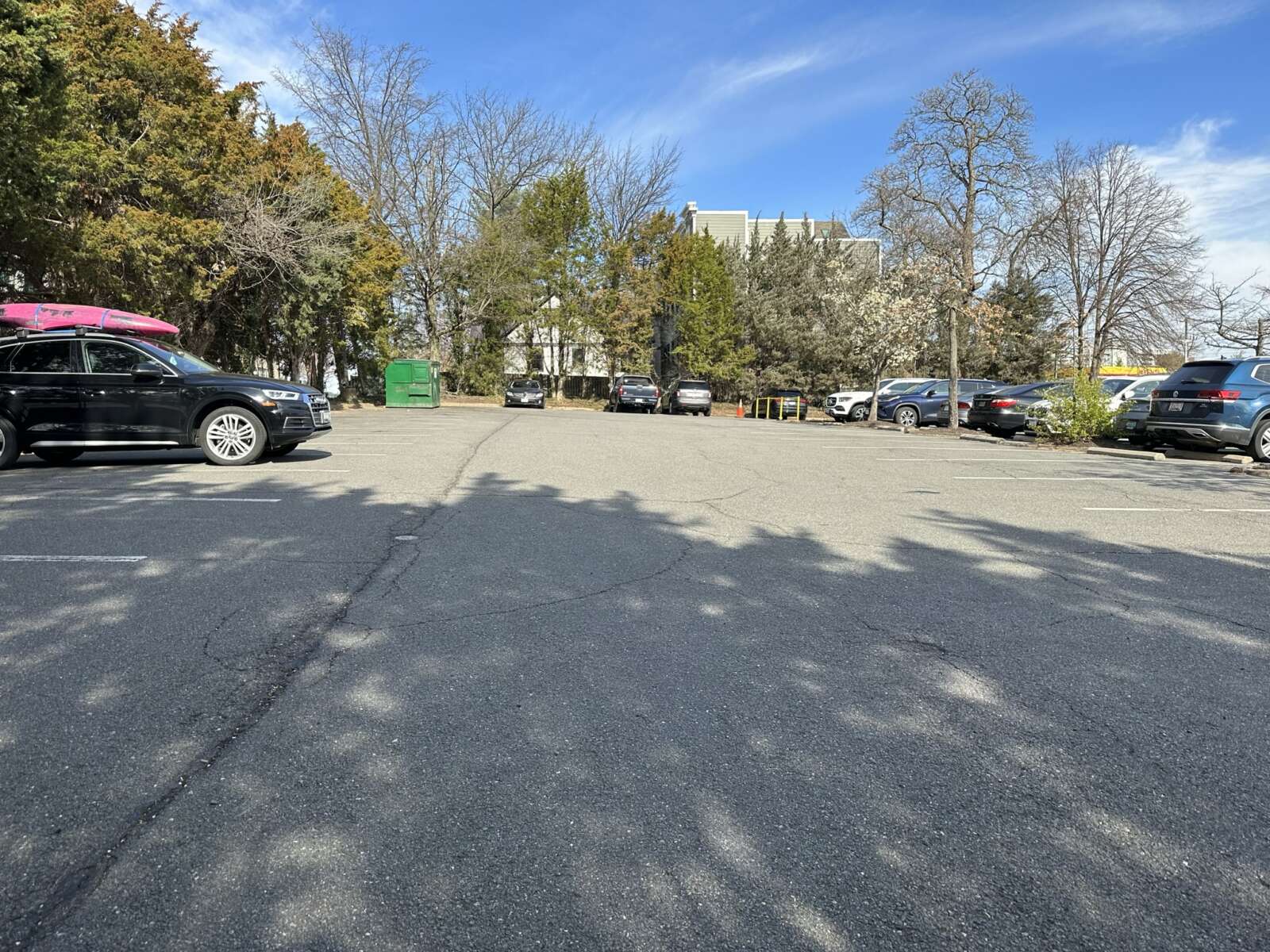
The current ordinance requires trees to be installed at any surface parking lot with 20 or more spaces. The update would expand that requirement to surface lots with 10 or more parking spaces. It would also increase the required tree coverage from 5% to 10% “to address some of the urban heat-island effects and other environmental impacts,” Morgan said.
For parking garages, the new ordinance would establish shade structure requirements. New garages would need to have 10% of their top decks covered with shade.
“The parking structure could be a canopy, a canopy with vegetative roofs, solar collections systems or trees,” Morgan said.
To incentivize the use of solar power, developers that add a solar system on top of a garage would only need to cover 5% of the structure instead of 10%, Morgan added.
The Great Falls Citizens Association raised an objection to the substitution of shade structures as an alternative to natural landscaping.
Morgan said this was included because often, trees planted on top of parking structures do not grow to the extent where they provide adequate shade.
“So, we are looking at ways where we can achieve that shade through the means of possible trees, but also through the canopies or the solar collection systems,” she said.
Other changes in the ordinance include a preference for native tree species as well as environmentally tolerant species. During outreach, the county heard from individuals who wanted more species that have the ability to withstand high heat and high-drought flooding, according to Morgan.
Braddock District Commissioner Mary Cortina proposed amending the ordinance to specify that preference be given to environmentally tolerant species “where appropriate for site conditions.” The commission unanimously approved the amendment.
Cortina praised the timing of the proposed changes, calling it a good decision to follow up the county’s approval this fall of new off-street parking standards
“And I think this decision alone is really going to change how these parking lots look,” she said.
The ordinance will now go to the Board of Supervisors for approval on Jan. 23.
Reston Association’s Board of Directors deferred a decision last week on how to handle the planned addition of pickleball at Barton Hill’s tennis courts to Jan. 25.
The decision on Thursday (Dec. 14) comes as the organization grapples with community concerns about noise from the new courts and enthusiasm from pickleball players seeking more locations to play the burgeoning sport.
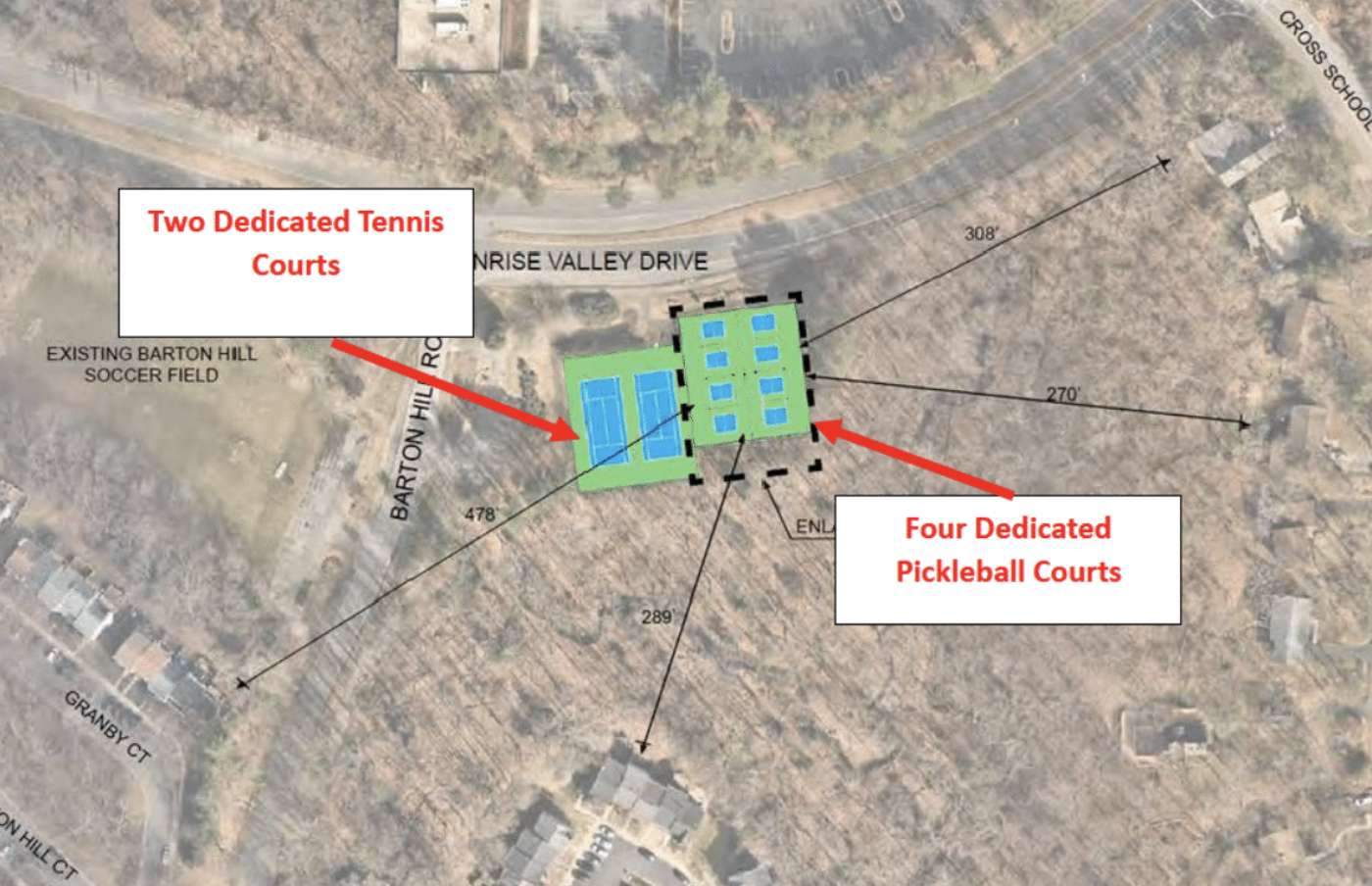
The association is choosing between two designs for the project: six dedicated pickleball courts with four courts that have blended lines on the existing tennis courts at 1901 Barton Hill Road or four dedicated pickleball courts with no blended lines on the existing courts.
RA plans to install Acoustifence — noise blocking material — to manage sound in the area, adding $75,000 to the initial price tag of $770,000.
With the assistance of consultant Kimley-Horn, RA completed two sound studies in July and November. The latest study found that noise from pickleball play is below Fairfax County’s noise ordinance for continuous sound — sound that is constant throughout observation — and 100 decibels for impulse sound — single or multiple sounds characterized by a sudden rise in noise.
“I’m not going to sit here and tell any neighbor that what they’re hearing is not valid or isn’t reality,” Aaron Heustess, a senior civil engineer with Kimley-Horn, said. “All I can do is point back to the data, which says if you look at the meter and you watch what’s happening, it’s not impacting the noise.”
According to Heustess, most of the studied sound was dominated by traffic noise.
Board director Laurie Dodd noted that the county’s noise ordinance is designed more for average noise levels, rather than impulse noise levels.
Heustess also pointed out that the sound produced from a pickleball whacking a racket is significantly shorter than other sounds and has “low energy from an overall average standpoint.”
“The impulsive nature of pickleball noise does not drive the average noise level for that particular use,” he said.
He also noted that the county’s noise ordinance has an exception for recreational uses between 7 a.m. and 7 p.m.
The bottom line, Heustess concurred with director Irwin Flashman, was to “keep it as far away from people as you possibly can.”
Meanwhile, RA’s community survey found that 15% of its members played pickleball within the last year, and 12% of members would’ve played in the last month but were limited by the availability of courts. Others said they were concerned about overcrowded courts and limited hours.
If approved, scheduling for the Barton Hill pickleball courts and the soccer field would be staggered to address concerns about parking needs. There are currently 28 existing parking spots at the courts, including ones across the road at the soccer field.
In a separate matter, RA worked with community members to draft a memo asking the Virginia Department of Transportation to consider installing a crosswalk on Barton Hill Road.
Further engineering and study is necessary before a permit application is submitted.

County Expands Electric Vehicle Pilot — The Office of Environmental and Energy Coordination recently picked five new communities to join its Charge Up Fairfax pilot program, which helps neighborhoods install electric vehicle charging equipment. The latest participants are the Colonies at McLean, Strathmeade Square Community, Villa Ridge Condominium, Washington Plaza Cluster Association and Waterford Square Condominium Unit Owners Association. [WTOP]
School Board Members Share Identity Through Books for Inauguration — “Four returning members and eight newcomers were sworn onto the board at the ceremony Wednesday evening. Some members brought sentimental Bibles, some brought stacks of books they connected with and others used no book at all. A number of members saw the ceremony as an opportunity to demonstrate their stance on the rise of book challenges.” [Washington Post]
Fairfax Man Gets Prison for Cyberstalking — “A man from Fairfax was sentenced on Monday to over three years in federal prison for cyberstalking a man and a woman.” Michael Ghali, 35, pleaded guilty to sending “sexually explicit and threatening text messages” to a Maryland woman starting in June 2020, and he also sent emails threatening a former coworker around that same time. [DC News Now]
Transit Advocate Laments Vienna’s Lack of New Housing — “[Fairfax County] estimates that Vienna’s zoning policies will only lead to 250 new residents between now and 2050. So to try to make up for Vienna and other jurisdictions’ refusal to do their part, the county is trying to jam as much housing as it can into the one place that can’t say no because it’s not a city: Tysons.” [Greater Greater Washington]
Bailey’s Crossroads Shopping Center Adds Furniture Store, Restaurant — “Two new businesses are coming to the Crossroads Place Shopping Center in Bailey’s Crossroads — Charleys Cheesesteaks and Wings and Fortunoff Backyard Store. The companies just signed leases with the owner, Levin Management Corp., so it’s too soon to set opening dates, says Sandy Crisafulli of Caryl Communications.” [Annandale Today]
Art Projects Enliven Annandale Commercial Spaces — “The ‘Art in Daily Spaces’ initiative invites 10 local artists to showcase their Pop Art creations in commercial spaces throughout Annandale. The artworks will be displayed in such places as restaurants, coffee shops, stores, hair salons, laundromats, or office lobbies.” [Annandale Today]
N. Va. Pizza Chain Named One of World’s Best — “Arlington’s Pupatella has been recognized by an international pizza ranking guide as one of the premier pizza chains worldwide…The pizza chain has expanded to seven additional locations across the D.C. area,” including ones in Reston, Merrifield and Springfield. [ARLnow]
McLean Group Gets “Visit” From Former First Lady — “A woman who helped steer the ship of state during her husband’s incapacitation visited with the McLean Historical Society at its Dec. 12 meeting. Phyllis Verhalen portrayed First Lady Edith Wilson, the wife of President Woodrow Wilson, at the event, discussing her life and role during the final years of her husband’s presidency.” [Gazette Leader]
It’s Tuesday — Expect mostly sunny skies and a high near 40 degrees, accompanied by a breezy northwest wind. In the evening, the sky will remain clear with temperatures dropping to around 27 degrees, while the northwest wind decreases to 7 to 11 mph. [Weather.gov]
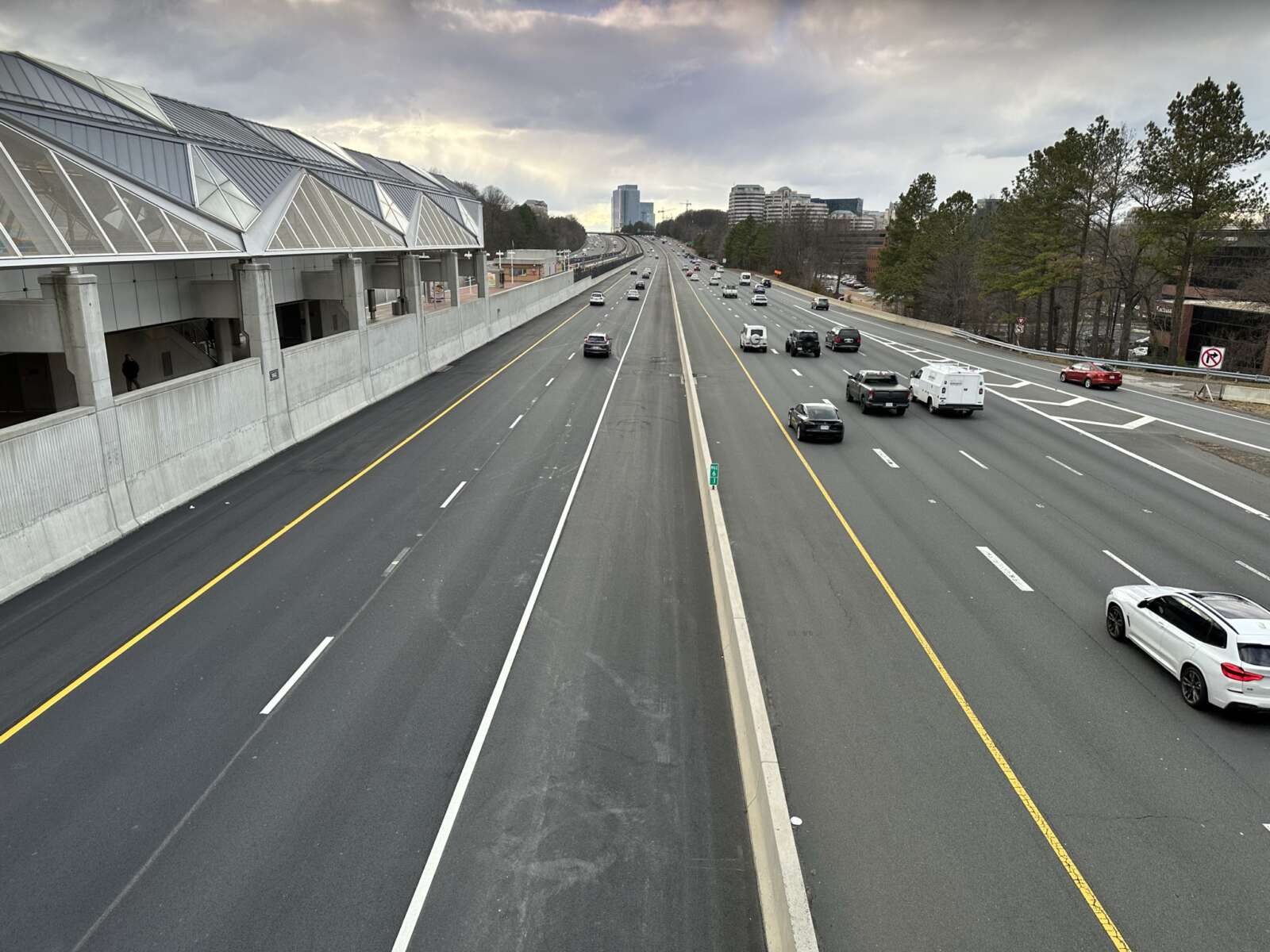
The Dulles Toll Road by the Wiehle-Reston East Metro station (staff photo by Angela Woolsey)
Fairfax County has launched a new data dashboard to offer insights into its mobility and transportation realm.
The dashboard — which was developed as part of the county’s strategic plan — dives into four indicators: efficient and varied transportation options; infrastructure conditions, sustainability and environmental impact; traveler safety; and increased accessibility, affordability and equity.
So far, data shows that working from home is decreasing after spiking at the start of the COVID-19 pandemic. According to the dashboard, 27.9% of residents worked from home in last year, down slightly from 37.2% in 2021.
Of the people who commuted last year, roughly 9 in 10 residents drove to work — with 80% driving alone.
The dashboard also highlights a spike in traffic-related deaths. In 2022, there were 60 fatal crashes, up 43% from 2019.
Although crashes of all types decreased by 17% from 2019 to 2022, the total number of crashes increased by 31% between 2020 and 2022.
Data from the dashboard is intended to illustrate how the county is doing on efforts to move away from reliance on single-occupancy vehicles, improve walkability and reduce traffic-related incidents.
“The dashboard is designed to inform residents and stakeholders, monitor progress overtime, identify any demographic or geographic disparities among residents, and guide community leaders, practitioners, and advocates in making data-driven decisions,” the county said in a news release.
The dashboard also highlights the fact that the county has installed 620 traffic calming devices since 1998, most of them at speed humps and speed tables.
The county plans to update the dashboard on a yearly basis in order to monitor community progress.

Next year, the Lake Thoreau spillway will feature a nature-inspired public artwork created by South Lakes High School’s STEAM team.
The 10-foot tall installation was designed to embrace Reston’s natural environment with a “modern twist,” according to Public Art Reston. Viewers will see a forest from one perspective and a single tree from the other. Students plan to illuminate flowers fastened to the tree’s branches.
The design was selected by Public Art Reston’s selection committee, which narrowed down submissions to three concepts.
In order to fund the project, the STEAM team is selling calendars that feature nature photography by Reston resident Mary Prochnow. Calendars can be purchased online or in-person at the Reston Museum.
The art club has been creating artwork on the lake spillway since 2014. It is led by South Lakes art teacher and working artist Marco Rando. Projects are supported by Public Art Reston and Reston Association.
This year’s artwork — titled “Rise” — was inspired by Reston’s rapid development.
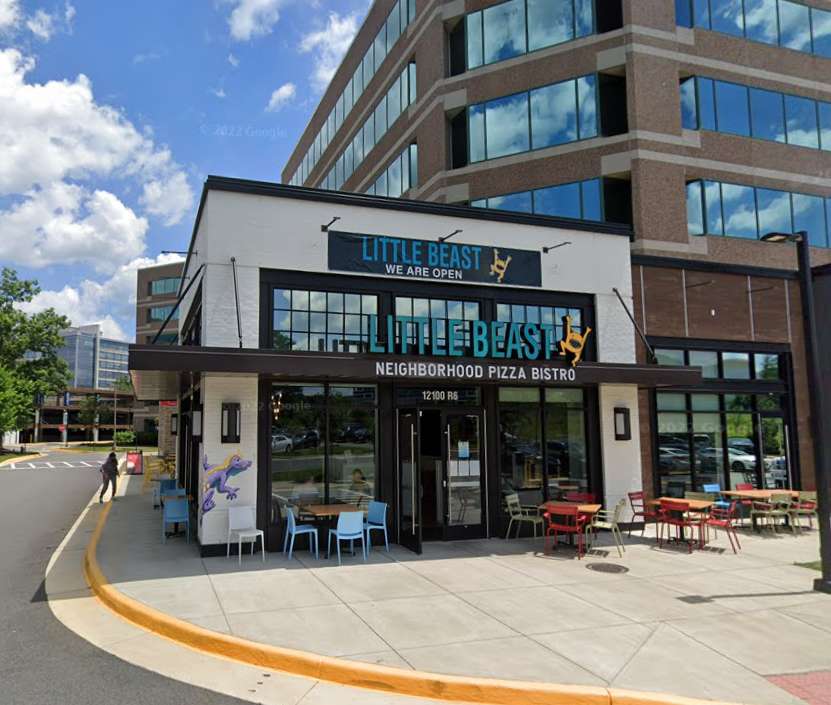
(Updated at 4:45 p.m.) This year will be the end of Reston’s Little Beast Cafe and Bistro and Red Velvet Cupcakery.
The businesses at 12100 Sunset Hills Road in RTC West will close permanently on Saturday (Dec. 23), Northern Virginia Magazine reported.
“We are going to miss Reston and our regulars dearly,” the company wrote in a social media comment confirming the report. “If you are ever in D.C., come visit our Chevy Chase location.”
The D.C. location at 5600 Connecticut Avenue is open from 11 a.m. to 9 p.m. on Monday through Thursday, 11 a.m. to 10 p.m. on Friday, 10 a.m. to 10 p.m. on Saturday and 10 a.m. to 9 p.m. on Sunday.
(Correction: Little Beast’s address and operating hours in Chevy Chase were previously misstated.
Little Beast and Red Velvet Cupcakery opened in September 2021 in RTC West’s retail center, which is also home to Tiki Thai, Bombay Velvet and Cooper’s Hawk. Red Velvet previously had a location in Reston Town Center that closed in 2018 after paid parking was implemented there.
Northern Virginia Magazine reported that the Gordon Food Group, which operates Little Beast and Red Velvet Cupcakery, already has another concept lined up for the space that will offer pizza, sandwiches and craft beer.
Image via Google Maps
Local and state officials in Virginia say the path to dig Metro out of its looming $750 million deficit is uncertain — but action is necessary to avoid the significant service cuts, systemwide fare hikes, layoffs and station closures laid out in the transit agency’s newly proposed budget.
Leaders in Fairfax County — which already faces lean economic times — say they don’t plan to offer up additional funds unless jurisdictional and federal partners can throw some more skin into the game.
“What we have said is there’s absolutely no way that local governments can bear the responsibility of that entire bill,” Fairfax County Board of Supervisors Chairman Jeff McKay told FFXnow in an interview before the Washington Metropolitan Area Transit Authority released its official budget proposal.
WMATA has been sounding the alarm on its projected budget shortfall since June.
“What I think you’re going to see happen is there’s going to be some matching and some partnerships,” McKay said.
In a first glimpse of the proposed budget, which was released last Tuesday (Dec. 12), Metro General Manager Randy Clarke laid out what would happen if Metro can’t secure local, state and federal funds to address a problem that has been coalescing for years.
“Metro is facing an unprecedented, existential crisis that requires our region to rally together if we want to avoid the catastrophic impacts this budget would have on our region,” he said.
The system would close at 10 p.m. every day and shutter 10 low-ridership stations. Silver Line trains would turn back at Stadium-Armory, with trains running between Ashburn and that station. Similar reduced turn-backs would take place on the Red Line.
Trains would run every 15 minutes for most stations — a 17 to 67% increase in wait-times across the board on weekdays — and every 20 minutes on weekends for most stations — a 40 to 70% increase. Fares would also jump by 20%.
Among other cuts and more than 2,000 layoffs, Metro would use $193 million from its capital funds to cover operating maintenance expenses — essentially borrowing against the future.
“Such a large transfer of capital funds to operating expenses puts the system’s state of good repair, including safety and reliability, at risk, and threatens to delay, defer, decrease, or cancel several long-term projects to modernize the system,” WMATA cautioned in a press release.
But it’s unclear when and if local and state bodies will offer up enough funding. The subsidized system relies on annual subsidies from Maryland, Virginia and D.C., as well as fare revenue and federal dollars. The fiscal year 2025 budget begins July 1, 2024.
Metro needs subsidy increases of $180 million from Virginia, which has already allocated $348 million. Similar increases are sought from other jurisdictions. The upcoming General Assembly session will determine how much the state is willing to put down to assuage the bleeding after federal COVID-19 funding ends for the system.
Recent news that the Washington Capitals and Wizards plan to move near the new Potomac Yard Metro station in Alexandria emphasizes Metro’s “pivotal role” in the region, Hunter Mill District Supervisor Walter Alcorn says.
“Funding from Virginia will be critical in limiting the additional burden to be borne by local property taxpayers,” Alcorn said.
He also stated that a long-term solution that extends “beyond property taxes is critical to make Metro truly sustainable for Virginia residents and businesses.”
On the federal side, Rep. Gerry Connolly (D-11) said finding more funding for WMATA will be “very difficult,” particularly after the government provided $2.4 million in emergency Covid relief funding that staved off a major deficit for four years.
“We renewed the $150 million annual federal capital funding commitment to WMATA as part of the Bipartisan Infrastructure Law,” Connolly said in a statement. “And the WMATA Board just removed its second Inspector General in two years the day after the Inspector General reported that WMATA was not in compliance with statutory conditions for federal funding — conditions I authored to address a culture at WMATA that resists accountability at every turn from the IG to the safety oversight commission.”
Still, he believes the federal government needs to step in more.
“It is long past time that the federal government pay its fair share to support the system’s operating costs, conditional of course on WMATA improving safety, reliability, and customer service,” he said.
Phyllis Randall, chair of the Northern Virginia Transportation Authority and the Loudoun County Board of Supervisors, noted that NVTA has pledged to invest $258 million in Metro’s capital improvements, signifying its commitment to support the system.
“Stakeholders must work together to secure sufficient state and federal funding and implement operational changes to ensure that Metro continues to meet the transportation and economic development needs of the region,” she said.
But McKay told FFXnow he still expects to see service cuts in the short term, even if state, federal and local entities can team up to at least limit the impact of the budget shortfall.
In the long term, he says the federal and state government need to pony up more funds to support Metro, noting that the federal funding is currently “a fixed-dollar amount” that doesn’t adjust with inflation.
“There are discussions underway about putting in place a longer-term fix to Metro that will probably require a lot of things, not the least of which is some reforms at Metro to improve management,” McKay said. “…I think the county has a role to play, but we’re not willing to play a role unless all of our funding partners are also making a commitment to do that.”

FCPS Considers Later Middle School Start Times — Fairfax County Public Schools “is exploring the possibility of starting middle school classes at 8 a.m. or later, it said. Currently, middle schools in the county start classes at 7:30 a.m…The goal is for the new start time to be in place for the 2025-26 school year, the school system said.” [WTOP]
Hybla Valley Man Arrested in Stolen Car — “A Hybla Valley man accused of committing five burglaries in 24 hours was arrested Tuesday. Then released on bond Thursday. Now, he’s back in jail.” When the 22-year-old man was arrested again Friday (Dec. 15), he was in a Hyundai Sonata stolen from the West Springfield Police District station earlier in the day. [WUSA9]
Fairfax Doctor Pleads Guilty to Tax Fraud — “A Fairfax doctor pleaded guilty [Friday] and has agreed to pay $3.1 million in taxes and $2.2 million to insurance companies for corruptly obstructing the IRS by underreporting his income and filing false tax returns in connection with his medical practice.” [DOJ]
Local Economic Development Leaders Call for Transportation Investments — “As Fairfax County grows in population, development and jobs, transportation is struggling to keep up…With more people moving to live in the suburbs and returning to their pre-pandemic commutes, real estate leaders and county officials say now is the time to put the pedal to the metal to improve the county’s mass transit and vehicular transportation options.” [Bisnow]
Metro Ends Fare Card Fee for Seniors — “Metro’s Board of Directors approved the elimination of the $2 fee on Senior SmarTrip® cards. Beginning Tuesday, January 16, 2024, Senior SmarTrip cards will be issued at no cost to customers age 65 and older…The elimination of the $2 fee removes the need for a third-party payment collection, which is currently a barrier to participation for social service agencies and other organizations to distribute the card.” [WMATA]
How AOL Shaped Northern Virginia — “In 1996, America Online announced that it would move its headquarters from Tysons to the former British Aerospace building, just east of the Broad Run creek…Currently, the abandoned campus is being demolished, making way for even more data centers…Although AOL’s footprint in Loudoun may soon be erased, the company’s legacy and impact on the community — and especially Ashburn — live on.” [Inside NoVA]
McLean Resident Swims Distance of Earth’s Circumference — “We just had to share this incredible accomplishment from local McLean resident Chuck DiMeglio! He has swam more than 24,901 miles or the distance around the world, and 40% of that swim distance (1,753,030 pool lengths) has happened in Fairfax County Park Authority Rec Center pools!!” [FCPA/Facebook]
FCPD Offers Security Surveys to Faith Communities — “Our Police Department encourages faith leaders to request a security survey for their houses of worship…There hasn’t been an increase in bias related crimes in the county, but there’s a rising trend of bias-related crimes across the country, so the Police Department wants to be proactive and continue efforts to keep the community safe.” [Fairfax County Government]
It’s Monday — Expect showers, mainly before 1pm, with cloudy skies clearing later and a high near 52. It will be windy, featuring gusts up to 44 mph and a 70% chance of precipitation. Tonight, there’s a slight chance of showers after 1am, with partly cloudy skies and a low of 33. [Weather.gov]

Some facility upgrades are in the works for three Fairfax County parks.
The Fairfax County Park Authority (FCPA) Board approved a total of $55,325 in Mastenbrook grants on Wednesday (Dec. 13) to help fund improvements at Lake Fairfax Park in Reston, McLean Central Park and Frying Pan Farm Park south of Herndon.
Lake Fairfax Park (1400 Lake Fairfax Drive)
The Cricket Association of Fairfax County (CAFC) was awarded $15,325 to replace Lake Fairfax’s cricket pitch, which was developed in 1997 and is “one of the few in the Northern Virginia region large enough to meet the international standards of cricket,” according to the FCPA.
In its proposal to the park authority, the association reported that it has replaced the field’s artificial turf three times in the past 20 years, but inadequate drainage has damaged the wicket — a concrete base covered by artificial turf used to bounce the ball — and results in frequent waterlogging.
“Recent discussions with the park management have resulted in the determination that the wicket cannot be repaired,” the CAFC said. “A new wicket needs to be constructed with elevation and drainage to prevent water build up.”
The project to replace the pitch’s base and turf carries a total estimated cost of $30,650, half of which will be covered by the cricket association.
McLean Central Park (1468 Dolley Madison Blvd)
The 28-acre park near the McLean Community Center is getting a renovated basketball court, thanks to a friends group formed this year to honor Thomas A. Mulquin, a McLean resident who was “an avid supporter of basketball,” according to an FCPA staff summary for the board.
“The basketball court is currently in disrepair and therefore seldom used,” the Friends of Thomas A. Mulquin wrote in its grant application. “A tree root protrudes through the surface at one end of the court and a thicket downhill at the other end makes retrieving balls difficult and unsafe.”
Supported by $45,176 in community contributions, on top of $20,000 from the park authority, the $65,176 renovation will refurbish the court surface, update the color coating and line painting, replace both hoops and add a 10-foot-tall chain link fence “to prevent basketballs from going into the heavy overgrowth near the court,” according to the FCPA press release.
Frying Pan Farm Park (2709 West Ox Road)
Spirit Open Equestrian also requested and received a $20,000 grant — the maximum allowed for a single project by the Mastenbrook Grant Program, which provides matching funds for park improvements undertaken by local residents or community groups.
The nonprofit wants to bring electricity to the equestrian facilities where it provides therapeutic horseback-riding programs. The four horse barns and three sheds with supply and office space currently rely on solar panels, which are limited in capacity and unreliable, depending on the season, per the grant application.
“The project plan proposes to have Dominion Energy extend power from an existing cell tower, and then to contract with a vendor to outfit the buildings with wiring, conduit, outlets and related electrical components,” FCPA staff said.
With the project estimated to cost $72,458, the park authority grant will be supplemented by $52,458 from SOE.
All three projects are on track to be completed by spring 2024, according to the park authority.
These will be the last improvements supported by Mastenbrook grants for the time being. The FCPA has suspended applications to the 25-year-old program as it conducts a review, prompted by concerns about a gap in the quality of park facilities based on the ability of different neighborhoods to fundraise.
“The goal of the review is to examine the process through an equity lens and determine how to improve accessibility and benefit of the program in all areas of the county — particularly in communities of opportunity,” the park authority said.
FCPA staff are expected to deliver recommendations for the program’s future to the board in early 2024.
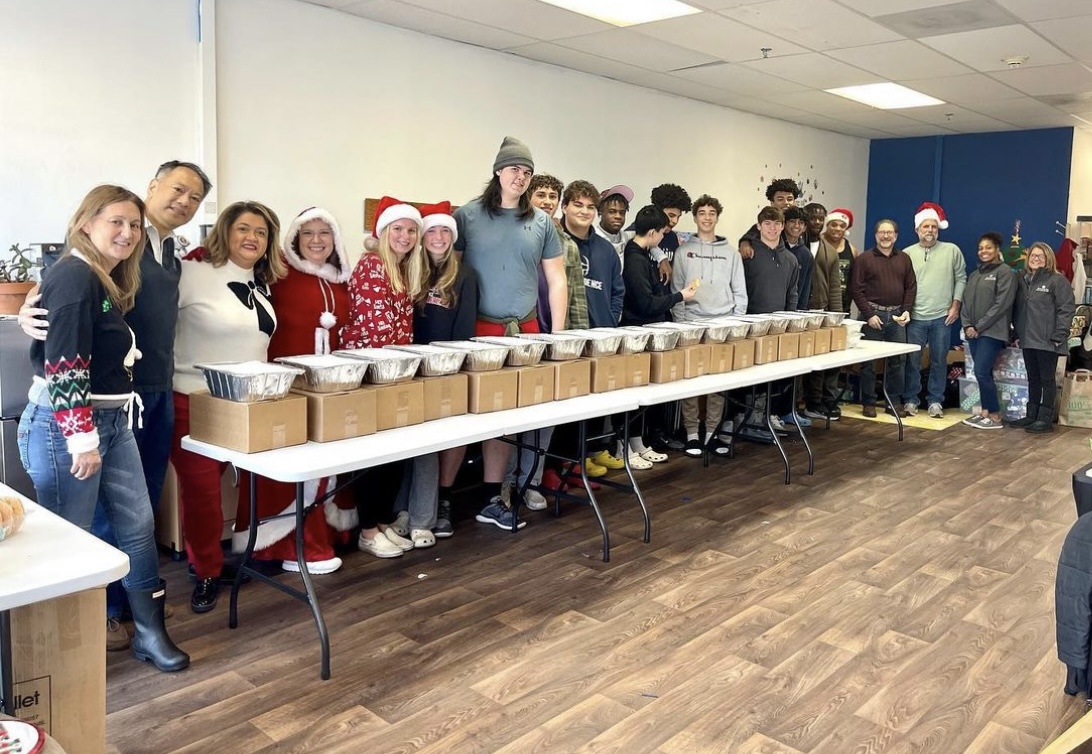
A new distribution center at the Cathy Hudgins Community Center at Southgate (12125 Pinecrest Road) in Reston will bring the Christmas spirit alive this holiday season.
BetterALife, a nonprofit organization that aims to support children and families in need, will host a Christmas meals and toy distribution event at 2 p.m. tomorrow (Saturday).
The nonprofit organization has been providing food to families in need every Wednesday at noon. It has also offered support to two Reston elementary school by providing meals over the weekend and essential items, such as blankets.
“We invite you to join us this Saturday to witness firsthand the tremendous need that exists in the Reston community and the efforts we are making to address local child hunger,” BetterALife CEO and founder Elizabeth Ford said. “Together, we can make a difference and bring hope to those who need it the most.”
A longtime Reston resident, Ford founded BetterALife in response to her experiences with poverty and food insecurity as a child, according to the organization’s website.
She and her mother moved several times due to evictions. After dropping out of high school and obtaining her GED, she worked table-waiting jobs to sustain herself financially. Eventually, she went to college online and earned a degree in information technology, making a commitment to help children in need.
Tomorrow’s distribution event will involve handing out meals, winter coats and toys. Local volunteers are encouraged to attend.

The Virginia Board of Education is asking the General Assembly to develop a plan for changing the state’s existing school funding formula to help divisions strapped for money but isn’t backing a proposal to remove a cap that limits the number of support positions the state will fund.
According to an earlier report by the Joint Legislative Audit and Review Commission, which conducts analysis and provides oversight of state agencies on behalf of the General Assembly, changing the formula could help address the underfunding of schools.
“We don’t have a good school financing system in Virginia. It is inequitable, and it’s outdated,” said Board of Education member Andy Rotherham during a special meeting Tuesday.
Virginia’s funding formula establishes how much state and local governments must provide to meet the state’s Standards of Quality (SOQ), the requirements that Virginia public schools must meet. The board reviews those standards every two years and proposes changes as necessary, while the General Assembly makes decisions about how much funding divisions should get.
In addition to backing a new funding formula, the board on Tuesday also urged the General Assembly to provide flexible funding for innovative approaches to literacy and math education, require high school students to have an opportunity to make their own academic and career plans and provide funding for a statewide individualized education program system.
Although board members noted that a decision by the General Assembly to provide divisions more flexible funds could allow them to address a range of different needs, member Anne Holton pushed unsuccessfully for the body to recommend a minimum funding commitment from lawmakers.
“Many divisions, the ones that can afford to fund way over the minimum SOQs … their kids are doing okay,” Holton said. “But the divisions that can’t afford to go way above the state and dated minimum SOQs don’t fund over it, and their kids are not doing okay.”
Funding formula
JLARC this summer recommended the General Assembly consider changing the funding formula after finding that Virginia schools receive 14% less state funding than the 50-state average, equal to roughly $1,900 less per student.
Virginia’s current SOQ formula determines funding for divisions by calculating the number of staff they need and then the cost of those staff.
While the Virginia Department of Education said in a Dec. 12 report that the approach worked historically, it said school divisions today are “faced with a myriad of unique student needs.”
“Funding should be allocated by student, recognizing the unique needs of each student rather than using a formula driven by staffing ratios,” the report stated.
On Tuesday, in line with that suggestion, the board recommended policymakers “investigate, model and develop a plan to move to a student-weighted funding formula for purposes of determining the required state and local shares of cost for the Standards of Quality.”
JLARC estimated that if Virginia had used the student-based rather than staffing funding formula, schools would have received an additional $1.17 billion in fiscal year 2023. Additional funds could benefit programs for at-risk students, English learner programs, gifted education, special education and career and technical education.
Most states use a student-based funding formula, according to JLARC.
JLARC contended the student-based funding model is “simpler,” more accurate, more transparent and easier to adapt to changes in educational practices over time. However, it noted some researchers have found student-driven formulas don’t always account for issues such as retirement rate changes and can provide schools “too much flexibility” in hiring.
Scott Brabrand, executive director for the Virginia Association of School Superintendents, said the association is open to considering a new formula, but urged the board to continue studying the two formulas.
“Any new formula must address the key finding of the JLARC study that Virginia has underfunded all of its public school divisions,” Brabrand said. “Any new formula must increase funding across all of our school divisions. Further understanding of the pros and cons of a new formula is essential.”
Grace Creasey, president of the Board of Education, told the Mercury that “the board was clear that funding should be allocated by student and recognized that each student has unique needs that are not well reflected in a formula driven by staff ratios.”
No backing for elimination of support cap
But while the Board of Education threw its support behind funding formula changes, most members declined to recommend that the General Assembly remove a funding cap placed on support staff positions during the Great Recession.
The cap limits state funding for central office and administrative, technical, clerical, maintenance and instructional support positions.
Funding levels have never been restored, and the support cap was only partially lifted by the last state budget negotiated this past summer, which increased the funding ratio from 21 support positions per 1,000 pupils to 24 per 1,000 pupils.
“The support cap has effectively restricted the way school divisions can utilize funding to meet the needs of our students,” said Jenna Alexander, president of the Virginia Parent Teachers Association. “This is particularly problematic because over the last several years, we’ve seen increased enrollment of special education and English language learners students, both of which need additional services to reach their full academic potential.”
At a Nov. 15 board meeting, Deputy VDOE Superintendent Kent Dickey said removing the cap could cost over $100 million.
Board member Amber Northern said while she understood the need for schools to have additional support positions, she would have preferred to have a conversation about which positions best drive positive student outcomes.
“You want more people in your building, but you also want the people that are actually driving towards outcomes,” Northern said Nov. 15. “If we want to talk about support staff, we need to talk about what type of support staff we really support and the ones that actually do have more of a research base behind them in terms of driving outcomes.”
Unless lawmakers take up the board’s proposal during the upcoming session, local governments will have to wait until recommendations are due from a workgroup made up of Senate and House finance committee members next November.
Photo via Taylor Flowe on Unsplash. This article was reported and written by the Virginia Mercury, and has been reprinted under a Creative Commons license.

A plethora of administrative and logistical issues led to the Town of Herndon’s decision to permanently put the Herndon Festival to bed after a 43-year run, staff say.
At a Herndon Town Council meeting on Tuesday (Dec. 12), Town Manager Bill Ashton II laid out several issues that nearly derailed the festival in previous years and ultimately prompted the permanent cancellation of the four-day event, announced earlier this week.
“In my mind, the question was, ‘Should we spend these countless hours planning and preparing, or could this be an opportunity?’” he said.
According to Ashton, last year, town officials scrambled to find a security company to conduct bag checks during the festival.
Two companies abruptly cancelled their commitments — one of them just a day before the festival was set to begin. Staff scrambled to ratify a contract with a company just 1.5 hours before the festival’s gates opened. Local police officers are prohibited from checking bags at the festival without probable cause.
“It was that close,” Ashton said.
Ashton also said the Herndon Police Department must pull every officer that is not on actively watch for rotating shift. Like other public safety entities, the department has faced hiring and recruitment challenges in recent years, and the town can also no longer rely on regional partners to bolster the police presence at the festival site.
Ashton also noted that, in the event of a significant public safety emergency, the town would have no choice but to cancel the festival if a police force was required outside the festival.
“If we have a significant incident…we would have to shut the festival down to adequately put crime scene [officers] and detectives on site,” he said.
Town staff also struggled to secure dedicated volunteers for the event, which relies heavily on volunteer manpower from key organizations and community partners. Many of those groups cited a major dip in volunteerism in general, particularly as key volunteers age out.
Ashton said volunteers are critical to the event, even with staff putting in thousands of hours of work.
“Everybody’s leave gets cancelled or disapproved. Everybody has to be there,” he said. “If you aren’t there, you better have a doctor’s note.”
The Town of Herndon has major knowledge gaps as well. Since the COVID-19 pandemic, the parks and recreation department has undergone 100% turnover, and its director, Cindy Roeder, recently retired.
A major construction project to improve Spring Street is set to kick off this spring near the Northwest Federal Credit Union, where the festival would have taken place.
As part of the project, a state contractor will be working on the intersection of Spring Street and Herndon Parkway, requiring lane closures and changes to pedestrian access. Ashton said the town is not an a position to delay the project, which has already seen cost overruns in utility relocation and land acquisition.
Ashton said the community should instead see the cancellation of Herndon’s staple event as an opportunity to pursue more micro-events in the future — similar to the approach adopted last year for the Celebrate Fairfax! Festival. He noted that Fairfax County is open to partnering with the town.
The Fairfax County Times reported that Celebrate Fairfax Inc., the nonprofit organization that organized the county’s annual festival, has officially ended the event after a “private decision” by the Fairfax County Board of Supervisors, citing a tweet from Springfield District Supervisor Pat Herrity.
Photo via Herndon Festival/Facebook
