
The IRS has announced that many parents are now entitled to new child tax credit payments. News of the benefit increase came as a pleasant surprise to families across the country after years of not qualifying for child tax credit. The child tax extension began in July and has helped low-income families file and qualify for the tax credit.
The extra money will help families cover the cost of school supplies and clothes for their children, in addition to other expenses. Amongst other things, the new changes have brought relief to struggling families, especially after the economic struggles of the pandemic.
What’s New About the Child Tax Credit Payments?
People below the income level for tax returns have been struggling to care for their children. With this expansion, the IRS hopes to help low-income families across the country by including them in the child tax credit. This is part of a larger effort by President Biden and the Democratic party to fight child poverty.
Before this year, households with children under the age of 17 who filed for tax returns and child tax credit received $2,000 per child. This new extension will reach new families and it will allow parents to collect half of their credit for the remainder of the year. For older children between 6 and 17, parents can receive up to $250 a month per child, and for children 6 or younger, they can receive up to $300 per child each month.
Amid the pandemic, the American Rescue Plan increased the amount of child tax credits and extended the benefits to those with lower incomes throughout 2021. Lower-income families could not have access to child tax credits as they were only partially refundable, but now that they are fully refundable, at least through this year, they can reap the benefits.
How Do I Collect It?
The federal government will send out payments to households who qualify in monthly installments to distribute the money this year. The program will automatically include those who submitted and claimed child tax returns for the previous year. Thirty-six million notices have already been sent to qualifying families in the U.S.
Unfortunately, the IRS will not automatically include those who haven’t submitted their tax returns or received stimulus checks. Those within this category need to submit the proper documentation to ensure they receive the new benefits.
Since these changes are new, it is also essential for families and friends to spread the news. It can be an intimidating process, but the extended credit is intended to help those in need, and it can’t do so without educating them first. As put by family lawyer Charles D. Jamieson, “it has been a challenging year. Parents need to understand the various resources put in place to support their children.”
How Will This Help?
So far, there has been difficulty reaching those who had not filed for tax returns or stimulus checks. Since those are the systems in place for the IRS to process the tax credit, they are pushing for more Americans to file to distribute the aid. Spreading the news will be challenging since many U.S. cities have a large population of unaccounted children.
After a long, hard year, community efforts are essential for those in need of financial support to get the assistance they need.
In early July of this year, several new laws went into effect that may impact Virginia Department of Motor Vehicles (DMV) customers.
Many of the bills were written and passed in February and March, but they did not become law until July 1. The new legislation deals with specific subsets of the DMV’s customer base, and they will require individual action on the part of the customer if any of the new laws apply to them.
Virginia’s DMV is the government agency that oversees registration and titling for every automobile and other motor vehicle purchased in the state. Today, the DMV manages close to 6 million licensed drivers across the commonwealth. They are the point of contact for anyone with questions or concerns about the new laws.
The new laws have been passed by the General Assembly and signed by Gov. Ralph Northam. While each is different, the recent regulations directly alter the current status quo for a few separate categories of Virginia drivers. The laws include changes to users’ vehicle registration, issuance fees and obtaining specialized license plates.
Vehicle Registration and Issuance Fees
The first of the new laws concerns the expansion of voluntary disability indicators on vehicle registrations. Now, owners who regularly have a person with a communication impairment in their car are authorized to specify this information on their vehicle’s registration. The text mentions autism explicitly by name as a valid communication impairment, but the law will also pertain to those with speech or hearing disorders.
Applying for the new indicator is optional, but it will forewarn officers when approaching a parked vehicle with someone vocally impaired inside. The “Expansion of Voluntary Disability Indicator on Vehicle Registrations” is House Bill 1960, Senate Bill 1470, and Del. Robert Bell and Sen. George Barker introduced the latest legislation.
In addition to vehicle registration, some of the new laws switch focus to what is known as issuance fees. Two new Virginia laws eliminate fees for the issuance of specialized license plates to current and former members of the state’s National Guard. As of now, active and retired members must pay for the plates that display their services. Del. Wendell Walker and Del. Scott Wyatt sponsored House Bills 1796 and 2261, respectively.
Specialized License Plates
The next law lets those who earned special awards or medals in the military purchase specialized plates to commemorate those honors. For those who went beyond the normal call to duty and earned recognition for their heroic deeds, they can visit the DMV to get a license plate celebrating their award. However, they must first show valid proof of their service and the honor they received.
Awards that could appear on license plates include The Medal of Honor, The Bronze Star and The Purple Heart. Furthermore, House Bill 2669 creates a uniform fee structure for the military award plates. It also says that non-remarried spouses of former military service members can obtain a specialized plate if they prove their spouse collected the award in question.
The final bill signed into law also deals with specialized plates. Senate Bill 1229 adjusts the current Ducks Unlimited license plate to a revenue-sharing venture. Sponsored by Sen. Richard Stuart, the Ducks Unlimited annual license fee increased to 25 dollars, and 15 of the 25 dollars will be shifted to Ducks Unlimited, Inc. who will donate the funds to wetland and waterfowl habitat conservation projects scattered across the state.
Other States with Similar Laws
Although these laws are brand new to the commonwealth, similar laws exist in several other states. For example, while not directly through Ducks Unlimited, Delaware sells an American horseshoe crab license plate that donates a portion of its earnings to wildlife foundations in the state, including the Partnership for the Delaware Estuary and the Delaware Center for the Inland Bays.
Like Virginia’s newly available military award plates, Nebraska created its version in January. Service members must register with the Nebraska Veterans’ Registry, but they too can purchase a plate that represents their completion of a campaign in Iraq.
In Illinois, Gov. J.B. Pritzker signed a bill much like Virginia’s House Bills 1796 and 2261. Beginning in 2022, surviving widows of fallen armed forces spouses in the state no longer need to pay issuance fees for Gold Star license plates. After providing proof of their partner’s award, widows and parents of the deceased can obtain the plate without the extra expense.
Virginia’s Other New Laws
Each of the new laws surrounding the DMV was not the only legislation going into effect around that time. On July 1, Northam signed several bills that reshaped many legal ramifications in the commonwealth.
Virginia became the first southern state to abolish the death penalty. At the same time, it became the first southern state to legalize marijuana, as well. On the education front, public schools must always offer some form of in-person education.
“Laws in Virginia are changing,” said John Cooper of Cooper Hurley Injury Lawyers. “It is important to remember and be aware of the state’s new mandates whenever they arise, as they can have an impact on your daily life.”
Meet Adorable Anna, a 4-year-old Jack Russell mix available for adoption locally.
Here’s what her friends at Safe Haven Puppy Rescue have to say about her:
This precious 4-year-old weighing in at 22 pounds is just the sweetest girl! We believe her to be part Jack Russell terrier and possibly hound with those beautifully long legs of hers!
She was picked up as a stray so we are not sure of her past, but we know we want her future to be bright. She is a bit shy at first, but once she has a chance to settle in she warms right up. We are looking for a family that has older children and a nice fenced backyard for her to play and run around in. Her foster mom says she is house trained and introducing her to a life where she is loved has been fun — she is getting really good at sleeping on couches and cuddling!
She has been a joy to have with us, but she is ready to go to her forever family — we’re confident she will make his adopters a terrific companion. This beautiful girl is a nice blend of friendly affection and normal puppy playfulness and will bring lots of love to any home.
Are you and Adorable Anna a perfect match?
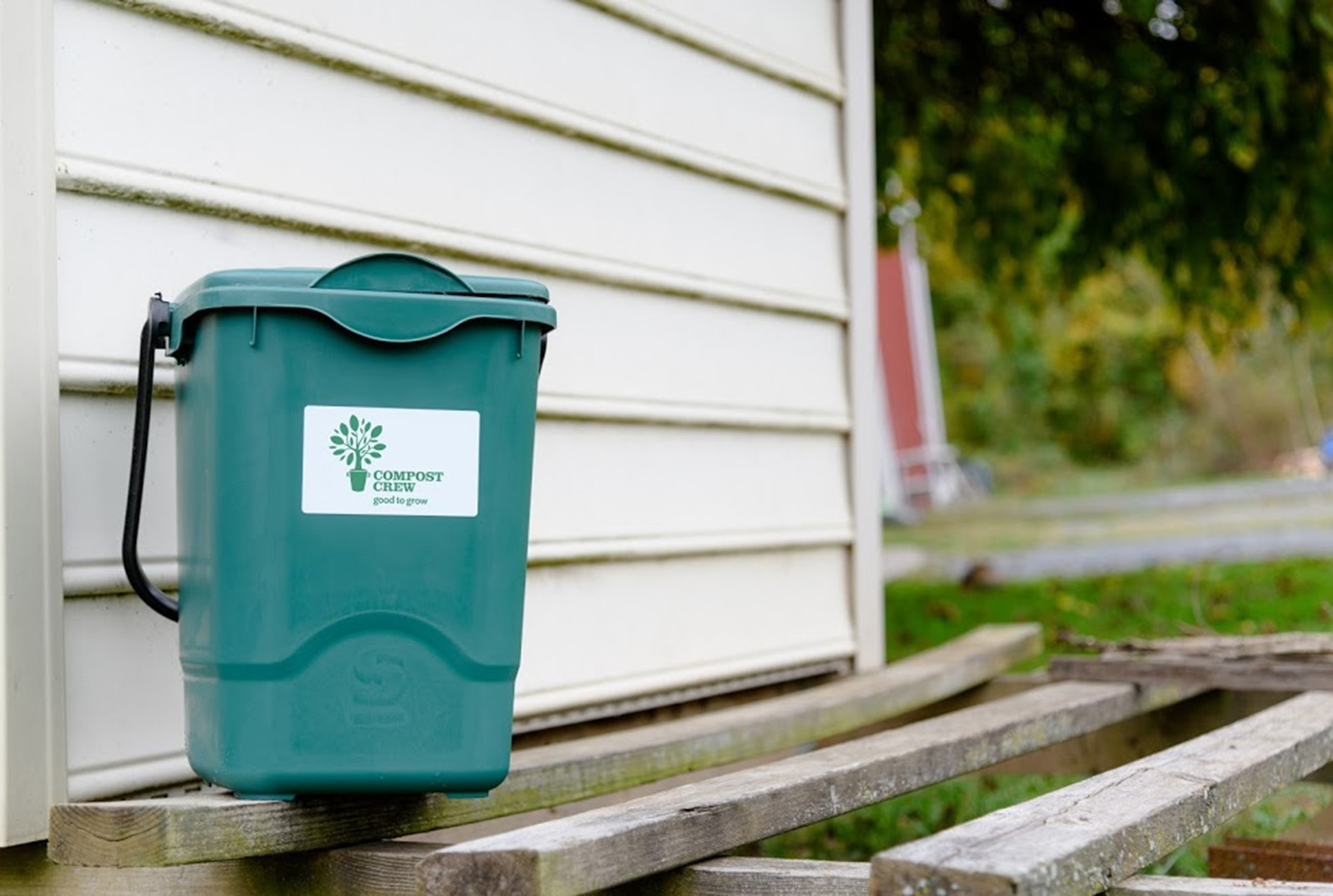
Compost Crew, a local food waste collection company, recently began service for homes in Reston.
The Rockville-based company provides weekly clean and convenient curbside organic waste collection in the area roughly between Herndon and Lake Audubon. Customers separate out their food scraps and leave them out once a week, just like you would with trash or recycling.
Compost Crew serves thousands of homes and businesses in the DMV area, including curbside service for hundreds of Falls Church residents in a program sponsored by the City. Keeping food waste out of the landfill reduces greenhouse gas emissions and creates a beneficial soil amendment called compost, which helps gardeners everywhere grow healthy plants.
Many people find that composting their food waste reduces the amount of trash they generate in their home by 25 to 50 percent. For about $1 per day, you can make a real difference.
Receive lower rates through our Community Program by getting neighbors to sign up with you! Have everyone interested fill out this form, and we will reach out with more information. We will help every step of the way.
To learn more about our service and to get started, head to the Compost Crew website.
After a global shift to working from home, social distancing and self-isolating, the roads seem safer than ever. In reality, many areas have seen a rise in car accidents and other motor vehicle threats compared to pre-pandemic times.
With more people remaining in their homes and limited social outings, the number of cars on the road has decreased since the pandemic began in the spring of 2020. In the United States, the National Highway Traffic Safety Administration (NHTSA) reported the decline during the pandemic’s peak.
Global Improvement of Accident Rates
This trend echoed globally, as most developed countries placed heavy restrictions on social and professional activity. Other countries, including France, experienced a substantial decrease in accidents. Insurance companies granted a massive amount of refunds to insured drivers, noted by Forbes, as accidents decreased by 80 percent in the first three weeks of the pandemic.
Fatalities also decreased in France compared to the previous year along with road usage and congestion.
Not for Those on The Road
The drop in travel likely caused the statistical improvement. Those that continue to drive, regardless of work from home mandates or social restrictions, are still at risk for roadway accidents and other threats. Commercial drivers who have enabled the lockdown have not experienced fewer accidents or vehicle-related deaths while working to transport essential goods.
New Dangers
While the professionals have not changed their driving habits, other drivers have taken on new attitudes getting behind the wheel. “The pandemic has not been easy, and each person responds differently to the challenges,” Robert Marcus says. Responses include stress, distraction and consumption to help cope with the changes accompanying the global pandemic response.
Emotional impacts of the pandemic, especially from work from home, social distancing and self-isolation, have fueled new dangers associated with driving. Increased stress and loneliness not only impact the emotional clarity and attention of drivers, but lead to increased consumption of mood boosting substances. As drug and alcohol use has fluctuated, the number of accidents has followed.
NHTSA reports also show that more drivers involved in crashes or fatal accidents were not following safety precautions. With less driving, more people have been neglecting to fasten their seatbelts, comply with traffic safety regulations, such as speed limits or traffic signs, and driving under the influence of drugs or alcohol.
Pandemic Problem
While this is evident in the U.S., the trend has also risen internationally as fewer drivers routinely get behind the wheel. France experienced this as well, with more drivers failing to abide by speed limit regulations and more fatal accident instances throughout the pandemic.
In addition to emotional changes, a demand for freedom could be the reason for increased accidents. Driving has historically been a vehicle for liberation, facilitating movement and control. These things have been heavily restricted over the past year to combat the coronavirus. Taking on the open road at high speeds and adopting new bicycling and exercise hobbies have created danger for those driving, either by choice or necessity.
The pandemic has changed a lot of practices regarding safety. While roads have become less crowded, people have become more careless, which has led to a rise in fatal car accidents. There are many reasons for this trend, but it is unclear whether it will improve in the near future as vaccines become more available.
This is a sponsored column by attorneys John Berry and Kimberly Berry of Berry & Berry, PLLC, an employment and labor law firm located in Northern Virginia that specializes in federal employee, security clearance, retirement and private sector employee matters.
By John V. Berry, Esq.
Can employers require employees to take the new COVID-19 vaccine?
This issue is likely to come up soon as vaccines for the COVID-19 virus start being deployed. The short answer to this question is likely yes for most employees in the long term. There are exceptions. As a side note, I will be in line to get the vaccine when those at higher risk have first been able to receive their vaccines first.
Religious, Disability and Moral Objections
Whether or not an individual is required to get a COVID-19 vaccine will depend on many factors, including the type of employment that the individual has and whether or not they have health conditions that could be complicated by the COVID-19 vaccine or perhaps run contrary to sincerely held religious beliefs.
Vaccines authorized under the emergency authority of the U.S. Food and Drug Administration (FDA), as the first vaccines will be at the start of the vaccination process, may be more difficult to mandate. I suspect that as the vaccines receive final approval by the FDA, which is a different process, that this could change as well. I don’t know if it will make a significant difference in the next year or two given that there also won’t likely be enough vaccines for everyone that wants one for a number of months. There are also many legal issues in flux and the legality of employers requiring vaccines could be bolstered by Congress.
As an analogy, there are employers that mandate the flu vaccine. The U.S. Occupational Safety and Health Administration (OSHA) has said that employers can legally impose a flu vaccine requirement on their workforce but that employees have the right to request medical or religious exemptions under federal anti-discrimination laws. Similar guidelines are likely to also apply for the COVID-19 vaccine.
EEOC View of Required Vaccinations
The Equal Employment Opportunity Commission’s (EEOC) view of the Civil Rights Act, is that once an employer receives notice that an employee’s sincerely held religious belief, practice, or observance prevents her/him from taking a flu vaccine, the employer must provide a reasonable accommodation unless it would pose an undue hardship.
An ethical or moral objection to taking the vaccine would not likely be enough to get beyond such a requirement. Employers with undue hardships (which can override objections) will likely be seen in some types of positions, like those that require direct contact with customers or where COVID-19 outbreaks have previously occurred. In cases where employers have required flu vaccines, some employers have let employees avoid vaccination but require those employees that refuse to take a vaccine to wear a mask at work.
Eventually, the vaccines probably will be approved under the FDA’s more lengthy rules and will no longer be considered experimental. But even then, requiring a COVID-19 vaccine as a condition for returning to employment could create the potential for many types of problems. We are fairly early in the COVID-19 vaccination process, but there are likely to be more laws protecting employers that require vaccines for employees due to the severity of the pandemic.
For those that object to COVID-19 vaccines, there are also likely numerous lawsuits that will be filed over these issues unless new laws are enacted. The best practice for an employer would likely be to strongly encourage but not force an employee to take a vaccine unless there is no other option.
Contact Us
If you are in need of employment law representation or advice, please contact our office at 703-668-0070 or through our contact page to schedule a consultation. Please also visit and like us on Facebook or Twitter.
The Virginia State Police are cracking down on speeding, and they want citizens to be aware. On Monday, the state police posted numerous photos on Twitter of speeding tickets that they wrote over the 4th of July holiday weekend.
The tickets might shock some people who consider themselves safe drivers. For example, one officer caught someone driving 134 mph in an area where the speed limit was 60 mph. That’s 74 mph over the speed limit and considered reckless driving. Two of the other tickets posted included someone driving 120 mph in a 55 mph zone in Virginia Beach and another person driving 106 mph in a 70 mph zone in Botetourt County.
All of the drivers are scheduled for traffic court appearances in August.
Warning Citizens About Dangerous Driving
The goal in posting the images is to warn drivers across Virginia that Virginia State Police are taking speeding seriously and making them aware of dangerous drivers on the roads where they live.
Unfortunately, the speeds they saw over the holiday weekend were not out of the ordinary. While they did catch a high number of drivers speeding, the state police have noted that troopers stop people going at these types of speeds every day.
The police want drivers to be more aware that speeding can lead to deadly accidents and reiterate that there is no need to speed on their roadways.
Reckless Driving Putting Citizens at Risk
One Virginia state trooper said that a man died on I-664 in Hampton on Friday. He was speeding when he came up behind completely stopped traffic. The man, named Kevin Riddick, swerved his car to avoid hitting others. In the process, he hit a barrier, and his vehicle overturned multiple times, eventually throwing him from the car.
I-564 is another road where state troopers see speeding fairly often. One area of the road, a straightaway, is a common spot. One of the drivers pulled over on the holiday weekend was going 131 mph in this spot, when the speed limit is 55 mph. According to state police, immediately after making that stop, the same trooper stopped another driver going 94 mph.
Reckless driving does more than put dangerous drivers themselves at risk. Others on the road can quickly end up in accidents because of them. One citizen said she almost always sees a car flying past her during her commute.
Virginia State Police Hoping to Keep Roadways Safe
Police hope that posting the images will bring more people’s attention to the importance of slowing down.
“Reckless driving is considered a crime in Virginia, and many drivers do not realize they can be charged with reckless driving when they are speeding,” says Virginia criminal defense attorney Karin Riley Porter of Price Benowitz Accident Injury Lawyers, LLP.
According to Virginia law, driving over 20 miles above the speed limit or over 80 miles per hour can result in being charged with a Class 1 misdemeanor. Keep in mind that this is regardless of the speed limit on any particular road. This kind of offense could warrant fines and even jail time. Often, the punishment will be more severe the faster the driver was going.
To keep Virginia’s roadways safe, state police are keeping close tabs on roads across the state and hoping to encourage drivers to step off the gas and be more careful.
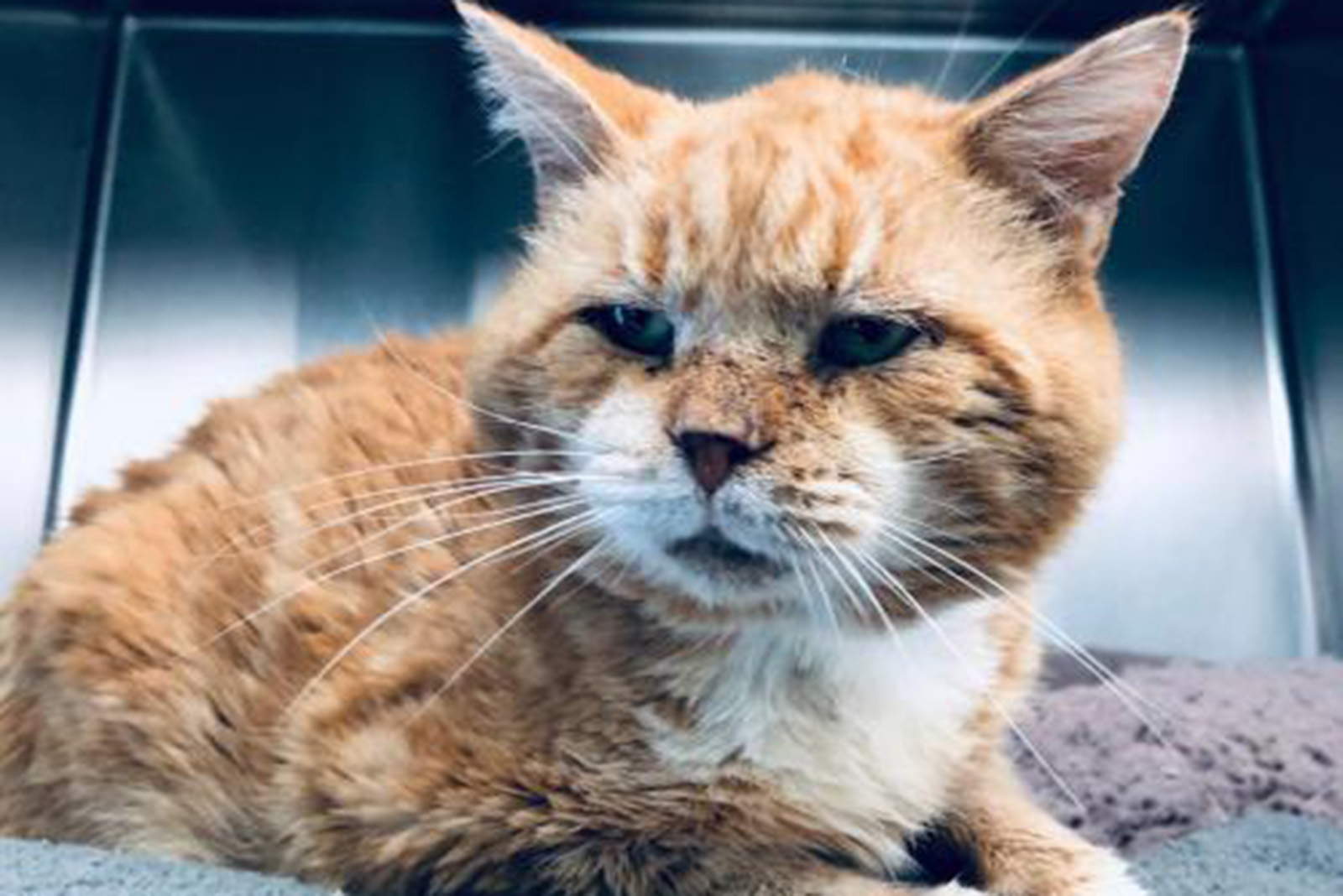
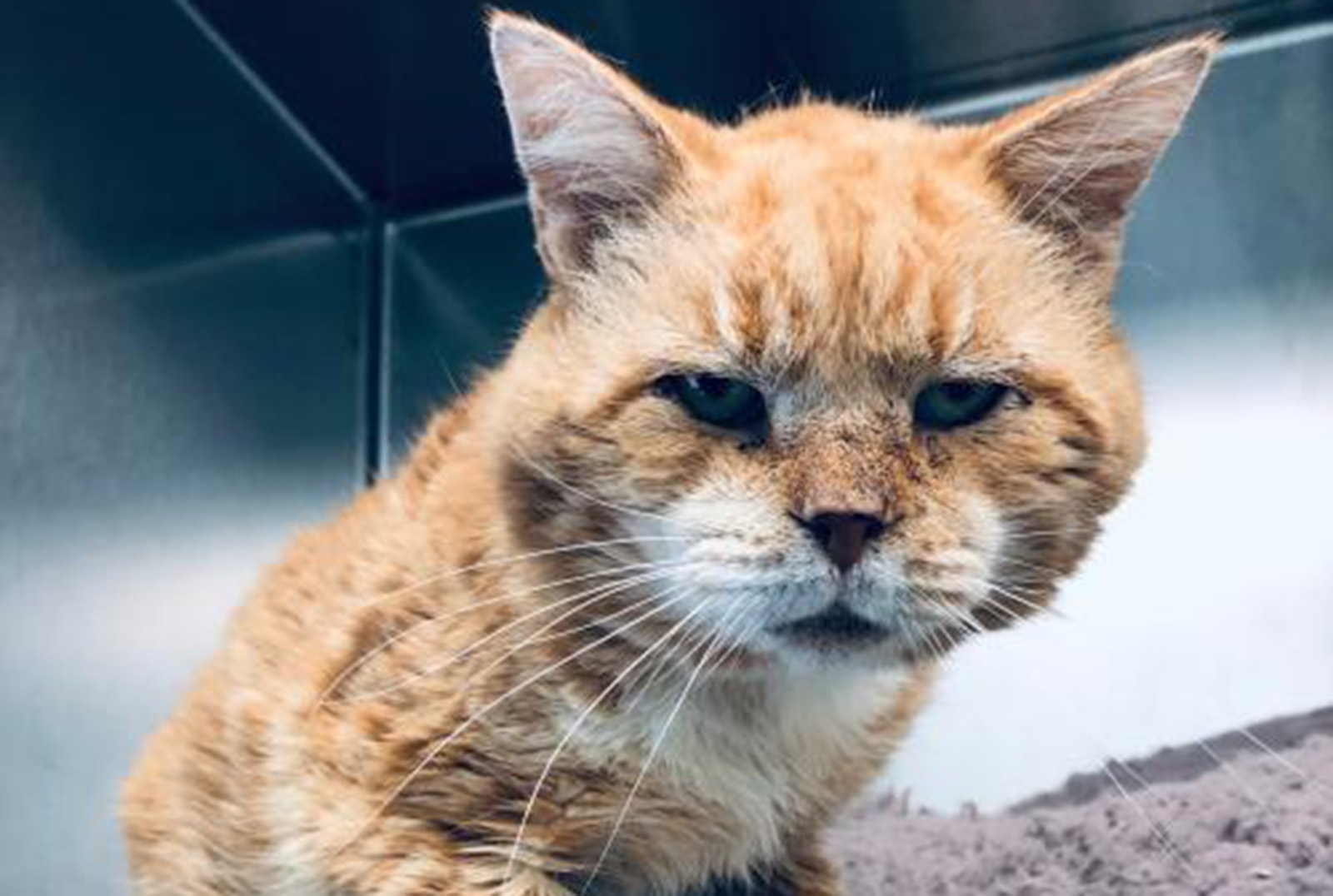
Meet Aslan, an affectionate senior kitty with a resting grumpy face.
Here’s what his friends at Fancy Cats Rescue Team have to say about him:
Aslan is a senior with a sweet heart and a loving purr.
He has a default grumpy face, but don’t let that fool you. He purrs so loud the vet has trouble hearing his heart beat. He will accept pets and head rubs all day long.
He is marked special needs as he is in the beginnings of renal failure, but we are still hoping to find this angel a forever home for his final years with dignity and lots of attention and love. He deserves it!
Are you and Aslan a match?
In 2020, a shocking 32 people were hit by vehicles and killed while walking in the Richmond area. The Virginia Department of Motor Vehicles says this is the highest number of pedestrian deaths in the last decade.
The rate of pedestrian deaths has been growing across the country. In the first half of 2020, there was a 20% rise in pedestrian fatalities. Almost 3,000 people were killed by drivers.
Problems with dangerous driving have been on the rise, including speeding and distracted driving. When combined with more people escaping their homes during the COVID-19 pandemic, the chance for accidents skyrocketed.
Changing Dangerous Driving Behaviors
Richmond officials are determined to change the risky driving behavior they have been seeing more of recently. Last year, a study was launched that they hope will help form new policy and traffic ordinances.
New bills have been passed by state lawmakers, too, to bring harsher penalties to drivers who harm or kill pedestrians and to lower the chances of these accidents. These include banning drivers from using devices like cell phones and allowing speed limits to be as low as 15 mph in some areas.
Richmond has also been working on its Vision Zero initiative, focused on protecting pedestrians and bicyclists from vehicle traffic. The plan is being coordinated by Mike Sawyer, a transportation engineer, with the goal of having zero pedestrian injuries and deaths every year.
Vision Zero originated in Sweden in the 1990s and went on to help lower the number of pedestrian deaths across Europe. The Vision Zero Network is now helping a number of U.S. cities protect their pedestrians by bringing great minds together to overcome common road safety challenges.
Making Strides to Protect Pedestrians
Richmond is hard at work trying to keep pedestrians and bicyclists safe. The City Council recently passed a resolution to install speed cameras around school zones. The city has also created new crosswalks, crosswalk signals, and bike lanes in dangerous school areas to protect students.
Across the city, 450 crosswalks have been installed as part of Vision Zero. 20 miles of new bike lanes have also been installed, along with new traffic beacons. Many of the more dangerous intersections will also get new signs warning drivers to stop for pedestrians.
“Other cities with high rates of pedestrian injuries and fatalities are keeping their eyes on Richmond’s approach to road safety, so this has the potential to make a real impact in protecting pedestrians,” says Lauren Carroll of Commonwealth Law Group.
There are many areas, including suburban and rural locations, that are looking to further protect pedestrians and cyclists in their cities and towns.
Overcoming Road Safety Challenges
The city of Richmond realizes that new signs, crosswalks, and bike lanes can only accomplish so much. Finding a way to end dangerous, risky driving behaviors in the city will continue to be a major battle.
The city is finding it challenging to engineer safer streets without causing more hazards and distractions for drivers. The people working behind the scenes at Vision Zero, along with the city of Richmond, know that pedestrian fatalities are not inevitable and can be prevented. As improvements to local infrastructure continue to be made, Richmond will hopefully begin to see a positive impact on pedestrian safety.
In the United States, drunk driving has been an ongoing issue costing billions annually, and more importantly, taking the lives of roughly 10,000 people every year.
Drunk driving laws have made it illegal at a national level to drive with a blood alcohol content (BAC) at or above 0.08 percent. For drivers under the legal age, “zero tolerance” laws have been implemented, which makes driving with any detectable level of alcohol illegal and punishable by law. Many states such as Virginia have taken further steps to discourage drunk driving by creating more intense penalties.
Virginia Drunk Driving Statistics
As reported by the Virginia Department of Motor Vehicles, one in six Virginia motorists may be involved in an alcohol-related car accident throughout their life. The Virginia DMV also reported that 34 percent of all traffic fatalities were related to driving under the influence of alcohol. These statistics reflect 819 total traffic fatalities in 2018, 278 of which died in alcohol-related car incidents.
In 2018, 19,790 people were convicted with a DUI, resulting in stricter penalties to encourage responsible driving. Amongst these penalties were more extended jail times and increased fines. A DUI in Virginia tends to cost around $5,000 and $20,000. Although Virginia has historically strict DUI legislation, there has been a recent bill passed which eliminates mandatory minimum sentencing, causing many residents to be fearful for the future of road safety in Virginia.
Senate Bill 1443
Senate Bill 1443 was proposed in 2020 to eliminate mandatory minimum sentences and modify sentences for felony offenses, including DUI charges. This bill seems to be a part of a much more significant criminal justice reform, but many Virginians believe the legislation is “missing the mark.” This bill is set to eliminate Virginia’s enhanced jail penalties for grievous repeat offenders and “high-risk” impaired drivers, putting them back on the streets with a slap on the wrist and endangering local drivers.
Differing Views
While some Virginians believe the mandatory minimum sentencing is harsh and unnecessary, a large community of residents are fighting back to keep enforcing these stricter laws and fees. According to a letter to the editor for the Richmond Times-Dispatch, these mandatory minimum jail sentences are put into place to penalize the most grievous offenders of the law in Virginia. These laws are used to target repeated convicts of drunk driving or those pulled over with a blood alcohol concentration level two or more times over the state’s legal limit.
Those in favor of strict DUI laws argue that both repeat convicts of DUIs and drivers with extremely high blood alcohol content make up most drunk drivers resulting in fatalities during car accidents. Both repeat and “high BAC” motorists are labeled as “high risk” drunk drivers according to the National Highway Traffic Safety Administration, with data indicating that 67 percent of drunk driving fatalities in the U.S. involve at least one driver with a BAC level at .15 or higher.
The Uncertain Future with Limited DUI Legislation
On February 5th, 2021, Senate Bill 1443 passed with a 21-17 vote, leaving many Virginians unsure of the future of traffic safety and DUI penalties in their state. To many, this bill seemed to pass at the most frightening time when drunk driving deaths and impaired driving have increased with the rise of the COVID-19 pandemic. Some even argue that now is the time to push for even stricter legislation rather than lessen DUI laws. Governor Ralph Northam announced early in January that every 33 hours, someone is killed by a drunk driving accident. Those who are victims of drunk driving incidents, reach out to Fairfax DUI lawyers for legal guidance and representation.

Meet Tilda, a 5-year-old pit bull mix available for adoption locally.
Here’s what her friends at HART (Homeless Animals Rescue Team) have to say about her:
Tilda is a very sweet, friendly, affectionate dog that loves attention, physical contact and being petted and just wants to be loved.
She loves going for long walks and playing fetch in the backyard and is also happy to simply relax and nap near her human when working on the computer or snuggle up while watching TV in the evening. She loves her foster mom and follows her around the house. She also enjoys playing with toys and other dogs and watching the work outside from the window.
Tilda is still adjusting to all the changes that have happened in her life. She is intelligent and capable of learning quickly but needs a confident leader who will set boundaries and provide consistent training. She has learned to do “sit” and “down” with both verbal and hand signals. Her ideal home would be a low-key home where someone is home with her much of the day (even post-COVID).
Tilda likes to play with the other dog in her foster home, but we think she would also do well as an only dog in the home. She is friendly with kids, but due to her exuberance and tendency to jump up on people, she would be too much for most small kids.
Are you and Tilda a match?

Type “Why are bathroom renovations” into Google and the first result suggested is “…so expensive.” After saving for a new home, home improvement projects are the most common reason Americans save money.
Most people believe having a bathroom that makes them happy is a worthwhile investment, yet are surprised by how much it costs.
Why is renovating a 40-square-foot space so costly? Pricey fixtures and the specialized skills required are partly to blame. However, some costs are embedded within the industry:
- “Free” quotes are expensive: On average, contractors spend 25 percent of their time building quotes for jobs they will not win. Those costs need to be recouped.
- Expense overestimation: Whether purposeful, unintentional or a little bit of both, contractors often significantly overestimate the cost of materials and effort on a project.
- Professional design: Having a professional design your bathroom is considered a luxury service and carries a luxury price tag.
- Limited visualization opportunity: Consumer Reports identifies a primary cause of price overruns as homeowners who change their mind regarding finishes or colors after they’ve been applied.
In 2016, remodeling industry veteran Chad Hall believed these inefficiencies could be eliminated by taking advantage of emerging technologies — so he founded remodelmate.
Eliminating the time-consuming process of in-home quotes, remodelmate gives homeowners free access to an app that uses advanced smartphone camera technology to generate a near-perfect 3D model of their existing bathroom. The scan is then applied to a quote-building system, generating a final labor price for the customer as well as a precise materials list for the contractor, eliminating overestimation.
To address the professional design and visualization issues, remodelmate employs CGI (computer-generated imagery) to apply homeowner color and finish selections to a model of their new bathroom. The results are photo-quality images showing the customer exactly what their new bathroom will look like before construction begins.
For more information, visit the all-new remodelmate website.
Car crashes are often accidents, but somebody is generally at fault for causing the collision. As a result, the party who is injured may sue the person responsible for causing their injuries. Whether you are trying to prove the other driver is responsible or defend yourself from accusations, it is important to understand what an at-fault accident is.
In addition to understanding what an at-fault accident is, you need to take steps to argue your position correctly and when it is best to consult with an attorney for help in handling the claim.
Proving Your Position in At-Fault Accident Lawsuits
The first thing you should do after being involved in a car crash is to seek medical treatment. After treatment you can obtain a copy of the crash report and assess any personal injuries and/or property damage.
Seek Medical Treatment
Immediately after the accident, an injured party should seek medical treatment for injuries the accident caused. Even if you cannot physically see injuries, it is wise to get a professional medical assessment. You might have invisible internal injuries. Medical records of injuries sustained in the accident and the bills for the treatment are important pieces of evidence necessary to recover damages you are entitled to.
Accident Reports
Accident reports are filed when law enforcement responds to the accident. If the parties did not receive a copy of the accident report at the scene, they can contact the police department and request a copy. The accident report will give either party an idea of who may be responsible for the accident.
The accident report is the first and important piece of evidence, indicating how the accident occurred. The accident report contains details including, but not limited to, the speed and direction of travel, weather conditions, and each party’s statement regarding how the accident occurred.
Assess the Accident Damage
When assessing accident damage, the parties should examine any injuries, bills or property damage that are a result of the accident. The plaintiff should also evaluate how much they’ve spent on medical treatment and any anticipated future costs.
In addition to damages for injuries, the parties can recover for property damage. As such, shortly after the accident, the parties should have their vehicles evaluated and get a price quote for the repairs.
The Legal Side of Accident Lawsuits
When handling a lawsuit, the parties need to evaluate the facts of the case and work through different strategies to prove their case. Both the defendant and plaintiff should consult with an attorney to help achieve the best possible outcome.
While at-fault lawsuits seem straightforward, parties trying to handle the lawsuit themselves may quickly become overwhelmed. An attorney can help the parties develop the best argument for their position.
Damages for an At-Fault Accident
“Car accidents are not only scary to be in, but it can be stressful trying to pay for all damages yourself. Fortunately, once the at-fault party is established, the injured party may recover economic and non-economic damages,” says Joseph Kopfler from Kopfler and Hermann, Attorneys at Law. Non-economic damages are straightforward and will help compensate the plaintiff for their pain, and loss of quality of life. Quality of life is often determined by looking at the difference in their ability to enjoy the same things as before the accident.
Economic damages require attention to the details. The plaintiff may recover damages for their financial losses caused by the accident. These losses include, but are not limited to, medical expenses, future medical care, and any lost wages.
Handle The At-Fault Accident Process
Accidents are a surprise and disruption to the daily lives of those involved. By taking the above steps, you can prepare yourself for information needed for a lawsuit and not be caught off guard by the steps to follow.
This is a sponsored column by attorneys John Berry and Kimberly Berry of Berry & Berry, PLLC, an employment and labor law firm located in Northern Virginia that specializes in federal employee, security clearance, retirement and private sector employee matters.
By John V. Berry, Esq.
With the new Biden Administration beginning in January, 2021 it is important to look at the issue of who can qualify to hold a position in the new Administration.
For several years (e.g. Bush 1, Clinton, Bush 2, Obama) there has been a consistent security clearance process in place for individuals to hold White House positions. Our Law Firm has represented individuals in the White House in the security clearance process.
Clearance Review for White House Position
For White House appointments, they will be required to undergo a security clearance review. For these types of positions, the Federal Bureau of Investigation (FBI) has been designated to conduct security clearance investigations. The individual will be asked to complete a SF-86 form (also known as e-QIP) to begin their clearance review. Once the initial forms are completed and reviewed, the individual will be interviewed by FBI investigators and a security clearance investigation will begin.
An applicant can expect a full and complete investigation by the FBI. Friends and relatives of an applicant will be interviewed, foreign contacts will be reviewed and background information will be examined. The FBI’s goal in investigating an applicant for a White House position is to attempt to determine whether they might be susceptible to any sort of influence or blackmail that might cause them to disclose classified information.
The applicant’s full background investigation will then be given to the personnel security division of the Executive Office of the President (EOP), which handles security clearance decisions. These are career officials that oversee the security clearance process. Once received, they will review the FBI investigation and make their determination as to whether or not a security clearance should be granted. The EOP decision will generally be controlling absent further action by the President.
Decision on Security Clearances for White House Employees or Appointees
While a President retains the ultimate say as to whether or not to grant an individual’s security clearance, they have usually deferred (for the most part) to clearance recommendations. There is a good reason for this. Most presidents do not want to be seen as showing favoritism towards an individual with security risks for important appointments.
For this level of appointment, if an individual’s clearance is denied, they are unlikely to be able to hold their position. In contrast to other federal agencies, White House appointees have less access to due process in contesting security clearance determinations.
While politics can play a role in allowing an appointee the ability to respond to negative clearance concerns with mitigating information, there is less of an entitlement to due process given that White House appointees serve at the pleasure of the President. This is different than the situation with career employees of the EOP that are able to respond to security clearance concerns and receive the ability to respond to adverse clearance determinations.
Conclusion
We represent individuals in security clearance matters. We can be contacted at www.berrylegal.com or by telephone at (703) 668-0070 to schedule a meeting to go over individual issues and potential representation.
Driving under the influence of alcohol can be extremely dangerous for anyone on the road. The negative impacts of drunk driving are numerous, including impaired judgment, slowed reaction times, and of course, car accidents. This article dives into some of the drunk driving statistics both in Virginia and in the US, as well as some of the effects of drunk driving and how they can be prevented.
Demographic Overview of Drunk Drivers
According to the National Highway Traffic Safety Administration (NHTSA), as of 2018 the 21 to 24-year-old age group has the highest number of drunk driving deaths in the US, followed by 25 to 34-year-olds, and drivers aged 15-20. In addition, male drunk driving fatalities comprise 80.4% of total drunk driver fatalities.
“Unfortunately, many young drivers feel invincible when first starting out behind the wheel, and this can lead to very poor decisions.” said Attorney Matthew Wilson of Matthew Wilson Attorney at Law. “It is important for young drivers to be educated on the real dangers of drunk driving in a way that helps them to understand the dangers both to themselves and others.”
Overall, the groups that are most at risk for drunk driving are the younger age groups (as previously mentioned), motorcyclists, and drivers that have previous DUI convictions on their records. According to the state DMV 2018 crash statistics in Virginia, over two-thirds of DUI convictions were found to be male, and the majority of drunk drivers were between the ages of 21 and 40.
Drunk Driving Laws and Their Effects
Across the US, federal traffic laws are in place to prevent drunk driving. The federal level of Blood Alcohol Concentration (BAC) considered to make a driver legally impaired is 0.08 or higher. Any defendant in the US guilty of this can have a federal DUI offense, which is a Class B Misdemeanor. A DUI conviction can involve penalties such as up to 6 months of jail time, up to 5 years of federal probation, a fine of up to $5,000, or mandatory alcohol safety education courses.
DUI penalties can be even more severe for members of the armed services and can vary by state. In Virginia, a law was passed in 2012 that mandates any first-time DUI offender must have installed a Certified Ignition Interlock Device (CIID) in their vehicle before they are permitted to drive again. This is mandatory for at least 6 months without any alcohol violations. With a first time DUI, the person will lose their license for a year; with a second offense, there will be a 3-year driver’s license suspension, and with a third conviction, 20 days in jail if the offense is within 5 years.
In 2020, the DUI penalties became even more severe in Virginia. As an effect of the new law HB1941, the offense of drunk driving that causes impairment to another person will increase from a class 6 felony to a class 4 felony, which means 2-10 years of jail time. The law also makes drunk driving a class 6 felony if it causes serious harm to the person but is not permanently disabling.
Drunk driving is a serious issue that comes with significant repercussions, but can be easily prevented. Younger drivers should be educated on the harmful effects it can have on one’s life before it is too late. An impaired driver has many options that do not include driving themselves, including using popular rideshares like Uber or Lyft, spending the night at a safe place nearby, or creating a clear plan with a designated driver before deciding to drink. Drunk driving is never the right choice.