

 This is an opinion column by Del. Ken Plum (D), who represents Reston in Virginia’s House of Delegates. It does not reflect the opinion of Reston Now.
If past history provides any indication, the 2016 session of the General Assembly will have considered nearly 3,000 bills and resolutions before its 60-day session adjourns in early March.
While the figure is impressive, it can be deceiving without a breakdown of the total number.
For example, in 2014 which was also a 60-day “long” session, the 100 members of the House of Delegates introduced 1,950 bills and resolutions, and the 40 members of the Senate introduced 938 bills and resolutions. Of the 2,888 total bills and resolutions, resolutions accounted for 942.
Most resolutions are memorial in that they recognize someone noteworthy in a delegate’s district who had died the previous year, or they commend in offering praise to a person, sports team, organization, or entity for a noteworthy accomplishment or event. It is seldom that memorial or commending resolutions do not pass.
This is an opinion post by Del, Ken Plum (D), who represents Reston in Virginia’s House of Delegates. It does not reflect the opinion of Reston Now.
All the important bills the General Assembly considered in the first half of its annual session pale in comparison to the most significant action it will take this week in adopting a $100 billion budget for the biennium.
Passing laws is very important, but decisions on how to spend the taxpayers’ dollars may have the greatest impact on the largest number of people.
My constituents have made clear to me that their top priority for the budget is education funding; the Governor had the same priority in preparing his budget. The House Appropriations and Senate Finance committees will be making their decisions on spending very soon. Last week I spoke on the floor of the House of Delegates encouraging the Appropriations Committee to give priority to education funding.
This is an opinion piece by Del. Ken Plum (D), who represents Reston in Virginia’s House of Delegates. It does not reflect the opinion of Reston Now.
A report of the Center for Public Integrity (CPI) released last year included some eye-opening findings for Virginia. The Commonwealth leads the nation in student referrals to law enforcement, and minority students and students with disabilities are more likely to be suspended, expelled, or referred to law enforcement.
The CPI analyzed U.S. Department of Education Office of Civil Rights (OCR) data to find that in 2011-12 (the most recent data available), the average rate of referrals is 6 for every 1,000 students nationwide. Virginia’s rate is 16 referrals per 1,000 students, or 17,863 students referred to law enforcement during that time period.
In the nationwide totals, African American students were 16 percent of U.S. enrollment but represent 27 percent of students referred to law enforcement. Special needs students were 14 percent of enrollment but are 26 percent of students referred to law enforcement.
As more public officers are assigned to schools, more behavior that in the past would have been handled as school discipline issues are turned into law enforcement matters. Resource officers assigned to schools for public safety and education purposes are being utilized as school police.
Appropriate programs to deal with children with minor offenses are limited in the criminal justice system. As the Just Children Program of the Legal Aid Justice Center of Virginia described “Virginia’s school-to-prison pipeline: Resource starvation, unaddressed academic failure, suspension and expulsion, and school policy are pushing students out of school and into the juvenile and criminal justice systems.”
The result, the Center says, is that “students are also being funneled from the school system to the already over-burdened justice system, often for typical adolescent misbehavior, such as disorderly conduct and truancy which should be handled by school officials…Ultimately, criminalizing student behavior makes schools less safe and damages communities.”
While a few of the more dramatic instances of school resource or security officers being heavy handed have gained attention in the media, what isn’t seen is the steady flow of students entering the legal system for what in the past would have been considered discipline problems and handled within the school. Escalation of response, particularly for younger children, can be counterproductive and set them on a path that increases their chances of further misconduct.
In the billion-dollar increase in education funding proposed by Gov. Terry McAuliffe is a million dollars to support Positive Behavior Interventions (PBI) programs that are designed to transform school climate by shifting attention to positive behavior and providing students with a tiered system of supports and resources.
In addition, Virginia has a $3.5 million federal grant for “School Climate Transformation” to reduce referrals to law enforcement. A “Classrooms not Courtrooms” initiative is also underway in Virginia to coordinate among agencies to do a better job of keeping youth out of the juvenile justice system unless absolutely necessary.
I will be working to ensure that the legislature supports these initiatives that are investments in our future. Classrooms are much less expensive than courtrooms and far more helpful.
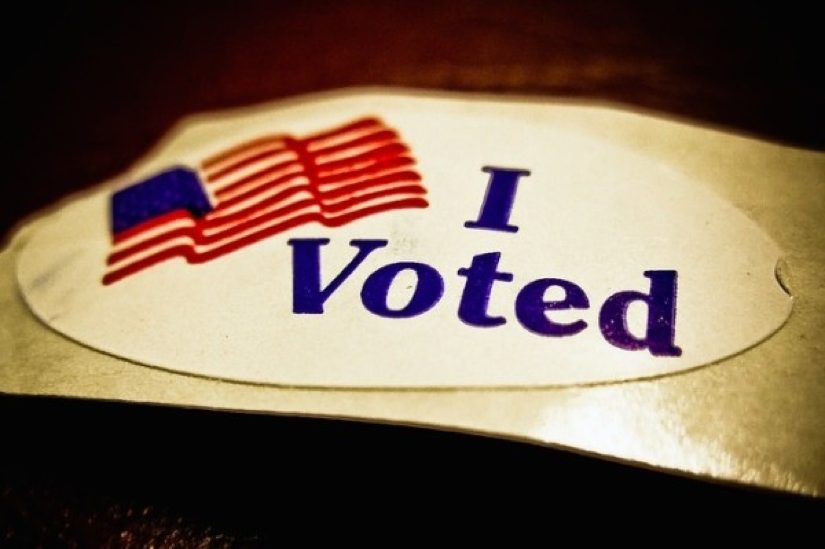 The Virginia Presidential Primary is a little more than two weeks away.
Registered voters in the Commonwealth go to the polls March 1, along with 111 other states.
Have you decided who gets your vote? Take our poll and let’s see which way Reston is leaning. Don’t worry, it’s confidential. No one is selling any info to campaigns. Also, candidate names were generated in random order by the polling software and show no bias on the part of Reston Now.
Also, check out this info from Fairfax County about Primary Day and to locate your polling place.
This is an opinion column from Del. Ken Plum (D), who represents Reston in Virginia’s House of Delegates. It does not reflect the opinion of Reston Now.
Opponents of legislation to prevent gun violence have said for years that current laws on the books should be enforced before new laws were passed, but they quickly changed their minds when Attorney General Mark Herring moved to enforce Virginia’s law on recognizing concealed weapon permits from other states.
At least 25 states have standards for allowing concealed weapons that are less stringent than Virginia, and his ruling would have ended reciprocity with these states.
Representatives of the National Rifle Association (NRA) came to the McAuliffe administration to offer concessions on other gun safety proposals if reciprocity with other states could be reestablished. The gun advocates agreed that they would drop their opposition to voluntary background checks and to taking guns from those for whom a permanent protective order had been issued if reciprocity was restored.
 This so-called “deal” between the McAuliffe administration and the NRA will continue to be argued as to who was the winner. The legislation to effect the compromise will be debated by the legislature in the coming weeks. I expect to vote for the voluntary background check bill; even though it is limited, it is at least a small step forward.
A subcommittee of the Militia, Police, and Public Safety Committee defeated my bill that would have closed the gun show loophole by requiring a background check for all gun sales at gun shows. Under the compromise bill, a state police officer will be at all gun shows to do a voluntary background check on sales that do not include a licensed gun show dealer.
I will also vote for the bill that will take guns from those against whom a permanent protective order has been issued. While this bill is part of the deal, it needs to be expanded to include temporary and emergency protective orders.
I will not vote for a bill that surrenders Virginia’s right to set its own standards for issuing concealed weapon permits. While the NRA clearly favors expanded concealed weapon laws across the states, I do not think it is in the best public safety interest to recognize concealed weapon permits from states with limited standards including those that will issue such permits to convicted felons. I commend Attorney General Mark Herring for the courageous position he has taken on this issue, and I will continue to support him.
Working together across party lines is important to the legislative process. The deal before the General Assembly on preventing gun violence has been described as a small, modest improvement.
As I made clear in a speech on the floor of the House of Delegates, I view this as just a beginning. As the advocates with whom I participate in a vigil at NRA headquarters on the 14th of every month — the anniversary of the Sandy Hook shootings — make clear, we will not forget, and we will continue to work for more common sense gun safety measures.
Photo from General Assembly floor by Ken Plum
 This is an op-ed submitted by Terry Maynard, co-chair of Reston 2o20. It does not reflect the opinion of Reston Now.
On Thursday, Feb. 11, the Greater Reston Chamber of Commerce is sponsoring a seminar called, “The Changing Future of Reston, ” but — as the agenda shows — it’s really about who will pay for the added public infrastructure the intense private development of Reston’s urbanizing corridor will require.
Noting that Fairfax County has identified $2.63 billion in needed transportation improvements because of the expected Metro-related development, the Chamber agenda includes:
During the first half of 2016, the County expects to settle on a plan:
- Who should build the new transportation improvements; and
- Who should pay for them; and
- What revenue sources should be used to pay for it (sic). Potential revenue sources include federal, state and/or county taxes, new or expanded tax districts on existing businesses and residents, proffers or other vehicles, with collections commencing as early as 2017.”
And the panelists? Two developers, the chief of the county transportation staff, and RA’s Chief Executive Officer, all led in their discussion by a developer-paid Reston land use attorney.
It doesn’t take much thought to figure out where this discussion is headed: Developers are looking for ways and rationalizations to shift the infrastructure cost burden to others. And the only significant option within the County’s control is shifting the cost burden to us, its residents. Read More
This is an opinion column by Del. Ken Plum, who represents Reston in Virginia’s House of Delegates. It does not reflect the opinion of Reston Now.
Northern Virginia jurisdictions are among the wealthiest in the country. Yet we have in the schools in the region significant percentages of children on free and reduced-price lunches because of the low income of the households in which the children live.
In Fairfax County, 29 percent — more than 50,000 children — are on the free- and-reduced-price lunch plan. Some schools have breakfast programs for children who come to school hungry. Churches and nonprofits have started programs to send food home with children to ensure that they have something to eat on the weekend.
The disparity in income seen in our region exists throughout the country. There is no one solution to the problem, but 29 states and the District of Columbia and 23 U.S. cities have raised the minimum wage as a way to reduce income inequality.
My bill to raise the minimum wage in Virginia was defeated on a party-line vote of 6-4 in a subcommittee last week. This is the second year the bill has been defeated. Virginia’s minimum wage is the same as the federal $7.25 per hour, which the Congress has also refused to raise.
Since the minimum wage of 25 cents per hour was first adopted in 1938, national and state governments have periodically raised it to keep up with inflation and changes in the economy. The current rate of $7.25 was set by Congress in 2009. Most economists agree that the minimum wage had its greatest purchasing power in 1968, when it was $1.60.
My bill called for a “truing up” to the 1968 level of purchasing power — that would be $9.54 per hour that I round up to $10 in the first year and increasing over time $15 in 2018. My bill was intended to restore purchasing power to consumers and to move them towards a living wage.
Working a 40-hour week at the current minimum wage of $7.25 per hour for 50 weeks produces an income of $14,500, which is below the federal poverty level. In Fairfax County, the median household income is $110,674 and in Loudoun County, $122,294. Representatives of the Reston, Loudoun and Fairfax County Chambers of Commerce, as well as the state chamber, spoke in opposition to my bill.
Raising the minimum wage could directly affect 725,000 Virginians. Of these people, 90 percent are over age 20, 57 percent work full time, and 31 percent work more than 20 hours per week. Of these persons 82.4 percent have at least a high school diploma and 48 percent have some college education.
I fully support programs that feed and house the hungry, but at the same time I vigorously support programs that compensate workers more adequately for their work. I hope that community and business leaders can get behind future efforts to raise the minimum wage as a way to reduce income inequality in our community.
 Fairfax County Public School students have not had class since Jan. 20. Will they return Monday? FCPS says school is definitely in session.
It’s been nearly a week since close to three feet of snow socked Reston. While warmer temperatures have contributed to significant melting, many streets are still down to one lane and lots of sidewalks remain unshoveled, so really, anything can happen.
What’s your prediction? Will the school district really be ready for kids to return to class on Monday? Or will FCPS be looking at its eighth snow day or more?
FYI, next week is already a shortened week for students. There is a two-hour early release Thursday and end-of-semester student holiday/teacher workday Friday.
This is an opinion column from Del. Ken Plum, who represents Reston in Virginia’s House of Delegates. It does not reflect the opinion of Reston Now.
In the early years of the 20th century, travelers were advised not to come to Virginia because of the poor condition of the roads. Deep ruts, mud holes, and lack of maintenance made travel precarious in the Old Dominion.
In 1925, State Sen. Harry F. Byrd, who as a young man had worked part-time on a private toll road (the Valley Pike in the Shenandoah Valley), ran for governor on the campaign slogan “Get Virginia out of the mud.”
Byrd’s campaign was successful, and in his single term as governor he established the Virginia Department of Highways. His centralized highway system led to the present-day highway system that is one of the largest in the country with 57,867 miles of highways and 20,991 bridges.
Byrd also implemented a “pay as you go” financing system that keeps the pace of highway construction and improvement at the rate of current revenue without borrowing. Old timers in the state remember traveling on roads that went from two to four lanes and back to two every few miles as money was available in the highway construction fund to complete the widening. Read More

Reston Now readers are witty folks. So let’s have some fun and give this giant snowstorm heading here a name.
The Weather Channel is calling it Jonas. The Washington Post, after asking for reader suggestions, is calling Snowzilla.
Past DC big deals have been the Knickerbocker blizzard of 1922, the Presidents’ Day snowstorm of ’79, Snowmageddon. But Jonas? That’s a name for your new baby, not the storm that swept Reston shelves of bread and toilet paper four days in advance.
Here are a few suggestions, so take our poll and/or suggest a name in the comments.
Stay warm, Reston.
Snow in Reston 2013/file photo
This is an opinion column by Del. Ken Plum, who represents Reston in Virginia’s House of Delegates. It does not reflect the views of Reston Now.
After the usual business of organizing for a new legislative session, the Virginia General Assembly got underway last week without major incident.
The House of Delegates has 11 new members, with Republicans clearly in power with 66 members and Democrats 34. The House leadership remains the same with Speaker William Howell in charge. The Senate moved to Republican control 21-19. As is the custom, the Governor spoke to a joint session of the House and Senate in the evening of the opening day.
Among the very likeable traits of Gov. Terry McAuliffe (D) are his enthusiasm and positive outlook, and these were never more evident than in his speech to the General Assembly. A recovering economy that is providing more money for programs and services helps fuel the Governor’s optimism. Read More
 This is an opinion post by Reston resident Terry Maynard, who serves as the Co-Chair of Reston 2020. It does not represent the opinion of Reston Now.
The newly re-elected County Board of Supervisors is at it again: They are proposing a “Priority 1” zoning ordinance amendment (ZOA) that would allow development density in a number of areas in the County to increase to a floor-area-ratio (FAR) of 5.0 plus a 0.5 bonus density for meeting key County priorities. The ZOA includes all of Reston’s Metro station areas (TSAs) and Lake Anne, a Commercial Revitalization Area (CRA).
In fact, the ZOA proposal covers an entire alphabet soup of about 20 urbanizing and redeveloping “Selective Areas” across the county: TSAs, CRAs, CRDs, CBCs, PDCs, and PRMs. Together, the County calls all these “Selective Areas” and the ZOA makes no distinction among them. That’s a potential half billion gross square feet (GSF) of new development and redevelopment added to the County’s current roughly one billion GSF of total existing development of all kinds.
And the “Selective Areas” cover only about five percent of the county’s total 400 square mile area. If you are interested to learn about this proposed ZOA, there are opportunities for you to hear more and provide your comments as early as this Wednesday, Jan. 13. Read More
This is an opinion column by Del. Ken Plum, who represents Reston in Virginia’s House of Delegates. It does not represent the opinion of Reston Now.
Resolutions for the new year are easy to make; I have made dozens in my lifetime. The challenge is to keep resolutions and to bring about the changes they imply. Resolutions in a political context are even more difficult as agreement on the part of many is necessary to cause action to take place. A couple of examples will make my point.
Gov. Terry McAuliffe presented a budget last month. It is the strongest statement that can be made about the future course of government under his administration. For the first two years of the term, a governor of Virginia works under a budget that had been presented by his predecessor. The budget just presented mid-term sets priorities for the final two years of his term. The final budget a governor presents is implemented by the successor. Read More
Most of us have mentors or authority figures whose example in the way they lived affected our own lives.
In my political life one such person was the late Senator Clive DuVal, who represented parts of Fairfax County in the Virginia Senate from 1971 to 1991. In 1969, when President Richard Nixon announced on the eve of state elections in Virginia that he had a plan to end the hated war in Vietnam, a grateful electorate went to the polls and defeated all Democratic incumbents and voted in all Republicans in Northern Virginia with one exception: Democratic Senator Clive DuVal of McLean.
How did he survive? He was an effective progressive legislator and was the only one that I knew who sent out periodic newsletters. As a member of the Fairfax County Consumer Protection Commission, I was also pleased with his progressive focus on consumer protection issues.
When I was elected to the House of Delegates, I followed Senator DuVal’s example and continue today to send newsletters. The technology has changed considerably from the 1970s when offset printing was essentially a printing plate created from a photograph of a document created on the typewriter and some black and white photographs.
My most recent newsletter that was digitally produced should have arrived in your mail boxes last week. If you did not receive a copy and would like a printed version, send your address to me at [email protected], or you can view or download it.
Just like Senator DuVal, I ask for your opinion on issues before the 2016 General Assembly session. You can pull out the survey page and mail it to me or complete the survey online at www.kenplum.com (on the right side of the home page below the “Keep in Touch” box). Either way, there are open-ended questions for you to address issues of specific concern to you. I do review the results of the survey as important information from my constituents. The results are not necessarily the same as a public opinion poll.
While I attempt to summarize the issues before the upcoming legislative session, my campaign account that pays for the expense to the newsletter would not be able to afford to publish a newsletter with enough pages to fully cover all the issues. I invite persons who are interested in more issues on a continuing basis to subscribe to my weekly e-newsletter at www.kenplum.com or read my weekly column in the Connection newspaper or online on Reston Now.
Following the example of Senator DuVal and other legislators I admire, I also schedule periodic public meetings. Senator Janet Howell and I will hold our annual pre-session public hearing on Thursday, January 7, 7:30 to 9:00 p.m., at the Reston Community Center at Lake Anne Plaza. No registration is needed; just show up and share your views with us.
This is an opinion column by Del. Ken Plum (D), who represents Reston in Virginia’s House of Delegates. It does not reflect the opinion of Reston Now.
I often quote from papers written by the staff of the Commonwealth Institute for Fiscal Analysis; they provide the most fact-based, nonpartisan, clear analysis of key issues facing Virginians.
Recently, I attended the 2015 Policy Summit held by the Institute in Richmond. Topics at the Summit included the declining state support for public schools in Virginia, accessing health care, and returning more money to the working poor through the Earned Income Tax Credit. One topic around which there seems to be a high level of political consensus developing was “Criminal Justice Reform: Opportunities to Save Money and Help Communities.”
In a paper published by The Commonwealth Institute, it was reported that Virginia keeps more youth incarcerated than most states. As of 2013, for which the most recent federal data is available, Virginia incarcerated 79 youth in state facilities for every 100,000 youth age 10 or older living in the state. That’s 75 percent higher than the national rate of 45 state incarcerated youth per 100,000 youth in the country.
But that does not mean that Virginians are safer or that more youth are diverted from criminal behavior. In fact, the opposite is true. According to data from the Department of Juvenile Justice, almost three-quarters of youth who have been held in the state’s juvenile prisons are convicted of another crime within three years of release. Of great concern is the fact that youth who are held in the state’s youth prisons for longer periods of time actually have higher rates of re-arrest within a year of release than youth who are held for shorter periods of time!
Virginia’s current youth prison system consists of two youth prisons, Bon Air and Beaumont, in the Richmond suburbs. More affluent areas like Fairfax County have established local alternative programs. The highest rates of commitment to the state youth prisons come from the localities that have the highest poverty levels. As the Institute reported, “not only is Virginia’s current system not working to rehabilitate youth and keep communities safe, it is also very expensive. The per capita cost of incarcerating youth in Virginia’s juvenile correctional centers was $148,214 in FY 2015.” Local programs are lower in cost as well as more effective at reducing recidivism.
Efforts have been underway to reform the current system for a number of years, but that movement needs to be accelerated. Wealthy communities are way ahead in establishing treatment programs, but these programs that are effective in keeping children out of trouble in the future must be extended to all localities regardless of wealth.
The state must resist any effort to dump the problem on localities without providing necessary funds to make alternative programs available. The pipeline from school to prison must be shut off. Alternative solutions that include intensive treatment for offenders and families can keep the community safe, rehabilitate young people before they become criminals, and save money.
There is widespread bipartisan agreement that progress needs to be accelerated in this area. It will bring justice to juveniles.
