

 This is a letter from Diane Blust, former chair of Reston Association’s Environmental Advisory Committee. She resigned last week after RA’s Board voted to approve a land swap in order for developers to build a new parking garage at Lake Anne Plaza. Something on your mind? Send a letter to the editor to [email protected].
As some of you know, I took the extraordinary step of resigning last week from Reston Association’s Environmental Advisory Committee and as the Chair of RA’s Sustainability Working Group, which was established just last spring by the RA Board to design a sustainability road map for RA.
It would be easy to say I stepped down because of a few trees. But, that would be a gross oversimplification. The RA Board decision to swap an acre of mature upland forest for land that serves in part as a drainage ditch for Baron Cameron came at the end of a long process marked by a lack of transparency and bad management. Changes must be made if Reston is to develop and redevelop in a truly sustainable manner, one that meets “the community’s present needs while preserving Reston’s essential character and ensuring the ability of future generations to meet their needs” — the RA Board’s own definition of sustainability.
The management of the land swap process was flawed, largely due to a lack of transparency. Although senior RA staff was aware of the plan, neither RA environmental staff nor the volunteers on the Environmental Advisory Committee were told that RA was considering giving up an acre of natural area as RA’s contribution to the revitalization of Lake Anne. Outside advisors were apparently hired to help with decision, but the people charged with providing the RA Board with sound advice on the management of RA’s natural areas were completely left out of the discussion.
If we had been involved, the RA Board would have learned what we tried to tell them in testimony at public hearings and in emails: this little acre was much more than land and trees. It was a valuable upland forest ecosystem that captured stormwater and carbon, provided a natural area for members, and provided habitat for critters providing services that promote human health. It was most certainly not “just some trees.”
The process was flawed because there was no broad community involvement. The week before the October Board meeting, a couple legal notices stating RA was considering a land swap with the Lake Anne Development Partners appeared in the Connection and the Fairfax Times. Full details of the land swap were not posted to the RA website until the week of the October board meeting.
Yes, this covered RA from a strictly legal point view. But, no organization that strives to be sustainable would be satisfied with doing the absolute legal minimum. Sustainable organizations actively engage members to ensure broad community support for policies and decisions. Read More

Terry Maynard, co-chair of Reston Citizens Association’s Reston 2020 Committee, sent the Fairfax County Planning Commission additional thoughts on the comprehensive plan amendment for Reston’s Master Plan.
After a public hearing held Nov. 14, the planning commission will vote Dec. 5 whether to recommend the plan amendments to the Board of Supervisors.
Something on your mind? Send letters to [email protected].
Re: ST09-III-UP1(A)–Reston Master Plan Revision
Dear Ladies and Gentlemen,
As an observer and participant in last week’s Planning Commission hearing, I would like to follow up on what occurred then and address some points that were not adequately addressed from the perspective of Reston’s citizens. As a longtime Reston resident, member of the Reston Citizens Association’s Board of Directors and its representative on the Task Force, and Co-Chairman of the Reston 2020 Committee who has been working on the revamping of the Plan since before the Task Force was launched, I believe I have some insight into what many—probably most—Restonians think about their community and the Reston Plan draft.
I believe most Restonians welcome—some more reluctantly than others—the arrival of Metrorail and urban development around its stations. Certainly RA, RCA, and ARCH have all been strong supporters of well-considered and implemented transit-oriented development along the Dulles Corridor. RCA and Reston 2020, which have committed more citizen resources to this effort than the others, have provided a variety of analyses suggesting how this might be done. We are not too uncomfortable with the density and mix result of this draft Plan, although we believe the office density may be excessive in light of the declining space needed per worker. We would also prefer to see a stronger residential element in the mix to help reduce transportation and environmental impacts, but we can live with these ambitious core development plans.
I would be among the first to acknowledge that the Plan, whatever it becomes, is not a law or regulation. It does, however, set a crucial set of goals and expectations for the core of our community. And Restonians have, over the years, demonstrated their commitment to high goals and great expectations in all facets of their community’s development. We very much seek to continue that vital tradition of community planning excellence. I believe, in particular, that the reason RCA gave the draft Plan a “D” grade is that, at best, it does not pursue planning for community excellence, deferring to existing standards (some not even legitimized by the Planning Commission or Board of Supervisors) and the desire of developers to limit interference in their profit-making efforts, sometimes at the expense of the community.
More importantly, I think virtually all of us believe Reston is someplace special thanks to Bob Simon’s brilliant vision—decades ahead of County thinking—and its effective execution. And, yes, he faced strong bureaucratic and development resistance like the community is now facing in making this draft Plan one calling for excellence rather than more of the same. Reston is not just another sub-division. It is an integrated well-planned community—space, structures, people, movement, living, working, and playing together—spanning a tremendous diversity of lifestyles, employment, and recreation opportunities consistent with Bob Simon’s half-century old vision and values. We want to extend that forward thinking to enrich the urbanizing corridor and our community—and push our government and the development industry in the process, just as Bob Simon had to do a half-century ago.
 Written by Nigel Phillips. Submit your letters to the editor to [email protected].
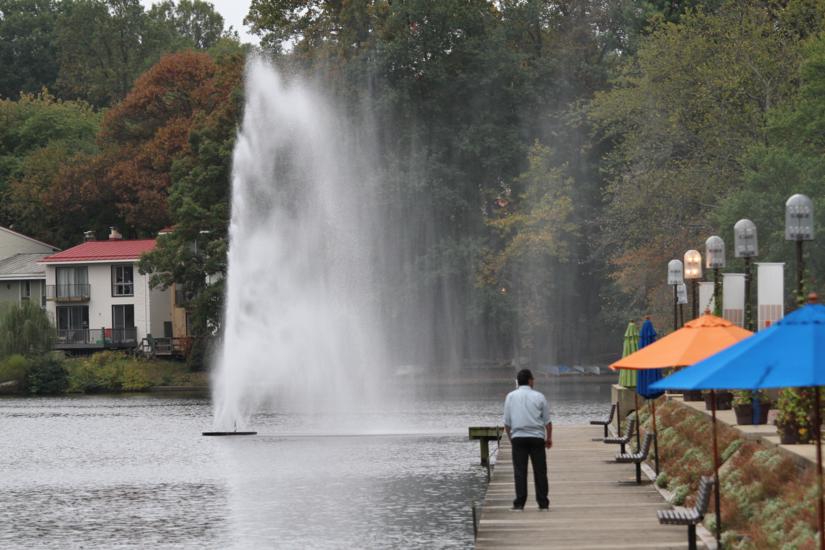
I think all of us are for supporting moves for making sure that the ‘1.1 acres’, as I call the Reston Association land that is up for a swap consideration as part of the Lake Anne redevelopment, is properly managed in its widest sense for the benefit of the community. This is important, because it’s not in the middle of Hunters Wood, it’s going to be in the middle of one gigantic building site before too long. And not just for a few months, but for several years.
Trees have a nasty habit of disappearing when construction starts on any building site, especially when they’re right in the middle of things. When the building is complete this ‘1.1 acres’ is definitely going to be in the middle of an urban center. I know many Restonians (can I use that term?) like to think they live in a forest. I’ve a slightly different take on this.
The reality is that the trees essentially provide barriers between the many diverse centers of activity (housing clusters, commercial centers, recreational sites, schools, places of worship, parks, etc.) and in many cases follow terrain that is of low value or not commercially viable (ravines, the sides of roads, the backs of developments). As an example, the walk up to the Town Center from Lake Anne is typical; it’s at the bottom of a ravine or the backs of housing clusters. And how many forests have asphalt paved paths! Now that definitely is a hallmark of urbanization.
Read More
 RCA is a locally-focused organization. Our primary goal, as our name suggests, is to improve the quality of life for the citizens of Reston. As a result, our projects are usually Reston-specific. Every once in a while, though, we have a chance to do something that benefits people beyond our community’s borders.
One such effort has recently come to fruition for RCA’s Reston Accessibility Committee and its hard-working chair, Ken Fredgren. For the last two years, Ken and others have been pushing for the adoption of changes to Virginia’s statewide building code to make it friendlier to people with disabilities. Those changes have now been adopted, and the people of Virginia, not just Reston, will benefit.
How did RAC get involved in changing statewide building codes? As you might know, RAC works with Reston’s commercial property owners and managers to make their properties more accessible for people with disabilities. In the course of doing this kind of work, they have naturally become familiar with the relevant laws and codes. RAC felt that Virginia’s building codes could be improved to incorporate more language on accessibility.
To address this issue, in 2011 Reston’s delegate (and proud RAC member) Ken Plum sponsored House Joint Resolution 648, which established a working group to recommend accessibility-related changes to Virginia’s building codes and laws. And Ken Fredgren was tapped to serve on that working group. This time, instead of helping property owners understand the accessibility regulations, Ken got to help write them.
One of the great things about the working group is the way developers, county and city permitting officials, and disability advocacy groups collaborated to develop their recommendations. It was a fine example of the good that can happen when the private and public sectors work together for a common goal.
After a year’s effort, the working group emerged in 2012 with a total of 7 proposed changes to the building code and one General Assembly bill that would provide tax credits for businesses that made accessibility-related improvements. Ken proudly presented the group’s products to RCA, and naturally we were in full support. In October of that year, RCA and several co-sponsors held a community forum to discuss the changes and urge Restonians to call and email in support of their adoption.
I’m not sure if Ken knew quite what he was in for. He had already been traveling back and forth to Richmond on a regular basis to meet with the working group, and over the following year, he made several more trips to present their proposals to the Board of Housing and Community Development (which makes changes to Virginia’s building code), then to discuss and make revisions to the proposals, and on and on. These trips weren’t always easy for Ken, but he kept at it because of his commitment to the cause of accessibility.
The proposals went through several rounds of revision; some were dropped, others were modified. It was a long and sometimes frustrating process. But Ken persevered; he wrote letters to the Board, exchanged emails with staffers, and kept attending meetings.
In the end, the Board approved four of the working group’s proposals. Together, these changes represent a huge step forward in the building code.
Two of the changes are related to home construction. One change will incorporate Universal Design standards, which makes buildings easier for older people and those with disabilities to use, for use in building new homes. Another mandates wider interior doors on the main floor of new dwellings, so that people in wheelchairs or mobility devices can move from room to room. That second change is important for people with and without disabilities. Imagine if you invited a friend who uses a wheelchair to your house, only to discover she couldn’t use the bathroom because the door was too narrow.
The other two adopted changes relate to the number of accessible spaces required in parking lots. Another increases the number of accessible parking spaces that must be constructed in large lots. And the last one calls for additional accessible parking spaces in lots connected to medical facilities such as outpatient clinics and dentist’s offices. A lot of RAC’s work involves adding or modifying accessible parking spaces, and I know that Ken is acutely aware of the challenge of finding accessible spaces in busy lots.
Thanks to the efforts of Ken and the HJR 648 working group, our building code is friendlier to people with disabilities than it has ever been. Almost 20 percent of Virginians have a disability, and I’m proud that my state’s building code is now working for them. Parking lots, medical buildings, and homes are basic facilities, and people with disabilities should have the same ability to access them as people without.
As our population ages, these changes will also help Virginia remain an appealing place to live. If people with disabilities can’t find homes with Universal Design features or can’t find places to park where they shop, eat, or go to the doctor, they’re less likely to remain in Virginia and spend their money here. Accessibility improvements aren’t just good for people with disabilities — they’re good for business.
I’m very proud of what Ken’s accomplished with the working group. These building code modifications are lasting changes that will make life better for Virginians with disabilities, their families and friends, and all of us.
And don’t worry — just because Ken’s been working on this effort doesn’t mean that RAC has stopped making progress on projects here in Reston. They’ve remained active on several projects all over our community, and I look forward to sharing the news once they’re successfully completed.
Most of the work we do at RCA primarily benefits Restonians, and that’s great. But I’m really glad for this opportunity to do something that has a statewide impact. Ken Fredgren is a model of hard work and dedication to service, and this example demonstrates how serving your community can have a bigger impact than you ever thought possible.
Colin Mills is the president of Reston Citizens Association. He writes a weekly opinion piece on Reston Now.
Written by Guy Rando. Submit your letters to the editor to [email protected].
As someone who was involved in the design of Lake Anne, especially the open space plan, I strongly support the plan for the revitalization of Lake Anne. However, I do not support Reston Association trading away a parcel of mature upland forest for the purposes of building a parking lot.
As you will see from the attached drawings, there are other options for needed parking at Lake Anne. I believe RA should insist the developer use these options in order to preserve a valuable RA natural area. Do not be the RA Board that “paved paradise and put in a parking lot” because, truly, “you don’t know what you got ‘til it’s gone.”
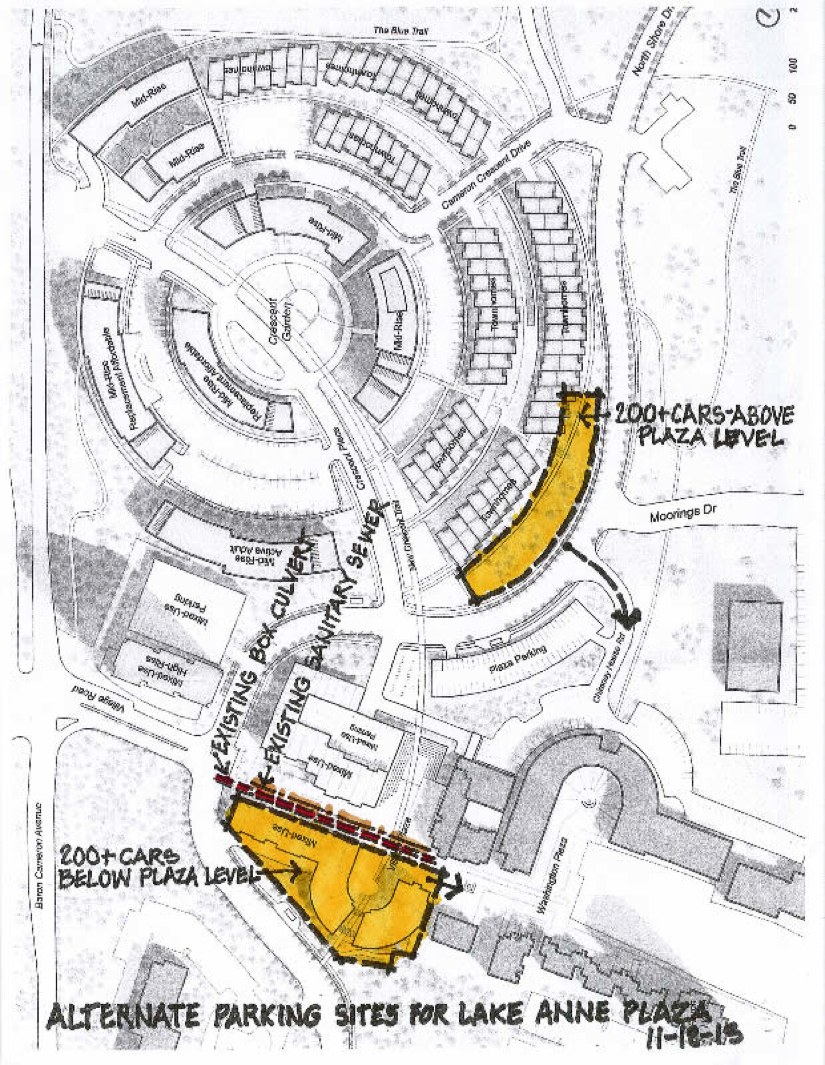 There are only two world class elements in Reston: Washington Plaza and RA open space and natural areas. It would be possible for Lake Anne Development partners to place approximately 200 parking spaces on the Crescent property along North Shore Drive with pedestrian access to the Plaza via Chimney House which would provide direct pedestrian access to the historic Plaza and to our current Lake Anne merchants.
Also the other and best alternative is to eliminate the proposed circular Village Plaza and repeat the mixed use that has been proposed on the east side also to the west side. Consequently, all the parking will be where it is now above and below ground, closer to the world class historic Washington Plaza. The developer also has the opportunity for greater densities and higher profits. There is no need to build another plaza to compete with the beautiful historic plaza we’ve got, which is also preserved for future generations to come.
The current merchants must have parking before, during and after the revitalization. Either of the above alternatives would fulfill this requirement.
Our open space is the birthright of our children and future generations.
“We do not own the freshness of the air and the sparkle of the water, how can you buy them from us? Every part of this earth is sacred to my people. Every shining needle, every sandy shore, every humming insect is holy in the memory of and experience of my people. We know that the white man does not understand our ways. One portion of the land is the same to him as the next, for he is a stranger who comes in the night and takes what he need. The earth is not his brother, but his enemy, and when he has conquered it he moves on. He leaves his fathers’ graves and his children’s birthright is forgotten.” — Chief Seattle in a letter to President Franklin Pierce
Please, let’s leave open space and trees to our children, not a parking garage.
Guy Rando is a longtime Reston landscape architect and urban planner. He will present his alternative plan to the RA Board of Directors at Thursday’s meeting, where they are set to vote on the proposed land swap.
(Sketch of alternative plan courtesy of Guy Rando)
 There is no program or service for which public dollars can be invested that will have a greater return than those invested in the care and education of young children.
People who work in early childhood and day care programs have known intuitively and anecdotally for a long time that children in their programs were much more likely to be successful by a number of different measures than were children who did not have access to their programs.
Now, however, there are many longitudinal studies that provide empirical evidence that there is an exponential payback from programs aimed at young children. Children who have early learning experiences in quality preschool programs are much more likely to be successful in school and much less likely to be in trouble with the law or to be on public assistance programs.
The return on public investment in preschool education is not immediate; it accrues over time as the young person becomes a teenager then an adult. Just as one of the secrets to financial investments is to leave your money in place for long-term returns, policy makers must recognize that the returns for funding quality day care and preschool education programs are not realized for decades or more.
As Arthur Rolnick and Robert Gruenewald of the Minnesota Federal Reserve Board have said, “Early childhood development programs are rarely portrayed as economic development initiatives. They should be at the top of economic development investment lists for state and local government.”
Unfortunately the budgeting process in the public sector does not work favorably for programs with long-term payback. In a time of recession or sluggish recovery, there is an understandable reluctance to spend money without an obvious and clear benefit. Saving dollars in future projections is not helpful to public officials who must make ends meet when there is not enough money to go around.
Recent innovations in early childhood education are often the first to be cut because there is no immediate feedback about their successes and there are no alumni associations to lobby on their behalf. Those most in need may be the least likely to speak up in the community and before legislative bodies. Obviously the children cannot do it, but too many times their parents lack the knowledge and skills to do so as well.
Fortunately many faith communities have taken up the challenge and operate day care and preschool programs as part of their missions or social justice activities. These same institutions are important voices on behalf of the needs of children as are nonprofits like Voices for Virginia Children and Every Child Matters that advocate on behalf of children for anti-poverty, feeding and educational programs. Devotion to Children provides scholarships to needy families for day care services.
At a time when food stamp programs are being reduced and educational dollars are becoming scarce, it is important that legislators see and understand the long-term benefits of investing in our children.
Del. Ken Plum (D-36th) represents Reston in Virginia’s House of Delegates. He writes a weekly opinion column on Reston Now. He can be reached at [email protected].
 Written by Cheryl Terio-Simon. Submit your letters to the editor to [email protected].
Five years ago, Reston Association’s initial efforts to restore the streams and watershed damaged by erosion met with irate concern from many about the loss of trees necessitated by that project. Today, it is generally acknowledged that the short-term loss of some trees was necessary to benefit the greater system, and the project areas are deemed beautiful.
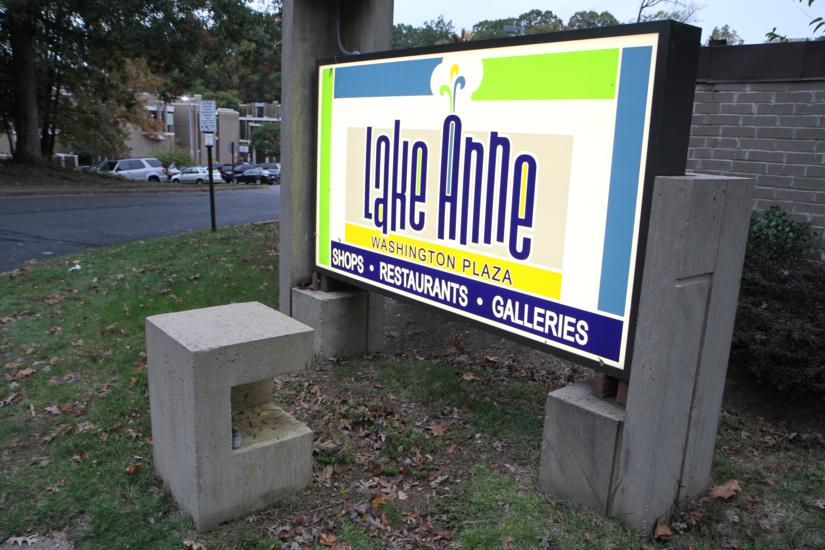
The Lake Anne community redevelopment project has a similar goal, the long-term restoration of Reston’s first — and some say only — village center.
Lake Anne Village Center is symbolic of the vision that created Reston. Bob Simon’s seven goals describe a balance of the need for housing for all, diversity within a community, amenities, and beauty–structural and natural.
Lake Anne Development Partners has been selected to lead this redevelopment at least in part because of the sensitivity that they and their architects have shown to the original vision. Its plan provides for much needed diversity in housing as well as the promise of revitalization of the Village’s retail and commercial base. In a truly mixed-use community the commercial and residential sectors are interdependent.
Looking at the total site, the unused and neglected 1.01-acre RA parcel under consideration by this RA Board is essential to make this redevelopment work. No other parking site will sensibly benefit the existing and new portions of the plaza with so little disruption to the residential community.
Reston Association owns and maintains 1,350 acres of open space, one-seventh of the total land in Reston. This controversial 1.01 acre, which is hardly the gem of RA’s properties, is 0.0751 percent of the total acreage. And this percentage is not lost in the exchange; a slightly larger parcel is being swapped which will provide a needed green buffer next to Baron Cameron at the Crescent property. Additionally, not all the trees on this site will be removed for the parking structure, and RA will be receiving other significant proffers in the exchange.
I hope we all can achieve some perspective about what is important here.
While we can all agree that the preservation of natural beauty has made Reston a unique place to live work and play, what is at stake here is an opportunity to restore the total Reston vision.
I hope we can see the community for the trees.
Cheryl Terio-Simon is a Lake Anne resident and the wife of Reston founder Robert E. Simon.
Where has this year gone? I look at the calendar and see that it’s November, and yet it feels like 2013 just got started. The sands have been flowing through the hourglass faster than usual this year.
One reason for that, I know, is that we’ve been dealing with so many major issues in Reston this year. The coming of the Silver Line and the associated revision of our Comprehensive Plan has been the biggest one, but looking back, it’s amazing how much we’ve taken on this year: The battle over the Reston National golf course. The proposed new RCC rec center. The Beta Plan and the future of our County libraries. The Lake Anne redevelopment. And those are just the ones I can remember off the top of my head. No wonder 2013 hss seemed to pass in the blink of an eye.
One advantage to the way we’ve been flying through the calendar is that it’s now time for one of my favorite events: RCA’s Citizen of the Year award. We’re now accepting nominations for the 2013 award. Read More
Governor-elect Terry McAuliffe hit the ground running when the day after his election he announced his transition team and a webpage at which he solicits ideas and suggestions and invites resumes from those who want to work in his administration.
His approach of assembling a bipartisan transitional team, moving quickly and seeking input are crucial for Virginia at an important transitional time. Last week, I talked about many of the issues like Medicaid expansion that were debated during the campaign and need immediate attention. There are many other issues that do not get as bright a spotlight but deserve serious attention. One is the natural landscape of Virginia and the quality of its air and water.
More than a month ago, VIRGINIAforever, a coalition of concerned businesses, environmental organizations and outdoor enthusiasts, presented to the gubernatorial candidates a five-year plan, “Investing in the Commonwealth’s Land and Water.” As the report points out, Virginia’s population has doubled in the last 50 years putting great stress on our land and water.
The Commonwealth has a constitutional requirement unique among the states “to protect its atmosphere, lands and water from pollution, impairment, or destruction, for the benefit, enjoyment and general welfare of the people of the Commonwealth.” Virginia currently spends just over one percent of its budget on land conservation and water quality improvements. As the title of the report suggests, it will be necessary to “invest” more greatly if the goals of the report are to be met. But investing also suggests that there is an expected return.
Part of the changing landscape of Virginia is the loss of farmland. Since 1997 nearly 150,000 acres of farmland have been converted to other uses. A drive through the Shenandoah Valley can provide immediate visual evidence of the change. While the new use is justified in economic terms, it needs to be recognized that farming and forestry has nearly a $100 billion impact on Virginia’s economy.
The report calls for Virginia to protect 120,000 acres of farmland over the next five years through the use of tax credits. And, in order to meet the growing demand for state parks at a recommended level of 10 acres of park per 1,000 Virginians it will be necessary to conserve an additional 18,000 acres by 2020.
Only about one-third of Virginia’s 52,255 miles of rivers have been assessed for impairment, and of those assessed waters 71 percent are impaired for one or more uses as are over 80 percent of Virginia’s lakes and the Chesapeake Bay, according to the VIRGINIAforever report.
One of the most important statements in the report is that “concerns about cleaning up our polluted waters often fall back on predictions of negative consequences for the economy. Experience has not just disproven the concern that environmental restoration threatens economic prosperity, it has demonstrated just the opposite—economies cannot thrive in a world of depleted and degraded natural resources, and in fact, innovation, investment, and competition have spurred job growth in new sectors just when traditional sectors were faltering.”
The nature of Virginia must be a priority of the new administration!
Ken Plum (D-36th) represents Reston in Virginia’s House of Delegates. He writes a weekly column for Reston now. He can be reached at [email protected].
Residential Studios. It sounds like a movie company, doesn’t it?
Actually, it’s an idea under consideration to relieve the affordable housing crunch in Fairfax County. As you may know, the idea has stirred up a lot of controversy in the county. Since the Residential Studios concept would likely have an impact on future development in Reston, we at RCA decided to take a stand on the issue.
Our position? We support the concept… but we’re concerned about the execution. We believe the ordinance needs rewriting in order to protect existing neighborhoods, and to ensure that the new units go into areas with the infrastructure to support them.
What are Residential Studios? Essentially, they’re efficiency apartments (zero-bedroom units less than 500 square feet in size). Currently, there are a few such apartments in the county, but only a very small number are permitted. The proposed change to the zoning ordinance would allow construction of buildings with up to 75 of these units almost anywhere in the county.
Why build them? To provide a different affordable housing option. As housing prices continue to climb in Reston and elsewhere in the region, it’s harder and harder for people with low incomes to afford to live here. Our economy needs people to work relatively low-wage jobs in service, retail, and other industries, and those people need a place to live.
One way to meet this need is to provide subsidized and/or government-owned housing; the Crescent Apartments are an example of this. This generally requires substantial government investment. Another answer is to let the market set rents, which generally pushes lower-income residents farther out, where housing is cheaper. This makes our traffic worse, since the workers have to drive long distances to get to their jobs.
Results of the election are not known to me as I write this column, but polling suggests that there will be a shift towards the middle of the political spectrum in the Old Dominion this year. Seldom have the choices been clearer on political philosophy among the statewide and House of Delegates candidates as they were in this election.
Virginia faces some serious challenges that the new governor and the General Assembly must take on. Regardless of the claims that the state has had a budget surplus the last four years, the Commonwealth has experienced slow growth during this period that has produced small ending balances as a result of conservatively estimated revenues. When measured against the unmet needs in many areas of the budget, state coffers are empty.
Transportation needs will take some dollars from a general fund that is already inadequate to address education, mental health and other pressing issues. Fairfax County Public Schools are facing a $140 million deficit in part because of the declining per student support from the state.
The outgoing governor will propose a budget for the next biennium, but the priorities of that budget will need close scrutiny by the new governor and General Assembly. The slow erosion of support for public education at all levels needs to be reversed. With all the data that support the value of preschool programs, the state’s investment in these programs needs to increase. Mental health programs are grossly underfunded with as many as a third of local jail populations being persons in need of mental health treatment.
Although legislation is in place to allow Virginia to move into an expanded Medicaid program, there seems to be reluctance on the part of the commission appointed to bring about certain reforms to take the last step of expanding Medicaid even though the reforms have been accomplished. The new governor should ask the General Assembly to act right away to extend insurance to 400,000 Virginians and to pay for it by receiving federal dollars paid by Virginians. There is no good reason for those dollars to go to residents of another state when there are over a million Virginians without health insurance.
As the location of one of the greatest incidents of gun violence — Virginia Tech — the state needs to enact important gun safety measures that will expand background checks to all gun sales and to expand its background database to include persons with violent mental health illnesses. We need also to recognize that the world has passed us by, and we need to repeal the marriage amendment to allow people who are in love to marry regardless of their sexual orientation. Likewise we need to pass laws against discrimination based on sexual orientation.
That is the beginning of the list of work for the legislature to do. I always invite your recommendations on legislation; email me at [email protected].
Reston resident Ken Plum, re-elected by Reston voters on Nov. 5, has represented Virginia’s 36th District in the Virginia House of Delegates since 1982. Plum’s campaign is Reston Now advertiser.
By Delegate Kenneth R. “Ken” Plum
Recently, I was asked to participate in a workshop for a group of leaders who were planning a future for their organization. Specifically, I was asked to discuss the characteristics of our community of Reston. While I try to stay on top of trends and am out in the community on a daily basis, I learned a lot preparing for the presentation at the workshop.
While the 400 square miles of Fairfax County are about average size for a county in Virginia, there is little else average about us in the state or in the nation for that matter. Virginia is the 12th-largest state in population among the 50 states, but the 1.1 million people in Fairfax County is larger in population than any other jurisdiction in Virginia. Richmond has just over 200,000 people; Washington, D.C. just over 600,000.
Virginia is the eighth-wealthiest state in household income, but the Northern Virginia jurisdictions of Fairfax, Loudoun, and Arlington have the highest level of household income in the nation. In fact, the median household income in Fairfax County is more than twice that of the United States.
That is not to say that everyone in Fairfax County is wealthy. We have the same income gap between the top and bottom incomes as exists throughout the country. While Fairfax County has a seemingly low rate of poverty at six percent, that rate translates into 72,000 individuals; a low rate but a high number! Eight percent of children under eight were below the poverty level compared with four percent of people 65 years and over. Thirteen percent of families with only a female head of household present had incomes below the poverty level.
Just as our county’s population has gone from about 454,000 in 1970 to 1.1 million today with an expected growth to 1.37 million in 2040, the population has become more diverse. Thirty percent of the people living in Fairfax County are foreign born. Of the foreign born, just over half were born in Asia, about 30 percent in Latin America, and the rest from throughout the world.
The diversity of our population by ethnicity and race can best be seen in our schools that are themselves diverse in different ways. Hunters Woods Elementary is 33 percent Asian while nearby Dogwood Elementary is 60 percent Hispanic. Lake Anne Elementary is 37 percent white, 29 percent Hispanic and 21 percent black. Nearby Forest Edge is 40 percent white, 18 percent Asian, 20 percent black and 15 percent Hispanic. Demographic information is available on each public school’s website.
The population of Fairfax County is among the best educated in the country. Of persons age 25 and older, 28 percent have advanced degrees beyond the bachelor’s, 30 percent have bachelor’s degrees, and only about eight percent have less than a high school education.
All these characteristics make our community unique and special. A wonderfully diverse population with very different backgrounds and needs contributes to our special culture. I would not want to live anywhere else in the world.
Reston resident Ken Plum has represented Virginia’s 36th District in the Virginia House of Delegates since 1982. Plum’s campaign is Reston Now advertiser.
Colin Mills is the president of the Reston Citizens Association. He will write a weekly opinion column on Reston Now.
Last night, four years of work on the Reston Master Plan Task Force came to a frustrating and disappointing conclusion. The Task Force voted to send the new Comprehensive Plan to the Planning Commission, starting it down the road to approval before the Board of Supervisors. RCA’s representative, Terry Maynard, voted “no” on the final product. I did not have a vote on the Task Force, but if I had, I would have voted the same way.
RCA was not satisfied with the latest draft of the Comp Plan, as evidenced by the report card that our Reston 20/20 Committee prepared this week, which gave it an overall grade of D. We felt that the plan was seriously lacking in many areas, most notably parks and recreation, transportation, and implementation. We joined with ARCH and RA to produce a joint comment describing the areas that we felt needed improvement.
Unfortunately, the few changes approved by the Task Force last night did little to improve the plan. Therefore, we felt that we had no choice but to oppose it.
The lack of changes to the draft plan was not for a lack of suggestions. By my count, there were 15 sets of comments submitted suggesting changes to the plan, including ours. Unfortunately, the discussion last night was limited to a handful of subjects selected by the Task Force chair, Patty Nicoson. The Task Force did not even consider all of the comments made by its members. Major topics such as transportation and implementation weren’t even discussed at all! Since those were two of the areas that needed the most work, I was extremely disappointed that they weren’t even raised. Read More
