This is an opinion column by Del. Ken Plum (D), who represents Reston in Virginia’s House of Delegates. It does not reflect the opinion of Reston Now.

Virginia made history last week: The Governor of Virginia Ralph Northam signed the bill that made Virginia the first state in the south and the 23rd state in the nation to end the death penalty! I made the nearly four-hour trip to the Greenville Correctional Center in Jarrett where the “death chamber” is located to be at this momentous occasion when another of my legislative goals was realized.


After a year spent largely cooped up inside (if you were lucky), even the most introverted individuals might feel a surge of anticipation at the prospect of mingling with a crowd in celebration or leisure.

The warming spring weather and accelerating pace of COVID-19 vaccinations suggest major communal experiences could once again be a reality. Starting today (Thursday), Virginia is easing limits on social gatherings, recreational events, and entertainment venues.


There is no more important function of government than ensuring public safety. The challenge in a constitutional form of government is achieving safety for the public without jeopardizing the rights and freedom of some to protect others. Public safety has been like a political football with some raising fears about crime and perceived threats to the community. Few is the number of politicians who until recently have been willing to suggest that our laws and institutions of justice require a review of the balance of public safety, the application of laws, and justice.

Over the last several decades there have been many political campaigns built around a suggestion of increasing crime rates and simplistic solutions to keep everyone safe. California started the trend with legislation with the slogan “Three Strikes and You’re Out” that increased penalties for repeated offenses. A governor’s race in Virginia was won by an underdog candidate with a slogan of “no more parole.” Legislative sessions during an election year would see more ideas about expanding the list of crimes for which the state could put someone to death, and the list lengthened of crimes for which mandatory minimum sentences were prescribed. At the same time guns became easier to purchase and own, and every mass shooting was followed by more gun purchases.


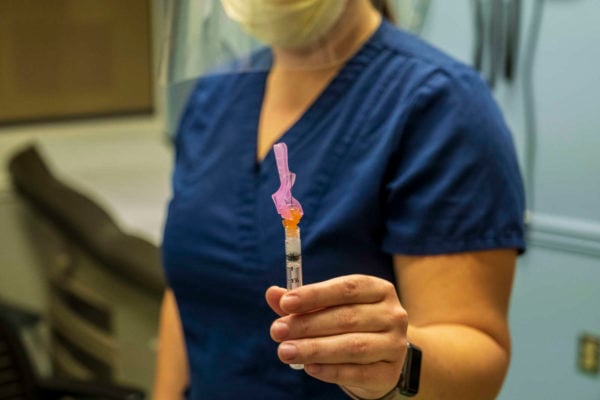
The COVID-19 vaccination process has been ramping up in Fairfax County in recent weeks, as supplies increase and more partners come on board to help administer the vaccines.

While eligibility for the vaccine has not expanded since mid-January, Fairfax County’s allocation of vaccine has grown over the past month or so from 13,000 to 19,220 first doses per week, and the size of shipments are expected to continue increasing throughout March, allowing the county health department to get through its existing waitlist more quickly.


To paraphrase Benjamin Franklin who when asked at the conclusion of the Constitutional Convention in Philadelphia what kind of government had been formed replied, “a republic if we can keep it!” As the General Assembly concluded the work of its annual session this past weekend the same kind of question could be posed as the changes in the Commonwealth’s laws and governance have been so profound. The answer I believe is a progressive state measured not by southern standards but by comparison to all the other states. At the ballot box the state over the last several years has gone from red to purple to blue. All statewide elected officials are Democrats, and both houses of the General Assembly have been controlled by Democrats since the elections in 2019. Far more meaningful than the partisan labels of elected officials are the changes that have taken place in the laws of the Commonwealth.

In the regular and a special session of the General Assembly last year, historic legislation was passed including ratification of the Equal Rights Amendment and lifting of barriers to abortion. Jim Crow era laws were repealed, and the Virginia Values Act prohibiting discrimination in housing and employment was passed. Bills to reduce gun violence were passed as were bills to reduce the school to prison pipeline. Criminal justice and policing reform bills were passed. And more.


One of the meaningful traditions that has evolved in the Virginia House of Delegates over the last couple of decades has been the celebration of Black History Month by having a speech each day on the House floor about famous Black persons and their struggles and accomplishments in the Commonwealth. According to History magazine, Black History Month is an annual celebration of achievements by African Americans and a time for recognizing their central role in U.S. history. Also known as African American History Month, the event grew out of “Negro History Week,” the brainchild of noted historian Carter G. Woodson and other prominent African Americans. Since 1976 the month of February has been designated as Black History Month and is celebrated around the world, including in Canada and the United Kingdom.

Virginia has a unique role in Black history. The first enslaved Blacks arrived in Virginia in 1619, and the labors of these persons were central to the growth of the Virginia colony and then state. It was Black laborers who built the grand plantations’ homes and the institutions of higher education while themselves living in meager housing and refused entrance into public schools and colleges. It was Black slave labor that built the early Virginia tobacco economy while being denied all but the most limited income. Black persons supported the lifestyle of the most prominent Virginia families with no public recognition of their accomplishments. As significant as were Jefferson’s words that “all men are created equal” in the Declaration of Independence, they did not apply to the slaves in his household nor to the Constitution that counted them as 3/5ths of a person.



Featured here is Vincent Dory who is running against three other people for one of two at-large seats. The profiles are in a Q-and-A format. With the exception of minor formatting edits, profiles are published in unedited form. Each candidate had an opportunity to answer the same questions in their own words.

How long have you lived in Reston? What brought you here?


Featured here is Sarah Selvaraj-Dsouza who is running against three other people for one of two at-large seats. The profiles are in a Q-and-A format. With the exception of minor formatting edits, profiles are published in unedited form. Each candidate had an opportunity to answer the same questions in their own words.

How long have you lived in Reston? What brought you here?


Featured here is John Farrell who is running against three other people for one of two at-large seats. The profiles are in a Q-and-A format. With the exception of minor formatting edits, profiles are published in unedited form. Each candidate had an opportunity to answer the same questions in their own words. 

How long have you lived in Reston? What brought you here?


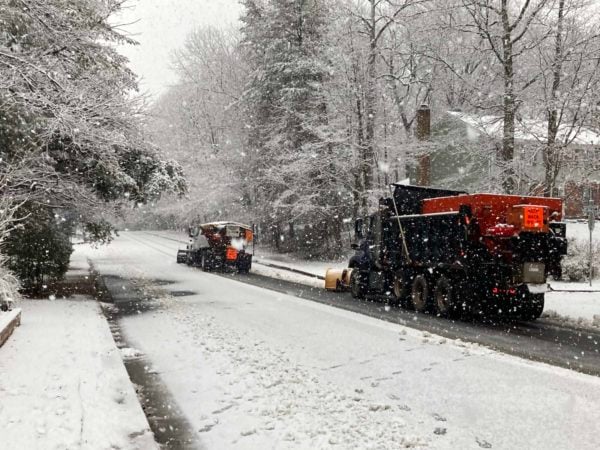
The D.C. area is hunkered down for another winter storm today (Thursday) that could last into Friday morning.

At 1:05 p.m., the National Weather Service downgraded its earlier winter storm warning to a Winter Weather Advisory. As of 8:30 this morning, the NWS had projected one to three inches of snow, a drop down from previous forecasts of three to six inches of accumulation.


Barring an abrupt change in plans, Fairfax County Public Schools students will start returning to school buildings next week for the first time since classes resumed after winter break in January.

The Fairfax County School Board approved a new Return to School timeline last Tuesday (Feb. 2) that lets 8,000 students in special education and career and technical education programs get two days of in-person instruction and two days of virtual instruction per week starting on Feb. 16. All FCPS students will be phased into the hybrid learning model by Mar. 16, though students who choose to stay all-virtual can do so.


View More Stories