
If you have ideas on stories we should cover, email us at [email protected] or submit an anonymous tip.
Feel free to discuss these topics, your social distancing plans, or anything else that’s happening locally in the comments below.

If you have ideas on stories we should cover, email us at [email protected] or submit an anonymous tip.
Feel free to discuss these topics, your social distancing plans, or anything else that’s happening locally in the comments below.
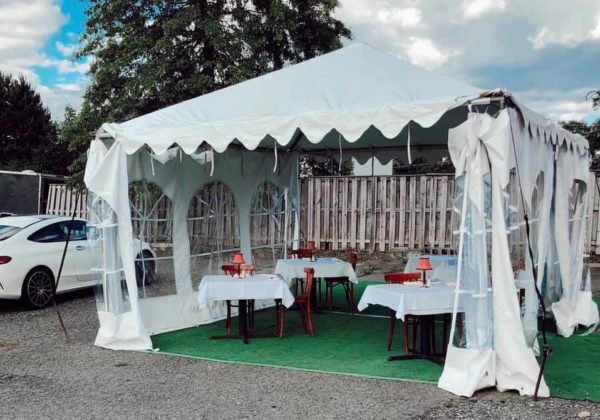
The food service industry is in survival mode this winter, as COVID-19 cases remain high in Fairfax County and around the U.S.
Increased flexibility for outdoor dining operations, along with a greater emphasis on takeout and delivery services, helped sustain many restaurants during the summer and fall, but the chillier weather has made convincing people to eat or drink outside a trickier proposition.

On the east side of Capitol Square near the Executive Mansion in Richmond is the Virginia Civil Rights Memorial featuring 16-year-old Barbara Johns who led the student walkout that resulted in a civil rights case before the Supreme Court as part of Brown v. Board of Education that found racially-segregated schools to be unconstitutional. With her on the memorial are statues of attorneys Oliver Hill and Spotswood Robinson who argued the case and representations of persons who faced repression throughout Virginia’s racist history.
On the west end of Capitol Square, near where the new General Assembly office building is being constructed, is a lone statue of Harry F. Byrd: Senator, VA (1933-1965), Governor of Virginia (1926-1930), and Virginia State Senator (1924-1926).
If you have ideas on stories we should cover, email us at [email protected] or submit an anonymous tip.
Feel free to discuss these topics, your social distancing plans, or anything else that’s happening locally in the comments below.
Like most people, I will not be attending any inaugural events this year because of the pandemic restrictions and threats of civil disturbances. The event today does bring back wonderful memories of the first and only inauguration I ever attended. It was on January 20, 1961. In 1960 I had graduated from high school and had not gone to college because of doubts as to whether I could be successful. Instead, I was attending a short-term vocational program in Washington, DC and living in a single room in a boarding house just a half dozen blocks from the White House. Even then I had an intense interest in politics and followed the Kennedy-Nixon campaigns and debates intensely. I loved candidate and then President-elect John F. Kennedy as did millions of others. I was not about to miss the opportunity to go to his inauguration when I was living so close by.
On the day before the inauguration, temperatures dropped to 20 degrees and eight inches of snow fell. I got up early Inauguration Day and literally put on all the clothing I owned and started a trek to the US Capitol on foot. Workers directed by the Army Corp of Engineers had been working throughout the night to haul away as much of the snow as possible from Capitol grounds and Pennsylvania Avenue. The military had brought in flame throwers to melt some of the snow and ice. More than a thousand cars that had been stranded in the area had to be removed

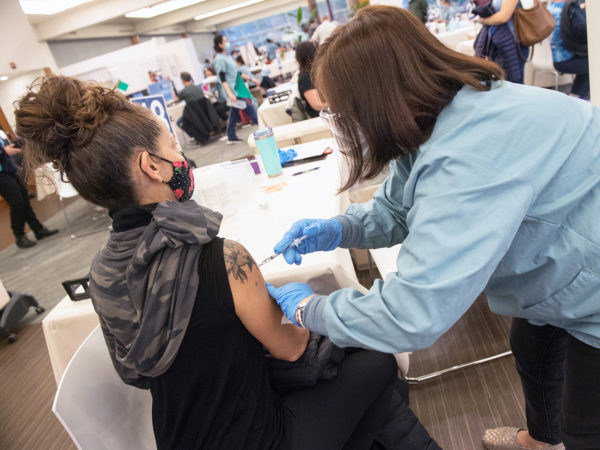
About 40% of Fairfax County residents 16 and older are now eligible to register for a COVID-19 vaccine appointment after Virginia expanded phase 1b to include anyone 65 and older as well as people with medical conditions or a disability that puts them at high risk of severe illness if they contract the disease.
Eligible populations now include:

If you have ideas on stories we should cover, email us at [email protected] or submit an anonymous tip.
Feel free to discuss these topics, your social distancing plans, or anything else that’s happening locally in the comments below.
If you have ideas on stories we should cover, email us at [email protected] or submit an anonymous tip.
Feel free to discuss these topics, your social distancing plans, or anything else that’s happening locally in the comments below.
I can remember every word of the conversation as if it took place yesterday, but it happened in 1959. I am reminded of the talk as the person speaking to me, Mrs. Lena Kite, passed away last week at age 94. She was the first person to hold the position of guidance counselor at then Shenandoah High School. She called me into her office one day just as I was entering my senior year of high school. She said, “Kenneth (no one called me Ken in those days), it is time for you to think about applying to go to college.” I was dumbfounded! I hardly knew how to respond. I finally uttered, “I cannot go to college; no one in my family has ever gone to college.” She assured me that yes I could go to college.
Mrs. Kite changed the entire trajectory of my life that day. I was about to graduate from high school which was the expectation for me. My parents who taught me so much of the basics of life of honesty, decency, and hard work had themselves finished but a couple of years of schooling. They had not talked to me about college for it was beyond their knowledge and beyond what they thought could be their children’s aspirations. But Mrs. Kite in her new role as guidance counselor knew better and got me to thinking differently about my future. I owe her a great debt of gratitude and told her that the couple of times I saw her over the last decade when we talked about the two degrees I have. Her obituary said that in her role first as a teacher of typing and shorthand and later as guidance counselor she touched the lives of more than 6,000 children. I am sure she had as equally a positive impact on them as well.
In two weeks the General Assembly will convene for its annual session that will mark 50 years since the people voted to ratify revisions to the Jim-Crow-laden Constitution of 1902. Up until those revisions, the state legislature met only every other year. The revised Constitution provided for annual sessions to be sixty days in the even-numbered years and thirty days in the odd-numbered years with a provision that any session could be extended up to half its length by a two-thirds vote of the members. Full sixty-day sessions have run over a day or so but have not been extended; thirty-day sessions have always been extended to 45 days to get the work done. The minority party leadership in both houses has indicated that they will not vote to extend the session this year. Not only will the session be shorter, but it will also operate under the restrictions of the pandemic. The House will meet virtually by Zoom, and the Senate that has the smaller number of members will meet partly in Richmond and partly by Zoom. Much business is on the agenda, and careful planning is essential to having a successful session.
The agenda will be full. The budget will need to be revised to reflect the changes brought on by the pandemic. Criminal justice reform that got underway this year has remaining work to be done. Climate change continues, and we must do our part to combat it. Help needs to be given to the unemployed and the homeless or those under threat of eviction. The list is long.

An end to 2020 is almost upon us. If ever a year deserved a send-off of champagne and confetti, it was this one, but as they did with many other traditions, concerns about COVID-19 have curtailed or put on hold many of the usual New Year’s Eve parties.
Still, there remain plenty of options for ringing in the new year.
Last Sunday evening Confederate General Robert E. Lee lost his position of representing the Commonwealth as part of the Statuary Hall Collection at the United States Capitol. A copy of a statue of General Lee by sculptor Edward Valentine had been standing in the Capitol since 1909 most recently in the Crypt where a statue representing each of the thirteen original states stood. General Lee’s statue was carted off just as statues of him have been taken down across the state including the huge equestrian statue of him that will be taken down from Monument Avenue in Richmond as soon as lawsuits about it are resolved.
The other statue representing Virginia in the Capitol Statuary Collection is a copy of Houdon’s statue that stands in the Rotunda of the State Capitol in Richmond of the Father of Our Country George Washington. It was Washington’s strong leadership and the time-honored precedents he set that helped the new nation to get started. Lee on the other hand had led an insurrection that attempted to break away from the nation and establish the Confederate States as a separate country that allowed slavery of human beings!
In accepting the Democratic nomination for president, Franklin D. Roosevelt promised a “new deal” for the “forgotten man.” In the midst of the Great Depression the country responded to Roosevelt’s promise by electing him president four times. The ensuing legislation in the first hundred days of his administration and throughout the subsequent years as president produced a new deal that transformed the government from a laissez-faire approach to a broader role of government in the economy.
Dozens of bills over as many years set up new agencies of government including the Civilian Conservation Corps (CCC) and the Works Progress Administration (WPA) that put people to work on public projects, the Agricultural Adjustment Administration (AAA) that provided cash subsidies to farmers while controlling the production of staple crops, and the Tennessee Valley Authority (TVA) that provided cheap electricity and flood control over seven states. The Federal Deposit Insurance Corporation (FDIC) and the Securities and Exchange Commission (SEC) acts moved the federal government actively into monetary policy. There are many more.
Before we head off into another weekend with COVID-19 abound, let’s take a look back at the biggest stories on Reston Now in recent days.
If you have ideas on stories we should cover, email us at [email protected] or submit an anonymous tip.
The Constitution requires that after the federal census every ten years there is to be a reapportionment of legislative districts based on population growth and shifts reflecting “one-man, one-vote.” Virginia voters made history this year by approving a constitutional amendment establishing a Redistricting Commission. With Virginia having elections in odd-numbered years including in 2021 elections for governor, lieutenant governor, attorney general and members of the House of Delegates, Virginia is on a fast track to get the Commission underway.
In the special session that ended in October, the General Assembly passed enabling legislation to establish the Commission by November 15. Already the eight legislators who will be on the Commission have been named as well as the retired judges who will participate. In all instances of appointing members, consideration shall be given “to the racial, ethnic, geographic, and gender diversity of the Commonwealth.” The partisan leadership in the House and Senate who made the appointments were prohibited from appointing themselves.