

 My high school alma mater, Shenandoah High School, is no longer a high school. The building with an addition is now Shenandoah Elementary School. Children who would have attended the high school now attend the consolidated Page County High School.
The memories and legacies of the school continue through the Shenandoah High School Alumni Association that was organized in 1939 making it the longest continuous high school alumni association in the state. The 76th Annual Shenandoah High School Alumni Banquet held last week recognized two living members from the class of 1935 among its guests.
My graduating class had 41 members, with about half attending our Class of 1960 reunion party before the banquet. Three of our teachers also attended, including Mrs. Foltz who taught me to type, an invaluable skill for which I thanked and assured her that I still keep my fingers on the home keys.
Mrs. Kite was my guidance counselor who gave me the unheard of idea that I like others could attend college. No one else in my family ever had.
Last week was teacher appreciation week, and after having attended the alumni banquet I could not stop thinking about the teachers I had and the impact they had on me. All my teachers deserve a shout out, but with limited space I will mention just a few. Mrs. Yates was my first grade teacher and the very first teacher I ever met. She continues to be an angel in my mind.
Second grade teacher Ms. Rau and third grade teacher Ms. Parker were young and very beautiful. I could not do enough to please them. Ms. Parker especially opened my mind to the world as she talked about places she had visited. I remembered her talk about the “painted desert” when I visited there years ago.
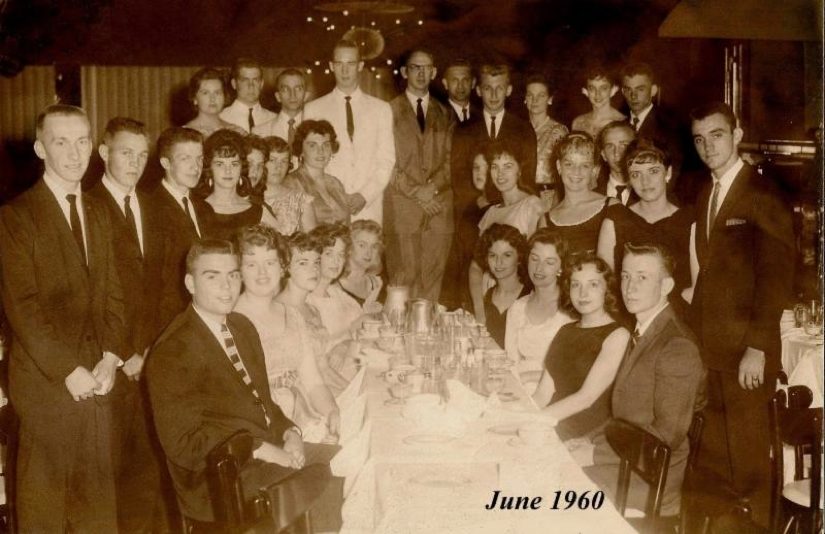 Mr. Kite fostered my love of history. I still have the dozen-page report I wrote for his class in the 11th grade. In those dozen pages I wrote a “Short History of Page County,” while it took historian Harry Strickler several hundred pages to do the same thing.
Mrs. Boozer who was my senior year government teacher promoted my interest in government. I still quote statistics I gathered in writing a paper for her on the misuse of the absentee ballot in Virginia.
And as boring as it became at the time I still appreciate the diagramming of sentences that Mr. Turner made us do. It continues to help me with sentence construction. Mr. McHenry’s wood working and metal working shop taught me problem solving skills that I continue to use.
Public schools did so much for me. That’s why I work hard to ensure that our schools are the best they can be and that teachers who are the keys in the process get support. We must make sure that students have positive learning experiences they can look back on and that create in them an ongoing desire to learn.
Ken Plum represents Reston in Virginia’s House of Delegates. His opinion does not reflect that of Reston Now.
In Virginia, as in states throughout the South and the Midwest, there is a continuing stream of legislation that attempts to place the power of the states over that of the federal government.
Most recently, the passage of the Affordable Care Act resulted in a torrent of bills attempting to stop implementation of the federal law. Virginia has a not-so-proud history in this regard. From asserting states’ rights as a justification for being able to own slaves to “Massive Resistance” to prevent the racial desegregation of the schools, Virginia has too often been a leader in arguing against history and asserting a right to interpose itself between the federal government and the people.
Recently I had the pleasure of discussing with a middle school class the meaning of “We the People.” I could not have been more impressed with their knowledge of history and constitutional law! Only later did I learn that this group of scholars at Rachel Carson Middle School in Fairfax County had won the middle school championship in a “We the People” competition by besting eight other teams from around the country.
The competition is part of the national We the People’s: The Citizen and the Constitution Programsponsored by the Center for Civic Education to promote civic competence and responsibility among middle and high school students.
The students at Rachel Carson were able to explain why the Articles of Confederation that had made the state preeminent had failed and to discuss the expansion of civic participation during our history with the passage of the 13th, 14th, 15th, and 19th amendments to the Constitution and the Voting Rights Act of 1965. They had a clearer grasp of our history than I have found in some debate in the state legislature.
Congratulations to teacher Cynthia Burgett and the students on their wonderful achievement. I could recognize many civic leaders in the class who I know will be contributors to our communities and to our government in the future. They will make “We the People” a reality.
Last week, I also participated in the 40th anniversary of the Volunteer Learning Program in Fairfax County Public Schools. I was part of starting the program that continues with much success to place volunteer tutors from the community with volunteer learners who want to complete their education.
The ability to serve diverse learners with different goals at locations throughout the County at times of their availability has been possible only through utilizing an experienced teacher to train volunteers who work with students one on one. For some students the goal is to learn to read and write; for others it is to learn English. Some students have employment goals.
Congratulations and thank you for all those who work to expand educational opportunities in our community. More information is available if you want to be a tutor or need assistance the program provides.
We the people can have a better government when we know our history. We can have a better community when we contribute to the advancement of others.
Ken Plum represents Reston in Virginia’s House of Delegates. His opinions do not reflect Reston Now’s.
I announced my first bid for elective office in 1973 while standing on the steps of the historic Fairfax County Courthouse. Only my immediate family and my secretary and her husband were there to hear me harken back to the Fairfax Resolves of 1774 when the citizens of Fairfax County enumerated their complaints against the Crown.
I suggested that our contemporary problems were not much different except that they were directed at the government in Richmond, and I promised to go to the state Capitol and do something about our grievances.
Last week, I announced my candidacy for re-election. While the basics of government have remained the same since my first announcement, attacks on the functions of government have become increasingly shrill. Ideological differences in the legislature have seldom been more intense.
With the retirement last year of a legislator who had served as a member of the House of Delegates for 50 years, I became currently the longest-serving member of the House of Delegates. As a member of the minority party in the House, my length of service does not provide me any special privileges or considerations, but it does require me to examine my role as a legislator.
As I told the constituents and friends who assembled to kick off my current campaign, I consider my role in the House of Delegates to do the heavy lifting. Above all, I will serve my constituents as best I can with their individual and community needs and interests before the legislature. I will be leaving the introduction of routine and housekeeping bills to junior members to get their practice in law making.
When I say “heavy lifting,” I mean taking on the difficult and challenging issues that, while divisive, need resolution. I need to be clear to voters and to my fellow legislators my positions on issues that have evolved over many years of dealing with them. For issues to be resolved, all sides need to be clearly articulated, something I am generally able to do.
I will continue to speak out on the need to expand Medicaid to provide health insurance to the working poor. Not only will it bring about $5 million dollars a day of Virginia taxpayer monies back to the state, but it will free up about $200 million of state monies that are spent on items that would be covered by Medicaid. I want those extra millions spent on education, including the expansion of preschool programs — one of the best investments in the future a government can make.
I will work for greater public safety by supporting measures to keep guns out of the hands of violent individuals and criminals while respecting the Second Amendment. My work to end discrimination based on sexual orientation will continue as will my efforts to establish a nonpartisan, independent redistricting commission.
The state needs to take action to protect our shorelines and respond to the challenges of sea level rise. I am prepared to do this kind of heavy lifting in the legislature if voters return me for another term. I am honored to serve and enthusiastic to represent the residents of the 36th District.
Ken Plum represents Reston in Virginia’s House of Delegates. His opinion does not represent Reston Now.
The ship of state of the Old Dominion that traces its beginnings to a meeting of the colonists in the church at Jamestown in 1619 showed some stress lines last week as the legislative body, the General Assembly, turned a one-day reconvened session to consider the Governor’s amendments into two days of meetings with incomplete results.
Arriving at a set of ethics rules that will permit part-time citizen legislators to live in local districts and interact with their constituents has proven to be a difficult task. Cynics may say that the problem comes from lawmakers who do not want to set limits on themselves, but the challenge is much more difficult than that.
As one who wants the toughest ethics rules possible to maintain public trust, I do not at the same time want to be cut off from regular contact with my constituents who ask me to come to their events, most of which are non-profit fundraisers for causes in which I believe.
Absolutely do away with the pleasure trips that I have never taken and that are an embarrassment to other legislators who have not gone on these trips, but legislators should be able to go the annual conference of the National Conference of State Legislatures that provides the best continuing education for legislators available.
I do not have a copy yet of the compromise bill that the General Assembly will consider with the Governor’s amendments, but I believe it is safe to say that a bill will pass and that the law it establishes will be amended and perfected over many years.
Extending the reconvened or veto session by an additional day was a little embarrassing for a leadership that had bragged about ending the regular 45-day short session one day early. Work was rushed to save the state a little money by ending early, and some of the problems with the ethics bill came about in part because of the rush to get it completed.
When 140 part-time legislators attempt to balance a budget with significant revenue shortfall and consider more than 2,500 bills and resolutions on topics as diverse as sexual assault on college campuses, police surveillance including license plate readers and drones, and community and gun safety in a politically-charged, 45-day session in an election year, it is reasonable to expect some misfires and shortcomings. Some of the ways that the legislature has chosen to deal with its stresses need review and change.
A report by Transparency Virginia (TV), an informal coalition of non-profits that advocate at the General Assembly, reported recently that in the 2015 session there were multiple times that committees met without adequate notice to make public participation possible, scores of bills were never given a hearing, and 76 percent of the bills and resolutions defeated in subcommittees in the House did not have a recorded vote.
Many challenges face the Commonwealth, but it may be the case that more attention needs to be given to the health of the body before these issues can be resolved in a way that is best for the citizens.
Ken Plum represents Reston in Virginia’s House of Delegates. His opinion does not necessarily reflect that of Reston Now.
Del. Ken Plum (D-Reston), the longest-serving member of the Virginia House of Delegates, will kick off his bid for re-election Tuesday in Reston.
The campaign kickoff is from 6 to 8 p.m. at Reston Station Plaza.
Plum has represented Reston in Richmond continuously since 1982 (and also served a term from 1978 to 1980).
Plum ran unopposed in the 2013 election. In 2011 and 2009, he beat Republican challenger Hugh “Mac” Cannon. Plum won with more than 60 percent of the votes.
So far, Plum is again running unopposed in 2015.
To RSVP (tickets start at $50) or make a donation, visit Plum’s fundraising site.
As a former teacher and educator, I like what I have been seeing recently of the vast array of educational resources in our community.
Most of the programs involve partnerships that make them possible and that contribute in many ways to making them successful. As is often the case, there is little that is brand new, but no apologies are needed for adopting ideas and programs that have proven successful. Nor should a program be abandoned simply because it has been around for a while if it is otherwise working.
Aldrin Elementary School in Reston cut the ribbon recently on a new branch of Middleburg Bank. The branch will be run by students and will serve students in the school. Not a new idea since many schools have real banks in them, but it is a program that I believe will contribute to financial literacy in a way that will stick with the children.
Likewise, I like what I see children learning about the environment through the efforts of teachers and volunteers working through NoVA Outside, an alliance of environmental educators. At a recent School Environmental Action Showcase at George Mason University, I saw the results of teams from across the region celebrate the “Green or Eco” work they are doing at their school and in their communities.
The student teams applied STEM (Science, Technology, Engineering and Math) concepts to real, authentic environmental problems they identified including reducing waste, conserving energy, providing habitat for animal species, creating sustainable food programs, cleaning watersheds, and others.
The Volunteer Learning Program, a program with which I was involved when it began in 1975, continues to provide personalized volunteer tutoring to Fairfax County adults and court-involved juveniles who are seeking help to complete a high school credential while getting better prepared for work or further education.
In addition to helping thousands of young people and adults to complete their education and get better jobs, the program is one of the most cost-effective in local government. A small staff of professionals trains caring and talented adults to provide tutoring to others allowing the program great flexibility in overcoming the complexities of learners’ locations throughout the county and their work and personal schedules. The learners are current or future parents of children in Fairfax County Public Schools. These children are bound to benefit because of the positive experiences of their parents in this program.
I taught another course this semester for the Osher Lifelong Learning Institute of George Mason University. This is another program with which I was involved from the beginning. It uses its more than a thousand members to teach courses and to take courses across a wide range of intellectual pursuits. No one gets paid to teach, and no one gets credit for learning. No one complains because it is all about the fun of learning. And it is fun!
Our community is truly blessed with a wide variety of educational resources for learners of all ages. Let me know if you would like to get involved, and I can help steer you in the right direction.
Ken Plum represents Reston in Virginia’s House of Delegates. Opinions here do not reflect those of Reston Now.
The first person I ever knew who wrote a weekly newspaper column was a teacher in the high school I attended. He wrote a column during the period 1961-1965 entitled, “A Hundred Years Ago: The Civil War Day By Day.” He did not have to think of a new topic every week; he simply reported what was known to be going on a hundred years before during that week.
I do not propose to revive his idea for a weekly feature other than for this week, when 150 years ago Richmond was being sacked and burned by federal troops. When President Abraham Lincoln visited the capital of the Confederacy on April 4 and on April 9, Lee surrendered to Grant at Appomattox. Activities have been going on for several years sponsored and encouraged by the Civil War Sesquicentennial Commission the General Assembly established to commemorate this period of history.
Edward L. Ayers, Civil War historian and president of the University of Richmond, is quoted in the press as saying that, “People are beginning to see, in a way they didn’t see before, that you can’t walk around history. You can’t walk away from history. You have to walk through history to get to any future that’s worth having.”
The institution of slavery and the attempted use of states’ rights as an argument to protect it are difficult to understand today. We need to learn from the events of the past lest our ideological differences lead us to events that future generations will similarly find difficult to imagine or rationalize.
Jane and I took a mini-vacation recently where we went to the Blue Ridge Mountains and stayed in a log cabin that had been built from logs from a previous cabin that had been occupied by a man who died in the Civil War at age 28. We had to lower our heads as we walked about the cabin so as to not hit the beams in the ceiling, and the sleeping loft had only the warmth that seeped through the floor.
Our “roughing it” in a cabin — as we had been wanting to do for a long time — was made infinitely easier by a gas heater as an auxiliary to the fireplace and a bathroom with running hot water that had been added to the back.
One thought that continued to pass through my mind while we were there was why the young man who lived in the original cabin and who clearly was not a slave owner would leave his home and go to fight a war when his neighbors not far to the west had split off to form the new state of West Virginia because they did not support slavery or secession.
The answer I am sure is as complex as understanding the Civil War itself, but the War and the thousands of its personal stories remind us to take a close look at our personally held beliefs as well as our public policies to ensure that they do not include the kind of discrimination that marked the events of 150 years ago.
Ken Plum represents Reston in Virginia’s House of Delegates. His opinions do not necessarily reflect those of Reston Now.
Constituents contacted me recently about a Richmond Times Dispatch article headline they felt was misleading: “Ken Plum says Pre-K education leads to less crime and welfare.”
Certainly the editor did not mean that I thought that preschool education leads to less crime but more welfare as a quick read of the headline could lead some to believe. An unscrupulous opponent in my progressive district could quote the headline in part to suggest that I thought preschool education leads to welfare. Stranger things have happened.
My constituents’ concerns were enhanced by the fact that part of the headline was a “Truth-o-Meter” symbol indicating “Mostly True.” Reading the article and the pull out of my quote makes clear my position: “We’ve got 40 years of study now that show that, with a good preschool start, you’re less likely to be on public dole. You’re less likely to be in prison. You’re much more likely to be a good productive citizen. That money spent up front saves money in the long haul.”
My statement was based on a 2005 HighScope Educational Research Foundation follow-up report on students who had been in preschool or in a control group without preschool — all of whom had reached age 40. Researchers concluded that those “who had the preschool program had higher earnings, were more likely to hold a job, had committed fewer crimes and were more likely to have graduated from high school than adults who did not have preschool.” There are several other studies that have similar findings but do not cover as long a period of time.
I am pleased with the general knowledge that now exists in the community on the value of preschool education even though it has not achieved the level of support needed in the Virginia General Assembly for expansion to include more children — especially those who are economically disadvantaged.
Business leaders in the Commonwealth recognize its value. Mike Petters, president and CEO of Huntington Ingalls Industries, the largest military shipbuilding company in the world and one of the largest companies in Virginia, said he thinks “raising a child is a lot like building a ship — you have to lay a strong foundation to get it right.”
He says that “preschool development is one of the most critical things we can do for the community,” and he has worked with many other business leaders and the State Chamber of Commerce for expanded preschool programs.
PolitiFact Virginia rated my claim “Mostly True” based on slight variations among research reports. I stand by my conviction that preschool participation does lead an individual to be less likely to be involved in crime. Without sparing words to make for a short headline, it does reduce the likelihood of one being on welfare. Preschool education has proven that it provides a solid return on investment by not only helping individuals get a strong start in life but by saving government dollars down the road.
Ken Plum represents Reston in Virginia’s House of Delegates. His views do not necessarily represent those of Reston Now.
Each year, the Library of Virginia honors women who have distinguished themselves in many different ways in the state’s history. Publicity is given to the women selected who many times may not have gotten much attention during their lifetimes (Virginia Women in History).
One such honoree this year is the late Del. Dorothy Shoemaker McDiarmid with whom I had the honor of serving in her last years in the House of Delegates.
Del. McDiarmid, who preferred to be called Dorothy, in 1959 became the first woman elected to represent Fairfax County in Virginia’s General Assembly. She and her husband Hugh made their home near Vienna, where she was an active member of the PTA. She ran for public office the first time in opposition to the Byrd Machine’s Massive Resistance policy to school desegregation that threatened to close the public schools.
When I first announced my candidacy for the House of Delegates in 1973, Dorothy was already well-established as a highly regarded and respected member of that body. Needless to say, I was a bit in awe and highly honored to be elected with her in 1977 as part of the delegation from a multi-member district.
I learned so much from her and Hugh about placing principles above politics, always doing the right thing, and persevering. She was kind and gentle in her approach reflecting in part her Quaker background but steadfast in her resolve on behalf of issues in which she believed. She was the chief patron of the bill to ratify the Equal Rights Amendment. Hugh was likewise a very kind man once you got to know him, but he could be brusk and tough–especially in defending Dorothy. As a constant companion by her side with a seat in the back of the House of Delegates, he was often referred to as the “101st delegate.”
Del. McDiarmid and others with the help of many court decisions were able to defeat and discredit the Massive Resistance effort, and Dorothy set about improving the schools that had been poorly funded under the Byrd Machine. She is most famously known for her successful work to get public kindergarten in the state. She also worked successfully on getting programs for handicapped students in the public schools, and with the revision of the state constitution in 1971 was able to get the right to a public education written into the constitution. She was also instrumental in getting George Mason University and Northern Virginia Community College established.
In her later years as a delegate, she could be especially helpful to these programs when she became the first and to this date the only female chairman of the House Appropriations Committee. In 1989, she won the first ever Outstanding Virginian Award.
Upon her retirement from the House of Delegates in 1989, the Fairfax County Public Schools Board passed a resolution honoring her. In her usual self-effacing and gentle way, she responded that everyone in the room supported education and quoted Aristotle when she said that “…the fate of empires depends on the education of youth.”
The slogan of her last campaign–“The Lady’s Got Clout”–was true, and she used it for good purposes.
Ken Plum (D) represents Reston in Virginia’s House of Delegates. His opinions are not necessarily those of Reston Now.
Previous columns have focused on major legislation passed in the 2015 General Assembly session, but this column will describe other legislation that passed.
Implications for these bills may be more limited in the number of persons affected, but you can be sure that for those persons these bills may be the most important. For example, Gov. Terry McAuliffe has already signed legislation to decriminalize the use of oils derived from the marijuana plant to treat persons with severe epilepsy.
I had introduced one of the bills to accomplish this purpose. A bill was also passed that allows terminally ill patients under physician’s supervision to take investigational drugs that have been cleared for the first phase of clinical trials before getting final FDA approval.
Legislation already signed by the Governor allows transportation network companies like Uber and Lyft to operate in Virginia when they have met licensing requirements including appropriate insurance and background checks for drivers.
The threshold for expanded state licensing and regulation of day care providers was reduced from the current six to five or more children unrelated to the owner in a home. A national background check with fingerprinting will be required, and unlicensed providers must advise parents in writing. This crackdown comes amidst problems in some homes that resulted in the death of a child.
Another measure requires health insurance providers to include coverage for the diagnosis and treatment of autism spectrum disorders in children aged two through 10. Current law only requires coverage through age six.
In response to concerns about heroin and prescription drug abuse, legislation was passed to encourage persons to report another person’s overdose and remain on the scene without fear of prosecution for minor possession or intoxication. Under a pilot program, use of the prescription drug naloxone to counteract the effects of heroin or opioid overdose was expanded.
All common sense gun safety measures were defeated in a subcommittee of five in the House of Delegates, but a bill that would require Virginia to recognize the right to possess firearms of out-of-state felons whose gun rights have been restored in their home state passed without my vote. Hopefully the Governor will veto the bill. A bill that would have allowed state government the ability to keep secret information about drugs used in executions and the drugs’ manufacturers was defeated in the House of Delegates.
Legislation to limit the warrantless collection of personal information by law enforcement when there is no reasonable suspicion of criminal activity passed as did legislation to restrict to seven days the retention of information gathered by license plate readers that is unrelated to an ongoing criminal investigation. A bill passed that requires law enforcement and regulatory agencies to get search warrants before flying drones except in emergencies or training activities.
A bill to repeal the King’s Dominion law that requires school systems to start school after Labor Day failed with my voting again to repeal it. School calendars should be set by school boards, not the legislature. An ethics bill passed but with I believe glaring deficiencies that I will address in a future column.
Ken Plum represents Reston in Virginia’s House of Delegates. His opinions do not necessarily represent those of Reston Now.
Under a bill passed by the General Assembly in the 2015 session and signed by the Governor, the cost of electricity in Virginia will go down next month, and the base rate of electricity will be frozen for the next five years.
Critics of the “Dominion bill” seem to have not read the provisions of the legislation as it passed or do not understand it. With State Corporation Commission approval, electric bills for consumers will go down 5.5 percent on April 1. For a typical residential customer who uses 1,000 kilowatt hours per month, the electric bill would be $109.55 per month or $6.40 less than before.
Virginians already have some of the lowest electric rates in the region with rates that are 18.8 percent below the national average. The freezing of base rates to 2019 will create regulatory and rate stability for the utility as it faces stricter federal Environmental Protection Agency (EPA) regulations on carbon emissions that are likely to force the company to close some or all of the coal-fired power plants it continues to operate and will provide lower bills for consumers.
I like the fact that the utility is moving forward to meet EPA standards rather than resisting or fighting the regulations in court. The stability provided by the bill will allow the investor-owned utility to move forward on what are necessary and expensive steps to clean up the air. Beyond the rate issue, new legislation declares up to 500 megawatts of solar energy to be in the public interest.
With the current cost of solar energy generation the utility would not have been able to get regulatory approval for the expansion because it costs more than conventional sources of electricity generation. This will be a 15-fold increase in the authorized amount of solar energy in the Commonwealth and will be enough solar to power 125,000 homes. Additionally, the Assembly approved creation of the Virginia Solar Development Authority to promote expansion of solar energy in the Commonwealth.
Other notable actions by the General Assembly this session related to electricity include a provision for the first time that utilities fund an energy efficiency program for low-income, elderly and disabled customers. Eligible customers will be able to get one-time financial assistance for energy efficiency improvements plus long-term benefits of lower energy bills. A bill passed this session directs the Department of Mines, Minerals, and Energy to establish underwriting and other guidelines for local government-financed loans for energy efficiency improvements. Energy efficiency is the cheapest way to meet future demand.
Dominion Foundation is a major contributor to non-profit organizations in our community and throughout the state. Its political action arm is a significant supporter of political candidates of both parties. While I fully acknowledge both these facts, I vote for legislation related to electricity generation only when it will ensure reliable, low-cost, and cleaner electricity for my constituents.
Ken Plum represents Reston in Virginia’s House of Delegates. His opinions are not necessarily those of Reston Now’s.
I voted for the Conference Committee Report on the FY2016 budget even though I did not particularly like it. Earlier, I voted against the House version of the budget.
There were some major provisions I did not like about either one. Neither accepted the more than $1 billion dollars available for Medicaid expansion that would have insured nearly 400,000 working poor Virginians and would have freed up state monies for other programs.
Neither version did enough for education. The conference report did expand mental health services and left some funds for preschool and for state employee and teacher raises. My conclusion was to vote for the conference committee report for it was the best we were going to be able to get.
Voting in the legislature is like that. You fight all you can for the issues in which you believe, but in the end state government has to continue so you vote for the best compromise you can get.
I did not think the ethics bill reported from a House committee was strong enough, and I voted against it. The conference report improved it somewhat, and I voted for it as being better than current law and a beginning on which we can make improvements in the future. I voted for the several bills that are making incremental improvement in reducing testing and other mandates in the public schools, but we need to continue in that direction in future years.
Most bills are voted on several times: in subcommittee and full committee, with amendments or a substitute, for engrossment and passage to third reading, maybe with amendments from the other house and a conference committee report, and sometimes amendments or a possible veto from the Governor.
Virginia legislators vote hundreds of times. You can follow the tortured path some bills take before passage as well as legislators’ votes at lis.virginia.gov. During the course of the legislative trail, bills get amended in sometimes small and other times major ways. Legislators sometimes are criticized for voting both ways on bills, but that happens as bills are modified. While bills may keep their same number, they can through amendment be changed significantly. Obviously persons not familiar with the process can become confused as to one’s stand on the issue, and political operatives can misuse voting information to confuse voters.
While bills may change in their specifics, they must remain consistent with the purpose as found in the bill’s title. All amendments must be germane to the purpose, and a bill can address only one purpose or object.
Hence there are no “Christmas tree” bills in the Virginia legislature. The meaning of a vote can only be discerned within the context of which it is cast. The process is fast in order for more than 2500 bills and resolutions to be considered in less than 45 days.
I have been pleased to work over many years to make the legislative process transparent in order that citizens can understand what is behind a single vote.
Ken Plum represents Reston in Virginia’s House of Delegates. His opinions are not necessarily those of Reston Now.
At the time of this writing, the General Assembly seems to be on course for an earlier than scheduled Feb. 28 adjournment date.
For a part-time legislature that in recent years has found it difficult to stay within its 60-day session in the even-numbered years and 45-day session in the odd-numbered years, finishing work ahead of schedule would be unprecedented.
The good news for the Commonwealth would be savings in the money it costs to run the legislature; for many members who have employment obligations and for all who leave their families, an early adjournment would mean a return to normal living. For legislative members running for re-election — all of us this year because all House of Delegates and State Senate seats are up for election this November — adjournment of the General Assembly would mean an early start to fundraising prohibited during the legislative session and campaigning.
Among those who believe the old adage that “the Commonwealth in its persons and property is never safe when the legislature is in session” there is probably a collective sigh of relief when the legislature adjourns sine die (without a future date set).
Adoption of various forms of technology over the past several years has sped up the law-making process. For most members, the process is now essentially paperless. Mammoth bill binders have been replaced with laptops and iPads. The floor voting system that was a series of electric switches when I first went to the legislature is now electronic. Citizens have complete access to bill texts and histories, including member voting records at http://lis.virginia.gov.
A serious question remains as to whether the push for efficiency and early adjournment is in the best interests of constituents. While more than 2,500 bills and resolutions were considered in record time, did the work of the people get done? In too many major instances it is clear that important work was put aside in the interest of efficiency that represents a serious loss to constituents.
Certainly the refusal to take up Medicaid expansion reduced debate, but it meant the loss of health care coverage for nearly 400,000 working poor Virginians and the loss of billions of dollars paid by Virginia taxpayers that will not be returned to the state. Lost, too, is the economic stimulus that would have come from the provision of more health care services in the state.
I am not sure that advocates of the state ratifying the Equal Rights Amendment, establishing an independent redistricting commission, or passing common sense gun safety measures will be too impressed with the efficiency of the legislature that came at the expense of their issue not being adequately addressed. Nor will local governments and school boards and colleges and universities that are being severely pinched by reductions in state assistance.
A more significant metric that should be applied to the General Assembly is not how few or how many days the members were at the Capitol but rather how many significant issues faced by Virginians were effectively addressed.
Ken Plum represents Reston in Virginia’s House of Delegates. His opinions are not necessarily those of Reston Now’s.
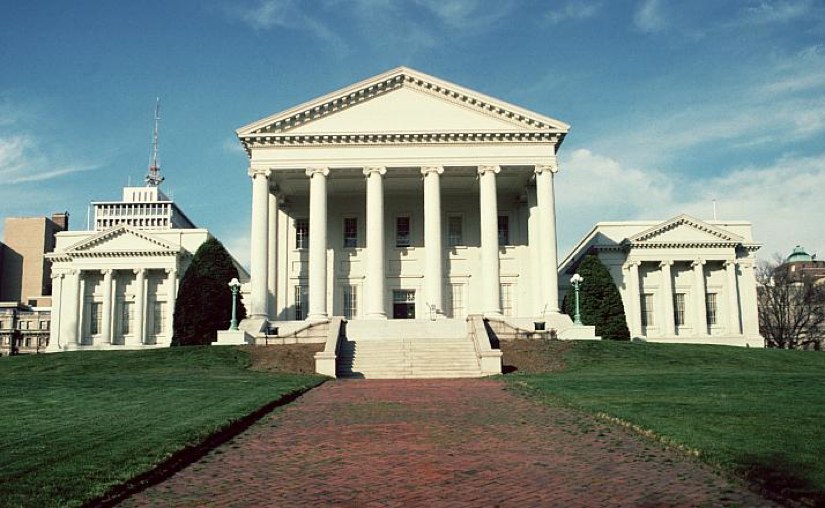 A bill sponsored by Del. Ken Plum (D-Reston) that would make cannabis oil legal for patients suffering from illnesses that could be helped by it was left in committee in Virginia’s General Assembly session earlier this month.
However, a similar bill sponsored by Del. Dave Albo (R-Springfield) passed both the house and the senate and will become a law. Albo’s law allows epilepsy to be added to cancer and glaucoma as medical conditions that can be helped by the oil derived from marijuana.
Left in committee is a common outcome for Plum, who has been representing Reston for more than 30 years — the longest of any Virginia House member.
He says each year when he goes to Richmond, he knows is in for a fight as his liberal-leaning perspective is in the minority in the Virginia House, which is dominated by Republicans (67 Republicans, 32 Democrats, 1 Independent this session).
“I am not here for a batting average, I am here to do what’s right,” says Plum. “My role as a senior legislator in the minority party is to see to it that the majority party does not get to ignore the big issues — Medicaid expansion, nonpartisan redistricting, and gun safety as examples.”
Even if he proposes — and loses — big reform, it gets people thinking, says Plum.
“These are game-changers for Virginia,” he says. “It takes a while to get these ideas in place. Over time, we will prevail. Probably more than 90 percent of legislation has little impact. It corrects the Code, deals with courthouse or business affairs with little no no impact on the average person, or are local matters. There’s more than enough legislators to introduce these bills.” Read More
The House and the Senate have penned similar but competing mid-point versions of the 2014-2016 biennial budget. These budgets will now go to a conference committee to work out differences in time for a Feb. 28 adjournment of the annual legislative session.
With both houses being under the same political party control, the differences are not great and will likely be easily reconciled.
Gov. Terry McAuliffe had proposed revisions to the Commonwealth’s budget, but his recommendations were ignored in one significant way: his budget proposal included the expansion of Medicaid for the working poor, but the majority party in both houses adamantly oppose it.
Had Medicaid expansion been approved, the state would have saved $107,000,000 in state spending in FY 2016 alone and would have picked up $482,300,000 in new federal money. The issue of this column is not Medicaid expansion, however, for which I have made my position known in several columns.
Instead, I want to focus on the paranoia in Richmond over the actions of the federal government that the opposition to Medicaid expansion reflects. That paranoia was reflected among other places in a budget amendment in the House that provided that “no general or non-general funds shall be appropriated or expended for such costs as may be intended to implement any federal program or Presidential executive action calling for ‘free’ tuition at institutions of higher education.”
The amendment passed with my speaking against it, suggesting that we should at least see the new program before we decided to oppose it.
Virginia has a long history of opposing federal action. Going back to 1798, James Madison introduced the concept of interposition – that the state could interpose itself between the federal government and the people when it deemed federal laws to be unconstitutional. Interposition or nullification has been used by many states to oppose federal actions on many issues. The Civil War was the most dramatic statement at attempted interposition.
In the 1950s, Virginia attempted to interpose itself against federal action to desegregate the schools. Its efforts through more than 40 lawsuits became known as “massive resistance,” which of course ultimately failed.
The call has gone out once again for the need to protect ourselves against the federal government, particularly the Obama administration. Several bills, for example, were introduced this session to nullify actions of the Environmental Protection Agency in air and water quality regulations. Our federal system with its checks and balances have worked well for many years to protect citizens from a run-away government. At the same time, it creates challenges for smooth operation. This continuing power struggle diverts attention from the real issues of our economy and society and leads to the frustrations that many feel with the operation or gridlock of government.
The federal government is not always wrong. At the same time, the state government is not always right. The public expects that leaders work through these differences and that issues be resolved.
Del. Ken Plum (D) represents Reston in Virginia’s House of Delegates. His opinions are not necessarily those of Reston Now’s
