
Fairfax County continues to have thousands of unemployment claims during the coronavirus pandemic.
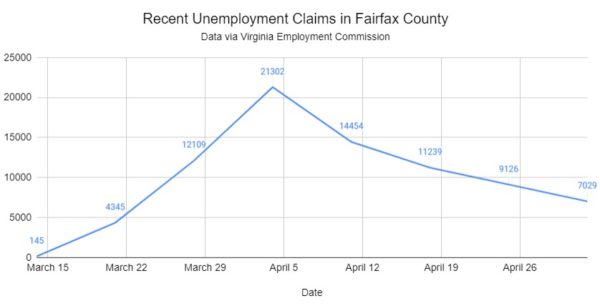
More than 7,000 initial unemployment claims were filed in the county for the week of May 2, according to the latest data from the Virginia Employment Commission.
The latest data shows a slow decrease of claims in the county from a spike during the week of April 4. Fairfax County had the largest number of initial claims in Virginia for the May 2 filing week.
“Most areas reported declining numbers of claims compared to the previous week,” the VEC said. “Fairfax reported the largest over-the-week decrease (-2,097).”
Meanwhile, the number of continued claims keeps rising in Fairfax County from nearly 3,000 in late March to 30,000 in mid-April to more than 44,000 during the week of May 2.
The data shows a decrease in the number of claimants from the previous week for Virginia, but the VEC warns that the volume of initial claims “may not return to pre-pandemic levels for some time.”
More data on the trends for initial and continued claims in Virginia:

Data and image via Virginia Employment Commission
This is an opinion column by Del. Ken Plum (D), who represents Reston in Virginia’s House of Delegates. It does not reflect the opinion of Reston Now.
My mom and dad were married in 1928 just before the Great Depression that lasted from 1929 to 1939. They grew up less than three miles apart, and Mom’s father who was a carpenter helped them build a house almost exactly halfway between the homes in which they had grown up. My dad worked for his father on the family farm in rural Page County, Virginia, growing grains and converting some of them into a liquid product (moonshine)!
The Great Depression was the greatest economic disaster the world had ever experienced to that time, and its impact was exacerbated by a drought. Mom and Dad never forgot the hardships they endured during that first decade of married life together, and those early experiences affected their entire lives. They developed skills of self-reliance and frugality that stayed with them even as economic times got easier for them later in their lives.
My dad farmed about an acre of vegetables that fed us throughout the summer and for the rest of the year as my mom canned or later when they had electricity and a freezer froze food for future consumption. We always grew enough potatoes to fill a garner in the cellar (essentially a basement with a dirt floor) to last us all year. In the earliest years of their marriage, more than a decade before I came along as the youngest of their three sons, they had a cow for milk and raised a hog for butchering.
To supplement the meager income Dad had from farming with my grandfather, they would pick huckleberries in the foothills of the Blue Ridge Mountains that are now part of the Shenandoah National Park. They picked wild strawberries and blackberries for home consumption of jams and jellies Mom would make. Their most profitable side-line was selling the meat of black walnuts that they had gathered from the area. Cracking a black walnut takes a lot of force and know-how. They were extremely frugal as they had to be. Well after the Great Depression ended and I was a young person we used our wax paper and tin (aluminum) foil more than once by simply wiping it off after each use.
Dad and Mom never lost their love and appreciation for President Franklin Roosevelt whom they credited with saving the country. They responded to his fireside chats that assured them that they had “nothing to fear but fear itself.” When the Great Depression finally ended and Dad went to work “in the public” meaning that he no longer worked for his father, their economic situation improved with his being in a unionized job and as the entire country improved with the New Deal.
In many of the same ways that my parents experienced the first Great Depression, future generations will have been impacted by the next Great Depression coming on the heels of the COVID-19 pandemic we are now experiencing. With hard work, strong faith, frugality, honest leadership, and perseverance they will be able to share the things they are now having to do to survive.
File photo
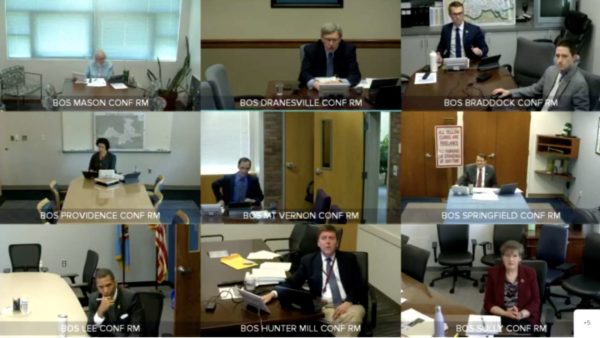
Since emergency orders in Virginia went into effect several weeks ago, most local and county bodies have opted for online meetings.
The Fairfax County Board of Supervisors dove into its budget for the coming year and courted public comments virtually. Reston Association also transitioned its annual members’ meeting to an online platform, with members given the chance to provide live comments almost seamlessly. After sorting through kinks and technical issues, other bodies and organizations will continue online meetings in the coming weeks.
Do you think the county and other local entities should continue virtual meetings, even after COVID-19 pandemic concerns subside? Some contend that online meetings are easier to attend and result in more streamlined decision-making. Still, online meetings represent an equity barrier for those without access to certain technology and do not allow residents and groups to fully participate in the public engagement process.
Let us know what you think in the poll below.

Virginia Reopening Starts Tomorrow — Although Northern Virginia will not reopen or another two weeks, the rest of Virginia will start the first reopening phase on Friday. Gatherings of more than 10 people remain banned and telework is encouraged when feasible. [Reston Patch]
Colvin Run Mill Churns Out New Products — “The 200-year-old Colvin Run Mill is set to begin selling its stone-ground products at the Reston Farmers Market. Fairfax County’s historic mill will be offering bags of cornmeal, white grits and soft, locally grown wheat flour that are produced using the technology of ages past. The mill is currently accepting phone orders for its products Sundays through Thursdays from 8:30 a.m. to 4 p.m.” [Fairfax County Government]
Summer Entertainment Series Canceled — The summer series by the Fairfax County Park Authority will be canceled through June due to the COVID-19 pandemic. “The Park Authority and Park Foundation will be reaching out to performers and generous local sponsors as the park system plans for a phased reopening of the park system and evaluates all options to continue this series later this summer,” according to FCPA. [Fairfax County Government]
High Honors for Local Volunteer Serve Award Community Champion — “William “Bill” Farrell has been selected as the 2020 Fairfax County Volunteer Service Award Community Champion representing the Hunter Mill District. Each year, the Board of Supervisors selects an individual to be recognized for their commitment to promoting volunteerism within their community while addressing specific needs. For the past five years, Bill has served as Chairman of the Board of Directors of Shepherd’s Center.” [Volunteer Fairfax]
Photo by Marjorie Copson
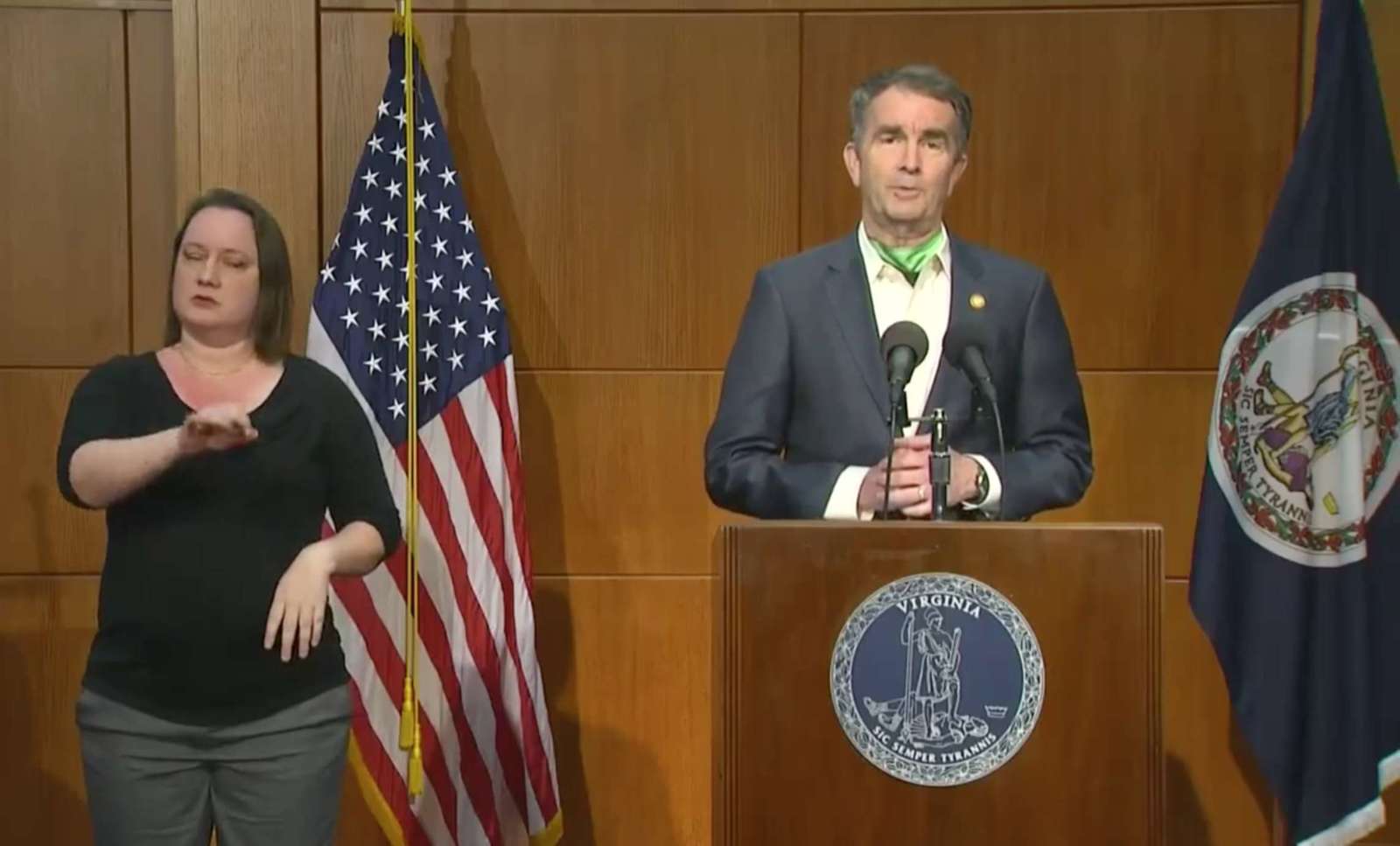
Gov. Ralph Northam is allowing Northern Virginia localities two extra weeks to start reopening as the rest of the state readies for the first reopening phase this Friday.
Northam’s order that was announced today (Tuesday) delays the reopening, which is outlined in phases, for Fairfax County and other localities in Northern Virginia until midnight on May 28.
Following pressure from county officials to stall their reopening deadlines, Northam said that the decision is “to allow those localities more time to meet the health metrics.”
“While the data show Virginia as a whole is are ready to slowly and deliberately ease some restrictions, it is too soon for Northern Virginia,” Northam said. “I support the request from localities in this region to delay implementation of Phase One to protect public health.”
The localities included are:
- Arlington County
- Fairfax County
- Loudoun County
- Prince William County
- City of Alexandria
- City of Fairfax
- City of Falls Church
- City of Manassas
- City of Manassas Park
- Town of Dumfries
- Town of Herndon
- Town of Leesburg
- Town of Vienna
More from Northam’s announcement:
Data show that Northern Virginia is substantially higher than the rest of the Commonwealth in percentage of positive tests for COVID-19, for example. The Northern Virginia Region has about a 25 percent positivity rate, while the rest of the Commonwealth is closer to 10 percent. Further, in the last 24 hours, the Northern Virginia Region reported over 700 cases, while the rest of the Commonwealth reported approximately 270. On any given day, 70 percent of the Commonwealth’s positive cases are attributable to the Northern Virginia Region.
Northam has said he plans to provide more information on how the reopening will work for Northern Virginia on Wednesday.
Image via Governor Ralph Northam/Facebook
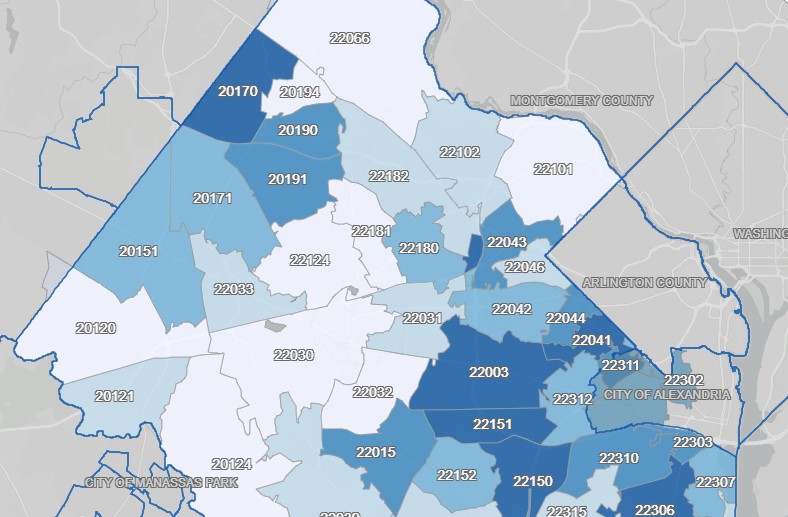
Yesterday, the Fairfax County Health Department announced that the county’s COVID-19 dashboard now includes more granular zip code data.
The newly expanded data also offers information on probable cases, deaths by age groups and COVID-19 testing by week, according to the county.
“Per the direction of Governor Ralph Northam, and in coordination with Virginia Department of Health (VDH), case rates are now presented by 5-digit ZIP codes,” according to the county. “The recent data release is a change from VDH’s long-standing policy not to disclose data at the ZIP code level.”
The data from the dashboard shows that the Dunn Loring zip code 22027 has the highest number of cases per 100,000 people: 39 cases among a population of 2,362.
As of today, Fairfax County has reported 6,470 cases, 972 hospitalizations and 253 deaths, according to the state health department.
The zip codes for Reston — 20191, 20190 and 20194 — have a combined total of 262 cases. Zip code 20170, which includes Herndon, has 308 cases.
“Cases represent a place of residence and not necessarily where transmission may have occurred. This information should not be used to measure individual risk,” according to the dashboard.
The Fairfax Health District, which includes the county and its cities and towns, has 45 outbreaks with 41 at long term care facilities and one each at a correctional facility, educational setting and healthcare setting.
Map via Fairfax County

New PPP Data — “Small businesses across D.C., Virginia and Maryland have seen about $8.96 billion worth of loans approved so far in the second round of the Small Business Administration’s Paycheck Protection Program, according to new data from the agency… Virginia businesses were approved for 54,989 loans totaling $4.34 billion.” [Washington Business Journal]
COVID-19 Cases Rise as Testing Increases — “Virginia added nearly 1,000 new cases of COVID-19 in the daily report Monday morning, bringing the state’s total number of cases to 25,070. The increase of 989, the second highest since the pandemic was first reported in the state in early March, came after a surge in testing, with 9,801 new tests reported.” [Inside NoVa]
Funding to Feed Kids — “Fairfax County Public Schools has received $50,000 in grant funding from No Kid Hungry, a national campaign to end childhood hunger in America, and Nationals Philanthropies, the official charitable arm of the Washington Nationals baseball team.” [Inside NoVa]
Metro May Limit Operations Until 2021 — “As states start to reopen their economies, Metro has crafted its plan to slowly ramp service back up — but don’t expect pre-pandemic levels of service until sometime in early 2021.” [DCist]
FCEDA Head Tapped for COVID-19 Group — “Victor Hoskins, President and CEO of the Fairfax County Economic Development Authority (FCEDA), is one of 45 experts tapped to serve on the Washington, D.C.-area’s COVID-19 Strategic Renewal Task Force. Hoskins is the only member on the task force representing one of the region’s economic development organizations.” [Fairfax County Economic Development Authority]
Photo by vantagehill/Flickr
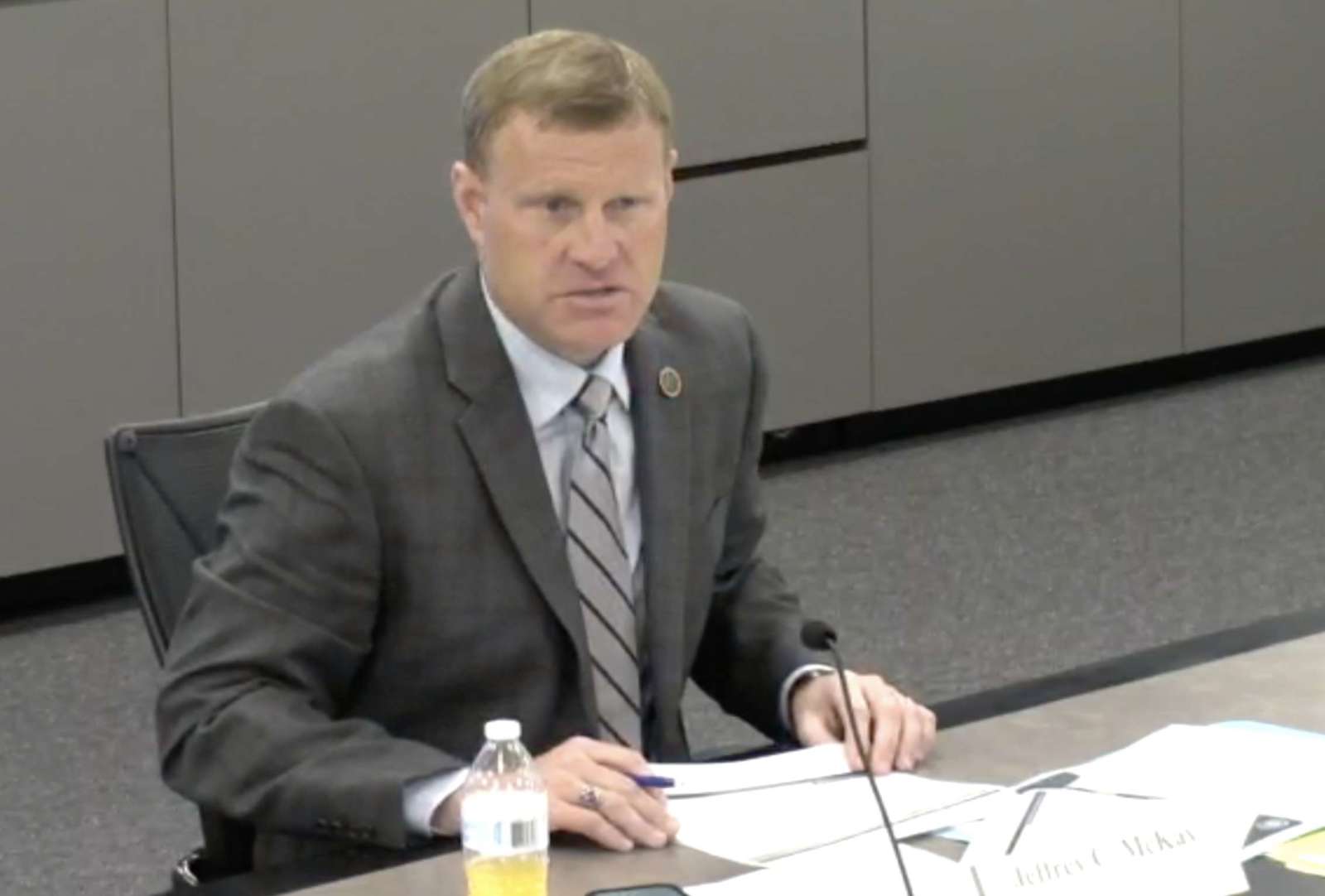
Following more details to reopen Virginia later this week, Fairfax County’s chairman joined Northern Virginia leaders in saying that the region is not ready yet to ease restrictions.
On Sunday (May 10), McKay, along with the top officials for the City of Alexandria and Loudoun, Prince William and Arlington counties, said in a letter to the governor saying that regional threshold metrics should be used instead of statewide metrics for reopening the five localities.
“While it is certainly useful to examine statewide metrics as we gauge the success of current public health policies, we feel strongly that any changes to current policies be guided by what is occurring in our region,” the letter said.
We all want to reopen our economy in the safest, data-driven way possible. Regardless of the Governor’s decision about how we move forward, we will continue to monitor our local statistics and be fully transparent about where we stand as a region. (5/7)
— Jeff McKay (@JeffreyCMcKay) May 10, 2020
The health directors for the five localities also sent a letter to the state health commissioner. “Based on our assessment, we do not believe that the Northern Virginia region has met the criteria for moving into Phase 1 at this time,” the letter said.
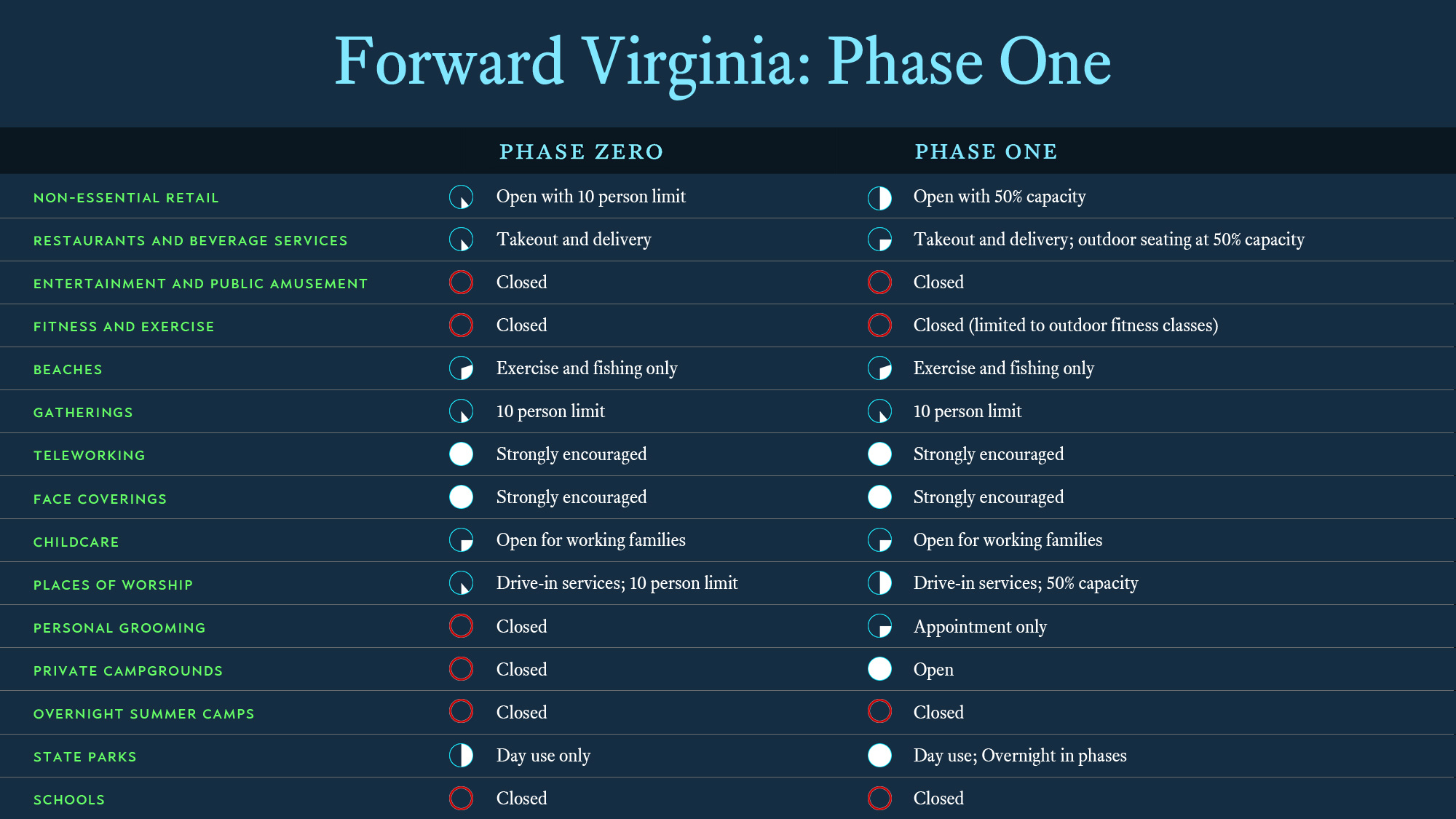
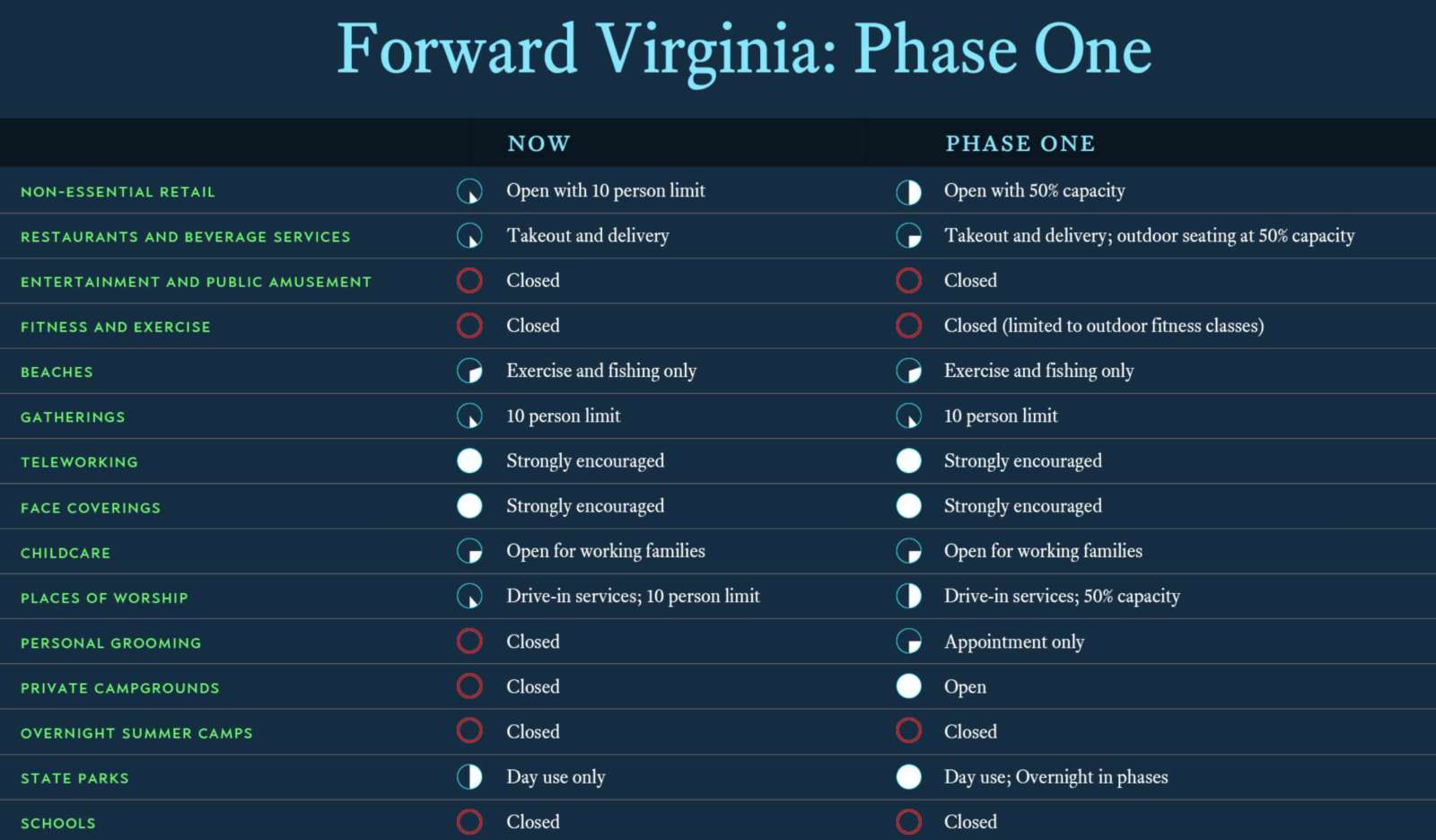
Gov. Ralph Northam announced on Friday that his plans to begin the first phase on Friday (May 15) as part of his “Forward Virginia” plan include these new restrictions:
- Restaurants with open air space will be allowed to seat guests outdoors but at 50% capacity while other in-door only restaurants will be only be allowed to offer takeout and delivery.
- Residents will be under a “safer at home” suggestion.
- Retail businesses will be able to open at a 50% capacity.
- Fitness centers must remain closed unless they offer outdoor facilities.
- Entertainment and amusement centers will still be closed.
- Churches and places of worship will be allowed to gather at 50% capacity.
- Private campgrounds and specific public camping facilities will be reopened.
- A 10-person gathering limit for private parties will be still be required.
If the number of COVID-19 cases rise with the new orders, Northam said that there is a chance tighter restrictions will once again go into place.
“The virus is still in our communities and we need to continue our vigilance,” he said. “We may be living with it for months or maybe years.
Northam stressed on Friday that his proposed plan is an easement of the temporary restrictions: “We are not opening the flood gate here.”
Prior to the governor’s announcement, McKay and other local leaders had been pushing the state’s administration to provide more collaboration with the reopening plans.
For places like Fairfax County, Northam said on Friday that they may be allowed to reopen at a slower pace and that he will announce more details early this week.
“I have said from the beginning this is a dynamic-fluid process,” he said.
Catherine Douglas Moran and Ashley Hopko contributed to this report
Photo via Fairfax County Government; image via Virginia.gov

ABC Stores Now Offering Curbside Service — Of the Virginia Alcoholic Beverage Control Authority’s 15 stores in Northern Virginia that are now offering curbside pick-up, one is in Herndon (378 Elden Street) while another is in Reston (1454 North Point Village Shopping Center). [Inside NoVa]
Sports Stalled —“The Virginia High School League’s Executive Committee voted Thursday to cancel the spring sports season altogether for rest of the 2019-20 calendar year due to the coronavirus outbreak.” [Inside NoVa]
Hospitalizations Rising Again in Virginia — “The number of coronavirus patients in Virginia hospitalized and on ventilators has increased since Tuesday, according to the latest data from the state hospital association. Despite the increase, the number of ventilators in use in Virginia represents only 20 percent of the total number in the state.” [Patch]
Photo courtesy Marjorie Copson
Fairfax County’s top official wants increased communication with Gov. Ralph Northam as the state administration considers easing business restrictions.
On Monday, Northam unveiled a three-phase plan to roll back restrictions, which could start as soon as May 15.
The next day, Jeff McKay, the chairman for the Fairfax County Board of Supervisors, and the board chairs for Prince William and Loudoun counties sent a letter urging Northam’s administration to collaborate more with them.
More from the letter:
We proudly represent more than 2 million residents; just shy of a quarter of the population of the Commonwealth of Virginia. Sadly, our three counties also account for 40 percent of all known positive cases and hospitalizations due to the novel coronavirus disease (COVID-19) in the Commonwealth. Regionally, Northern Virginia equates for 40 percent of the Commonwealth’s GDP…
To that end, we write to you today to communicate our strong desire to be both briefed and consulted as your administration makes decisions about the reopening of the Commonwealth… We request a discussion with you prior to future announcements about the state’s reopening. This is not an attempt to slow our progress. Rather, a recognition of the need for greater collaboration between state and local governments.
Additionally, we request a weekly phone call between a member of your team and our chiefs of staff… In addition to the reopening, some of the topics our respective teams would like to cover include testing capacity, the acquisition of personal protective equipment, racial disparities, and the methodology used for the distribution of CARES Act funds.
Del. Mark Keam (D-35th) also chimed in this week, posting on Facebook today: “I agree with Chairman Jeff Mckay that Northern Virginia needs to be MUCH MORE cautious than other regions of Virginia in reopening our businesses due to the heightened and ongoing threats here.”
Northam said yesterday (Wednesday) that localities might be able to keep some restrictions as the state begins to reopen, WTOP reported. Now that the governor is poised to provide an update tomorrow (Friday), McKay is repeating his request.
“Northam joined regional leaders on a call this afternoon to further outline his gradual plans for reopening Virginia,” McKay said in a statement. “Though this won’t be a locality-by-locality decision, he has recognized the need to look at this issue regionally.”
McKay said that he again requested “continued open lines of communication to ensure coordination between our community, D.C., and Maryland, as well as the need for effective communication to businesses and our residents when a decision to reopen is made.”
Fairfax County continues to have the highest reported number of COVID-19 cases and deaths in Virginia.
“We are still in the exponential growth phase of our epidemic curve – that means that COVID-19 cases in our health district continues to increase,” according to the county.
As of today, the county had more than 5,000 cases and 211 deaths, according to the state’s health department.
The county says that the high number of cases may be due to three factors: “significant community-wide transmission,” increased testing and the new inclusion of “probable” cases along with confirmed ones.
Photo via Fairfax County
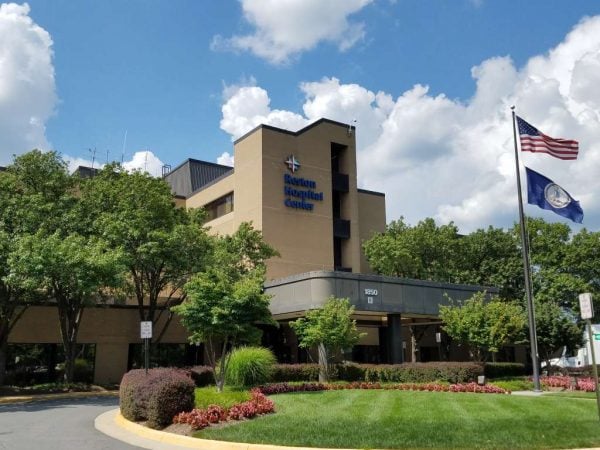
Following the lifting of a state order, Reston Hospital Center has resumed elective procedures and surgeries.
Hospital officials say that the introduction is occurring “thoughtfully” and with continuous monitoring of the COVID-19 pandemic. The hospital notes that scheduled or elective procedures are often not optional and cannot be delayed indefinitely.
“Deferring important medical procedures can result in patients unnecessarily suffering at home, and later seeking care only when their conditions have become more serious,” according to the center.
A statewide ban on elective surgeries was lifted on May 1. Virginia Gov. Ralph Northam originally extended the ban by one week.
“My top priority is protecting public health, and that includes ensuring that our frontline medical staff have the equipment they need to stay safe as they treat Virginians who are sick,” said Governor Northam. “We have increased our supply of PPE, but before we allow elective surgeries to resume, we must first be assured that the doctors, nurses, and medical staff who are fighting this virus or conducting emergency surgeries have the necessary supplies. We are working with medical facilities on plans to ensure that we can resume elective surgeries safely and responsibly.”
The hospital continues to limit the number of entrances into the facility. Staff are also questioning anyone who enters the hospital center. Only one visitor — who is screened negative and masked — is allowed to accompany patients.
All COVID-19 patients are also isolated to specific areas.
This is an opinion column by Del. Ken Plum (D), who represents Reston in Virginia’s House of Delegates. It does not reflect the opinion of Reston Now.
Our personal lives will be returning to what we can call a more usual pattern of living over the next several months as the threat of the coronavirus passes or as a treatment or vaccine is developed. There will at some point be an official lifting of the stay-at-home requirement, hopefully when the medical experts say it is safe rather than when an angry crowd insists on it. In the meantime I think it may be useful to review what we have learned over the past several months and to consider what we have learned that will impact the way we live our lives in the future.
Every story will be different, and I ask that you please understand that as I muse about how my life may have been changed I understand that there are many others whose lives have been changed much more deeply than I can ever fully understand or appreciate. My heartfelt sympathy goes out to those who have lost or will lose family or friends to the coronavirus. My strongest appreciation goes to those who have fought the virus day after day as nurses, doctors, police officers, technicians and others who have had to walk into the face of the virus every day to help others while we stayed away at home. I will never look at all those in the health services the same way again. The bravery, the selflessness, and the dedication leave me in awe.
As someone in government service I have long been aware of the inequities in our economies and in some aspects of our community. The new normal has brought to me a renewed commitment to work for equity in our society. As members of the wealthiest nation ever on the earth, we cannot allow to continue the gross disparities in income and wealth that have grown greater for too many years in our history. We cannot allow people to go hungry and to be without health care. No one should feel comfortable returning to the society of the past once the gross inequities of that society have so glaringly been brought to our attention.
Our neighbors and our friends have become closer even as we have had to maintain a social distance. As we can officially return to a more open society, I trust that we can all make a commitment to reject blaming, hating, and bullying that have become much too evident in recent time. I plan to continue to speak out more strongly for justice and compassion and against inequality and hatred.
On a personal note, I hope that the new normal will leave me with a habit of exercising more with the wonderful programs that are available on streaming media, eating less, and being more mindful of the blessed life I live with a greater appreciation of the amazing people who are my family, friends and supporters. I would be pleased to learn of your hopes for the new normal. Write to me at [email protected].
File photo
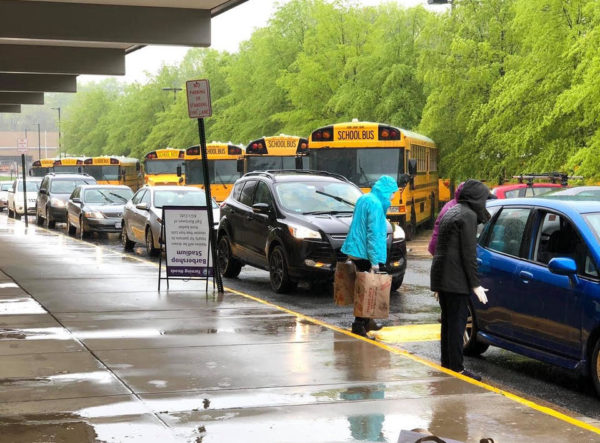
It’s no secret that the COVID-19 pandemic has disrupted the food supply chain, making it harder for some food pantries and food banks to keep their shelves fully stocked.
South Lakes High School’s food pantry is not insulated from these struggles, according to pantry coordinator Roberta Gosling. Since the COVID-19 pandemic, the food pantry quickly shifted from its location at the school to a new distribution and collection model.
Since schools closed in mid-March, food is collected and packed at Good Shepherd Lutheran Church. Volunteers then drive bags of food to SLHS on distribution day.
Gosling says food distribution has grown from 40 to 73 bags in just a few weeks. She expects that number to grow between 25 to 50 percent each week.
The pantry urgently needs the following items:
- Pasta
- Pasta sauce
- Tomatoes/sauce
- Dried beans
- Rice
- Canned meat
- Canned veggies
- Peanut butter
- Jelly
- Cereal
- Crackers
- Granola bars
- Deodorant
Donations can be shipped to Good Shepherd Lutheran Church (1133 Reston Avenue, Herndon, Va. 20170). Non-contact drop off on Mondays from 2-4 p.m. and Wednesdays from 10 a.m. to noon.
More information about the pantry is available online.
Photo by Holly Vanderhoof
COVID-19 Case Information Delayed — The latest data from the Virginia Department of Health is not available due to a technical issue with the department’s case site. [Fairfax County Government]
Cognizant to Acquire Reston IT Company — “Reston-based human resources tech company Collaborative Solutions LLC will be acquired by New-Jersey based information technology company Cognizant, the companies announced Tuesday. Financial terms of the transaction were not disclosed and the deal is expected to close during Q2 2020.” [Virginia Business]
New Chief Marketing Officer for Ellucian — “Reston-based higher education software company Ellucian announced Wednesday it has named Sharon Loeb as its chief marketing officer. She will lead marketing initiatives and digital transformation for the company. Loeb was most recently the executive vice president and chief marketing officer at Cengage Learning, where she led marketing, communications and public affairs for the company.” [Virginia Business]
Photo by Marjorie Copson
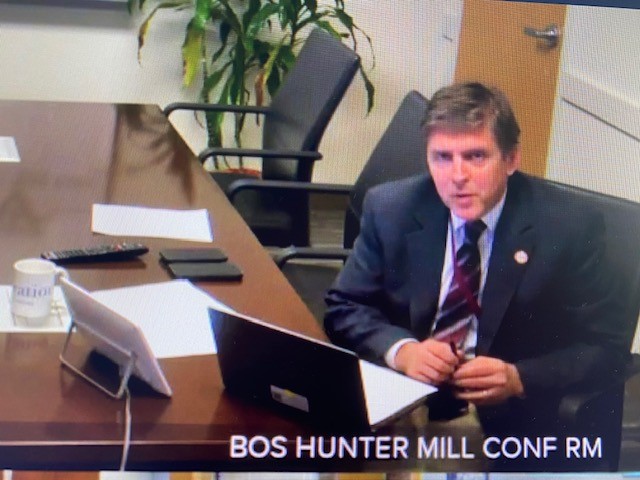
In response to Fairfax County’s revised budget, Hunter Mill District Supervisor Walter Alcorn stressed that flexibility is key as the county weathers the economic impact of COVID-19.
The upcoming fiscal year 2021 budget, which is expected to be adopted on May 12 and begin on July 1, underwent revisions earlier this spring to address uncertainties stemming from the pandemic.
Though he expressed disappointment that COVID-19 altered the budget, he said he hopes for economic recovery.
“I strongly believe that we will recover and it should be noted that the Board of Supervisors will have the opportunity to make adjustments at our quarterly reviews,” he said. “This budget is by no means a done deal.”
In the future, Alcorn said he expects the budget to be a living document.
“It is also clear that we still don’t know what the final impacts of the virus will be, so we must continue to be flexible and strategic,” he said.
Earlier in April, he expressed displeasure with the revised budget draft. Now, Alcorn’s latest statement includes many of his previous concerns over a lack of support for local business owners.
“Going forward, I anticipate additional funds being used to help small businesses and others offset the impact of the pandemic on the most vulnerable in our county,” Alcorn said in his statement.
In the statement, Alcorn also reflected on the FY 2020 third-quarter review, saying there is now $200 million in additional funding for the Coronavirus Aid, Relief, and Economic Security (CARES) Act.
The act benefits both families and small businesses, according to the U.S. Department of Treasury.
One of Alcorn’s main concerns was how Latino populations are being hit harder by the virus than other demographics around the county.
“Latinos represent 55% of all COVID-19 cases in Fairfax County even though they represent only 16% of the population,” he said, adding that “in Fairfax County stopping COVID starts with the Latino community.”
To address this, Alcorn suggested the application of the county’s One Fairfax policy, which aims to promote social and racial equity, but did not expand on how One Fairfax would directly be applied.
Photo courtesy Hunter Mill District