

The Reston Comprehensive Plan Study Task Force is on schedule to finish its review of the document that guides planning and development in Reston this summer, Hunter Mill District Supervisor Walter Alcorn’s office announced yesterday (Thursday).
After wrapping up its review, the task force will hold town hall meetings and convene with various stakeholders, including homeowners’ associations, business groups, and community organizations, to share its recommendations and solicit public feedback.
Alcorn initiated the review process in January 2020 with the goal of updating Reston’s Comprehensive Plan to more effectively manage growth and development in Reston. The 32-member task force, which Alcorn chairs, officially kicked off their review in May and has held more than two dozen meetings since then.
Topics that have been considered by the task force as part of its review include planning principles, population and density, transportation, parks and open space, affordable housing, public health, energy and the environment, equity, and public art.
Alcorn expressed enthusiasm about the work by the community members on the task force so far, even though the schedule has been “somewhat slowed” by the COVID-19 pandemic. The task force is being supported by county staff from the planning and transportation departments, among others.
“I am very excited by the work and the collaboration by the task force,” Alcorn said. “…We still have several months of work ahead, but I believe the outcome will reaffirm Restonians’ decision to live in a planned, equity-focused community.”
The task force will hold its 16th meeting on March 22 from 7:30-9:30 p.m.
Reston Comprehensive Plan Study Task Force is scheduled to wrap up its review process this summer following a yearlong effort and 2 dozen+ meetings. Recommendations will then be shared for feedback at town hall mtgs & w/community groups. More: https://t.co/okMFan8hDI #HunterMill pic.twitter.com/bAxOU30qJb
— Supervisor Walter Alcorn (@WalterAlcornFFX) March 11, 2021
Staff Photo by Jay Westcott
The COVID-19 vaccination process has been ramping up in Fairfax County in recent weeks, as supplies increase and more partners come on board to help administer the vaccines.
While eligibility for the vaccine has not expanded since mid-January, Fairfax County’s allocation of vaccine has grown over the past month or so from 13,000 to 19,220 first doses per week, and the size of shipments are expected to continue increasing throughout March, allowing the county health department to get through its existing waitlist more quickly.
As of 5 p.m. yesterday (Thursday), more than 111,000 people were waiting for appointments to get vaccinated. A total of 307,659 people have registered through the Fairfax County Health Department, which administered 21,791 first doses during the week of March 1-7.
The authorization of a third vaccine manufactured by Johnson & Johnson helps increase supply, giving providers another option on top of the Pfizer and Moderna vaccines that have been available since December, according to the Fairfax County Health Department.
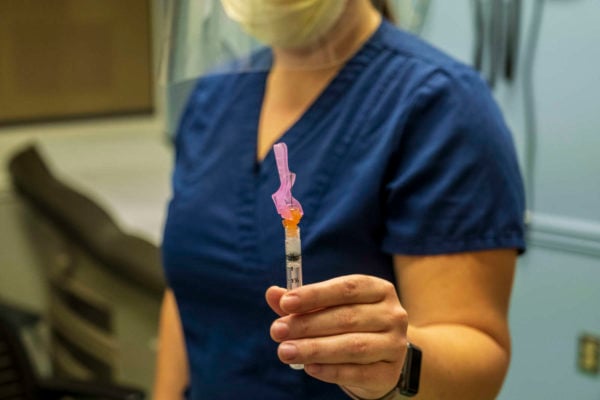
Unlike the Pfizer and Moderna vaccines, which both require two shots separated by three or four weeks, the Johnson & Johnson vaccine needs only one dose. It is also easier to store and seems to less apt to trigger strong side effects.
The J&J vaccine is slightly less effective at guarding against severe disease caused by COVID-19, with an 85% efficacy rate compared to 95% and 94.1% for Pfizer and Moderna, respectively. However, differences in how clinical trials were conducted make comparisons inexact, and all three are considered “extremely effective at preventing severe disease, hospitalization, and death,” FCHD says.
Fairfax County currently doesn’t offer a choice between the vaccines, since the health department has been primarily utilizing Pfizer for first doses. The county has been sending its J&J allocation to Inova, which expects to double its capacity later this month with the launch of a new mass vaccination center in Alexandria.
The FCHD says it anticipates starting to use the J&J vaccine by the end of March, though the number of doses is unknown at this time. For now, officials say people should take whichever vaccine becomes available to them.
If you were given a choice, though, which would you prefer? Would you want to get the process over with in one shot, or do you have more confidence in the two-shot Pfizer and Moderna vaccines?
Staff photo by Jay Westcott
The Fairfax County Board of Supervisors unanimously agreed to defer a vote on adopting a new county zoning ordinance after hearing roughly five hours of testimony at a public hearing on Tuesday (March 9).
The fate of the 614-page document will now be decided at 4:30 p.m. on March 23.
“We’ve been at this for a long time,” Sully District Supervisor Kathy Smith said toward the end of the public hearing, which featured 71 speakers. “…By deferring for two weeks, that gives the board more time to consider what we’ve heard before we move on this on March 23.”
The additional time will let the board review input from the community and the Fairfax County Planning Commission, which put forward amendments last week related to flags and flag poles, home-based businesses, and accessory living units (independent housing on the same property as a main residence).
“I think we might have a fairly long mark-up on this, because my guess is there are going to be a number of issues, as a board, we might need to talk through,” Hunter Mill District Supervisor Walter Alcorn said.
Launched in 2017, the Fairfax County Zoning Ordinance Modernization project (zMOD) aims to update the county’s 40-year-old zoning code by making it easier to comprehend and incorporating new activities, such as electric vehicles and community gardens.
Proposed regulations on ALUs, home-based businesses, and flags have emerged as the most hotly contested changes, though speakers at Tuesday’s public hearing raised concerns about everything from food trucks to vehicle storage.
Fairfax County staff agreed with the planning commission that the draft should have a requirement that home-based businesses be approved by the county health department if the property has a well or septic system and a standard limiting the amount of hazardous materials they can have on site.
They also revised their recommendation for flags to allow maximum sizes of 50 square feet on lots with single-family dwellings and manufactured homes or 150 square feet for all other uses. Staff previously recommended limiting flag sizes to 24 square feet on single-family home lots and 96 square feet for other uses.
Community members took stands on both sides of the debate around ALUs. Some voiced support for looser regulations to enable them as an affordable housing option, while others worried about the potential impacts on traffic, parking, and public facilities.
“There is no guarantee that ALUs will equal affordable housing, but eliminating the current requirements will tax our already burdened public facilities,” McLean Citizens Association President Rob Jackson said. “…Adding more people without additional public facilities will degrade the quality of life.”
Many speakers urged the Board of Supervisors to follow the planning commission’s recommendation of retaining a special permitting process for interior ALUs, saying that allowing administrative permits would shut out citizens and neighbors.
“We really need more genuine outreach to engage the public in making land use decisions that directly affect communities, and not less,” Falls Church resident Kathryn Cooper said. “Residents do not want their involvement in land use decisions to be excised, as will occur under zMOD.”
Also a Falls Church resident, Coalition for Smarter Growth Northern Virginia Advocacy Manager Sonya Breehey argued that the county should go further in encouraging ALUs and that continuing to require a special permit for interior units, as recommended by the planning commission, would delay efforts to address housing affordability challenges.
“Accessory living units can offer less expensive housing options than renting or buying a single-family home because of their smaller size, and they provide housing opportunities in communities that might otherwise be too expensive,” Breehey said. “…As a homeowner in a single-family residential neighborhood, I want you all to know that I see ALUs as an opportunity to provide greater inclusivity in my neighborhood that I love.”

The cicadas are coming.
17 years after their last appearance, swarms of cicadas known collectively as periodical cicada Brood X are preparing to stage a sequel this spring, with the D.C. area as the epicenter of a natural phenomenon that will encompass 15 states across the eastern and midwestern U.S.
Tammy Schwab, a naturalist and education and outreach manager for the Fairfax County Park Authority, says the insects are expected to emerge in the county around the middle of May, when the ground temperature reaches about 64 degrees Fahrenheit.
“Cicadas are special because of their extremely long life cycle,” Schwab told Tysons Reporter by email. “Cicadas spend 2-17 years as a larva underground feeding on the roots of trees. Most other insects have much shorter life spans.”
According to the National Wildlife Federation, adult periodical cicadas are black with orange underneath. They are just over an inch in length and boast clear, “membranous,” black-veined wings that span three inches across.
These cicadas are different from annual cicadas, which live underground for two to five years before emerging as adults, typically between May and September. Because their life cycles aren’t as closely synchronized as periodical cicadas, some annual cicadas appear every year.
Fairfax County last saw Brood X — one of 15 periodical cicada broods in the U.S. — at the scale anticipated this spring in 2004, but a handful of the insects were spotted locally in 2017.
“As part of the cicada survival strategy some of each brood can emerge between 1 and 4 years early in case some catastrophe were to destroy all the cicadas in a given emergence,” Schwab explained.
They're coming! This is the year of the 17-year cicada in our area. There will be trillions of them in early summer. They are harmless. They are loud. They are high in protein, if you're into that. They don't social distance. It's a phenomenon of nature to be enjoyed. Can't wait! pic.twitter.com/WR5qWCXq3m
— Fairfax County Parks (@fairfaxparks) March 4, 2021
In comparison, Schwab says “millions” of cicadas could blanket the D.C. region this year, though the numbers could vary across different areas depending on how much land development has occurred over the past 17 years.
Both adult and larval cicadas depend on trees for food, so they tend to be more prevalent in forested areas. However, people in more developed residential neighborhoods might notice them sooner, since the ground warms more quickly in open spaces than in the woods, according to Schwab.
She says the loss of tree cover to development “will definitely decrease populations,” but reforestation prior to an emergence could result in an increase. Fairfax County had stream bank stabilization projects at Snakeden Branch in Reston, Difficult Run in Oakton, Accotink Creek, and Cinnamon Creek in the Wolf Trap area in 2003, the year before Brood X’s last emergence.
“It would be very interesting to see if these project areas had any effect on the population,” Schwab said.
While the appearance of millions of loud, winged insects may sound alarming, cicadas are harmless for humans. The most notable impact will be on newly planted trees, which can be damaged by cicada egg laying.
Schwab advises residents to wait until the fall before planting new trees or utilize insect netting to protect their branches.
She also says people should watch what their pets are eating.
“A few are not likely to hurt pets but too many could cause digestive issues,” Schwab said. “They are edible by people if you’re are brave enough to try it.”
Photo courtesy Fairfax County Park Authority

The weather is getting warmer and the sun is shining longer, but spring really arrives in D.C. when the thousands of cherry trees around the Tidal Basin start to bloom.
Organizers announced on March 1 that this year’s National Cherry Blossom Festival will take place from March 20 through April 11. The National Park Service currently predicts that the flowers will be in peak bloom sometime between April 2 and 5.
With COVID-19 still posing health risks after mostly shutting down last year’s showcase, the 2021 festival has been reimagined in a less concentrated format with a combination of in-person and virtual activities that will encompass the entire D.C. area, including Fairfax County.
In addition to promoting regionwide events, such as the “Art in Bloom” sculptures and “Petal Porch Parade,” Fairfax County will host events of its own in coordination with the larger festival, many of them designed to showcase local gardens and parks or celebrate the coming of spring.
Supported by Visit Fairfax, the county’s official tourism organization, the festivities include:
- Festival Central (March 20-April 11): The Fairfax County Visitor Center at Tysons Corner Center will provide free cherry blossom-themed souvenirs and information about the festival. It will also host its annual National Cherry Blossom Festival Day from 1-3 p.m. on March 27, which will feature a calligraphy demonstration.
- The Science Behind Flowers (March 20-April 11): A program on botanical chemistry, invasive and native plants, ecological restoration, and other flower-related topics will stream online throughout the festival, courtesy of the Children’s Science Center.
- Spring Fling Tour (March 27): Frying Pan Farm Park in Herndon will have “special stations” throughout its nature trail “to build a fairy house” and provide Japanese tea at its meeting house.
- Wabi-Sabi: Embracing Imperfection (March 28): Alexandria’s Green Spring Gardens will host a program on wabi-sabi, a Japanese philosophy focused on finding beauty in an imperfect natural world. Attendees will get tea samples and traditional sweets in an optional tea box. The event costs $12-24 and requires advance online registration.
- Spring-Themed Drive-in Movies (April 3-4): Mosaic District is resuming its drive-in movie screenings with a pair of double features, starting with “Mary Poppins” and “Ferris Bueller’s Day Off,” followed by “Hop” and “42.” Tickets cost $28 per car and can be purchased online.
- Community Market and Workshops (April 10): The Workhouse Arts Center in Lorton will feature cherry blossom-inspired artwork, a marketplace, and various workshops, including origami crafts, haiku contests, and Japanese drumming.
- Plants & Design (April 10): Led by horticulturalist Bevan Shimizu, Green Spring Gardens will offer a virtual, hour-long program about Japanese-style garden design. The program costs $18 and requires advance registration.
Visit Fairfax also advises residents and visitors to take the opportunity provided by the festival to tour the county’s parks, including Meadowlark Botanical Gardens in Vienna, which has a lake surrounded by more than 100 cherry trees.
Though the format is different this year, Visit Fairfax president and CEO Barry Biggar says the influx of tourism that typically accompanies the annual cherry blossom festival has long benefitted not just the nation’s capital, but also the D.C. region as a whole.
“The National Cherry Blossom Festival is one of the nation’s greatest celebrations of spring and Visit Fairfax has been a proud supporter for many, many years,” Biggar said. “…People may come because they are familiar with the blossoms along the Tidal Basin, but we encourage visitors and residents to also explore some of the wonderful cultural events and attractions, spacious gardens and parks, and beautiful cherry trees that exist beyond the city.”
The festival will kick off at 6 p.m. on March 20 with a virtual opening ceremony. A full programming guide can be found on the National Cherry Blossom Festival website.
Photo courtesy Visit Fairfax
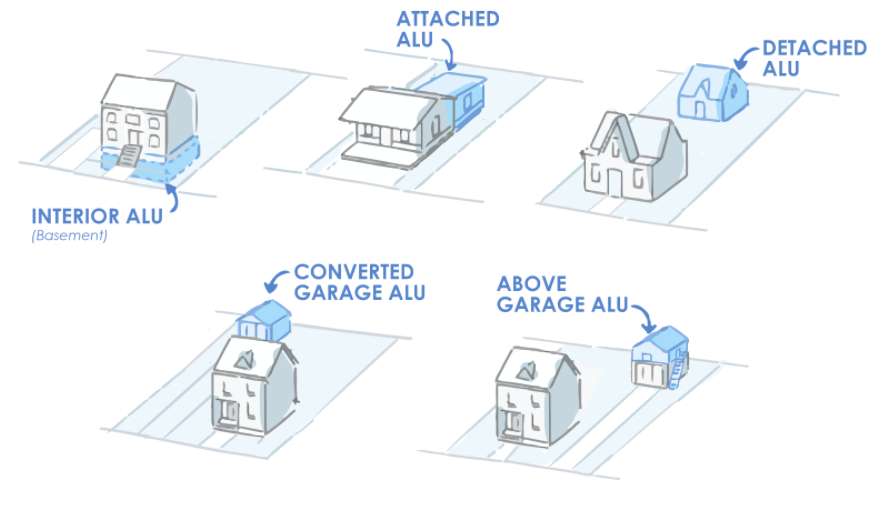
The Fairfax County Planning Commission voted unanimously on Wednesday (Mar. 3) to recommend that the county replace its current zoning code with a new draft resulting from the Zoning Ordinance Modernization Project (zMOD) that has now been underway for almost four years.
The 12-0 vote came after more than an hour of debate over the county’s proposed regulations for accessory living units(ALUs) — independent residential units located on the same property as a primary dwelling — and home-based businesses, which have emerged as two of the most contentious components of the 614-page document.
“The zMOD result on ALUs and home-based businesses, I believe, misses the mark,” Mason District Commissioner Julie Strandlie said. “It does not incorporate community concern and avoids a significant opportunity to make a real difference in housing policy. If we want to successfully expand housing options, we need community input, involvement, and buy-in.”
Released on Feb. 17, the draft zoning ordinance crafted by county planning staff and the consultant Clarion proposed allowing ALUs for single-family detached dwellings with an administrative permit if they meet certain requirements, including a maximum gross floor area of 800 square feet or 40% of the principal dwelling and that an occupant be at least 55 years old or have a disability.
Citing an “exceptional amount” of public opposition to that proposal, including at a public hearing on Jan. 28, the planning commission recommended that the Fairfax County Board of Supervisors instead utilize a special permit review process for all ALUs, which requires property owners to notify neighbors and make their case at a public hearing.
“This [administrative] process — what I’m seeing and what I’ve personally experienced — it pits neighbor against neighbor, or potentially could put neighbor against neighbor,” Mount Vernon District Commissioner Walter Clarke said. “I think it’s only fair, and we owe it to the citizens of this community, to have a process whereby they still can be engaged.”
The commission also recommended lifting the requirement that an occupant have a disability or be 55 years or older when an ALU is approved with a special permit, and allowing units to fill a basement or cellar based on its existing size on the date the new zoning ordinance becomes effective.
The commission also recommended amending the draft to prohibit on-site customers for home-based businesses approved through an administrative permit, except in cases involving instructional activities at a “specialized instruction center” — i.e., private tutoring or music lessons — or a health and exercise facility.
Instruction centers and health and exercise facilities could have up to four students at a time and eight students in a day. Other home-based businesses could have customers if they obtain a special permit.
In addition, all home-based businesses will have to be approved by the Fairfax County Health Department if there is a well or septic tank on site, a provision that was already proposed for ALUs.
While acknowledging that ALUs could help people who otherwise might not be able to afford to live in Fairfax County, the majority of commissioners ultimately expressed reservations about loosening restrictions across the entire county without getting a clearer sense of the potential impact on traffic, parking, and other issues, especially in high-density areas.
“While I do believe that accessory living units can provide an opportunity for additional living space in our very expensive county, I believe additional time is needed for study of the proposed countywide applications of accessory living units by administrative review,” At-Large Commissioner Timothy Sargeant said.
The commission recommended that the Board of Supervisors direct the county planning department to convene a task force that will study ALUs and home-based businesses for 18 months and deliver a report with any recommendations for further changes to the zoning ordinance.
Earlier in the meeting, the commission shot down a proposed zoning amendment that would have altered regulations for flags and flag poles, calling it “a solution in search of a problem.” The county’s only existing regulation for flags is a limit of three per lot.
Fairfax County launched its zMOD initiative in March 2017 with the goal of simplifying and updating a document that had not undergone a comprehensive revision since it was first adopted 40 years ago.
The Board of Supervisors is scheduled to hold a public hearing on the new zoning ordinance on Tuesday (Mar. 9). If the ordinance is adopted as it was approved by the planning commission, it would take effect at 12:01 a.m. on July 1.
Image via Town of Vienna

Hispanic residents of Fairfax County are seven times more likely to die from COVID-19 than their white, non-Hispanic counterparts when adjusted for variations in age, county data suggests.
Fairfax County Director of Epidemiology and Population Health Dr. Benjamin Schwartz reported that sobering trend to the Fairfax County Board of Supervisors during its health and human services committee meeting yesterday (Tuesday) as part of a broad overview of the county’s efforts to implement an equity-focused strategy to distribute COVID-19 vaccines.
Knowing that the pandemic has disproportionately affected communities of color, especially Black, indigenous, and Latino people, Fairfax County staff calculated the relative risk levels for infection, hospitalization, and death faced by different races and ethnicities, using white, non-Hispanic individuals as the control group.
According to the county, the results show that the risk of contracting COVID-19 is 1.8 times greater for Black people than for white people and four times greater for Latino or Hispanic people, who are also seven times more at risk of hospitalization.
In Fairfax County, Black people are being hospitalized at more than three times the rate of white people and are almost three times as likely to die from the disease.

Schwartz says the data focuses on community transmission, excluding long-term care facilities, and it has been adjusted for age, meaning it eliminates variances in age across different populations. It shows, for instance, that Latinos are more likely to die from or be hospitalized by COVID-19, even though the county’s Latino population is generally younger and older people are considered more at risk.
“This really highlights the social, economic, and medical risk factors pertaining to different groups in our county,” Schwartz said, mentioning large households, exposures through work, and underlying health conditions among the factors that have made some populations more vulnerable to COVID-19.
Fairfax County Chief Equity Officer Karla Bruce says the county is utilizing its COVID-19 Vulnerability Index as well as data showing the disease’s spread to identify areas that need a targeted approach for vaccine outreach and distribution, often because residents have limited access to medical care, transportation, and other public services.
“There are a lot of intersecting factors which are preventing people’s access to resources or access to the vaccine,” Bruce said. “So, we want to understand and look at how we might be better able to connect people to what will enable them to then connect to the vaccine.”
The county has been working with different community partners, including nonprofits and faith-based organizations, not only to counter vaccine hesitancy with education and trust-building, but also to identify people who are currently eligible to get vaccinated and register them for an appointment.
To improve the accessibility of the vaccine, the Fairfax County Health Department has been developing a network of community-based partner clinics that is expected to grow in the coming weeks, as seen in the slide below:
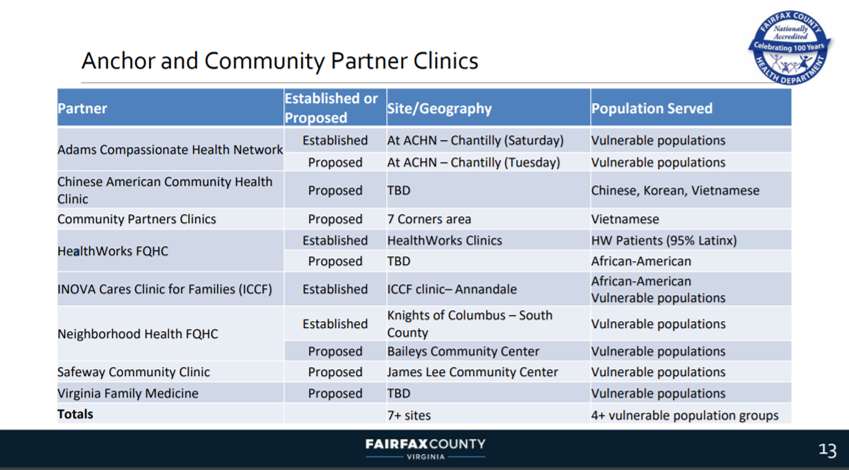
Schwartz says the Neighborhood Health federally qualified health center at the Bailey’s Community Center and the Safeway community clinic at the James Lee Community Center in Falls Church will start administering vaccinations this coming weekend.
The health department is also looking at sites in Lorton, Springfield, and Centreville, but the agreements are still being finalized.
“It will take a couple of weeks to have our clinics established, to confirm medical and non-medical staff for those clinics, and to get into a rhythm with the vaccinations,” Schwartz said. “But we are anticipating making substantial progress to reduce disparities in who receives vaccination in the county.”
Photo via Fairfax County, slides via Fairfax County Health Department (1, 2)

Approving a new calendar for the coming school year is typically one of the more routine duties administered by the Fairfax County School Board, but this time, it has become another decision complicated by competing priorities and added stakes.
The board will hold a work session at 11 a.m. today (Tuesday) to discuss proposals for the 2021-2022 school year calendar that would add four religious observance holidays not included in the current school calendar: Rosh Hashanah (Sept. 7, 2021), Yom Kippur (Sept. 16, 2021), Diwali (Nov. 4, 2021), and Eid al Fitr (May 3, 2022).
Faith organizations representing Muslim, Jewish, Hindu, and Sikh communities in the D.C. area have been advocating for Fairfax County Public Schools to recognize those holidays for years, an effort that began gaining traction in 2019 when the school board first convened a Religious Observance Task Force to advise the district on how it could better serve students of different faiths.
With input from the task force, a committee charged with developing the school year calendar released two drafts last June that both incorporated the proposed new holidays.
However, when the school board met on Feb. 2 to discuss the issue, FCPS presented a third draft that did not include the holidays, as some school board members expressed reservations about having more school closures after a year of the COVID-19 pandemic disrupting learning or making it more difficult for many students, among other concerns.
The religious groups involved in the task force — including the All Dulles Area Muslim Society (ADAMS), the Durga Temple of Virginia, Hindu American Foundation, McLean Islamic Center, Northern Virginia Hebrew Congregation, Sikh Foundation of Virginia, and the Jewish Community Relations Council of Greater Washington (JCRC) — expressed “deep disappointment” in the new turn of events in a letter sent to the school board on Feb. 9.
Disputing the idea that closing schools on four extra days would significantly affect FCPS’ ability to address learning losses, the task force criticized the board for not notifying them or the public about the new proposed draft calendar. They also noted that other jurisidictions in Northern Virginia, including Arlington, Prince William, and Loudoun counties, already recognize some or all of the holidays in question.
“We are troubled that FCPS’ natural progression to a more inclusive understanding of equity and diversity now stands to be thwarted,” the groups said. “We urge you not to obstruct or delay progress, but rather to move forward with confidence and conviction.”
As of Mar. 1, 269 current FCPS students had signed a petition from JCRC calling for the school board to add the religious holidays.
The school board will vote to officially adopt a calendar for the next school year on Mar. 16.
Photo via Sandeep Kr Yadav on Unsplash
The rate of new COVID-19 cases and hospitalizations in the Fairfax Health District remained steady over the past week, as Virginia announced over the weekend that a third vaccine will be available for distribution starting this week.
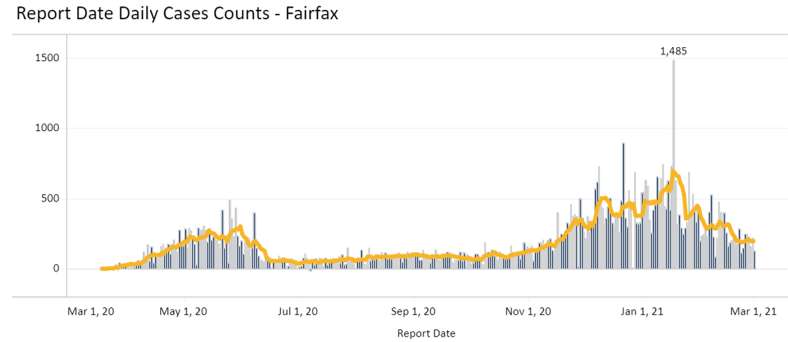
With an additional 132 cases reported today (Monday), there have now been a total of 67,547 COVID-19 cases recorded in Fairfax County and the cities of Fairfax and Falls Church. The novel coronavirus has put 3,564 people in the hospital and killed 969 people since the district identified its first presumptive positive case roughly one year ago.
Fairfax County has averaged 198 new cases over the past seven days, maintaining a weekly average has hovered around 200 cases since Feb. 20. While that represents a significant decline from the winter peak of 697 cases on Jan. 17, the COVID-19 case rate has not yet returned to the relatively low levels seen last summer and into the fall before cold weather set in.
With new cases and testing positivity rates falling across Virginia, Gov. Ralph Northam has eased some of the public health restrictions that had been put in place to limit the spread of COVID-19.
Starting today, the 10 p.m. curfew on alcohol sales at bars and restaurants has been lifted, and the caps on outdoor social gatherings has increased from 10 to 25 people. After previously being limited to 250 people, outdoor entertainment and amusement venues can also now have up to 1,000 people or 30% capacity.
The most notable development in the U.S.’s efforts to control the pandemic came on Saturday (Feb. 27), when the Food and Drug Administration granted an emergency use authorization to a new COVID-19 vaccine from Johnson & Johnson that only requires one dose, instead of the two needed for the already authorized Pfizer-BioNtech and Moderna vaccines.
The Virginia Department of Health said that the state expects to receive 69,000 doses of the Johnson & Johnson vaccine this week that will be prioritized for mass vaccination clinics. An additional allotment will go to pharmacies that are participating in a federal partnership that focuses on vaccinating people 65 and older.
“VDH encourages all providers who schedule vaccine appointments to advise individuals which vaccine they will receive,” the state health department said. “…All three vaccines have been proven to be effective at preventing COVID-19-related hospitalization and death.”
According to the VDH data dashboard, Fairfax County has now administered 224,329 vaccine doses to 140,803 people. 83,526 people in the county have been fully vaccinated.
The Fairfax County Health Department is still working through the 44,036 people who signed up for a vaccine appointment on Jan. 18, which saw more registrations than any other day so far. As of 10 a.m. today, the county had registered 267,170 people for an appointment, 95,457 of whom were still on the waitlist.
❓ FAQ: How Much Progress Has Been Made on Scheduling Appointments for People Who Registered on Jan. 18?
👉 As of Feb. 26, approximately 63% of the people who registered on Jan. 18 have either been vaccinated or offered an appointment. https://t.co/RjxBNrvkl5 pic.twitter.com/TwQyl78KJB— FairfaxCounty Health (@fairfaxhealth) February 27, 2021
Images via CDC on Unsplash, Virginia Department of Health
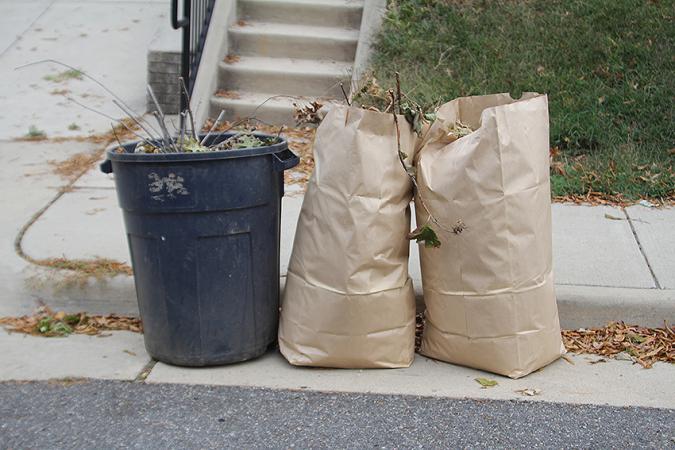
Trash collectors in Fairfax County will not pick up leaves, grass clippings, and other yard waste stored in plastic bags when the collection season begins on Monday (Mar. 1).
After holding a public hearing, the Fairfax County Board of Supervisors voted 9-1 on Tuesday (Feb. 23) to officially prohibit the use of plastic bags for yard waste by amending its Solid Waste Management Ordinance, a move that supporters say is necessary to reduce pollution and make the county more environmentally friendly.
“To reverse climate catastrophe, each of us must make many small and large steps,” Faith Alliance for Climate SolutionsBoard Chair Eric Goplerud said when testifying at the public hearing. “Banning plastic bags to contain yard waste is a step that the Board of Supervisors can take to lead our community to care for our common home, the Earth.”
Fairfax County began transitioning away from using plastic bags for yard waste last year, encouraging residents to use compostable paper bags or reusable containers instead.
In an update to the board’s environmental committee on Oct. 27, county staff reported that about 51% of homes surveyed during the 2020 yard waste season were still utilizing plastic bags, but Fairfax County Director of Engineering and Environmental Compliance Eric Forbes says he is “hopeful and confident” that the bags can be eliminated after the past year of education and outreach.
Now that the ban has been approved, the county’s solid waste management program is encouraging private trash and recycling collection companies to notify their customers that waste in plastic bags will no longer be collected.
“We do not anticipate a hundred percent success rate in the beginning, but we will continue our outreach and collaboration with industry to help our community to reach compliance with the new requirements,” Forbes said.
Forbes acknowledged that compostable paper bags are slightly more expensive to buy than plastic bags. County staff found that paper bags designed to carry yard waste cost about 50 cents per bag, whereas plastic bags cost around 30 cents.
Yet, the overall cost of utilizing plastic may be greater, since the material is difficult to extract and can damage equipment during the composting process, pushing up costs for collectors and, by extension, customers, Board of Supervisors Chairman Jeff McKay says.
While paper bags are preferable to plastic, Forbes noted that residents can avoid the costs of yard waste removal altogether by managing it on-site with backyard composting or allowing grass clippings to decompose on their lawn, a practice known as grasscycling.
McKay says he got 75 emails on the proposed ban, with an even split between supporters and opponents, but he believes it is time for Fairfax County to join the rest of the D.C. region, where some jurisdictions have required paper bags or reusable containers for more than a decade.
“We ultimately just have to decide whether we think this is a good idea or not,” McKay said. “…I think clearly, based on the testimony that we’ve heard today, based on where everyone around the region is, and frankly, based on where the science is, this is something that we must do now to help with our environmental challenges.”
Photo via Fairfax County Government
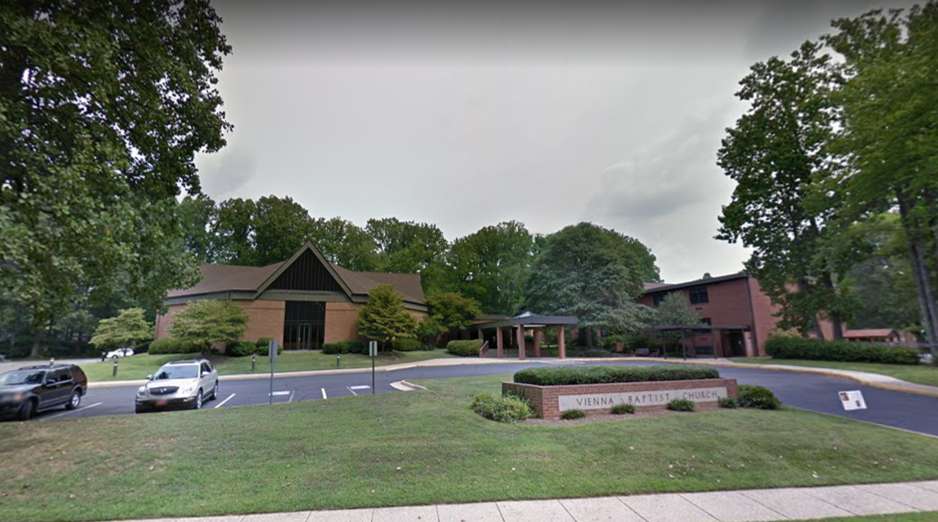
The Shepherd’s Center that serves Oakton, Vienna, Reston, and Herndon is no more.
The local nonprofit organization, which provides services to older adults, has merged with an affiliate in Great Falls to form the Shepherd’s Center of Northern Virginia (SCNOVA), the new organization’s interim executive director, Jayne Young, announced on Feb. 15.
Young says the Oakton/Vienna/Reston/Herndon Shepherd’s Center and Shepherd’s Center of Great Falls started exploring options to improve their reach and efficiency several months ago, as the COVID-19 pandemic has forced nonprofits to reevaluate how they deliver services.
“Certainly, the pandemic has challenged us to find new ways of tackling most anything you can think of,” Young said in a letter. “For our Shepherd’s Center, that included taking a look at the way we meet our mission so we ensure that we continue delivering impactful services as efficiently as possible.”
The merger will give clients from the smaller Great Falls center access to more services, while combining the resources and volunteer networks of the two organizations, which are both affiliates of the Shepherd’s Centers of America.
Young says all Great Falls volunteers and clients will be transferred to SCNOVA, which will operate out of the existing Oakton/Vienna/Reston/Herndon facility at 541 Marshall Road in Vienna. Free transportation services will also still be provided to seniors in Great Falls.
The full transition is expected to be completed on Sunday (Feb. 28).
Founded in 1997, the Shepherd’s Center of Oakton-Vienna expanded to include the Reston and Herndon areas in 2019.
The nonprofit assists adults 55 and older with free transportation to medical and therapy appointments, food pick-up and delivery, minor home repairs, and health counseling and referrals. It also offers educational classes, luncheons, caregiver support groups, and other community programs.
“We are excited to begin 2021 with such good news!” Young said in her letter. “Working together, we hope to provide even better and more impactful services to seniors in Northern Virginia.”
Image via Google Maps
(Updated at 11:05 a.m.) In the past eight months, the students in Vanessa Edwards’s nursing class have become well-versed in adapting to change.
After starting the school year in a virtual setting in July, they were among the roughly 8,000 students that attended in-person classes in the fall, only to revert to online classes when Fairfax County Public Schools paused plans for in-person instruction after winter break.
So, no one was fazed when a fire alarm blared through the halls of Fairfax County Adult High School in Springfield half an hour into Edwards’s first in-person class of 2021 on Wednesday (Feb. 17).
For faculty and students alike, the short-lived, familiar inconvenience of a fire drill paled in comparison to the relief of getting to interact with people face-to-face instead of through screens.
“Teaching nursing, there are certain skills and things you cannot teach virtual, so it makes it a lot more challenging to try and come up with ways to teach them,” Edwards said. “…We’re very excited to be back now in person, and hopefully, we’ll be able to stay in person through the remainder of the year.”
The School of Practical Nursing is among a handful of specialized career and technical education (CTE) programs that restarted in-person classes this past week, along with many young students with disabilities.
With local and regional COVID-19 transmission rates on the decline, FCPS is attempting to bring students back into buildings in phases, with in-person classes expanding to all grade levels by Mar. 16.
A licensed and registered nurse who worked at local hospitals and doctors’ offices for 21 years before being hired as a teacher by FCPS, Edwards says she feels “well-prepared” to resume in-person classes after seeing consistent compliance with mask requirements and other procedures in the fall.
It helps that her class only has 10 students this year and uses a spacious room that allows for plenty of distance between desks, luxuries that will not be available to all classes.
While the small class size means she hasn’t had to try it herself, Edwards thinks the hybrid, concurrent learning model that FCPS is implementing will help by reducing the number of students in a room at any given time.
“I think it is safe, coming back,” Edwards said. “I think having the less amount of people in one classroom is a good idea, and [it’s important] to just maintain the protocols.”
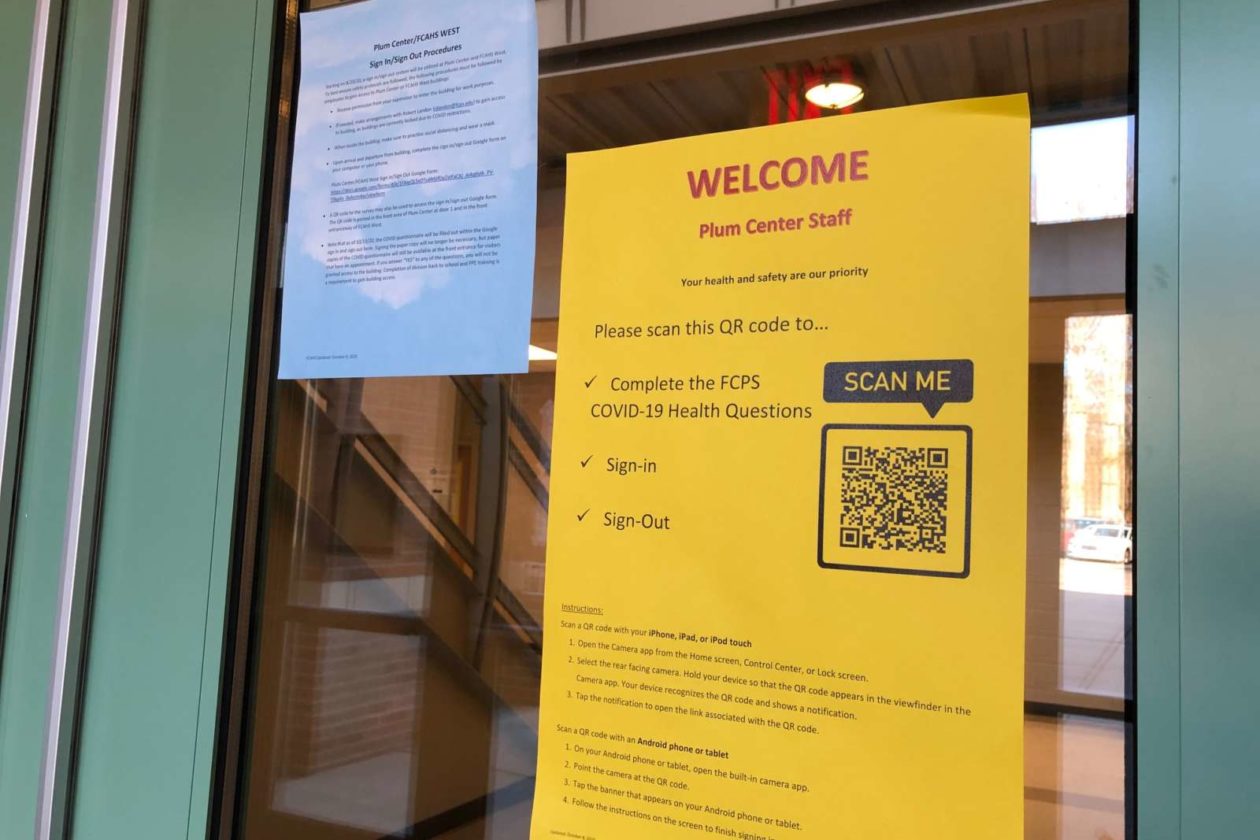
As of Feb. 18, FCPS has recorded 972 COVID-19 cases among staff, students, and visitors since Sept. 8, but there do not appear to be any in Fairfax County Adult High School, which houses the School of Practical Nursing and other CTE programs in the Plum Center for Lifelong Learning.
Open to rising high school seniors, the School of Practical Nursing is a rigorous, 15-month program designed to give students the skills and education they need to take the National Council Licensure Exam (NCLEX) and get approved as a licensed practical nurse by the Virginia Board of Nursing.
On top of traditional schoolwork, students get clinical training at hospitals, doctors’ offices, and other real-world health care settings — experiences that would be difficult, if not impossible to replicate virtually.
As a result, distance learning required a lot of adjustments for Edwards, who adapted the curriculum to focus on more academic subjects like anatomy and physiology, as well as her students.
18-year-old Andrea Chevez found that she had to study harder and put more conscious effort into asking her teachers questions while learning virtually, but it helped to know that she wasn’t going through the experience alone.
“We were looking out for each other [as a class], making sure that we were communicating more than usual,” Chevez said. “So, it wasn’t easy, but it was definitely not impossible, or we made the best out of it.”
When the opportunity to have in-person classes came up in October, Chevez and her family were nervous enough about the potential health risks that they considered not having her attend.
In the end, though, they felt reassured by the precautions that FCPS was putting in place, and she says getting in-person instruction made her less stressed and improved her ability to understand and retain the information that she was being taught.
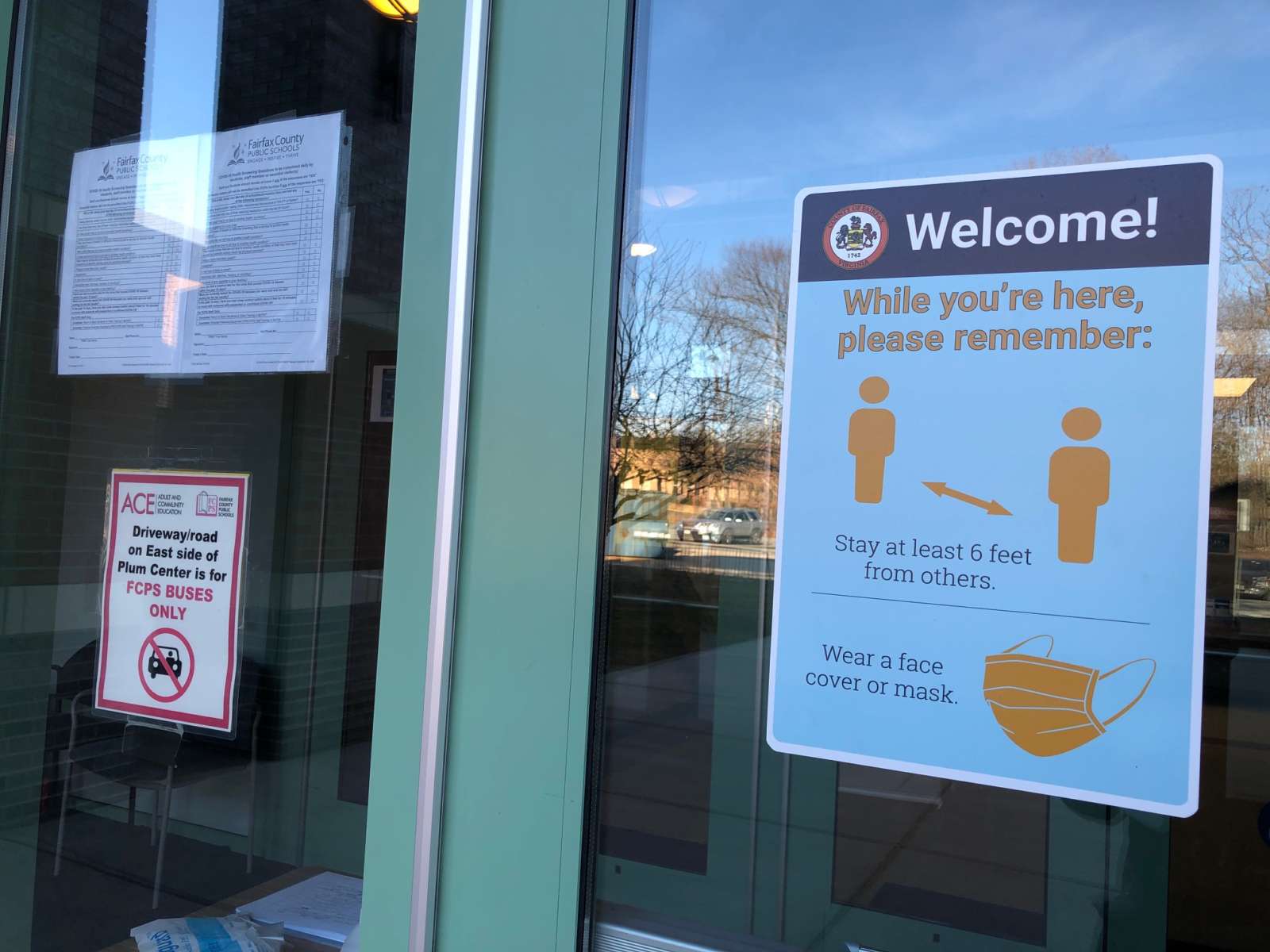
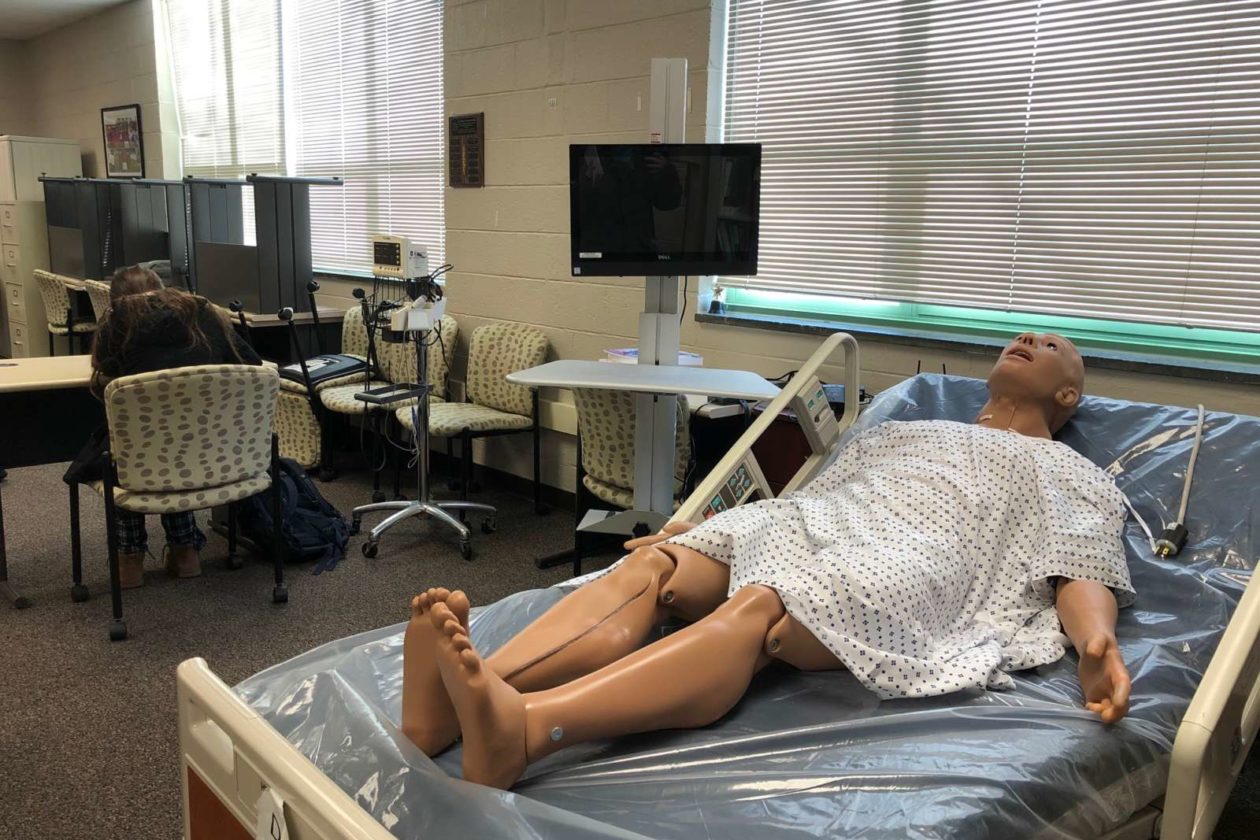
While the first day back in person started with a 50-minute test, Edwards has more hands-on activities planned as well. Students are getting CPR certification training, and the classroom has a simulation mannequin that can be programmed to talk, enabling them to practice conducting assessments.
Edwards has also been incorporating lessons from the ongoing COVID-19 pandemic into her teaching throughout the year.
“I hope not, [but] in the future, some other thing could end up happening, another pandemic or epidemic,” Edwards said. “It happens, it can happen, and they’ll be that much more prepared, and coming into health care during this time will definitely make them a stronger nurse.”
Chevez says she has always wanted to pursue a career in the medical field as a way to help and give back to her community, but knowing the challenges that health care workers are facing to tackle a daunting crisis has further cemented her determination to follow in their footsteps.
“The amount of work and hours that nurses are putting in to make sure they’re giving the best that they can possibly give the patient, especially at times like this, it just motivates me to make sure I get to where I want to be in order to help other people,” she said.
Staff photo by Angela Woolsey

Metrorail is now operating at the same frequency during peak and off-peak hours on weekdays after budget changes prompted by the impact of the COVID-19 pandemic took effect yesterday (Monday).
Under the revised Fiscal Year 2021 budget, trains are running every 12 minutes on the Orange, Silver, Blue, Green, and Yellow lines, while Red line trains operate every six minutes. Service after 7 p.m. and on weekends has not been altered.
The reduction of rail service during weekday rush hours was recommended as part of a revised FY 2021 budget that the Washington Metropolitan Area Transit Authority Board of Directors approved when it met on Nov. 19.
“The changes bring rail service in line with ridership demand while managing costs amid pandemic-related budget constraints,” WMATA said in a news release. “Rail ridership remains down nearly 90 percent from pre-pandemic levels.”
In contrast, WMATA says Metrobus ridership is only down 55% on weekdays and less on weekends compared to pre-pandemic levels, so service will expand to accommodate additional capacity starting on Mar. 14.
“Customers will see more buses, more often on the 125 lines of service currently operating, and more routes will be added to expand bus service on weekends,” WMATA said.
More details about the March Metrobus service changes will be provided at a later date, the transit agency says.
Photo by Chuck Samuelson/Dulles Corridor Metrorail Project

COVID-19 case rates in Fairfax County have leveled off over the past week after appearing to trend downward since mid-January, when a record 1,485 cases were reported in a single day.
As of today, the county’s seven-day average is at 312.4 cases and has been hovering between 290 and 337 cases since Feb. 4. While the anticipated post-winter holiday surge seems to have tapered off, case levels are still higher than the pandemic’s initial spring peak, when the highest recorded seven-day average was 303 cases on May 31.
With 194 new cases today, the Fairfax Health District has now reported 64,950 COVID-19 cases, 3,482 hospitalizations, and 849 deaths, according to data from the Fairfax County Health Department.
Today also marked the launch of Virginia’s new statewide COVID-19 vaccine registration system, though Fairfax County is not participating for the time being.
Based on a registration data dashboard that went live on Feb. 12, Fairfax County has made slow but discernible progress in its efforts to vaccinate older adults, some groups of essential workers, and other eligible populations.
The Fairfax County Health Department has whittled its waitlist of people who have registered but haven’t been given an appointment yet down to 105,268 people, as of 10 a.m. The list had around 180,000 registrants as recently as last Thursday (Feb. 11). In total, 229,185 people have registered with the county to get the COVID-19 vaccine so far.
The health department is currently making appointments for more than 42,000 people who registered on Jan. 18, which saw particularly high demand since it was the day when the county expanded eligibility for the vaccine to people between the ages of 65 and 74 as well as people with high-risk medical conditions.
People who have registered for an appointment through the county health department can now see where they are in the queue with a registration status checker, though the rollout of that tool was not without its challenges.
Fairfax County has delivered 110,098 of the 114,923 vaccine doses that it has gotten from the Virginia Department of Health so far. About 68% of those doses were adminstered by the county health department, while the remaining 31% were distributed to other providers, like Inova.
According to the VDH, 48,404 people in Fairfax County have been fully vaccinated for COVID-19, and 163,200 total doses have been administered in the county. That number includes residents and staff at long-term care facilities that have been getting the vaccine through the federal government rather than the local health department.
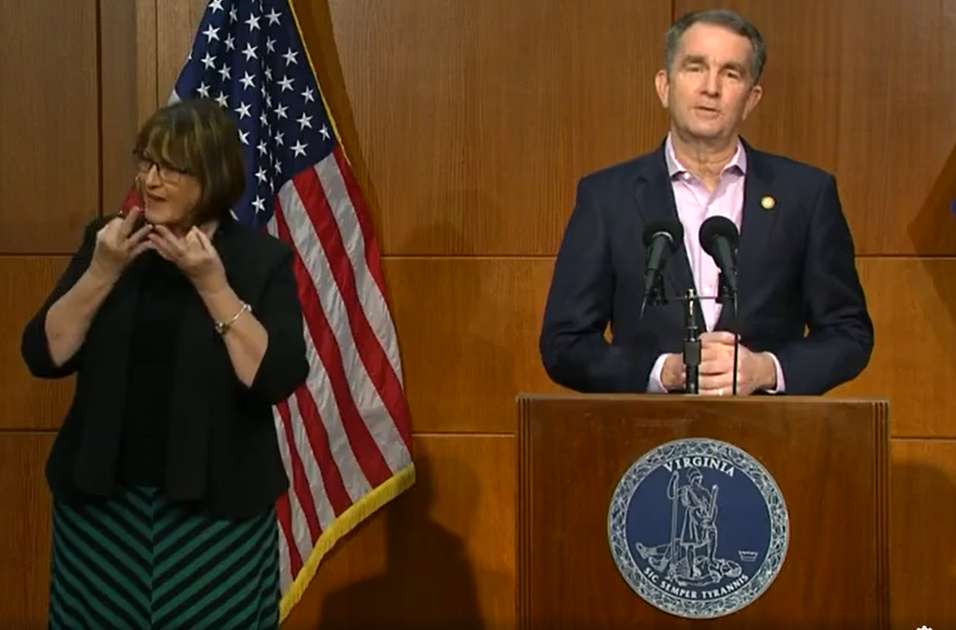
All school divisions in Virginia have been directed to establish options for in-person learning by Mar. 15, Gov. Ralph Northam announced today (Friday).
The state is also encouraging school divisions to develop plans to offer some form of classroom instruction during the summer. While extending the school year will not be mandatory, the governor’s office says his administration “is in the process of determining additional resources” to support summer school, including ensuring that educators are properly compensated.
“Our children need to catch up to be ready for learning in the fall,” Northam said during a press conference. “I want our schools to do this safely, and I want them to prioritize students who needs this the most…But it’s time for this to happen. It’s critical to prevent greater learning loss and to support our children’s health and well-being.”
Virginia State Superintendent for Public Instruction Dr. James Lane and State Health Commissioner Dr. Norman Oliver released interim guidance on Jan. 14 for local education and health officials to use as they determine when and how to offer classes and other activities to students in person.
Northam said he had a “very open, frank conversation” with superintendents from around the state before announcing the Mar. 15 deadline for offering in-person classes.
He also noted that “none of this is set in stone,” but declining COVID-19 case numbers, including testing positivity rates and hospitalizations, as well as increases in vaccinations give him confidence that schools will be able to proceed with reopening and summer school plans.
The governor’s announcement comes just three days after the Fairfax County School Board approved a plan to start phasing students into hybrid in-person learning on Feb. 16. All students who choose to get in-person classes instead of remaining all-virtual will be back in school buildings by Mar. 16 under the timeline developed by Fairfax County Public Schools Superintendent Scott Brabrand.
FCPS officials have discussed the idea of extending the school year in the hopes of providing more in-person instruction and compensating for the learning losses many students have reportedly experienced as a result of distance learning. However, no official plans have been established yet.
The U.S. Centers for Disease Control and Prevention released new research last week that indicates schools can safely operate in-person as long as they implement and enforce mitigation measures, including mask-wearing and social distancing.
“In-person learning is critical to the current and future well-being of our children,” Oliver said. “[The Virginia Department of Health] remains committed to supporting school districts in getting kids back into classrooms as we work to mitigate the spread of COVID-19 and get Virginians vaccinated.”
Photo via Governor of Virginia/Facebook