

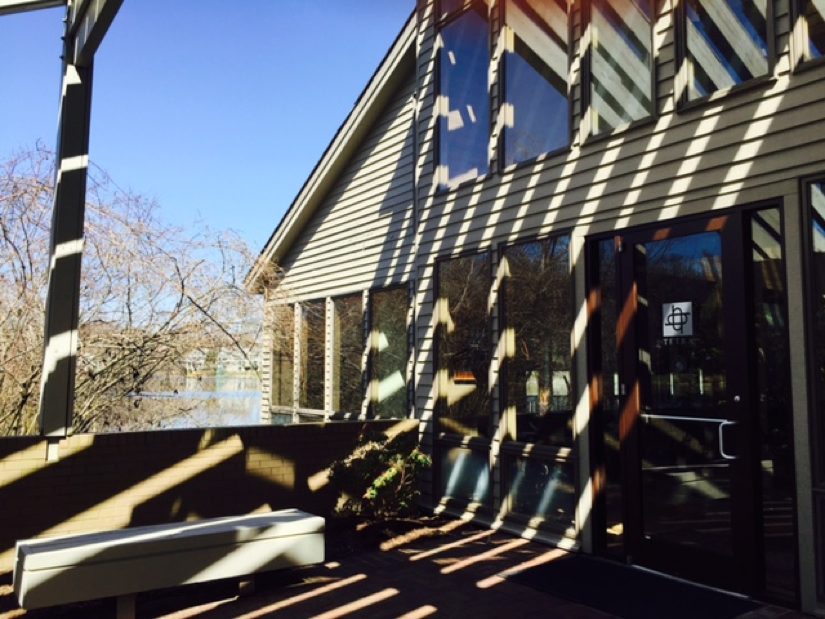
 This is an op-ed from Reston Dave Williams. It does not reflect the views of Reston Now.
What is the cost of RA NOT buying the Tetra property?
It seems that most Restonians are in favor of RA buying the Tetra property, but are concerned that the price may be too high.
Viewing this purchase in the context of a commercial purchase is, in my view, the wrong perspective.
Rather, the purchase should be viewed from the perspective of value in the context of residential Reston. This is a unique, perhaps one-time, opportunity to purchase wonderful waterfront property located between Reston-owned spaces and in the heart of a number of residential communities.
If RA does not purchase this property, one can be certain that at some point it will be developed commercially to its maximum commercial value — perhaps repeatedly over the years. Commercial development in the heart of a residential area will have a tremendously negative impact on the value and quality of residential Reston.
Viewing this purchase from a commercial investment point of view, I believe, misses the point. Part of the point of the purchase is in fact to prevent commercial development. Of course the owner wants to sell for its maximum commercial potential value. RA wants to use the property but also to prevent such commercial development. However, to expect to be able to purchase the property at a non-commercial value is unrealistic. And it makes it difficult to negotiate with the owner when the purchaser’s bottom line is (rightfully so in this case) publicly available.
We moved to Reston over 20 years ago. We did not move here for its commercial value. We moved here because of its residential value. We moved here because of the woods, the open spaces, the trails, the wildlife and the beautiful peaceful lakes.
For us, RA is primarily in the business of assuring excellent residential quality. If the primary purpose of RA was commercial development, then we should cut down all the trees and fill the open spaces with high rises and commercial development.
Failure to purchase this property would be a huge mistake. If RA cannot purchase the property and has no control over its development and use, years from now, as this property is developed Restonians will look back with regret and say “I can’t believe we let this opportunity slip away.”
Please vote YES to purchase the Tetra property!
Something on your mind? Send a letter to [email protected]. Reston Now reserves the right to edit letters for spelling, style and clarity.
 The ship of state of the Old Dominion that traces its beginnings to a meeting of the colonists in the church at Jamestown in 1619 showed some stress lines last week as the legislative body, the General Assembly, turned a one-day reconvened session to consider the Governor’s amendments into two days of meetings with incomplete results.
Arriving at a set of ethics rules that will permit part-time citizen legislators to live in local districts and interact with their constituents has proven to be a difficult task. Cynics may say that the problem comes from lawmakers who do not want to set limits on themselves, but the challenge is much more difficult than that.
As one who wants the toughest ethics rules possible to maintain public trust, I do not at the same time want to be cut off from regular contact with my constituents who ask me to come to their events, most of which are non-profit fundraisers for causes in which I believe.
Absolutely do away with the pleasure trips that I have never taken and that are an embarrassment to other legislators who have not gone on these trips, but legislators should be able to go the annual conference of the National Conference of State Legislatures that provides the best continuing education for legislators available.
I do not have a copy yet of the compromise bill that the General Assembly will consider with the Governor’s amendments, but I believe it is safe to say that a bill will pass and that the law it establishes will be amended and perfected over many years.
Extending the reconvened or veto session by an additional day was a little embarrassing for a leadership that had bragged about ending the regular 45-day short session one day early. Work was rushed to save the state a little money by ending early, and some of the problems with the ethics bill came about in part because of the rush to get it completed.
When 140 part-time legislators attempt to balance a budget with significant revenue shortfall and consider more than 2,500 bills and resolutions on topics as diverse as sexual assault on college campuses, police surveillance including license plate readers and drones, and community and gun safety in a politically-charged, 45-day session in an election year, it is reasonable to expect some misfires and shortcomings. Some of the ways that the legislature has chosen to deal with its stresses need review and change.
A report by Transparency Virginia (TV), an informal coalition of non-profits that advocate at the General Assembly, reported recently that in the 2015 session there were multiple times that committees met without adequate notice to make public participation possible, scores of bills were never given a hearing, and 76 percent of the bills and resolutions defeated in subcommittees in the House did not have a recorded vote.
Many challenges face the Commonwealth, but it may be the case that more attention needs to be given to the health of the body before these issues can be resolved in a way that is best for the citizens.
Ken Plum represents Reston in Virginia’s House of Delegates. His opinion does not necessarily reflect that of Reston Now.
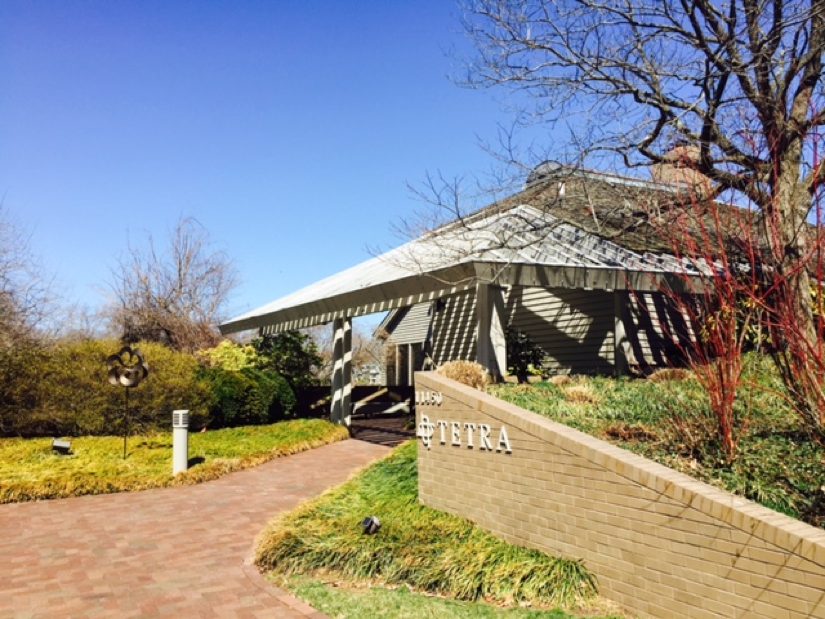 This is an op-ed by Reston resident John Farrell. It does not necessarily reflect the views of Reston Now.
My very dear friend, Reston Association Board of Directors President Ellen Graves, lent her name to an Op-Ed that appeared on Reston Now last Friday. The editorial was in favor of RA’s $2.6 million purchase of the former Reston Visitors Center.
Early on, Ellen protests that RA did not secretly initiate the negotiations with property owner Tetra. That no one has made this accusation makes the denial gratuitous.
Our source of consternation is the CEO’s admission, reported on Reston Now on April 10, that RA “leadership” secretly worked on this acquisition beginning in the Fall 2014 and only disclosed it to the membership and full Board in late January 2015. That’s when the issue first appeared on the Board’s agenda as an authorization for referendum.
Nothing about that course of events is consistent with the “Reston way” about which Graves waxed poetic last Friday. Neither is it part of the “Reston way” to withhold essential information from the membership or the full Board such as the Feb. 4, 2015 appraisal, which wasn’t released to the full Board until the night of its final vote on the referendum or to the full membership until days later.
How RA Board members were expected to examine, understand, question and evaluate a 95-page appraisal and vote for a $2.6 million referendum the same night is for someone else to explain.
When I heard that my dear friend would be authoring an Op-Ed about the appraisal, I strongly urged her to make sure she read the appraisal before she allowed her name to be put to any article. Sadly, that apparently didn’t happen.
I conclude this because the April 17 Op-Ed made reference to several documents that are not contained in the appraisal. The two zoning administrators interpretations referenced in the Op-Ed are neither referenced in the appraisal, attached to the appraisal or posted on the RA website. This, despite the fact that I personally asked RA land use attorney John McBride for copies of them in early March.
Since the Chesapeake Bay Ordinance that impedes development of the Tetra site is not part of the zoning ordinance, it’s no surprise if there is no mention of it in either of the zoning administrator’s letters.
Similarly, the Op-Ed references the Fairfax County-approved site plan for the restaurant, but it too is not found in the appraisal. There is a drawing of the “as built” for the visitors center that isn’t county approved and has the restaurant struck through; probably because the restaurant wasn’t going to be built before the county bonds for the public improvement for the visitors center were released in the mid-1980s. Read More
This is an op-ed by former Reston Citizens Association president Colin Mills. It does not represent the views of Reston Now.
What makes Reston a special place? To a lot of us — including me — it’s the careful design and planning that went into its creation.
One important element of that planning is the integration of open space and natural areas throughout Reston. As Bob Simon said in one of his founding principles, “Beauty — structural and natural — is a necessity of the good life and should be fostered.”
It’s extremely valuable that even in the middle of a thriving, growing, busy community, there are pockets of green where we can experience tranquility and beauty. Right now, we have the opportunity to help preserve one of those green spaces in Reston. I hope that our citizens will take advantage of it.
I support RA’s plan to purchase the Tetra property for a variety of reasons. As a student of Reston history, I appreciate the idea of preserving the old Visitors Center. As a longtime patron of RA programs, I support adding another venue to host programs and accommodate our growing population.
Neither of those is the key reason to me, though. What matters most to me is what RA would add to the parcel — trees, shrubs, and green space — as well as what it wouldn’t add, which is more development in a location that would add more traffic to our streets and threaten our existing natural resources.
During my three years as president of RCA, we spent a great deal of time advocating for careful planning of Reston’s future growth. We recognized that growth and development is coming, and it’s foolish to think that we can stop the clock and preserve Reston exactly as it is forever. But we urged that development be concentrated in areas that were designed for it, such as in the vicinity of the Silver Line stations and the existing village centers.
We strongly opposed development in and near existing stable residential neighborhoods, in spots that would threaten our existing green space and environmental resources, and in areas that would worsen our already-clogged traffic. The Tetra property fails on all three counts. Read More
This is an op-ed by Reston resident Terry Maynard. It does not necessarily reflect the opinion of Reston Now.
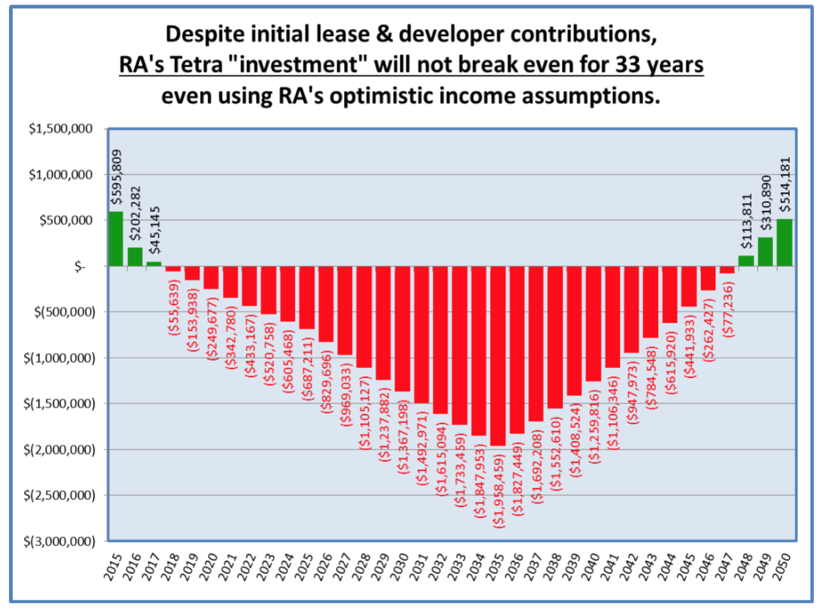
Contrary to RA President Ellen Graves’ op-ed on Friday, the planned RA purchase of the Tetra property is neither a good value now nor a good investment in the long term. Only Reston voters now can stop this ill-conceived, secretly planned purchase by voting “NO” in the ongoing RA referendum.
The price RA has committed to paying, subject to the referendum vote, is $2.65 million. The $2.65 million price is two and one-half its current market value of the Tetra property as measured by both Fairfax County in its annual real estate assessment and the RA-funded appraisal and property condition report.
The County puts the value of the Tetra property at $1.20 million as of Jan. 1, 2015. That is down about $44,000 from last year. And, as you probably know, the County is obligated under state law to assess real estate at its fair market value.
The property appraisal prepared for RA by The Robert Paul Jones Company, LLC, (RPJ) walks through the property’s “as is” valuation in two ways: comparable sales and income approach. After putting the comparable sales valuation at $1.45 million and the income approach valuation at $1.1 million, it arrives at an “as is” fair market value of $1.3 million. (See p. 22 of the RPJ appraisal.) Read More
 There was much attention last week on the Meitiv family of Silver Spring, Md., whose children, ages 6 and 10, were picked up by police for walking home from a park unattended.
The Meitivs had a similar brush with authorities last December. They call themselves “Free-Range Parents,” part of a national movement to give children more freedom to explore their world.
The subject has been one of much debate. The most recent Washington Post stories on the Meitivs have hundreds of comments, ranging from “Ok…seriously…since when does any government agency have the right to do this to our children?” to “The parents in question are being irresponsible. … Prove a point in other ways, but not at the risk of your children. We have ‘free range’ pedophiles as well.”
Meanwhile, Reston is connected by 55 miles of paths, many of which connect schools to village centers, and it is not so unusual to see children walking here without adults. Higher-density housing such as townhomes mean there are dozens of neighborhood and Reston Association playgrounds too.
At what age do you think it is right for children to roam Reston safely? Do you let your kids play at the corner park or head to the village center for ice cream without you? Do you agree with the Silver Spring family or do you think a concerned citizen who called police did the right thing?
Take our poll and answer in the comments.
file photo
 This is an op-ed by new Reston Association President Ellen Graves. It does not reflect the views of Reston Now.
Reston Association was approached by Tetra Partners, the owner of the old Reston Visitor Center property at Lake Newport, asking if RA was interested in purchasing the property for $2.7 million. The owner indicated that the price was firm (he is in the commercial real estate development and brokerage business) and that he was going to make a decision in June regarding whether to sell the property (to RA or another entity) or continue to use it for his own purposes.
This 3.147-acre property strategically connects two larger RA common-area properties. RA has non-exclusive parking rights as well as trail easements in the property. Many members now enjoy portions of the property not within the RA easements. A considerable number of members have been concerned for years about the spectre of more intense commercial use of the property.
For these reasons, the RA Board was interested in discussing favorable but fair contingent contract terms with the owner. The RA Board did not secretly decide to initiate the acquisition of this property. The seller initiated these discussions. The seller’s original price was not based on any RA appraisal. When the RA Board became convinced that the offer from the owner could present a rare opportunity to expand the common area and childrens’ programs within Reston, it voted to decide this issue the “Reston way.”
The “Reston way” is to let the members decide, providing them with as much accurate, factual information as possible. That is why the Board directed staff to initiate a referendum, so that all RA members can vote whether the purchase and reuse of this property as common area, on the best terms and conditions that the seller will allow, is an opportunity that should be taken.
We are not a local government or municipality that can condemn property. We can purchase property only on such terms as the seller will agree. An appraiser within Reston, Stephanie C. Reger, stated “Given that the subject property is even available to purchase (at nearly any price) is a rare opportunity.”
This opinion is shared by many board members. However, the RA Board did not want to undertake a referendum if reasonable terms could not be negotiated with the seller. Staff first sought to determine if the $2.7 million selling price was reasonable. A written appraisal report (complying with the Uniform Standard of Professional Appraisal Practice) was commissioned by RA to answer this question. Read More
As a former teacher and educator, I like what I have been seeing recently of the vast array of educational resources in our community.
Most of the programs involve partnerships that make them possible and that contribute in many ways to making them successful. As is often the case, there is little that is brand new, but no apologies are needed for adopting ideas and programs that have proven successful. Nor should a program be abandoned simply because it has been around for a while if it is otherwise working.
Aldrin Elementary School in Reston cut the ribbon recently on a new branch of Middleburg Bank. The branch will be run by students and will serve students in the school. Not a new idea since many schools have real banks in them, but it is a program that I believe will contribute to financial literacy in a way that will stick with the children.
Likewise, I like what I see children learning about the environment through the efforts of teachers and volunteers working through NoVA Outside, an alliance of environmental educators. At a recent School Environmental Action Showcase at George Mason University, I saw the results of teams from across the region celebrate the “Green or Eco” work they are doing at their school and in their communities.
The student teams applied STEM (Science, Technology, Engineering and Math) concepts to real, authentic environmental problems they identified including reducing waste, conserving energy, providing habitat for animal species, creating sustainable food programs, cleaning watersheds, and others.
The Volunteer Learning Program, a program with which I was involved when it began in 1975, continues to provide personalized volunteer tutoring to Fairfax County adults and court-involved juveniles who are seeking help to complete a high school credential while getting better prepared for work or further education.
In addition to helping thousands of young people and adults to complete their education and get better jobs, the program is one of the most cost-effective in local government. A small staff of professionals trains caring and talented adults to provide tutoring to others allowing the program great flexibility in overcoming the complexities of learners’ locations throughout the county and their work and personal schedules. The learners are current or future parents of children in Fairfax County Public Schools. These children are bound to benefit because of the positive experiences of their parents in this program.
I taught another course this semester for the Osher Lifelong Learning Institute of George Mason University. This is another program with which I was involved from the beginning. It uses its more than a thousand members to teach courses and to take courses across a wide range of intellectual pursuits. No one gets paid to teach, and no one gets credit for learning. No one complains because it is all about the fun of learning. And it is fun!
Our community is truly blessed with a wide variety of educational resources for learners of all ages. Let me know if you would like to get involved, and I can help steer you in the right direction.
Ken Plum represents Reston in Virginia’s House of Delegates. Opinions here do not reflect those of Reston Now.
This is an op-ed by Reston resident Terry Maynard. His opinion does not represent Reston Now.
I am voting “NO” on RA’s referendum to purchase the Tetra property at Lake Newport and, having reviewed the available materials, official and otherwise, I believe it may be useful to share with you why I have made that decision. I apologize in advance for the length of this letter, but I believe it is important to present evidence for my position, not just assertions.
The $2.65 million price is waaaay too high! In fact, the County puts the property’s assessed value at $1.2 million, down $50,000 from last year. The difference, as directed by RA and stated in the RA-funded appraisal ,is largely the “market value of the subject, assuming restaurant uses are permitted and any deferred maintenance has been corrected, as of Jan. 23, 2015, is estimated to be” $2.65 million. In fact, there is no restaurant on the property nor will there ever be. The property condition analysis points to at least a quarter-million dollars in needed repairs. At most, this property is worth one million dollars–if we really need it.
That $2.65 million price will cost Restonians more than $3.8 million in loan payments over the next 20 years and, even with RA’s optimistic revenue forecasts for rental of the small Tetra building, mean net cash outflows totaling nearly $2 million that RA members must pay over two decades. To pay off that shortfall, RA will have to add over 20 percent to the average annual increase in RA fees over the timeframe if its fees grow at a 3-percent inflation rate. (See attached 20-year financial chart.)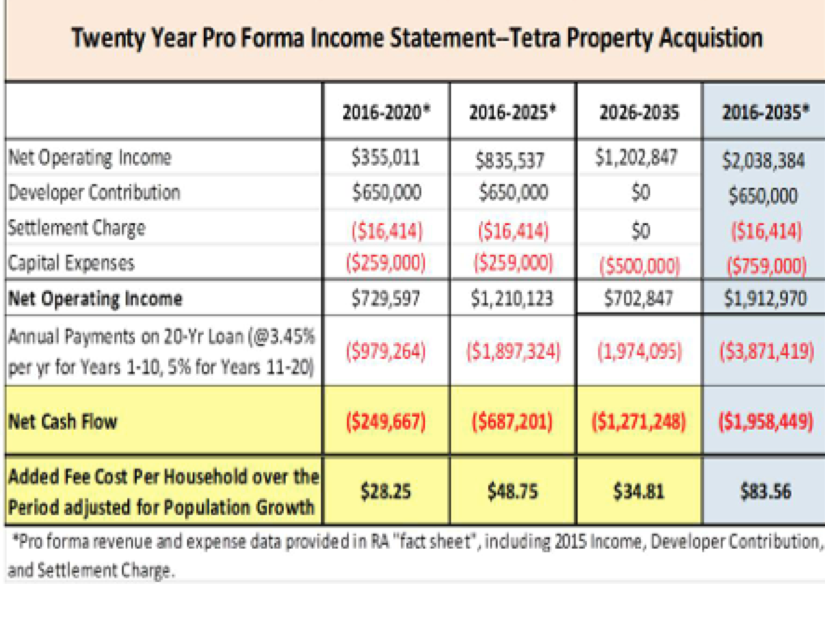
There will be no development there because of planning, environmental, and easement restrictions. An alleged key reason to buy the property is to prevent others from building a 6,900-square-foot restaurant there (hence, the appraisal assumption) under a 2001 zoning determination or expanding “Lake Newport convenience center” as the Tetra building property is characterized in the current Reston Master Plan. Neither of these will happen.
First, as part of the six-year effort to revised Reston’s Master Plan, it is being altered within the next few months to preclude that from happening. Read More
 This is an op-ed from Connie Hartke, president of Rescue Reston. It does not represent Reston Now’s opinion.
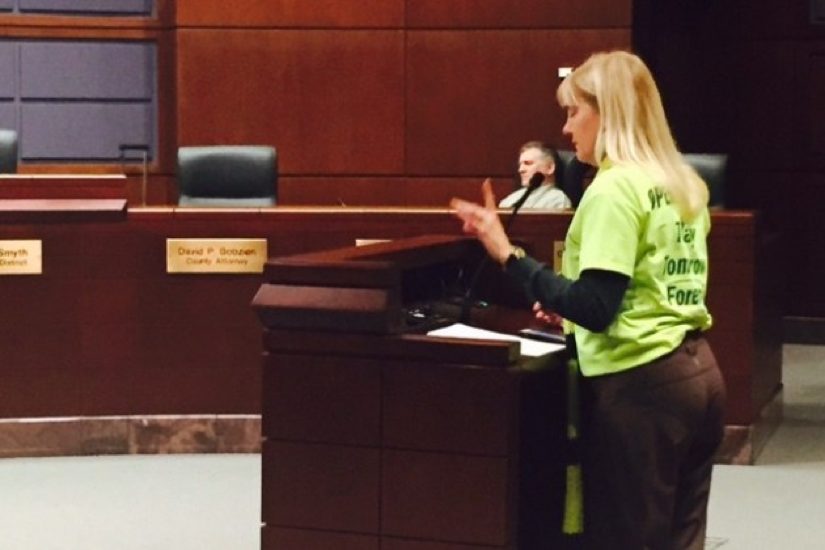
On Wednesday, the company that manages our Reston National Golf Course (RNGC) and many other courses will celebrate the “vast economical, environmental, health and charitable impact the game has in America.” Wednesday, April 15 happens to be National Golf Day.
Ironically, it is also the day that Reston awaits the Board of Zoning Appeals (BZA) decision on the technical merits of the claim that the current owners of RNGC can sidestep the normal process to develop its 166 acres of open space into residential housing.
It is a fact that Northwestern Mutual invested slightly more than $5 million in 2005 in order to become the majority owner of these 166 acres in the heart of Reston. Had anyone imagined this land could be developed, it would have had a far greater price tag.
This property owner is not being hurt by its small investment in one of the most profitable golf courses in the D.C. metropolitan area. When asked at the hearing how financially viable the golf course is,” the owner’s attorney answered “…economically very viable.”
We hope the BZA will also consider the property rights of the 1,000-plus homeowners and businesses who border this Audubon Certified Sanctuary golf course, not just the interests of its owners, RN Golf and Northwestern Mutual. Read More
This is an op-ed by Eve Thompson, who represents Lake Anne/Tall Oaks on the Reston Association Board of Directors. It does not reflect the views of Reston Now.
By now, Reston Association members have begun to receive their ballots on the question of whether or not we as a community should move forward with the purchase of the Tetra Property.
The RA Board voted unanimously to put this question to the membership. The opportunity to add to Reston Association’s common areas are far and few between. This particular parcel provides a unique opportunity to create a multi-purpose venue that we believe, based on staff and committee research, would be much in demand and would add to the types of recreational opportunities we are able to offer our members.
Based on the appraisal, we believe we’ve arrived at a reasonable market price. I think it’s safe to assume that based on the development that will be taking place around Lake Anne the price won’t be going down; and that I think brings us to the real crux of the question.
The RA Board has a responsibility to investigate these kinds of opportunities. We are not empowered to act unilaterally, but we are empowered to gather enough information to determine if an opportunity makes potential sense for the community.
That is what we’ve done here — the rest is up to you. For some it will make sense to add to the band of 90+ acres that runs along Barron Cameron. For others it will make sense to make sure that the property is not able to be developed — now or ever; and for others it won’t make sense at all.
What is critical is that you had the opportunity to decide.
Something on your mind? Send a letter to [email protected]. Reston Now reserves the right the edit letters for spelling, style and clarity.
The first person I ever knew who wrote a weekly newspaper column was a teacher in the high school I attended. He wrote a column during the period 1961-1965 entitled, “A Hundred Years Ago: The Civil War Day By Day.” He did not have to think of a new topic every week; he simply reported what was known to be going on a hundred years before during that week.
I do not propose to revive his idea for a weekly feature other than for this week, when 150 years ago Richmond was being sacked and burned by federal troops. When President Abraham Lincoln visited the capital of the Confederacy on April 4 and on April 9, Lee surrendered to Grant at Appomattox. Activities have been going on for several years sponsored and encouraged by the Civil War Sesquicentennial Commission the General Assembly established to commemorate this period of history.
Edward L. Ayers, Civil War historian and president of the University of Richmond, is quoted in the press as saying that, “People are beginning to see, in a way they didn’t see before, that you can’t walk around history. You can’t walk away from history. You have to walk through history to get to any future that’s worth having.”
The institution of slavery and the attempted use of states’ rights as an argument to protect it are difficult to understand today. We need to learn from the events of the past lest our ideological differences lead us to events that future generations will similarly find difficult to imagine or rationalize.
Jane and I took a mini-vacation recently where we went to the Blue Ridge Mountains and stayed in a log cabin that had been built from logs from a previous cabin that had been occupied by a man who died in the Civil War at age 28. We had to lower our heads as we walked about the cabin so as to not hit the beams in the ceiling, and the sleeping loft had only the warmth that seeped through the floor.
Our “roughing it” in a cabin — as we had been wanting to do for a long time — was made infinitely easier by a gas heater as an auxiliary to the fireplace and a bathroom with running hot water that had been added to the back.
One thought that continued to pass through my mind while we were there was why the young man who lived in the original cabin and who clearly was not a slave owner would leave his home and go to fight a war when his neighbors not far to the west had split off to form the new state of West Virginia because they did not support slavery or secession.
The answer I am sure is as complex as understanding the Civil War itself, but the War and the thousands of its personal stories remind us to take a close look at our personally held beliefs as well as our public policies to ensure that they do not include the kind of discrimination that marked the events of 150 years ago.
Ken Plum represents Reston in Virginia’s House of Delegates. His opinions do not necessarily reflect those of Reston Now.
 This is an op-ed by Reston Association Board of Directors President Ken Knueven. It does not represent the opinion of Reston Now.
A lot has been discussed recently in the blogosphere regarding the Reston Association Board’s unanimous decision to send to member referendum the question of borrowing up to $2.65 million for the purchase and renovation of the old Reston Visitors Center and the associated open space on which it sits.
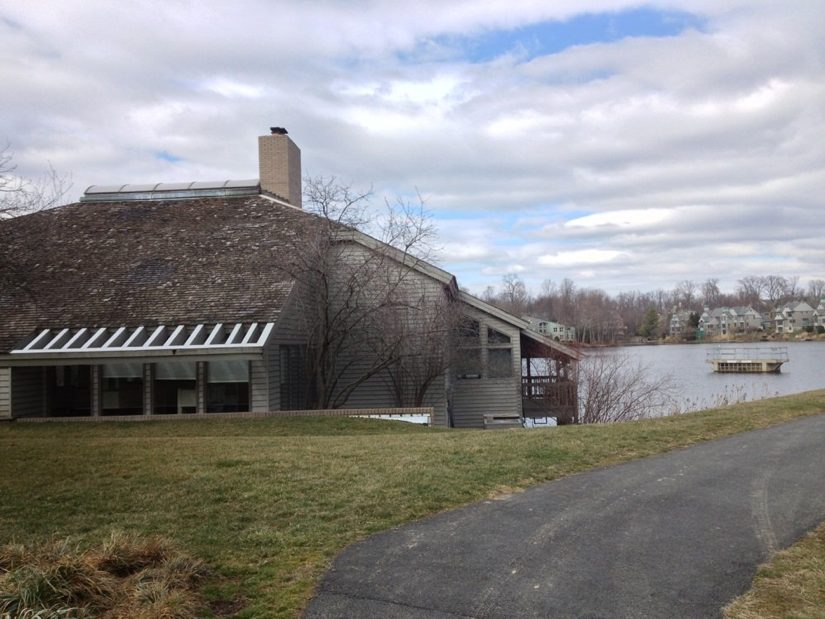
This 3.47 acre parcel is located at the southeast end of Lake Newport and sits between the Association’s Lake Newport tennis court complex on one side, and the cherished park area known as Brown’s Chapel Park on the other.
Here’s why we’re trying to save this building and the open land it sits on:
Ownership of this property would create a contiguous band of 98 acres of Common Area property, parkland and recreational amenities so desperately needed by our growing community.
Development All Around Us
During the past 50 years, Reston has seen substantial growth and expansion and there’s no denying more development is on the way.
We’re all seeing it happen right in front of us. Tower cranes, chopped-up roads, detour signs, and those yellow county sandwich-boards are everywhere, announcing public hearings regarding new development/redevelopment projects.
Just look at the recent efforts already underway: Reston Station, Lake Anne Redevelopment (just across the street from the former Visitors Center), The Harrison Apartments, Reston Heights, Fairway Apartments, Reston Town Center North, the proposed redevelopment of Tall Oaks, and now St. Johns Woods.
Impact
In each instance, the owners/developers are doing everything they can to maximize their property rights — pushing the limits on size and density. This will have an impact on our existing facilities and natural resources.
Our Actions
We have taken steps to ensure our founding principles are upheld, while also striving to maintain a balance of sustainability and progress. We recently passed two Land Use Resolutions in coordination with the County, the Reston Planning & Zoning Committee as well as developers to be involved early in the process — and they’re working. Read More
 This is an op-ed by Reston resident Terry Maynard. It does not represent the opinion of Reston Now.
In the debate over Reston Association purchasing the Tetra property at Lake Newport, a major source of frustration has been RA’s refusal to release the Feb. 4, 2015 appraisal until seven weeks later.
RA released the report only after two public hearings were held, the referendum question and fact sheet were finalized and approved by the RA board, and the $2.65 million dollar conditional sales contract was signed on March 27.
Appraisals like this are prepared to aid in assessing the value of a property, its condition, and any constraints its use or development may face. They can be an excellent tool in deciding whether a purchase contract ought to be signed and at what price, but Restonians did not have the opportunity to see this appraisal until the sales contract was already signed.
Had the Tetra property appraisal been made public immediately, thus providing RA members with a meaningful opportunity to comment before RA signed the sales contract, I believe we would not be having this debate or a referendum. There are so many major problems identified in the appraisal even RA’s single-minded board would probably not have decided to move forward.
The $2.65 million valuation is the obvious place to start. As RestonNow reported, based on comparable sales, the County assesses the value of this property at $1.25 million, less than half the sales price. The appraisal obtained by RA explains the large discrepancy: Their $2.65 million valuation is based on an RA-directed assumption of its “best and highest use” as a lakeside restaurant extending into the lake, which, of course, does not reflect the current state of the property.
Yet the appraisal also includes two “as is” Tetra property valuations, one based on comparable sales ($1.45 million) and one based on an income approach ($1.1 million). Both of these prices reflect the true current market value of the property and the price Restonians should be willing to pay. Moreover, they are consistent with the county’s assessment. Read More
This is an op-ed by Reston resident Irwin Flashman. It does not represent the opinions of Reston Now.
I have several major concerns about the proposed RA purchase of the Tetra Property. These include: The price for the property based on the appraisal report and RA’s rush to purchase without full information being made available to members and the RA approach on this matter.
The appraisal is said to be the source of the price of $2.65 million for the Tetra Property. The report actually has three different appraisal prices, using two different appraisal methodologies.
The $2.65 million price assumes the so-called highest-and best-use (retail, commercial) and further assumes that a restaurant of some 6,900 square feet would be built over a portion of the property that is under Lake Newport.
These assumptions favor the seller, not the buyer.There is no basis offered in the appraisal to support the feasibility of such assumptions.The basis for the restaurant assumption is the carefully phrased statement: “Building plans were prepared in 1981 indicating that it was possible to extend out into the lake further construction of a restaurant building.”(Report, p. 13)
While it may have been possible in 1981, it is not legally possible today. The proposed area of restaurant construction is within the Resource Protection Area under the Chesapeake Bay Protection Act, where nothing can be built. (See the corresponding map of the site, Report Appendix.)
So, how can this approach serve as a basis for the price? The use of this assumption as a basis for the $2.65 million in the face of these facts in my opinion is outrageous. Read More
