

 The multiple celebrations that make up the holiday season bring travel, big meals, and family and friend reunions. For state legislators, the end of the year and the holidays bring an additional dimension: preparation for the next legislative session.
The Virginia Constitution provides that the General Assembly shall meet each year on the second Wednesday in January. This year that is Jan. 14, a later date than in most years.
Leading up to opening of the General Assembly session there is a great deal of preparation that needs to be done. Study committees that have been meeting throughout the year conclude their work in order that their reports can be written and legislation drafted. In order to spread out the workload on staff for the Division of Legislative Services that does the statutory drafting, a deadline is set in early December so that bills that are to be filed early can be drafted. A limitation on the number of bills that can be introduced after the session begins encourages members to get their bill drafting requests in early which happens to be during the time of preparing for the holidays.
With lobbyists, stakeholders, interested citizens and others concerned about getting legislation introduced or in opposing bills that others are proposing, the end of the year and the holiday season signals the need to move to action.
Legislators get numerous invitations to meet with legislative committees of various organizations, lobbyists employed to support or oppose bills, and individuals who have an interest in a good government idea. Because regular business hours of both legislators and advocates get filled with meetings, social and meal times are used as opportunities to educate legislators and for lawmakers to learn of the interests and needs of members of the community. There are breakfasts, lunches, dinners and even a Sunday brunch scheduled on my calendar.
Many advocates who are otherwise employed and who have their own family responsibilities use the social and meal times as available opportunities for themselves to meet with their representatives. Cynics of the process who suggest that the rubber chicken or high-calorie hors d’oeuvres are somehow attractive to lawmakers have clearly not been to any of these.
What goes on during the holiday season is critically important to the legislative process. With the heightened expectation that the General Assembly is going to be meeting, more people become focused on it and on making their views known. As representatives of the people we have to hear from constituents.
That is why during the holiday season I send a survey to voters as a means for them to express their views to me. Complete it online at www.kenplum.com. I also have a public hearing with Sen. Janet Howell on Jan. 8, at which we welcome public testimony.
In between getting ready for the legislative session, I will be enjoying time with family and friends. The holiday season makes for a busy time for sure, but it also is a time to feel the honor of being your representative in the state legislature.
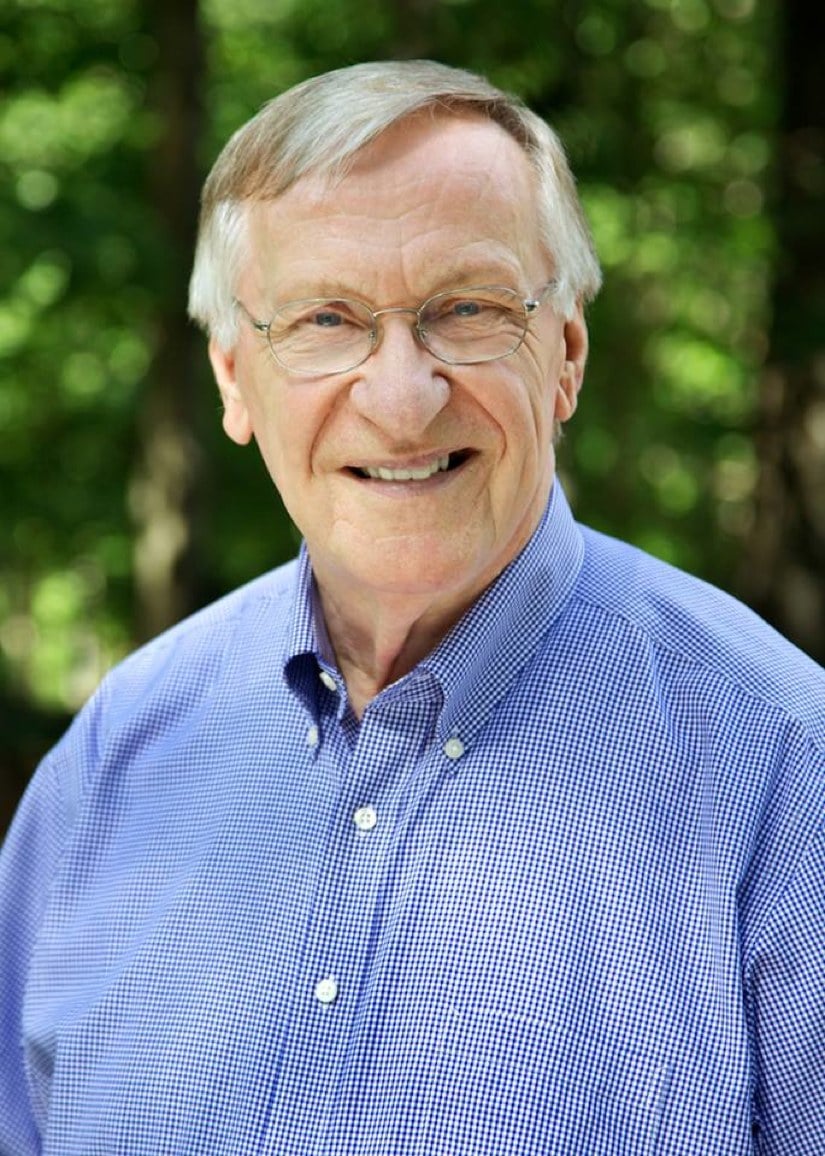
Ken Plum represents Reston in Virginia’s House of Delegates. His opinions do not necessarily represent those of Reston Now.
Gov. Terry McAuliffe will address the House Appropriations and Senate Finance Committees on Dec. 17 in a statutorily required report on the state’s finances.
The news will not be good nor will it be surprising. For the last two years, the state has seen a steady erosion of its revenue base. Significant cuts have already been made in the budget, and the state has dipped into its rainy day fund.
The problem has not been significant new spending programs. To the contrary — the state has been reducing its spending over the last couple of years even though the state’s economy and employment levels have seen modest growth.
Representatives of local government and colleges and universities can attest to the budget reductions. A significant part of the revenue shortfall experienced in Virginia and in other states that have an income tax was the change in taxpayer behavior to accelerate gains into tax year 2012 in advance of federal rate increases on high-income taxpayers. Payments were high in the spring of 2013, but dropped dramatically in FY2014 because of the accelerated gains.
With adjustments that were made to the forecast by this and other factors there was a need to make up a $2.4 billion shortfall for the biennium. Most of the reductions have been made with about $272 million cuts still needed in FY2016. Clearly, there will not be any additional money under the current budget structure for higher education, preschool, mental health, or state employees who have had few raises in recent years.
The legislators on the money committees already know much of what the governor will say. Money is short for the state as it is for many individuals. We will need to tighten our belts even further.
According to press accounts, some members of the Senate Finance Committee even used the “T” word, suggesting that rather than further cut critically important programs, we consider raising revenue.
There is no way that a Tea Party-dominated House of Delegates would pass a tax bill, especially during 2015 when all 140 members of the General Assembly are up for election. The reported discussion was more about tax preferences or loop holes that might be changed to increase revenue.
Nearly $1 billion of the state’s $18 billion of general fund monies go to pay a portion of a taxpayer’s car tax obligation to local government. The campaign against the car tax once elected a governor to office and despite the fact that it only partially pays the local car tax is not likely to be revisited. Ironically, Fairfax County and Northern Virginia taxpayers make out well with the car tax program taking money that might otherwise go to poorer communities.
If the state expanded Medicaid, it could pick up over $200 million for the budget. Tax preferences related to the estate tax repeal, coal severance tax, and film production tax credits may be examined.
The 2015 session is not supposed to focus on the budget, but the topic is likely to dominate the term. Even the “T” word may be whispered — but not likely acted upon.
Ken Plum (D) represents Reston in Virginia’s House of Delegates. His opinions are not necessarily those of Reston Now’s.

It’s here! The holiday shopping season is upon us. There are deals to be had, but are they worth it? Take our poll and tell us where you stand on Black Friday.
Photo: Tysons Corner holiday shoppers/file photo
With the number of rockets my high school friend, Joe Hammock, and I built and launched I am fortunate to have all my fingers and no serious injuries.
Our rockets were not the hobbyist models you can buy today that use water or air pressure to launch; our rockets used black powder or a fuel we mixed ourselves. Launches were sometimes like explosions as the sides of our small rockets went outward rather than upward. We were doing our work (or some would say play) before Sputnik and the Space Age.
I was reminded of those early experiences last week as I chaired the Nanosatellite Advisory Committee of the Joint Commission on Technology and Science.
Even the professionals have their problems with rocket launches with about 1 of 10 not being successful. Most recently, Orbital Sciences which has its headquarters on Route 28 near the intersection with Route 7 had a rocket blow up almost immediately after its launch at Wallops Island, Virginia. Out west the rocket plane for which tickets have already been sold to take people on suborbital flight blew up in a test flight killing the pilot.
For every failure there are many more successes. Who would have imagined that a rocket launched ten years ago would have its payload land on a comet within the last two weeks! Virginia has been involved in many of these successes through NASA Langley and NASA Wallops. The Virginia Space Grant Consortium that has goals of promoting aerospace education at all levels has been rated by NASA as being the top-ranked program among the 52 in the nation.
Students at Virginia universities including Virginia Tech, the University of Virginia, and Old Dominion University are involved in designing, building and launching small satellites that despite their small size can conduct meaningful research while in orbit.
These small “nanosatellites” can be launched with dozens in a payload as part of a larger satellite launch but still have the capability to gather significant scientific data. Students who work on these projects often go on to internships and careers with NASA and private aerospace companies. The Commonwealth STEM Industry Internship Program (CSIIP) matches students to internship possibilities.
The Virginia Space Grant Consortium does not limit its activities to the university level. Through the Virginia Aerospace Science and Technology Scholars program, public school students can take online courses for college credit, compete statewide with other students, and attend a summer academy at NASA Langley Research Center. Specific programs are also aimed at younger students and girls to interest them in science, technology, engineering and math.
As policy makers and government leaders look to the future, it is important to consider space for the limitless potential it offers. Virginia has many unique assets: Wallops Island is strategically located for space launches; a number of federal research facilities are located here; our university system is strong; and the private industry sector has shown a strong interest in investing in space. From experience I know that we need to include a safety course for our young rocket scientists.
Ken Plum represents Reston in Virginia’s House of Delegates. His opinions are not necessarily those of Reston Now’s.
 This is an Op-Ed by Connie Hartke of Reston Citizens Association. Have something to say? Send us a letter at [email protected].
This is the week Americans are expected to especially count our blessings.
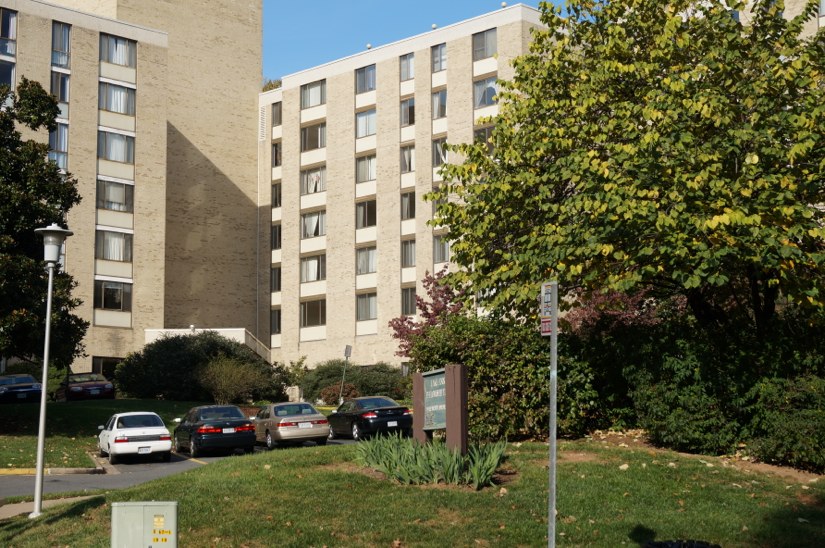
It is a time for family. For some, their community is their family. Several of us at RCA have gotten to know residents at Lake Anne Fellowship House (LAFH), the senior, low-income apartments that went through turmoil recently due to proposed redevelopment.
This has taken a recent good turn of events — more news to come on that soon, we expect. The cultural subgroups that live there have united into a vibrant community with the goal of ensuring that no one will lose their home. Those who were “safe” united with those who were threatened, creating community. Empathy was the catalyst.
Empathy. Merriam-Webster defines this as “the feeling that you understand and share another person’s experiences and emotions: the ability to share someone else’s feelings.”
While counting your blessings this Thanksgiving, please take a few moments to imagine you are a senior who has lived at LAFH for 10+ years after living as a contributing Restonian for 30+ years. You are told that your home may not be the permanent place that you had expected. Putting aside other thoughts, can you fathom how you would feel if you were faced with this situation? Empathize.
Now imagine for a moment that you purchased a home on Reston National Golf Course. Picture your view changing from rolling greens surrounded by edge habitat to anything else. I say “anything” because many like to speculate how the land could change to this or that … I ask you to EMPATHIZE. Take five minutes to imagine this is YOU. Personally.
RCA, along with Reston Association and Hunter Mill Supervisor Cathy Hudgins, supports our Fairfax County Zoning Administrator’s determination that the privately owned 166 acres of Reston National Golf Course is zoned as permanent open recreational space. Developers coming in to Reston need to hear one message loud and clear — respect our Reston Master Plan.
On Thanksgiving, I will take a few moments to think about the folks at LAFH and hope for continued blessings for them. I will be thankful for our County Planning staff who added wording to the Master Plan to strengthen the place of both of our Reston golf courses. I will be grateful for the army of volunteers who live in this special place called Reston.
Please read Rescue Reston volunteer Ray Wedell’s stirring call to action regarding Reston’s latest recreational open space crisis.
Lake Anne Fellowship House/File Photo
The Virginia General Assembly adjourned its regular session in early March this year and immediately went into special session that while still continuing has become the longest special session ever. The special session was needed to complete work on the biennial budget and to fill judicial vacancies.
While technically in special session, we actually only meet as an assembled body a few days every couple of months. We passed a budget but have had to revise it because of declining state revenue. We considered expansion of Medicaid services in what some termed a “sham” session as the majority party had indicated its no-compromise opposition to closing the coverage gap. We filled a number of judicial positions although the drawn-out political process of selecting judges has made the flaws of the current method painfully apparent.
Since the legislature is in session, albeit a special session, the Governor is prevented from making judicial appointments. As at the federal level, there is gridlock as Republicans fight among themselves as to who should be appointed to the bench.
The necessity of revising a budget soon after its passage reflects what a report from Stateline terms “volatility” in income tax revenue that is disproportionately affected by economic booms and busts. The problem that Virginia and other states are having is trying to predict revenues with stock market fluctuations and other cyclical events that are having a larger impact on incomes, especially for the wealthy causing income taxes and capital gains taxes to vary widely from year to year.
A report from Standard and Poor’s Rating Services found that overall revenues in the top most income-tax-dependent states like Virginia have grown only 5.25 percent since 2009 compared to 9.32 percent in 1980-1989 and 5.7 percent in 1990-1999.
Virginia’s effort to balance its budget is made more difficult by what the Commonwealth Institute for Fiscal Analysis terms “willful ignorance” to recognize the positive impact expanding Medicaid would have on the state’s budget.
At a recent Statewide Policy Summit I attended that the Institute sponsored, a report “RX for an Ailing Virginia: Budget Savings in Expansion States Can Happen in Virginia” was released. The report contends that 27 states and Washington, D.C. have freed up precious resources for critical needs like education by closing their health coverage gaps and saving money on medical care, and that savings in Virginia could amount to $161 million.
While proponents of Medicaid expansion have contended that the program would save states money, the evidence is now available from its first year of implementation — Kentucky has saved $80 million, Arkansas $89 million and Michigan $100 million. Virginia would save money by using federal money to replace state-funded healthcare
Virginia taxpayers are the losers for the state not recognizing and dealing with its systemic budget challenges and for its bullheadedness in not expanding its Medicaid program. Responsible leadership on the part of legislators, not a protracted year-long legislative session, is needed for the Commonwealth.
Ken Plum (D) represents Reston in Virginia’s House of Delegates. His views do not necessarily represent those of Reston Now.
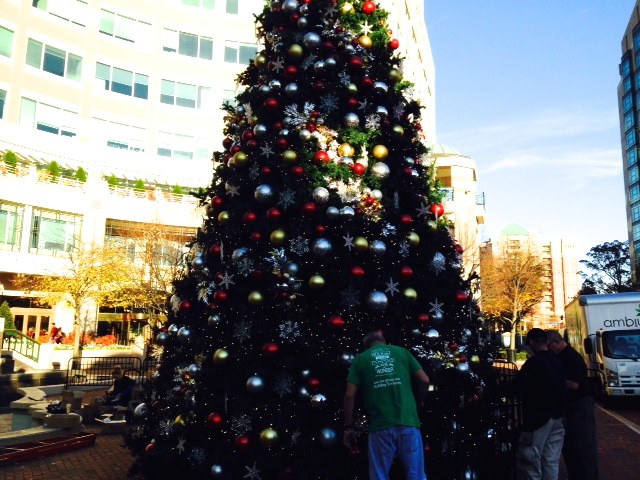
Crews were busy at Reston Town Center on Tuesday putting up and decorating the giant Christmas tree that will remain in front of the Mercury Fountain until January.
Tuesday was Nov. 11, Veterans Day.
Is early November too soon to start decking the halls? Some of us have not even put away the Jack O’Lanterns from Halloween yet.
Meanwhile, official holiday events will kick off at Reston Town Center on their typical schedule, beginning the day after Thanksgiving with the Holidays Are Here! celebration.
Events for Nov. 28 include the kids Gingerbread Mile Run; the holiday parade; visits with Santa and Mrs. Claus; the tree lighting; and more. Visit Reston Town Center’s website and future Reston Now stories for more information.
The outcome of the most recent elections demonstrates once again how divided we are as a nation and as a state.
The clearest winner is gridlock, as it is hard to see how progress can be made by Congress on important issues that await resolution. The Senate has not moved closer to a balance where a meaningful debate can occur and issues can be resolved. Rather, the Senate is polarized between opposing points of view with a willingness to compromise being seen as a sign of weakness.
The current circumstance is much more complex than simply Democrats versus Republicans. There are at least three parties in the Congress: the Democratic, Republican and Tea Parties.
On the Democratic side, the number of old-time liberals can be counted on your fingers. There are some Democrats who gravitate to the middle leaving themselves neither fish nor fowl in the eyes of their constituents. The “damn the torpedoes” Tea Partiers run the Congress. Old-time moderate Republicans defer to them for fear of a primary challenge from the right in the next election cycle. The goal of the Tea Party leaders is to stall the operation of government functions which they do not support.
My concern is that the same kind of election results we have seen at the federal level has permeated Virginia state elections as well. I am convinced that there are enough Democrats in the House of Delegates and enough moderate Republicans to pass Medicaid expansion in Virginia if it were not for the influence and threat of Tea Party primary challenges.
Rather than realizing the fate of two Republican committee chairs that were defeated in primaries last election cycle, moderate Republicans are playing it safe and going along with Tea Party priorities as absurd as some turn out to be. The consequence is that Virginia leaves $5 million in federal money on the table each day just so that some politicians can continue to be elected. It seems like a high price to pay!
The other major factor affecting federal and state election outcomes is the incredible amount of money poured into campaigns. Americans for Prosperity, funded in part by the Libertarian Koch brothers, are active in Virginia and were major players in refusing Medicaid expansion. They will keep the pressure on their Republican charges in next year’s Virginia General Assembly elections.
I recently attended a workshop featuring one of my greatest heroes — Sister Simone Campbell of Nuns on the Bus fame. Sister Simone is one of the most effective spokespersons for the poor and those in need of medical services. She is harsh in her criticism of Congress for not raising the minimum wage and reforming immigration laws and of Virginia for not expanding Medicaid. She is insistent, however, that both sides must engage in a conversation in order to find common ground and reach compromises that are so important for the public.
As tough as it seems, I am going to take her advice and get myself in that frame of mind for the General Assembly session starting in January to help it be productive.
Ken Plum represents Reston in Virginia’s House of Delegates. His opinions do not necessarily represent those of Reston Now.
Events of the past couple of weeks remind me of the wonderful people in our community who tirelessly and endlessly work to ensure that others have a good quality of life.
A good friend and former colleague of mine, Elizabeth Link, passed away from cancer. Visiting with her family and fellow educators I was reminded of our past experiences in working together, and I heard new stories of the work that she did on behalf of pregnant teenagers and teen parents.
Her “girls” were always at the forefront of Liz’s mind, and she was relentless in her work to see that the young women in Project Opportunities finished high school and went on to college or career training and that they acquired the skills they needed to be good parents.
The educational establishment and society in general have not always been kind or supportive to teenage girls who get pregnant, but Liz could see the value in each of these young women and their babies. She went to bat for them in a program whose continued funding was always tenuous. There are hundreds of young women who have a better life because of her intervention.
The comments recorded in the friend registry at her memorial service were among the warmest I have ever read as testimony to the many ways Liz supported them and influenced their lives.
Last week, I also attended a workshop sponsored by Voices for Virginia’s Children. A panel of preschool directors and others involved in early intervention and social services for children reminded me of how fortunate we are in this region to have programs that serve our youngest citizens.
Although the evidence is overwhelming as to the value of such programs in making a positive difference in the lives of children and their futures, such programs continue to struggle with limited funding. The range of needs among children is broad. Well-trained and caring teachers are needed to provide a quality program, but the pay scale remains at the level of service employees. It is dedication that keeps the staff of these programs going with the success they see in the faces of their young charges and in the stories they hear about the successes their students of the past are having as they grow older.
Early intervention with children with special needs saves society millions of dollars in reducing the need for programs and services in the future. We need to continue to work to increase the investment to ensure that the needs of many more children are met.
Our teachers come the closest anyone can hope for to immortality. The Liz Links and the early childhood educators of the world will be remembered, and the models they leave will influence others long after they’ve left us. Everyone remembers and thinks about his or her best teacher. The world can see the legacy of their investment in young lives.
Ken Plum (D) represents Reston in Virginia’s House of Delegates. His views do not necessarily represent those of Reston Now.
 Trick-or-Treaters will be out soon, on the hunt for all things sugar.
Just for fun, we’re asking what’s your Halloween treasure? You know, the one you would trade with your brother or you will still, 40 years later, swipe from your own kids’ bags if they are not looking.
For a reality check, check out Lifehacker.com’s healthiness ranking of popular candy.
Take our poll. If we missed one of your favorites, add it in the comments.
A basic tenet of all levels of civic education is that citizens should vote. We are told of the importance of voting in social studies classes, Scouting, and in community groups.
Yet, a surprisingly large number of people never learn the lesson. Voter participation in the United States is abysmal when compared to other countries, and Virginia is one of the worst among the states.
Many excuses are given — people do not feel their vote makes a difference; campaigns are too long and too negative; issues are too complex; it does not make a difference who wins; all politicians are crooked. Added to voter uncertainty and apathy are purposeful actions on the part of government to make voting inconvenient and difficult.
Elections are held on days when most people have to go to work. Voting early through the absentee voting process in Virginia requires a specific approved excuse. Please note that this year there is an additional requirement: you must present identification that has your photo on it. Some who see it to their advantage to keep poor people and seniors who might vote for the candidates of the other party from voting have added this additional barrier in order to solve a non-existent problem that people have been voting for someone else.
Tuesday, Nov. 4, is another election. There is one in Virginia every year. Mark it on your calendar and stick a note on the refrigerator. Take a friend or neighbor with you to the polls and certainly ensure that your family members vote. Take along a photo ID. Let’s beat the numbers on low participation and do our civic duty.
This is the federal election year cycle. We can do our part in making Congress functional again. Sen. Mark Warner has been doing his part in taking on the big issues, working across the aisle, and showing leadership in getting the U.S. Senate to do its job. He deserves our support. If you live in the 11th Congressional District as I do, we could not have a better Congressman than Gerry Connolly. He was an excellent member and chairman of the Fairfax County Board of Supervisors and has shown as a member of Congress that he understands our issues and is not afraid to speak out.
Next door in the 10th Districtm the choice could not be clearer. If the Republican nominee wins, you can expect to see her on Fox News each evening bashing Democrats for that has been her lifetime job. John Foust will provide the district with steady, sensible and principled leadership. Encourage people to vote for him. In the 8th District, former Lt. Governor and Ambassador Don Beyer will bring intelligence and reasonableness to the job.
There are two questions on the ballot. The state constitutional amendment question asks if the General Assembly should be permitted to exempt from taxation the property of surviving spouses of soldiers killed in action as it can now do for veterans. I recommend its approval as another small way that we can show appreciation for the sacrifices of members of the Armed Services and their families.
A Fairfax County bond issue question is on the ballot seeking authorization for a $100 million transportation bond. The money will provide for important road improvements to relieve congestion and to improve pedestrian and bicycle safety and access. I recommend that it be approved
Vote on Tuesday, November 4. As the teacher said, it is our civic duty.
To find your Congressional District, go to http://www.house.gov/
To find your polling place location, go tohttp://www.fairfaxcounty.gov/
To get more information on voting, go to http://www.fairfaxcounty.gov/
Ken Plum (D) represents Reston in Virginia’s House of Delegates. His views do not necessarily represent those of Reston Now.
Gloria Addo-Ayensu, Director of Health for the Fairfax County Health Department says that the county, particularly in the wake of a scare at Inova Fairfax Hospital earlier this month, is keeping apprised daily with recommendations on controlling the deadly disease.
A woman who vomited on a tour bus near the Pentagon Oct. 17 was sent to Inova Fairfax after Virginia Hospital Center in Arlington refused to treat her. It was later determined the woman did not have Ebola.
Below is the statement from Add0-Ayensu, issued Monday:
Dear Fairfax Area Community,
The constant media coverage of the Ebola cases that were diagnosed in Texas and New York continue to fuel concerns among people in the general population and have highlighted risks in health care settings.
Adding to these concerns is the Ebola scare that occurred in the Fairfax area on Friday, October 17, which involved a suspect Ebola patient who was transported from the Pentagon to Inova Fairfax Hospital. Although it was a false alarm, I’d like use the incident to help increase public understanding about how the public health system works and also provide an update about our Ebola readiness.
One of the critical early decisions that must be made when evaluating a suspect case of any disease is whether the individual meets the case definition and therefore warrants confirmatory testing. For Ebola virus disease (EVD), the decision to test is based on the patient’s travel history, determination of exposure risk, and whether the symptoms are consistent with EVD.
The process for testing at the Centers for Disease Control and Prevention (CDC), if necessary, is facilitated by local health departments. While it took some time to validate travel history of the individual involved in the October 17 incident, fortunately, doctors at Inova gathered enough information to determine that the patient did not have any exposures to Ebola and therefore testing was not required.
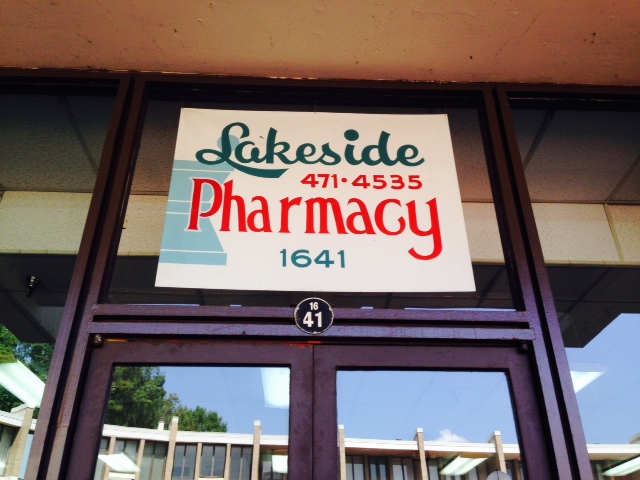
It’s been about a month since Lakeside Pharmacy closed its doors after more than 40 years at Lake Anne Plaza.
Owner/pharmacist Larry Cohn retired after decades at the store, which also featured a lunch counter and in-store U.S. Post Office.
The space was sold to investors, who had hoped to get an independent pharmacy to take over the site this summer. That did not happen, though, and the store is now closed.
The space, which has a view of Lake Anne as well as patio seating, is available with the lunch counter operation, or can be subdivided.
Tell us in the comments: What do you think should open here?
Gov. Terry McAuliffe had two interesting supporters speak at his press conference on Virginia’s latest Energy Plan — the heads of the state Chamber of Commerce and the Virginia League of Conservation Voters. Both endorsed his update of the state’s Energy Plan as a step in the right direction.
There is a great deal to like in the plan. An emphasis on growing the energy sector of the economy by promoting increased development of renewable generation has never before been emphasized in Virginia.
Meeting the new federally imposed clean air standards does not need to hurt the economy, raise electricity prices or reduce jobs. To the contrary, cleaning up our environment while meeting future energy needs can be a spark for the economy and its expansion.
Part of the Governor’s Energy Plan proposes through education and strategic investments to prepare a workforce that will drive the future Virginia economy.
His plan calls for a reduction in energy consumption in the Commonwealth by aggressively pursuing energy efficiency measures in government, businesses and residences. The cheapest and quickest way to meet the immediate growth in energy demand is to educate and incentivize individuals and businesses to be more efficient. The growing green sector of the economy is leading the way in introducing technology and management techniques to reduce the demand for electricity.
A representative of the Southern Environmental Law Center speaking at a meeting I attended recently of the Virginia Conservation Network put into perspective the new energy plan and other actions that are taking place at the same time.
Under President Obama’s much anticipated and welcomed Nation Climate Action Plan, Virginia’s goal is to reduce its CO2 emissions from 2012 levels by 38 percent by 2030. Aggressive actions will be required of utilities to close or convert to natural gas the coal-fired plants that remain. Turning to renewables like solar and wind will be essential. I believe the state has been too timid in the past in turning to renewables, but I am confident there will be a significant shift with the President’s and the Governor’s actions. Governor McAuliffe announced last week that he is establishing a solar energy authority to help move the industry forward.
I will be working to make Virginia a leader in expanding the green energy sector of the economy as the state’s plan envisions. We have a lot to gain in jobs in green power, entrepreneurial opportunities, and preserving our quality of life. While there are a few climate change deniers around, the fact of the matter is that the ten warmest years on record have occurred within the past 15 years. Hampton Roads is next to New Orleans as the most vulnerable community for sea level rise. Implementing our new Energy Plan will surely move the Commonwealth in the right direction.
To see the entire plan, visit the Virginia Energy Plan website.
Ken Plum represents Reston in Virginia’s House of Delegates. His views do not necessarily represent those of Reston Now.
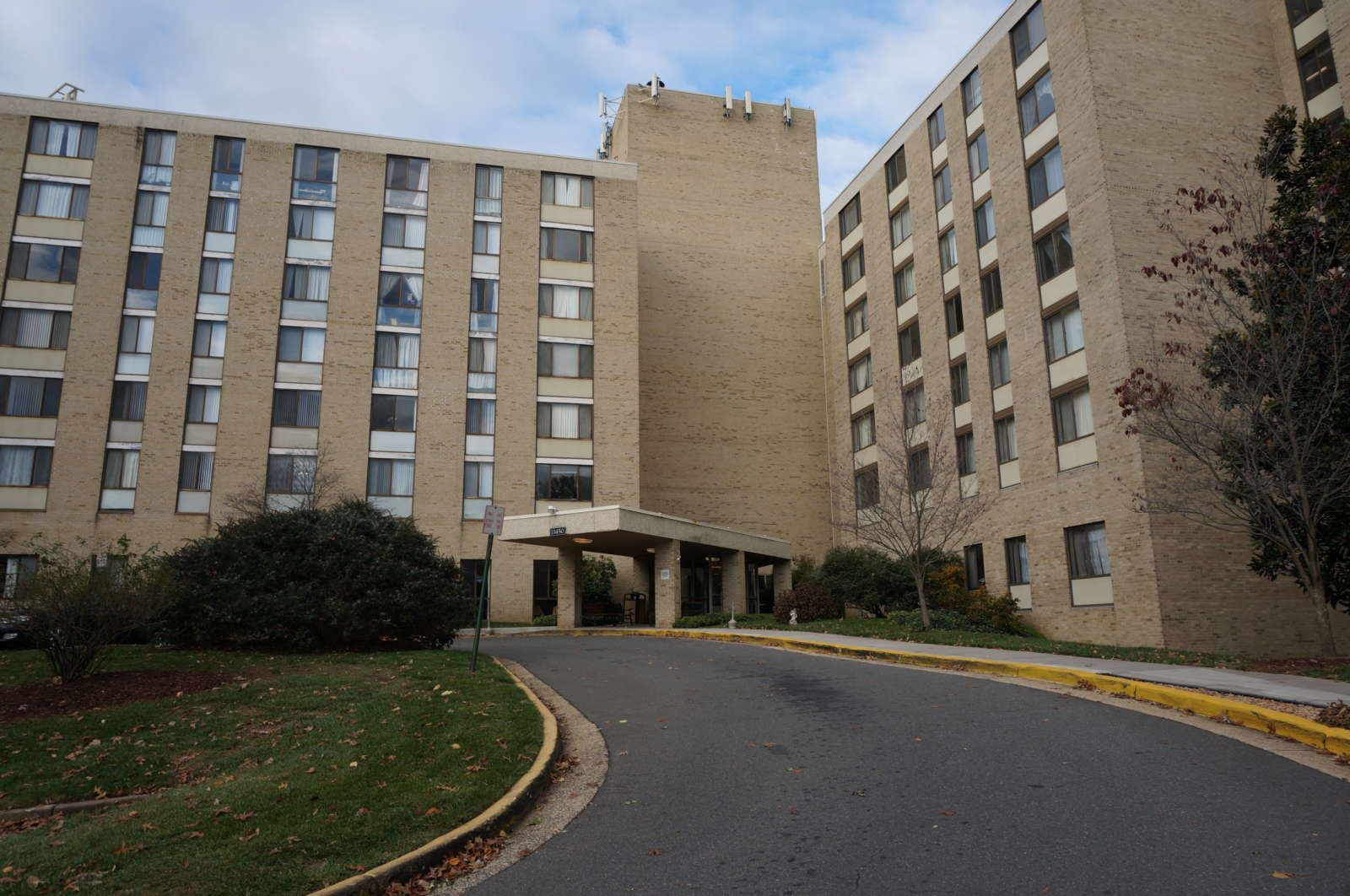 This is an op-ed from Connie Hartke of Reston Citizens Association. Lake Anne Fellowship House had recently planned a redevelopment project. That recently fell through, and the affordable senior housing faces an uncertain future.
RCA feels it is urgent that the greater Reston community understands the implications of development on one of our Reston Comprehensive Plan 10 Planning Principles, which is “housing provided for all ages and incomes.”[1] Our community support is needed to ensure that land owners and potential developers respect and honor our Plan.
Who Lives at Lake Anne Fellowship House (LAFH): Folks 62 or older on limited fixed incomes and those of any age with a qualifying disability and income. A good description is at fellowshipsquare.org/fsf/who-are-we.
Who owns it: Fellowship Square Foundation (FSF), a non-profit provider of affordable housing for the elderly and disabled in the DC metropolitan area. They own and operate LAFH, Reston’s Hunters Woods Fellowship House and two others.
The FSF website does not currently post a mission statement, but we find this on page 5 of their 2013 annual report:
“We specialize in financially fragile residents. We celebrate that we make a difference in their lives and the life of the community they live in.”
The original purpose of the Foundation according to its founder Dr. John Scherzer, told to the RCA on March 13, 1970:
“The purpose of the Foundation as set forth in our Charter is to sponsor adequate retirement facilities for lower and middle income people who must depend for their livelihood upon the fixed income from civil service retirement and/or Social Security.”[2]
