

 As I wrote in a column several months ago, Virginia has historically ceded decisions to federal authorities on major issues on which the state had been unwilling to move forward, despite the Commonwealth’s historic antipathy toward the federal government. Another issue fell into this category last week: same-sex marriage.
Regardless of the desire on the part of conservative Virginians to pretend that it is not so, thousands of Virginians love someone of the same gender, an unknown number live together as partners and some have already gotten married in other states. While an amendment to the state constitution defining marriage as being between a man and a woman passed in a referendum more than a half dozen years ago, recent public opinion polls show a majority of Virginians as accepting of same-sex marriage.
Failure of the legislature to act on the issue resulted in two cases before federal courts challenging Virginia’s prohibition of same-sex marriage. As has been the experience in other states where such cases have been brought in federal court, the prohibition was found to be unconstitutional. With the Supreme Court refusing to hear an appeal of the cases, Virginia is once again having to face a reality that it has resisted.
It is not the first time. Virginia also had a law that said that persons of different races could not marry. The legislature refused to acknowledge the unfairness of the law or vote to change it. It took a federal court decision, Loving v. Virginia (1967), to strike down the law.
Virginia segregated its public schools based on race until the Brown v. Board of Education decision (1954) — of which a Virginia case was a part — struck down racial segregation. Virginia’s decade-long effort to resist the federal decision was called Massive Resistance. Asserting states’ rights arguments, Virginia leaders attempted to stop desegregation. The campaign was unsuccessful, although it did take 40 more court decisions to integrate the schools in Virginia.
Virginia was also part of the Baker v. Carr decision in 1962 establishing the “one man, one vote” principle because the state legislature refused to acknowledge population shifts that were occurring and permit legislative representation to reflect those shifts until the federal courts intervened. Just last week, a federal judge threw out Virginia’s Congressional redistricting as being discriminatory against minorities.
Federal intervention and the Voting Rights Act got rid of the blank sheet voter registration system and the poll tax that disenfranchised most African Americans. While it is good that the federal government has been a backstop to ending discrimination in many forms, it is truly unfortunate that the General Assembly has been unwilling to recognize the wrongness of their laws and make decisions on their own without the need for the federal courts to protect Virginians from their own government.
The argument for states’ rights has been used to justify violations of personal rights. The federal court was right in striking down Virginia’s marriage amendment. Now, the General Assembly needs to move forward on my bill to outlaw discrimination based on sexual orientation instead of waiting until we’re forced to by the federal government.
Ken Plum represents Reston in Virginia’s House of Delegates. The views and opinions expressed in this column are those of the author and do not necessarily reflect the views of Reston Now.
Last week, Bob Brink, a former colleague of mine who represented Arlington-McLean in the House of Delegates and who was appointed by Gov. Terry McAuliffe to be Deputy Commissioner for Aging Services, spoke to the Northern Virginia Aging Network’s (NVAN) annual legislative summit. His talk, “The Age Wave: Ready or Not, Here We Come,” highlighted the challenges of the aging of our population.
“By 2030, as the last of the age wave turns 65, we will number 1.8 million people here in Virginia — 20% of the population,” he said, often flashing his Medicare card. “There are more of us, and we’ll be living longer: the fastest growing segment of our population will be those 85 and older.” While in 2010 nearly 1 in 8 Virginia residents were 65 and over, by 2030 nearly 1 in 5 will be in that age range.
The age wave presents challenges to our society beyond the obvious impact on our health care system, he said. Adults age 65 and older are now twice as likely to be living in poverty as they were a decade ago. Almost 200,000 Virginia households, half of them 62 or older, are living in substandard conditions. Opportunity costs to those who are family caregivers will total more than $400 billion in lost wages, pensions and Social Security. The cost of government services will rise at a time when revenues are not keeping pace or dropping.
The Northern Virginia Aging Network (NVAN) is made up of the six area agencies on aging serving the jurisdictions of the region, as well as the critically important regional service and advocacy organizations and volunteers. Brink indicated that the state Aging Division “will be aggressive in encouraging innovation in service delivery, including formation of public-private partnerships” to provide needed services. He praised the Fairfax County Elderlink, a public-private collaboration of the Fairfax Area Agency on Aging, Inova Health System and the Alzheimer’s Association for care coordination of older adults.
NVAN had recommendations for meeting the challenges of the age wave, among them expanding Medicaid services that would provide direct benefits to about 62,000 older Virginians who do not have and cannot afford healthcare. Ironically, at a time of shrinking revenues, the expansion of Medicaid would bring back to the Commonwealth $5 million a day in taxes already paid by Virginians.
Recognizing that most seniors prefer to stay in their own homes, NVAN recommends tax credits and grants that would expand consumer access to livable homes. The professionals and citizen volunteers who make up NVAN see the need for a quality, cost-effective, continuously trained long-term care workforce to improve the quality of life for older adults and people with disabilities. The demand for long-term care workers is expected to increase by 160 percent by 2030. A critical element in building such a workforce is paying a living wage. An expansion of Virginia Public Guardianship Program is seen as needed for vulnerable adults.
Commissioner Brink implored those in attendance to reach across jurisdictional lines and outside bureaucratic boxes as we work to meet the needs of our aging population, or as he expressed it, “to ride the wave together.”
Ken Plum represents Reston in Virginia’s House of Delegates. The views and opinions expressed in this column are those of the author and do not necessarily reflect the views of Reston Now.
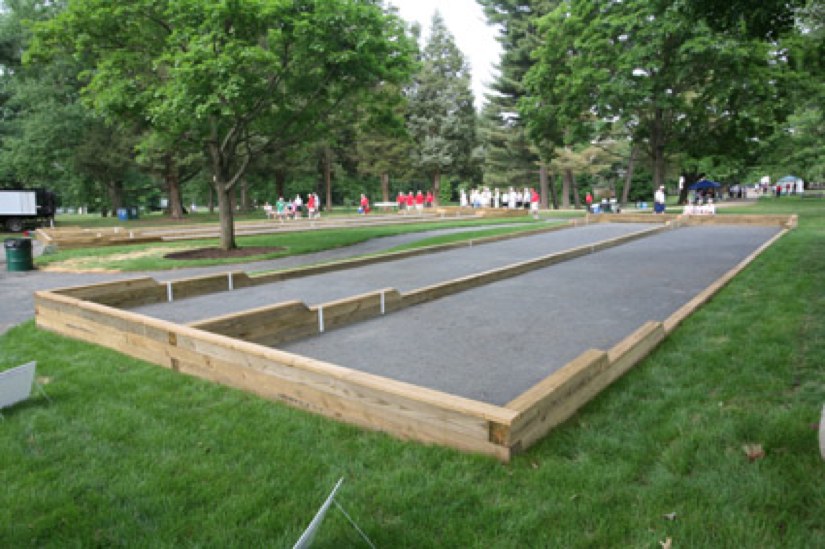 There has been much outcry recently over Reston Association’s plans to build a bocce court at Cabots Point Recreation Area off South Lakes Drive.
The RA Board approved the proposed 60-by-12-foot project last December. Residents of nearby clusters started notifying RA of their disapproval last spring.
Residents have several concerns. Among them: that they were not notified before the project was OKed (the process has since been improved); that the park will take away green space and other recreational opportunities for families and that non-members will use the park, causing parking issues, an increase in trash and a liability issue.
RA has vowed to push forward. Should it? Take our poll.
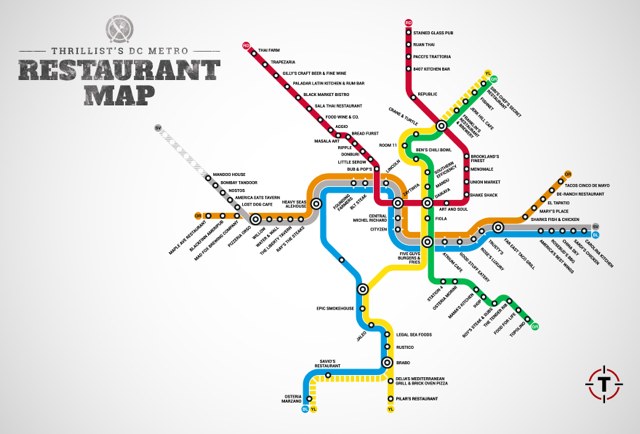 Thrillist, a travel and restaurant site, issued its first DC Metro Restaurant Map on Wednesday. The map picks a restaurant “within a couple of miles, but often much closer,” for every Metro stop on D.C.’s entire Metrorail system.
The restaurant pick for Wiehle-Reston East: The newly named Mandoohouse, which Reston Now wrote about last week.
Late last week, we gave Mandoohouse a try. We liked it, with some caveats, as its former self, Myknonos. As Mandoohouse, a Greek/Korean mashup? Not so much. At 7 p.m. on a Friday night we were the only customers, and they still were not ready for us. They were out of one menu item we ordered, and the rest of the meal was just OK.
Mandhoohouse, at 1810 Michael Faraday Dr., is most likely the closest restaurant to the station, not counting McTaco Hut, which was also pretty snarkily touted in City Paper last summer.
So, should Mandoohouse be the pick to ride alongside Tysons Corner’s Nostos and America East Tavern and DC’s Little Serow and Central Michel Richard?
Is there somewhere else in the vicinity of South Reston that is more deserving to represent? Tell us in the comments.
I first heard of Vincent F. (Vince) Callahan, Jr. in 1965 when he ran unsuccessfully for lieutenant governor of Virginia.
It was his first run for political office, and while it may seem that he aimed high to start, in those days it was easy to get the Republican nomination since the Republicans always lost.
Callahan got 37 percent of the vote, but four years later his running mate for governor, Linwood Holton, who had also gotten just 37 percent of the vote, was elected the first Republican governor of Virginia since Reconstruction.
In the meantime, Vince had run successfully for the House of Delegates in 1967. He served for the next 40 years, making him the second longest serving member of the House of Delegates in history. Vince recently died of West Nile virus and was buried last week.
In 1978, I joined Vince as part of a five-person delegation representing Northern Virginia that was split with three Democrats and two Republicans. Although we were from different parties, Vince and I worked closely together on many issues including education and transportation.
He was a strong proponent of public schools and was a real champion for George Mason University while on the Appropriations Committee. He eventually became chairman of that committee when Republicans took control of the House of Delegates. He worked hard for money for transportation for the region, and when I organized the Dulles Corridor Rail Association he became vice chairman of the Association.
I will miss Vince very much, and I continue to miss the era of politics he represented. We worked together on behalf of our constituents without regard to party. In the early years we shared the goals of wresting power from the Byrd machine that had controlled Virginia with an iron fist for most of the 20th century.
While I was part of the Democratic majority at the time, I was shut out of many of the decisions of government because I was a Northern Virginian and progressive. Before he left the House of Delegates, Vince was feeling the alienation from his party that now controls the House just as I felt in the early days when the Democrats were in control.
In recent years, Vince started to publicly endorse Democrats including Senators Mark Warner and Tim Kaine and Governor Terry McAuliffe. He simply could not accept the tea party ideology that dominates the Republican Party in Virginia today.
There were excesses of power when the Democrats controlled the House of Delegates when Vince was first elected. During his years in office there was a shift of power to the Republicans where the same excesses of power can be seen.
Vince knew of the experiences under the Democrats and did not contribute to repeating them when his party came to power. He worked on behalf of the good of the Commonwealth and his constituents–not ideology or party. Vince Callahan was a true Virginia statesman.
Ken Plum represents Reston in Virginia’s House of Delegates. The views and opinions expressed in this column are those of the author and do not necessarily reflect the views of Reston Now.
 Reston Association is currently in the process of reimagining the Pony Barn Recreation Area.
The association has allocated $30,000 from the 2014 Capital Improvement Budget for upgrades or changes to the space at Steeplechase and Triple Crown in South Reston.
The space currently features a 2,006-foot pavilion with tables, grilling areas, a lawn and a swing set.
The Initiative for Public Art Reston (IPAR) has approached RA about using the space for a memorial garden of reflection.
Reston has no cemeteries, and the memorial garden will not fill that role, IPAR has said. Rather, it envisions the garden as a place to reflect about lost loved ones.
However, many of the comments from community members have said it is a poor place for such a garden, citing, traffic, parking, noise from the Deepwoods Pool, among other reasons.
At Thursday’s monthly RA Board meeting, the board heard from several residents who said, among other reasons, that the memorial garden is a sacred space that does not belong on public land.
“RA just needs to say no,” said Vic Moravitz, whose home is near the Pony Barn space. “There should be more memorial gardens but not on common grounds.”
Moravitz called for the separation of “statecraft and soulcraft” in considering the placement of the memorial garden.
There really are not many native Virginians living in Northern Virginia.
The growth of the region has come primarily from people moving here from other states or countries. Survey downstate Virginians and you will find many not wanting to travel here much less move here. Most will cite traffic as their main objection, but clearly there are differences in lifestyle and perspectives across the regions of the Commonwealth.
For those who move here and live here for a short time or even for decades, there are many questions about the state — its history, traditions, politics, and culture.
I often get questions directed to me as an elected official who is a native Virginian and student of her history. Periodically, I teach a course on Virginia history at the OSHER Lifelong Learning Institute (OLLI) of George Mason University at its Reston location at the United Christian Parish.
This week, I just started a new class that I have entitled “What is it about Virginia?” Once again most of the students are “come heres.” Even though as retirees they may have lived here for a long period of time, they still have questions about the state, its history, its impact nationally, and its people.
First there is the history. As Ronald Heinemann and his co-authors described it in their book Old Dominion, New Commonwealth: A History of Virginia 1607-2007 (University of Virginia Press, 2007):
“Four centuries of remarkable history. Site of the first permanent English settlement in the New World. Home of the first representative assembly in America. Landing place of the first Africans in the Chesapeake, whose heirs were among the first to be enslaved on the plantations of British North America. Birthplace of the great generation of founders, who led the Revolution and created a brilliant constitutional order, four of whom were among the first five presidents of the new republic. Mother of presidents. Mother of states. The state whose territory was the scene of much of the critical fighting of the Civil War…The Commonwealth of Virginia — the Old Dominion — was without peer in the first two-and-a-half centuries of American history.”
Then came the matter of being on the wrong side of the Civil War and the move “to a defensive, tradition-bound, inward-looking, and different version of American development (1820-1960) and back again to a progressively conservative society in the late twentieth century” to today when President Obama wins the state twice, all five statewide elected officials are Democrats, and the General Assembly is controlled by the Tea Party wing of the Republican Party.
The major themes that play throughout Virginia history — change and continuity, a conservative political order, race and slavery, economic development, social divisions, and geographic diversity help to make Virginia a fascinating topic for discussion. I hope my students will enjoy the class as much as I am sure that I will, and I hope someday to be able to talk with you about Virginia.
Ken Plum represents Reston in Virginia’s House of Delegates. The views and opinions expressed in this column are those of the author and do not necessarily reflect the views of Reston Now.
Virginia’s first governor, Patrick Henry, was elected to four one-year terms. Henry’s reputation as a leader was well established before he became governor with his famous “Give me liberty or give me death” speech made in St. John’s Church in Richmond before the Revolution.
Virginians honored his memory about a decade ago when the renovated Library of Virginia/Supreme Court building was named the Patrick Henry Building and became the office location for the governor and his staff and cabinet secretaries.
Henry would have been proud when one of the former reading rooms converted to a public meeting room was the scene last week of a press conference by Gov. Terry McAuliffe announcing his plan to expand Medicaid to the extent that he could within the constraints of the law.
Henry in his day railed against oppression and taxation without representation. McAuliffe spoke on behalf of Virginians who are paying billions of dollars in taxation while the legislature is refusing to act on a plan that would bring that money back to the Commonwealth to provide health insurance to the poorest working people.
I went to the Governor’s press conference last week as a way to demonstrate my support for the actions he is taking to expand Medicaid. Because of legal constraints, his plan is modest. It extends coverage to about 25,000 persons who do not have health insurance including 20,000 Virginians with serious mental illnesses.
The number eligible for health insurance under the federal programs is 400,000, but to reach that number requires an act of the legislature. In the meantime, the Governor has instituted a program to aggressively enroll eligible persons in the federal insurance marketplace.
“While the plan that I am announcing today will do a lot of good for a lot of people, it does not solve the larger problem of providing health insurance coverage to low-income Virginians,” the Governor said. “The General Assembly has made it perfectly clear that they unequivocally are the ones that have the power to expand and close the coverage gap. With that power also comes responsibility.”
The General Assembly is scheduled to go back into special session on Sept. 18 to discuss Medicaid expansion. Neither the Republican leadership that controls the House or the Senate’s Republican majority has indicated a willingness to approve any kind of expansion of health benefits. Rather, they continue to follow the direction of the Koch Brothers-financed Americans for Prosperity and their Tea Party constituents to refuse to accept anything related to what they call Obamacare.
The insanity of refusing to take $5 million a day of Virginia taxpayer monies while thousands go without insurance coverage defies a reasonable explanation.
As Governor McAuliffe clearly stated, it is up to the legislature. I bet Patrick Henry would have been even more forceful; we have taxation of Virginians to support health insurance programs in other states but not ourselves!
To learn more about the Affordable Care Act, sign up for a webinar at Innovate Virginia.
Ken Plum represents Reston in Virginia’s House of Delegates. The views and opinions expressed in this column are those of the author and do not necessarily reflect the views of Reston Now.

Solar Plant Tanning Salon shut its doors at Hunters Woods Village Center in August.
The departure of the longtime tenant leaves an empty storefront at Hunters Woods Village Center.
There are already a few empty spots at Hunters Woods. The former Lady of America gym space has been vacant for a year. The space that houses Cafe at Play children’s play space has been empty for several years, as a small space next to edible arrangements has been vacant for some time.
So, what do you think should go in this spot? What is Hunters Woods missing? Tell us in the comments.
I had no idea what to expect when the jury announced it had reached its verdicts on the charges against former Gov. Bob McDonnell and his wife Maureen, but when the verdicts were announced I was stunned.
The jury of seven men and five women left no doubt in their findings: eleven counts of guilty for the former Governor and nine counts of guilty for his wife! All the efforts to explain away their behavior, redefine their relationship, and nuance words and actions were not successful.
Virginia has now achieved the level of disdain we have held towards governors of other states in similar circumstances. We have a former governor found guilty of corruption in office. Somehow with Patrick Henry and Thomas Jefferson having occupied that seat, it was not supposed to happen in Virginia.
Bob McDonnell is the last person anyone would have thought would have brought this legacy to Virginia. He served his country in the military. He has three degrees from a Christian university. He married a professional cheerleader from a major league football team. The thesis for his masters’ degree spelled out an old-fashioned morality that he thought was essential for how people should behave. He was a prosecuting attorney finding others guilty of crimes in order to keep his community safe. He represented his community in the House of Delegates where he introduced bills that included one for a covenant marriage. His first statewide elective office was Attorney General responsible for seeing that Virginia’s laws were fairly interpreted. His win for Governor was by a wide margin. He appeared squeaky clean.
The jury heard in detail what happened during his term as governor and determined he was guilty of corruption. That is the way our system of justice works. Not only is his legacy tarnished so too is that of his wife and family. For the Governor and his family on a personal level, they have my thoughts and sincere prayers. There will be an appeal, no doubt. Whatever the criminal justice system does with the case under appeal will not restore the man to the elevated position he had in the public’s mind when he became governor.
We need to turn our attention now to the legacy for Virginia. Maybe we Virginians had it coming for we had become somewhat pompous over our reputation for the clean government we thought we had. Despite some cynics’ views, virtually all elected officials and government employees are honest, hard-working people who want to do their best for the Commonwealth. For those who do not fit this category we need to participate in a whistle-blowing exercise that will expose any who are putting their selfish gain above the public good. And the legislature needs to do more work on its conflict of interest and ethics laws. Maybe those changes can become the legacy of Bob McDonnell.
Ken Plum represents Reston in Virginia’s House of Delegates. The views and opinions expressed in this column are those of the author and do not necessarily reflect the views of Reston Now.
Although it has been many years since I was a teacher in the classroom, I still get a nervous stomach around Labor Day each year in anticipation of the beginning of a new school year.
Teaching is the hardest work I have ever done in my life including being a legislator. I taught before the era of Standards of Learning (SOLs) and massive standardized testing. The challenge I and my colleagues had in our time was to recognize, nourish and expand individual students’ knowledge, talents and abilities. Today’s teachers have unfortunately been forced to teach to standardized tests that do not recognize individual student’s knowledge, talents and abilities nor do the tests or the assessment process of teachers recognize their unique skills and talents.
I attended the annual meeting of the National Conference of State Legislators (NCSL) recently where Sir Kenneth Robinson, noted author and speaker, spoke about the need for revolution — not reform — in public education.
Although it has been many years since I was a teacher in the classroom, I still get a nervous stomach around Labor Day each year in anticipation of the beginning of a new school year. Teaching is the hardest work I have ever done in my life including being a legislator. I taught before the era of Standards of Learning (SOLs) and massive standardized testing.
The challenge I and my colleagues had in our time was to recognize, nourish and expand individual students’ knowledge, talents and abilities. Today’s teachers have unfortunately been forced to teach to standardized tests that do not recognize individual student’s knowledge, talents and abilities nor do the tests or the assessment process of teachers recognize their unique skills and talents.
He expressed concern that schools are organized on an industrial model — I have described it as a factory — where all the children are expected to come out alike at the end of schooling. At the same time we recognize in society the special talents individuals may possess, the orientation of many schools for too many years has been to ignore individual differences and to have identical expectations for all students. Schools cannot operate successfully as a factory of the past where every student becomes the same widget, but schools need to adopt a mass customization model where every student is recognized as a unique being.
As Sir Kenneth Robinson expressed it, “education is meant among other things to develop people’s natural abilities, and I believe it really doesn’t do that. … To focus on them in the traditional school setting, very many brilliant people are weaned away from the very talents that excite them.”
For Robinson, schools should focus on awakening creativity and developing natural curiosity. “Much of the present education system in the United States fosters conformity, compliance and standardization rather than creative approaches to learning,” he says.
Clearly, the standards and testing programs have gone too far, and fortunately the push back from students, parents and teachers is finally being recognized by legislators. The General Assembly reduced the number of SOL tests required, and a commission established to look at the issue is likely to recommend even more reduction. Graduation requirements need to be made more flexible in order that students can more fully develop their individual talents. Sir Kenneth Robinson’s curiosity and creativity need to be rewarded in the classroom.
The anticipation I feel with back-to-school time is shared by parents, students and teachers alike. The excitement needs to be recognition of the great things that happen in classrooms every day. The managers of that process–the teachers–deserve our gratitude, recognition and better pay. When you talk with a teacher, please join me in thanking them for their dedication and hard work.
Ken Plum represents Reston in Virginia’s House of Delegates
“Climate change, once considered an issue for a distant future, has moved firmly into the present,” according to a report, Climate Change Impacts in the United States, that was released this year and that includes the findings of 300 experts affiliated with the National Climate Assessment and Development Advisory Committee .
Their findings are the same as I heard discussed last week at the National Caucus of Environmental Legislators National Issues Forum in which I participated. A couple of speakers brought unique backgrounds and insights into the issue of climate change. Retired Vice Admiral Dennis V. McGinn is a widely recognized energy and national security expert. He insists that climate change is a threat to our national security.
Dr. James Hansen, formerly Director of the NASA Goddard Institute for Space Studies and currently an adjunct professor at Columbia University’s Earth Institute, started in the 1980s raising awareness of global warming and speaks forcefully today of the need to take action to protect the future of young people and all species on the planet.
In legislative chambers in Virginia and throughout the country, climate change continues to be debated by politicians some of whom question whether or not climate change is actually occurring and whether humans have anything to do with causing it. Meanwhile, there is a clear conclusion among scientists as expressed in the Climate Change report:
“Evidence for climate change abounds, from the top of the atmosphere to the depths of the oceans. Scientists and engineers from around the world have meticulously collected this evidence, using satellites and networks of weather balloons, thermometers, buoys, and other observing systems. Evidence of climate change is also visible in the observed and measured changes in location and behavior of species and functioning of ecosystems. Taken together, this evidence tells an unambiguous story: the planet is warming, and over the last half century, this warming has been driven primarily by human activity.”
Climate change means hotter and more erratic weather, warmer oceans and fresh water sources, heavy downpours, global sea level rise, and reductions in glaciers and sea ice, among other changes. Shrinking land ice along with an expansion of the ocean as it warms and natural land subsidence that occurs along the coast will result in areas being inundated with increased episodic flooding. The Virginia coastline will be especially hard hit.
Actions can and should be taken by legislators to protect our communities, children and future generations from the dangers of climate change. We need to reduce harmful emissions for sure, and
I have put a lot of emphasis in my work on renewable energy. We need to deal with big polluters some of whom receive government subsidies recognizing that alternative energy sources are becoming increasingly available to us from rapidly growing clean industries.
Above all, however, politicians need to be honest with the public in acknowledging that the climate is changing, and we can do something about it!
Ken Plum represents Reston in Virginia’s House of Delegates
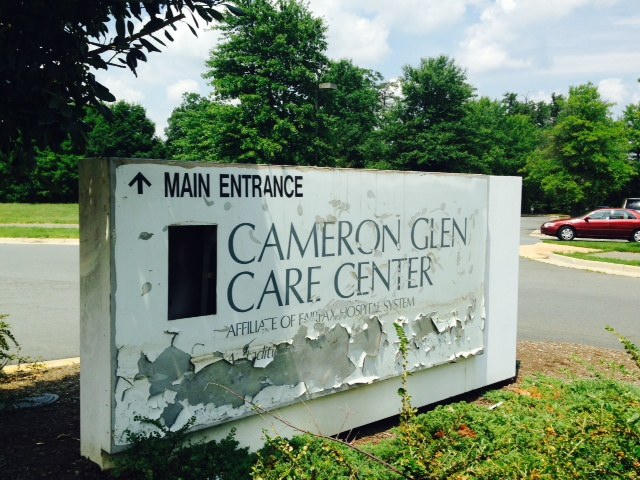
Cameron Glen Care Center officially shut its doors in Reston on July 1.
The future of the facility, a 150-bed nursing and rehabilitation unit, had been known for some time. Commonwealth Care of Roanoke, the parent company of Cameron Glen, built a $22 million new facility, Potomac Falls Rehab in Sterling. Potomac Falls says 120 patients made the move from Reston to Sterling.
The facility even took its orange sign with them when they moved, leaving a tattered Cameron Glen sign in its place.
The move leaves a hole in Reston’s amenities as there is now no nursing home in Reston. Could the building be used for another residential facility such as a school or treatment center?
There is discussion that the land may be part of the plans for Reston’s Town Center North area. The 47-acre area, of which Cameron Glen is just a part, is bounded by Baron Cameron Avenue, Fountain Drive, and Town Center Parkway and Reston Parkway. The land is owned by two parties: Fairfax County and Inova.
Some possible uses that have been discussed for Town Center North include the location of a proposed new Reston Community Center indoor pool and recreation center; a hotel; residential development and parks.
Whether Town Center North includes the Cameron Glen parcel or not, it would still have to go through a master plan process, as well as county and Reston planning requirements.
What do you think should be developed in Cameron Glen’s place? Tell us in the comments.
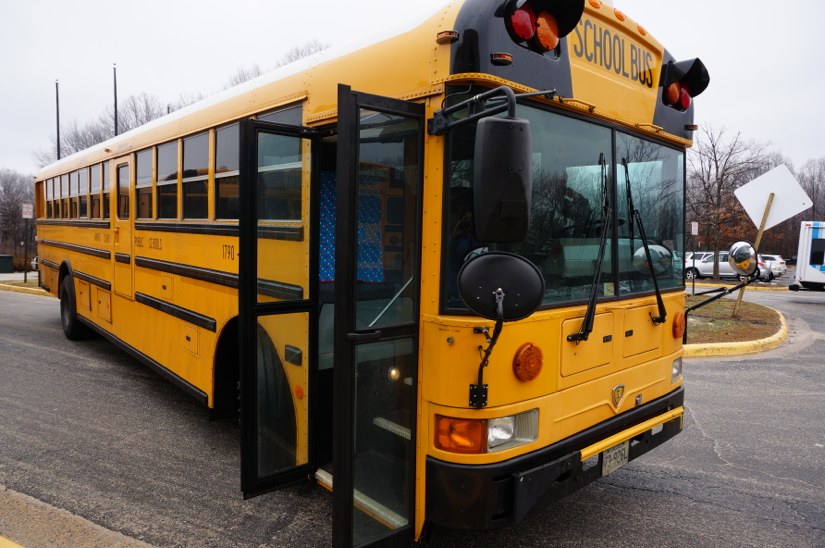 It’s Aug. 21, and students across the river in Maryland and across the country have either started the new school year or will return on Monday.
Not in Virginia, where the new school year always begins after Labor Day.
That is because of the “Kings Dominion” law, a 1986 Virginia statute that mandates school start in September. When the law was passed, it was helped along by the tourism industry, which said it needed students as staffers (and families to keep on vacationing) through Labor Day. Thus, the amusement park moniker.
In almost every Virginia General Assembly session, bills are introduced asking for local school districts to be allowed exemptions from the rule to make their own calendar. In the 2014 session, a Virginia Senate committee passed over a bill that would have allowed local school boards to open for classes before Labor Day. The bill, sponsored by Del. Tag Greason (R-Loudoun), passed easily in the House.
Meanwhile, Fairfax County Public Schools has made drastic changes to the school calendar, beginning in 2014-15. FCPS has eliminated elementary school “mini Mondays” and added in more snow days. But still, school begins — by law — on Sept. 2.
What’s your opinion? Should school start in August or September? Should local school boards be allowed to at least make their own decisions? Take our poll and elaborate in the comments.
For those whose parents lived through the Great Depression, you can skip the next few sentences since you know what I am about to say. For my younger readers, let me explain that life during the Great Depression (1935 to the mid-1940s) was so difficult that it made an indelible mark on the way that people thought and lived.
Jobs, money, food and the basic necessities of life were in such short supply that most everyone learned to be very careful in the use of all their resources. The impact of scarce resources diverted for use in the war effort during World War II reinforced their conserving way of living.
By income standards of the time, my family would probably have been considered low-income but not poor. My dad did maintenance work for the Norfolk and Western Railroad; my mom was a stay-at-home mother. They never forgot their experiences of growing up during the Great Depression or living through World War II that followed it. We did not have a lot to spend, but we were very frugal. Dad was an excellent gardener who raised all the vegetables that we ate during the summer and that Mom canned or froze for the rest of the year. The potato bin in the cellar was always filled to last us between the harvesting of crops.
I continue to be influenced by the way they thought and lived. I seek to re-use whatever resources I can and feel guilty if I feel that I am being excessive in what I am buying or using. Sometimes I could be referred to as being cheap although I prefer to be called conserving.
The quality of conserving that necessity brought to my parents and their peers is a quality that necessity will once again bring to our society. The depletion of natural resources as well as the degradation of the quality of life that comes about in the use of some of our energy resources will force us into being more conservation-minded.
While climate change will force major policy changes in the way we secure and utilize our energy resources in the future, there are actions that we can take today as individuals that can make a positive difference for our children and grandchildren. One example I use is energy conservation in our homes. We can save money and energy resources with an energy audit. There are certified persons who can identify energy losses in your home and offer ways to prevent them. Energy counselors like those with LEAP (Local Energy Alliance Program; leap-va.org ) can also help save energy and money for you in your home. A recent effort on my part to identify and close air seepage into our home will I believe add to our comfort this winter and save money on heating.
I still get satisfaction when I am able to be conserving. For my parents and others it was a matter of survival. For the future it may well be a matter of survival as well.
Ken Plum represents Reston in Virginia’s House of Delegates.
