


Metro’s Silver Line has been open for nearly three weeks now. Have you taken it for a ride?
Maybe you are a daily commuter with thoughts on how your day has changed, for better or worse. Perhaps you have taken a train ride downtown or to Tysons Corner to see how rail in Reston can change your life.
Maybe you are reading this right now at the light at Wiehle Avenue and Sunset Hills and lamenting for the “time before transit.”
Whatever the case, take our poll and add your thoughts in the comments.
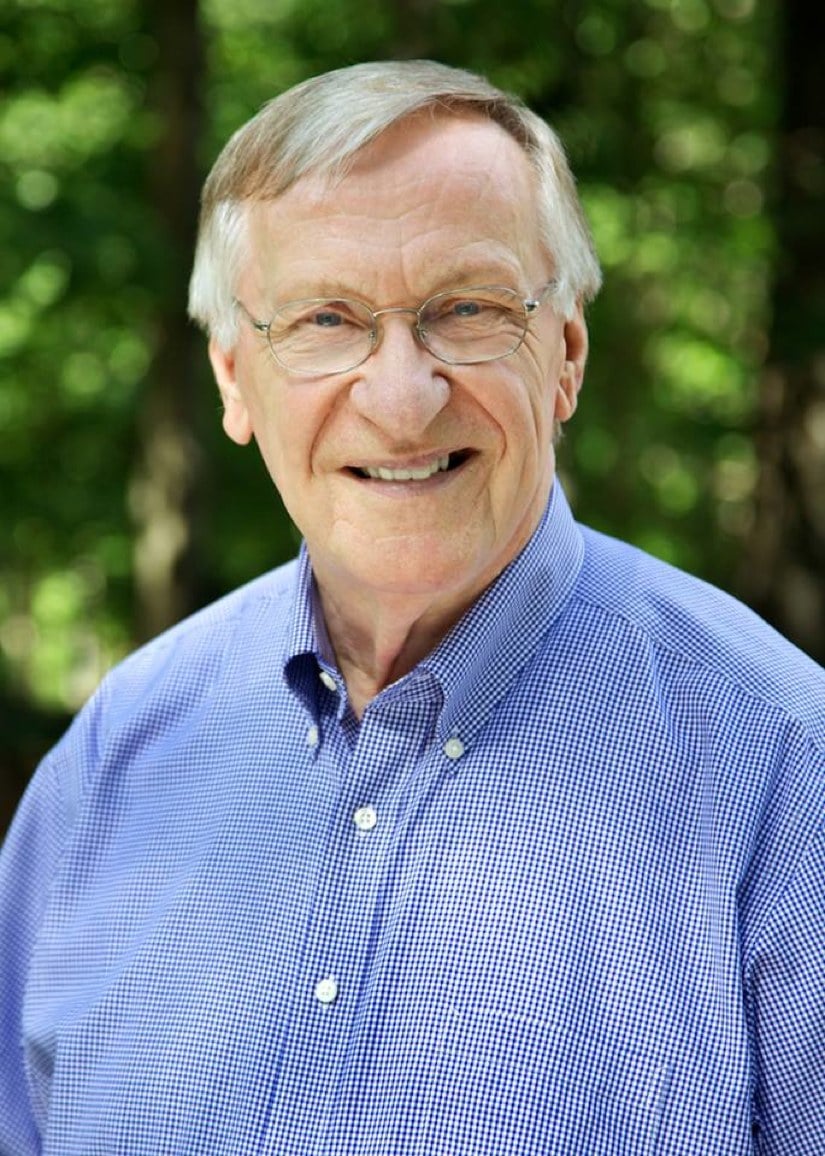 Mrs. Alice Foltz was my sixth and seventh grade teacher as well as being principal of Grove Hill Elementary School near Shenandoah, Va. She passed away in 2005 at the age of 99.
Mrs. Alice, as she was called to prevent confusion with another Mrs. Foltz who was the fourth grade teacher, was a great source of inspiration to me. She along with many other warm and caring teachers inspired me to become a teacher.
The first half to full hour of Mrs. Alice’s classroom day was always a study hall during which homework assignments and work sheets could be completed while she did her work as principal. As one who completed his assignments quickly, I could have gotten into real problems had Mrs. Foltz not had the foresight to make me the “cafeteria manager.”
My duties in this assigned job were to go to the other six classrooms in the school and pick up the lunch orders and payments for the day. I would total up the number of students who had purchased milk only and the number of students who purchased lunch that included milk, check to make sure the monies collected were correct, and tell the cook, Mrs. Rodabush (who incidentally used the government surplus cheese to make the best macaroni and cheese I have ever eaten), the number of lunches she needed to fix.
It was a rather simple and routine job, but for me it was the greatest thing that could happen. I was trusted to go throughout the school on my own and was given a significant duty. I may have learned more from my school job about confidence, trustworthiness, and responsibility than I did in the classroom. Mrs. Alice knew exactly what I needed!
Imagine my surprise when about a decade ago I met another Alice Foltz! This one was in Centreville and was not related to the Alice Foltz of my youth. My new Alice Foltz is the inspiration and leader behind the Centreville Labor Resource Center that provides counseling and assistance to day laborers in the area.
At a time when a government-supported worker center was closed in 2007 in a nearby community and a tough anti-immigrant ordinance was passed in the next county, Alice as she is called by anyone who knows her, was able to convene a series of open community dialogues to discuss the impact of immigration in Centreville. The success of the Centreville Immigration Forum led to the establishment of a non-profit, non-government center where immigrants can learn English, acquire job-seeking skills, and be matched with private employers who are seeking day laborers.
Alice is a soft-spoken, persistent and strong leader who has accomplished in her community what government programs could not do and what other communities had unsuccessfully attempted. Too bad political leaders have not learned from her approach.
Alice Foltz has my greatest admiration. I am blessed to have known both of them!
Ken Plum represents Reston in Virginia’s House of Delegates
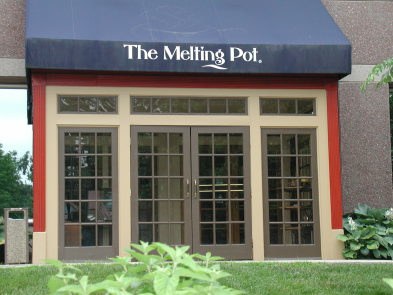 It’s been three years since The Melting Pot closed down its location at 11400 Commerce Park Dr. and moved to Plaza America.
The space on the ground floor of an office building still sits empty.
The good news: That location is could not be closer to commuters who use the Wiehle-Reston East Metro stop. Located just steps from the South entrance of the Metro, is another restaurant chose to open there it could be the closest place to get a beer when you stepped off the train.
The bad news: The parking lot of access Commerce Park Drive is now mostly via key card, which might make it difficult for those who wanted to drive there.
What do you think you should open there? Tell us in the comments.
 From Holly Weatherwax of the Herndon High All Night Grad Party Committee:
The Herndon High School All Night Grad Party Committee would like to extend a special thanks to all of those businesses and organizations in the Herndon/Reston community who helped us make this June 23 event such a success for the graduates of the Class of 2014.
The party was a huge success! Everyone one had fun and every attendee went home with a prize.
We encourage all of you to support the businesses and organizations in our community who support our students and our families. Working together, we can continue to provide exceptional opportunities in our community for individuals and businesses!
Thank you once again; we could not have thrown this once-in-a-lifetime party for our 2014 graduates without your support.
Click though to see the companies who donated. Read More
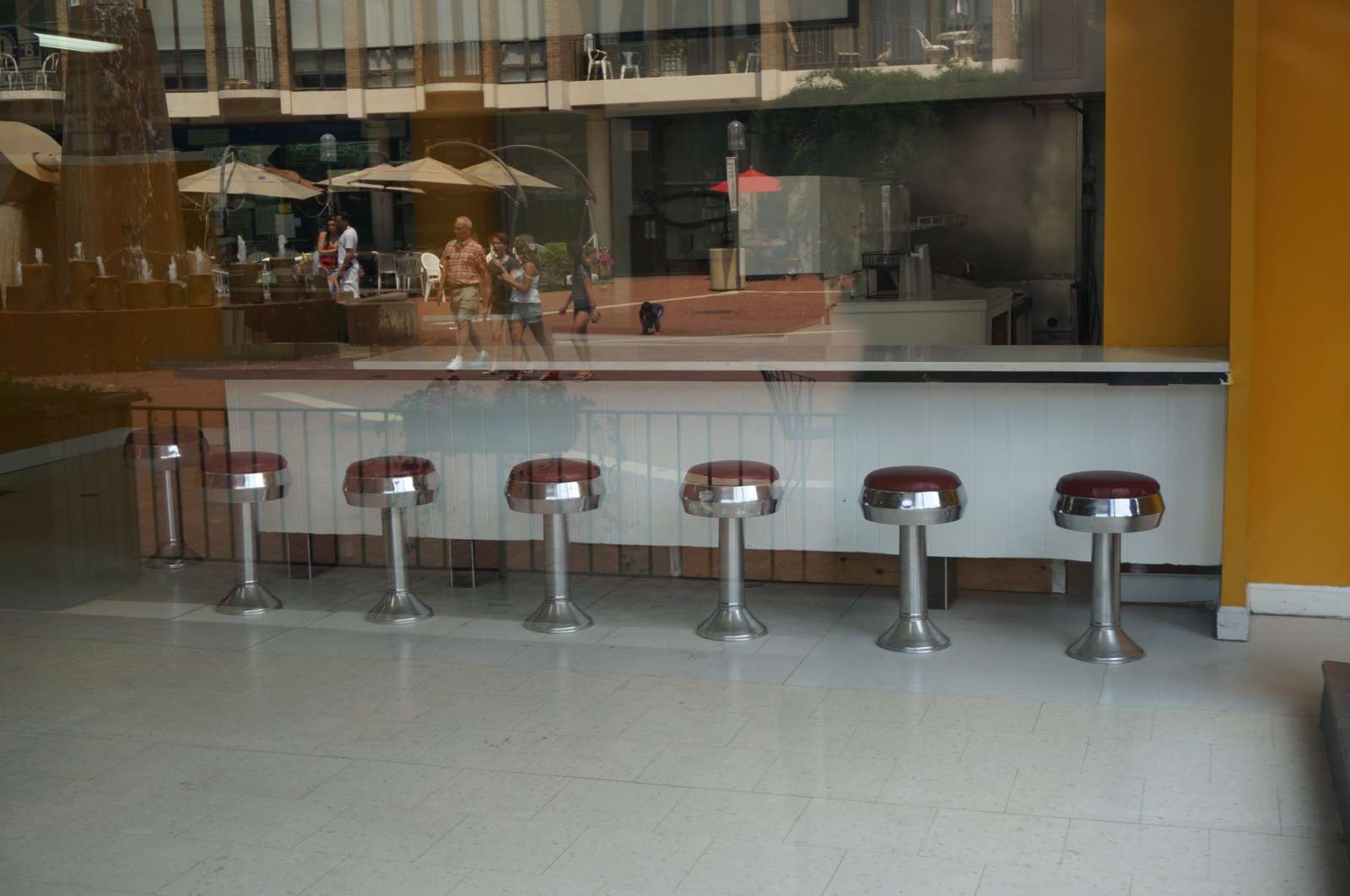
It has been six months since owners Alfredo and Rocio Melendez flipped their last burger and scooped the last ice cream at Cafe Lakeside.
The breakfast and lunch counter at Lake Anne Plaza — under different names and owners — has been part of Lakeside Pharmacy for decades.
The Melendez’s closed the food service in February when the pharmacy went under contract to be sold. With the space’s future uncertain, the couple decided to retire.
Meanwhile, ownership of the pharmacy has turned over and the business continues to operate. Reston real estate brokers say that the lunch counter space can be leased or sold separately.
So, what do you think should go in this waterfront location at Lake Anne Plaza? Should it be a restaurant? Or another kind of business separate from the pharmacy?
Tell us your thoughts in the comments.
The opening of the Silver Line on July 26 brought an overflow crowd of dignitaries and well-wishers to cut the ribbon and ride the first train. The half-completed project received a lot of acclaim with its airy and sleek stations and gleaming new equipment. The first phase of the extension of Metro that will increase the size of the mass transit system by 25 percent has clearly captured the spirit of most of the community.
The feelings about heavy-rail transit in the Dulles Corridor have not always been viewed so positively. While the idea of mass transit to Dulles Airport has been around for more than 50 years, positive steps to make it a reality were slow in taking place.
When I organized the Dulles Corridor Rail Association (DCRA) in August, 1998 to provide mass transit in the corridor, there were many doubters, naysayers and skeptics. The original board made up of community and business leaders and professional planner Patty Nicoson, who became and remains president of DCRA, went about building the case for a mass transit approach. Population growth projections for the region provided the clearest evidence that highways and cars would not be adequate to meet transportation needs in the future. The idea that the nation’s capital did not have a rail connection to its international airport was appalling to many. Air pollution’s effect on the health of the region was also a concern.
DCRA was able to get the conversation going about mass transit for the corridor and kept it before the attention of public officials as the many issues related to the project were debated. Should rail just go to Tysons Corner? Dulles Airport? Loudoun County? Should it be bus? Bus rapid transit? Light rail? Heavy rail? Should it be a subway system? Aerial system? How many stations? Where?
DCRA played a role in making sure that public officials got a regular flow of information on what was happening in other localities, advantages and concerns related to options, and the costs and consequences of inaction. As planning progressed and the project went through its ups and downs and near-death experiences, the DCRA board and its members were there to write letters, provide fact sheets and opinion columns, line up speakers for public hearings, and even run full-page ads in The Washington Post at a critical time in the approval process for the project. Twice a year, DCRA held receptions at significant locations along the route of the rail line and recognized individuals and organizations that had contributed to moving the project forward.
I was honored to be asked to speak at the opening ceremony for the Silver Line, where I acknowledged as I want to do here the critically important and very effective work of Patty Nicoson towards the success of this project and the significant help of current and past DCRA board members. Many have mentioned that we might still just be talking about it if not for the work of DCRA and its success in keeping it truly nonpartisan. I am pleased to have been a part of such an effort that will be transformative for our region.
Ken Plum represents Reston in Virginia’s House of Delegates
Since 1990, the Annie E. Casey Foundation has ranked states annually on overall child well-being in a report called Kids Count Data Book (www.aecf.org).
The Foundation’s report is viewed as the authoritative source of information on how we are doing nationally as well as state by state for our children. An index of key indicators in four domains measures what children need most in order to thrive: (1) economic well-being, (2) education, (3) health, and (4) family and community.
“States vary considerably in their amount of wealth and other resources. State policy choices also strongly influence children’s chances for success.” (Kids Count Data Book, page 20) Living in the ninth wealthiest state, Virginia, in the wealthiest nation, the United States, we need to ask ourselves if we are doing as well as we should for our future as represented by what we are doing for our children.
Virginia’s rate of 15 percent of children in poverty is better than the national rate of 23 percent, but we can take little comfort in our better percentage when we realize that there are 279,000 children in poverty in Virginia. All regions of the state, including Northern Virginia, contribute to that number that has gotten worse in recent years. Reflecting the recent recession, the percentage of children whose parents lack secure employment has risen from 23 percent in 2008 to 25 percent in 2012.
Despite all the evidence of the importance of early childhood education and the incredible returns that can be realized from an investment in preschool programs, more than half (52 percent) of Virginia’s children are not attending preschool. Unfortunately many of the children who do not have an opportunity for an early start in education contribute to other statistics that find 57 percent of fourth graders are not proficient in reading, 62 percent of eighth graders are not proficient in math, and 16 percent of high school students are not graduating on time, although these numbers have been improving in recent years.
Virginia has seen a slight improvement in the health indicator of low-weight babies at 8.1 percent over the last decade but exceeds the national rate of 8 percent. In Virginia as well as in the nation, about 6 percent of teens abuse alcohol or drugs.
Probably paralleling the increase of children in poverty is the number of children in single-parent families increasing from 29 percent in 2005 to 31 percent in 2012. The number of children in families where the household head lacks a high school diploma has improved from 13 percent to 9 percent during the same period and beats the national 15 percent.
The area of greatest improvement in Virginia is the rate of teen births per 1,000 dropping from 34 percent in 2005 to 23 percent in 2012. Still the lower percentage represents over 6,000 babies born to teenagers each year.
While the statistics are interesting, the much more important question is how they inform public policy. Officials at all levels of government need to demonstrate through our actions that we know how much kids count!
Ken Plum represents Reston in Virginia’s House of Delegates.
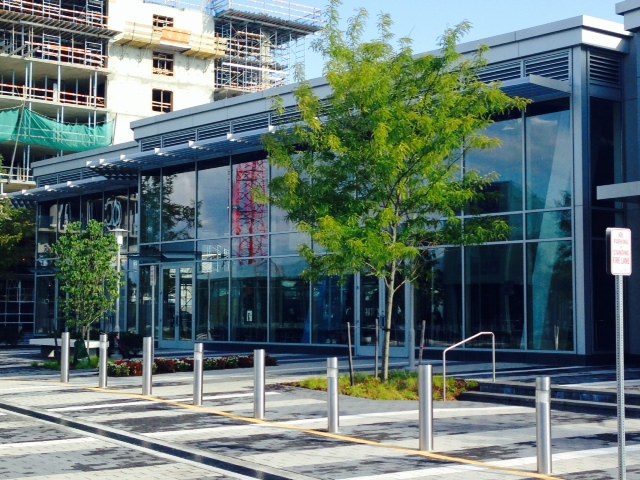
Reston’s first Silver Line Metro station at Wiehle-Reston East opened on Saturday with much fanfare.
The mixed-use development at Reston Station, which sits atop the seven-level underground garage adjacent to the Metro station, is still a work in progress. Eventually, there will be more than 1 million square feet of office, hotel, retail and residential space, says Comstock, the developer of the project.
One part of Reston Station is ready to go though: the 10,000-square-foot retail building (which will eventually be the hotel lobby when it is constructed).
What do you thing would make a good business (or businesses, as it can be divided) there? What could the plaza really use as its first restaurant or store?
Tell us your thoughts in the comments below.
By the time you are reading this column, Virginia will have reached the milestone by having refused to accept a billion dollars of monies paid by Virginia taxpayers to close the coverage gap for 400,000 working poor Virginians who cannot afford health insurance. A $1,000,000,000 is a lot of money!
We got to this point by the Republican majority in the General Assembly refusing to pass a plan for Medicaid expansion that would bring more than $5 million dollars a day to the state, produce as many as 30,000 new jobs in the health care industry, insure as many as 400,000 of the working poor, and enhance the quality of life for Virginia’s workforce and their families.
What is the alternative proposed by the Republicans? Speaker of the House Howell was quoted last month as saying that House Republicans propose to help the uninsured through “free clinics and community health centers and through expanded hospital services.” Hospital representatives are saying that they need the Medicaid money in order to expand services. One hospital in the state has closed, and others report financial stress. The free clinic serving this region is reported to be in economic difficulties.
Last week, Stan Brock’s Remote Area Medical (RAM) set up its mobile clinic in Wise County, VA, as it has been doing one weekend a year for more than a decade. More than 1,000 people who do not have medical insurance or access to regular medical services show up and stand in line for hours to be seen by one or several of the more than a hundred medical care professionals who volunteer each year to run this free clinic. Brock, who achieved fame for his television series Wild Kingdom, has described health care needs and services in the Appalachian region that includes Southwest Virginia as being like that of a third-world country.
The General Assembly majority has been able to stymie efforts by the Governor to get a plan for Medicaid expansion approved. While the legislature is still in special session, it is not expected to meet again until Sept. 22. There is little optimism that there will be a change of heart on the part of Republicans as the national organization Americans for Prosperity threaten a primary challenge to anyone who breaks rank. Two senior Republican committee chairs were defeated in primaries in the last election cycle by Tea Party Republicans as was House Majority Leader Congressman Eric Cantor defeated this year. Unfortunately, the desire to keep one’s legislative seat seems stronger than the moral call to do the right thing and provide health care to people who need it.
The billion-dollar give-away is money paid by Virginians under the Affordable Care Act that goes to Washington and is not returned because of the legislature’s refusal to act. Write to your friends, family, and colleagues and encourage them to contact their legislators to support legislation that will keep $5 million a day that will add up to another billion dollars by early next year in the state for the benefit of Virginians.
Ken Plum represents Reston in Virginia’s House of Delegates
Legislators in the earliest days of the Republic were mostly of the planter class as women, blacks and non-landowners could not vote or hold office. The best time to get away from the plantation and the crops was in the wintertime.
That probably started the custom that continues to today whereby the General Assembly holds its regular session in the winter beginning on the first Wednesday after the firstMonday in January.
In simpler times — and up until 1971 — the state law-making body only met every other year, in the even-numbered years. The current schedule has the House of Delegates and the State Senate meeting for 60 calendar days in the even-numbered years and 30 days, most often extended to 45 days, in the odd-numbered years.
Passage of the biennium budget passed in the even-numbered years is the justification for the more than two weeks additional time. Special sessions are not that unusual, although they seldom extend for more than a few days.
Virginia government is organized around the idea of citizen-legislators. We who serve in the legislature have work and family responsibilities beyond our service as legislators. With the minimal salaries paid — $17, 640 in the House and $18,000 in the Senate — an additional source of income is necessary if one is not independently wealthy. If legislative sessions were lengthened, it would likely impact who could serve as fewer people would be able to leave their work for extended periods of time. I would not support a full-time legislature as it would be likely to lead into governing in areas best left for local government or the private sector.
Legislative work does get done in the interim between legislative sessions. Study committees meet to consider the need for legislation in areas where more time is needed for analysis beyond that available in the regular session. An important study committee this year will consider the need for additional health care reform beyond that passed in the last session.
The Joint Legislative Audit and Review Commission (JLARC) provides legislative oversight with legislative members and a professional staff and conducts some of the most in-depth studies. In 1997 I introduced the legislation to establish the Joint Commission on Technology and Science (JCOTS) and served as its original chair. JCOTS conducts studies, with private-sector and academic technical advisory committee members assisting it, in its mission to study and advise in the development of sound technology and science policy in the Commonwealth.
The summertime provides more opportunities to meet with constituents locally and to learn their needs. The General Assembly is referred to as a part-time legislature, although I spend more than full-time as a member. My retirement status provides me time to work year-round at a job I really enjoy and am honored to have.
Although it is summer, still feel free to call on me whenever you think I can be of assistance to you. Email me at [email protected].
Ken Plum represents Reston in the Virginia House of Delegates.
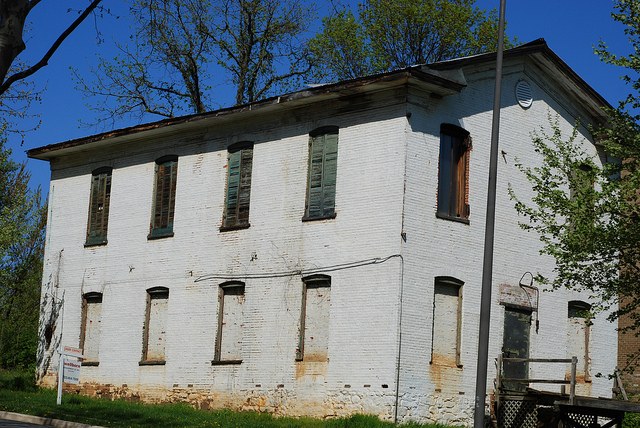
Reston may be a 50-year-old “new town,” but there is one building that dates back to the days of yore.
The Bowman Distillery on Old Reston Avenue has been on the National Register of Historic Places since 1999. It has been empty much longer.
The structure was built in 1890, and in addition to the place they made Virginia Gentleman whiskey, the building also served as the long-ago Wiehle Town Hall and a church.
The distillery has gone through several rezoning applications over the years. In 1989, after Bowman Distillery moved operations to Fredericksburg, the building was rezoned as part of a larger mixed-use development. Some of that development happened on parts of the original 32-acre property, but the historic building remains untouched.
In 1998, it was sold to an owner who planned to build a Bed and Breakfast or condo. It sold again in 2010 for $540,000.
With its historic bones and close proximity to the W & OD Trail and Reston Town Center, surely someone has a vision for the property. What is yours? Tell us in the comments.
Photo: Bowman Distillery/File photo by Reston 2020
My 11th grade history teacher, Mr. David Poole Kite, assigned me the first big research paper I can remember having to write in high school. I typed out a 20-page paper, “History of Page County,” on my Royal portable typewriter. It took Harry Strickler 442 pages to write his book, A Short History of Page County (Richmond: Dietz Press, 1952). His book was my only source; I just picked fewer events to highlight.
My paper probably should have been entitled “A Very Brief History of Page County.” My original research was to visit sites where some of the events Strickler describes took place. Even then and until today, I find it fascinating to stand in a place of importance.
Last week, I visited one of those places again — the White House on Route 211 west of Luray. The name came from the white stucco that covers the limestone walls of the house, which was built in 1760 by Martin Kauffman II as a residence and Mennonite meeting place. He was among the first settlers in the village. I do not know of any momentous event that took place there. It’s just the idea of a home — not a palace or a mansion — surviving that long that makes it interesting as one of the oldest structures in Page County.
Remarkably, it remains in about the same condition and configuration as when it was first constructed. It is on the National Registry of Historic Places as well as the Virginia Landmarks Registry. An archeological survey is underway at the site, and plans are being developed for its restoration. It is located on rich bottom land in one of the bends of the South Fork of the Shenandoah River. Evidence, including a number of arrow points and other artifacts that have been found, indicates that it was an active location for Native Americans.
As interesting as the place itself is, the other activities being undertaken on the property by its owner, Northern Virginia developer Scott C. Plein, are equally of interest. A brick farmhouse on the property built in the late nineteenth century has been beautifully restored. Through the White House Farm Foundation and numerous partners, research is being conducted on riparian buffers, sustainable agricultural practices, and native trees and plants. The White House is not open to the public, but numerous school groups participate in scientific and archeological research on the farm. Students participate in gardening activities with the produce being contributed to local food banks not unlike the activities going on now at the more well-known White House.
Learning about the past has been enjoyable for me throughout my life. At the White House of Virginia, Scott Plein and his associates are demonstrating that while we are learning about the past we can learn lessons for the future about environmental quality, sustainability, and historic conservation. It adds a whole new chapter to my brief history of Page County.
Ken Plum represents Reston in Virginia’s House of Delegates.
 This is an op-ed from S. John Massoud, Vice-President of Dulles Airport Taxi and Arlington Blue Top Cabs.
For the past several months, I have been reading and hearing about how my industry has been holding back Uber and other ride sharing apps from being allowed to operate. It is time to clear the record about some falsehoods and other spin being put out by these ride sharing apps and those who are speaking on behalf of the ride sharing apps.
The taxi industry in Virginia has no issue with Uber and other ride sharing apps being allowed to operate. To the contrary, we are very proud of our industry and the job that we do transporting passengers from one location to another. We fear no competition. However everyone should be concerned with the concept of Uber X.
For those of you who do not know what Uber X is, it is a low-cost ride sharing service in which a passenger calls for an unlicensed driver to pick them up in their private vehicle and is transported in that vehicle. The average Uber passenger does not really understand the inherent dangers of this system. And they are as follows:
1. Uber X drivers carry no commercial insurance, only standard vehicle insurance. Meaning that if an Uber passenger is injured while taking a trip, they will not be covered by the driver’s insurance as the driver is using his/her private vehicle for commercial purposes while not having commercial insurance. And while Uber states they have $1 million dollar insurance coverage on all of their vehicles, such insurance is not available on the open market. And Uber has not filed to be self insured under the laws of Virginia, meaning each Virginia passenger in an Uber X vehicle is being transported in an uninsured motor vehicle. (for those of you who think I am making this up, talk to the family of the 6-year-old girl in San Francisco who was run over by an Uber X driver last year.) Read More
 It has been nearly nine months since Champps at Plaza America abruptly closed its doors.
There have been few signs of retail life there since, despite a rumor that Hooters was checking out the space for a Reston location.
The shopping plaza was sold last month to TIAA-CREF for $97.5 million.
Champps’ location is a piece of prime real estate. It is a large, two-floor restaurant space (Champps locations are all between 5,000 and 8,000 square feet, company officials said) located close to the future Wiehle-Reston East Metro and Reston Parkway.
Champps had occupied that location since Plaza America opened in 1995.
What would you like to see in the space? Tell us in the comments.
The Silver Line Metrorail extension will open for riders on July 26! For those of us who have been looking at the seemingly completed infrastructure for many months, announcement of the actual date that we can ride this important new service for our community is welcome news.
Having worked on bringing Metrorail to Reston and beyond for the last 20 years, I am especially excited about the opening. In the 1990s, I was the lone politician calling for rail service in the Dulles Corridor while some dismissed the idea as a pipe dream.
In order to develop support for the rail project, I enlisted the help of business and community leaders who supported the idea. In August 1998, I announced the formation of the Dulles Corridor Rail Association (DCRA) as a nonprofit, nonpartisan advocacy group supporting rail in the Dulles Corridor. Joining in the announcement were professional planner Patty Nicoson, who became president of the group and continues in that capacity today; former Delegate Vincent Callahan, who demonstrated bipartisan representation; former Virginia Secretary of Transportation John Milliken; and Restonians Joe Stowers and Steve Cerny, among others.
We set to work, with letters and opinion columns, testimony at public hearings and a variety of advocacy activities that built support for the project. The task was not easy and not without setbacks. While there was widespread agreement about the need for more public transit options in a metropolitan area that had outgrown its transit service planned for in the 1960s, we had to convince some elected leaders that rail was justified over simply expanded bus service or bus rapid transit.
The idea of putting the extension in a tunnel sounded attractive, but was cost prohibitive. Commercial interests were agreeable to additional taxes to help pay for the system, but the project had to be broken into two phases to accommodate when a business interest would start paying an additional tax and when they would receive service. Toll increases on commuters were projected to be unbearably high requiring DCRA to successfully lobby for more direct state appropriations to keep tolls down.
With no direct financial support for the project and a 2010 goal to deliver a completed system, the 30 men and women who made up the original board and those who have joined and left since that time are to be thanked and congratulated. I am honored to continue to serve as chairman of the board of DCRA.
The Silver Line will not be a silver bullet to solve all our transportation woes. We still live in an area ranked 10th in the country for the worst traffic! Rail and bus riders will be asked to make adjustments; drivers may have to change their commuting habits; and some will complain about tolls and fares. Even so, the Silver Line brings a critically important part of infrastructure to our area that will add to our quality of life in getting to and from work and taking advantage of the rich educational and cultural resources of our region and our nation’s capital.
Ken Plum represents Reston in the Virginia House of Delegates
