

 Virginia taxpayer dollars not returned to them has amounted to $5 million each day since Jan. 1, 2014, and will continue at that rate each day that Virginia refuses to expand its Medicaid program.
In addition, at least 400,000 working Virginians will continue to be uninsured.
The 2013 session of the General Assembly created the Medicaid Innovation and Reform Commission (MIRC) to consider whether reforms to Virginia’s Medicaid program were sufficient to allow Virginia to proceed with some form of coverage expansion through the Affordable Care Act. MIRC members have been assured by staff that all requested reforms have been made, but the Commission members from the House of Delegates have refused to acknowledge the reforms and continue along with the Speaker of the House of Delegates to oppose expansion of Medicaid.
For otherwise fiscal conservatives to turn down $5 million of Virginia taxpayer dollars being returned to them to pay the full cost of Medicaid expansion shows the continued animosity that some Republicans have toward the Affordable Care Act that they refer to as Obamacare. To the concern that the federal government will not be able to continue funding the program into the future, Virginia could make a decision to withdraw at that time.
At the same time, the Virginia Chamber of Commerce business plan for the Commonwealth, “Blueprint for Virginia,” supports the Medicaid reforms that have been made and recommends Medicaid expansion. Chamber leadership has termed Medicaid expansion to be both an economic development as well as a workforce issue. Most of Virginia’s one million uninsured residents are employed. It is projected that the expansion would create an estimated 33,000 jobs and bring $21 billion dollars back to the Commonwealth.
Gov. Terry McAuliffe is a staunch supporter of Medicaid expansion. As he stated to the Chamber, “Let me be clear on one point. If Medicaid expansion is not the business community’s number one priority in your communication with the General Assembly, it will not happen.” He calls for “coming together, putting old ideological differences aside and focusing on what makes sense from a business perspective.”
The case for Medicaid expansion goes beyond the strong business case; it is also a humanitarian cause. Social justice organizations, faith communities, and individuals need also to give priority to making their views known to legislators. Give priority to writing or calling House and Senate leadership and members of the House Appropriations and Senate Finance Committees and ask them to approve the expansion of Medicaid. Contact information is available at House and Senate members.
Five million dollars a day is a lot of money. It is too much to turn down, especially when it can improve the health and well-being of Virginians. Please make sure your voice is heard on this issue.
Ken Plum represents Reston in Virginia’s House of Delegates. He can be reached at [email protected].
 Winter has settled in with a vengeance! I hope you’ve all been coping well with the bitter cold we’ve had this week. While the temperatures we’ve had might not faze someone from Wisconsin or upstate New York, they’re pretty unusual for this area. Personally, I believe that cold weather builds character, but I’ve had a hard time convincing my daughter of that.
Perhaps when the weather is cold, it’s inevitable that the mind turns to places that are warmer. Places like Reston’s former Sister City — Nyeri, Kenya,where it’s supposed to be in the low 80s today. It was around this time two years ago when I wrote about the history of Reston’s Sister City relationship with Nyeri and RCA’s role in it.
Recently, I’ve had some conversations that have convinced me that the time might be right to reunite these old Sister Cities. So this week, I’d like to tell you about the conversations I’ve had, and how I think resuming relations might be a boon for both cities.
A couple months ago, I received an email from a woman named Anne, who had come across the 2012 piece I wrote about the history between Reston and Nyeri. As luck would have it, she had been thinking about helping Reston and Nyeri become Sister Cities today. When she found out that this relationship had already existed, she said she “got energized just thinking about the art of the possible.” She asked if we could meet to discuss it further, and I gladly agreed.
It was a cold and rainy night when I arrived at Cafesano to meet with Anne and her friend Catherine. But once we began talking, their energy and enthusiasm quickly helped me forget the cold. Anne and Catherine grew up across the street from each other in Nyeri. They both wound up emigrating here separately, and they were delighted to discover that they were neighbors again in America.
In the course of their conversations, they often talked about creating a connection between Nyeri and their new home. They said they were excited for this meeting, because it meant that they would start taking action on their long-imagined idea.
They told me about growing up in Nyeri, and what the town was like. The major industry in Nyeri is agriculture, especially coffee and tea farming, but there are also several bottling plants and the home of East Africa’s leading dairy, Brookside Dairy. Nyeri is also a tourist destination, both for tourists seeking natural beauty (the city is located in the foothills of Mount Kenya) and history (the grave of Lord Baden-Powell, founder of the Boy Scouts, and the hotel where Queen Elizabeth II acceded to the throne are in Nyeri). The more they spoke, the more interested I became in seeing Nyeri for myself.
 I asked Anne and Catherine what they thought should be the basis of the Sister City relationship. They said Nyeri would benefit most in planning and economic development. They described Nyerians as being very bright, well-educated, and entrepreneurial, but said that Nyeri has been struggling in recent years for a lack of planning. It’s a fairly large town, but it has few planning ordinances and growth has occurred in a somewhat haphazard fashion. If someone wants to start a restaurant or a shop, they just build it wherever they can find the space. You can imagine the kind of problems that sort of scattered growth can cause.
Anne described how much she loved seeing Reston’s growth according to its Master Plan, and she felt that seeing a place as well-planned as Reston would help encourage and guide Nyeri in its development. Being able to talk to our leaders about how we’ve planned and managed our growth might provide Nyerians with some ideas they can implement. Read More
Last month, the disAbility Law Center (dLCV) issued a report on the condition of mental health services in Virginia. It is an eye-opening report: Broken Promises, the Failure of Mental Health Services in Virginia. (Broken Promises Report)
Its findings are direct: “Despite the promises of reform to the mental health service system in the last decade, Virginia’s mental health services system fails to serve many of those in need of its services.”
According to dLCV, there are more than 40,000 Virginians living with serious mental illness and thousands more with less serious emotional disorders that require treatment including an estimated 130,658 children between the ages of 9 and 18 who need treatment. The dLCV which advocates for all people with disabilities to be free from abuse, neglect, and discrimination considers the problem in part to be a misallocation of resources.
As its report points out, on any given month about 10 percent of residents of state hospitals continue to be hospitalized even though their treating professionals have found that they no longer need to be hospitalized. Thirty-one of the 133 individuals in such hospital placements in November, 2013, had been waiting for discharge for more than a year. The problem is that there are inadequate or nonexistent facilities or programs in the community to continue services to these persons. At the same time, there were an estimated 26,990 inmates confined in local and regional jails of whom nearly 25 percent were known or suspected to be mentally ill. More than 3,500 persons in jails were diagnosed with a serious mental illness.
The dLCV maintains that funding is misdirected towards unnecessary hospitalization when funding is needed desperately for community-based crisis response services and housing options for people with mental health needs. Their position is not without controversy. Others maintain that both more hospital spaces and more community-based facilities are needed.
The tragic event surrounding the family of Senator Creigh Deeds has brought the need to the public’s attention. Outgoing Governor Bob McDonnell has proposed a more than $50 million increase in the budget for mental health services and has established a commission to develop a plan for mental health services in the Commonwealth. There is bipartisan support to address the issue in terms of additional funding as well as to amend existing statutes to permit persons who are a danger to themselves and to others to be held for a longer period of time until appropriate treatment is available to them.
We are past the time when we should have met the promises for reform to persons with mental health problems and their families. The 2014 session of the General Assembly must respond. You can view my interview with Colleen Miller, Executive Director of disAbility Law Center of Virginia and another interview with George Braunstein, Director of the Fairfax-Falls Church Community Services Board, both on the topic of mental health reform at Virginia Report.
Del. Ken Plum (D-36th) represents Reston in Virginia’s General Assembly. He can be reached at [email protected].
By Ken Knueven, Reston Association
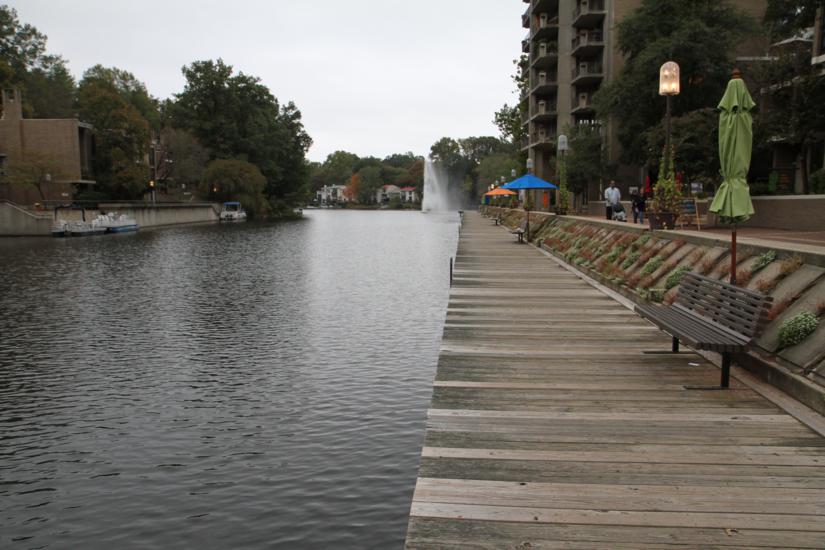
Living on Lake Anne is all it is advertised to be; it is beautiful, serene and a reminder of what has made Reston special for 50 years. And, as I sit on my deck and admire the snow-covered banks, I am thankful that sense of peace and tranquility lasts throughout the seasons.
Of course, as close as Lake Anne is to my version of Utopia, I do understand it comes with a few challenges. And yes, RELAC is one of those challenges.
The Reston Association Board of Directors is currently reviewing changes to the Use & Maintenance Standards Resolution 15; Air-Conditioning Units/RELAC HVAC System and is still accepting public comment on these issues. Amendments have been made to constitute what establishes a member has “worked with RELAC” to correct/address problems with the system.
As well, new language has been added to clarify the term and conditions under which temporary exemptions from the covenant are to be granted. These changes are not designed to make it more difficult to be removed from the system, but instead are intended to decrease the ambiguity associated with how one does get an exemption.
While RELAC has its detractors and critics, the community did have a chance to remove it as the cooling system for Lake Anne through a referendum a few years ago. The community spoke, however, and chose to keep RELAC. Those who own and operate the system need to ensure it is efficient for all who use it. And, those who use the system need to discuss coming together and possibly resurrecting the community committee which existed years ago to look at the sustainability and viability of the system.
In the meantime; as with all RA board activities, the board needs your input on the rules allowing for temporary exemptions to use alternate methods of air-conditioning when needed for medical reasons. The public comment period is open and we look forward to hearing from you. You can email [email protected] or attend an RA board meeting. Board agendas will be available on www.reston.org prior to the meetings.
Ken Knueven is a Lake Anne resident and the president of Reston Association.
Happy New Year, Reston! As I enjoy one of my favorite New Year’s traditions, the NHL’s annual outdoor game, I will continue a tradition of my own by sharing my resolutions for RCA in 2014.
Looking over last year’s resolutions, we hit on some and missed on others. We succeeded in revamping our website and relaunching our newsletter, and John Lovaas did officially turn the candidate forums over to RCA this year. In other areas, like the Master Plan Task Force, we didn’t have as much success as we would have liked. Despite that, 2013 was an extremely busy year for RCA, and we wound up dealing with a variety of issues that we never knew would come up when the year started. Who knew on New Year’s Day 2013 that we’d be fighting to protect our County libraries, or debating the fate of a parcel of trees at Lake Anne, or considering whether or not to build a new RCC rec center?
2014 looks to be another big year in Reston, as we prepare to celebrate Bob Simon’s 100th birthday and our community’s 50th anniversary. We’re no longer a New Town; we’re a mature community. And 2014 will inaugurate two things that will likely transform Reston’s future: the Silver Line and the redevelopment of Lake Anne. The former will spur the growth of new neighborhoods around the stations; the latter will spark the rebirth of Reston’s oldest areas. Both hold great promise and excitement, but also the possibility of disruptive changes for our community and our citizens.
Like all of Reston’s leading organizations, RCA will be looking toward the future in 2014. The actions we take now will set the stage for Reston’s next 50 years. With that in mind, these are my forward-looking resolutions for RCA in 2014:
* Advocate for a citizen-driven process for Phase 2 of the Master Plan Task Force. Phase 1 of the Task Force is in the books, and the plan recommendations for the station areas will soon be approved. In 2014, we will turn our attention to the rest of Reston, most notably the village centers. The planning we do in this phase will shape what our community looks like in the decades to come.
That’s why it’s essential for Phase 2 to be led by the citizens of Reston, and our vision for the future. We’ll need to solicit widespread citizen input, and integrate that input into the decisions we make. I’d like to see RCA work with RA, ARCH, and other citizen organizations to ensure that Phase 2 reflects the vision of the citizens, possibly using the Lake Anne redevelopment process as a model. Read More
Legislation that is proposed for consideration by the General Assembly is called a bill. A bill that has passed the House of Delegates and the Senate and has been signed by the Governor in identical form becomes a law on July 1 after the adjournment of the legislative session and is included in the Code of Virginia.
To know what the laws of the Commonwealth are, go to the Code at http://leg1.state.va.us/000/
In addition to passing laws, the General Assembly passes a lot of resolutions. When famous or noteworthy people die, the delegate or senator from that person’s community is likely to introduce a memorial resolution. These resolutions pass routinely without discussion or debate and are approved on a voice vote.
After being printed in a formal format, these resolutions are given to family members in appreciation of and respect for the contributions the individuals made to their communities. Commending resolutions that recognize the accomplishments of individuals, organizations or businesses are handled in a similar way but could result in some debate if a person or action is viewed as being controversial.
This year, I will be asking the General Assembly to commend Robert E. Simon on his 100th birthday and will be recognizing Reston on its 50th anniversary. Such resolutions are educational for members of the General Assembly as well as the public. Framed resolutions are often hung in prominent places by the recipients. Resolutions also are used by legislative bodies to direct their own operations and order of business and to establish studies of issues. Resolutions do not take up much time of the legislature, but they do provide an important way to recognize outstanding people and events in the Commonwealth and to have the legislature state a position on an issue for which a new law may not be appropriate or needed.
The legislature does not have a tradition of passing a resolution at the beginning of each year stating as individuals often attempt to do with their “new year resolutions” what will be done that year. Debate on such a resolution would take up the entirety of the session, and if ever agreed upon may likely be forgotten as realities of the year and the session set in
Such a lack of resolve on the part of legislative bodies at all levels mean that attention is focused on the next great crisis until it is forgotten and then attention is turned to the next. Few issues are truly resolved conclusively, and in fact, the matters with which legislative bodies deal do not lend themselves to one-time solutions. Most legislative actions are incremental as agreements can be reached and are built upon over time. Since conclusive solutions are not immediately evident for the most contentious of issues, the gradual approach to resolving an issue may make more sense. There is little evidence to suggest that legislatures would be any better at keeping annual resolutions than we are as individuals.
Ken Plum represents Reston in Virginia’s House of Delegates. He writes weekly on Reston Now. He can be reached at [email protected].
The editorial in the Sept. 21, 1897 New York Sun, responding to a letter from eight-year-old Virginia O’Hanlon who had inquired about whether there was a Santa Claus, has become the most reprinted newspaper editorial, according to the Newseum.
Virginia’s father had told her that if she read it in the Sun it was certain to be true. The editor wrote, “Yes, Virginia, there is a Santa Claus. He exists as certainly as love and generosity and devotion exist, and you know that they abound and give to your life its highest beauty and joy.”
Virginians, especially those around the capital city, have long believed in Santa Claus. The “Legendary Santa” has been meeting with boys and girls at Miller and Rhoads — first a department store and now a hotel in Richmond — for more than 75 years.
There is ample proof that he is the “real” Santa Claus for he is able with assistance from the Snow Queen and some technology to call every child by name.
We go as a family of four generations with Jane’s mother and our grandchildren to see him at his latest location at the Children’s Museum of Richmond. Read more about this Virginia tradition in Legendary Santa’s Stories from the Chair. On page six is a photograph of young Jane Durham (now Plum) and her brother visiting Santa many years ago.
Throughout the capital, there is a quickened pace of activity during the holiday season in anticipation of the General Assembly convening on Jan. 8 and the new governor being inaugurated on Jan. 11. There are wish lists from all the agencies and special interests. And, yes, Virginia, if there is a Santa Claus here is my wish list for the legislative session.
Virginia would extend health insurance to nearly half its uninsured working poor by expanding Medicaid. Not only would more people have access to preventative care as well as treatment, but Virginians would get more of their federal tax dollars back and a boost to the economy with the health care jobs being created. Also in the area of health, I want Virginia to increase funding for its presently inadequate mental health care program.
While I am wishing, I want the General Assembly to expand background checks for all gun purchases to keep guns out of the hands of criminals and violent people. I also want the legislature to approve my bill to establish an independent redistricting commission that will fairly and objectively draw legislative boundaries. We would on my wish list repeal the marriage amendment and other discrimination based on sexual orientation. And while we are at it, we need to get the state back to the position of being an equal partner in funding public schools.
None of these goals will be reached by simply wishing for them. Hard work, determination, and public pressure can make them reality. Just like in Santa’s workshop, there will be a lot of work behind the scenes.
Del. Ken Plum represents Reston in the Virginia General Assembly. He writes weekly on Reston Now. He can be reached at [email protected].
In a couple of days, Virginia Gov. Bob McDonnell will present a proposed budget to the General Assembly for the next two years. Early announcements about what it contains have been good: critically needed funding for mental health and restoration of funding to education programs.
What is unique about the budget is that Governor McDonnell will not be around to defend or to implement it. The Constitution of Virginia limits the governor to one term. A governor can run a second time as Mills Godwin did in the 1960s, but the terms cannot be successive.
The limitation on executive leadership goes back to the earliest days of Virginia as a state. Concerned about the excesses of the king, the leaders of the newly independent Virginia limited the governor to terms of one year. Patrick Henry was the first governor who served for multiple years, but he had to be re-elected each year. While it is seriously questionable whether Gov. McDonnell could have been re-elected with his serious ethical lapses, he simply was not allowed by the Constitution to stand for re-election. All governors have been constrained in what they were able to do by the necessity that they get their work accomplished in four years.
I have supported several attempts over many years to amend the Constitution to allow the governor to serve two terms, but these efforts have not been successful. If the legislature approved such an amendment, it would have to approve it a second time after an election and then put it before the people in a referendum. Because of the timeline involved, such an amendment would not apply to the governor who was in office at the time. I continue to support a constitutional amendment to permit the governor to serve two terms, recognizing that the electorate can still enforce a one-term limit if it chooses to do so.
The electorate can likewise limit the terms of members of the House of Delegates to two years or any multiple thereof and of the Senate to four years or any multiple of four. Members serve at the will of the people for the amount of time determined by the electorate and not by an arbitrary number in the Constitution.
There is less need for a specific time limitation because the General Assembly is made up of part-time citizen legislators rather than being full time like the governor. While some states have chosen to limit legislators to a set number of years, the experience in these states has been a serious loss of experience in the legislature and an increase in the power of staff and lobbyists.
To ensure that the people are truly free to choose their legislators, an independent non-partisan redistricting process needs to be put into place. Under the current gerrymandering process, legislators choose the people they want to represent rather than the people choosing their legislators. A commission that I first proposed in 1982 and continue to advocate for would take the task of redistricting from legislators and give it to an independent body. Open elections with competitive races are the best form of term limits.
Winter has come early this season! Being a snow lover, I welcome this early taste of the white stuff.
Certainly, it’s a welcome change from the largely barren winters we’ve had the last couple of years. The snow and ice meant a surprise four-day weekend for my daughter Leslie. For my wife and me, this meant working from home.
While I was tapping away on my computer and watching the flakes fall, I thought about the phenomenon of telecommuting. It’s pretty remarkable that technology has advanced to the point where we can be practically as productive outside the office as in it.
One of Bob Simon’s founding principles for Reston was that “the people be able to live and work in the same community.” In a way, telecommuting is the ultimate version of that goal: people living and working in the same house. And there are people who think that this is the future: widespread telecommuting will be what saves us from traffic paralysis and environmental degradation.
Maybe they’re right. But the move toward telecommuting is emblematic of a troubling trend in our society, toward less face-to-face human interaction. That trend runs the risk of damaging our sense of community.
We live in an increasingly atomized society; we spend less and less time in the company of others. For a lot of folks, life is a continuous cycle: from home to work to shopping and back home again. With the new self-checkout feature at grocery stores, you can get in and get out without having to talk to another person at all. It’s a lonely way to live.
Civic and fellowship organizations are a lot less popular than they used to be; so is going out for bridge night. Many of today’s leisure activities can be done at home alone (video games, surfing the
Internet, etc.). Lots of people work out at the gym, but that’s a solitary pursuit too, a time to plug in the headphones and unwind from (or get ready for) the day.
The office is one of the few places where we really spend time with people outside of our families anymore. If we’re no longer going into the office every day, what happens then? We are social creatures; instant messaging and video conferencing aren’t a real substitute for face-to-face contact as our primary source of human interaction.
President Franklin Roosevelt once tried to change the date of Thanksgiving to always be later in November, but he was stopped by merchants who wanted maximum time to sell their goods before Christmas. In those days holiday shopping started the day after Thanksgiving rather than the increasing practice of starting on Thanksgiving evening.
However the schedule is arranged, the last month of the year turns out to be very busy for most everyone, but especially for members of the legislature. The General Assembly session gets underway on Jan. 8, but a great amount of groundwork goes into preparing for it. Beyond taking care of our personal and family responsibilities in December, legislators are rushing to survey constituents on their issues and concerns, get bills drafted and move to Richmond for at least 60 days starting in January.
The two-hour trip from Reston to Richmond — when traffic is moving — means I have to find a temporary place to lease during the legislative session.
The revitalization of downtown Richmond has greatly expanded housing options. Besides the usual hotels that give discounts for a longer stay there are furnished apartments and condominiums available for short-term leasing. Many of those housing units are in older buildings that were factories, warehouses, and stores in the past but have been turned into beautiful apartments that retain much of the original brickwork and heavy wood framing that give them real charm.
Miller and Rhoad — the Macy’s of Richmond for many decades — has been converted into a hotel and condominiums. The Canal Lofts apartment building in which I will be living was originally a Lucky Strike cigarette manufacturing plant. The original tobacco warehouses next door are apartments. My legislative assistant will be renting an apartment in a building that used to be a bank.
Beyond finding a place to live is the most important work of deciding what legislation to introduce and what legislation introduced by others is important to co-sponsor. There is no shortage of local governments, interest groups and individuals to make suggestions. Most of the requests to the professional staff of the House of Delegates to turn an idea or concept into the legal language of a bill are placed in December although such requests continue through to the first week of the session.
Please email your recommendations on needed legislation or support to me at [email protected].
Senator Janet Howell and I will be having our usual pre-session public hearing on Jan. 2 at 7:30 p.m. at the Reston Community Center Hunters Woods, 2310 Colts Neck Road. Please complete my legislative survey on my website at kenplum.com, or if you need a printed copy of the survey email me your name and address or leave it in a message on my office phone: 703-758-9733.
On Jan. 11, we will be inaugurating Terry McAuliffe as Governor, along with Senator Ralph Northam as Lieutenant Governor and Senator Mark Herring as Attorney General. For details on inaugural activities, visit www.inauguration2014.com.
Ken Plum (D-36) represents Reston in the Virginia General Assembly. He writes weekly on Reston Now.
Our New Town isn’t so new anymore. Next year, we’re going to celebrate Reston’s 50th. We’re a community with a real history now.
To our credit, we’ve been taking steps to recognize and preserve that history. The Reston Museum, with its series of talks about the early days of Reston, has done a great deal to capture the stories of our past. The forthcoming movie “The Reston Story” should also help in preserving our collective memory. And of course, Lake Anne Plaza is recognized by Fairfax County as a historic district.
However, there’s another aspect of our history that I believe deserves some thought: how best to remember our most dedicated and distinguished citizens. Of course, we have awards like Best of Reston and RCA’s Citizen of the Year, which recognize the people who are doing good work in our community currently.
But I’m thinking about memorializing those Restonians who are no longer with us, but who made lasting contributions that deserve to be remembered by future generations. We should publicly honor those people who helped make our community the great place it is today.
Now is the time to think about this. The pioneer generation of Restonians is getting older. I wish they could all be immortal (as Bob Simon appears to be), but unfortunately, they won’t be with us forever. Read More
The recent tragic stabbing of State Senator Creigh Deeds by his son, who then took his own life, brings to attention the importance of the mental health system and its very fragile condition in Virginia.
While the young Deeds son was evaluated the day before the tragedy by staff of the local mental health board, he was discharged without being held for treatment. Early reports indicated that there was no facility available to accommodate him. Subsequent information seems to indicate that there were several hospitals within reasonable distance that could have taken him, but there is no system for coordination of available facilities and patient needs. At least two investigations are underway to find out what went wrong and why.
Regardless of the facts that are found surrounding this terribly tragic event, there remains a concern that the mental health system in Virginia is inadequate to meet the needs. Clearly the mentally ill are no more violent than the rest of society, and some statistics suggest that a smaller percentage of the mentally ill are violent than in the population at large. At the same time, however, violent people have their own needs for mental health treatment for themselves as well as for the safety of family and society.
The tragic slayings at Virginia Tech demonstrated the consequences of an untreated disease and the faultiness of the system that is supposed to take care of them. The immediate response in Virginia was to provide an instant transfusion of about $40 million to meet the need. Unfortunately with the economic recession and the cutback on spending, that money has mostly disappeared from
the system.
Mental health services had a budget of $424.3 million in FY2009, but that amount had decreased to $386.6 in FY2012. The adoption of a state budget for the 2014-2016 biennium must recognize the continued need and restore and supplement lost funding.
The same Inspector General who is looking into the circumstances of Deeds’ son being released without treatment earlier had looked into this problem system wide. In 2010 the Inspector General found that approximately 200 individuals were returned to the streets in Virginia that year even though there was agreement among mental health professionals that they needed to be hospitalized.
In the view of these professionals, either these individuals were sick enough to harm themselves or others, or they were unable to defend themselves. This is referred to as the “streeting” of individuals with mental illnesses. It occurs when either there is no space for mentally ill people in public facilities or no private facility will take them. About one-third of the persons in local jails are in need of mental health services
My continued prayers are with Senator Creigh Deeds and his family. May time bring about merciful healing. For legislators, may this tragic event spur us to action without the need for more lives lost and communities shattered. The need is clear; we must act responsibly.
Ken Plum has represented Reston in Virginia’s House of Delegates since 1982. He writes a weekly column for Reston Now. He can be reached at [email protected].
Happy Thanksgiving, everybody! It’s time once again to gorge ourselves on turkey, mashed potatoes, and mediocre football games. It’s time to battle the traffic and cold weather to gather together with our families and friends. But most importantly, it’s time to give thanks for the blessings in our lives.
And as I’ve done every year since I started as RCA president, I’d like to take this moment to share with you what I’m thankful for here in Reston. This is one of the annual traditions that I enjoy the most.
It’s easy to read the headlines and become focused on the problems and threats we face. Whether it’s the government by crisis in Washington or divisive issues like the Comprehensive Plan and the Lake Anne land swap here in Reston, it’s easy to find things to be upset about.
But despite the often-depressing headlines, we’re also very fortunate. Reston is a great place to live, work, and play, and that’s just as true today as it was 50 years ago when Bob Simon was turning his dream of a New Town into reality. Whatever challenges we may face, they pale in comparison to the many benefits and blessings we enjoy.
Here’s what I’m thankful for this year:
1. As always, I’m thankful for my colleagues on the Reston Citizens Association. We’ve faced a lot of issues in Reston this year, major issues with implications for our community’s future. And RCA has stayed on top of those issues and remained a strong voice for our citizens. That’s a testament to the hard work and commitment of our Board and committee members. 2014 is shaping up to be another active year in our community, and I’m glad I can count on my colleagues to keep up their good and dedicated service next year. It’s an honor to work with you.
2. I’m thankful that the Silver Line is going to open soon. As long as I’ve been around, we’ve been talking about bringing the Metro to Reston. At last, it’s going to happen! Now when I head downtown to see my beloved Nationals (wait ‘til next year!) take thefield or visit the museums with my family, I won’t have to drive to West Falls Church or Vienna; I’ll be able to catch the train right here.
There’s still work to be done on this front; we must make sure that Toll Road users aren’t picking up too much of the tab for Phase 2, and we need transportation improvements to ensure that the Wiehle station doesn’t bring traffic gridlock. But these issues can be worked out. Getting rail to Reston is a huge and exciting step forward.
3. I’m thankful to the Reston Association and the Alliance of Reston Clusters and Homeowners for their continued work with RCA on community issues. Strengthening our alliance has been a major goal of mine, and I’m happy to say that we’re succeeded.
Our partnership reached a new level last month, as we submitted joint comments on the Comp Plan and held a community forum to let the citizens know what Reston’s future might hold.
This sort of collaboration is what community leadership is all about. I’m thankful for what we’ve done together so far. And I’m even more thankful that our collaboration is just beginning.
Happy Thanksgiving Day to you and your family!
In previous columns on this date, I have presented the historic evidence clearly establishing that the first Thanksgiving celebration took place at Berkeley Plantation in Virginia on December 4, 1619 — several years before the Pilgrims ever left England to come to Plymouth Colony.
Unfortunately the Virginia colony did not survive to keep the tradition alive thereby forfeiting to the Pilgrims the more commonly used date for the celebration of the harvest. Setting aside this minor debate over a historic beginning, there is a much more serious debate that needs to take place as we celebrate our blessings and bounty.
That debate revolves around the fact that while some are celebrating and feasting on Thanksgiving a record number of people in this country are unemployed, hungry and losing hope. The shocking income inequality with the shrinking middle class over the past couple of decades is well documented. Former Labor Secretary Robert Reich has become the chief spokesperson for the cause and has presented the facts very graphically and glaringly. Starting in the 1970s, one percent of Americans have been taking home 20 percent of the country’s income and own 35 percent of its wealth.
It is easy to look at a set of numbers that point to a problem and conclude that the problem is happening someplace else and not here, but a recent report by the Commonwealth Institute for Fiscal Analysis found that the problem exists in Virginia. In a recent press release, “Rising Inequality Lifting Some Virginians, Sinking Others,” the Institute reported that since the recession, the top 10 percent of earners (making at least $47.97 per hour) have seen their wages grow over 8 percent while the wages of the bottom 10 percent (making $8.19 or less per hour) are now over 7 percent below their pre-recession level.
“As a result of these trends, Virginia faces record levels of inequality that threaten the state’s economic stability and long-term prosperity because the middle class and low-income households that make up most of the population aren’t earning enough to buy the goods and services the economy is capable of producing,” according to Michael Cassidy, President and CEO of the Commonwealth Institute for Fiscal Analysis. The report also states that in 2012 the top 10 percent in Virginia made 2.7 times as much as the median worker. Only California had a greater disparity. Over the past 30 years wages for the top 10 percent of earners grew 19 times as fast as those at the bottom.
Thanks to all who contributed to Thanksgiving baskets this year, but the problem is not a one-day challenge. It is time to look beyond Thanksgiving to start to resolve the income inequality that exists in this state and country. As Reich points out, the problem is fixable.
Ken Plum has represented Reston in Virginia’s House of Delegates since 1982. He can be reached at [email protected].

Friday (well, really Thursday at some big box stores) kicks off the holiday shopping season.
To some, Black Friday is the best day of the year, where bargain hunters don their running shoes for a day of bargain shopping.
For others, its is an example of crazed consumerism and a day to avoid retail at all costs.
What’s your opinion of the day?
