
 This is an opinion column by Del. Ken Plum (D), who represents Reston in Virginia’s House of Delegates. It does not reflect the opinion of Reston Now.
Reading another column about the failure of the Virginia General Assembly to expand Medicaid may be as painful for you to read as it is for me to write. I know I have been predicting for months that a biennial budget would be passed for the Commonwealth and that it would include an expansion of health care coverage for those who are not now eligible for Medicaid. Nervously I stand by that prediction. Even the Majority Leader of the Senate whose members have been holding up the budget in opposition to Medicaid expansion has been quoted in news accounts that a budget will be passed and that it will include Medicaid expansion. So, what is the problem? And as many constituents ask me, what is the hold up?
Historically, biennial budgets for the state have passed by near-unanimous numbers. Not everyone has agreed with every number or every provision of the budget; the document is always a bundle of compromises that satisfies as many people as possible when there are always strict limitations on resources. Ironically, the addition of an expanded Medicaid budget brings hundreds of million dollars to the budget and frees up hundreds of millions of dollars that can be used for education and other needs.
By not adopting an expanded program of Medicaid, Virginia has foregone about ten billion dollars of federal money that required no state match. The funds coming to Virginia would not add to the national debt because of the tax funding included in the Affordable Care Act to support the program.
But I have explained the economics of the program in many past columns. It is a good deal for the state and a wonderful expansion of health care to those who are most in need. What is the hold up? Many of you have already figured out that it is the politics of the issue. For many years it was opposition to anything that had to do with Obamacare.
The former President has gone on to another career, but there have been many unsuccessful attempts in the Congress to undo his legacy as it relates to health care. For those who were part of the opposition to the expansion for many years there may be a problem pivoting to supporting it even if there are thousands of constituents who would benefit in better health care from it. For an even more conservative constituent waiting in the wings to challenge the legislator in a primary there is an opportunity to accuse the incumbent of flip-flopping on the issue.
House of Delegates members had a “refreshing” meeting with their voters last November. Some of the strongest incumbent opponents to Medicaid expansion lost their seats. A majority of the newly elected House voted weeks ago to pass the budget with Medicaid expansion in it. A majority of senators support it and should be allowed to vote. Those who do not can explain their position to voters in the next election cycle leading up to the election in November 2019. I hope I do not have to explain this one more time.
File photo
This is an opinion column by Del. Ken Plum (D), who represents Reston in Virginia’s House of Delegates. It does not reflect the opinion of Reston Now.
As the General Assembly heads back into Special Session on May 23 to continue work on the biennium budget impasse, I looked back at how long we’ve been fighting to expand Medicaid–the major sticking point in our current budget standoff. Here’s what I wrote in September 2014 — nearly four years ago!
Recently the New York Times editorial board wrote about the “health care showdown in Virginia.” Their comments were not favorable. “In Virginia, there are 400,000 low-income people who can’t afford health care coverage but don’t qualify for federal subsidies,” they wrote. “If they lived across the state line in Maryland, West Virginia or Kentucky, which have expanded their Medicaid programs, they could get the coverage they need.” The reason they cannot; “a group of recalcitrant Republicans in the House of Delegates” have blocked Medicaid expansion at every opportunity.
Highly regarded retired editorial writer for the Virginia Pilot, Margaret Edds, wrote about the current impasse in Virginia two weeks ago. Drawing on her extensive command of Virginia’s history, Edds points out that Virginia was the last state to join Social Security in the 1930s.
She argues that there is a moral imperative that “we cannot afford to take this risk” of not expanding Medicaid. She writes that “designing a health care system that embraces everyone is the right thing to do.” Reston resident, Elliot Wicks, in a recent letter to the editor makes the same argument that closing the coverage gap morally is the right thing to do.
In an unprecedented move, the Virginia Chapter of the American Association of Retired People (AARP) called a press conference to announce that letters sent by the Speaker of the House and other Republican lawmakers to their constituents over age 60 contained “inaccurate information about changes in Medicare.”
These letters from Speaker Howell and other lawmakers implied that expanding Medicaid in Virginia would hurt Medicare beneficiaries. “Expanding Medicaid to uninsured Virginians won’t harm the Medicare program or its beneficiaries,” the AARP spokesperson said.
Revenues for the Commonwealth are expected to fall short of projection for this year by as much as $300 million. Ironically, Virginia is losing $5 million a day amounting now to three-fourths of a billion dollars paid by Virginians that could be returned to the state through Medicaid expansion. The money could not be used to balance the budget in the current year, but in future years more than $200 million that Virginia pays for indigent care from its general tax revenue could be paid by Medicaid.
State and local chambers of commerce, medical and healthcare associations, and editorial boards of the major newspapers in the state have endorsed Medicaid expansion. A major compromise in the form of Marketplace Virginia, proposed by three Republican senators and endorsed by all Democratic legislators, has been introduced. The compromise proposed in Marketplace Virginia addresses the Republicans’ stated concerns by including a provision to discontinue the program if the federal government reneges on its commitments.
It is time for Republicans in the House of Delegates to agree to the compromise. Their insistence on separating Medicaid from the state budget is a costly stalling tactic that is hurting a large number of Virginians and threatens to hurt even more if the budget stalemate continues.
While the players have changed — it’s now Senate Republicans resisting Medicaid expansion — the song remains the same.
This is an opinion column by Del. Ken Plum (D), who represents Reston in Virginia’s House of Delegates. It does not reflect the opinion of Reston Now.
I can remember the conversation almost word for word even though it occurred decades ago. The counselor in my high school asked me to come to her office, and there she told me it was time for me to start preparing applications to go to college. I was about to fall out of my chair. I explained to her that no one in my family had ever been to college, and there was no way that I could go. Most of my family had never finished high school. She told me that lots of people are the first in their families to go to college and that I could be such a person. I did not know what to answer; it was such a new idea that she proposed to me.
Secretly inside she had set ablaze in me a fire that would never go out. The excitement of the idea that I could go to college and learn about so many new things of which I had been curious was more than I could contain. I was skeptical, however, and I did not go to college the first year out of high school. The next year with lots of fear and trepidation I did start my education at a higher level, and I never have stopped.
From my Bachelor of Arts at Old Dominion College, now University, to my master’s in education at the University of Virginia to a thirty-year career with Fairfax County Public Schools, to the Plum Center for Lifelong Learning being named in my honor, to my teaching at George Mason University’s Osher Lifelong Learning Institute, education both formal and informal has been a fundamental part of who I am. I can still feel the excitement that I have had in being a part of so many different educational experiences.
All these reminiscences about my educational background came back last week as my grandson received his MBA from Virginia Tech. Growing up in a family where the highest educational achievement was a brother who graduated from high school, I now live in a family where I, my wife and our children and grandchildren have among us 14 college degrees with six of those degrees being beyond the bachelor’s level. I am honored to represent a district with constituents who are among the very best educated in the state.
Needless to say, education is among the highest priorities I have as a legislator. I want all students to have access to educational programs that will help them realize their highest potential. Fundamental to me is that our educational system leave all students with a quest for knowledge and the appropriate tools with which to pursue their interests. We cannot afford to have students not like school, nor can we ignore the fact that learning is a lifelong adventure. We have the institutions and the resources to make education at higher levels the best in the Nation. Virginia needs to join the states that are making community colleges free. Can we afford it? The answer is simply that we cannot afford not to!
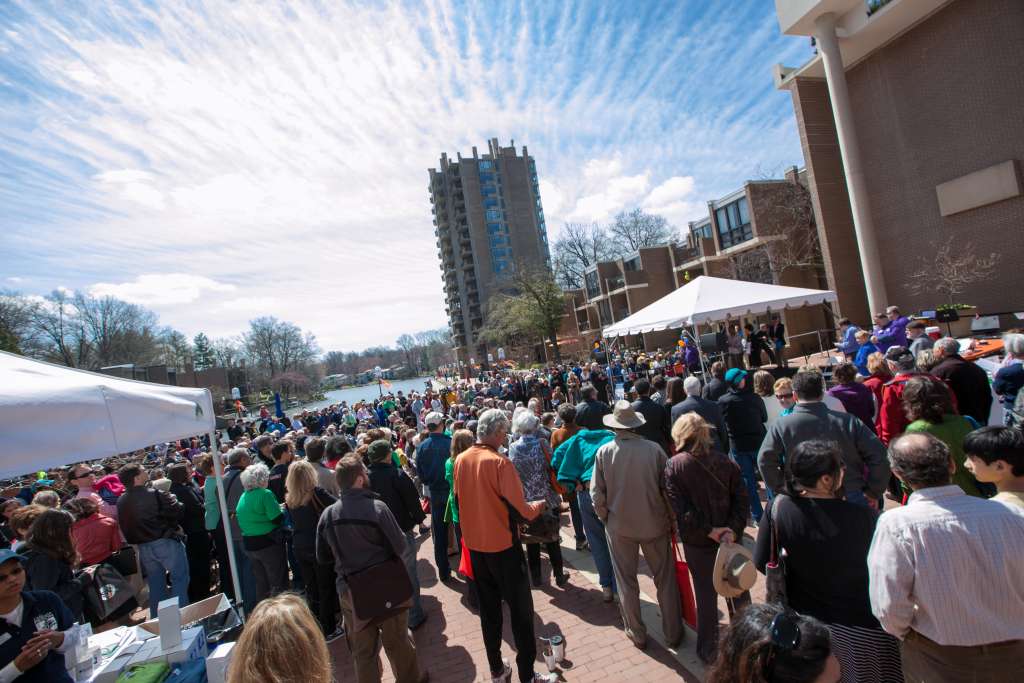
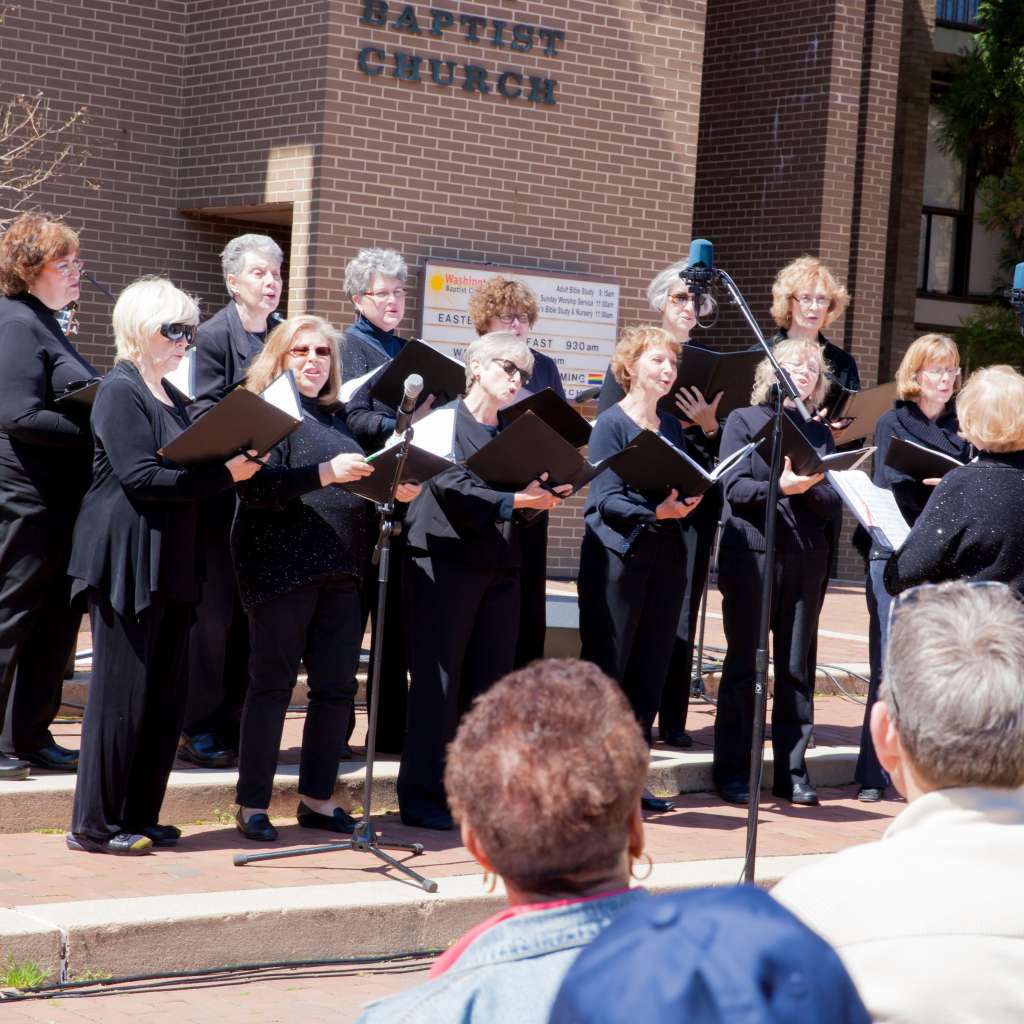
The Unitarian Universalist Church in Reston is sponsoring the first-ever Reston Pride Festival on June 2 from 2-6 p.m.
The family-friendly, alcohol-free event aims to support and celebrate Reston’s LGBTQ community, said the Rev. Debra Haffner, a minister at UUCR.
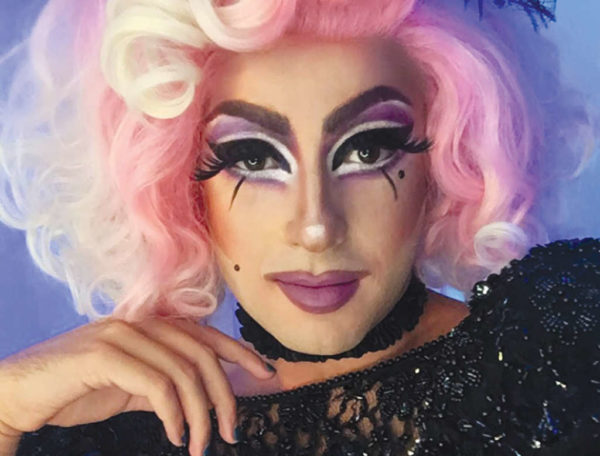
Her son, Greg Tartaglione, will emcee and perform as Mama Celeste, a drag performance artist, at the festival. Mama Celeste will also host Oakland’s first drag festival this month.
“As someone new to Reston, I was surprised to discover that despite Reston’s founding commitment to diversity and inclusion, there had never been a Pride festival in Reston. I am delighted by the enthusiastic response and support we are receiving for Reston Pride, often from groups and organizations that have never spoken out before on LGBTQ issues,” Haffner said.
The festival, which takes place at UUCR, includes more than 10 performers, presentations by area political and faith leaders, exhibits, booths, food, and music.
Reston Community Players will perform “Rock the Ages and “Hairspray” at the festival. State Del. Ken Plum and state Sen. Janet Howell will speak alongside Lisa Merkel, the mayor of the Town of Herndon.
Eighteen cosponsors are supporting the event, including six churches and synagogues, Cornerstones and the YMCA.
To volunteer, email [email protected]. The complete program is available online.
Photo via Myers Public Relations
This is an opinion column by Del. Ken Plum (D), who represents Reston in Virginia’s House of Delegates. It does not reflect the opinion of Reston Now.
This coming Saturday, May 12, I will be sponsoring a Civic Engagement Fair at South Lakes High School from 9:00 a.m. to noon. It will be very similar to the event I sponsored last year that attracted several hundred people. About two dozen representatives of organizations who use volunteers to improve the quality of life in our community will be present to provide information and answer questions. These organizations include political, civic, and human services groups.
There will be no formal program; you visit the booths of the groups about which you hope to learn more and network with the representatives who themselves are mostly volunteers. Come anytime between nine and noon and spend as much time as you would like getting to know the organizations and their missions. Many of the organizations are active not only in our immediate community but in the region, state and national levels as well. The experience of last year was that most attendees found ways in which they wanted to become involved in the civic life of our community. The organizations were pleased as well because they signed up many volunteers.
There is no question that the direction of our national government spurred many people into action. My scheduling of another civic engagement fair this year came about because I continue to hear from individuals in the community that they want to do more to protect the rights and quality of life of all people in our area. Last year many people who showed up had never been engaged as a volunteer on political or civic or human rights issues but were determined to become involved. They left with more information on how to make their own decision on what they would do to help make a difference. The event is open to everyone regardless of political party affiliation and also to those who want to get involved without being engaged in partisan politics.
Satisfaction from being involved to the extent to which persons decide for themselves their involvement can lead to a high level of satisfaction. You can learn this from people you talk to at the Civic Engagement Fair or by talking to others who had previously decided to get more involved in the community. The experience will help to answer the nagging question of “what can I do?” About a quarter to a third of adults throughout the country are involved in some form of volunteer activity.
An article in Harvard Health suggests that many good health benefits come from helping others by volunteering. An article in Forbes last year concluded that “volunteering is the right thing to do for so many reasons: for your community, for your health, for your leadership development…In spite of the stress of life and the lack of time–or maybe because of it–get out there and volunteer. Do good, feel happier, build relationships, learn new skills and have an impact on something important to you.” Hope to see you on Saturday anytime between nine and noon. Look forward to our working together.
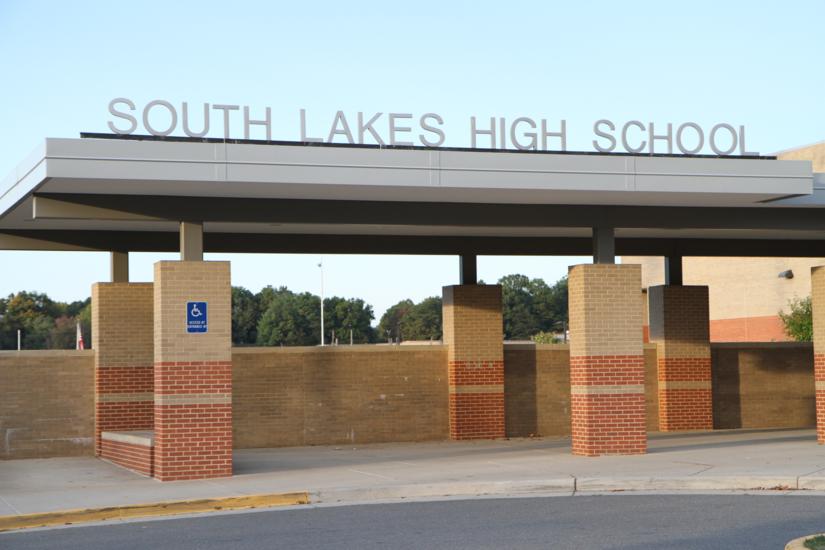
It’s not uncommon, to have the desire to give back to your local community, but no idea who needs help, or where to start.
This Saturday, local residents can stop by the Civic Engagement Fair at South Lakes High School in Reston to meet organizations face to face, and discover different ways to make a difference in the community.
Representatives from 25 different community and civic organizations will be on hand to meet locals interested in giving back through advocacy, volunteering and more.
The event is sponsored by Virginia Delegate Ken Plum, and will take place from 9 a.m. to noon at South Lakes High, 11400 South Lakes Dr.
This is a commentary from Del. Ken Plum (D-Fairfax), who represents Reston in Virginia’s House of Delegates. It does not reflect the opinion of Reston Now.
“The current landscape of the nation has been darkened by storm clouds of hate speech, white nationalist ideology, bias-motivated violence, and rising intolerance,” according to a report of the Inclusive America Project entitled Pluralism in Peril: Challenges to an American Ideal (Aspen Institute, 2018) sponsored by the Aspen Institute Justice and Society Program.
Recently, I had the pleasure of interviewing Meryl Justin Chertoff, Executive Director of The Aspen Institute Justice and Society Program, and to participate in a roundtable discussion of this issue at the All Dulles Area Muslim Society (ADAMS) Center in Sterling. The interview can be found here.
Pluralism refers to the right of all Americans to practice their faith in freedom and security. As indicated from the quote of the Aspen Report in the opening sentence of this column, there are attacks on religious freedom from many directions and in many forms in recent years. Some even question the meaning of religious freedom in our country suggesting that they should have freedom of their religion–most often Christian religion–and not all those other practices that other people want to call religion. After all, the most extreme argue that this country was founded on a belief in God, meaning of course god as they define him or her in their religious beliefs.
A basic problem in defending American pluralism seems to me to be the ignorance on the part of some of basic constitutional protections and how they were secured. Virginia was settled as a land venture by investors who were looking for a way to make money in a colonial empire. First settlers were part of the state church of England as Anglicans or they had no religion at all. As more settlers arrived the minority religions such as Baptists started to arrive, and they objected to having part of their tax money go to the church. Religious conflict occurred as more settlers recognized an opportunity to free themselves from a state-imposed religion.
Soon after Thomas Jefferson penned the Declaration of Independence, he wrote what became known as the Virginia Statute of Religious Freedom, the most important piece of legislation ever passed in the Virginia legislature and I believe in any legislative body. Just as the Declaration had declared political and economic freedom from the mother country, the Statute of Religious Freedom in one sentence of more than 700 words declared in part that “no man shall be compelled to frequent or support any religious worship, place, or ministry whatsoever, nor shall be enforced, restrained, molested, or burthened in his body or goods, nor shall otherwise suffer on account of his religious opinions or belief, but that all men shall be free to profess and by argument to maintain, their opinion in matters of religion, and that the same shall in no wise diminish, enlarge or affect their civil capacities.”
The challenges to our pluralism must be countered by our unwavering support of our own beliefs as well as the right of others to their own religious beliefs. As the report on pluralism found, “this work requires decency, sympathy, appreciative curiosity about difference, and concern for our shared beliefs.”
File photo
This is a commentary from Del. Ken Plum (D-Fairfax), who represents Reston in Virginia’s House of Delegates. It does not reflect the opinion of Reston Now.
The Commonwealth of Virginia made a significant step last week in setting the record straight on the settlement of the land area now known as Virginia by dedicating a memorial to the earliest Virginians on the grounds of the State Capitol in Richmond. Too often discussions about the settlement of Virginia start with English settlers landing at Jamestown in 1607. While that event is most important, it should not over-shadow the fact that indigenous people lived in the region for 12,000 to 17,000 years before that depending on the archeologists with whom you speak.
How they got here is also discussion as to whether it was a northern route through what is now Alaska or east from Europe. Their population at the time the English arrived is estimated to be about 50,000. They had a system of governance built around 30 tribes in a confederation under the Powhatan paramount chiefdom. They had a system of agriculture, held religious beliefs built around nature, and were good stewards of the environment.
During two periods of history Virginia Indians were almost obliterated. The English settlers brought diseases against which the indigenous people were not immune and superior weapons that killed or drove off the Indians. In 1924 with the passage of the Racial Integrity Act in Virginia, Indians were no longer recognized. That law made you either white or if you had one drop or more of “colored” blood you were non-white. Current day Virginia Indians have great difficulty tracing their lineage because of this law that did not recognize their ancestors.
After a couple decades of study and advocacy the federal government on January 29, 2018 officially recognized seven Indian tribes along with an additional four tribes that had been recognized by the state. Only two of the tribes, the Pamunkey and Mattaponi, have retained reservation lands assigned by treaties made with the colonists.
Last week Governor Ralph Northam led the ceremony on the grounds of the State Capitol dedicating Mantle, the Virginia Indian Tribute monument. The name Mantle is taken from the deerskin decorated with beads and shells that Chief Powhatan wore around his shoulders. The monument is like a labyrinth viewed by the many Indians as a sacred symbol. It is shaped like a nautilus, a growing symbol of strength. The area is naturally landscaped with a meditation area and infinity pool. Learn more at indiantribute.virginia.gov/monument.
The General Assembly held a successful Reconvened Session last week in which the Governor’s vetoes were sustained. The Special Session in which the General Assembly continues to work on a budget for the next two years has not adjourned. A budget that includes a plan for Medicaid expansion for persons who cannot afford health care is likely to be completed in the next couple of weeks. Significant progress is being made on a very important step for all Virginians.
This is a commentary from Del. Ken Plum (D-Fairfax), who represents Reston in Virginia’s House of Delegates. It does not reflect the opinion of Reston Now.
Legislators who were in Richmond on April 13 for the Special Session to complete work on the biennial budget interrupted their work on April 18 for the Constitutionally required Reconvened Session commonly referred to as the “veto session.” In 1980 the State Constitution was amended to provide that on the sixth Wednesday after the adjournment of a regular session the General Assembly is to reconvene “for the purpose of considering bills which may have been returned by the Governor with recommendations for their amendment and bills and items of appropriation bills which may have been returned by the Governor with his objections.” Prior to the establishment of a reconvened session, a Governor could veto bills without concern that the vetoes would be over-ridden.
Governor Terry McAuliffe set a record with nearly a hundred vetoes all of which were sustained by the General Assembly even if by the narrowest margin. Governor Ralph Northam has exercised his veto powers on eight measures that are highly unlikely to be challenged with the almost even distribution of partisan representation in both the House and Senate. A two-thirds vote is required to pass legislation without the Governor’s approval. In the case of Governor McAuliffe and now Governor Northam, vetoes by the other branch of government–the executive branch–have kept the General Assembly from enacting some of the more divisive laws on social issues proposed by extremely conservative legislators.
Two of the bills Governor Northam vetoed related to voter registration records that would unnecessarily burden the registration and voting process under guise of preventing fraud and abuse. Virginia has not had a problem with voting irregularities; the state’s problem has been to get more people to vote since Virginia has among the lowest levels of participation in the nation. Efforts to make it easier to vote such as “no excuse” absentee voting have been defeated in the General Assembly.
The Governor vetoed three bills that would limit the powers of local government when the local governments are in the best position to know what would best serve the people of a locality. One bill would have prohibited local governments from requiring contractors to pay more than minimum wage for work for the locality and another would interfere on local governments establishing property tax rates for country clubs. A bill that would prohibit “sanctuary cities” of which there are none in Virginia was also vetoed.
The Governor vetoed a bill that would have prohibited state participation in adopting regulations on carbon dioxide cap-and-trade programs thereby limiting Virginia’s ability to deal with climate change. He also vetoed a bill that would have allowed legislators to change legislative district lines between the federal census dates.
In considering bills passed by the legislature, all of which must be signed by the Governor to become law, the Governor can propose amendments. Of the dozens of amendments proposed by Governor Northam, most are technical corrections in language passed in the fast pace of the legislative session.
After the likely one-day Reconvened Session is adjourned, the General Assembly will return to the Special Session to complete the budget. I believe there will be good news to report on the budget very soon!
This is a commentary from Del. Ken Plum (D-Fairfax), who represents Reston in Virginia’s House of Delegates. It does not reflect the opinion of Reston Now.
On a recent early morning walk from my home in the South Lakes area of Reston I met a new neighbor that I learned lately moved into the area weeks ago. I would not call the new neighbor friendly; he seemed to be more disinterested in me although his family acted a bit jittery with me being around. While he may not have been interested in me, hundreds have been interested in and curious about him. A photo I took of him that I posted on social media has elicited nearly 400 reactions. I continue to use the male pronoun, but truthfully I am not sure of the neighbor’s gender.
I introduced the new member of our community on social media as being an albino deer, but I was quickly corrected. The almost white deer did not have the pink eyes, pink nose, and pinkish hooves of an albino deer. One neighbor suggested that he was probably a piebald deer. Although I grew up in rural Virginia where there is a lot of wildlife, I had never heard of a piebald deer. That sent me to the internet where I learned that contrary to popular belief, a piebald deer is not a cross between a normal whitetail deer and an albino. The origin of the word “piebald” comes from “pie” meaning “mixed up” and “bald” meaning “having a white spot.”
Piebalds have various amounts of white and brown patches similar to a pinto pony, and they have normal brown eyes and nose with black hooves like a normal whitetail deer. Their coloration is due to a rare inherited genetic defect that fortunately affects less than one percent of the white-tailed deer population because it also may result in the deer having short legs, scoliosis of the spine, internal organ deformities and other health conditions.
At the risk of turning this story into another diatribe on my part about the importance of diversity in our community and the need to welcome all, I will end with an acknowledgement that some people do not want another someone in the community who may eat their flowers. It does make me appreciate our trails and natural areas where we can see our animal neighbors. When you see our pielbald deer near Snakeden Branch Trail or wherever else in Reston, take a photo if you can and share it on my Facebook page, Kenneth R. Plum. We want him to feel welcome. You might want to call him by the name I understand Terraset Elementary students have given him: Blanca.
By the time you are reading this column I will be back in Richmond for the serious work of the legislature of passing a budget for the next biennium. The outstanding issue to be resolved is the expansion of Medicaid to nearly 400,000 Virginians who do not have health care even though taxes are being collected in Virginia to pay for the program. I support the Governor in his insistence that we approve the expansion. Thanks to all the citizens who have been calling and writing supporting the program. I will be back with details on the budget issue as soon as it is resolved.
The Reston Historic Trust and Museum is hosting the 54th annual anniversary of Reston’s founding.
Founder’s Day is set for Saturday, April 14 from 11 a.m. to 4 p.m. The event will include moon bounces, children’s activities and face painting.
Musical entertainment will be provided by Terrasset Elementary School, Langston Hughes Middle School’s jazz ensemble, Aldrin Elementary School, Lake Anne Elementary School and other local groups and schools.
At noon, local elected officials like state Sen. Janet Howell, state Del. Ken Plum, and Fairfax County Board of Supervisors Chairwoman Sharon Bulova will deliver remarks. Hunter Mill District Supervisor Cathy Hudgins is also scheduled to speak.
Public Art Reston is also hosting a public tour around Lake Anne. The event will also include a book-signing event in the afternoon by local authors LaVerne Gill, Donna Andrews, and Samantha Mina. Artist Zachary Oxman will also provide commentary the impact of Reston on his art.
Founder’s Day is also supported by Reston Community Center and co-sponsored by Reston Association and Public Art Reston.
A complete program is available online.
Photos via Reston Historic Trust and Museum
This is a commentary from Del. Ken Plum (D-Fairfax), who represents Reston in Virginia’s House of Delegates. It does not reflect the opinion of Reston Now.
Our Founding Fathers were brilliant individuals. Not only did they craft a new form of government with the United States Constitution, but they established a government of “we the people” leaving behind monarchies and special privileges. While it created “a more perfect union,” it included within its structure mechanisms upon which the union could be further perfected. While it did take a civil war to bring about the most needed reform that had been debated at the Constitutional Convention and not settled but compromised away, many other reforms and perfections have taken place through constitutional amendments, laws and judicial decisions.
With the massive changes that have taken place in our nation’s history, particularly in civil rights, it is amazing that there have been so few changes to our basic structure of government. Building on the ideals of Thomas Jefferson in the Declaration of Independence that all persons have unalienable rights of life, liberty and the pursuit of happiness, the Constitution and its provisions created a way to realize these goals that ensures America’s greatness is not in its past but in its future.
Most often mentioned in the guarantees that propel our country into future greatness are the freedoms of speech, press and religion. Less discussed in the past but now seen as a critically important right to maintain our free government is the freedom to assemble. If freedoms are to be maintained in the future, it may be our right to assemble that will ensure it happens.
It is somewhat ironic that at a time when the internet enables advocacy blitzes to fill the electronic mail boxes of public officials to support a cause that the crowds of people filling the streets in various marches may be our greatest safeguard. Many feel it is not enough to simply send a letter or brochure or give or listen to a speech; we need to visibly show the depth and breadth of our cause by assembling supporters by the thousands in the heat, cold, rain or sunshine.
I participate in marches in our Nation’s Capital as well as our State Capital to show support for equality in our society and for an end to gun violence. I find the marches inspirational because of the worthiness of the cause and the wonderful people I meet who have such strong dedication and conviction that they will take part however inconvenient. If you have not taken part in a march, I encourage you to do so. After all, assembling together to support our rights is part of what the Founding Fathers had in mind when they included the right to assemble in our Bill of Rights. The other important day to be sure to exercise your right to assemble is on election day when you have an opportunity to express your right as a citizen. It amplifies your voice when you assemble with others to vote for the persons who most clearly are representing your views on issues.
This is a commentary from Del. Ken Plum (D-Fairfax), who represents Reston in Virginia’s House of Delegates. It does not reflect the opinion of Reston Now.
Celebration of the first day of spring had to be delayed last week with a record-breaking spring snow fall. The unusually wet snow that clung to the trees and filled the branches of evergreens with a holiday-like cover was spectacular even with the inconveniences it brought with it. The earliest spring flowers have a way of surviving late season cold snaps and some snow. When the spring flowers emerge, they will be as beautiful as they always are even if a bit delayed.
Spring is not the only thing that is late this year. Completion of the state budget continues to be delayed, although a date has now been set for a special session; the special session will be held in the State Capitol on April 11. The immediate outcome of that session is predictable. The House and Senate will replace the budget that has been sent down by Governor Ralph Northam with the budgets each passed at the end of the regular session, each will reject the budget of the other, and we will send both budgets to a conference committee to resolve the differences.
The big spring snow of last week melted in a week to let spring emerge. It is difficult to envision the thaw that will happen to let a budget be adopted. The major difference is the Senate leadership’s refusal to agree to any form of Medicaid expansion regardless of facts or reason that are presented.
Recently The Commonwealth Institute found that Medicaid expansion in Virginia “would improve the lives of more than 118,000 women in the Commonwealth who are uninsured …Expanding Medicaid would not only save the state millions of dollars, it could save an invaluable number of women’s lives.” That is on top of the mound of evidence that has been presented already for the economic and quality of life advantages of Medicaid expansion.
More than 600 members of faith communities from throughout the Commonwealth have been advocating for the House version of the budget as it contains Medicaid expansion. Last week three former Republican members of the House of Delegates who among them have 60 years of combined experience in the legislature–Tom Rust, Joe May and Harvey Morgan–endorsed the House budget in a newspaper column: “The House budget proposal meets any common definition of conservative budgeting.
It is a Republican-led fiscal plan that makes responsible use of public resources. It funds core services and creates conditions for the private sector and general population to succeed and thrive, while limiting the reach and power of government…This is prudent budgeting in action. It deserves the support of every Virginian, officeholder or not, who professes to favor a responsible philosophy of government.” (Richmond Times Dispatch, March 21, 2018) I too support the House budget and am doing all I can to get it passed! It is a bipartisan effort.
If you would like to join the advocacy effort for Medicaid expansion, I invite you to go to virginiainterfaithcenter.organd look at the suggestions for your involvement. Act now to ensure that the legislature considers your position by April 11. In the meantime, enjoy the emerging spring!
File photo

Engage with your elected representatives — State Del. Ken Plum and Senator Janet Howell will host a legislative town hall tonight at Reston Community Center. [Herndon-Reston Indivisible]
Clear the air about coverage — A Medicare expert will be on site at Reston Regional Library to take questions about the program today. [Reston Regional Library]
Police officer punched last week — A 37-year-old man was arrested late last week after hitting an officer with his fist and spitting at him in Herndon, police said. [Fairfax County Police Department
If you’re out for a late ride — Expect overnight closures on the eastbound lanes of Sunset Hills Road near the intersection of Town Center Parkway through Thursday. [Reston Now]
Photo by Anton Coghlan
This is a commentary from Del. Ken Plum (D-Fairfax), who represents Reston in Virginia’s House of Delegates. It does not reflect the opinion of Reston Now.
On March 26, Senator Janet Howell and I will meet with constituents at the Reston Community Center at Lake Anne from 7:30 to 9:00 p.m. to discuss the outcome of the 2018 General Assembly session. No pre-registration is required. Come with your questions and suggestions or just come to listen to the discussion. While the biggest issue of passing a budget will not be resolved by that time, we will give you the insights we have going into the Special Session scheduled for April 11.
There were areas of slow but positive movement coming out of the regular session. The threshold limit for felony larceny was raised from $200 to $500. The lower amount was catching an unreasonably large number of young people in felony crimes for fairly minor offenses. The change was supported by all the faith and human rights communities with most favoring an even higher threshold amount of $1,000 to $1,500. The newer amount will mean fewer young people, particularly minorities, will face prison time for offenses that in most other states are considered lesser crimes.
Progress was made on reducing “the classroom to prison pipeline” whereby children with misbehaviors were sent into the judicial system for actions that are best handled in the schools as acts of juvenile misbehavior and not crimes. The number of suspensions that schools are permitted to make has been limited. Where such programs have been instituted with appropriate level of resources, the instances of misbehaviors go down and fewer children are incarcerated. Appropriate early intervention is a good investment to save money and to save futures of the young people involved.
It took Virginia until 1952 to ratify the amendment granting women the right to vote although by 1922 the amendment had sufficient states to approve it. The Equal Rights Amendment has yet to receive ratification by a sufficient number of states to add it to the Constitution, and once again the Virginia General Assembly refused to ratify it. A bill to exempt feminine products from the sales tax was defeated, but a bill to ensure that women prisoners were provided such products did pass.
Dozens of gun safety bills were defeated with minimal consideration as were bills to allow guns in places of worship. A bill to approve a “Stop Gun Violence” license plate for motor vehicles passed, and these plates will be available from the Division of Motor Vehicles later this year.
Numerous “dog and cat” regulatory bills were introduced as they are each year. A bill to outlaw tethering of dogs was defeated by legislators from the rural areas of the state.
An effort to outlaw the use of handheld devices while driving was unsuccessful because of a concern on the part of some delegates that such a law would simply provide police officers with an additional opportunity to profile drivers and to pull them over. I continue to support limitations on the use of handheld phones while driving.
And there were many more lesser bills. Check out the entire list at lis.virginia.gov or at pilotonline.com.