
 How much will my Dulles Toll Road ride cost?
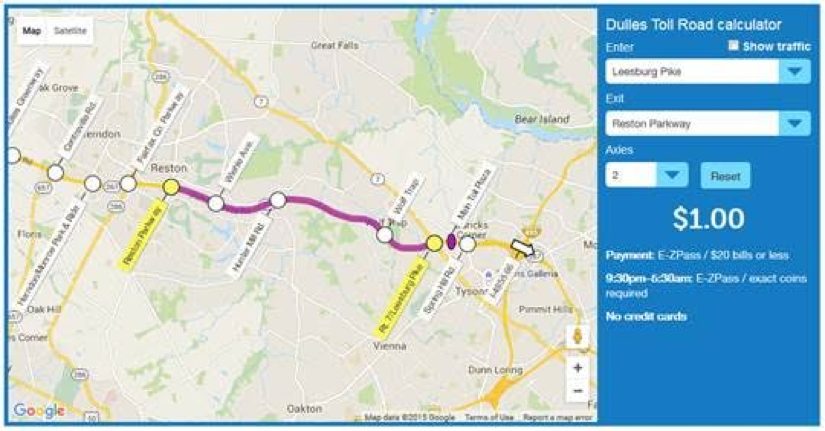
A new feature on DullesTollRoad.com can tell you in advance. The tool allows drivers to plan and calculate their toll on their computer, tablet and mobile devices.
Tolls are calculated after selecting an entry and exit point from drop-down menus or by clicking directly on the map, says the Metropolitan Washington Airports Authority, which operates the toll road.
Depending on the entry and exit points, one-way rates for two-axle vehicles range from $1.00 to $3.50. Tolls are the same whether paid by cash or E-ZPass.
The resulting route is highlighted on the map and the total toll for the trip is displayed. Tolls displayed are for the Dulles Toll Road only, and do not include other adjacent toll highways.
“This new online feature makes access to toll information more convenient for the traveling public,” Cyndi Ward, Dulles Toll Road manager, said in a release. “The toll calculator is an intuitive planning tool that elevates customer service by giving travelers a predictable experience before they drive on the Dulles Toll Road.”
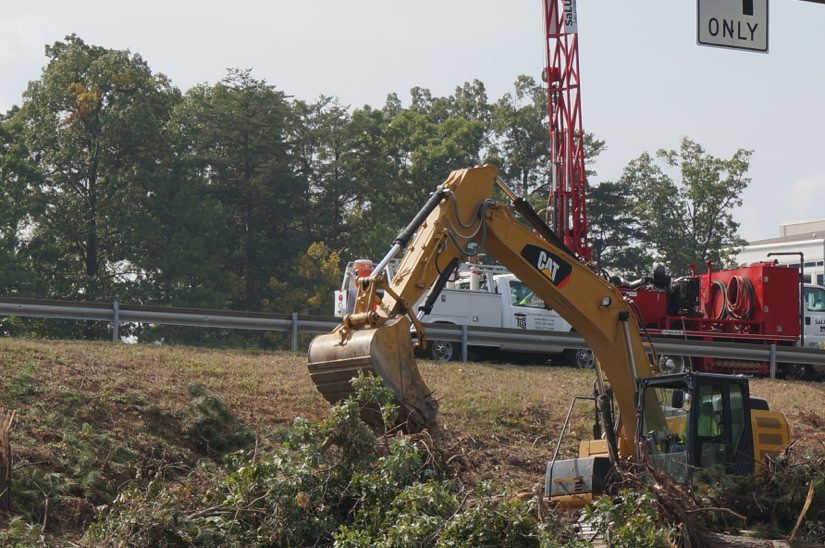
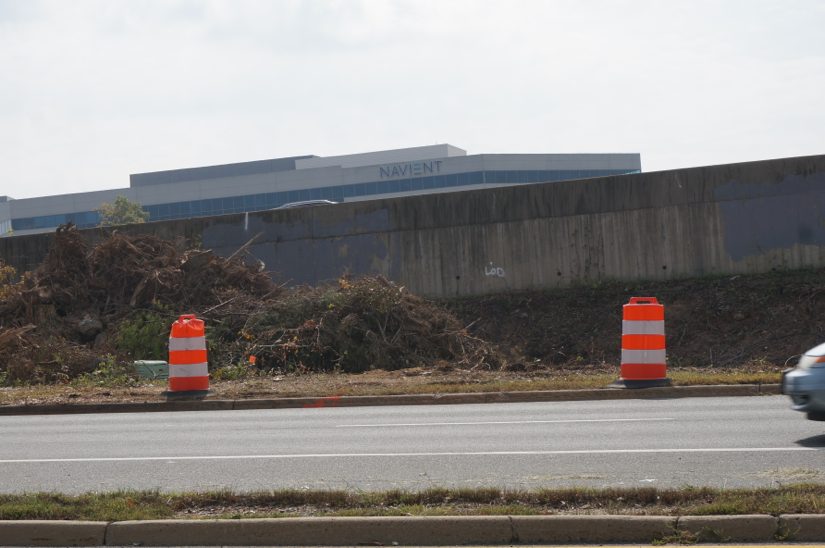
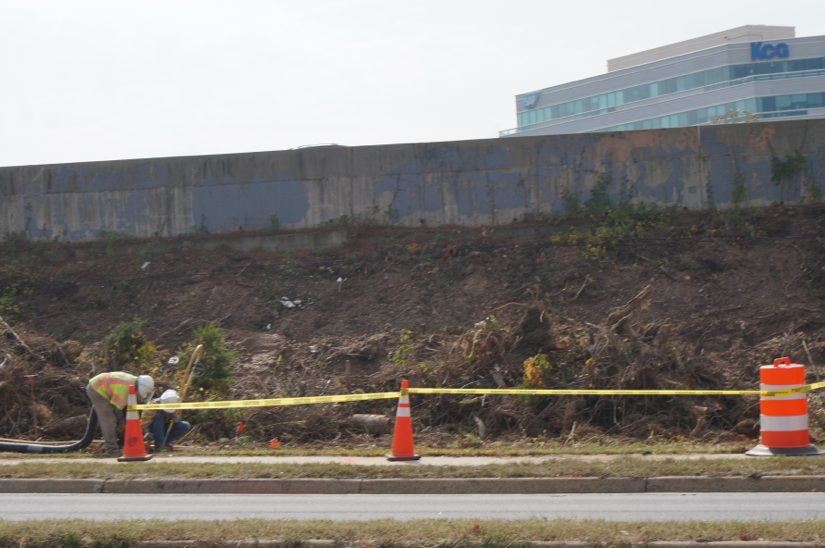
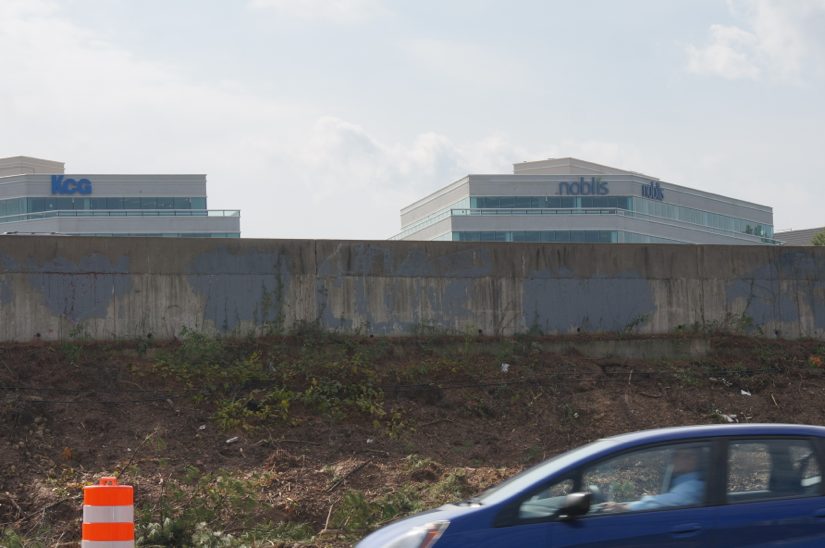
Crews have been busy clearing trees and brush along Sunset Hills Road near Town Center Parkway and the Dulles Toll Road.
The work is in preparation for Phase 2 of Metro’s Silver Line, says the Dulles Corridor Metrorail Project.
The area will be the site of two facilities that will support the Silver Line.
The work is the start of the future Traction Power Substation (TPSS) No. 12 adjacent to Sunset Hills Road, near the Town Center Parkway, says the DCMP.
TPSS No. 12 will provide power and communications to the Silver Line. When that area has been cleared, crews will move south across the Dulles International Airport Access Highway and Dulles Toll Road to begin clearing at the site of Stormwater Management facility.
Phase 2 of the Silver Line, which will have stations at Reston Parkway, Herndon, Route 28, Dulles International Airport and Ashburn, is slated to open in early 2019.
 The Dulles Toll Road’s westbound exit at Hunter Mill in Reston will be EZPass only from Friday morning through Monday morning so crew can do upgrades at the toll booth, the Metropolitan Washington Airports Authority said.
The full-service lane will close at 9:30 a.m. on Friday, March 27 and reopen at 5:00 a.m. on Monday, March 30. MWAA says it does not expect additional traffic backups or delays.
The scheduled maintenance will replace and upgrade equipment at the Hunter Mill exit that assists in identifying vehicles using full-service lanes.
If non-EZPass drivers must use the westbound exit ramp for Hunter Mill Road while the work is being performed, they should contact MWAA Customer Service Center at 877-762-7824.
When the project is complete, full-service lanes will continue to be available at the exit ramp for those wishing to pay with cash. MWAA says nearly 80 percent of drivers using the Dulles Toll Road are utilizing EZPass transponder instead of coins.
Graphic courtesy of MWAA
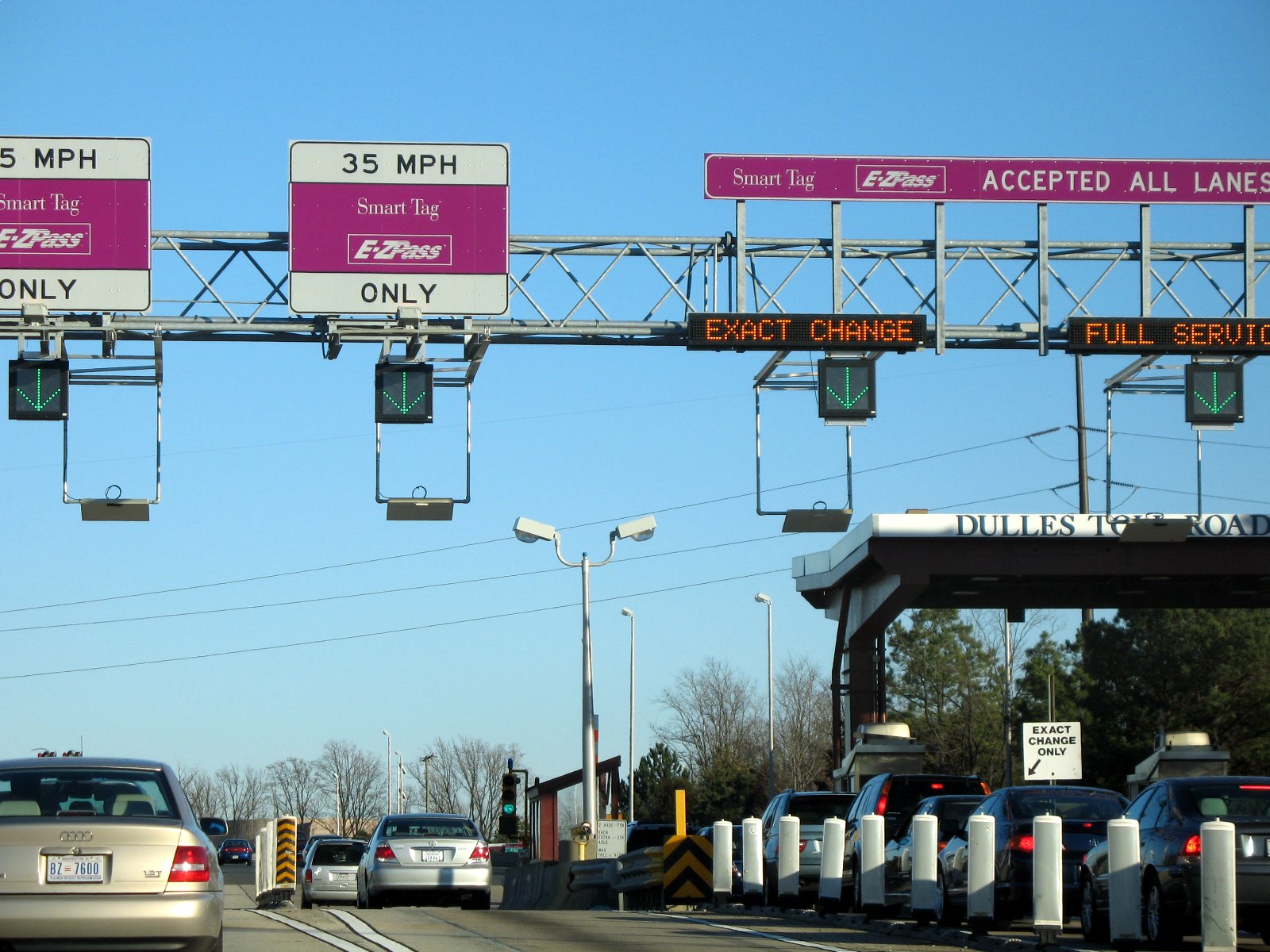 Dulles Toll Road users take note: work on the planned conversion of an exact change lane to an E-ZPass only lane at the eastbound main toll plaza begins tonight.
The work will affect the third lane from the left. The Metropolitan Washington Airport Authority wants to remind drivers to be patient or find alternate routes this evening as work may impact traffic.
The previous lane conversion to “E-ZPass only” was recently completed along the westbound ramp from the Dulles Toll Road to the Fairfax County Parkway.
The ongoing project to convert 19 toll lanes from exact change to E-ZPass only will continue into 2015, MWAA officials said. Four lanes have been converted so far, with 15 remaining to be converted. Conversions will be done one at a time until the project is complete.
After the main plaza eastbound lane is complete, the next lane scheduled for conversion is the far right lane at Westbound Hunter Mill Road, one of the main Reston exits. To keep up with Toll Road plans, MWAA’s Dulles Toll Road page.
Photo: Main Dulles Toll Road Plaza/Reston Now file photo
In an effort for efficiency, more lanes on the Dulles Toll Road will become E-ZPass only, the Metropolitan Washington Airports Authority said on Wednesday.
Beginning Sept. 2, MWAA will convert 19 exact-change lanes into E-ZPass lanes. First up: Westbound Fairfax County Parkways exit, far right lane.
During the conversion project coin baskets will be removed and replaced by upgraded E-ZPass infrastructure. Conversions are scheduled for unattended “exact change” lanes at the main toll plaza and exit ramps along the roadway, says MWAA. To minimize congestion, lanes will be reconfigured one at a time, with each conversion taking two-to-four weeks. When the project is complete, all toll plazas will still have at least one “full service” lane available.
“This lane conversion continues the long tradition of providing a convenient, consistent travel option for drivers in Northern Virginia,” Dulles Toll Road Manager Cyndi Ward said in a statement. “About 90 percent of drivers currently using these lanes are already paying with E-ZPass rather than coins. Full-service lanes will continue to be available at all toll plazas along the roadway for those wishing to pay with cash, but we encourage drivers to consider the added convenience of E-ZPass in order to bypass the lines associated with cash payments.”
Don’t have an E-ZPass? Sign up for one at ezpassva.com.
MWAA will announce other lane conversions as they are about to occur so drivers can plan accordingly.
Photo: Dulles Toll Road/file photo
The Metropolitan Washington Airports Authority said on Wednesday that it intends Dulles Toll Road tolls to remain steady through 2018.
MWAA CEO Jack Potter said the toll halt will be possible in part from a nearly $2 billion government loan the organization is slated to receive. MWAA applied for a $1.9 billion Transportation Infrastructure Finance and Innovation Act (TIFIA) loan in February.
The (TIFIA) program provides federal credit assistance to finance major surface transportation projects of national and regional significance, says MWAA.
While the loan still requires final federal approval, it would benefit drivers on the toll road. By supplying financing at more favorable interest rates than through private capital markets, less money would need to be generated by tolls to cover long-term financing costs for the project.
MWAA is also counting on a previous commitment of $300 million by the Commonwealth of Virginia to offset toll increases, said Potter.
Tolls on the Dulles Toll Road have increased every year for the last five years. Some toll road-watchers such as Reston 2020 have estimated the one-way tolls would rise as high as $20 eventually if officials did not find alternate sources of funding Metro’s Silver Line Phase 2.
Potter said at MWAA’s monthly meeting: “We have already realized significant savings from debt refinancing, a lower-than-expected winning bid for the major design-build contract for Phase 2 of the project and the important contribution of $300 million from the Commonwealth of Virginia during the 2013 legislative session. Securing the TIFIA loan is the final piece of the puzzle to let us freeze toll rates for the next five years.”
At its meeting the board also authorized the issuance of $450 million Dulles Toll Road Revenue Refunding Bonds.
The $2.8 billion Phase 1 — which will run from East Falls Church to Reston’s Wiehle Avenue — received $900 million in federal money. Phase 2, from Wiehle to two additional stops in Reston/Herndon then into Loudoun County and Dulles International Airport, received none. Construction of Phase 2 is expected to begin soon with an estimated opening in 2018.
File photo courtesy of MWAA
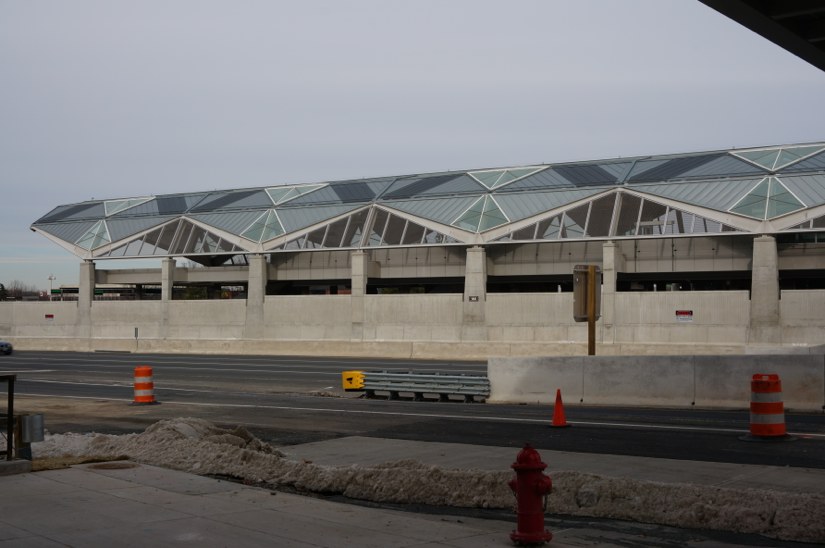 Dulles Transit Partners, the contractor building Metro’s Silver Line Phase 1, is working to complete the rail extension by early April or face substantial fines.
Reston 2020 co-chair Terry Maynard has an idea of what to do with those fines — put them toward alleviating the burden on Dulles Toll Road users, who face mounting costs that will help pay for Silver Line Phase 2.
“I believe that every last cent of those fines should go to stabilizing DTR tolls,” Maynard recently wrote in a letter to Rep. Gerry Connolly (D-11th). “Although the projected sums of the fines are not large compared with the multi-billion dollar price tag of Phase 1 of the line’s construction, we are at the point where every dollar counts.”
DTR told the Metropolitan Washington Airports Authority (MWAA) Feb. 7 that it had “reached substantial completion” on the rail extension, which will run from East Falls Church to Reston’s Wiehle Avenue. However, after a two-week review period, MWAA found issues with 7 of 12 areas, ranging from leaks to problems with the automatic train control system.
The contractor is currently fixing the issues. Then there will be another review period. If the work passes, the project will be turned over to Metro, which has 90 days to complete its own testing before opening the long-awaited Silver Line.
However, The Washington Post reported that DTP’s contract states the contractor must finish the work within seven months of the agreed upon completion date of Sept. 9, 2013 — or face fines in the millions.If the work is not finished within that time, starting roughly April 10, DTP would face a $25,000-a-day penalty until the work is done. If the project is not completed 92 days after that April date, the contractor would have to pay roughly $2.3 million in fines, plus an additional $75,000 a day.
Ultimately, if the project is delayed more than six months from that April date, DTP could be required to pay more than $9 million total. Under the terms of the contract, the payments are capped at $60 million.
Meanwhile, tolls on the toll road may rise substantially to help build Silver Line’s Phase 2, which will run from from Wiehle Avenue to Dulles International Airport and into Loudoun County. The $2.7 billion Phase 2 is being built without federal funding, though it is now expected to get federal TIFIA loans, which are expected to keep tolls at a more reasonable level.
Early last year, MWAA said that toll rates may be as high as $6.75 by 2018 in order to keep pace with Silver Line costs. Independent estimates say the tolls could rise even higher.
“My greatest fear is that fines paid to MWAA will not be used in a manner that advances the Silver Line, much less eases the financial burden on DTR users,” Maynard said in his letter to Connolly. “I also do not think that the ‘funding partners’ allocation of these funds is an equitable or fair way to handle any forthcoming fine revenue.
“As you know well, DTR users are now stuck with about half of the cost of Phase 1 of the Silver Line under the “funding partners” agreement — and most of them won’t be able to use the Silver Line to get to their destinations. Assuring that any fine revenue is directed at easing their growing toll burden would be one small step toward correcting this inequitable arrangement.”
The full text of the letter is below:
Dear Congressman Connolly,
As a Restonian and fellow advocate of the Silver Line, I would like to ask you—as a leader in advancing the Silver Line’s completion—to pursue further financial assistance in alleviating the terrible toll increase burden Dulles Toll Road users are paying for its construction. It appears that an opening is available: If, as reported by the Washington Post, Dulles Transit Partners (DTP) faces substantial fines for further delays in completing the line, I believe that every last cent of those fines should go to stabilizing DTR tolls. Although the projected sums of the fines are not large compared with the multi-billion dollar price tag of Phase 1 of the line’s construction, we are at the point where every dollar counts.
My greatest fear is that fines paid to MWAA will not be used in a manner that advances the Silver Line, much less eases the financial burden on DTR users. I also do not think that the “funding partners” allocation of these funds is an equitable or fair way to handle any forthcoming fine revenue. As you know well, DTR users are now stuck with about half of the cost of Phase 1 of the Silver Line under the “funding partners” agreement—and most of them won’t be able to use the Silver Line to get to their destinations. Assuring that any fine revenue is directed at easing their growing toll burden would be one small step toward correcting this inequitable arrangement.
I hope that you can make sure that the $30 million or so in fines that the Post suggests may be forthcoming will be directly applied to the share of the construction cost borne by DTR users.
In the meantime, thank you for all that you have done to advance the Silver Line’s construction. I certainly hope that its completion is near at hand and we can begin riding the rails soon.
Sincerely,
Terry Maynard
Board of Directors, Reston Citizen Association
Co-Chair, RCA Reston 2020 Committee
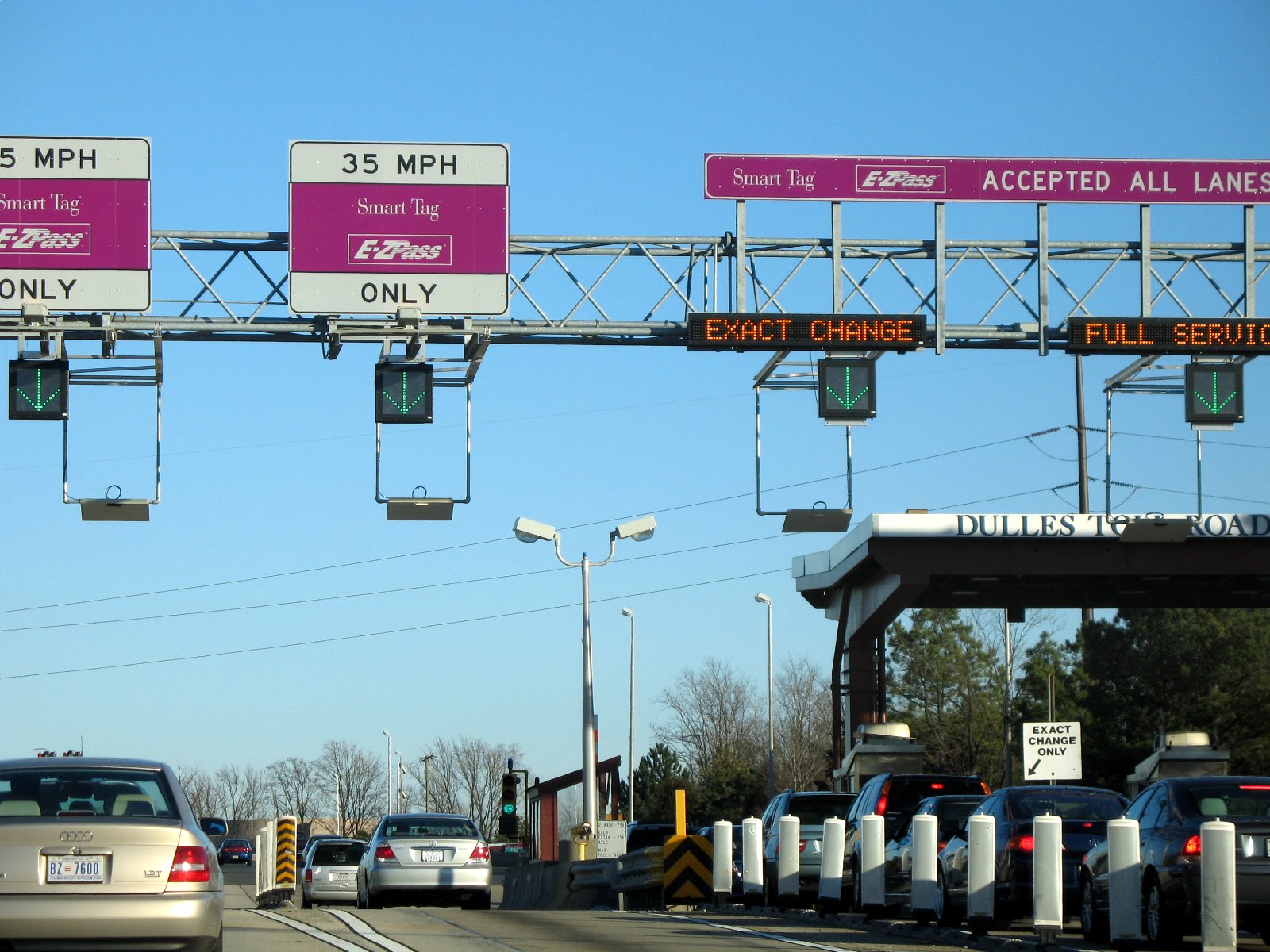 The cost of taking the Dulles Toll Road will rise again on Wednesday.
Starting Jan. 1, the toll at the Main Plaza will rise to $2.50 for vehicles with two axels, a 75-cent increase. The rates at on and off ramps will remain the same during 2014 ($1).
The rates were approved as part of a three-year increase by the Metropolitan Washington Airports Authority in 2012 after several public hearings. Tolls rose 25 cents Jan. 1 of this year to $1.75.
There are no scheduled increases — yet — for 2015, says MWAA.
The toll increases come, in part, because of rising costs for MWAA to construct Metro’s Silver Line. Phase 1 of the Silver Line, which will terminate at Wiehle-Reston East, is expected to see its first riders this spring.
Phase 2, from Wiehle Avenue to Dulles International Airport and into Loudoun County, is expected to be completed in 2018. However, while Phase 1 received $900 million in federal funding, Phase 2 is not getting any, making predictions for future toll hikes quite high. Early last year, MWAA said that toll rates may be as high as $6.75 by 2018 in order to keep pace with Silver Line costs. Independent estimates say the tolls could rise even higher.
MWAA has an agreement with the Commonwealth of Virginia to operate and maintain the Dulles Toll Road for a 50-year period that began in 2008.
The cost of taking the Dulles Toll Road is set to rise again next week.
Starting Jan. 1, the toll at the Main Plaza will rise to $2.50 for vehicles with two axels, a 75 cent increase. The rates at on and off ramps will remain the same during 2014 ($1).
The rates were approved as part of a three-year increase by the Metropolitan Washington Airports Authority in 2012 after several public hearings. Tolls rose 25 cents Jan. 1 of this year to $1.75.
There are no scheduled increases for 2015, says MWAA.
The toll increases come, in part, because of rising costs for MWAA to construct Metro’s Silver Line. Phase 1 of the Silver Line, which will terminate at Wiehle-Reston East, is expected to see its first riders this spring.
Phase 2, from Wiehle Avenue to Dulles International Airport and into Loudoun County, is expected to be completed in 2018. However, while Phase 1 received $900 million in federal funding, Phase 2 is not getting any, making predictions for future toll hikes quite high. Early last year, MWAA said that toll rates may be as high as $6.75 by 2018 in order to keep pace with Silver Line costs. Independent estimates say the tolls could rise even higher.
MWAA has an agreement with the Commonwealth of Virginia to operate and maintain the Dulles Toll Road for a 50-year period that began in 2008.