

(Updated 8:27 a.m. with comment from FCPS official)
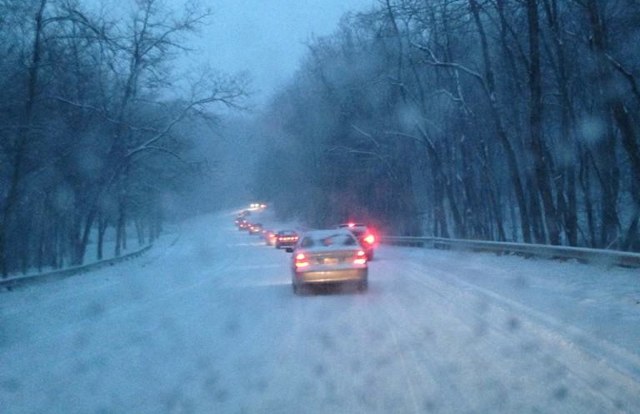
Restonians woke up to about an inch of snow, as predicted, on Tuesday morning. The snow continued to fall through rush hour.
Early commuters were greeted with many untreated roads and hazardous driving conditions.
Fairfax County Schools opened on time, which led to criticism on social media from some parents. Nearby, school systems in Montgomery County, Md., and Alexandria both had two-hour delays.
Assistant Superintendent of Fairfax County Public Schools Jeffrey Platenberg told WTOP that the school system was surprised by the amount of snow that fell Tuesday morning.
Administrators were expecting a dusting, but were surprised when the snow came down heavy and traffic became a major issue, Platenberg said.
He says things were already in motion and changing the plan late in the game would have been a bigger inconvenience for parents who had already left the house.
“We apologize for any inconvenience, but the timing of this was the worst possible situation we could have imagined,” Platenberg said.
The school district sent out an alert that some buses may be delayed. The county also sent an alert warning of multiple accidents, significant delays and advising “please use extreme caution while driving and expect a lengthy delay in your commute.”
Do you think there should have been a delay for FCPS? Tell us in the comments.
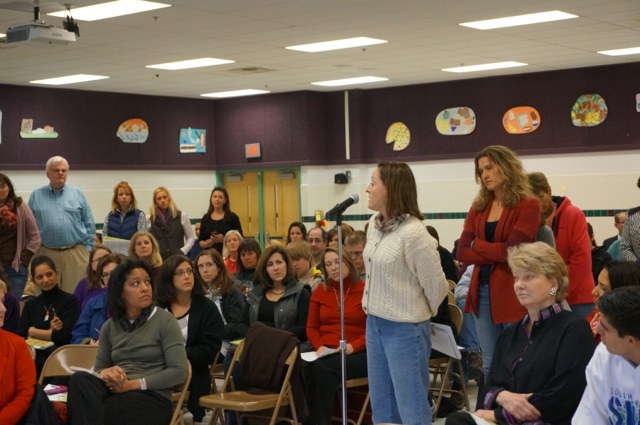
Fairfax County Schools Superintendent Karen Garza stopped in Reston on Saturday as part of her principal’s listening tour.
What she found was a packed house at Hunters Woods Elementary School and more than 30 parents ready to speak out on issues ranging from class size to special needs to cyberbullying.
The five-stop listening tour is key part of outreach as FCPS prepares for what might be a brutal budget cycle, said Garza.
Continued growth — the district grows by 17 to 20 students a day, she said — hiring needs and class sizes will continue to be a challenge. So will compensating current teachers and adding to the retirement funds without cutting student services, said Garza
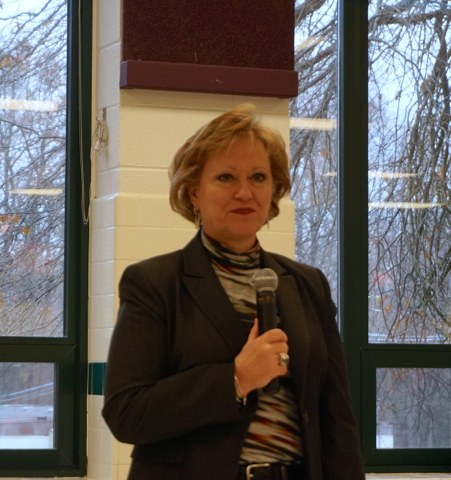 “Over last six years, we have grown by almost 20,000 students,” said Garza.
“When we look at our capital improvement dollars, which are quite limited, we can’t stretch them far enough. Teacher salaries: I am not happy with where we are. By comparison, when you look at a 10-year teacher, there are only two area systems lower than we are. The two things I mentioned are two significant parts of the budget. Eighty-eight percent of our budget is personnel cost.”
Garza, who is in her second year as FCPS’ superintendent, said that over the last six years, 2,146 positions have been cut (731 in 2014 alone).
“Those are real people who ordinarily would have been serving children,” she said. “Our demands are increasing and our resources are decreasing.”
More than two dozen community members lined up to speak to Garza. While they spoke on a wide range of subjects, there were a few themes that ran through the conversations.
Class size. With class sizes creeping up close to or above 30 students, many parents have concerns.
“This is a major, major issue” said a mom with children at Reston’s Aldrin Elementary School. “My daughter’s math class is 36. Teachers have gone above and beyond the call of duty. At some point, they are going to be tapped out and can only go so far.”
Said another Aldrin parent: “How are you going to have project-based learning in classrooms with the poor teacher trying to manage 35 kids? The system needs to focus on basics — reasonable class with 26 to 28 at most.”
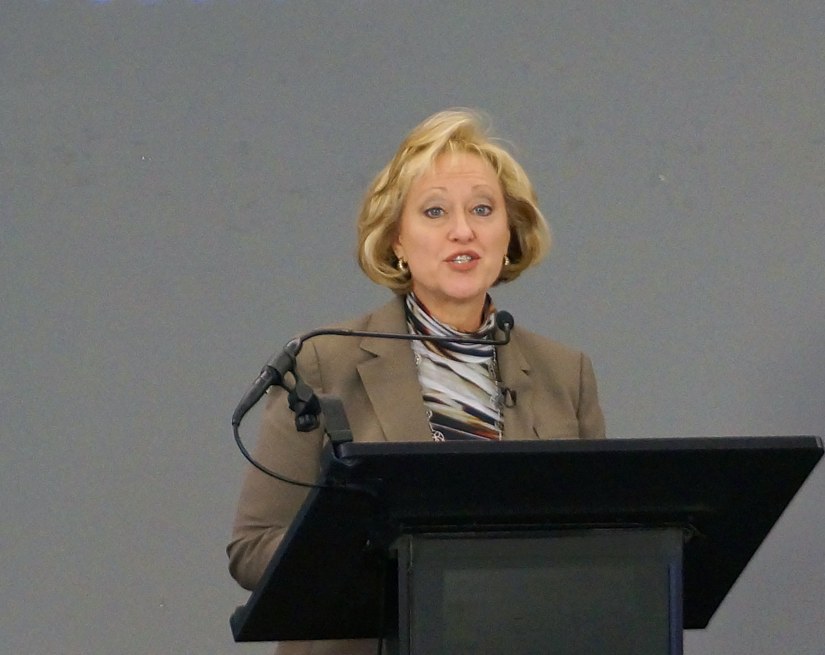 Fairfax County Public Schools Superintendent Karen Garza will visit Hunters Woods Elementary School in Reston on Saturday as part of the Superintendent’s Listening Tour.
Students, parents, employees, and community members are invited to the meeting at 9 a.m. in the Hunters Woods cafeteria. Hunters Woods is located at 2401 Colts Neck Rd.
Garza will discuss school issues and the priorities for Fairfax County schools and listen to ideas, comments, and questions from the audience, according to a county press release.
FCPS is getting ready to plan the 2016-17 budget, and is facing a budget shortfall. The school system is expected to have more than 186,000 students. Since FY 2008, FCPS’ enrollment increased by nearly 22,000 resulting in increased costs of more than $190 million, Garza said in a county presentation last week.
FCPS needs an additional $74.5 million for 2016 alone to cover capital needs, debt service and the additional cost of adding full-day Mondays, among others, according to the county budget forecast.
Those planning to attend the meeting are asked to please register on the FCPS website.
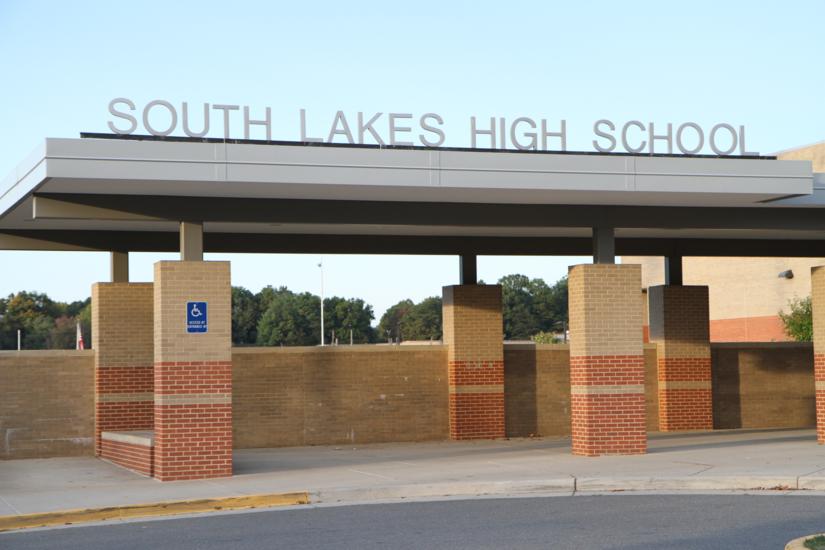 After years of discussion, the Fairfax County School Board finally approved later high school start times for seniors on Thursday.
Starting in 2015-16, high schools will start at 8 to 8:10 a.m. instead of 7:20 a.m. Middle schools will begin at 7:30 a.m. instead of 8 a.m. Elementary schools will essentially stay the same starting from 8 to 9:20 a.m.
The board chose an amended version of Option 3 as the preferred way to proceed with changing high school start times.
The board had been presented with four options from experts at Children’s National Medical Center who worked with the school system on a study on teens and sleep and also on the best ways FCPS could implement a new system.
The issue of later start times has been debated and explored for more than a decade in this community,” Tammy Derenak-Kaufax, School Board chairman, said in a statement. “The growing body of research on the health benefits for adolescents has become so clear and compelling, we felt that we had to make a change.”
The preferred option, chosen by Superintendent Karen Garza in September, has high schoolers starting the day between 8 and 8:10 a.m. Middle schools will begin at 7:30 a.m. Elementary schools will remain largely unchanged, with starting bells from 8 to 9:20 a.m. Secondary Schools will follow the high school bell schedule.
Changes will go into effect for the 2015-16 school year and will cost about $4.9 million to implement, says Garza.
“We believe it is best to give our families and employees plenty of time to adjust to a change of this magnitude,” Garza said after the meeting. “Between now and next September, we will work with intention to finalize bell schedules and to make needed adjustments to ensure that this is a smooth transition for our stakeholders and our community.”
Even though the start time issue is geared at letting teenagers get crucial sleep, the youngest teens will still have to be at school a half hour earlier than the current 8 a.m. start time.
FCPS at-large board member Ryan McElveen says the proposed middle school time is not that different than the current schedule. McElveeen said the board will try to move towards even later start times in upcoming years.
“Although the plan is not perfect, it is the best feasible hybrid of multiple plans,” he told Reston Now in September. “Over the coming years, the board will continue to support pushing the middle school start time closer to 8 a.m. through small efficiencies that are realized annually.”
The FCPS board has been talking about changing the high school start times for several years, and made a formal proposal in 2012 to move the high school start time from 7:20 a.m. to after 8 a.m.
They commissioned doctors from Children’s National Medical Center, whose report said teenagers were chronically sleep deprived. Pushing high school start times past 8 a.m. would have an impact on everything from behavior to grades to driving records and sports injuries, the CNMC experts say.
In August, the American Academy of Pediatrics issued a policy statement that recommended later start times so that school schedules would be aligned with the biological sleep rhythms of adolescents.
The board held a series of community meetings last spring to gain public feedback on four options for changes.
The original Option 3 had high schools beginning from 8 to 8:10 a.m. and ending between 2:30 and 2:40 p.m. Elementary schools would start between 8 and 9:20 a.m., which is essentially the current schedule. Middle schools would see a big change with a 7:20 a.m. start and a 2 p.m. dismissal.
The board says that in the future, “our goal will be to continue to seek improvements for even later start times so that middle schools will move towards 8 and high schools will move towards 8:30.”
The revised plan will cost less than anticipated, according to FCPS documents. The original Option 3 was estimated to cost $5.5 million, mostly to cover 46 new buses.
The revised plan will use fewer buses, and the purchase of 20 new buses has already been allocated in the FY 2015 school board budget, bringing costs to an estimated $1.5 million to $4.9 million.
 About one-fifth of Fairfax County High School students report drinking alcohol in the last 30 days and nearly 10 percent report binge drinking more than five drinks at a time in the last two weeks — numbers that show a decline from previous years.
Those stats were among the findings of the 2013 Fairfax County Youth Survey, released by Fairfax County Public Schools this week.
The Youth Survey, organized in a cooperative effort every two years by Fairfax County and FCPS, polls eighth, 10th and 12th graders about their health habits, including substance abuse and sexual history. The questions were answered last school year by 32,439 students.
Among some of the report’s key findings:
Approximately two-fifths of Fairfax County students (41.1%) reported drinking alcohol at least once in their lifetime, with over three-fifths of twelfth-grade students (62.9%) having consumed alcohol at least one time. The percentage of students using alcohol in their lifetime has declined since 2011 by 4.4 percentage points.
Approximately one-fifth of the students reported using marijuana in their lifetime (21.0%), ranging from 5.3% of eighth-grade students to over one-third (38.3%) of twelfth-grade students. The 2013 rate was higher than in 2010 (20.2%) and 2012 (20.5%), but lower than 2011 (22.0%).
A higher percentage of students reported having ever smoked cigarettes in 2013 compared to 2012 (17.5% vs. 16.6%, respectively). The 2013 rate ranged from 7.8% of eighth-grade students to 29.1% of twelfth-grade students.
Almost 1 in 10 Fairfax County students (9.1%) reported using painkillers without a doctor’s order in their lifetime, and a slightly smaller percentage (7.3%) reported using other prescription drugs without a doctor’s order in their lifetime. Read More
After months of community meetings and a half-dozen school board work sessions, Fairfax County Public Schools Superintendent Karen Garza is finally ready to formally recommend a new bell schedule for the system. Garza will present the changes to the school board on Thursday, and the board will vote on it in October.
The new schedule, aimed at letting teenagers get more sleep, will have high schools starting between 8 and 8:10 a.m. (formerly 7:20 a.m.) and middle schools starting at 7:30 a.m. (formerly 8 a.m.). The changes would go into effect in 2015-16.
The majority of elementary schools will start about the same time as they do this year.
The Fairfax County School Board adopted a resolution in April 2012 to seek solutions to establish high school start times at 8 a.m. or later. It later hired experts from Children’s National Medical Center to develop a proposal and options towards that goal.
The experts said teens are chronically lacking in sleep and changing the start times would help their academic performance as well as physical and mental health.
However, the proposed bell schedule has one group of teens — the youngest ones, in middle school — actually starting school a half hour earlier, though Garza has said her goal is to work towards eventually moving middle school bells to after 8 a.m.
What do you think of the bell schedule?
Photo: FCPS Superintendent Karen Garza/File photo
The Fairfax County Public Schools board has chosen an amended version of Option 3 as the preferred way to proceed with changing high school start times.
The board will vote Oct. 23 on a bell schedule that has high schoolers starting the day between 8 and 8:10 a.m. Middle schools will begin at 7:30 a.m. Elementary schools will remain largely unchanged, with starting bells from 8 to 9:20 a.m. Secondary Schools will follow the high school bell schedule.
Superintendent Karen Garza will submit this option for the School Board’s formal consideration as a new business item at its regular business meeting on Sept. 18. The School Board is scheduled to vote on it on Oct. 23.
Changes will go into effect for the 2015-16 school year.
Even though the start time issue is geared at letting teenagers get crucial sleep, the youngest teens will still have to be at school a half hour earlier than the current 8 a.m. start time.
“The proposed middle school time does not differ much from what it is currently,” said FCPS Board at-large member Ryan McElveen. “And since it is only two years as opposed to the four high school years, that means that 10-11 of a student’s 13 years in FCPS will have a start time after 8 a.m.”
The FCPS board has been talking about changing the high school start times for several years, and made a formal proposal in 2012 to move the high school start time from 7:20 a.m. to after 8 a.m.
The school board worked with sleep experts at Children’s National Medical Center, who said teenagers were chronically sleep deprived. Pushing high school start times past 8 a.m. would have an impact on everything from behavior to grades to driving records and sports injuries, the CNMC experts say.
The board held a series of community meetings last spring to gain public feedback on four options for changes.
The original Option 3 had high schools beginning from 8 to 8:10 a.m. and ending between 2:30 and 2:40 p.m. Elementaries would start between 8 and 9:20 a.m., which is essentially the current schedule. Middle schools would see a big change with a 7:20 a.m. start and a 2 p.m. dismissal.
The board says that in the future, “our goal will be to continue to seek improvements for even later start times so that middle schools will move towards 8 and high schools will move towards 8:30.”
The revised plan will cost less than anticipated, according to FCPS documents. The original Option 3 was estimated to cost $5.5 million, mostly to cover 46 new buses.
The revised plan will use fewer buses, and the purchase of 20 new buses has already been allocated in the FY 2015 school board budget, bringing costs to an estimated $1.5 million to $4.9 million.
“The preferred option that the board decided to support has been narrowed over several board meetings from four initial options, on which the board received significant input from community meetings,” McElveen said. “The board determined that this preferred option, which includes the same 8 a.m. start time for all students at secondary schools and high schools, was the best solution after hearing input from secondary principals who expressed concern with starting their middle and high school students at different times.
“Although the plan is not perfect, it is the best feasible hybrid of multiple plans. Over the coming years the board will continue to support pushing the middle school start time closer to 8 a.m. through small efficiencies that are realized annually.”
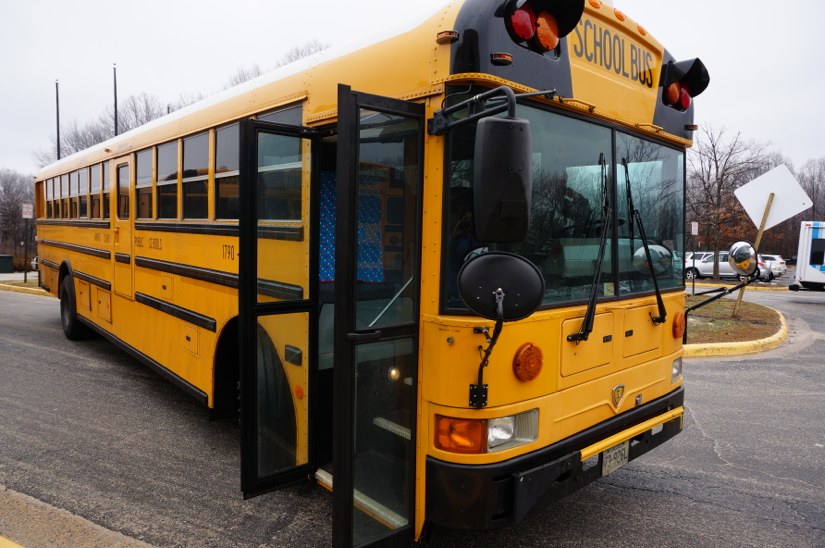 The Fairfax County Public Schools board has narrowed down its favored option for changing high school start times.
The board will discuss an amended version of Option No. 3 at a work session on Monday. The proposal is one of four schedules developed by sleep experts from Children’s National Medical Center that were presented to the community for feedback last spring.
High school students in Fairfax County currently start school at 7:20 a.m., a time that leaves them chronically sleep deprived. Pushing high school start times past 8 a.m. would have an impact on everything from behavior to grades to driving records and sports injuries, the CNMC experts say.
The FCPS Board voted in 2012 to change start times. They hope to have a plan implemented by the 2015-16 school year.
The original Option 3 had a 6 hour, 40 minute school day, with high schools beginning from 8 to 8:10 a.m. and ending between 2:30 and 2:40 p.m. Elementaries would start between 8 and 9:20 a.m., which is essentially the current schedule. Middle schools would see a big change with a 7:20 a.m. start and a 2 p.m. dismissal.
The amendments that will be discussed by the school board include a school day that is five minutes longer and pushing the middle school start until 7:30 a.m. The board says that in the future, “our goal will be to continue to seek
improvements for even later start times so that middle schools will move towards 8:00 and high
schools will move towards 8:30.”
The revised plan will cost less than anticipated, according to FCPS documents. The original Option 3 was estimated to cost $5.5 million, mostly to cover 46 new buses.
The revised plan will use fewer buses, and the purchase of 20 new buses has already been allocated in the FY 2015 school board budget, bringing costs to an estimated $1.5 million to $4.9 million, depending on which areas are amended.
The board says it intends to vote on a final bell change in October.
Fairfax County Public Schools have added security measures in place for the new school year.
The Washington Post reports that all FCPS high schools now have secured doors with video surveillance in place.
The new measures are part of stepped up security that officials put in place after reviewing procedures in the wake of the 2012 school shootings at Sandy Hook Elementary School in Newtown, Conn.
Fairfax schools security coordinator Jim McLain told the Post that at the time of the shootings, five elementary schools and all but one of the county’s 22 high schools lacked advanced door-locking systems. McLain says all front entrances at high schools in Fairfax, including at Herndon High and South Lakes High, are equipped with new door-access systems.
The county’s 1,300 cameras can be accessed in real time by administrators on site and remotely at other locations, he added.
“I think closed-circuit television has become as fundamental to today’s society as doors and window locks,” McClain said. “We want their kids to be safe in schools.”
To review FCPS’ safety and security questions and answers, visit this FAQ section on the FCPS website.
 Some Fairfax County Public School cafeterias are going to get healthier this school year.
Following the success of a pilot program at Marshall High last year, the system plans to have fresh fruit and vegetable stations in all middle and high schools by the end of 2014-15, and eventually in all elementary schools, says school board at-large member Ryan McElveen.
Marshall was the test market for “The Statesman Station” after the school board voted in 2012 to fund the changes. On the menu at Marshall, at least during an unveiling to local officials: Mixed Green Salad with Spinach and Chopped Kale; Waldorf and Cranberry Salad; Falafel Flatbread Sandwich with Tzatziki Sauce; Kung Pao Chicken and Lo Mein Noodles; and Yogurt Parfaits and Naked Juice Smoothies.
Those changes came in part from the national Let’s Move campaign founded by First Lady Michelle Obama and a grassroots effort by local parents, Real Food For Kids, to improve the quality of school lunch. The school board also commissioned a study by Prismatics Inc., which made recommendations on how to improve FCPS meals.
While FCPS was meeting national U.S. Department of Agriculture standards in its offerings, Real Food For Kids challenged the system to take it a step further.
“While FCPS adheres to USDA guidelines for school lunches, we know that we can do so much better,” reads the Real Food For Kids mission statement. “We want all children to eat in schools the way our grandmothers taught us to eat. Pure and simple. It’s not rocket science and it’s not radical — it’s simply right.”
“We desire an open, positive dialogue between FCPS Administrators, Food Nutrition Services, and FCPS PTAs / Parents. Teamwork! The RFFK Resolution has already been adopted by the Fairfax County Council of PTAs (FCCPTA) and a growing number of the school PTAs/PTOs.”
Among the Reston-area schools adopting the resolution: Armstrong ES, Aldrin ES, Forest Edge ES, Herndon ES, Herndon HS, Lake Anne ES, South Lakes HS, Sunrise Valley ES and Terraset ES.
“In only two years the school board, in collaboration with the Fairfax community, has stimulated a marked improvement in school food, and it remains committed to raising children to live healthier and more vibrant lives,” McElveen recently wrote on his blog.
Find out how your school can adopt the RFFK Resolution by visiting Real Food For Kids.
What do you think about the quality of FCPS food? Take our poll.
Photo: Test salad bar at Marshall High School/Credit: FCPS
It’s the first day of school for Fairfax County Public School students, who may follow new educational goals in the future under a new “portrait of a graduate” proposal from Superintendent Karen Garza.
Garza will make a presentation to the school board later this week, and the board could vote on the new standards later in September.
The “portrait of a graduate” will serve as a foundation “on which to build a long-range strategic plan for the school system that will lessen the focus on standardized, high-stakes testing,” Garza said in a FCPS video (attached to this article) announcing the plan.
See the entire outline of the portrait of a graduate on the FCPS website.
According to Garza’s proposal, the ideal Fairfax graduate will engage in the lifelong pursuit of academic knowledge. Desired goals for students include: effective written and oral communication skills; open-minded collaboration with peers to examine a full range of viewpoints; and for graduates to be global citizens; and promote environmental stewardship.
Graduates should also be creative and critical thinkers who demonstrate “divergent and ingenious thought to enhance the design/build process,” and express thoughts and ideas through the arts. They will show persistence in accomplishing difficult tasks and overcome academic and personal barriers to meet goals, the proposal materials state.
Garza said in the FCPS video that students are the most important aspect of the organization and they need a variety of skills to compete in today’s society.
“How should we create success and opportunities for every child every student to be successful in life beyond high school, whether that is going into the workforce or going into college?.” Garza said of the proposal. “We know they are graduating into a world that is rapidly changing. Many of them will have 11 different jobs in many different industries. That has caused us to take stock and really ask ourselves — are we teaching the skills necessary for success in that rapidly changing world?”
The concept of “portrait of a graduate” was designed by a 70-member task force of parents, teachers, principals and local business leaders.
Fairfax County Public Schools have an ally in the quest to change high school start times — the American Academy of Pediatrics.
The AAP issued a new position statement on Monday that says high schools should begin after 8:30 a.m. The lead author of the study is Dr. Judith Owens, the same sleep researcher that led FCPS’ proposal for time changes.
If middle and high schools start class to 8:30 a.m. or later, it will align school schedules to the biological sleep rhythms of adolescents, whose sleep-wake cycles begin to shift up to two hours later at the start of puberty, the academy’s new statement, titled “Let Them Sleep,” says.
“Chronic sleep loss in children and adolescents is one of the most common — and easily fixable — public health issues in the U.S. today,” said Owens, a pediatrician.
“The research is clear that adolescents who get enough sleep have a reduced risk of being overweight or suffering depression, are less likely to be involved in automobile accidents, and have better grades, higher standardized test scores and an overall better quality of life,” Dr. Owens said. “Studies have shown that delaying early school start times is one key factor that can help adolescents get the sleep they need to grow and learn.”
The AAP urges middle and high schools to aim for start times that allow students to receive 8.5 to 9.5 hours of sleep a night. In most cases, this will mean a school start time of 8:30 a.m. or later, though schools should also consider average commuting times and other local factors.
“The AAP is making a definitive and powerful statement about the importance of sleep to the health, safety, performance and well-being of our nation’s youth,” Dr. Owens said. “By advocating for later school start times for middle and high school students, the AAP is both promoting the compelling scientific evidence that supports school start time delay as an important public health measure, and providing support and encouragement to those school districts around the country contemplating that change.”
That is essentially the same information Owen has presented to FCPS, which is seeking change from the current 7:20 a.m. start time.
The FCPS school board voted in 2012 to commit to starting high school later. The board hired Children’s National Medical Center experts to prepare a report and then make recommendations on changing start times.
Last spring, the CNMC group recommended four options for change, which were presented to community members in a series of town hall meetings.
In July, the medical experts told the Fairfax County School Board this week that Option 1 or Option 3, with modifications, would be the best of four options for changing high school start times.
Option 1 starts high school at 8:30 a.m. and middle school at 9:30 a.m. Option 3 essentially flips high school (7:20 a.m.)and middle school (8 a.m.) start times. Both leave elementary bells essentially the same. Read More
It’s Aug. 21, and students across the river in Maryland and across the country have either started the new school year or will return on Monday.
Not in Virginia, where the new school year always begins after Labor Day.
That is because of the “Kings Dominion” law, a 1986 Virginia statute that mandates school start in September. When the law was passed, it was helped along by the tourism industry, which said it needed students as staffers (and families to keep on vacationing) through Labor Day. Thus, the amusement park moniker.
In almost every Virginia General Assembly session, bills are introduced asking for local school districts to be allowed exemptions from the rule to make their own calendar. In the 2014 session, a Virginia Senate committee passed over a bill that would have allowed local school boards to open for classes before Labor Day. The bill, sponsored by Del. Tag Greason (R-Loudoun), passed easily in the House.
Meanwhile, Fairfax County Public Schools has made drastic changes to the school calendar, beginning in 2014-15. FCPS has eliminated elementary school “mini Mondays” and added in more snow days. But still, school begins — by law — on Sept. 2.
What’s your opinion? Should school start in August or September? Should local school boards be allowed to at least make their own decisions? Take our poll and elaborate in the comments.
The Fairfax County School Board has elected Tamara Derenak Kaufax (Lee District) as chairman and Ted Velkoff (at-large) as vice chair for a one-year term, the school system announced.
Denerak Koufax replaces Ilryong Moon, who has served as chair the last two years. The chair and vice chair were elected by School Board members and assumed office at the July 10 School Board meeting.
Derenak Kaufax has served on the School Board since January 2012; she served as vice chair in 2013-14 and has served as chair of the School Board’s Public Engagement Committee as well as chair of the Ad Hoc Streamline and Focus Committee in 2013.
Velkoff, who has served on the School Board since January 2012, was chair of the School Board Budget Committee for the FY 2015 budget and vice chair for the FY 2014 budget. He is a former Chantilly High School PTSA president and treasurer; he also served as PTA treasurer at Rocky Run Middle School and Poplar Tree Elementary School.
Other school board members (who will serve through 2015): Sandy Evans (Mason District), Pat Hynes (Hunter Mill District), Ryan McElveen (at-large), Megan McLaughlin (Braddock District), Ilryong Moon (at-large), Patty Reed (Providence District), Elizabeth Schultz (Springfield District), Kathy Smith (Sully District), Dan Storck (Mount Vernon District), and Janie Strauss (Dranesville District).
Fairfax County Public Schools will begin the 2014-15 school year with several changes to the Student Rights and Responsibilities regulations.
The FCPS school board approved the changes at a meeting last week. The SR&R is the guideline for school system rules and the consequences for violating them. All students must sign it each year.
Among the changes:
- Reducing the number of offenses which carry mandated consequences.
- Extending expedited review to first time use of marijuana which does not occur on school grounds during the school day or during school-sponsored activities.
- Adding smoking devices such as electronic cigarettes and hookah pens under “tobacco products.”
“The changes to the SR&R were made to better align with best practices, to reduce suspensions, and to include changes that have been made to the Code of Virginia,” School Board Chairman Ilryong Moon said in a news release. “The adopted changes emphasize the School Board’s desire to keep students in class by promoting alternative forms of discipline and reducing the length of suspension for certain offenses.
“However, serious infractions will still be dealt with in a manner that protects students and staff.”
FCPS discipline processes have been under review the last several years, in part because public pressure after suicides of two high school students who had been or were going through the discipline process for minor drug possession violations.
In 2011, the process was essentially overhauled, with additional changes to the SR&R being voted in by the school board in years following.
Other changes coming in 2014-15:
- Increased focus on school-based interventions, changing “recommendation for reassignment” and “recommendation for expulsion” to “referral to the Division Superintendent.”
- Limiting suspensions for violations which are not being referred to the Division Superintendent to a maximum of five days, and permitting principals to take action other than referral to the Division Superintendent when a student self-reports and voluntarily turns in a knife or other non-statutory weapon.
- Eliminating the requirement of a 10-day suspension when there is a referral to the Division Superintendent and instead, permitted this based on circumstances.
- A record review process by a cluster assistant superintendent (which will change to a regional assistant superintendent) to address chronic misconduct.
- A record review for students in K-6 before referral to the Division Superintendent for chronic misconduct.
- There will now be principal documentation of investigations of bullying and a reporting of all allegations of sexual harassment and discriminatory harassment to the FCPS office of Equity and Employee Relations.
- Clarification of the need to have a note to leave school early and to include the description of the use, in certain circumstances, of a letter of agreement from the Superintendent.
The School Board said it will collect data each semester on all first-time possession and/or use of marijuana cases. The data will include the total number of expedited written record reviews, disciplinary hearings, school reassignments, and recidivism rates.
Superintendent Karen Garza agreed to provide the School Board with the following data for each semester: how many students were suspended out-of-school; how many were suspended in-school; and how many were not suspended, out of the aggregate number of students referred to the Superintendent for violating the SR&R.
The amended Student Rights and Responsibilities will be published in time for the 2014-15 school year. The current SR&R can be found on the FCPS website.
