

Opinion

When Thomas Jefferson finished what he considered one of the most significant deeds of his lifetime in writing the Declaration of Independence in the summer of 1776, he returned home to Virginia and set about turning the ideals of the Declaration into steps that could lead to the formation of the first democratic republic.

Among his proposals was that a system of grammar schools be established throughout the state to be topped off by a grand university. He lived to see the University of Virginia become a reality, but his plan for a universal form of education for the masses did not come about in the Commonwealth until 1870 with a Reconstruction-era system of public schools.
Opinion

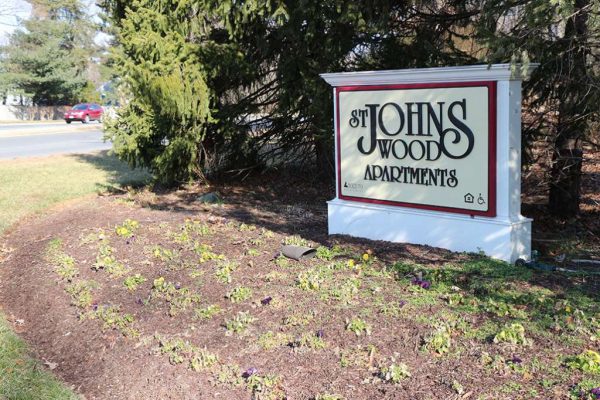
The undersigned residents of the North Point area of Reston seek your attention and assistance regarding anticipated changes to plans for redevelopment of the St. Johns Wood apartment complex.

The property is located at the intersection of Reston Parkway and Center Harbor Road. Please assure that Bozzuto Development Company Inc. (Bozzuto) provides all affected reviewing authorities and the public-at-large sufficient time and information to review the revised plans that the developer has indicated will be made.


Opinion

The General Assembly has adjourned its annual session. In future columns, I will write about bills that survived the governor’s veto pen and those that did not.

In the final days of the session, we honored once again a then-young woman named Barbara Johns, who contributed so much to the history of Virginia. On Feb. 23, Gov. Terry McAuliffe dedicated the renovated former Richmond Hotel and now Office of the Attorney General as the Barbara Johns Building. Barbara is also honored on the grounds of the State Capitol with a statue of her, prominently part of the Virginia Civil Rights Memorial.


Opinion

Hunter Mill District Supervisor Cathy Hudgins led off her newsletter this month with a two-page article on “misinformation” concerning the proposed Reston Tax Service District (TSD) for homeowners and businesses along the Dulles Corridor, the so-called Reston transit station areas. So far as we know, no one has provided misinformation on the road tax, including Reston 20/20.

What Reston 20/20 has done — and will continue to do — is highlight the vast quantity of vital information about the proposed Reston road tax that neither Supervisor Hudgins nor FCDOT have been willing to acknowledge because, of course, it undermines the validity of having such a tax. Let’s take a quick look.


Opinion

In a previous column, I addressed in part the question I get from more and more constituents about what they can do to be more active in public service. Their concern, of course, comes from the outcome of the presidential election and the unbelievable events that have occurred since that time.

Adding to that December column, in which I highly recommended membership in the American Civil Liberties Union and the Southern Poverty Law Center and involvement in the gubernatorial election of 2017 in Virginia, I have decided to further facilitate individuals seeking to find a place in which they could become involved in civic affairs.


Opinion

The Fairfax County Executive’s new budget removes funding for youth with intellectual disabilities leaving Fairfax County Public Schools in 2017.

The people of Fairfax County are not that uncaring. You are not that selfish. I know because I have seen how amazing you are. But the County’s budget introduced Tuesday cut all funding for the youth with intellectual disabilities who will be leaving the school system this year.


Opinion

Although the “short sessions” of the General Assembly held on the odd-numbered years are about two weeks less in length than the regular session in the even-numbered years because they do not consider a biennium budget, the fact is that the budget is adjusted at every session of the General Assembly.

Revenue projections that are made over a couple of years’ time frame almost always need to be adjusted. Revenues come over or under projections, necessitating corresponding changes to the budget. Recession-level declines like that in 2008 required severe budget reductions. The economic recovery has been slower than in the past, resulting in some tweaking being needed every year. The Commonwealth operates on a balanced budget with funds going into a rainy day fund when economic growth is strong, and the fund being used to smooth out declines from loss of revenue.


Opinion

As we do each year, my wife and I paid our Reston Association assessment this week.

Typically, after we’ve paid our dues, we reflexively take the opportunity to purchase our annual pool and tennis passes — our family’s favorite RA benefit. This year, however, we were taken aback by an unsettling new RA requirement that would-be pool-goers provide RA with digital photos of each family member, including children, to be stored in an RA database. The logic, as I learned after a call to RA, is that the database would allow RA employees to retrieve photos on demand to visually verify paid-up pool and tennis users.


Opinion

Most people can remember the flowchart from high school civics class that graphically showed how a bill becomes a law.

According to the chart, a legislator gets an idea for a bill that is drafted, introduced into one house of the Legislature where it is heard by a committee, sent to the floor for a vote if approved, and sent on to the other house for the same routine. Generally, that is what happens in the best of circumstances, but reality is much more complicated.


Opinion

By this time, most Restonians are aware of the County transportation department’s (FCDOT’s) efforts to add an additional property tax on Metro station area residents to pay an estimated $350 million for improvements in their streets to accommodate developer growth. The entire 16-month-long process to get Restonians, particularly the Restonians selected by Supervisor Cathy Hudgins to serve on the so-called Reston Network Analysis Group (RNAG), to nod “yes” to yet another Reston tax has been filled with lies and deception well worthy of our new President’s world of “alternative facts.”

We have already detailed a key Reston road tax assumption that is obviously false (p. 5): That the County cannot divert tax revenues from existing or future uses to improve Reston’s urban intersections. The County won’t even address the fact that the diversion of less than $9 million of the more than $4 billion in annual General Fund tax revenues will pay for all the roads it proposes to improve under its cost assumptions. That’s just two-tenths of one percent from current tax revenues, well less than its mid-year budget adjustment. Instead, FCDOT simply refuses to acknowledge this reality.


Opinion

Two years ago this month, under the leadership of former RA Board President Ken Kneuven, Reston’s homeowner association announced its deal with a local developer to purchase his property, the Tetra office building, for over twice its county-appraised value of $1.2 million. Thus began a long slide of Reston Association into bad governance and mismanagement.

How did this happen? We don’t know for sure, but we understand Kneuven and another former RA Board President, Rick Beyer, who lives on the shore of Lake Newport opposite the Tetra property, have been friends for some time. Beyer, who was active in supporting the RA Tetra purchase, and other Lake Newport homeowners were no doubt concerned that something untoward would happen to their view and, as a result, also their property values. It is not clear whether Beyer asked a favor from Kneuven in eliminating this risk by having RA pursue the purchase of the Tetra property, but what is clear is that after Kneuven left his RA post, he ended up working as a senior consultant in the company managed by Beyer.


Opinion

(Updated, 12:30 p.m. Friday) Correction:  Maynard has reported the that area affected by the change in the size of the Transit Station areas, allowable square footage of development, and other related numbers late in his op-ed are actually about one-third of those reported. In particular, the expanded area and high densities would allow about 438 million square feet of total development, not 1.4 billion square feet as stated.