


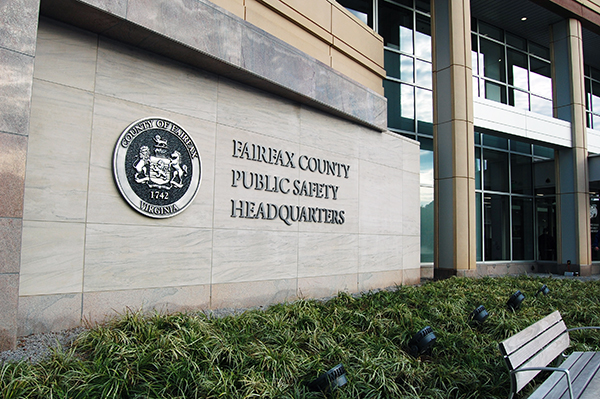
(Updated at 2:30 p.m.) The Fairfax County Courthouse is renewing its mask policy once again even as the judicial system tries to inch back to normal amid a backlog of cases.
The Fairfax County Circuit Court issued an amended order today (Wednesday) stating that, effective immediately, masks will again be required to enter the judicial complex and in all public areas in the courthouse, though judges have the authority to let individuals take off their masks in their courtrooms.
At the same time, courts are starting to resume more in-person procedures. Plexiglass barriers have been installed to keep jurors socially distanced, and defense attorneys as of last month have been able to meet with clients in the jail rather than trusting in Zoom to meet confidentially.
But amid the safety efforts, many cases have been delayed, putting a pause on justice.
“The backlog remains a major factor in our operations and is unlikely to be fully resolved for years,” said Ben Shnider, a spokesperson for Fairfax County Commonwealth’s Attorney Steve Descano.
Last month, the Centers for Disease Control and Prevention recommended that vaccinated people wear masks indoors in areas with high or substantial COVID-19 transmission, which now includes Fairfax County.
That reversed a loosened CDC policy that began May 13 — prior to the highly transmissible delta variant making up over four out of five coronavirus cases in the U.S.
The Fairfax County Courthouse says its reversal was due to the CDC update but noted that a presiding judge may direct otherwise in individual courtrooms.
Inside the courthouse, there’s yet to be a criminal trial with the new plexiglass format for the county’s chief public defender, Dawn Butorac, who wonders if the changes will influence jurors’ perceptions.
“It’ll be interesting to see how a witness is perceived in that environment,” she said. “It’ll be closer to normal.”
Under a transition plan that was last adopted on July 7, the Fairfax County Circuit Court restarted in-person hearings for all civil trials and non-Friday motions on July 1.
The courthouse installed the plexiglass changes this summer to increase the number of criminal trials, but backlogs remain throughout the system.
During the pandemic, arrests continued, but courts scaled back operations. Notably, in early 2020, the Virginia Supreme Court suspended a state law that adds another level of protection to one’s constitutional right to speedy trials. The suspension was renewed in September.
Even as operations ramp back up, citizens still have the option to postpone jury duty when summoned to court. COVID-19 questionnaires allow people to postpone their legally required obligation, depending on individuals’ circumstances regarding the virus. Exemptions include health conditions such as cancer, obesity, heart issues, and asthma, as well as pregnancy and smoking.
While the backlog in cases will still be a challenge, Fairfax County’s most recent budget enabled the commonwealth attorney’s office to add 15 positions, increasing its staff to 83.
That means there will be 50 prosecutors compared to 25 attorneys in the public defender’s office, according to Butorac.
“In theory…we have progressive prosecutors that should be prosecuting less,” Butorac said.
Descano and his office have sought to adopt a progressive approach that seeks alternatives to jail sentences when possible, arguing that diversion efforts can keep people from being unnecessarily criminalized and help prevent recidivism.
According to Descano’s office, it will continue to prioritize alternatives to incarceration when a case “best meets the safety and justice needs of the community.” In a statement, Shnider said prosecutors are trained to avoid reflexively seeking the most punitive outcome in every case.
Photo via Google Maps
The Fairfax County Police Civilian Review Panel, a citizen-led board intended to help with police accountability, is getting an executive director.
The Fairfax County Board of Supervisors approved the change on July 27 at the urging of the review panel, which is facing increasing caseloads and seeking to gain investigatory powers.
“We’re thrilled that this new position will help us maintain our independence,” Civilian Review Panel Chair Jimmy Bierman said, thanking Board of Supervisors Chairman Jeff McKay and Lee District Supervisor Rodney Lusk, who chairs the board’s public safety committee.
Established in December 2016, the civilian review panel reviews Fairfax County Police Department investigations into civilian complaints with allegations that a police officer abused their authority or engaged in misconduct.
While the panel can make recommendations regarding law enforcement policies and practices, it was not granted the authority to conduct its own investigations.
The review panel, which consists of nine volunteers, documented in February its need for an executive director in an annual report and a four-year review, a document that Bierman spent three months of 40-hour weeks to develop.
The executive director will help the panel document and summarize investigations. Currently, the panel reviews police investigations in person and writes lengthy, time-consuming reports, which means its efforts are heavily dependent on its chair’s schedule.
Bierman, an attorney, likens the change to a congressional committee relying on staff to help draft materials or a federal judge using legal staff to write bench memos.
“It adds to the professionalism of the panel,” he said. “We want to be fiercely independent.”
Since its creation, the review panel has also relied on staff in the office of the independent police auditor, which will now send one position to the panel for the executive director.
Bierman says the staffing switch will help the panel maintain a good working relationship with police by ensuring the independent police auditor’s resources are not overtaxed.
The change to the panel comes after the Virginia General Assembly adopted a law last year that officially permitted localities to create police oversight boards with the power to investigate incidents, make binding disciplinary determinations, and more.
Bierman says the law shows the Commonwealth is serious about supporting independent oversight bodies for police.
The new executive director won’t have independent investigatory powers, but the position could lay the groundwork for the Board of Supervisors to update the panel’s bylaws to give it more authority, as allowed by the new state law, according to Bierman.
The person hired for the new position will be paid $100,000 to $150,000 per year and report directly to the board of supervisors. Springfield District Supervisor Pat Herrity was the only supervisor to oppose the measure.
“I voted against this motion because I didn’t support the original motion to form the Civilian Review Panel as we had an Independent Police Auditor, which is where most significant reviews and recommendations for reforms have come from,” Herrity said in a statement.
On Sept. 28, the board of supervisors’ public safety committee is slated to hear a presentation about the review panel along with recommendations on further reforms in line with the panel’s four-year review. Read More

A program that connects elderly people in Northern Virginia with volunteer drivers needs a new manager.
NV Rides manager Jennifer Kanarek left her position in mid-July, Pozez Jewish Community Center (JCC) of Northern Virginia Executive Director Jeff Dannick said yesterday (Monday).
“We started this program a little over 7 years ago, and Jennifer was our first manager,” Dannick said, crediting Kanarek for helping build the program. “The community owes a great debt to Jennifer for her years of service.”
Housed at the Pozez JCC in Fairfax, NV Rides is a network of volunteer driver programs that formed in 2014 after a Fairfax County survey identified access to safe and reliable transportation as a top concern among the county’s older residents, a population that is expected to continue growing over the next two decades.
In its 2020 demographic report, the county projects that people 65 and older will constitute its largest age group by 2025, eventually making up 17.5% of the total population in 2040.
“I have learned so much over the last seven years and knowing the impact that the NV Rides program has had on vulnerable adults in our community is what gets me out of bed in the morning,” Kanarek said in a statement. “I have thoroughly enjoyed working with our community partners, stakeholders, and my staff in building, developing, and growing this crucial program.”
Kanarek announced that she was stepping down from her position with NV Rides last week, saying on her LinkedIn page that the decision comes with “mixed emotions.”
“I am proud of all I and my partners have accomplished, and I have made the decision to pursue other opportunities,” she wrote.
NV Rides consists of 15 partner organizations, ranging from local Shepherd’s Centers and religious organizations to Reston Community Center’s RCC Rides service, which has been suspended during the COVID-19 pandemic.
According to the NV Rides website, the network has provided close to 40,000 rides since it began.
“They’re not taxi drivers. They’re coming to help you get to your appointment. They’re coming to help you shop for groceries. So, it’s really a companionship piece,” Kanarek said in a July video about the program, noting that while many elderly people can use ride-hailing apps such as Lyft or Uber, there can be varying levels of trust with a paid stranger versus a volunteer.
According to Kanarek, NV Rides has looked to recruit younger drivers because the average driver has been around 67 years old, and they may not want to return when the pandemic subsides.
After seeing ridership decline when Virginia went under a stay-at-home order in the spring of 2020, Dannick says NV Rides has now returned to “around pre-COVID levels” for volunteer drivers.
In June, NV Rides partnered with the Reston-based Dulles Airport Transportation Association on an outreach effort to provide transportation to medical appointments for veterans in Fairfax, Loudoun, and Prince William counties.
The Pozez JCC is currently advertising for a long-term successor to Kanarek. The job posting lists the position’s annual salary as $45,000 to $55,000.
Meanwhile, the program’s interim manager is Tom Eversole, a retired naval officer who serves on the NV Rides Advisory Council.

The Fairfax County Economic Development Authority gave nearly $29,000 to 10 social media influencers over the past year to highlight its jobs portal and virtual career fairs.
The campaign primarily involved Instagram users posting about events with hashtags and links to drive traffic. Economic development officials said the effort was intended to develop its brand as well as the region’s job market and engage target audiences, specifically with millennials in mind.
“We felt like we needed to do some experimentation,” FCEDA President and CEO Victor Hoskins said.
The campaign drew 536 clicks to the authority’s Work in Northern Virginia jobs board and generated 276 views in online registration page traffic for technology and entry-level career fairs.
While Instagram advertising can average around $1.25 per click, the FCEDA said influencer marketing helps reach a highly targeted audience through sources that users trust. The campaign required the influencers to note that their social media posts were sponsored content.
The social media influencer contracts cost a total of $28,800 with individual agreements ranging from $800 to $7,000 and mainly required users to make Instagram posts and stories, according to agreements obtained by Reston Now. One agreement included an Instagram video, and some included blog post requirements.
The authority says third-party consultant New York City-based Development Counsellors International and each influencer negotiated rates.
“[What we’re] really ultimately trying to do is build awareness of northern Virginia as this location that has thousands and thousands of jobs, and it’s a great place to live,” said Alan Fogg, the authority’s vice president of communications.
Economic development officials say the campaign delivered $205,000 in earned media value, reached more than 332,000 Instagram users, and generated nearly 25,000 likes, comments, and shares.
The FCEDA is not unique in using social media personalities to reach potential audiences. Other governmental bodies have turned to social media influencers for tourism marketing as well as running COVID-19 messaging.
Fairfax County funds the economic development authority with around $9 million each year currently, and social media advertising is just one way economic development leaders are trying to market the region to help improve the jobs pipeline.
“The message we deliver to all the recruiters and chief human resources officers from all the companies here in Fairfax County is: You sell your organization, your company, and why [to] come work there, and we’re going to help complement you with selling the region,” Mike Batt, the director of the authority’s talent initiative program, said.
The FCEDA used Development Counsellors International to identify and vet the influencers, set goals for the number of posts, and ensure posting requirements were met, Fogg said in a statement. FCEDA staff selected the influencers presented to them.
Batt said Development Counsellors International received a competitively awarded contract from the EDA. The consultant also developed the jobs hub, which the authority recently lauded.
The Fairfax County Economic Development Authority spearheaded the jobs posting site, but it’s connected to nine other economic development groups and localities in Northern Virginia.
“Economic development is not the business it was five years ago,” Hoskins said. “It really takes a lot of innovation.”
Photo via Solen Feyissa/Unsplash
Fairfax County residents in need of Department of Motor Vehicle services are finding they need to book an appointment months in advance.
In response to those reported concerns, the county Board of Supervisors agreed on Tuesday (July 27) to contact the state to see how it will address wait times.
Springfield District Supervisor Pat Herrity said residents have reported that they’re traveling as far as three hours away to South Hill to get DMV services.
“Given that DMV services are essential, Fairfax County residents should not have to wait over a month or be forced to go to other parts of Virginia for an appointment,” Herrity said.
The DMV introduced the appointment system when it reopened sites in May 2020 after a pandemic-induced shutdown. During that time frame, it has also added more online capabilities to help reduce foot traffic.
“We are not yet where we need to be, but we are proud of the progress we’ve made from implementing a brand new appointment system in the height of a global pandemic a little more than a year ago,” DMV spokeswoman Jessica Cowardin said in a statement.
On a recent visit to a DMV center in Tysons, Great Falls resident Barbara Martin found the experience quite different compared to when walk-ins were allowed, which would result in dozens of people crowding into the building.
Martin booked her appointment about a month and a half ago and said she was relieved to be there, expressing appreciation for the staff’s attention to details.
With no DMV centers in the immediate Reston/Herndon area, the closest location for residents is the Sterling center (100 Free Court), which reopened in August 2020. The department also opened a new customer service center in Sterling (22360 S. Sterling Blvd., Unit D112) this past January.
“By installing an appointment system we have become more efficient, transactions are conducted quickly and customer wait times have been minimized,” Cowardin wrote. “And appointment availability will continue to increase as we are able to hire and train employees and emerge more fully from the pandemic, which is still ongoing.”
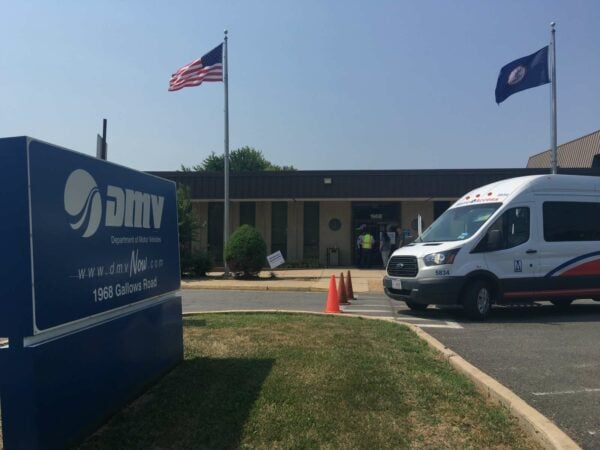
Chai Chala of McLean says he lucked out and only had to wait 10 days for an appointment at the Tysons DMV center (1968 Gallows Road), which he visited to register a new car.
“The experience was really nice,” he said, adding his only complaint was the sun’s heat.
Since reopening, the DMV added several services to its website that can save customers a trip to a physical building.
In September, it introduced two-year renewals for driver’s licenses and ID cars by online and mail, and in November, it began online renewals for commercial driver’s licenses. As of February, it also now offers drivers the ability to replace licenses and permits that were lost or stolen.
Customers can also get appointments with DMV Select partner officers, which conduct vehicle-related transactions, as well as DMV Connect, a team of mobile workers whose regular stops include the Fairfax County Government Center.
Cowardin said the DMV intends to keep the appointment system for the foreseeable future, noting that the vast majority of transactions conducted since May 2020 have been conducted remotely.
“During the pandemic, customers shifted the way they conduct business with DMV in that more customers are now conducting DMV business by service delivery methods other than the [customer service centers], such as mail, internet, online dealers or DMV Select partners,” she noted.
Fairfax County will use an estimated $10 million in COVID-19 relief money for another major grant program aimed at helping community partners keep their doors open.
The Board of Supervisors approved the Active and Thriving Community Grants Program at its meeting yesterday (Tuesday), where grants will range from $2,000 to $18,000 depending on the size of the business or nonprofit.
While businesses have pushed to reopen, many continue to struggle, and COVID-19 concerns persist. The grants target child care providers, community-based safety net providers, youth recreational or educational programs, youth athletic groups, and pools.
“As someone who visits a child care center everyday, they’re still operating under COVID restrictions that other businesses aren’t,” Braddock District Supervisor James Walkinshaw said during the board meeting. “So, they’re still dealing with that in terms of capacity and PPE [personal protective equipment] and masking.”
County staff reported that many community-based organizations “continue to struggle economically” due to COVID-19 and most have had to cancel or significantly alter major fundraising events.
“For many, giving levels have not returned to prior levels,” county staff wrote in the meeting agenda. “For many donors, giving patterns have changed. Even where giving has increased, it has not made up for lost revenue or increased expenses.”
Fairfax County Neighborhood and Community Services Deputy Director Sarah Allen told the board that the application period for the new grant program will launch by the end of August.
To be eligible, recipients will be required to show that they had a 15% decline in gross revenue in 2020 compared to 2019 or a 15% increase in expenditures directly tied to costs due to the pandemic.
The new grants are projected to allocate:
- $4.3 million for child care providers
- $1.9 million for community-based safety net providers
- $1.8 million for youth recreational or educational programs
- $1.5 million for youth athletic organizations
- $500,000 for pools
“A lot of these organizations survived through the pandemic because the…volunteer board members or the parents or community members involved dipped into their own pockets to keep things going so they didn’t have to go out of business,” Walkinshaw said.
The money comes as the county is finalizing awards for its PIVOT program, which will provide over $24.4 million in grants from the American Rescue Plan Act to businesses in the retail, food, and lodging sectors and other organizations financially affected by the pandemic.
When the county created the PIVOT program on June 8, staff were also looking for ways to provide additional assistance. A county survey of child care programs conducted in March found that over half of respondents did not know how long they would be able to stay open without financial support.
“The potential closure of child care programs could come at a time when more parents are returning to work, impacting working parents and their children, employers, and the child care workforce and their families,” the staff report said.
In awarding the grants, the county expects to use a priority measure related to vulnerable populations to pick recipients in the child care and pool categories. The remaining awards would be determined by a lottery system.
It wasn’t immediately clear how exactly the priority measure would work, but the county said staff will look at the social and economic conditions that made populations more vulnerable to COVID-19 as well as recent economic, health, and other data relevant to the pandemic’s impact.
Similar to the PIVOT grants, the county will use a third-party vendor — the Latino Economic Development Corp. — for the online grant administration portal and awards. Advertising and outreach in multiple languages will begin before the August launch.
“This grant program will prioritize disproportionately impacted populations and communities wherever possible,” county staff said.
Photo via Fairfax County/Facebook
The Town of Herndon is looking to update decades-old rules involving accessory dwelling units to make the process less burdensome for homeowners.
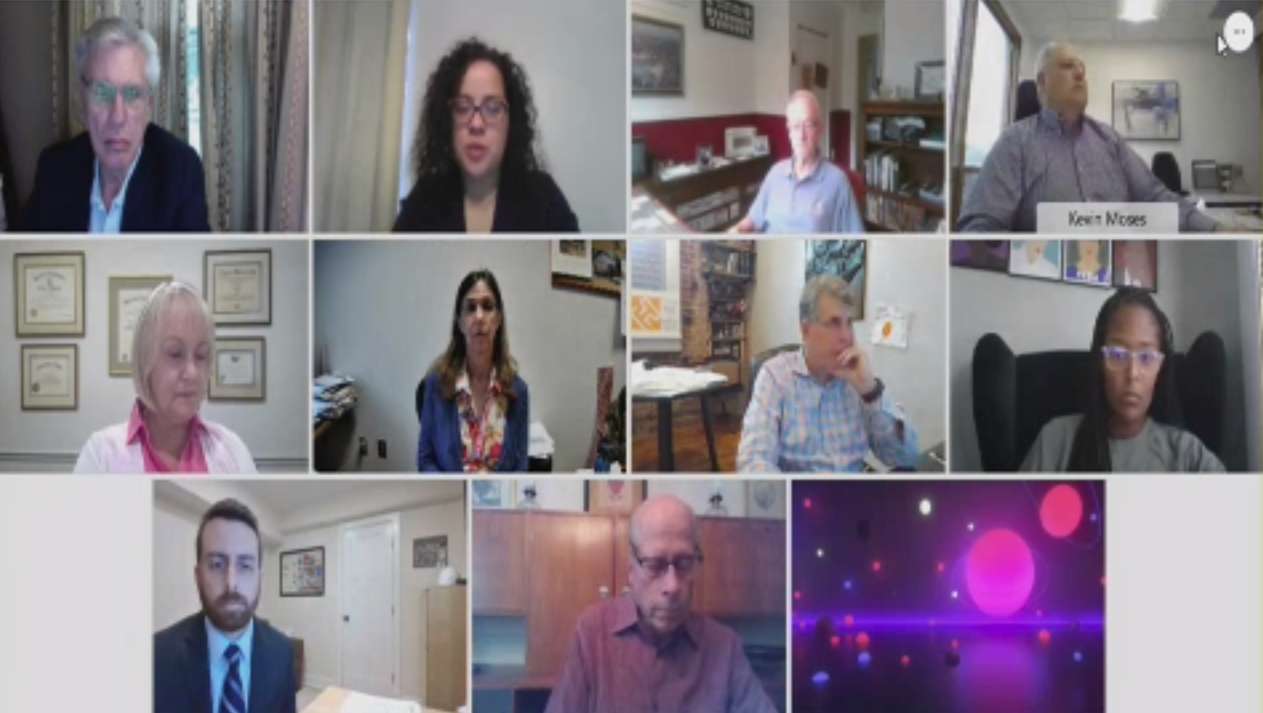
The Herndon Planning Commission held a virtual public hearing on Monday (July 26) on a proposed ordinance that the town council will ultimately vote on whether to approve.
“Our current regulations are 38 years old,” the town’s zoning administrator, David Stromberg, said, adding that the age of the existing ordinance is not problematic in and of itself, but the town has changed over the decades.
In the works since April, the decision to revisit the rules for ADUs — smaller dwellings that exist on the same property as a primary residence — was prompted by frustrations expressed by some residents who recently underwent the permitting process, according to Stromberg.
Neighboring governments have already loosened restrictions. Fairfax County revised its rules for accessory units, which it calls accessory living units, as part of a larger zoning overhaul this summer, dropping a requirement that the units be restricted to older adults and people with disabilities.
Herndon also plans to remove those restrictions.
The town’s planning commission is considering making the process less restrictive in other ways, too, such as by allowing many types of ADU additions to occur by right as opposed to requiring an approval process. That could also include allowing second kitchens under certain circumstances.
The town has also noted that smaller homes may be confined by the existing code, so officials are considering possible changes to square footage requirements.
Currently, attached, internal, and detached units can be up to 1,200 square feet or 35% of the gross floor area of a principal dwelling unit, whichever is less. So, if a home is 1,000 square feet, you are currently limited to a 350 square-foot addition, Stromberg noted.
That could change to 1,200 square feet or 40% of a principal dwelling unit for attached and internal dwelling units and be a one-size limit of 800 square feet for detached dwelling units.
Among a variety of issues, the commission has also been looking at limiting the number of wet bars as well as possibly dropping an extra parking space requirement for an ADU if it’s within 0.25 or 0.5 miles of the Herndon Metro station.
Officials have time to continue their review: The second phase of Metro’s Silver Line project has faced delays with no confident expectations any longer for when the new stations will actually open.
Only one member from the public commented during the hearing: resident Gordon Dean, who said that he’s a strong proponent of accessory dwelling units and hopes future ones could help with Section 8 housing.
The planning commission is continuing the matter to its Aug. 23 meeting, which it plans to hold in person.
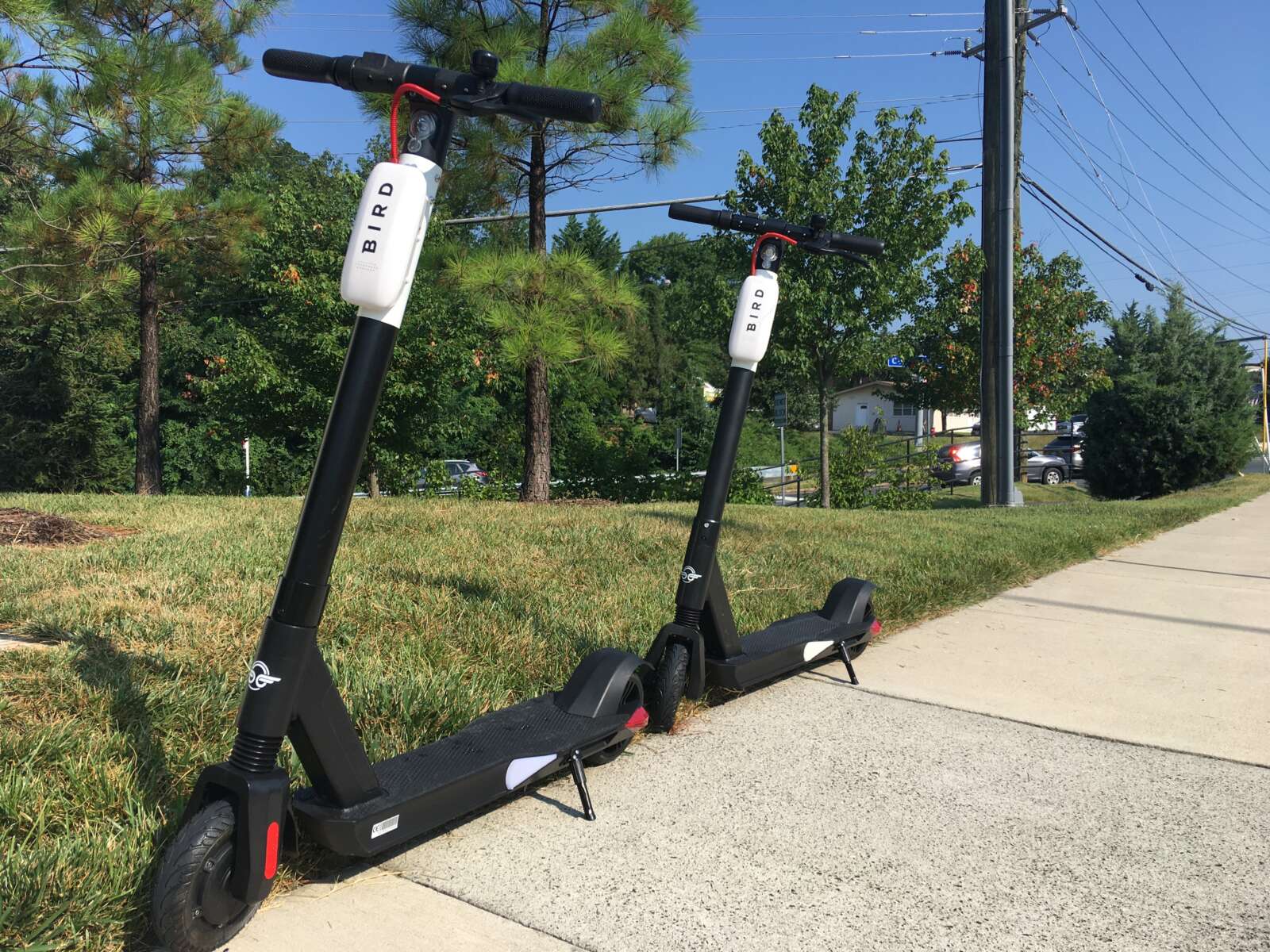
Hundreds of electric scooters have started popping up around Fairfax County after the county announced last week that it had approved two vendors for its shared mobility device program.
Bird and Superpedestrian’s LINK can each have up to 300 scooters in the county, but depending on usage, that number could go up to a combined 1,200 scooters for the two companies. The devices are available for rent, costing $1 to unlock with rates depending on ride time.
Bird has discounts for low-income and older residents as well as veterans and other users, and the company already listed the devices on its app. As of mid-morning Tuesday (July 27), clusters of scooters were listed in Annandale as well as West Falls Church and near Lake Barcroft.
Superpedestrian says it plans to make its scooters available this fall.
“Like bicycles, e-scooters can be used on a highway, sidewalk, shared-use path, roadway, or crosswalk,” the county said in a news release.
The only restrictions that the companies have limited the scooters to maximum speeds of 10 miles per hour, and they can’t be used on sidewalks or crosswalks with signage banning shared mobility devices.
The county said Tuesday such signage hasn’t been placed so far.
The county says users should leave scooters parked in areas that don’t impede normal car or foot traffic. People who violate the county’s rules can face a misdemeanor and fine up to $50 for the first offense and up to $500 for each subsequent offense.
“When riding an e-scooter, use the sidewalk when possible,” county transportation spokesperson Anna Nissinen said in a statement. “Remember, if you’re riding on the sidewalk, you are required to yield the right of way to pedestrians! If there is no sidewalk or other off-street path to use, you may ride a scooter on the road if the speed limit is 25 mph or less.”
She also noted that e-scooter users should stay as far to the right as practicable and use the bike lane if there is one.
The Board of Supervisors approved the devices in November 2019, placing rules on operations as it noted concerns about scooters possibly being abandoned.
To help address issues, the board is requiring $5,000 bonds from companies operating in the county. The money can be used if county staff have to remove and dispose of abandoned scooters.
“If you notice an e-scooter parked in an inappropriate place or left on private property, you can contact the device operator listed on the e-scooter and the operator must remove it,” the county said, noting that people can email [email protected] to report any issues.
Near Arlington National Cemetery, pedestrians and cyclists can at times see rideshare scooters abandoned along trails, scattered horizontally on the grass.
Bird spokesperson Courtney Black said in a statement that the company looks to educate riders with proper scooter etiquette, reminding them to not leave scooters in the public right-of-way, ensuring that sidewalks, driveways, and fire hydrants are accessible.
The company also allows members to use its Community Mode feature to report issues, which can involve things such as damaged or poorly parked scooters. Bird reviews the reports and sends someone to respond.
When asked about the county’s concerns with abandoned scooters, Superpedestrian says it has worked with cities across the U.S. with similar requirements where it operates.
“We’re proud that we’ve never been asked to leave a city or stop operation,” spokesperson Jamie Perkins said in a statement.
To address potential issues, the company has an in-house fleet team of local workers to manage operations in a timely way, using technology to make sure scooters are parked according to requirements and re-parked when needed to ensure availability and prevent them from stacking up in one place.
Superpedestrian is assessing how many scooters it will place in the area, working with Fairfax County as it scales up operations.
“We prioritize our service to areas with critical connections to public transit, areas with parking congestion and business demand, and also serve underserved areas,” Perkins wrote.

People using 911 in Fairfax County can now provide medical details and other information to help first responders know more about a situation before they arrive.
The county rolled out the change on July 1, allowing people to sign up ahead of time with information about a resident who has a special need or needs ranging from anything from Alzheimer’s to autism.
“It could make the difference between someone being saved and not saved,” 911 systems administrator Steve McMurrer said.
A person with an iPhone or Android phone can sign up for the free service by clicking on the Emergency Health Profile section on the county’s Department of Public Safety Communications web page. It will direct them to emergencyprofile.org, and that information is also shared with other 911 centers, McMurrer said.
In a person’s emergency profile under a section for additional medical notes or relevant information, people can list if they’re wheelchair-bound, blind, or have any other condition that first responders might need to be aware of.
A person’s emergency contact information, allergies, address, and other details can also be listed for a caller.
“Any first responder prefers to have more information,” McMurrer said.
The county’s new system relies on RapidSOS, which has been servicing the county with improved location for mobile 911 calls. It doesn’t charge emergency providers but instead device and app makers, according to a TechCrunch article.
Tony Bash, who represents Springfield District on the Fairfax Area Commission on Aging, noted it could help a person who is having a heart attack or is deaf, blind, or in a wheelchair. He also said a child with a disability might confront a police officer when they hear a siren, so the information can be vital to help first responders understand and address a situation.
Without the additional information, emergency responses can lead to injuries and deaths of people in need of help.
State officials noted that a lack of training and awareness can escalate situations for people with disabilities. State agencies for criminal justice, disabilities, and behavioral health partnered with Niagara University in 2017 to introduce additional law enforcement training.
“This is quite possibly the biggest revolutionary change in technology that we’ve witnessed in 50 years,” Eddie Reyes, director at the Prince William County Department of Public Safety Communications, said in a promotional video for RapidSOS.
Fairfax County officials have introduced elements of the service previously, but they were scattered across a variety of places:
- The Yellow Dot Program involves putting information on a card that people can take with them in their vehicles to show special medical needs.
- The File of Life, which can be placed on refrigerators, shares similar information.
- A functional needs registry with the Office of Emergency Management’s Fairfax Alerts has a database with information like if a person needs oxygen or an elevator, but the information can be outdated and was unavailable to the 911 center.
“It’s much, much better than what we have now,” Bash said of the new 911 capabilities. He described previous information on file for emergency responders as 20th-century solutions.
The county had previously looked at using Smart911, but its estimated cost in 2015 was $125,000 per year and $300,000 annually in 2019.

A venture capital fund that invested millions of dollars in a startup later hit with a federal fraud investigation and bankruptcy is suing the Herndon-based business accelerator Center for Innovative Technology.
According to the lawsuit, which was filed with the Fairfax County Circuit Court on May 10, Savano Capital Partners III — a fund tied to a Baltimore-based investment firm — paid CIT nearly $4.5 million in 2020 to invest in a fraud prevention technology company called NS8.
“On paper, it appeared to be earning millions in customer revenue and to have tens of millions of dollars of assets on hand,” the civil complaint said, adding that “the fraud described above occurred under Innovative’s ownership of NS8.”
Savano Capital entered into its financial agreement with CIT on March 20, 2020. At the same time, the Securities and Exchange Commission was investigating NS8 for fraud, issuing subpoenas to the company and its CEO in November 2019 and March 2020.
The SEC charged former NS8 CEO Adam Rogas with defrauding investors on Sept. 17, 2020, alleging that he had raised approximately $123 million from investors — at least $17.5 million of which he pocketed himself — by falsely claiming millions in revenue in 2019 and 2020.
NS8 filed for Chapter 11 bankruptcy in October before being acquired by the software company Avolin this past February. Criminal and civil cases against Rogas are still going through federal court, with the civil case halted while the criminal case unfolds.
Prosecutors allege Rogas’ actions “led to the illusion that NS8 had over $62 million in [revenue] when, in fact, it had just over $28,000” by June 2020.
In its legal complaint, Savano says it made the deal with CIT without knowing NS8 “was virtually worthless and was in the midst of a massive accounting fraud and SEC investigation.”
According to the complaint, the investment fund valued its NS8 stake at over $4.4 million as part of a tech companies portfolio with CIT. The plaintiff is seeking to rescind the contract, arguing that the business accelerator benefited from the windfall of worthless stock, attorney Jason Ohana said at a hearing on Friday (July 23).
CIT, which facilitated funding for NS8 and previously cited it as a success story, called the lawsuit meritless and asked for a dismissal with prejudice to avoid a trial. Fairfax County Circuit Court Judge Thomas Mann denied the request.
During the hearing, Jack McCann, an attorney for CIT, argued that Savano’s investment purchase was a “unilateral mistake” by the plaintiff, because the nonprofit never detailed the underlying value of the companies.
He compared the situation to an “as is” used car sale in which a buyer could inspect the vehicle and review maintenance reports but would be responsible if they realized the next day that they had purchased a hunk of junk.
“I don’t mean this disrespectfully, but the used-car analogy was not well done,” Mann said during the virtual hearing. “It’s a completely different set of circumstances than an ‘as is’ sale.”
He also cited a 1993 Supreme Court of Virginia decision on the right to a jury trial.
Founded in 2016, NS8 was once located in Arlington, but its headquarters were moved to Las Vegas. Rogas resigned on Sept. 1, 2020, according to a legal filing.
In its lawsuit, the SEC said Rogas at one point provided false bank statements to an investors’ consultant who found line items that didn’t correctly add up. The executive allegedly re-doctored information after being questioned.
The SEC also alleged Rogas sent falsified monthly bank statements to NS8’s finance department. In January and February 2020, NS8 claimed $38 million and $42 million in revenue, respectively, on financial statements when in reality, it brought in around $39,000 and $45,000, according to the SEC complaint.
An attorney for Rogas declined to comment. Filings on his behalf refer to the charges as allegations.
Amid the SEC investigation, Virginia sold CIT’s Herndon office complex to a private real estate developer and capital investment firm. Gov. Ralph Northam said proceeds from the $47 million sale would go to the Virginia Innovation Partnership Authority, which the General Assembly created last year.

Thanks to federal relief funding, Fairfax County is getting an infusion of emergency housing voucher money to help people who are at risk of homelessness or fleeing from domestic violence and others in need.
The American Rescue Plan Act signed into law in March is providing $10 billion to address homelessness, including 70,000 vouchers to local housing authorities, including Fairfax County.
The county will partner with community groups to provide the housing assistance, which could last 10 years — the length of the program — for each recipient.
“We are very grateful to receive these Emergency Housing Vouchers to serve many of our most vulnerable residents and neighbors and help them achieve safe and stable housing,” Fairfax County Redevelopment and Housing Authority Chair C. Melissa McKenna, who serves as the Dranesville District commissioner, said in a statement.
The Fairfax County Redevelopment and Housing Authority approved a county framework last Thursday (July 15) to receive the money, which involves 169 vouchers that will be made available in coming weeks.
Recipients will need to be referred to the program by county case managers or other service points, such as homeless services, Coordinated Services Planning (703-222-0880), or the Domestic and Sexual Violence 24-Hour Hotline (703-360-7273).
Money will go to landlords, and recipients will be required to pay 30% of their income toward rent and utilities.
The emergency housing vouchers can cover a variety of costs, including security deposits, moving expenses, and essential household items such as bedding and tableware.
Even outside the vouchers, ARPA has dedicated billions of dollars to addressing housing issues, as people have struggled to pay rent amid statewide shutdowns last year and uncertain employment due to the COVID-19 pandemic.
The need to provide housing assistance is expected to become especially urgent in the coming months after the Centers for Disease Control and Prevention’s eviction moratorium expires on July 31.
“The [assistance is] designed to prevent and respond to [the] coronavirus by facilitation the leasing of the [emergency housing vouchers], which will provide vulnerable individuals and families a much safer housing environment to minimize the risk of coronavirus exposure or spread,” Dominique Blom, a general deputy assistant secretary with the Housing and Urban Development Department, said in a May memo describing the funding.
Vaccinations have helped bring the virus under control, but cases have been rising in Virginia and the U.S. amid the spread of the highly contagious delta variant, which is now the source of 83% of all new COVID-19 cases, according to CDC estimates.
“Individuals and families who are homeless or at-risk of homelessness are often living in conditions that significantly increase the risk of exposure to coronavirus in addition to other health risks,” Blom said in the memo.
Eligibility for the vouchers is limited to individuals and families who are experiencing homelessness, at risk of homelessness, or were recently homeless and “for whom providing rental assistance will prevent the family’s homelessness or having high risk of housing instability.”
People fleeing — or attempting to flee — domestic violence, dating violence, sexual assault, stalking, or human trafficking are also eligible for the vouchers.
“These vouchers — in addition to the existing programs and services offered through a robust partnership — offer yet another valuable resource to help position individuals and families on a reliable foundation from which they can achieve their fullest potential,” McKenna said in her statement.
During the first year of the pandemic, homelessness decreased throughout the D.C. region except in Fairfax County, which saw a 17% increase from 1,041 people in 2020 to 1,222 in 2021, and Prince George’s County, which had a 19% increase, according to a Metropolitan Washington Council of Governments report.
Fairfax County has attributed the increase to expanded services supported by COVID-19 relief funding.

Virginia school districts will make their own rules regarding masking requirements for the upcoming school year, the state’s education and health departments announced today (Wednesday).
The Commonwealth will let a public health order that’s in effect until Sunday (July 25) expire, thereby ending a statewide mandate that kids over age 5 wear masks indoors at public and private schools and putting decisions in the hands of local officials.
“The science is clear that vaccinations and masks help keep our communities safe from COVID-19,” Secretary of Health and Human Resources Dr. Daniel Carey said in a statement. “The Commonwealth’s children and the individuals that help them learn will be protected by proven strategies, without a one-size-fits-all approach.”
Fairfax County Public Schools currently requires masks to be worn indoors for students, staff, and visitors when school is in session “until more students aged 12 and older are fully vaccinated and until younger students become eligible for vaccination.”
“We are reviewing the guidance and reaching out to hear from our community, and will share a plan early next week with staff and families,” FCPS spokesperson Julie Moult said in a statement.
Virginia’s new guidance says elementary schools should require students, teachers, and staff to wear masks indoors, regardless of vaccination status, until vaccines are available for young children. For middle and high schools, it recommends that students, teachers, and staff who are not fully vaccinated be required to wear masks indoors.
State officials said the change will allow districts to make their own decisions and the switch reflects changes by the Centers for Disease Control and Prevention, which loosened its guidance earlier this month and advised that masks should be worn indoors by all individuals age 2 and older who are not fully vaccinated.
The American Academy of Pediatrics, by contrast, recommends that, unless they are unable to do so due to medical or developmental challenges, all school staff and students over the age of 2 should wear masks at school, even if they’re vaccinated.
The changes come as daily COVID-19 cases have increased in Virginia and the U.S., and the especially contagious delta variant now represents 83% of new coronavirus cases in the U.S., according to a CDC estimate.
Over 70% of students ages 12 to 17 in Fairfax County have been vaccinated. COVID-19 vaccines for those under the age of 12 are not yet authorized but currently undergoing trials.
The CDC has said that most students, including those with disabilities, can tolerate and safely wear a mask, but a “narrow subset of students with disabilities” may be unable to do so and should not be required to wear one.

Abandoned shopping carts can create problems and even be left in streams, but a new state law seems to provide little help, Fairfax County supervisors say.
During a land use policy committee meeting yesterday (Tuesday), the Board of Supervisors reexamined a Virginia law intended to discourage people from taking shopping carts away from businesses, worrying that introducing a local ordinance might just add an exhaustive and ineffective process.
“What we’re asking of our investigators is extraordinarily time-consuming and fruitless,” Braddock District Supervisor James Walkinshaw said of the draft abandoned shopping cart ordinance.
A leading concern is that adding an ordinance may take up time and put an unnecessary administrative burden on county staff, who could, for example, document the same incident twice since the state law dictates that a cart’s owner get a 15-day notification period before it can be removed.
Currently, if a cart is blocking a road or a group is cleaning up a stream, there is no restriction on removing it.
The Virginia General Assembly passed a law in 2020 to allow counties to pass legislation to:
- Fine people with a civil penalty up to $500 for removing shopping carts from stores’ premises and parking lots
- Make stores liable for returning or disposing of abandoned carts, including paying up to $300 per cart that the county removes
The land use policy committee discussed the issue in December, though staff advised against adopting an ordinance and board members were skeptical. During the meeting, Chairman Jeff McKay voiced opposition to fining people trying to get groceries home.
The draft ordinance that the county presented on Tuesday only referenced fines for businesses — not individuals.
Even before the 2020 state law, the Commonwealth made removing shopping carts from store premises and parking lots a misdemeanor, with the potential for a fine up to $500.
“My problem with this is…it provides absolutely no incentive for people to stop stealing carts,” said Springfield District Supervisor Pat Herrity, who also wondered if certain areas or customers might be disproportionately affected. “This is kind of outside the businesses’ control.”
Photo via David Clarke/Unsplash

Some Fairfax County student athletes won’t be headed to courts or fields this winter, but instead, to computer labs, as the 10th largest school district in the country prepares to launch an esports program.
The Fairfax County Public Schools athletic director detailed the new initiative to Tysons Reporter, saying the new program will connect students in high schools through a popular, soccer-like game — in which players drive futuristic cars — called Rocket League.
“I think it’s going to be a great opportunity for our students,” said Bill Curran, director of the FCPS Office of Student Activities and Athletics, noting how students will have another way to fit in. “I think we’re going to have 25 highly competitive schools in the esports realm.”
While concerns about students’ screen time have persisted, even as the COVID-19 pandemic forced schools to adopt virtual learning, competitive online gaming has become increasingly popular, with both high schools and colleges getting in on the esports action.
The market research firm Newzoo reported in March that esports viewership increased from nearly 398 million people globally in 2019 to nearly 436 million in 2020 and could potentially reach 474 million this year.
The NCAA governing board voted in April 2019 against bringing esports under its purview, even as the association noted the rapid growth of esports on NCAA campuses.
“You’re going to see this ball roll faster and faster,” Curran said.
ESPN launched a new initiative to cover esports in 2016, though it shut the division down last year. In 2018, it became the first TV network to air a professional gaming contest in prime time for the cartoon-style multiplayer online battle game League of Legends.
YouTube and Twitch have also streamed content that’s worth billions of dollars and expected to grow annually, though that’s just a small slice of the video game industry.
The Virginia High School League, which governs sports, activities, and competitions in public schools throughout the Commonwealth, introduced esports as a pilot program in 2019 before approving it as an “emerging activity” for the 2020-2021 school year that could become sanctioned as an official VHSL activity.
Fairfax County Public Schools is currently looking for coaches to participate in its esports program, which has been in the works for more than two years and will operate under its Activities and Athletics office. Some teachers have already shown interest in helping, according to Curran.
Students will have to pay a $64 fee each season through a startup company PlayVS, which provides computer games and requires students to maintain eligibility through grades and attendance. FCPS is looking at ways to prevent the fee from becoming a barrier to participation.
With schools expected to open for in-person learning five days a week this fall, FCPS plans to have students participate in existing computer labs, rather than remotely. Like a traditional sports team, Curran says Fairfax County’s esports teams will likely have jerseys.
“Our kids, you know, they’re already playing the games,” Curran said. “They’re ready to go, and they’re eager for us to start this.”
Photo via Alex Haney/Unsplash
Fairfax County could send over $24.4 million in federal money to small businesses recovering from the COVID-19 pandemic through its PIVOT grant program.
The money, which doesn’t have to be repaid, is intended to help economic recovery efforts. After an application period ran from June 23 to July 9, county officials gave updates on the program to the Fairfax County Board of Supervisors during an economic initiatives committee meeting this morning (Tuesday), stressing the timing and scope of the support.
“Our retail services and amusements businesses really did need this funding,” said Theresa Benincasa, economic mobility manager with the county’s Department of Economic Initiatives. “They stepped up and requested it in large numbers.”
Nearly 1,600 applicants for Fairfax County’s small business PIVOT grant program are eligible to get the money based on an initial eligibility check, while 921 applicants are ineligible, county staff reported.
During the meeting, Board of Supervisors Chairman Jeff McKay asked if the county had flexibility on an eligibility requirement that a business have a commercial storefront. He said two businesses approached him about the issue, one of which was a catering business tied to a closed office building.
Benincasa said officials could work with him on that issue.
Most of the applicants that were ineligible didn’t meet the threshold for economic injury. Over 300 didn’t have a commercial storefront, and nearly 200 secured a Small Business Administration Restaurant Revitalization Fund grant, which provided $283,000 on average, according to the county.
Recipients had to have at least a 15% loss in annual revenue. Eligible applicants averaged a 46% reduction in revenue and 25% reduction in employees, according to county data.
Benincasa noted that applications are still moving through a three-step process to obtain the money. The first step involved using a web portal to determine initial eligibility, and the remaining steps could last from August to November.
The grants are being funded with $25 million that the county received from the American Rescue Plan Act. If demand surpassed that threshold, the county had prepared to prioritize funding to hotels and then create a lottery system for other applicants, but because it didn’t, that randomization element will be scrapped, the county said Tuesday.
The breakdown of awards is projected to be the following:
- $14.1 million to 1,178 applicants with an average of four employees in the areas of retail, services, and amusements
- $5.4 million to 309 applicants with an average of eight employees in the food service sector
- Nearly $4.5 million to 61 applicants with an average of 25 employees in the lodging sector
- $415,000 to 49 applicants with an average of four employees in the areas of arts organizations, museums, and historical sites.
The awards range from $1,500 to $18,000 per business, which all had to have 500 employees or fewer.
Hotels could receive $400 per room if they had 10 rooms or more. In January, the American Hotel and Lodging Association released a report on the “sharp and sustained” drop in travel due to COVID-19 in 2020 and projected that the travel industry won’t fully recover until 2024.
Benincasa said that most of the hotels in the county are getting PIVOT money, but that didn’t include all of them, possibly because of the 500-employee cap.
“The need is immediate,” said Dranesville District Supervisor John Foust, who chairs the economic initiatives committee, noting the county’s work isn’t finished in helping small businesses.
Photo via Machvee/Flickr
