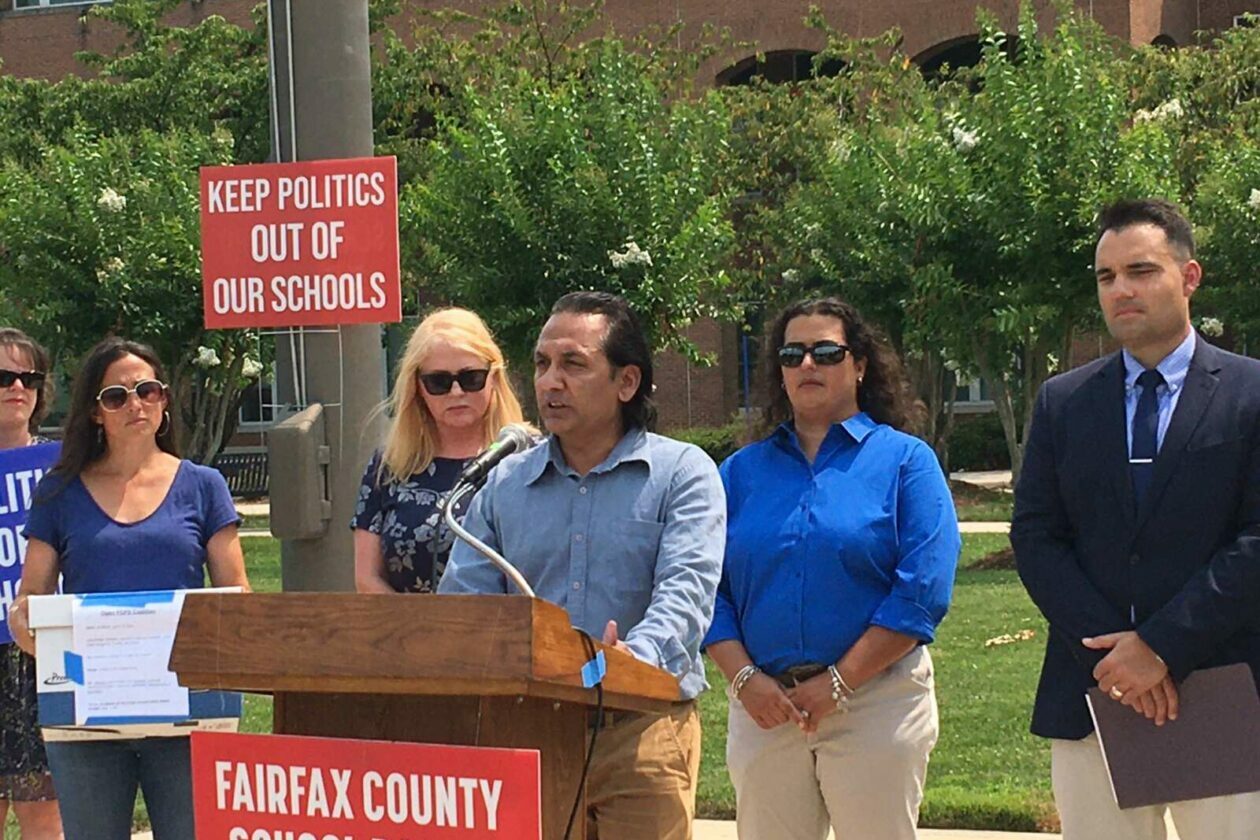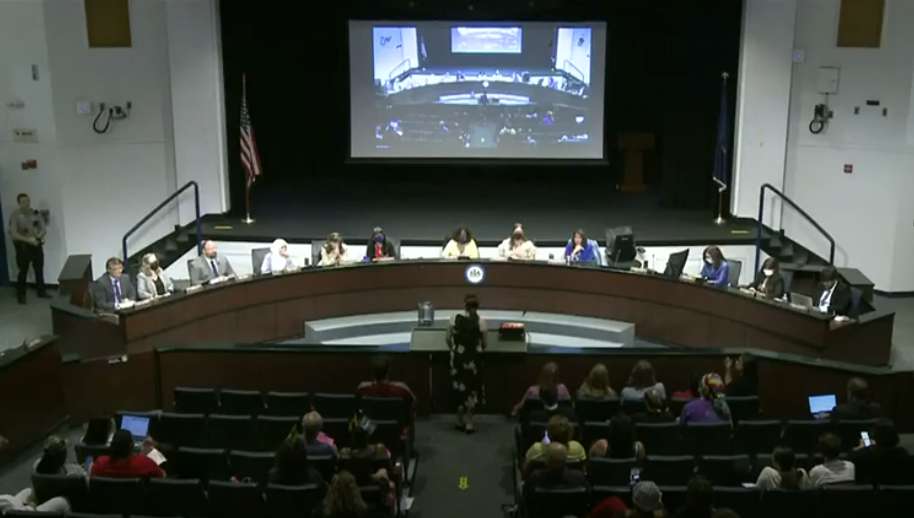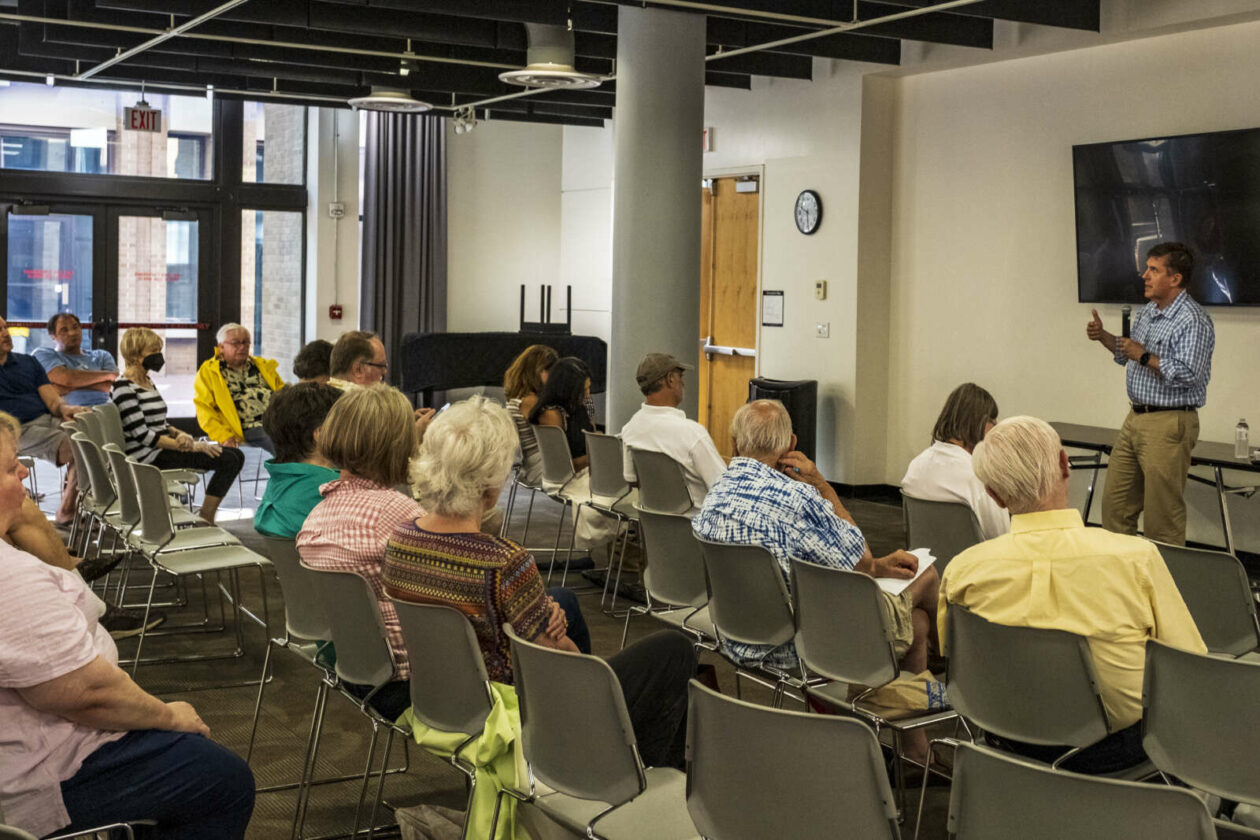

A group of parents submitted over 5,000 signatures yesterday (Monday) to the Fairfax County Clerk of Court in a petition to recall Fairfax County School Board member Elaine Tholen, who represents the Dranesville District, over school closings during the COVID-19 pandemic.
The Open FCPS Coalition formed in the fall to protest Fairfax County Public Schools going virtual during the pandemic and has been campaigning to recall Tholen and two other school board members, Member-at-Large Abrar Omeish and Springfield District Representative Laura Jane Cohen.
“I look forward to continuing to earn my constituents’ trust and support as we prepare to welcome all students in person five days per week,” Tholen said in a statement. “As a former classroom educator and now a school board member, I have always worked for my students’ well-being and to help them reach their utmost potential. I will continue to put our students’ best interests first.”
Recall supporters have a different perspective.
The petitions that citizens signed argue that, in supporting an all-virtual start to the most recent school year, the school board was not acting in children’s best interests. The petitions also allege the school board violated state and local laws and regulations guaranteeing students with disabilities a free, appropriate education.
“Just how far behind are our students? How will these deficits be met?” Zia Tompkins, a coalition board member and former school board candidate, said, raising questions about staffing and other issues. “Parents have been left in the dark about these issues and…as such have real doubts as to whether the Fairfax County school system is even serious about opening full-time in-person for the fall.”
The group met outside the Fairfax County Courthouse before a dozen supporters and leaders went inside to deliver the signatures.
While the Open FCPS Coalition describes itself as a grassroots, bipartisan group concerned with keeping politics out of schools, its largest funding contributions have come from former Republican gubernatorial candidate Pete Snyder and N2 America, a nonprofit dedicated to advancing center-right policies in the suburbs.
The coalition’s largest expenditure has been for signature collection services from a center-right door-to-door voter contact firm, Blitz Canvassing LLC, according to the Virginia Public Access Project.
The group hopes a judge will review the signatures as part of a trial that could ultimately lead to Tholen being removed from her position.
Open FCPS Coalition says only one school board member, Megan McLaughlin, advocated for reopening in a way it felt was consistent and a priority. But only three school board members were chosen for recall efforts because of the group’s limited resources.
Coalition board member Nellie Rhodes said Monday that work to recall Cohen and Omeish continues.
The coalition’s website says it has over two-thirds of the 4,000 signatures needed to recall Cohen, which if obtained, would represent over 10% of the total number of people who voted in her election — the threshold required for a recall to be considered in Virginia.
After shifting entirely to virtual learning on March 13, 2020, FCPS began phasing in some in-person learning in October, but the process was put on hold when COVID-19 cases started to surge around Thanksgiving.
Students began 2021 in remote settings before the school board approved the return of a hybrid model — where students could opt for two days of in-person classes or to remain all-virtual — starting on Feb. 16. FCPS expanded its in-person offerings to four days for some students in April.
Open FCPS Coalition board member and Vienna resident Hemang Nagar says he ended up taking his daughter, who is on the autism spectrum, out of school in the fall because of the distress virtual classes caused her. He said she used to love school but would cry whenever he opened the computer.
“Virtual learning was an utter disaster for her and so many like her,” he said.
His daughter, who is now 10, returned to her elementary school when in-person classes restarted in February.
“They pretend to care but never put their words into action that does any good for any students,” Nagar said of the school board members that the coalition is targeting for recalls.
FCPS plans to resume a five-day in-person week for students this fall.
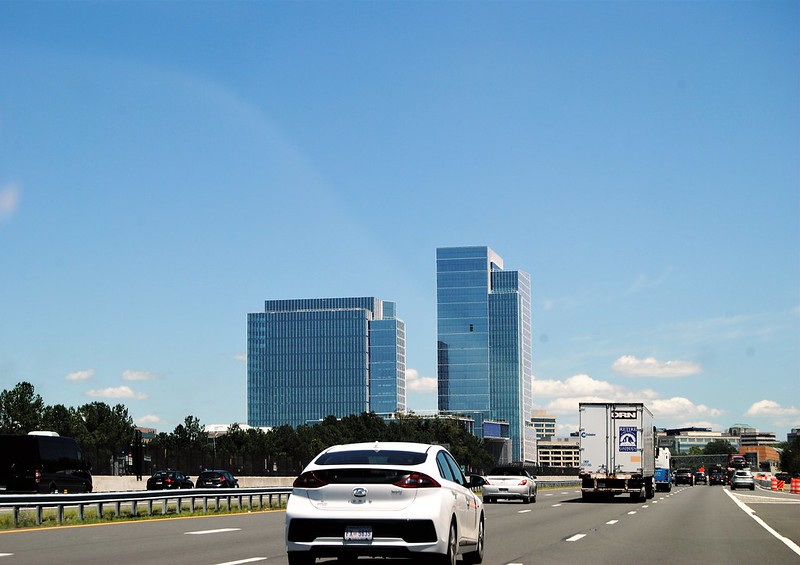
Virginia is reconsidering the future of funding for transportation infrastructure, as the rise of electric and more fuel-efficient vehicles has cut into the gas tax revenue that helps pay for those projects.
One option the Commonwealth has started pursuing is a “mileage-based user fee” that drivers would pay depending on how much or little they travel. Drivers could opt into the voluntary system in lieu of paying a mandatory highway user fee that first took effect on July 1, 2020.
State Sen. Janet Howell (D-32nd District) says the highway use fee — which applies to cars that average at least 25 miles per gallon and is calculated based on the fuels tax at the time of a vehicle’s registration and the average number of miles it travels in the state — is a precursor to Virginia’s planned mileage-based user fee program.
“For most of the past decade, Virginia, like the rest of the country, has been wrestling with the challenge of identifying the best approach to generating sufficient revenues to support transportation investments,” she said in a statement. “As cars have become more fuel efficient and electric vehicle adoption increases, it is increasingly difficult to strike the right balance of raising adequate revenues from traditional sources and adhering to a usage-based philosophy of highway financing.”
The Virginia Department of Motor Vehicles is currently fielding requests from private contractors to operate the program, which it anticipates rolling out in July 2022. Led by the DMV, a workgroup tasked with developing the program is slated to deliver an interim report to the Commonwealth this December.
The working group is identifying all requirements to Virginia’s mileage-based user fee program with “a priority on consumer privacy protection and equity,” DMV spokesperson Jessica Cowardin said in a statement.
Seeking new ways to fund road repairs and transit projects, Virginia established the mileage-based fee program in April 2020 when the General Assembly adopted a major transportation bill that also established the highway use fee and raised gas taxes for the first time in more than three decades.
The bill also lowered vehicle registration fees by $10 and repealed an annual $64 fee for electric and alternative fuel vehicles.
The changes, which include tying the gas tax rate to the Consumer Price Index to keep up with inflation starting next year, will help Virginia diversify its funding sources to offset stagnant or declining gas tax revenue, state legislators say.
The consultant KPMG previously estimated that Virginia would lose nearly 33% of its gas tax revenues by 2030 due to fuel efficiency, or approximately $260 million.
“Neither the [Highway Use Fee] nor the EV Registration fee are intended to suppress the sales of fuel efficient or electric vehicles, but simply recapture the average annual revenue from the foregone gas taxes,” Howell said.
The idea of taxing drivers based on how much they travel instead of the fuel they use has been gaining traction throughout the U.S. over the past decade.
Despite inflation, the federal gas tax rate has been locked in at 18.4 cents per gallon since it went up from 14.1 cents in 1993, meaning there’s less money to fund highway improvements.
“Many cars are not using gas at all, such as electric, so that system of highway finance has been coming apart for a long time,” said Jonathan Gifford, director of George Mason University’s Center for Transportation Public-Private Partnership Policy in Arlington.
If Virginia wants to encourage a transition to clean energy and electric vehicles, which “is absolutely essential to addressing climate change, we will need to look to other options” to pay for transportation projects, Northern Virginia Transportation Alliance President Jason Stanford says. Read More
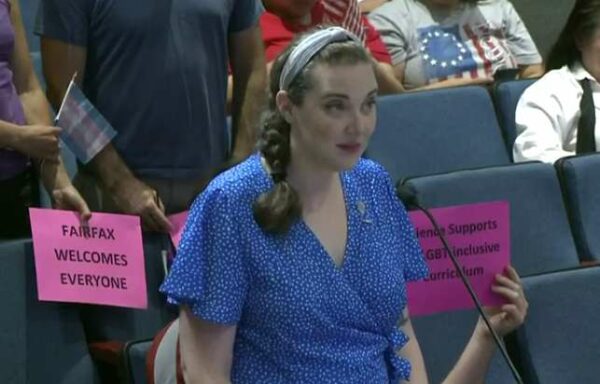
Cheers and applause came after the Fairfax County Public Schools board updated its student handbook to better document harmful and suspension-worthy conduct and protect different gender identities and expressions.
The updates that the school board approved Thursday (July 15) ensure that the handbook conforms with FCPS policies supporting the rights of lesbian, gay, bisexual, transgender, queer, gender-expansive, and other students (LGBTQ+).
Cementing established protections for students from being intentionally outed or misgendered, the move comes amid intensifying discrimination against transgender people in particular across much of the U.S.
The advocacy group Human Rights Campaign said in May that state legislatures have introduced — and in some cases, adopted — “unprecendented” amount of anti-LGBTQ+ measures, including many that specifically target young people and deal with schools.
Efforts in Loudoun County to adopt a policy ensuring students will be identified by their correct names and pronouns and use bathrooms that match their gender identity led to an ongoing lawsuit and a contentious school board meeting that resulted in an arrest and an injury.
While FCPS added gender identity to its nondiscrimination policy in 2015, the furor in Loudoun unnerved many Fairfax County LGBTQ+ students and staff.
“To the gender-expansive and transgender students and their families who have witnessed these attacks on their simple human dignity, I am sorry,” Providence District Representative Karl Frisch, Fairfax County’s first openly gay school board member, said on Thursday. “You deserve much, much more.”
Frisch detailed many of the approved changes to the Student Rights and Responsibilities (SR&R) book in a blog post:
For the first time ever, as an extension of the school board’s nondiscrimination policy, FCPS regulations, and Virginia code, this document specifically identifies several rights of particular interest to gender-expansive and transgender students. Among them are the right to use facilities that align with their gender identity, the right to be called by their chosen name and pronoun, the right to nondisclosure of their gender identity or sexual orientation, and the right to receive supports that ensure equitable access.
Other updates include a more detailed definition of hate speech, more specific language around the role of school resource officers, and an alignment of the school system’s policies on marijuana with its alcohol policies after Virginia legalized small amounts of the drug for adults 21 and older, effective July 1.
The Fairfax County School Board adopted a regulation stating that students should be called by their chosen name and pronouns, can use locker rooms and restrooms consistent with their gender identity, and can wear any clothing as long as it complies with the dress code in October.
The regulation also banned deadnaming, which has now been prohibited in the SR&R handbook, along with malicious misgendering.
The school board previously approved a regulation addressing many of these issues in July 2016, but FCPS decided to wait on officially implementing it to see the outcome of various court cases and legal issues. Read More
The Fairfax County School Board approved a framework yesterday (Thursday) to seek federal COVID-19 money, with the stipulation that it gets increased oversight and input on how the money will be spent.
The roughly $189 million plan would start with the upcoming school year and extend to June 2024. It is intended to help Fairfax County Public Schools respond to issues stemming from the pandemic.
“While we did have a public hearing about where people would like us to target our monies, we have not had the opportunity to get the greater details from the superintendent and his team,” Braddock District Representative Megan McLaughlin said.
The school board thanked district administrators for developing the Elementary and Secondary School Emergency Relief (ESSER) framework after learning about the incoming funds in May, but several board officials questioned whether the proposal was sufficiently detailed and provided enough accountability.
“The ESSER funds are unlike other funding by the federal government in that it has a requirement to have extensive community input and outreach,” Mount Vernon District Representative Karen Corbett-Sanders said.
The ESSER III money will support school operations, cover increased workloads for Individualized Education Program (IEP) staff, aid academic interventions, address students’ social and emotional needs, help with translation services for students, and more.
The largest costs, as identified by district staff so far, would involve:
- $54.9 million for academic intervention
- $46.2 million for special education teacher contracts
- $23.3 million for social and emotional learning needs
- Nearly $20.2 million for summer 2022 learning
- Nearly $14 million for afterschool programming and transportation
According to an FCPS presentation about the program, the ESSER money should address the impacts of the pandemic especially for students who have been disproportionately affected, and at least 20% must be used to address learning loss, among other rules.
The money will come through the Virginia Department of Education from the American Rescue Plan Act that was passed by Congress and signed into law in March.
Corbett-Sanders said FCPS faces an Aug. 1 deadline for submitting a general framework to the state before giving a more specific plan for how it will spend the funds by Sept. 1.
“Rather than just greenlighting, ‘They’re giving us $188.6 million, we’re going to put it in a line item list,’ we felt that it was important to have a little bit more comprehensive planning around the ESSER funds grant,” Corbett-Sanders said.
With the board’s initial approval, Superintendent Scott Brabrand will present an official ESSER III plan prior to the board’s Aug. 26 business meeting. He will present more detailed information, including targeted goals, operational timelines, and accountability metrics in a September work session.
The board’s motion also stipulated that state-filed amendments to the plan that reach $100,000 or more must be authorized by the board.
From balcony drainage issues and parking lot potholes to cracking across various retaining walls, an engineering firm has identified multiple infrastructure issues with Lake Anne Village Center, contributing to months without hot water for residents earlier this year.
Hunter Mill District Supervisor Walter Alcorn visited the community for a meeting on Wednesday (July 14) that drew over 40 people.
Possible solutions that he discussed included the Lake Anne Reston Condominium Association (LARCA) giving up an asset, such as a parking lot, or development rights to Fairfax County in exchange for financial assistance from the county.
“This is the cultural heart of Reston,” Alcorn said of Lake Anne, noting that the village center is on the National Register of Historic Places.
The private community was created by Reston founder Robert Simon, with construction starting in 1963. But issues with the aging infrastructure have left residents looking to the county for help.
LARCA President Jason Romano told Reston Now that residents have had hot water after crews troubleshooted areas and the condo association used some $300,000 in its reserves to replace its system.
“This is not a quick fix,” Romano said after the meeting. “It’s not like your hot water at home breaks. You go call a plumber; you might be out of water for a day or two.”
The consulting firm Samaha Associates shared its findings after a pair of engineers reviewed the village center’s mechanical, electrical, and plumbing infrastructure, spokesperson Lisa Connors said in a statement.
The firm identified one safety issue, finding that some planters on the decks of the Heron House have exposed rebar, so county staff notified the management company and communicated the issue with residents, Alcorn’s office said.
At the meeting, Michael Schaefer, whose wife is on LARCA’s board, shared concerns over management issues, pointing to the partial collapse of the 12-story Surfside high rise in Miami on June 24, killing at least 97 people with others still missing.
“We do have gallons and gallons and gallons of water flowing from the cracks that are in the pipes…here,” he said.
Romano said the newly replaced water system is using a fraction of the water that it previously utilized.
“We shouldn’t be having any more leaks,” he said.
The engineering analysis of visible infrastructure could have cost estimates by the first week of September. Further details would require proposals from contractors.
Suggesting that sensing technology might be used to detect potential problems underground, Alcorn said he’s looking to address the infrastructure issues, help revitalize Lake Anne, and improve the sustainability of LARCA, which he said needs restructuring.
He added that he’s trying to make sure fixes are made now so there isn’t another conversation like this in the near future.
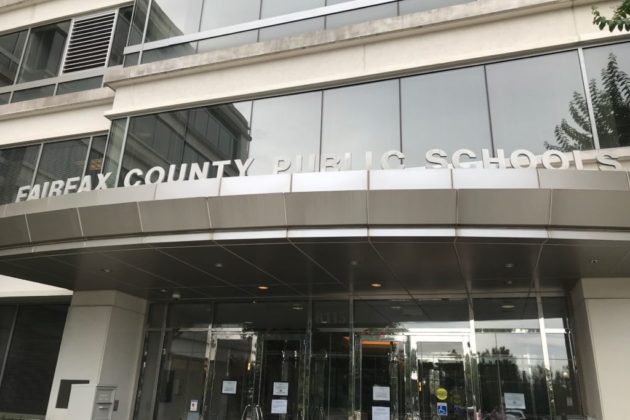
Fairfax County will hold more summer classes for students with disabilities later this month after staffing issues put the program in jeopardy.
After families were informed that a teacher deficit was delaying the Extended School Year program, the school district adjusted it into two blocks, the first of which is already underway, to allow it to keep class sizes low but do more with less staff.
“We’re in a special education crisis,” Fairfax County Public Schools Superintendent Scott Brabrand said Tuesday (July 13) during a work session with the school board.
He noted around half of the 400 job openings that the district currently has involve special education, but according to the school district, a second Extended School Year block is “almost fully staffed.”
“There is a full commitment that we will have a fully staffed second session of the ESY,” Mount Vernon District School Board Representative Karen Corbett-Sanders said, adding that FCPS notified families and provided a timeline for transportation, food services, and more.
Earlier this month, FCPS apologized for communications that suggested the “administration was faulting teachers for failures of the system to supply optimum programming.”
“Our staff members have gone far beyond ordinary expectations and we are grateful for their professional dedication,” the district said on social media.
While officials praised teachers and administrators for making services work this summer, FCPS is looking to build within its own ranks to help address long-term faculty shortages.
School officials are working to apply for COVID-19 relief from an ESSER III fund (Elementary and Secondary School Emergency Relief). The money comes from the $1.9 trillion stimulus in the American Rescue Plan Act, passed by Congress and signed into law in March.
Previous federal COVID-19 relief plans included ESSER funds administered by state education departments, though local school districts had to apply to obtain the funds.
The school board was slated to vote on a plan for how to spend the roughly $189 million that FCPS is seeking when it meets tomorrow (Thursday).
The money would cover a three-year span, starting with the upcoming school year through June 2024. Intended to help schools safely open after a challenging year due to the pandemic, the funds can be used to support school operations and address students’ social and emotional needs.
The proposed plan would allocate $46.2 million to special education staff, which amounts to a 7% salary increase to cover the extra 30 minutes needed each day to file Individualized Education Program paperwork due to the pandemic, according to FCPS.
The funding sought would also involve around $2.5 million for professional development. According to Tuesday’s presentation to the school board, that effort would involve two new employees each year. It isn’t immediately clear if that’s all for salaries or if other expenses are involved.
Other requests include $54 million for academic interventions, $2 million for cybersecurity, $15.9 million for after school programming and transportation at high schools, and $20.1 million for a summer 2022 learning program.
Board members pressed FCPS officials for more accountability and strategic planning in its plans for the federal funds. Community members previously weighed in through focus groups in May and June, online feedback, and a June 7 public hearing.
Wilda Smith Ferguson, a parent of a child with special needs in the district, said during the June meeting that the school system’s decisions regarding protocols haven’t taken children like hers into consideration.
“She is totally dependent on her teachers and the support staff at the high school that she attends,” Ferguson said. “I would like to see some of the money in the grant go to, basically, instead of ‘trickle down,’ trickle up. Figure out what is best for the most vulnerable and work up.”
The deadline for FCPS to apply for ESSER funds is Sept. 1.
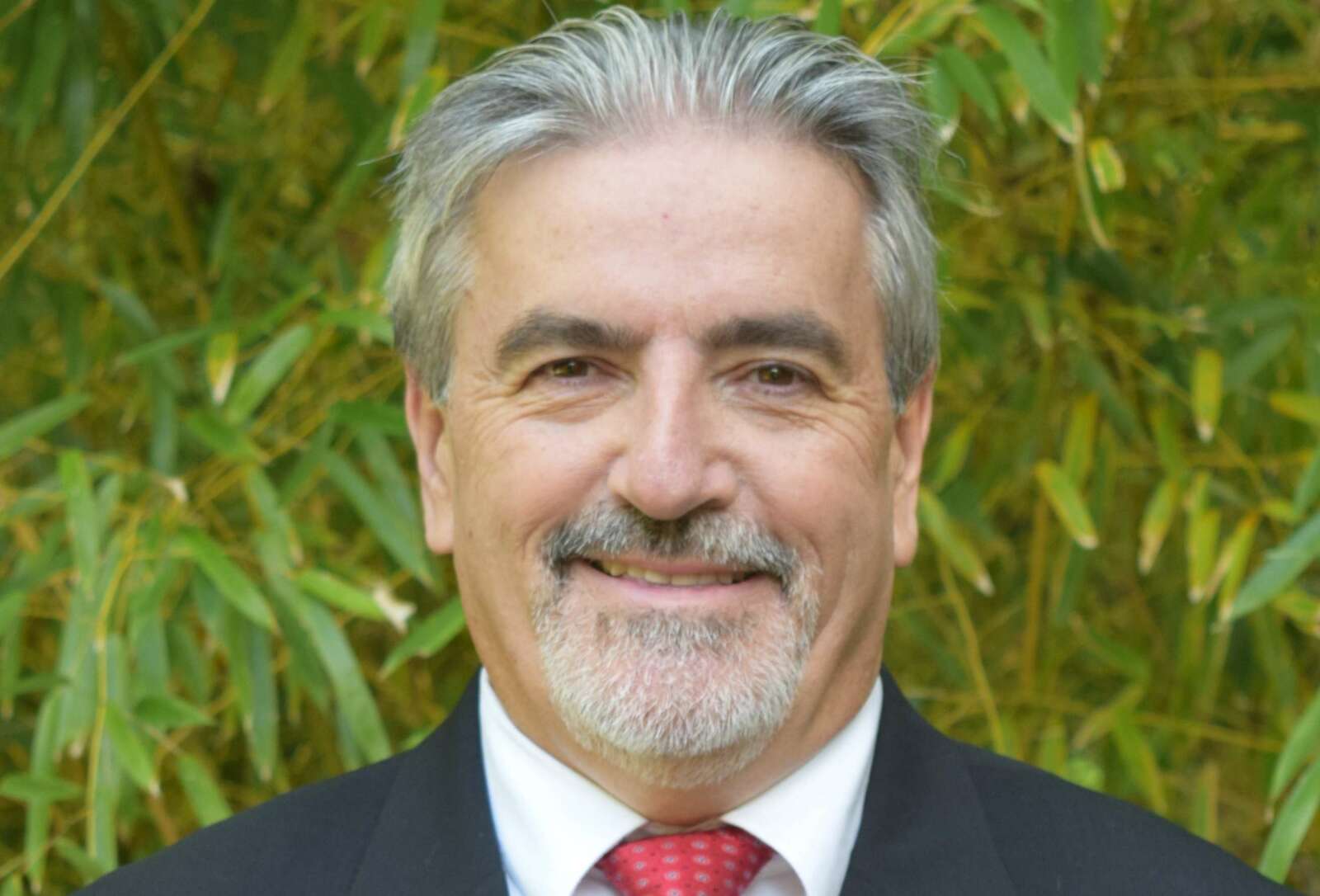
The Reston-headquartered Fortune 500 company Science Applications International Corp. known as SAIC (12010 Sunset Hills Road), has hired its first chief climate scientist.
Stephen Ambrose joined the information technology and engineering government contractor in early May. His decades of previous experience in climate science includes a 25-year tenure at the National Oceanic and Atmospheric Administration.
“Climate change is one of the grand challenges of our time,” Bob Genter, president of the defense and civilian sector at SAIC, said in a news release. “Stephen brings a wealth of experience and expertise to SAIC as we continue to help our customers rise to this challenge with solutions scaled to meet all levels of climate and disaster risk and adaptation.”
Ambrose is particularly interested in assisting government customers with strategic planning for disaster responses and preparation not just at the federal level, but also states and localities.
“How are we prepared for these disasters? More hurricanes. Stronger hurricanes. Flooding,” he said. “The most opportunity we should go forward with is…in that effort.”
Ambrose’s primary responsibilities include helping the company understand climate change and its impacts, examining the available science and technology and applying those to climate questions, and working with customers to address issues related to climate change, resilience, and adaptation.
“His experience will guide SAIC’s efforts to support government customers as they advance solutions to deal with the impacts of climate on land, air, sea, wildlife, and civilizations around the world,” the company said in the news release. “He’ll also promote solutions for measuring and addressing climate challenges, leveraging SAIC solutions and capabilities in data science, modeling, artificial intelligence, machine learning, and analytics.”
In addition to working for NOAA, Ambrose’s career includes stints with the Department of the Interior, Environmental Protection Agency, and NASA, where he spent 10 years as a program manager executive for disasters, homeland security, and water resources.
Before joining SAIC, he was a senior advisor and program manager at General Dynamics Information Technology (3150 Fairview Park Drive, Falls Church).
With about 26,000 employees, SAIC primarily contracts with the Army, Navy, and agencies in the Department of Defense, but it’s also served NASA, the Department of Homeland Security, and other federal partners.
In March, the company’s annual filing showed $7 billion in revenue for the past fiscal year — 98% of it involving the federal government.
SAIC’s decision to hire a chief climate scientist comes amid a renewed focus in the U.S. on addressing climate change and other environmental issues.
As one of his first executive actions, President Joe Biden set a goal to eliminate carbon pollution from the power sector by 2035. He also wants the country to cut its greenhouse gas emissions in half from 2005 levels and make all electricity renewable by 2035.
“You can tell by the administration and the focus on climate change, it’s just everyday…coming out from that so quickly, that we have to respond to that,” Ambrose said.
On a local level, the Fairfax County Board of Supervisors pledged yesterday (Tuesday) to achieve carbon neutrality for all government operations by 2040, following up on a recommendation issued by the county’s Joint Environmental Task Force last year.
However, with county government facilities accounting for a relatively small amount of emissions, the private sector also needs to do its part to combat climate change, and Ambrose says SAIC is well-equipped to contribute.
He says his work will bring the company “to the forefront” of this issue, building off of ongoing efforts with different government agencies, from the Federal Aviation Administration to military bases.
“The team I have is growing rapidly,” Ambrose said. “I consider all of SAIC my team because I’m horizontal across all aspects of it.”
Ambrose says his first year on the job is more focused on planning, including developing a five-year plan with milestones for the company. He’s also working on some events to engage employees and the general community, starting with a public forum that will include a panel of speakers from NASA, NOAA, and universities.

Several Olympians competing on the world stage in Tokyo this summer can trace parts of their athletic journeys back to Fairfax County.
Swimmer Andrew Seliskar, discus thrower Chioma “CiCi” Onyekwere, and runner Trevor Stewart all qualified for the 2020 Olympics, which will take place from July 21 to Aug. 8.
The games were delayed for a year due to the COVID-19 pandemic, and they will be held without spectators after Japan announced on Friday (July 9) that it would enter a fourth state of emergency starting today (Monday) due to rising cases of the virus.
Seliskar, who graduated from Thomas Jefferson High School for Science and Technology in 2015, is taking on his first Olympics after two previous qualifying attempts at ages 19 and 15, including one where he “narrowly missed” a semi-final spot.
As a student, he broke a national high school record for the 100-yard butterfly in 2014 near Richmond with 53.24 seconds, and he won four national titles swimming at the University of California in Berkeley before becoming a professional swimmer.
The 24-year-old McLean native told Fairfax County Public Schools that he relishes his competitions against high school rivals.
“Those were great memories, and for my swimming career, those are some of the best ones,” he said.
He also told WJLA-TV that his Olympic dream began swimming with a youth swim team, the McLean Marlins.
Heats for the men’s 4 x 200 meter freestyle relay are scheduled for 6-8:30 a.m. EDT on July 27, and the final will air from 9:30 p.m. EDT on July 27 to 12:05 a.m. EDT on July 28.
Robinson Secondary School graduate Onyekwere will represent Nigeria at the Olympics, since she is a dual citizen of that country and the U.S.
“I feel like Nigeria made me the person I am today, so it’s so nice to give back in some kind of way and represent them,” she told FCPS.
The Michigan-born former University of Maryland athlete currently holds Nigeria’s discus throw record of 63.3 meters, which she set in April in Chula Vista, California, as part of the Nigerian Olympic Trials.
The 27-year-old engineer works for Ford and relocated back to Fairfax County last fall to be with family amid the pandemic, FCPS noted.
The qualifying round for the women’s discus throw is 8:30 p.m. EDT July 30, and the final is 7 a.m. EDT Aug. 2.
Stewart, who graduated from South County High School in 2016, will run the 4×400-meter relay race for Team USA.
His teammates include a fellow student at North Carolina A&T State University. The pair were part of a 4×400 relay team that won national titles this year for the indoor and outdoor track seasons, capping his senior year.
The 24-year-old switched from karate to track and field when he was in ninth grade. To prepare for the upcoming games, he has turned to prayer and meditation, according to FCPS.
“I worked hard for this,” he told FCPS. “There’s always room for improvement, but I’ve made it right now. I’ve made it right here.”
Heats for the men’s 4×400 meter relay are slated for 7:25 a.m. EDT Aug. 6 and 8:50 a.m. EDT Aug. 7 for the final.
The Tokyo Olympics will feature a total of 339 events across 33 sports. They will be broadcast and live-streamed in the U.S. by NBC.
Photo composite via University of California — Berkeley, University of Maryland, and North Carolina A&T
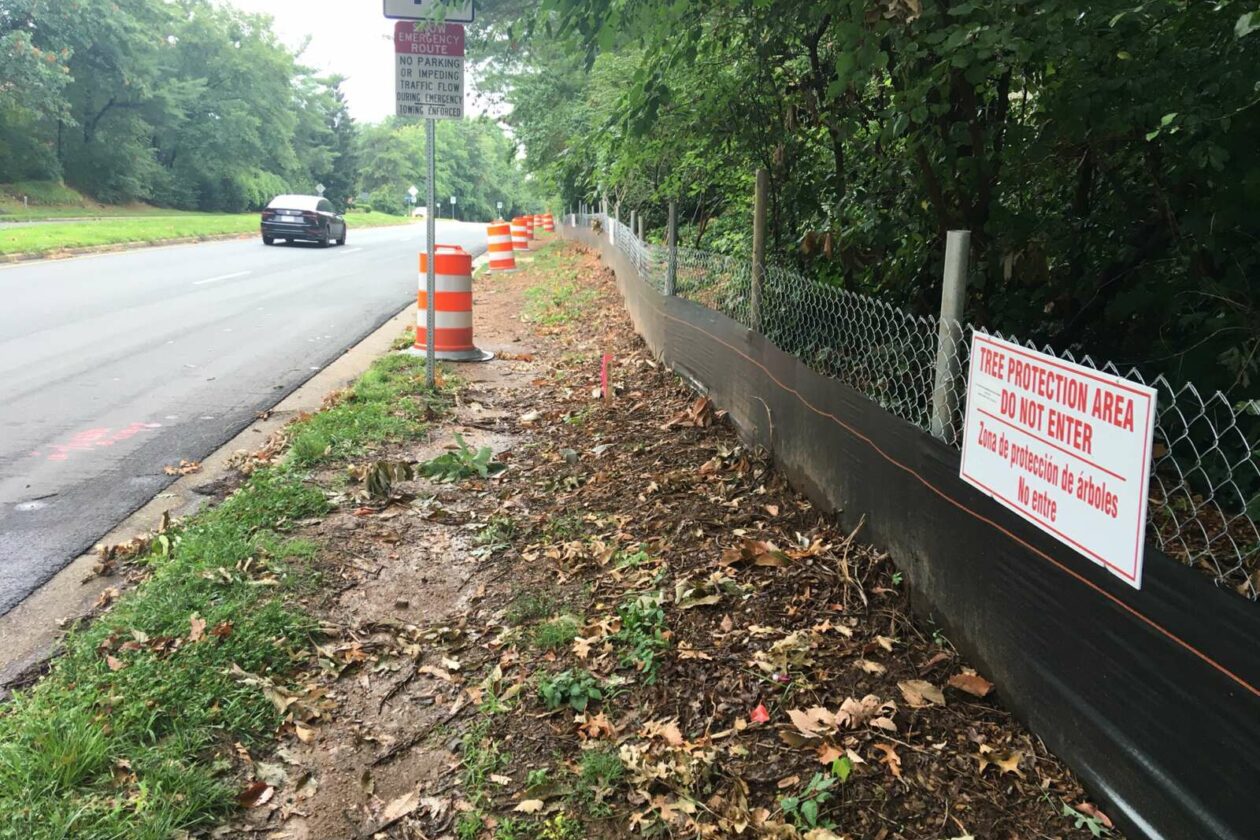
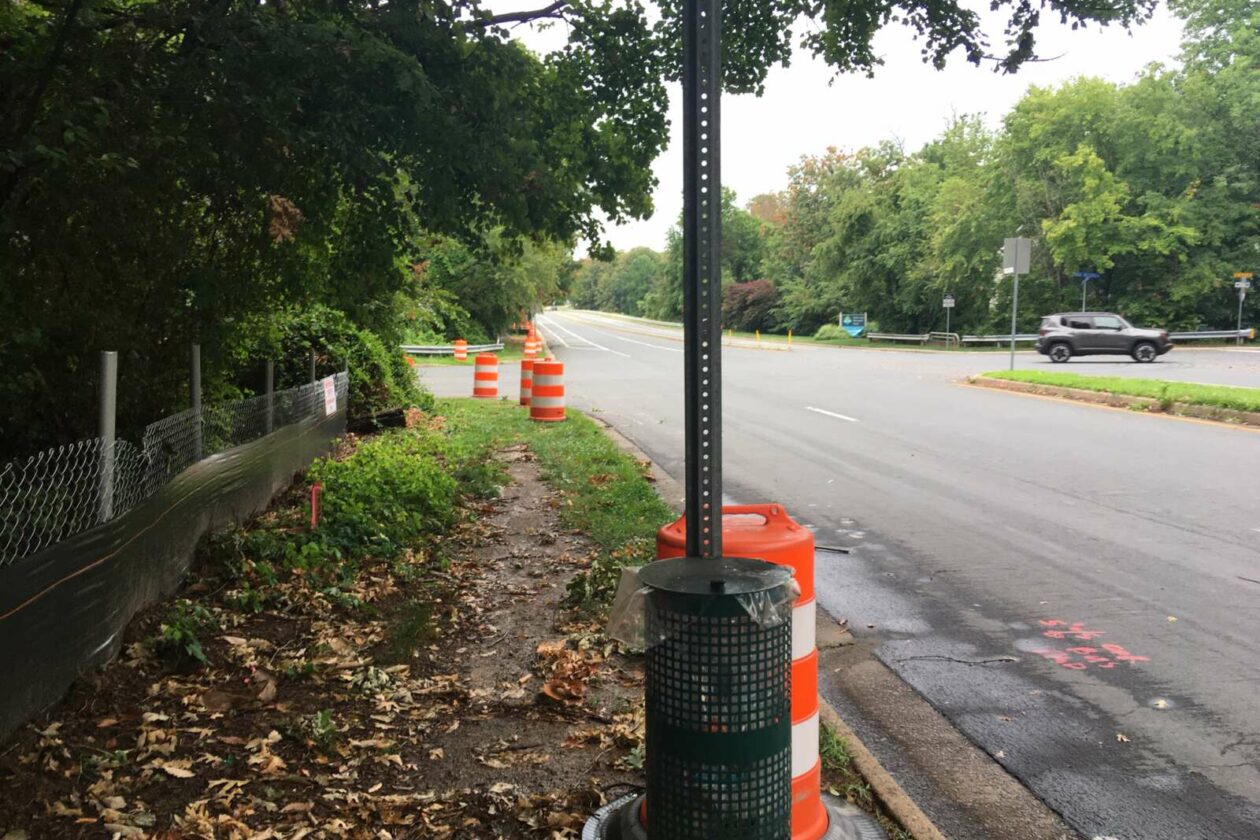
Reston drivers might have noticed some fencing and other construction equipment going up along stretches of road near South Lakes High School, as crews prep the area for a sidewalk construction project.
The approximately $2 million bicycle/pedestrian project on South Lakes Drive will add sidewalk to areas that are currently mostly dirt paths. According to a Fairfax County document, the sidewalk being constructed involves an approximately 3,600-foot-long area.
That’s not all. The Fairfax County Department of Transportation project will also add sidewalk on Twin Branches Road at the intersection with South Lakes Drive, where safety upgrades for pedestrians will also occur, Reston Association Chief Operating Officer Larry Butler said in a Reston Today video on Tuesday (July 6).
“Very early in the planning and scoping for this project, Fairfax County agreed to add a short section of sidewalk that had been identified in our multimodal transportation advisory committee’s report, Reston on Foot and Bike,” Butler said.
The project, which uses 2014 bond money, will install walkways from Greenskeepers Court to Soapstone Drive, Whisperwood Glen Lane to Ridge Heights Road, and Harbor Court to Twin Branches Road.
Orange barrel markers have been placed along areas of the project — areas which Butler said will fill in gaps between existing sections of sidewalk and Reston Association pathways, and improve three bus stops in main sections of the work.
Butler noted in the video that the project is one of three recent pedestrian improvement projects in the area. Work to add five-foot-wide sidewalks on the south side of Sunrise Valley Drive from South Lakes to Soapstone Drive and from RA’s headquarters (12001 Sunrise Valley Dr.) west to Glade Drive has been completed.
“These improvements will help facilitate a safer pedestrian experience for all Restonians,” Butler said. “I hope you get out and enjoy these paths and sidewalks once they’re completed.”
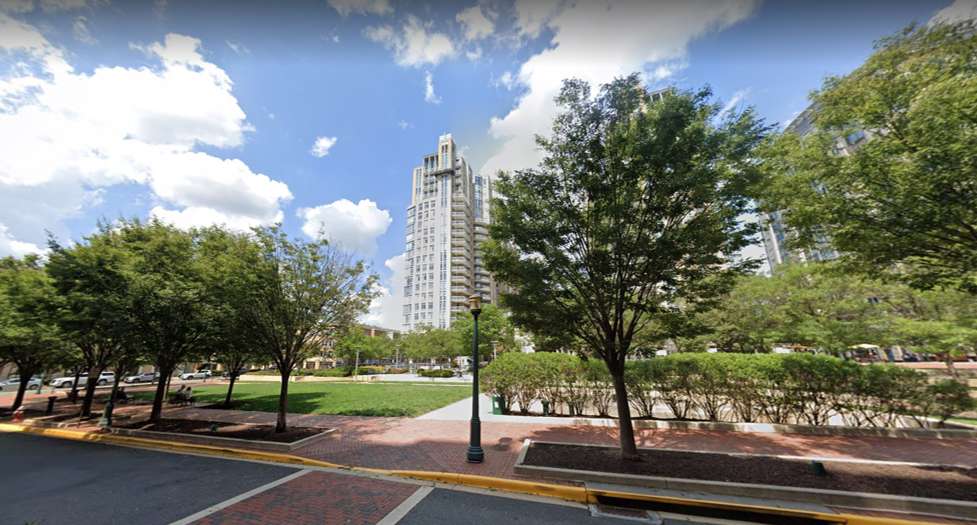
As the world awakens from its plague-induced slumber, Reston Town Center and a Herndon theater company have been conjuring the forms of things unknown and working to turn them into shapes.
The town center and NextStop Theatre Co. are collaborating on a new Theater in the Park initiative that will launch next spring with a production of William Shakespeare’s “A Midsummer Night’s Dream” at the amphitheater at Reston Town Square Park.
“We are very excited about it,” Reston Town Center Association executive director Robert Goudie said in an email, noting it will complement other programming, such as Sunday Art in the Park with the Shenandoah Conservatory and Tephra Institute of Contemporary Art, Lunchtime with the Arts at Mason, and family entertainment on Saturday mornings.
Scheduled to run from April 29 to May 1, 2022, the initiative’s inaugural performances have been in the works since before the COVID-19 pandemic.
Back then, the RTCA, NextStop, and Reston Community Center envisioned staging a contemporary version of “A Midsummer Night’s Dream” that families can enjoy.
“We all love the way this play can be interwoven with the audience, and the park amphitheater setting seemed the perfect forest,” Goudie wrote.
With the pandemic wiping out performance plans for fall 2020, organizers realized the outdoor setting could help provide a better environment for the show amid COVID-19 concerns. NextStop’s first indoor production with a live audience since the pandemic began premiered June 25.
“Theatres were one of the first types of businesses that had to close…and we are still only starting to crawl back,” said Evan Hoffmann, NextStop’s producing artistic director.
Hoffmann said the Reston Town Center project’s location and timing make the expected performance big, fun, and serendipitously exciting. Casting has not yet started, but the extended planning time is helping organizers get a head start.
The new initiative will kick off springtime cultural programming at Reston Town Center that typically includes the Tephra Fine Arts Festival in the third week of May, though it was rescheduled this year for Sept. 10-12. Last month, the town center held its first movie in the park.
“All of this reflects RTCA’s mission of, in part, supporting the arts (all consistent with Bob Simon‘s original vision for a completely community), something that we think helps differentiate Reston Town Center as a compelling destination,” Goudie wrote.
Photo via Google Maps
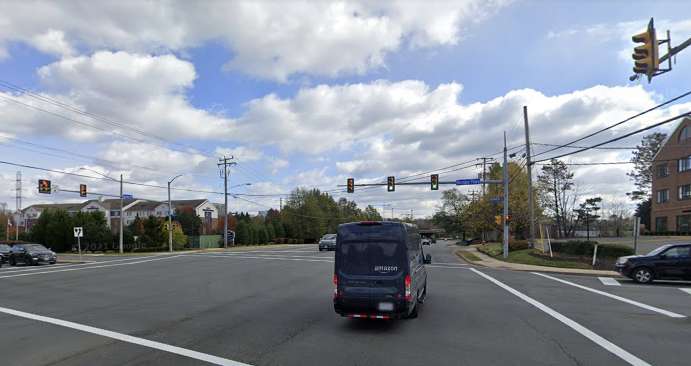
Traveling in Herndon north of the Dulles Toll Road, whether by car, bicycle, or as a pedestrian, could get easier after a $19 million project is completed in 2023.
The Virginia Department of Transportation is currently working on plans to widen Spring Street from four to six lanes between Herndon Parkway and Fairfax County Parkway (Route 286). The project will add more turn lanes on and around East Spring Street, create a cycle track on Herndon Parkway, and improve the area’s sidewalk infrastructure.
The changes seek to address traffic volume that’s projected to increase to an average of over 47,000 vehicles each day on East Spring Street in 2042, up from 38,000 vehicles on that stretch of road and 18,000 vehicles on Herndon Parkway today, according to VDOT’s project page.
Construction is slated to begin this winter with completion anticipated in fall 2023.
According to the Town of Herndon, the roadway widening involves:
- Expanding and reconstructing Spring Street from four to six lanes between Route 286 and Herndon Parkway
- Adding turn lanes on approaches to the Herndon Parkway and Spring Street intersection, including dedicated northbound right turn lanes on Herndon Parkway and a second left turn lane on southbound Herndon Parkway
- Adding a turn lane on the southbound Fairfax County Parkway off-ramp at Spring Street that’s solely for left turns
The cycle track will consist of an eight-foot-wide bicycle path separated from vehicular traffic as well as a six-foot-wide sidewalk that would replace the existing walkway on the east side of Herndon Parkway.
The two-way cycle track will run from the Washington & Old Dominion Trail, past the Spring Street intersection, and farther south to Hyatt House.
The dedicated bicycle path will support the Fairbrook Park redevelopment and other development projects expected to come with the eventual opening of the Herndon Metro station. It will ultimately extend to the Herndon Parkway and Van Buren Street intersection, where it will connect with a trail and bicycle lanes on Van Buren Street, according to the town.
The project will also introduce five-foot-wide, ADA-compliant sidewalks along Spring Street, according to a VDOT document.
While VDOT will be responsible for the project’s design and construction, maintenance of the completed bicycle path will be overseen by the Town of Herndon under a proposed license agreement with the state transportation department and the Northern Virginia Regional Park Authority (NOVA Parks), which owns the W&OD Trail.
If approved, the agreement would run through the end of 2060 but could be extended. VDOT would be required to give NOVA Parks $5,000 to cover potential expenses related to construction on the W&OD Trail, though the money will be returned within six months after the work is completed.
Once construction is finished, the licensing agreement would be transferred to the town.
The Herndon Town Council discussed the agreement during a work session yesterday (July 7) and is slated to address the item again at its next regular meeting on Tuesday (July 13).
Photo via Google Maps

Swim caps, swimming goggles, and smiles returned to local pools last month after an unprecedented halt to the Reston area’s primary swimming program in 2020.
After the COVID-19 pandemic interrupted the Reston Swim Team Association last year, the first hiatus in its 50-plus years of existence, the league has now resumed practices as well as competitions and opened up new programming.
“We are thrilled to be back in the water this summer,” Debbie Wagner, the group’s president, said in an email.
Changes this year include the introduction of a program called New Wave for those with basic swimming skills but who weren’t quite ready for a swim team. Wagner noted that the goal is for participants to join a team mid-season.
“We have welcomed many new swimmers to the league and it always amazes me to watch them grow and develop from the first night of practice through the end of our season,” Wagner wrote.
RSTA uses Reston Association pools and targets kids ages 6 to 18.
The group’s board of directors worked throughout the winter and spring to plan for a summer season based on input from members and lessons from what local club and high school teams were doing under COVID-19 restrictions.
“With restrictions loosening and COVID case counts dropping to low levels just before the start of our season, we were able to bring back much of what we typically expect from our summer swim season,” Wagner said in the email.
In April, the RSTA noted changes to comply included 10-foot social distancing, wearing masks immediately before and upon exiting the water, and conducting health screenings, among other measures.
Since then, Virginia ended all COVID-19 capacity and social distancing requirements on May 28 in response to declining COVID-19 cases and rising vaccination numbers. The Pfizer-BioNTech vaccine has also now been authorized for adolescents 12 and older, though no COVID-19 vaccines are available yet for younger children.
Even though Virginia has ended its public health restrictions, RSTA has continued utilizing COVID-19 precautions, such as reduced team sizes and off-deck seating areas have sought to avoid crowds on the pool deck.
The league’s return was also made possible in part by support from local businesses that have served as sponsors, including Synergy Design & Construction as a gold sponsor, Glory Days Grill as a silver sponsor, and Stang Family Orthodontics as a bronze sponsor.
The sponsorships help fund operations, including scholarship opportunities to swimmers unable to participate without the financial help.
“The season has been going well,” Wagner said, “and our swimmers and families are excited to be able to be back in the water this summer.”
Photo via Pete Wright/Unsplash

For 14-year-old Akshita Balaji, a combination of hard work and passion spelled success.
A Herndon resident, Akshita tied for 21st place in the Scripps National Spelling Bee semifinals, which was held virtually and aired on ESPN on Sunday (June 27) after the nationwide competition was canceled last year due to the COVID-19 pandemic.
She spent around 12 hours per day preparing for the last six months and studied around 6,000 words per day.
“It was definitely a little hard at first but I kind of got used to it,” she said. “When I was studying, it didn’t feel like I was doing work, you know? Because one word led to another.”
When she saw a word, she wanted to know its relation to another or why it’s spelled that way, she explained.
Her Scripps placement marked the first time in at least a decade that a Fairfax County Public Schools student has advanced that far, according to FCPS via the Fairfax County Council of Parent Teacher Associations.
Since the event, she’s been taking it easy. Her family held a party the following day, and friends visited and brought her gifts, and family sent her flowers, gifts, and cake.
“Everybody posted a lot of messages for her on Facebook and, you know, different forums,” her mother, Sumitra Sampath, said. “We created a little scrapbook for her with all those messages…[and] pictures from different bees.”
A graduate of Herndon’s Rachel Carson Middle School, Akshita will attend ninth grade at Westfield High School in the fall and wants to become a surgeon one day.
Her vocabulary could come in handy for medical school. She notes that Romance languages like Spanish, which she studied last year, and French, which she plans to learn, have Latin roots that could help with the learning curve. She also knows Tamil and Hindi.
“Because of spelling, the Latin word, when it goes into French, you can tell what Latin word it came from,” she said. “That helps you really understand the language because you can…understand the roots and actually where it came from and not just memorize what it means.”
Sampath noted that her daughter, who won her first spelling bee when she was in first grade, watched the Scripps bees on TV as a kid, looked up to prestigious spellers in elementary school, and wondered how cool it would be to win.
Akshita hoped to reach the finals, which will take place in person at ESPN Wide World of Sports Complex at Walt Disney World Resort on July 8, but she says she’s interested in competing in other spelling bees this year.
Scripps semifinalists receive a commemorative medal and $500 gift card. The overall winner gets $50,000 and other prizes. The contest is limited to those who are in the eighth grade or below.
While Akshita has now aged out of the Scripps competition, her mother also notes that her daughter is interested in coaching younger students.
Akshita gained some experience during the pandemic, leading classes on various topics a few times each week on Zoom with young children of friends’ families in the area when schools shut down.
“She wants to…pursue coaching now,” Sampath said. “I think she will be a pretty good coach because she works really well with the kids and she has that knack.”

Fairfax County is seeking public feedback about people’s parking habits and priorities in Reston and Tysons with a survey available now in English and Spanish until the end of July.
County staff are using the online survey to help establish a managed parking program in the Reston Transit Station Areas and Tysons Urban Center, which they hope will address issues ranging from limited parking options to avoiding vehicles reportedly remaining in spaces for weeks at a time.
In addition to asking about people’s current parking habits, the survey tells respondents to prioritize five factors that affect when and where they decide to park:
- Lowest price or free
- Proximity of parking to desired location
- Flexible payment options (credit cards, smartphone apps)
- Ability to pay with cash
- Overnight parking is allowed for free
The county is looking to get input from both commuters and residents. In addition to filling out the survey, community members can submit comments through an online feedback form, by mail to the Fairfax County Department of Transportation, and by calling 703-877-5600.
The survey will build on the results of a two-year study that FCDOT conducted to look at the availability of on-street parking on state-owned roads in Tysons and Reston.
In Reston, the study found just 211 on-street spaces along 15 miles of public curbs, amounting to a 6% coverage. Recommendations included implementing timed or paid parking near Metro stations to encourage turnover and addressing issues with commercial vehicles parking in front of businesses.
The county is looking to support businesses with “shorter duration parking and parking space turnover,” according to a page about the survey.
“Ultimately, the goal is to provide parking that supports the mixed-use development in these increasingly-urban areas of the County,” FCDOT said in a news release.
County staff is slated to use the information from the survey to propose policy and ordinance changes to the Board of Supervisors later this year. FCDOT says the managed parking plans will mostly not take effect until new grids of streets are built in Tysons and Reston and accepted by the Virginia Department of Transportation.
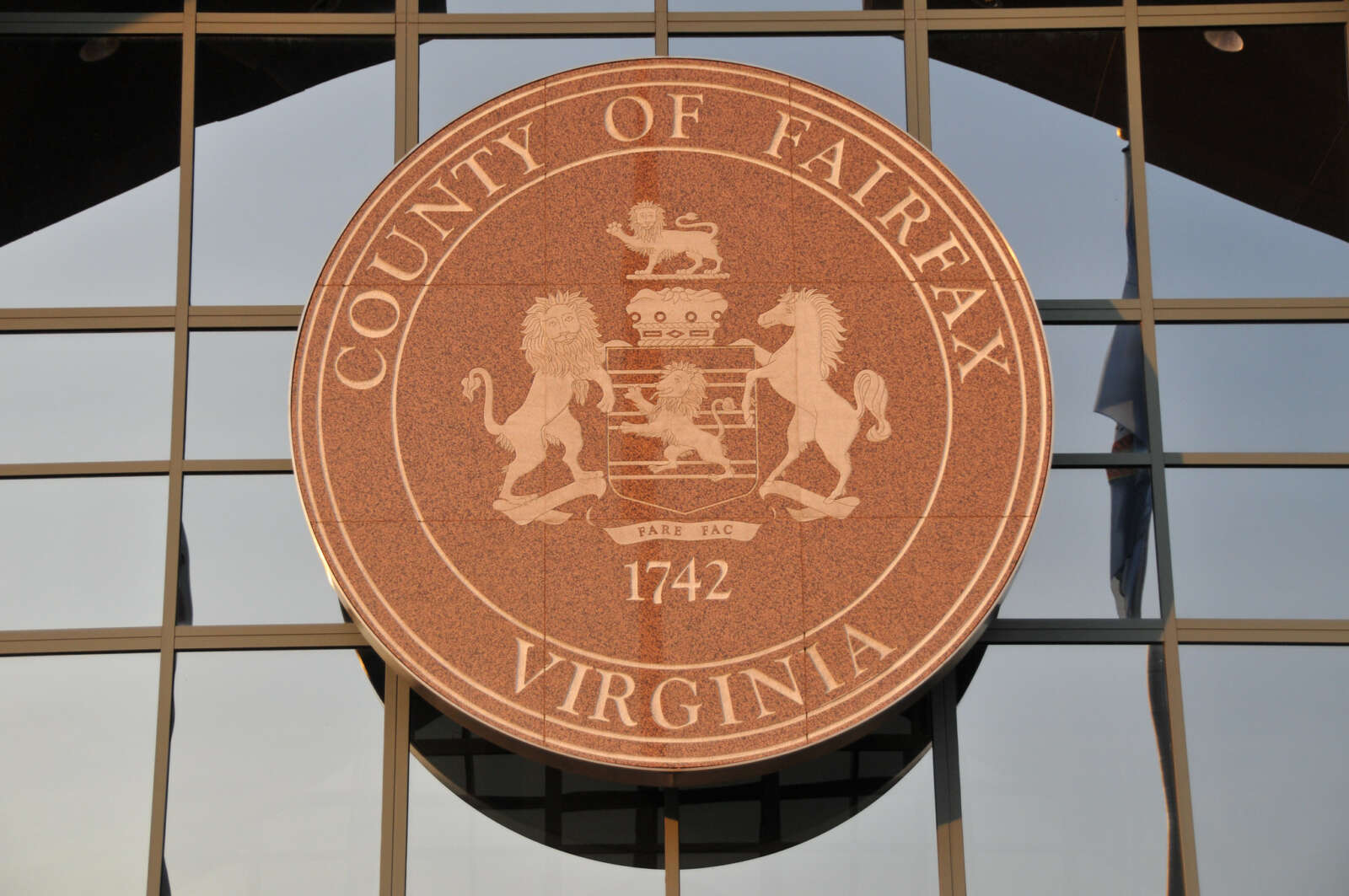
The Fairfax County Board of Supervisors is working its way toward letting public workers collectively bargain in the wake of a statewide change in 2020 to lift a decades-old restriction.
A board’s personnel committee met yesterday (Tuesday) to discuss a draft ordinance that would let Fairfax County workers make union contracts with the county government, giving them the power to negotiate pay and other benefits.
“I think we’re moving in a good direction,” Dranesville District Supervisor John Foust said after sharing concerns that the proposed ordinance might exempt too many employees from collective bargaining.
While managers, supervisors, volunteers, and other workers are slated to be excluded under the draft ordinance, the board is looking at where temporary workers such as summer lifeguards and seasonal park workers as well as non-merit employees should fall.
The proposed ordinance would serve as the framework for what can and can’t be done through collective bargaining. Once approved, it would allow workers to vote to form a bargaining unit, and employees who don’t want to be involved wouldn’t have to pay dues but could still receive the benefits of the change, Mason District Supervisor Penny Gross said.
The draft discussed Tuesday calls for collective bargaining agreements that would last three years or longer, with separate units for general government employees, police, and fire and emergency services. It also bans strikes and spells out numerous other issues.
The county’s ordinance would be separate from Fairfax County Public Schools, which has over 24,000 employees.
Gross, who chairs the personnel and reorganization committee that’s overseeing the development of the draft, said she expects the board will pass an ordinance, which could happen this year.
SEIU Virginia 512, a union that already includes over 2,000 members in Fairfax County from dues-paying maintenance workers and nurses to librarians and social workers, welcomed the board’s overall support.
But union president David Broder says the ordinance still falls short in several areas. Namely, he says it “artificially narrows” the scope of bargaining, excludes working conditions among the topics that can be negotiated, and could potentially leave thousands of workers out of the collective bargaining process.
“We’ve learned during the pandemic…that being able to bargain over working conditions is critical,” Broder said, noting the importance of safe and clean work sites, personal protective equipment availability, and scheduling.
Lee District Supervisor Rodney Lusk shared concerns about working conditions for public works and sanitation workers, expressing support for change.
Collective bargaining agreements could involve some 10,000 workers, Gross told Reston Now, and the board is gathering more information on non-merit employees to help with its determinations.
“We have one opportunity to get this right, which is why we’re taking a little extra time to work on the ordinance,” Gross said.
In 1977, the Supreme Court of Virginia ruled that public-sector collective bargaining agreements weren’t permitted and existing ones were invalid, noting the state legislature could change that.
The General Assembly and governor approved legislation last year that gave localities the authority to develop ordinances for recognizing labor unions and permitting collective bargaining. That measure took effect on May 1.
The personnel committee will meet again on July 20, and the board expects to have a public hearing in October.
via Machvee/Flickr