


If you’re in the market to buy a house, you’ve got options.
According to Homesnap, there are 167 homes currently for sale in Reston — 98 condos, 27 detached homes and 42 townhomes. Additionally, as of May 16, there have been 67 new listings in the past four weeks, up since last week.
This weekend, you’ll find a number of open houses across Reston, including:
- 12127 Chancery Station Circle
3 BD/3 BA townhome
Listed: $895,000
Open: Saturday and Sunday, 2-4 p.m. - 2052 Eakins Court
5 BD/4 BA single-family home
Listed: $770,000
Open: Sunday, 1-4 p.m. - 1658 Wainwright Drive
4 BD/3 BA townhome
Listed: $600,000
Open: Sunday, 1-4 p.m. - 1608 Sierra Woods Drive
4 BD/3.5 BA townhome
Listed: $489,900
Open: Saturday, 1-4 p.m. and Sunday, 3-5 p.m. - 11402 Gate Hill Place #62
2 BD/2 BA condo
Listed: $360,000
Open: Sunday, 1-3 p.m.
Photo via James Lee on Unsplash
The Kensington Reston is proud to partner with Insight Memory Care Center and introduce our early-stage engagement program on site at our community this summer for individuals who have mild cognitive impairment or who are in the early stages of dementia.
This eight-week summer day club will be hosted in-person Tuesdays and Thursdays at our Kensington Reston community and virtually Mondays, Wednesdays and Fridays.
Together with professional staff, a small group of club members will participate in recreational activities with the opportunity for peer support and socialization in a safe, non-judgmental setting. Program activities will champion cognitive engagement, creative expression, movement and social engagement.
The Kensington Day Club will take place June 8 to July 29. Tuesdays and Thursdays will be in person from 10 a.m. to 3 p.m. at The Kensington Reston. On Mondays, Wednesdays and Fridays, virtual programming will be held 10-11 a.m.
Space is limited, so reserve your spot today.
To learn more, please reach out to Alexandra Ramsey at [email protected] or call 703-559-8294.

Tell any well-meaning friend or relative that you’re buying a home and be prepared for a ton of advice. Some of it may be good, but the old thinking that you need 20% down to buy a home simply isn’t true.
Susan Ciapparelli, Senior Loan Officer at American Security Mortgage, states: “Only 1 in 4 of my clients are putting 20% or more down when home buying.”
Why? There are many loan programs available to assist buyers in obtaining the American dream without completely depleting their savings.
For example, FHA loans only require a 3.5% down payment, and the lending guidelines are less stringent than with conventional loans. So, if your credit score is less than ideal, you can still qualify for a mortgage. Additionally, FHA loans may be assumable, so when it comes time to sell, a buyer could assume your interest rate making your home much more attractive to purchase, especially given the historically low interest rates we’re seeing today. Loans issued by the Veterans Administration require 0% down and may also be assumable. (Of course, you need to be a U.S. veteran to qualify.) On a conventional loan, you can put down as little as 3%, so for example, on a $565,000 sales price you can put down as little as $16,950.
Let’s also talk about mortgage insurance, also known as PMI (private mortgage insurance). Many buyers fear mortgage insurance simply because they don’t understand it. With conventional loans, your lender will require this insurance if you’re putting less than 20% down to protect themselves if you stop paying the mortgage. Mortgage insurance is based on your credit score and a few other factors. If you have great credit, your monthly PMI could be very low, freeing up your money to make improvements to your new home. Additionally, PMI can be paid in one lump sum at closing; financed in some cases or credited, instead of having monthly payments.
My advice? Have a loan officer run different scenarios using a variety of loan programs to determine the best down payment option for you; each person’s scenario can be drastically different.
Lynn Cooper is a licensed REALTOR in Virginia with McEnearney Associates in McLean. Whether buying or selling, Lynn is 100% committed to her clients before, during, and after the transaction. Connect with Lynn at 202-489-7894, [email protected] or @lynncooperrealestate.
Meet Reston’s latest Pet of the Week, Shadow. This week girl is gentle, calm and affectionate.
See what her friends at Fancy Cats Rescue Team had to say about her:
Shadow is an affectionate cat any household would be lucky to have. She is very sweet, in a gentle and calm sort of way. True to her name, she will follow you around wherever you go, asking for attention. Shadow is not a clingy or up-in-your-face snuggler, though. She will sit beside you on the floor and occasionally the couch or chair and just ask for neck scratches.
One of Shadow’s favorite things to do is lay her head on your foot while you sit and just fall asleep, comforted by your touch. Shadow does like to play, but it isn’t usually for very long. She will not demand to play or to receive love and has a quiet, peaceful presence.
Shadow will greet you with a meow whenever you enter the door, a warm welcome and some affection. She will purr even before you touch her and soaks in all of the attention given. Shadow would do well in a less chaotic, quieter home where she can receive attention but will do fine being left alone for a few hours.
Are you and Shadow the perfect match?

This is a sponsored column by attorneys John Berry and Kimberly Berry of Berry & Berry, PLLC, an employment and labor law firm located in Northern Virginia that specializes in federal employee, security clearance, retirement and private sector employee matters.
By John V. Berry, Esq.
Holding or applying for a security clearance and maintaining significant investments in marijuana businesses can be a problem. We have been advising clients about this issue since some states began to legalize marijuana around 2010. Owning an investment in a marijuana company (e.g., stock, equity) (or working for a marijuana enterprise) is a reportable clearance activity for security clearance holders and applicants and can lead to the loss of a security clearance or problems in obtaining one. Investments in marijuana-related companies may constitute involvement in illegal drug activities under existing government guidelines.
This can potentially be the case even where the clearance holder or applicant does not directly choose their individual stocks. It also makes no difference if the state that the investment is located in has legalized marijuana businesses. The federal government’s current view is that an individual has a duty to know about their investments and to be knowledgeable about federal drug laws.
Federal Directives on Marijuana Usage and Investment
While there has not been new major guidance in the area of investment, Security Executive Agent Directive (SEAD) 4, effective June of 2017, provides the current basis for not granting or revoking a security clearance based on drug involvement, including investments in marijuana under Guideline H:
25. Conditions that could raise a security concern and may be disqualifying include:
. . .
(c) illegal possession of a controlled substance, including cultivation, processing, manufacture, purchase, sale, or distribution; or possession of drug paraphernalia;
. . . .
If an issue were to arise, an investment in marijuana businesses could feasibly fall under a number of the security concerns in Paragraph 25 (c) of SEAD 4.
Marijuana investments have been referred to as the new Tesla or other growth industry, according to the news; the urge is to invest now. However, the problem is that until the federal government changes federal drug laws or creates an exception for marijuana businesses or investment, individuals that invest or otherwise become involved in marijuana investments can put their security clearance (and career) in danger. While investments in marijuana businesses are likely less of a red flag than usage of marijuana for a clearance holder, the best advice is to avoid marijuana investments.
We have continued to see significant confusion on this issue since 2010 when a number of states started legalizing the use of marijuana. It is advisable that individuals seeking to hold or to obtain a security clearance refrain from investing in marijuana stocks until federal law or policy changes. Looking at the current standards, the biggest risk is likely knowing that you are investing directly in a marijuana business (or direct ownership), as opposed to investing in a mutual fund where a person might be unaware of such investments. The federal government will eventually change their position on marijuana, but for the moment investing in companies or stocks that are involved in the sale of marijuana could cause security clearance problems.
Conclusion
If an employee needs assistance with security clearance issues, please contact our office at 703-668-0070 or visit our website to schedule a consultation. Please also like us on Facebook or connect with us on Twitter.
If you’re in the market to buy a house, you’ve got options.
According to Homesnap, there are 163 homes currently for sale in Reston — 95 condos, 31 detached homes and 37 townhomes. Additionally, as of May 9, there have been 61 new listings in the past four weeks.
This weekend, you’ll find a number of open houses across Reston, including:
- 12202 Dorrance Court
3 BD/2.5 BA townhome
Listed: $989,000
Open: Sunday, 1-4 p.m. - 11607 Bromley Village Lane
3 BD/2.5 BA single-family home
Listed: $899,700
Open: Saturday and Sunday, 1-3 p.m. - 12185 Abington Hall Place #207
3 BD/2.5 BA townhome
Listed: $649,000
Open: Sunday, 1-4 p.m. - 11500 Pine Cone Court
3 BD/3.5 BA townhome
Listed: $559,000
Open: Saturday, 2-4 p.m. - 11198 Silentwood Lane
2 BD/2 BA townhome
Listed: $425,000
Open: Sunday, 1-4 p.m.
Photo via James Lee on Unsplash

First off, thank you for following us on Facebook and Twitter. (And if you don’t already, you know what to do.)
If you want more local news, join the 5,000+ people who have already signed up for our daily newsletter.
When you subscribe, you’ll get the latest headlines delivered to your inbox each afternoon. Think of it as your free digital newspaper. You’ll never miss out on local happenings (the social algorithms work in mysterious ways), and you can easily scan the newsletter to find what interests you most.
Signing up takes less than a minute.
And we know your inbox is sacred territory. That’s why we’ll never give your information away. You may get an occasional email on behalf of an awesome local sponsor, but we’ll never spam you with obnoxious emails.
Thank you for subscribing and your continued support of local news.

If you’re looking to rent in Reston, there are a number of single-family homes and townhomes/condos available. As of May 10, there were 87 homes for rent, according to Homesnap.
Below are a few recently listed rentals worth checking out:
- 11916 Moss Point Lane — 3 BD/2 BA single-family home — $3,500/month
- 12348 Coleraine Court — 4 BD/2.5 BA single-family home — $3,100/month
- 11479 Waterview Cluster — 2 BD/2 BA townhome — $2,600/month
- 11990 Market Street #514 — 2 BD/2 BA condo — $2,470/month
- 11760 Sunrise Valley Drive #1012 — 1 BD/1 BA condo — $1,700/month
In the market? Check out the latest in Reston real estate.

Meet Joyful Jen, a friendly 2-year-old Great Pyrenees mix who’s looking for her forever family.
Here’s what her friends at Safe Haven Puppy Rescue have to say about her:
Jen is a happy, friendly girl who is 2 years old and weighs in at 88 pounds. She is so incredibly sweet and calm. She has been a joy to have with us, but she is ready to go to her forever family. We’re confident she will make her adopters a terrific companion. This beautiful girl is a nice blend of friendly affection and normal puppy playfulness and will bring lots of love to any home.
Are you and Joyful Jen the perfect match?
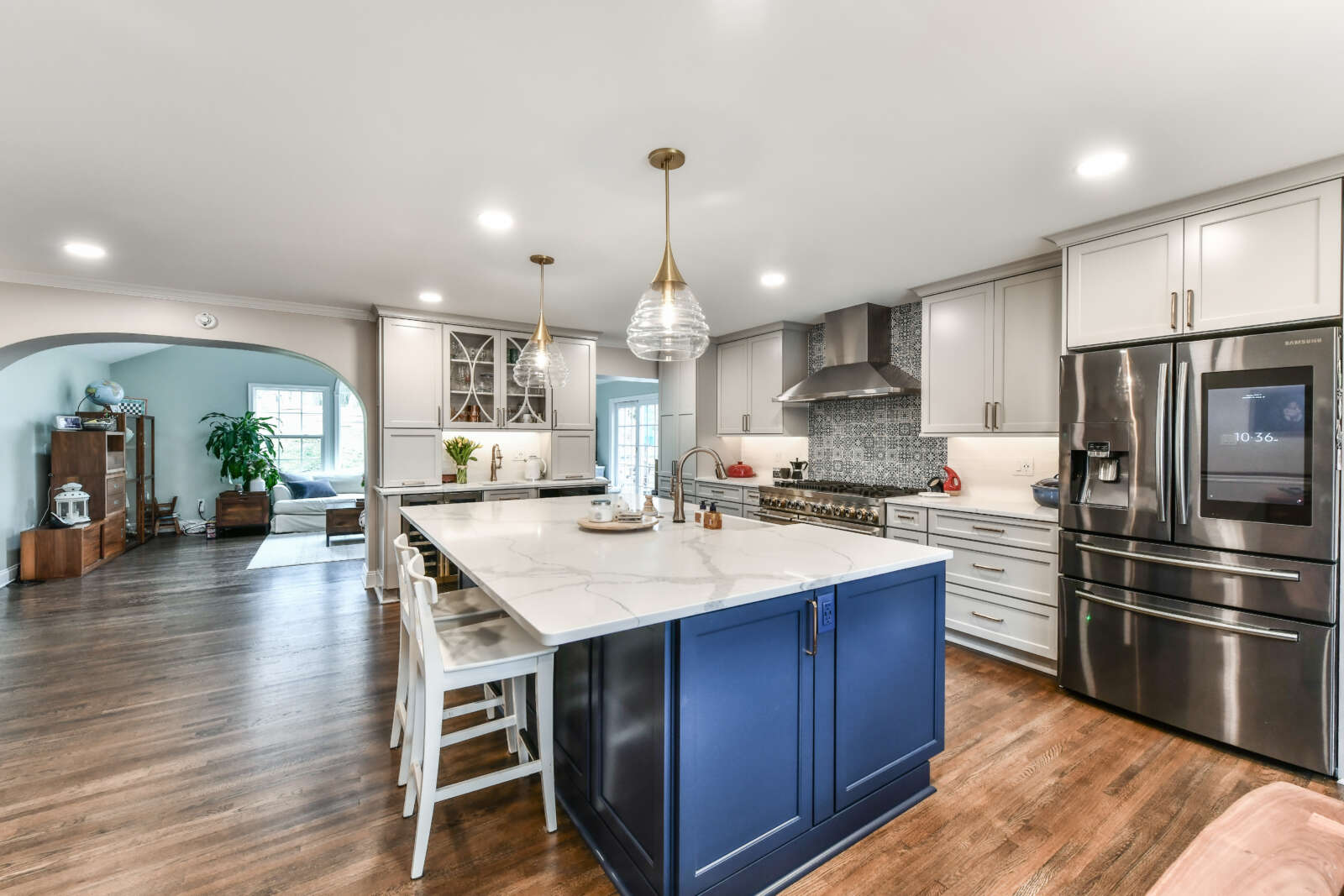
By Nicola Caul Shelley, Synergy Design & Construction
Split-level and bi-level homes became popular in the 1950s and 1960s when the suburbs began to expand. They were the perfect solution for the sloping plots of land often found in new developments. They were also (at the time) reasonably priced and a great family-friendly option. Although architectural styles have changed for new builds these days, split-level homes still make the perfect home with the right design choices and a fresh, updated look.
There are lots of split-level homes in this area, so maybe you’re living in one right now and are thinking of a home remodel. Or maybe you’ve seen one on the market and need a little design inspiration to see how you can make it yours. Let’s take a look at a case study to show you how it’s done!
1. The Home
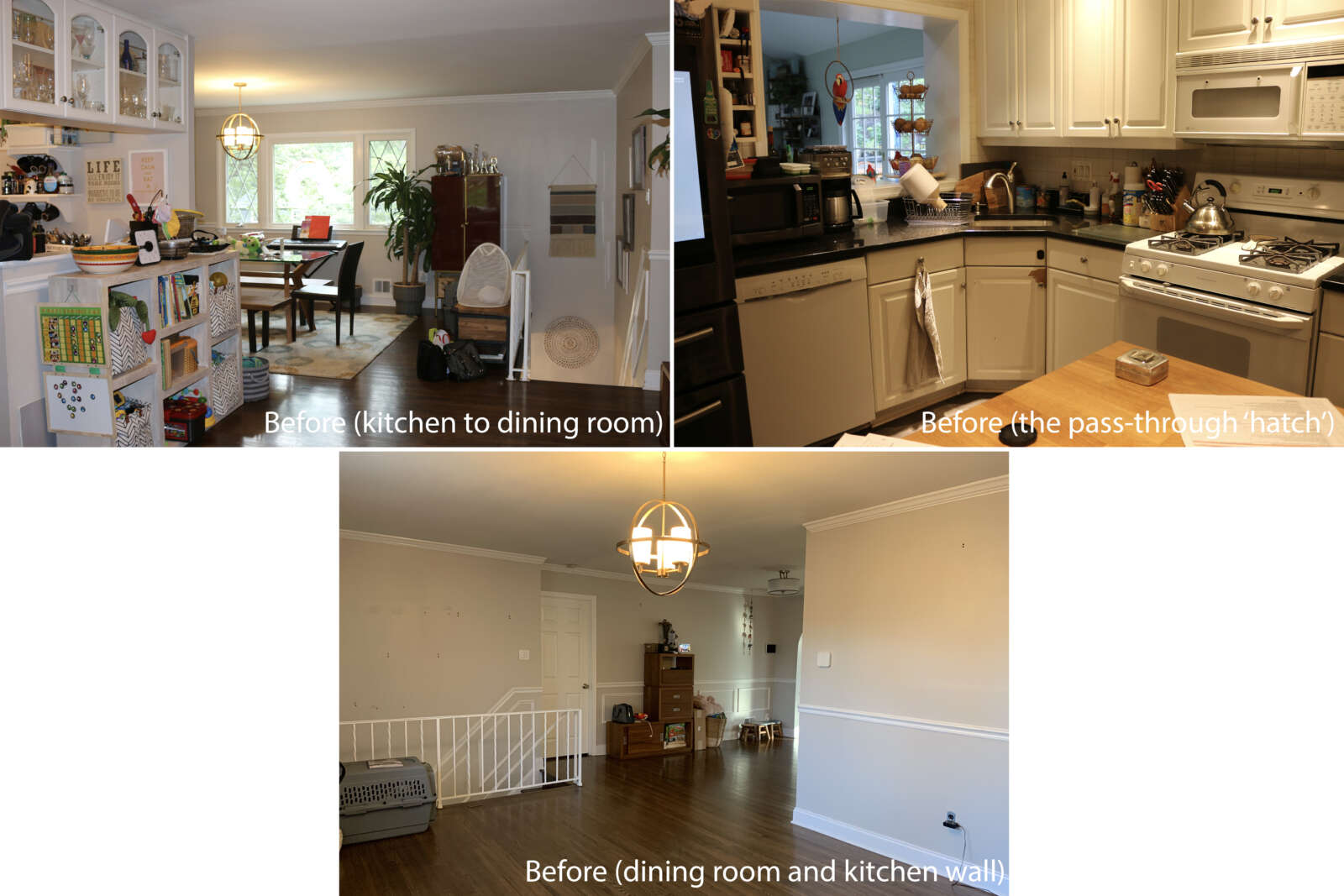
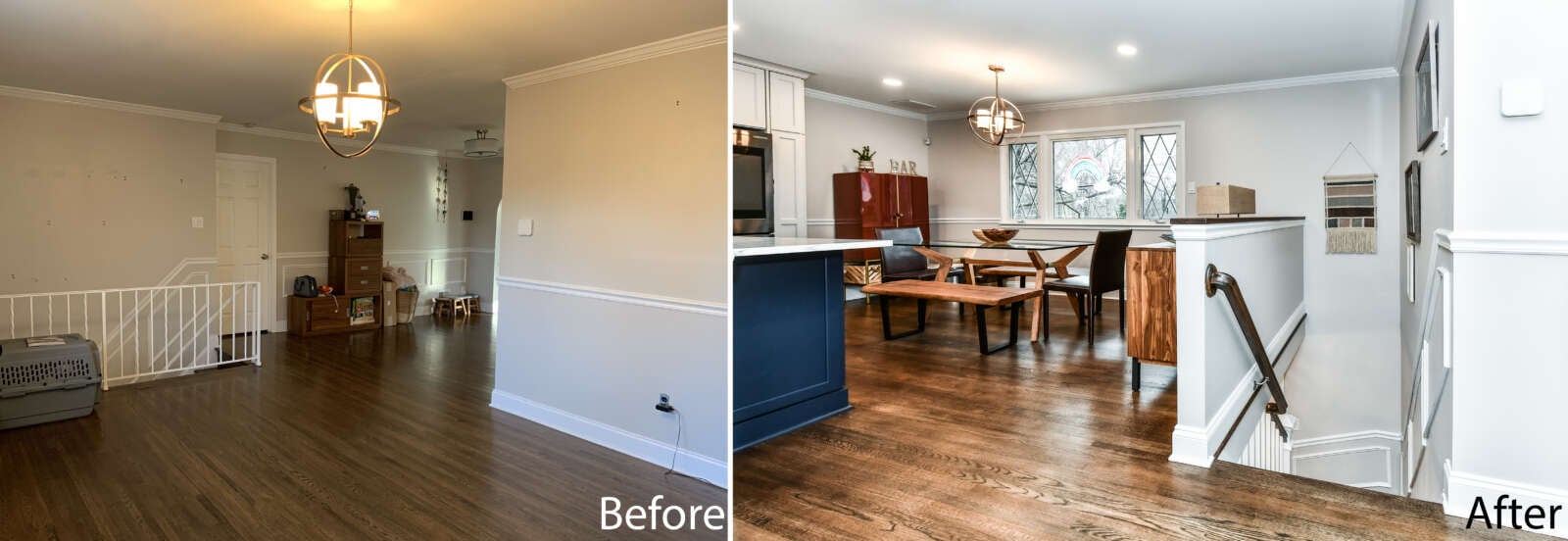
Our client’s home was built in 1963. They loved their home, the big backyard and great neighborhood but were ready to completely rethink and redesign the main living level. The original footprint comprised a small U-shaped kitchen, closed in with hanging glass cabinets and sandwiched between a dining room at one end and a large family room at the other.
This layout created a lot of separate rooms and a chopped-up floor plan. As a family of four, they had outgrown the small kitchen and were ready to open up the floor plan to better suit the needs of their family. In addition, the patio doors to the backyard were not directly accessible from the kitchen. Although there was a pass-through ‘hatch’ (seen below), it didn’t allow for convenient al fresco dining or entertaining outside.
2. The Design Challenge
Split-level houses are great as they allow a natural separation of space, but if there are too many walls on each level, it can make the space feel cramped. By removing walls, you can create great lines of sight and make better use of the available square footage on each level. The key is to create spaces that still maintain a connection and flow from one to the next.
The added challenge when remodeling a split or bi-level home is what to do with the space as you come up the stairs from the main entrance. The ‘foyer’ of our client’s home at the top of the stairs had become a drop-zone for kids’ toys and other items. Creating a more welcoming and open concept was a “must-have” on our client’s wishlist.
Family time and entertaining were also a top priority, but in the existing layout there wasn’t enough room for everyone to be in the kitchen at the same time and it was difficult to keep an eye on the children when they were in another room.
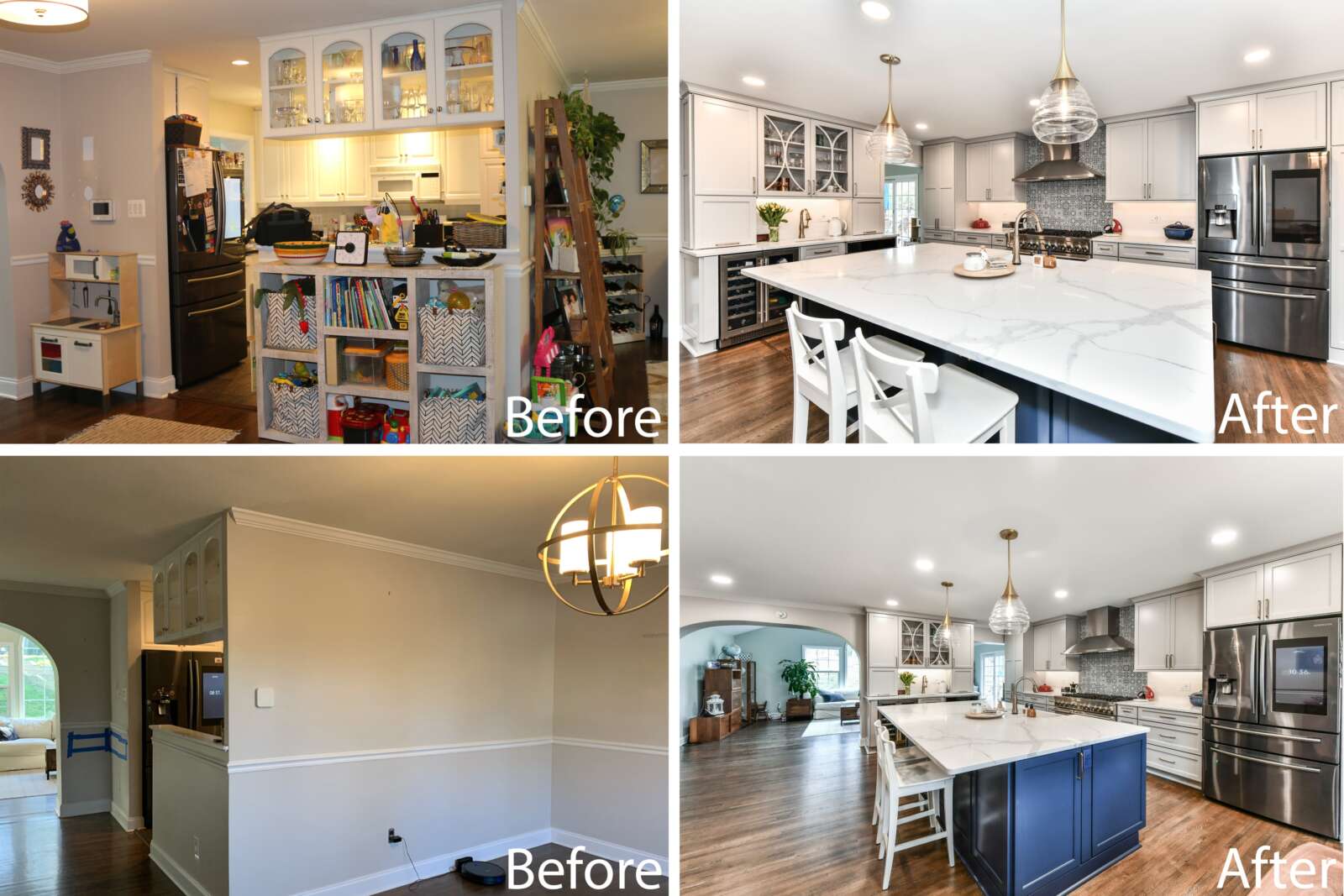
The overall design goal, therefore, was to create a more open concept and larger, more functional kitchen. We started by removing the wall separating the kitchen from the dining room. This gave us the space needed to create a much larger kitchen with a beautiful large island — but still have enough room for a family-sized dining room table and chairs.
3. The Flow of the Space
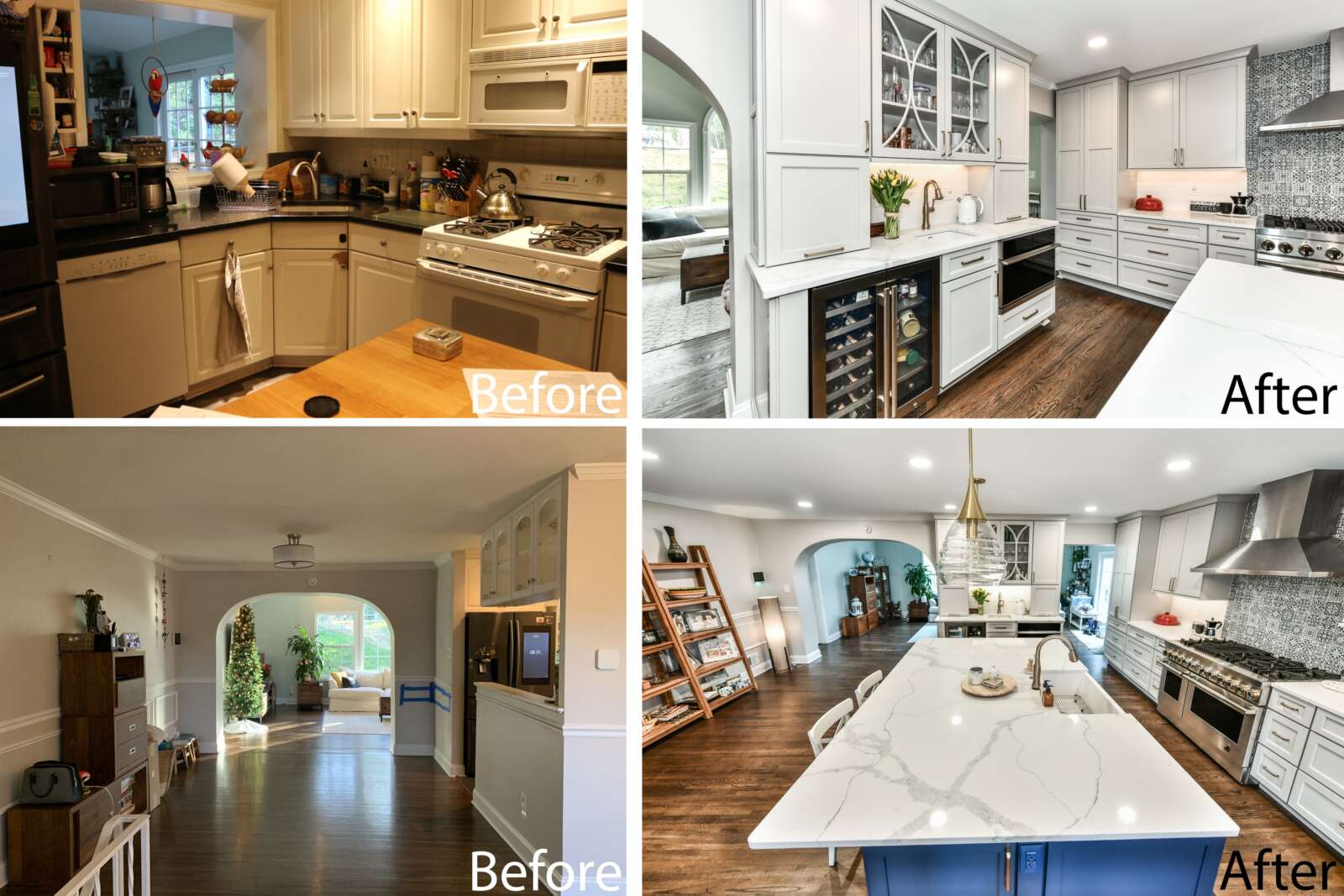
In addition to creating a more open concept kitchen and dining room, we also added a second entrance off the kitchen to the family room at the opposite end. This created better flow between these two rooms and improved access to the patio doors leading to the yard.
However, we didn’t go with a completely open concept. Part of the wall separating the kitchen from the family room was retained to create a separation of space, but the new prep sink/bar area and additional cabinetry provide both functionality and a real design ‘wow.’
4. The Staircase
Stairs and railings are one of the easiest things to change to update your split-level home. Many homes built in the 1960s have painted metal railings, which instantly date the space. The staircase leading up to the main level from the entrance foyer of our client’s home was no exception. Removing and replacing the dated metal stair railing was another “must-have” to ensure continuity of the new modern design.
5. The Result
It now feels like a completely new home! With the walls and glass-fronted hanging cabinets removed from the kitchen, we had ample room for a large island which not only provides plenty of prep space, it also creates the perfect place for family and friends to gather.

Ready to remodel but not sure where to start? Synergy Design & Construction is a full service design-build firm which means we partner with you from the design of your new space all the way through construction. No hand-offs between designers and contractors and all professionally project managed along the way. Get in touch. Our consultations are free and there is no obligation!
April was another busy month in real estate around Reston. According to Homesnap, 148 homes were reported sold.
Below are a few of the most expensive homes sold last month:
- 1930 Upper Lake Drive
4 BD/3 BA single-family home
Sold: $1,625,000 - 2007 Cutwater Court
4 BD/3 BA single-family home
Sold: $1,550,000 - 11414 Fieldstone Lane
5 BD/4.5 BA single-family home
Sold: $1,260,000 - 11990 Market Street #602
3 BD/3 BA condo
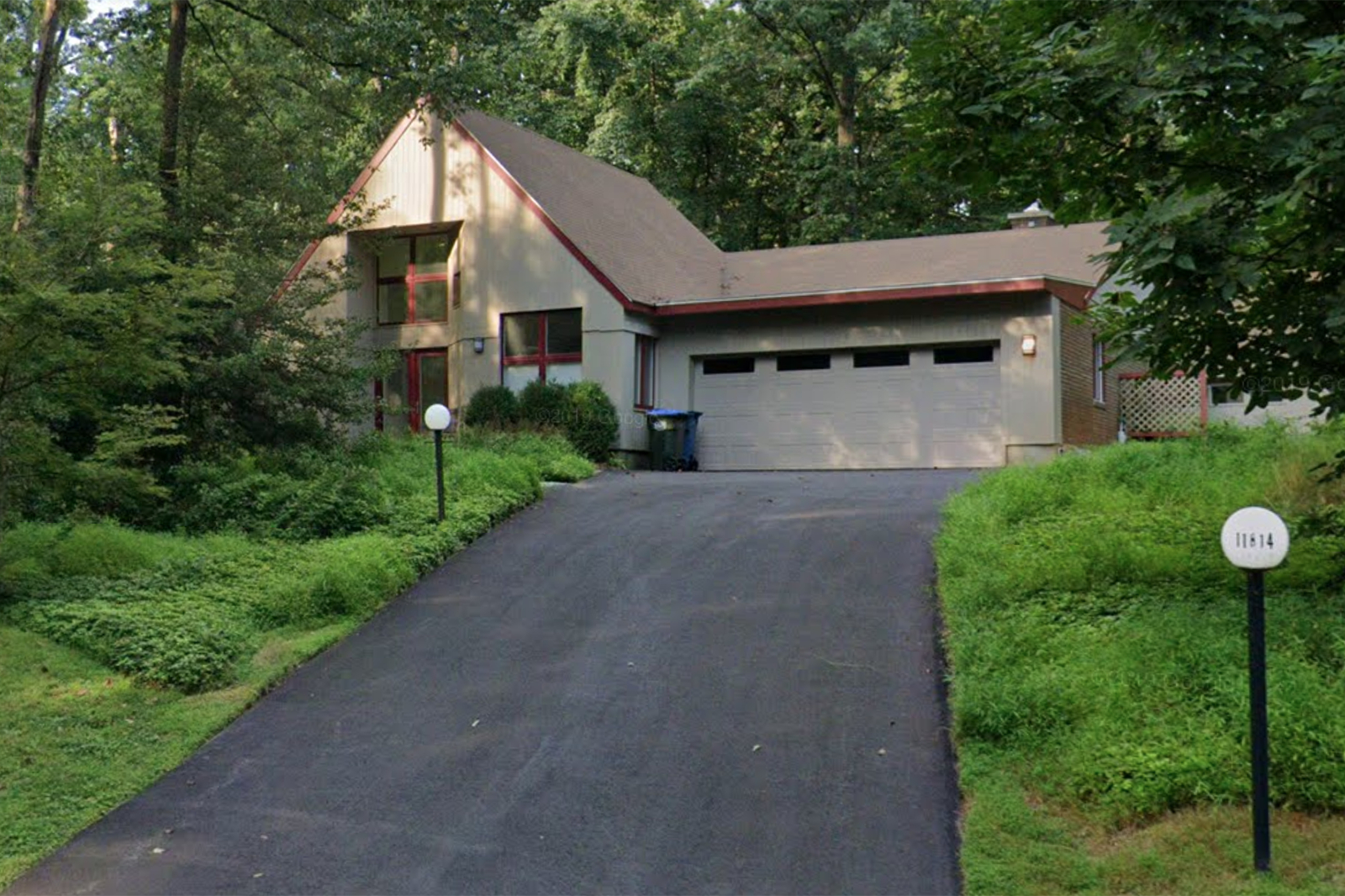
Sold: $1,180,000 - 11814 Triple Crown Road
5 BD/3.5 BA single-family home
Sold: $1,162,000
In the market? Check out the latest in Reston real estate.
Photo via Google Maps

Not everyone has the time or resources to commit to a full master’s degree program. Some may already have a master’s and are just looking for a narrow update on a current skillset. For these reasons, Virginia Tech’s 100% online Master of Information Technology (VT-MIT) program now offers professionals the option to earn a graduate certificate in 10 specialized IT subject areas:
- Big Data
- Business Data Analytics
- Cybersecurity Management
- Cybersecurity Policy
- Cybersecurity Technologies
- Health Information Technology
- Information Systems Design
- Information Technology Management
- Internet and Network Technologies
- Software Development
“Leaders can find a certificate that speaks exactly to their professional needs without having to commit several years to pursuing a master’s degree,” says Barbara Hoopes, Associate Professor of Business Information Technology at Virginia Tech.
In fact, nine of the ten certificates require just three courses, so professionals can earn a certificate in as little as 12 months as a part-time student.
Because the certificate courses are the same as those offered through the full degree program, students can apply their certificate courses toward their master’s if they decide to pursue the degree in the future.
Learn more about the fully online graduate certificates and master’s degree at an upcoming online information session:
Can’t make it on these dates? Email [email protected] to receive a copy of a recently recorded session or visit vtmit.vt.edu to learn more.
Here is a really important question: What do sellers want in today’s housing market?
Low inventory and low interest rates mean there aren’t a lot of homes for sale, but there are lots of buyers looking to make a move. Sellers are receiving multiple offers above list price, but what do sellers want beyond escalated sales dollars?
1. High earnest money deposits and large down payments
The earnest money deposit shows the seller you’re serious about purchasing. This money is sent to the title company as part of the offer and held in an escrow account before closing. It’s also known as a “good faith deposit” and protects the seller if you back out of the contract. Typically, it’s about 1-3% of the sales price, but if you want to win a contract these days, consider offering more, even as much as 10-15%.
A large down payment also shows the seller you’re serious and have the funds to back up your offer. Sellers worry about buyers’ financing falling through, and these two strategies can help ease their minds.
2. A “clean contract”
This means no contingencies — home inspection, appraisal and finance contingencies all waived. Sellers don’t want to have to negotiate for repairs from a home inspection report and deal with the hassle of having minor problems repaired. Consider waiving the home inspection and purchasing a home warranty to cover the cost of repairs that may arise once you own the home.
Additionally, waiving the appraisal means you’re willing to bring additional funds to the closing table if an appraiser deems the home is worth less than your offer amount. You can shift dollars from your down payment to cover this gap.
Lastly, waiving the financing contingency means you’re confident in your ability to obtain a loan. If you feel secure in your job/financial situation, this may be a good option, but please talk to your lender first.
And don’t forget: Listing agents and sellers do not want to see any mistakes on the sales contract. Be sure your agent is detail-oriented and, of course, read the contract yourself before signing!
3. A quick close
Sellers want their money and to move on! Most transactions can close in as little as 30 to 45 days depending on title work and lender procedures. Check with your lender about pre-underwriting your loan to close quicker — this can be a huge plus!
Lynn Cooper is a licensed REALTOR in Virginia with McEnearney Associates in McLean. Whether buying or selling, Lynn is 100% committed to her clients before, during, and after the transaction. Connect with Lynn at 202-489-7894, [email protected] or @lynncooperrealestate.

Meet Mr. Ginger, Reston’s latest Pet of the Week. Mr. Ginger is a sweet, gentle 14-year-old fella looking for a quiet home.
Here’s what his friends at Fancy Cats Rescue Team had to say about him:
Mr. Ginger is a tall 14-year-old kitty with a sweet, gentle personality. He willingly adjusts to petting, combing, trimming (his claws) and even vet check-ups. He likes to lean in to have his muzzle stroked and combed and requests more attention with a gentle tap, tap, tap of his paw.
Mr. Ginger enjoys a quiet environment with a regular feeding and petting routine or curled up in a warm, cozy place in the company of his people. As an older cat, Mr. Ginger has a sensitive stomach, which has been managed well with a wet cat food specifically designed for sensitive kitty tums. Catching outdoor critters makes him sick, so indoors is best for Mr. Ginger. He also has a little arthritis in his right hip but is still quite spry and can jump up into a lap or chair.
Are you and Mr. Ginger the perfect match?
This is a sponsored column by attorneys John Berry and Kimberly Berry of Berry & Berry, PLLC, an employment and labor law firm located in Northern Virginia that specializes in federal employee, security clearance, retirement and private sector employee matters.
By John V. Berry, Esq.
The federal government remains the largest employer in the Washington, D.C. area.
We represent federal employees nationwide in the Merit Systems Protection Board (MSPB) appeals process. Federal employees before the MSPB facing disciplinary action, retirement or other appeals often meet with us to discuss their options.
Since the MSPB process is essentially another form of civil litigation, we thought we would list the typical steps of an MSPB appeal for federal employees. The most common steps in this process are:
1. The Filing of the MSPB Appeal
The first step in the MSPB appeals process is for a federal employee to file an MSPB appeal. For most cases that the MSPB hears (usually, those involving serious discipline for federal employees), the deadline is typically 30 days from the effective date of the discipline to file the appeal. It is critical to file the appeal timely or it can be dismissed.
2. Judge’s Initial Order
Usually, within one to two weeks of filing the MSPB Appeal, a judge will be assigned and issue an Acknowledgement Order, which basically sets the ground rules and timelines in each case. This order is about 10 to 15 pages and provides a lot of information about the processing of the individual MSPB appeal and should be reviewed carefully.
3. The Agency Response
Usually, 20 days after the issuance of the Acknowledgement Order, the MSPB judge will require the federal agency involved in the appeal to provide their file on the case to the MSPB and to the federal employee. This file will include the documents relevant to the federal agency’s case and also their initial response to the federal employee’s appeal. It is not uncommon for a federal agency’s file to be 75 to 250 pages in length.
4. Status Conference
Most administrative judges will schedule a status conference following the receipt of the Agency Response. The general substance of these status conferences involves an initial discussion of the issues involved in the MSPB appeal and also potential settlement negotiations.
5. Asking for Discovery
Discovery is the process of obtaining documents (and other information) and taking depositions of witnesses involved in the action taken against the federal employee. Usually, 30 days after the issuance of the Acknowledgment Order, the parties are required to submit initial discovery requests. The discovery stage is very important as it is the federal employee’s chance to seek documents, correspondence, emails, video or audio, which a federal agency possesses. One of the most important parts of the discovery process includes the ability to question, under oath, relevant witnesses in an appeal through the deposition process.
6. Pre-Hearing Submissions
Prior to an MSPB hearing, the judge will order pre-hearing submissions from each party. Usually these include the parties’ versions of the issues to be heard, the documents to be used as exhibits in the case and proposed witnesses for the hearing.
7. The Pre-Hearing Conference
Next, prior to the actual MSPB hearing, the judge will review both parties’ pre-hearing submissions and rule on witnesses, exhibits and other issues likely to come up at the hearing. A party will want to be prepared to argue their positions during the pre-hearing conference. Typically, the majority of the pre-hearing conference will be used to discuss the importance of particular witnesses and whether they will be allowed to testify.
8. The Hearing
An MSPB Hearing typically takes about one to two days, depending on the number of witnesses involved. During the hearing process, there will usually be opening statements and the examination and cross-examination of witnesses for both the agency and the federal employee. A court reporter will transcribe the testimony given. There may be closing arguments and/or written closing submissions prior to the issuance of the judge’s decision in the case. The written decision is typically issued one to five weeks after the hearing is held.
Conclusion
If a federal employee needs assistance in an MSPB appeal, it is very important to retain legal counsel familiar with the MSPB to assist you. We represent federal employees nationwide in these matters and can be contacted at www.berrylegal.com or by telephone at 703-668-0070. Please also visit and like us on Facebook or connect with us on Twitter.