

 This is an opinion column by Del. Ken Plum (D), who represents Reston in Virginia’s House of Delegates. It does not reflect the opinion of Reston Now.
So it is in the Commonwealth of Virginia: the action of governance goes on. Since 1619 there has been a form of representative government in first the colony and now the state. The legislative branch, the General Assembly, has since 1971 been meeting every year; prior to that time the House of Delegates and the Senate met only every other year. The legislative sessions convene as prescribed in the Constitution on the second Wednesday of January for sixty days in the even-numbered years and for thirty days in the odd-numbered years unless at least two-thirds of the members agree to extend the session for not more than thirty days. The sessions have always been extended but by not more than 15 or so days. There is talk by the minority party of not agreeing to any extension of the session scheduled to start on January 13, 2021.
In addition to the regular session, there is a reconvened session beginning on the sixth Wednesday after the adjournment of the regular session to consider any bills returned by the governor with amendments or with a veto. The governor may call a special session “when in his opinion the interest may require” or when two-thirds of the elected members of both houses request it. There is a regular beat to the work of the General Assembly: regular session, reconvened session, special session. For even a part-time legislature, the work goes on!
But there is much more to legislating than the formal and now virtual floor sessions of the House and Senate. Earlier this week there was a deadline to request drafting of legislation to be pre-filed before the session. There is a limitation on how many bills a legislator can introduce especially after the convening of the legislature. For members of the legislative staff who actually draft the bills, this is the intense period between Thanksgiving and the opening of the session when 140 members present their best ideas to be crafted into a form that would be suitable to go into the Code of Virginia. The entire support staff of the legislative branch could not be more helpful and deserve our thanks for helping get us through the stressful period of the session.
Pre-session work also includes meetings with advocacy groups (virtually now), monthly meetings of the Appropriations Committee and the Joint Legislative Audit Review Commission and other committees on a less regular basis until the session gets underway, and caucuses with our party colleagues. Constituent inquiries and recommendations are very helpful and take time to read and consider.
Prior to the pandemic there was a need to find housing in the Capital city and to arrange to be away from home for the week. The session beginning in January will be virtual so there is the need to make sure your home office has the broadband that will support daily committee and floor sessions. The work is demanding, but I am honored to be part of it. As the song continues, “drums keep pounding a rhythm to the brain.” The work goes on!
File photo
This is an opinion column by Del. Ken Plum (D), who represents Reston in Virginia’s House of Delegates. It does not reflect the opinion of Reston Now.
File photo
This is an opinion column by Del. Ken Plum (D), who represents Reston in Virginia’s House of Delegates. It does not reflect the opinion of Reston Now.
Next week is the formal day set aside for thanksgiving. For many that means food, and I love the foods associated with the holiday of Thanksgiving. It is a time of generosity as many people and groups make sure that everyone has something to eat at least on that day. For others the meaning of Thanksgiving may be the sales that come with unique bargains that are offered on “Black Friday” although I do not know how those sales will be accommodated during a pandemic. Certainly the crowds pressed against the front doors of stores about to open would not be safe nor would the rush to the best bargains be a good idea.
Some believe that the first Thanksgiving occurred on December 4, 1619 when Captain John Woodlief and 35 Englishmen landed at what is now known as Berkeley Plantation. They immediately fell to their knees as the charter under which they were sailing required giving thanks to the good Lord for their safe passage from what had been a rough voyage and for the thousands of acres of pristine lands on which they were going to settle. There was no mention of the indigenous people who had occupied the land for as many as 15,000 years before their arrival. More than a year later at Plymouth Settlement a festival occurred that included settlers and indigenous people in what is more often referred as the first Thanksgiving.
Thanksgiving as a holiday on the fourth Thursday of November dates to a proclamation issued by President Abraham Lincoln on October 3, 1863. Even in the midst of a civil war, Lincoln reminded the nation of “the blessings of fruitful fields and healthful skies” under the “providence of Almighty God.” Lincoln found that “a civil war of unequalled magnitude and severity” had not “arrested the plough, the shuttle or the ship” and “the country, rejoicing in the consciousness of augmented strength and vigor, is permitted to expect continuance of years with large increase in freedom…the gracious gifts of the Most High God.”
The spirit of Lincoln should be with us as we celebrate Thanksgiving this year. Our institutions of government have been tested over the last nearly four years as seldom before. The voters have largely dispersed those who showed little respect for our values and traditions. It will soon be less painful to read the morning newspaper or to listen to the evening news. There will be fewer times of looking at social media with disbelief at the actions of our national leaders. We will have lively debates as we always do in our democratic republic, but those debates can lead to greater freedoms from inequalities, hunger and health threats.
The pandemic is testing our patience as few other events in our lives have, but we can remind ourselves and others that face masks, social distancing, and no crowds will help to preserve our health as well as that of others. And we can remind ourselves and others that the blessings we ultimately enjoy are not simply of our own making but are as Lincoln reminded us “the gracious gifts of the Most High God”–by whatever name we may call that spirit!
Enjoy your Thanksgiving next week!
File photo
This is an opinion column by Del. Ken Plum (D), who represents Reston in Virginia’s House of Delegates. It does not reflect the opinion of Reston Now.
Tears welled up in my eyes last Saturday evening as the President-elect Joe Biden and the Vice President-elect Kamala Harris addressed their supporters and the nation for the first time after having been declared the winners of the presidential election. The words they said, the message they delivered, and the tone they set struck the chords that have been so vitally important to me and to many others throughout our lifetimes. If we seemed ravenous in listening to their words, it was because we have not heard them for too long and were hungering for inspirational and positive leadership.
The President-elect made his approach to governance clear: “I pledge to be a president who seeks not to divide, but to unify–who doesn’t see red and blue states, but a United States, and who will work with all my heart to win the confidence of the whole people.” Starting with that kind of attitude will go a long way toward his success in being a unifier.
My interest in politics goes back to my teenage years and has been influenced by the great speeches I have heard, not simply for the words that were said but because of the hope they offered and the vision for greatness for our country they inspired. I stood in the foot-deep snow at the United States Capitol on January 20, 1961 and heard a leader I revered, the new President John F. Kennedy, say in his inaugural speech, “Ask not what your country can do for you, but what you can do for your country.”
Another inspirational moment came for me on my birthday, November 3, 2008, when Jane and I stood for hours in a crowd estimated at 80,000 people at the Prince William County Fairgrounds waiting for candidate Barack Obama who arrived at 10:30 p.m. for the final appearance of his campaign to be president. In his usual inspiring way he told us, “I come away with an unyielding belief that if we only had a government as responsible as all of you, as compassionate as the American people, that there is no obstacle that we can’t overcome. There is no destiny that we cannot fulfill.”
In an echo of President Kennedy’s words, former President Obama this fall challenged the country with his words, “Change will not come if we wait for some other person or if we wait for some other time. We are the ones we’ve been waiting for. We are the change that we seek.” And just as President-elect Biden reminded us of the unity of America, Barack Obama at the Democratic Convention in 2004 in a speech that brought him to the attention of political leaders had reminded us that, “There’s not a liberal America and a conservative America–there’s the United States of America.”
While these quotes are words, they reflect attitudes and beliefs that can stir us to positive action to realize the potential for an honest and decent America that is open and inclusive and where the American dream can become a reality for all.
File photo
Before we head off into another weekend with COVID-19 abound, let’s take a look back at the biggest stories on Reston Now in recent days.
- Fairfax County COVID-19 Cases Hit Highest Weekly Average Since June
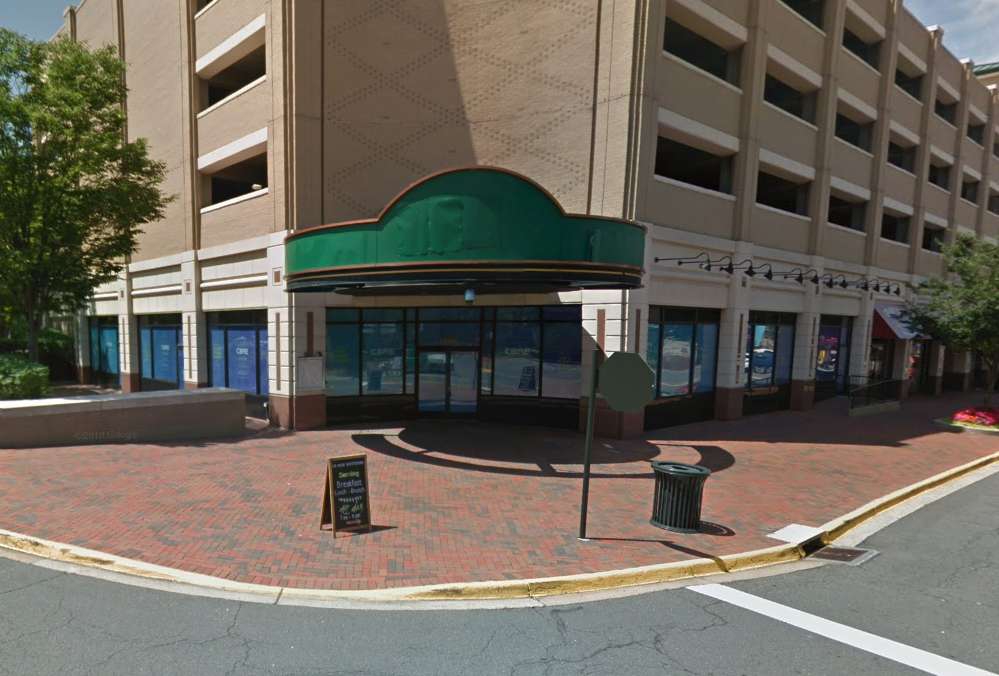
- True Food Kitchen Delays Opening in Reston Town Center
- Halley Rise Project Remains on Schedule in Reston
- FCPS Proposes Oct. 19 Pilot for Joint In-Person and Virtual Learning
- Herndon Resident Killed in Car Crash in Herndon
If you have ideas on stories we should cover, email us at [email protected] or submit an anonymous tip.
Feel free to discuss these topics, your social distancing plans or anything else that’s happening locally in the comments below.
This is an opinion column by Del. Ken Plum (D), who represents Reston in Virginia’s House of Delegates. It does not reflect the opinion of Reston Now.
With more than two months remaining in 2020, I can already say that it has been an amazing year in Virginia’s history. When the events of 2020 in the Commonwealth are reviewed in the future by historians in the context of the state’s history, the conclusion is going to be that Virginia underwent a consequential and transformative period equal to or superior to any other period of its history. For a state that is so rich with history I realize that might seem like an overstatement, but I believe my conclusion is fully supported by the facts.
I am not talking about surviving the COVID-19 pandemic or enduring what is likely to be called the absolute worst presidency in the history of the country, as important as both these situations are. I am talking about what went on with the Virginia General Assembly and its future impact on the state.
The year opened with a regular General Assembly session with many new faces from the 2019 elections. Never has there been a House of Delegates that was younger with more racial and sexual diversity. A Jewish woman took over the reins of power in the House of Delegates. More women and Blacks became committee chairs than ever before. And there was a determination to deal with unresolved issues that had plagued the state for decades and in some instances for centuries. The Governor was clearly on board to lead such a session.
Gun safety measures that had been talked about for years even as gun violence and mass murders had increased were enacted and signed by the Governor. Some had suggested for years that terrible things would happen if all gun transfers required a universal background check, but that system is now in place as a result of a bill I introduced that passed and was signed by the Governor. The more than 22,000 gun advocates most of whom were armed that assembled around the Capitol did not deter the Assembly from doing what it knew had to be done.
Non-discrimination legislation passed with the Virginia Values Act being one of the most comprehensive in the nation. Voting laws were changed to make voting easier and more accessible as voters are now learning as they cast their votes in this election. Many Jim Crow-era laws were repealed.
The special session called to deal with budgetary and other issues related to the pandemic built on the successes of the regular session with a pivot to criminal justice and policing reform. Civilian review boards have been empowered to investigate police-related complaints. Chokeholds were essentially eliminated as were rubber bullets and military-type equipment in local policing. Traffic stops for minor offenses–a big part of racial profiling–are now banned. Jury sentencing has been eliminated in what some are describing the most significant criminal justice reform. And there is even more that I will detail in future reviews.
Benjamin Franklin was asked at the conclusion of the Constitutional Convention what kind of government we have. He responded, “A republic, if we can keep it.” In Virginia, we can say that we now have one of the most progressive governments in the country. To keep it, however, will require future vigilance and work. Many of the advances I celebrate here will become the stuff of future political campaigns where bigotry and fear will be used to try to turn the state back.
File photo
This is an opinion column by Del. Ken Plum (D), who represents Reston in Virginia’s House of Delegates. It does not reflect the opinion of Reston Now.
In a campaign that promises “fair maps” by voting yes for Amendment #1 on the ballot this election cycle and the opposition that promises “fair districts” by voting no, there is little wonder that there would be confusion in the minds of voters. As a strong supporter of Amendment #1, I turned to Ballotpedia, a nonprofit whose mission is to inform people with neutral content about politics, to define objectively what a yes or no vote means on the Virginia ballot question: (ballotpedia.org)
A “yes” vote supports transferring the power to draw the state’s congressional and legislative districts from the state legislature to a redistricting commission composed of state legislators and citizens.
A “no” vote opposes transferring the power to draw the state’s congressional and legislative districts to a redistricting commission, thus keeping the state legislature responsible for redistricting
If you are interested as I am in ending partisan gerrymandering of legislative districts, you will vote “yes.” I am not alone in my belief that this is the best vote. The Amendment is supported by the League of Women Voters, AAUW, ACLU, Common Cause, Princeton University Gerrymandering Project, Brennan Center for Justice, AARP, leading political scientists, historians and law professors in Virginia, and the major newspapers in the state
As Dr. Samuel Wang, a Princeton University professor and director/ founder of the Princeton Gerrymandering Project, and his associates wrote in an opinion column in the Virginia Mercury, an online newsletter, ” We are proud to endorse Amendment 1 because never before has the Commonwealth seen such an open and transparent redistricting process. Such citizen involvement will help protect communities that have split up in the past.” (September 16, 2020)
Eight professors from Virginia’s largest and most prominent universities including three from the University of Virginia contributed to an article that appeared in the January 29, 2020, Richmond Times Dispatch stating “As scholars of elections and redistricting, we believe this Amendment represents an unprecedented opportunity to strengthen Virginia’s democracy–one that we cannot afford to miss.”
David Daley, a senior fellow at FairVote and author of Ratf**ked: Why Your Vote Doesn’t Count, wrote in a column in the Washington Post on November 22, 2019, “Politicians usually do a lousy job of regulating themselves. But if this (Amendment #1) moves forward, it would be the strongest set of redistricting reforms to ever emerge from a state legislature in American history.”
Editorial writers at the Fredericksburg Free Lance-Star could not have been more direct than when they wrote on September 19, 2020, “Vote ‘Yes’ for Amendment 1, which will keep politicians from choosing their voters.”
The Washington Post has had several editorials in support of Amendment #1 including most recently on September 27, 2020, stating that “If the constitutional amendment is approved by Virginia voters, they would be the likely winners, and baldfaced partisan gerrymandering in Richmond would sustain a mortal blow.” They also suggested that “To imagine that rejecting the amendment, and leaving redistricting in the hands of the legislature, would produce fairer and more balanced maps is to believe in leprechauns and forest sprites.”
If you have not already voted or made your plan to vote, please do so. The process of voting this year could not be easier, and the stakes could not be higher for the state and the nation!
File photo
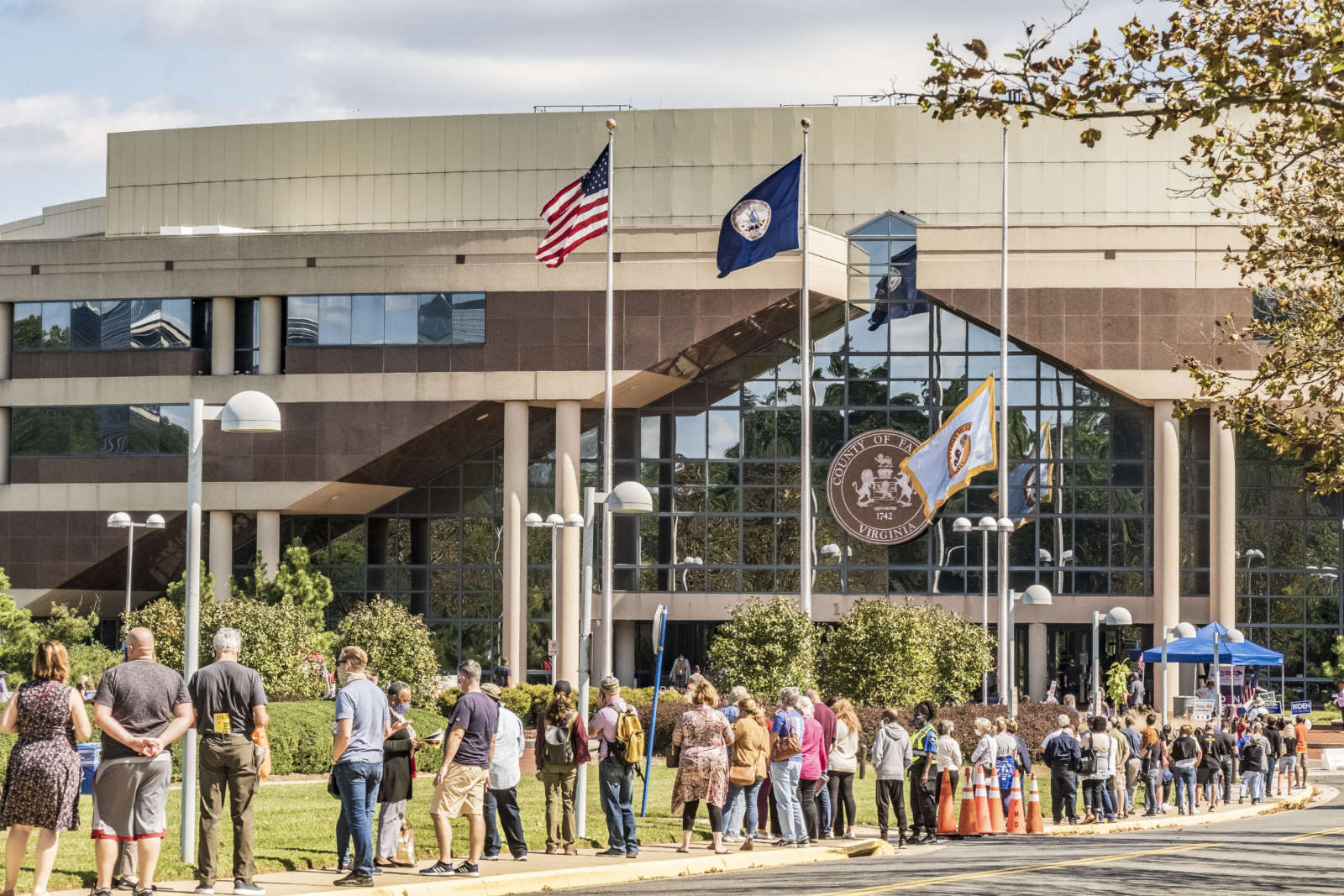
Fairfax County is seeing record numbers of locals turning out to vote early, in some cases leading to long lines at polls.
The County is planning to open more locations starting Wednesday, Oct. 14, as millions of Americans nationwide vote early in the election.
Upcoming voting facilities in the Reston area include:
Staff photo by Jay Westcott
This is an opinion column by Del. Ken Plum (D), who represents Reston in Virginia’s House of Delegates. It does not reflect the opinion of Reston Now.
The Joint Legislative Audit and Review Commission (JLARC) conducts program evaluation, policy analysis, and oversight of state agencies on behalf of the Virginia General Assembly as authorized by the Code of Virginia. A highly professional staff of attorneys, social scientists, economists, and researchers conducts rigorous and objective studies on the operation of state government in a totally nonpartisan way guided by the public interest. I am honored to serve as chairman of JLARC with Senator Janet Howell serving as vice-chairman.
The agenda of the meeting of JLARC this week provides an example of the kind of work the Commission staff has been doing for many years. This past Monday the staff presented to the fourteen legislative members of the Commission reports on studies that had been completed this past year and progress reports on on-going studies. Copies of these and previous reports are available at http://jlarc.virginia.gov/.
The Commission systematically reviews agencies of state government and reports on their operations and performance. This week’s meeting included a report on the “Operations and Performance of the Virginia Department of Education” that administers the state’s role in public education. Public education K-12 takes the greatest share of the state’s general fund budget at more than $6.5 billion, nearly 30 percent of state-tax-supported revenue. In total appropriations including state tax and non-general funds, the budget for K-12 education is exceeded only by the cost of Medicaid program services. The report included 17 recommendations and 6 policy options for strengthening the department.
The Commission also received the latest “Update on VITA’s Implementation of a Multi-Supplier Service Model.” The Virginia Information Technology Agency has undergone major changes in recent years from a centralized, single-source, private-sector service provider to a multi-supplier service model. Such a change is challenging for any large organization and especially for a $63 billion state government that provides a wide array of services to the public. Anyone who has experienced “the computer is down” as an explanation of why information cannot be secured or services cannot be provided at a particular time will understand its importance. The good news of the report is that the transfer to the multi-supplier model has been completed and that VITA can shift more of its focus to increasing its services to its user agencies.
The Commission has on-going responsibilities, including monitoring the Virginia Retirement System and reporting on state spending trends. The reports give legislators a pulse of how state government is performing based on good data and outcome measures. The “State Spending: 2020 Update” presented this week provides an overview of the $62.6 billion state budget for FY20. Nearly half of the total appropriations were in three agencies: Department of Medical Assistance Services, Department of Education, and Department of Transportation. Adjusted for growth in population and inflation, the total state budget grew by an average of 3.3% per year during the last decade; the general fund tax-supported budget increased by 2% on the average.
Want to learn more about the details of Virginia government and its operation? Visit the JLARC website listed above and review its archive of reports.
File photo
Before we head off into another weekend with COVID-19 abound, let’s take a look back at the biggest stories on Reston Now in recent days.
- Local Officials, Business Owners Reflect on the Uncertain Future of Retail in Reston, Herndon
- MS-13 Gang Member Sentenced in Armed Robbery on Elden Street
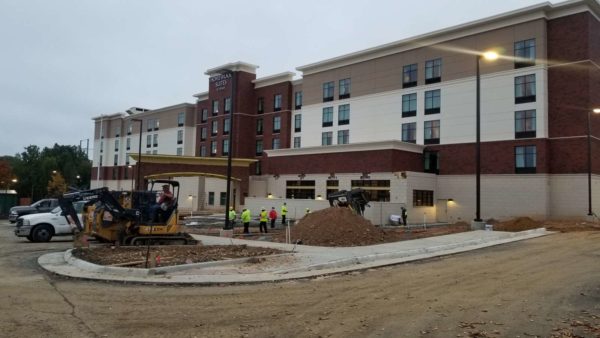
- Homewood Suites to Open in Reston in November
- BREAKING: Fire Breaks Out in Reston Townhouse
- Reston Association Committee to Launch Pilot Program to Discourage Use of Plastic
If you have ideas on stories we should cover, email us at [email protected] or submit an anonymous tip.
Feel free to discuss these topics, your social distancing plans or anything else that’s happening locally in the comments below.
Photo via Google Maps

Since 2013, Reston Now has been reporting news about the Reston and Herndon areas. Recently, we started providing additional coverage of Great Falls.
Keep up with our coverage by signing up for our email subscriptions.
The afternoon email — sent at 4 p.m. — rounds up the most recently published stories and sponsored content on our site. Our morning email is currently on a hiatus.
You can also opt in to receive emails we send on behalf of local businesses and nonprofits. If you opt-out, you’ll still receive an occasional event or offer-related email as part of your subscription.
Note: we will never share your email address with a third-party.
Thank you to everyone who has signed up for our email subscriptions already!
If you would like to continue reading Reston Now and you’re able to give us a few bucks a month, we would greatly appreciate you contributing to our coverage via PayPal or joining our Patreon.
Not receiving emails or want to change your subscriptions? You can re-enter your email in the subscription sign-up, which will then pop up a message saying that email is already subscribed. The message will prompt you to update your profile, which will then send you an email that will let you manage your subscriptions.

The arrival of October usually means the beginning of a month full of fall and Halloween festivities. However, in pandemic times, the seasonal celebration might look a little bit different — trick-or-treating in particular.
Last month, the Centers for Disease Control and Prevention posted a list of guidelines to take when planning for fall and winter holidays, including Halloween at the end of this month. Festivities were ranked low-risk to high-risk, allowing people to gauge what level of risk they are comfortable taking when participating in the holiday.
Some low-risk Halloween ideas include carving pumpkins with family, having a virtual costume contest or holding a trick-or-treat style scavenger hunt around your home.
One-way trick-or-treating with pre-wrapped goodie bags was recommended by the CDC as a moderate-risk activity. Traditional trick-or-treating, however, was listed as a higher-risk activity.
Considering recommendations regarding pandemic trick-or-treating and the likelihood of children hunting for candy, will you be handing out goodies this year? Will you be doing so traditionally, modifying the candy giveaway, or skipping the activity altogether?
Photo by NeONBRAND/Unsplash
Before we head off into another weekend with COVID-19 abound, let’s take a look back at the biggest stories on Reston Now in recent days.
- Fairfax County COVID-19 Cases Show Signs of Slowing Down
- Fairfax County Board of Supervisors Approves New Residential Development
- Bonchon Chicken Announces Grand Opening in Reston
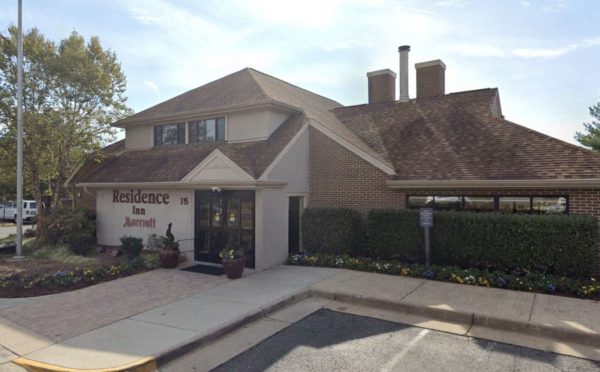
- Affordable Housing Could Replace Herndon’s Residence Inn
- Electrical Accident Causes Reston House Fire
If you have ideas on stories we should cover, email us at [email protected] or submit an anonymous tip.
Feel free to discuss these topics, your social distancing plans or anything else that’s happening locally in the comments below.
Image via Google Maps
Since 2013, Reston Now has been reporting news about the Reston and Herndon areas. Recently, we started providing additional coverage of Great Falls.
Keep up with our coverage by signing up for our email subscriptions.
The afternoon email — sent at 4 p.m. — rounds up the most recently published stories and sponsored content on our site. Our morning email is currently on a hiatus.
You can also opt in to receive emails we send on behalf of local businesses and nonprofits. If you opt-out, you’ll still receive an occasional event or offer-related email as part of your subscription.
Note: we will never share your email address with a third-party.
Thank you to everyone who has signed up for our email subscriptions already!
If you would like to continue reading Reston Now and you’re able to give us a few bucks a month, we would greatly appreciate you contributing to our coverage via PayPal or joining our Patreon.
Not receiving emails or want to change your subscriptions? You can re-enter your email in the subscription sign-up, which will then pop up a message saying that email is already subscribed. The message will prompt you to update your profile, which will then send you an email that will let you manage your subscriptions.
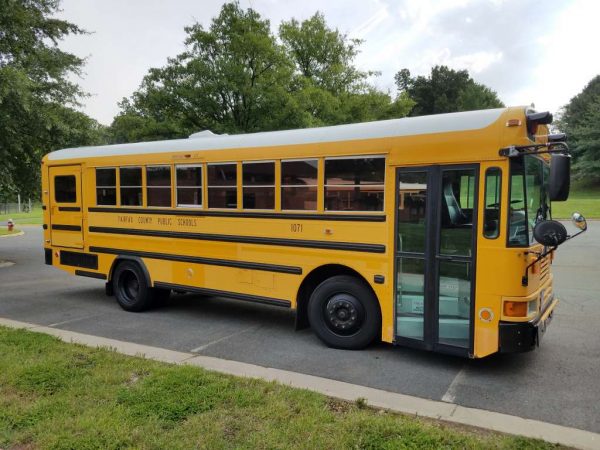
In a presentation to the School Board earlier this week, Superintendent Scott Brabrand announced that some students could begin returning to classes in schools in late October.
By late October, administrators estimate that 653 teachers can teach 6,707 students in school buildings for anywhere between one half-day to four full days a week.
The district is targeting students who receive special education services, attend preschool, are English-language learners, newcomers to U.S. schools or have limited formal education. High school students can also come for certain technical-education courses.
The move was heavily criticized by members of the School Board, who said Brabrand’s plan lacked important data that parents and teachers need when planning to start heading back to school.
