

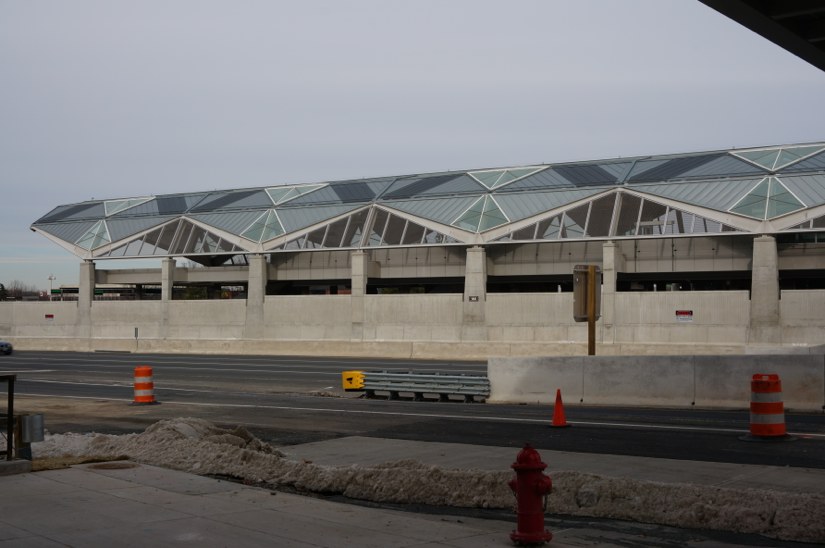
 Metro General Manager and CEO Richard Sarles announced an agreement on Thursday with the Metropolitan Washington Airports Authority that will move the Silver Line closer to opening day, possibly this summer.
Phase 1 of the $5.6 billion Silver Line — which will run from East Falls Church to Reston’s Wiehle Avenue — is more than six months behind schedule.
Under the agreement, Metro will allow MWAA additional time to complete certain items after the project is turned over to Metro, but prior to the start of passenger service, Metro says. Without this agreement, the Airports Authority would have been required to complete all items before Metro takes control, meaning an opening date that would be later in the year.
The Airports Authority is still required to address all priority items — those that affect reliability or require significant track access — prior to handing the project off to Metro. Some examples:
- Resolving items identified during system performance demonstrations, such as loss of speed readouts (a signal problem that affects reliability)
- Installation of capacitors to resolve interlocking “bobbing” track circuits
- Improve the reliability of traction power circuit breakers
- Completion of all work that requires significant track access or single tracking
“While there are still outstanding items for the Airports Authority and their contractor to resolve, today’s agreement allows us to move this project closer to opening day for our customers by allowing certain tasks to be completed after the project is in Metro’s control,” Sarles, Metro General Manager and Chief Executive Officer, said in a statement.
“We expect that the Airports Authority will complete the remaining items in a timely fashion, thereby allowing us to open the line this summer.”
MWAA also announced Wednesday that it has accepted Dulles Transit Partners’ declaration of substantial completion — even though there are still many punchlist items that need to be repaired.
“Achieving substantial completion is a significant milestone,” said Airports Authority President and CEO Jack Potter. “We have conducted a thorough review of the contractor’s submission and are satisfied that Phase 1 has met the contractual requirements that will allow the project to now move to the next steps in the process to begin passenger service.”
After substantial completion, the next major milestone is the “Operational Readiness Date” (ORD), which is when the project is turned over to Metro’s custody and control. If the Airports Authority completes all priority tasks in a timely manner, ORD may be achieved in late May, Sarles said.
Following ORD, Metro has up to 90 days for testing, employee training and emergency drills prior to the start of passenger service, says Metro. With today’s agreement, Metro will permit the Airports Authority to use this time to complete remaining tasks including:
- Providing to Metro safety certification documentation demonstrating that all open items have been closed
- Resolving traction power reliability issues
- Executing a contract for the replacement of track circuit modules
- Resolving leaks and drainage issues
- Grounding of tunnel handrails and replacement of coaxial cable in the tunnel
- Replacing public address speakers to meet Virginia Department of General Services requirements
- Elevator shaft and piston replacement at Tysons Corner station
- All work required to obtain permanent certificates of occupancy
Many of those tasks were found deficient when DTP first filed for substantial completion in February. DTP was supposed to have addressed and fixed those issues in the interim.
Dulles Transit Partners filed for “substantial completion” for Phase 1 on April 9. It was the second time the contractor, a division of Reston-based Bechtel, filed. DTP said its work was finished on Feb. 7, but MWAA’s review showed issues in many areas, including ongoing issue with the Automatic Train Control software.
Last week, MWAA awarded a $1.8 million contract to a New York company to upgrade the ATC controls. That could take a year, MWAA said.
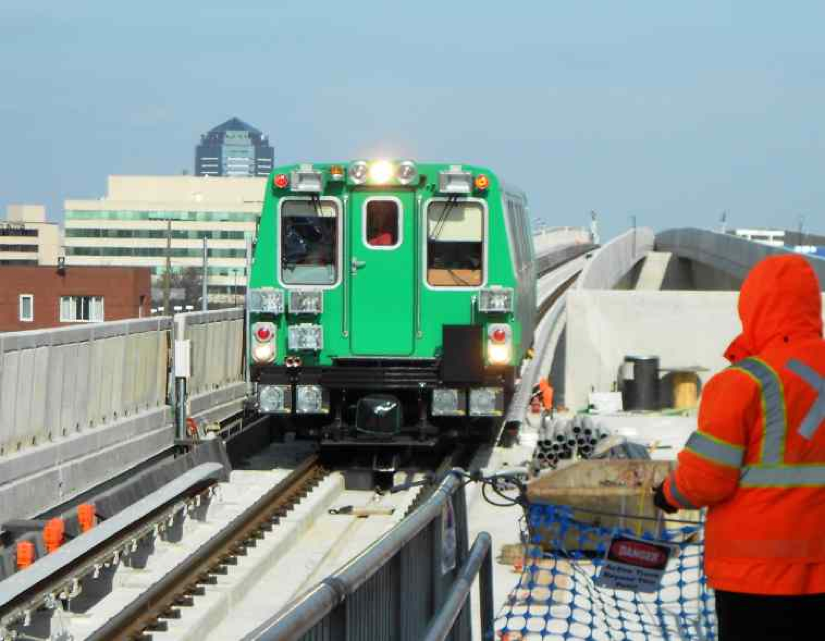 The Metropolitan Washington Airports Authority will rule the Silver Line is “substantially complete” today, sources say. But the handoff to Metro still will not happen for a while so there is still no projected opening date.
WAMU reports that MWAA, which completed its own inspection of the project, will sign off on the project but the handoff will not come for about a month.
WMATA (Metro) will then have 90 days to conduct its own testing before Phase 1 of the Silver Line, which will run from East Falls Church to Reston’s Wiehle Avenue, would be open to the public.
Construction contractor Dulles Transit Partners filed for “substantial completion” for Phase 1 on April 9. It was the second time the contractor, a division of Reston-based Bechtel, filed. DTP said its work was finished on Feb. 7, but MWAA’s review showed issues in many areas, including ongoing issue with the Automatic Train Control software.
“We have been looking at the test results from the train control system,” MWAA CEO Jack Potter said on Tuesday.
Last week, MWAA voted to award a $1.8 million contract to Alstom Signaling, the company that built the ATC system, for an upgrade. The system upgrade could take a year, but MWAA officials have said they hope to get the Silver Line operational without it. Extra personnel would be in place in the meantime.
Phase 1 of the $5.6 billion Silver Line is more than six months behind schedule, which is why Virginia Gov. Terry McAuliffe met with MWAA officials on Tuesday.
“We’re about seven months delayed,” McAuliffe told reporters. “I understand [that] things happen on a project of this scale, this magnitude. But I wanted to know why. I want to know how we’re spending our money. I want to know what’s going on.”
After the one-hour meeting with McAuliffe said he was satisfied with the answers he received.
File photo/MWAA
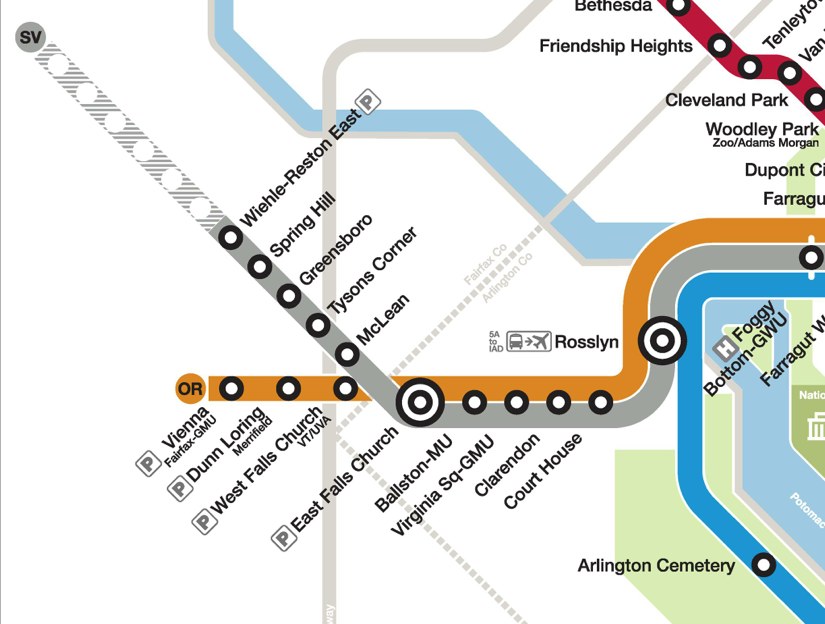 Upgrading the faulty tracking control software for Metro’s Silver Line will cost $1.8 million and may take up to a year to replace, but can the train finally leave the station without it?
It remains to be seen whether Metro and Metropolitan Washington Airport Authority would delay the opening of the Silver Line — which is already months behind schedule — for that length of time. But on the other hand, the ATC system is crucial for a safe rail line. ATC failures were deemed responsible in the June 2009 Metro crash that killed the driver and eight passengers.
Officials said last week that the Silver Line may get up and running with the ATC that is in place now, but may have human operators working to ensure safety. In its approval of the contract to Alstom Signaling to provide the technology upgrade, MWAA said “WMATA (Metro) will provide “extra staffing at the Project’s expense to ensure reliability.”
MWAA officials have until next week to complete their review of Betchtel’s submission of “substantial completion” of the Silver Line’s 11-mile Phase 1. The $2.8 billion Phase 1 will run from East Falls Church to Reston’s Wiehle Avenue.
Betchel’s Dulles Transit Partners, which built the project, originally submitted for substantial completion on Feb. 7, but MWAA said there were issues in 7 of 12 areas, including the ATC system. The ATC glitches were also responsible for one of several completion delays last fall. The project was originally (but unofficially) estimated to have its first riders by December 2013; the safe estimate now is by summer.
MWAA said Alstom is the only contractor able to provide the necessary equipment for the upgrades and that the upgrades will be paid from a $23 million Silver Line contingency fund. Citizens advocacy group Reston 2020 said that estimate is oversimplified.
“Of any extra costs MWAA agrees to pay WMATA for staffing, MWAA will actually pay only 4 percent of while Dulles Toll Road users will pay half under the inequitable ‘Funding Partners’ agreement.” Reston 2020 co-chair Terry Maynard writes on the group’s blog. “The rest will be paid by Fairfax and Loudoun counties.”
Meanwhile, Virginia Gov. Terry McAuliffe met with MWAA officials about the Silver Line on Tuesday, WTOP reports.
 Pat Nowakowski, executive director of the Dulles Corridor Rail Project, will step down to take a position with another transit agency, the Metropolitan Washington Airports Authority announced on Wednesday.
Nowakowski has been the face of the Silver Line project as it proceeded from idea to the brink of opening.
Metropolitan Washington Airports Authority CEO Jack Potter says MWAA will conduct a nationwide search for Nowakowski’s replacement.
MWAA is currently in a two-week review period after which it hopes to turn over the $2.8 billion Phase 1 of the rail line to Metro. Phase 1 will run from East Falls Church to Reston’s Wiehle Avenue.
While an opening date was never officially announced, riders were at first expected to be on the rail by December 2013. However, several construction issues — including problems with the Automatic Tracking Control System — have delayed the rail opening by several months.
MWAA on Wednesday approved the request of its Dulles Corridor Committee to pay $1.8 million to Alstom Signaling of New York to upgrade the ATC system.
Construction contractor Dulles Transit Partners on April 9 submitted the project for “substantial completion.” That was a redo of its Feb. 7 submission. MWAA found issues in 7 of 12 areas. Those issues have now been fixed, MWAA officials said.
Once the Silver Line Phase 1 is open, work will begin on Phase 2, which will run from Wiehle Avenue to Reston Parkway, Herndon and several stops in Loudoun County, including Dulles International Airport. The second phase is slated to open in 2018.
Nowakowski joined MWAA in January 2009 after a nearly 30-year career at the Southeastern Pennsylvania Transportation Authority.
Photo of Pat Nowakowski via Northern Virginia Transportation Alliance.
Metro’s Silver Line has not yet opened, but the Washington Metropolitan Airports Authority (MWAA) is already seeking a $1.8 million technology upgrade of the Automatic Train Control system.
MWAA is building the Silver Line rail extension. The 11-mile, $2.8 billion Phase 1 of the Silver Line will run from East Falls Church to Reston’s Wiehle Avenue. When it is satisfactorily completed — a decision that could come in the next two weeks — the project will be turned over to Metro, which will then conduct its own testing before setting an opening date.
The Dulles Corridor Committee of the MWAA Board of Directors on Wednesday approved awarding a sole source contract to Alstom Signaling, Inc., of Henrietta, N.Y. for an Automatic Train Control (ATC) technology upgrade.
Alstom previously installed the Horton Remote Terminal Units (RTUs) as part of the design of the Automatic Train Control System. That system is used throughout the existing Metro system, MWAA says.
But in testing the system for the Silver Line, the RTUs have proven faulty.
“The Horton RTUs have proven unreliable in the Phase 1 application,” MWAA documents read. “Increased reliability can be achieved by incorporating the use of integral circuit boards in the Alstom Vital Processor Interlock (VPI) instead of using RTU equipment.”
“This is a reliability issue, not a safety issue,” the documents read. “The technology upgrade will take one year to complete.”
MWAA says that it will advise Dulles Transit Partners, the Bechtel unit that constructed the rail line, to make adjustments to improve reliability. It also says that once service begins, WMATA (Metro) will provide “extra staffing at the Project’s expense to ensure reliability” and that Alstom is the only contractor able to provide the necessary equipment for the upgrades.
MWAA officials said early Wednesday that roughly $23 million is available in the Silver Line contingency fund.
The ATC system has been a bug in constructing the Silver Line — and it is crucial to get it right. In 2009, the system failed to detect the presence of a train on the tracks leading to a Red Line crash that killed nine people and injured dozens of others.
In June, Federal Transit Administrator Peter Rogoff said he was troubled by unauthorized design changes Alstom made without consulting Metro. In addition, because of a shortage of equipment, Alstom workers allegedly moved some control boards from one monitoring station to another, which meant they were checking the same set of boards rather than new ones, according to The Washington Post.
In November, more issues with the ATC system were found, leading to a delay of several months.
While an official opening date was never announced, Phase 1 was originally estimated to be ready to hand off to Metro last summer for a December 2013 opening. Last spring, that was moved to a November turnover. In November, the project was delayed further while problems with the Automatic Train Control System were addressed.
On Feb. 7, DTP announced it had reached “substantial completion,” meaning it felt the construction was finished. MWAA completed a two-week review and found a host of problems, including some with the ATC system.
DTP says it fixed the problems, and on April 9 — the same day $25,000 a day penalties would kick in as part of the construction contract — submitted the project again. MWAA is in the midst of another 15-day review.
Once MWAA signs off on the DTP’s work it will turn the Silver Line over to Metro, which then has 90 days to complete its own testing.
 While there is still no firm opening date for Metro’s Silver Line, Wednesday’s declaration of substantial completion by Dulles Transit Partners moves the rail line one step closer to its first riders.
DTP submitted the project for approval yesterday, avoiding a deadline in which fines of $25,000 a day were about to begin. The contractor, part of Reston-based Bechtel Corporation, said it has reached “substantial completion” on the $2.7 billion Phase 1 of the project, which will bring rail from East Falls Church to Reston’s Wiehle Avenue.
This was the second time DTP said it had reached substantial completion, which states that the contractor’s construction portion is finished. It previously filed on Feb. 7, but during Metropolitan Washington Airports Authority’s review MWAA found issues in 7 of 12 areas, ranging from leaks to problems with the automatic train control system. Among the work done to make repairs in last few weeks: Speakers in all five stations had to be reinstalled and cables fixed in the Tysons tunnel.
MWAA will now begin another 15-day review period.
“We have been working closely with DTP as they have addressed remaining outstanding items, and we will continue to work closely with them during this review and while they work on a variety of additional required tasks,” MWAA said in a statement.
“Substantial completion is an important step in the process of turning the project over to WMATA [Washington Metropolitan Area Transit Authority]. Another step will be ‘operational readiness,’ which WMATA will declare before starting their own testing and other processes. No date has been set for turning the project over to WMATA, and WMATA has not set an opening date for service.
If MWAA deems the problems are not repaired, then DTP would another indefinite repair period. However, the contractor has emphasized its intention that this week’s completion declaration would be final and correct.
If the project moves on to WMATA (Metro), there will be a maximum of 90 days for its own testing. Metro officials have previously said they hope it won’t need the full 90s days.
Officials had hoped to finish testing last September for a possible December opening. But delays were announced last summer, then again in November as DTP worked to fix the automatic tracking system. The latest issues pushed the opening back another eight weeks.
An optimistic prediction for first riders would now be June or July.
Reston development-watch group Reston 2020 is skeptical that the work is suddenly at “substantial completion” on the same day as the penalties would start.
“If ‘completed when it needs to be’ is the criterion, then Phase 1 was “substantially complete” when it was first scheduled to be last September,” Reston 2020 co-chair Terry Maynard wrote in a blog post. “What kind of overlapping, dysfunctional, disorganized engineering process is this? … The problem now for the MWAA Silver Line Project Management team is that it is being squeezed on both sides–the contractor who wants to avoid fines that begin April 9 and MWAA’s Board which wants to avoid the perception MWAA has managed this project poorly.”
As expected, the contractor building Metro’s Silver Line submitted the project for approval on Wednesday, avoiding a deadline in which fines of $25,000 a day were about to begin, Metropolitan Washington Airports Authority officials confirmed.
Dulles Transit Partners, part of Reston-based Bechtel Corporation, said it has reached “substantial completion” on the $2.7 billion Phase 1 of the project, which will bring rail from East Falls Church to Reston’s Wiehle Avenue.
“We are very pleased with the progress and moving the Silver Line one step closer to full operation,” Bechtel officials said in a statement on Tuesday.
Dulles Transit Partners originally said on Feb. 7 that it had reached the substantial completion mark. Substantial completion is the point at which they feel their job is done and ready to be turned over to Metro. Metro would then have a 90-day period to conduct its own testing.
However, part of the handoff involves Metropolitan Washington Airports Authority (MWAA) conducting its own two-week review, and in late February MWAA found issues in 7 of 12 areas, ranging from leaks to problems with the automatic train control system. It was revealed at a recent MWAA Board meeting that speakers in all five stations have to be reinstalled, and there is a cable issue in the Tysons tunnel.
DTP says those issues have been fixed. MWAA will now conduct another two-week review process. If the project is deemed ready to go, the rail could open in June or July.
“We are that much closer to leaving the train station,” Rep. Gerry Connolly said at an appearance in Reston. “It will be operational, we hope, by July.”
According to DTP’s contract, if the work is not finished starting April 10, DTP faces a $25,000-a-day penalty until the work is done. If the project is not completed 92 days after that April date, the contractor would have to pay roughly $2.3 million in fines, plus an additional $75,000 a day.
Ultimately, if the project is delayed more than six months from that April date, DTP could be required to pay more than $9 million total. Under the terms of the contract, the payments are capped at $60 million.
Former Congressman Tom Davis, a MWAA board member said recently that the most important thing is that the rail line is 100-percent safe and ready to go before opening.
“Hopefully, we can meet the April 9 deadline and it will be acceptable and we could move on,” Davis said. “But we want the public to know that when this transit system opens, it is going to be Grade A reader for business. It is going to be safe and it is going to work efficiently.”
While a opening date for the Silver Line was never set, officials had hoped to finish testing last September for a possible December opening. But delays were announced last summer, then in November when the tracking system issues were discovered.
After the March setback, officials are no longer estimated when the turnover may be as DTP works to correct the problems. However, a source told WTOP last week that the Silver Line may open by July 4.
This story will be updated with further reaction from MWAA.
Photo courtesy of MWAA
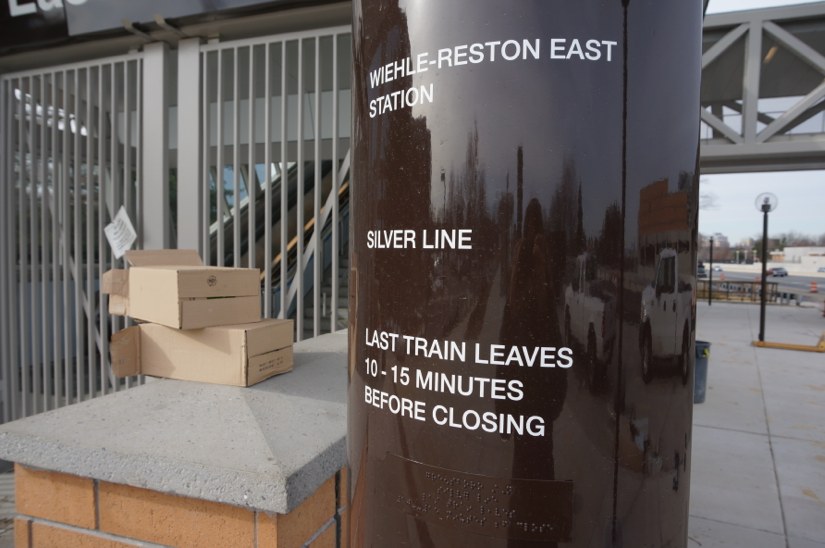 The contractor constructing Metro’s Silver Line says it is ready to submit for “substantial completion” of the project again — which could come as soon as Wednesday.
Wednesday also happens to be April 9, the day Reston-based Bechtel Corporation and subsidiary Dulles Transit Partners would have to start paying fines of $25,000 a day until the job is done.
Bechtel Corporation says it is waiting for results late Tuesday then will determine if it will submit Wednesday.
“We are very pleased with the progress and moving the Silver Line one step closer to full operation,” Bechtel officials said in a statement.
Dulles Transit Partners originally said on Feb. 7 that substantial completion on the $2.7 billion rail extension from East Falls Church to Reston’s Wiehle Avenue had been reached.
Substantial completion is the point at which they feel their job is done and ready to be turned over to Metro. Metro would then have a 90-day period to conduct its own testing.
However, part of the handoff involves Metropolitan Washington Airports Authority conducting its own checklist, and in late February MWAA found issues in 7 of 12 areas, ranging from leaks to problems with the automatic train control system. It was revealed at a recent MWAA Board meeting that speakers in all five stations have to be reinstalled, and there is a cable issue in the Tysons tunnel.
According to DTP’s contract, the work is not finished starting April 10, DTP faces a $25,000-a-day penalty until the work is done. If the project is not completed 92 days after that April date, the contractor would have to pay roughly $2.3 million in fines, plus an additional $75,000 a day.
Ultimately, if the project is delayed more than six months from that April date, DTP could be required to pay more than $9 million total. Under the terms of the contract, the payments are capped at $60 million.
“Our goal is to have this wrapped up by April 9, before fines set in,” MWAA President and CEO Jack Potter said March 19.
Former Congressman Tom Davis, a MWAA board member, told WUSA9-TV that the most important thing is that the rail line is 100 percent safe and ready to go before opening.
“Hopefully, we can meet the April 9 deadline and it will be acceptable and we could move on,” Davis said. “But we want the public to know that when this transit system opens, it is going to be Grade A reader for business. It is going to be safe and it is going to work efficiently.”
But Davis also said if DTP has to pay fines, it could benefit the transportation system.
“If it is not ready, I think the airports authority can make some money on it,” Davis told WUSA. “
While a opening date for the Silver Line was never set, officials had hoped to finish testing last September for a possible December opening. But delays were announced last summer, then in November when the tracking system issues were discovered.
After the March setback, officials are no longer estimated when the turnover may be as DTP works to correct the problems. However, a source told WTOP last week that the Silver Line may open by July 4.
A source tells WTOP that Metro’s Silver Line could be up and running by July 4 after significant progress in correcting issues throughout the last few weeks.
From WTOP:
The Metropolitan Washington Airports Authority continues to run tests on the tracks and the contractor building the Silver Line could get approval to turn the project over to Metro within the next two weeks.
Multiple sources tell WTOP that it’s more likely that the Silver Line will be completed and certified before the end of the month than it being delayed into May. Once MWAA certifies the project as complete, it would turn over the project to Metro. Project Director Pat Nowakowski has told WTOP the time between certification and turnover to Metro would be quick.
The opening of the 11-mile rail extension from East Falls Church to Reston’s Wiehle Avenue has been delayed several times — though an exact opening date was never set.
The Silver Line was originally estimated to be finished last summer, with a September handoff to Metro and a possible December opening. In July, the estimate was pushed back, as it was again in November when issues were found with the Automatic Train Control system.
In early February, construction contractor Dulles Transit Partners told the Metropolitan Washington Airport Authority it had reached “substantial completion” on construction of the $2.8 billion project.
But MWAA completed a 15-day review and found issues in 7 of 12 areas, ranging from leaks to problems with the automatic train control system. It was revealed at a MWAA Board meeting two weeks ago that speakers in all five stations have to be reinstalled, and there is a cable issue in the Tysons tunnel.
According to DTP’s contract, the work is not finished starting April 10, DTP faces a $25,000-a-day penalty until the work is done. If the project is not completed 92 days after that April date, the contractor would have to pay roughly $2.3 million in fines, plus an additional $75,000 a day.
Ultimately, if the project is delayed more than six months from that April date, DTP could be required to pay more than $9 million total. Under the terms of the contract, the payments are capped at $60 million.
 The contractor building Metro’s Silver Line has until the middle of next week to fix the construction problems or start paying big fines.
Judging by the number of issues found in last month’s inspection by Metropolitan Washington Airport Authority, Dulles Transit Partners (DTP) will likely have to start paying the $25,000 a day.
DTP told MWAA in February it had reached “substantial completion” on construction of the $2.8 billion rail extension from East Falls Church to Reston’s Wiehle Avenue. In contracting-speak, that meant the project was ready to be turned over to Metro, which would conduct its own testing before opening the line.
But MWAA completed a 15-day review and found issues in 7 of 12 areas, ranging from leaks to problems with the automatic train control system. It was revealed at a MWAA Board meeting two weeks ago that speakers in all five stations have to be reinstalled, and there is a cable issue in the Tysons tunnel.
According to DTP’s contract, the work is not finished starting April 10, DTP faces a $25,000-a-day penalty until the work is done. If the project is not completed 92 days after that April date, the contractor would have to pay roughly $2.3 million in fines, plus an additional $75,000 a day.
Ultimately, if the project is delayed more than six months from that April date, DTP could be required to pay more than $9 million total. Under the terms of the contract, the payments are capped at $60 million.
“Our goal is to have this wrapped up by April 9, before fines set in,” MWAA President and CEO Jack Potter said March 19.
Former Congressman Tom Davis, a MWAA board member, told WUSA9-TV that the most important thing is that the rail line is 100 percent safe and ready to go before opening.
“Hopefully, we can meet the April 9 deadline and it will be acceptable and we could move on,” Davis said. “But we want the public to know that when this transit system opens, it is going to be Grade A reader for business. It is going to be safe and it is going to work efficiently.”
But Davis also said if DTP has to pay fines, it could benefit the transportation system.
“If it is not ready, I think the airports authority can make some money on it,” Davis told WUSA. “
Citizens advocacy group Reston 2020 says the fines should go to offset rising Dulles Toll Road rates, which may have to climb high to pay for Silver Line Phase 2, which is not fully funded.
“I believe that every last cent of those fines should go to stabilizing DTR tolls,” Maynard recently wrote in a letter to Rep. Gerry Connolly (D- VA 11th). “Although the projected sums of the fines are not large compared with the multi-billion dollar price tag of Phase 1 of the line’s construction, we are at the point where every dollar counts.”
While a opening date for the Silver Line was never set, officials had hoped to finish testing last September for a possible December opening. But delays were announced last summer, then in November when the tracking system issues were discovered.
After the March setback, officials are no longer estimated when the turnover may be as DTP works to correct the problems.
When MWAA certifies that the issues are repaired, the project will be turned over to Metro, which has 90 days to complete its own testing.
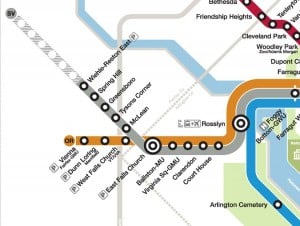 One Metropolitan Washington Airports Authority board member called the Silver Line saga a “soap opera.” Another suggested the board start working with lawyers.
That was yesterday. Today, all parties are looking at many more weeks/months of delays before Metro’s Silver Line opens.
At the MWAA board meeting on Wednesday, Dulles Transit Partners, the contractor that constructed the $2.7-billion Phase 1 of the rail extension that will run from East Falls Church to Reston’s Wiehle Avenue, said it could not predict when ongoing problems with the Silver Line would be fixed.
Therefore, it is impossible to predict an opening date. While no official opening has ever been set, there once was a time, more than a year ago, where the first passengers were estimated to ride the line by December of 2013.
DTP, a division of Bechtel, told MWAA in early February that it had reached “substantial completion.” But in their own review, MWAA found many problems. Among them — faulty connections in the loudspeakers at all five stations and ongoing issues with the Automatic Train Control System.
If the work is not satisfactorily turned over to MWAA by April 9, DTP could face millions of dollars in fines.
“Our goal is to have this wrapped up by April 9, before fines set in,” MWAA President and CEO Jack Potter said Wednesday.
While no completion date was ever given by MWAA, preliminary estimates were that the line would be completed by August or September 2013 and the first passengers would ride by the end of 2013. That later was pushed into early 2014. In January, the original problem with the ATC was discovered, delaying completion until at least spring. With this latest setback, could it be fall of 2014 — or even early 2015 — before the Silver Line sees riders?
Reston Now readers responded to a poll in Februrary. Of 506 votes, 27 percent said they predicted the line would open in August or September 2014; 26 percent said June/July 2014; 18 percent said 2o15.
Given the latest issues, what is your prediction now?
If the contractor building Metro’s Silver Line does not fix ongoing problems and satisfactorily turn the project over to Metropolitan Washington Airports Authority by April 9, it will face fines of $25,000 a day.
After a tense MWAA board meeting on Wednesday, it looks as though contractor Dulles Transit Partners may be hard pressed to make that deadline.
It was revealed Wednesday that there are still significant problems with the 11-mile rail extension, which will run from East Falls Church to Reston’s Wiehle Avenue. Problems range from speakers in the stations that are not up to fire code to continuing issues with the Automatic Train Control System.
DTP told MWAA on Feb. 7 that it had reached “substantial completion” on the $2.8 billion project. However, after a 15-day review period, MWAA found issues in 7 of 12 areas, including performance issues with the ATC system, water leaks in buildings, and elevator and escalator problems.
If the work is not finished starting April 10, DTP would face a $25,000-a-day penalty until the work is done. If the project is not completed 92 days after that April date, the contractor would have to pay roughly $2.3 million in fines, plus an additional $75,000 a day.
Ultimately, if the project is delayed more than six months from that April date, DTP could be required to pay more than $9 million total. Under the terms of the contract, the payments are capped at $60 million.
“Our goal is to have this wrapped up by April 9, before fines set in,” MWAA President and CEO Jack Potter said Wednesday.
Pat Nowakowski, executive director for the Dulles Corridor Rail Association, said there is no estimated opening date for the Silver Line and there is no projected date for when DTP will be done fixing the issues. He said “when the contractor submits paperwork this time around, they are working to be certain the project is complete.”
WTOP reports that the entire speaker system and the ATC system may have to be replaced, which could delay the project even further. WTOP also says that the MWAA Board is assembling a legal team in case the contractor misses another deadline. MWAA officials said the cost of the corrections will be covered by a contingency fund.
While no completion date was ever given by MWAA, original estimates were that the line would be completed by August or September 2013 and the first passengers would ride by the end of 2013. That later was pushed into early 2014. In January, the original problem with the ATC was discovered, delaying completion until at least spring.
Dulles Transit Partners, the contractor building Metro’s Silver Line Phase 1, is working to complete the rail extension by early April or face substantial fines.
Reston 2020 co-chair Terry Maynard has an idea of what to do with those fines — put them toward alleviating the burden on Dulles Toll Road users, who face mounting costs that will help pay for Silver Line Phase 2.
“I believe that every last cent of those fines should go to stabilizing DTR tolls,” Maynard recently wrote in a letter to Rep. Gerry Connolly (D-11th). “Although the projected sums of the fines are not large compared with the multi-billion dollar price tag of Phase 1 of the line’s construction, we are at the point where every dollar counts.”
DTR told the Metropolitan Washington Airports Authority (MWAA) Feb. 7 that it had “reached substantial completion” on the rail extension, which will run from East Falls Church to Reston’s Wiehle Avenue. However, after a two-week review period, MWAA found issues with 7 of 12 areas, ranging from leaks to problems with the automatic train control system.
The contractor is currently fixing the issues. Then there will be another review period. If the work passes, the project will be turned over to Metro, which has 90 days to complete its own testing before opening the long-awaited Silver Line.
However, The Washington Post reported that DTP’s contract states the contractor must finish the work within seven months of the agreed upon completion date of Sept. 9, 2013 — or face fines in the millions.If the work is not finished within that time, starting roughly April 10, DTP would face a $25,000-a-day penalty until the work is done. If the project is not completed 92 days after that April date, the contractor would have to pay roughly $2.3 million in fines, plus an additional $75,000 a day.
Ultimately, if the project is delayed more than six months from that April date, DTP could be required to pay more than $9 million total. Under the terms of the contract, the payments are capped at $60 million.
Meanwhile, tolls on the toll road may rise substantially to help build Silver Line’s Phase 2, which will run from from Wiehle Avenue to Dulles International Airport and into Loudoun County. The $2.7 billion Phase 2 is being built without federal funding, though it is now expected to get federal TIFIA loans, which are expected to keep tolls at a more reasonable level.
Early last year, MWAA said that toll rates may be as high as $6.75 by 2018 in order to keep pace with Silver Line costs. Independent estimates say the tolls could rise even higher.
“My greatest fear is that fines paid to MWAA will not be used in a manner that advances the Silver Line, much less eases the financial burden on DTR users,” Maynard said in his letter to Connolly. “I also do not think that the ‘funding partners’ allocation of these funds is an equitable or fair way to handle any forthcoming fine revenue.
“As you know well, DTR users are now stuck with about half of the cost of Phase 1 of the Silver Line under the “funding partners” agreement — and most of them won’t be able to use the Silver Line to get to their destinations. Assuring that any fine revenue is directed at easing their growing toll burden would be one small step toward correcting this inequitable arrangement.”
The full text of the letter is below:
Dear Congressman Connolly,
As a Restonian and fellow advocate of the Silver Line, I would like to ask you—as a leader in advancing the Silver Line’s completion—to pursue further financial assistance in alleviating the terrible toll increase burden Dulles Toll Road users are paying for its construction. It appears that an opening is available: If, as reported by the Washington Post, Dulles Transit Partners (DTP) faces substantial fines for further delays in completing the line, I believe that every last cent of those fines should go to stabilizing DTR tolls. Although the projected sums of the fines are not large compared with the multi-billion dollar price tag of Phase 1 of the line’s construction, we are at the point where every dollar counts.
My greatest fear is that fines paid to MWAA will not be used in a manner that advances the Silver Line, much less eases the financial burden on DTR users. I also do not think that the “funding partners” allocation of these funds is an equitable or fair way to handle any forthcoming fine revenue. As you know well, DTR users are now stuck with about half of the cost of Phase 1 of the Silver Line under the “funding partners” agreement—and most of them won’t be able to use the Silver Line to get to their destinations. Assuring that any fine revenue is directed at easing their growing toll burden would be one small step toward correcting this inequitable arrangement.
I hope that you can make sure that the $30 million or so in fines that the Post suggests may be forthcoming will be directly applied to the share of the construction cost borne by DTR users.
In the meantime, thank you for all that you have done to advance the Silver Line’s construction. I certainly hope that its completion is near at hand and we can begin riding the rails soon.
Sincerely,
Terry Maynard
Board of Directors, Reston Citizen Association
Co-Chair, RCA Reston 2020 Committee
As Reston residents continue to wait for an opening date for Metro’s Silver Line, a new paper by John McClain with George Mason University’s Center for Regional Analysis outlines the many missteps area’s transportation planning has taken over the last 50 years.
The Metropolitan Washington Airports Authority, which is overseeing the Silver Line construction, said Monday there are no updates on the completion of Silver Line’s Phase 1, which will run from East Falls Church to Reston’s Wiehle Avenue.
Dulles Transit Partners, the contractors that building Phase 1, told the Metropolitan Washington Airports Authority on Feb. 7 that it had reached “substantial completion” on Phase 1 of the Silver Line. But after a 15-day review period ending Feb. 24, MWAA said it and found issues in 7 of 12 areas, ranging from leaks to problems with the automatic train control system.
DTP is correcting the issues, but MWAA spokesman Marcia McAllister said there is no progress report as of yet.
Meanwhile, McClain says in Reflections on the National Capital Region: Transportation For the Past Half Century that “… in looking back over the past half-century at the region’s transportation process development and evolution, there are serious doubts about the region’s ability to address and resolve its needs in the most effective way. It seems it will more or less muddle along – developing reasonably good plans but no really good way to get them done.”
Several issues have affected Metro, as well as area highways, says McClain:
* One of the key failures regarding the region’s transportation system has been the lack of dedicated regional funding for regional facilities, he says. While federal funds were key to building Metro and regional highways, it may be time to diversify the sources.
The federal government gave $900 million to Phase 1 of the Silver Line, but nothing to Phase 2, though local funding and expected TIFIA funding should help cover some of the $2.7 billion Phase 2 costs.
“The region’s economy has diversified enormously over the past five decades, and Federal employment now only represents about 12 percent of total employment, McClain writes. “Attempts have been made to find some source of regional funding for Metro and those attempts have so far failed. But in looking ahead to rehabilitation needs of Metro (as well as regional highways), and future extensions, efforts should continue to seek a regional funding source. It is likely that federal funding levels and options will continue to decline, and the National Capital region will need to become more self-sufficient.”
* Planning and building of the region’s highway system has had mixed success. Plans written in the 1960s called for three three circumferential highways and other freeways within the region were obviously not completed as called for, but a case could be made that if the planned circumferential highways had been built and connected with the radial corridors containing both freeways and transit, then the region’s development patterns and transportation systems would have made for a region better positioned in the 2000s for economic growth and better quality of life (read, less gridlock).
“A case could also be made that much of the reality that did happen — 12 circumferential facilities taken off the plans — was because the region did not need so many roads,” writes McClain. “However, taking those facilities off the plans meant that rights-of-way could not be protected for potential future needs. While some
circumferential roads like the Fairfax County Parkway and the InterCounty Connecter did get built, their transportation usefulness to the region could have been much greater.”
The contractor responsible for building the Silver Line Metro extension could face large fines if the work is not completed by April.
Dulles Transit Partners told the Metropolitan Washington Airports Authority on Feb. 7 that it had reached “substantial completion” on Phase 1 of the Silver Line, which will run from East Falls Church to Reston’s Wiehle Avenue.
However, MWAA completed a 15-day review last week and found issues in 7 of 12 areas, ranging from leaks to problems with the automatic train control system. DTP is correcting the issues. It is not known how long that will take, but it is likely to delay the project’s turnover to Metro, which will in turn delay the rail’s opening date for the third time in the last few months.
The Washington Post reports that DTP’s contract states the contractor must finish the work within seven months of the agreed upon completion date of Sept. 9, 2013 — or face fines in the millions.
If the work is not finished within that time, starting roughly April 10, DTP would face a $25,000-a-day penalty until the work is done, the Post reports. If the project is not completed 92 days after that April date, the contractor would have to pay roughly $2.3 million in fines, plus an additional $75,000 a day.
Ultimately, if the project is delayed more than six months from that April date, DTP could be required to pay more than $9 million total. Under the terms of the contract, the payments are capped at $60 million.
Also in the contract, a financial incentive: Had DTP completed the project earlier than scheduled, it could have earned up to $10 million in rewards.
When MWAA certifies that the issues are repaired, the project will be turned over to Metro, which has 90 days to complete its own testing.
The latest delay is one of several, though Metro and MWAA officials have never given a firm opening date for the Silver Line. It is now expected that the Silver Line will not open until summer 2014.
