

 This is an op-ed submitted by George Mason University student Jalen Stubblefield. It does not reflect the opinion of Reston Now.
I grew up in Alexandria, VA and have lived here the vast majority of my life. I graduated from Edison High School in 2012, and will graduate from George Mason University this December. I am a Democrat and I oppose the Fairfax County Meals Tax. Here is why.
First and foremost, I understand that enrollment in schools has risen, and that teachers are severely underpaid. I understand the important role public education plays in America, ensuring that every child that works hard has the opportunity to succeed. What I do not understand is a Meals Tax.
Attending school at Edison, I had a number of friends that were growing up without parents in their household. No, the parents had not left them. They were working from early in the morning, sometimes before school started, to late at night, sometimes long after their children had slept.
Take my friend, we’ll call him Josh, his parents would drop him off long before school began, and he would walk home in the afternoon because his parents were working. For food, he was on the free-and-reduced meals program, and his parents would give him $5 for dinner since there was no time for them to cook during the week.
Josh’s story is typical. According to a report by the Commonwealth Institute, 8 percent of school-age children are growing up in poverty and 28 percent are on the free-and-reduced meals program. Read More
 This is a commentary from Del. Ken Plum (D), who represents Reston in Virginia’s House of Delegates. It does not reflect the opinion of Reston Now.
I am currently the longest serving member of the Virginia House of Delegates. My license plate that has only “1” on it is the subject of many stares and the occasional “How did you get that number?” I have been in office continuously since 1980. I served one term prior to that time, but seniority is counted by continuous service.
I was a candidate for office twice before I was elected. I first ran for the House of Delegates in 1973 and again in 1975. Both times I came close, but close does not count in elections.
I ran in what was the 18th legislative district which encompassed half of Fairfax County, Fairfax City and the Towns of Herndon and Vienna, which were represented by five at-large delegates.
When the Commonwealth of Virginia was forced by the federal government to reapportion the legislature to conform to the “one-man, one-vote” principle, Fairfax had a population equivalent to ten legislative districts. Rather than dividing up the county into individual districts, the legislature drew a line down the center of the county creating two districts with five at-large delegates each. Read More
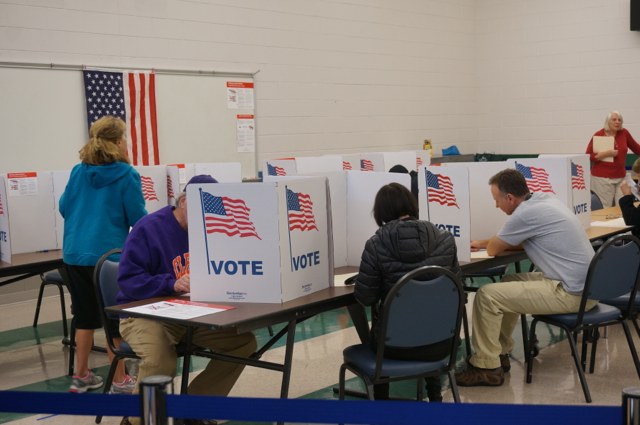 This is an op-ed by Reston resident Therese Martin. It does not reflect the opinion of Reston Now.
There have been so many misleading or incorrect comments about the proposed meals tax for Fairfax County during recent weeks that it is hard to know where to begin in pointing out how important its approval is for the citizens of our county.
Foremost, the Board of Supervisors is not proposing a rehash of last spring’s budget deliberations; it is proposing that they be given an important tool to use in making budget decisions in future years.
Each year, our elected representatives must balance the needs of the county’s residents against the resources available to them. Many Fairfax residents apparently don’t realize that counties in Virginia don’t have many tools to use [including use of an income tax as proposed in a recent letter in the local press]. Other than one-time grants and permits or fees that it caps, Virginia pretty much limits counties’ ability to fund services to the levy of property taxes. In some years, the state actually takes back a part of the funds it provides to localities in order to balance its budget.
[We just recently heard that Virginia’s well-publicized plan to increase teacher salaries is on the chopping block because of its anticipated budget shortfall. Thus any increase in Fairfax teacher salaries to bring them up to the level of surrounding jurisdictions will depend on the local property tax.]
This is a commentary by Del. Ken Plum (D), who represents Reston in Virginia’s House of Delegates. It does not reflect the opinion of Reston Now.
Voters in the 36th legislative district, which I represent, will receive my annual voting guide in their mailboxes this week. I hope you will find it useful. You can also view the guide online at www.kenplum.com.
Of course individuals make their own choices in voting, but many people ask me for my advice. That is why I started sending out a guide many years ago. In addition to sharing my election picks, the guide provides voters with advanced notice of what is on the ballot in addition to high-profile races.
For example, in addition to voting for the next president this year, voters in my district will elect their member of the House of Representatives, and they may vote on a referendum on a tax, two state constitutional amendments, and a bond referendum.
I enthusiastically recommend a vote for the electors for Hillary Clinton for president and Tim Kaine for vice-president. My endorsement of Hillary Clinton is not because of her political party, her being a woman or her being “the lesser of two evils” as some people are saying. I support her because she is the best-qualified and most experienced person with the clearest agenda of any person I have ever supported in my lifetime — and that goes back to John Kennedy. Read More

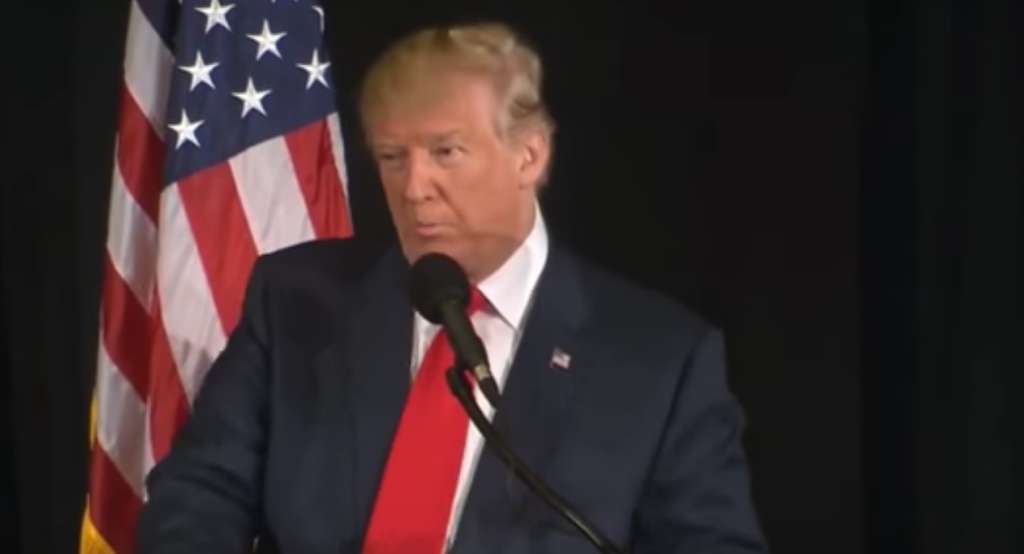 The 2016 Presidential election is less than three weeks away — who is getting your vote?
Are you voting along party lines? Have you switched over? Do you want to see Hillary Clinton (D) or Donald Trump (R) in the White House? Are you picking an independent candidate? Or maybe you are still undecided.
By the way, absentee voting continues in Fairfax County until Nov. 5.
Whether you are heading to the polls on Nov. 8, mailed your ballot in or will vote absentee in person, please vote. Meanwhile, take our poll (Note: this is not a scientific poll).
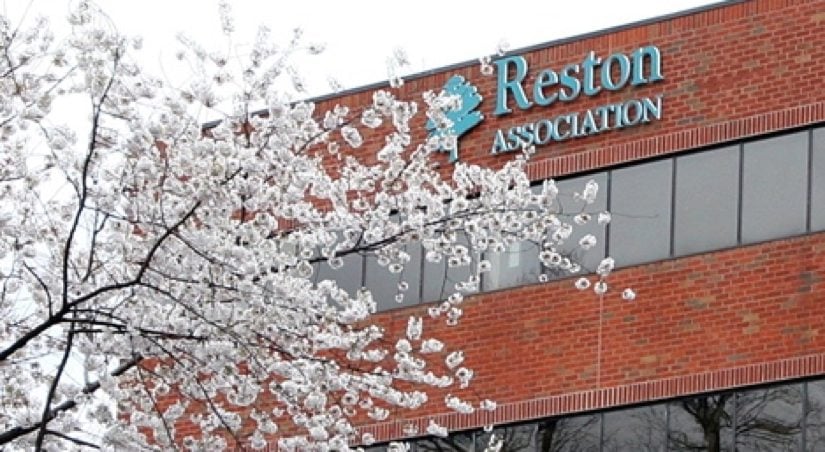 This is an op-ed from Reston resident and Reston 2020 member Terry Maynard. It does not represent the opinion of Reston Now. Something on your mind? Send a letter to [email protected]. The editor reserves to make edits for style and clarity or reject submissions.
The Reston Association Board of Directors is in the midst of considering the RA budget for 2017 and will have a special meeting Wednesday (6:30 p.m. at RA headquarters).
The three key points to take away from the materials presented to the Board in recent months and in the package to be presented to the Board this month are this:
- There is not one single place where RA has proposed a reduction in next year’s operating budget, much less elimination of a program, position, or activity; only additions of varying sizes need be considered by the Board. Apparently, everything RA is now doing or plans to do is absolutely essential and must be done again next year–with additions for inflation and new staffing, programs, and activities.
- The proposed $2.9 million appropriation for the Repair & Replacement Reserve Fund (RRRF) is being driven by a simplistic, but reversible, policy prescription in the face of consultant advice that more than $1 million less is needed, the proposed capital spending next year is less than two-thirds of what the policy calls for appropriating to the fund, and existing RRRF reserves far exceed any RA requirement.
- As a result, RA staff is proposing (and the Board appears to be favoring) a budget that would require Restonians’ assessment fees to jump by 8.3 percent from $657 in 2016 to $712 in 2017, a $55 increase. That’s the largest annual increase in homeowner assessment fees in the history of Reston Association.
How ridiculous!
Not unexpectedly, one of the key drivers of the increased budget is personnel costs. In fact, over the last five years, RA data show added personnel costs have comprised 45 percent of RA assessment fee increases — about $75 per household or $15 per year.
This year’s budget proposal includes the addition of six new staff positions to RA at a cost of $557,000, three of which costing $216,000 were in this year’s budget but dropped to help offset the near tripling of Tetra renovation expenses.
Despite its key role in RA expenses, personnel cost growth has never added more than $350,000 to the RA budget in any of the last five years according to RA. We see no reason that threshold should be exceeded now. Read More
This is a commentary from Del. Ken Plum (D), who represents Reston in Virginia’s House of Delegates. It does not reflect the opinion of Reston Now.
Since 1947, the Code of Virginia has provided that any agreement or combination between an employer and a labor union or labor organization whereby (i) nonmembers of the union or organization can be denied employment, (ii) membership in the union or organization is made a condition of employment or continuation of employment by the employer, or (iii) the union or organization acquires an employment monopoly in any such enterprise is against public policy and illegal.
On the ballot in Virginia on Nov. 8 is a constitutional amendment question, one that would put this provision of law into the constitution. There are 26 states, including Virginia, that have such a provision in their constitution or in their laws. Why would Virginia need to have these provisions in its constitution as well as in the Code?
The answer is a political one. The conservative Tea Party members of the legislature are seeking one more opportunity to demonstrate to their base just how anti-labor union they are. While they term this amendment “right to work,” its effect on workers is anything but a right. It gives employers more opportunity to deny workers access to a union or professional organization like a teacher’s or firefighter’s association. It allows some workers to gain the benefits of the work of the union or organization without contributing to it as the members do. Read More
 This is an op-ed from Reston resident Lynda Reyes. It does not reflect the opinion of Reston Now.
I am writing in support of the Meals Tax. My parents risked their lives to come to this country. They had nothing when they arrived, but they worked long hours at low wages to provide my family with opportunities that are not available in other countries. We made Fairfax County our home, but because of the rhetoric surrounding the Meals Tax, we do not feel welcome here anymore.
In conversations and online comments, there is a consistent emphasis on the burden imposed by kids who are not white and wealthy. One commenter on FCPS School Board member Pat Hynes’ recent op-ed stated that “the outputs of English language learners, special education students, emotionally challenged students, and less financially advantaged students is incommensurate with the financial input” — in other words, it is supposedly a waste of money to educate immigrant kids, kids with special needs, and poor kids. Read More
This is a commentary by Ken Plum, who represents Reston in Virginia’s House of Delegates. It does not reflect the opinion of Reston Now.
October is National Cybersecurity Awareness Month as designated by the U.S. Department of Homeland Security. The purpose of the month is “to engage and educate public and private partners through events and initiatives to raise awareness about cybersecurity, provide them with tools and resources needed to stay safe online, and increase the resiliency of the Nation in the event of a cyber incident.”
Certainly the news of cyber attacks and hacking almost daily have made the public more aware of the reality of cybersecurity. One campaign — Stop.Think.Connect.– sponsored by the Department of Homeland Security, is designed to promote safe online behavior and practices by members of the public.
This is an op-ed by Tony Shivers, Vice President of Advocacy for the
Fairfax County Council of PTAs (FCCPTA). It does not reflect the opinion of Reston Now.
 As Vice President of Advocacy of the Fairfax County Council of PTAs, I urge my fellow parents, residents, and business owners to vote YES for the non-partisan meals tax on Nov. 8.
For just a few pennies more:
- A 4-percent tax on prepared meals will generate $100 million for schools and county services, with $28 million being paid by tourists and visitors to Fairfax;
- FCPS will receive 70 percent of those revenues to help stem the loss of our best teachers and address classroom size;
- County services will receive 30 percent of net revenues to address unmet public safety needs and those of our libraries and parks;
- Fairfax County can diversify its tax base and relieve property tax pressure on homeowners while maintaining its AAA bond rating; and capture revenue from travelers and non-resident workers that utilize County programs and services.
Why a meals tax, rather than a tax on cigarettes or alcohol? The answer is simple. Virginia state law strictly limits the taxing authority of its counties — a meals tax is the only option at this level of government.
Why not pursue state funding? The short answer is that our children will be grown by the time state funding is brought to an appropriate level for Fairfax County. The state continues to push more of the cost of K-12 education back to localities. Fairfax County estimates that the shortfall in state funding for K-12 education has climbed to more than $1 billion annually since 2009.
In fact, the reliability of the state money promised to education is now in question. Virginia Gov. Terry McAuliffe recently advised the state legislature that that Commonwealth may experience as much as a $1.5 billion revenue shortfall in its two-year budget.
Historically, PTA is an advocacy organization, and the efforts of parents have resulted in immunizations, school lunches, child labor laws, among other accomplishments. PTAs do not promote candidates for election, but they do promote issues which benefit children.
Virginia PTA supports any meals tax where 50 percent of the revenue goes to public schools. Here in Fairfax the proposed meals tax would do far more.
The PTA’s motto is “Every Child. One Voice.” All Fairfax County children need the best education our community can deliver. Parents, please vote yes for your children. Vote yes for the meals tax.
Tony Shivers
Vice President of Advocacy
Herndon, VA
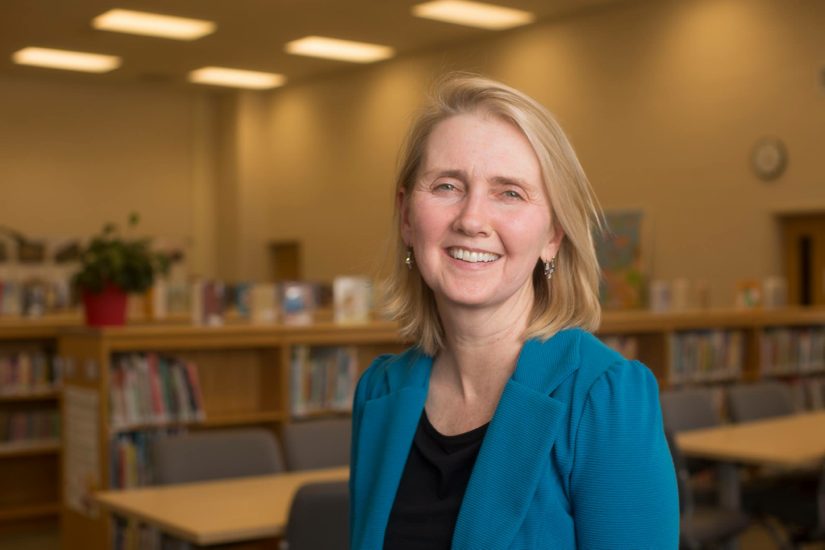 This is an Op-Ed from Pat Hynes, Fairfax County Public School Board’s Hunter Mill representative, about the Meals Tax referendum that will put to county voters on Nov. 8. It does not reflect the opinion of Reston Now.
If you had told me, when I was running for school board five years ago, that I would spend so much time talking about money and taxes, I might have been a little discouraged. But advocating for revenue is part of the job — the people of this community expect excellent schools with world-class curricular and extracurricular programs, and we’re smart enough to know that you get what you pay for in this life.
I learned early on that school funding in Virginia has some serious structural challenges — we send at least three times as much revenue down to Richmond as we get back for our schools and other critical public services. And then Richmond ties our hands when it comes to raising revenue locally for local needs.
A meals tax is one of very few options available to local governments, which is why two-thirds of Virginia counties — and most towns and cities — have adopted a meals tax to help balance their reliance on property taxes.
Local revenue since 2008 has not kept pace with growing population and rising costs. That is certainly true for the school system. Between 2008 and 2015, the gap between revenue and needs was so wide that by fiscal year 2015 the school system was spending $1000 less per child — in real dollars — than in 2008. We got there by freezing teacher pay and raising class sizes several times, and annual cuts to central office. Read More
This is an op-ed by Reston resident Ed Abbott. It does not reflect the opinion of Reston Now.
During the regularly scheduled Reston Association Board meeting on Sept. 22, RA CEO Cate Fulkerson presented items for the board to consider as they prepare RA’s 2017 “draft” budget. According to the presentation, members’ annual assessments may increase from $657 to $712 next year.
There are numerous problems with this, the least of which is the assessment increase. Let’s take these one at a time.
There is no such thing as a “draft budget” in the second year of a biennial budget. The board passed the 2017 budget in November 2015. Once the Board approves the biennial budget, the budget is final. By creating a 2017 draft budget at this stage, the budget process is morphing into an annual budget review and approval process in clear violation of the governing documents, which specify a biennial budget process.
Budget information is not presented to the Board in an organized and intelligible manner. The latest budget presentation by CEO Cate Fulkerson and Board Treasurer Danielle LaRosa is a good example. It starts out well with a “Back to Basics” slide that should tie the budget items back to RA’s mission statement, but this never happens. Instead, the presentation includes a confusing and incoherent array of tables and graphs. Read More
This is a commentary by Del. Ken Plum (D), who represents Reston in Virginia’s House of Delegates. It does not reflect the opinion of Reston Now.
Native Virginian and long-time advocate August Wallmeyer is providing a real service to the people of the Commonwealth and its public policy with his forthcoming book The Extremes of Virginia.
Recently, the Richmond Times-Dispatch included a four-part series from it available at www.richmond.com. The extremes to which he refers are the Southwest, Southside and the Eastern Shore parts of Virginia that are geographically on the outer bounds of the state but more importantly are largely unknown to many including policy makers. They are “separated by distance, culture and economics, and unequal in opportunity and education.”
The evidence of the extremes of these regions is overwhelming. As he explains, the people in these extreme regions earn about two-thirds of what Virginians statewide do and are poorer with an average poverty rate 67 percent higher than the rest of the state.
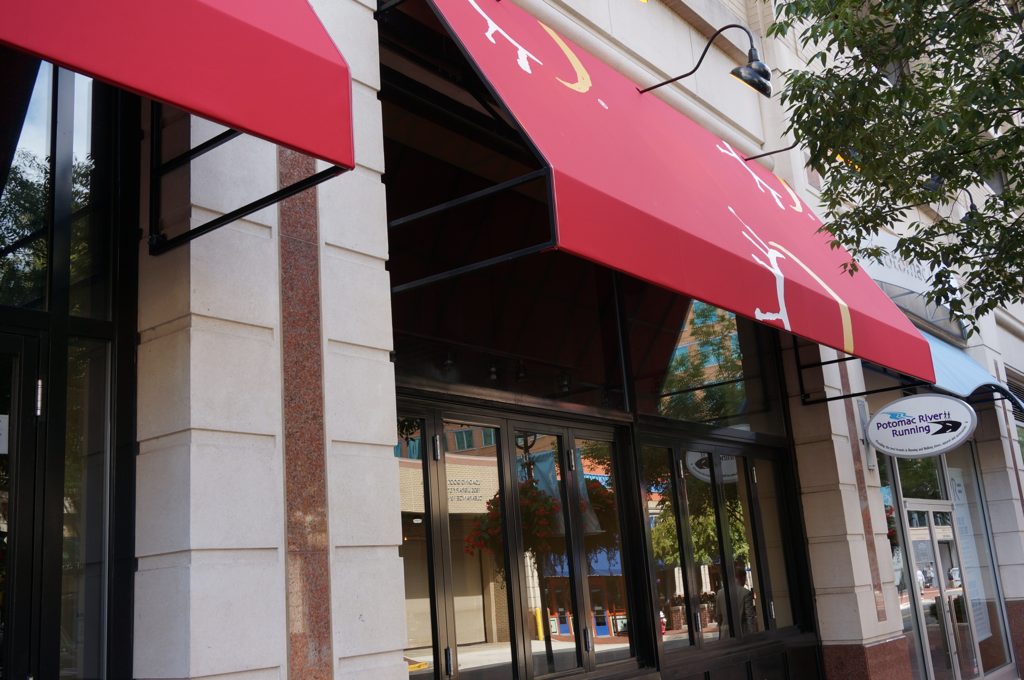
Fast-casual restaurant Cosi abruptly closed its doors at 11909 Democracy St. earlier this week.
While the restaurant’s manager said on Tuesday the store’s lease was coming to an end, the entire chain closed a large number of stores this week prior to filing Chapter 11 bankruptcy on Wednesday.
That means local issues, such as the lease terms and the paid parking that begins in January, probably were not the reason for the Reston closure. A branch in Arlington also closed Tuesday. The company says it is closing about half its 74 stores nationwide.
There are now several vacancies at Reston Town Center, which is relatively rare. Storefronts that used to hold Bebe and PR Barbers are vacant on Market Street. Salon Nordine recently closed (though a new tenant is set to take over).
The former location of Davelle Clothiers at 11904 Market St. is temporarily empty but will soon house FedEx, which will move from 11811 Freedom Dr. as the Freedeom Drive building prepares for redevelopment.
Cosi’s space is located next to PR Running at the base of one of RTC’s soon-to-be paid parking garages. What should open there now? Tell us in the comments.
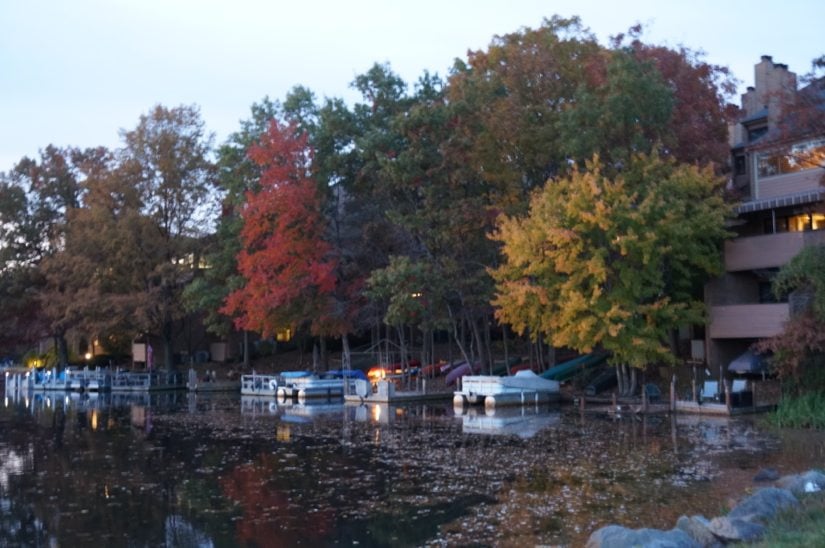
Yesterday was the first day of autumn.
In typical Northern Virginia fashion, that means its is warm enough for shorts, a few pools are still open and trees are all green.
Boots and pumpkin patches seem so far away right now. We thought of a few uniquely Reston things that say “a change of seasons” though. We’ll know fall when we see it. Take our poll and tell us your favorite sign.
