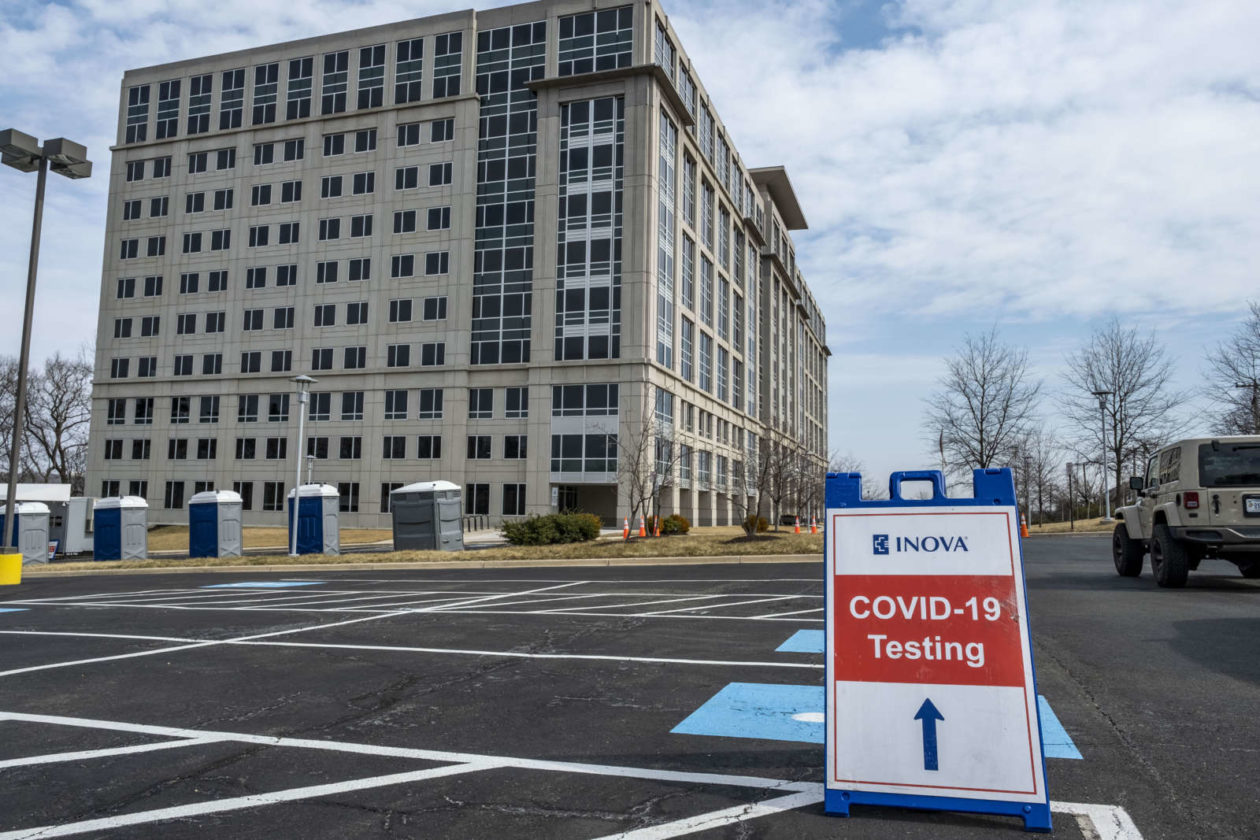

Fire Watch In Effect — A fire weather watch is in effect today from noon to 5 p.m. The National Weather Service notes that breezy winds, low humidity and dry conditions can cause fires to spread rapidly. [Ready Fairfax]
County 9-1-1 Service Officially Restored — The county’s 9-1-1 line is running smoothly again. Most of the day on Wednesday, call capacity was limited and callers experienced longer wait times. [Fairfax County Government]
The Top Ten Percent — Ten percent of Virginians are officially fully vaccinated and more than two million doses have been administered throughout the state, according to state data. Older adults have the most vaccine doses among age groups. [Reston Patch]
Metro Dodges Service Cuts — The passage of the American Recovery Plan will help Metro avert major service cuts and layoffs. However, the direct impact of the passage of the federal relief package is still unclear. Metro’s Board of Directors chairman notes that it is not yet known how much Metro will receive. [Washington Metropolitan Area Transit Authority]
Photo via vantagehill/Flickr
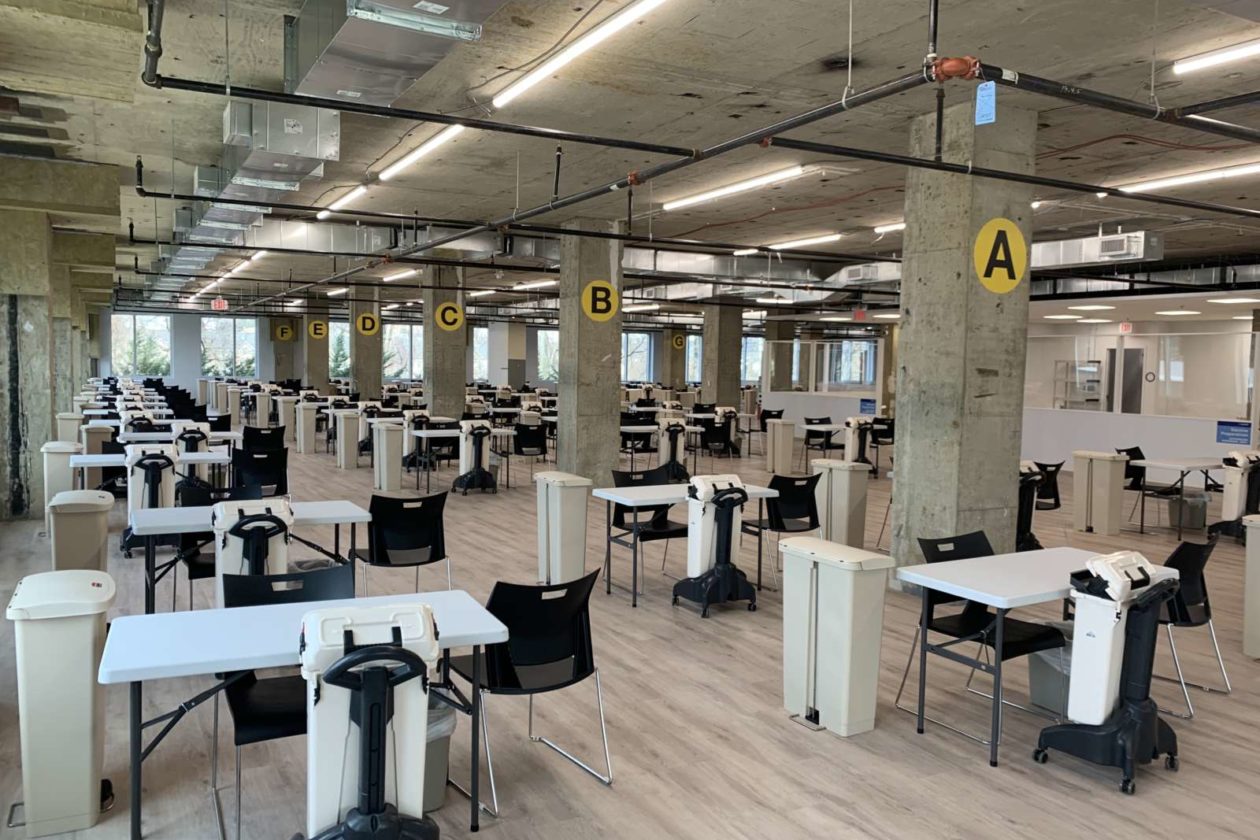
Fairfax County’s COVID-19 inoculation efforts are about to get a major boost in the form of a new mass vaccination site that’s expected to open by the end of March.
The county is collaborating with the City of Alexandria and Inova Health Systems to convert Alexandria’s Victory Center(5001 Eisenhower Avenue) into a mass vaccination center that could accommodate thousands of people looking to get the COVID-19 vaccine.
At a press conference yesterday (Tuesday), Inova President and CEO Dr. Stephen Jones said that, depending on the availability of supplies, the planned facility could enable the healthcare system to dispense 6,000 vaccine doses per day, doubling its current rate of roughly 3,000 doses a day.
“I feel a responsibility to get as many people vaccinated as possible,” Jones said.
Once it opens, the vaccination center will serve residents of Alexandria and Fairfax County. Eligible individuals must pre-register to get in line for an appointment either through the Fairfax County Health Department or, for non-county residents, the state registration system.
According to its website, Inova is currently assisting Fairfax County with eligible adults between the ages of 65 and 74, but it has also served essential workers, including Fairfax County Public Schools teachers.
While the pace of vaccinations continues to be limited by supply availability, Fairfax County Board of Supervisors Chairman Jeff McKay says the addition of the Victory Center as a vaccination site will ensure the county and Inova can keep up as more vaccines start to come in.
According to the county’s vaccine data dashboard, Fairfax County’s latest shipment from the Virginia Department of Health included 19,220 doses for the week of March 1-7, a step up from the 13,000 doses that the county was typically getting just a few weeks ago.
As of 5:30 p.m. yesterday, there were more than 106,000 people on the FCHD waitlist. 298,332 people have registered to get a COVID-19 vaccine through the county health department, which has allocated 217,476 doses either by administering them itself or distributing them to partners like Inova.
“We were told by the [state] to expect a major increase in doses in the coming weeks,” McKay said. “We want to have the infrastructure to take care of those doses. We can’t control the dosage, but what is in our control is capacity.”
Inova chose the Victory Center in Alexandria for its mass vaccine clinic because of the building’s size and proximity to local transit facilities, including the Van Dorn Street Metro station.
The accessibility of the COVID-19 vaccine has been a top concern for Fairfax County in recent weeks, as health officials say the populations most affected by the pandemic have faced more challenges in getting vaccinated, often due to vaccine hesitancy or limited access to transportation, internet, and other services.
The county has been working to expand its partnerships with other localities, healthcare providers, and community organizations to reach different communities, though the process has not been entirely conflict-free.
McKay encourages everyone who is eligible to get the vaccine to take advantage of any chance to do so.
“This is an act of necessary charity,” McKay said. “It’s not about us, but about every person we interact with, like grocery store workers, transit workers, your children and their teachers…This gives us a convenient opportunity to do the right thing.”
Vernon Miles contributed to this report.
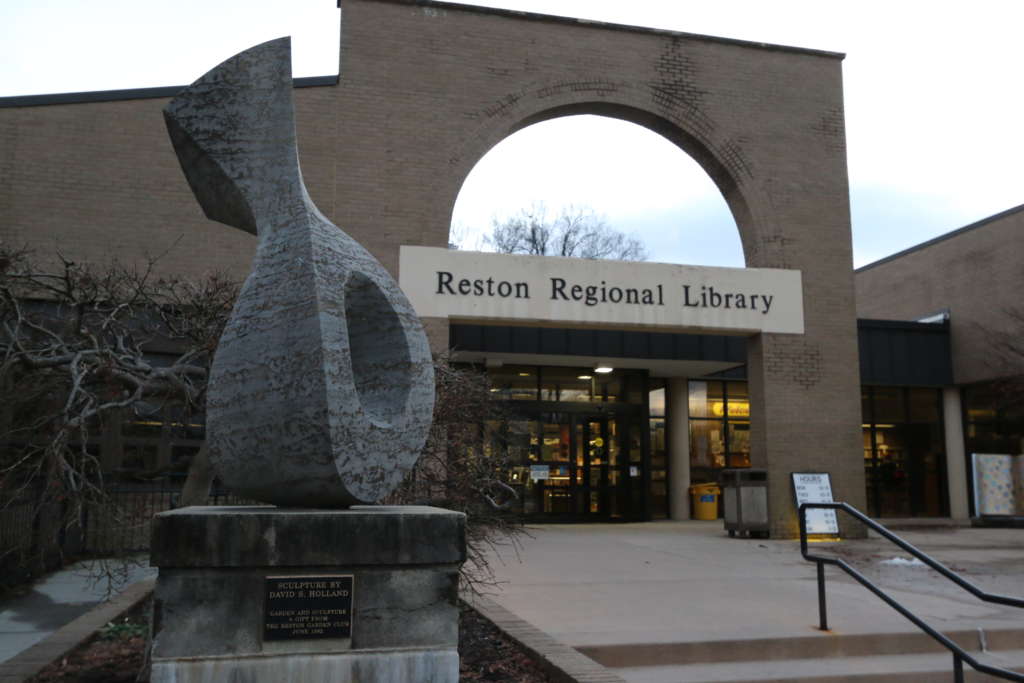
Beginning March 22, Fairfax County Public Library branches will reopen for indoor services.
But library patrons will only be able to visit FCPL branches for up to 30 minutes. Branches will open on Monday and Tuesday from 10 a.m. to 8 p.m. and from Wednesday through Saturday from 10 a.m. to 6 p.m.
The changes come after the system offered curbside and online services since mid-January.
Each branch will have capacity limits of up to 30 people for community branches and 60 people for regional branches. Customers over five must wear masks at all times.
The system will also institute a number of social distancing measures, including plexiglass shields, social distancing floor stickers, and limited furniture.
Book donations are not being accepted and returned library materials will be quarantined for 24 hours. Meeting rooms are unavailable.
Even as express services resume, curbside services will continue from 10 a.m. to 4 p.m. every day except Sunday.
Great news!! https://t.co/3eSGcwTDyR
— Supervisor Walter Alcorn (@WalterAlcornFFX) March 5, 2021
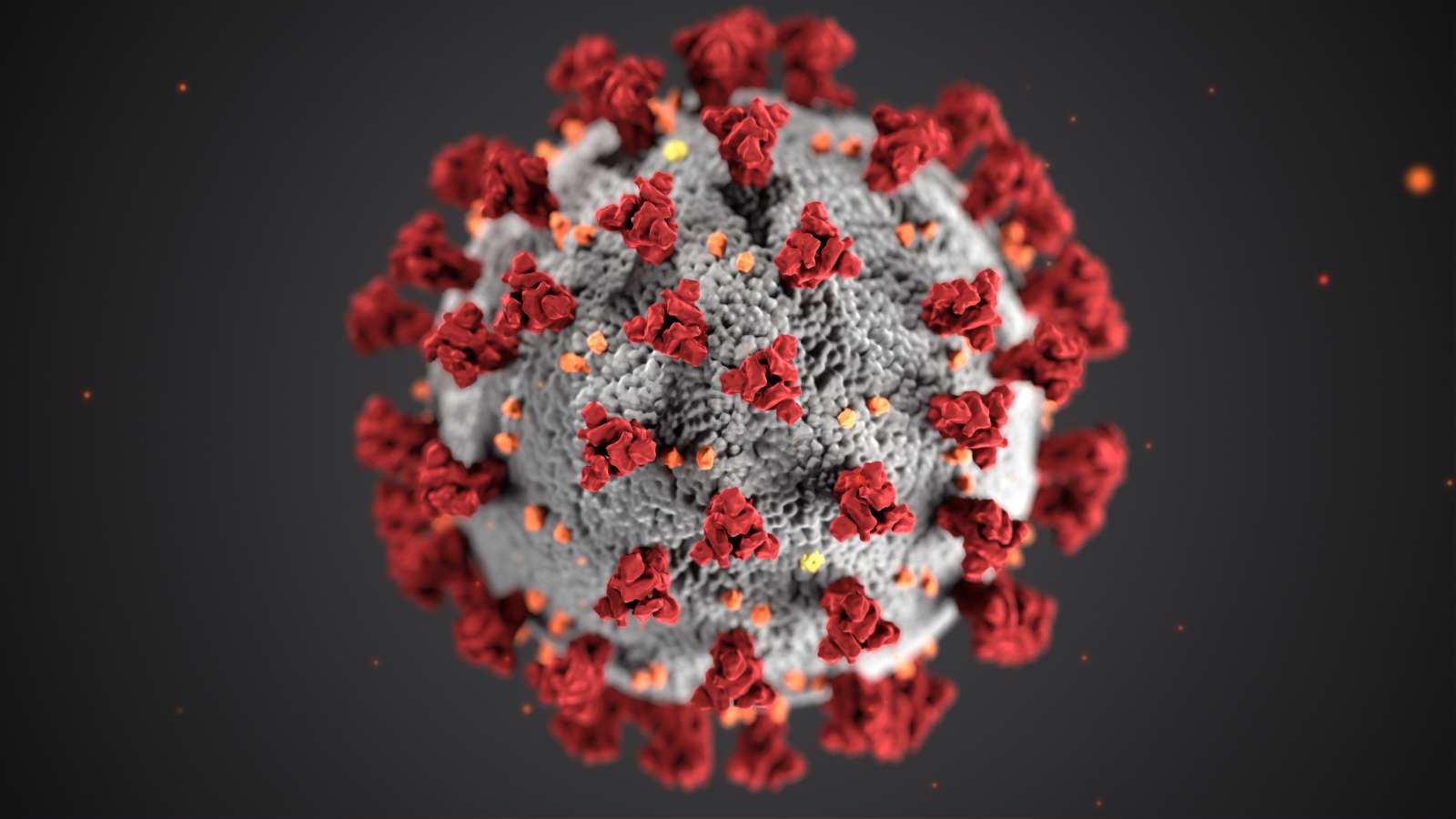
A year ago yesterday, Virginia’s first COVID-19 case was reported in Fort Belvoir when a U.S. Marine tested positive for the virus.
Since then, the Fairfax Health District has recorded 68,680 COVID-19 cases. The death toll now sits at 1,036 people, and 3,617 people have been hospitalized due to the novel coronavirus.
Still, in a hopeful trend, the COVID-19 case rate in Fairfax County has continued to fall after peaking on Jan. 17. Just today, the county reported 127 new cases today — a substantial dip from the all-time high of new cases — 1,485 in a single day — in January.
The weekly case average of reported cases has fallen to the lowest levels since Nov. 8 last year, when the weekly case average was 153. As of today, the weekly case average rested at 159.6.
The decrease comes as the Fairfax County Department of Health picks up its vaccination pace. After several weeks of scheduling for people who pre-registered on Jan. 18, the county has begun scheduling appointments for people who registered on Jan. 19.
Last week, the county vaccinated 21,791 people, a pace that is has remained relatively stable since vaccinations began earlier this year.
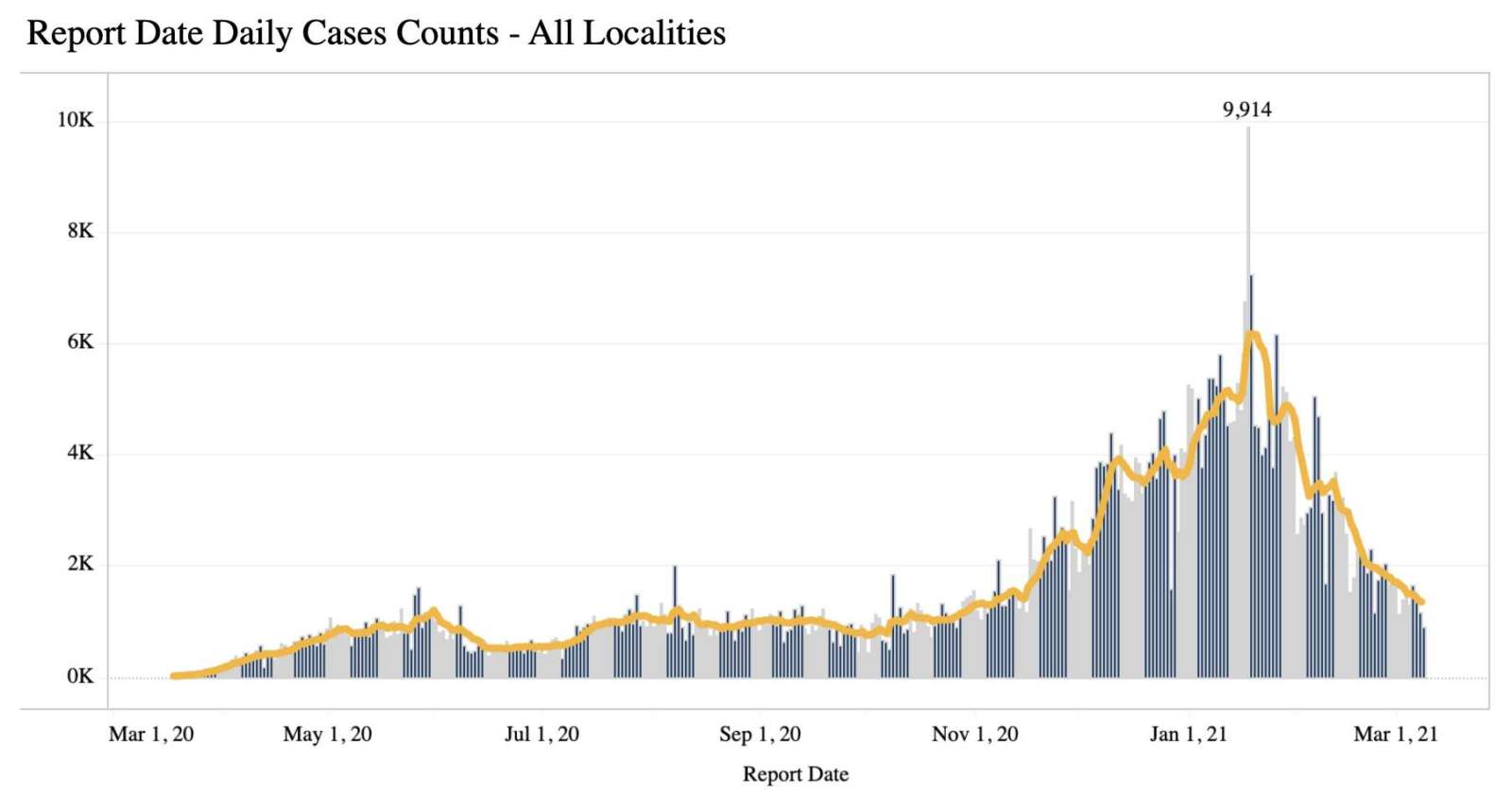
Still, 108,883 people — 37 percent of the total number of people registered — remain on the county’s waitlist. Overall, the county has received 193,742 doses from the Virginia Department of Health and administered or distributed 193,878 doses. 93,560 people in Fairfax County have been fully vaccinated, according to VDH data.
The county has currently only deployed the Pfizer and Moderna vaccines.
Local health officials are evaluating how many Johnson & Johnson doses it will receive, how doses will be allocated in clinics, and how much will be allocated to the county’s health partners. Last week, the state’s health department announced that it expects to receive 69,000 doses on a weekly basis.
Image via Unsplash
Silver Line Extension Could Open Early Next Year — Phase two of the Silver Line is expected to open in early 2022, according to Metro’s general manager. The announcement comes after the Metropolitan Washington Airports Authority said it will be ready to turn the project over to Metro by Labor Day weekend. [WJLA]
County Hires Health Care Support — The county is hiring substitute and relief counselors as part of its efforts to combat the COVID-19 pandemic and administer vaccines. [Fairfax County Government]
More Solar Panels Coming to County Schools — The Fairfax County School Board voted to install solar panels on a number of school buildings in order to limit greenhouse gas emissions and improve efficiency. The school system plans to begin the project at three schools and eventually phase out to 87 sites. [Fairfax County Public Schools]
Public Hearings on Metro Budget Begin — A number of budget hearings begins this week. Metro is facing a major budget shortfall due to a dip in ridership. [Washington Metropolitan Area Transit Authority]
Northam Reflects on One Year of COVID-19 — Families, friends and neighbors are mourning the more than 9,000 Virginians who died in the coronavirus pandemic over the past year, Gov. Ralph Northam said Sunday in a video. Many others have lost jobs, income, a sense of security and knowing what would happen next as lockdowns and the virus turned life upside down. [Reston Patch]
Photo via vantagehill/Flickr
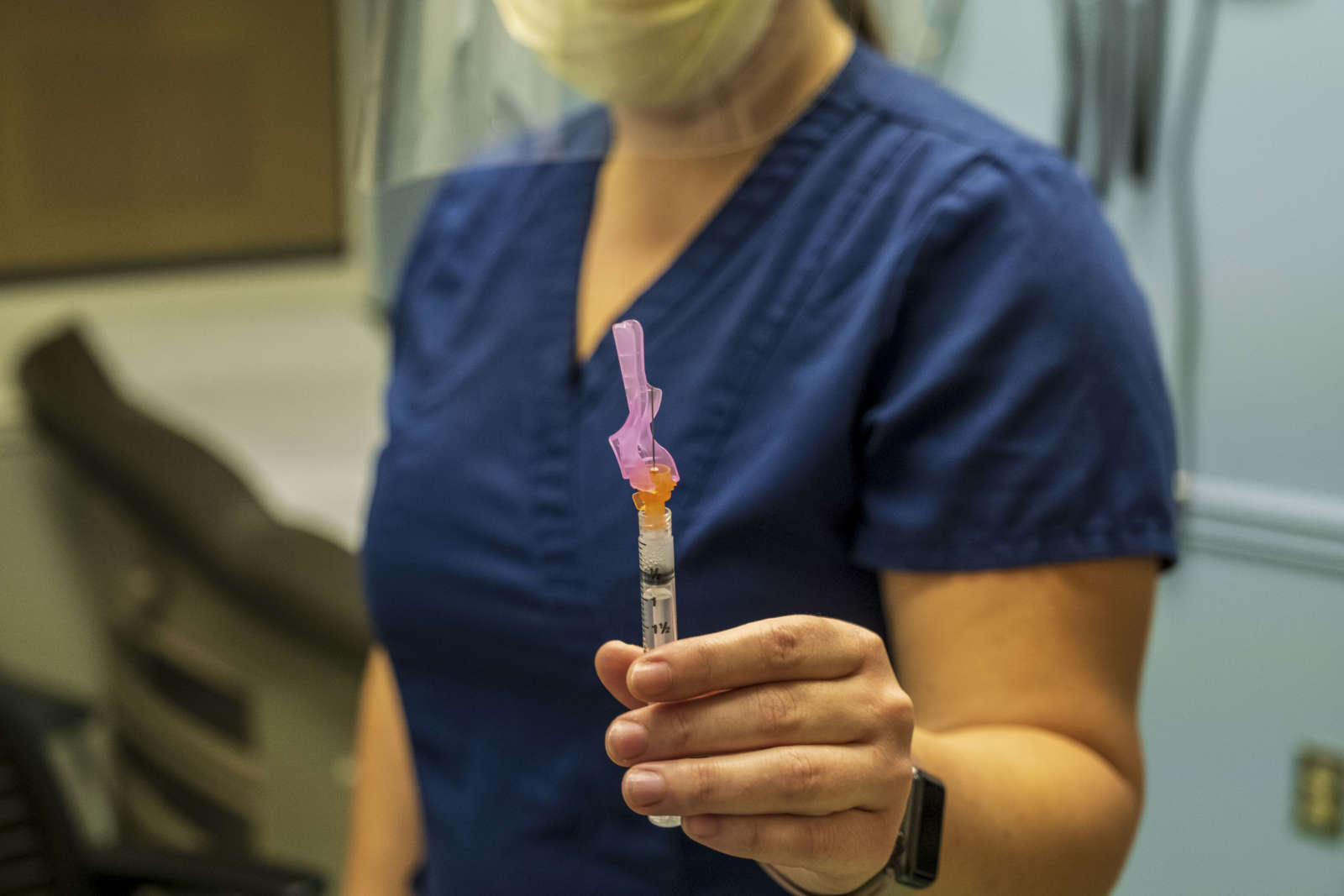
(Update: 10:45 a.m.) Thanks to federal and state partnerships, some local retail locations of CVS, Walgreens, Safeway, and Harris Teeter are all offering no-cost vaccine appointments separate from the county.
But appointments remain extremely hard to come by even as the one-dose Johnson & Johnson begins to roll out. Demand far exceeds supply.
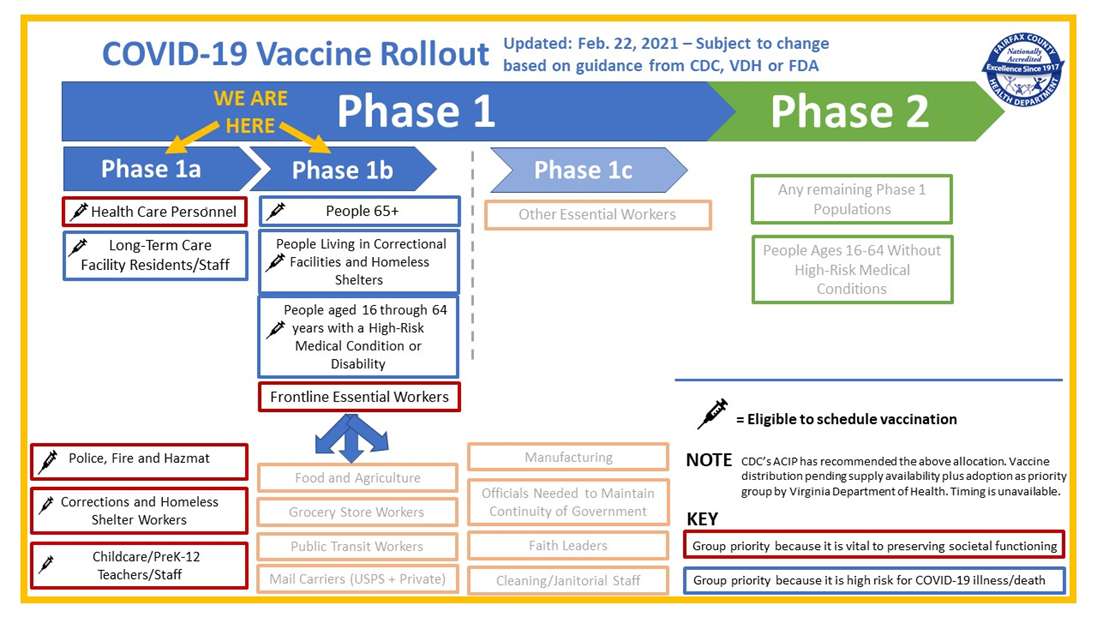
Virginia is currently in Phase 1b, meaning those 65 or over and those with 16 to 64 with underlying medical conditions are eligible to receive the vaccine.
The Virginia Health Department tells Reston Now that more than 80,000 doses are being given to retail pharmacies state-wide for distribution, an increase from last month.
The 69,000 J&J vaccine doses announced last week started coming in yesterday, VDH confirms, and clinics across the state are expecting to start using it today (March 5).
VDH also says that they’ve directed retail pharmacies to “prioritize” those 65 and over to “make significant progress in vaccinating that vulnerable population.” All of this provides hope that more vaccines and more appointments will soon become available for those that are eligible.
Early last month, CVS began offering vaccine appointments at its local stores.
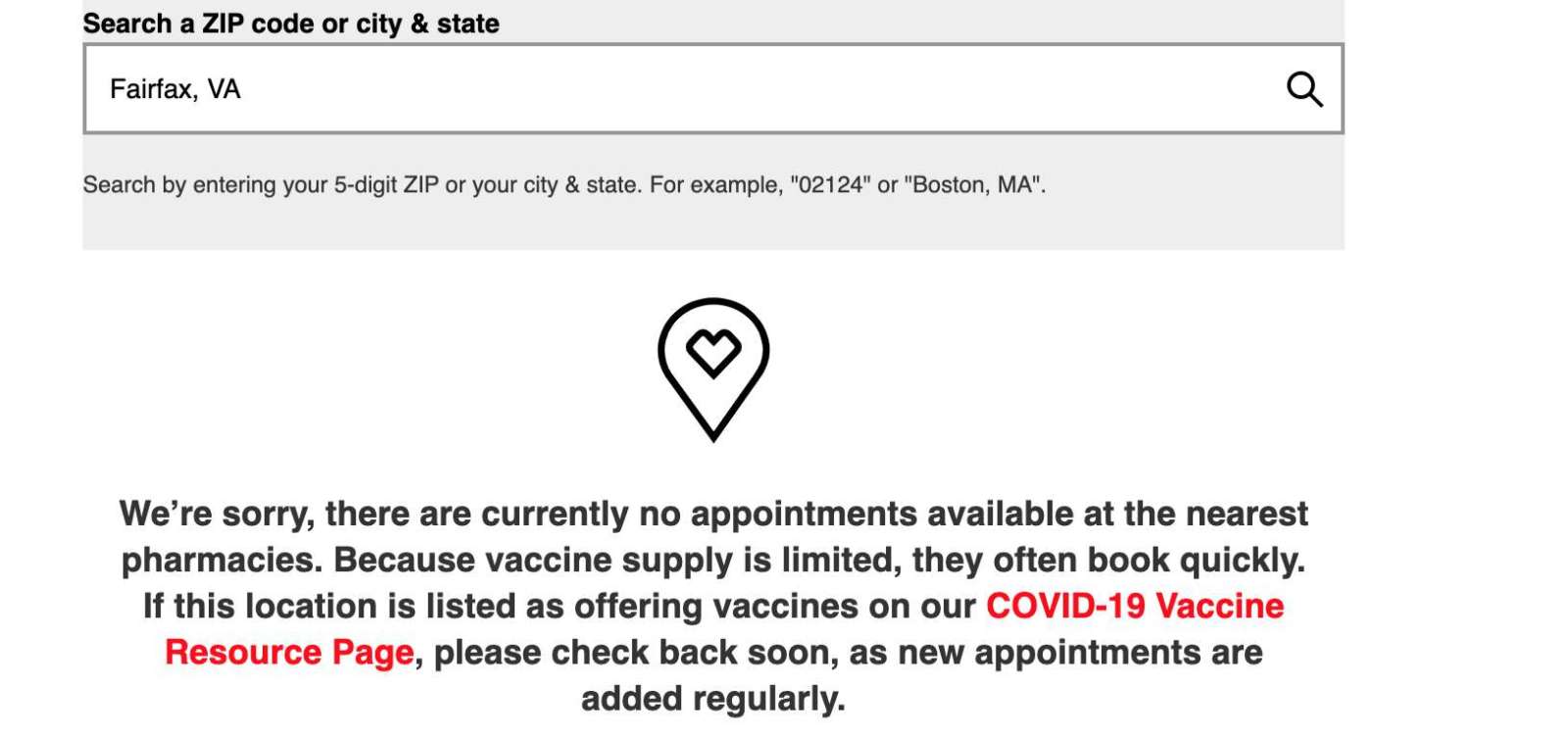
Currently, 41 CVS pharmacies are offering the vaccine in Virginia with appointments booked through their website. But that includes only one location in Fairfax County. The location is in Fairfax, but is listed with no exact address.
CVS spokesperson Amy Thibault tells Reston Now there are roughly 41,580 appointments per week available at the 41 locations statewide. Most of them are using the Moderna vaccine. Basic math says that’s about 1,000 appointments per store per week.
However, as of March 4, all appointments are booked at that one Fairfax location.
“In most (if not all) states, the number of individuals who are eligible to receive the vaccine under the state’s rules far outnumber the state’s available doses,” she says.
Currently, in Fairfax County, more than 100,000 people remain on the county’s waitlist. About 183,000 county residents have already been vaccinated.
Thibault confirmed that CVS is receiving a “one-time allocation” of 212,000 doses of the Johnson & Johnson vaccine this week which will be spread across their stores in 17 states. Scheduling for that began yesterday (March 4) on the CVS website and administrating begins today (March 5).
She says that CVS has the capacity to administer 20 to 25 million doses a month nationwide, assuming there’s an adequate supply of not only the vaccine but also supplies.
At the other retail pharmacies offering vaccines in Fairfax County, challenges are similar.
Safeway, and its parent company Albertsons, are also offering appointments to those 65 and over. According to their online scheduler, the one-dose Johnson & Johnson vaccine is also now being offered.
Locations in the county include one on Elden Street in Herndon, South Lakes Drive in Reston, Georgetown Pike in Great Falls, and West Ox Road in Fairfax.
So far, no appointments are currently available at least through March 13 at any locations.
“Store supply is based on allocations from state and local health departments. New appointments are added to the online scheduler as more vaccine become available,” writes Andrew Whelan, Albertsons spokesperson, to Reston Now. “Demand is high and appointments are often claimed very quickly. As dose allocations increase, so too will the opportunity to secure an appointment.”
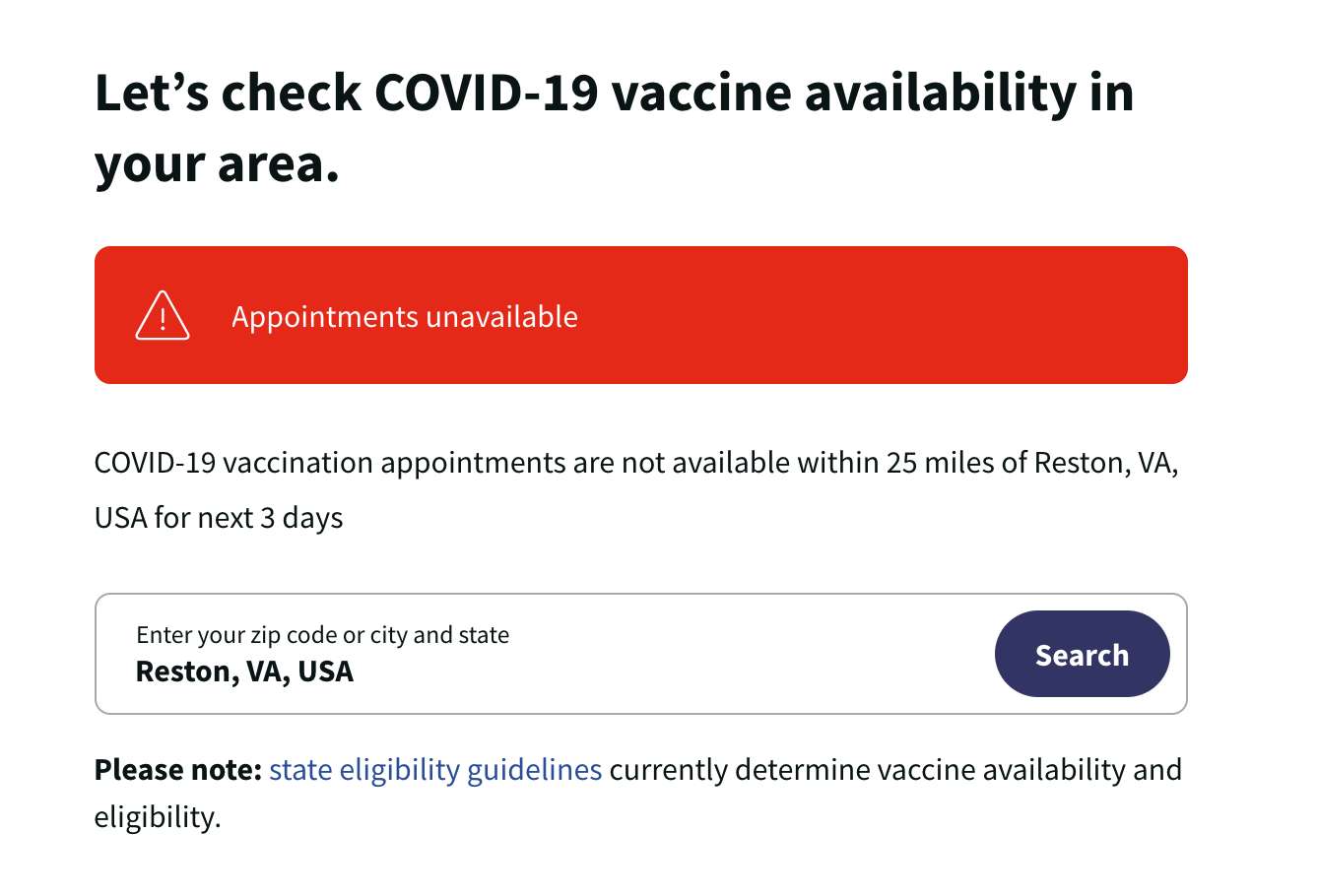
Walgreens announced their participation in the federal partnership and started administering vaccines in Virginia. But, at least as of March 4, there are no appointments available within 25 miles of Reston, Fairfax, or Tysons.
Harris Teeter’s website notes that they were to start distributing vaccines this week in Virginia, but a company spokesperson writes to Reston Now that this hasn’t happened yet.
“Harris Teeter is expected to receive limited quantities of the vaccines soon at nine pharmacies in and around Northern Virginia… appointments will be released as vaccine allocations arrive.”
Giant has taken another approach. Instead of creating its own appointment system, the grocery chain is using the vaccine supply allocated to them by the federal government to help the Fairfax County Health Department vaccinate their waitlist.
“People invited from the queue will be able to select from several Giant locations within the Fairfax Health District,” reads the health department’s blog. “Locations and details will be included in the appointment scheduler email.”
Updated at 5:30 p.m. — Inova Health Systems does not conduct credit checks when people looking to schedule a COVID-19 vaccine appointment create an account on its MyChart patient portal, a spokesperson told Tysons Reporter, Reston Now’s affiliate site.
The spokesperson clarified that Inova does an identity verfication check to ensure that patient information is accurate since the healthcare system is working off of the Fairfax County Health Department’s registration queue.
Inova also says that people have the option to upload a photo of their health insurance card, but it is not required to create a MyChart account.
“There’s nothing more important to us than vaccinating as many people as possible, but we need to make sure we’re doing so in a safe, reliable, and secure way,” Inova Chief Communications Officer Tracey Schroeder said, noting that Inova has administered a total of over 186,000 COVID-19 vaccine shots.
Inova says MyChart gives it a way to confirm patient identities and report data on COVID-19 vaccinations to the Virginia Department of Health as required by the state.
Earlier: While Fairfax County has smoothed out many of the issues that plagued the early rollout of its COVID-19 vaccine registration system, frustrations have now emerged around a key partner in the county’s vaccination efforts: the Inova Health System.
Eligible Fairfax County residents can get in line for a vaccine appointment with Inova by pre-registering through the county’s health department, but to actually schedule the appointment, the healthcare system requires that individuals create an account for its MyChart patient portal, a process that county leaders say is overly demanding in the type of information people are expected to provide.
During a health and human services committee meeting on Tuesday (Mar. 2), the Fairfax County Board of Supervisors urged county staff to work with Inova to address concerns about its scheduling process, which Providence District Supervisor Dalia Palchik said seems to be “a bit more intrusive in their questions.”
“If you go through the county, it’s a beautiful process at this point. If you go through Inova, it is very troubling,” Dranesville District Supervisor John Foust said. “Some people are refusing to go through that process, and that just puts it back on our health department to try to figure out what to do with those people, so something needs to be done.”
To create a MyChart account, users must undergo a credit check and upload a photo of their health insurance card, which could be challenging for people who don’t have a smartphone or are inexperienced with using that technology. (Correction: Inova says that it conducts a patient identity check, not a credit check, and that the option to upload a photo of a health insurance card is not mandatory)
The sign-up form also asks for the last four digits of the applicant’s social security number, though an astrisked note clarifies that it is not required.
According to Inova, this information is requested to verify patients’ identities, and it has no impact on a person’s insurance or credit score.
“MyChart provides for a more reliable registration system and a more consistent patient/user experience,” Inova said in a statement to Tysons Reporter. “Use of MyChart helps us to better manage appointments, vaccine supply, and to provide more accurate data to the Health Department. It also enables same day scheduling — which the health department’s system does not — so if there are cancellations, someone can fill that vacant slot.”
Inova says it has been modifying the registration and scheduling process based on user feedback.
“Maintaining a positive patient experience is important to us,” Inova said. “We’ve been listening to feedback and making changes to streamline the registration process while also balancing the imperative to verify patient identify and protect personal medical information.”
The Fairfax County Health Department confirmed that it is working with Inova to resolve these concerns.
Inova is currently assisting the county in vaccinating residents between the ages of 65 and 74. The healthcare system has also hosted clinics for eligible essential workers, including public school teachers and staff, and emergency first responders.
The county health department has emphasized that people should not let questions about health insurance deter them from getting vaccinated, stating that the COVID-19 vaccines are free but some providers will ask for the information in order to collect administrative fees from the insurance company.
Fairfax County leaders fear that confusion and privacy concerns stemming from the registration and scheduling process could make administering the COVID-19 vaccine more difficult.
“We are already hearing from people that proof of medical insurance or proof of residency or citizenship are being required,” Board of Supervisors Chairman Jeff McKay said at Tuesday’s committee meeting. “Frankly, my opinion is we shouldn’t be partnering with folks who have to do that deep of a probe or else we’re building even more hesitancy problems in the future.”
Photo via Google Maps

Hispanic residents of Fairfax County are seven times more likely to die from COVID-19 than their white, non-Hispanic counterparts when adjusted for variations in age, county data suggests.
Fairfax County Director of Epidemiology and Population Health Dr. Benjamin Schwartz reported that sobering trend to the Fairfax County Board of Supervisors during its health and human services committee meeting yesterday (Tuesday) as part of a broad overview of the county’s efforts to implement an equity-focused strategy to distribute COVID-19 vaccines.
Knowing that the pandemic has disproportionately affected communities of color, especially Black, indigenous, and Latino people, Fairfax County staff calculated the relative risk levels for infection, hospitalization, and death faced by different races and ethnicities, using white, non-Hispanic individuals as the control group.
According to the county, the results show that the risk of contracting COVID-19 is 1.8 times greater for Black people than for white people and four times greater for Latino or Hispanic people, who are also seven times more at risk of hospitalization.
In Fairfax County, Black people are being hospitalized at more than three times the rate of white people and are almost three times as likely to die from the disease.

Schwartz says the data focuses on community transmission, excluding long-term care facilities, and it has been adjusted for age, meaning it eliminates variances in age across different populations. It shows, for instance, that Latinos are more likely to die from or be hospitalized by COVID-19, even though the county’s Latino population is generally younger and older people are considered more at risk.
“This really highlights the social, economic, and medical risk factors pertaining to different groups in our county,” Schwartz said, mentioning large households, exposures through work, and underlying health conditions among the factors that have made some populations more vulnerable to COVID-19.
Fairfax County Chief Equity Officer Karla Bruce says the county is utilizing its COVID-19 Vulnerability Index as well as data showing the disease’s spread to identify areas that need a targeted approach for vaccine outreach and distribution, often because residents have limited access to medical care, transportation, and other public services.
“There are a lot of intersecting factors which are preventing people’s access to resources or access to the vaccine,” Bruce said. “So, we want to understand and look at how we might be better able to connect people to what will enable them to then connect to the vaccine.”
The county has been working with different community partners, including nonprofits and faith-based organizations, not only to counter vaccine hesitancy with education and trust-building, but also to identify people who are currently eligible to get vaccinated and register them for an appointment.
To improve the accessibility of the vaccine, the Fairfax County Health Department has been developing a network of community-based partner clinics that is expected to grow in the coming weeks, as seen in the slide below:
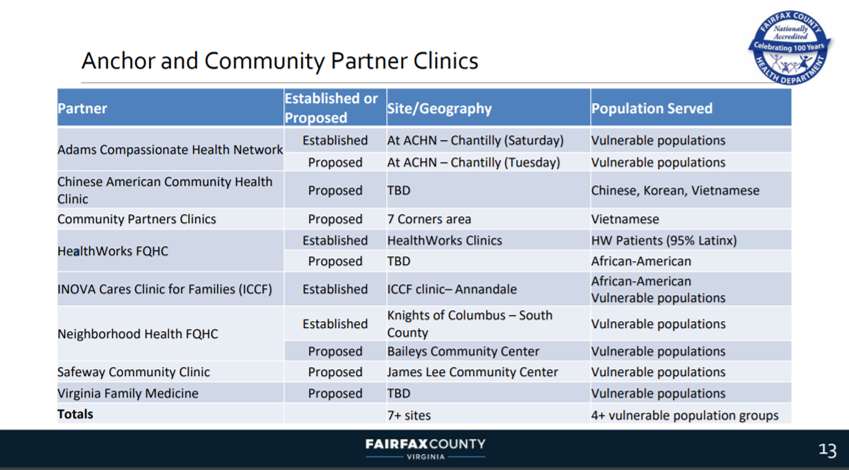
Schwartz says the Neighborhood Health federally qualified health center at the Bailey’s Community Center and the Safeway community clinic at the James Lee Community Center in Falls Church will start administering vaccinations this coming weekend.
The health department is also looking at sites in Lorton, Springfield, and Centreville, but the agreements are still being finalized.
“It will take a couple of weeks to have our clinics established, to confirm medical and non-medical staff for those clinics, and to get into a rhythm with the vaccinations,” Schwartz said. “But we are anticipating making substantial progress to reduce disparities in who receives vaccination in the county.”
Photo via Fairfax County, slides via Fairfax County Health Department (1, 2)
Residents Can Remove Themselves from County Waitlist — The county has launched a new online tool that allows residents to remove themselves from the county’s vaccine registration waitlist. [Fairfax County Government]
Herndon Police Investigate Series of Car Robberies — In the last week of February, the Herndon Police Department received reports of 15 vehicles being entered illegally. In these cases, only one vehicle showed signs of forced entry. [HPD]
Reston Association Board Election is Underway — This year, four candidates are vying for two at-large seats on the board. Each spring, the organization conducts elections to fill vacant seats on its nine-member board. [Reston Patch]
Photo by Doug Errett/Twitter

Approving a new calendar for the coming school year is typically one of the more routine duties administered by the Fairfax County School Board, but this time, it has become another decision complicated by competing priorities and added stakes.
The board will hold a work session at 11 a.m. today (Tuesday) to discuss proposals for the 2021-2022 school year calendar that would add four religious observance holidays not included in the current school calendar: Rosh Hashanah (Sept. 7, 2021), Yom Kippur (Sept. 16, 2021), Diwali (Nov. 4, 2021), and Eid al Fitr (May 3, 2022).
Faith organizations representing Muslim, Jewish, Hindu, and Sikh communities in the D.C. area have been advocating for Fairfax County Public Schools to recognize those holidays for years, an effort that began gaining traction in 2019 when the school board first convened a Religious Observance Task Force to advise the district on how it could better serve students of different faiths.
With input from the task force, a committee charged with developing the school year calendar released two drafts last June that both incorporated the proposed new holidays.
However, when the school board met on Feb. 2 to discuss the issue, FCPS presented a third draft that did not include the holidays, as some school board members expressed reservations about having more school closures after a year of the COVID-19 pandemic disrupting learning or making it more difficult for many students, among other concerns.
The religious groups involved in the task force — including the All Dulles Area Muslim Society (ADAMS), the Durga Temple of Virginia, Hindu American Foundation, McLean Islamic Center, Northern Virginia Hebrew Congregation, Sikh Foundation of Virginia, and the Jewish Community Relations Council of Greater Washington (JCRC) — expressed “deep disappointment” in the new turn of events in a letter sent to the school board on Feb. 9.
Disputing the idea that closing schools on four extra days would significantly affect FCPS’ ability to address learning losses, the task force criticized the board for not notifying them or the public about the new proposed draft calendar. They also noted that other jurisidictions in Northern Virginia, including Arlington, Prince William, and Loudoun counties, already recognize some or all of the holidays in question.
“We are troubled that FCPS’ natural progression to a more inclusive understanding of equity and diversity now stands to be thwarted,” the groups said. “We urge you not to obstruct or delay progress, but rather to move forward with confidence and conviction.”
As of Mar. 1, 269 current FCPS students had signed a petition from JCRC calling for the school board to add the religious holidays.
The school board will vote to officially adopt a calendar for the next school year on Mar. 16.
Photo via Sandeep Kr Yadav on Unsplash
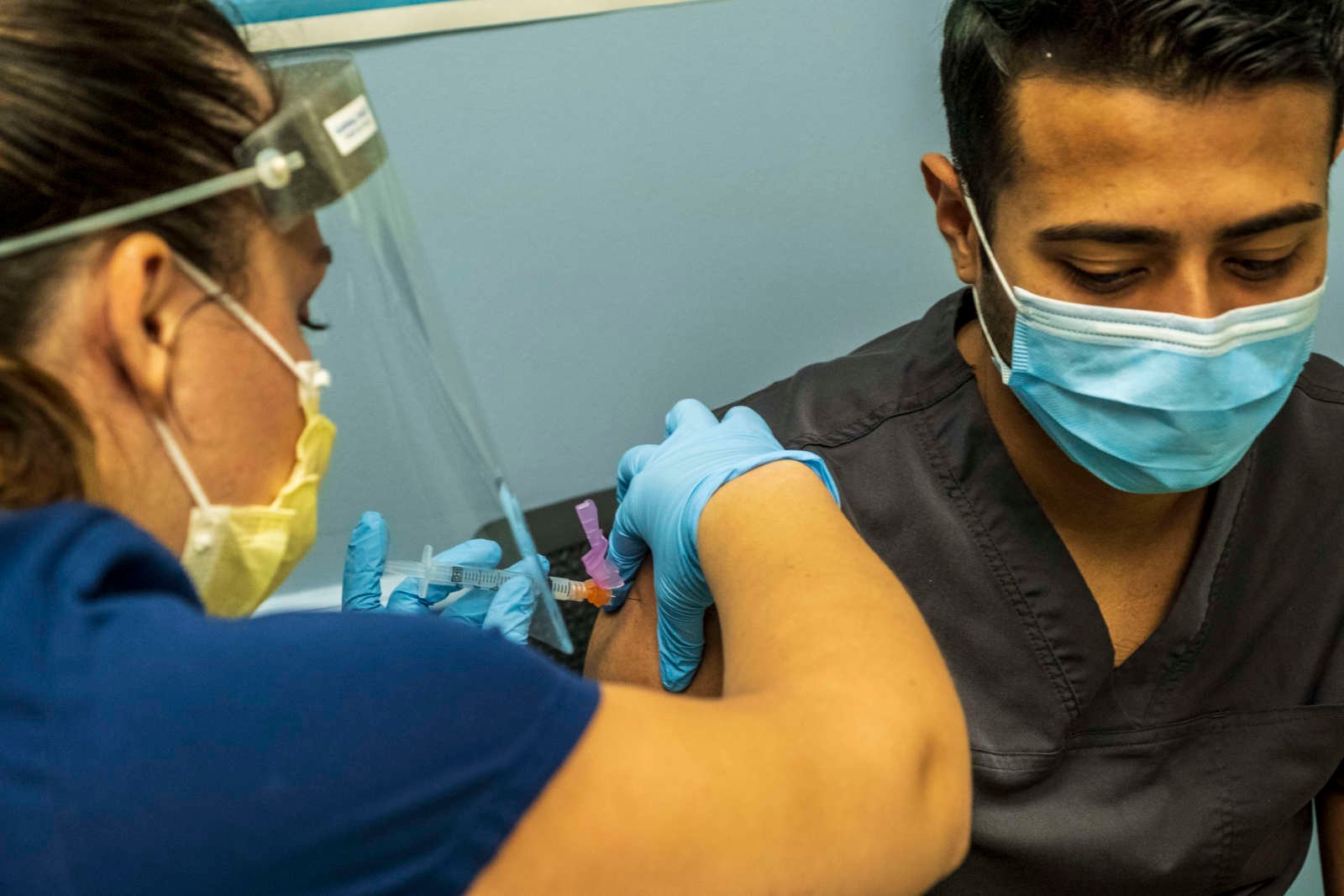
The Fairfax County Health Department has completed sending out vaccine appointment invitations to 42,000 eligible residents who signed up on Jan. 18 and are now hopeful they’ll be able set up appointments at a faster clip.
“Now that we have got thru [Jan. 18 registrations], we anticipate that we will move more quickly through the other dates,” Tina Dale, a spokesperson for the Fairfax County Health Department, writes Reston Now. “In addition, we are working with more vaccination partners, so this, too, will assist us in moving through our registration list faster.”
If residents registered on Jan. 18 or before and have not received an invite, Dale says they should check their spam folder. If there’s no email with the subject line “Schedule Appointment,” residents should call the COVID-19 Vaccine hotline at 703-324-7404 and a call taker should be able to assist.
The county’s dashboard now says they are currently making appointments for those who registered on Jan. 19.
Six weeks ago, the county first allowed residents who qualified for Phase 1b to register for COVID-19 vaccine appointments. Phase 1b includes residents 65 years old and over and those 16 to 64 with underlying medical conditions.
On that first day when vaccine appointments opened to those in Phase 1b, Jan. 18, more than 42,000 eligible signed up and registered – far exceeding another other day.
In fact, as the dashboard shows, the 42,000 registrations on Jan. 18 alone were approximately the same number of combined registrations over the next four days.
The county acknowledged that sending everyone an invitation to schedule a vaccine appointment who signed up on Jan. 18 would take “several weeks.”
Nearly 94,000 residents remain on the waitlist, which means they are awaiting an invitation to schedule an appointment.
The county says they don’t have an estimated timeline for when those remaining 94,000 people will be sent an invitation to sign up for a vaccine appointment or when the county will move to sign up those in Phase 1c for appointments.
However, the Virginia Department of Health expects the vaccine supply to increase over the next two months, says Dale, and the Commonwealth has said they expect to get through all of those who are eligible and want the vaccine in Phase 1b by mid to late April.
Essentially, demand still far outweighs supply – a continued issue since the vaccine first started being distributed in December.
Overall, about 176,700 residents have been vaccinated in Fairfax County, which represents just over 15% of the total population in the county.
That’s comparable to Virginia and the country as a whole, which has vaccinated about 16% and 15% (respectively) of the population according to the Washington Post.
Additionally, on Friday, the county acknowledged that there issues with about 2,800 registrations “not being correctly captured in the system due to technical errors.”
Dale says that these registrations have been corrected and were a result of a combination of issues, including both “user error and system error.”
Since then, the county has added new features to the registration to reduce the possibility of user error, like providing two fields for email addresses and limiting the number of characters for phone number and zip code.
The county is also asking people to review the spelling of their names and email addresses as well as ensure their date of birth is accurate to make sure there are no errors.
Voting Underway for Reston Association Election — Members of RA can now cast their ballots for the 2021 board race. Voting will remain open until April 2 at 5 p.m. [RA]
Large Metal Object Found in Lake Audubon — A contractor plans to remove debris from Lake Audubon as soon as possible. A barge crew and diver are expected to retrieve and dispose of the metal object later this week. [RA]
Transportation to Vaccine Appointments Offered in Fairfax County — The county’s Department of Neighborhood and Community Services has subsidized a taxi voucher program for seniors and other residents seeking to receive a vaccine. Other community organizations are also offering transportation services. [Reston Patch]
Photo by Marjorie Copson

Metro’s Board of Directors is still proceeding as if the Silver Line Phase II will open this year, but a public survey is asking riders to weigh in on drastic service cuts, including closing the newly-opened Phase II stations in Janurary 22.
Last week, Metro announced that the public comment period for its 2022 fiscal year budget has officially opened.
As part of that, they’re asking riders to fill out a survey about what extreme service cuts they’d be willing to tolerate beginning on Jan. 1, 2022 if additional federal money is not available.
In these options is a question about the closing of 22 stations across the entire system, including two Silver Line stations – McLean and Greensboro – and three potentially newly-opened Silver Line Phase II stations – Innovation Station, Loudoun Gateway, and Reston Town Center.
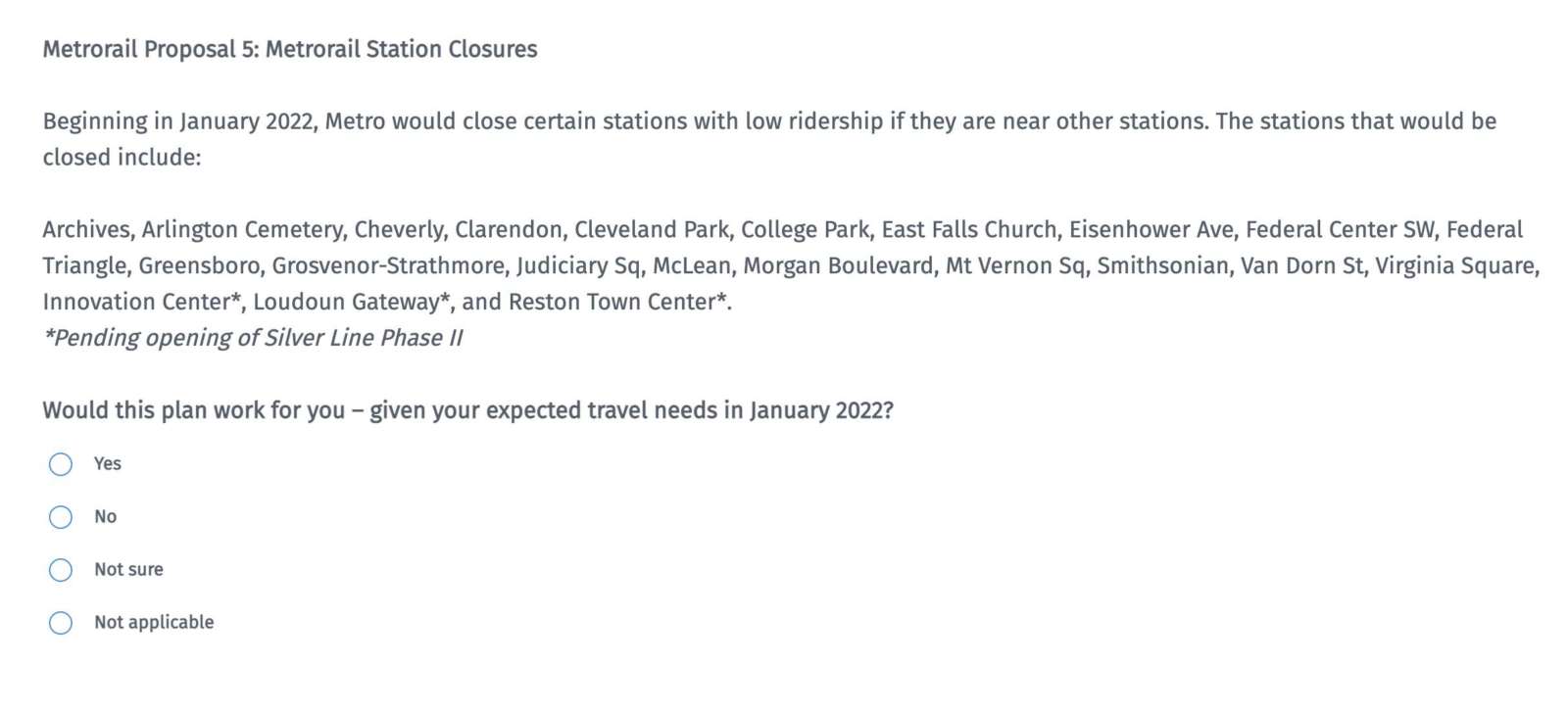
Although the 2021 budget says that Phase II could open July 1, 2021, it could be delayed until, at the earliest, the fall.
At last week’s budget work session, an tentative estimate was noted as early November.
A Metro spokesperson tells Reston Now there’s “no clear answer yet” about an opening date, however the Metro Board has to proceed as if it will open in 2021 in order to pass the 2022 budget.
“The Board will take all public feedback into consideration before approving a final budget for FY22,” writes the spokesperson.
So, it is possible that the Silver Line Phase II could open this year, only for the stations to close a few months later due to the budget shortfall.
Complicating the situation is that Silver Line Phase II and the proposed drastic service cuts are essentially on two different timelines.
Earlier this month, Metro’s staff presented an update on 18 different safety and operational issues previously noted in December.
Of those 18, 17 were still in the midst of being resolved or remained unresolved. They range from maintenance issues with the station platform pavers to several thousand damaged track fasteners that need replacing to cracked third rail insulators.
The Metro spokesperson confirms that resolving these safety and operational issues have a greater impact on the timeline for the opening of the Silver Line Phase II than the budget shortfall in 2022.
In fact, Metro’s funding for Phase II construction hasn’t really been impacted by Metro’s overall financial woes.
“The Metro board has not done anything to delay the opening of Phase II as a matter of Metro policy or budget policy,”Metro Board of Supervisors member Matt Letourneau told Reston Now in January. “Thus far the position of the Metro board has been whenever the project is…. deemed acceptable and safe, and gone through testing, we should open it.”
That’s not to say that the Silver Line Phase II won’t cost Metro money that needs to be accounted for in the 2022 budget.
At last week’s work session, it was noted that operating costs for Phase II are about $120 million annually, or $10 million a month.
If it is delayed to November 2021 due to safety and operational issues, that would save Metro about $40 million.
However, retention costs like security and ongoing maintenance are $28.5 million annually or about $2.38 million a month — even if the stations and trains are not running and operational.
In the end, if Silver Line Phase II does not open in early November and gets delayed until additional federal funding does come through, it could save Metro about $7.5 million a month.
Metro is continuing to plan the 2022 budget under the prospect that they will not receive additional federal funding, though.
The most recent coronavirus relief package provided Metro more than $600 million in federal funds. That funding, notes Metro, helped avoid layoffs and provide essential services.
But even with that funding and other austerity measures, “there is not enough money to fill the entire budget gap for the fiscal year that begins July 1, 2021,” Metro’s press release reads.
Hence, the potential need to close 22 stations, including the possibly-just-opened Silver Line Phase II stations.
Among the other options for service cuts asked in the survey is closing Metrorail every day at 9 p.m. and trains arriving only every 30 minutes at most stations.
Metro is asking riders to fill out the survey by Tuesday, March 16 at 5 p.m.
There’s a decent chance, however, that these worries over closing stations on Jan 1, 2022 could become moot.
President Biden’s $1.9 trillion stimulus plan has $20 billion earmarked for public transit agencies.
At this time, however, it remains unclear how much would go to Metro if the plan does pass in Congress.
Photo courtesy Metropolitan Washington Airports Authority
COVID-19 Partners Expand in Fairfax Health District — “Giant Pharmacy and MyDr.’s Pharmacy have joined the list of vaccination partners who are assisting the Health Department in its efforts to vaccinate eligible individuals in its queue… All vaccinations occur by appointment only, there are no walk-ins.” [Fairfax County Government]
First Case of COVID-19 Variant Identified in Virginia — “The Virginia Department of Health (VDH) today announced that the first case of the SARS-CoV-2 variant B.1.1.7 has been identified in a sample from an adult resident of Central Virginia who had no history of travel during the exposure period. The B.1.1.7 variant, which first emerged in the United Kingdom in late 2020, is associated with increased person-to-person transmission of COVID-19.” [Virginia Department of Health]
Phone Issues Reported in Town of Herndon — Some of the town’s phone lines are experiencing issues. Anyone with non-emergency police needs should call 703-437-118. [Herndon Police Department]
Deadline for Reston Association Assessments Approaches — Members have until March 1 to pay their assessment fee payments. RA encourages members to make their payments online by credit card, over the phone or by mail in order to avoid late fees. [RA]
Photo via vantagehill/Flickr
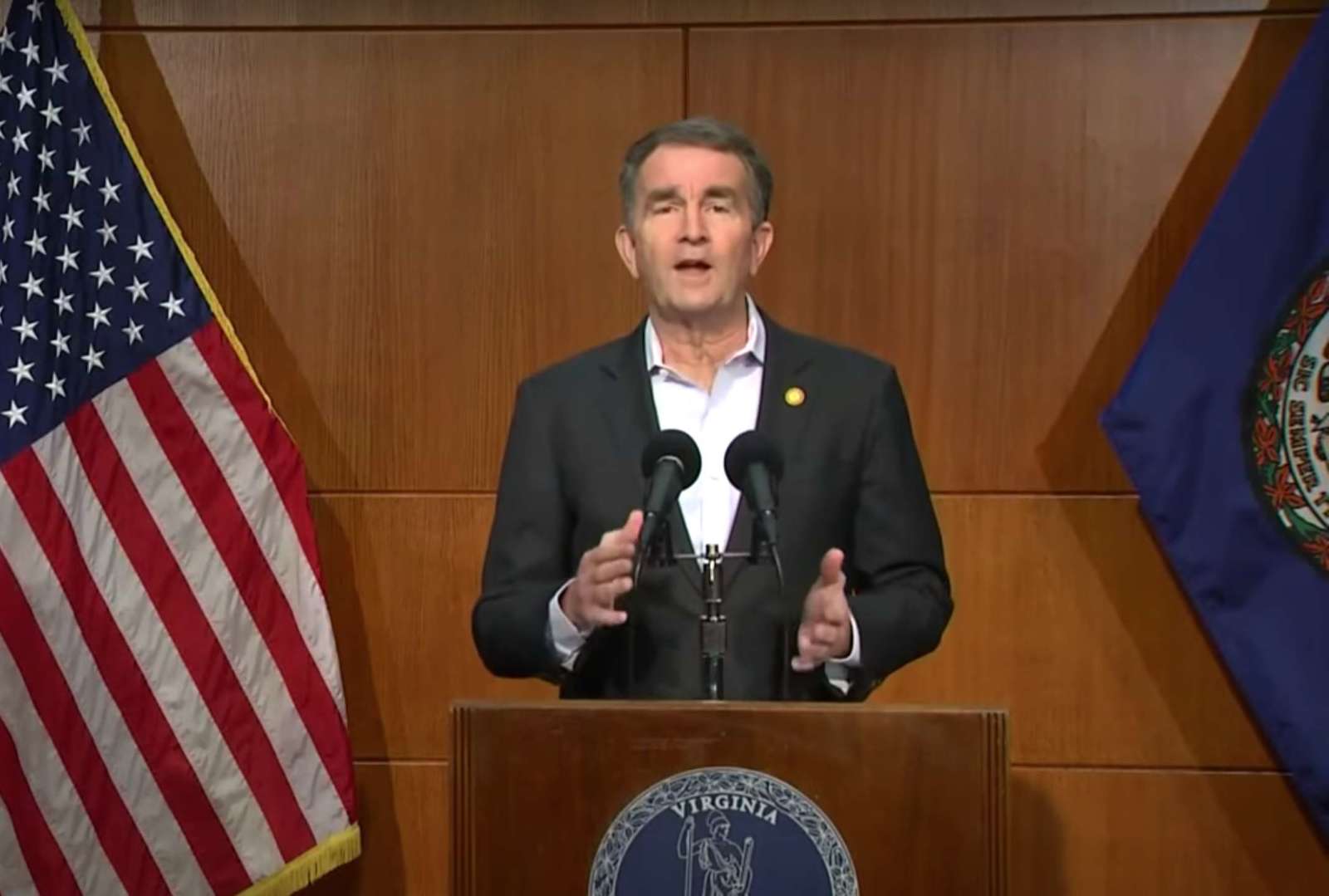
Virginia Gov. Ralph Northam is easing some of the public health restrictions prompted by the COVID-19 pandemic, including the 10 p.m. curfew on alcohol sales.
Effective Mar. 1, Virginians will be able to buy and drink alcohol at restaurants, food courts, breweries, distilleries, and wineries until they are required to close at midnight.
The changes to the current executive order come amid declining rates of hospitalizations and infections and rising vaccination rates in the Commonwealth, Northam said during a press conference this morning (Wednesday).
Northam is also easing restrictions on outdoor entertainment and social gatherings, where evidence shows the risk of airborne transmission of COVID-19 is lower.
“Thanks to the hard work and sacrifice of all Virginians, hospitalization and positivity rates across the Commonwealth are the lowest they have been in nearly three months,” Northam said in the press release. “As key health metrics show encouraging trends and we continue to ramp up our vaccination efforts, we can begin to gradually resume certain recreational activities and further reopen sectors of our economy.”
He attributed the rise in cases over the winter to cold weather and the holidays.
The state’s Safer at Home strategy will remain in place, along with its accompanying requirements for physical distancing, mask-wearing, gathering limits and business capacity restrictions.
“Even as we take steps to safely ease public health guidelines, we must all remain vigilant so we can maintain our progress — the more we stay home, mask up, and practice social distancing, the more lives we will save from this dangerous virus,” he said.
The current modified Stay at Home order will expire on Sunday (Feb. 28).
The full press release from the governor’s office is below.
Gov. Ralph Northam today announced that as COVID-19 hospitalizations and infection rates continue to decline and vaccinations rise in Virginia, certain outdoor sports and entertainment venues may begin to operate at increased capacity starting Monday, March 1. He amended Executive Order Seventy-Two with the next steps of the “Forward Virginia” plan to safely and gradually ease public health restrictions while mitigating the spread of the virus.
“Thanks to the hard work and sacrifice of all Virginians, hospitalization and positivity rates across the Commonwealth are the lowest they have been in nearly three months,” said Governor Northam. “As key health metrics show encouraging trends and we continue to ramp up our vaccination efforts, we can begin to gradually resume certain recreational activities and further reopen sectors of our economy. Even as we take steps to safely ease public health guidelines, we must all remain vigilant so we can maintain our progress-the more we stay home, mask up, and practice social distancing, the more lives we will save from this dangerous virus.”
The Commonwealth will maintain a Safer at Home strategy with continued strict health and safety protocols including physical distancing, mask-wearing requirements, gathering limits, and business capacity restrictions. The current modified Stay at Home order will expire on February 28, 2021.
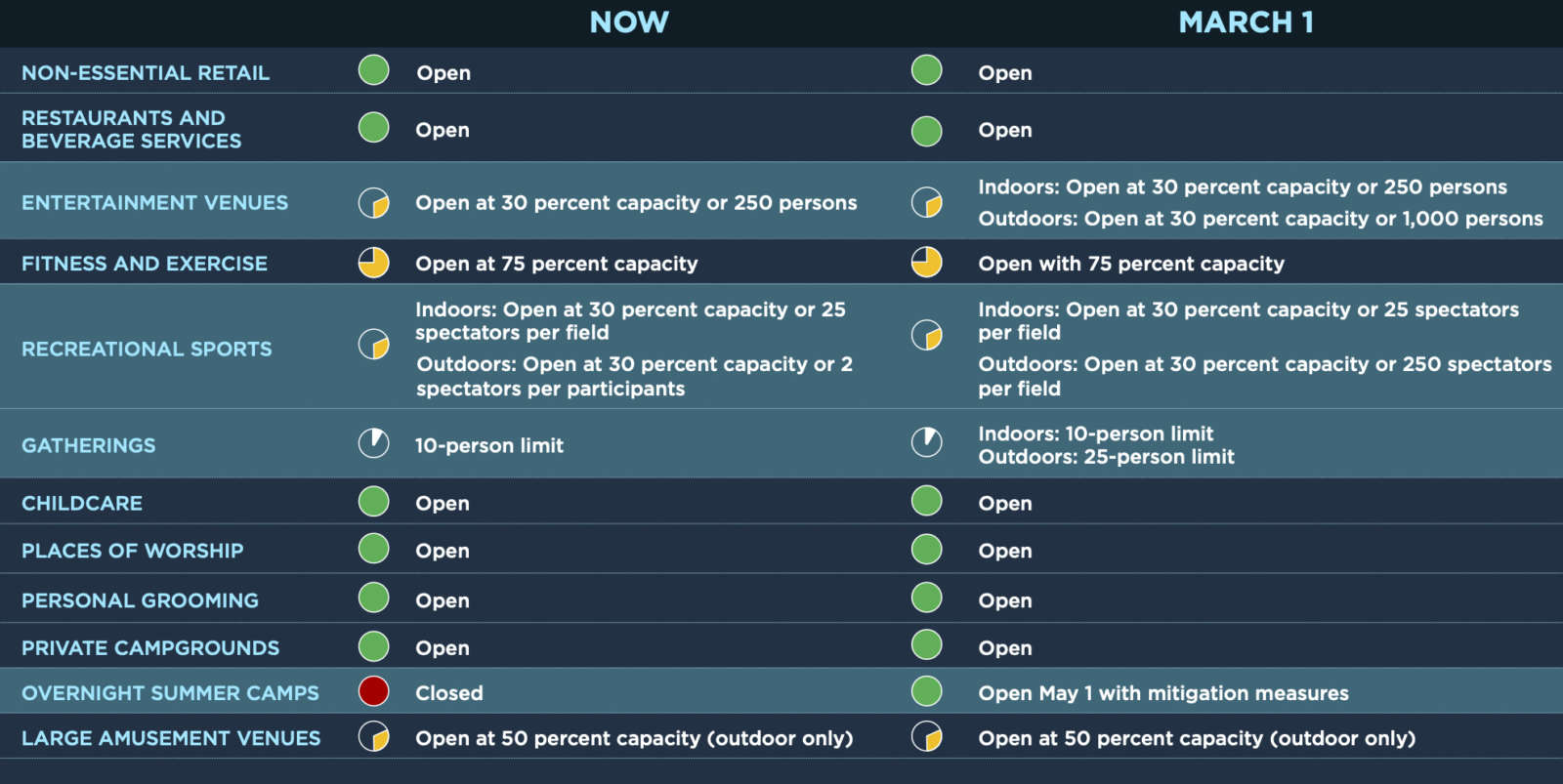
Governor Northam is beginning to ease public health restrictions by taking steps to increase capacity limits in outdoor settings, where evidence shows the risk of airborne transmission of COVID-19 is lower. The key changes in the Third Amended Executive Order Seventy-Two include:
- Social gatherings: The maximum number of individuals permitted in a social gathering will increase from 10 to 25 people for outdoor settings, while remaining at 10 persons for indoor settings.
- Entertainment venues: Outdoor entertainment and public amusement venues will be able to operate with up to 1,000 individuals or at 30 percent capacity, whichever is lower. If current trends continue, these venues may be able to operate at 30 percent capacity with no cap on the number of people permitted to attend starting in April. Indoor entertainment and public amusement venues must continue to operate at 30 percent capacity with a cap of 250 people. All entertainment venues were previously limited to a maximum of 250 individuals.
- Dining establishments: The on-site sale, consumption, and possession of alcohol will be permitted until midnight, extended from 10:00 p.m. All restaurants, dining establishments, food courts, breweries, microbreweries, distilleries, wineries, and tasting rooms still must be closed between midnight and 5:00 a.m.
- Overnight summer camps: As of May 1, overnight summer camps will be able to open with strict mitigation measures in place. Registration can begin now.
The new guidelines will be effective for at least one month and mitigation measures may be eased further if key health metrics continue to improve. Current guidelines for retail businesses, fitness and exercise, large amusement venues, and personal grooming services will remain in place. Individuals are strongly encouraged to continue teleworking if possible.
The full text of Third Amended Executive Order Seventy-Two and Order of Public Health Emergency Nine is available here. Updated guidelines for specific sectors can be found here.
Last week, Governor Northam amended Executive Order Seventy-Two to increase the number of spectators permitted at outdoor youth sporting events to 250.
Visit virginia.gov/coronavirus/forwardvirginia for more information and answers to frequently asked questions.
Image via Virginia Public Media/YouTube