

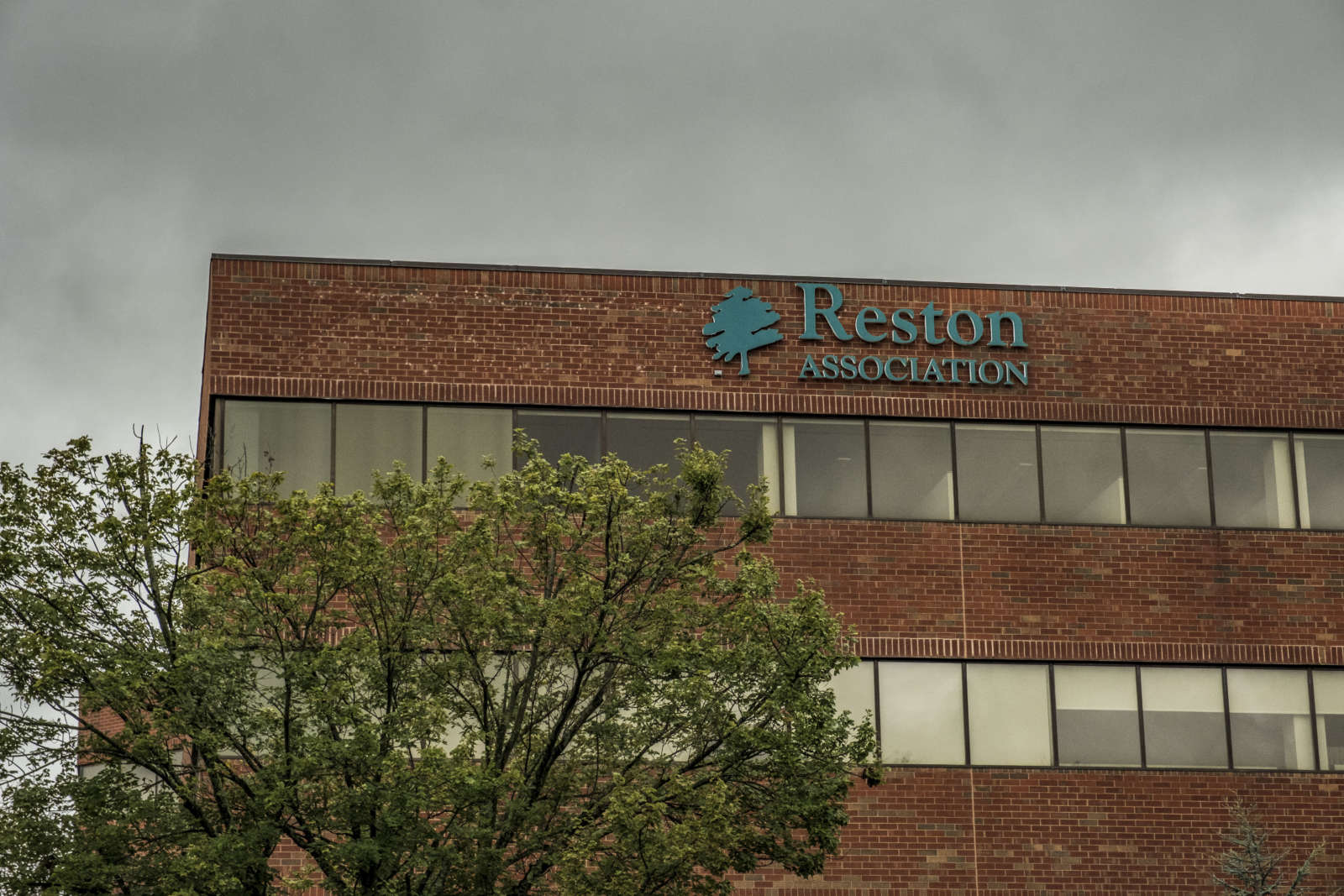
Reston Association has shifted to cloud platforms amid an ongoing conversation on how to address IT security concerns. Some members of RA’s Board of Directors are pushing for the creation of a new IT committee that would guide RA staff on best practices for IT security.
The discussion comes after some board members expressed major concerns about how personal data is stored, why RA’s website was suddenly taken down that year, and allocated funding for IT-related projects.
In a letter to members today, RA noted that its IT department has taken ‘a number of steps to fortify and protect members’ information.’
Currently, no member data is hosted on RA systems, a shift from previous years. The organization transitioned to vendor-hosted software as well.
More from the letter is below.
RA member data related to annual assessment payments, recreational registrations, covenants records and other external business transactions are now on cloud systems managed by professional vendors who use the latest security standards to protect private information.
Additionally, internal business operations such as email and document-sharing systems have been migrated to Microsoft Office 365 cloud platform. The Microsoft platform offers increased security features that combat social engineering, phishing and other online threats.
As new technologies to address security issues are ever-evolving, RA’s IT team is constantly reviewing controls and policies to protect the organization and its members’ private information. RA wants to ensure members that their data and personal information is safeguarded by a robust cloud-based network of vendors that uses the industry’s highest standards to protect all data.
RA’s Board Governance Committee will review the proposal for a new IT committee on March 4. The meeting takes place via Zoom at 6:30 p.m.
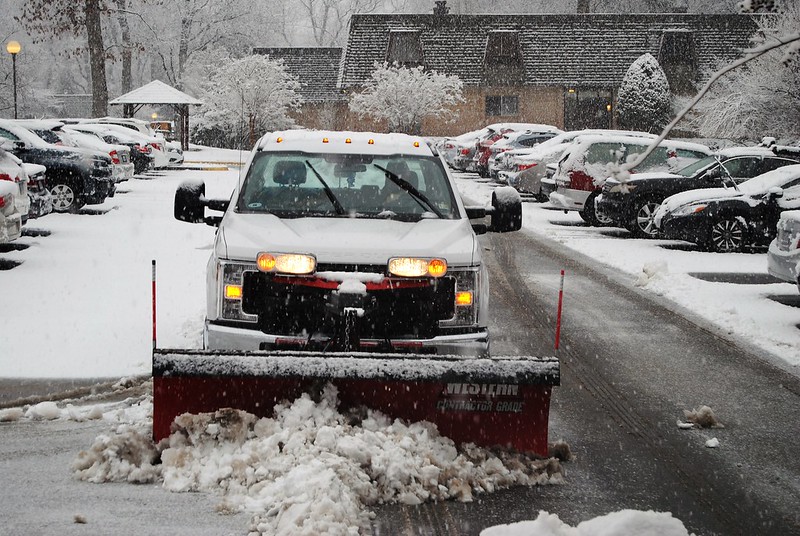
County Vaccine Clinics Canceled — The county has canceled vaccine clinics at the Fairfax County Government Center and four health department district office sites for today due to weather conditions. Individuals can reschedule their appointments for next week. [Fairfax County Government]
Reston Association Candidate Forum Set for Next Week — Members will have the chance to ask questions in a debate-style forum on Wednesday, Feb. 24. [RA]
No Rolling Stops for Va. Cyclists Yet — “The Virginia Senate on Wednesday sidelined a proposal that would have allowed bicyclists to yield instead of halt at stop signs. Instead, lawmakers voted to commission a police study of the rule as enacted in other states. They also voted to require drivers to change lanes when passing bicyclists if three feet of distance isn’t possible and to allow two cyclists to ride side by side in a lane.” [Washington Post]
Photo via vantagehill/Flickr
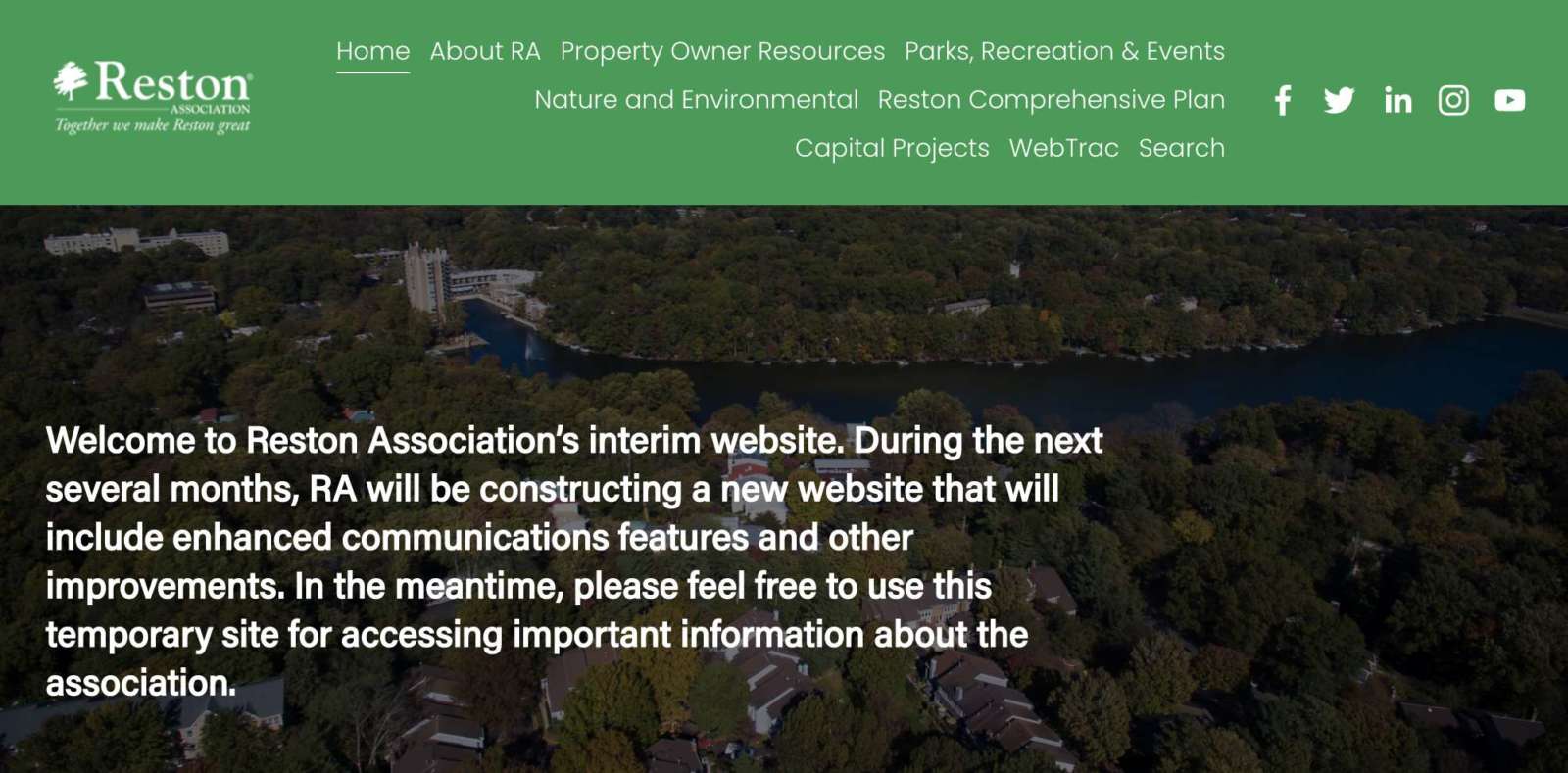
Last year, Reston Association’s website was abruptly taken down because of outdated technology and stability issues. The loss of some financial records and limited backups was also cited as an issue in previous board meetings.
These challenges, along with other IT security needs, have prompted a call by four board members to create a board IT committee. If approved, the volunteer-run committee would be tasked with reviewing RA’s technology landscape, advising the association on procurement, data security and privacy, as well as other hands-on solutions. Board members Sarah Selvaraj-D’Souza, Bob Petrine, and Tom Mulkerin also worked on the plan.
Board member Ven Iyer, who described himself as an expert in security and IT infrastructure with 19 years of experience, said RA’s IT systems are “unfit”for conducting financial and Personally Identifiable data.
“If you were a bank or you were somebody handling PI data, you would be shut down. And you thoroughly need the help,” Iyer said at a special board meeting earlier this week.
He says RA’s IT issues are so severe that the institution of a board committee is necessary in order to make “RA capable of conducting business.”
But the proposal was met with some skepticism by other board members. Board president Julie Bitzer said the proposal needed a more thorough review before a board vote.
Four board members and RA’s legal counsel will revise the proposal in advance of another board special meeting on Monday, Feb. 15. The move was suggested by board member John Mooney and backed by Bitzer, Mike Collins, Caren Anton, and Aaron Webb.
“You don’t rush something important like this,”Mooney said.
Some board members questioned if it was appropriate to set up a board committee – which has more authority than an advisory or working group – to manage and advise RA on IT issues. Other board committees like RA’s Board Governance Committee and Board Advisory Committee have more authority than working groups or advisory committees.
Others simply said immediate action was necessary, especially since IT-related spending is a big-ticket spending item.
“The feeling was that you need to have the strength of the board like the fiscal committee does,” said D’Szousa.
Iyer, who said he has pushed for the creation of an IT committee for years, said the urgency of the need should not be underestimated.
Irwin Flashman, an RA member, said that residents would be more than willing to help support RA’s IT efforts and guide decision-making with expert advice.
“Reston is a technology center and many of those who work in the industry live in Reston and would be well qualified and willing, I feel certain, to lend a guiding hand to such an IT Committee and RA,”Flashman said.
‘We urge the board to act diligently and seriously. You hold the security of RA information in your hands. It is a great and serious responsibility.’
Within one day, RA staff quickly created a temporary website in July after the association’s IT team learned that the old website created a “potential security risk” to RA members and the DotNetNuke platform was no longer ‘technically supportable,’ according to past meeting materials.
Planning is underway to launch a new website with enhanced communication features later this year.
Northam to Extend School Year into Summer — Gov. Ralph Northam will announce a plan to extend the school year into the summer today. N details have been released, but the plan is intended to help students catch up. [Inside NOVA]
Reston Association Board to Meet Next Week — RA’s Board of Directors will hold a special online meeting on Monday evening to have a consultation with counsel. [RA]
Food and Coat Drives Set for Tomorrow in Reston — Cornerstones’ Coat Closet is accepting winter items from 10 a.m. to 1 p.m. on Saturday at the North County Government Center while Stuff the Bus will have buses parked at the center from 10 a.m. to 3 p.m. for donations. [Reston Patch]
Photo via vantagehill/Flickr
The 2021 Reston Association Board of Director elections are here.
Every spring, the Reston Association elects three new members to their Board of Directors. Five candidates are certified this year for three spots, including four for the two at-large spots and one for the South Lakes District. All new members will serve a three-year term.
Ballots close April 2 for drop-off and online submission. Results will be announced April 13.
The candidates are:
At-Large (two seats available)
John Farrell
A Reston resident since 1984 who is firmly the president of the Colonial Oaks Cluster, he wants facility improvements to be funded by new developers into the area.
Sarah Selvaraj-D’Souza
An incumbent at-large representative, she is promoting transparency and smart money management. She founded RESTONSTRONG last year and held peaceful demonstrations.
Timothy J. Dowling
A retired attorney who served as the chief counsel on the Community Rights Counsel. A long-time resident, his priorities would be fiscal oversight, protecting opening spaces, and preserving Reston’s natural resources.
Vincent Dory
A programmer, he’s committed to solving all the technological questions and issues that may come up on the board. His primary concern is to preserve and protect the core principles of Reston’s unique design.
South Lakes District (one seat available)
Jennifer Jushchuk
A Reston resident since 2014, priorities include fiscal responsibility, communication, collaboration, and advocacy.
Further information about the candidates and their priorities can be found here.
Photo via Reston Association/Facebook.
Reston Association is adopting a new approach to its collections of member assessments.
RA’s Board of Directors voted to scrap a $2.95 convenience fee that was required for online payments. The organization also launched a new online portal for paying assessments.
In a recent Reston Today video, RA noted that the new portal creates a consolidated way for members to make payments or set up payment plans. The association will no longer accept payments made through the general website or the Webtrac portal.
However, members can also make in-person payments by appointment only. Payment via credit card can also be made by calling RA’s member services department or by dropping off payments in a box outside RA’s headquarters, which are located at 12001 Sunrise Valley Drive.
This year’s assessment will go up by $10. The board decided to approve the increase by a 5-4 vote in late November.
The Reston Association’s (RA) Board of Directors listened to a presentation about its surrounding environment as part of the Reston Annual State of the Environment Report (RASER) on Thursday, Dec. 17.
Doug Britt, a Virginia Master Naturalist and chair of RA’s Environmental Advisory Committee, presented the RASER study update to the board and RA’s members. The update has 18 authors and coauthors that include members of RA’s environmental advisory committee and outside individuals.
The update conforms to RASER’s five objectives listed on RA’s website:
- Summarize existing quantitative environmental data for the Reston community in one publicly accessible document.
- Establish an environmental baseline that can be reassessed annually to facilitate the identification of environmental trends and to evaluate the efficacy of environmental improvement and conservation programs and initiatives.
- Provide relevant and timely environmental information that can help RA and its board of directors in shaping future policy and programs.
- Help educate and inform Reston residents and other interested parties about Reston’s environmental health.
- Create a living document that can be revised and expanded as deemed appropriate to meet future environmental challenges and information needs.
This latest RASER update focused on 21 natural resources or environmental topics. Each topic was color-coded green (good), yellow (fair), red (poor), or black (undetermined) to indicate its overall condition.
The following attributes received a green status: air quality, drinking water, wastewater treatment, hazardous materials and toxic waste, and environmental education and outreach.
Fair attributes include: streams, lakes and ponds, urban forests, meadows, landscaping and urban agriculture, birds, wildlife management issues, and light pollution.
Poor attributes include storm water management and solid waste management.
Undetermined attributes include: wetlands, mammals, reptiles and amphibians, invertebrates, noise pollution, and climate change.
Britt described storm water management as “perhaps the biggest existing problem” in Reston. He estimates that the issue dates back to the lack of strict county regulations when Reston was expanding in the 1960s and 1970s.
Single-use plastics are one of the primary concerns that resulted in solid waste management receiving a poor rating. Britt added that litter created by personal protection equipment and food carryout materials have been a unique issue in 2020.
Britt said the RASER group would come back at another board meeting to present a standalone report on energy efficiency. He said there is a plan to include the category in the 2020 RASER update, but the subject was so “complex to take on” that the group decided to separate the subject from this update.
The RASER project team will return to RA’s board in either January or February to present a combined list of recommendations for RA and a report card on how attributes have been addressed.
The board approved to accept the report as it was presented Thursday. Now that the nearly 200-page report has been accepted by the board, the full copy of it will be available to the public on RA’s website under the environmental page.
“This group has been the most amazing group of volunteers,” board member Sarah Selvaraj-D’Souza said of the RASER project team.
“It’s been a pleasure to watch them work. Their dedication is just unbelievable.”
RASER was first published in July 2017 and updated in 2018. It is now updated and published biennially while the RASER project team publishes a report card and recommendations annually.
Photo via Reston Association/Facebook
The Reston Annual State of the Environment Report (RASER) will be presented to the Reston Association (RA) during its regular board meeting on Thursday, Dec. 17.
Doug Britt, a Virginia Master Naturalist and chair of RA’s Environmental Advisory Committee, will present the study update and the state of Reston’s environment to the RA board and members.
The comprehensive study is roughly 200 pages long and comes on the heels of more than 1,000 volunteer hours to update the report on its bi-annual basis. The report covers 21 different environmental attributes of the community that includes natural resource maintenance, health of wildlife, air quality, and environmental education and outreach.
The study is co-led and co-edited by Robin Duska, a former environmental advisory committee member, and includes the work of 18 authors and co-authors. The authors include members of the environmental advisory committee and outside individuals with specialized expertise.
“For each topic that we address, we collect the most reliable information that we can about the subject here in Reston,” Britt said.
“When we don’t have enough Reston data, we’ll look at county data, regional data and state data. And then we organize each topic around a background that defines the environmental attribute and then an existing edition section, and then a conclusion section.”
RASER’s five objectives are listed on RA’s website as the following:
Summarize existing quantitative environmental data for the Reston community in one publicly accessible document.
Establish an environmental baseline that can be re-assessed annually to facilitate the identification of environmental trends and to evaluate the efficacy of environmental improvement and conservation programs and initiatives.
Provide relevant and timely environmental information that can help RA and its board of directors in shaping future policy and programs.
Help educate and inform Reston residents and other interested parties about Reston’s environmental health.
Create a living document that can be revised and expanded as deemed appropriate to meet future environmental challenges and information needs.
The report was expanded this year to include two attributes: solid waste management and climate change. It also utilizes a larger amount of visual exhibits with 182 photos, tables or charts.
To make the report more user-friendly, most references will include hyperlinks to more information on subjects or view the original sources.
Each attribute in the report is given a subjective assessment of its condition. Each assessment is given a traffic light rating of green (good), yellow (fair), or red (poor), and unlit icons signify that more information is needed on the topic. In the 2020 study, five subjects were given green, eight yellow, two red and six are unlit.
“Every time we update this report, we find more and more information that helps us understand the nature of the topic,” Britt said.
“I think we have come a long way from 2017 to where we are now in our understanding and documenting the status of the attributes and how they’re changing with time, if they are.”
Britt clarified that there were not “any major changes in the subjective quality of the attribute from the previous report.”
Portions of the study will include possible changes RA can create an initiative for, while individual residents can address other items. However, many potential changes will come from outside the community at the county or state level.
Various items will be highlighted for discussion through the study. Among those is a fact Britt said came out of a new chapter of the study on water management wherein it was found that residents in Reston use 19 million plastic bags per year and less than 1% of those are ever recycled.
Over the years, Britt has witnessed efforts being made in Reston to mitigate existing issues. Among those efforts have been Reston utilizing stream mitigation banks to restore over half of the area’s perennial streams, and RA adopting a program to secure lakefront areas with biologs to prevent erosion.
Also, based on a recommendation in RASER, RA applied for and received a grant to put on a local workshop last year on what individual homeowners can do to capture and retain storm water runoff on their properties.
Britt expressed that one of his primary concerns with this study is to get board approval for public distribution to allow for more exposure to it for a broader range of stakeholder in the community.
The RASER presentation next week will be separate from recommendations and a report card for protecting or enhancing individual attributes. Britt is planning to present those items apart from the full report in the RA board meeting in January or February.
Photo by Ruth Seviers
Reston Association is seeking candidates to fill three open seats on its Board of Directors.
All RA members are encouraged to take part in the upcoming election, which takes place from March 1 through April 2 of 2021.
Two at-large district seats and the South Lakes district seat will open next year. A formal call for candidates is expected this month.
Members are encouraged to opt-in for an electronic ballot to reduce postal costs for RA. Ballot requests can be sent to [email protected].
Anyone with further questions, including how to become a candidate should contact the elections committee at [email protected].
Information on the elections’ process is expected soon, according to RA’s recent weekly newsletter.
The Reston Association (RA) still has decisions to make on its 2021 budget, including any potential change to the current $708 member assessment rate.
During a public hearing on Wednesday, a proposed budget by RA CEO Hank Lynch remained consistent with his October proposal by not including an increase from the current $708 rate.
Lynch did stipulate that the assessment is one of the key points the Board of Directors must still decide on. He said that the fiscal committee for RA has recommended an increase to the assessment of up to $20 for the 2021 budget.
Lynch stated that the fiscal committee suggested there is the potential of an increase of up to $100 for the assessment in 2022. But he said he does not believe there will be that significant of an increase for the 2022 assessment rate.
Robert Petrine, treasurer for the board, clarified the discussion on the potential 2022 assessment rate increase of up to $100.
“There are two major components that are not in the current 2021 budget, which if we look forward is number one is if you implement the salary plan, that’s going to have a material impact,” he said.
“And number two; we’re going to be fully paying on the (headquarters) lease. When you put those in and you also factor in the amount of capital projects that are already in the budget and projected for 2022, in order to have everything balanced, you’re looking at a substantially higher assessment.”
Lynch also discussed the decision point for the board of an operational change with the Central Services Facility (CSF) that mows the Reston roadways and median strips.
CSF is paid $45,000 in an annual contract through the Virginia Department of Transportation to mow Reston’s roadways and median strips three times. However, CSF mows those areas 24 times during the year to maintain Reston’s appearance. The additional mowing costs RA an additional $140,000 above the contract.
Beyond the roadways, CSF also brings in a turf maintenance company to mow many of the ball fields, parks and open spaces. This additional maintenance costs the association over $200,000 annually.
Lynch’s proposal for the board’s consideration includes the following measures to reduce CSF’s 2021 operating costs by $200,000 to $210,000:
- Reduce the number of VDOT highway mows from 24 down to eight.
- Eliminate contracted mowing services used for RA’s ball fields, parks and open spaces.
- Utilizing current full-time CSF staff and five seasonal staff to conduct all RA mowing.
During discussions with RA members following Lynch’s presentation and the boards’ comments, a primary focus fell on RA’s communications budget and, in part, the participation of members in RA’s planning.
While Petrine complimented the board’s participation and the members that joined the discussion, he admonished “the general membership for lack of concern and participation.”
Board member Selvaraj-D’Souza stated that this is where Lynch’s “team is failing” in its communication efforts.
The operating expenses for communications for the 2020 budget was $968,114. In Lynch’s proposal, those expenses increased to $979,373 for 2021.
“When we’re spending a million dollars on communications, we need to be proactive and figure out a way to get our membership to show up,” she said.
“And that’s where we need to look at out of the box ideas, how are we reaching out to them, is our messaging actually being effective. And there needs to be some absolute accountability with that.”
Board member Ven Iyer echoed the suggestions of Selvaraj-D’Souza. Iyer suggested efforts be turned toward “grassroots level participation in order to shape the direction where this organization is headed.”
Lynch defended the communications department’s efforts, stating that he believes “there’s a complete misunderstanding of what communications does.”
He added that with roughly 60,000 members, an “enormous amount of work” is required to serve all the needs and wants of the members.
Board member Mike Collins followed the discussion by stating that RA has had difficulty in member participation for at least the 10 years he’s been in Reston. He also did not recommend that members should assume something is wrong with the efforts of the communications department.
However, Collins did discuss his belief that board members take a look at digging more into those details of the budget next year.
Board president Julie Bitzer concluded the discussion by agreeing with the notion that the board needs more information on the communications to reach a more appropriate “comfort level.” She suggested reviewing more details on the communications budget during the board’s next meeting.
The board will next meet virtually on Nov. 19 via Zoom.
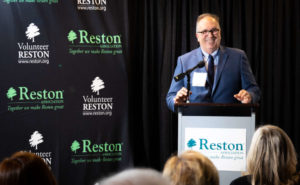
Reston Association CEO Hank Lynch is aiming to keep next year’s member assessment rate unchanged at $708.
But at a Board of Directors’ meeting on Thursday night, some members suggested increasing the rate — as done in previous years — in order to keep up with major expenses and other operational needs. Lynch hopes to keep fees stable in order to account for the impact of COVID-19 on its membership.
No staff merit pay increases are proposed in Lynch’s budget, resulting in savings of roughly $208,500.
“I don’t think it’s the right thing to do right now,” Lynch said, adding that he discussed the proposal with senior staff, who concurred with his plan.
Board member John Mooney said the “artificially” holding down the rate simply delays more substantial long-term fee increases necessary to keep up with real-time costs.
“It’s artificial. We’re paying with resources from elsewhere,” Mooney said.
Board members Mike Collins also noted that RA’s membership must grow accustomed to fee increases as serious infrastructure challenges come forward due to aging facilities in need of replacement.
To fund the replacement of Lake Thoreau Pool, the board is considering a plan to defer roughly $1.3 million in scheduled 2021 capital expenditures.
“I just don’t see any another way,” Collins said, adding that he “hates” the idea of increasing fees.
The board juggled the possibility of a $20 increase in the coming year, although no number was settled upon.
Mooney suggested that Lynch and his staff consider how a $membership assessment of up to $728 for next year would help meet RA’s costs.
Other budget highlights include:
- Delaying the hire of three vacant positions
- Reducing annual IT expenses by $45,000-$50,000
- Lake maintenance treatments at $31,745
A budget hearing is set for November 4 at 6:30 p.m. via Zoom. The board plans to indicate that a range of assessments is being considered between $708 and $728.
Photo via Reston Association
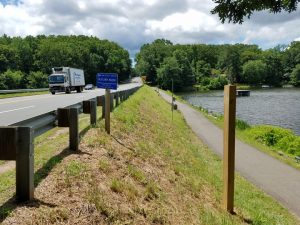
Reston Association’s Board of Directors plans to defer $1.3 million in capital work for the upcoming 2021 capital budget.
Although budget deliberations continue, RA staff have identified six projects that will likely be deferred to future years. Plans for deferrals come as nearly $600,000 in capital work has been adjusted or added, including the renovation of Lake Thoreau Pool and general increases in costs for construction and materials.
Plans for Lake Anne Dam, which currently does not meet state safety codes for overtopping Wiehle Avenue during a design flood, could be deferred. Currently, a state committee has been forced to evaluate dam regulations for all structures in Virginia, according to draft meeting materials. The outcome of those discussions could take up to two years to formalize.
“We will maintain our provisional approved status with the state with no penalties enforced,” according to RA meeting materials.
A more comprehensive renovation of the Glade Tennis Court may also require the deferral of that project. Staff found that more work beyond planned that grading and lighting retrofitting is necessary.
Other deferred project include:
- The addition of seven vehicles and mowers
- Lake Newport pool siding
- Glade Pool floor coating, cabinets and counters
- Newbridge cabinets and counters
So far, the $3.45 million draft budget includes the renovation of Lake Thoreau Pool, with project costs being split between 2021 and 2022.
The meeting is set for Thursday, Oct. 22 at 6:30 p.m. via Zoom.
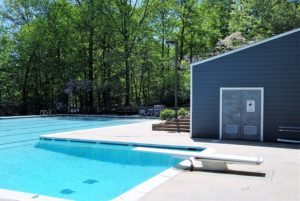
Despite full support for a major replacement of Lake Thoreau Pool, Reston Association’s Board of Directors grappled with how to fund the project, which could cost up to $3.5 million.
At a meeting on Thursday night, board members said it was unclear how RA would fund the project as it develops the budget for the coming fiscal year. RA staff and CEO Hank Lynch suggested splitting the cost of the project between fiscal years 2021 and 2022.
The board’s latest meeting highlighted pressing and longstanding budgetary management concerns as RA determines next steps for moving forward with the project.
RA’s COO Larry Butler stressed the need for more structured longterm planning, including the developing of a five-and ten-year capital project plan for projects that exceed $250,000. Those plans would allow the board and the community to have a “true understanding or real costs,” he said.
“There’s a lot to be done in that realm,” Butler said.
Board Director Ven Iyer said the question of how to fund Lake Thoreau highlights RA’s habits of “fiscal irresponsibility.”
“In spite of bringing in 18 million a year, we are unable to find $3.5 million dollars to fix a pool,” he said.
For the pool, the most favored design includes a zero-depth wading pool in what used to be the facility’s deep end, expand the parking lot and bathhouse to meet Fairfax County and Americans with Disabilities Act code requirements, and incorporate an elevated observation and lounge deck.
Staff recommends splitting project costs between $1.6 million in 2021 and 1.5 million in 2022. Under this scenario, the board could defer upgrades to Lake Anne’s dam and renovations to Glade Tennis Court.
RA is expected to grapple with other major renovation projects, included the full-scale renovation of Shadowood Pool. Despite cosmetic changes in the last few years, parts of the facility are obsolete and ongoing sewage issues continue on the site.
Lynch also stressed that RA needs to allows its recreational facilities and working group to evaluate the association’s recreational needs, missed opportunities for amenities, and a review of the need or lack thereof of current amenities.
RA Board Director John Mooney suggested that the board consider financing certain project instead of pay-as-you-go funding.
“It’s not fair that current rate payers foot the bill for a facility that will serve multiple future generations of rate payers,” he said.
A motion to direct staff to explore an across-the-board seven-percent cut to all operational expenses failed to gain traction. Some board members said they were confident staff had already pared down operational expenses to the extend possible.
Discussions on the budget are expected to continue in coming meetings.
Photo via vantagehill/Flickr
Reston Association’s Board of Directors is working through various funding options for the planned renovation of Lake Thoreau Pool.
Although most residents appear to agree on a plan presented by design consultant Kimley-Horn, RA must now determine the best way to finance the multi-million project.
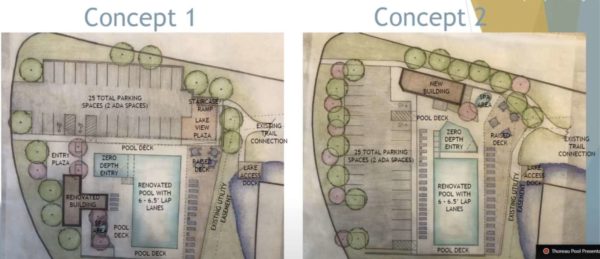
At previous community meetings, members have expressed support for a lean design concept that would largely work within the existing footprint of the aging site. A zero-depth wading pool would be installed on the facility’s deep end, the parking lot would be expanded, and the bathhouse would meet county and federal code requirements for individuals with disabilities. A lounge observation deck is also planned in the new design.
The first concept is expected to cost between $2.9 and $3.5 million while a more extensive rehaul. Would cost between $3.8 million and $4.6 million, according to meeting materials.
RA staff recommends that the board adopt the first concept and split project costs between fiscal years 2021 and 2022. Other major projects above $250,000 would be pushed forward by two years.
At a meeting on Thursday, Oct. 8, RA’s board will discuss whether or not the project should be fully funded within the next two fiscal years. Other planned topics. Of discussion include eliminating or repurposing facilities that do not offer value to members and are costly to operate.
The discussion comes as RA tackles current and anticipated projects. In a 2019 reserve study, consultant DMA Reserves identified more than 1,300 capital assets and offered a suggested replacement plan.
Between 2021 and 2031, RA hopes to tackle ten major pool and tennis projects that would cost more than $250,000. Some projects have been deferred.
For example, renovations to the Lake Newport Tennis Court have been deferred until 2022 until a “more intensive renovation” will be conducted, according to meeting materials.
The board will also discuss other issues, including a review of the role of the Recreation Facilities Working Group and an analysis of the 2019 reserve study. The meeting takes place via Zoom.
Photo via handout/RA
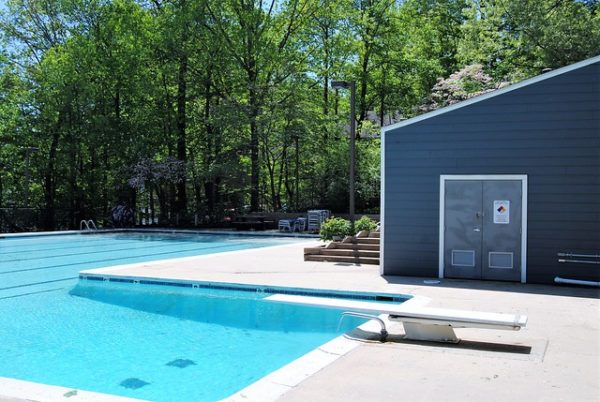
Reston Association will need to get creative in order to fund its planned renovation of the Lake Thoreau Pool.
The majority of residents who spoke at the association’s board of directors meeting on Thursday expressed support for funding the project in 2021 so that it can reopen in 2022 as planned. Members urging board members to consider a variety of funding and design options if necessary to make it more feasible.
Suggestions included opening the pool up to non-RA members, turning the pool into a shallow-end-only facility to make maintenance easier, and opening up the pool deck year-round so that it could be utilized for other activities.
“Now that we are all living through this pandemic, we know the huge importance of outdoor spaces,” Giselle Agosto Hincapie, whose family lives in walking distance of the pool, said. “The idea of completely eliminating the pool or delaying the construction project is truly disheartening. I think a pool can be incorporated with year-round amenities in this space.”
Kimley-Horn, the consultant hired to develop design concepts for the pool project, estimates that its first proposal, a more straightforward renovation that stays within the site’s existing footprint, would cost somewhere between $2.9 million and $3.5 million.
This design would install a zero-depth wading pool in what used to be the facility’s deep end, expand the parking lot and bathhouse to meet Fairfax County and Americans with Disabilities Act code requirements, and incorporate an elevated observation and lounge deck.
A second proposal that would involve a more extensive overhaul of the site would cost between $3.8 million and $4.6 million, though Kimle-Horn landscape architect Ron Kagawa says there has been a “great preference” for the simpler concept.
Kagawa says a significant part of the project’s cost is tied to the need to level out the site so that it is more accessible and to construct an approximately 450-foot-long retaining wall along the lakefront and around the parking lot.
Chris Schumaker, Reston Association’s senior capital projects operations manager, estimates that if RA picks the first project concept, it would need to commit an additional $3.1 million on top of the $350,000 allocated to the Lake Thoreau project in 2020, possibly splitting the $3.45 million total cost between $1.6 million in 2021 and $1.5 million in 2022.
However, Reston Association also has five other pools and three tennis courts that are expected to need renovations between 2022 and 2031.
Adding these other projects on top of the Lake Thoreau pool funding, the association’s repair and replacement reserve fund could drop into a negative balance by 2023 and not recover until 2027, according to Schumaker’s projections.
“A lot of our facilities are nearing that 40, 50-year age mark,” Schumaker said. “We can safely assume there are going to be some major projects coming down the pike that we’re going to need to be aware of and planning for.”
RA’s Board of Directors will discuss options for financing the Lake Thoreau pool renovation in more detail during a special working session on Oct. 8.
Photo via vantagehill/Flickr
