

 This is an op-ed by Reston resident Terry Maynard. It does not reflect the opinion of Reston Now.
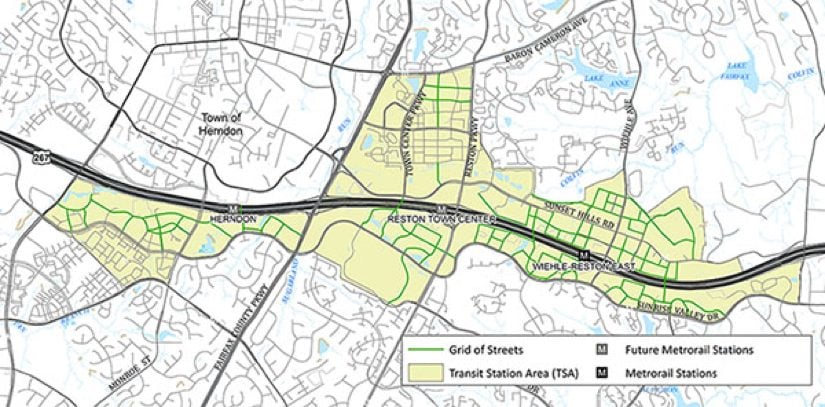
On Monday, the Fairfax County Department of Transportation (FCDOT) and Reston Network Analysis Group (RNAG) once again offered several proposals that would create a transportation tax service district (TSD) for the Reston Metro transit station areas (TSAs) along the Dulles Corridor that would add to the tax bills of Restonians living there.
At the meeting, FCDOT detailed three TSD tax rate options: $0.017/$100 assessed valuation, $0.20/$100 assessed valuation, and $0.27/$100 assessed valuation to be paid for 40 years largely based on mindless comparisons with Tysons.
Ostensibly, these funds would close a $350 million “gap” in funding new and improved streets and intersections throughout the TSAs to accommodate the traffic added there by new high-density development.
The Reston community can get an update on the planned urban-style street grid — and the potential of a special tax to help pay for it — at a community meeting Wednesday.
Join Hunter Mill Supervisor Cathy Hudgins and the Fairfax County Department of Transportation (FCDOT) for another in a series of discussions on the Reston Network Analysis from 7 to 9 p.m. at South Lakes High School.
Residents will be able to learn more about the analysis, which is evaluating the concept of urban-style grids of streets in the areas surrounding the Reston Metrorail Stations, also known as the Reston Transit Station Areas. County staff will give a presentation on the status of the Network Analysis and potential recommendations for the transportation network. Staff will also answer questions.
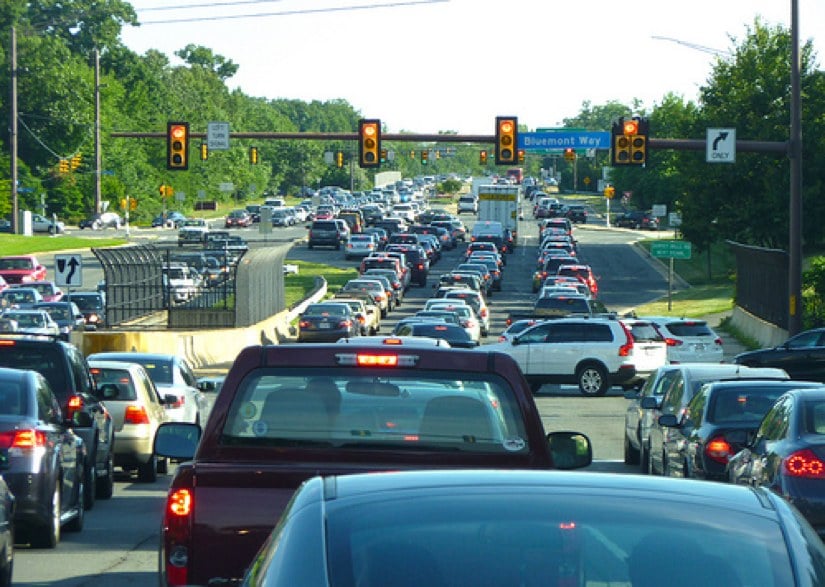
The Reston Network Analysis Advisory Group has most recently discussed Tier 2 mitigation (see presentation below). The group is looking at ways to reduce congestion and waiting times at traffic lights. The presentation points out some of the worst trouble spots in the Reston area. The goal is adding traffic lights and turning lanes, but patience is needed as the plan covers mitigation over the next several decades. Read More
 Do you want to pay more taxes for transportation improvements? An informal Reston Association survey shows that most Restonians don’t.
Reston Association recently surveyed members (through a printed questionnaire at its annual meeting and a link sent electronically) asking how residents felt about Fairfax County’s proposal to create a service tax district to fund transportation improvements here.
The county says about $2.6 billion in improvements will be needed in Reston as it grows over the next several decades. Much of that will be paid for in developer proffers, but there still are hundreds of millions needed for roads, lights, ramps and bridges.
RA says nearly 700 individuals completed survey.
Residents were asked if they would be willing to pay an additional tax based on the value of their property that would only be used to fund transportation improvements in Reston. Eighty-six percent of respondents (597) answered “no.” Among the 94 (14 percent) that answered “yes,” most said they would be willing to pay extra taxes but only at the lowest rate (0.020 per $100 of value). Read More
Reston Association is seeking member opinion on the implementation of a special service tax district to help pay for transportation improvements.
Fairfax County is currently in the process of examining what the Reston area needs as it moves forward as a transit-oriented community. At a meeting in February, county officials said Reston is going to need more than $2.6 billion in transportation improvements to keep up with development and population growth in the next 40 years.
High on the priority list are an urban-style street grid around transit stations and additional spots to cross the Dulles Toll Road, according to the advisory group.
At that meeting, the possibility of a special tax district was first discussed. Tysons has a special tax district in place since 2013. Businesses and residents of Tysons are taxed in order to help raise about $810 million of the estimated $3.1 billion necessary for longterm changes.
The Tysons Special Tax for FY2016 is $0.05 per $100 of assessed real estate value.
A special tax district can be put in place by the Board of Supervisors and does not require landowner approval. Reston Association is polling members purely for feedback; it does not have authority to institute a tax or special assessment for transportation.
In Reston, homeowners already are members of the county’s Small Tax District 5, which funds the Reston Community Center. That’s in addition to Reston Association assessments, Fairfax County and Virginia taxes for all RA members, as well as cluster dues or condo fees for many.
Fairfax County’s Reston Network Analysis & Funding Plan Advisory Group asked RA CEO Cate Fulkerson what she thought of a special tax district. She told RA members at Tuesday’s annual meeting she wanted to get community opinion before she answered the question.
RA is hoping to get member thoughts so Fulkerson can report back to the advisory group in late April.
“I would like to go back and give them a sense of reaction,” said Fulkerson.
At Tuesday’s RA annual meeting, informal paper queries were distributed asking these questions:
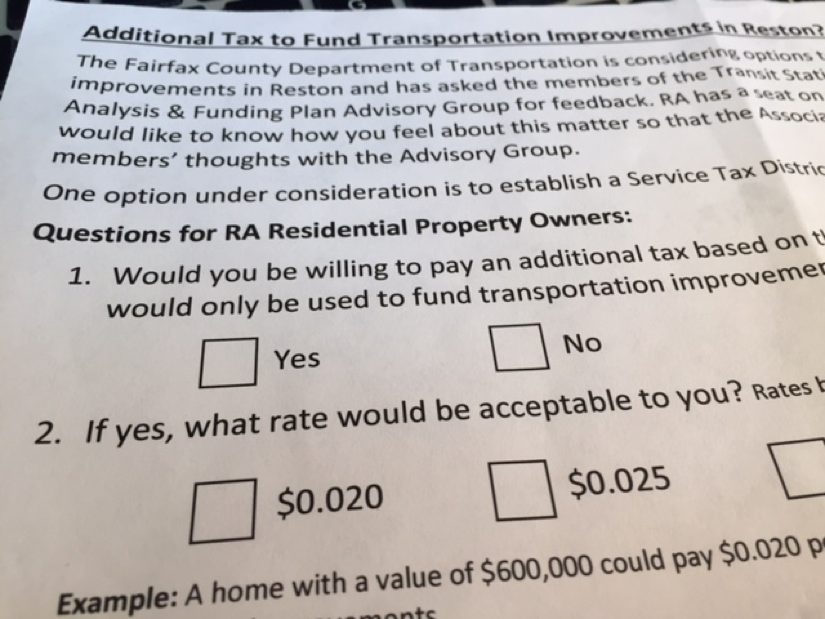
Would you be willing to pay an additional tax based on the value of your property that would only be used to fund transportation improvements in Reston? (Yes; No)
If yes, what rate would be acceptable to you? (Rates below are per $100 of appraised property value) ($0.020; 0.025; 0.030; 0.035)
As an example, an owner with a value of $600,000 paying $0.020 per $100 of the home value would pay $120 annually for transportation improvements.
Fulkerson said the question will also be sent electronically to RA members.
See the advisory group’s breakdown of what Reston needs in the December 2015 presentation attached to this previous Reston Now article.
Photo: Informal questionnaire at RA annual meeting.
 Advocacy group Reston 2020 has taken a hard look at future funding for Reston transportation improvements and found the costs will be tens of millions of dollars more than expected.
A study group, the Reston Network Analysis Group, is currently examining how to implement an urban street grid in the areas around Reston’s transit centers. Grid-style streets will help traffic and pedestrian flow as Reston’s undergoes expected development in the next decades.
In a paper titled “Reston’s Coming Urban Area Transportation Network: An Early Look at the Cost of Streets and Transit in and around Reston’s Station Areas,” Reston 2020 Co-Chair Terry Maynard has found that the network may cost double the $2.6 billion officials estimate.
From the paper:
The overall cost for Reston’s urban transportation improvements will be nearly twice what has been presented to the RNAG over the next 40 years using conservative assumptions of future development and inflation. Developer stakeholders have millions of dollars to gain annually by shifting more of that large financial burden to the “public” rather than placing it upon themselves.
It is imperative that the RNAG, especially the community representatives, ensure that our community is protected from unwarranted and excessive ‘taxation’ for transportation improvements that will average $125 million per year and add several hundred dollars each year to residents’ property tax bills.
The road projects will be built with a combination of public funds, developer proffers and perhaps a special tax on transit-area businesses and residents.
“Reston households could see a property tax increase averaging about $340/year over the next 40 years depending on the scope of the ill-defined “public” contribution and the funding option selected,” says Maynard. “Overall, Reston residents are likely to contribute a half-billion dollars in taxes to the for-profit efforts of Reston’s station area developers if any of funding Options #3-#6 are selected, and in a worst case scenario, they may pay more than more than $1 billion dollars in taxes to finance needed urban transportation improvements.”
See the entire Reston 2020 analysis below.
 County officials say Reston is going to need more than $2.6 billion in transportation improvements to keep up with development and population growth in the next 40 years.
How to pay for them? For the first time, the word “Reston Special Tax District” has been mentioned.
County transportation and planning officials have not itemized what the improvements will be, but said in a recent presentation that Reston roadway improvements (overpasses, widening, extensions, and interchanges) will cost $1.28 billion. Intersection projects will cost $65 million and the enhanced grid network will cost $1.28 billion, the report said.
According to the presentation (see below) by the Fairfax County Transportation Department to Fairfax County’s Reston Network Analysis & Funding Plan Advisory Group, money to pay for those infrastructure improvements may come from a wide array of sources. Among them: developer proffers, taxes, bonds, federal transportation grants and state funding, as well as a potential county meals tax.
But the concept of a special tax district for Reston’s roads is a new one.
Hunter Mill Supervisor Cathy Hudgins says a special tax district is just one of the “tools we are exploring in transportation improvements. We have done it with rail; we are doing it in Tysons.”
Tysons has a special tax district in place since 2013. Businesses and residents of Tysons are taxed in order to help raise about $810 million of the estimated $3.1 billion necessary for longterm changes. The Tysons Special Tax for FY2016 is $0.05 per $100 of assessed real estate value.
 The Fairfax County Board of Supervisors on Tuesday approved nearly $11 million for 18 transportation projects that will improve pedestrian and bicycle access to the Wiehle-Reston East Metro station and the future Reston Town Center Metro Station.
Among the improvements: adding sidewalks, crosswalks, signals, bike lanes and expansion of Reston’s upcoming bikeshare program. See the accompanying chart for the full list.
Transportation Projects for Reston/Herndon area
The county has been discussing the infrastructure necessary for Reston’s transit areas since 2008, when the Silver Line was just an idea. See the Reston Metrorail Access Group (RMAG) report.
The board also approved projects in 2011 and 2012 to support Reston-area Silver Line access improvements. Those previously funded projects are either completed, under construction, or in design, the county says.
“Our Board supports these projects to help expand transportation options for Fairfax County residents,” said Fairfax County Board of Supervisors Chairman Sharon Bulova. “As more people are looking for ways to walk and bike to work, Fairfax County strives to make the infrastructure available for residents to use. These crosswalks, sidewalks and the W&OD trail access will also support the eventual opening of the new Phase II Silver Line stations.”
The Supervisors also approved a list of about $11 million in improvements for the Herndon Metrorail Station Access Management Study (HMSAMS) for future access to the Herndon station and in the Town Of Herndon.
The approved HMSAMS projects include three pedestrian/bicycle intersection improvements; seven pedestrian and bicycle facility improvement projects, including signalized crosswalks, lighting, sidewalks, shared-use paths and on-road bike lanes; and three projects that will study the design feasibility and costs of major pedestrian and bicycle improvement projects.
In early 2014, the supervisors approved $42.92 million for the projects. The total for the project approved for Reston and Herndon on Tuesday total about $22 million, according to Fairfax County Department of Transportation (FCDOT) estimates. The $22 million will come from a 2014 bond referendum approved by Fairfax County voters.
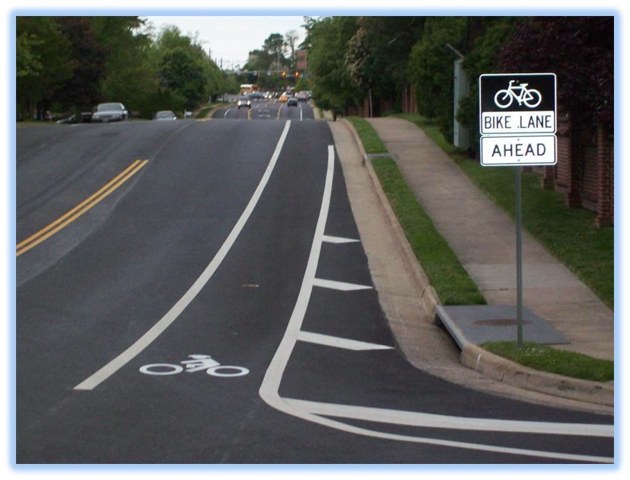 Bike trails. Safe Routes to School. Turning rails to trails. Better sidewalks in Reston. Even reducing vegetation to make trails and sidewalks more bicycle- and pedestrian-friendly.
Fairfax County wants your comments and ideas on potential transportation alternative projects, which could get primarily funded by the Virginia Department of Transportation.
Fairfax County will hold a public meeting on Sept. 17 (7 p.m. at Fairfax County Department of Transportation, 4050 Legato Road, Suite 400, Fairfax) to solicit comments on the proposed FY 2016 Transportation Alternative Program projects
After approval by the Fairfax County Board of Supervisors, the program’s projects will be eligible for submission to VDOT funding under the Moving Ahead for Progress in the 21st Century, also known as MAP-21.
This program provides 80 percent of the funds for each eligible project. A 20 percent local match is required. Any project presented to the board for endorsement must have an identified source of funding for this match.
The Federal Highway Administration (FHWA) has established criteria for activities or improvements eligible under the MAP-21 Transportation Alternatives provision. The alternatives are activities or improvements that increase the value of a transportation project or make it more aesthetically pleasing.
Eligible activities under the Transportation Alternatives Program:
Transportation Alternatives: Construction, planning, and design of on-road and off-road trail facilities for pedestrians, bicyclists, and other non-motorized forms of transportation, including sidewalks, bicycle infrastructure, pedestrian and bicycle signals, traffic calming techniques, lighting and other safety-related infrastructure, and transportation projects to achieve compliance with the Americans with Disabilities Act of 1990.
Construction, planning, and design of infrastructure-related projects and systems that will provide safe routes for non-drivers, including children, older adults, and individuals with disabilities to access daily needs.
Conversion and use of abandoned railroad corridors for trails for pedestrians, bicyclists, or other non-motorized transportation users.
Construction of turnouts, overlooks, and viewing areas.
Community improvement activities, including-inventory, control, or removal of outdoor advertising; historic preservation and rehabilitation of historic transportation facilities; vegetation management practices in transportation rights-of-way to improve roadway safety, prevent against invasive species, and provide erosion control; and
archaeological activities.Any environmental mitigation activity, including pollution prevention and pollution abatement activities and mitigation to-address stormwater management, control, and water pollution prevention or abatement related to highway construction or due to highway runoff; or reduce vehicle-caused wildlife mortality or to restore and maintain connectivity among terrestrial or aquatic habitats.
The Recreational Trails program under section 206 of title 23.
The Safe Routes to School program under section 1404 of the SAFETEA-LU.
Infrastructure-related projects-planning, design, and construction of infrastructure-related projects on any public road or any bicycle or pedestrian pathway or trail in the vicinity of schools that will substantially improve the ability of students to walk and bicycle to school, including sidewalk improvements, traffic calming and speed reduction improvements, pedestrian and bicycle crossing improvements, on-street bicycle facilities, off-street bicycle and pedestrian facilities, secure bicycle parking facilities, and traffic diversion improvements in the vicinity of schools.
Non-infrastructure-related activities to encourage walking and bicycling to school, including public awareness campaigns and outreach to press and community leaders, traffic education and enforcement in the vicinity of schools, student sessions on bicycle and pedestrian safety, health, and environment, and funding for training, volunteers, and managers of safe routes to school programs.
Safe Routes to School coordinator.
Planning, designing, or constructing boulevards and other roadways largely in the right-of-way of former Interstate System routes or other divided highways.
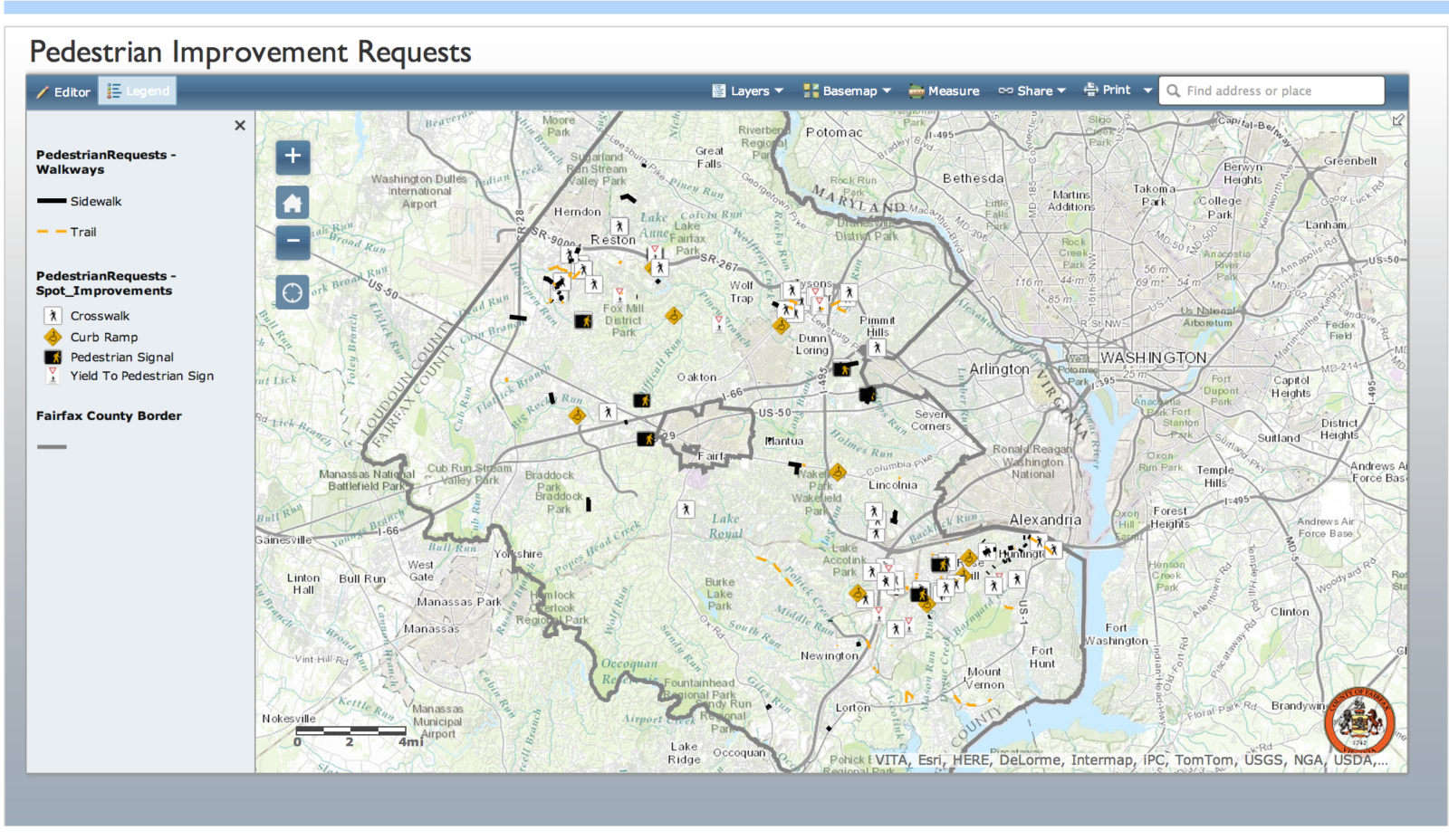
Now that the Silver Line is operational, Restonians are walking more than ever. That’s why it is a good time to tell Fairfax County how to improve pedestrian safety.
The Fairfax County Department of Transportation has introduced a new interactive online tool where you can show the county where you think pedestrian safety can be improved.
Says the county: “This tool is an extension of the existing process that allows residents to email the FCDOT and request sidewalk and trail connections, curb ramps, improved signage, and other strategies for improving pedestrian safety.”
County officials said the online tool “continues FCDOT’s initiative to be more open and interactive with the public.”
Recently, citizens have requested these improvements in Reston:
- A crosswalk at Upper Lake Drive and Sunrise Valley Drive.
- A sidewalk on Glade Drive at bus stop near Red Maple Lane.
- A crosswalk on Fox Mill Road at Stratton Woods Park.
- A “Yield to Pedestrians” sign on Steeplechase Lane near Lawyers Road.
To see other suggestions or to make your own, visit the FCDOT website.
Fairfax County has allocated more than $300 million for pedestrian improvements on routes near the Silver Line. But the Silver Line opened in late July without most improvements in place, says advocacy group Reston 2020. Also, the Board of Supervisors recently approved a $100 million bond referendum. If approved by voters, most of the changes will benefit walkers and bikers.
Reston 2020 pointed out in a recent blog post that only 500 feet of sidewalk near the station has been built.
Reston 2020 pointed out the lack of pedestrian upgrades in a recent post:
… There is absolutely no excuse for this pathetic county performance. In Reston, the RMAG (Reston Metro Access Group) gave sound recommendations for improving access infrastructure in Spring 2008 — six years ago. The Silver Line has been under construction since Spring 2009, and its design specifically locked down so the county knew what to expect.
Yet here we are, the Silver Line launched nine months late and work on improving access to the station not even half done. This is a pathetic and unconscionable performance by our Board of Supervisors on transportation planning and implementation.
