News

Fatal Herndon car crash on Saturday — “Detectives are asking for the public’s help in identifying two victims from this morning’s [Feb. 16] fatal single vehicle crash.  Officers responded to the crash around 4:26 a.m. on southbound Route 28 near the McLearen Road exit.” [Fairfax County Police Department]

Winter storm on its way — Heads up for tomorrow: expect sleet, ice and several inches of snow. The National Weather Service’s Winter Storm Warning will be in effect from 1 a.m. to 7 p.m. on Wednesday (Feb. 20). [National Weather Service]

News

Happy Valentine’s Day — Hundreds of locals from Reston and Herndon recently created 10,000 handwritten valentines as part of volunteering efforts for two initiatives produced by the Barbara Foundation of Reston. [Connection Newspapers]

Girl Power! Book Club — Book lovers can share their love of reading and head to Scrawl Books to discuss “Into White” by Randi Pink at 7 p.m. [Scrawl Books]


News

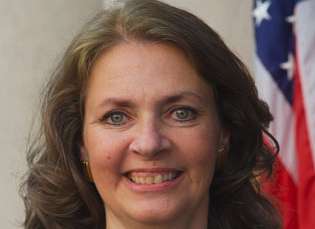
Hutchinson is running on a campaign to improve education, revamp transportation, lower medical costs and ensure Northern Virginia gets support from the Commonwealth.

Ever since she ran for the Herndon Town Council in 1990, Hutchinson said she is dedicated to “give my time and talents to improve the quality of life in my hometown,” according to her website, adding that her seven terms on the council gave her the background and knowledge to represent the area in the Virginia House of Delegates.


Opinion

The General Assembly had not been in session for more than two weeks until the differences between the House of Delegates and the State Senate became obvious. The Founding Fathers who conceived the structure of government built-in safeguards and checks and balances to ensure that a runaway government would be less possible. Two houses in the legislature were part of that scheme.

The lower house would be elected by a popular vote, but in the federal model the so-called “upper house” was first elected by state legislatures before the popular vote was instituted. Another major difference in Virginia is that in the House of Delegates, 100 members were given two-year terms and smaller districts. The 40-member Senate was given four-year terms and districts two-and-a-half the size of delegate districts.


News

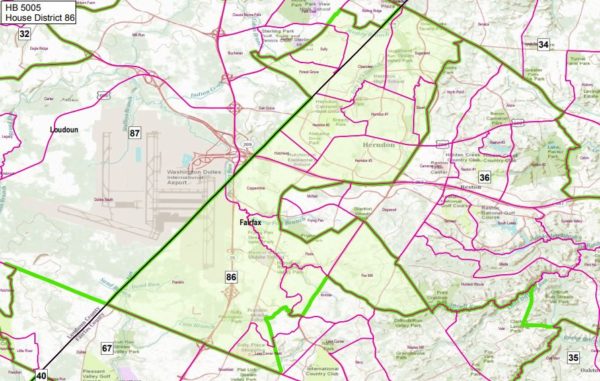
Nearly one month away from the special election for the 86th District seat, the Fairfax County Republican Committee will hold a meeting on Saturday (Jan. 19) to nominate a candidate.

Yesterday (Jan. 14), the committee put a call for a mass meeting to nominate a Republican candidate for the now-State Sen. Jennifer Boysko’s vacated seat, which represents parts of Fairfax County and Loudoun County.


News

Voters have an upcoming special general election for the 86th District seat in the Virginia House of Delegates.

On Saturday (Jan. 12), Ibraheem Samirah was nominated to represent the Democratic Party to fill State Sen. Jennifer Boysko’s vacated seat.


News

The Virginia House of Delegates has an opening for a seat that represents Herndon.

Del. Jennifer Boysko, a Democrat currently representing the 86th District, won the special election yesterday (Jan. 8) to take over the 33rd District seat in the State Senate vacated by Jennifer Wexton when she became a Congresswoman.


News

Reston lawmakers are gearing up to tackle gun violence and criminal justice reform ahead of the General Assembly kicking off a new session on Wednesday (Jan. 9).

The delegate and state senator representing Reston have been crafting legislation for the 46-day “short session” of the state legislature.


News

Del. Jennifer Boysko, who currently holds the seat, plans to run for the State Senate seat to replace Congresswoman-elect Jennifer Wexton in the special election on Jan. 8.

“I am running for the House of Delegates to fight for more affordable healthcare, more funding for education and transportation in Northern Virginia, protection of women’s rights, protection from gun violence and to protect the environment,” O’Reilly said in a press release.


News

Del. Jennifer Boysko, who currently represents the 86th District, announced last month plans to run for the State Senate seat to replace Congresswoman-elect Jennifer Wexton. The special election for that seat will take place on Jan. 8.

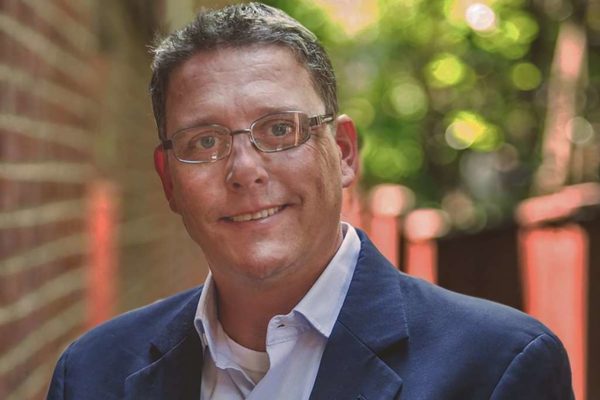
Thompson and his wife Elizabeth, a pre-school teacher at Floris United Methodist Church, live in the Floris community of Herndon with their four kids, aged 8 to 12.


Opinion

The proposed Equal Rights Amendment (ERA) designed to guarantee equal legal rights for all American citizens regardless of sex has had a long and tortuous history. With the almost daily unfolding stories of abuse of women from lower pay, discrimination in employment, physical and mental abuse and other degradation, it has become obvious that it is about time for the ERA.

Alice Paul of the women’s suffragist movement is credited with writing the first draft of the ERA that was introduced in Congress in 1921. An amendment for submission to the states for ratification as required by Article V of the Constitution did not pass both houses of Congress until 1972 with a deadline of March 22, 1979 for the states to act. That deadline has been extended twice as the required 38 state ratification has never been met.


Opinion

On August 30, I and my colleagues in the General Assembly will return to the State Capitol in Richmond at the request of Governor Ralph Northam to un-gerrymander eleven House of Delegates districts that have been found by a panel of federal judges to be unconstitutional. The court’s action was based on a finding that the districts as drawn violated the equal protection of the law afforded to everyone by the United States Constitution.

In the redistricting of 2011, the Republicans who had a majority in the House of Delegates packed African Americans in the Richmond-Hampton Roads regions into the eleven districts that have been found unconstitutional. From a partisan perspective the packing resulted in African Americans who historically vote Democratic to be limited in their influence over voting outcomes throughout the region. From a legal perspective African Americans were denied their constitutional protection from the gerrymandering that put them into fewer districts over which they might have an influence.


Opinion

As the General Assembly heads back into Special Session on May 23 to continue work on the biennium budget impasse, I looked back at how long we’ve been fighting to expand Medicaid–the major sticking point in our current budget standoff. Here’s what I wrote in September 2014 — nearly four years ago!

Recently the New York Times editorial board wrote about the “health care showdown in Virginia.” Their comments were not favorable. “In Virginia, there are 400,000 low-income people who can’t afford health care coverage but don’t qualify for federal subsidies,” they wrote. “If they lived across the state line in Maryland, West Virginia or Kentucky, which have expanded their Medicaid programs, they could get the coverage they need.” The reason they cannot; “a group of recalcitrant Republicans in the House of Delegates” have blocked Medicaid expansion at every opportunity.


Opinion

Last week Democrats in the House of Delegates were able largely to sit on the sidelines as Republicans debated among themselves whether Virginia should expand access to medical care through the federal Medicaid program. Arguments that had been used by Democrats to support Medicaid in the past were now being used by Republicans to support their newly found support for expansion.

The news is good since Medicaid expansion could only come about with bipartisan support. When the final vote was taken on the issue, only 31 Republicans voted “nay” and all Democrats voting “aye” with 20 Republicans making the total for passage 69 votes. There was a sense of relief as a goal for which we had been working for more than a half dozen years moved closer to realization.


Opinion

One of the first tasks in a new session of the Virginia General Assembly is to decide who is going to run the show. In the Senate of Virginia, the decision is made by the voters of the Commonwealth when they elect the Lieutenant Governor whose principal duty is to preside over the Senate. In the House, the Speaker of the House is the presiding officer who is elected by the members of the House.

The political party with the most members has control of the House and elects the Speaker. Republicans control of the House is 51 to 49 this session, a sharp drop in the 66-34 control of recent years. The closeness of the balance of power led to some meaningful discussions that should result in more transparency in the operation of the House.


View More Stories