

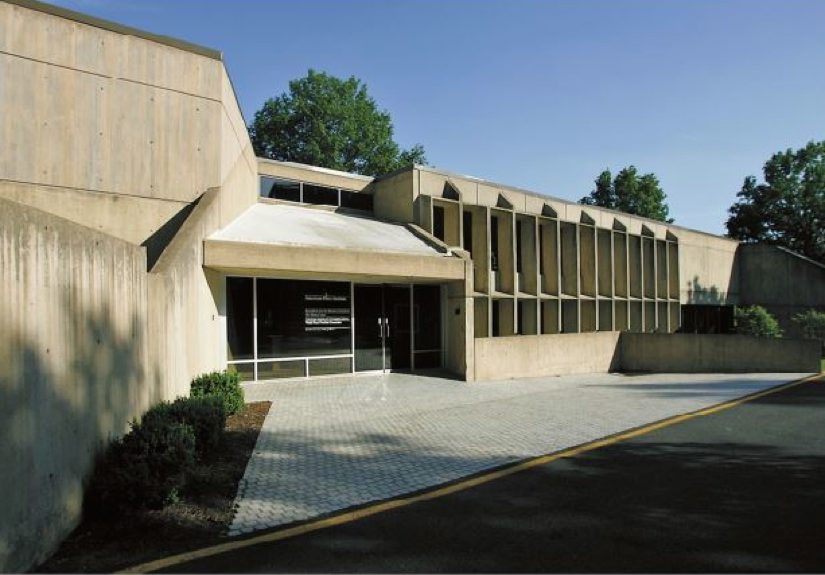
 This is an op-ed by William L. Winter, Executive Director of the American Press Institute from 1987 to 2003. It does not reflect the opinion of Reston Now.
The many voices now calling for action to save Reston’s historic, Marcel Breuer-designed American Press Institute (API) building from demolition are singing in close concert with the city’s founding principles. This unique planned community called Reston was intended to be, and has, since its creation in the 1960s, been true to its founding principles of “Live, Work, Play, and Get Involved.”
As Reston has grown and matured, its leaders and most prominent institutions have worked hand-in-hand with residents to make sure the community is, in all ways possible, a special place. Reston today thus is a careful reflection of the city’s founding principles. Its parks, schools, golf courses, and other public venues exist comfortably and in careful balance with residential and commercial development, and echo founder Robert E. Simon’s call for a community of, by, and for those seeking immersion in the very best life that a true “community” can offer.
There can be no doubting that the historically and architecturally significant API building on Sunrise Valley Drive has contributed greatly to Reston’s feel of distinctiveness. To have within its borders a classic structure created by the famed designer of the Whitney Museum (now the Met Breuer) in New York City, the UNESCO Headquarters in Paris, the headquarters of the U.S. Departments of HUD and HEW in Washington, D.C., and many other noted structures around the globe gives Reston an air of style, class, and grace — a sense that the community truly understands and appreciates the best work of the world’s most talented individuals.
 This is a commentary from Del. Ken Plum (D), who represents Reston in Virginia’s House of Delegates. It does not reflect the opinion of Reston Now.
In 1956, the then-appointed Fairfax County School Board appropriated $50 per month to be paid as a supplement to a school administrator to start an adult education program.
Since the schools were still racially segregated, a program for white adults was started at Annandale High School, and a program for black adults was started at Luther Jackson School. The favorite offerings at both locations were classes in sewing including the Bishop Method of Clothing Construction, as well as typing and shorthand.
The inexpensive, evening classes proved popular, and the program grew rapidly. Basic education classes for those adults who could not read and write were added as were night school classes to complete high school and to prepare for the G.E.D.
Recently, I had the pleasure of attending a 60th anniversary celebration of the program at the Plum Center for Lifelong Learning on Edsall Road in the eastern part of the county. I was honored several years ago when the Fairfax County School Board chose to name its first full-time adult education center for my work in adult and community education that spanned half the years of its existence. Read More
 The Fairfax County Board of Supervisors voted on Tuesday to put the question of a meals tax to Fairfax County voters this November.
The tax would add 4 percent to your meal. That’s in addition to a 6-percent sales tax, and would be applicable on restaurant meals, poured beverages, takeout food and prepared food from grocery and convenience stores.
The tax would give Fairfax County an estimated $100 million annually. The supervisors said 70 percent of that would go to Fairfax County Public Schools; the rest would help fund county services.
Nearby jurisdictions, including Arlington, Alexandria, D.C. and the towns of Herndon, Vienna and Fairfax, already have a food tax. They would bot be subject to the Fairfax County tax.
So, how do you plan to vote?
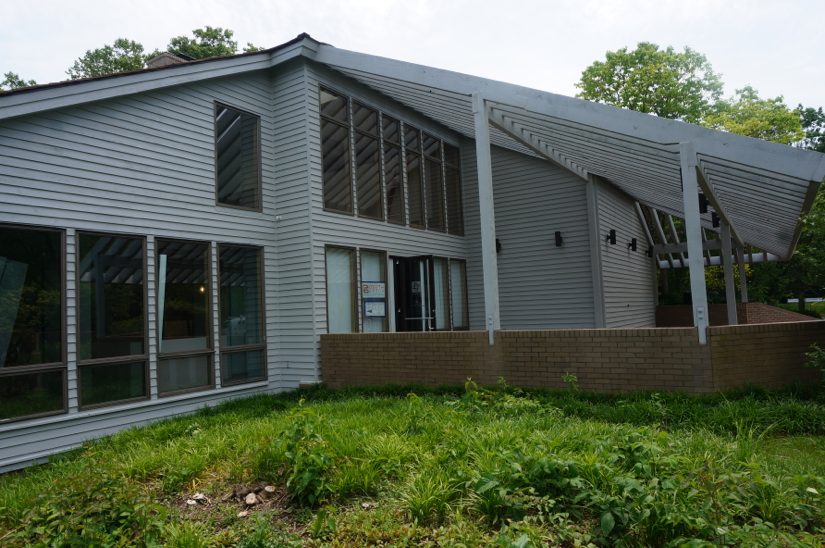 This is a commentary by Reston resident Ed Abbott. It does not reflect the opinion of Reston Now. If something is on your mind, Reston Now will print well-organized letters to the editor. Send them to [email protected].
Many years ago, I served in Admiral Rickover’s nuclear navy. He drilled the idea of responsibility into the heads of all the sailors and officers in his program. He said, “Responsibility is a unique concept. … You may share it with others, but your portion is not diminished.”
“You may delegate it, but it is still with you. … If responsibility is rightfully yours, no evasion, or ignorance or passing the blame can shift the burden to someone else. Unless you can point your finger at the man who is responsible when something goes wrong, then you have never had anyone really responsible.”
Let’s apply that same concept of responsibility for Reston Association’s Tetra project to statements made by several Board members during May 26, 2016 Board meeting.
As you may recall, that was the meeting where the Board approved an additional $430,000 for the renovations for the “Lake House” building (formerly the Tetra building).
The original estimate in the pro forma was $259,000. The total now for the renovation is almost triple the original estimate.
I will start with RA CEO Cate Fulkerson. In her presentation, she addressed the failure of the pro forma cost estimate to accurately predict the actual costs.
Ms. Fulkerson said, “I own that mistake with my staff.” (Emphasis added.) She admits that she was responsible for the estimate but goes on to implicate her staff. She is responsible for the work of her staff and therefore responsible for whatever mistakes they made. She cannot diminish her responsibility by blaming her staff. Read More
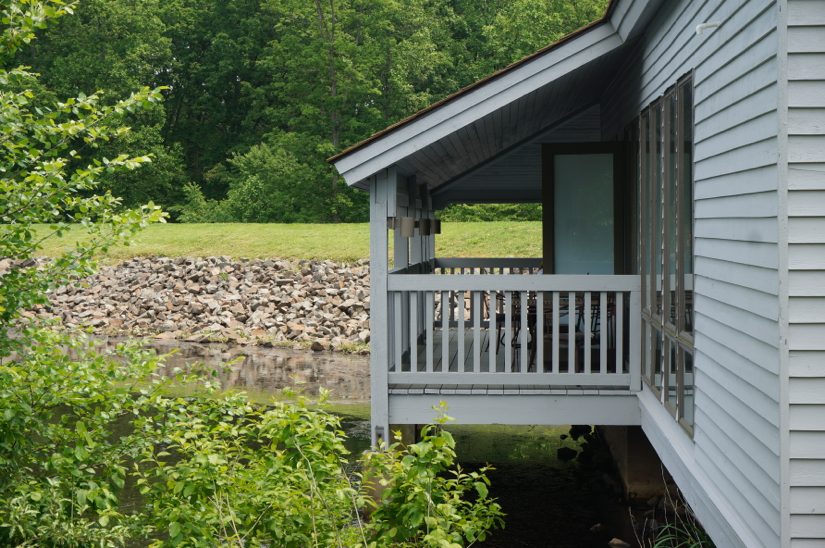
It’s been a week since the Reston Association Board voted to move $430,000 from its Operating Fund to use towards unexpectedly large expenses incurred by renovations at the Tetra/Lake House property.
RA purchased the building for $2.6 million in summer 2015 in order to fend off feared commercial development and add a community space.
A variety of things led to the overrun, including the previous tenant opting not to rent back for 2016 and rehab costs that came in much higher than expected, RA officials said.
But the reality is the cost gap is large and RA officials are not going to abandon the project. In fact, RA CEO Cate Fulkerson says the association needs to get Tetra/Lake House ready for business in order to start making money at the 3,000-square foot building on the shores of Lake Newport.
RA will begin after school care programs at Tetra/Lake House in the fall, and plans to rent it for events, meetings and parties. RA expects to eventually bring in more than $100,000 annually from those things.
But that does not mean the expenses will stop. The renovations, which have been somewhat scaled down as costs climbed, are not done. And at the May 26 RA Board meeting, representatives of the Lake House working group showed the board an elaborate landscaping and parking lot renovation idea that would cost a not-yet-identified amount should RA go forward with it in the future.
What should happen now? Should RA look for proffer and sponsor funding to pay for future costs? Should it cut their losses and sell the building? Should it charge non-RA members higher rates for rentals?
Do you think RA members will end up paying more than a few dollars in their annual assessments because of the deficit? Do you have any money-making or money-saving ideas?
Chat in the comments and have an nice weekend.
This is a commentary by Del. Ken Plum (D), who represents Reston. It does not reflect the opinion of Reston Now.
Attorney General Mark Herring recently issued an official opinion at my request and the requests of others as to the meaning of sex discrimination under Virginia law.
His thoroughly researched, 18-page opinion concluded that, in many instances, discrimination against LGBT individuals is actually illegal sex discrimination that violates both federal and state law.
Attorney General Herring’s opinion is both historic and courageous. It advances the work that many of us have been attempting to do in the legislature to ensure that individuals do not face discrimination in their housing or their workplaces because of their sexual orientation or gender identity. It is courageous in that the Attorney General could have chosen to duck the issues and leave it to the courts.
Simply stated, if an individual faces discrimination because of sexual orientation or gender identity, that person can seek relief under the Virginia Human Rights Act (VHRA). This act and others in the Virginia Code provide a clear declaration that the Commonwealth of Virginia does not and will not tolerate discrimination or allow someone to be treated unfairly because of their gender. Read More
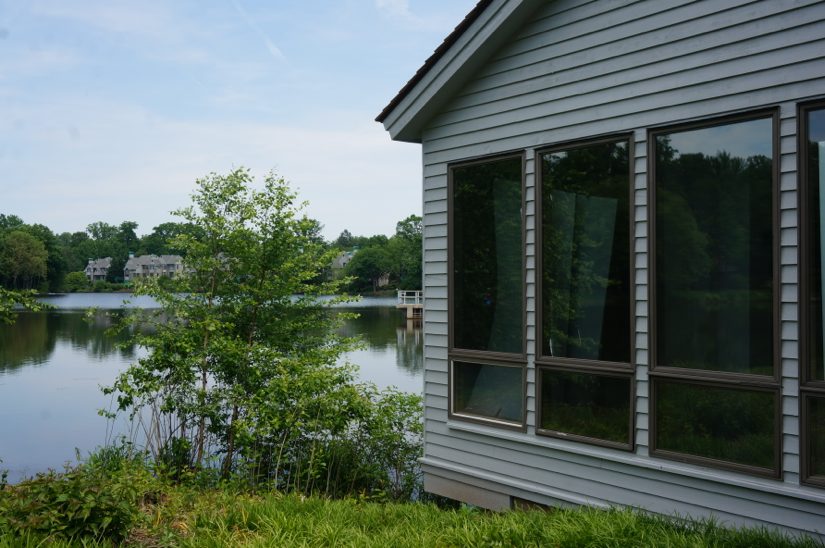 This is an op-ed by Reston resident Ed Abbott. It odes not represent the opinion of Reston Now. Something on your mind? Send us a letter at [email protected].
I attended last night’s meeting of the Board of Directors and witnessed the Board’s approval for funding the renovations of the Lake House.
Cate Fulkerson, the Association’s Chief Executive Officer, gave a Power Point presentation justifying the expenditure of $430,000 similar to the one that she presented to the Finance Committee on Monday.
Each Board member discussed their views after which the Board voted approval for the expenditure. As a result, both the Board and Ms. Fulkerson have failed their fiduciary responsibility in accordance with the Association’s governing documents. Here’s why:
The Board of Directors of the Association has a “fiduciary responsibility” requiring them to act in the best interest of the corporation. This responsibility is written into the Virginia’s state corporation law. Reston Association is a non-profit corporation and has filed articles of incorporation with the state. Those articles of incorporation comply with Virginia law. Read More
This is a commentary by Del. Ken Plum (D), who represents Reston in Virginia’s House of Delegates. It does not represent the opinion of Reston Now.
Those who were concerned that the 2016 Energy, Sustainability and Resiliency conference sponsored by the Virginia Chamber of Commerce Foundation would be business as usual were in for a surprise.
This recent conference in Richmond was about anything but holding onto the past; it was about seizing opportunities in a dynamic and exciting future whose issues of sustainability and resiliency in our energy future reign supreme. Read More
 This is a commentary from Reston resident Terry Maynard. It does not represent the opinion of Reston Now.
As RestonNow readers know by now, RA has at least a $451,000 budget shortfall in its operating income and capital investment for renovations of the Tetra property to bring it up to County code and other standards that make it usable for its intended purposes.
If I am reading the Board of Directors and Fiscal Committee agenda packages for this week correctly, the so-called Lake House Working Group is asking for an additional $428,000 for renovation of the property in addition to the $259,000 — increasing the projected renovation costs by 165 percent — apparently budgeted for Tetra property renovations this year although it is unclear that the previous sum was ever approved by the Board of Directors. (See the “Lake House” presentation to be given to the Board in the agenda packet, p. 11.)
That’s a total of $687,000 in renovations to be put into a building that, at a $2.65 million purchase price, was already a $1.5 million above fair market value. So if the supplementary capital budget is approved, through this year RA will have spent $3.35 million for a building worth about one-third of that. And that will probably not be the end of what of the investment needed to make the Tetra property usable. Read More
This is an opinion column by Del. Ken Plum, who represents Reston in Virginia’s House of Delegates. It does not reflect the opinion of Reston Now.
Last week, I attended my first meeting as a member of the Joint Legislative Audit and Review Commission (JLARC). I have admired the professional work of JLARC since it was established in 1973 to evaluate the operation and performance of state agencies.
JLARC performs its duties in three major work functions: studies, oversight and fiscal analysis, and support. The Commission is made up of nine delegates and five senators, but the actual work of the oversight arm of the General Assembly is done by a professional staff. Major topics of research are developed and approved by the General Assembly and sometimes by the Commission. There are more topics proposed for study than there are staff or time to pursue.
Our meeting last week followed the Commission’s usual procedure of adopting a work plan for the year. Some of the items on the work plan are continuation of studies started last year as the magnitude of many studies take more than a single year to complete. Read More
Reston Town Center is going to a paid parking system on Aug. 1. While RTC owners Boston Properties has softened on employee parking — retail and restaurant workers will get passes — it is going to cost $2 an hour for the rest of us (though many places say they will offer some validation).
Parking will be free on and weekends. But a weeknight dinner, a Wednesday business meeting or a free concert with Mr. Knick Knack on a Monday morning are all going to cost you.
Boston Properties says the paid system, managed by an app, is necessary to cut down on commuter parking now that the Metro is in Reston. But Boston Properties executives have also said on earnings calls that they can make tens of millions of dollars by charging for parking.
Here is what many consumers say: that they are done with Reston Town Center. More than 5,000 have signed petitions urging Boston Properties to reconsider. Hundreds have commented on Reston Now’s Facebook page that they will never visit on a weekday again if it means paying for parking.
Others say it is just as easy to go to restaurants at One Loudoun or Tysons, where parking remains free. But won’t more gas to get there actually cost you more than paying a couple of bucks to park at RTC?
What say you? Are you really going to avoid Reston Town Center come August?
This is a commentary by Del. Ken Plum (D), who represents Reston in Virginia’s House of Delegates. It does not reflect the opinion of Reston Now.
Earlier this year, a group of attorneys, the Virginia Coalition for Racial Diversity in the Justice System, brought to the attention of the community and the General Assembly that “there is a glaring, longstanding, and inexcusable lack of racial diversity amongst sitting judges, prosecutors, and public defenders in Virginia’s criminal justice system.”
Their statistics are very revealing: Currently, in Northern Virginia where more than 33 percent of all residents are racial minorities, only 7 out of 74 judges (10 percent) are African American, Hispanic, or Asian American.
They project that if the General Assembly continues to fail to appoint racially diverse judicial candidates that it is likely within two years only 4 out of 74 of those judges (5 percent) will be minorities.
The Coalition also found that racial diversity among virtually all of Northern Virginia’s Commonwealth Attorney and Public Defender Offices is similarly bleak. The bottom line for their study is that “the public’s confidence in the fairness and impartiality of the Virginia justice system is undermined when the system bears so little resemblance to the community it serves.”
 This is an op-ed by Reston Resident Terry Maynard of Reston 2020. It does not reflect the opinion of Reston Now.
In the next few months, the Fairfax County Board of Supervisors plans to approve a “one size fits all” zoning ordinance amendment that would guide redevelopment throughout the urbanizing areas of the county for decades.
It wouldn’t be too bad if the one size were a “medium” or “large,” but the board — increasingly desperate for new tax revenues from more development — has chosen to go for XXL. Specifically, the County’s draft zoning ordinance amendment proposes that all the county’s 20 transit station areas (TSAs), community redevelopment districts (CRDs), and commercial business centers (CBCs) be allowed a floor-area ratio (FAR) of up to 5.0.
So what does FAR 5.0 really mean? Literally, it means that a developer can build structures with floor space that is five times greater than the area of the parcel on which they sit. In the real world, it means that developers can build up these Fairfax County areas to a density that is greater than any that exists anywhere in northern Virginia. Even the massively developed Rosslyn Metro core only has a density of FAR 3.6 according to Arlington County (including twin towers above the Rosslyn station at FAR 10.0), about two-thirds of what Fairfax County is proposing to make available in communities and neighborhoods areas across the county.
In general, the FAR 5.0 density zoning ordinance may be appropriate for some locations, such as a part of one of Reston’s transit station areas. Reston’s new master plan calls for allowing FAR 4.0 (plus a bonus of FAR 0.5) for the small area immediately north of Reston’s Town Center Metro station. But the draft amendment makes no distinction in allowable density at the station and at the half-mile perimeter of the station area where it should taper substantially. Read More
This is a commentary by Del. Ken Plum (D), who represents Reston in Virginia’s General Assembly. It does not reflect the opinion of Reston Now.
Virginia Gov. Terry McAuliffe issued an executive order recently restoring civil rights of voting, serving on a jury, running for office, or being a notary public for persons who had been convicted of any and all felonies in the past but who have completed the terms of incarceration and who have completed any period of supervised release of probation and parole.
The restoration of civil rights after completing a sentence has been automatic in most states and routine in those that have had an application process. Virginia required an application before the Governor’s order, but the waiting list for acting on applications was notoriously long until Gov. McAuliffe came into office. His executive order will cover more than 200,000 people.
Most, including myself, have applauded the Governor’s action. As he described it, “it’s the right thing to do.” Other have accused him of playing politics. Actually, I believe the laws in Virginia that denied the right to vote to people who had served their sentences were political, and what the Governor did was to take some of the politics out of registering to vote. A review of history will explain what I mean.
Denying civil rights to persons who had been convicted and served their sentences was part of an effort during the early part of the 20th Century to limit the electorate in the state to white men who supported the political establishment. Jim Crow laws that were primarily aimed at black people required voters to write on a blank sheet of paper information that was required in the state constitution and to answer any question posed by election officials. Read More
This is a commentary by Del. Ken Plum (D), who represents Reston in Virginia’s House of Delegates. It does not reflect the opinion of Reston Now.
The Library of Virginia has an informative new exhibit called “First Freedom” that includes documents on the passage of the Virginia Statute for Religious Freedom penned by Thomas Jefferson and passed by the Virginia General Assembly in 1786.
The original manuscript on parchment drafted by Thomas Jefferson is housed at the Library of Virginia. Termed in the exhibit as “one of the most revolutionary pieces of legislation in American history,” I believe it is the most important piece of legislation ever passed by the Virginia legislature and possibly by any legislative body.
It codified freedom of conscience. The meaning of the Virginia Statute as it found its way into the Virginia Constitution’s Declaration of Rights and the U.S. Bill of Rights is still debated today. Read More
