

 For the second time in two years, Fairfax County Supervisors are considering a meals tax referendum.
Adding a 4-percent meals tax could give the county (and its services and public schools) an additional $90 million annually.
The idea, which the supervisors will discuss at their April 26 meeting, was last discussed in 2014, when county officials were looking at a strained budget. Ultimately, a task force examined the idea, but the supervisors decided not to hold a referendum. County residents last voted on the idea in 1992. It failed.
But times have changed. Aftereffects of the recession that began in 2008 have left home values flat as the county population and need for services has grown, putting the county budget in an annual battle, supervisors say.
The supervisors are likely to approve next week the $3.99 billion budget for Fiscal Year 2017. That budget will include a tax rate rise of 4 cents per $100 of home value, or about $303 for the average Fairfax County homeowner. The county will give about $2 billion to Fairfax County Public Schools.
Most surrounding jurisdictions, including Arlington, Alexandria and the towns of Herndon and Vienna, and the District of Columbia have a meals tax. Does that prevent you from eating in restaurants in those locations?
Meanwhile, grassroots efforts have popped up on both sides of the issue. Several local restaurant groups are against the idea, while many school board members and school advocates say diversifying the tax base is the only way to stave off cuts to services.
What do you say?
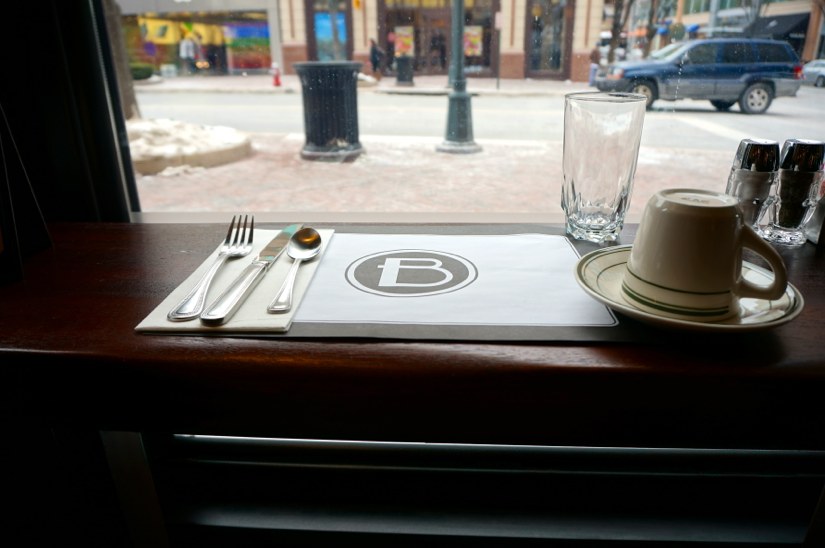
Ted’s Bulletin at Reston Town Center/file photo
 This is an opinion column by Del. Ken Plum (D), who represents Reston in Virginia’s House of Delegates. It does not reflect the opinion of Reston Now.
A little over a week ago, there was a memorial service for Reston’s founder and namesake, Robert E. Simon, Jr., who passed away in September.
Several hundred people gathered at the Hyatt Regency Reston to hear the stories and to celebrate the life of a truly remarkable man. He became head of Carnegie Hall in New York at age 23 when his father passed away. The sale of the hall later would give him the money to buy the more than 6,000 acres in Northern Virginia that would become Reston.
Drawing upon his experiences of living in Europe for extended periods of time, he would build a community that through its mixed-use design with village centers would foster the development of community.
Most remarkable for its time in the mid-1960s was his insistence that the community be open to all persons including black people. Virginia at the time was a very segregated society. Massive Resistance was being used by political leaders to keep from integrating the schools as the Supreme Court had ruled nearly a decade before. Housing patterns and communities were strictly segregated.
Some suggest that Bob Simon’s adamance that his new community be open to all people was a response to the discrimination he felt as a Jew particularly when he was at Harvard. He was not casual in his beliefs that his new town should be inclusive; that policy made financing very difficult and for a while seemingly almost impossible. With all the other many good things that can be said about Robert E. Simon, Jr., I consider him a real civil rights hero.
Last week gave me an opportunity to see another of my civil rights heroes, former governor Linwood Holton, who came to George Mason University to participate in a ceremony naming one of the plazas at the University in his honor.
Governor Holton served as governor of Virginia from 1970 to 1974 — the first Republican to be elected governor since Reconstruction. George Mason University was interested in honoring him because he was the governor that signed the bill that converted the former University of Virginia extension to the new George Mason College. It is now the largest university in Virginia and is in the top tier of research universities in the country.
I consider Linwood Holton a civil rights hero because one of his first actions as governor after he had moved his family into the Executive Mansion was to enroll his children in the local public schools that were the segregated black schools. A picture of him walking one of his daughters into an all-black school to enroll her was on the front page of the New York Times. It was a signal to the world of the emergence of the New South where racial segregation was slowly but surely being cast aside.
I am honored to have known both men and to have them as friends. As courageous as they were, I do not think that either thought of himself as courageous. Each simply believed in doing the right thing. They are examples for all of us to follow.
 This is an op-ed by Reston resident Terry Maynard. It does not reflect the opinion of Reston Now. Something on your mind? Send a letter to [email protected].
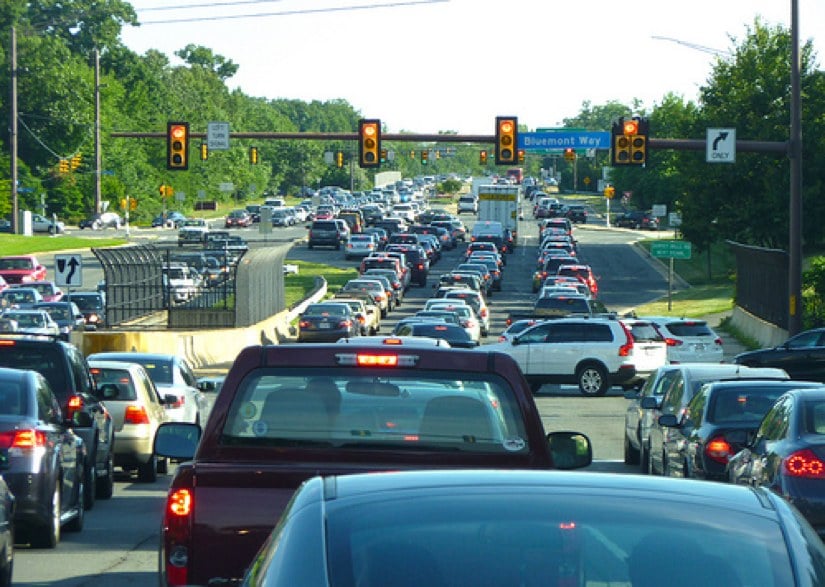
Restonians are once again faced with the prospect of the burden of an added local “tax service district that could add hundreds of dollars to their annual property tax bill every year. The one we already have, Small Tax District 5, supports our Reston Community Center in providing cultural and educational activities for the community. The proposed new one would solely subsidize developer profits while increasing county tax revenues.
As this discussion continues, Reston Association has shared a questionnaire online with its weekly RA NewsLine (click on “Transportation Tax Survey) for residents to provide feedback on the Reston special transportation tax district idea. I urge all Restonians to vote “NO.” The following provides an explanation why.
The basis for the proposal lies in planned development in Reston’s station areas, growth that will exclusively benefit Reston’s station area landowners. Assuming that all Reston developers are as successful as Boston Properties per its 2015 annual report, their likely profit will total more than $53 billion over 40 years after building costs. That includes more than $9 billion from their future development as well as more than one billion dollars per year from their existing Reston holdings. That is an average of $1.3 billion per year!
This is a commentary from Del. Ken Plum (D), who represents Reston in Virginia’s House of Delegates. It does not reflect the opinion of Reston Now.
Almost a year ago the Washington Business Journal carried a headline, “George Mason University sells Patriot Center naming rights.”
For nearly $7 million over the next decade GMU agreed to change the name of the Patriot Center to the Eagle Bank Arena with the new name prominently displayed on the sides of the sports and events complex. If the deal is renewed for another decade, the deal would grow to $13.7 million.
Selling rights to sports venues is of course not new. Most arenas, stadiums and fields are named for the highest bidder in the competition to get the recognition that comes with such naming rights. For the college or municipality the deal brings revenue to support the sports program and the facility. Some states are selling naming rights of bridges and highways as a way to raise revenue.
Just last week, George Mason University announced pledges totaling $30 million to the George Mason University Foundation to support the School of Law. “The gifts, combined, are the largest in university history,” the GMU press release noted.
The press release went on to say, “in recognition of this historic gift, the Board of Visitors has approved the renaming of the school to The Antonin Scalia School of Law at George Mason University.” Read More
This is a commentary by Del. Ken Plum (D), who represents Reston in Virginia’s House of Delegates. It does not reflect the opinion of Reston Now.
A concern in Virginia over who was financing campaigns in the Commonwealth led the state’s largest newspapers in 1997 to create the Virginia Public Access Project (VPAP).
The idea was simply to make public information on campaign finance documents as to who was funding political campaigns. Virginia does not limit contributions to campaigns, but requires that the names and addresses of contributors and the amount of contributions be filed periodically with the state on designated forms.
The advent of VPAP as a nonprofit, nonpartisan organization put that information on the Internet for the public to see. Visit vpap.org to see who contributes to me and to all the other elected officials in the state.
The original purpose of VPAP is a very important one, but its board and staff have creatively turned its website into a very important place to visit if you want to know more about Virginia and its governance. Read More
 Delays. Fires. Offloading. A 29-hour shutdown to do repairs.
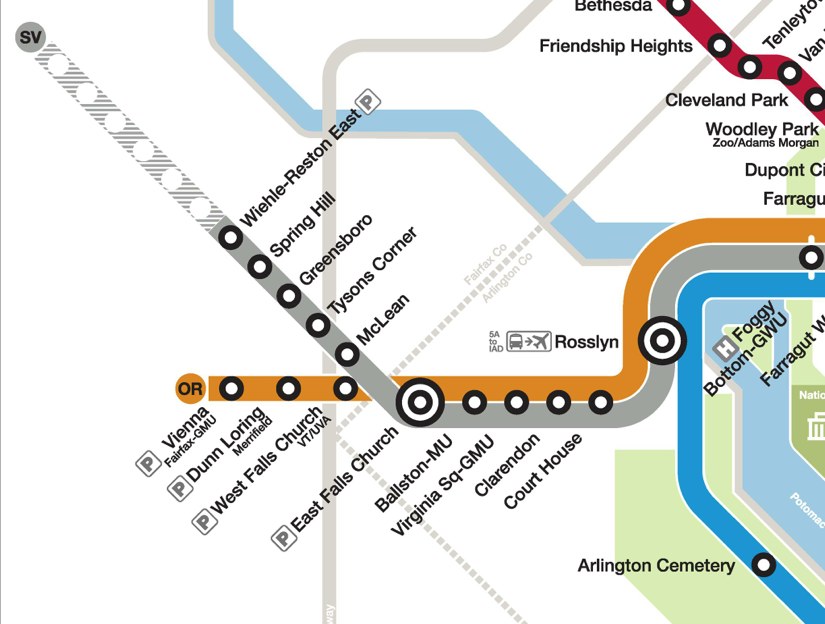
Just a typical week in the life of Washington’s Metrorail system. And now this: Metro’s top officials said on Wednesday that the transit system is in such need of repair that they might shut down entire rail lines for as long as six months for maintenance.
While Metro GM Paul Wiedefeld has not said which lines will need to be closed for repair — or for how long — he did say he was considering such lengthy closures. He said he expected to have more information within a month to six weeks.
This is less than two years since Reston’s Silver Line station opened. Rail to Reston was supposed to transform — and is still aimed at transforming — Reston into a transit-oriented community, with about a dozen residential and mixed-use projects in the pipeline built close to Wiehle-Reston East and the future Reston Town Center Metro stop (slated to open in 2020).
But it seems Silver Line riders here have not been impressed thus far. Long waits for trains, the universal Metro snafus, the expense of riding and parking and a confusing parking garage system in Reston have led to myriad complaints.
Is this the last straw for you? Are you sticking with Metro or re-evaluating your transportation options?
This is an opinion column by De. Ken Plum (D), who represents Reston in Virginia’s General Assembly. It does not reflect the opinion of Reston Now.
Folks back home where I grew up in Page County, Virginia, were not known to have a lot to say about events. In fact, they were suspicious of people who talked too much. Someone who talked a lot about themselves was considered a braggart, and there was little need to talk about circumstances beyond ones’ control.
As often is the case, people of few words can pack a lot of meaning into the words they do say. Some of the wisdom conveyed to me in simple words and phrases of the folksy sayings of my childhood came to mind during the recent legislative session.
I was always advised by my parents and others to “Never cut off your nose to spite your face.” That, however, is exactly what the General Assembly did this session. Over the last couple of years various reasons have been given for not expanding Medicaid to provide health care to the working poor.
Some argued that expansion would add to the national debt, but as a self-funded program it does not. It was called too expensive even though Virginia taxpayer dollars that go to the federal government would have covered 100 percent of the cost in the first three years. It was called “Obamacare” as though the President having something to do with it somehow made it bad.
The state Medicaid program was audited more than 60 times, and proposed reforms were adopted. The federal expansion would have freed up more than 150 million in state dollars that could have been used for other programs like the schools. The inaction of the General Assembly to close the coverage gap in health insurance has left more than $3 billion on the table that could have come to Virginia and as many as 400,000 Virginians without health care.
I believe that the old saying, “penny wise and pound foolish” might apply to the General Assembly in the future if it continues to refuse federal dollars for Medicaid when the 100 percent reimbursement becomes a 90-10 match.
Likewise, the failure to invest regularly in infrastructure improvements will cost the state in the future. A greater investment in bridges is especially important. The Metro system that is critically important to Virginia commuters is another example of penny wise, pound foolish policies of the past. The recent unprecedented closing of Metro in order to identify safety concerns and the finding of a significant number of critical repairs that are needed show how far behind we are in investing in its maintenance.
“A stitch in time saves nine” is always good advice. I am pleased with the additional funding that the state is providing in early childhood education. Many studies prove the point that investing in children’s education early saves money in the future.
Society is more complex than it was in the years of my youth, but the wisdom of that time can still apply to understanding the challenges of today.
This is an opinion piece by Del. Ken Plum (D), who represents Reston in Virginia’s House of Delegates. It does not reflect the opinion of Reston Now.
My first experience in Fairfax County came as a result of being placed as an intern teacher by the University of Virginia in Fairfax County Public Schools (FCPS).
My history/political science undergraduate degree from Old Dominion University did not provide me the necessary credentials to teach; the M. Ed. program allowed me to continue my studies in history while completing a year-long supervised internship. The school in which I was placed scheduled me for three periods of the most challenging students in the school from whom I could learn to teach.
That year and the additional two years I was in the classroom before moving into administration continue to be the hardest work I ever have had to do. And I learned a lot from the students. I prided myself on being able to work with the most difficult students, but even I faced challenges I could not meet.
One student in particular who had been removed from every class in which he was enrolled was finally removed from my class as well. Years later, after I had become director of adult education for FCPS and responsible for the night high school, I saw that same student graduate from high school. He had settled down, gotten a job, and many of the complexities of his personal life had been resolved. He was married and seemed very happy. Read More
 This is an Op-Ed by Reston Association President Ellen Graves. It does not represent the opinion of Reston Now.
Reston Association offers an inspiring array of ways to get involved in the community. From volunteering to serve on a committee to helping beautify natural areas through working with Habitat Heroes, Reston residents have always answered the call to donate their time and efforts for good causes.
Sometimes, however, it’s the little things that count the most in the quest to make Reston the best it can be. Voting in the RA Board of Directors’ election is perhaps the single most significant way members can make a difference in the community without having to dedicate hours of their time.
The voting period for the board election opened March 7 and runs through April 4. Voters can vote online or through the mail. Two of this year’s three races are uncontested, but making your voice heard through voting is nonetheless important in the election process. Read More
 This is an op-ed by nonprofit executive Amanda Andere, who formerly served on the Reston Association Board of Directors. It does not reflect the opinion of Reston Now.
Reston Association members have already received their ballots for board elections. Several people have asked me who I will be supporting in the At-Large race.
There is really only one choice if we want a community leader committed to engaging members, bringing together diverse groups to solve problems; who is dedicated to good governance, and community. Eve Thompson.
I have spent the last 12 years living and working in Reston. For the last eight years as a homeowner, and for all of those years working as a staff or volunteer for nonprofits concerned about living out Bob Simon’s dream that this be an economic inclusive community. Eve Thompson is a person I first met when she was honored as a Best of Reston awardee, and she continues to live out that vision of a place where people don’t just live, but feel part of the community.
I served on the Reston Association board with Eve and admired her dedication to our members and her ability to bring people together, even when they disagreed, to do what was best for Reston.
In the next few years Reston Association will have to make some critical decisions about how we offer the best value and services to residents during a period of unprecedented growth. How we engage a diversity of voices in those decisions and balance our needs versus our wants with the highest amount fiscal responsibility and fiduciary oversight.
Eve has proven to have those skills in her role as a current board member and her leadership in reviving Lake Anne as the former president of the Lake Anne Merchant’s Association and active member/leader of many Reston task forces and coalitions that have addressed the critical sustainability and viability issues facing our community.
Eve is the choice for the Reston Association At-Large seat if you want all of the qualities of what makes Reston a wonderful place to live. A leader who understands where we have been, but can see how we need to change in the future.
Amanda Misiko Andere, MPA
Ironically, Ringling Bros. and Barnum & Bailey Circus moved into the Richmond Coliseum for its annual stand at the same time last week that a few blocks away the General Assembly concluded its annual meeting and members packed up and went home.
Circus promoters need to come up with a new theme each year to keep its patrons returning; this year’s theme was “Extreme.” Reviewers are likely to come up with very different assessments of the General Assembly session. It was not as extreme as some sessions, but as always there were some really good things that happened and some not so good.
Legislative sessions tend to be ponderous — nothing as exciting as a flying trapeze or person being shot out of a cannon. Progress in changing laws is made mostly in small, incremental steps.
This session, I am pleased that small steps were taken to reduce the flow of students going from the classroom to the courtroom. More emphasis will start to be given to providing alternatives for youth who misbehave but who should not be treated like criminals.
Very small steps were made in gun safety by facilitating background checks for those not required to have one to purchase a gun but who volunteer to do so. My bill to require background checks for all purchases at gun shows was defeated. A new law will deny gun ownership for those against whom a permanent protective order has been issued. Persons who receive protection from the court through such an order will find an easier path to getting a concealed weapon permit, an idea I did not support.
School reform continues at a slow pace, but there seems to be a clear recognition that there is too much standardized testing. School systems struggling with their budgets will receive more state aid but still at a level below 2006. Economic development funds are increased which should help the super salesman Governor McAuliffe attract more businesses to the Commonwealth.
For the first time in history the legislature removed a Supreme Court Justice from office. The refusal to confirm Gov. McAuliffe’s appointee had nothing to do with the credentials of the justice who was acknowledged by all to be eminently qualified but had to do with personalities and struggles between the legislative and executive branches.
A one-day discussion of the possible nomination of former Attorney General Ken Cuccinelli brought a public outcry. The legislature in the end confirmed a new justice (without my vote) who is as ideologically conservative as Cuccinelli but not a political activist.
The biennial budget brought good news to many programs as the economic recovery has produced more revenue than in the past. Unfortunately, my bill to expand Medicaid coverage was not approved.
The purpose of the legislative session is serious business and not entertainment like the circus. There are times, however, that it may be difficult to tell the difference.
Information about legislative results from this session is at lis.virginia.gov/lis.
 Fairfax County is considering relocating one of its two county septage receiving sites from Colvin Run in Great Falls to the Lake Fairfax Park Maintenance Area 6 on Hunter Mill Road in Reston/Vienna.
There are 21,000 homes in this area of the county, mostly in Great Falls and Oakton, whose septic tanks must be emptied into a sewer line once every five years (or about 6,000 visits to the current site annually). The current location also receives regular deliveries of restaurant grease.
Officials said the current site floods, smells and has a pipe that is too small to receive the sewage. After looking at six area locations, they determined the Lake Fairfax one is the most appropriate place to built a new, secure, odor-controlled facility. That land is on park land, but not in an area of the park accessible to visitors.
However, Hunter Mill-area residents said at a recent meeting that Hunter Mill is the exact wrong place to build the sewage dump. Among the issues: Two-lane Hunter Mill Road, and its one-lane bridge, cannot handle the increased traffic; the Lake Fairfax site is close to trails and streams; and the sewage should stay closer to its customers in Great Falls.
A report prepared by an environmental consulting firm said, among other things, it would cost more than $700,000 less to renovate the Colvin Run site rather than build a new plant at a cost of $3.4 million.
Where do you think the septage site should be?
Photo: Proposed site of new facility on Hunter Mill Road
This is a column by Del. Ken Plum, who represents Reston in Virginia’s House of Delegates. It does not reflect the opinion of Reston Now.
One of the responsibilities of the Governor of Virginia as dictated by the State Constitution is to propose a budget for a biennium.
With the governor being limited to one four-year term, the current scheduling of the two-year plan for state revenues and expenditures is awkward. A newly elected governor takes office inheriting a budget left by the preceding governor; likewise the final budget proposed by a governor is implemented by his or her successor.
The mid-term budget takes on special significance as it is the only one proposed and implemented by a governor. The significance of this budget was clearly not lost on Gov. Terry McAuliffe. Of course, in all instances the budget must be approved by the General Assembly.
Both the House of Delegates and the Senate made amendments to Gov. McAuliffe’s budget. In a ritual that happens each even-numbered year when the General Assembly meets in a “long” or 60-day session to consider the biennial budget, both houses have appointed conferees to work out the differences among the two houses and the governor.
The conference report, once approved by both houses and signed by the governor, becomes the state’s budget for the next two years beginning on July 1, 2016. For a comparison of the governor’s, House and Senate budgets, go to Budget Policy Choices.
With growth in the economy the budget proposed by Gov. McAuliffe and approved by the General Assembly will for the first time in history exceed $100 billion. While that number is huge in absolute terms, it is modest when Virginia as the 10th-wealthiest state in per capita income is compared to other states. Virginia’s state and local revenue as a percentage of personal income is 49th lowest among the states. The Commonwealth’s per capita state general fund expenditures are in the middle of the other states at number 25 with $2,168. The national average is $2,496. Read More
 This is an op-ed from Reston resident Colin Mills. It does not reflect the opinion of Reston Now.
It seems like you can’t open your computer or turn on your TV these days without hearing about this year’s presidential election. If you follow the news at all, you’ve been bombarded with stories about the candidates and their plans for the country.
But there’s another election going on right now, one that has a direct impact on our community, and you’ve probably barely heard about it at all. I’m referring to the Reston Association Board of Directors’ election taking place this month.
They say that decisions are made by the people who show up. And when it comes to deciding who’s on the RA board, far too few Restonians are showing up with their vote.
Even though the ballot and electronic information are mailed or emailed right to you, and even though voting online or by mail takes just a couple of minutes, turnout in these elections usually hovers in the 15-percent to 20-percent range.
It seems that a lot of Restonians don’t know about the election or think it’s important enough to vote. That’s a shame, because who represents us on the RA board matters a great deal to the future of our community.
There are countless ways in which the RA board affects the future of Reston, but today I’ll focus on one: the development and redevelopment of our community.
For better or for worse, Reston is changing. The Silver Line is a reality now, and every time you drive past the Wiehle-Reston East station or over by the Reston International Center, you can see that change is underway.
The new development sparked by the Silver Line will bring a lot of opportunities and challenges here in Reston. On the positive side, it will bring new jobs, an influx of younger residents, and exciting new shops and restaurants. On the other hand, it will also bring more traffic, more pollution, and more demands on our facilities, our infrastructure, our open space. Read More
 This is an op-ed from Reston resident Terry Maynard. It does not represent the opinion of Reston Now.
It is time for that annual RA ritual: The election of members to the RA Board of Directors. There are three positions up for election this year, one At-Large position and two district seats.
The only contested election is the At-Large race among three candidates. I recommend voting for John Bowman, whom I have known and worked with for nearly a decade on the RCA Board, the Reston Master Plan Task Force, and Reston 20/20. He has also worked on RA’s Transportation Committee for several years.
I have found John to have an uncanny ability to look at Reston’s many issues from diverse angles and balance those considerations in making decisions that served all Reston, not just a single faction or location. In doing so, he communicates openly and listens to all points of view, values that need greater attention on the RA Board.
He also appreciates the financial burden we share in making Reston a better place, and he would oppose unwise future RA investments or expenditures, such as the exorbitant Tetra purchase. In brief, John believes in the principles that make Reston a unique master planned community, and he will work to advance them wisely and openly.
The two district representative candidates are running unopposed, but, yes, they both need your vote! Read More
