

 One of the early rites of passage for me and those of my generation was to get a driver’s license. I was pleased to run errands for the family, and my parents were generous in allowing me to use the family car for school and social events.
Now I understand that about a fourth of millennials are not even bothering to get a driver’s license. And when you consider how many communities are developing by transit oriented development (TOD) principles, there is less of a need to own or lease an automobile. These shifts in living patterns have significant public policy implications.
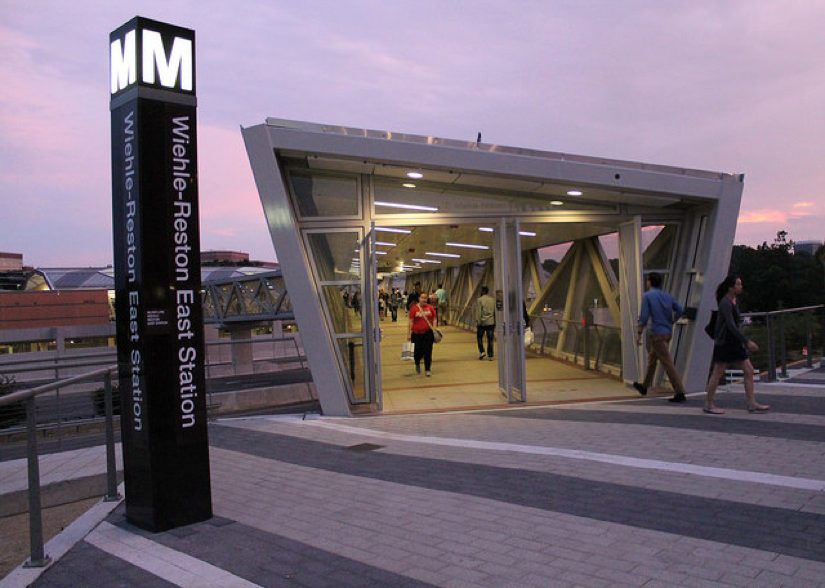
With the opening of the Silver Line to Wiehle-Reston East, I have another alternative for my travels. Within a year residents in the new apartments under construction by Comstock at Reston Station will be able to take the elevator down to the plaza to the bus to Dulles on the Silver Line to points east as well as Maryland.
For weekend travel, a Zipcar or other hourly rentals are available, and a bicycle provides good healthy exercise. A new hourly car rental system allows you to leave the car at your destination without the need to return it to where you picked it up. Some suggest that the driverless vehicle is not that far in the distant future, and with the rapid advances I have seen in recent times, I believe them.
The traditional taxi system got a jolt with the introduction of Uber and other companies that use drivers and their own automobiles to transport passengers. The Virginia General Assembly passed legislation this year to establish a legal framework under which the companies can provide service to consumers in a safe and legal way. I would guess that there is likely to be a melding of these two businesses in the future to provide more convenient car ridesharing.
In the short run, I understand the interests of persons dependent upon automobile travel that our roadway surfaces be repaired and that traffic congestion be reduced.
We suffer from more than a decade of refusal on the part of the legislature to provide adequate funding for highway construction and repair. During that time I co-sponsored and voted for many bills only to see them defeated. Technological advances are helping to reduce congestion with better traffic light systems and with regulated traffic systems as has just been introduced on I-66.
These improvements must take into account the bigger picture of transportation. Road improvements must include bicycle travel lanes. Mass transit will need subsidy just as our roads are subsidized. Public and private incentives need to be offered for car-pooling, and the use of transit. TOD must be given priority.
Our public policy on transportation must recognize that there are many different ways to go.
 This is an op-ed from Sen. Janet Howell on the death of Reston founder Robert E. Simon. It does not reflect the opinion of Reston Now.
[On Monday], we all lost a great visionary, Reston lost its founder, and I lost a dear friend. Robert E. Simon died peacefully at his home in Reston at age 101.
Bob changed the way we view community in America when he created the Reston community over 50 years ago. Risking his fortune, he purchased land in then rural countryside of Virginia. He then proceeded to develop a community unlike any other in our country.
Reston was to be open and welcoming to all, regardless of race or economic status. In an era of Jim Crow and still segregated schools, that was unheard of. His community was to be “planned” and mix housing, businesses, and vast acres of untouched land around village centers where people could mingle and support small local shops. Respect for nature was central to his plan.
It was to be anti-suburbia, suburbia.
Not surprisingly, Reston and Robert E. Simon were way ahead of their time. The venture hit bad economic times and he was forced out. For almost two decades he left his community. But we continued to grow.
I met Bob at Reston’s 20th Anniversary. I was president of the Reston Community Association and we threw a big celebration with a parade, festival on Lake Anne and cultural events. Bob and I really hit it off and he was so happy to be back for a short while. I clearly remember riding in a convertible with him in the parade and dancing the Charleston with him on Lake Anne.
Soon after he asked me if I thought it would be alright for him to move back to Reston. He wasn’t sure it would be appropriate! I told him we needed him and we as a community were beginning to drift, losing sight of his goals.
Soon he was back here helping us all define what Reston needed. Bob was full of ideas. His biggest concern was providing for children and having Reston guide them to bright futures. He became deeply involved in planning Town Center, preserving Lake Anne, and guiding Reston Association.
He was constantly involved, constantly pursuing his goals, and constantly nagging us in a kind but persistent way to do better.
And, when he came back, he met Cheryl whom he loved and married over ten years ago. Cheryl Terio-Simon made it possible for him to continue to pursue his dreams.
I am so glad he lived to see Reston’s 50th Birthday. He was so proud. He also delighted in the children who would come to meet him. He never turned down a child’s request.
For the past two decades I have been part of a small social club that meets monthly for dinner and serious discussions. Bob was part of that group. He rarely missed a meeting and asked thought provoking questions.
On my deck in mid-August, he was himself — totally engaged and thinking of the future, especially the future of Reston. The only hint that he was not totally well was that he had only one martini, not his customary two.
Robert E. Simon taught us how to live, to achieve, and to dream.
I don’t know why I was surprised at Reston founder Bob Simon’s passing. After all, he was 101 years old. Few people reach that age, and fewer still live beyond it. Yet Bob was such a prominent figure in his namesake community that unconsciously those of us who were surprised by his death may have thought he would always be there. His passing was so noteworthy that it received coverage in all the major news outlets.
He will be greatly missed by those who knew him and by those whose lives were touched by him: by the little children who huddled around the pedicab when he was brought to the Founder’s Day Program or to the Bike-to-School program at Lake Anne Elementary; by the children at a day care center named for him; by residents and visitors alike as he ambled around Lake Anne; by everyone who saw him in the annual Holiday Parade at Town Center; and by politicians at all levels of government with whom he shared the podium at numerous public events in his town and who witnessed his popularity and couldn’t help but be a bit envious.
Surprise and sadness at the passing of Bob Simon are quickly replaced by overwhelming joy at having known him. Few times in life do we get to know a visionary: a person who can see beyond the immediate to a better society. That sizable chunk of Virginia countryside in which Bob Simon invested in the 1960s could have easily been turned into a subdivision for quick profit, but for Bob and his vision it represented an opportunity to create a better place for people where they could live, work and play.
Better than anyone I know, Bob Simon knew and appreciated community. His plan for Reston did not start with designing a government structure. Some land use laws had to be changed to accommodate his plan, but the governance of that place he named Reston was left to the community.
While there have been healthy debates about issues over the years, there has been a recognition that local neighborhood citizen organizations and nonprofits formed by the residents could resolve those issues without the need for another layer of government or partisan involvement.
While it is difficult to discern the elements that create the sense of community in Reston, it is undeniable that it is there and that it was nurtured by its founder Bob Simon. The basic principles he outlined in the beginning for his new town give us the best insight into what he envisioned. The most radical notion at the time and place of Reston’s founding that people of all races could live together in harmony has become a societal norm.
Robert E. Simon, Jr., our immediate surprise and sadness at your passing have quickly turned to joy at having known you. Rest in peace, inspirational leader, wise counselor and good friend — you made a wonderful difference for all!
Ken Plum represents Reston in Virginia’s House of Delegates. His opinion does not represent Reston Now.
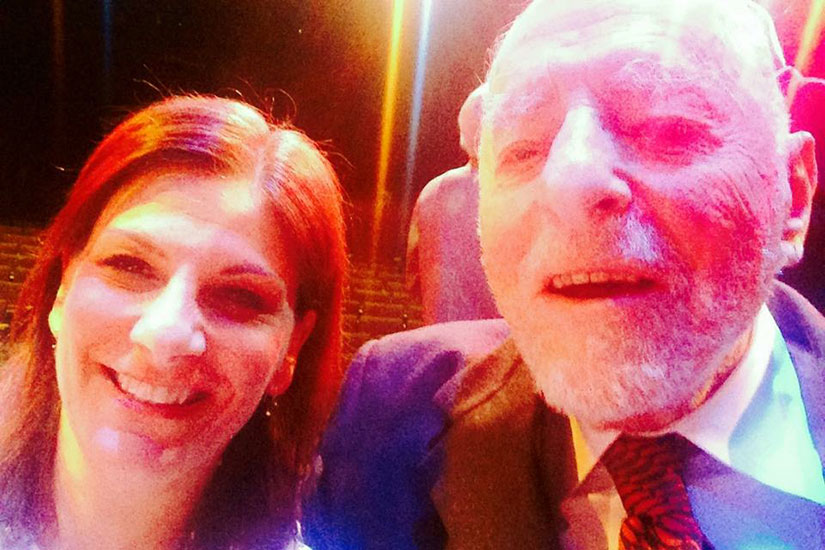 When I first met Robert E. Simon, who died Monday at age 101, I was quite intimidated.
I had lived in Reston for 13 years by that time, and of course had heard the legend of Mr. Simon. With his Pete Seeger-style fisherman’s cap and his white goatee, he was a popular yet nearly mythical figure around town.
I had just left my longtime newspaper job and gone to work for AOL, which was starting a network of hyperlocal news sites. As the founder of Reston Patch, it was on me to know all things Reston. Starting with Mr. Simon.
We met at the Lake Anne Coffee House that day in spring 2010. I brought my friend Justine with me because I was kind of scared. We talked about all those things Reston — what he liked, what he didn’t like, whether it turned out the way he planned. He admonished me when I called the Reston Association trail crossings tunnels.
“They are underpasses!” he said, thumping his cane on the ground.
OK, underpasses it is. I never made that mistake again.
Over the years, I came to consider Mr. Simon — I still called him Mr. Simon even though he would constantly correct me and say “Please call me Bob” — a friend and the most interesting man in Reston. Maybe Virginia. I’m not going to say in the world. I don’t know everyone in the world.
After watching my parents — young enough to be Bob Simon’s children — slowly die over the last few years, I came to think Simon just might outlive us all. When we first met in 2010, he said one of his regrets was he would not live to see Metro come to Reston. Even with a whole bunch of Silver Line delays, he rode it the first day — and danced on the Reston Station Plaza.
I would sometimes see Bob out several times a week — a Reston Association meeting one night; a reception the next; speaking before the Fairfax County Board of Supervisors one day; then holding court at one his favorite Lake Anne restaurants.
Much like how they used to ID another legend, Joe DiMaggio, as “the greatest living baseball player,” at events in DiMaggio’s later years, Simon was always given a shoutout. He seemed to love the role as elder statesman. He would stand and wave when introduced, perhaps doffing his fisherman’s cap.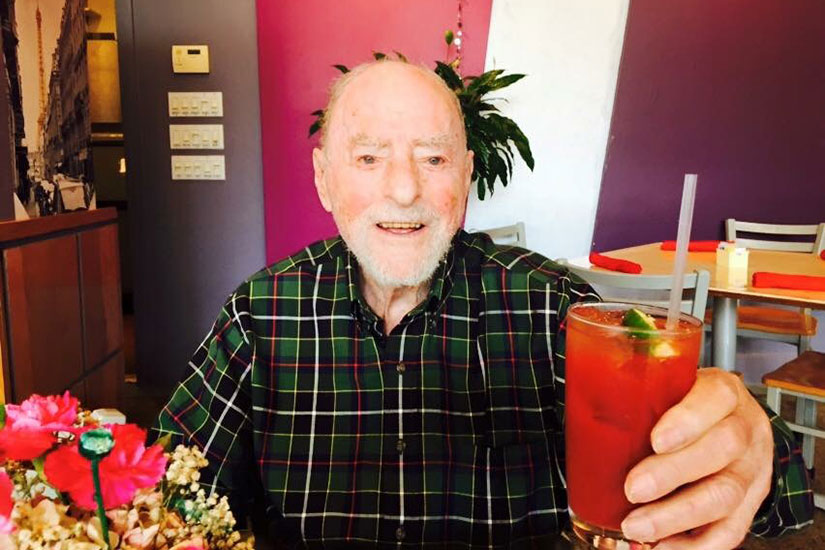 Always with a big smile.
He started using a walker about a year ago. But his mind was as sharp as ever. In June, he stood up and told the RA Board to, let’s use a euphemism, grow a pair.
“For the past several years, Reston has been run by the NIMBYs (“Not In My Backyard”),” Simon said, recalling issues such as a tennis facility at Lake Newport and the more recent bocce court proposed for a pocket park off of South Lakes Drive.
“This is why I am here — to strengthen your resolve, all the way up to the [Fairfax County] Board of Supervisors. A lot of attention is paid to the naysayers. It is a bloody fact when an issue comes up, people in favor stay home and NIMBYS come out to holler. A good NIMBY knows first thing you holler is traffic. It takes sophisticated analysis to know whether it will affect traffic. But that is what they use to terrify the board.”
He called me in early July to set up lunch to make sure I got things right when I wrote about Reston’s history. He penned our lunch date down in his red book. Everything went in the red book.
I met him promptly at noon — we went to the friendly hug hello years ago — in the lobby of Heron House and strolled across Lake Anne Plaza to Cafe Montmartre, one of his hangouts.
“How did you get into this business?” Bob asked me. “How do you make money at Reston Now? How many readers do you have?”
Bob ordered a gin Bloody Mary. It’s noon on a Tuesday and I am not a big drinker, but one does as Mr. Simon does. Make mine with vodka. Read More
 This is an op-ed by Reston 2020’s Terry Maynard. It does not represent the opinion of Reston Now.
(Updated, 12:30 p.m. Friday) Correction: Maynard has reported the that area affected by the change in the size of the Transit Station areas, allowable square footage of development, and other related numbers late in his op-ed are actually about one-third of those reported. In particular, the expanded area and high densities would allow about 438 million square feet of total development, not 1.4 billion square feet as stated.
A few days ago, I wrote an op-ed published here on the County’s efforts to increase the allowed population density in Reston and double the permitted zoning density in Transit Station Areas (from FAR 2.5 to FAR 5.0, plus a 0.5 FAR bonus for affordable housing), including Reston’s three stations.
Aside from allowing major density increases here, these proposed changes affect other types of County “districts”, such Community Business Districts, Commercial Revitalization Districts, and Commercial Revitalization Areas elsewhere in the County. These include Baileys Crossroads, Seven Corners, McLean, Merrifield, Lake Anne (yes!), Annandale, Springfield, and most of the Richmond Highway area. And, of course, all the areas surrounding the County’s Metrorail stations. And we already have reliable commentary that developers intend to maximize density in at least one of these “districts” once the zoning law is changed.
All these areas would now be incorporated into the zoning code as either Planned Development Commercial Districts (PDCs) or Planned Residential Mixed-Use Districts (PRMs), the difference being the predominance of commercial or residential uses. The density caps may be approved if the County “is implementing the density/intensity and other recommendations of the comprehensive plan or any other design guidelines endorsed by the Board.” “Any other guidelines;” that’s a hole as large as a skyscraper.
The adding of these “districts” to the PDC or PRM categorizations and upping the allowable density is all part of the Board of Supervisors’ strategy to allow massive urbanization of Fairfax County over the next several decades. Not just the Reston you know, but the County you know would be completely different if market conditions permit.
In fact, early this year the Board approved a new County “Strategic Plan to Facilitate the Economic Success of Fairfax County” that calls for this urbanization of Fairfax County. The plan was developed by the County’s Economic Advisory Commission and its panel represented just about every County “sector” except residents, the people who pay more than half of the County’s taxes and elect its Board. As you might expect, however, the strategic plan cynically states that the County’s vision is “To protect and enrich the quality of life for the people, neighborhoods and diverse communities of Fairfax County….” But who needs them in preparing the plan? What value could they possibly add? Read More
 This is an op-ed by Terry Maynard of Reston 2020. It does not represent the opinion of Reston Now.
As you were enjoying your summer, probably including a family vacation, our County leaders were — and are — planning to increase the allowable density in Reston’s transit station areas (TSAs) again through amendments to the zoning ordinance.
The reason: Fairfax County is running out of ways to generate taxes to cover its expenses as job growth and development falter. At this point, so close to another local election, they are neither ready to increase our taxes nor cut well-liked programs (other than parks and libraries, of course).
They have to add more taxable property — residential and commercial — to drive up revenues. And Reston and Tysons are the places they intend to do it.
The County’s Zoning Staff is preparing to allow increased Reston density in two ways.
In Reston alone, the County staff is planning to increase (or eliminate) the maximum allowable population per acre in the Reston Planned Residential Community (PRC) — a zoning category.
According to the Fairfax County’s demographer’s count, Reston now has a population of less than 62,000, about 10 people per acre. Reston’s current limit is 13 persons per acre for a total population of about 81,000 according to a county briefing. Using absolutely absurd “household population factor” values (ostensibly the typical number of people in a household by type of household), the zoning staff has put Reston’s population at more than 73,000 people or 11.7 people per acre (10 percent available capacity).
We are, in fact, more than 30 percent short of that capacity. Yet, if the “cap” is increased or deleted, it creates more “flexibility” for developers, which as the next paragraph will show, is the goal. Read More
This is a column by Ken Plum, who represents Reston in Virginia’s House of Delegates. It does not reflect the opinion of Reston Now.
A federal court found Virginia’s congressional redistricting to be unconstitutional because it diluted the strength of minorities in elections. Essentially, the redistricting of 2011 packed black voters from Richmond to Norfolk in a single congressional district ensuring the probable election of one black representative while reducing the likelihood of another one being elected.
The court ruled on the fairness of districts related to their being numerically equal in size and in their treatment of classes of voters, but it does not take into account partisan advantages or disadvantages.
The federal court set a Sept. 1 deadline for new district lines to be drawn by the General Assembly. The Assembly was unwilling or unable to draw new lines, at least in part because any new map is likely to increase the Democrats’ chances of winning more than the 3 of 11 congressional seats they currently hold.
A special session called by Governor Terry McAuliffe to take up the issue concluded without taking action. A proposal drawn up by the Democratic minority to address the issue of fair racial representation in the Tidewater and Northern Virginia areas was not considered by the House or Senate. Based on prior voting behavior by the people in these new districts, there would likely have been five Republican, five Democrat, and one swing district. Such an outcome is reflective of how the state has been voting in statewide contests.
This is not the first time Virginia has run afoul of federal courts on the issue of redistricting. As the state grows in size with developing metropolitan areas, those who controlled the legislature have been reluctant to give up their power to the newly emerging suburban and urban areas. Virginia was one of the states in the 1964 Baker v Carr decision establishing the principle of one man, one vote. After the 1981 census, the Supreme Court threw out the redistricting three times before the legislature got it right. With the changing of district lines, I had to run for office in 1981, 1982, and 1983. The same thing could happen again this year.
The same rationale that makes the congressional districts unfair applies to the House of Delegates districts that are now being challenged in federal court. House members could have to run three years in a row just as in the early 80s if the case is successful. House of Delegates elections in 2016 in particular could be interesting as this is a presidential election year with greater voter participation.
It is human nature that political parties in power try to maintain their majorities through gerrymandering districts to their advantage. I first introduced a bill in 1982 that would have given the task over to an independent commission. Neither Democratic nor Republican majorities have been willing to pass it. Several states have such a commission, and I have continued to re-introduce the bill.
I believe it is the only way to get fair, nonpartisan redistricting done. I support OneVirginia, a group that is working for this kind of reform that needs to be put into place right away.
This is commentary by Del. Ken Plum (D), who represents Reston in Virginia’s House of Delegates. It does not reflect the opinion of Reston Now.
Virginia made history last week — not for the kind of event for which we would like to be remembered, but one nonetheless that took place on our soil and will be talked about around the globe.
Virginia is home of the first on-camera televised and social media-exposed double murder. A disgruntled television worker shot a reporter and her guest and the cameraman while the show was being televised and then publicized his deed on Facebook and Twitter before shooting himself.
In the 2009 Virginia Tech massacre, 32 students and professors were killed in the deadliest shooting incident by a single gunman in this country. In the future, Smith Mountain Lake — which has been known as a wonderful place to have a lakeside home for weekend or retirement living — will also be known for the live murders on television, just as the excellent university that Virginia Tech is always will be remembered in part for the massacre that occurred there.
Aurora, Colo., Newtown, Conn., and other places are getting the same kind of blight on their names as the epidemic of mass murders accelerates at an alarming pace.
As astounding as what seems to be a growing tolerance in this country for mass murders occurring in school houses, on college campuses, in theaters and now on television is, the paralysis of elected officials to do anything about it is truly baffling.
The Founding Fathers certainly had none of the present carnage in mind when they wrote the Second Amendment about a standing militia. Certainly the current state of affairs does not promote life, liberty or the pursuit of happiness among the citizenry.
Shocking also is the ability of gun manufacturers and their advocates to turn these situations into opportunities to promote more gun sales and to propose arming of school teachers, college students, citizens, and now I suppose television reporters. Rather than gun safety measures being put into place, there has been a steady erosion of such laws in Virginia and throughout the country.
Part of the solution is expanded mental health services to respond to the needs of individuals who may become violent. Virginia expanded funding for mental health programs after the Virginia Tech massacre but reduced it again soon thereafter. It took a violent attack on a member of the legislature, Creigh Deeds, by his own son to get the money restored. Laws need to be strengthened to ensure thorough background checks so that those whose mental illness causes violence do not get access to guns.
We are past time to act. I trust that voters will look at incumbents’ records on gun safety legislation and will vote accordingly. I will continue to introduce and work hard to pass expanded background checks for gun purchasers. Let’s turn this around and make history again by making Virginia one of the strongest states to take decisive action to prevent gun violence.
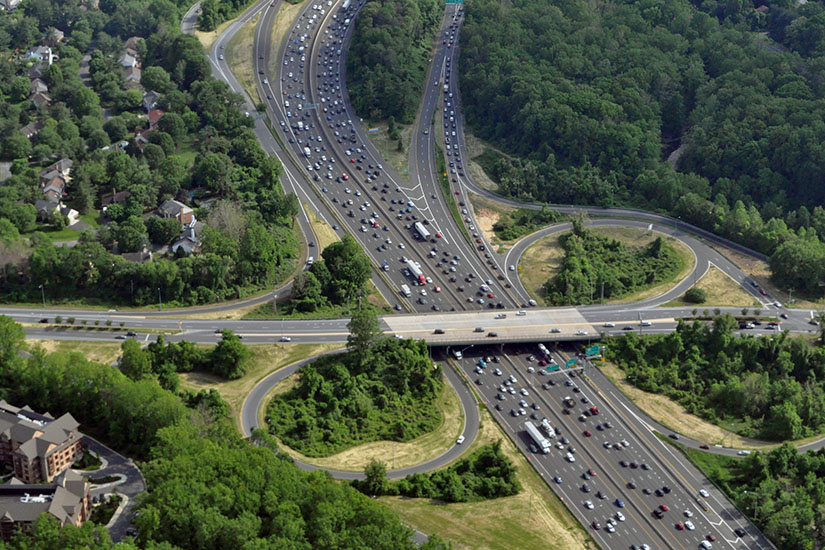 AAA Mid-Atlantic says that 850,700 Washington-area residents will head out of town for Labor Day weekend.
Despite low gas prices ($2.69 to $2.73 per gallon in Reston, according to Gas Buddy.com), that’s just a 0.4 percent increase from last year. AAA says 743,200 residents expected to drive to their vacation destinations, 62,500 expected to fly and the rest expected to take trains and other modes of transportation.
AAA says there would have been more people traveling this year, had Labor Day not fallen on Sept. 7, the latest possible day it can occur. Historically, that curtails holiday travel.
“While increasing travel volume is great news for the industry and economy, our survey shows a decidedly ‘un-laboring’ take on the Labor Day holiday,” AAA’s John Townsend II said in a press release.
“Many would rather spend the holiday at cookouts, relaxing or simply at home to avoid heavy holiday traffic congestion or additional spending, especially if they have already taken a vacation this summer.”
Plus, school starts the next day in Fairfax County.
Are you planning on hitting the road one more summer trip? Or are you staying right here and getting ready for fall?
 This is a letter from Dianne Blais and Lois Page of the League of Women Voters of Virginia. It does not reflect the opinion of Reston Now.
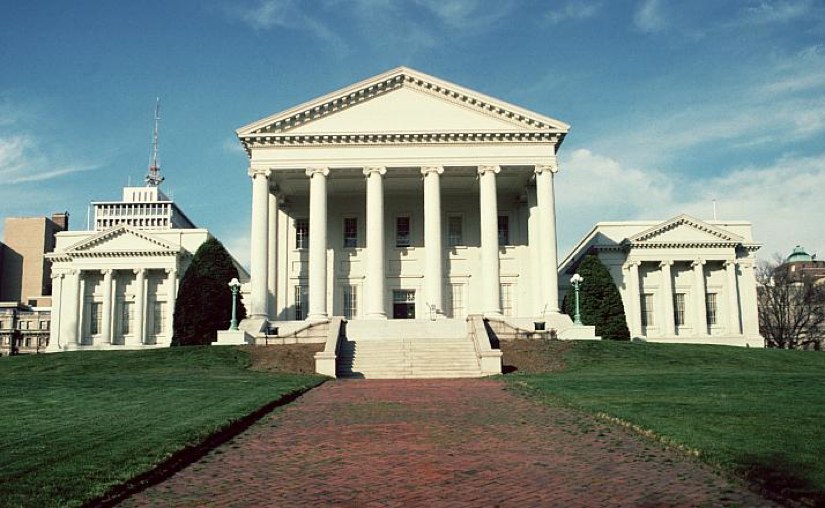
Sept. 1 brought yet another reminder of the partisan rancor that too often paralyzes the Virginia General Assembly these days. Despite convening briefly for a special session in mid-August, that body failed to meet the deadline imposed by a federal court for redrawing the boundaries of the state’s 3rd Congressional District.
To briefly recap, a three-judge panel of the 4th U.S. Circuit Court of Appeals ordered the General Assembly to go back to the drawing board after it found that its 2011 Congressional redistricting plan sought to pack as many African-Americans as possible into the district represented by Democratic Rep. Bobby Scott of Richmond. Because African-Americans now make up nearly 20 percent of the state’s population, this approach served only to dilute their potential political power in a state that has 10 other Congressional districts.
While the legal and political wrangling continues, the failure of the General Assembly to address its responsibilities will likely leave the map-drawing in the hands of the federal judiciary — a job that the League of Women Voters of Virginia (LWV-VA) suspect the judges are not eager to take on.
The LWV-VA believes that these maps are a good place to begin, because they were developed by persons seeking to adhere to the redistricting requirements embedded in the Virginia Constitution, rather than by persons seeking only to amass enough voters of the right political stripe in their districts to assure their easy re-election.
The judges DO have the opportunity to set a very positive example for all future redistricting efforts by using as their starting point the independent, bipartisan redistricting plans that were developed during the last redistricting cycle. A good redistricting plan would respect natural geographic boundaries, the boundaries of local jurisdictions and communities of interest.
If redistricting is done in a way that is fair and non-partisan, it will ultimately produce a result that permits democratic processes to flourish in our state and reflects the true political power of minorities and other ethnic groups within our increasingly diverse Commonwealth.
The court also has the opportunity to follow a key recommendation of Gov. Terry McAuliffe’s bipartisan Integrity Commission. The commission recommended amending the Virginia Constitution so that future redistricting plans would always be drawn by an independent commission, rather than partisan politicians.
It was commendable that then-Gov. Bob McDonnell appointed an independent, bipartisan advisory commission, which held hearings around the state before proposing three different congressional redistricting maps. The commission also encouraged the consideration of the winning maps that emerged from a competition among Virginia college teams that year.
Now that the U.S. Supreme Court has upheld the constitutionality of using such commissions to draw the boundaries of legislative districts, we believe the current impasse provides the appeals court with a rare opportunity to demonstrate that this approach CAN actually work in the Commonwealth of Virginia. In doing so, the court can strike a blow for fairness, transparency and good government — and take an important step toward promoting a healthier democracy in our very politically polarized state.
The League of Women Voters of Virginia (LWV-VA), along with Leagues across the country continue to press for redistricting reform at the state level. To learn more about redistricting and LWV-VA decades-long efforts to decrease gerrymandering, visit our page on the topic. A major effort of LWV-VA is to have redistricting reform by 2021 when the next redistricting occurs.
 This is an op-ed by Reston Association President Ellen Graves. It does not represent the opinion of Reston Now. Graves will be providing periodic updates as the 2016-17 Budget process continues this fall.
Over the next few months, I will be keeping Reston Association members updated on the status of the association’s 2016-2017 budget development process through a series of blog posts on the RA website.
The RA board of directors and RA staff conducted the first in a series of budget work sessions Monday, Aug. 24, and they will meet frequently throughout the fall to finalize an operating and capital expense budget and to set the new 2016 assessment fee. Following each work session, I will share the latest information from that budget session.
During the Aug. 24 work session, board members reviewed the first draft of the budget developed by RA staff. Board members are closely reviewing all aspects of the budget and have requested additional information from the staff on pool and tennis facility operating costs and utilization, costs associated with mowing and maintaining roadway medians, assessment fee comparisons with other area homeowner associations, budget details on the Pony Barn project and a list of opportunities creating greater efficiency and cost savings within the association.
Board members were also reassured by RA CEO Cate Fulkerson that no operating or facilities renovation costs associated with the recent acquisition of Tetra property purchase are in the 2016 or 2017 budgets.
As your board, we take the fiduciary responsibility you entrust in us as our No. 1 priority. You have my assurance that the board will thoroughly review all aspects of both the operating and capital budgets before setting the 2016 assessment fee.
The board is planning another work session in early September and like all board meetings, the work sessions are open to members. Once the next budget work session is scheduled, it will be posted on the RA website.
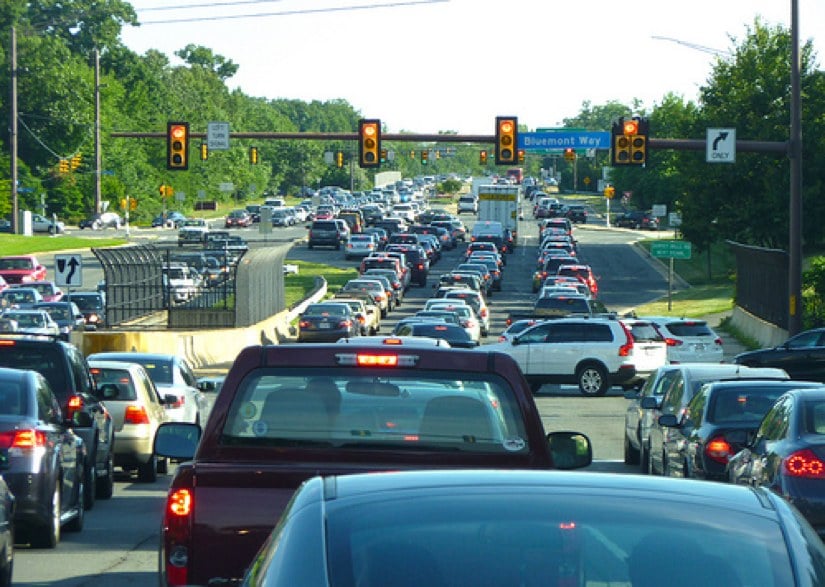 We’re trying here in the D.C. Metro area. Public transportation. Ride sharing. Telecommuting.
No matter, we’re still No. 1 — in commuting time.
A new report produced by the Texas A&M Transportation Institute (TTI) shows drivers waste more than 3 billion gallons of fuel and were stuck in their cars for nearly 7 billion extra hours — 42 hours per rush hour commuter — in the last year.
Washington, D.C. tops the list of gridlocked cities, with 82 hours of delay per commuter, followed by Los Angeles (80 hours), San Francisco (78 hours), New York (74 hours), and San Jose (67 hours).
TTI says the problem has become so bad that drivers in the worst areas have to plan more than twice as much travel time as they would need to arrive on time in light traffic just to account for the effects of irregular delays such as bad weather, collisions, and construction zones. Anyone who has driven I-66 on a rainy day can attest to that.
So how do you deal with your commute? Take our poll and tell us more in the comments.
This is an opinion piece by Ken Plum, who represents Reston in Virginia’s House of Delegates. It does not reflect the opinion of Reston Now.
Recently, a place of worship in the community asked me to be a speaker in their summer worship series. After getting past the frightening idea that I was to preach a sermon, I started to focus on the fact that I live my life on both sides of the wall that separates church and state.
As an historian, I know that the Virginia General Assembly in 1786 passed one of the most revolutionary laws ever enacted by it or any other legislative body: the Virginia Statute for Religious Freedom. Not only did it end an established state church supported by taxpayers, but it put into law the idea of freedom of conscience. As Jefferson expressed it in the Statute, “no man…shall otherwise suffer on account of his religious opinions or belief, but that all men shall be free to profess, and by argument to maintain, their opinion in matters of religion, and that the same shall in no wise diminish, enlarge or affect their civil capacities.”
Earlier, of course, Jefferson had penned the Declaration of Independence with the pronouncement that “all men are created equal and are endowed by their creator with certain inalienable rights that among these are life, liberty and the pursuit of happiness.” Note that Jefferson never claimed that those rights that could not be taken away came from his god, but rather they came from “their (humankind’s) creator” suggesting that different persons could believe in different creators or gods.
These ideas that defined the wall between church and state made their way into the Virginia Declaration of Rights and the U.S. Constitution’s Bill of Rights. For the first time in history there were to be no state established churches; individuals were left to choose and believe as their conscience dictated.
There continues to be a debate as to whether we are a Christian nation. Patrick Henry wanted the Virginia Statute to guarantee Christian religion, but his arguments failed. We are one nation “under God” only because a law in 1954 added those words to the Pledge of Allegiance. There are Christians of many denominations in our country as there are many Jews, Muslims, people of other religions and of no religion. None have legal sanction or supremacy over the others.
I live my life on both sides of the wall. Privately, I am a person of faith. My religious beliefs support my moral beliefs. I believe I should love my neighbor as myself regardless of their race, creed, color, national origin, gender, or sexual orientation. And I believe that loving others requires me to do all I can to ensure their life, liberty and pursuit of happiness.
On the public side of the wall as an elected official I continue to hold my religious beliefs; they motivate me to vote for legislation to protect all citizens’ rights to vote, to get an education and to live a life free of discrimination. My moral compass is under-girded by my faith, but that does not mean I think my particular beliefs should be the law of the land.
The wall between church and state is intended to protect each person’s right to their own beliefs–to protect my freedom of conscience. .. not my freedom from conscience. I feel I must use my moral compass on both sides of the wall.
This is an op-ed by Bill Woloch, PhD Architect. It does not represent the opinion of Reston Now.
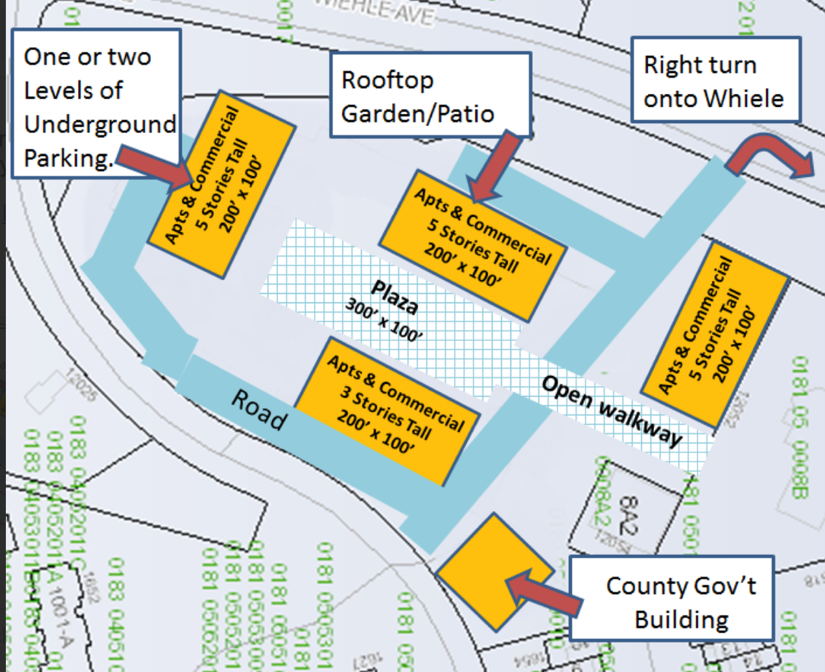
I recently had the honor and a pleasure to sit down with Mr. Bob Simon, the founder of Reston and talk to him regarding his thoughts of the future development Tall Oaks Village Center.
After my discussions with Mr. Simon, I put pen to paper and developed a concept plan for the Tall Oaks Village Center that may be more in line with public thinking of what Tall Oaks Village Center could look like.
If you venture to Lake Anne and look at the mix of residential and commercial properties you will find a very quaint setting. I found out that originally a lot of the business areas on the ground floor of many of the buildings were originally residential and eventually converted to commercial space as Lake Anne Village Center evolved. This evolution of space function should be planned for in the Tall Oaks redevelopment strategy.
Applying this principle between commercial and residential space is somewhat unique in terms of planning developments, but the concept has already been proven in Reston with the continual evolution of the Lake Anne Village Center and should continue into the future.
The buildings themselves could be anywhere between three stories to five stories tall with underground parking and centered around a community plaza. The plaza would have areas of high, medium, and low activity. Covered and uncovered areas should exist in and around the Plaza and seating areas so the space can be enjoyed for a whole host of purposes. Planned and unplanned functions can occur in the new Tall Oaks Village Center similar to what at Lake Anne and the Mosaic District.
The Mosaic District in Fairfax was developed and is managed by a company called Edens. This small piece of geography has to be visited to understand how a small outdoor space can successfully bring the community together and offer something to everyone who visits. Read More
Del. Ken Plum represents Reston in Virginia’s General Assembly. It does not represent the opinion of Reston Now.
Shifting from a relaxing vacation back to work is always challenging, but my return this past week from the mountains, streams and lakes of Glacier National Park to a special session of the General Assembly has been a particularly stark contrast.
The special session of the General Assembly called by Governor Terry McAuliffe that started on Monday of this week was to deal with court-ordered redistricting, but before we got to the Capitol in Richmond an additional issue arose that makes the special session particularly contentious.
A federal court found that Virginia’s congressional redistricting was unconstitutional, and that decision was upheld twice by appeal courts. While the districts were numerically about even, district lines were drawn in such a way as to pack minorities into the 3rd Congressional District ensuring the likelihood of the election of a minority member and at the same time reducing the possibility of electing more than one.
Federal courts have thrown out redistricting in other states that had the same effect. The majority party that drew the lines in the first place has been trying to delay responding to the court’s order apparently hoping that a higher court would change the decision that has a Sept. 1 deadline. Changing the lines may give a racial minority a greater opportunity to elect another member of Congress, and at the same time it may give the minority political party the chance to elect another member.
The majority party that controls both the House and Senate in Virginia refused requests from the minority party to work together with the Governor to come up with a new plan in a transparent way that would meet the court’s equal protection requirement choosing instead to develop a plan of their own in secret.
Adding to the friction of the situation is the majority party leadership announcement that they will reject the appointment by Governor McAuliffe of a Supreme Court justice. Governor McAuliffe made an interim appointment of a justice when a vacancy occurred as he is authorized by the Constitution to do.
That appointment is subject to General Assembly confirmation when it meets. Such confirmation is generally routine except in this case the majority leadership says it was not consulted and will not confirm the appointment of a woman who everyone agrees is superbly qualified. The contention of not being consulted is dubious when it was a ranking member of the majority party who chairs the committee that reviews judicial appointments that brought her to the attention of the Governor and who spoke on behalf of her appointment when the Governor announced it.
Behavior in the State Capitol in Richmond is getting to be too much like the United States Congress. I have not made reference to specific parties in expressing my concern about what is happening because it is not about Republicans or Democrats; it is about doing the people’s business without pettiness or arrogance.
What is going on now is wrong whether done by Democrats or Republicans. The concern is not about party; it is about misbehavior that is not worthy of the public trust.
