

 This is an op-ed by Reston 2020’s Terry Maynard. It does not reflect the opinion of Reston Now.
RestonNow’s article yesterday on the upcoming Board of Supervisors hearing of Phase 2 of the Reston Master Plan provides an excellent overview of the key provisions of new Plan for “suburban” Reston, the community that all of us live in except those in Town Center and the new high-rise residences near the Sheraton Reston.
Speaking on behalf of the Reston 2020 Committee, we believe the draft plan amendment generally serves the existing Reston residential community well, but with some important exceptions we have detailed to the County staff on at least two occasions. (Please see our initial ideas for Phase 2, comments on draft Version 2, and specific comments on the Reston Land Use Map.)
It may help to highlight what we believe are the more substantial shortcomings regarding the village centers and open space in this Phase 2 of the draft plan and the changes made by the Planning Commission so Restonians have the opportunity to reach out to the Board of Supervisors at the hearing today (Tuesday, June 2, 4 p.m., Fairfax County Government Center) or to Hunter Mill Supervisor Cathy Hudgins directly.
We urge the Board of Supervisors, Supervisor Hudgins in particular, to listen to and address the concerns of Reston organizations and residents at this important hearing and in other communications concerning Reston’s existing neighborhoods.
Village Centers: In our view, the most significant shortcomings of the draft plan appear in the section dealing with village centers.
Maybe the biggest one is that the draft plan puts no limits on the density of redevelopment in these critical elements of the Reston community. The plan’s failure to limit density (we recommended a density of FAR 1.0, four times the current limit) could result in extremely dense commercial, office, or residential development (or all of the above) in the village centers that would be totally inappropriate for a neighborhood-serving center.
The absence of a reasonable density restriction could easily lead to the situation we are about to see in Town Center North, where plans to build a 23-story office building beyond the high-density, half-mile transit station area (TSA) — and twice as tall as the adjoining new Spectrum Center — were approved by the Board because there was no density restriction. Read More
 A couple of weeks ago, I dropped off my Prius for service at a dealership near the Spring Hill Station on the Silver Line and caught the Metro for a one-stop trip to the Greensboro Station.
At the conference center there, I participated in an exciting forum sponsored by the Northern Virginia Transportation Commission (NVTC) about transit and its importance to business. Released at the forum were the results of a new study by the Center for Regional Analysis at George Mason University that concluded that “if Northern Virginia is going to be able to effectively compete for non-government related, private sector business development, it must have a state-of-the-art, effective, financially sustainable, and efficient multimodal public transit system.”
It was particularly appropriate that the meeting that attracted more than 140 business, community, and political leaders was held at Tysons Corner.
Tysons is already undergoing a transformation with the Silver Line and other transportation improvements. There is no stronger proof of the impact of what mass transit can do than to get off at the Tysons Station on the Silver Line and walk directly from the station to the new plaza with a new hotel, restaurants, and office buildings. Already a commercial success, the area now has a great sense of place and community.
Former businessman and now Virginia Secretary of Transportation Aubrey Lane spoke at the conference about the linkage of transit and business development.
As quoted in the May 2015 issue of NOVA Transit News he said: “Phase One is helping to facilitate the transformation of the Tysons area into an urban, walkable center with 200,000 jobs and 100,000 residents. At the Wiehle-Reston East station alone, close to one billion in private investment has been stimulated by the Silver Line. This project is a huge economic driver for the Commonwealth because it connects people to opportunity, stimulates localized economic growth, and provides businesses with a wider pool of consumers who can access their goods and services.”
While the forum was recognition of the success that has been realized in making the region more pedestrian and bicycle friendly and transit supported, it was also a clear call for help in order for more progress to be realized. Federal and state officials need to come up with the funding necessary-especially for Metro. Local governments need to consider transportation issues in making land use decisions and in planning more connectivity with the Metro system. The Northern Virginia Transportation Commission is eagerly seeking suggestions from citizens; go to the website at www.novatransit.org.
The Dulles Corridor Rail Association (DCRA), whose board I chair, will give special recognition at its spring event to the transformation that is occurring at Tysons Corner with the work of the Tysons Partnership. In addition, retiring Del. Tom Rust (R-Herndon) will be honored for his contributions to transportation in our region.
DCRA’s spring meeting and reception will be held on the concourse of Tysons Corner Center on June 2, 6:00 to 8:00 p.m.More information is available by contacting [email protected].
Ken Plum represents Reston in Virginia’s House of Delegates. His opinion is not necessarily that of Reston Now.
If the Virginia political scene seems to you to be quiet at the moment, stick around for we may just be experiencing a lull before the storm.
There are elections every year in Virginia, and at this point in the voting cycle there are numerous state and local offices on the ballot this fall. There are no federal elections.
At the state level, there are no statewide offices, but all seats in the General Assembly are up for election. State Senate seats are for four-year terms and contrary to the federal system where a third of the seats are up for election at any given time all 40 state senate seats are up this year. Delegates have two-year terms, and all 100 are on the ballot this fall.
Local elections vary by locality, but in Reston and Fairfax County all members of the Board of Supervisors are up for election this year as is the at-large chairman. In addition, offices referred to as “constitutional offices” because they are provided for in the state constitution are up for election this fall. In our region that includes the sheriff and clerk of the court. Judges in Virginia are elected by the legislature and not by direct election of the people.
Traditionally, election season has started the day after Labor Day, but increasingly it seems that the season never ends with one set of campaigns overlapping others. In instances where candidates are chosen by primary election, the primaries are not held until early June.
With the extensive gerrymandering of districts, there are fewer contested elections in the fall and greater attention to primary elections. With the divisions in the Republican Party among traditional Republicans, Tea Partyites, and other factions, there are significant primary elections this year. The Speaker of the House of Delegates is being challenged by a Tea Party member. As in previous decades with Democrats, a win in a Republican primary is tantamount to winning the general election in the fall.
Overlaying state and local elections are the activities at the federal level leading up to the presidential election next year. There are numerous Republican candidates that would provide much amusement if the business they are about would not be so serious. The Democratic field will narrow quickly.
As with any storm, we need to be prepared and to be vigilant. I fully recognize that most people do not get as excited about the political process as I do, but we do need to keep in mind that those persons offering themselves for office will determine the kind of government and future we will have.
Do not be turned away by the lighting and thunder that some campaigns generate. Inform yourself with knowledge of the candidates who will bring us a better future. Of course, I am biased in the persons I support, but ultimately I am concerned as we all need to be about the best future for the citizens of the Commonwealth.
Del. Ken Plum represents Reston in Virginia’s House of Delegates. His opinions do not represent those of Reston Now.
My high school alma mater, Shenandoah High School, is no longer a high school. The building with an addition is now Shenandoah Elementary School. Children who would have attended the high school now attend the consolidated Page County High School.
The memories and legacies of the school continue through the Shenandoah High School Alumni Association that was organized in 1939 making it the longest continuous high school alumni association in the state. The 76th Annual Shenandoah High School Alumni Banquet held last week recognized two living members from the class of 1935 among its guests.
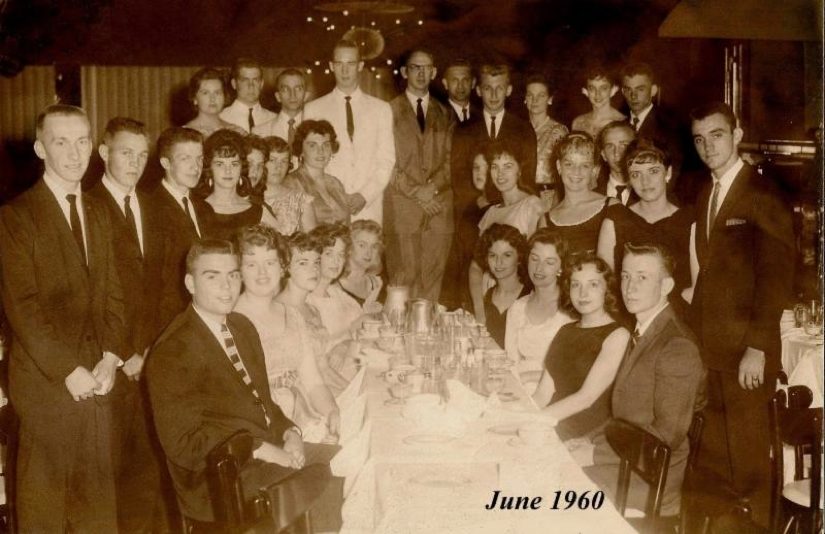
My graduating class had 41 members, with about half attending our Class of 1960 reunion party before the banquet. Three of our teachers also attended, including Mrs. Foltz who taught me to type, an invaluable skill for which I thanked and assured her that I still keep my fingers on the home keys.
Mrs. Kite was my guidance counselor who gave me the unheard of idea that I like others could attend college. No one else in my family ever had.
Last week was teacher appreciation week, and after having attended the alumni banquet I could not stop thinking about the teachers I had and the impact they had on me. All my teachers deserve a shout out, but with limited space I will mention just a few. Mrs. Yates was my first grade teacher and the very first teacher I ever met. She continues to be an angel in my mind.
Second grade teacher Ms. Rau and third grade teacher Ms. Parker were young and very beautiful. I could not do enough to please them. Ms. Parker especially opened my mind to the world as she talked about places she had visited. I remembered her talk about the “painted desert” when I visited there years ago.
 Mr. Kite fostered my love of history. I still have the dozen-page report I wrote for his class in the 11th grade. In those dozen pages I wrote a “Short History of Page County,” while it took historian Harry Strickler several hundred pages to do the same thing.
Mrs. Boozer who was my senior year government teacher promoted my interest in government. I still quote statistics I gathered in writing a paper for her on the misuse of the absentee ballot in Virginia.
And as boring as it became at the time I still appreciate the diagramming of sentences that Mr. Turner made us do. It continues to help me with sentence construction. Mr. McHenry’s wood working and metal working shop taught me problem solving skills that I continue to use.
Public schools did so much for me. That’s why I work hard to ensure that our schools are the best they can be and that teachers who are the keys in the process get support. We must make sure that students have positive learning experiences they can look back on and that create in them an ongoing desire to learn.
Ken Plum represents Reston in Virginia’s House of Delegates. His opinion does not reflect that of Reston Now.
This is an op-ed from Reston resident Flora Nicholas, who also created “The Price is Wrong” video in response to Reston Association’s Tetra referendum. It does not reflect the opinion of Reston Now.
My husband and I, like a growing number of Restonians, are very concerned about how the Reston Association and the board have conducted themselves with regard to this Tetra purchase, and how they are running Reston Association generally.
We therefore marshaled our company, Brainwave Inc., resources to write and produce “The Price is Wrong” video because we wanted to highlight how ridiculous and eyebrow raising the RA’s contract to buy the Tetra property is.
Additionally, as the RA has spent close to $100,000 promoting its own one-sided information, this video gives all those who are vehemently opposed to the Tetra deal a way of promoting their concerns too. And it does so in a humorous way that will grab the attention of the media and those on social media too — and today’s article in the Washington Post and this article in Reston Now shows we’ve achieved that.
Whatever the outcome of the referendum, the RA and its board have a lot of explaining to do. Why did they enter into a contract to buy a building for $2.65 million when the County had valued it at $1.2 million? Why have they not disclosed to the community that its own appraisers valued the property “as is” at $1.3 million, as the Washington Post revealed today? Why, despite that $1.3 million appraisal, did the RA then proceed to enter into a contract to buy the Tetra property for $2.65 million? What else is really going on here?
All these questions need to be asked of the RA and answered. When all this is done, I think the RA’s going to need a watch dog. H’mm, may be we’ll start one.
In Virginia, as in states throughout the South and the Midwest, there is a continuing stream of legislation that attempts to place the power of the states over that of the federal government.
Most recently, the passage of the Affordable Care Act resulted in a torrent of bills attempting to stop implementation of the federal law. Virginia has a not-so-proud history in this regard. From asserting states’ rights as a justification for being able to own slaves to “Massive Resistance” to prevent the racial desegregation of the schools, Virginia has too often been a leader in arguing against history and asserting a right to interpose itself between the federal government and the people.
Recently I had the pleasure of discussing with a middle school class the meaning of “We the People.” I could not have been more impressed with their knowledge of history and constitutional law! Only later did I learn that this group of scholars at Rachel Carson Middle School in Fairfax County had won the middle school championship in a “We the People” competition by besting eight other teams from around the country.
The competition is part of the national We the People’s: The Citizen and the Constitution Programsponsored by the Center for Civic Education to promote civic competence and responsibility among middle and high school students.
The students at Rachel Carson were able to explain why the Articles of Confederation that had made the state preeminent had failed and to discuss the expansion of civic participation during our history with the passage of the 13th, 14th, 15th, and 19th amendments to the Constitution and the Voting Rights Act of 1965. They had a clearer grasp of our history than I have found in some debate in the state legislature.
Congratulations to teacher Cynthia Burgett and the students on their wonderful achievement. I could recognize many civic leaders in the class who I know will be contributors to our communities and to our government in the future. They will make “We the People” a reality.
Last week, I also participated in the 40th anniversary of the Volunteer Learning Program in Fairfax County Public Schools. I was part of starting the program that continues with much success to place volunteer tutors from the community with volunteer learners who want to complete their education.
The ability to serve diverse learners with different goals at locations throughout the County at times of their availability has been possible only through utilizing an experienced teacher to train volunteers who work with students one on one. For some students the goal is to learn to read and write; for others it is to learn English. Some students have employment goals.
Congratulations and thank you for all those who work to expand educational opportunities in our community. More information is available if you want to be a tutor or need assistance the program provides.
We the people can have a better government when we know our history. We can have a better community when we contribute to the advancement of others.
Ken Plum represents Reston in Virginia’s House of Delegates. His opinions do not reflect Reston Now’s.
This is an op-ed by Reston resident Pravajan Uprety. It does not reflect the opinion of Reston Now.
I have been living in the Reston area for almost 10 years and in the Northern Virginia region for the past 17 years. I love my community and I have always enjoyed being a part of this family. There are so many tragedies here and around the world that defines our lives and so many things that we do are so unimportant, yet we rise when we have to, when we need to. We should always remember: What makes us laugh can also make us cry.
The earthquake in Nepal and surrounding region on April 25 was monstrous and claimed more than 6,000 lives, and is counting towards a mammoth total. Above all, it would be worthwhile to mention that the support from all around the world has been enormous. There are nations, organizations and individuals that are overwhelmingly helping the nation any which way possible.
‘Reston Now’ has spearheaded in bringing awareness to people in the region with better news, alerts, real-estates, community events and so on. We all understand that everybody has their own bigger fish to fry but even the smallest of help, from many and plenty can make a world of difference. “One of us equals many of us/Respect one of us/you’ll see plenty of us.”
A single dollar can buy two modest meals per day for two people. So, the asking is not much, but any help big or small will be greatest. Read More
 It’s getting down to the wire for the Reston Association member referendum on the purchase of the former visitors center.
Haven’t voted yet? You have until Friday at 5 p.m.
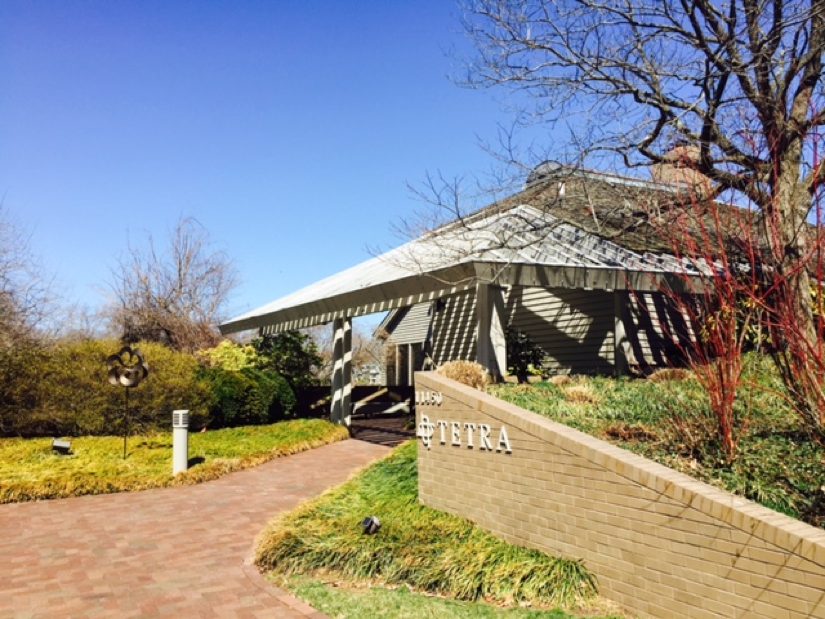
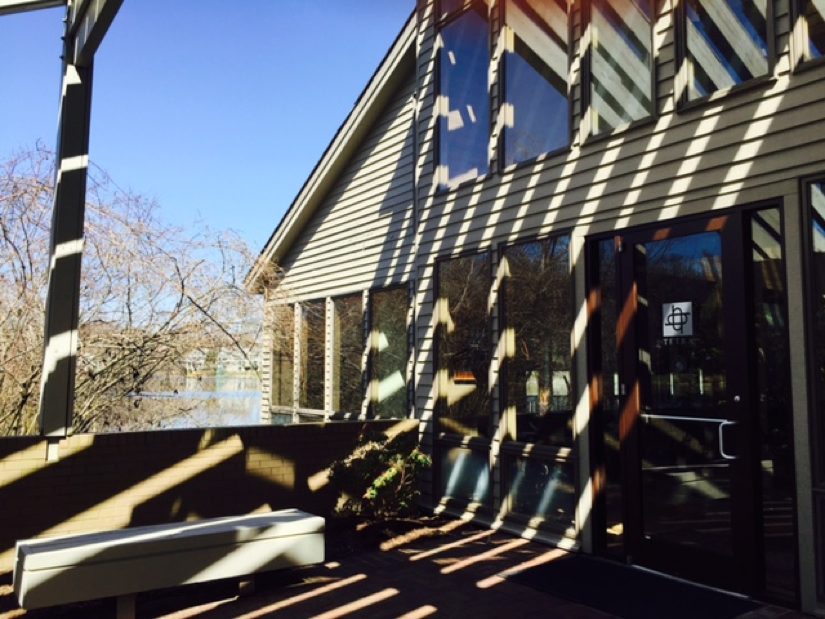
RA needs a quorum of member approval to borrow and spend up to $2.65 million on the 3,123-square-foot building on the shores of Lake Newport. RA will spend additional money to repurpose the building, currently office space for Tetra Partnerships, into event and community space. It forecasts bringing in more than $100,000 annually from event rentals. It also says purchasing the building, which sits on 3.48 acres adjoining other RA community space, will preserve open space and fend off possible commercial development.
There is a vocal opposition that says the purchase price is far too high as the most recent Fairfax County tax assessment was $1.2 million. The opposition also says the site sits on a resource protection area and cannot be redeveloped commercially.
This is an op-ed by Reston resident Terry Maynard. It does not represent the opinion of Reston Now.
As the end of the Tetra referendum period approaches, I thought it useful to summarize the key reasons why RA members should not pay $2.65 million to buy this property. I hope it encourages you who have not yet voted to decide to dig around in your old RA mail (digital or postal) and submit your ballot with a “NO” vote.
1. No further development of the property will be permitted. The alleged compelling reason for buying Tetra is to prevent development there. The fact is that almost every square foot of the Tetra property is protected from further development by multiple layers of legal, regulatory, and plan restrictions.
In contrast, Reston National Golf Course is protected from development only by plan language, not a law. The difference is between what’s prevented by law at Tetra and what’s preferred in the plan at RNGC.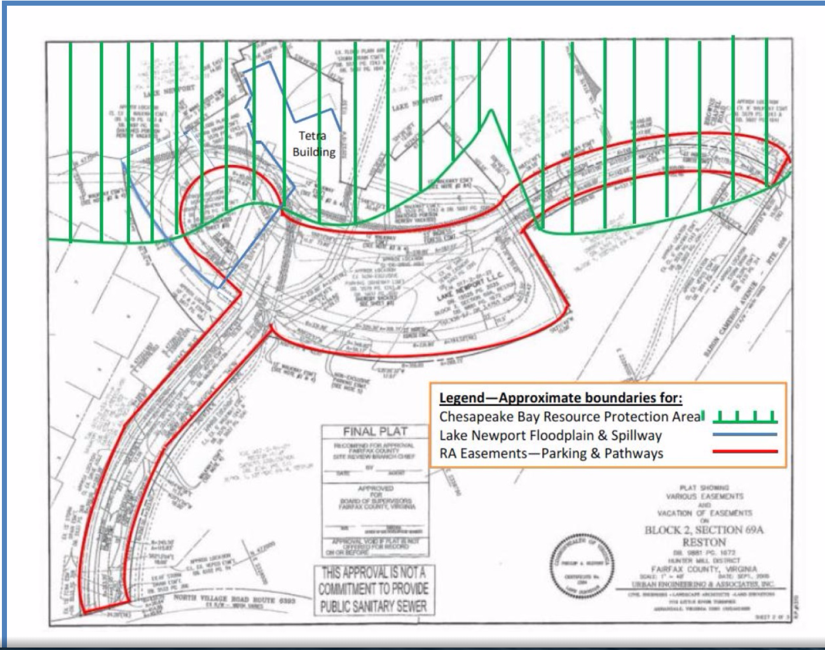
For the Tetra property, the most important of legal restriction is the state’s Chesapeake Bay Preservation Act, which calls for water bodies and the first 100′ of perennial waterfront areas (like Lake Newport) to be protected from development.
(The attached map of the Tetra property shows the area protected by this law and other restrictions.) The Virginia Department of Environmental Quality says:
“The Chesapeake Bay Preservation Act and regulations require that a vegetated buffer no less than 100 feet wide be located adjacent to and landward of all tidal shores, (etc.) … These features, including the 100-foot buffer, comprise the Resource Protection Area (RPA) … Generally, vegetation in the 100-foot buffer must be preserved on lots that include an RPA, and established where it does not exist. “
For more on RPA legalities as applied to the Tetra property, read this RestonNow op-ed from a local land use attorney who explains in detail that there is no possibility of lakeshore development there.
Second, there are legal flood plain and spillway protections on the property that, except for a patch next to the Tetra building, similarly preclude development along the lakefront and down around the dam to the stream below.
Third, an RA easement covers most of the property beyond the RPA for its parking lot, access roads, and the pathways beside them as shown on the map. Moreover, if a developer wanted to build on the Tetra property, its proposal would have to be approved by RA’s Design Review Board, including inputs from neighboring “affected parties.”
For all practical purposes, nothing can be built there without RA Board approval.
A fourth, thin added layer of protection — like that which protects the golf course — will be provided by the new Reston Master Plan when it’s approved by the Board of Supervisors this June. The new plan changes the area’s designation from a “convenience center” to remain “as built.”
Trying to peel that legal, regulatory, and political onion would almost certainly be impossible. Yet even RA ownership of the property would not guarantee the property will remain green space as the Board’s stunning decision to swap an acre of our hardwood forest (to become a parking garage) for a roadside drainage ditch illustrates.
2. The sales price and related RA financial assumptions are outrageous. The RA Board’s sales contract with Tetra calls for it to pay $2.65 million (Article 2, p. 2) for a property that RA’s appraiser says is worth $1.3 million as built, assuming it’s in good condition (p. 22). The County puts the fair market value of the property at $1.2 million in its latest real estate tax assessment. The additional $1.3-$1.5 million in the appraisal comes from assuming additional offices are there — that cannot be built!
Both the RA appraisal and the County assessment assume the property is in good condition. It is not. Read More
 This is an op-ed by Reston Association Lake Anne/Tall Oaks Director Eve Thompson, who also is a Realtor. It does not reflect the opinion of Reston Now.
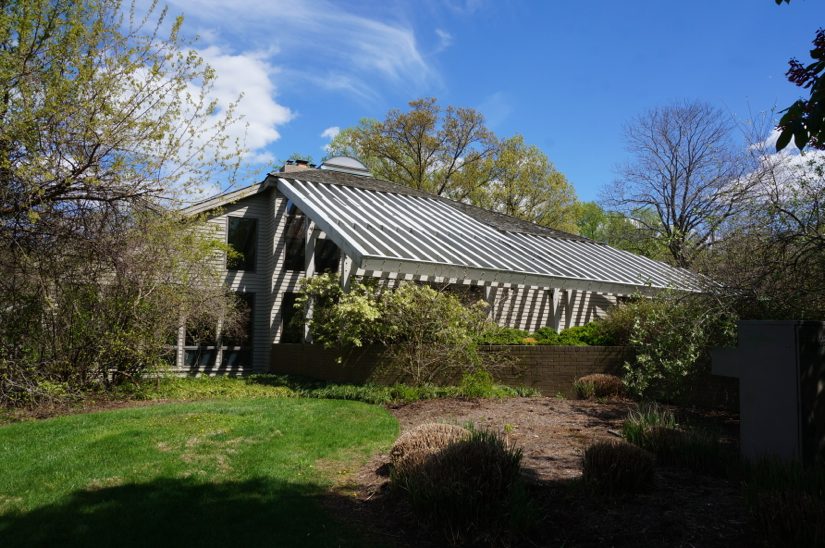
As I’ve talked with members regarding the proposed purchase of the Tetra property, one of the questions most often asked is “Why is there a difference between the assessment and the sale price?” Below is a detailed answer to that question. If you have other questions about the referendum, the property, want to see more detailed information, or want to cast your ballot, please visit the Tetra property page.
Assessed values are normally not used to establish negotiated sale prices for commercial property. It is the other way around — negotiated sale prices for commercial sale property are used to determine assessed values. This is so because the definition of fair market value is:
“The most probable price which a property should bring in a competitive and open market under all conditions requisite to a fair sale, with the buyer and seller each acting prudently and knowledgeably, and assuming the price is not affected by undue stimulus. Implicit in this definition is the consummation of a sale as of a specified date and the passing of title from seller to buyer under conditions whereby:
- Buyer and seller are typically motivated;
- Both parties are well informed or well advised, and acting in what they consider their own best interests;
- A reasonable time is allowed for exposure in the open market”
For example, the purchase price of the Reston National Golf Course in 2005 was $5,009,819 for the property. It was assessed at the time for $3,492,500. The assessed value did not dictate the sale price. It is extremely unlikely that the owner of the Reston National Golf Course would now be willing to sell the golf course for its current assessed value of $972,380.
If it is the policy of Reston Association to never purchase additional common area at more than its assessed value, it will not only never be able to purchase the Tetra property — it will also never be able to purchase the golf course.
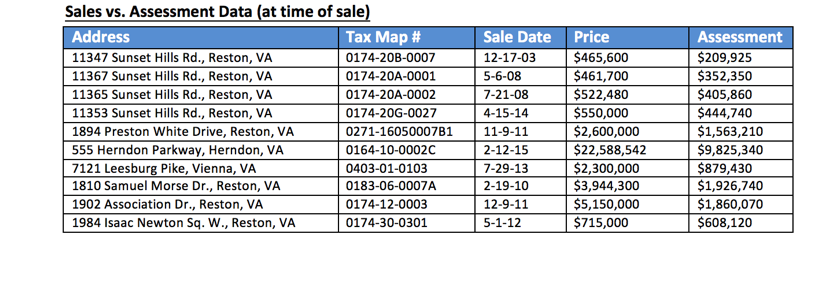
Assessed values are based on recent sale prices of “similar” property. It is done through a mass appraisal process (thousands of properties valued at once) which does not involve the detailed study performed in an individual appraisal. It is common for commercial real estate sales prices to far exceed assessed County assessed values, as shown on the below chart.
 As I’ve mentioned before, I fully support this decision to purchase the Tetra property and urge you, my neighbors, to join me in voting yes.
 This is an op-ed by Rescue Reston, an open-space advocacy group. It does not represent the opinion of Reston Now.
Rescue Reston has a focused mission statement of opposing redevelopment of Reston National Golf Course into residential housing or any site development other than a golf course or comparable open space.
Our board sees important parallels between defending the golf course property and the opportunity to purchase the 3.47-acre Tetra property (formerly the Reston Visitors Center). At stake is our control of open space and development in Reston. Rescue Reston therefore recommends that Restonians vote yes in the Tetra Referendum, which is open for voting until 5 p.m. on Friday, May 8.
All seven Rescue Reston board members are Reston Association members. Our own households have voted yes on the referendum. This is a rare opportunity to put this property under the ownership of our homeowner’s association, to serve our interests, and remove the potential for an unknown developer entity to commercially develop the site.
Few developers have ever seen “open space” that couldn’t be improved by a few buildings on it. They have high-powered attorneys who know how to blow their way through almost any “protection” we may think a space is subject to.
As the economic impact of Metro’s Silver Line continues down the line to two other Metro stops in Reston, it is vital that we speak in one voice on issues that affect the open spaces in our neighborhoods. After five Reston Master Plan Phase II community meetings and community outreach, the County and Restonians agreed that the neighborhoods should essentially stay “as built.”
Now, with the draft plan ready to move forward in June to the Board of Supervisors (BOS) for approval, we read that some in the development community are implying there should be more wiggle room for higher density development in our neighborhoods, unchecked by BOS approval or Reston community input: Not enough potential planning for areas outside of transit centers
Both Brian Winterhalter, a lawyer with Cooley LLC, which represents several developers, and Patty Nicoson, Reston resident and Master Plan Phase 1 Task Force Chair, said there is not enough leeway for future development without more comprehensive plan changes.
“It would require comprehensive plan amendments for any redevelopment proposals,” said Winterhalter. “Fundamentally, I don’t think that is the right approach. A community as large as Reston should provide opportunities to grow. This downplanning does not make sense.” Read More
I announced my first bid for elective office in 1973 while standing on the steps of the historic Fairfax County Courthouse. Only my immediate family and my secretary and her husband were there to hear me harken back to the Fairfax Resolves of 1774 when the citizens of Fairfax County enumerated their complaints against the Crown.
I suggested that our contemporary problems were not much different except that they were directed at the government in Richmond, and I promised to go to the state Capitol and do something about our grievances.
Last week, I announced my candidacy for re-election. While the basics of government have remained the same since my first announcement, attacks on the functions of government have become increasingly shrill. Ideological differences in the legislature have seldom been more intense.
With the retirement last year of a legislator who had served as a member of the House of Delegates for 50 years, I became currently the longest-serving member of the House of Delegates. As a member of the minority party in the House, my length of service does not provide me any special privileges or considerations, but it does require me to examine my role as a legislator.
As I told the constituents and friends who assembled to kick off my current campaign, I consider my role in the House of Delegates to do the heavy lifting. Above all, I will serve my constituents as best I can with their individual and community needs and interests before the legislature. I will be leaving the introduction of routine and housekeeping bills to junior members to get their practice in law making.
When I say “heavy lifting,” I mean taking on the difficult and challenging issues that, while divisive, need resolution. I need to be clear to voters and to my fellow legislators my positions on issues that have evolved over many years of dealing with them. For issues to be resolved, all sides need to be clearly articulated, something I am generally able to do.
I will continue to speak out on the need to expand Medicaid to provide health insurance to the working poor. Not only will it bring about $5 million dollars a day of Virginia taxpayer monies back to the state, but it will free up about $200 million of state monies that are spent on items that would be covered by Medicaid. I want those extra millions spent on education, including the expansion of preschool programs — one of the best investments in the future a government can make.
I will work for greater public safety by supporting measures to keep guns out of the hands of violent individuals and criminals while respecting the Second Amendment. My work to end discrimination based on sexual orientation will continue as will my efforts to establish a nonpartisan, independent redistricting commission.
The state needs to take action to protect our shorelines and respond to the challenges of sea level rise. I am prepared to do this kind of heavy lifting in the legislature if voters return me for another term. I am honored to serve and enthusiastic to represent the residents of the 36th District.
Ken Plum represents Reston in Virginia’s House of Delegates. His opinion does not represent Reston Now.
This is an op-ed by Reston resident Ed Abbott. The opinions expressed here do not represent the views of Reston Now.
I am a lay member of the Design Review Board (DRB). I have been a member for about five and a half years. My views presented here are my own. My term was up last month and I am not seeking another term.
Much has been written for and against the Reston Association (RA) decision to purchase the Tetra property. Terry Maynard has provided the most comprehensive and compelling analysis of that decision.
Essentially, the RA Board desires to purchase the property to save open space and prevent commercial development of a building, which would allegedly be a restaurant. The question is whether or not it is worth paying $2.65 million for a property that is valued at best at $1.4 million to prevent its commercial use. In my judgment, it is not.
I think one reason is that the Design Review Board is very unlikely to approve of the property’s commercial use, especially as a restaurant. Such development would significantly change the residential nature and aesthetics of the neighborhood.
During my time as a DRB member, I have seen numerous applications which would have had an impact similar to the potential commercial development of Tetra property that have been disapproved or required to undertake significant rework.
For example, the DRB disapproved the construction of several cell towers and required significant changes to the development that would replace the current Fairways Apartments. The latter apparently were significant enough for the developer to postpone construction indefinitely.
The DRB is tasked with assuring all applications are consistent with Reston’s Design Guidelines. This often requires the Board to apply the intent of the guidelines to the specifics of the application. As part of that process, the DRB takes input from the public. In fact, it is required to do so if a neighbor protests. The DRB heard from such “affected parties” in both the cell tower application and the Fairways project.
Regardless of the proposed use of Tetra property, many of the people in Lake Newport would likely register their objections as affected parties, including to any use that RA is contemplating. The DRB takes the affected party comments seriously. In fact, it relies on community input. Based on what I have read in Reston Now, the affected parties on any proposed use of the Tetra property would be numerous and vocal.
For any future owner of the property, including RA, threading Reston’s design guideline needle in the application process would be extremely difficult, if not impossible, given the property’s location.
It makes no sense to spend $2.65 million to prevent development that is very unlikely to happen. At best, the RA purchase of the Tetra property may prevent a very unlikely unwanted development from occurring, but at an exorbitant cost. At worst, RA may be stuck with an overpriced useless building.
The only sensible outcome is to let the current owner deal with this “white elephant” and not make it RA’s.
This is an op-ed by Reston resident and attorney John Farrell. It does not represent the opinion of Reston Now.
The Resource Protection Area is the law when it comes to the Tetra property Reston Association is seeking to purchase.
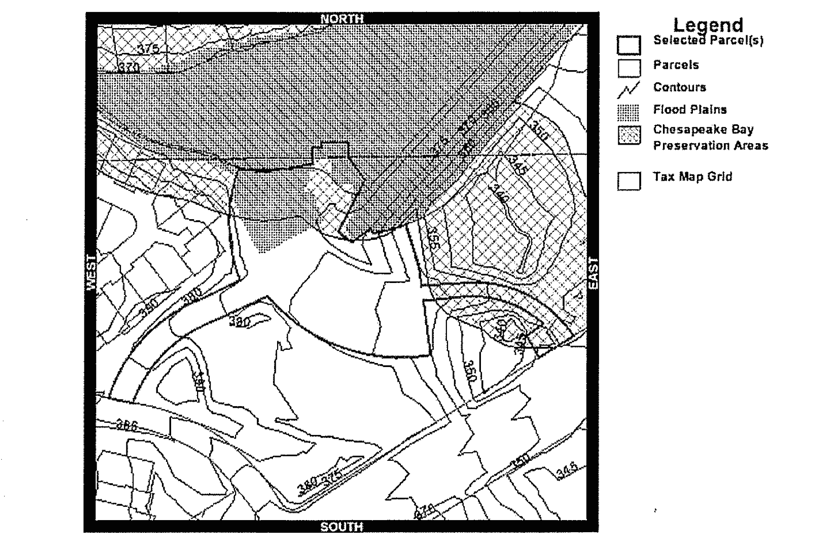
The Resource Protection Area (RPA) will prevent any lakefront restaurant on the Tetra Property — and Reston Association has known that since at least 2010. Below is an exhibit from the 2010 Appraisal ordered and paid for by Milton Matthews showing both the RPA and the floodplain easement on the Tetra property.
The Chesapeake Bay Preservation Act is part of the Virginia Code: §64.1 44.15:67 et seq. It required Fairfax County to adopt the Chesapeake Bay Preservation Ordinance: Chapter 118 of the County Code.
Section 118-1-7(b)(3)(a) of the County Code requires any water body with perennial flow to be in the RPA. Lake Newport has perennial flow. A 100 foot buffer around Lake Newport is also require to be part of the RPA pursuant to §118-1-7(b)(ii) of the County Code.
While there are a very limited number of exceptions to the RPA in Chapter 118, Article 5, a restaurant is not included among them. Any exception requires a public hearing ( §118-6-3) and any decision on any exception could be appealed to the Board of Supervisors. ( §118-8-1)
A copy of the proffers applicable to the Tetra property can be found on the RA website. The proffers are only two pages. None of those proffers require work in the RPA. Thus, the exception cited in Mr. Sanio’s Op Ed on Monday does not apply.
The 1981 site plan that showed a lakefront restaurant was revised by the prior owner on Oct. 8, 1982 to remove that restaurant as described in Michele Brickner’s 2003 letter that is cited in 2010 Appraisal on page 12. Ms. Brickner was the head of Land Development Services for Fairfax County at the time of her letter.
Thus, while the approved PRC development plan for the Tetra property allows a restaurant somewhere, the RPA prevents it from being located within 100 feet of Lake Newport.
The parking easement held by RA covers almost of the rest of the Tetra property and precludes a restaurant from being built there either.
None of the rulings by the County applicable to Tetra over the last 15 years were appeal by the current or former owner within the appeal period and thus are now “a thing decided and not subject to further review.”
Obviously, the 2010 RA Board did not believe the Appraisal that Milton Mathews’ ordered and the other information that has finally been shared with the membership justified going to referendum to purchase the Tetra. What’s changed since 2010?
Nothing.
 This is an op-ed from Reston Association At-Large Director Michael Sanio. It does not reflect the views of Reston Now.
I voted yes in the Tetra referendum for the following three reasons:
1) The 3.5 acres Tetra Property next to Lake Newport and the former Reston Visitors Center provides a wonderful space for children’s activities, summer camps, even family weddings and gatherings. Tetra will complement Brown’s Chapel, the Pony Barn and other Reston amenities.
2) In later years, cost for the property are estimated to increase member assessments no more than $5 per year.
3) Reston’s ownership of the Tetra Property will add to open space. Open space that is constantly under pressure from development, especially given the approved development at Lake Anne.
One of the comments I often hear when I speak to friends and neighbors is – the Tetra Property is already protected and can not be developed further. A restaurant can not be built on the site. The existing Fairfax County Resource Protection Act – RPA will prevent further development.
In fact, the existing regulations, and decisions of Fairfax County will allow further, development including a restaurant that can expand over the lake.
This can get technical and legal, so lets get started. Here are the facts:
First, the county RPA maps are guides only. The actual areas included within an RPA are subject to field verification and study by qualified professionals.
Second, there are certain exceptions (where the RPA restrictions do not apply), exemptions (where the regulations themselves provide the ability for certain development activities), limited exceptions for certain zoned development, and waivers (where it is unfair and unproductive to enforce RPA restrictions). The task of analyzing a particular property’s situation is both complicated and fact-specific. Read More
