

 One essential step in successful negotiations is to anticipate what the other side needs or wants and attempt to come as close as possible to that position to arrive at a compromise.
This process is followed effectively on a daily basis in businesses, families, and legislatures. While the rhetoric has been harsh from the Republican majority in the House of Delegates about not approving an expansion of Medicaid in the state, I understood their partisan and ideological stance but was confident that some middle ground, or as Governor McAuliffe calls it “common ground,” could be reached. My optimism is starting to wane.
Last week, Republican Senator John Watkins introduced a compromise plan. He chose to call it Marketplace Virginia and not to call it Medicaid expansion because the term raises such strong objections among his partisan colleagues.
His plan embodies so many basic Republican principles, that I thought it would be accepted. His proposal is a market-based solution that would use federal funds to provide basic coverage from competing private insurers to those who would qualify. Participants would be required to pay a co-pay amount based on their income, and they would need to meet minimum work requirements. The insurance would be good only as long as the premiums were paid. If the federal government reneged on its funding commitment in future years, the policies would be subject to cancellation.
Under this plan, the federal taxes paid by Virginians to support health insurance would be returned to the state.
The proposal seemed like a winner to me. I endorsed it as a reasonable solution. Within a day of its introduction, however, the House leadership rejected it without acknowledging that its provisions seemed to respond to their earlier concerns. Where does that leave us?
Virginia businesses are paying to the federal government tax dollars to support the program, but those dollars are not coming back to the state. The Commonwealth is losing $5 million a day!
More than a million Virginians continue to be without health insurance — including the 250,000 that would have been insured under Senator Watkins’ proposal. The Senate in a bipartisan way continues to press for a solution. Governor McAuliffe is a strong proponent of extending insurance benefits to more Virginians and wants a compromise. The House Republican majority refuses to budge.
This is clearly an impasse that will keep the General Assembly in session beyond the March 8 scheduled adjournment date.
In the meantime, I hope that citizens will continue to call, email, or write members of the House of Delegates to ask for their support of a compromise that will extend benefits to some of our neediest citizens. Thanks to the many people who have already contacted legislators from my earlier request. We need to keep working for a solution. About a quarter million Virginians are counting on us!
Del. Ken Plum has represented Reston in Virginia’s House of Delegates since 1982. He writes weekly on Reston Now.
 Last week, the Fairfax County Board of Supervisors approved the revised Comprehensive Plan for Reston, paving the way for the development around the future Silver Line stations to begin in earnest.
The new mixed-use, transit-oriented development along the Toll Road corridor will change the face of Reston in the coming decades. Those changes offer the potential for Reston to be a thriving, forward-looking, 21st-century community. They also pose significant challenges that the community will have to face.
As you likely know, RCA expressed a number of concerns about the plan revisions. We are concerned that the plan doesn’t do enough to address the traffic that the new development will add to our streets. We’re concerned that the plan doesn’t ensure that Reston’s new residents have enough parks and athletic fields nearby. And we’re concerned about the plan’s implementation, and who will be responsible for ensuring that the plan’s goals and constraints are met.
Unfortunately, the Board of Supervisors made only minor tweaks to the plan, and most of our concerns were not addressed. The Board did pass the follow-on motions recommended by the Planning Commission, the most important of which calls for “an inclusive process” to determine how the necessary transportation improvements will be funded. But most of the issues we had with the plan passed by the Task Force are still there.
So is this the end of the road? Not even close. What happens next will go a long way toward determining whether our vision of Reston’s future succeeds. There’s still work to be done, and we need our citizens to remain active and involved. Here’s an outline of the road ahead for Reston, and how RCA will keep remain involved along the way.
Let’s start with the “inclusive process” on transportation funding. Obviously, RCA will push to ensure that we and other citizen groups are included in that process. And we will work hard to develop an equitable plan that delivers the transportation improvements we need. Read More
 Last week, the Virginia General Assembly reached the midpoint of its annual session, or “crossover” as it is called in the legislature.
At this time in the calendar,the House of Delegates and the Senate have completed work on the bills that were introduced into the respective houses. Any bills that were passed are now sent to the other body for consideration. In order for a bill to become a law it must pass through both houses in identical form and be signed by the governor.
When a bill is passed in different form in the two houses, a conference committee with representatives from both legislative bodies is appointed to work out differences in a compromise that must then be approved by both houses.
While final action is still pending on most measures, there is some good news to mention in this halftime report. Significant legislation reforming the mental health system has passed both houses in different form and now must be reconciled.
In response to the tragic events in Sen. Creigh Deeds’ family, the length of time that a person who is undergoing a mental health episode can be held without their consent through a temporary detention order will be increased from the current six hours that clearly was not adequate for Senator Deed’s son to eight hours proposed in the House or to 24 hours approved in the Senate.
The final length of time to be worked out in a conference committee must balance individual civil liberties with the need to protect the person and the community from harm. Beyond the procedural issues to be resolved is the question of the level of funding for mental health programs that clearly needs to be increased.
Bipartisanship broke out in the House with representation from both parties working together to craft new ethics legislation that will increase transparency and accountability within the context of a part-time citizen legislature. Twice per year disclosures of economic interests will be required with all reports available for review electronically by the public. Ethics training will be mandatory for all public officials, and an ethics commission will be established to provide oversight for the process.
There is consensus among parents and educators that the current Standards of Learning (SOL) system needs reform. A bipartisan group of delegates developed reforms that were unanimously approved in the House and are likely to be agreed to by the Senate. There will be fewer SOL tests, opportunities for alternative assessments, and a commission to consider additional reforms.
Repeal of the tax on hybrid vehicles will be approved.
The remaining key issue about which there continues to be major differences among the political parties and the two houses of the legislature is the expansion of Medicaid to provide health insurance for as many as 400,000 Virginians.
All the other successes at the half pale in comparison to resolving this big issue in time for the legislature to adjourn as scheduled on March 8. Reaching the goal line on Medicaid expansion will determine if this session is a winner.
Del. Ken Plum has represented Reston in the Virginia House of Delegates since 1982.
As you know, I’m a fan of snowy days. I hope you’re all warm and safe inside right now. But once the cars and the walk have been shoveled, the snowmen have been built, and the day’s sledding runs are complete, you might be looking for something else to do. If you are, and if you care about our community’s future, I have a suggestion: Why not apply for a spot on the RCA Board?
We have three available seats, and we’re looking for dedicated community-minded folks to fill them. If you read my posts on a regular basis, odds are that you’re interested in Reston and community issues. And thank you for that! We need people who care about local issues. If that’s you, I’d like to challenge you to take the next step and get involved in planning our community’s future with RCA.
Last year was one of RCA’s busiest years ever, and 2014 is shaping up to be just as active. It’s Reston’s 50th anniversary, and our community will be looking back at its history, but there are plenty of issues that will have us looking forward as well. The opening of the Silver Line and its surrounding development, the implementation of Phase 1 of the Master Plan and the preparations for Phase 2, the proposed new rec center… these issues are going to change the face of Reston and how we live, work, and play for decades to come.
RCA and its Reston 2020 Committee are active on the front lines of all of those issues and more. If you’re interested in helping to shape the community conversation and help plan for our future, RCA and 2020 are a great place for you to get involved. Read More
Despite Virginia’s historic antipathy toward the federal government, the Commonwealth has nonetheless historically ceded decisions to federal authorities on major issues on which the state had been unwilling to move forward. Another issue is about to fall into this category: same-sex marriage.
Regardless of the desire on the part of conservative Virginians to pretend that it is not so, thousands of Virginians love someone of the same gender, an unknown number live together as partners, and some have already gotten married in other states.
While an amendment to the state constitution defining marriage as being between a man and a woman passed in a referendum more than a half dozen years ago, recent public opinion polls show a majority of Virginians as accepting of same-sex marriage. Failure of the legislature to act on the issue has resulted in two cases before federal courts challenging Virginia’s prohibition of same-sex marriage.
If the experiences in other states where such cases have been brought in federal court hold true for Virginia, the prohibition will be found to be unconstitutional. With the federal courts’ prodding, Virginia will once again be required to face a reality that it has resisted.
It is not the first time. Virginia also had a law that said that persons of different races could not marry. The legislature refused to acknowledge the unfairness of the law or vote to change it. It took a federal court decision, Loving v. Virginia (1967), to strike down the law.
Virginia segregated its public schools based on race until the Brown v. Board of Education decision (1954) — of which a Virginia case was a part — struck down racial segregation. Virginia’s decade-long effort to resist the federal decision was called Massive Resistance, “a deliberate, orchestrated campaign…intended to slow to a crawl attempts to integrate Virginia’s schools.” The campaign was unsuccessful, although it did take 40 more court decisions to integrate the schools in Virginia.
Virginia was also part of the Baker v. Carr decision in 1962 establishing the “one man, one vote” principle because the state legislature refused to acknowledge population shifts that were occurring and permit legislative representation to reflect those shifts until the federal courts intervened.
Federal intervention and the Voting Rights Act got rid of the blank sheet voter registration system and the poll tax that disenfranchised most African Americans. While it is good that the federal government has been a backstop to ending discrimination in many forms, it is truly unfortunate that the General Assembly was not willing to recognize the wrongness of their laws and make decisions on their own without the need for the federal courts to protect Virginians from their own government.
Too often the argument for states’ rights has been used to justify a violation of personal rights. I believe the federal courts will strike down Virginia’s marriage amendment. The General Assembly needs to move forward in outlawing discrimination based on sexual orientation instead of waiting until we’re forced to by the federal government.
Ken Plum represents Reston in the Virginia House of Delegates.
Reston’s 50th anniversary is at hand. Lately, I’ve been at several meetings where the focus has been on Reston’s history. There are a series of exciting events planned for this year that will take a look back at our past. I’m excited about attending as many of them as my schedule will allow.
But you know me; I like to look forward. I like to think about the future, and where our community is headed. Fortunately, just around the corner, we have an event in Reston that’s all about the future, and about fostering the spirit of experimentation and innovation that makes Reston special. And it comes as no surprise that this event is being put together by one of my favorite organizations: Nova Labs.
I’ve written about this terrific Reston-based nonprofit before. In case you don’t know, Nova Labs is a makerspace. That means that it provides space for people to create and build things, a place to collaborate with like-minded people, and an opportunity to learn about new technologies, tools, and skills. Basically, it’s a dream come true for people who like to make things. I’m proud that Reston is home to a creative and exciting venture as this.
At last week’s RCA Board meeting, we received a presentation from Nova Labs. We learned all about the projects that they’ve been doing, such as using drones to do an aerial survey of the Wiehle Metro station and hosting programs designed to get kids interested in STEM (science, technology, engineering, and math). We learned about their plans to move into a larger space within the near future. And most interesting of all, we learned about their plans to hold a Mini Maker Faire, right here in Reston next month.
What’s a Maker Faire? Basically, it’s the coolest show-and-tell you can imagine. It’s a gathering for engineers, crafters, tech types, and other makers to display and talk about their projects. The idea was hatched in the Bay Area by MAKE Magazine back in 2006. Since then, Maker Faires and Mini Maker Faires have been held across the country, and even internationally; combined, they’ve had over 1.5 million attendees.
What will you see at the Mini Maker Faire? It all depends on the exhibitors, and what they choose to display. That’s part of the excitement; you never know what you’re going to going to see. The focus is often on displaying new technologies, but you might also see innovative projects in science, engineering, or the arts as well. You might see some robotics projects, a 3D printing demonstration, exciting new apps, breathtaking Lego sculptures, artisanal crafts, performance art demonstrations, inventions, and more. And you won’t just be able to see what other people are making; you’ll have the chance to learn how to create things too!
Between 2007 and 2012, the median wages of Virginia’s highest income earners rose by 8 percent while the lowest income families’ wages shrank by 10 percent, according to an analysis by the Commonwealth Institute for Fiscal Analysis.
The gap between the haves and the have-nots continues to widen in Virginia as it has throughout the nation.
A growing underclass of unemployed, under-employed and under-paid creates a challenge for the state and the nation. Too many people are faced with the monthly decision of paying for the rent, utilities, food, prescriptions and school supplies without enough money to cover them all. Public and private relief organizations are strained to keep their food pantries and clothing closets stocked to meet the increased demand.
A sluggish recovery from the Great Recession has contributed to the problem. Many jobs that were lost have not come back. For those in the lowest wage jobs, income has been stagnant. Since 1982 to the present, those in the lowest income brackets have seen wage growth of three percent on average although the growth in the last few years has been less. By contrast those in the upper ten percent of wage earners have seen wage growth of 51 percent. There are actions that the state government can take to enable low income workers to become more active contributors to the state’s economy.
I have introduced a bill to raise the state’s current minimum wage of $7.25 to $8.25 this year and to $9.25 the next. Such an increase would help over 123,000 working Virginians buy their groceries, pay for their car’s gas, and meet basic necessities. I am disappointed but not surprised that it is opposed by the state Chamber of Commerce and by the fast food industries. While a raise of the minimum wage will add to the cost of business, it will at the same time produce consumers who will spend that money back into the economy. If the federal Congress follows the President’s proposal to raise the minimum wage, Virginia under my bill could go to the federal level.
I have also introduced a bill to make a portion of the federal earned income tax credit refundable as it is in about 20 states. Currently the lowest paid of workers can receive a credit on their income tax based on the limits of their income. By refunding a part of the credit that cannot be applied because of their limited tax liability there is additional money for working people to spend to support themselves with less reliance on social service programs. If refundable tax credits are available to those in the film, coal and agricultural industries, such a program should be available to help as many as 343,000 working Virginians. Unfortunately a subcommittee of the House Finance committee defeated my bill.
No one gains with the sharp division between the haves and the have-nots in our society. Paradoxically, efforts to help those most in need will help all other parts of the economy as well.
Ken Plum represents Reston in the Virginia General Assembly. He can be reached at [email protected].
It’s time once again for one of my favorite duties as RCA President: announcing our Citizen of the Year.
With so many dedicated citizens doing good work in the Reston community, I am delighted that we can honor some of those well-deserving folks. I love reading the nominations we receive, and learning about the citizen volunteers that make Reston such a special place.
RCA is all about the power of Reston’s committed citizens to achieve great things. It may be fashionable to be cynical about what individuals and citizen groups can accomplish in a world of big bureaucracies and institutions. But RCA is built on the belief that with hard work and dedication, our citizens can move mountains.
This year’s winner is a shining example of that belief in action. It gives me great pleasure to announce Kathy Kaplan as our 2013 Citizen of the Year.Kathy joins a proud tradition of RCA Citizen of the Year award dating back to 1976; people like Embry Rucker, Janet Howell, Jim Allred, Claudia Thompson-Deahl, Dave Edwards, and last year’s winner, Cate Fulkerson. As you know if you’re familiar with this award, the criteria for selection are as follows:
For the first time in a history that goes back to Patrick Henry and Thomas Jefferson, a Virginia governor has been indicted on federal corruption charges.
Although information on the activities of the federal grand jury had been leaking out for many months, former governor Bob McDonnell and his wife, who was indicted with him, and their stable of taxpayer-paid-for attorneys were able to stave off the formal indictment until he left office.
But the alleged wrongdoing took place while he was in office, during which time he and the first lady accepted a total of at least $165,000 in cash, loans and lavish gifts from the CEO of a diet supplement company. A review of the particulars of the indictment reveals a picture of a family that was in financial trouble with huge credit card debt but with a taste for designer clothing and accessories.
The former governor — who worked as a criminal prosecutor, who served in the House of Delegates as a member of its Courts committee and who was attorney general of the state before becoming governor — acknowledges the loans and money that he has paid back and the gifts he received. But he continues to maintain his innocence despite federal law that makes it illegal to use a public office to enrich oneself. The former governor was clever in using his intimate knowledge of Virginia law to escape reporting the gifts by having them go to family members rather than to himself and by selling stock before the end of a reporting period and buying it back after the reporting deadline to escape disclosing it.
The entire episode is a huge tragedy for the McDonnell family and for the Commonwealth of Virginia. The former governor and his wife may go to jail. The “Virginia way” that has always prided itself on clean government has been sullied.
Committees in the House and Senate are at work to tighten up ethics laws for the legislative and executive branches of government. I participated in a bipartisan panel to get the process underway. Reporting requirements for anything of value received will be expanded to include family members and will be required at least twice a year.
An ethics commission is likely to be established to rule on the appropriateness of activities of members of state as well as local government. As part-time legislators who live in the local community much more time than in the capital city, legislators need to be able to participate in the activities of the local community as long as they do not conflict with their legislative duties. The new ethics rules and the commission should help clarify which activities and expenditures are acceptable.
The presence of laws does not completely stop wrong doing. It is up to individuals to first police themselves and to act in an ethical way. Ultimately it will be the voters who decide if their elected representatives are adhering to the common-sense ethical standards that they expect.
Ken Plum represents Reston in Virginia’s General Assembly.
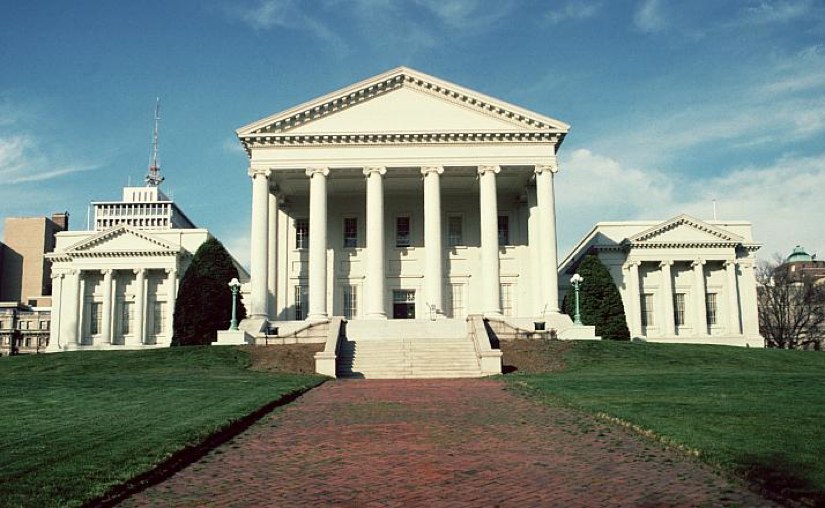
Virginia Attorney General Mark Herring filed a brief in federal court in Norfolk on Thursday that told the court Virginia has changed its position in Bostic v. Rainey, which challenges the commonwealth’s constitutional ban on same-sex marriage.
Herring (D) filed the brief with the support of Gov. Terry McAuliffe (D), and the challenge to the law marks a drastic change from Virginia’s position of just a few years ago. Virginians voted to amend its constitution in 2006 to ban gay marriage.
“I believe the freedom to marry is a fundamental right and I intend to insure that Virginia is on the right side of history and the right side of the law,” Herring said at a press conference in Richmond.
Herring, then a state senator from Loudoun, voted for the same-sex marriage ban in 2006, along with 57 percent of Virginia voters. He now says his views have changed since then.
“The Attorney General has concluded that Virginia’s laws denying the right to marry to same-sex couples violate the Fourteenth Amendment to the United States Constitution,” the brief reads.
Seventeen states and the District of Columbia now recognize same sex marriage. Is it time for Virginia to do the same?
What do you want to add to your community?
 With the addition of the Silver Line and future development in Reston, our community is going to change. How it changes is something most of us are considering. In addition to the negatives, there will be positives. What do you think makes Reston stand out from other neighborhoods?
I would like to see us continue our commitment to developing walkable places.
According to a recent study conducted by Active Living Research, walkable shopping areas promote active living and have a beneficial impact on nearby housing values. The report, Walkable Shopping Areas are Good for Business, based on analysis of 70 studies and articles plus an exploratory study of 15 walkable shopping areas, also notes that the availability of mass transit is an important adjunct to the success of such commercial areas. Additional transportation and livability studies are available at Active Living Research.
What features do you want to set us apart from other Northern Virginia communities as we grow?
Lucinda Shannon
Reston
The train is coming! At last, the Silver Line will pull into Wiehle station within the next few months. And just in time, Fairfax County is finishing the revisions to our Comprehensive Plan to set the ground rules for development in the station areas. The draft Comp Plan goes before the Board of Supervisors on Tuesday, with a vote likely within a few weeks.
The good news is that over four years of work by the Master Plan Task Force is about to come to fruition. Those long meeting nights and discussions about Floor-Area Ratio and Levels of Service are over. I’m happy to have my Tuesday nights back, and my family feels the same way.
The bad news is that the Comp Plan still falls short in several areas. The plan doesn’t do enough to protect Reston’s quality of life, or to ensure that the station areas will be well-integrated into the surrounding community. In this week’s column, I’ll update you on where the process stands, highlight the areas where RCA believes the plan can be better, and explain what we’re going to do about it.
The last time I talked in depth about the Comp Plan was in the wake of the Task Force’s final vote in September. In that column, I spelled out why RCA felt the plan needed improvement. Since then, the plan has gone to the County Planning Commission, which reviewed and approved it.
The Planning Commission spent several weeks reviewing the plan, but ultimately made only minor changes. We were particularly discouraged that the Planning Commission disregarded the changes suggested by Reston’s citizen representatives, while adopting several changes provided by individual landowners and/or their lawyers.
As a result, RCA’s concerns about the plan are the same today as they were back in September. To refresh your memory, I’ll touch on a few of the key areas.
Traffic has been a key issue for RCA throughout this process. The development around the stations won’t benefit Reston if clogged streets mean that we can’t get to the Silver Line, or that the Toll Road becomes a virtual wall during the rush.
The Rosslyn-Ballston corridor has been cited as a success story for transit-oriented development; traffic in that area has actually improved over time. Unfortunately, the County Department of Transportation’s modeling suggests that won’t be true for Reston; our traffic is projected to get worse — in some cases, much worse — if the Comp Plan goes forward as written.
That’s why RCA supports a goal of Level of Service E at Reston’s “gateway” intersections (where Wiehle Avenue, Reston Parkway, and Fairfax County Parkway intersect Sunset Hills and Sunrise Valley). Level of Service E means an average delay of 55 to 80 seconds at each of these intersections. Currently, the Comp Plan calls for a “network” Level of Service E, a fuzzy goal that allows for delays of up to four minutes at the gateway intersections, according to FCDOT models. That level of gridlock just isn’t acceptable. Read More
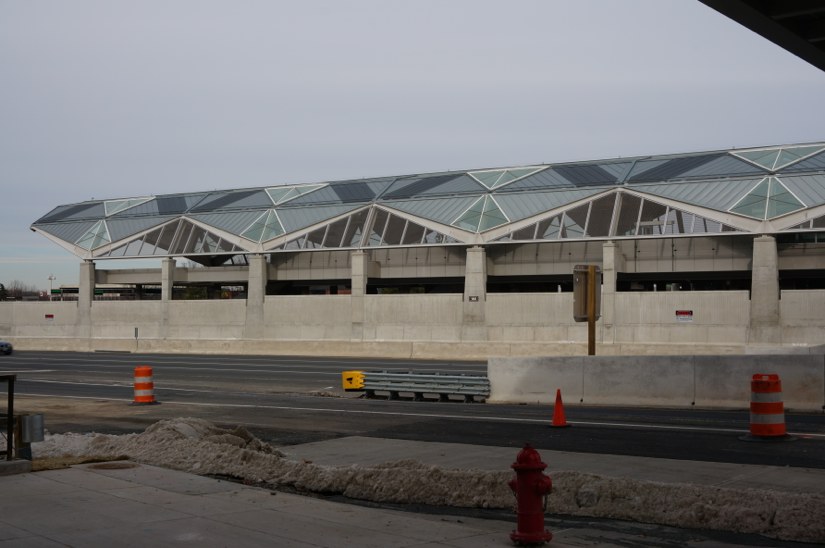 The draft master plan for Reston’s share of the Dulles Corridor and the Town Center area will be the subject of a public hearing by the Board of Supervisors next Tuesday, Jan. 28, 4:30 p.m., in the Government Center auditorium. It will be the last chance for Restonians to present its concerns, views, and suggestions on the draft plan before the Board considers amendments and approves the draft plan.
As it stands now, the draft plan overwhelmingly represents the views of developers and land use attorneys who numerically dominated the task force. Reston’s leading civic groups—RA, RCA, and ARCH—and a few other independent Restonian members of the task force have been active voices over the last four years, but their voices and votes have been drowned by the special interests of the majority developers, landowners, and attorneys. Their view is that the plan should stay out of the way as exemplified by the dozens of references to “flexibility” throughout the draft plan, attempts to limit commitments to open space, sustainable development, architectural review, controlling traffic congestion growth, and commercial vs. housing balance commitments throughout the process.
They are also dominating the preparation of the task force’s report to the Board of Supervisors. The draft task force report attempts to weaken further the language of the draft plan as it has been presented to the Board. RCA has taken the time to thoroughly review and comment on the draft task force report’s shortcomings including many more than described above. Ultimately, RCA voted “nay” on the draft task force report.
Even the Planning Commission has amended the draft Plan on its way to the Board by cutting out a proposed requirement that new construction be reviewed by RA’s Design Review Board. The likely result: A developer-dominated design review board (if any) that won’t care about architectural excellence—a key Reston planning principle. For example, see the results around Wiehle and Sunset Hills from the previous RCIG Architectural Review Board (ARB). Would you like to see a high-rise version of that asphalt and concrete mess?
The situation has not been helped by the fact that County property tax revenue coffers have been stagnant for years, and the Board has been criticized by national bond rating agencies (“outlook negative”) for its overspending in a tighter economic environment as Federal tax dollars for employees and contractors has declined with the recession, sequestration, and irresponsible government shutdowns. All of this has led the Board to focus on generating more taxable property growth in its urbanizing areas—Tysons, Reston, Springfield, and others—no matter what the community costs. That is a far easier course of action for the Board than cutting budgets or increasing tax rates.
RCA’s Reston 2020 Committee has written extensively about the issues and opportunities a new Reston master plan needs to address. It has produced more than a dozen major papers, many approved by the RCA Board of Directors, available from links on its website detailing these issues and opportunities. As the task force process began steamrolling toward its conclusion last autumn, RCA’s representative called up on the task force to produce a draft plan that befit this planned community. It has not.
It is now up to you, Reston residents, to make your voice heard unless you want to see a Dulles Corridor that:
- Reminds you of Crystal City in its property line to property line, concrete and glass, cubist architecture;
- Makes it virtually impossible to drive from one side of Reston to the other—or even to/from the toll road—during rush hours with 5-6 minute delays at each key intersection the norm;
- Guarantees next-to-no new open and recreational space, including only three athletic fields for the area’s expected 40,000 new residents; and
- Fails absolutely in describing how any of its plans might be implemented;
- And other shortcomings as detailed in RCA’s Reston Master Plan Report Card.
I would ask that you each consider whether it is worth your time to attend the hearing next Tuesday to hear what your community representatives (and developers) have to say and, if you are willing, to present a short statement (three minutes is the limit) to the Board about your concerns and ideas for building a better urban Reston area. To sign up to speak at the hearing, please go to this webpage on the County website.
It is our community’s last chance to make a difference in a plan that will guide the urbanization of Reston’s core for two or more decades. We need your help. Please attend next week’s hearing and testify if you are willing.
Terry Maynard
RCA Board of Directors
RCA Representative to the Reston Task Force
Co-Chair, RCA Reston 2020 Committee
Each year, the Governor of Virginia addresses a joint assembly of the House of Delegates and the State Senate in a speech. It’s not unlike the President’s State of the Union address, except that the Governor provides a “State of the Commonwealth” as well as his recommendations for legislative action.
Last week, I heard the 35th such speech since I have been a member of the House of Delegates. I think Gov. Terry McAuliffe made the best of any of the speeches I have heard over my career in the legislature.
He emphasized the need for all to work together: “…as we launch this new chapter in our history, let us resolve to show the partisans in Washington and across the nation that here in Virginia, in a Commonwealth that pioneered government by consensus, there is no challenge too great, no debate too intractable and no idea too ambitious that we cannot come together on common ground to build the future our families deserve.” The theme of his inaugural events was “common ground.”
He will put an emphasis on economic development. In his speech, he announced two economic development projects that he had already concluded after just three days in office.
“In today’s modern economy, Virginia has to be smarter, more productive and far more aggressive than our sister states for new jobs and investment,” he said. From the tone of his speech it is obvious that no one will be accusing the new Governor of not being aggressive enough in economic development.
His goals are clear, and he does not duck controversial issues. In his own words, “We should stop over-testing our students…The General Assembly should not wait another year to pass the bipartisan Dream Act…On Saturday I was proud to sign Executive Order Number One, which prohibits discrimination in state government on the basis of sexual orientation and gender identity…An open and welcoming Commonwealth requires a state government that trusts women to make their own health care decisions, and works to expand access to quality care…I am eager to work with the coalition of Virginia leaders who agree that we need to strengthen our democracy by passing legislation putting Virginia on the path toward non-partisan redistricting.”
He was just as direct in his support for an expansion of Medicaid to help those “families (who) are just a major illness or accident away from financial ruin.” As he pointed out, if we fail to exercise the option of federal funding for Medicaid, “we will forgo $2.1 billion annually in federal funding over the next three years. That is more than $5 million per day.”
The Governor has extended an invitation for legislators of both parties to work with him. I look forward to working with him in moving Virginia forward.
To read the full text of the Governor’s speech, go toGovernor’s Address.
Ken Plum represents Reston in Virginia’s General Assembly. He writes weekly on Reston Now. He can be reached at [email protected].
Last week, the Fairfax County Planning Commission approved (with a few changes) the draft Comprehensive Plan amendment produced by the Reston Master Plan Task Force. The plan now goes to the Board of Supervisors. I’ll be writing more about our thoughts on the plan and how we think it can be improved, but this week I want to focus on one crucial issue: providing athletic fields for Reston’s new residents.
You may have read an article on the field situation in Reston Now earlier this week. If so, you know that RCA and our Reston 2020 Committee have made this issue a priority throughout the Master Plan process. So this week, I’ll explain why the field situation in the station areas is so challenging, and why we’re concerned that the Comp Plan doesn’t do enough to address the issue.
We already have a shortage of athletic fields in Reston. As anyone who plays an organized sport (or with a kid who does) knows, the competition for field time around here is fierce. When I was a kid, our sports were a pretty casual affair: we played baseball and football in the common areas around our neighborhood. We played tennis in the road that ran through our cluster. When we could get away with it, we snuck onto the neighboring Hidden Creek Country Club golf course. We didn’t use actual fields that much. Read More
