

 After more than two years of public hearings and discussions, Fairfax County is still working on a new noise ordinance.
Following the latest round of hearings last spring, the Fairfax County Board of Supervisors has deferred until November a decision on the proposed new rules.
The board says it needs time to address issues about the plan brought up by community members at a May public hearing.
The county has been working since 2013 to put in place an amended noise ordinance. It has been working with an interim one in the meantime.
“It is the purpose and intent of the proposed ordinance to recognize that certain noise is a hazard to the public health, welfare, peace, and safety, and the quality of life of the citizens of Fairfax County,” county planners say in a 2015 staff report on the subject.
“People have a right to and should be ensured of an environment free from sound that jeopardizes the public health, welfare, peace, and safety or degrades the quality of life.”
County officials say that the overall goal of the new plan is to “recognize that there will always be certain levels of noise that occur in the normal course of daily living; allow certain levels of daytime noise so that people can live, work, and play during the day; and minimize nighttime noise so residents have an appropriate quiet environment in their homes at night.”
Of course, enforcing a noise ordinance has proven difficult in the past. The noise is only an issue if the neighbors complain, and violators would only be issued a ticket.
Officials also say they need additional time to weigh the methodology used to determine noise levels. The board will have a workshop on the subject on Sept. 11.
Here is what some of the proposed changes look like:
Activities on School and Recreational Grounds — Advertise a decibel range of 60 to 72 dBA for limiting the maximum noise level for cumulative noise, when loudspeakers are used. Read More
 Fairfax County says its program to remove distracting and illegal signs from major road medians has been a big success and will continue.
In July 2013, the county instituted a program to have the Sheriff’s Community Labor Force regularly pick up political campaign signs, advertising signs and more every week.
Fairfax officials that crews picked up 14,000 signs countywide the first year and 22,000 signs the second year, marking the program as a success.
Officials plan to expand the program with a second removal crew this year.
The county formerly picked up signs only when there was a complaint. Signs are now picked up on selected roads on Tuesdays, Wednesdays and Thursdays.
The program covers 63 streets — or about 200 miles of roadway — county officials said. Most are two-lane, divided highways. Locally, that includes Fairfax County Parkway, South Lakes Drive, Sunset Hills Road, Reston Parkway and Sunrise Valley Drive, among others.
Crews hit each of the 63 roads at least once a month, the county says. After the county removes a sign, it is stored for five calendar days at the I-66 Transfer Station where it may be reclaimed. Signs are destroyed after five days.
The Virginia Department of Transportation is still responsible for road maintenance. However, if a sign on any public road presents a safety hazard, drivers should contact VDOT at 1-800-FOR-ROAD or via their online form.
Median signs/Credit: Fairfax County
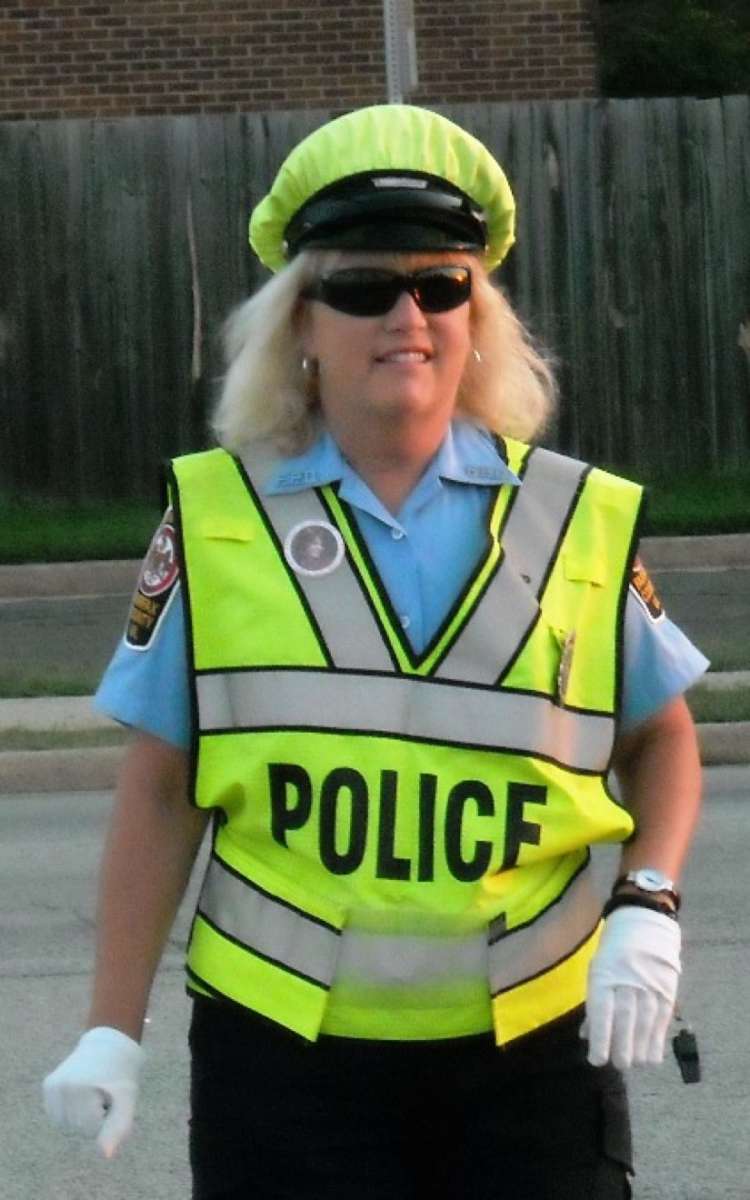 The Fairfax County Police Department says it has re-trained many of Fairfax County Public Schools’ nearly 100 crossing guards, which should lead to a safer and more effective system when the 2015-16 school year begins in September.
Police Chief Ed Roessler said in a letter to parents that FCPD conducted an audit in the fall of 2014. The audit reviewed pedestrian safety and motor vehicle traffic flow.
A year later, though, the school system still heard from many FCPS parents who were concerned about student safety around schools, many of which are seeing increased traffic on nearby roads and an increase in the number of kids using the “kiss-and-ride” area.
Among the questions: Are crossing guards sworn police officers? Can they legally direct traffic? Are highest safety standards being met?
Under county and state law, crossing guards were supposed to control traffic, not direct it.
Said Roessler: “Based upon this audit and community input, we have re-trained our crossing guards and coordinated traffic flow issues with School
Transportation. Additionally, several crossing guards were trained and
certified to direct and control vehicle traffic outside the basic scope of just
crossing children in the crosswalk.”
“Our follow-up audits found these measures have assisted with pedestrian safety and mitigating traffic flow.”
Photo: Fairfax County
Fairfax County voters will likely be asked to vote on bond referendums this fall that will have a direct impact on Reston facilities, including a fire station and South Lakes High School.
The Fairfax County Board of Supervisors has authorized a $151 million public safety and $310 million schools bond referendum. That means they can petition the Circuit Court to order the referendums for the Nov. 3 general election ballot.
If voters pass the referendum, $51 million will be used to replace Station 25, the Fairfax County Fire-Rescue station at Wiehle Avenue and Sunset Hills Road, as well as renovate or replace Merrifield, Penn Daw, Woodlawn, and Edsall stations.
Station 25 is one of the busiest stations in the county, Fairfax County says. It was built in 1972 and last renovated in 1986.
Fairfax County’s Capital Improvement Plan says $13,000,000 is needed for replacement as the building systems and infrastructure are well beyond the end of their life cycle. The replacement would include an expansion to a four-bay station. The fire station lacks women’s accommodations to include bunk rooms, lockers and bathroom facilities to meet 50 percent of minimum shift staffing. It is also in need of a workout room, an expanded men’s locker room area and laundry facilities.
The school bond referendum will go towards an addition for South Lakes High School, as well as renovating nine elementary schools, two middle schools and two high schools, along with planning for a new Northwest County-area elementary school.
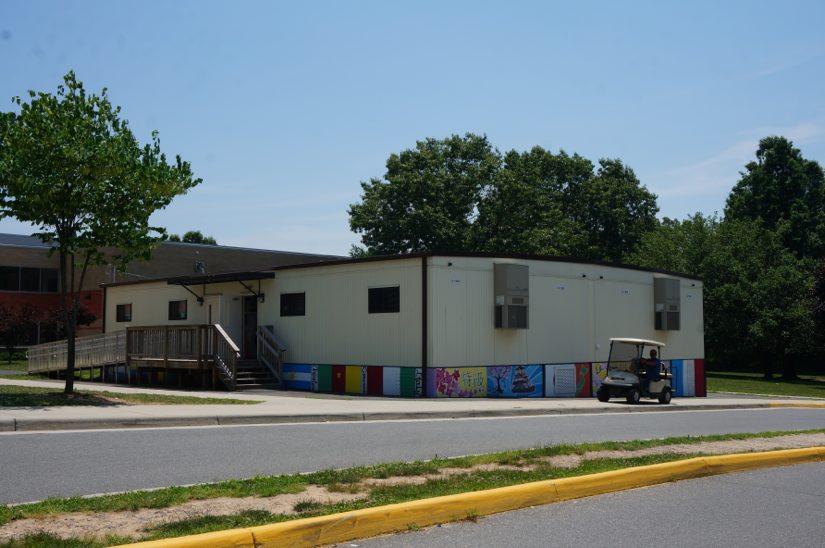
South Lakes underwent a major overhaul in 2006-07, and then was part of a contentious redistricting that quickly turned the school from one of FCPS’ smallest to one that needed more space. Many classes are currently held in portable classrooms.
The school is over its capacity of 2,300 students. With population growing at nearly every FCPS school, the school district puts South Lakes capacity at 140 percent by 2017-18, according to FCPS’ 2013 Capital Improvement Plan. Projected enrollment by 2017 is 2,983, according to FCPS’ analysis.
Part of the SLHS renovations are already financed by the most recent $225 million school bond referendum, which was authorized in 2013.
Other bond money will go to renovate the Franconia District Police station ($100 million); to build a new, joint animal shelter and police station in the South County area; for construction and renovation for the Police heliport, Operations Support Bureau facilities and Emergency Vehicle Operations and K9 Center.
The proposal is one of the largest school bonds in recent years. Voters approved a $365 million bond in 2007.
The county has received the highest triple A rating from Moody’s Investors, Standard and Poor’s and Fitch Ratings. The county is one of only nine states, 39 counties, and 33 cities to hold a triple-A rating from all three rating agencies, so Fairfax County’s bonds sell at relatively low interest rates compared to other tax-free bonds.
Photo: Portable classroom at South Lakes High School
Still unsure what the changes to Reston’s Master Plan mean? Fairfax County Planning staffer Faheem Darab breaks it down in this video produced by Fairfax County.
The Fairfax County Board of Supervisors gave final approval to changes to the comprehensive plan earlier this week. The changes will guide any redevelopment in Reston’s neighborhoods and at its village centers.
“With the Master Plan changes, we can expect Reston to continue to be a premier planned community in the county,” Darab said, noting that the changes will mostly leave neighborhoods and convenience centers as they are and at least 12 percent of new housing stock will be affordable housing so a diverse population can live in Reston.
The biggest changes may come to the village centers, where new rules state that a developer does not need a comprehensive plan amendment to make drastic changes at Tall Oaks, Hunters Woods, South Lakes or North Point.
Ironically, the county video was filmed at Lake Anne Plaza, Reston’s original village center. Lake Anne, which has historic designation and is in the midst of its own revitalization plan, does not fall under this week’s Master Plan changes for redevelopment.
Photo: Tall Oaks Village Center/file photo
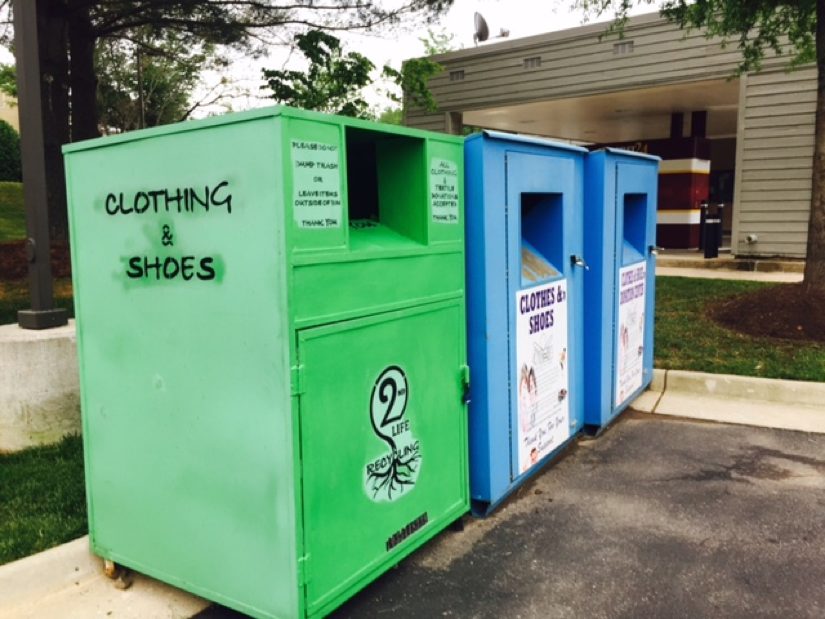
Clothing donation boxes have become standard features at Reston and Fairfax County shopping center parking lots. They make quick work for cleaning out your closets and dropping off items that a non-profit can distribute to others in need.
But often the boxes become a dumping ground for furniture, books, mattresses and other castoffs. The boxes — and overflowing items — can also block routes through a parking lot.
That is why Fairfax County wants to put new rules in place. County officials have consulted with Planet Aid, a nonprofit that uses donation boxes to collect used clothes, and the Secondary Materials and Recycled Textiles Association to come up with new guidelines to curb the parking lot clutter.
The boxes are currently not covered by any county zoning rules, officials say. Instead, Fairfax County has applied its rules for secondary structures like garden sheds or garages.
The recommended new ordinance says that the boxes:
- May not be larger than seven feet tall, six feet wide or six feet long.
- Are limited to two boxes per property in an area not to exceed a total of 120 square feet.
- Must be made of weather-proof, noncombustible materials.
- Must get regular collection with no items left outside the boxes.
- Must list the following information on the outside of the box: name and telephone number of the owner/operator, the items for collection, and a statement prohibiting liquids and dumping.
- May only be placed on certain commercial properties, like shopping centers, that are 40,000 square feet or larger; in any commercial area of a planned district when shown on an approved development plan; and in any residential district on lots with a non-residential principal use, like a church, or in conjunction with approval for another use by a special permit, special exception or proffered rezoning and only when shown on an approved development plan.
Photo: Clothing collection boxes at South Lakes Village Center.

 After the Fairfax County Public Schools Board last week approved a smaller-than-anticipated Fiscal Year 2016 budget, schools Superintendent Karen Garza and County Supervisor Chair Sharon Bulova issued a joint statement vowing to work together for the betterment of the community.
The county transfer to the schools for 2016 is about $2 billion. That amount was a $66.7 million increase over 2015, but still about $14 million short of what FCPS says it needs for programs and teacher raises. Garza later called the supervisors “unconcerned” about FCPS’ 187,000 students.
The two county leader said on Tuesday “we acknowledge that all involved care very deeply about our community, our young people, and our schools.”
They also both acknowledged the consistent increase from the supervisors to the schools — as well as FCPS’ growing needs.
Here is the rest of the joint statement:
Over the past five years, the Board of Supervisors has consistently increased funding to our schools. We both acknowledge, however, the financial strain on FCPS as the system is faced with significant cost drivers such as enrollment growth, required increases to the state retirement system, and inequitable state funding formulas for education.
We discussed the unprecedented fiscal challenges facing both the County and FCPS in Fiscal Year 2017 (school year 2016-17). Both of our organizations are projecting significant budget shortfalls that must be addressed in the coming months.
We recognize that it is critical for FCPS and the County Board of Supervisors to continue to work together to find viable financial solutions that are in the best interest of our children and the community as a whole.
We have agreed that we need to move forward as a team to find solutions to these funding challenges. We welcome the opportunity to work together to protect Fairfax County’s quality of life and enable Fairfax County Public Schools to maintain the high quality educational programs that educate and nurture future Fairfax County citizens and employees.
Sharon Bulova (left) and Karen Garza (right)/file photos

If you see a mannequin holding a “Do You See Me?” sign in Reston, think about how you would feel if it were a real person on the street or under a bridge.
That’s the message the Fairfax-Falls Church Community Partnership to Prevent and End Homelessness is trying to get across with its 2015 We Can End Homelessness campaign, which will kick off at the Fairfax County Board of Supervisors on Tuesday.
Fairfax County is participating in the Mannequin Project, an effort designed to raise awareness that homelessness does exist in Fairfax, one of the nation’s wealthiest counties.
Beginning Tuesday and running through June, a series of mannequins will be on display in locations throughout the county, representing the faces of homelessness that exist in real life in our area, says Dean Klein, Director of the Fairfax County Office to Prevent and End Homelessness.
The mannequins will hold placards asking residents “Do You Know Me? Can You See Me?” and will depict people of all ages and backgrounds, and further descriptions on the project website explain each mannequins “story,” which is fairly typical of how homelessness can happen to many people, especially children.
“This exciting awareness campaign is intended to bring more attention to the issues facing homeless women, men and children in our community who are homeless,” Klein said. “We hope that by raising awareness we will be able to build even more momentum in preventing and ending homelessness in our community by engaging new stakeholders and by raising more resources.”
About 1,200 people in Fairfax County are considered homeless, said Board of Supervisors Chair Sharon Bulova.
“The Mannequin Project is a creative way to bring attention to our homeless population in Fairfax County,” says Bulova. “The Mannequin Project tells us about our homeless neighbors. Each mannequin has a story that may challenge your views on why people are homeless, and what we can do to help.”
Photo: A “Do You See Me?” mannequin/Credit: Fairfax County

A sunny spring day brought golfers out to play a round at Reston National Golf Course on Thursday. The rolling greens and the manicured shrubs belie the tension that the future of the 166-acre public course has caused over the past three years.
Will the open and community space give way to residential development close to two Silver Line Metro stations? Will it remain, as it was designated in the original plans for Reston, as the “South course” as well as a spot for joggers, wildlife and homeowners who want a bucolic view?
Or will it become a court case that all other development plans refer to when defending land-use rights?
Time will tell.
On Wednesday, the Fairfax County Board of Zoning Appeals gave a partial ruling on the golf course owner’s 2012 appeal to see if the property was designated residential. The BZA said it overruled the zoning administrator to the extent she says a comprehensive plan amendment is a precondition to development.
That may have lowered the bar for re-development in Reston and the case may set a precedent in arguments for land use rights in the future, one real estate source said.
If owner RN Golf Management wants to re-develop, it does not need a master plan change. It will, however, still have to submit any redevelopment plans through the Fairfax County Planning Commission, the Fairfax County Board of Supervisors, and Reston Association’s Design Review Board and Board of Directors.
Attorneys for RN Golf say they have not seen any plans.
“There is no plan along the route, ” RN Golf attorney Frank McDermott said Wednesday. “This was a determination of our property rights.”
Meanwhile, most of the golfers at Reston Nationals’ driving range Thursday were unaware of the drama surrounding the course. Until there is an approved plan, the course is open for business.
Jesse Martin, 40, grew up in Reston. He lives in McLean now, but stops by Reston National to hit balls a couple times a week. He says he thinks the right thing for Reston — preserving open space — will prevail. Read More
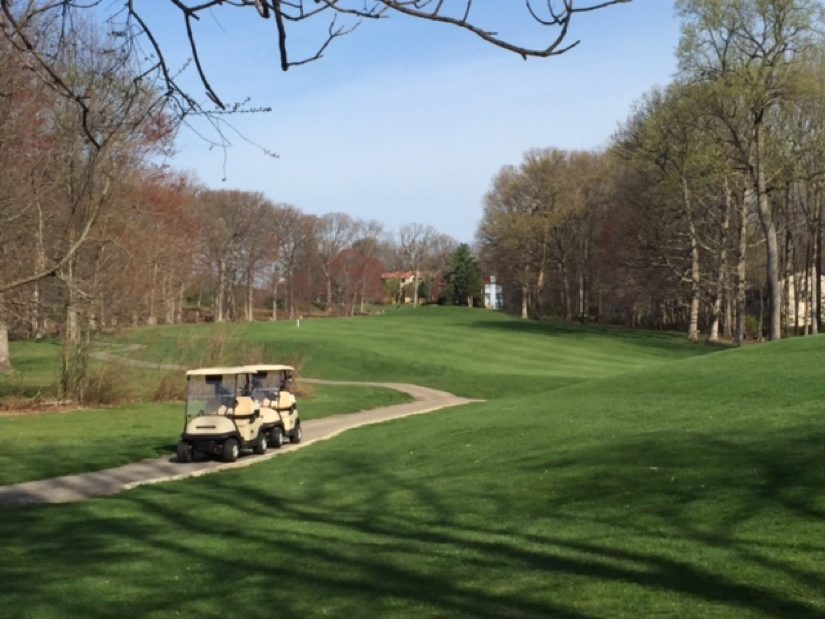 Neither the owners of Reston National Golf Course nor the citizens of Reston came out as clear-cut winners in the Fairfax County Board of Zoning Appeals’ ruling Wednesday on the future of the expanse of land at Sunrise Valley Drive and Soapstone Road.
After a public hearing in January, the Board of Zoning Appeals (BZA) was slated to rule on a 2012 appeal in which golf course owners RN Golf Management could consider the 166 acres as residential space.
But before it could get to the ruling — or in this case, a partial ruling — the BZA heard more than two hours of rambling testimony from BZA members Paul Hammack and James Hart.
The testimony covered details including 1971 maps; a 1993 letter from Fairfax County Zoning; a 2012 letter from county zoning administrator Cathy Belgin to attorney Mark Looney, who filed the original inquiry for RN Golf; and what parcels of Reston land are subject to various planned community zoning rules.
In the end, Hammack’s motion that “we overrule the zoning administrator to the extent she says a comprehensive plan amendment is a precondition [to development]” was unanimously approved.
The BZA took only into consideration the 2012 letter from Belgin to Looney and not the many documents and findings on the issue discovered since then.
Belgin’s letter on June 20, 2102 stated: “Redevelopment of the property from a golf course to residential uses would first require an amendment to the Reston Master Plan which is part of the Fairfax County Comprehensive Plan, as well as subsequently obtaining a DPA approval and a PRC approval from the Board of Supervisors.”
Hart said the 2012 letter — the basis for the appeal — had an opinion “that was made in a vacuum.”
“The Comprehensive Plan is in no way a procedural bar,” he said. “In that sense, the letter went too far. The golf course can be redeveloped if proper procedures are followed. The appeal is about what the proper procedures are.”
Hammack said it is hard to make a ruling when the board does not know what RN Golf has planned for the golf course.
“Until we know what is proposed, I don’t think we can make a determination saying the zoning administrator is right or wrong,” he said. “At this point, [ruling on] a development plan is hypothetical.”
The BZA motion all but ensures the discussion over the future of the golf course will continue. The golf course owner has 30 days in which to make an appeal.
Representatives for Rescue Reston, the open space advocacy group formed in the wake of the golf course issue, previously said it will appeal. Connie Hartke of Rescue Reston said on Wednesday the group will now take a step back and weigh the options.
“Where it stands at the moment is that RN Golf can go through the normal process for a development plan with a [Planned Residential Community] Amendment,” she said. “They can propose whatever they want to propose. Right now, we would band together and fight it. But in 50 years, who knows what will happen?”
“We are very concerned [by the BZA saying] the comprehensive plan does not matter,” she added. “This is not about zoning. This is about what process do you have to go through to redevelop land.”
Added Rescue Reston board member David Burns:
“We believe the BZA has ignored not only the law and the property rights of the thousands who own property adjacent to the golf course, but also the will of the more than 6,000 supporters of Rescue Reston, and the thousands more members of the Reston Association, who respect the Reston Master Plan and oppose development of the golf course.”
RN Golf, a subsidiary of Northwestern Mutual Insurance, purchased the golf course in 2005 for $5 million. It first inquired on the zoning status in 2010. After the 2012 answer, RN Golf deferred taking additional action until last fall.
A January county staff report also upheld the 2012 ruling.
 Parents need to be aware that painkiller abuse and heroin use have reached “epidemic levels across the nation,” says the United Prevention Coalition (UPC) of Fairfax County.
Fairfax County is not immune. County stats show that from 2011-14, there was a 22-percent increase in the number of county residents needing services who reported having used heroin, non-prescription methadone, and/or other opiates.
From 2013 to 2014, in Fairfax County, the number of deaths from heroin overdose doubled. The county is also seeing “heroin use trending younger.”
“Fairfax County, like other communities across the commonwealth and nation, has a major public health crisis on our hands with painkiller and heroin abuse,” said UPC President Lisa Adler. “Heroin-related deaths increased 164 percent between 2011 and 2013 in our county alone. We need all citizens to join us in preventing more tragedy that has touched our youth and young adults and countless families.”
The UPC will host a forum on April 13 called “Painkillers & Heroin: Our Community Problem.” Featured speakers include Virginia Secretary of Health and Human Services William A. Hazel Jr., M.D., Fairfax County community leaders, local experts and parents.
The forum is from 7 to 9 p.m. at the FCPS Gatehouse Administration Center, First Floor Café, 8115 Gatehouse Road, Falls Church, VA 22042. The event is free, but registration is requested at www.unifiedpreventioncoalition.org.
Hazel, a physician, serves as the co-chair of the Governor’s Task Force on Prescription Drug and Heroin Abuse and will he the event’s keynote speaker.
Panelists include Kathy Briggs, who will share the story of her 21-year-old son’s death; Jesse Ellis, Fairfax County NCS prevention manager; Sgt. Jim Cox, Fairfax County Police Department narcotics officer; Maria Hadjiyane, Inova Behavioral Health Adult Ambulatory Care, director; and Dr. Husam Alathari, Inova CATS (Comprehensive Addiction Treatment Services) Program medical director; and a local college student in recovery. A question-and-answer session will follow.
Among those available to questions: Don Flattery, a member of the Governor’s Task Force; Paul Cleveland, FCPD Commander of Organized Crime and Narcotics; representatives from the Fairfax-Falls Church Community Services Board; and other community leaders working on the Fairfax County opioid addiction prevention plan. Also participating will be Ginny Atwood of the Chris Atwood Foundation, which was formed in memory of her brother who battled addiction for six years.
For more information, visit www.unifiedpreventioncoalition.org.
Photo illustration courtesy of UPC
 Fairfax County was named Virginia’s third-healthiest — behind Arlington and Albermarle Counties — in the Robert Wood Johnson Foundation’s 2015 County Health Rankings.
The rankings look at 30 factors, including poverty, education, transportation, housing, violent crimes, jobs, access to healthy foods and access to medical care.
Some stats contributing to Fairfax’s high marks:
An adult smoking rate of 11 percent, and lower-than-average rates of obesity (20 percent), physical inactivity (15 percent) and excessive drinking (20 percent). Fairfax also earned very high marks for access to health care professionals and exercise opportunities.
But some lifestyle factors are not so great here. Fairfax was No. 37 (out of 133 counties) for physical environment. That means average levels of air pollution and housing problems and a way-above-average length of commute for many residents.
In Maryland, Montgomery County earned top honors.
Too see all Virginia stats, visit the County Health Rankings website.
Running in Reston/file photo
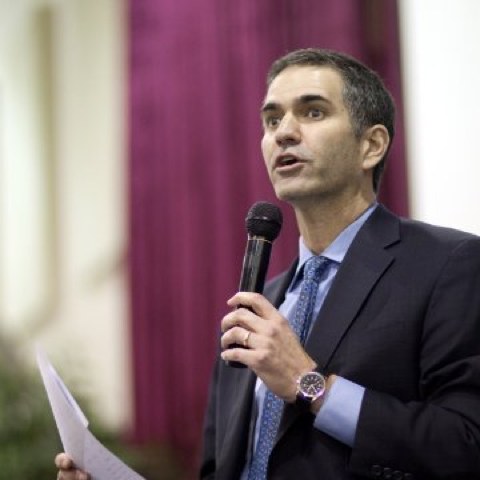 Reston resident Dean Klein, director of the Fairfax County Office to Prevent and End Homelessness, will be honored with the 2015 Katherine K. Hanley Public Service Award March 13.
The awards program, now in its 12th year, was instituted to recognize sustained contributions by public sector employees, non-profits, or appointees to a public board, authority or commission.
Klein was selected for the award by Leadership Fairfax because he has “generously and tirelessly dedicated his time, energy and extensive talents to support people in need of shelter and affordable housing in Fairfax County,” Leadership Fairfax said.
“I am so honored to be selected for such an amazing honor and award,” said Klein. “I am thrilled to see the progress we have made as a community in preventing and ending homeless, which has only been possible with the tremendous commitment by government,nonprofits, businesses and faith communities all working together. “
Klein was appointed by the Fairfax County Board of Supervisors to his current position in 2009, after serving in leadership roles at the Freddie Mac Foundation and non-profit organizations in both Arlington and Fairfax Counties.
In his role at OPEH, Mr. Klein coordinates with a governing board, a consumer advisory council, the non-profit community, and the new Fairfax-Falls Church Community Partnership in overseeing the 10-year county plan to prevent and end homelessness.
“Dean Klein has worked with the faith community, local and state governments, and businesses to support those in need as they have sought to overcome the challenges of homelessness, poverty, illness, isolation and crisis,” Rodney Lusk, chair of Leadership Fairfax’s selection committee, said in a statement. “One of his many accomplishments has been to increase the number of individuals moving out of emergency shelters to permanent housing. He grew this number from 243 in 2010 to 926 individuals in 2014.”
Last year, Klein was recognized with Fairfax County’s highest honor, the A. Heath Onthank Award. He holds degrees from The Ohio State University and Howard University, and is a graduate of Leadership Fairfax, Leadership Greater Washington and Leadership Arlington.
Klein lives in Reston with his wife, Jill, and his son and daughter.
Klein will be honored at the Board of Supervisors Breakfast at the Fairview Park Marriott on March 13. The event is from 7:30 to 10 a.m.
Tickets: LFI Alumni and General Public: $70; LFI Members: $60; Corporate Table: $1,250. For tickets and more information, please visit www.leadershipfairfax.org/BOS.
Photo courtesy Dean Klein

Fairfax County Department of Health officials said Wednesday the suspected measles case turned out to be negative.
The county announced on Tuesday it was investigating a possible case of measles in a Fairfax County resident. Health officials identified potential exposure sites, and the individual is in self-isolation at home. The test to confirm the case would take 24 hours to complete, they said.
The county did not say where in the county the resident lives.
More than 100 cases of measles have been diagnosed in 23 states in 2015, says the U.S. Centers for Disease Control. That marks a rapid increase in this country of a disease that was considered eradicated 15 years ago. CDC officials have said pockets of residents who refuse vaccinations are causing the rise.
From the county health department:
People who have received at least one dose of measles, mumps and rubella (MMR) vaccine in the past are at very low risk of being infected with measles. Measles is easily preventable through safe and effective MMR vaccine. The best protection against future measles cases is the on-time vaccination of all susceptible people.
Measles is a highly contagious illness that is spread through coughing, sneezing and contact with secretions from the nose, mouth and throat of an infected individual. Measles symptoms usually appear in two stages. In the first stage, most people have a fever of greater than 101 degrees, runny nose, watery red eyes and a cough. The second stage begins around the third to seventh day when a rash begins to appear on the face and spreads over the entire body.
Fairfax County Public Schools require students to have the MMR vaccine. However, families can take a medical or religious exemption from the requirement. In a story last week, Reston Now outlined how many area children currently take the exemption.
Fairfax County officials have unveiled a new plan that will “strengthen Fairfax’s economy for the 21st Century.”
While Fairfax County boasts one of the strongest and largest economies in the region, a new strategy will ensure that that the economic climate remains strong in the 21st Century, said a release from the county. The proposed plan offers high-level policy recommendations to expand and diversify the economy. focusing on six goals to accomplish this.
“The new plan is an emphatic leadership statement that recognizes the critical importance of economic success for the county’s future,” said Dranesville District Supervisor John W. Foust, who chairs the board’s Economic Advisory Commission. “We need all of our community partners — businesses, citizens, academia, the Fairfax Economic Development Authority, county government and our regional partners — pulling in the same direction to be successful.”
The six goals:
- Further diversifying our economy
- Creating places where people want to be
- Improving the speed, consistency, and predictability of the county’s development review process
- Investing in natural and physical infrastructure
- Achieving economic success through education and social equity
- Increasing the agility of county government
This plan was created by the 50-member, board-appointed Economic Advisory Commission, along with county staff. The group broadly sought input to craft the plan, obtaining feedback from more than 250 participants. Among those giving feedback: various members of the community, including business, community, and civic leaders, local chambers of commerce, area colleges and universities, and local residents.
Foust said the county needed refreshed economic efforts because of recent events in the DC Metro area in the last few years, including fewer federal jobs due to the recession and sequestration; slow wage growth; job recovery that focused on new employment sectors like health care; and higher office vacancy rates
The plan was delivered to the Fairfax County Board of Supervisors during their meeting last week. The supervisors are expected to vote on adopting the plan on March 3.
To see more details, click on the presentation attached to this story above.
