

Welcome to first workday of Metro’s new SafeTrack program.
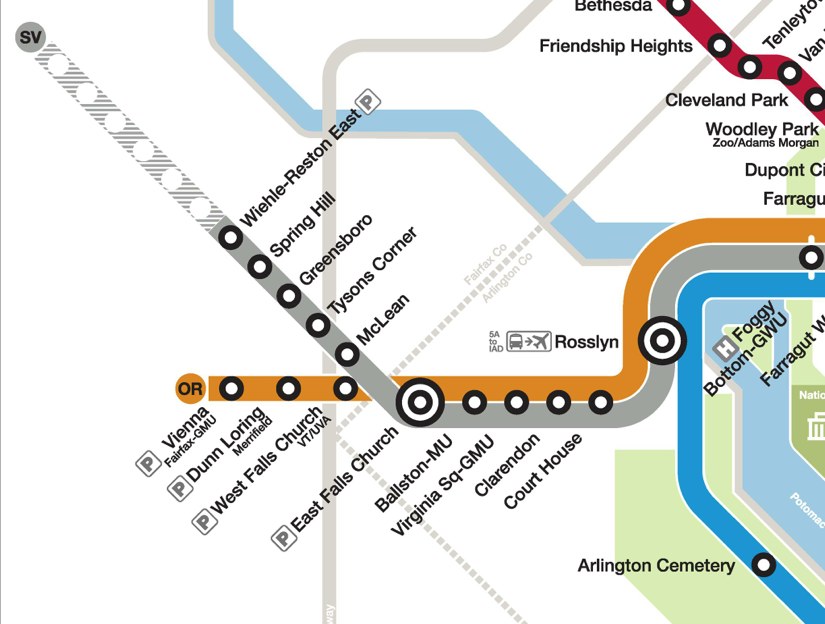
The repair project — which will include 15 “safety surges” — over the next 10 months began Saturday, with single tracking and reduced trains on the Silver and Orange lines from Wiehle-Reston East to Ballston. The surge will last until June 16.
Metro is conducting the rolling repairs in order to complete three years of needed changes and improvements in about a year.
Metro says expect significantly longer wait times and crowded trains on the Silver and Orange lines the next 10 days.
Orange Line trains will run only every 18 minutes between Vienna and Ballston, while Silver Line trains will run every 18 minutes. Additional trains will be placed in service east of Ballston.
Here is what you need to know to get around today:
Here is the main SafeTrack page with a detailed schedule of surges and their impact.
Are you driving downtown or along the Silver/Orange lines? There may be increased road traffic as well.
The Washington Post’s Dr. Gridlock tested the ride from Silver Spring to Wiehle-Reston East over the weekend. Here is how it went.
Fairfax County Department of Transportation officials held an online chat on Thursday. This transcript may answer some of our questions.
Check out more Fairfax County options on this page, including a direct bus from Reston to Pentagon, Fairfax Connector schedules and more.
Good luck — and let us know how your commute goes on Monday.
 It’s almost here. Metro’s first SafeTrack work begins on Saturday. Are you ready with alternative commuting plans?
The first of 15 “safety surges” will affect Reston-area residents and workers as the repairs be on the Silver and Orange line lines.
After many recent delays and safety incidents, Metro is implementing the intensive schedule in order to make three years of necessary repairs in about a year.
To avoid gridlock, commuters are urged to consider carpooling, vanpooling, taking the bus, biking and teleworking as often as possible during Metro’s ongoing work.
Nick Perfili and Ciara Williams from Fairfax County Department of Transportation will be online Thursday, June 2 at noon to answer your questions about commuter options in the county. Log on live or submit your questions to learn more.
 While Metro’s SafeTrack repair program does not officially begin until next week, there will be some heavy repairs going on that will affect Metro service over the Memorial Day weekend, Metro officials said.
Here is what you need to know:
There will be service adjustments on all three lines, but Orange and Silver Line riders will see some big changes.
- There will be no Orange Line trains in service from 7 a.m. on Saturday through closing on Monday. Silver Line service will operate between Wiehle-Reston East and New Carrollton.
- Three stations will be closed this weekend: Vienna, Dunn Loring and West Falls Church.
- Riders traveling to/from Orange Line stations must board a Silver Line train to make their trip.
- Riders traveling to/from Blue/Silver stations between Largo Town Center and Benning Road must use only Blue Line trains.
- Red Line trains will operate every 8-16 minutes.
- Yellow and Green line trains operate every 12-15 minutes.
- Silver and Blue Line trains operate every 20 minutes.
On Memorial Day, Monday, May 30, Metrorail will open at 7 a.m. and close at midnight. Trains will operate on a Sunday schedule. Off-peak fares will be in effect all day, and parking will be free at all Metrorail parking facilities.
More Orange and Silver Line changes:
Buses replace trains at Vienna, Dunn Loring and West Falls Church; Silver Line trains replace Orange Line trains, 7:00 a.m. Saturday through closing Monday
From 7:00 a.m. Saturday through closing Monday, buses will replace trains between Vienna and East Falls Church. Free shuttle buses will operate on two routes:
- Local – between Vienna and East Falls Church making intermediate stops at Dunn Loring and West Falls Church. Please allow 12-15 minutes of travel time for each station stop.
- Express – between Vienna and East Falls Church with no intermediate stops. Please allow up to 25 minutes travel time.
Last Train Times:
 Virginia Gov. Terry McAuliffe has signed an executive directive Wednesday instructing state transportation officials to facilitate the creation and staffing of a Metro Safety Commission.
The commission will have the authority to oversee compliance with safety directives at the Washington Metropolitan Area Transit Authority.
Executive Directive 8 also instructs the Virginia Department of Rail and Public Transportation to review all accident investigations related to the Metrorail system, to inspect public and nonpublic areas of the system, and to assess the state of repair for all trains, tracks and other infrastructure.
“Our administration has been a constant advocate for stronger safety protections for the commuters who use the Metrorail system each day, including more than 300,000 Virginians,” McAuliffe said in a statement. “We concur with the direction of the new leadership at WMATA and its work to ensure that safety is the central goal of the Metrorail system. By establishing the Metro Safety Commission and collaborating with our partners in Maryland and the District of Columbia, we are putting in place the necessary policies and oversight to ensure that safety continues to be the top priority.” Read More
 Express buses will be running from Reston to the Pentagon when Metro’s SafeTrack program gets underway early next month.
That’s just one means of mitigating aggravation, delays and traffic during Metro’s accelerated safety program that will condense three years of repairs into one year.
Metro will accomplish this by working nights, weekends, and in 15 “Safety Surges,” which will mean rolling, longterm track outages in various parts of the system.
See the full schedule of Safety Surges.
Reston-area commuters will be affected early in the process. The Silver and Orange Lines will be single tracking from Ballston to East Falls Church June 4 to 16. Then from June 18 to July 3, the Silver/Orange/Blue lines will be closed from Eastern Market to Minnesota Ave/Benning Road in D.C.
Metro officials said Silver Line trains will run about every 18 minutes during the surge. They are also encouraging riders to seek alternate forms of transportation.
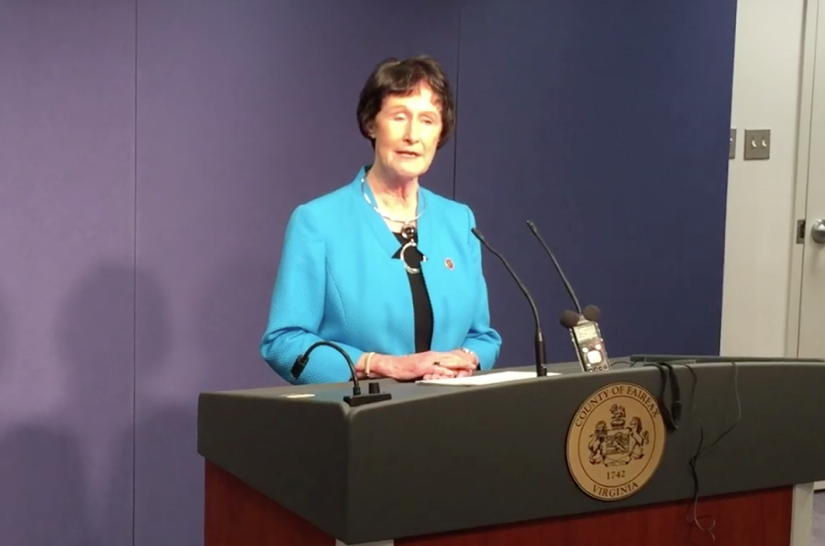
Fairfax County Supervisor Chair Sharon Bulova said on Tuesday, following a transportation committee board meeting, that the Board of Supervisors is “very supportive of the SafeTrack Plan.”
“We feel the time is more than over for WMATA to put in this kind of safety effort,” she said. “But it will not be easy and convenient for folks.”
Bulova said she encourages Fairfax County commuters to carpool, take buses and and telework during Safety Surges.
The Pentagon bus service will cost $4 per trip. It will depart from the Reston North Park and Ride (11300 Sunset Hills Rd., opposite the Wiehle-Reston East Metro) every 30 minutes from 5:05 a.m. to 8:20 a.m. The one-way trip is expected to take 35 minutes.
In the evening, the buses will depart Pentagon Bay L7 every 10 minutes from 3:40 p.m. to 6:05 p.m.
See more information and more alternative transportation resources on Fairfax County’s website.
Photo: Sharon Bulova, chair of the Fairfax County Board of Supervisors, after Tuesday’s transportation committee meeting.
Silver Line riders, be prepared for long waits, delays and frustrations as Metro embarks on its upcoming SafeTrack project to remedy issues across the system. Also, the repairs are coming sooner than expected for Silver, Orange and Blue line riders.
Metro is even encouraging that Silver Line riders think about travel other than Metro.
“Due to reduced capacity and expected longer travel times, Orange and Silver line customers are strongly encouraged to consider alternative travel options and avoid traveling during rush-hour periods,” Metro warned in a statement Thursday.
Here’s what’s about to happen: Metro says from June 4-16, the Orange and Silver lines will undergo continuous single-tracking from Ballston to East Falls Church. That work originally had been scheduled for late November.
The second maintenance surge, originally scheduled for late August, will result in the shutdown of the Blue, Orange, and Silver lines from Eastern Market to Benning Road and Minnesota Avenue stations. Blue Line service will only operate in Virginia, and the other two lines will see reduced service end-to-end, with buses replacing trains in the impacted area. Read More
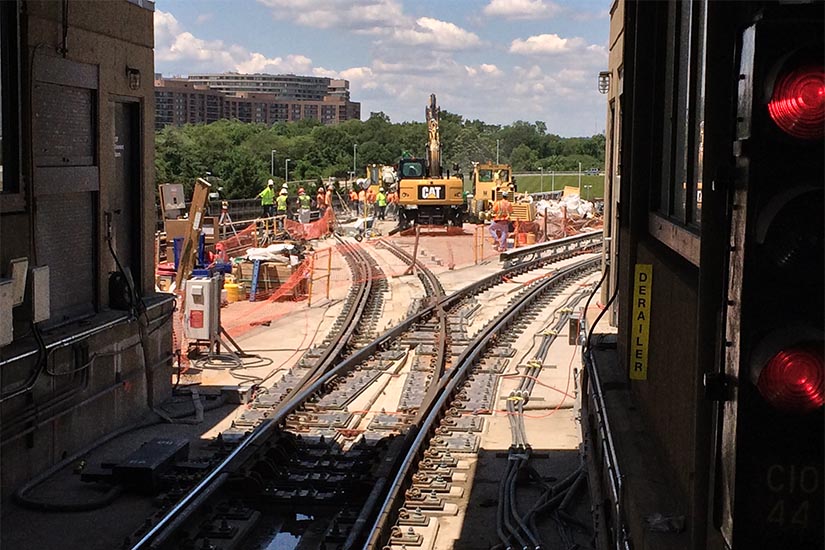 This morning Metro General Manager Paul Wiedefeld outlined the agency’s plan for working through Metrorail’s deferred maintenance backlog.
The “safety surge,” dubbed SafeTrack, “accomplishes in one year, work that otherwise would take about three years to complete.” It comes at a time when major Metro track problems and electrical fires seem to be increasingly commonplace.
The plan involves fifteen long-duration track outages between June 4 and May 8, 2017, to allow for extensive track work.
The goal: to achieve “safety and state of good repair of basic track structure.”
So what can Reston riders expect? First, there will be a moratorium on early system openings and closings — the system will close at midnight, seven day a week.
There are no outages planned for the new Silver Line track that opened in 2014. However, work on older portions of the Orange and Silver line will cause delays.
The following track outages will affect Reston Metro riders, according to WMATA.

Aug. 20-Sept. 6
Eastern Market to Minnesota Ave/Benning Road
Impact: Entire line segment shut down
Service Reductions: Three lines affected. Orange and Silver lines running every 10 minutes, Blue Line running every 12 minutes.
Nov. 2-12
West Falls Church to East Falls Church
Impact: Continuous single tracking
Service Reduction: Trains on Orange and Silver lines each running every 16 minutes, but with additional trains from East Falls Church to New Carrollton
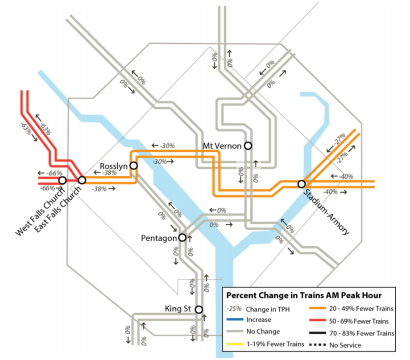 Nov. 12-Dec. 5
East Falls Church to Ballston
Impact: Continuous single tracking
Service Reduction: Trains on Silver Line running every 18 minutes, Orange Line trains from Vienna to Ballston running every 18 minutes
March 6-14
West Falls Church to East Falls Church
Impact: Continuous single tracking
Service Reduction: Trains on Orange and Silver lines each running every 16 minutes, but with additional trains from East Falls Church to New Carrollton
In order to maximize productivity, all of the track outages will be continuous and will affect rush hour service. For the line segment shut downs, buses will replace trains around the station closures.
The safety surge will not only affect Metro riders, it’s expected to affect those who drive as well, in the form of additional traffic.
Metro's GM says road projects may have to adjust in areas when huge Metro projects are taking place. #wmata @nbcwashington
— Adam Tuss (@AdamTuss) May 6, 2016
https://twitter.com/willsommer/status/728608476956639232
Here’s what Rep. Gerry Connolly (D-Va.) had to say about the plan.
Metro Plan painful medicine that reflects damage from yrs of neglect that cannot be undone overnight. Full statementhttps://t.co/KvKVZtKwVy
— Rep. Gerry Connolly (@GerryConnolly) May 6, 2016
After the jump, the full press release from Metro.
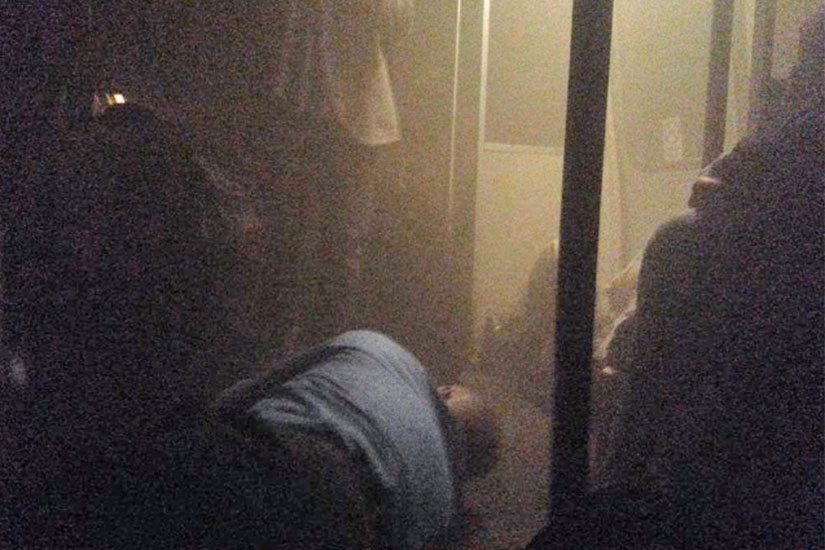
Rep. Gerry Connolly (D), Reston’s Congressional representative, said Metro’s response to the fatal smoke incident near the L’Enfant station last year was “appalling.”
Connolly’s remarks came in response to the National Transportation Safety Board’s report on the incident, which was released on Tuesday.
The report details a series of failures by the transit agency in the response to the Jan. 12, 2015 incident. Dozens of riders were injured, and one woman died.
Connolly said Metro is heading in the right direction under new General Manager Paul Wiedefeld, who “has taken commendable steps to right an agency reeling from crisis-to-crisis in his short time on the job, but he and his new safety team face a monumental task in tackling the institutional challenges that have been allowed to fester and erode not only the basic infrastructure but also rider and stakeholder confidence.”
Said Connolly in a statement:
It has been more than a year since the Yellow Line tragedy at L’Enfant Plaza, and today’s final report by the National Transportation Safety Board on its exhaustive investigation once again brings to the fore the painful and shocking memories of that day, which resulted in the death of Northern Virginia’s Carol Glover and injuries to dozens of other riders.
The NTSB’s findings show a systemic failure of Metro to instill a safety culture from its earliest days, leading to the steady march into mediocrity in which Metro now finds itself. From the lack of basic preventative maintenance to poor management of emergency response, the NTSB’s findings echo similar shortcomings uncovered by the FTA that have put at risk the safety of riders and Metro employees.
It is particularly appalling to learn Metro’s response to reports of smoke was to send trains loaded with passengers into a tunnel to investigate. I am relieved such an outrageous practice is no longer in place, but the mere fact it once existed speaks to the level of indifference to safety that had permeated the agency.
In this definitive report, NTSB has once again clearly made the compelling case that safety oversight would more appropriately be given to the Federal Rail Administration. Oversight is a three-legged stool: enforceable rules, inspections, and enforcement. I believe FRA, not FTA, can most expeditiously meet that challenge as Virginia, Maryland, and the District of Columbia work to stand up the new Metro Safety Commission to provide more robust oversight and accountability.
Metro has been one of the National Capital Region’s greatest successes, but that investment has been allowed to stagnate. New General Manager Paul Wiedefeld has taken commendable steps to right an agency reeling from crisis-to-crisis in his short time on the job, but he and his new safety team face a monumental task in tackling the institutional challenges that have been allowed to fester and erode not only the basic infrastructure but also rider and stakeholder confidence.
It will once again take the combined effort of the local, state, and federal governments to restore Metro to a standard of safety and service for which the nation’s capital and its riders can be proud.
Virginia Sen. Tim Kaine (D) and Mark Warner (D) also said they were “extremely disturbed” that many of the safety hazards have not yet been addressed.
“We urge Metro, the Federal Transit Administration, and regional authorities to move as urgently as possible to ensure that the problems identified in this report finally get fixed once and for all,” the senators said in a statement.
Smoke fills a Metro car on Jan. 12, 2015/Credit JRogers202 via ARLnow.com
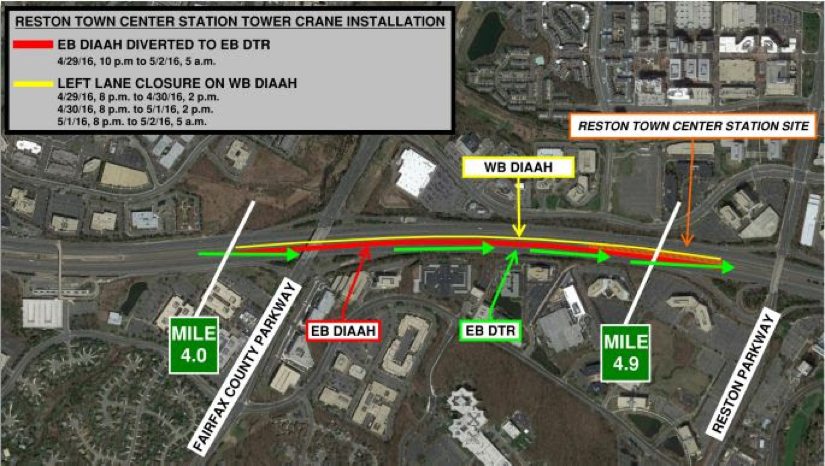
Another giant crane will set up in Reston later this week as construction on the Reston Town Center Metro station continues.
The Dulles Corridor Metrorail Project says crews will be assembling a tower crane in the median of the Dulles International Airport Access Highway (DIAAH) between the Fairfax County Parkway overpass and the Reston Parkway overpass. That will affect lanes on both the access highway and the Dulles Toll Road.
Construction will take place Friday, April 29 through Monday, May 2.
The crane will be used for construction of the Silver Line’s future Reston Town Center Station, which is scheduled to bring Silver Line service to the spot in 2020. Read More
 The Washington Metropolitan Area Transportation Authority (Metro) has hired a new chief of safety.
Metro General Manager and Chief Executive Officer Paul J. Wiedefeld announced Tuesday that Patrick Lavin has been hired as Metro’s new Chief Safety Officer.
Lavin comes to Metro from New York City Transit (NYCT), where he is second in command of the agency’s Office of System Safety. His first day at Metro will be Monday, May 9. Read More
Delays. Fires. Offloading. A 29-hour shutdown to do repairs.
Just a typical week in the life of Washington’s Metrorail system. And now this: Metro’s top officials said on Wednesday that the transit system is in such need of repair that they might shut down entire rail lines for as long as six months for maintenance.
While Metro GM Paul Wiedefeld has not said which lines will need to be closed for repair — or for how long — he did say he was considering such lengthy closures. He said he expected to have more information within a month to six weeks.
This is less than two years since Reston’s Silver Line station opened. Rail to Reston was supposed to transform — and is still aimed at transforming — Reston into a transit-oriented community, with about a dozen residential and mixed-use projects in the pipeline built close to Wiehle-Reston East and the future Reston Town Center Metro stop (slated to open in 2020).
But it seems Silver Line riders here have not been impressed thus far. Long waits for trains, the universal Metro snafus, the expense of riding and parking and a confusing parking garage system in Reston have led to myriad complaints.
Is this the last straw for you? Are you sticking with Metro or re-evaluating your transportation options?
There are major delays on the Silver Line this morning after a teenage girl apparently jumped in front of a Metro train at DC’s Eastern Market station.
Orange, Blue and Silver line trains are single-tracking between Eastern Market and Federal Center SW due what Metro is calling “a medical emergency” at the station.
As of 8:45 a.m., Silver Line trains operating are operating between Wiehle-Reston East and Ballston only and not entering the District. Metro advises using Orange/Blue Lines from other stations.
Eastern Mkt: A teenage female intentionally jumped onto track in front of train. Fortunately, train able to stop. No visible injury. #wmata
— Metro Transit Police (@MetroTransitPD) March 24, 2016
Witnessed young girl jump in front of @wmata train at Eastern Market station. Train hit her but very slowly. Police on scene. — Amanda Waldron (@AmandaWaldron1) March 24, 2016
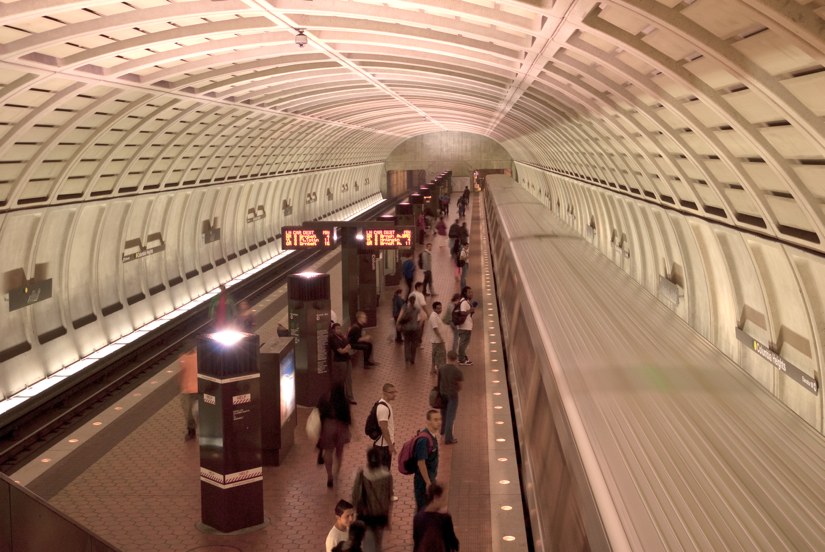
Metro train/Reston Now file photo
 Metro plans to be open at 5 a.m. on Thursday, Metro General Manager/CEO Paul J. Wiedefeld says.
The rail system has been closed since midnight Wednesday in order to conduct an emergency inspection of the system’s third-rail power cables.
A fire in a tunnel near McPherson Square on Monday caused major delays on the Silver, Blue and Orange lines. After inspectors found similarities to a 2015 fatal fire incident near L’Enfant Plaza, Metro made the unprecedented decision to close on a weekday.
As of 5 p.m., Metro crews have completed the inspection of 80 percent of approximately 600 “jumper cables” located in 22 underground zones throughout the entire Metrorail system. Crews have identified 26 areas where damaged jumper cables and connector boots needed to be replaced, Metro said Wednesday afternoon. All issues were on the Blue, Silver and Orange lines, officials said.
Of those 26 areas, 18 cable repairs have been made. Crews will continue to work through the night to complete the remaining repairs.
“I know that today presented a hardship for many throughout the region, but I want to emphasize that this shutdown was indeed necessary,” said Wiedefeld. “I want to thank everyone for their patience and support in putting safety first.”
If additional track repairs are needed, Metro will announce the potential impacts to Metrorail service in those areas immediately.
Beginning at midnight on Tuesday, a team of electricians and cable construction crews and walked through 100 miles of tunnel inspecting for defects in jumper cables, connecting boots that were damaged or improperly positioned, water infiltration, and debris that could burn near cables.
“Throughout this intense inspection deployment, our focus has been on effectively mitigating fire risks,” said Wiedefeld. “We are being as clear as we can about what actions we have taken so that customers and employees feel safe as they ride Metro tomorrow.”
Metro station/file photo

Welcome to Wednesday, where Washington is without a Metro system.
Metro General Manager/CEO Paul J. Wiedefeld says that 600 third-rail power cables must undergo an emergency safety inspection, and in order to do that the rail system will be closed from 12 a.m. Wednesday to 5 a.m. Thursday.
The federal government has offered unscheduled leave or telework to its employees. But that still leaves thousands of people who need to get to downtown DC or get around the DC area without rail.
Here is what you need to know:
The Virginia Department of Transportation (VDOT) advises drivers to be prepared for increased congestion on major travel routes, and asks commuters to strongly consider alternate plans to driving.
High occupancy vehicle (HOV) rush-hour restrictions will remain in place on I-66 and I-395 to encourage and accommodate additional ridesharing, says VDOT.
VDOT’s Traffic Operations Center will actively monitor conditions through the day and adjust signal timing where possible to help traffic flow. Crews will limit lane closures on interstates and major commuter routes through the day.
Some alternatives VDOT suggests include:
- Telework
- Adjusting work and commute schedules
- Carpool or vanpool
- Bus service, Virginia Railway Express, or other transit service
Here are some resources:
- Find details on your nearest park-and-ride lots
- Get information on commuting resources, carpooling and HOV rules in northern Virginia
- Monitor current traffic conditions, cameras, incidents and alerts on www.511virginia.org or the mobile app
- Check current I-95/395 corridor travel times for bus, VRE and HOV at VDOT’s 511 northern Virginia commuter page: www.511virginia.org/nova.
- Fairfax Connector is offering regular service today, as well as emergency shuttle service to the Pentagon. See details on Fairfaxcounty.gov.
- Capital Bikshare could help you downtown.
- Learn more about Uber, Lyft and other downtown alternatives in this Washington Business Journal article.
- Keep up with conditions downtown on this live blog from The Washington Post.
Are you heading downtown today? What’s your plan?
 After a fire on the tracks near McPherson Square snarled Metro service on Monday, Metrorail officials say the entire system will shut down for more than 24 hours beginning tonight.
Metro General Manager/CEO Paul J. Wiedefeld said at a Tuesday afternoon news conference that 600 third-rail power cables must undergo a safety inspection.
“While the investigation is ongoing, as a preliminary matter, the conditions appear disturbingly similar to those in the L’Enfant incident of a year ago, and our focus is squarely on mitigating any risk of a fire elsewhere on the system,” Wiedefeld said about the 2015 fire in a Metro tunnel that killed one woman and injured dozens.
Metro says the inspections of approximately 600 “jumper cables” will occur along all tunnel segments on the Metro system. The GM could not rule out additional closures if issues are found on the cables.
“While the risk to the public is very low, I cannot rule out a potential life safety issue here, and that is why we must take this action immediately,” Wiedefeld said. “When I say safety is our highest priority, I mean it. That sometimes means making tough, unpopular decisions, and this is one of those times. I fully recognize the hardship this will cause.”
The Metrorail system will close at its normal time tonight (midnight) and remain closed until 5 a.m. Thursday. All six Metrorail lines and all 91 stations will be closed on Wednesday.
Metrobus and MetroAccess service will continue to operate on a regular schedule. Alternate service options throughout the region will be extremely limited, and severe crowding is expected on buses. The public is advised to make alternate travel arrangements as early as possible.
The federal government will be open on Wednesday, with the option for unscheduled leave or telework.
The Silver Line Express Bus won’t operate to or from Wiehle-Reston East to Dulles International Airport Wednesday. Service will resume at 6 a.m. Thursday, the Metropolitan Washington Airports Authority said.
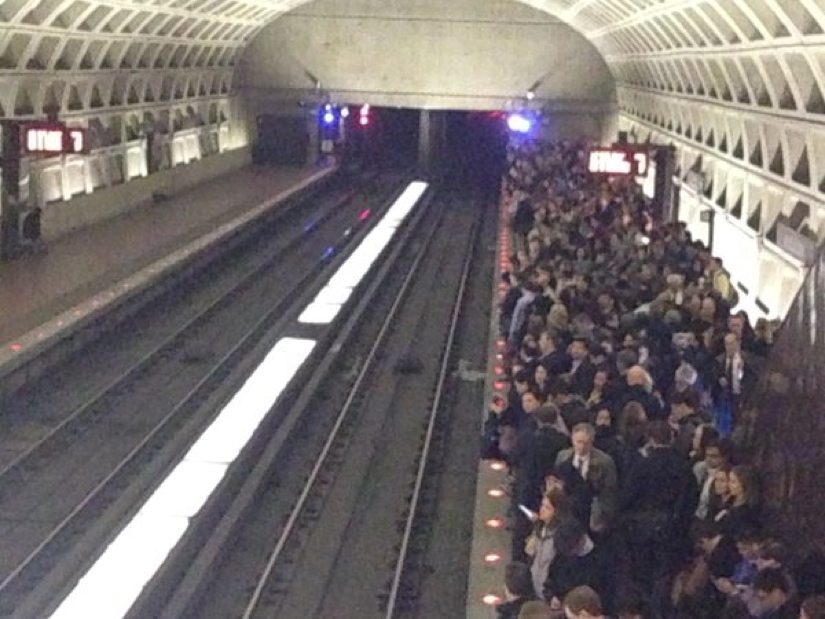
Photo: Packed Metro platform in DC March 14/Credit: Johab Silva via Twitter
