


About a month after Virginia lifted all COVID-19 capacity and social distancing requirements, in-person dining is starting to make a comeback at local restaurants, even as evolving guidance around masks suggests the pandemic may not be entirely in the rearview mirror.
From D.C. to northern Virginia, restaurants throughout the region look much different than they did a year ago, when many venues were either temporarily closed or just starting to invite customers back inside.
Now, restaurants are free to return to full occupancy, and patrons can eat and drink without fumbling with a mask, though individual businesses can still require masks if they choose to keep a policy in place.
“Carryout and to-go sales of alcohol are still continuing to help our restaurants, but yet, we are definitely seeing a shift in the return of more and more in-person dining,” said Barry Biggar, president and CEO of the Fairfax County tourism agency Visit Fairfax. “The future is bright and we are on a forward trajectory towards full recovery.”
In Herndon, the funky upscale pizza and craft beer joint Mellow Mushroom (1030 Elden St.) has seen customers in person go to a “whole new level” with restrictions dropping, general manager Ted Kinsall said.
Business hasn’t quite returned to 2019 levels yet, but he expects it to continue growing. Now, the eatery is dealing with a challenge that has become widespread in the food service industry: the need for workers.
Kinsall says his business is currently staffed at 70% with job openings in a number of positions, from cooks to servers and hosts.
Labor issues are complicating recovery efforts for an industry hit hard by job losses, stay-at-home orders, closed offices, and fluctuating public health rules.
“The positive news is that many of our restaurants are starting to see around 80 to 90 percent of pre-COVID numbers,” Biggar said in an email. “And while that sounds great, and sales are up, it does not always translate to straight profit. Many restaurants are still paying deferred rent, utilities, and other expenses that they had to hold off on paying due to the pandemic.”
While Virginia’s state of emergency is set to expire today (Wednesday), health officials have recently started raising new concerns about the spread of more dangerous COVID-19 variants, even for fully vaccinated people.
The Commonwealth followed the Centers for Disease Control and Prevention’s lead in May in easing mask requirements for fully vaccinated individuals in most places. But the World Health Organization suggested Friday (June 25) that even vaccinated individuals should still wear masks to reduce the spread of the highly transmissible Delta variant.
Experts who talked with the Miami Herald advised caution regarding whether or not to wear masks, and the CDC hasn’t adjusted masking guidance based on the Delta variant, which was first detected in India and is estimated to contribute to one in five U.S. cases now.
The CDC says there’s evidence that the variant causes more severe disease and has increased transmissibility.
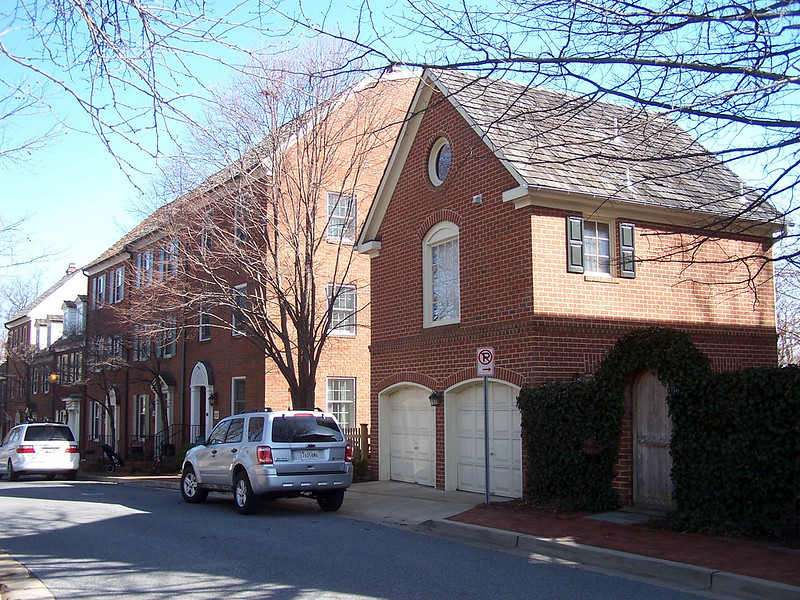
Homeowners seeking to rent out their basements or other parts of their residence as well as renters and neighborhoods concerned about parking will soon have new rules aimed at helping them.
A revised zoning code for Fairfax County, the first overhaul in around 40 years, becomes effective Thursday (July 1).
In addition to updating the county’s regulated uses with new options like live-work developments and solar farms, the new ordinance loosens some restrictions around accessory dwelling units — independent residential units that share a property with a main dwelling. But zoning officials say they expect a modest increase in homeowners converting parts of their property for other people.
Adopted in March, the new rules replace existing standards for ADUs — now dubbed accessory living units or ALUs — from 1978 and 1983, drop requirements that the occupant of the revamped space have a disability or be 55 years or older, and add parking requirements.
While the changes inspired some strong opinions from community groups, their impact is expected to be relatively small: Fairfax County approved 12 accessory unit applications in 2019, seven in 2020, and two so far this year as of Friday.
County staff previously noted there have been community concerns over whether the code is being enforced. A burdensome special permit approval process also may have been creating problems, the county said.
“Others may be installing ALUs anyway, but then perhaps they’re more likely to be unpermitted construction without the benefit of the permits and inspections,” Carmen Bishop, assistant zoning administrator, said in January before the Fairfax County Planning Commission. “So a less burdensome process may result in better compliance.”
People who have wanted such changes have had to go through a hearing, a process where neighbors could weigh in. Under the new rules, a property owner can add an interior ALU with just an administrative permit instead if they meet certain requirements.
That includes a new measure that adds an extra parking spot in off-street parking. Whether or not there’s an accessory living unit, a detached single-family house on a public street must have two off-street parking spaces or — if it’s on a private street — three off-street spots, according to the county.
“When a house has an ALU, one additional parking space will be required, which means, homes on public streets will need three off-street spaces and homes on private streets will need four off-street spaces to meet the zoning ordinance standard,” Leslie Johnson, the zoning administrator for the county’s Department of Planning and Development, said in an email Friday.
The new standards come as the county’s population exceeds 1.1 million people after rising by over 100,000 people every decade from 1980 to 2010, according to census data.
With housing prices expected to continue rising, proponents of the ALU rule changes argue that they will provide more flexibility for residents who want to stay in the county but can’t afford to live on their own.
Earlier in June, the Fairfax County Redevelopment and Housing Authority approved a change that made it easier for certain people in a first-time homebuyers program to rent a portion of their owner-occupied homes after a resident made a request.
The switch applies to 38 units and makes the authority’s policy consistent with all other units in county homebuyer programs, county spokesman Benjamin Boxer said in an email.
“Those owners may rent a portion of their home as long as they continue to occupy the property as their primary residence,” Boxer said in an email. “It is worth noting that, historically, we have rarely received any requests from our participating homeowners to rent portions of their homes.”
via BeyondDC/Flickr
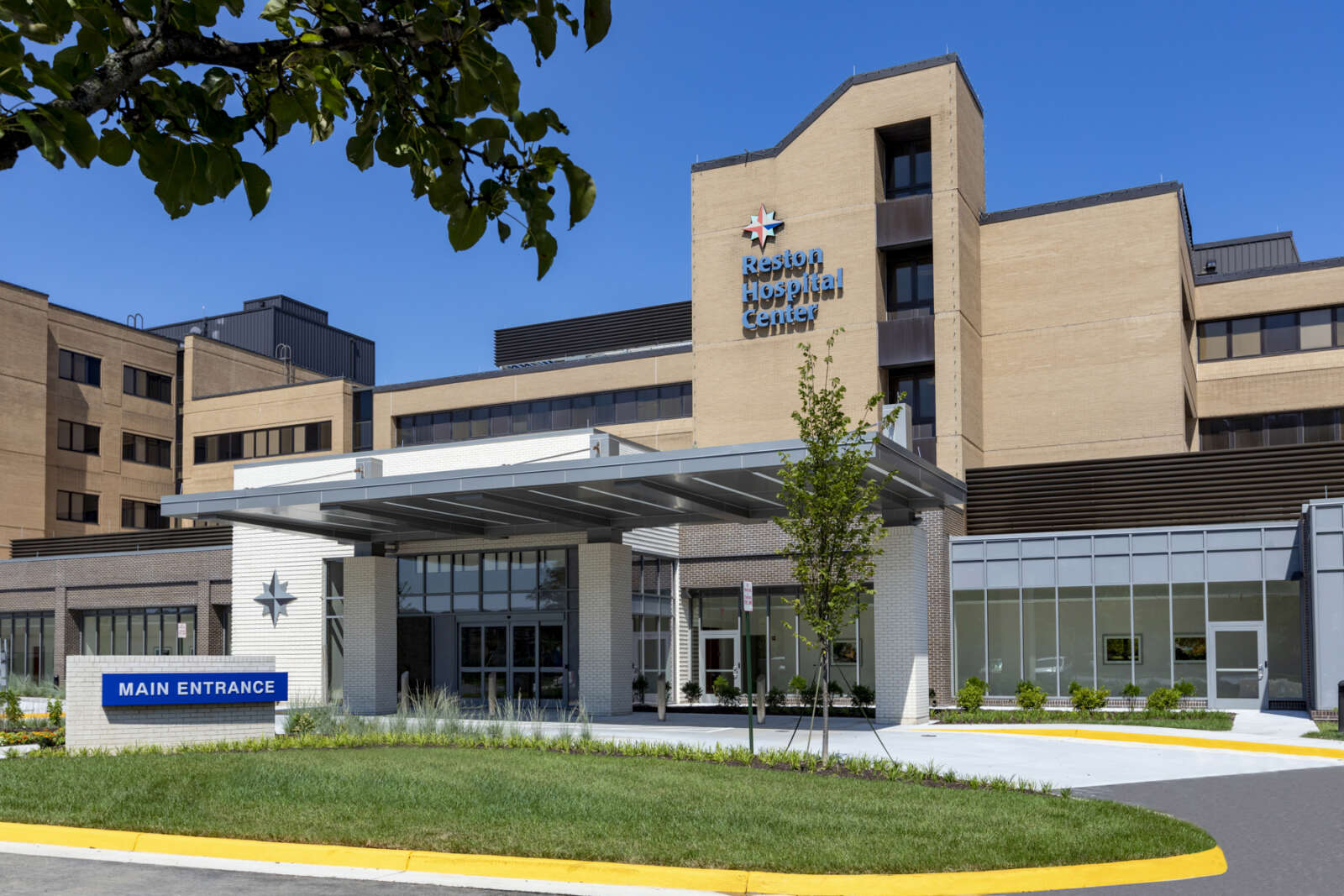
Reston Hospital Center is spending nearly $20 million for upgrades and renovations as it prepares to enhance its robotic-assisted surgery program.
The project calls for constructing four new, larger operating rooms and modernizing other areas “to provide added capacity to Reston’s robust surgical offering which performs over 10,000 surgeries annually,” a news release said.
The design phase of the renovation, which will involve over 22,000 square feet of space, is scheduled to begin this summer.
“This infusion of capital will upgrade our surgical capability and capacity to help deliver a world-class surgical experience for our patients and surgical care teams,” John Deardorff, chief executive officer of the HCA Healthcare Northern Virginia market and Reston Hospital Center, said in the news release.
The Richmond-headquartered health care system said the changes will help serve more patients. The hospital expects surgeries to continue uninterrupted during the project, hospital spokesman Todd McGovern said in an email.
The new and upgraded operating suites will help improve patient outcomes through the adoption of emerging technologies and innovative surgical approaches to help reduce hospital stays and lessen recovery times. The added capacity will allow Reston Hospital’s care teams to treat more patients needing complex spine care, orthopedic care, and minimally invasive surgery across a range of surgical specialty areas such as bariatric (weight loss), colorectal, general, hepatobiliary, gynecologic, thoracic (lung), and urologic surgery.
The Food and Drug Administration and researchers previously shared concerns about various robotic surgeries, noting that although they’ve been taking place in the U.S. since 2000, patients should be aware of outcomes and available evidence.
Different types of surgical areas have been taking off. Based on one measure, the number of general surgery procedures conducted by U.S. hospitals rose from 10,000 in 2010 to 246,000 in 2017, according to a physicians’ estimate.
Some doctors also raised concerns about costs for rural hospitals, noting in December 2020 that despite advantages noted with the procedures, there’s still a lack of high-quality evidence in most areas.
The planned upgrades are in addition to the hospital projecting to spend $70 million on projects that include a new freestanding emergency department at 8240 Leesburg Pike in Tysons coming in 2022.
Reston Association leadership agreed Thursday (June 24) to let its board continue to meet virtually and permit meetings to be recorded.
The virtual option allows RA to continue having entire meetings on Zoom or another video-conferencing platform, a setup that board members say has enabled more participation.
Previously, an emergency order from Gov. Ralph Northam provided more flexibility for virtual meetings amid COVID-19. While the governor is expected to let the order expire on June 30, he signed legislation in March giving property owners’ associations the ability to continue holding meetings electronically.
“This spring, 2021, the General Assembly made permanent the option of having all virtual meetings, whether or not it’s an emergency period,” association vice president John Mooney said, noting that the RA board still needed to make changes to its own policies to accommodate that.
The approved resolution also introduced language saying that RA will provide login information, such as a password, so members and other authorized persons can access meetings.
RA attorney Anthony Champ said the new law describes such language, which is why it was added, but board members cited concerns about Zoom bombers.
During the pandemic, though, RA has been providing meeting links and passwords through its website and encouraging people to attend the meetings. Director Sarah Selvaraj-D’Souza noted that they wouldn’t ask people to display identification at in-person meetings and act as a security bouncer.
“For all practical purposes, as we’ve been operating virtually, who has been authorized to attend?” Director Timothy Dowling said. “It’s basically been the public.”
Under the new rules, RA will be required to provide an alternative for people who don’t have the desire or capability to attend a meeting virtually.
The board also discussed whether meetings could be conducted in virtual and in-person hybrid formats — and also talked about possibly recording all committee meetings — but expressed concerns over technology, costs, and the legal implications.
Director Jennifer Jushchuk made a motion to allow the board conduct hybrid meetings with recordings without any budgetary cost increase.
But the motion failed 3-5, with Jushchuk, Selvaraj-D’Souza, and Director Bob Petrine voting in favor of it. Director Mike Collins was not present.
Mooney said he liked the idea but noted the concerns raised. He added that the proposal could be raised again later.

Hospitality workers looking to return to their jobs and hotels trying to recover from the pandemic are seeing signs of progress in an industry wrecked by shutdown orders and an upheaval in business trips.
Fairfax County’s new PIVOT grant program is prioritizing grant money for hotels, while also assisting other hard-hit businesses with $25 million in federal COVID-19 relief money. The program received 581 fully completed applications — including 15 in the lodging category — on Wednesday (June 23), its first day accepting applications.
Applications will be accepted through July 9, and the order they are received has no bearing on priority. But if funds are limited, lodging businesses with at least 10 rooms will be addressed first before a lottery then determines which companies in need will get money.
Managers in the Reston-Herndon area say they’re around half capacity. One said many furloughed staff are inquiring about when they can return, and three wedding parties stayed there recently.
Michael Riddlemoser, manager of the Inns of Virginia’s Falls Church location, said his 32-room hotel is also around 50% full, down from 75 or 80% full before March 2020.
“We just need more people coming into town,” he said. “DC [needs] to get full for us to start getting the DC business.”
A “Fairfax County Economic Recovery Framework” report presented to the county board of supervisors in January found that the accommodation and food services industries shed more jobs than any other sector, projecting a loss of 12,420 jobs or 26% of its workforce through December 2020.
“The pandemic has had disproportionate impacts across industries, with hospitality, food service, and small retailers most heavily impacted and facing the longest trajectory for recovery,” the study said.
The leisure and hospitality sector has lost 3.1 million jobs during the pandemic, representing over a third of all unemployment in the U.S., according to an American Hotel & Lodging Association report from February.
The report said the industry lost over 17,000 jobs in Virginia last year and was projected to lose over 13,000 jobs this year.
UNITE HERE Local 25, which represents about 7,200 hospitality workers across the DC region, had only 2% of members working last July, but the employment rate has bounced back to 25% in Northern Virginia, according to Benjy Cannon, the union’s director of communications.
Cannon attributes recent gains over the last eight weeks to vaccinations and domestic travel.
But the union believes pre-pandemic occupancy levels won’t return until international travel and long-term business travel returns, Cannon said. With unemployment benefits set to expire in September, that could lead the group to press legislators for changes.
“By late 2023, 2024, the industry is slated to recover stronger than it was in 2019,” Cannon said. “So, while this is an unfortunate bump in the road and our members are certainly mourning over it, we do still think that this region, this market, can recover in a really robust fashion and expect it to, even if it’s still a few years away.”
Photo via Febrian Zakaria on Unsplash
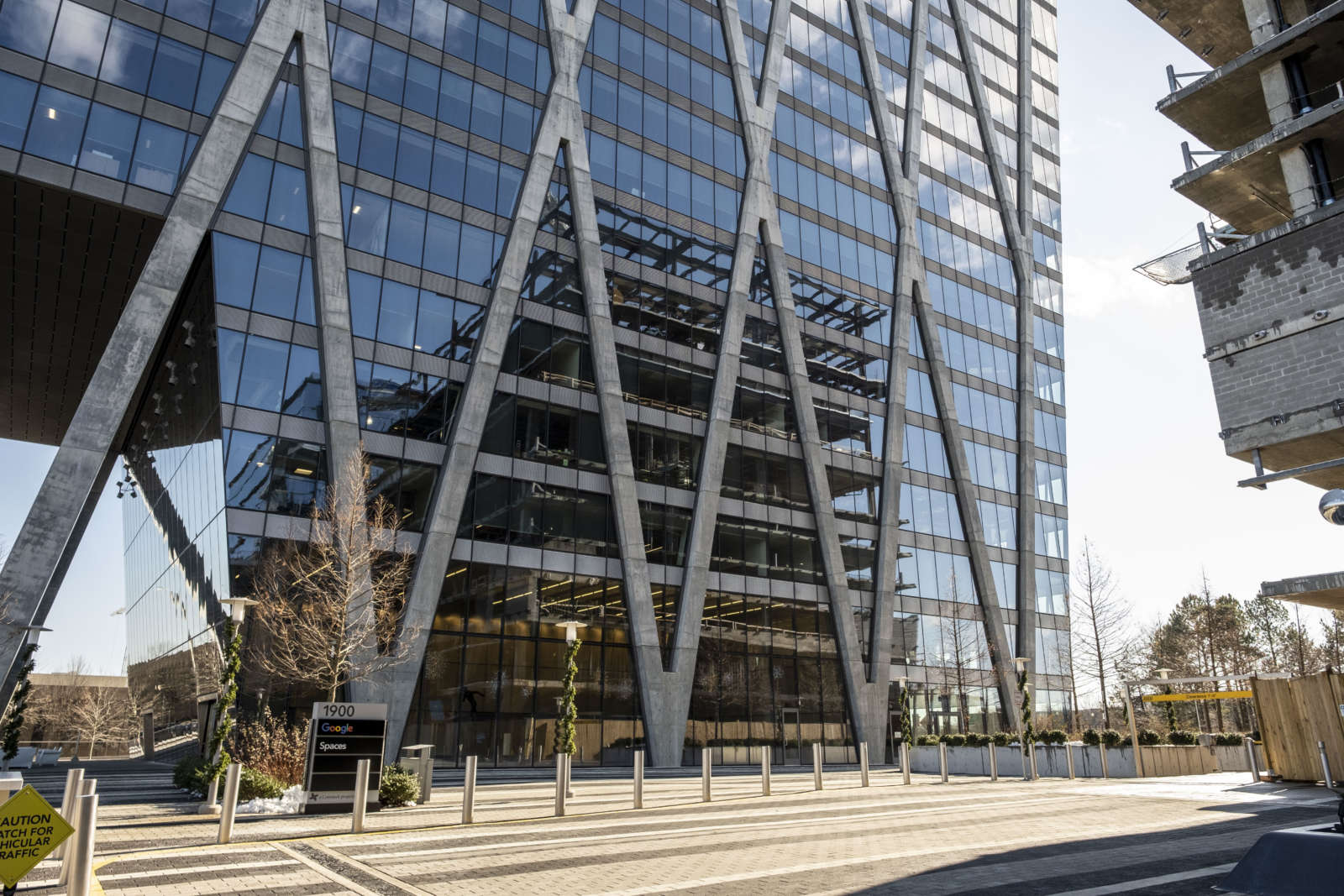
The Fairfax County Economic Development Authority will soon add two new seats to its seven-member commission, which has remained the same size since it was created in 1964.
Virginia legislators and the governor approved a measure earlier this year allowing the change, which takes effect July 1 and will help meet diversity needs, officials say.
Charged with helping the county attract, retain, and support businesses, the FCEDA commission consists of local business and community leaders appointed by the Fairfax County Board of Supervisors.
FCEDA Chair Cathy Lange says the expanded board will help the authority bring different viewpoints to the table after the county has changed and grown over the past 57 years.
“We need a richness of perspectives to help the FCEDA understand why companies start here, grow here and stay here,” Lange said by email. “This diversity of needs also is directly tied to our understanding and support of talent attraction and retention. The companies want and need a broad and diverse talent pool, and we have to connect the talent to the companies.”
According to Lange, the EDA board hopes to further diversify representation of emerging and growing business sectors, such as financial services, cyber, cloud, and data analytics, as well as entrepreneurs and small business leaders “building the next base” of companies.
“At the same time, we can identify leaders who are reflective of the growing diversity in our county and its business community,” Lange wrote.
In its legislative agenda for the General Assembly’s 2021 session, Fairfax County noted the authority was created by state law in 1964, allowing the county to appoint seven board members.
“That number has not changed in the 50 years since the FCEDA was created, though Fairfax County has changed substantially during that time,” Fairfax County officials said in the report, which was adopted on Dec. 1.
In the legislative agenda, officials noted that the county’s increasing diversity extends to its economy:
The County has experienced tremendous growth, as has the local economy — the number and size of companies has increased, and businesses have expanded into new and diverse industry sectors. Increasing the size of the FCEDA board could further diversify participation from the County’s business community, while maintaining focus on the County’s traditional business base (including government contracting and IT services).
Among its services, the authority helps businesses find office space in the county, assists with special tax-exempt bonds for companies and nonprofits, and aids international firms seeking office space in Fairfax County.
While headquartered in Tysons, the authority has offices around the country and the world, including in Germany, India, Israel, South Korea, and the U.K. as well as Los Angeles.
Lange said in the email that Fairfax County is an amazing success story, and expanding the commission will help to ensure that continues.
“Understanding what different companies need to succeed here helps us to inform county leaders on what policies and programs need to be implemented to continue our success,” Lange wrote. “This also will help us understand how to market the county to businesses that want opportunities to grow and success, and how to market the region to talent.”
FCEDA vice president of communications Alan Fogg said by email that he expects there will be movement around appointments starting next month.

Two local service groups launched an outreach initiative on Tuesday (June 22) to help transport veterans to and from medical appointments.
The free service is being managed by the Reston-based Dulles Airport Transportation Association and its longtime partner NV Rides, a network of volunteer driver programs housed at the nonprofit Pozez Jewish Community Center of Northern Virginia.
With the initiative, the organizations hope to address one of the many issues that veterans face when seeking health care, exemplified by the cancellation of millions of medical appointments at Veterans Affairs medical facilities during the COVID-19 pandemic.
Although virtual visits have surged and vaccinations are rising, medical needs persist.
“The program hopes to harness the power of the special bonds that exist between the men and women who’ve selflessly served our country,” a press release announcing the launch says.
DATA and NV Rides were already collaborating to give veterans rides through their existing Veterans Connect program. This expansion is specifically dedicated to serving elderly veterans and those with disabilities.
Targeted toward veterans in Fairfax, Loudoun, and Prince William counties, the program is currently recruiting additional volunteer drivers, who can be veterans or other community members. Drivers utilize their own vehicles.
Interested individuals can visit the Veterans Connect Facebook page or contact Luke Frazza at [email protected] or 703-819-3459, and Karla Nativi at [email protected] or 571-455-2836 to volunteer or learn more.
“While veterans have long stepped up to support their brothers and sisters in arms, elderly veterans have told us they are more likely to take advantage of a volunteer ride provided by someone with whom they have literally or even figuratively shared a foxhole,” the press release said.
Before the pandemic, the NV Rides network provided about 1,100 rides per month to non-driving adults 55 and older, primarily in Fairfax and Loudoun counties, according to the group.
With stay-at-home orders last year, ridership declined by 60%, but partners continued to provide ride services to the most critical medical care appointments. Over the past year, ridership has bounced back, with the network providing over 1,500 rides last month, the organization says.
“We think this veteran-specific expansion of our NV Rides program will underscore our belief that our network provides ‘More than just a ride,'” NV Rides Manager Jennifer Kanarek said in a statement. “…Stories of joyful moments between volunteers and passengers are far more often the rule than the exception.”
Researchers have found that transportation can be a major barrier to accessing health care, a concern that has persisted in Fairfax County’s COVID-19 vaccine rollout.
The county is now offering a free weekend shuttle to and from its vaccine clinic on Route 1 in Alexandria. Other available transportation options include free taxi rides and rides for people 55 and older from the Shepherd’s Center.
In addition to the Veterans Connect program, DATA has also partnered with the nonprofit Northern Virginia Veterans Association to provide free rides to veterans for COVID-19 vaccine appointments, WDVM reported in May. That effort is being funded by an $80,000 grant from the Federal Transit Administration.
“The feedback we’ve received from local veteran service organizations has been nothing but positive,” Veterans Connect Mobility Manager Luke Frazza said in a statement. “Support for the project has transcended those who served however, and garnered praise from across our community.”

The Reston Community Center wants residents to share their leisure and recreational needs as well as their thoughts on social and racial equity in the wake of the COVID-19 pandemic.
After the pandemic temporarily stalled the effort, RCC launched a six-question survey on June 10 to get public input on its 2021-2026 strategic plan, which will guide the organization’s approach to funding and programming over the next five years.
RCC previously commissioned the University of Virginia to conduct a community survey in 2019. The goal of that survey was to gauge how people used the community center’s activities and facilities, along with their opinions on the possibility of a new Reston performing arts venue.
This new online survey will serve as a “kind of temperature check” on whether the issues identified in the 2019 survey “had been dramatically altered in any ways” by the pandemic, according to Reston Community Center executive director Leila Gordon.
RCC also plans to convene focus groups this summer to help craft the new strategic plan.
According to Gordon, the RCC Governing Board initially planned to meet in January to determine the core “pillars” of the strategic plan, but with Fairfax County seeing high COVID-19 transmission rates at the time, those discussions were postponed until April.
The board ultimately settled on six main themes for the strategic plan: facilities, equity, programs and services; community connections, communications, and stewardship and accreditation.
“Its goals and objectives will help us allocate resources, assess opportunities, establish priorities and hold ourselves accountable,” Gordon said.
One of the questions in the survey addresses social and racial equity issues in the community, asking, “How do you think RCC can help Reston continue to be a welcoming, inclusive and accessible place to live, work, learn and play?”
Gordon says RCC approaches social and racial equity from a variety of angles, from programs that deal with racism and related issues to an emphasis on diversity when it comes to hiring staff.
However, former police officer Derek Chauvin’s murder of George Floyd in Minneapolis on May 25, 2020 and the nationwide protests for racial justice that followed that summer served as a reminder that more work needs to be done.
“RCC has had programming focusing on racial and social equity for several years as an outgrowth of our long-time commitment to meaningful celebration of the King holiday, as well as honoring the values established by [Reston founder] Bob Simon at the outset of Reston’s creation,” Gordon said in an email. “With the response to the murder of George Floyd, it was clear that this journey for the community, county and country is far from over.”
After the survey closes on July 16, RCC will hold focus group meetings, which will include translation services for people the survey was unable to reach, to get feedback on the identified themes the survey discusses. A follow-up presentation from the University of Virginia will take place July 26.
Staff will draft the strategic plan and finalize it with the community center’s board in September, when the public will be able to weigh in on the plan itself.
The final plan is slated to be approved at the board’s Oct. 4 meeting.
Photo via Reston Community Center/Facebook
New images show what future residents and visitors can expect from a $1.4 billion project near a forthcoming Reston Town Center Metro station.
As first reported by the Washington Business Journal, developer Brookfield Properties has released more details on the upscale housing coming to the Halley Rise residential, office, and retail complex under construction along Reston Parkway.
Preleasing for apartments in The Edmund — a seven-story apartment building with 353 luxury units — is slated to begin this summer before residents are welcomed in the fall, the developer tells Reston Now.
“As we meet this next major milestone, we’re a step closer to creating a visionary neighborhood that blends nature, technology, entertainment, and art, enabling residents, workers and visitors to curate their ideal day every day, in a vibrant and engaging community,” Greg Meyer, executive vice president and head of the D.C. region for Brookfield Properties, said in a statement.
The Edmund will feature common areas and outdoor seating as well as a pool, fitness center, coworking space, yoga lawn, and more. An interactive virtual tour offers a glimpse of one of the 1,600 units expected at the 36-acre mixed-used campus.
The luxury apartments will include mostly one-bedroom apartments, with 17% of the units being studios, 17% two bedrooms, and 3% three bedrooms, Brookfield Properties U.S. communications director Laura Montross said in an email.
Rental details are not yet listed with the developer’s website.
When completed, Halley Rise will have 1.9 million square feet of office space (about five and a half times the size of the Lincoln Memorial Reflecting Pool), 240,000 square feet of retail (just over four football fields), over five acres of public open space, and new public streets.
The development will be anchored by a Wegmans grocery store slated to arrive in 2023, slightly later than the late 2022 timeline that Reston Now last reported.
Real estate developer Akridge is looking to add 480 residential units and retail as part of the complex. That addition is currently scheduled to go before the Fairfax County Planning Commission for approval on Dec. 8.
Construction for Halley Rise began in October 2019, and it’s already showing off one of its amenities: self-driving vehicles within the complex. The service has also expanded in the DC region.
Halley Rise is one of several developments in the works in anticipation of the second phase of Metro’s Silver Line. Also near the impending Reston Town Center station, Boston Properties is working on the massive Reston Gateway project, which is undergoing some changes that were set to go before the Board of Supervisors today (Tuesday).
The board’s meeting package indicates that it will defer the public hearing on that application until July 13.

With federal money that gives low-income households a discount on internet service set to run out this year, Fairfax County leaders and staff are looking at ways to ensure people get access to broadband internet, which they’ve likened to a utility like electricity or water.
A staff report presented to the Fairfax County Board of Supervisors’ information technology committee on Tuesday (June 15) found that there are significant disparities in internet access among homes in the county due to infrastructure and affordability.
While different county representatives — from the school system to the Department of Family Services — were collaborating prior to the COVID-19 pandemic, they started looking more intently at equity issues during the pandemic, as technology needs hit a crescendo between students attending school from home and job seekers looking for work.
“Many of us saw at the outset how difficult it was for community members to work from home or for their children to be educated from home — whether or not they had the technology available, if they had strong enough internet connectivity, if they had space in their own homes to do this, or if they were trying to locate wireless within the community and do all of this from their own cars,” Fairfax County Public Library Director Jessica Hudson said.
Some zip codes are more affected by this lack of connectivity than others.
According to an analysis presented by the county, an estimated 4.2% of households in the county have no broadband internet access, but that number jumps up to 20.8% in the zip code 22044 and 18.8% in zip code 22041, both neighborhoods in the Seven Corners area of Falls Church.
The county estimates that 10.7% of households in north Reston (zip code 20190) are without broadband internet, along with 6.2% of Herndon residents (zip code 20170).
The gaps in connectivity are concentrated in areas with many people of color and lower-income households, Fairfax County Chief Equity Officer Karla Bruce said on Tuesday.
The Federal Communications Commission internet discount, known as the Emergency Broadband Benefit or EBB, helps lower-income households get a $50 discount each month for broadband service, among other benefits.
Officials are continuing to share information about the program, providing outreach in multiple languages and partnering with nonprofits and other community organizations.
You can still get the discount even if you have another benefit called Lifeline, which provides a $9.25 monthly discount indefinitely, Hudson said.
But the $3.2 billion fund set up to provide the EBB benefits nationwide is expected to run out this year, possibly around Thanksgiving, according to Hudson.
Among the county’s efforts to improve access, the library system offers Chromebooks that people can check out for two weeks at a time, along with extended exterior WiFi access outside buildings (except in parking garages) from 6 a.m. to 10 p.m.
In addition, Neighborhood and Community Services is conducting a countywide analysis of Wi-Fi access, and the Department of Housing and Community Development and Redevelopment and Housing Authority are conducting a site analysis to address connectivity barriers, according to the county presentation.
“All of these community agencies are trying their hardest to find ways to connect with residents and make sure that they have appropriate technology, digital literacy skills, and access points,” Hudson said.
County supervisors asked for more information to target areas in need as part of the county’s efforts to help overcome access issues.
Photo via Corinne Kutz/Unsplash

Fairfax County is slated to send additional funding to businesses that suffered the most during the COVID-19 pandemic, but a Black nonprofit says more can be done.
The Northern Virginia Black Chamber of Commerce has repeatedly been neglected in the development of major business grant programs connected to Fairfax County, the nonprofit’s executive director Sheila Dixon says.
“I would have thought we would have had the opportunity to be at the table,” she said.
The county says it’s committed to working with more than 55 chambers, including minority chambers, multicultural groups, and other community and business support groups in multiple languages with its most recent financial assistance initiative.
A working group of local minority business owners is also trying to make changes and build bridges. A webinar co-hosted by the Community Foundation of Northern Virginia on June 23 seeks to address the needs of minority-owned businesses and how they can be helped.
The group has reached some conclusions and recommendations about equitable recovery across the region and is sharing data, according to the event description. Georgetown University adjunct professor Melissa Bradley, who also co-founded a business mentoring service called Ureeka, is the keynote speaker.
The county has noted these kinds of inequities. A consultant report for the county completed in January detailed how low-income and minority households faced greater difficulties in the workforce, along with women, who have been held back by affordable child care challenges.
Those findings came from working with businesses and a roundtable of minority chambers. The Northern Virginia Black Chamber of Commerce was invited to give input and was also asked to participate in a survey about impacts and recovery, according to the county.
Fairfax County’s Relief Initiative to Support Employers (RISE) program, which gave grants to small businesses and nonprofits, dedicated at least 30% of funding to businesses owned by women, minorities, or veterans. Those businesses ended up with 72% of the approximately $53 million of RISE funding, according to the county.
“We are building on and expanding those efforts,” county spokesperson Wendy Lemieux said in an email, adding that the county is committed to extensive outreach with businesses, particularly ones owned by women and people of color affected by the pandemic.
Unlike the RISE program, the county’s new PIVOT grant program didn’t include any provisions explicitly dedicating funds to often marginalized groups when the Board of Supervisors passed it last week.
Meanwhile, the Black chamber of commerce has shared the PIVOT grant information, but it’s also continuing its own initiatives to help businesses recover from the economic effects of COVID-19.
The organization recently launched an outreach called BTRNow (Build Thriving Returns Now) that provided an online workshop for kid entrepreneurs this spring, held a “Caring through COVID” panel discussion on Monday (June 14), and is currently carrying out a listening tour, among other programming.
Dixon says a lot of the chamber’s members have pivoted amid the pandemic and have been thriving.
But she also noted that there can be disparities, and various Black businesses might be reluctant to apply for resources if they’re skeptical that the support will materialize, even if race is considered as a factor in applications.
“It will be interesting to see if people feel more comfortable,” Dixon said. “We are building up and scaling up our businesses and providing them with the education and the resources that are available within the community.”
Photo via Nathan Dumlao/Unsplash

If you’re passing a cyclist or group of riders in a vehicle, you’ll soon have to change lanes a lot more.
A new law going into effect July 1 will require drivers to switch lanes if they can’t maintain three feet of distance when passing cyclists.
The Fairfax County Police Department says this means motorists may have to cross double yellow lines, imploring people to “share the road.” Police told Reston Now that they hope people will abide by the new legislation and help keep everyone safe on roadways.
“I think it’s going to be huge in the long run,” Fairfax Alliance for Better Bicycling President Bruce Wright said Monday while stopping during a bicycle ride on the Washington & Old Dominion Trail. He acknowledged that the change may require some education.
Wright says the new law means that vehicles will generally need to shift lanes, because lanes in the state are typically 11 or 12 feet wide.
“In effect, almost every lane in Virginia will require a motorist to safely pass,” he said.
The state law was adopted in February after General Assembly legislators removed a provision that would have allowed cyclists to treat stop signs like a yield sign.
Some states, including Delaware, allow the so-called “Idaho stop” for bicycle riders. Like Virginia, Washington, D.C., considered the stop-as-yield measure but also declined to adopt it.
The new law also ends a requirement for cyclists to file into a single lane when being passed.
Tensions between cyclists and drivers played out on the county police department’s Facebook post about the issue. Several people noted cyclists should obey traffic laws, too.
Wright says those online arguments between cyclists and drivers are similar to honking as well as dangerous behaviors on the road.
“There’s so much animosity, and it’s aggressive,” Wright said.
Some people on social media questioned whether double yellow lines should ever be crossed.
Current law already allows drivers to cross double yellow lines when passing others, including cyclists, skateboarders, and scooters. Another provision involves giving enough distance to mopeds, animal-drawn vehicles, and more when drivers pass them.
Pedestrian and bicycle safety is a persistent concern in Fairfax County, where seven pedestrians and two cyclists have died in car crashes so far this year. Whether these new laws help alleviate those issues remains to be seen.

Arts organizations, museums, and hotels are some of the key targets for Fairfax County’s new initiative to get money to those in need, and informational sessions are providing help.
Approved by the county board last week, the PIVOT program will provide financial grants to small businesses as well as other recipients, and webinars about the effort will begin at 1 p.m. tomorrow (Tuesday) in English and at 2 p.m. Thursday (June 17) in Spanish.
Links to the webinars can be found on the Fairfax County Department of Economic Initiatives website.
“Fairfax County is committed to helping businesses recover from the effects of the pandemic,” Board of Supervisor Chairman Jeff McKay said in a news release. “Through the PIVOT grant we will help those businesses who saw the greatest financial impact regain their momentum so they will be able to thrive in the reopening marketplace.”
Federal funding through the American Rescue Plan Act is supporting the program with $25 million to the county.
Applications can be submitted online through a grant portal that will be open from June 23 to July 9. The money is being administered through the nonprofit Latino Economic Development Center, said Rebecca Moudry, director of Fairfax County Department of Economic Initiatives.
The areas targeted will give relief to food services, lodging, retail, services, amusements, arts organizations, museums, and historical sites.
Potential monetary awards for individual businesses and nonprofits include the following:
- $18,000 for restaurants with less than $3.5 million in annual receipts or gross revenue per establishment
- $12,000 for retail, services, and amusements with less than $3.5 million in annual receipts or gross revenue per establishment
- $10,000 for large arts organizations, museums, and historical sites with annual receipts or gross revenue greater than $100,000
- $5,000 for smaller arts organizations
- $1,500 for food trucks that don’t belong to a restaurant
- $400 per room to hotels with a minimum of 10 rooms
The money will go to businesses that have no more than 500 employees, among other criteria. Nonprofits don’t have an eligibility restriction regarding the number of workers they have.
The new outreach comes after the county ended its Fairfax Relief Initiative to Support Employers (RISE) program last year, distributing around $53 million, one of several financial outreaches by the county.
The PIVOT grants will go to hotels first, then to other organizations if demand is too great. The county could also add to the funding in the future.
Photo via Clay Banks on Unsplash

StarKist Co. is relocating its headquarters from Pittsburgh to Fairfax County.
The food manufacturer known for its tuna is investing $3.6 million to relocate its corporate and administrative headquarters, occupying approximately 24,000 square feet at 1875 Explorer St. in Reston, according to a news release from Gov. Ralph Northam’s office.
“StarKist is proud to make Reston, Virginia our official global headquarters starting in April 2022,” Andrew Choe, president and CEO of StarKist, said in the release.
The 10-story property was developed by Boston Properties in 2008. It’s located in Reston Town Center and totals 253,643 square feet of space.
Northam noted Virginia is now home to 800 corporate headquarters, and Fairfax County “consistently attracts top talent and is well connected to key customer markets and major metro areas.”
Known for its brand mascot Charlie the Tuna, StarKist began as the French Sardine Co. in 1917 by Martin Bogdanovich, who immigrated from Croatia to California, and four associates. The company says it started selling products with the StarKist name in 1942.
The company announced in May it would relocate to Virginia in 2022 but did not indicate at the time where the new site would be. Its Pittsburgh headquarters will close March 31 next year.
A company spokeswoman declined to answer questions about how many employees will be at the new headquarters and the company’s hiring plans, but Northam’s office says SunKist’s arrival in Reston will create 83 jobs.
One job listing posted nine days ago confirmed the Reston location, but another posting from over a month ago listed Washington, D.C. but said the position was in Pittsburgh.
“I am so pleased to thank StarKist for choosing Fairfax County for its new headquarters,” Fairfax County Economic Development Authority President and CEO Victor Hoskins said. “This is a testament to the growing attractiveness of Northern Virginia to a wide variety of industry sectors and companies that know we have the assets and talent base to succeed here.”
StarKist comes as Volkswagen Group of America is also moving its headquarters nearby to Reston Gateway, and Metro’s Silver Line anticipates opening next year.

(Updated at 7 p.m.) A stream project that could help reduce pollution in the Chesapeake Bay is getting additional money from Fairfax County.
A $1.2 million contribution from the county will be upped to $1.4 million, thanks to the Fairfax County Board of Supervisors’ approval on Tuesday (June 8). The project will restore part of Sugarland Run by the Washington & Old Dominion Trail in Herndon.
“Upon completion of the design, the County will grant the Town with an additional $1 million for construction,” county staff said in a report to the board.
Herndon town officials say the project will restore a portion of the body of water known as Sugarland Run South between the trail crossing and approximately 1,200 linear feet north.
It comes amid a corrective measure from the U.S. Environmental Protection Agency to limit pollution by mitigating nitrogen, phosphorous, and sediment levels to improve water quality in the Chesapeake Bay region.
The town already received $200,000 from the county through a 2018 agreement, but an additional $201,800 was needed to complete the design phase. The town plans to use its staff to carry out the project.
“Under the amended agreement, the County has the discretion to pay construction cost overruns, but in an amount not to exceed 10 percent of the total estimated Project cost,” county staff also said.
Herndon is working with Vienna and the county to meet the region’s limits on pollution levels known as the Chesapeake Bay Total Maximum Daily Load.
Work to be completed includes re-planting vegetation and restoring a portion of the stream near the W&OD Trail, among other changes, Reston Now previously reported.
Herndon officials didn’t immediately return Reston Now’s requests for comment.