

 This is an op-ed by Pat Hynes, Fairfax County Public Schools Board member representing the Hunter Mill District. She is speaking for herself and not the entire school board in this post, which also does not represent the opinion of Reston Now.
If you’ve ever participated in a “Dining for Dollars” event for your local school, you know how important the relationships between school PTAs and neighborhood restaurants are.
That’s why when the Fairfax County Board of Supervisors recently voted to put a meals tax referendum on the November ballot, they were careful to signal that some of the revenue — about $3 million annually — would go back to restaurants to pay the costs of collecting the tax. As we diversify and stabilize our community’s revenue base for important needs like the school system, local businesses must be supported as well.
Counties in Virginia have very little flexibility or authority when it comes to generating revenue, and a meals tax is one of those few options. Read More
 This is an op-ed by Reston resident Terry Maynard. It does not reflect the opinion of Reston Now.
Reston Association (RA) is in the midst of soliciting proposals to conduct what it calls an “independent” review of its handling of the Tetra (Lake House) purchase and renovation overrun, a process that promises more of the same poor processes and politicized results Restonians have seen for 18 months.
Most importantly, there’s the matter of RA characterizing this review as “independent.” It is anything but that.
To be truly “independent,” the RA Board needs to step away completely from this process. Let the three community members named to the selection committee set the criteria for the review, let them then make the actual selection of the review firm and have them receive and approve the final report.
Further, and equally important, the RA staff should have no participation in the review other than to answer questions, provide information (including internal e-mails and discussion notes), and explain processes. Read More
 This is an op-ed by Tom Krasselt, formerly of RestonDogs, the nonprofit that administered the dog park at Baron Cameron Park. It does not represent the opinion of Reston Now.
I used to lead the RestonDogs organization and don’t usually make posts about issues related to the dog park in public forums. However I felt like I needed to provide a few comments about the Reston Association (RA) recommendations for Fairfax County Park Authority (FCPA) about the Reston Dog Park or Reston Off Leash Dog Area (OLDA).
First of all, the decision on the location of the Reston Dog Park has already been litigated and decided by the court system, the case was dismissed without being heard; the case was very weak on any factual data.
The primary question I have is why is the RA taking this on as an issue. Do they feel some urgent need to tell FCPA how to do their job and does RA have a specialty in noise, or park/dog park management? With few exceptions, dog park users are extremely happy with the support we get from FCPA. Let’s not make FCPA the problem, FCPA is not the problem, and everyone at the park will agree on that.
Even those individuals that were a part of the task force will say the only reason why they joined the RA task force is to make sure the Reston Dog Park had an equal voice on the perceived noise issue, that was what this task force was initially created to address, the task force was not initially to point out landscaping issues we usually work with FCPA to address unless they were related to noise reduction.
If RA is taking on Reston Dog Park landscaping issues are we to go to them in the future, who should we contact? We’re just not sure what RA is thinking. Maybe it has something to do Michael Sanio, the Vice President of the Reston Association, being a member of Longwood Grove as we all found out after the task force completed. He is openly voicing agreement with the five families who brought the lawsuit, but that would also be a huge conflict of interest and it would seem like we should have known he was a member of Longwood Grove while making spending recommendations. Read More
 This is a commentary by Claude Andersen, Clyde’s Restaurant Group Director of Operations. It does not represent the opinion of Reston Now.
Fairfax County government officials are gearing up for an election year battle. Granted, they’re not up for election, but there’s a high-stakes question on the Nov. 8 ballot that will impact our county in far-reaching ways.
It’s meals tax proposal by the County Board of Supervisors that would impose an additional 4-percent tax on all prepared foods and meals in our county — on top of the existing 6 percent sales tax already in effect.
The meals tax would raise an estimated $100 million per year in new tax revenue, and comes on top of the $100 million increase in real estate taxes imposed on county property owners in just last year.
Calling it a “meals tax” is misleading. Besides adding another 4 percent on top of the 6 percent (for a total of 10 percent) already levied on every meal served at every restaurant in our county, from fast food to fine dining establishments, it doesn’t stop there.
The new tax would also be imposed on anything considered a “meal” — from beverages served with a meal to prepared foods — any ready-to-eat food you buy from a restaurant, deli, cafeteria, lunchroom, bar, push cart, food truck, hot dog stand, convenience store, gas station, grocery store or hotel banquet costs would be taxed an additional 4 percent for a total of 10 percent.
For people at any income level, that’s a significant portion of the food they buy and, while it’s not a tax on groceries, it’s about as close as you can get.
The claim is that 70 percent of the new taxes would go to fund the county’s schools, with the remaining 30 percent dedicated to county services, capital improvements, and property tax relief.
(It’s interesting to note that while they just raised taxes on homeowners they now want to provide “relief” by asking those same people to pay more for prepared meals! It’s asking property owners to pay again for their own “relief.”) Read More
 This is a commentary by Del. Ken Plum (D), who represents Reston in Virginia’s House of Delegates. It does not reflect the opinion of Reston Now.
At the same time that the nation is moving forward with a major political party nominating a woman as candidate for the presidency of the United States, Virginia institutions are clinging to past traditions that should have been abandoned decades ago.
The Supreme Court of Virginia ruled that Governor Terry McAuliffe exceeded his authority in a blanket restoration of the voting rights of 206,000 felons who have completed their sentences. There are a number of serious concerns about the Court’s 4-3 decision.
While the Chief Justice who wrote the opinion did not dispute the fact that the Governor clearly has the authority to restore voting rights — as Professor A. E. Dick Howard, the chief drafter of the current Virginia Constitution, and other experts testified — he quibbled with the method the Governor chose in restoring the rights.
The majority of the Court found that the restoration of rights needed to be an individual action and not a class action although there is no provision in the Constitution requiring it.
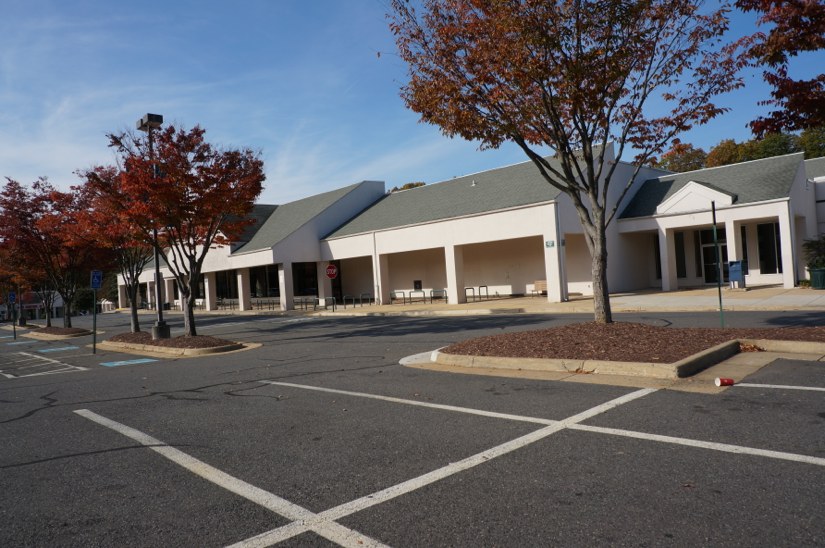
It’s a crucial time for Reston. The “new town” is now more than 50 years old. And old, when it comes to structures built in the 1960s and ’70s, sometimes means obsolete — or at least out-of-date or inefficient.
Two great examples of this are Tall Oaks Village Center and the 45,000-square-foot former American Press Institute headquarters on Sunrise Valley Drive.
Both were built in the early 1970s. Both thrived for years, then met a sad decline. Finally, this week, the Fairfax County Board of Supervisors gave final approval to owners to redevelop the industrial/commercial properties into low/medium density residential neighborhoods.
 Even though Tall Oaks served as a neighborhood retail destination for decades, it never quite was the “village center” gathering place Bob Simon envisioned when he founded Reston.
In the last few years, mounting competition from nearby shopping, particularly grocery stores, led to increased vacancies at the plaza on North Shore Drive. Since Giant Foods left in 2007, many smaller retailers followed, and now Tall Oaks sits only 13 percent occupied.
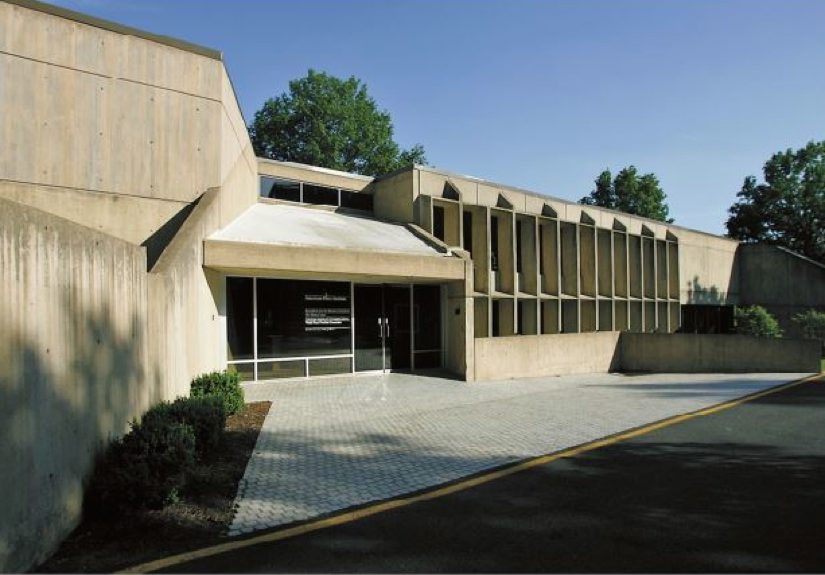
API too was a vibrant place from 1974 to 2012. Not only was the building designed by famed architect Marcel Breuer, it was a space in which hundreds of well known journalists attended trainings and seminars.
But, perhaps emblematic of the changing news industry, API merged with the Newspaper Institute of America in 2012. The headquarters, a Brutalist building on a nice wooded lot at Sunrise Valley Drive and Roland Clarke Place, has been empty ever since. Read More
This is an opinion piece by Del. Ken Plum (D), who represents Reston in Virginia’s House of Delegates.
For a short time when I was in college, I sold Fuller brushes and home cleaning products door to door to make money to pay my bills.
I could make several-fold more per hour selling door to door with flexible hours than I could with any other part-time job. I was trained by a mentor salesman who made a good living selling the well-known brushes and cleaners.
One practice of his that I never adopted was to knock on doors that had a “no solicitation” sign. He explained that while he may encounter a grumpy person or two behind those doors he mostly found people with a low resistance to sales pitches who used the signs as their first level of defense to keep from buying something.
More recently, I have been seeing a different sign, “Don’t Tread on Me,” not on homes but on vehicle license plates. The original yellow flag with a coiled snake and the slogan on it was the flag of the early navy in our country. Today it is the flag of the Tea Party.
Each time I see the yellow license plate I wonder what message it is intended to convey. Is it at all like the “no solicitation” signs on homes that proved to be a not-very-effective defense from the salesman and the outside world? Or is it a proclamation of self-importance that one should be able to live in the world without being bothered by others?
Since the flag has been adopted politically by the Tea Party-ites, its meaning no doubt is aimed at laws, regulations, or government actions that are viewed as “treading” on someone.
Government actions do affect us. We have a system of national security that gets in our way especially when we want to board an airplane or enter a government building. We may feel tread upon by the number of traffic rules we have to abide by or by the health and safety regulations affecting our homes and businesses. Certainly there have been cries of protest at any attempts to tread on someone’s ability to buy and carry any size gun whenever or wherever they want.
Living in a civilized society means that we sometimes are inconvenienced by the necessity to compromise some of what we are doing for the greater community’s health and safety. There simply has never been a government devised that allows everyone to live a life unfettered without any thought of the needs of others. There is no constitutional right to live a life trampling on others in order that you are not tread upon.
While certainly not intended by most, the admonition to not tread on me can be interpreted as selfishness. You view your needs as greater than others; your rights trump (sorry for the pun) others’ rights. Certainly there are mixed messages that can be interpreted from such a simple phrase. I prefer the simpler and easier to understand bumper stickers like “live simply so that others can simply live” or “coexist.”
What does “don’t tread on me” mean to you? Positive or negative. Let me know at [email protected].
This is a sponsored post by Del. Ken Plum (D), who represents Reston in Virginia’s House of Delegates.
In a few days, I will be driving about six hours from my home in Reston to Wise County in Southwest Virginia to volunteer at the Remote Area Medical (RAM) Health Clinic at the county fairgrounds.
About 5,000 patients are expected to show up at this three-day health event for their once-a-year opportunity for professional health care. The RAM clinics were founded by television star Stan Brock to provide health care for indigent patients in under-developed nations. He soon learned that the same kind of care and services were needed in the Appalachian region of Virginia and Tennessee.
Organizing the health care days in Wise County is the Health Wagon, a mobile health clinic, that provides services throughout the year for a four-county region that is the poorest in the state. In addition to its clinic on wheels, the Health Wagon also has two stationary health clinics in Wise and Clintwood counties. The typical patient is 38 years old with an annual income of less than $20,000. These people cannot afford regular health care insurance, and since the Virginia General Assembly has refused to close the coverage gap they make too much money to qualify for Medicaid.
Read More
This is a commentary by Del. Ken Plum (D), who represents Reston in Virginia’s House of Delegates. It does not reflect the opinion of Reston Now.
Each week during the General Assembly session and several times monthly during the remainder of the year, I travel the Dulles Toll Road to the Beltway to I-95 South to Richmond.
Since I travel south early in the mornings and return late in the day, I can generally make the trip in two hours. Mine is a reverse commute, but I witness in the lanes going in the other direction the bumper-to-bumper, slow-moving traffic experienced by commuters daily. Express lanes on the Beltway–I-495–along with its widening have helped relieve congestion with the exception of the American Legion Bridge that is like a parking lot much of the time. I-95 is its own parking lot during commuting times.
Fortunately, relief is on the way, but the size of the transportation projects requires years for completion. Widening with express lanes and using traffic management technology will bring some relief to the I-66 corridor.
The most promising congestion relief for the region was announced recently with Virginia receiving a $165 million federal FASTLANE grant that will be leveraged to fund $1.4 billion in multimodal transportation projects in the congested I-95 corridor. The entire undertaking is being called the Atlantic Gateway Project.
For the highway commuters I see stuck in traffic on my trips to Richmond, the project will fund the extension of Interstate 395 express lanes about 7 miles north to the Potomac River and I-95 express lanes about 10 miles south towards Fredericksburg. A new I-95 bridge will be built across the Rappahannock River. For rail commuters and rail freight the project includes the construction of 14 miles of new track along the CSX rail corridor crossing the Potomac River to enhance freight, commuter and passenger rail routes. Mass transit options will be expanded with 1,000 new parking spaces for commuters along I-95 and I-395.
The federal money coming from the United States Department of Transportation competitive grant program, FASTLANE, is part of a $4.6 billion, 5-year program that was passed in Congress in 2015 after years of delay and inaction.
The project in Virginia has national significance in that it will help unlock the most congested part of I-95 on the East Coast. Not only will Virginia commuters realize relief, but it will be shared by travelers from New York to Florida. Likewise, commerce will be enhanced with the railway and highway improvements.
Added to the $165 million in federal money will be $565 million in private investment by Transurban and CSX Transportation through public-private partnership agreements and $710 million in state transportation funds. Construction on some parts of the project will begin as early as 2017.
The approach being used in this corridor establishes a significant precedent that must be followed to successfully unlock other areas of Northern Virginia from some of the worst traffic congestion in the country.
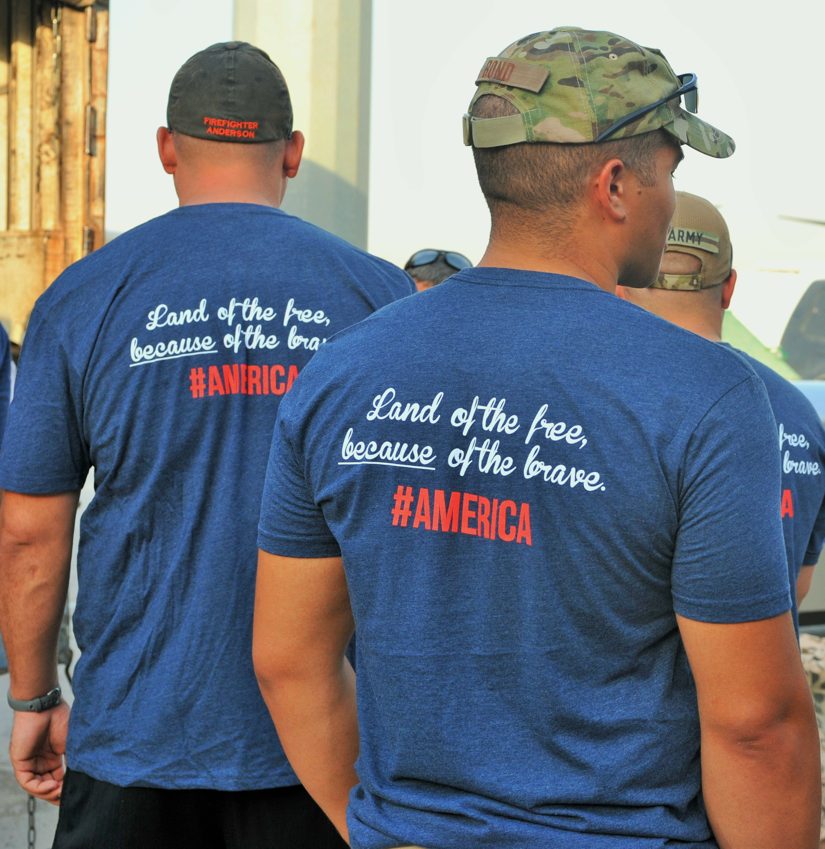 This is a letter to the editor from the Reston Chorale. Something on your mind? Send a letter or op-ed to [email protected].
To the Editor:
On the Friday before Independence Day, nine large boxes from The Reston Chorale reached a platoon of American soldiers stationed halfway around the world.
They contained a Fourth of July Party-in-a-Box, hand-made thank you cards, snacks and sports equipment, health and hygiene products, books, games, DVDs and more — even the fixings for s’mores.
All of these items were generously donated to The Reston Chorale’s Care Packages for the Troops Drive — part of our annual Star-Spangled Sing-Along at Reston Town Center on the Saturday before Memorial Day. Now in its second year, this drive has delivered 650 pounds of donated goods for American soldiers serving overseas. Read More
This is a commentary from Del. Ken Plum (D), who represents Reston in Virginia’s House of Delegates. It does not reflect the opinion of Reston Now.
Last week, the Supreme Court of the United States unanimously overturned the public corruption conviction of Virginia’s former governor, Robert F. McDonnell.
The action of the Court was not a surprise to many, if not most, legal experts who had viewed the instruction to the jury in the case as to what constitutes “official acts” as being so broad that they could cover most any action that a public official takes. At the same time, there is concern that the Court’s decision will make it much more difficult to prosecute public officials on corruption charges.
The case is not yet fully resolved. The Supreme Court sent the case back to the Appeals Court to decide if there was sufficient evidence to hold a new trial or if the charges will be dismissed. In light of the Supreme Court’s ruling there is not likely to be a new trial, and the charges will be dropped. Read More
This is a commentary by Del. Ken Plum (D), who represents Reston in Virginia’s House of Delegates. It does not reflect the opinion of Reston Now.
The Second Amendment to the United States Constitution is one sentence long:
“A well regulated Militia, being necessary to the security of a free State, the right of the people to keep and bear Arms, shall not be infringed.”
Commonly referred to as the “right to bear arms” amendment, it could as easily be called “the state militia” amendment. Clearly the Founding Fathers had something in mind about the state militia, or the National Guard as we now call it, when the amendment was proposed and passed. Otherwise they could have simply provided that “the right of the people to bear arms shall not be infringed” as some argue today.
For most of our history, the connection between the right to bear arms and the militia was acknowledged and respected. In recent years there has been a rigorous and well-funded political campaign to put the emphasis on individual gun ownership.
This is a commentary from Del, Ken Plum (D), who represents Reston in Virginia’s House of Delegates. It does not represent the opinion of Reston Now.
Technologists have applied their big data and computer-crunching to determine where in the world and where in the United States are the happiest places to live. “The Happiest Places in America-2016 Edition” was released last month by Smart Asset, a firm that uses technology to help consumers understand finances.
Since my constituents reside in Fairfax County, which the study rated the second-happiest place to live in America and next door to the happiest place, Loudoun County, I thought it would be interesting to examine how the counties got those distinctions.
While I am certainly a happy person surrounded by many happy people, I believe the methodologies employed, while useful in understanding the communities in which we live, can also create a false sense of community satisfaction.
Loudoun and Fairfax Counties are the two happiest counties in the U.S. when you limit your study to counties over 50,000 in population. The only other nearby counties in the top 10 in happiness are Howard County in Maryland (No. 7), Chester County in Pennsylvania (No. 4), and three counties in New Jersey. The rest are in the Midwest. No county west of Douglas, Colo. (No. 8) made the list.
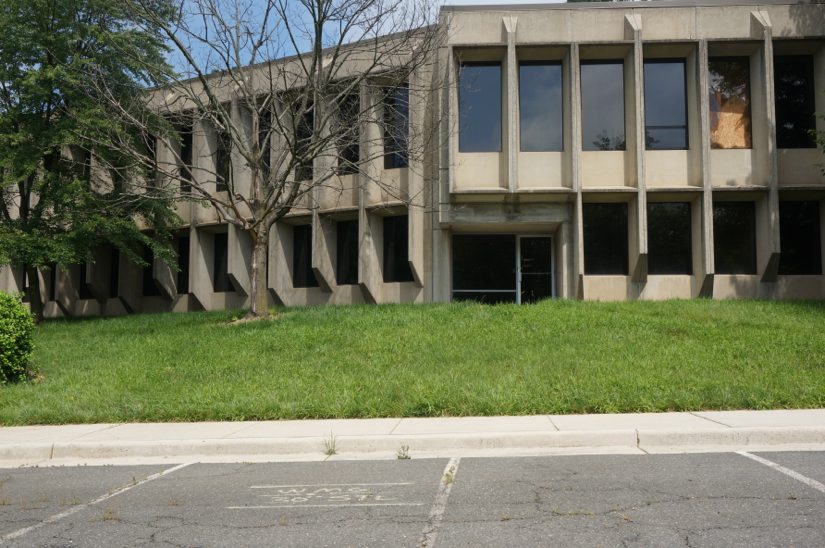
After testimony from state historic and architectural experts, the Fairfax County Planning Commission admits it did not fully investigate the historic significance of the former American Press Institute Building in Reston.
The building, which housed the API from 1974 to 2012, was designed by famous architect Marcel Breuer and is the only Breuer building in Virginia.
Breuer’s also designed UNESCO Headquarters in Paris, the Whitney Museum of American Art in New York City, and buildings at New York University and Vassar College, among others.
Other advocates for rescuing the building have pointed out the historical significance for leaders in media and politics.
The Fairfax County Planning Commission heard the pleas for historic preservation — sort of. They send Sekas Homes‘ proposal for 34 townhomes and 10 condos to the Fairfax County Board of Supervisors on Thursday with a recommendation for denial.
Many Reston residents have suggested that the county try and buy it from its current owner and repurpose the more than 48,000-square-foot building as a new Reston Regional Library. A new library is planned for the Reston Town Center North area, with $10 million of county bond money set aside to build it.
While we wait for the supervisors’ vision of what should happen to the four-acre parcel along Sunrise Valley Drive, let’s hear your ideas.
This is a commentary by State Del. Ken Plum (D-Reston). It does not represent the opinion of Reston Now.
The Commonwealth of Virginia prepares its budget on a biennial schedule. The budget proposed this year by the Governor and adopted by the General Assembly will become effective July 1, 2016, and extend to June 30, 2018.
Although technically the General Assembly does not pass a new budget in odd-numbered years, practically there are many adjustments that are made mid-course in the biennium budgets based on changes that may have occurred in revenues or expenses.
While this system of budgeting over two years may reduce some administrative paperwork, it also presents some challenges. Essentially, the governor and the General Assembly must estimate revenues 30 months into the future. These are not simply planning projections; these are actual numbers upon which budgeted expenditures are based. Economists in government and in business are consulted in coming up with revenue estimates.
The challenge of estimating government revenue has been obvious over the last few years. Two years ago there was a revenue shortfall of $439 million coming almost entirely from a huge drop in estimated payments of income taxes that are not withheld from payroll but paid on stock gains by investors who chose to cash in on their investments.
A projection of that shortfall from the end of fiscal 2014 led to a projected $2.4 billion shortfall through this biennium. Fortunately, revenues recovered last year, and the state ended the year with its biggest surplus ever.
Revenues collected through April of this year were trailing projections by 1.9 percent, or $347 million, after declining 6.7 percent from the previous April. If by the end of the fiscal year revenue collections are one percent under the annual forecast, or $169 million, the state is required by law to reforecast revenues for the new two-year budget. Also, state employees who were promised a raise based on the higher revenues may not get them.
Virginia gets top marks on the handling of its finances by all the outside entities that evaluate these kinds of things. It is one of only about a half- dozen states with the highest AAA bond rating. A volatile economy is challenging to predict; we should take pride in our high rating.
My concern continues to be the selective accounting that the General Assembly follows in ignoring federal monies that are available that would free up several hundred million dollars in state general funds for appropriation while providing health care to as many as 400,000 working Virginians. Gov. McAuliffe’s proposed budget included these funds, but the House Appropriations and Senate Finance Committees took them out.
They refer to these funds as Obamacare as though that term alone should be enough to refuse the money. Virginia turns its back on $4.4 million per day and has refused more than $4 billion in Medicaid funds the last several years.
As careful as the state is in its budgeting and counting its pennies, how can it selectively leave these monies out of its budget? It’s selective accounting, bad economics, and in my view, immoral!
