
The Fairfax County Office of Environmental and Energy Coordination has proposed a process of drafting a five-cent plastic bag tax ordinance in Tuesday’s Fairfax County Board of Supervisors Environmental Committee meeting.
According to Susan Hafeli, the Deputy Director of OEEC, Fairfax County legislation allows the county to adopt an ordinance imposing a five-cent tax on most disposable plastic bags provided by grocery stores, convenience stores and drugstores.
As of right now, there are no guidelines from the state regarding the creation of a plastic bag ordinance, rather, the state intends to wait until a locality adopts an ordinance to consider guidelines, according to the presentation.
The revenues are to be appropriated for environmental clean-up, mitigation of pollution and litter, education and the provision of reusable bags to recipients of a federal food support program, according to Hafeli.
The proposed plastic bag tax could generate annual aggregate local revenues of between $20.8 to $24.9 million statewide, although, the tax may be more of an “impetus to behavior change rather than a revenue generator,” said Hafeli.
Across the region, the Northern Virginia Regional Commission Waste Management Board has begun exploring the issues laid out in the legislation, according to Hafeli. Additionally, Arlington County is planning to convene a public workgroup in early 2021 to discuss the adoption of a plastic bag tax, with the discussion of issues regarding equity in the county.
OEEC anticipates that action for this process will occur in two phases. The first phase will focus on public engagement, from developing an informative website, to holding one or more workshops for input, to releasing an electronic survey.
The second phase will focus on the development of the ordinance, including updating the webpage with the proposed ordinance and requests for comments, presentations to the Board’s Environmental Committee, and requests to advertise and hold a public hearing, according to Hafeli.
Concerns from several supervisors regarding the ordinance included confusion regarding state guidelines, equity issues within the community, and ensuring there is good research on the issue, especially in the midst of the pandemic.
However, most supervisors agreed that the environmental issue with plastic bags is significant, and that data from other major water sources, including the Anacostia River, has shown a plastic bag tax to have positive environmental effects.
Moving forward, the Board is looking to clarify the state’s policies while working in conjunction with regional partners and plan for further conversation on how to create the ordinance.
The next Environmental Committee Meeting will take place on Tuesday, Feb. 2 at 11 a.m.
Photo by Brian Yurasits/Unsplash

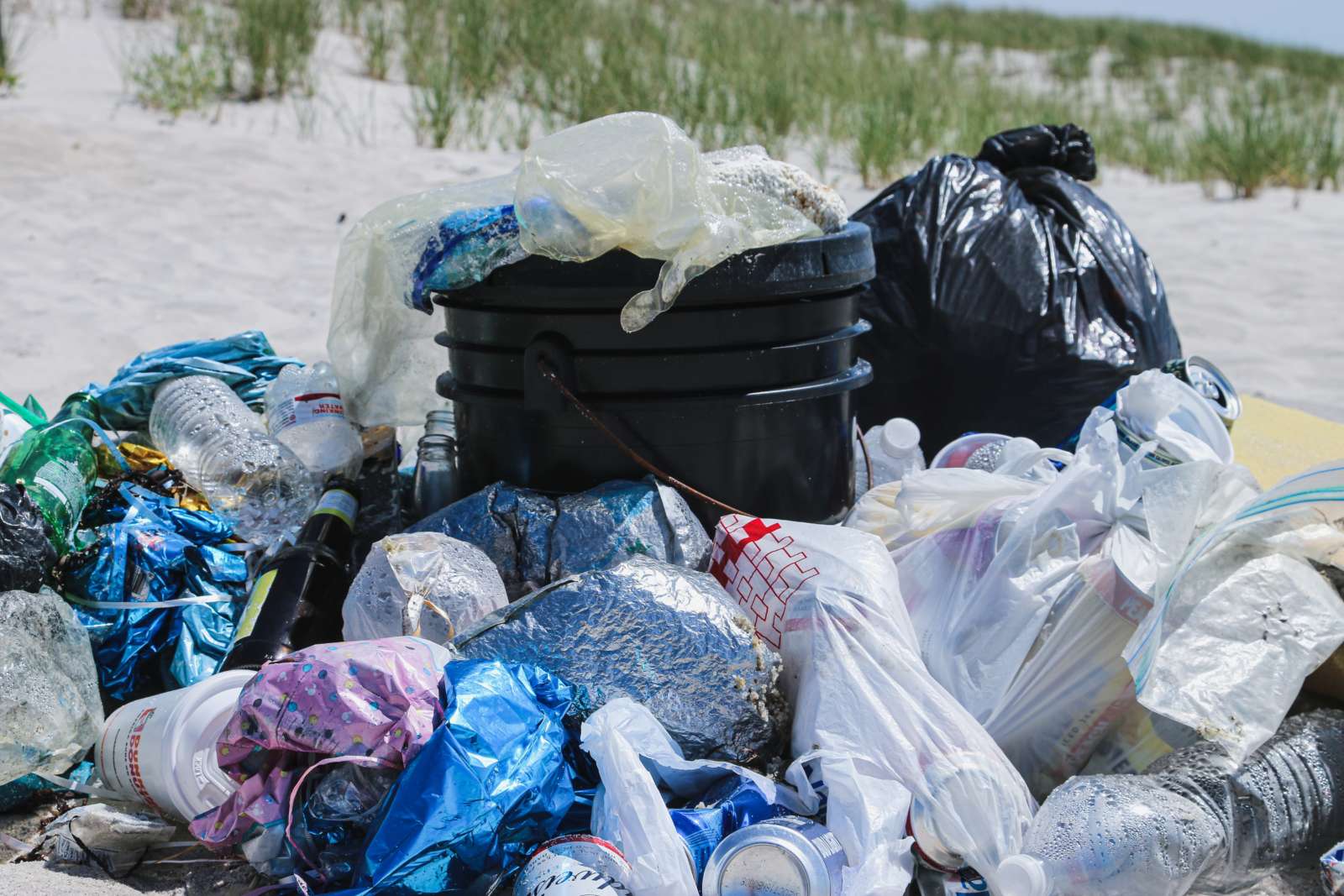
Fairfax County officials are in the early phases of considering the implementation of a five-cent tax on plastic bags.
In March, the Virginia General Assembly passed a state bill that allows municipalities to collect taxes on disposable bags. Gov. Ralph Northam signed the bill on April 10.
Jurisdictions can levy taxes on disposable plastic bags given by grocery stores, convenience stores, and drugstores. Tax revenues are allocated for environmental cleanup, pollution and litter management, providing educational programs to reduce environmental waste, and the funding of reusable bags to recipients of federal food support programs.
The Virginia Department of Taxation estimates the tax could generate between $20.8 million to $24.9 million in annual aggregate local revenues across the state.
A board matter approved by the Fairfax County Board of Supervisors in late July also directs the Office of Environmental and Energy Coordination to create a plan to implement the plastic bag fee next year.
In a Nov. 30 memo to the Fairfax County Board of Supervisors, Fairfax County Executive Bryan Hill said county departments are currently “exploring the issues associated with development and implementation of a plastic bag tax ordinance.” Other jurisdictions like Arlington County have cited concerns about adopting the tax amid a pandemic due to equity-related dissues.
Hill noted that several ambiguities in the state’s ordinance need to be addressed. For example, the ordinance does not explicitly define what constitutes a convenience store and offers scant information on how tax commissioners will enforce the tax and issue penalties for non-compliance.
“At least at this time, there appears to be no mechanism to contest a retailer’s categorization short of a court challenge and sufficient facts to support a locality’s different categorization,” Hill wrote.
The county anticipates launching a public engagement process, including public meetings and an online survey, to gauge input on the move.
If the Board of Supervisors directs staff to create a plastic bag ordinance, county departments would launch a second public engagement process and consult with county entities like the Environmental Quality Advisory Council prior to consideration by the board.
The board will discuss the issue at an Environmental Committee meeting tomorrow (Dec. 8).
Photo by Griffin Wooldridge/Unsplash
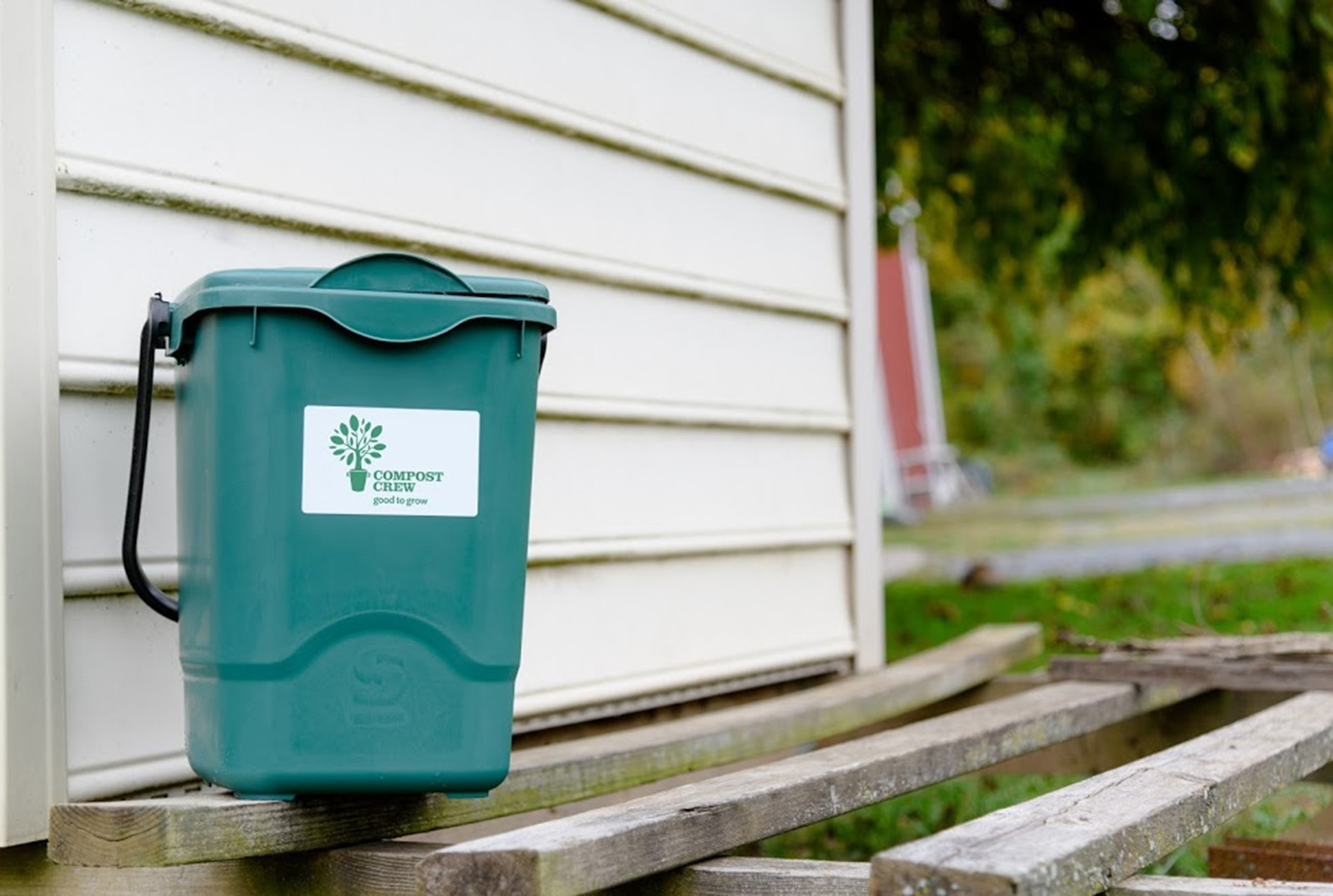
Compost Crew, a local food waste collection company, recently began service for homes in Reston.
The Rockville-based company provides weekly clean and convenient curbside organic waste collection in the area roughly between Herndon and Lake Audubon. Customers separate out their food scraps and leave them out once a week, just like you would with trash or recycling.
Compost Crew serves thousands of homes and businesses in the DMV area, including curbside service for hundreds of Falls Church residents in a program sponsored by the City. Keeping food waste out of the landfill reduces greenhouse gas emissions and creates a beneficial soil amendment called compost, which helps gardeners everywhere grow healthy plants.
Many people find that composting their food waste reduces the amount of trash they generate in their home by 25 to 50 percent. For about $1 per day, you can make a real difference.
Receive lower rates through our Community Program by getting neighbors to sign up with you! Have everyone interested fill out this form, and we will reach out with more information. We will help every step of the way.
To learn more about our service and to get started, head to the Compost Crew website.
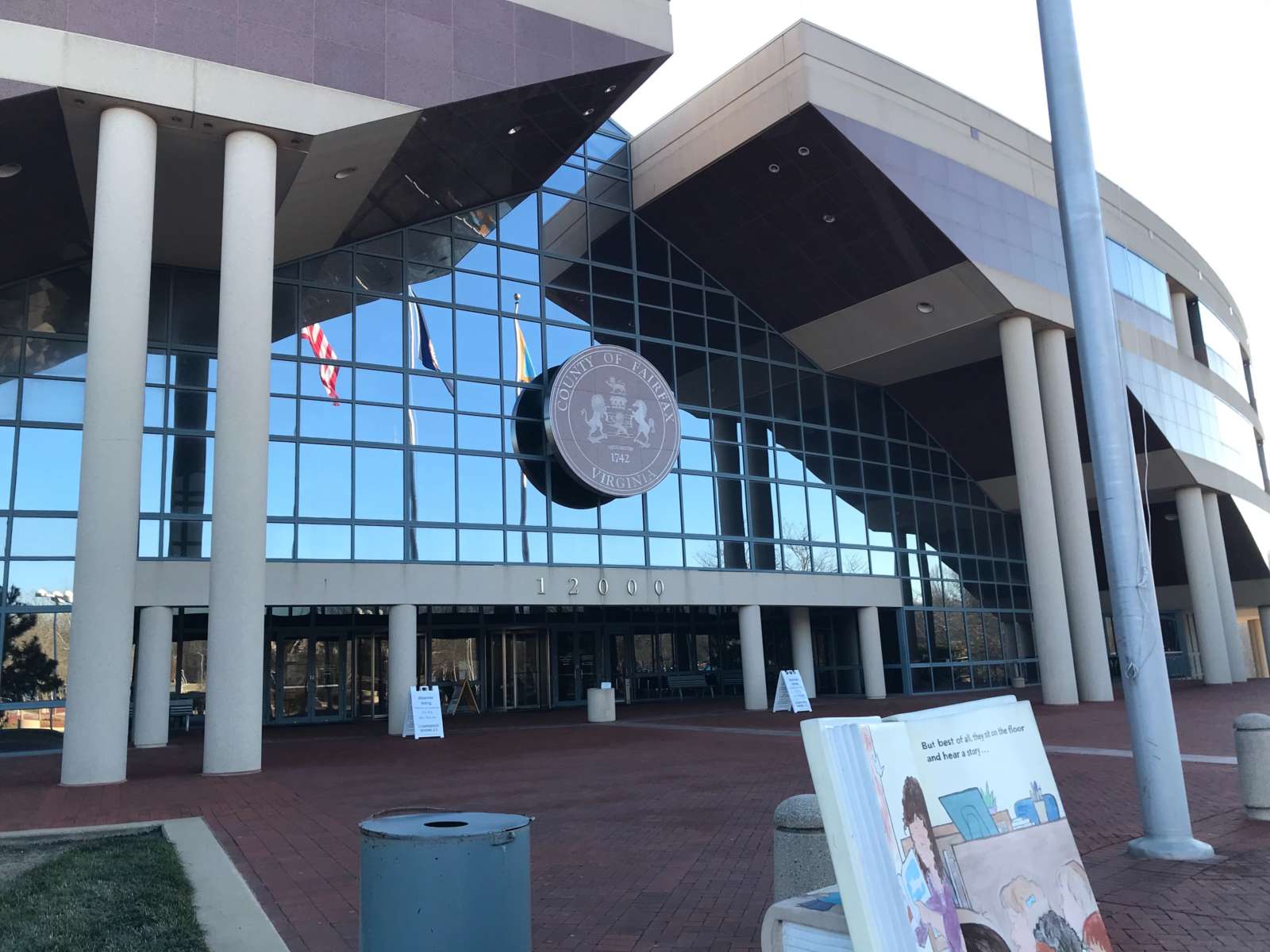
Fairfax County should attempt to achieve carbon neutrality by 2040 and eliminate all waste from county government and school operations by 2030, the Fairfax County Joint Environmental Task Force (JET) recommends in a new report.
Presented to the Fairfax County Board of Supervisors on Oct. 20 and the Fairfax County School Board on Oct. 22, the report urges both boards, along with the Fairfax County Park Authority and the Fairfax County Regional Housing Authority, to commit to producing net-zero carbon emissions from their energy usage by 2040.
To achieve this goal, the task force suggests that Fairfax County aim to cut its carbon emissions in half from 2019 levels by 2030, while transitioning to renewable sources to generate 25% of its energy by 2030 and 50% by 2040.
The task force also recommends reducing the total amount of energy used by all county facilities by 25% by 2030 and 50% by 2040, and requiring all new county buildings and major renovation projects meet net-zero energy standards starting in 2021.
Other recommendations proposed by the JET include:
- Fairfax government and schools should aim to produce zero solid waste by 2030
- The Fairfax Connector bus fleet should transition to electricity or other non-carbon-emitting fuel sources by 2030, with the Fairfax County Public Schools fleet and non-bus vehicles following suit by 2035
- The county government and schools should develop resources to educate students and adults about job options in “green” industries, including renewable energy, green building, resource and wildlife management, and stormwater management
“The JET’s ambitious goals and recommendations send a powerful message that our county and school system are committed to doing what it takes to protect our environment and address the threat of climate change,” Providence District School Board member Karl Frisch said.
Faith Alliance for Climate Solutions executive director Meg Mall, one of nine community members on the JET, says her environmental advocacy group is “pleased that strong goals have been incorporated” into the task force’s report and hopes to see continued collaboration not just between different county agencies, but also between Fairfax County and the general public.
“FACS has been a strong advocate for the adoption of aggressive goals in the county’s climate mitigation and adaptation work,” Mall said. “…The county must lead by example within its own operations while concurrently working toward community-wide goals.”
The Board of Supervisors and school board formed the JET in April 2019 to coordinate county government and schools efforts to address climate change, energy efficiency, and environmental sustainability issues.
While the threat of climate change has loomed for decades, its urgency became newly apparent when the United Nations Intergovernmental Panel on Climate Change released a report in 2018 that found the world must achieve net-zero carbon emissions by 2050 in order to limit global warming to 1.5 degrees Celsius above pre-industrial levels and potentially avoid the most drastic impacts of climate change.
In addition to creating the JET, Fairfax County signaled that it intends to prioritize climate issues by establishing the new Office of Environmental and Energy Coordination in July 2019 and awarding contracts to solar providers in December to install solar panels at more than 100 publicly owned facilities.
The Board of Supervisors will discuss the JET recommendations and get updates on the solar power purchase agreement initiative, the development of a Community-wide Energy and Climate Action Plan (CECAP), and the county’s yard waste collection bag policy during its environmental committee meeting today at 11 a.m.
Staff photo by Catherine Douglas Moran

The research phase of local stream restoration projects at Snakeden and Glade has begun following the completion of the first phase of the projects.
According to a news release by Reston Association, crews from Wetland Studies and Solutions, Inc. will mark boundaries of the wetlands with pink flags as the locations are reviewed by the U.S. Army Corps of Engineers.
RA anticipates the work will begin in late October and continue through the end of the year.
Here’s more from RA on the project:
The research being undertaken is a partnership between Wetland Studies and Solutions, Inc., Northern Virginia Stream Restoration, LC, Resource Protection Group, Inc., and state and federal agencies to further the science of stream restoration and ecology.
This research program has already provided grants to the U.S. Geological Survey, Virginia Commonwealth University, and U.S. Fish and Wildlife Service to begin additional monitoring and research in these streams, with more grants to follow. As these groups begin to plan their work, RA members will see their staff and vehicles periodically in these watersheds as they prepare for monitoring this spring. USGS will develop a website to disseminate the resulting information.
The $1 million restoration of the Snakeden Branch Stream, which flows into Lake Audubon, began in October 2019. The project, which spans 750 feet, aimed to improve water quality, protect the ecosystem, improve wildlife habitat and remove invasive species around the area.
Photo by Northern Virginia Stream Restoration Bank
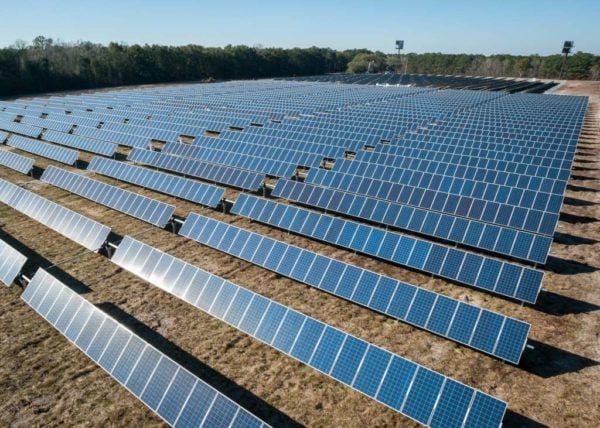
Solar panels could be coming soon to the rooftop of Reston Community Center.
The Fairfax County Board of Supervisors will host a public hearing to discuss the issue on Oct. 20 at 3:30 p.m.
Sigora Solar hopes to install solar panels to generate on-site electricity on several county sites, including RCC’s Hunters Woods location (2310 Colts Neck Road).
If approved by the board, Sigora Solar would sign a solar power purchase agreement with county entities. The company would design, install, permit and operate the rooftop solar panels and sell the generated electricity to facilities like RCC at a fixed rate.
In meeting materials, county staff indicated that the agreement would allow the county to purchase on-site renewable energy “with little or no upfront or operational costs.”
“As the average cost of utility-delivered electric power is expected to increase over time, the savings are expected to increase, as well.”
Sigora Solar has locations in Virginia and North Carolina.
Photo via Unsplash
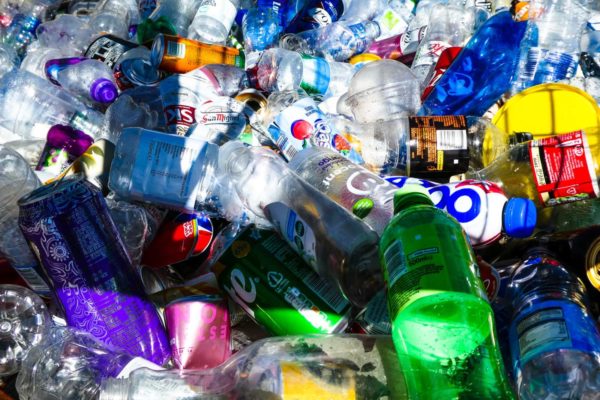
Reston Association’s Environmental Advisory Committee is in the process of developing a pilot program that will encourage local restaurants to reduce the use of single-use plastics.
The voluntary program is currently in the planning stages by the committee, according to a recent news release by RA.
With the program in the background, the committee hopes to raise awareness about the dangers of using single-use plastics, which are made from petrochemicals and are made to be used once. Examples include bottles, straws, plastic cutlery, and bags.
Here’s more from RA on the issue:
By 2050, plastic in the ocean will outweigh fish, according to sources cited by the EAC. Single-use plastic comes at a steep price to the environment, which we will be paying for millennia. For example, a single plastic bottle can take 450 years to degrade.
The Green Education Foundation offers a number of tips on how to use less plastic. They include refraining from using plastic straws, particularly in restaurants. The foundation also recommends reusable produce bags for grocery shoppers. Plastic bags can take 1,000 years to degrade.
Details on the pilot program will be released on the program has launched, according to RA.
A report by a subcommittee of the county’s Joint Environmental Task Force is calling on the county to achieve carbon-neutral status by 2050.
The draft report, which will be discussed at a task force meeting today, offers recommendations on goals for adoption by the Fairfax County Board of Supervisors and the Fairfax County School Board.
Members of the task force’s energy subcommittee met several times between September 2019 and August of this year to formulate the report.
In order to achieve carbon-neutral status, the report recommends reducing emissions by 50 percent by 2030 and a net-zero energy commitment for all new county buildings and major renovation projects.
Here’s more from the report on the next steps:
1. Carbon emissions: Achieve 50% emissions reductions by 2030, as compared to the 2019 baseline.
2. Clean renewable energy: Produce 25% of the County energy use from in-County renewable energy generation by 2030, and 50% by 2040, using 2019 energy use as the baseline.
3. Building Energy Performance Standards for existing buildings: Decrease total energy usage from all County facilities by 25% by 2030 and 50% by 2040, as compared to the 2019 baseline.
4. Net Zero Energy Commitment: All new County buildings and major renovation projects beginning planning and design in 2021 and after must achieve ‘Net-Zero Energy’ (NZE) performance as defined below, unless County staff advises the Board prior to the 30% design phase why a project cannot meet the NZE standard.
The report urges the county to coordinate with other organization in order to inventory all potential solar sites, options for geothermal installations, and the launch of a communications campaign about energy and emissions.
The county is currently in the midst of developing its first Community-wide Energy and Climate Action Plan.
Photo via Unsplash
Reston Association will consider including more funding in next year’s budget to preserve the environmental health of Lake Thoreau.
At a meeting with members last night (Monday), RA CEO Hank Lynch said the association has a line-item in the fiscal year 2021 budget to better protect the lake’s environmental health.
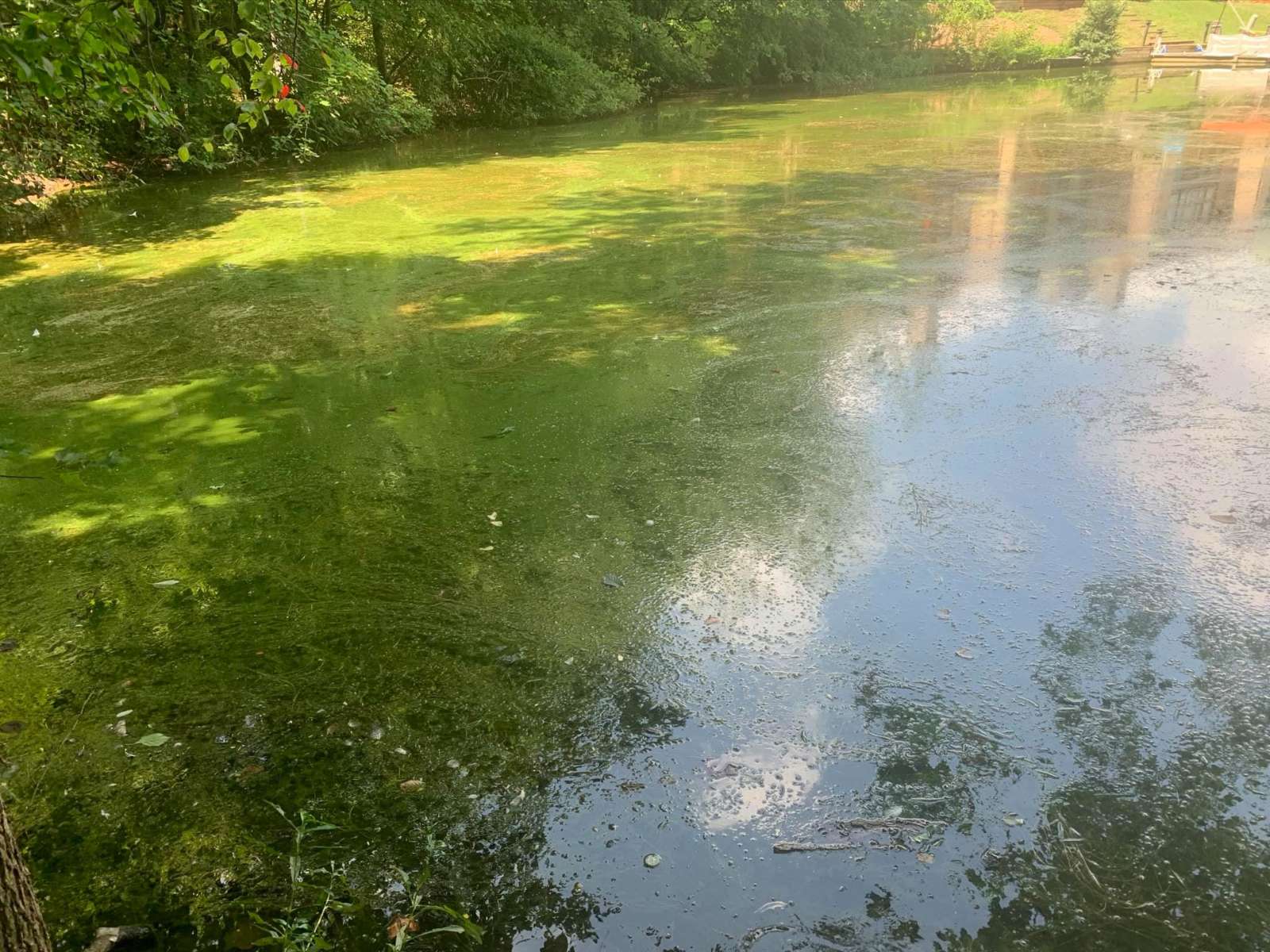
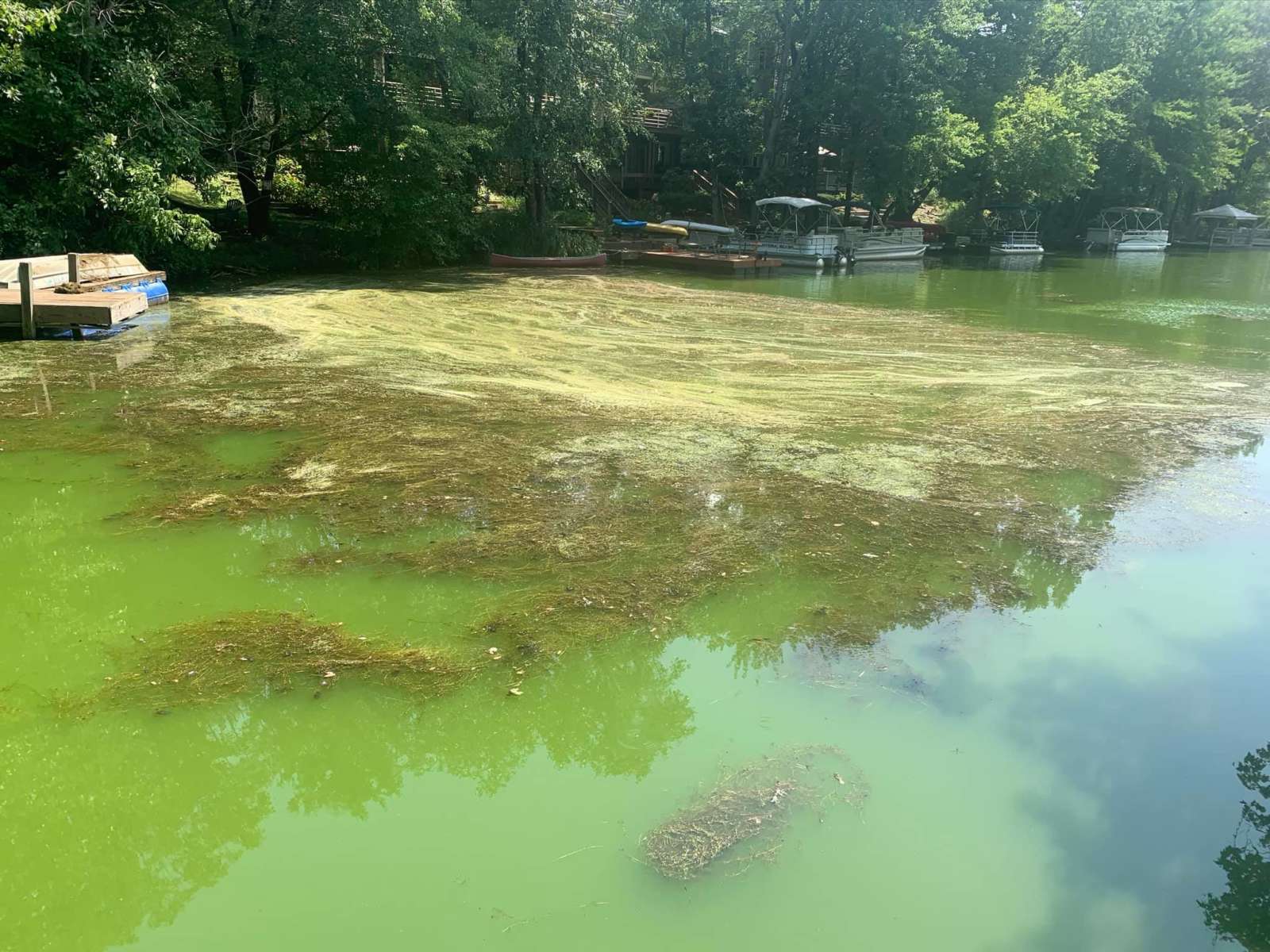
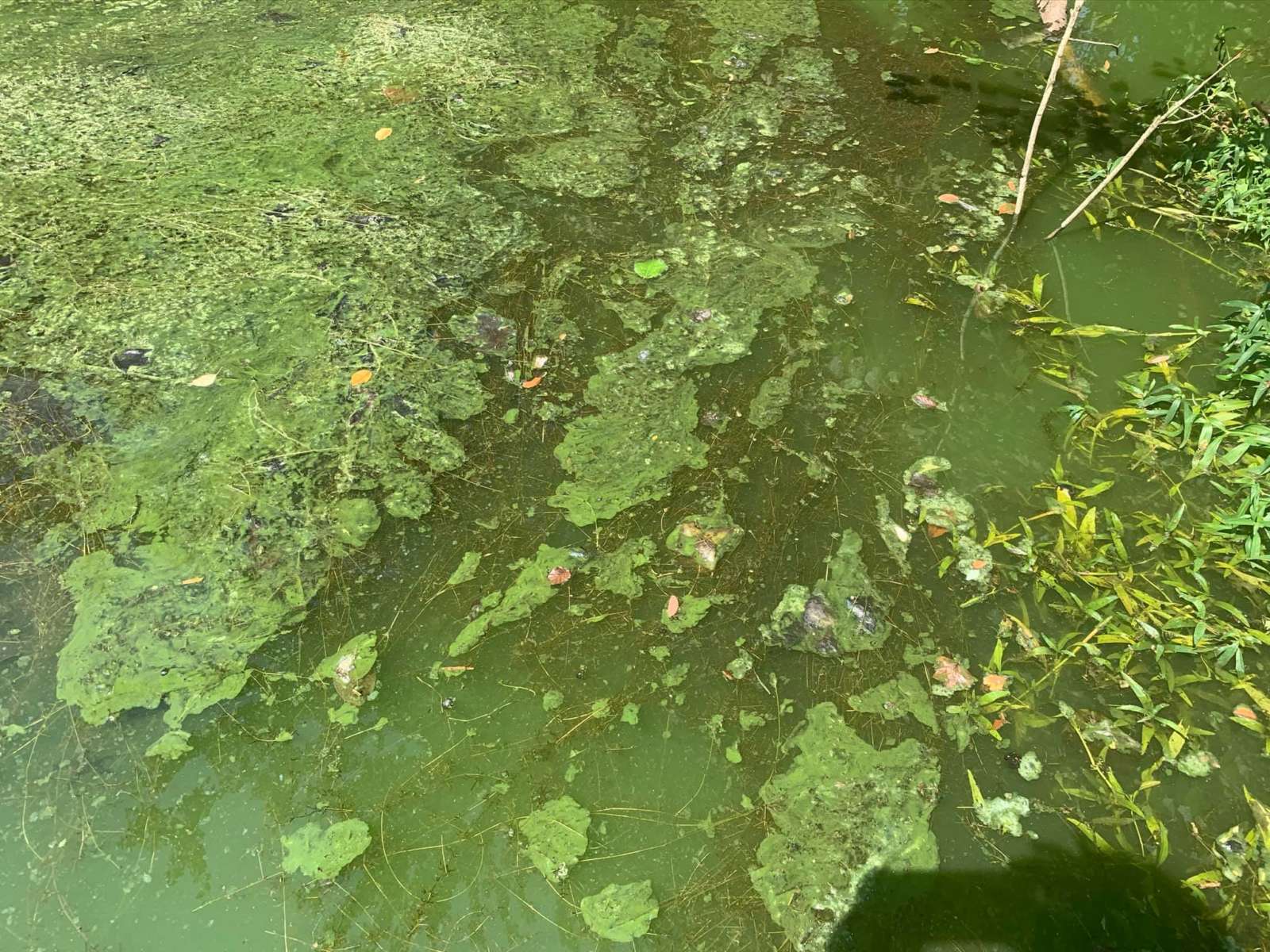
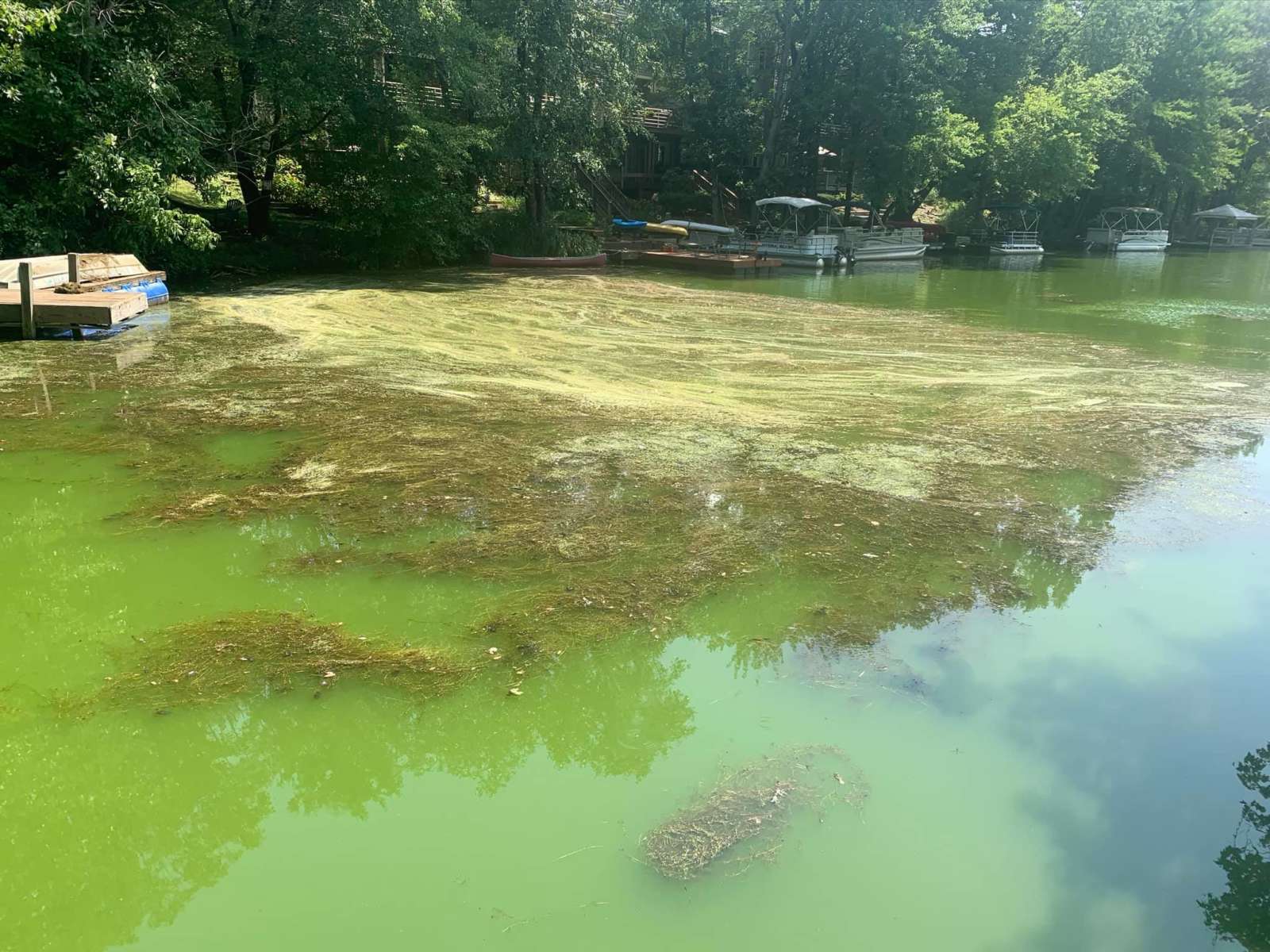
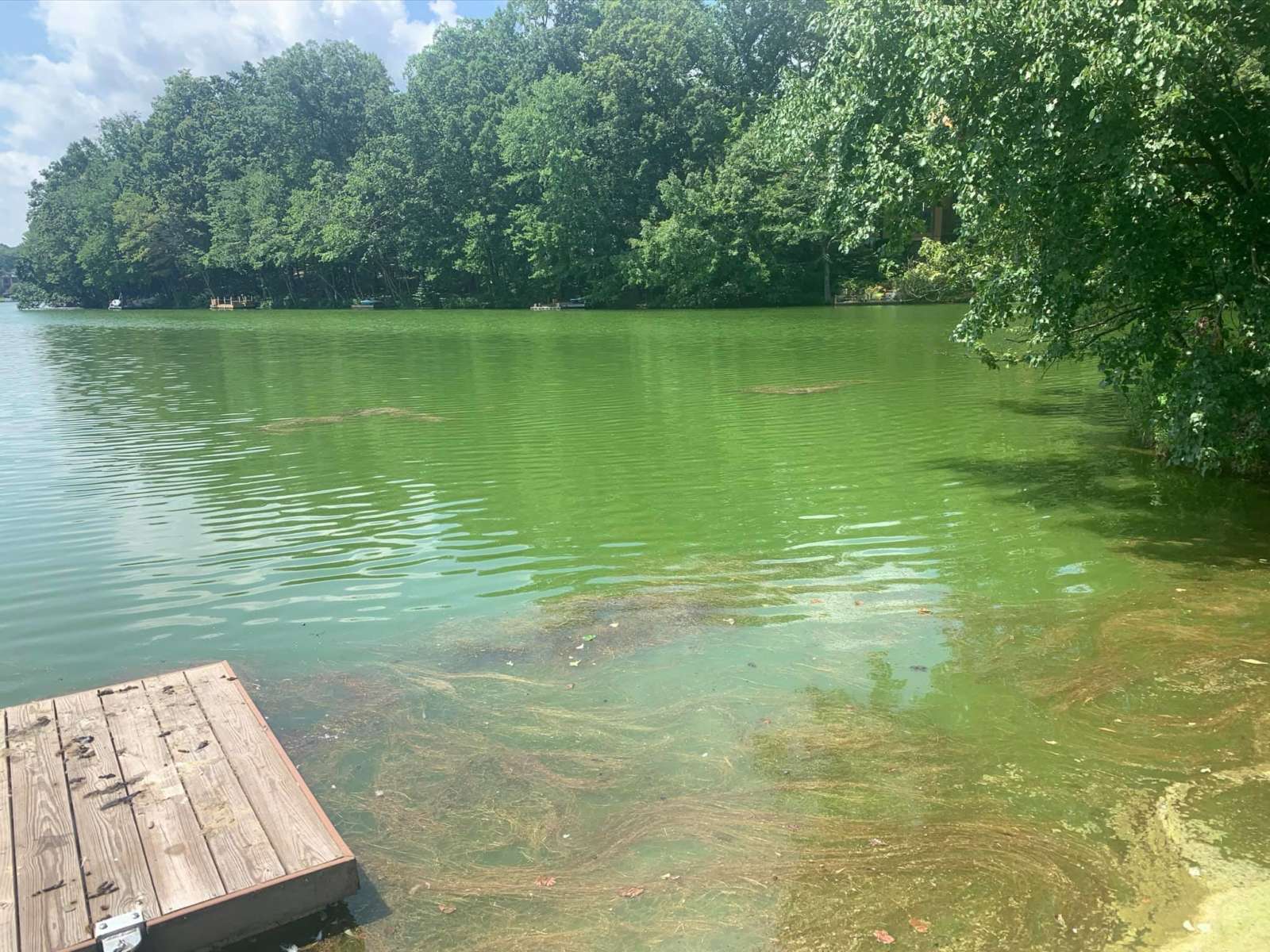
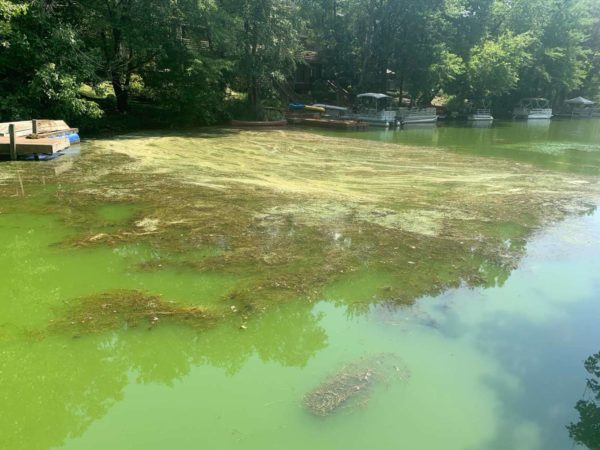
A major and potentially toxic algae bloom blanketed Lake Thoreau’s surface last month after RA treated the lake with herbicides to manage Hydrilla, an aquatic plant that had taken over parts of the lake. The treatment occurred in late July — late into the season when treatments are typically avoided in order to prevent further blooms and other issues.
Since then, RA has encouraged residents to avoid contact with the water. The dying hydrilla and algae bloom are expected to continue to dissipate in the coming weeks.
Lynch said there is no “simple formula” to solve all of Lake Thoreau’s environmental health challenges. His staff is working with experts — including Aquatic Environment Consultants — to discuss how to manage algae blooms, erosion, stormwater runoff, and other issues in the future.
“We’ve already go ta line item in the budget if we indeed we need to increase funding to make this doesn’t happen next year,” Lynch said.
RA has routinely worked with AEC to protect its lakes. The consultant’s president Bill Kirkpatrick said that RA had hoped introducing grass carp into the lake would fend off the hydrilla.
“The hope was the carp would be able to get a handle on it,” Kirkpatrick said, adding that his company will reevaluate what happened this year, lay out other options, and make a decision for next year.
RA members urged the association to act more swiftly and proactively in the future to prevent further issues at the lake. Others called on RA to improve its communication with residents, particularly those living near and around Lake Thoreau.
“It should be a top priority,” said Lorri Zell, adding that the lake’s health trumps efforts to bring movies on the lake or pontoon boats.
The full meeting is available online. RA plans to step up community engagement efforts to educate members about its lakes and lake management.
Photo by Jeannine Santoro
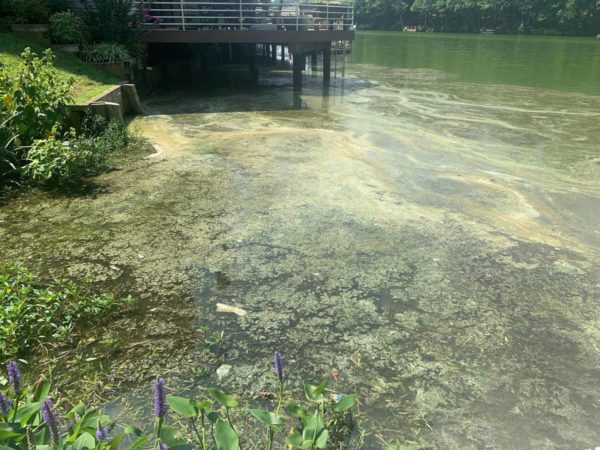
Reston Association will host a meeting later this month to discuss the environmental health of Lake Thoreau.
The meeting announcement follows a major algae bloom at the lake, which prompted RA to urge residents to avoid contact with the water.
RA will meet virtually on Aug. 31 at 6:30 p.m. via Zoom to discuss the overall health of the lake. RA CEO Hank Lynch and COO Larry Butler will discuss recent test results and the longterm plan for managing the bloom.
RA’s longtime vendor, Aquatic Environment Consultants, will present data on the treatment of the lake and data collection. The association’s Environmental Advisory Committee chair Doug Britt will also discuss issues related to the lake.
RA may also consider exploring how future management practices will impact the 2021 budget and future budgets.
Although lab results do not indicate the algae bloom contains toxic levels of microsystins, the algal species does have the ability to produce toxins if concentrations are high enough.
RA expects the dying Hydrilla plant — which the association treated in late July — will sink to the bottom of the lake as it dies over the next several weeks.
Photo by Jeannine Santoro
Reston Association is encouraging residents to avoid contact with Lake Thoreau after a major algae bloom has taken over parts of the lake.
Lab testing is underway to determine if the algae bloom is harmful. Residents should avoid contact with the water until algae concentrations return to “acceptable levels,” according to a statement released by RA last night (Wednesday).
It’s unclear if the bloom was directly caused by RA’s recent treatment of the lake for Hydrilla, an invasive plant that had taken over roughly 30 percent of the lake. Typically, algae blooms thrive when there are more nutrients available for algae growth.
Some RA members criticized the association for attempting to treat the lake late in the summer season.
“I’m at a loss how the RA dumped a bunch of chemicals into a healthy lake without thinking through the consequences of the outcome,” one RA member wrote on Facebook.
Others called the issue a “man-made” problem.
“The algae bloom is due to the irresponsible decision to treat the entire lake at one time for hydrilla growth very late into the season when temperatures were at an all time high! This is not a natural occurrence but a man-made problem,” an RA member wrote.
Jeannine Santoro said she’s at a loss for how “RA dumped a bunch of chemicals into a healthy lake without thinking through the consequences of the outcome.”
Here’s more from RA told Reston Now on whether the Hydrilla treatment caused the bloom:
Algae blooms can be caused as a result of multiple factors. This includes water temperature, air temperature, amount of nitrogen and phosphorous present in the lake, amount of rain, and runoff from the Watershed that can carry fertilizers. The main sources of nutrients are runoff from the watershed and phosphorous released from the anerobic zone of the lake. Anerobic decomposition releases phosphorous. While the hydrilla may be contributing, it is not the causal factor.
RA acknowledged that summer is not the best time period to treat the lake. But the association wanted to see if the grass carp would impact the Hydrilla plant before using herbicide management methods. The dying hydrilla is expected to sink to the bottom of the lake and decay in the next few weeks.
Harmful algae can cause skin rashes and gastrointestinal illnesses. Anyone concerned about the effects of exposure to a bloom should contact the Virginia Harmful Algal Bloom hotline at 1-888-238-6154.
In previous years, RA stocked more grass carp — a freshwater fish species — to help control the plant. But after the fish proved ineffective, RA hired a contractor to treat the Hydrilla, which has floated to the surface after the July 29 treatment.
RA believes the blue-green algae bloom happened as Hydrilla plant began to die, creating conditions primed for the bloom to thrive.
“The blue-green algae bloom in Lake Thoreau has the potential, if concentrations are high enough, to provide microsystins, which can be harmful to both humans and pets,” RA wrote in a statement.
The decomposing Hydrilla on the surface of the water will sink to the lake bottom and decay within the next few weeks. For this reason, the association is not removing the decomposing hydrilla.
RA currently has no plans to treat the bloom until more appropriate conditions — cooler air and water temperature — occur. Treating the bloom as the Hyrdilla plant dies could compromise the dissolved oxygen levels at the lake and put aquatic life in danger.
In the future, RA hopes to explore better ways to manage aquatic plants on the lake.
One option includes treating the plants easy in the season when they begin to come up. This would require three low-dosage treatments — a decision that must “must be made way before the plants are a problem,” RA said.
RA did not treat the water earlier this year because the grass carp were stocked in 2018.
Photos courtesy Jeannine Santoro and staff
Work on the county’s new Community-wide Energy and Climate Action Plan (CECAP) is currently underway.
Now, Fairfax County officials are seeking the public’s feedback on the plan through a series of virtual public meetings.
The three meetings will aim to facilitate conversations on the count’s climate change management goals.
The CECAP Task Force will incorporate the public’s feedback into their final draft of the policy. The task force is composed of stakeholders from associations, businesses, and other organizations, in an effort to reduce the county’s greenhouse gas emissions rate.
Here’s more from the county on the plan:
The Fairfax County Community-wide Energy and Climate Action Plan (CECAP) development process is administered by the Office of Environmental and Energy Coordination with support from the Metropolitan Washington Council of Governments and the Fairfax County-based management consulting firm ICF. The plan, which will be the first of its kind for the county, will include a greenhouse gas inventory as well as targets for greenhouse gas reduction in the coming years.
The CECAP will also include actions and strategies to help mitigate climate change and to reduce the impact of climate-related events on county residents and businesses. At the conclusion of the development process, a final plan will be presented to the Board of Supervisors for adoption.
The schedule for the meetings is below:
- Thursday, August 27: 7-9 p.m.
- Tuesday, September 1: 10 a.m. to noon
- Wednesday, September 2, 2020: 7-9 p.m.
Log-in and registration information is available in the links above.
Photo via vantagehill/Flickr

Reston officially has a new Tesla supercharging station.
Comstock, the developer of Reston Station, announced the opening of the station today (Wednesday).
The new station will be located next to the kiss and ride facility inside Reston Station (11389 Reston Station Boulevard).
“We recognize that the quality of Reston Station’s architecture and tenant mix require us to bring the best local, national and global brands to our project,” said Tim Steffan, EVP/Asset Management, Development and Leasing for Comstock. “Tesla’s pioneering sustainability initiatives and brand platform are a great complement to our long-term vision to deliver best in class amenities to our market.”
Here’s more from Comstock on the announcement:
Designed and built by Tesla and capable of charging a Tesla battery in minutes rather than hours, Tesla V3 Supercharger Station will accommodate the simultaneous charging of 8 Tesla vehicles, including Model S, Model X and Model 3. Tesla’s third generation Supercharger is substantially more powerful than any other charging technology currently available, ultimately reducing the amount of time customers spend charging by an average of 50%.
Photos via Comstock

Halley Rise, a major mixed-use development next to the Reston Town Center Metro Station, will be powered by renewable energy.
Brookfield Properties, the developer, announced today (Tuesday) that the company is shifting all six of its Northern Virginia office properties to renewable sources in order to “develop responsible and sustainable placemaking destinations’ in the area.
“Brookfield Properties is committed to developing great places for people to live and work while also bringing innovation and responsible practices to our projects and communities,” Greg Meyer, Executive Vice President, Brookfield Properties’ Washington, DC region. “We are proud to be powering our Northern Virginia office portfolio sustainably, reducing our impact on the environment and setting a new standard for green practices in the region.”
Halley Rise, which is located at the corner of Sunrise Valley Drive and Reston Parkway is seeking LEED Neighborhood Development status, which is awarded to neighborhoods that are built to be sustainable. Once complete, the development will bring 1,500 residential units, 1.5 million square feet of office space, and 250,000 square feet of retail space to the area. It’s also the site where self-driving vehicle company Optimus Ride is currently exploring energy-efficient options to transport commuters within the development.
Brookfield broke ground on the project in October. Wegmans plans to open in 2022 at the project.
Photo via handout/Fairfax County Government

A bill to reduce the use of styrofoam use by food vendors in Virginia cleared the state House with a 55-44 vote on Tuesday (Feb. 11).
Introduced by Del. Paul Krizek (D-Alexandria) and backed by Del. Ken Plum (D-Reston) who introduced a similar measure this session, the bill requires some chain restaurants to stop using styrofoam containers by July 1, 2021. All food vendors must phase out the use of the containers by July 1, 2025.
Plum proposed a similar measure that was incorporated into Carr’s bill.
Styrofoam products — which are also known as polystyrene — are not biodegradable and take up a significant percentage of space in the state’s landfills.
Environment Virginia, an advocacy organization that is part of Environment America, applauded the vote:
A lot of waste comes from things we don’t need and we know we shouldn’t use, such as foam cups and take-out containers. This trash ends up in our open spaces and waterways, where it endangers wildlife. Polystyrene never breaks down, so it harms our environment for decades. Nothing we use for five minutes should pollute our planet for generations to come.
Environment Virginia has talked to tens of thousands of Virginians about plastic pollution and polystyrene and has collected more than 50,000 petitions calling on our leaders to take action on this crucial issue. Virginia’s leaders in the House of Delegates listened today and we look forward to our leaders in the Senate doing the same.
The ban will not apply to public schools and correctional facilities. Localities can also step in and provide one-year exemptions to individual food vendors if the proposal causes “undue economic hardship.”
All violators will be charged a $50 fee for each day of violation, which would be reused for lottery control and recycling projects.
The state Senate will consider the bill at a date that has not been announced yet.