

 After a delayed Metro commute (backups all along the Orange, Silver and Blue lines) Tuesday night, some commuters trying to leave Wiehle-Reston East’s parking garage and Kiss-and-Ride lane found themselves with nearly an hour wait.
There is a short light that controls traffic to leave the Kiss-and-Ride area and the parking garage. Many commuters have complained that the wait is frustrating.
“Forty minutes to to exit the Reston Metro Parking lot is unacceptable,” one driver said on Twitter Tuesday.
Said another: “The delay here alone makes it faster to drive.”
Garage officials say they are listening.
Wednesday morning commuters noticed there was a person directing traffic to get into the 3,300-space parking garage.
Comstock owns the garage in a public-private partnership with Fairfax County. Comstock spokeswoman Maggie Parker said Wednesday they are working on the traffic flow.
“Fairfax County and Comstock have been working with the timing to improve egress from the Kiss and Ride,” Parker said in an email. “It was reset last Thursday and appears to have improved the situation. A new camera detection system is being installed. Once in operation, the system will go to dynamic timing.”
How was your experience at Wiehle-Reston East on Wednesday? Tell us in the comments.
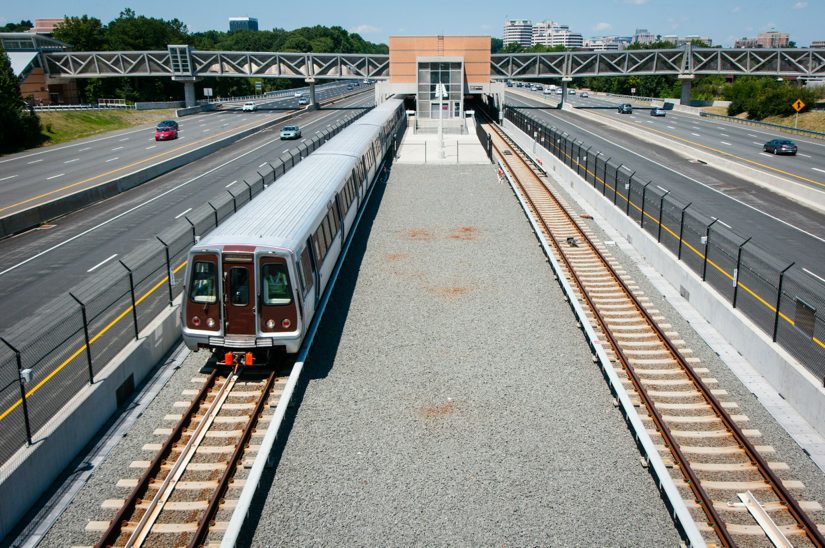 Metro will be making repairs to several lines this weekend, which will cause a Silver Line service interruption.
Silver Line trains will operate every 20 minutes throughout the weekend. On Saturday and Sunday, trains will operate between Wiehle-Reston East and East Falls Church only.
Passengers traveling to/from stations east of East Falls Church will need use Orange Line trains to complete their trip, says Metro. Schedules are coordinated so the wait time for transferring passengers at East Falls Church is about five minutes or less.
Note:
Traveling FROM new Silver Line stations TO Arlington & DC — Transfer to an Orange Line train at East Falls Church for continuing service
Traveling TO new Silver Line stations FROM Arlington & DC — Board an Orange Line train destined to Vienna. Exit the Orange Line train at East Falls Church and wait for a Wiehle-bound Silver Line train
Service adjustments begin at 10 p.m. Friday.
Metro is investing $5.5 billion to install new rail, ties, platforms, escalators, signals, lighting, communication systems, and more. It represents the largest capital investment and work effort since the system’s original construction in the early 1970s.
There will also be service changes on the Red, Yellow, Orange and Blue lines. Visit Metro’s website to see more details.
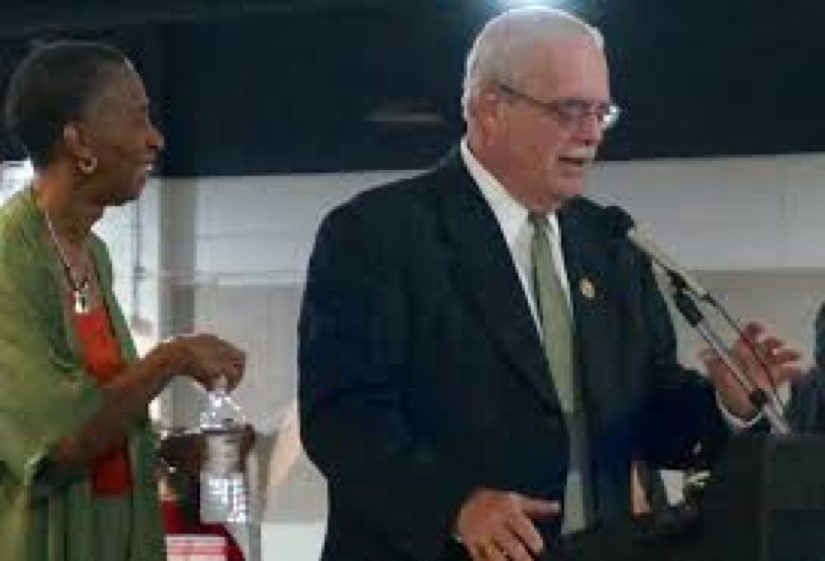 Rep. Gerry Connolly (D-Va. 11) says Metro “continues to lack a top-to-bottom culture of safety.”
Connolly’s remarks came at a briefing Tuesday of the DC-area House and Senate members by Federal Transit Administration (FTA) officials on its Safety Management Inspection of Metro.
“This FTA safety inspection confirms what many of us have feared, that Metro continues to lack a top-to-bottom culture of safety,” said Connolly. “It’s time for the Metro Board to bring on new leadership to get the system back on track. Restoring rider confidence in the system will require tougher oversight and new resources from all partners at the local, state, federal levels.”
The briefing was in response to the January incident at L’Enfant station, where one woman died and 84 passengers were hospitalized after their train car and the Metro tunnel filled with smoke. The FTA will release a report on the incident on Wednesday.
Said Connolly: “Sadly the FTA is just the latest oversight agency to cite concerns with Metro’s emergency management, training protocols, and maintenance backlog. It’s long past time that Metro makes safety its top priority.”
Sens. Warner (D-Va.) and Kaine (D-Va.) said at the hearing Metro needs a turnaround specialist as its next general manager. Metro GM Richard Sarles left the agency in 2014.
“Unless Congress is willing to pass a long-term transportation bill, aging infrastructure and inadequate funding will keep causing transit challenges,” Kaine said in a Tweet.
Photo: Rep. Gerry Connolly (left) at Metro Silver Line opening in 2014.
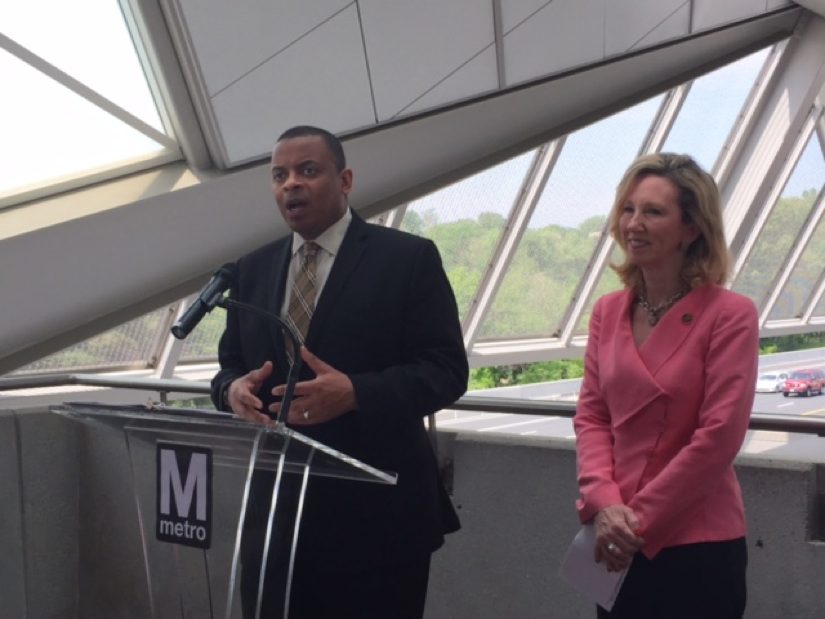
U.S. Rep. Barbara Comstock, U.S. Transportation Secretary Anthony Foxx, and Interim Metro General Manager and Chief Executive Officer Jack Requa hopped the Silver Line to Wiehle-Reston East on Friday to talk about more money for the Silver Line and other transportation projects.
The officials held a news conference in the Metro station to stress the need for continued federal investment in public transportation to ensure safety and reliable service for Metro riders.
“There is no scenario where we can cut funding and expect our transit system to meet the needs of a growing country,” said Foxx. “It belies math, belies physics and the growing demographics of our growing country.”
“Cutting the funding that we need to grow america’s transit systems can slow down the pace of Metrorail repairs that are supposed to enhance safety,” he added. “Cutting funding for WMATA, as has been proposed, would disrupt the phasing in of more than 500 new rail cars that are on the books to come online.”
Comstock (R-Va. 10th) recently broke with Washington, DC-area Republicans and joined with the Democratic leaders in expressing disappointment proposed big funding cuts to the Metro.
The cuts, announced last month, will reduce federal funding to the Metropolitan Area Transit Authority by half in 2016.
The federal government usually provides about $150 million annually to Metro. A $55 billion funding bill will reduce funding to $75 million.
“We have had a bipartisan consensus,” said Comstock. “We are very united in making sure the money for Metro is restored, that Metro gets the $150 million it has been getting since 2009.”
The Democratic Party of Virginia released a statement Friday stating the fact that it is odd that Comstock is now supporting the Silver Line after voted against the line when she was in the Virginia General Assembly representing McLean.
“If Barbara Comstock had her way, the Silver Line would have never been funded in the first place,” said Del. Ken Plum (D-Reston). “Our bipartisan transportation plan, which I’m proud of supporting, passed without Comstock’s vote. To show up for a photo op having done nothing but oppose the Silver Line is misleading.”
Photo: US Transportation Secretary Anthony Foxx (left) and U.S. Rep. Barbara Comstock (R-Va. 10th) at Wiehle-Reston East Friday.
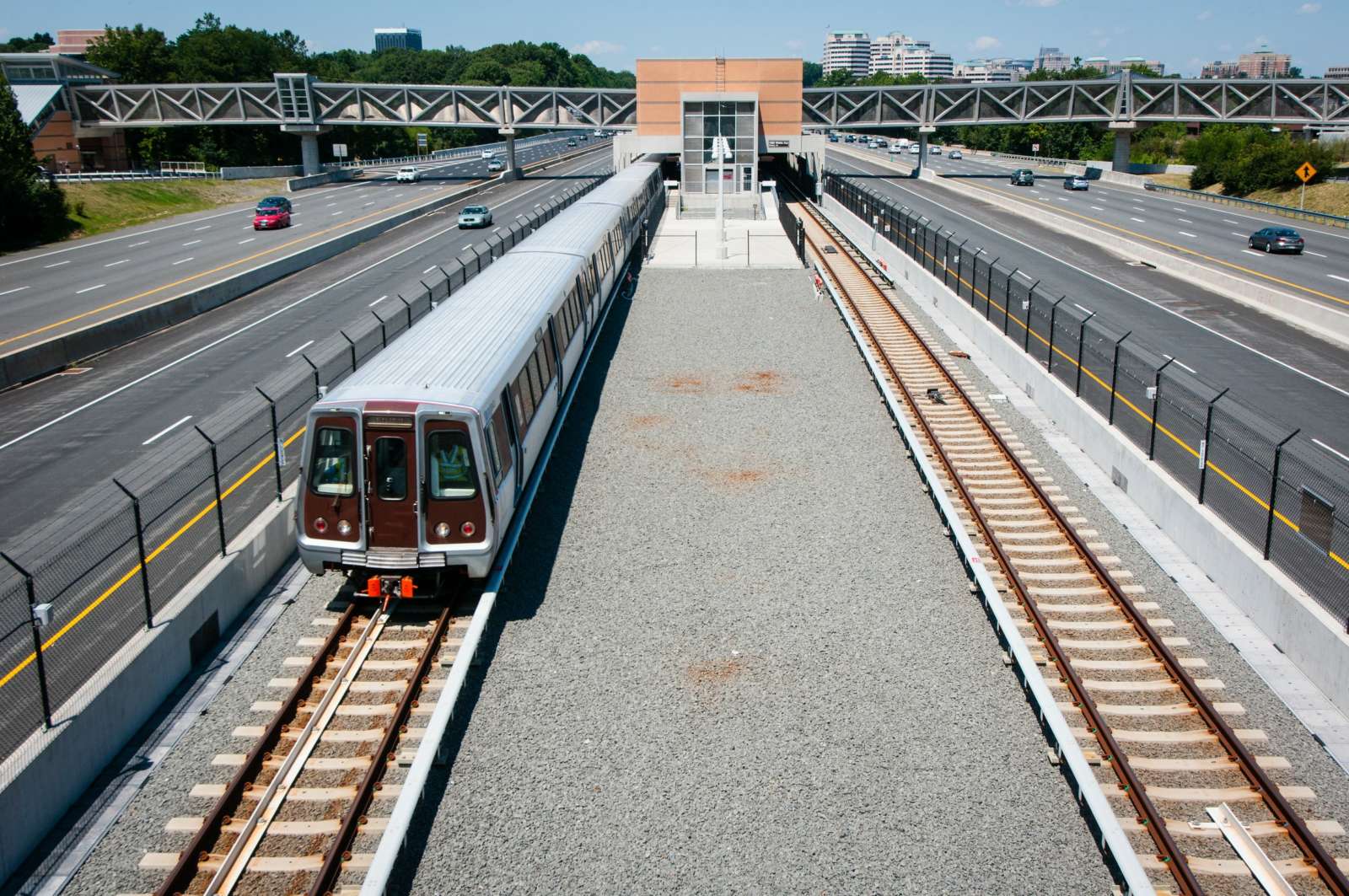 The Metropolitan Washington Airports Authority said on Monday that design modifications for safety and reliability of Metro’s Silver Line will delay the opening of Phase 2 for about 13 months.
Phase 2, which will run from Wiehle-Reston East to Dulles International Airport and into Loudoun County, was most recently projected to open in late 2018. This means it might not open until late 2019.
MWAA constructed Phase 1 of the Silver Line, which opened in July 2014 (about six months behind schedule). Phase 1 has five stops from Tysons Corner to Reston. It is also building Phase 2, which is projected to cost $2.7 billion and will expand the line from Wiehle-Reston East to Reston Town Center, Herndon, Route 28, Dulles International Airport and Ashburn.
More than 150 modifications have been made and integrated into the design for Phase 2, says MWAA. Many of these modifications parallel design changes made in the latter stages of Phase 1 and will enhance the safety and reliability of Phase 2. The modifications, when combined with associated weather and construction delays, have extended the Phase 2 construction schedule by about 13 months, MWAA officials said.
“Over 100 design changes were made in Phase 1 — a large number of them ordered in the final months of the construction process — requiring additional design, engineering, construction, management and oversight work,” Charles Stark, the Airports Authority’s executive director of the Silver Line project, said in a statement.
“For consistency, many of these same safety and reliability modifications needed to be incorporated into Phase 2 of the project, which then impacted the schedule.”
MWAA announced late last year that the entire 11-mile Phase 2 would need changes to comply with new stormwater regulations.
Meanwhile, MWAA said remaining work done to finalize Phase 1 of the project will add $76 million, or about 2.6 percent, to the previously announced Phase 1 cost of $2.8 billion.
The new Phase 1 cost of $2.982 billion remains within the original federally approved Phase 1 budget and toll rates on the Dulles Toll Road will not be affected, MWAA said. Toll rates will remain at current levels through 2018.
From MWAA:
A recently concluded global settlement with the construction contractor for Phase 1, Dulles Transit Partners, along with the resolution of other outstanding matters – including the close-out of Virginia permits which allowed Phase 1 work within Routes 7 and 123 in Tysons Corner, and the execution of contracts to supplement certain Phase 1 work, as required by WMATA – has allowed the Airports Authority to project a final Phase 1 close-out cost of $2.982 billion, which represents an additional cost of about $76 million, and to move to the final close-out of the Phase 1 project.
The majority of the remaining work on Phase 1, which opened for business in July 2014, will be completed by the end of this year, including the delivery of 64 new rail cars at a cost of $189.4 million to expand the Metrorail fleet. Final close-out of Phase 1 is expected to occur in 2016.
“The Phase 1 global settlement is an important milestone in the Silver Line project, following its successful launch in July 2014,” Airports Authority CEO Jack Potter said. “It gives us closure on the most substantial cost component of Phase 1, ensures we will achieve the project’s federal budget targets and allows us to maintain the existing toll schedule for the Dulles Toll Road.”
The ultimate impact of the Phase 1 additional costs may be reduced or even eliminated if the contingency budget for Phase 2 of the Silver Line project is not fully used and the total project, both Phases 1 and 2, comes in at or under the overall project budget.
The Airports Authority also announced an update to the construction schedule for Phase 2 of the Silver Line project, which will extend service from the terminus of Phase 1 in Reston, Virginia, through Washington Dulles International Airport and into Loudoun County, Virginia.
Potter said, “The added costs arising from Phase 2 design modifications will remain within the Phase 2 contingency budget of $550 million and will have no effect on the toll rates on the Dulles Toll Road. With our project partners, we are committed to limiting future design changes. Phase 1 is already experiencing ridership beyond expectations, and significant construction and development is underway along its path in the Dulles Corridor. We are confident that Phase 2 will experience similar success.”
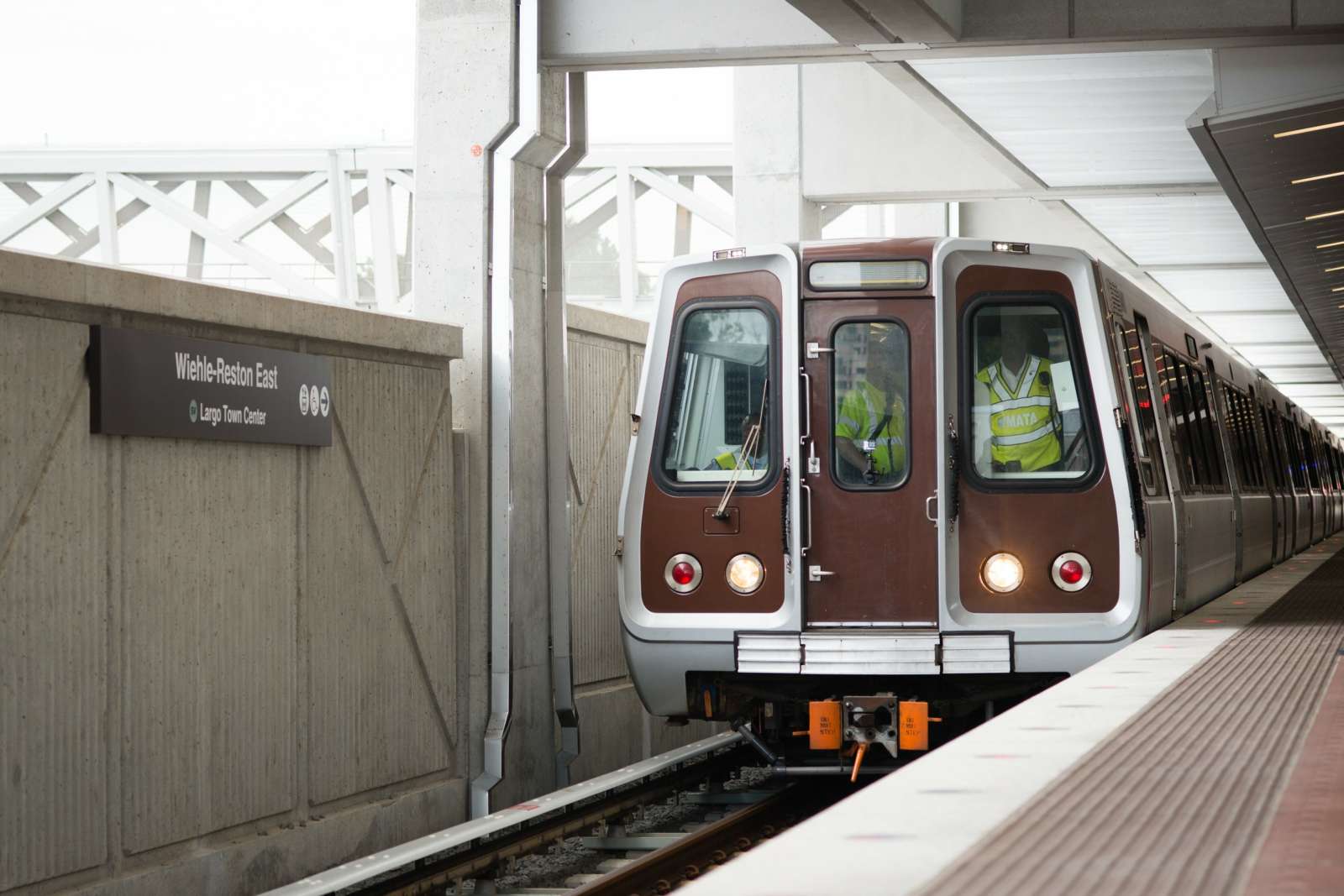 Fire coming from under an empty Metrorail car temporarily closed the Wiehle-Reston East Station on Thursday night.
Metro staff noticed flame under the out-of-service inbound railcar at the station about 8:30 p.m. and alerted fire officials.
During Fairfax County Fire Rescue’s fire response, a fire stand pipe burst and water flooded the station platform.
Authorities shut down power at the station. Firefighters found residual smoke coming from an electrical compartment under the car, officials said.
The station was closed for about an hour.
Metro spokesman Dan Stessel said Metro is investigating the cause of the fire.
“I would like take this opportunity to express our thanks to Fairfax Fire and Rescue for their response, ” said Stessel. “And also Fairfax Connector, which was prepared to send buses should they have been necessary.”
Metrorail car at Wiehle-Reston East/file photo
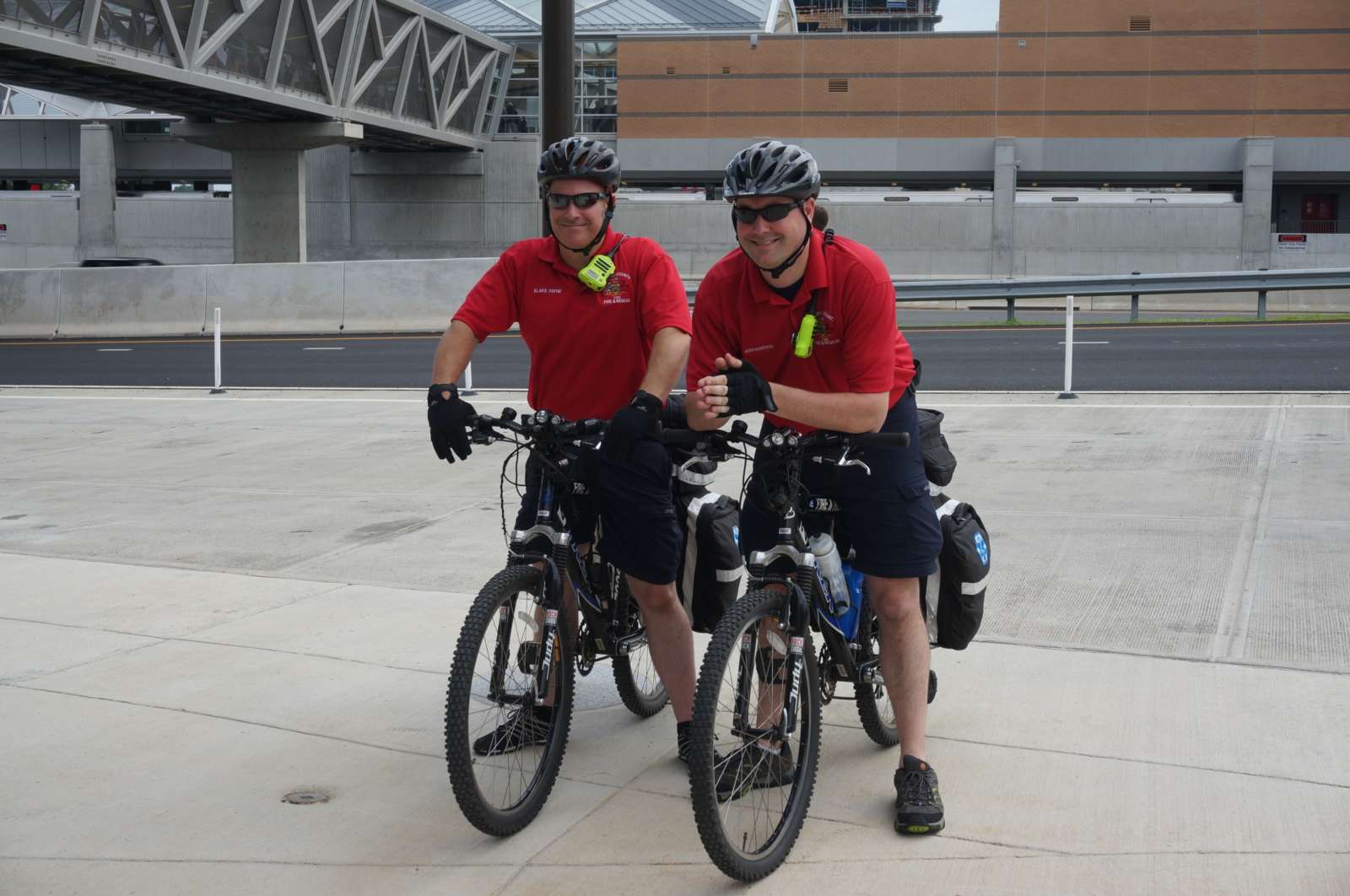 Metro Transit police report that serious crime on the Metro has fallen to a five-year low and that the addition of the Silver Line has not had much of an impact on incidents on and near Metro, its bus lines and parking lots.
Stats also show no crimes were reported to Metro authorities at Reston-Wiehle East in the first five months of operation.
Metro Transit Police released it 2014 annual security report earlier this week. The report said that in 2014, Part I (serious incidents such as robbery, aggravated assault, larceny homicide and forcible rape) crime was down 27 percent — or about 5.2 crimes per million riders compared to the same 12-month period in 2013.
Metro Transit Police attributed the reduction to several factors, including increased customer awareness and outreach, officer deployment tactics, improvements in technology and intelligence sharing with law enforcement partners, said Metro spokesman Dan Stessel.
“I am pleased that our efforts last year resulted in a significant reduction in crime,” Metro Transit Police Chief Ronald Pavlik said in a statement. “While we must still remain vigilant and never forget that one crime is one too many, it is important to thank our officers for their hard work, as well as Metro’s employees and customers for being part of the solution.”
There were three significant areas in which Metro saw the biggest decrease:
- Snatch theft of mobile devices – down 52 percent
- Bicycle theft – down 22 percent
- Robberies – down 35 percent
Additionally, sexual harassment complaints were down 13 percent in 2014, Metro said.
On the Silver Line, which opened July 26, 2014, there were seven reported crimes reported at the five new Silver Line stations between opening day ay Dec. 31, 2014, said Stessel.
None of the incidents were at Wiehle-Reston East in that time frame, though a simple assault was recently reported on Jan. 6, Stessel said.
At other Silver Line Stations:
McLean
Sept. 4: Theft
Spring Hill
Aug. 12: Robbery
Dec. 27: Disorderly Conduct/Drunk in Public
Greensboro
None
Tysons Corner
July 31: Simple Assault
Sept. 5: Possession of Marijuana
Dec. 10: Armed Robbery
Dec. 18: Carrying an Open or Concealed Weapon
“We are very pleased with the low crime rates we are seeing at the five new stations,” Stessel said. “Metro Transit Police, working together with our partners at Fairfax County Police, will continue our efforts to keep crime low.”
Photo: Law enforcement officers at Wiehle-Reston East Silver Line Station
Remember last summer’s television spots that showed people gleefully dancing around Reston in anticipation of the Silver Line’s opening?
It turns out that those three TV spots did not come cheap. Washington City Paper reports that the three 15-second spots cost nearly a half-million dollars to produce and air.
The TV commercials were part of a package of products to promote the Silver Line, including bags, tiny flashlights, pennants, lanyards and cloths (featuring a map of the Metro system) for cleaning eyeglasses.
Metro’s also spent $22,548.61 for focus groups to study how to pitch the Silver Line, and $53,196.96 for Silver Line street teams to hand out items, says City Paper.
But the commercials — which promised some sad sacks better things ahead such as a richer social life and a great new job once the Metro opened — were by far the costliest.
Says City Paper:
But Metro’s biggest–and priciest–push came in the form of dozens of dancers boogieing to the Wiehle-Reston East location. Backed up by a song from Australian power poppers Architecture in Helsinki, a conga line of joyful commuters make their way to the station.The message: Metro’s so great, people in Reston will start spontaneously dancing. That ad ran the cash-strapped system a hefty $483,320.42, according to Metro records.
Whatever you think of the ads, they worked–or something. Three months after the Silver Line launch, the new stations were approaching their end-of-year ridership goals. No word yet on how much of that can be attributed to the dancers.
How’s your Silver Line experience been so far? Do YOU feel like dancing? Or mainly just getting from Point A to Point B without incident?
The Silver Line is experiencing delays of about 30 minutes this morning after smoke was reported in the Metro tunnel in Arlington between the Ballston and Virginia Square Stations.
Metro says trains are single tracking in that area as a result.
The large emergency response comes after Monday’s fatal Metro incident outside the L’Enfant Metro station, in which smoke filled a disabled Metro train in a tunnel.
Keep up with the situation on ARLnow.com.
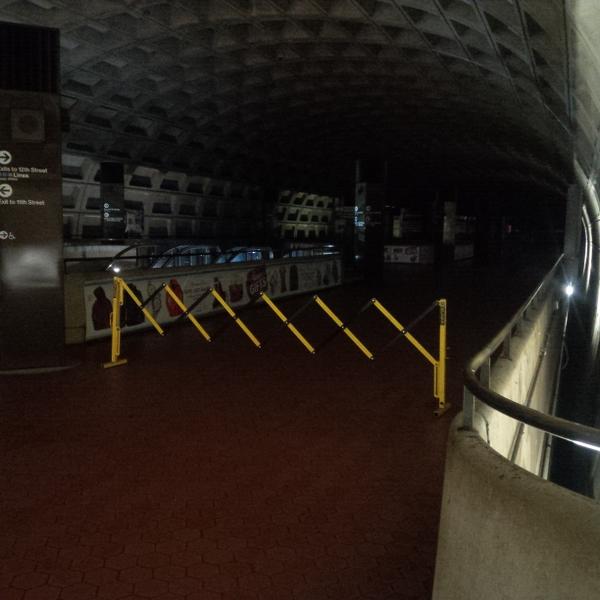
Updated, 10:40 a.m. — Metro says Silver, Blue and Orange line service between L’Enfant Plaza and Farragut West has been restored, but expect residual delays in both directions.
A water main break in downtown D.C. halted Metro service on the Silver, Blue and Orange lines and snarled the commute for countless Washington-area residents Tuesday morning.
Thousands of Metro riders will experience major delays Tuesday morning after a water main break stopped service on three of the agency’s six lines.
Service is suspended on the Blue, Orange and Silver lines between Farragut West and L’Enfant Plaza due to water main break at Metro Center.
Water from the break on 12 and F streets entered the Metro Center station and flooded the lower level tracks, said Metro spokesman Dan Stessel.
The Metro Center flooding could take 12 hours to fix, officials said.
DC Water said at 6:45 a.m. that the source of the water has been turned off. Metro is currently working to pump out the water off of the tracks.
Limited shuttle bus service will operate between Farragut West and L’Enfant Plaza. However, bus service will not be able to replicate the capacity of the rail system. Riders should consider alternate travel options (e.g. Red, Yellow or Green lines) and expect significant delays on the Silver, Orange and Blue lines.
Red, Yellow and Green line service is operating normally.
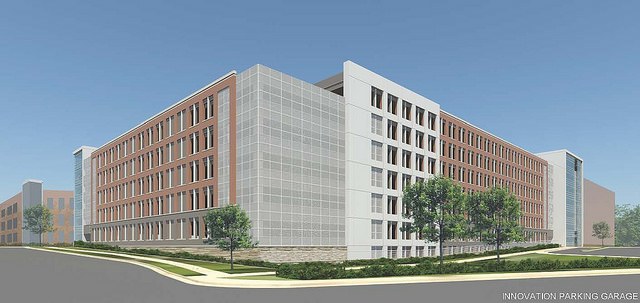 Fairfax County may sell more than $100 million in revenue bonds to pay for garages along Phase II of Metrorail’s Silver Line.
The Fairfax County Board of Supervisors on Tuesday approved the $115 million bond sale.
The garages are planned for the Herndon and Innovation Center stations. The county would own the garages. The bonds would be repaid using parking fees from the two garages, not tax dollars, the supervisors said.
The move had been planned, but County Supervisor Sharon Bulova previously said the bond sale would not happen until Fairfax closes on its portion ($403 million) of the $1.9 million in federal transportation loans for the project, which it did earlier this year.
From the county:
In 2011, the county agreed to use its best efforts to seek funding for parking garages at the Herndon and Innovation Center Metrorail stations, which are part of rail line’s second leg. While the county plans to build these two garages, Fairfax will not sell revenue bonds until after it closes on its $403 million TIFIA loan with the U.S. Department of Transportation. The federal government approved the TIFIA loan earlier this year.
“I am pleased that Fairfax County will own and operate these garages and collect revenue from parking,” said Chairman Bulova. “This financing structure reduces the overall cost of Phase II of the Silver Line by using parking fees, instead of general fund tax dollars.”
The total estimated cost for constructing Herndon is $58 million, and the estimated cost for Innovation Center comes to $57 million.
Under the approved plan of finance, the Fairfax County Economic Development Authority would issue revenue bonds. The proceeds of these bonds will then be loaned to the County, which will repay the revenue bonds from parking fees that are expected to generate about $10 million a year.
Under an agreement with Metro, Fairfax will set and keep the fees charged at the three county-owned Silver Line garages: Wiehle-Reston East, Herdon and Innovation. Those parking fees will also be used to operate and maintain the county-owned garages.
In addition, under a program established in the late 80s as a way to help finance Metro parking garages, Metro will transfer to the county a portion of the parking revenue Metro collects at its five garages in Fairfax, plus the East Falls Church and Van Dorn station garages.
Wiehle-Reston East is the only one of the Silver Line’s Phase I station that has a parking garage. That garage, which has 2,300 county-owned spaces and and additional 1,000 owned by Comstock, was built as a public-private partnership with Comstock. Parking costs $4.85 a day.
The Innovation Center garage will have 2,100 spaces and a secure bike room, similar to the one at Wiehle-Reston East. Herndon currently has 1,950 spaces at its kiss-and-ride lot. When finished, there will be a total of 3,500 parking spots at Herndon Station.
Phase II is in early construction stages and it expected to open in 2018.
Photo: Rendering of Innovation Center garage/Credit: Fairfax County
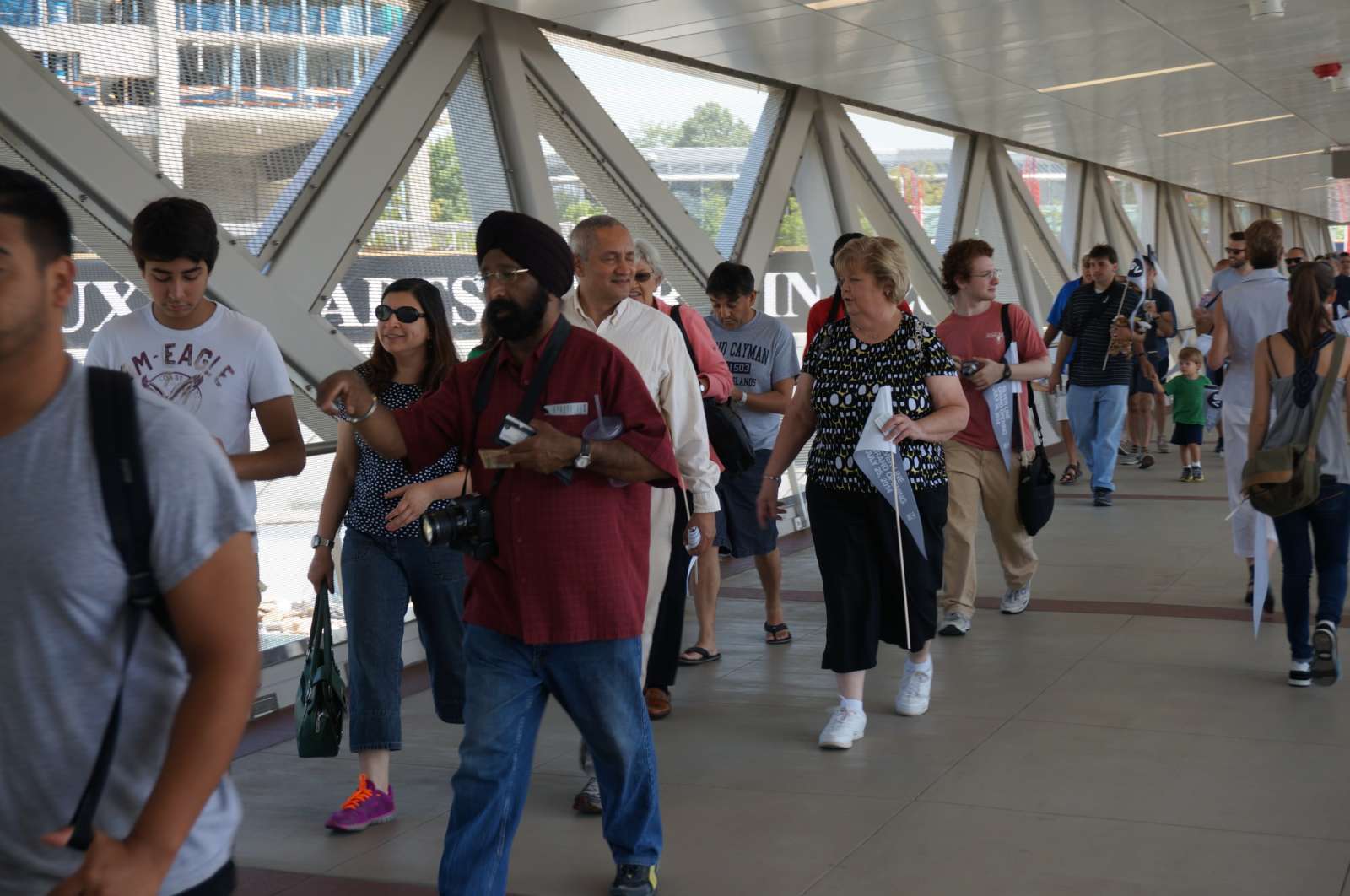 Two months after opening, Metro’s Wiehle-Reston East Silver Line station has already surpassed first-year ridership projections, Metro officials said on Wednesday.
Wiehle-Reston East has 8,400 boardings (or 16,800 weekday entries and exits), Metro says. When planning the Silver Line, 8,244 boardings were expected after one-year of service, a Metro spokesman said.
The station — which will be the end of the Silver Line until at least 2018, when Phase II stations are scheduled to open — accounts for about half of the Silver Line’s ridership.
Wiehe-Reston East also the only Silver Line station with significant parking. There are 2,300 spots in the Fairfax County-owned garage, as well as 1,000 more in the Comstock-owned part of the garage. Additionally, there is a 200-space bike room.
The Wiehle-Reston East numbers have been up around 17,000 daily trips since it opened July 26.
In total, the Silver Line is already performing at 60 percent of its projected ridership for the end of the first full year of service. As of last week, an average of 15,000 riders are entering the system at the five new Silver Line stations on weekdays for a combined 30,000 trips to or from the new stations. Metro said.
Before the line opened, Metro had estimated that Silver Line ridership was expected to reach 25,000 boardings at the five new stations after the first full year of service.
Metro estimates that the Silver Line is currently adding about 6,000 new riders — making roughly 12,000 trips — to the Metro system each weekday. The rest, about 9,000 riders, are primarily former Orange Line riders who have switched to the Silver Line.
Tysons Corner Station is one of the few stations on the Metrorail system where ridership is higher on Saturday than weekdays. The station is the second-busiest new station on weekdays with about 5,300 entries and exits, but Saturday’s ridership is higher — partly due to people riding to Tysons Corner Center for weekend entertainment and shopping. Last Saturday, there were 7,449 entries and exits at the station.
Reston Now asked readers last week how Metro’s Silver Line is working for them.
As of Sunday evening 345 people answered our poll. Here is what they had to say:
- 161 voters (48 percent) said it has improved their life
- 94 voters (27 percent) said it has had no impact
- 64 voters (18.5 percent) said it made their commute more complicated
- 21 voters (6 percent) said none of the above
Plenty of readers chimed in with their thoughts on the new Metro line, the first line addition since 1991.
Here is what some of them had to say:
Lightcommuter: I commute just 15 minutes to Tysons but still thought leaving the car at home would be nice. That short trip by metro took 1 hr (with bus) and cost $8, compared to my free parking at the office. I haven’t used the silver line since. But it does seem to be lightening traffic – will see if that continues after school starts back up.
Jon: I ride with Daily commuters and we have nicknamed this line “The Silver Long”. It’s awful for commuters. Thankfully they still run the Crystal City/Pentagon Express bus. It only takes 25 minutes.
Restoncommuter: For me, it has added time and money to my commute to downtown. I used to take the bus to West Falls Church then Metro to Foggy Bottom. Now I pay the same bus fare to take me further west to get onto the Reston station which extends the metro trip which adds time and money. Bummer, it probably helps people west of Reston, but not for the residents who were already taking public transit.
JJSKI: Pros — Previously drove to Vienna station from South Lakes, so I’ve shaved about 10 minutes off each way. Cons — Paying more to commute by bus/rail. 551 and RIBS2 are never on schedule in the afternoon.
Steve: The only complaint I have is with the Metro and Fairfax Connector employees who are parking their official vehicles in the Kiss&Ride lot instead of the main garage. By taking five or more spaces a day away from people dropping off and picking up commuters, these employees are creating needless traffic congestion in the Kiss & Ride lot.
Freeway1: Who rides FROM the Silver Line? Meaning who lives close enough to walk there? Not many really and not for years yet. What a waste of tax payer money. Also, why is it above ground? Its the ugliest thing I’ve ever seen and has made Rt. 7 as wide a I-495 defeating the purpose of making Tyson’s “walkable.” No logic went into this project at all.
To see more comments or take the poll, read the original story on Reston Now.
Photo: Jennifer Heffner, Vita Images
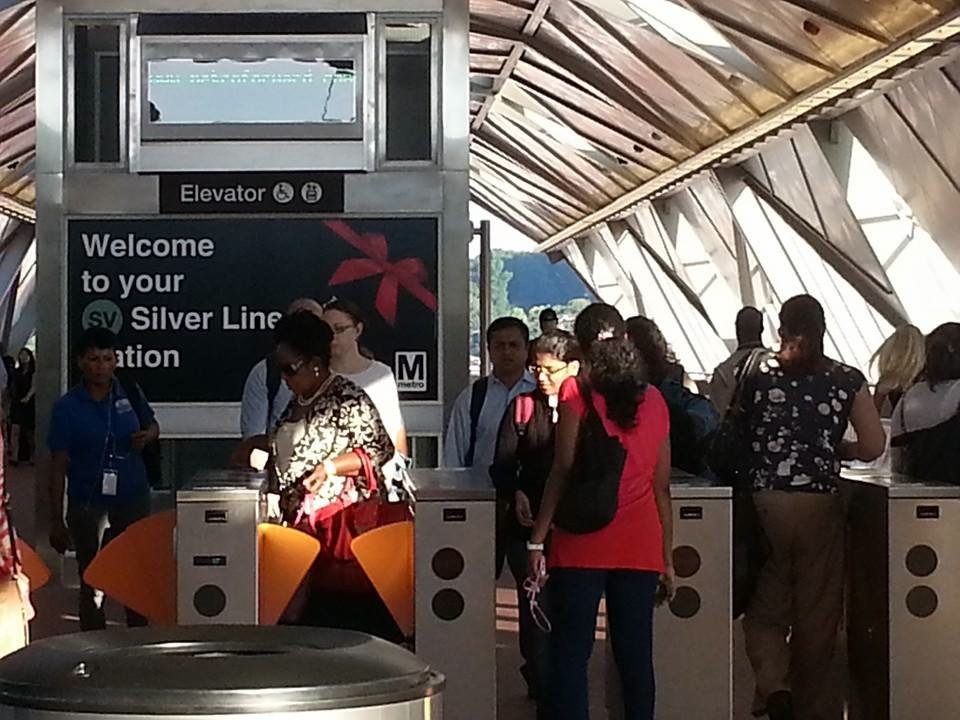 Metro is warning riders not to buy discounted SmarTrip cards from individuals or non-official sellers, as the cards may not work on buses or faregates in rail stations.
Metro says it is concerned that its customers may fall victim to discount fare card scams. The cards are purchased fraudulently and then sold to the public for less than the fare value on the cards.
The Metro Transit Police Department investigates potentially fraudulent sales of SmarTrip cards, including monitoring activity on online auction sites.
From Metro:
“Riders should be aware that any SmarTrip card purchased from an unauthorized individual or website may be subject to deactivation and the loss of any value on the card,” said Metro Transit Police Chief Ron Pavlik.
SmarTrip cards are available for sale at thousands of locations around the region, including dispensers at all Metrorail stations, at Metro Sales Offices, and through licensed vendors including CVS, Giant, Safeway, and Walmart. Any card purchased from an individual or unlicensed source is considered invalid and may be flagged for deactivation.
SmarTrip security tips
- Only purchase SmarTrip cards at authorized locations such as Metrorail stations, CVS, Giant, Safeway and Walmart.
- Never purchase a SmarTrip card from online auction websites.
- Never purchase a used SmarTrip card from another person.
- Register your card online to protect its value.
- If your SmarTrip card is lost or stolen, report it immediately.
- If you suspect fraud, notify Metro Transit Police at (202) 962-2121 or text MyMTPD.
The Washington Metropolitan Airports Authority has hired an experienced transportation project leader from the Los Angeles Metropolitan Transportation Authority (MTA) as executive director of the Silver Line project.
Charles Stark will take over the project as Phase II — extending the rail line from Reston through Washington Dulles International Airport to Ashburn — gets underway.
Stark succeeds Pat Nowakowski, who resigned this spring to become president of the Long Island Railroad.
Phase I of the Silver Line opened to the public July 26. The 11.7-mile rail line, Metro’s first new line in more than 20 years, has four stops in Tysons Corner and one at Reston’s Wiehle Avenue. Wiehle-Reston East will be the end of the Silver Line until Phase II opens in 2018. It is by far the busiest stop on the Silver Line, according to Metro officials.
Stark has 40 years experience in rail transportation, including 20 years engineering and operations experience with some of the largest transit agencies in the U.S. and 20 years experience in senior executive positions with private engineering firms, MWAA said.
His most recent post was vice president and project executive for Aecom, a major engineering firm with specialty expertise in large transit infrastructure projects, where he managed several projects for Los Angeles MTA, including the Westside Subway Extension.
He previously was assistant general manager of San Francisco’s Bay Area Rapid Transit system and executive officer for engineering and construction for the Los Angeles MTA. He also has held a number of other positions, including leadership of a team involved in rebuilding New York’s World Trade Center complex and its public transit facilities following the 9/11 terrorist attacks.
Stark holds a master’s degree in civil engineering from Manhattan College and a bachelor’s degree in mechanical engineering from City College in New York. He is a registered professional engineer in Virginia and California.
“The Metropolitan Washington Airports Authority is fortunate to have someone of Charles Stark’s broad experience in transit construction and engineering in this position as we complete the Silver Line project,” Airports Authority President and CEO Jack Potter said in a statement. “He will be instrumental in achieving our goal of providing top-quality transportation infrastructure for the National Capital region.”
The $2.9 billion Phase II will include six rail stations, including five at ground level and one on an elevated structure; nine entrance pavilions and pedestrian bridges; aerial guideways through Dulles Airport; and 89,000 feet of track. Engineering and design work on Phase II has been ongoing since last year.
Photo: Silver Line train in Reston/File photo by Vita Images
