

 Virginia is well on its way to economic recovery for many families, but working families across the state are telling me and other legislators that they feel like the recession never ended. Even in Northern Virginia, home to some of the wealthiest localities in the country, too many families struggle to earn enough to pay for basic necessities despite having full-time jobs.
At the same time that households are struggling, Virginia’s economy is growing at a snail’s pace, according to studies by the Commonwealth Institute for Fiscal Analysis.
Job growth has not kept up with the number of workers who want jobs, and state revenues have fallen as a result. Virginia needs families who earn good wages, who spend their earnings in the local economy to buy fuel, food, clothes, and other necessities, and who in doing so, help jump-start our economy. But when wages stagnate, the economy stalls, and that hurts all of us.
Fortunately, we have proven policy solutions to help strengthen our working families. We can make our state’s Earned Income Credit (EIC) refundable and increase the minimum wage. Unfortunately, many of my colleagues in the General Assembly have chosen to leave these income boosting solutions on the table. That’s unfortunate and short-sighted.
The Earned Income Credit is a targeted tax credit that middle class and low-income families can claim at tax time to reduce what they owe in state income tax. It also promotes work because you have to be working in order to claim it, and the credit is structured to reward working more hours.
As it stands now, if the value of the credit is greater than what you owe in state income tax, you’re not able to get the difference in a refund. But if the EIC were refundable, working families would get back some of their wages that they paid in sales taxes in one lump sum to pay for a car repair or for the child care they need to go to work. Nineteen states provide for some amount of refund.
While the EIC provides a bump in income once a year, raising the state minimum wage will increase earnings for low-wage workers in each paycheck. If Virginia increases the minimum wage to just over $10 by 2017, close to 700,000 workers throughout the state would see an increase in their wages. Out of this group, the vast majority are 20 or older, and close to 300,000 children have at least one parent who will get a raise.
Clearly, increasing the minimum wage predominantly helps working adults, not just teenagers, and it will help many parents who rely on these wages to care for children. More money to the working poor generates economic activity for small businesses.
Making Virginia’s Earned Income Credit refundable and increasing the minimum wage should be part of an effective, long-term strategy to strengthen our families and the economy. I have introduced two bills to accomplish this purpose. I hope local business groups will drop their opposition in order for the bills to pass. These bills should not be partisan. They will benefit all Virginians and Virginia businesses.
Del. Ken Plum represents Reston in Virginia’s House of Delegates. His opinions are not necessarily those of Reston Now’s.
 It’s a 3,200-square-foot building in a lush lakeside setting. It’s the former Reston Visitors Center, and Reston Association is considering purchasing it for community use.
RA voted at its regular meeting on Thursday to send the idea to a community referendum, and ultimately RA members will decide whether to add the multi-million dollar building and the surrounding 2.5 acres to its holdings.
The building, which overlooks Lake Newport and is adjacent to Brown’s Chapel Park and Lake Newport Tennis, operated as Reston’s Visitors Center from 1982 to 2003. It currently is office space for commercial real estate firm Tetra Partners. It is currently undergoing an appraisal to determine the purchase price, RA board members said.
The property at 1145 Baron Cameron Ave. is currently designated in the Reston Master Plan as a convenience center (mix of commercial, office and limited retail). However, RA has recommended in the Master Plan Phase 2 draft that the convenience center designation be removed and the parcel be limited to office or community use.
So tell us in the comments — What do you see for the property? What uses could the existing building and surrounding area have for RA and the members?
Photo: Tetra building at 11450 Baron Cameron Ave./Tetra file photo
Terry McAuliffe campaigned for Virginia governor on a platform of “building a new Virginia economy.” His theme clearly resonated with voters who elected him and with those who were concerned with Virginia’s sluggish recovery from the Great Recession.
Following his campaign closely, I was impressed with his grasp of the issues and his commitment to resolving them. With his usual exuberance, the candidate and now governor made clear that he broadly defines the elements of a new economy. If there was any question remaining about what the governor views as the new economy, those questions were likely answered in his speech to a joint session of the General Assembly last week.
Certainly a new economy is about bringing in new business and diversifying the state’s economic interests, especially in light of federal sequestration. In his first year in office the Governor has brought $5.58 billion in capital investment to the Commonwealth — more than twice as much as any previous administration. Sometimes referred to derogatorily during the campaign as a “deal-maker,” his skills are proving invaluable in attracting new and expanded business to the state. He clearly relishes his role as chief salesman for the commonwealth.
As the governor made clear in his speech, a new economy needs a world-class workforce to support it. He proposed to the legislature that funding for workforce programs be increased and that the complex and confusing structure of job training programs be streamlined and simplified with more attention to apprenticeship programs and greater transparency and accountability in the system.
To ensure that young people are prepared to enter the workforce, the Governor requested that K-12 and colleges and universities be spared from further cuts as the budget is balanced. He also proposed legislation to make daycare safe, to expand preschool education, and to reduce the number of children who go hungry at school. He will give special emphasis to seeing that veterans get jobs.
The governor describes the new economy as a place where no Virginian would go without access to quality, affordable healthcare. While his definition is supported by policy in about half the states, it is controversial in Virginia where the General Assembly has refused to accept more than two billion dollars in federal funds to expand Medicaid to cover healthcare needs of the working poor.
Other elements of the governor’s vision of a new economy that I support include diversifying the state’s fuel mix through solar, wind and nuclear power; ensuring the public’s safety with commonsense, reasonable laws to reduce gun violence, sexual violence and domestic abuse; and ending discrimination based on race, gender, religion or sexual orientation. He wants women to be paid equally for equal work and to have their rights protected to make their own healthcare decisions.
Many of his proposals may be threatening to the old establishment in Virginia, but that is alright. Virginia in so many regards needs to move into the 21st century and embrace the global new economy.
Ken Plum represents Reston in Virginia’s House of Delegates. His opinions do not necessarily represent those of Reston Now.
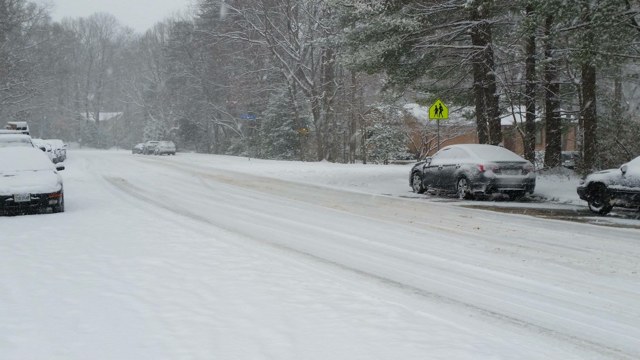 A full day of school when the snow is falling and the driving is terrible. A day off when a few flakes fall. In between, a whole bunch of two-hour delays.
That’s been the story for Fairfax County Public Schools since Jan. 6.
First, about four inches of snow fell and the buses got stuck and Superintendent Karen Garza admitted “we made the wrong call” about remaining open.
In the six schools days since, there has been one full day of school. Today, school was cancelled. In Reston and this portion of the county, no more than a dusting fell.
Meanwhile, the Capital Weather Gang says to cut the schools a break on today’s decision. It was a tricky forecast.
Why can’t the county seem to get it right? Are they playing it too safe after the #CloseFCPS publicity of last week?
Photo of Jan. 6 snow near Langston Hughes Middle School.
The General Assembly convened for its annual session on Jan. 14. Although the session scheduled to adjourn at the end of February is termed “the short session,” it will have a full agenda of opportunities and challenges.
Gov. Terry McAuliffe has made it clear that he will be providing strong leadership on tough issues. With a Republican-controlled General Assembly the debate is likely to become intense. The Governor needs the legislature to act on many of his priorities; legislators need the Governor to sign bills that they want passed. In some instances trade-offs are possible. In others, principles or values will preclude deals being made.
I am pleased with the Governor’s willingness to take on difficult issues. In the instance of gun violence, the Governor has proposed a series of common sense measures that will keep Virginians safer while at the same time respecting constitutional rights.
I am chief patron on his bill to close the gun show loophole to require uniform background checks. Background checks at gun dealerships have been shown to keep guns out of the hands of criminals and those who are violent. Having all sales subject to background checks is reasonable and will enhance public safety.
The Governor has also proposed to reinstate the one handgun per month limitation that was in effect for more than a decade before being repealed two years ago. I support this bill. Before the original limitation was enacted, Virginia had become known as the gun-running capital of the East! I also support the Governor’s proposal to deny concealed weapons permits to those who are under a court restraining order. Too many acts of violence occur in domestic situations that might be prevented.
I support the Governor’s proposals to expand regulations of home-operated daycare centers. There have been too many tragic deaths in Virginia in recent years in daycare programs where there are not adequate adult supervision or safety measures in place. While such regulations seem commonsense to most of us, there will be stiff opposition from the “no government, don’t tread on me” crowd. I hope that reasonableness can prevail in this and other issues.
Two other concerns that I have addressed at length in this column include Medicaid expansion and independent redistricting. The fact of the matter is that Virginia could save money and extend health care to a couple hundred thousand Virginians with Medicaid expansion, and I will be working to make this happen.
Other bills that I will be introducing include a bill to raise the minimum wage to $10.10 over the next three years. Certainly no one can live on the current $7.25. I will also be introducing a bill to make part of the earned income tax credit refundable as a way to get more money into the households of the working poor.
All members of the House and Senate are up for re-election this November. There will be more than a little political posturing looking forward to the elections. Many will have an eye out for primary challenges, especially from the Tea Party. Hopefully the citizen voices can be heard, and there will be a productive General Assembly session.
Ken Plum (D) represents Reston in Virginia’s House of Delegates. His opinions are not necessarily those of Reston Now.
Although the drawing of legislative district lines is supposed to take place each decade after the federal census, the controversy over where and how lines are drawn keeps the issue alive every year.
Most recently, a federal court declared the current Congressional district lines in Virginia invalid because the way the lines are drawn discriminates against minorities being able to get elected. Essentially, the black population is packed into one district.
The 2015 session of the General Assembly will have to redraw the lines. Just last week, about a dozen black citizens brought suit against the current House of Delegates districts contending that they are drawn in a way that discriminates against minorities.
The purpose of the redistricting process is to ensure that persons are equally represented in the legislature. As population shifts with some areas growing and others declining, district lines are redrawn based on the U.S. Census. A numeric equality of the numbers of persons in a district is achieved and has been enforced by the federal courts to be within a couple of percentage points.
But going back to the earliest years of our republic, there has been recognition that the way in which lines are drawn can determine the likely outcome of an election in a district. In 1812, Governor Elbridge Gerry of Massachusetts signed a redistricting bill so favorable to his political party that the newspapers pointed out that one of the districts looked like a salamander, hence the term “gerrymandering.”
There is no doubt that both parties have taken part in gerrymandering districts to their political advantage. The party in power attempts to continue its dominance by drawing lines that are likely to elect more of their party members to the legislature.
The result in Virginia and in other states is to reduce the number of contested elections. Candidates are less likely to run in a district where the numbers are stacked against them. Elected officials who represent these “safe” seats may be less responsive to constituents’ concerns and adhere to stronger political party dictates.
The real electoral contests in these districts tend to be in the primaries selecting candidates. Some of the districts heavily stacked with Republicans in Virginia are seeing increased challenges from Tea Party activists in primaries. Even the Speaker of the House has a Tea Party challenger in a primary this year.
Just last month, a panel appointed by Gov. Terry McAuliffe to look at ethics issues in state government recommended that Virginia establish an independent redistricting commission to draw legislative district lines. Such commissions have proven effective in reducing political influences in how district lines are drawn.
This is not a new idea. In 1982, I introduced a bill to establish an independent redistricting commission and have reintroduced the bill many times since then. While it was rejected by Democrats when they were in the majority and by the Republicans now that they control the majority, it is the right thing to do. As some advocates maintain, citizens should elect their representatives, not the representatives selecting their constituents.
Ken Plum represents Reston in Virginia’s House of Delegates. His opinions are not necessarily those of Reston Now.
 This is an Op-Ed by Waterview Cluster resident Dick Kennedy. Something on your mind? Write to us at [email protected]. We reserve the right to edit submissions.
If Covenant 15 is revoked RELAC costs will go up and soon RELAC will end. Then…
1. Where do you put your new outside AC unit? Where will your neighbors put their unit ? Our communities were not architecturally designed to have outside AC units. We have no good options.
2. Despite advances all AC units make noise that is compounded when they are all running.
3. Be ready to spend about $5,000 to $10,000 or more to buy and install an outside unit.
4. The new [RELAC] owners have already improved service, many users say. They have a plan to reduce rates.
Why not give them a chance?
The RELAC referendum has been brought to us legitimately by the “Free from 15” group. Much has been said about real issues on whether to keep the covenant requirement. There are pros and cons on most issues, some argued fairly and many exaggerated out of context.
RELAC costs are high but the system is quiet. A few owners say they don’t get good service but most say they are happy and service is improving. There are questions about how to maintain the individual systems and whether it has been done. There are claims about RELAC infrastructure failing. But the same happens to water, sewer and gas infrastructure. Repairs must be made from time to time.
The term “monopoly” is used with a derogatory slant. But we have monopolies for electricity and gas and RELAC. All are supervised by the State Corporation Commission [SCC] which regulates public utilities, balancing the needs of users and the utility.
Some argue RELAC adversely affects home sales, but most units sell very quickly and prices are going up to pre-recession levels. So there is much to carefully consider. Clearly, owners’ financial interest is at stake on both sides — including those who are already off the system and don’t want to return the RELAC system when they sell.
Freedom has been much celebrated by those who want to be free to get off RELAC. But please remember you will not be free to use RELAC for long if the covenant is removed.
Please VOTE.
 This is an Op-Ed by Hickory Cluster resident Blake Travis. Something on your mind? Share your thoughts by sending a letter to [email protected]. Reston Now reserves the right to edit submissions.
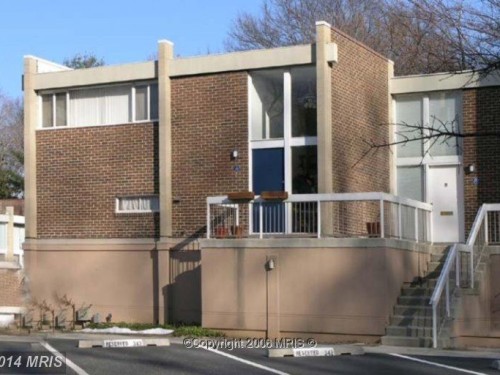
In the next few days, 343 homeowners in Reston will receive a ballot to vote on whether to revoke Covenant 15 (Section VI.2(b)(15)) of the Reston Association Deed, which states that:
In any residential Cluster in which central air-conditioning service is available to the Lot line, no individual air-conditioning units of any type shall be permitted. This covenant may only be amended or revoked by at least a two-thirds vote of the Category A Members of all residential Clusters on the service.
This covenant prevents homeowners in several Reston clusters from installing an individual air conditioning unit (unless they have a medical exemption) to cool their home. Instead, they are bound to the nearly 50-year old air-conditioning system operated by Reston RELAC (Reston Lake Anne Air Conditioning Corporation).
This system has had many well-publicized problems over the years and regularly increased rates, leading to growing base of dissatisfied customers who would prefer to have other options for cooling their homes.
There are a number of arguments that have been presented for why Covenant 15 should remain in the RA Deed. Two of the leading arguments I’ve heard are that Reston RELAC will have to raise rates if they lose customers (something RELAC claimed in a recent letter to customers) and that individual air conditioning units are loud and unsightly and will detract from our community. I do not believe these arguments carry much weight, for a number of reasons.
 This is an Op-Ed by Connie Hartke of the Reston Citizens Association. Something on your mind that you want to share with the community? Email Reston Now at [email protected]. Reston Now reserves the right to edit submissions.
As we turn the calendar to a new year, some of our Reston neighbors will be facing an important vote in January that affects their summertime comfort.
Covenant 15 of the Reston Association Deed requires 343 households to use the 50+ year old Reston Lake Anne Air-Conditioning Corporation cooling system (RELAC), unless they receive an annual medical exemption — a nightmare when the unit goes up for resale.
These 343 households will have the opportunity to revoke (or not) Covenant 15 by a referendum vote. A yes vote will allow choice without ending RELAC. This system works adequately for many, but not all.
The Reston Citizens Association (RCA) supports revoking Covenant 15 (commonly called RELAC). Sridhar Ganesan, President of RCA stated: “While clearly many people around Lake Anne still like and want RELAC because it seems to serve their purposes, it is also clear that a number of people have not been happy with the system, the costs and other burdens that they feel it imposes on them. RELAC is a system as old as the Lake Anne community. Not only would the investment in that system have been fully paid for, today’s technologies have surely far surpassed RELAC’s. Many of us on the RCA Board as well as members sympathize and feel that after all these decades of using and paying for the operation of that system, those that would like to opt out of RELAC and pursue other alternatives should have the Choice to do so.”
None of us on the current RCA board live where RELAC is mandated, but we listen to Restonians who do and who live on the sunny side of Lake Anne. Read More
The editorial in the Sept. 21, 1897 New York Sun, responding to a letter from 8-year-old Virginia O’Hanlon, who had inquired about whether there was a Santa Claus, has become the most reprinted newspaper editorial, according to the Newseum.
Virginia’s father had told her that if she read it in the Sun it was certain to be true. The editor wrote, “Yes, Virginia, there is a Santa Claus. He exists as certainly as love and generosity and devotion exist, and you know that they abound and give to your life its highest beauty and joy.”
Virginians, especially those around the capitol city, have long believed in Santa Claus. The “Legendary Santa” has been meeting with boys and girls at Miller and Rhoads — first a department store and now a hotel in Richmond — for more than 75 years.
There is ample proof that he is the “real” Santa Claus for he is able with assistance from the Snow Queen and some technology to call every child by name. We go with our grandchildren to see him at his latest location at the Children’s Museum of Richmond.
Read more about this Virginia tradition in Legendary Santa’s Stories from the Chair (Children’s Museum of Richmond, 2011). On page 6 is a photograph of young Jane Durham (now Plum) and her brother visiting Santa many years ago.
Throughout the capitol there is a quickened pace of activity during the holiday season in anticipation of the General Assembly convening on
Jan. 14.
There are wish lists from all the agencies and special interests. And, yes, Virginia, if there is a Santa Claus here is my wish list for the legislative session, essentially requesting my list from last year.
Virginia should extend health insurance to nearly half its uninsured working poor by expanding Medicaid. Not only would more people have access to preventative care as well as treatment, but Virginians would get more of their federal tax dollars back and a boost to the economy with the health care jobs being created.
While I am wishing, I want the General Assembly to expand background checks for all gun purchases to keep guns out of the hands of criminals and violent people. I just this past weekend attended a vigil on the second anniversary of the massacre of 20 children and six adults at Sandy Hook Elementary School, the second highest such shooting after Virginia Tech in 2007, and yet common sense gun safety laws have not been enacted.
I also want the legislature to approve my bill to establish an independent redistricting commission that will fairly and objectively draw legislative boundaries. We would on my wish list repeal the marriage amendment and other discrimination based on sexual orientation. And while we are at it, we need to get the state back to the position of being an equal partner in funding public schools.
None of these goals will be reached by simply wishing for them. Hard work, determination, and public pressure can make them reality. Just like in Santa’s workshop, there needs to be a lot of work done behind the scenes.
Ken Plum represents Reston in Virginia’s House of Delegates. His opinions are his own and not necessarily those of Reston Now.

Comstock announced on Monday that the 11,000-square-foot retail center at Reston Station would become The Stock Market @ Reston Station.
They envision it is as a hip, urban dining and shopping destination. A place to get a glass of wine, an excellent latte, a spot at the oyster bar or pick up a carefully curated artisan gift or gourmet treats.
That leaves a blank canvas for 10 to 25 merchants to set up shop here. Others will test the market with food trucks or pop-up stores.
Michael Holstein, the area businessman who is organizing the project, sees it as similar to D.C.’s Union Market.
For the unfamiliar, developer Edens took an old market in Northeast D.C. and opened it with the new concept for artisanal wares in 2012. It has proven to be so popular that the neighborhood around it is expanding and gentrifying.
Union Market is organized with small booths and flexible spaces. Among some of the permanent vendors: Red Apron Butcher, Peregrine Espresso,, Rappahanock Oysters Co., DC Empanadas, Salt & Sundry household gift shop and Co Co Sala.
The Stock Market will likely feature two full-service restaurants, with the rest of the vendors in smaller, booth spaces, said Holstein.
So with that in mind, what would you like to see set up shop here in Reston? The developers are listening, so speak up in the comments.
Photo: The retail center at Reston Station
 This is a letter from Joy Myers, Reston resident and Metro commuter.
I’m a “safety first” kind of gal. I don’t eat expired food, I wait for the “walky-guy” signal at crosswalks, and I always come to a full stop when I turn right on red.
Not that I don’t like adventure. I do take many risks, but I want to know that if I fall or fail, or if someone around me is hurt, it’s not because I’ve been careless or negligent.
The new Silver Line has been a game-changer for me. I hate to drive and I love to hike, so the mile to-and-from the Wiehle station has provided not only respite from 80 minutes of daily behind-the-wheel torture, but also taken 10 pounds off my curvy frame. Win-win, right? Wrong. Because every day, twice a day, I still have to deal with jerks in cars.
You know who you are. You are the driver who does not slow — much less stop — for pedestrians in the crosswalk on either side of the Wiehle/Sunrise Valley intersection. Some of you are turning right on to Wiehle Avenue from Sunrise Valley. Some of you are turning right on Sunrise Valley from Wiehle Avenue. No matter — you’re all jerks.
Here’s how it plays out: I’m walking to the intersection and I have the right-of-way. It’s cold –and lately, raining — and you, in your warm, dry car with your music blaring and the heat blasting, decide that your time and livelihood are more important than mine, so you just keep going. You see me. I know you see me. But you don’t care.
So I stand there on the corner, watching the lights change and the walky-guy disappear, and I begin to count the cars ignoring me. Yesterday morning, 12 of you sped by before one gentle soul stopped to let me cross to the intersection.
Look, I know you’re in a hurry. It’s Washington — we’re all in a hurry. And I know you may have forgotten about me because the boss is calling, or the kids are crying, or you’ve just spilled your coffee in your lap. But I’m here, I have the right-of-way, and it’s cold and wet, and I really just want to safely and legally cross the street.
Jerks, I challenge you to make a point today to stop and let someone cross. Just one person. That’s all I’m asking for. Count the number of seconds it takes them to walk in front of your car. I guarantee it’s less than 10. And in those 10 seconds you’ll find your redemption.
Thank you,
Joy
Photo: Reston Station Boulevard
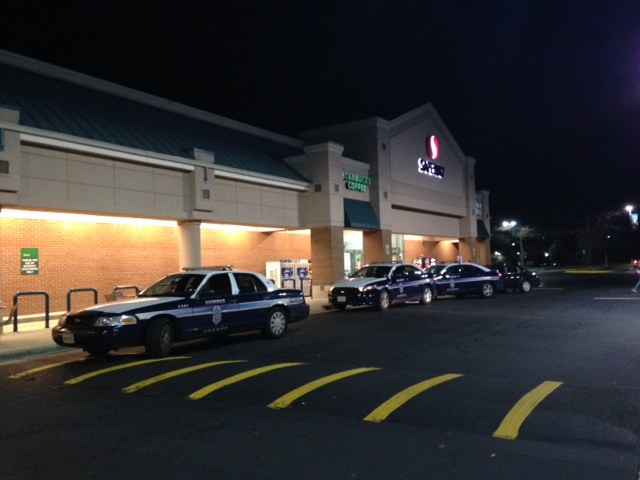 Three bank robberies in Reston in the last month have made some residents a little on edge.
One reader wrote to Reston Now yesterday saying this:
I’d originally planned on renting in Reston before moving to Virginia, but the posts on this page have more than changed my mind.
I have to wonder if you’re aware of the perception outsiders have, looking in at Reston. From my view, based on this page, Reston is losing business, experiencing all types of crime, and has little if any highlights aside from the natural scenery.
Fairfax County Police say crime in Reston is actually quite low.
For instance, FCPD’s Reston Station reported 654 assault incidents in 2013 (the most recent full year for which stats are available). That’s down from 765 in 2012, and the second lowest number of assaults among FCPD’s eight districts.
Reston’s relatively low crime rate, along with access to good jobs and schools, were among the criteria that earned it a spot in Money Magazine’s 2014 Top 10 Best Places to Live.
That is not to say Reston is crime-free. Other stats:
There were two homicides in the Reston District in 2013, the same as in 2012. In both 2013 cases, they were domestic in nature and not random crime.
Sex offenses: 32 in 2013, (30 in 2012)
Weapons charges: 58 (58 in 2012)
Property crimes: 2,527 in 2013, down from 2,705 in 2012. The 2013 number make it the second-lowest (behind the Sully District) in the county.
Some of the highlights:
- Vandalism: 703 (899 in 2012)
- Larceny 1,239 (1,274 in 2012)
- Stolen cars 48 (59 in 2012)
- Robbery 37 (27 in 2012)
- Burglary 107 (79)
Do you feel Reston is a safe place to live? Are you concerned about crime? Take our poll.
Photo: Fairfax County Police cars converge at Safeway Hunters Woods after robbery of Sun Trust inside on Thursday/Credit: Tim Boone
One of the most frequently asked questions of me this time of year is, “What will the General Assembly be doing when it meets?”
The question is understandable, with the regular session of the legislature scheduled to begin on Jan. 14. The answer is not simple, however, even at this late date. There is unfinished business left over from previous sessions, hot issues that have come to our attention, and recent events that warrant the legislature’s response.
Although the General Assembly passes a two-year budget in the even-numbered years, there are always adjustments that must be made in the odd-numbered years. In stable economic times, these adjustments can be fairly technical and minor. In recent years with the uncertainty in the economy, adjustments can be major. That’s the way it will be this session. Already $1.5 billion has been reduced in the budget passed for this biennium, and additional reductions exceeding $300 million must be made to keep the budget in balance.
Since this will constitute a second round of budget reductions, the choices are not clear or easy. Higher education will likely get a second round of cuts with higher tuitions being available to make up the difference. There seems to be agreement not to reduce state aid to schools which is very important since schools are already funded by the state at a level below 2007. With all 140 members of the House and Senate up for re-election in November, 2015, you can be sure that there will be no discussion of revenue enhancements.
An issue that the Republican majority will try to keep in the background is the expansion of Medicaid that under the Affordable Care Act would provide health insurance coverage for nearly 400,000 of the working poor in the state. The Tea Party wing of the Party vehemently opposes the expansion.
Ironically, expansion of Medicaid would provide about $200 million in federal monies to supplant state monies and help reduce the budget deficit by two-thirds. Moderate Republicans in gerrymandered districts who fear a primary challenge from the right more than a general election opponent will not want to deal with Medicaid expansion. It is too important to delay further. I will continue pushing for expansion.
The ethical lapses under former Governor McDonnell resulted in some tightening of disclosure and ethics laws, but more recent events require the General Assembly to do more work on this issue.
There is some competition between the parties as to who wants to be the toughest. Other breaking news stories like the rape and sexual assault reports at the University of Virginia will result in some legislation to address a concern that has been ignored too long.
Headlines not yet written may well add other issues to the 2015 agenda of the General Assembly. One thing is clear: the agenda will be full. There is much work to be done.
Please share your views on the upcoming legislative session with me on my constituent survey that can be completed online at www.kenplum.com.
Ken Plum represents Reston in the Virginia House of Delegates. His opinions do not necessarily reflect those of Reston Now.
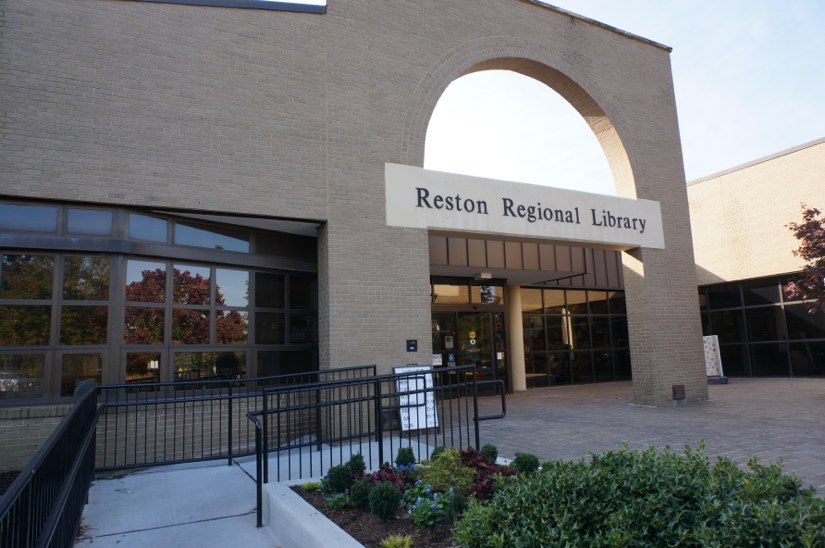 This is an op-ed from Terry Maynard of the Reston 2020 Committee of the Reston Citizens Association.
Fairfax County’s decade-long war to dismantle our public library system has reached new depths: First, the County is planning a partial closure of its Sherwood Regional Library in Alexandria beginning in January.
Second, the Board of Supervisors is pursuing an audit of the “Friends of the Library,” which has occasionally and diplomatically criticized the Board’s oversight of the County public library system.
The move to close the second floor of the Sherwood Regional Library for all but 20 hours per week because of budget cuts is only the latest insult to the people of the County who have seen their County library budget cut by more than 20 percent as overall County spending has increased by 15 percent in the last 10 years.
Now, the second-richest county in the country spends less per capita on its library system than any other area jurisdiction — a third less per household than Montgomery, Prince George’s, and Prince William counties, and much worse compared to others, including only about 39 pecent of what Washington, DC, spends per capita.
And that is only part of the story. During a decade when the library system should have been conserving its assets as budgets shrunk — especially the books and other materials it has already paid for — it has thrown out more than 2.5 million items in its collection.
It is, in fact, throwing out taxpayer property for petty and contradictory reasons. For starters, books get thrown out because of minor damage from use — and thrown out after two years if they are not used and, therefore, undamaged.
With new purchases limited by the budget cuts as well as administration intent, the library system has had a net inventory loss of more than 440,000 items over the last decade, with small increases in the non-book (DVDs, CDs, etc.) and young adult books offset by the loss of more than 400,000 books for adults and more than 100,000 books for children. That’s a 27percent reduction in library collection items per capita in the last decade. Read More
