

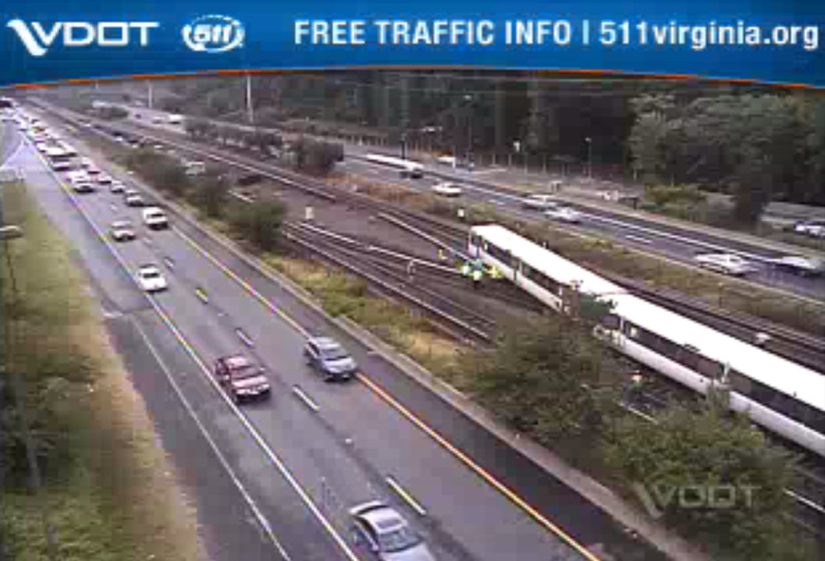
 A rail tie issue was the probable cause for last week’s Orange/Silver Line derailment, Metro said on Monday.
The derailment of a train bound for Wiehle-Reston East occurred Friday morning near the East Falls Church station. Parts of the line remained closed through Sunday, but reopened on Monday.
Those rail ties had not yet been replaced under Metro’s SafeTrack program.
While the investigation is ongoing, Metro released the following preliminary findings:
Metro’s safety department has made a preliminary assessment that the causal factor in the derailment is a track condition, specifically a condition where the two rails on which trains run were too wide as a result of deteriorated rail ties.
Other possible contributing causal factors, including car equipment, weather, temperature and other factors remain under review.
At this time there is no evidence of train operator error.
Metro General Manager/CEO Wiedefeld today ordered a special supervisory inspection of all tracks.
“While Metro and the outside experts continue their review, we are requiring supervisors to conduct a specialized track inspection to look for any other similar conditions that must be immediately addressed,” said Wiedefeld.
Metro has taken additional corrective actions, including: pre-inspecting interlockings (NoMa-Gallaudet, Silver Spring & Takoma) used on the Red Line prior to this morning’s implementation of SafeTrack Surge #6; requiring a supervisory pre-inspection of all interlockings that are required to be used to facilitate SafeTrack closures; and quality assurance audits of all these inspections.
The Friday morning derailment of a Reston-bound Silver Line train near East Falls Church will continue to impact Metro into Saturday, Metro officials said.
Metro says Orange and Silver service between West Falls Church/McLean and Ballston stations will remain suspended at least through the end of the day Saturday to allow for further investigation, removal of derailed cars, and repairs to infrastructure that was damaged during the incident.
Customers traveling to or from stations west of Ballston are encouraged to use alternate travel modes if possible, Metro said. Metro will continue to provide free shuttle buses between Ballston, East Falls Church, West Falls Church and McLean stations until rail service is restored. Read More
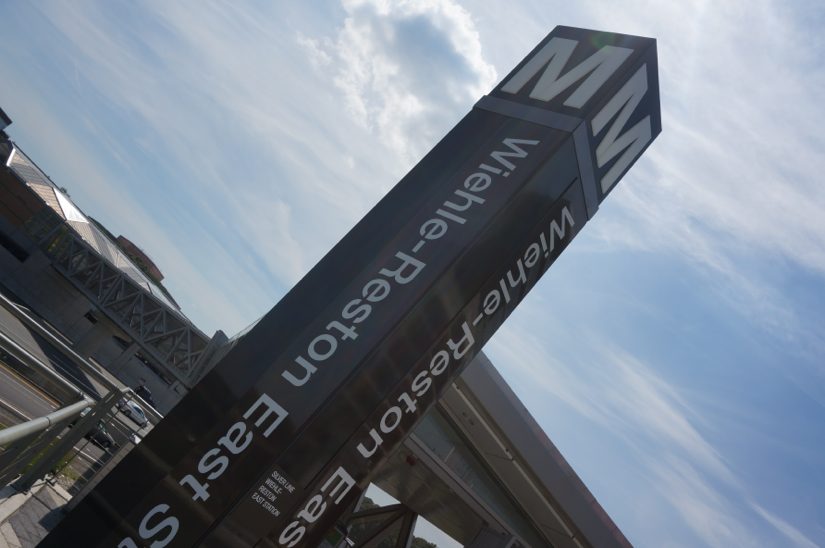
Update, 10 a.m.: Metro officials said there will be interrupted service for the rest of the day. That means no Silver Line between McLean and Ballston or the Orange Line between West Falls Church and Ballston.
Original story: Metro Orange and Silver lines are seeing major disruptions and delays Friday morning after a westbound train derailed at East Falls Church.
East Falls Church station is closed as of 6:59 a.m., and one passenger is being evaluated for injuries; shuttle bus service being established, Metro officials said.
Metro officials said 75 people were aboard the train when it derailed about 100 feet from the station 6:15 a.m.
Metro officials are telling Orange/Silver customers west of Ballston to use alternate travel options this morning.
A rider told a WJLA reporter the derailed train was a Silver Line train to Reston.
There is no Silver Line service from McLean to Ballston and no Orange Line service from West Falls Church to Ballston.
That stretch of the Orange and Silver Line is in the last days of single tracking for a safety surge to make repairs.
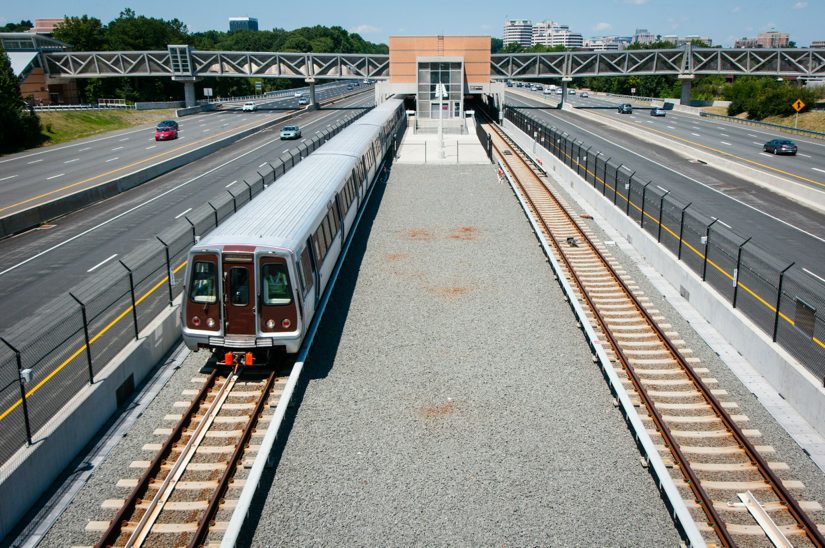 Metro GM/CEO Paul Wiedenfeld plans to suggest this week at the Metro system begin closing at 10 p.m. on Sunday and midnight all other nights, even after the SafeTrack program ends next spring.
Wiedenfeld said in a statement his plan is following rail expert and peer transit agency recommendations. The move will require Board approval following a public engagement process this fall.
Under the proposed schedule, the Metrorail system would be open 127 out of 168 hours in a week. Prior to SafeTrack, the system was open 135 hours per week. The additional track time increases safety and reliability by giving workers the time and space they need to keep Metro’s infrastructure in a state of good repair, Metro says.
Wiedefeld engaged peer transit agencies and rail engineering consultants, all of whom urged that the focus on track safety and maintenance continue to prevent Metro from sliding backward.
Earlier this year, Wiedefeld announced a one-year accelerated maintenance plan, called SafeTrack, which includes expanded track access through midnight closings on weekends (on a temporary basis), a moratorium on early openings or late closings, and expanded track work during midday and evening hours. Metro is in the midst of the fifth of 15 “Safety Surges” which close or alter various sections of the system at a time.
The SafeTrack plan is intended to achieve three years’ worth of work in one year and allow work crews to eliminate a maintenance backlog and address safety recommendations from the Federal Transit Administration (FTA) and National Transportation Safety Board (NTSB).
Wiedefeld is expected to formally propose the change at Thursday’s Metro Board of Directors’ meeting.
 As Metro’s Safety Surge No. 5 gets underway Wednesday, it may not just be the Metro riders suffering delays and frustration.
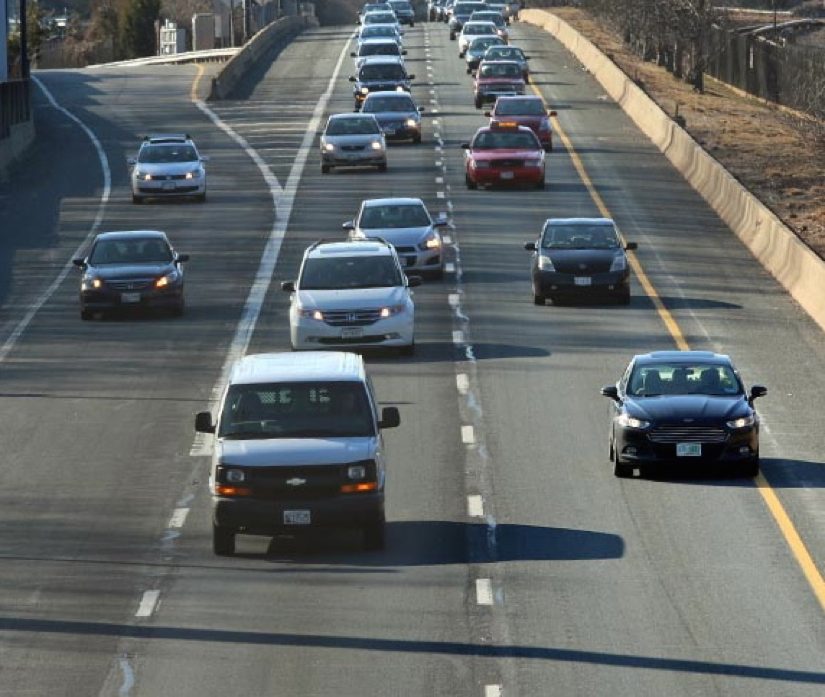
Commuters who opt to drive to work — bypassing the latest Orange, Blue and Silver Line track work — will be impacted too, says a new traffic report.
The report by the regional Metropolitan Washington Council of Governments looked at the first four Safety Surges. The first surge, which affected Silver/Blue/Orange riders and the traffic on the west side of DC (including the Tysons-to-Reston Silver Line stretch) had the greatest effect on traffic so far, it said.
Since June, Metro has been making changes to various stretches of tracks stages in order to do major maintenance and repair work to the system. This 10-month project will enable Metro to complete three years of work in less than a year.
The report says that during the first surge (June 4 to June 16), congestion and travel delays increased, particularly on eastbound Interstate 66 in the mornings inside the Capital Beltway and along Route 50 and the Dulles Toll Road.
Drivers also complained about traffic on the Key Bridge, M Street NW, the Roosevelt Bridge, Constitution Avenue NW and other major commuter routes in Northern Virginia.
Travel times on highways were about 10 percent longer on average during the morning commute than in 2015, and about 15 percent longer during the afternoon commute, the report says. During Surges 2, 3 and 4, the traffic effects were much smaller. The major commuter routes saw an average increase of less than 3 percent.
In the traffic data analyzed in the report, portions of I-66, the Dulles Toll Road and the George Washington Memorial Parkway experienced travel-time increases that were double — sometimes more — than the typical morning commute.
But now we are in mid-summer, and transportation officials are hopeful that less traffic in general will mean an easier commute. This latest safety surge will run through July 31.
“TPB has consistently found that travel delay drops about 15-20 percent during summer months when schools and Congress are out and more people have greater flexibility in their travel schedules,” the report says.
See the full report on MWCOG’s website.
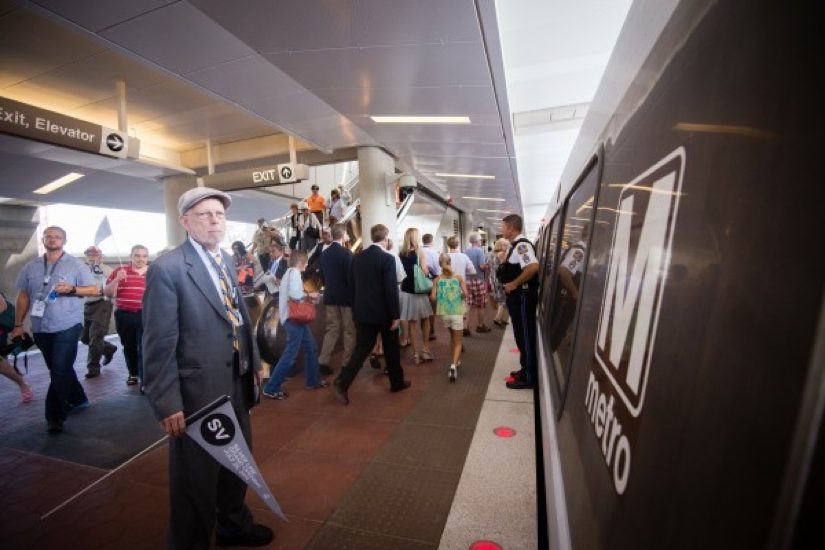 Two years ago this month, the Silver Line — after years of discussion, rising costs and many construction delays — finally opened, bringing long-awaited rail service to Reston.
But ever since, Metro has been plagued by problems — track issues, smoke and fire, near-constant single tracking, and now, the SafeTrack project to fix them.
Is it the new Silver Line to blame for Metro’s issues? A Washington Post story Sunday laid out the case:
To make room for the line, Metro reduced service on the Blue Line, angering thousands of riders. New rail cars set to arrive before the line opened did not — leaving fewer trains in reserve when older cars broke down. The result? Worsening service disruptions systemwide. Adding to Metro’s woes, ridership was well below projections.
After the January 2015 tunnel fire near L’Enfant Plaza, which left one passenger dead, things got worse, the post points out.
Metro blamed the chronic breakdowns on its inability to keep up with much-needed maintenance that had been neglected for years and said it needed more money to catch up. Some observers — and Metro to a degree — blamed the Silver Line, saying the new line placed too much of a burden on the system’s infrastructure. Some riders and others argued that the transit agency should have invested in rebuilding instead of expanding.
Several transportation consultants quoted in the article have mixed opinions. One says Metro would likely have the same problems it does with or without the Silver Line; another says adding a new line to a broken system was “beyond idiotic.”
The article also points out that the ridership on the Silver Line has not met projections. While Wiehle-Reston East — the end of the line until Phase 2 opens in 2020 — has met projections, but at the one-year mark, the average of 17,000 weekday boardings is far short of the 25,000 the line was projected to have after its first year.
Rep. Gerry Connolly (D-Va. 11th), who was a crucial advocate in bringing Metro to Reston (he formerly served as chair of the Fairfax County Board of Supervisors), and the current chair, Sharon Bulova, are urging residents to stick with the Silver Line as the benefits will be felt in the decades to come.
Read the entire piece on Washingtonpost.com.
 The critical junction where Metro’s Orange and Blue/Silver Line diverge is now in state of good repair, says Metro General Manager/CEO Paul J. Wiedefeld.
Weidefeld on Wednesday released the final production report for the second SafeTrack surge. He said that all planned work had been completed during the 16-day project.
“I am satisfied that we are accomplishing our objectives with respect to the pace of track work progress in Surge No. 2,” Wiedefeld said in a statement. “Our continued success depends upon Metro customers heeding the warnings about reduced service during SafeTrack surges and finding alternate ways to commute. I am optimistic as we get underway now with Surge No. 3.”
During Surge No. 2, crews repaired and/or replaced critical rail infrastructure affecting train speeds and ride quality. Metro says critical tasks accomplished during the surge include:
- Replacement of four major switches at D&G junction, one of a handful of key locations where trains are routed to different lines
- Replacement of over 500 wooden crossties
- Renewal of over 230 third-rail insulators
- Elimination of over 20 rail joints
- Renewal of over 2,000 linear feet of grout pads
- Renewal of 12 signals
- Inspection and repair of over 180 power cables
For a complete status update on Surge 2 progress, visit Metro’s website.
SafeTrack is an accelerated track work plan to address safety recommendations and rehabilitate the Metro system and address critical safety issues.
Metro is rotating closings of sections of the system in order to complete three year’s of maintenance in about 10 months. There will be 15 safety surges overall.
Surge No. 3 began on Tuesday, July 5 and includes a complete rail shutdown between National Airport and Braddock Road, impacting Yellow and Blue Line riders. All Metro customers traveling to/from DC must use shuttle buses between Braddock Rd and Pentagon City during the project. Southbound customers should exit at Pentagon City for a bus shuttle.
Surge No. 5, which begins July 20, will again significantly impact Reston-area Silver Line riders.
 Do you still have paper Metro fare cards with value? Gather them up to trade them in today or lose the money.
Starting Friday, July 1, paper fare cards will be worthless, Metro says. While Metro has since March only been accepting the reusable SmarTrip cards for station entry, it was still issuing refunds and transferring balances to the SmarTrip cards.
Metro had hoped to go to a smartphone-entry system this summer, but the transit agency announced last spring it was canceling the $150 million contract to replace its fare gate system while Metro concentrated on making needed safety repairs.
Riders must pay $2 to buy a SmarTrip, but it is reusable and reloadable. Metro officials say the average SmarTrip card lasts more than four years.
As for the farecard machines, the older brown fare machines will only be used to add value, while the newer, blue machines will be able to both dispense new cards and add value.
Jim Bongiorno, who is running the paper farecard elimination project, told WTOP this is the culmination of a process that began in 2009.
“Come July 1, 2016, if you still have a paper farecard, congratulations, you have a Metro souvenir,” he says.
To get a cash refund on your paper fare card, you must live 100 miles or more from the Washington area.
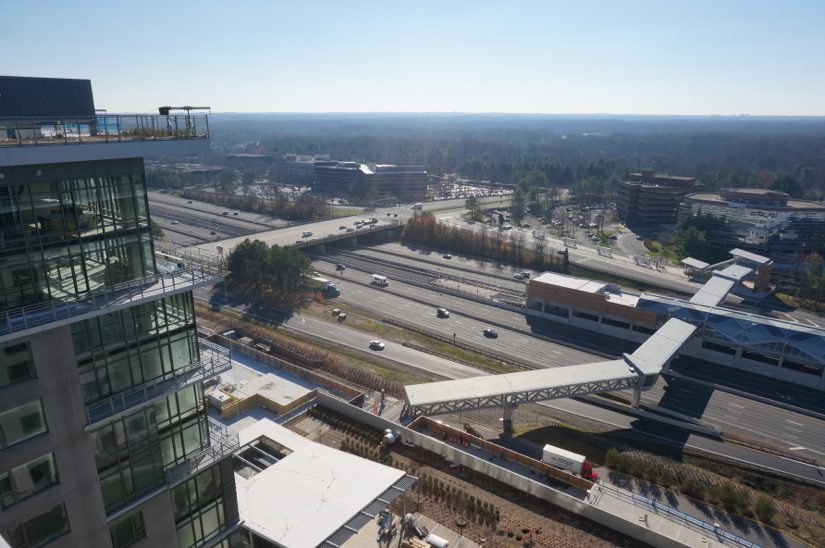 Friday will be the last day for the express bus from Reston to the Pentagon (and the return trip in the afternoon).
The express bus, from Reston North Park-and-Ride lot, went into service June 4, when the first of Metro’s 15 SafeTrack Safety Surges began. The first two safety surges affected Silver, Blue and Orange line riders in Fairfax County, thus the bus to get people to the Pentagon.
Safety Surge No. 3 begins July 5 and will affect Blue and Yellow line riders from Reagan National Airport to Braddock Road.
Metro officials said the Reston-Pentagon bus will return July 20-31 for Safety Surge No. 5 (Single tracking on Silver/Orange lines, Ballston to East Falls Church).
The SafeTrack program involves shutting down parts of Metro in segments through next March in order to complete three years of needed repairs in less than a year, Metro said.
Meanwhile, here is what you need to know about Safety Surge No. 3, which will mean no Metro service to Reagan National Airport for two weeks.
If you have more questions, Fairfax County officials will have an online chat on Thursday at 11 a.m. You can submit a question ahead of time or read it live on Fairfax County’s website.
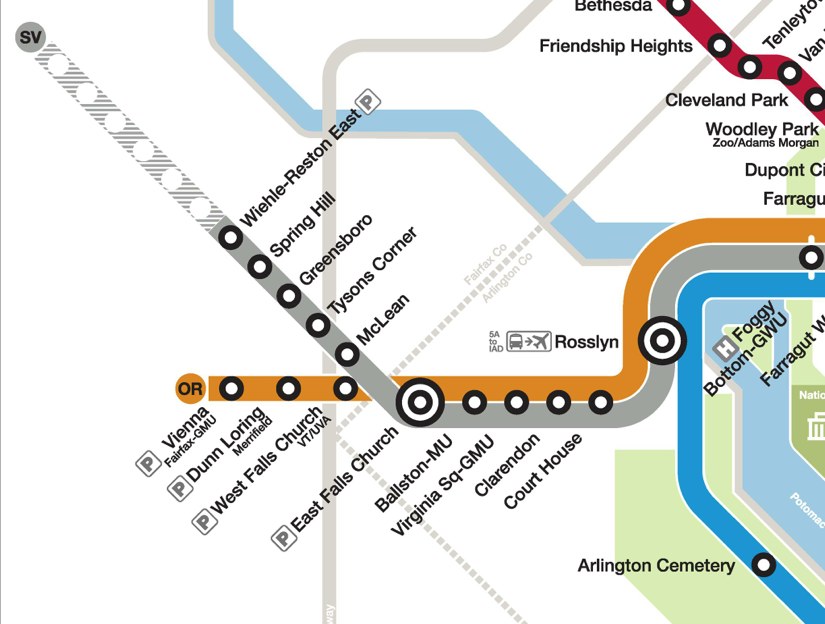 It’s only a drill: Metro Transit Police and Fairfax County will conduct a full-scale response exercise Sunday at the Greensboro Metro Station.
The drill will allow emergency personnel to practice the evacuation of a train during a simulated smoke and fire incident.
The exercise, which will take place inside the tunnel between Greensboro and Tysons Corner stations, will simulate real-world conditions to test coordination and communication between on-scene responders, Metro operations staff, Metro Transit Police and support personnel.
Metrobus operations staff will also use this drill as an opportunity to activate and test an agreement with Fairfax County to provide shuttle bus service via Fairfax Connector between Greensboro and Spring Hill stations.
The exercise will begin at 8:30 a.m. and is expected to conclude no later than 11 a.m. More than 100 emergency responders from various agencies, as well as volunteers, are expected to participate.
Customer Information
Free shuttle buses will replace Silver Line trains between Greensboro and Spring Hill stations Sunday until approximately 2 p.m.
Greensboro Station will be closed to the public from 7 a.m. until approximately 2 p.m. Metro will notify customers when the station reopens via email, text message and social media.
Members of the public in the area of Greensboro Station may notice a large number of emergency vehicles on site.
Monday is the first workday under Metro’s second Safety Surge.
While Surge No. 1 wrapped up single tracking that affected Silver Line trains on the route to/from Wiehle Reston East, it doesn’t mean the ride is totally clear for riders originating or disembarking in Reston. Surge No.2 — one of 15 safety projects from Metro over the next 10 months — will affect Blue Line Riders in Arlington, as well as Silver Line riders in DC. Read More

A second tower crane is coming to the site of the Reston Town Center Metro station, and it may disrupt traffic in the next few days.
From Friday, June 17, through Sunday, June 19, Dulles Corridor Metrorail Project crews will assemble a second tower crane in the median of the Dulles Airport Access Road between the Fairfax County Parkway overpass and the Reston Parkway overpass.
Work will take place during day and night hours. All work is weather dependent and subject to change, project officials said.
Here is the work schedule:
Friday, June 17, 10 p.m. to Sunday, June 19, 10 p.m.
Left lane of eastbound access road between mile markers 4.2 and 5.2 will be closed.
Saturday, June 18, 2 a.m. to 2 p.m.
Left lane of westbound access road between mile markers 5.2 and 4.2 will be closed.
Sunday, June 19, 2 a.m. to 2 p.m.
Left lane of westbound between mile markers 5.2 and 4.2 will be closed.
Drivers are asked to use caution and remain attentive to all signage, barricades, adjusted speed limits. Large, slow-moving vehicles may be exiting and entering the highway at various times.
Metro is investigating a derailment of a piece of track equipment in the work zone between Ballston and East Falls Church stations that occurred shortly after midnight Tuesday. There were no injuries.
The derailment may have been caused by a passing Silver Line train, Metro says.
There is equipment on the tracks because of Metro’s SafeTrack project, the first phase of which began June 4 and will continue on the Silver, Blue and Orange lines until later this week. Metro plans 15 “Safety Surges” over the next 10 months to do necessary repairs.
From Metro:
The track machine that derailed is described as a “spiker,” measuring approximately 21 feet long by 10 feet wide, that is used to install new rail spikes into wooden ties to hold the rail in place. The derailment was reported at approximately 12:05 a.m.
A passing Silver Line train that was in the area at the time reported possibly making contact to the mirror of the track equipment. That train was stopped, inspected, deemed safe and continued to East Falls Church, where passengers were transferred to a different train to continue their trip.
The operator of the track equipment, as well as other employees directly involved, have been temporarily removed from service during the investigation. In addition, overnight work in the area was suspended to allow for a safety review.
The incident did not affect passenger service on Tuesday morning.
Silver Line trains/file photo
Imagine a Reston without the Silver Line. Not that difficult, since it has only been open for less than two years and the extension from Reston Town Center to Loudoun County won’t open until 2020.
A Washington Post reporter says it should never have been built. In an opinion column published Wednesday, Fredrick Kunkle summarized what a lot of area residents have been thinking this week: Metro should have fixed what it had before embarking on this $2.9 billion project.
Silver Line riders were among the most affected as Metro rolled out its SafeTrack program this week. The program, which aims to complete three years work of needed repairs in about 10 months, will involve 15 “Safety Surges,” which means single tracking, delays and other shutdowns.
The first surge means delays, crowded cars and other general chaos from Wiehle-Reston East (Silver) to Ballston (Silver/Orange/Blue) and beyond until June 16.
Writes Kunkle: “The argument goes that Metro’s leadership should have focused instead on overhauling and upgrading the nearly 40-year-old system before adding a new line in Northern Virginia. The Silver Line was a project either years before its time — or too late. And now there are plenty of people around eager to say, I told you so.”
He points out that Silver Line ridership has been below predictions and construction blew its budget, among other issues.
Among those disagreeing with him: Fairfax County Supervisor Chair Sharon Bulova, who says the Silver Line has not been a drag on Metro’s other resources. She adds that there were plans for the line going back to the 1960s; that funding came from wide resources (not just local taxpayers); and that it has sparked commercial and residential growth in the county (including a major boom in Reston).
Washingtonian also points out the flaws in The Post’s reasoning in this piece.
“There’s a lot about the Silver Line that could have been handled differently — the timing, the quality of the construction work, the ridership expectations. But ditching it entirely? That would be the greatest error,” writes Washingtonian’s Benjamin Freed.
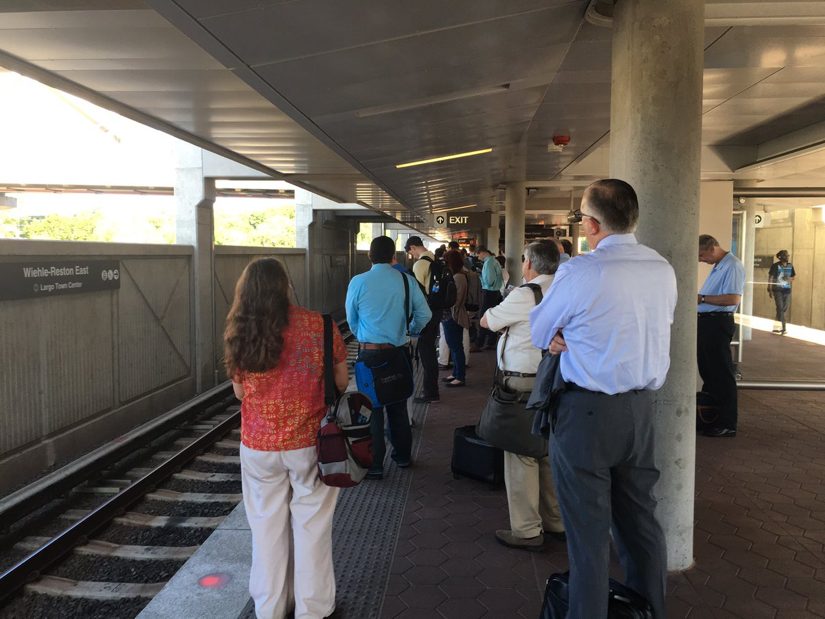
Crowded cars. Waits of up to a half hour at the Wiehle-Reston East station. Clogged roads.
Welcome to the first workday of the first Metro Safety Surge, where Metro shuts or significantly alters service on a section of the system in order to make repairs.
Riders on Silver and Orange Line trains will be affected by track and other safety work through June 16.
While Metro warned in advance that trains would run every 18 minutes, social media statuses showed that waits were much longer for some riders.
Others who opted to drive to work reported clogged major roads.
Metro officials will brief the media this afternoon about how things went on Day 1. Metro says entries west of Ballston were down 26 percent as riders sought other ways to get to work (or telecommute). About 1,000 fewer riders (3,924 compared to 5,002) than on a typical Monday boarded at Wiehle-Reston East, Metro said.
Metro will hold 15 of these Safety Surges over the next 10 months as it undertakes much-needed repairs on an accelerated schedule
Photo: Waiting for a train at Wiehle-Reston East June 6/Credit: Chris Pyburn via Twitter
