

Silver Line Phase 2 to Open January 2022 At the Earliest — “During a Thursday briefing, before the Metro Board’s Safety and Operations Committee, Laura Mason, vice president of capital delivery for the Washington Metropolitan Area Transit Authority, said at least 10 Silver Line construction items remain unresolved before Metro will be satisfied with the work by the Metropolitan Washington Airports Authority and its contractor.” [WTOP]
New Fairfax County General Registrar Appointed — “The Fairfax County Electoral Board appointed Scott O. Konopasek as the county’s new general registrar and director of elections at its March 11, 2021, meeting. He will lead the Fairfax County Office of Elections following the retirement of the current registrar Gary Scott who has worked in the office for the past 24 years. Konopasek’s tentative starting date is April 19.” [Fairfax County Government]
Reston Contractor Working with Space Force — The Reston-based contractor SAIC is working with the U.S. Space Force to develop a virtual reality training platform that lets workers “interact with full-scale digital replicas of national security satellites. The platform lets the armed forces practice responding to missile warning scenarios and collaborate in cyberspace.” [The Washington Post]
Comscore Closes Investment Transactions — Reston-based media measurement and analytics company Comscore Inc. announced Thursday that it has secured $204 million in cash investments from the companies Charter Communications Inc., Qurate Retail Inc., and an affiliate of New York-based Cerberus Capital Management LP. The investments came in exchange for shares of convertible preferred stock, and proceeds were used to retire Comscore’s debts. [Virginia Business]
Photo via vantagehill/Flickr
Fire Watch In Effect — A fire weather watch is in effect today from noon to 5 p.m. The National Weather Service notes that breezy winds, low humidity and dry conditions can cause fires to spread rapidly. [Ready Fairfax]
County 9-1-1 Service Officially Restored — The county’s 9-1-1 line is running smoothly again. Most of the day on Wednesday, call capacity was limited and callers experienced longer wait times. [Fairfax County Government]
The Top Ten Percent — Ten percent of Virginians are officially fully vaccinated and more than two million doses have been administered throughout the state, according to state data. Older adults have the most vaccine doses among age groups. [Reston Patch]
Metro Dodges Service Cuts — The passage of the American Recovery Plan will help Metro avert major service cuts and layoffs. However, the direct impact of the passage of the federal relief package is still unclear. Metro’s Board of Directors chairman notes that it is not yet known how much Metro will receive. [Washington Metropolitan Area Transit Authority]
Photo via vantagehill/Flickr
Silver Line Extension Could Open Early Next Year — Phase two of the Silver Line is expected to open in early 2022, according to Metro’s general manager. The announcement comes after the Metropolitan Washington Airports Authority said it will be ready to turn the project over to Metro by Labor Day weekend. [WJLA]
County Hires Health Care Support — The county is hiring substitute and relief counselors as part of its efforts to combat the COVID-19 pandemic and administer vaccines. [Fairfax County Government]
More Solar Panels Coming to County Schools — The Fairfax County School Board voted to install solar panels on a number of school buildings in order to limit greenhouse gas emissions and improve efficiency. The school system plans to begin the project at three schools and eventually phase out to 87 sites. [Fairfax County Public Schools]
Public Hearings on Metro Budget Begin — A number of budget hearings begins this week. Metro is facing a major budget shortfall due to a dip in ridership. [Washington Metropolitan Area Transit Authority]
Northam Reflects on One Year of COVID-19 — Families, friends and neighbors are mourning the more than 9,000 Virginians who died in the coronavirus pandemic over the past year, Gov. Ralph Northam said Sunday in a video. Many others have lost jobs, income, a sense of security and knowing what would happen next as lockdowns and the virus turned life upside down. [Reston Patch]
Photo via vantagehill/Flickr
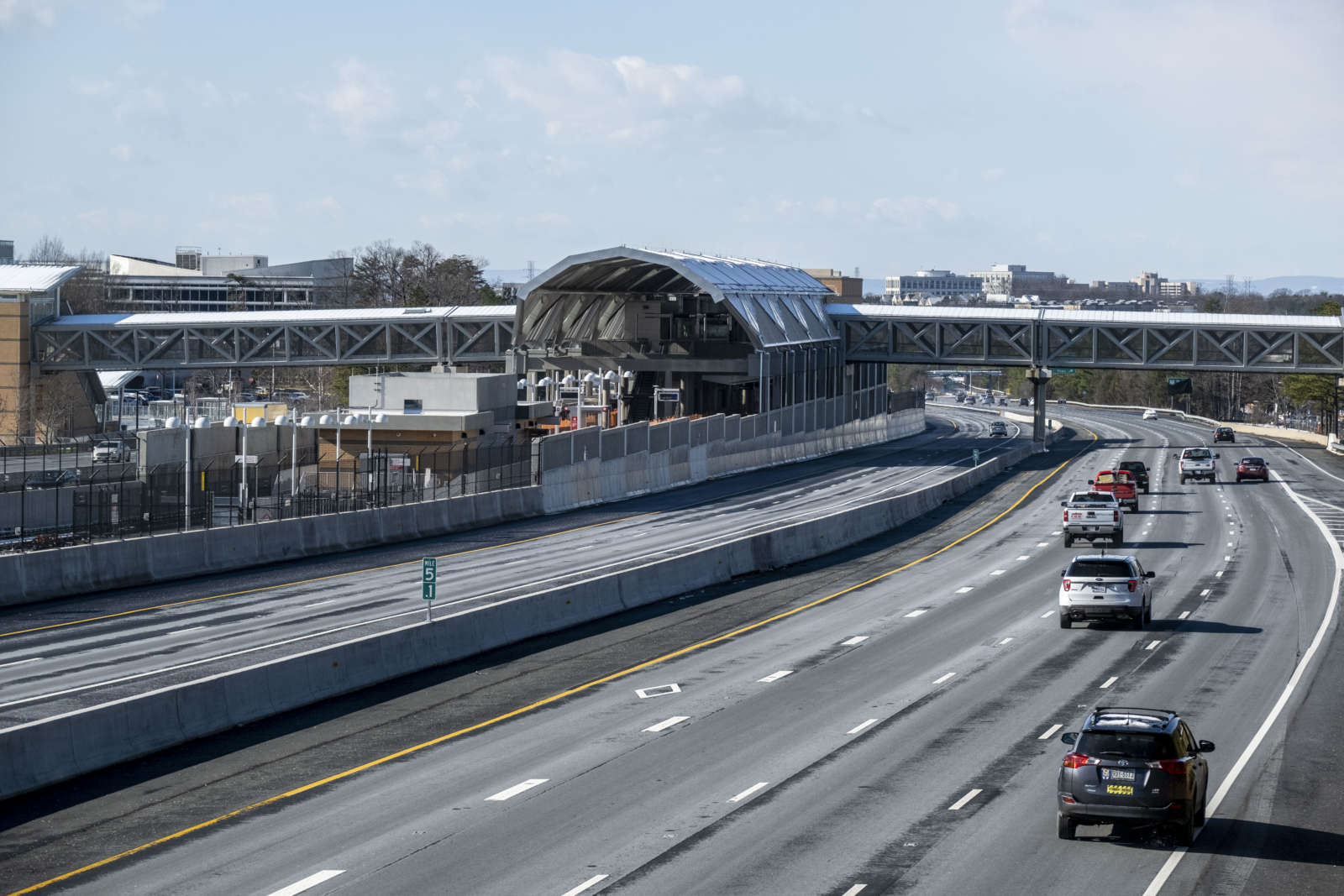
Updated at 4:30 pm — By Labor Day weekend, the Metropolitan Washington Airports Authority will be ready to handoff the second phase of the Silver Line project to the Washington Metropolitan Area Transit Authority.
Today’s announcement comes after nearly a year of delays for the project, which adds new stations from Reston to Loudoun County. Major construction issues, including the quality of concrete panels, caused significant concerns in recent months.
But now Charles Stark, senior Vice President of the Dulles Corridor Metrorail Project, said major progress has been made.
“Recent progress on outstanding issues has put us in a position to establish a target date for substantial completion and will enable Metro to solidify its plans for final testing, training and starting passenger service.” Stark wrote in a statement.
But a spokeswoman for Metro cautioned that Merro will ultimately determine if it will accept the project.
“Today’s announcement enables Metro to begin planning and budgeting for the start of service in early 2022. As MWAA achieves substantial completion, Metro will be testing, conducting system safety certification, and recruiting and training employees to get ready for passenger service,” wrote Metro General Manager/CEO Paul J. Wiedefeld
The project is currently being managed by the Metropolitan Washington Airports Authority. Phase two extends the line to Loudoun County and includes six new stations and a rail maintenance facility.
This comes as Metro considers closing down three of the newly-opened stations early next year due to drastic budget cuts and dips in ridership.
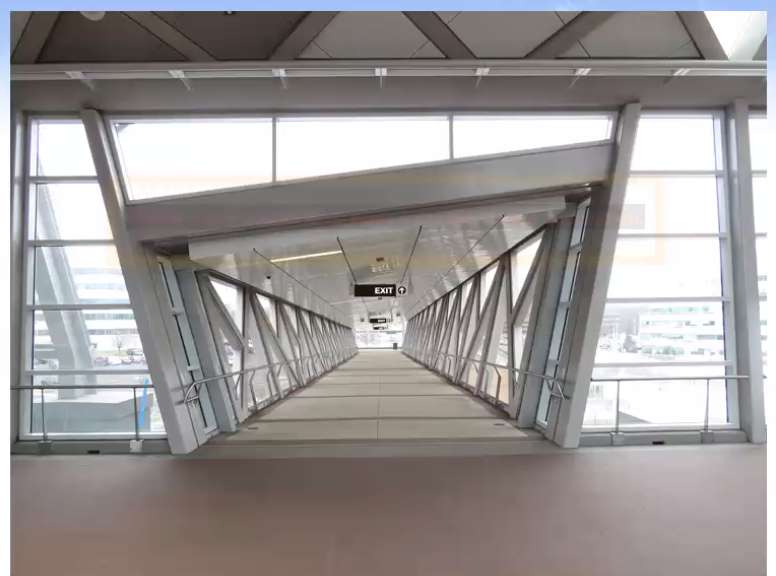
Metro’s Board of Directors is still proceeding as if the Silver Line Phase II will open this year, but a public survey is asking riders to weigh in on drastic service cuts, including closing the newly-opened Phase II stations in Janurary 22.
Last week, Metro announced that the public comment period for its 2022 fiscal year budget has officially opened.
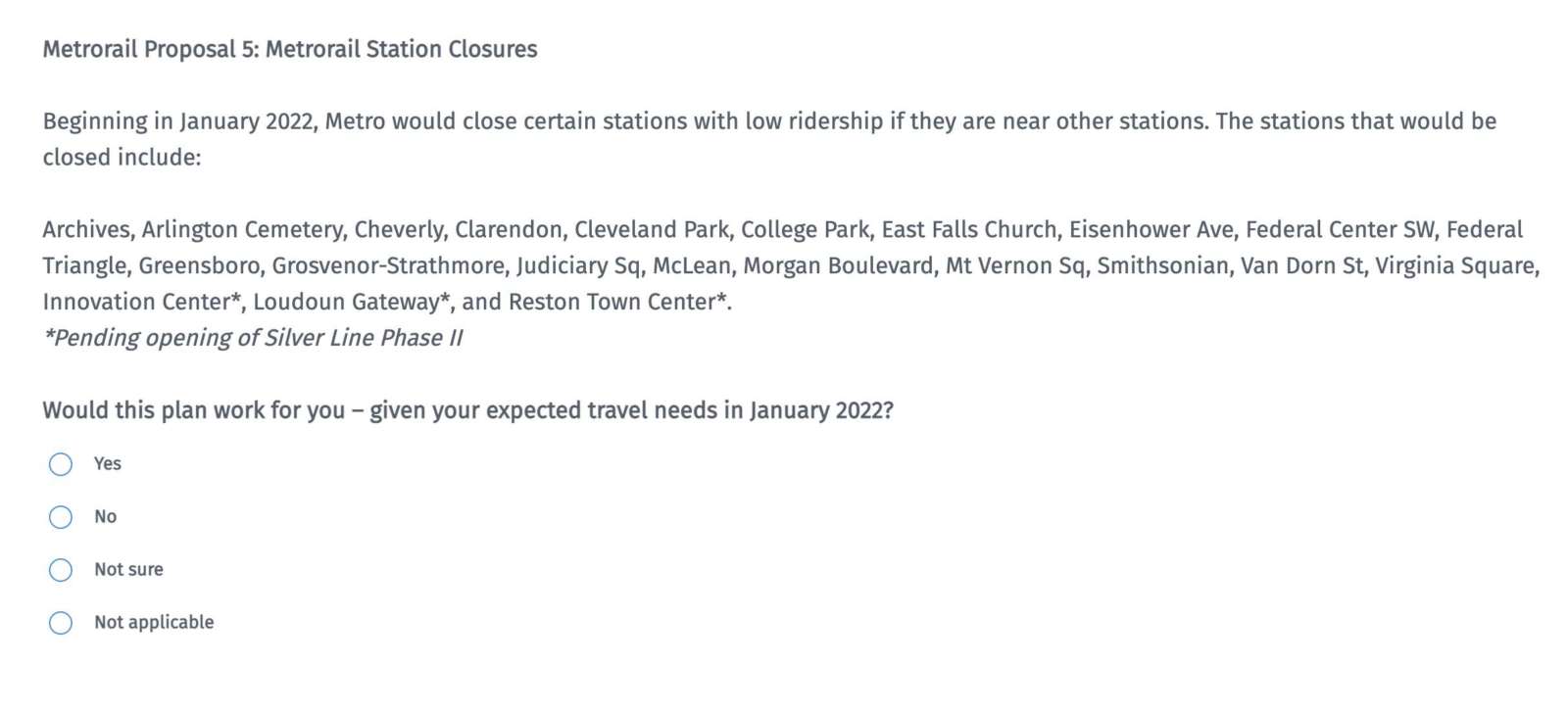
As part of that, they’re asking riders to fill out a survey about what extreme service cuts they’d be willing to tolerate beginning on Jan. 1, 2022 if additional federal money is not available.
In these options is a question about the closing of 22 stations across the entire system, including two Silver Line stations – McLean and Greensboro – and three potentially newly-opened Silver Line Phase II stations – Innovation Station, Loudoun Gateway, and Reston Town Center.
Although the 2021 budget says that Phase II could open July 1, 2021, it could be delayed until, at the earliest, the fall.
At last week’s budget work session, an tentative estimate was noted as early November.
A Metro spokesperson tells Reston Now there’s “no clear answer yet” about an opening date, however the Metro Board has to proceed as if it will open in 2021 in order to pass the 2022 budget.
“The Board will take all public feedback into consideration before approving a final budget for FY22,” writes the spokesperson.
So, it is possible that the Silver Line Phase II could open this year, only for the stations to close a few months later due to the budget shortfall.
Complicating the situation is that Silver Line Phase II and the proposed drastic service cuts are essentially on two different timelines.
Earlier this month, Metro’s staff presented an update on 18 different safety and operational issues previously noted in December.
Of those 18, 17 were still in the midst of being resolved or remained unresolved. They range from maintenance issues with the station platform pavers to several thousand damaged track fasteners that need replacing to cracked third rail insulators.
The Metro spokesperson confirms that resolving these safety and operational issues have a greater impact on the timeline for the opening of the Silver Line Phase II than the budget shortfall in 2022.
In fact, Metro’s funding for Phase II construction hasn’t really been impacted by Metro’s overall financial woes.
“The Metro board has not done anything to delay the opening of Phase II as a matter of Metro policy or budget policy,”Metro Board of Supervisors member Matt Letourneau told Reston Now in January. “Thus far the position of the Metro board has been whenever the project is…. deemed acceptable and safe, and gone through testing, we should open it.”
That’s not to say that the Silver Line Phase II won’t cost Metro money that needs to be accounted for in the 2022 budget.
At last week’s work session, it was noted that operating costs for Phase II are about $120 million annually, or $10 million a month.
If it is delayed to November 2021 due to safety and operational issues, that would save Metro about $40 million.
However, retention costs like security and ongoing maintenance are $28.5 million annually or about $2.38 million a month — even if the stations and trains are not running and operational.
In the end, if Silver Line Phase II does not open in early November and gets delayed until additional federal funding does come through, it could save Metro about $7.5 million a month.
Metro is continuing to plan the 2022 budget under the prospect that they will not receive additional federal funding, though.
The most recent coronavirus relief package provided Metro more than $600 million in federal funds. That funding, notes Metro, helped avoid layoffs and provide essential services.
But even with that funding and other austerity measures, “there is not enough money to fill the entire budget gap for the fiscal year that begins July 1, 2021,” Metro’s press release reads.
Hence, the potential need to close 22 stations, including the possibly-just-opened Silver Line Phase II stations.
Among the other options for service cuts asked in the survey is closing Metrorail every day at 9 p.m. and trains arriving only every 30 minutes at most stations.
Metro is asking riders to fill out the survey by Tuesday, March 16 at 5 p.m.
There’s a decent chance, however, that these worries over closing stations on Jan 1, 2022 could become moot.
President Biden’s $1.9 trillion stimulus plan has $20 billion earmarked for public transit agencies.
At this time, however, it remains unclear how much would go to Metro if the plan does pass in Congress.
Photo courtesy Metropolitan Washington Airports Authority
Wind Advisory In Effect — The National Weather Service has issued a wind advisory that will be in effect from 2-6 p.m. today. [NWS]
Metro Seeks Comment on Proposed Budget — Metro is seeking the public’s feedback on its budget, which faces a significant shortfall due to a decrease in ridership caused by the pandemic. Ridership is down about 90 percent on Metrorail. [Washington Metropolitan Area Transit Authority]
Reston Association Committee to Host First Public Forum — The organization’s multimodal transportation advisory committee is hosting its first public forum of this year on March 11. The committee seeks input on sidewalks, trails, pathways, crosswalks, and the overall pedestrian experience in Reston. [RA]
Death Penalty Repeal Sent to State Governor — Virginia could become the first state in the South to end the death penalty. The legislation was passed on Monday by state lawmakers and now heads to the desk of Gov. Ralph Northam. Virginia has executed more people in its history than any other state. [Reston Patch]
Photo via vantagehill/Flickr

Metrorail is now operating at the same frequency during peak and off-peak hours on weekdays after budget changes prompted by the impact of the COVID-19 pandemic took effect yesterday (Monday).
Under the revised Fiscal Year 2021 budget, trains are running every 12 minutes on the Orange, Silver, Blue, Green, and Yellow lines, while Red line trains operate every six minutes. Service after 7 p.m. and on weekends has not been altered.
The reduction of rail service during weekday rush hours was recommended as part of a revised FY 2021 budget that the Washington Metropolitan Area Transit Authority Board of Directors approved when it met on Nov. 19.
“The changes bring rail service in line with ridership demand while managing costs amid pandemic-related budget constraints,” WMATA said in a news release. “Rail ridership remains down nearly 90 percent from pre-pandemic levels.”
In contrast, WMATA says Metrobus ridership is only down 55% on weekdays and less on weekends compared to pre-pandemic levels, so service will expand to accommodate additional capacity starting on Mar. 14.
“Customers will see more buses, more often on the 125 lines of service currently operating, and more routes will be added to expand bus service on weekends,” WMATA said.
More details about the March Metrobus service changes will be provided at a later date, the transit agency says.
Photo by Chuck Samuelson/Dulles Corridor Metrorail Project
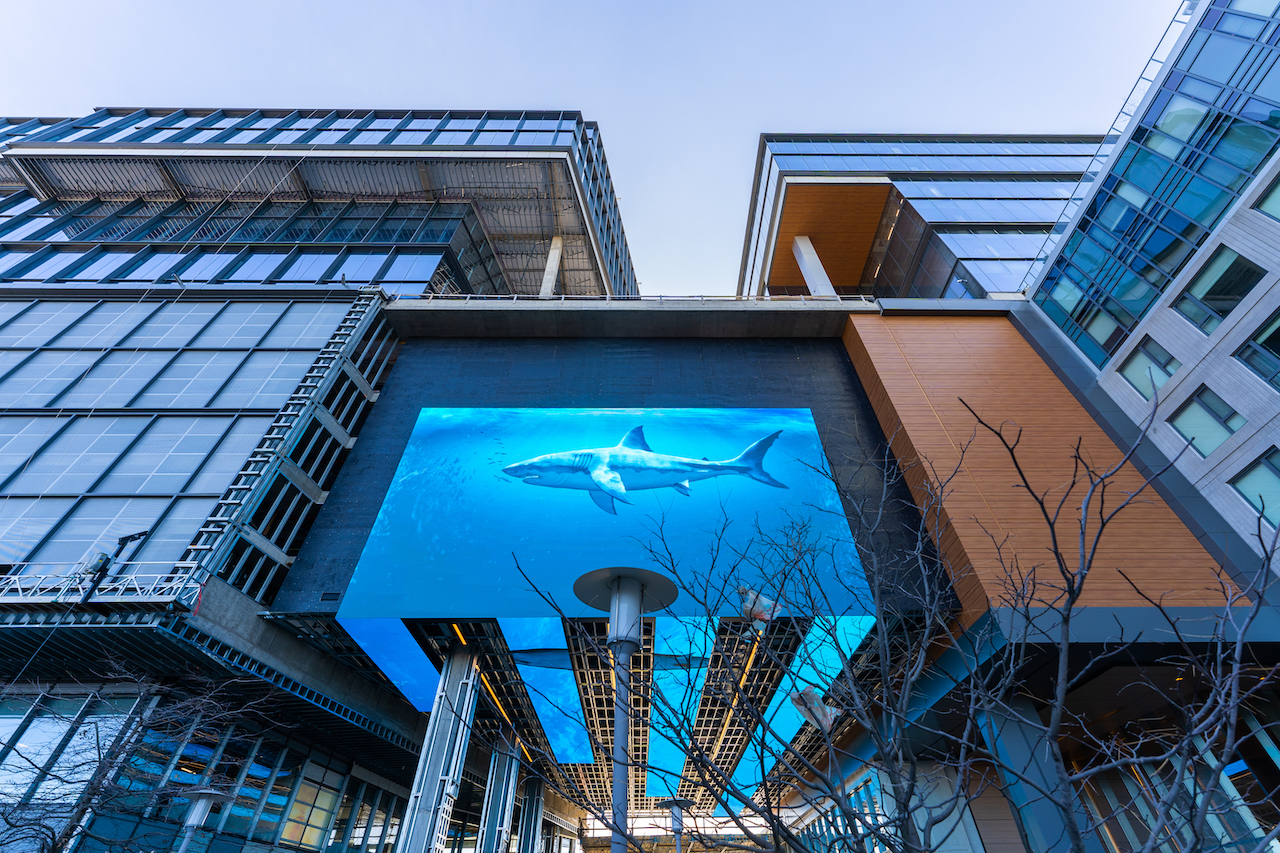
A 31-foot tall, digital three-dimensional gigantic aquarium filled with sharks now hangs at Reston Metro Plaza.
The digital LED screen was installed late last year by the developer Comstock Holdings and shows a illuminated shark tank on a twenty minute loop.
Additional digital art being featured on the screen on the loop are daily Google doodles and cityscape flyovers. Commuter information is also displayed.
Outdoor movies and concert performances on the screen are being planned for the spring and summer.
The screen is 31-feet in height and 55-feet wide and hangs at the center of the Reston Metro Plaza at Reston Station.
This isn’t the only art that’s been put on display at the Metro station in recent years.
Several former D.C. public art pieces have found forever homes at Reston Station, including three that were once part of the D.C. Commission on the Arts and Humanities 2002 “Party Animal” street sculpture collection.
Additionally, two pandas that were previously among the more than 150 panda sculptures that dotted D.C. in 2004 are also now at Reston Station.
In 2018, Italian sculptor Lorenzo Quinn’s bronze work The Force of Nature was installed at the station. Another Quinn art piece can also be viewed in the lobby of 1900 Reston Metro Plaza, which is the office building above the Metro station.
Last year, a new mosaic art installation was added outside of the apartment building near the Metro station.
And, in January, Virginia’s iconic “LOVE” letters were installed at Reston Station. The nearly 8,000 pound sculpture will remain there as part of its permanent art collection.
“We believe public art strengthens a community’s identity and sense of place and bolsters the reputation as a stimulating place to live, work, and visit,” said Christopher Clemente, CEO of Comstock, wrote in a press release. “Comstock believes the inclusion of art in development projects serves the common good in a manner that enhances architectural designs, landscaping and streetscapes.”
Photo courtesy of Comstock/Carolina Skelly
What to Know About the Vaccine – ‘The overall decrease in Virginia’s vaccine allocation, a result of limited supplies nationally, is going to significantly limit the pace at which we vaccinate the more than 156,000 residents in Phase 1a and 1b priority groups who have registered through the Health Department’s online application system and are currently in the queue to receive an appointment.’ [Fairfax County Government]
Wireless Service Comes to Metro Rail Tunnels Systemwide — ‘Transit riders and visitors to the nation’s capital now enjoy one of the most connected wireless experiences of any rail system in the U.S. with coverage available in all tunnels. The nation’s major wireless carriers–AT&T, T-Mobile, and Verizon –and Metro today officially announced the final milestone, more than a decade in the making, to provide wireless service for those who use the Metrorail system.’
Professional Services Firm Names Risk Manager — ‘Reston-based professional services company Caliburn International LLC announced Tuesday it has promoted Mike Reynolds to vice president of risk management. With more than 35 years of experience, Reynolds joined Caliburn in 2020 as a program manager for risk management, supporting U.S. Department of State task orders in Erbil, Iraq and Somalia.’ [Virginia Business Monthly]
Photo via vantagehill/Flickr
The COVID-19 pandemic has impacted every facet of the world including Metro planning, but officials say the construction phase of Phase II of the Metro Silver Line has managed to stay on track.
Marcia McAllister, the Dulles Corridor Metrorail Project Communications Manager, noted that Phase II is 99 percent complete. McAllister shared the update during the Dulles Regional Chamber of Commerce’s Metro Monday Jan. 25 virtual meeting about COVID-19’s financial impact on Metro and the Silver Line.
“COVID has had very little effect on our construction,” McAllister said. “As you know, construction workers were allowed to continue to work and they did work, and our contractors have put in extra hours to make up any time they may have (needed) when they may have had cases of COVID.”
She added that the project is undergoing system testing and that coordination is happening daily with Metro moving forward. While the project’s eventual opening will be up to WMATA, the goal is to turn it over to the Metropolitan Washington Airport Authority in late spring.
When Metro takes control of the project, it will conduct its own testing before opening the second phase. During a Metro Monday meeting on Dec. 10, head of capital delivery for Metro Laura Mason estimated that Phase II’s tentative start of service would begin in the fall of 2021. The completion of the project has been delayed by more than a year.
McAllister also addressed rumors about the construction budget funding for the project.
“Our funding is completely intact. There’s been no change in the allocation of funds,” she said. “In fact, we have already spent all of the Phase I money that came from the federal government to fund this project. That part is set in golden stone.”
Loudoun County Supervisor and Metro Board of Supervisors member Matt Letourneau reiterated McAllister’s budget comments and clarified that the construction budget for the project is not related to Metro’s capital budget. Letourneau went into further detail on Metro’s financial standing during the ongoing pandemic and the federal COVID-19 relief package signed on Dec. 27 to support transit.
The overall region is expected to receive about $830 million, with about $720 million going to Metro. Metro will keep about $600 million of the funds and allocate about $108 million to local providers.
“That will allow us to essentially balance the FY (fiscal year) 21 budget with about $95 million of that,” Letourneau said. “We had planned some fairly significant, but not necessarily painful, cuts coming in February that we’re going to be avoiding.”
The remaining $515 million allocated to Metro will be used to help balance the fiscal year 2022 budget. Metro will pass a budget in the mid-March to early April timeframe. However, Letourneau cautioned that the federal funds would not cover the entire fiscal year 2022 budget.
Unless additional federal funding is received, Letourneau said, service cuts and employee layoffs are potential threats in January 2022. He estimated that the layoffs could encompass an estimated 2,500 people.
“The Metro board has not done anything to delay the opening of Phase II as a matter of Metro policy or budget policy,” Letourneau said. “Thus far the position of the Metro board has been whenever the project is been turned over and deemed acceptable and safe, and gone through testing, we should open it.”
Since the inception of the pandemic, Letourneau estimated that Metro rail ridership is between 10 and 15 percent of what it was prior to COVID-19, while bus ridership is around 50 to 60 percent. He added that if additional federal funding is not provided, the fiscal year 2022 budget process will involve considering $171.4 million service reductions for the last six months of the fiscal year.
Hunter Mill District Supervisor Walter Alcorn urged officials to open phase two as soon as it is ready and practical.
“As we think about the Metro budget and going forward, we have to keep in mind that the long term viability of Metro depends on using rail,” Fairfax County Supervisor Walter Alcorn said.
Letourneau echoed Alcorn’s statement by that saying Phase II should continue as previously planned despite challenges and low ridership.
“If we are trying to recover, if we want to be part of that recovery, we know that the highest growth part of the system is the silver line; it is the Dulles corridor,” Letourneau said.
The WMATA Board voted to authorize a public process to participate in discussions on the fiscal year 2022 budget in February. Hearings are anticipated to begin in early March and the board is then expected to approve a budget in April.
Photo by Chuck Samuelson/Dulles Corridor Metrorail Project
A new audit from the Washington Metrorail Safety Commission has found a dozen items that Metro needs to correct as soon as possible and before the opening of Silver Line Phase 2.
Many of the items are related to the lack of guidance and training for employees on a new structural inspection manual. Additionally, the audit also says Metrorail does not review contracted inspectors’ credentials or qualifications thoroughly enough.
In all, how Metro currently handles structural inspections creates “the risk that safety issues could be misidentified or slip through the cracks.”
Another issue is that Metrorail has yet to provide load ratings for its elevated structures, meaning it’s unclear the size and weight limit of trains and equipment that can safely traverse a bridge or station. This creates a risk that the structures “could be inadvertently overloaded,” according to the audit.
The audit makes the conclusion that all of these issues “demonstrates a separate significant, ongoing problem facing Metrorail: siloed departments that do not fully coordinate on work instructions, materials or procedures.”
All aspects of Metro are audited over a three-year cycle, but the structural inspection process was audited now “due to other othersight work that identified concerns,” a WMSC spokesperson tells Reston Now.
Metrorail has 45 days to submit corrective action plans for the issues to the safety commission.
Beyond that, the timeline isn’t clear of when these required changes will actually take place.
The WMSC spokesperson also tells Reston Now that while some of these items are “relatively straight forward” others, like proper training, could take more time.
When reached for comment, a Metro spokesperson wrote Reston Now via email that they are addressing the issues:
Metro appreciates the efforts of the WMSC in completing this audit, especially the acknowledgement of the substantial progress that Metro has made with our structural assessment and maintenance programs. We require inspection of bridges and related structures at least every two years, more frequently in some instances, to ensure structural integrity and the safety of the riding public.
In addition to inspection and maintenance programs, Metro is investing in an aggressive capital program to ensure the state of good repair of our elevated structures, including addressing priority projects. As we review the findings of this audit and develop our responses, we remain committed to continuous improvement of our program and enhancing the safety of the system.
All of this has left the status and timeline of Silver Line Phase 2, which includes the opening of Reston Town Center Station, Herndon Station, and four other stations extending into Northern Virginia, up in the air.
Over the last several months, a number of audits and reports have called out Metro and have threatened to delay the openings.
In the fall, a WMSC audit reported that Metro’s Rail Operations Control Center is a “toxic workplace” with “racial and sexual comments, harassment, and other unprofessional behavior.”
In September, a report from the Metro’s Office of Inspector General found 342 cracks in concrete panels at a number of Silver Lane Phase 2 stations. This was due to the use of faulty materials, read the report.
As of last month, Phase 2 could still open by the fall this year, but that’s at the earliest.
Reston Now followed up with the Metro spokesperson about an updated timeline for the opening of Silver Line Phase 2, but has yet to receive an answer as of publication.
Photo courtesy of Metropolitan Washington Airports Authority
Metro’s Revised Budget Avoids Major Cuts — “Metro will avoid many of the doomsday cuts and layoffs officials previously said would be needed to stem the financial impacts of COVID-19 — at least for now. The federal government will send $610 million in coronavirus relief to WMATA after a package was signed into law last month. But unless ridership returns to pre-pandemic levels or Congress approves another relief package this spring, service reductions and layoffs are planned starting January 2022.” [DCist]
Reston Man Charged with Possessed of Concealed Firearm — “An officer from the Reston District Station of the Fairfax County Police Department arrested Javonta Thaxton, 24, of Reston on a firearm violation, according to the weekly police report.” [Reston Patch]
Sterling Road Reopens After Accident — A westbound lane on the 1000 block of Sterling Road reopened last night. The road was closed to do an accident. [Herndon Police Department]
Photo via vantagehill/Flickr

Metro will start collecting fares from bus riders again on Jan. 3 as part of its pandemic recovery plan, the Washington Metropolitan Area Transit Authority announced yesterday (Thursday).
The WMATA board of directors authorized a temporary suspension of Metrobus fare collections in March as part of a policy prompted by the COVID-19 pandemic that required riders to board buses through the rear doors in an effort to reduce contact between passengers and drivers.
With fare collections resuming, bus riders should return to entering the vehicles from the front, where the farebox and SmarTrip equipment are located.
WMATA says the change in policy is enabled by the more robust public health procedures that it has put in place now that there is a better understanding of how the novel coronavirus is transmitted.
“With everyone wearing masks, shields for operators on every bus, and enhanced daily cleanings, front-door boarding is safe, expands our capacity for more riders, and helps us resume some normalcy,” Metro General Manager and CEO Paul Wiedefeld said. “We also need to collect fares from every rider to keep essential Metro transit employees working and continue to provide essential service.”
Metrobus costs $2 per trip, which is payable in cash or with a SmarTrip card. Metro also offers a seven-day bus pass for $15 that provides unlimited access to Metrobus and other local bus services, including the Fairfax Connector.
The plan to resume collecting bus fare comes as Metro threatens to make significant service cuts after plummeting ridership during the pandemic contributed to a projected deficit of nearly $500 million for Fiscal Year 2022.
The dilemma facing Metro is shared by other major transit systems around the country, leading local elected leaders and transportation officials to call for the inclusion of public transit funding in a federal coronavirus relief package currently under negotiation in Congress.
Without outside support, WMATA could close 19 stations, drastically reduce rail and bus service hours and routes, and eliminate 2,400 additional jobs. The impact of those cuts is expected to land hardest on low-income residents and other populations that depend on transit.
Metro’s proposed FY 2022 budget will be up for public comment early next year.
The timeline for completion of the second phase of the Silver Line continues to be the subject of uncertainty.
Phase II of the Silver Line has the potential to open in the fall of 2021, at the earliest. That is subject to change, however, as there are multiple issues that must be resolved first.
Laura Mason, head of capital delivery for Metro, discussed 28 issues with Phase II of the Silver Line project during Metro’s Safety and Operations Committee meeting on Dec. 10. She detailed the status of 14 quality issues previously brought forth, as well as 14 unresolved issues.
Of the 28 total issues discussed during the meeting, 10 are unresolved, eight are underway where a tentative agreement exists and resolution is in progress, and 10 are resolved. Metro will require the resolution of the issues by the Metropolitan Washington Airports Authority (MWAA) and its contractors before accepting the project.
When MWAA reaches a substantial completion date (SSCD) after resolving issues to an acceptable level by Metro, Metro will conduct 150 days of operational readiness testing and pre-revenue activities before the potential start of service. MWAA currently projects a SSCD of April 1, 2021.
“Based on an April substantial completion, that would yield a tentative forecast of a start of service in the fall of 2021,” Mason said.
“However, we maintain that Metro will not set a date until all identified issues have been resolved to meet our acceptance and we have a clear path to an acceptance of the project.”
She clarified that MWAA’s response to the unresolved issues will determine the path forward and the timing of the ultimate acceptance or rejection of the project.
The 14 new issues presented at the meeting consist of four categories: component failures, stations and systems, yard buildings and other open issues with resolutions already underway.
“Individually, each of these issues is not on critical path. However, taken together, they represent concerns to the acceptability of the project,” Mason said.
The issues with the yard buildings involve safe occupancy and correcting problems to ensure Metro’s ability to use the facilities to maintain its fleet of rail vehicles once the line goes into service.
The component failures brought forth detail a collection of components that require replacement even before the system has opened for operations. Mason cited concerns “about the durability of the project” when discussing the component failures.
For example, the contractor has replaced more than 1,500 insulators that were exhibiting cracks as of April 2020. Several thousand damaged track fasteners have also required replacement.
Mason said the damage to the direct fixation track fasteners is one of the biggest areas of concern. The fasteners, which are used to hold the rail in place at the appropriate height and angle, typically have a lifespan of 20 to 30 years. She did label the issue as underway after conversations with MWAA and its contractor.
Two other primary concerns she listed are the installation of the station platform pavers and deficiencies of cross bond spacing.
The station platform paver installation was initially identified as an issue after Phase I and brought to MWAA’s attention in late 2017. Issues with the installation consisted of systemic joint failures at pavers, water penetrating setting bed, and significant efflorescence deposits at the platform edges.
The installation problem is considered a maintenance issue, not a structural issue, for the platform.
The cross bonds spacing issue exists in 20 locations that Metro identified as deviating from design criteria and industry practice. It is regarded as a high-risk item, but a resolution to address the issue is already underway.
“There are and will continue to be other issues that come up, and we will try first to resolve them at the project level,” Mason said.
“We’ve also implemented bi-weekly executive coordination meetings for technical review between myself, my counterpart at the Airports Authority and executives from the contractor teams.”
The project has faced a number of issues that have delayed its completion. More than 11% of the concrete panels at five of the six new stations on the extension were discovered to have cracks that needed to be repaired.
Issues with concrete and leveling were also found in September 2019, while defective concrete rail ties delayed progress in March 2019.
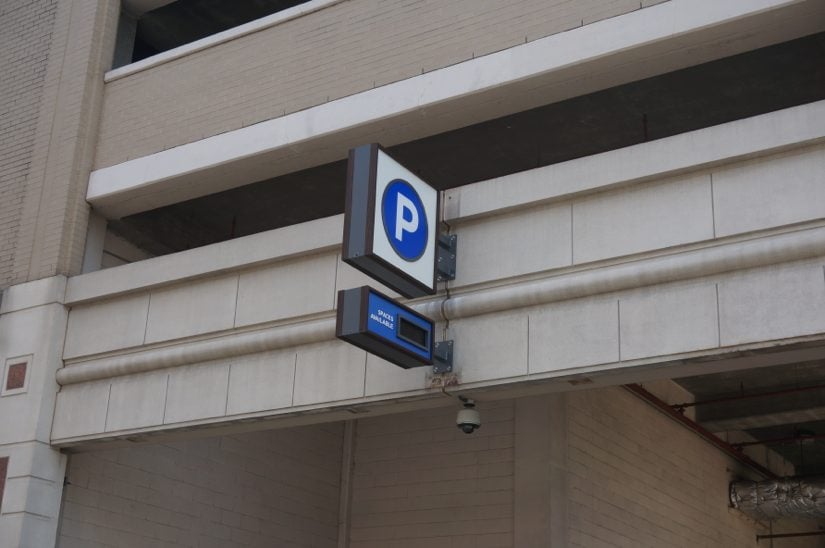
The Fairfax County Board of Supervisors gave the county’s transportation department permission this week to start work on plans for managed curbside parking in Tysons and Reston.
Whether the plan includes paid parking, time-limited parking, designated commercial vehicle parking, or some combination, the Fairfax County Department of Transportation will need at least a year to draw one up for the Board of Supervisors to review, staff said during a board transportation committee meeting on Tuesday.
The incremental step forward comes after professional traffic engineers released their findings from a two-year study that analyzed current parking habits in Tysons’ urban center and Reston’s transit station areas as well as potential options to manage parking.
“Currently in the county, we have a very limited toolbox of parking restrictions that can be implemented by either the Board or VDOT,” FCDOT Section Chief Neil Freschman said. “Generally, most on-street parking on public roadways is uncontrolled.”
The study found that public on-street parking in Reston is incredibly limited.
Parking is available on just 6% of the 15 miles of public curb space surrounding the Wiehle-Reston East, Reston Town Center, and Herndon Metrorail stations, FCDOT Senior Transportation Planner Henri Stein McCartney said.
“We found 211 total public on-street spaces within the study area, which is pretty low,” she said. “Most parking is on private streets, which we don’t manage.”
Comparatively, Tysons had more parking. Staff found 1,272 spaces along 22 miles — or 29% — of curb space on the roadways surrounding the Greensboro, Springhill, Tysons, and McLean Metro stations.
However, parking in Tysons suffers from other problems, including cars parked in “No Parking” zones and travel lanes, along with large commercial vehicles that overstay their welcome.
“Some of these vehicles are reportedly parking for days or weeks without moving,” McCartney said. “Our parking staff has received multiple complaints from Tysons businesses about commercial vehicles that are parking long-term near their building, so we know this is an issue.”
Transportation Committee Vice-Chair Kathy Smith, who represents Sully District, told Tysons Reporter that commercial vehicles parking for extended periods is a county-wide issue.
“I think it’s good that staff is looking into how to balance people’s ability to get into businesses and getting more turnover,” Smith said. “Everybody would agree you don’t want commercial vehicles taking up space for days.”
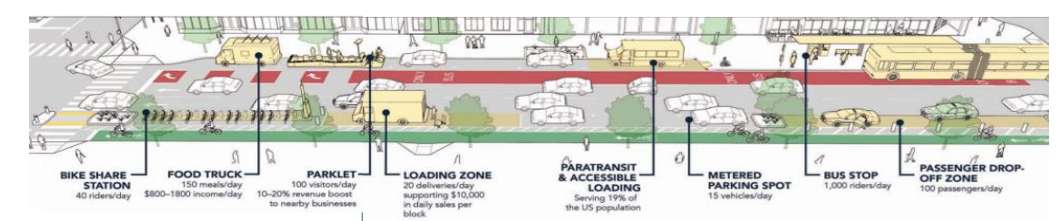
This parking plan is being developed alongside changes to the street grid in Tysons and Reston, Hunter Mill District Supervisor Walter Alcorn told Tysons Reporter. In some cases, parking policies will be developed for streets that do not yet exist, but have been incorporated into the two communities’ comprehensive plans to be more transit-oriented.
The management plan should encourage parking spot turnover to ensure that these future streets near transit stations, which are lined with mixed-use properties, do not become commuter lots, he said.
However, managed parking in Reston’s transit areas will have to overcome the controversy that Boston Properties ignited when the property manager introduced and later modified paid parking at the Reston Town Center.
“The number one lesson is, don’t make all your streets private,” Alcorn said. “We have an awful lot of private streets. What we’ve learned is that the public doesn’t have any say — it is up to the private street owner.”
While private streets make planning events more flexible, Alcorn says the 2017 flare-up, which focused mostly on the garage parking, could also be attributed in part to community members not having a say.
For the most part, though, what FCDOT is working on “is apples and oranges” compared to the RTC, he said.
Image via Fairfax County
