

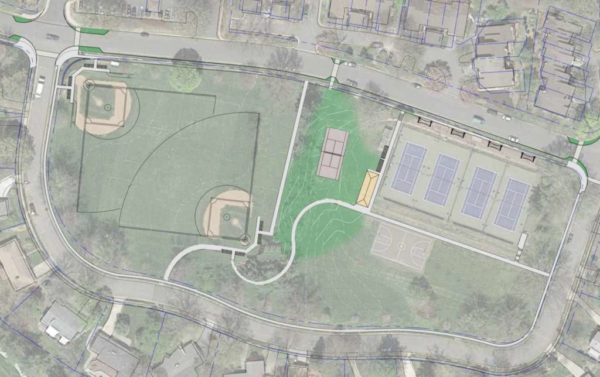
After a year-long review and public engagement period, members of a working group charged with developing the master plan for Hook Road Recreation Area will pitch their recommendations on how the area should be upgraded this week.
The area, which has remained largely unchanged since tennis and baseball amenities were added in 1973, was identified for major revitalization in 2016 after a review of facility enhancements approved by Reston Association’s Board of Directors.
Members of the 16-person working group, which was created by the board, will present their conceptual plan at RA’s board meeting at 6:30 p.m. at RA headquarters. The board will consider a motion to allocate $50,000 in next year’s budget for architecture and engineering of the conceptual master plan. Full cost estimates and phasing of future improvements would be determined following the analysis.
Design consultant Dewberry held three public roundtable discussions on the project — a process that flagged areas of concern, areas of use and areas to improve. Based on a public online survey and a survey mailed to households nearby the facility, Dewberry found that the areas were primarily used for “passive recreation,” with most respondents leaning toward using the park as is with minimal changes. After considering four concepts, the working group selected a final plan, which prioritizes traffic calming, baseball upgrades, internal paths, a ring path, and a natural playscape.
Road upgrades, which are subject to state approval, include roadway bump-outs at the west intersection of the property and a crosswalk. Upgrades to the baseball field and the construction of a permanent pavilion and bathroom is also recommended. Currently, one portable bathroom serves the entire park. Paths would be added near the baseball field. Other components of the plan include a natural enhancement for seating along Fairway Drive, tree preservation, a natural playscape for children with the “fewest manmade elements as possible,” and pathways as narrow as possible while remaining compliant with ADA and RA guidelines, according to the plan.
A live stream of the meeting will be available on YouTube.
Photo via handout/Reston Association
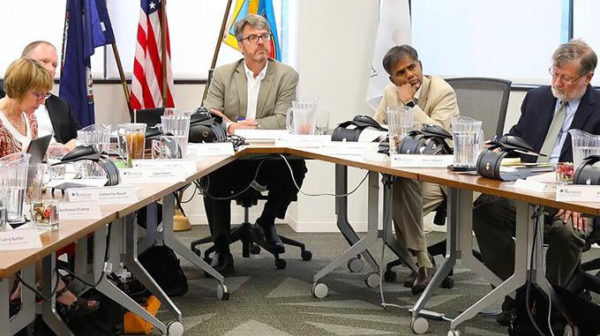
Reston Association’s top leadership position of CEO remains unfilled following the previous CEO’s departure from the organization in late February.
Since former CEO Cate Fulkerson left her position in late February and transitioned into a special advisor role, RA’s Board of Directors has not yet found a permanent replacement. In a note to RA’s members, board president Andy Sigle said the board is working with human resources to expand the search for CEO and voted last month to hire an executive search firm to assist with the hiring process.
Larry Butler, RA’s senior direct of land use and planning, took over as acting CEO in mid-April after Robert Wood, the acting CEO at the time, stepped down to take another position at a non-profit organization in the District.
Since beginning the process of selecting a new CEO “in earnest” in May, Sigle indicated that no candidates advanced during a second round of interviews with the board in August. The board voted on candidates for the first round of interviews, which were held in June and July. Candidates were interviewed by an internal board search committee with RA’s senior leadership team and selected board members.
Here’s more from Sigle’s note to members:
Members can rest assured that the board is seeking a CEO who can work cooperatively and collaboratively in establishing short and long-term goals and priorities for the association. The CEO leads the effort to develop biennial budgets, so it is vitally important to the future of Reston that resources allotted in those budgets are used wisely. The board plays a fiduciary role in making sure your assessment dollars are spent in a way that aligns with the association’s Strategic Plan and focuses on the quality of life issues that make Reston a special place to live, work and play.
While there are an array of traits and qualifications we are seeking in the next CEO, the ability to lead and manage ranks near or at the top. Integrity, ethical conduct and the proven know-how to foster a climate that attracts, retains and motivates a diverse staff are important skills in leading any community organization, especially one as large and intricate as Reston Association.
Making the tough calls isn’t always fun, but it is a necessary requirement in overseeing a staff with over 100 employees working in a broad range of jobs that all focus on RA’s mission statement. The CEO position is a member-facing, rollup-your-sleeves job that requires the ability to smartly navigate through internal issues and also external policy matters involving Fairfax County and private businesses. Financial stewardship and extensive knowledge of customer service are at the forefront of what the board and RA members expect from a CEO.
While we wind through the process of hiring a new CEO, the board wants to express its thanks to the RA staff for stepping up to make sure that “the trains continue to run on time” in the interim. The importance of selecting the right person to lead RA can’t be overemphasized enough, so we continue to appreciate the patience shown by staff and members as we do our due diligence.
While board members come and go with each annual election, the CEO should bring a sense of stability and vision to the organization that will hopefully last for years. We will keep you posted on our progress and promptly introduce you to our new CEO when they are onboard.
Photo via Reston Association
Potential receiver to handle Kiddar Capital assets — “The Securities and Exchange Commission has asked the judge in the civil case against real estate developer Todd Hitt to appoint Richmond attorney Bruce Matson as receiver for Hitt’s development and investment operations, according to a new motion filed in the U.S. District Court for the Eastern District of Virginia.” [Washington Business Journal]
Are you listening — The third listening session with Reston Association’s Board of Directors is on for tonight. Caren Anton, the director of the Dogwood and Hunters Woods district, will listen to your questions and concerns. [Reston Association]
And Metro is too — bus passengers are encouraged to take part in a survey that will help determine funding allocations for different jurisdictions. [Washington Metropolitan Area Authority]
Photo by Caroline Rapking
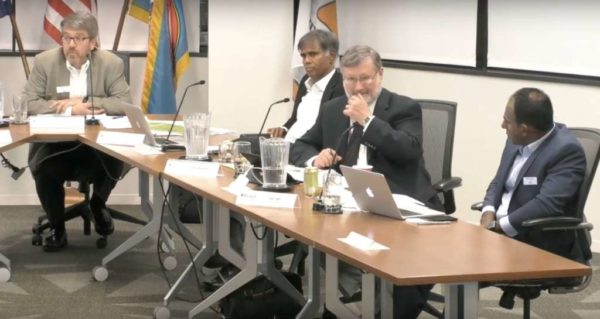
Reston Association’s Board of Directors took a deep dive into drafting next year’s budget, which could include a roughly $11 increase in member assessments.
The proposed increase, which is currently under consideration, is driven by nearly $229,000 in new expenses, such as a $60,000 reserve study required by state law every five years and nearly $56,000 in health care cost increases for staff.
At a meeting in late September, the board took particular interest in $20,000 allocated for targeted marketing in an effort to reach individuals outside of RA’s membership and boost rentals of facilities. Mike Leone, RA’s director communications and community engagement, said would allow staff to expand their reach and market RA’s rental facilities, including the Lake House.
In previous years, staff used free marketing tools to reach members and non-members. Board members said they wanted to see more information on how targeted marketing was linked to revenue increases and return on investment.
“This board will need to see more granularized targets,” said RA board president Andy Sigle.
RA’s Acting CEO Larry Butler said he directed department heads to examine how to cut costs across different entities within RA.
“They’re very, very small compromises,” Butler said.
New proposed items in this year’s budget include the following:
- Reserve study: $60,000 of a study required by law every five years
- Healthcare cost increase: $55,500 for a projected 6.5 percent increase in current healthcare funds
- POAA software: $43,000 to eliminate proprietary software
- Dechlorination systems for pools: $20,000 to fulfill a new Fairfax County requirement to address stormwater concerns
- Billings and collections software: $30,000 to replace an antiquated proprietary system; will utilize a $75,000 in carry-forward funds from this year
Photo via YouTube/Reston Association
Reston Association’s Board of Directors approved process changes to its design review guidelines Thursday night. The changes, under discussion for just under two years, are aimed to expedite application processing and boost efficiency.
Overall, review of cluster standard applications would jump from review by the Design Review Board’s panel to consultation-level review with two DRB members. Additionally, other applications would move from consultation-level review to staff-level review only.
A complete list of the approved changes is available online. No content changes to the design guidelines are in effect as a result of Thursday’s approval.
Anna Varone, RA’s director of covenants administration, said the changes will help “streamline the process to allow quicker processing.” The DRB held a public hearing on the changes in July.
Members can still request appeals of applications, including those now delegated to staff-level review.
Photo via YouTube/Reston Association
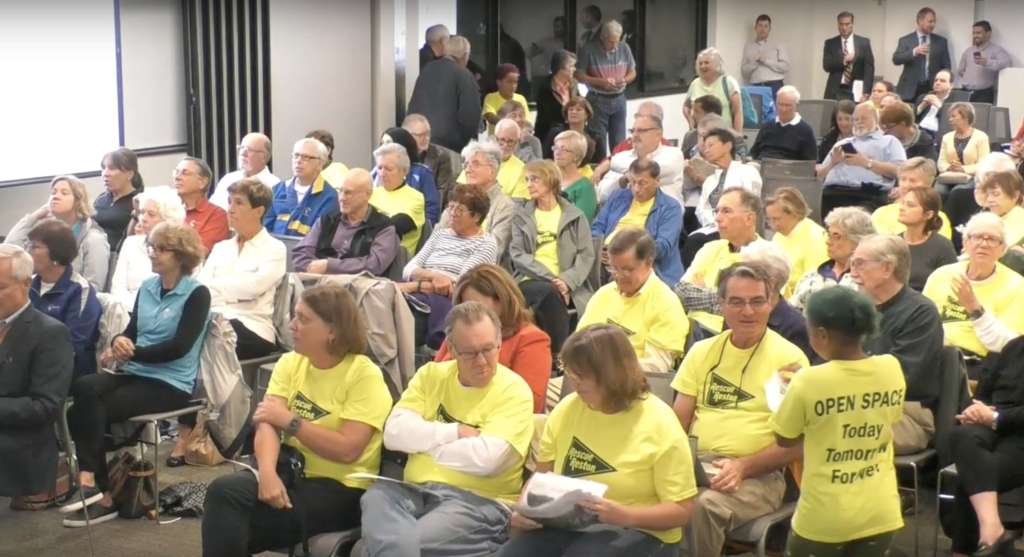
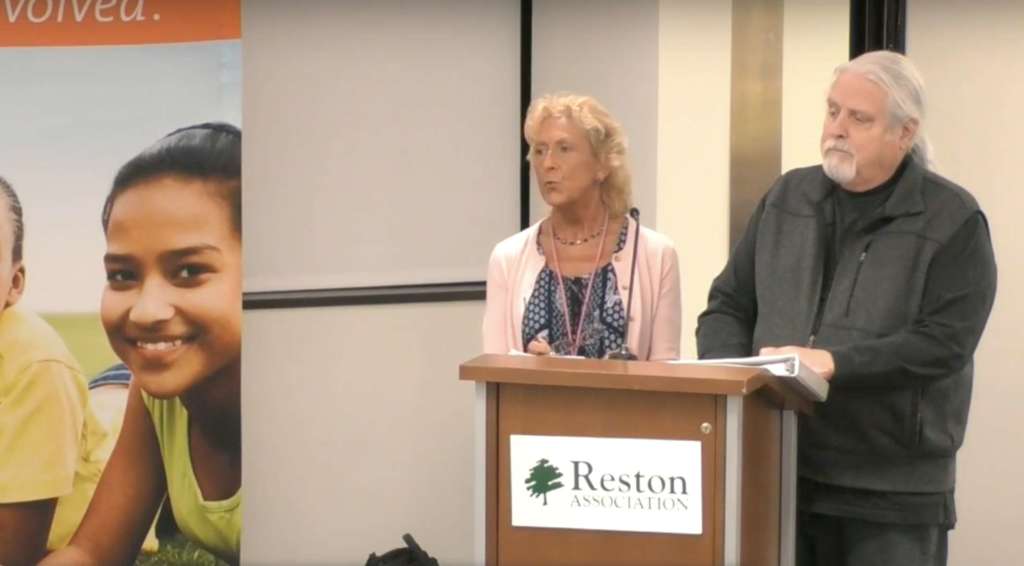
A developer’s plan to rezone and redevelop Hidden Creek Country Club from a private golf course into a 100-acre public park with between 600 to 1,000 residential units drew passionate opposition from residents Thursday night.
Wheelock Communities, which purchased the golf course in October last year, presented its conceptual plan for the 160-acre property to Reston Association’s Board of Directors. A formal development plan has not been submitted to the county and would require the county to rezone the property. Fairfax County’s Comprehensive Plan restricts Hidden Creek Country Club as a private recreational use, specifically a golf course. RA also passed a resolution in 2016 that states Reston’s two golf courses are reserved for golfing only, although the approval of the project and required rezoning is determined by the county.
Steve Coniglio, a regional partner with Wheelock, pitched the concept to RA’s board as an environmentally-friendly move that would serve unmet public space needs in Reston and provide for-sale housing stock at a variety of undisclosed affordability levels. Wheelock, which led several work group sessions with area stakeholders about its plans, would also restore several degraded streams on the site and end Lake Anne water rights exclusive to the golf course, creating a community gathering space with input from residents.
In a flashback to its defense of Reston National Golf Course, which was threatened by development several years ago, Rescue Reston, the grassroots organization that seeks to preserve the golf course and push back against unplanned development, challenged Wheelock to sell the site to another owner who can preserve the golf course and help it rebound.
“They throw in their version of a ‘park’ to misdirect and divide us,” said Lynne Mulston of Rescue Reston, adding that Wheelock’s plan makes “insulting assumptions” about Reston. A survey of area residents conducted by Rescue Reston this year found that nearly 97 percent of the 454 respondents want to preserve the golf course for private recreational use.
“It’s a bad swing that takes Reston out of bounds,” Mulston added.
Rescue Reston members, clad in yellow shirts, also said Wheelock’s plan leaves many unanswered questions, including who will maintain and pay for the park and pedestrian access. The group also said Wheelock’s plan is not driven by environmental stewardship because residential development would require tree removal and contribute to stormwater runoff.
“Open space today, tomorrow, forever,” said Rescue Reston’s president Connie Hartke.
But Coniglio said the golf course is struggling to court members for dues-only membership, forecasting an uncertain future for the golf course. “Everyone says make it better, but it’s a business and its about cash flow,” Coniglio said.
The company spent around $500,000 for capital improvements to the golf course this year and future expenses to maintain the golf course are only expected to rise, he said.
“Yes, it’s a golf course today. That’s absolutely true. But is the golf course the best use of the land as it relates to the rest of the community? I don’t think it necessarily is,” Coniglio said.
RA board members pushed Wheelock for more information, including market analyses, on how the developer determined the golf course’s current use was unsustainable.
“Why would I join a club if the press tells me you’re going to close it?” said RA board member Julie Bitzer, adding that Wheelock’s vision for the property fails to acknowledge Reston’s golf course heritage.
Wheelock’s vision for the property includes between 600 and 1,000 residential units with a mix of townhouses, villas, and multi-family units. Coniglio said the developer designed the project “backwards” by focusing on open, public space. The residential component of the project would generate between $300,000 and $500,000 in yearly revenue for RA.
“We started with the open space, we started with the stream and the environment and that’s why we don’t have a plan with streets and boxes here for you,” Coniglio said, noting that the development would be designed so that it transitions smoothly to surrounding areas.
RA board member Ven Iyer said it was unfair to neighboring residents who could see their backyards jump from a private to public use.
Wheelock’s presentation is below:
Hidden Creek Country Club Presentation by Wheelock Communities by Fatimah Waseem on Scribd
Rescue Reston’s presentation can also be found below:
Rescue Reston North Course Presentation by Fatimah Waseem on Scribd
Photo via YouTube

Weekend track work on Metro — Silver, Blue and Yellow Line trains are scheduled to run every 24 minutes on Saturday and Sunday. Largo Town Center Metro station will be closed. [WTOP]
Reston Association Board meets tonight — A vision for the future of Hidden Creek Country Club, one of two golf courses in Reston, will be unveiled by the owner. The developer plans to convert the golf course into a public park with residential development. [Reston Association]
Book sale begins for Reston friends — Members of the Friends of Reston Regional Library get first dibs on the Friend’s book sale today. The sale is open to the public on Friday and into the weekend. [Fairfax County Government]
Teen Advisory Board meeting tonight — The board will meet today to discuss how to make the library a wonderful place for teenagers. The board is open to volunteers between the age of 13 and 18. Volunteer hours are also offered for participation. [Reston Regional Library]
Flickr pool photo by vantagehill

Member listening sessions begin tomorrow — Reston Association’s Board of Directors invites RA members to take part in a few listening sessions that begin tomorrow. Other meetings are set for Oct. 3, Oct. 10, and Oct. 17. [Reston Today]
Missing Sterling teen found — Bryan Ortega-Henriquez, 15, went missing last week and was found yesterday, according to local law enforcement. He was believed to be in the Herndon area. [Loudoun County Sheriff’s Office]
Decision on RTC West expected today — The Fairfax County Board of Supervisors will vote on a major project to expand RTC West from an office park with some retail into a mixed-use project with up to 576 multifamily units. [Fairfax County Government]
Give blood today — INOVA’s bloodmobile will be in Reston Town Center today from 1-6 p.m. [Reston Town Center]
Flickr pool photo by vantagehill
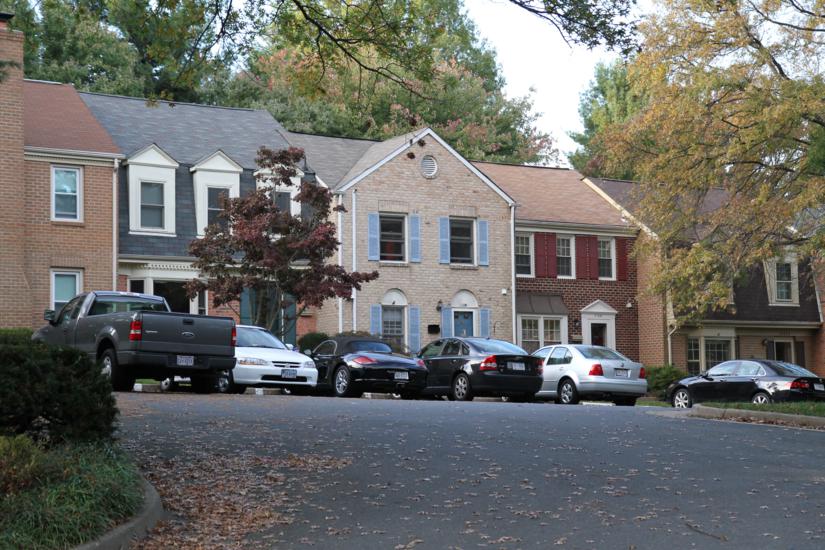
Reston Association’s Board of Directors will hold a public hearing on changes to the organization’s design guidelines on Sept. 27 at 6:30 p.m. at RA headquarters (12001 Sunrise Valley Drive).
The proposed changes aim to improve how RA’s Design Review Board, an independent entity within RA, reviews applications. The DRB reviews applications to change the exteriors of properties within RA.
For example, applications concerning light fixtures governed by cluster standards will move from panel-level to consultation-level review. Other changes related to air conditioners, artwork, attic ventilators, awnings, and cables would move from consultation-level review to staff review only. Similar changes are proposed for single-family detached units. All proposed changes are available online.
The DRB held its last public hearing on the guideline changes on July 17. RA’s design covenants aim to promote qualities that bring value to the property and “foster the attractiveness and functional utility of the community as a place to live, including a harmonious relationship among structures, vegetation, and topography, ” according to RA’s website.
File photo
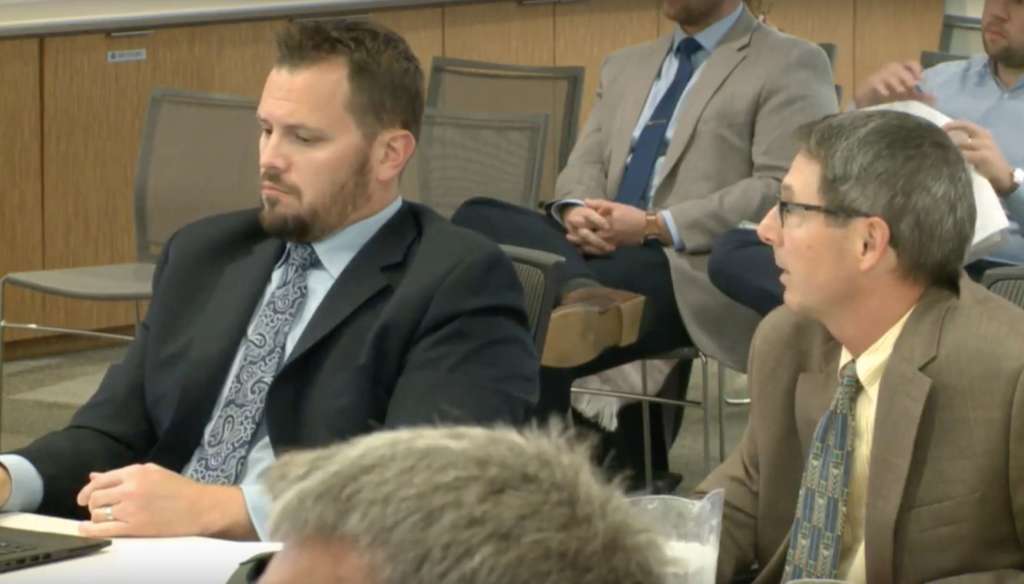 In a preliminary dive into next year’s budget on Monday, Reston Association’s Board of Directors and members of its fiscal committee explored ways to navigate a possible increase in assessments next year.
The increase may be necessary to offset additional expenses and new capital projects, according to RA officials. A major driver of expenses is a $50,000 increase in health insurance premiums for staff and $215,000 to pay for unanticipated lease payments for the lease of RA’s headquarters. Although staff hiring savings of $90,000 are expected to offset some expenses, the association has also seen an increase in lawsuits, amounting to roughly $30,000. Revenues from the Lake House and tennis courts are also down, said Larry Butler, RA’s Acting CEO.
Other expenses include a $60,000 state-mandated reserve study, $40,000 in software updates, $44,000 to add dechlorination systems for pools, $30,000 for a new billing and collections software and $20,000 for targeted marketing. The dredged of Lake Audubon, which was pushed from this year to next year, is expected to cost $850,000. Projected cost estimates for improvements to Hook Road are also expected to be a major expense next year.
Butler pitched several budgeting strategies for next year’s budget. On the top of the list is a proposed 2.5 percent in membership dues or annual RA assessments. Other alternatives include cutting expenses by 2.5 percent, dipping into investment earnings for $35,000, and the use of RA’s operating reserves.
RA Board President Andy Sigle suggested that staff continue to explore ways to balance the budget with RA’s operating reserve, which was also used to pay the Lake House loan. A stronger understanding of the projected year-end balance for the operating fund was necessary to determine whether or not to increase assessments, Sigle said.
Board member Julie Bitzer also stressed the need to ensure budgeted amounts are conservative and realistic, citing that RA budgeting for a decrease in lease payments for its headquarters location, only to later discover a decrease was not expected.
RA staff and the board will take a second dive into the budget by presenting draft two of the budget in late September. Following a series of listening sessions with members, the fiscal committee will receive the budget in late October. The budget is approved at a November meeting by the board following additional member input opportunities and amendments.
Photo via Reston Association
Following a series of meetings with county officials about a planned population density increase in Reston, Reston Association’s Board of Directors is urging the county to build more assertive, clearer statements into its planning and development mechanisms.
At a special work session Monday night, board members considered adding language to specify a population cap. After some discussion, the board concluded it was best to avoid locking in a specific number until other items were addressed. Acting CEO Larry Butler said it was better for RA to not take a position on the issue yet.
“This takes more of a position which I’m sure a lot of people in the community would like to see but I’m just saying that it has not been the tack of the board,” Butler said.
RA board president Andy Sigle said adding a specific population cap could be addressed in a subsequent letter. The letter itself raises the following points:
- Provide a clear statement that Reston’s Village Centers, with the exception of Lake Anne and Tall Oaks, are planned to reflect land uses that currently exist
- Like the Tysons plan, Reston’s plan should include periodic updates on how development and public infrastructure are being developed, binding commitments for additional infrastructure and a formal transportation operations analysis
- A review of the assumptions and methodology that drives the Reston Transportation Network Analysis
- Implementation of a collaborative mechanism between RA, the county, the Northern Virginia Regional Park Authority, the Fairfax County Park Authority and Reston Town Center Association to create a plan to increase the capacity of Reston’s recreational facilities to serve new residents
- The addition of clearer, more assertive statements that ensure development and infrastructure capacity are developed simultaneously and as demands arise
- Establish a realistic plan to add increased school capacity to serve new student populations
- Remove the grid of streets road connection between American Dream Way and Isaac Newton Square
- Clarify that a land use category that applies to the Harrison Apartments and the Charter Oaks Apartments applies only to those two parcels
As one of the original members of the Coalition for a Planned Reston, the grassroots organization heavily involved in discussions with the county, board member John Mooney said RA must recognize that it has no legal power in these discussions. Mooney said the organization should exercise its political power to push for changes as necessary.
“There is a power to truth and we have insisted that we want reason to show what the truth is… we have made it not an act of the will but an act of reason,” Mooney said.
More information on the proposed zoning ordinance amendment is available online. The county has not yet released a schedule detailing when the amendment will be formally introduced at the county level.
File photo via Reston Association

‘Muscle Up Mondays’ continue today — Crunch Fitness will continue to offer free group fitness classes on Mondays through October 29 at 6:30 p.m. in Reston Town Center. [Facebook]
Delays on Orange, Silver and Blue lines continue –Metro commuters are encouraged to seek other transportation options this week as major construction work continues through August 26. [Washington Metropolitan Area Transit Authority]
Ramp and lane closures in effect this week — Several local lanes and ramps will be closed this week as work on phase two of the Silver Line continues. Impacted roads include the Dulles Toll Road, Sunset Hills Road, Sunrise Valley Drive and Herndon Parkway. [Dulles Corridor Metrorail Project]
Let’s talk finances — Reston Association’s Board of Directors will meet with the organization’s fiscal committee to review the first draft of the operating and capital budgets, as well as the PRC zoning amendment. [Reston Association]
In summary: Downtown Herndon redevelopment — Comstock Partners has officially withdrawn its application for a Certificate of Appropriateness to the Town of Herndon’s Heritage Preservation Review Board for the redevelopment of downtown Herndon. But plans are in the works to resubmit the proposal, which calls for roughly 17,600 square feet of retail, 200+ apartments, and a 761-space parking garage. [Fairfax County Times]
Photo by Beth Allgaier
Continuing a practice embraced by previous candidates for the Reston Association’s Board of Directors, the board will host four member listening sessions starting next month.
Residents in each voting district will be able to provide feedback and learn more about updates on district-related topics, as well as community members. Each listening session is hosted by the board member representing the district.
RA Board President Andy Sigle said he hopes to see strong attendance at the listening sessions.
“The district listening sessions are designed to make sharing thoughts and ideas about our association easy,” Sigle wrote in a prepared statement “Drop in, chat with neighbors, staff and board members. Listen to a short talk from a board member on current association issues and priorities and then share your views.”
Details for the sessions are below:
- September 26: North Point District with John Mooney (The Lake House, 11450 Baron Cameron Avenue)
- October 3: South Lakes District with Julie Bitzer (Walker Nature Center, 11450 Glade Drive)
- October 10: Hunters Woods/Dogwood District with Caren Anton (Southgate Community Center, 12125 Pinecrest Road)
- October 17: Lake Anne District with Sherri Hebert (Reston Community Center Lake Anne, 1609 Washington Plaza)
Photo via Reston Association

At the last workgroup meeting on a controversial zoning amendment, county officials stressed that population density increases proposed in Reston’s comprehensive plan are broad targets that will be gradually implemented over the next 30 years.
The meeting, held Tuesday night, was the last in a series of discussions on the county’s proposal to increase Reston’s population density from 13 to 16 people per acre in the community’s Planned Residential Community district.
Representatives from the Coalition for a Planned Reston and Reston Association said that while they were not opposed to development, the cumulative impact of increased development without the infrastructure to manage it was a major concern.
Tammi Petrine, co-chair of Reston 2020, said increasing the density cap only invites more developers to push harder for development — a trend that she said is already clearly evident in the streak of major mixed-use projects approved by the Fairfax County Board of Supervisors.
Fred Selden, director of the Fairfax County’s Department of Planning and Zoning, said the community has multiple opportunities between when a development plan is proposed and passed to voice their concerns, suggest alternatives and raise critical issues.
“The community, quite frankly, has to give its judgment,” Selden said.
But others felt that concerns raised by community members have little sway in the overall planning process.
Selden said his office would be open to discussing possible changes to Reston’s comprehensive plan if pressing needs arose. In Tysons, the plan was updated seven years after its passage when the planned grid of streets did not align with what was actually being built.
But Selden also noted that major changes to planned land use intensities are rarely incorporated within five years of a plan’s passage. Late last year, CPR and RA suggested altering Reston’s master plan to make specific changes. He repeatedly stressed that Reston’s plan envisions possible future growth, which may or may not be realized given economic and market constraints.
Redevelopment of Reston’s village centers was also a hot topic during Tuesday’s discussion. Selden stressed that the plan already leaves the door open for high-density redevelopment potential — an element of the plan that was supported by some residents during earlier planning discussions.
“We could have said that there’s no redevelopment potential in the village centers,” Selden said. “But that’s not what we heard from the community.”
Others like John Mooney, a member on RA’s Board of Directors, said planning processes focus on the impacts of development in Transit Station Areas without considering the impact on development in all of Reston.
He said traffic studies have not considered the impact of traffic in Transit Station Areas on the rest of Reston.
“I see no evidence, although I’m awaiting further information,” Mooney said.
Photo via YouTube
(This story was updated on Wednesday at 6:27 a.m. to clarify a quote by John Mooney.)

In early discussions about the future of Hidden Creek Country Club, members of the Reston Association’s Board of Directors and community advocates stood firm against the redevelopment of the golf course as its new owner, Wheelock Communities, contemplates future redevelopment options.
Since purchasing the golf course in October last year, Wheelock has held three work group sessions with community groups and nearby residents to discuss plans for the site. At its last meeting, the real estate developer of master planned communities pitched four options, including a no-build alternative. Discussions are preliminary.
Concerns about future redevelopment intensified when Wheelock Street Capital, an affiliated company, purchased Charter Oak Apartments in partnership with local investment firm Canandaigua & Pratt Holdings in February. The apartment is next to the golf course.
At an RA board meeting Thursday night, members reiterated that Reston is a two-golf course community. Reston’s Master Plan emphasizes the importance of preserving Reston’s golf courses for private recreational use and an RA resolution commits to ensuring Reston is a golf course community and opposes any attempts to create a roadway between American Dream Way and Isaac Newtown Square through the property.
Sherri Hebert, an RA board member, said Wheelock has pitched ways redevelopment could improve public accessibility through additional walking paths and make it more environmentally friendly. Hebert said the club is already “a community diamond” and that the future of golf is strong.
“They’ve even used Bob Simon and his vision to take about this is to be envisioned as something different, which I personally find insulting,” Hebert said.
The discussion harkens back to Rescue Reston’s defense of Reston National Golf Course, which was threatened by development plans several years. Connie Hartke, president of Rescue Reston, a grassroots group formed in 2012 in response to threats against the golf course, said the group is prepared to step up opposition against future development plans.
“This is not the time to concede an inch of open space,” Hartke said, noting that more planned development is on the horizon.
RA’s board plans to discuss the issue with representatives from Wheelock at a board operations committee meeting in September and a later board meeting that month as well. RA board president Andy Sigle described Thursday’s discussion as preliminary.
Sridhar Ganesan, an RA board member, said Wheelock has stated the cost of making improvements to the golf course raises questions about the future viability of the site. Ganesan said he hopes to see an analysis by Wheelock to determine how that conclusion was reached.
Wheelock issued the following statement late Friday afternoon:
When Wheelock Communities purchased Hidden Creek Country Club in October
2017, we immediately recognized the special character of Reston and the need to
include the community in exploring all the possibilities for the future of the golf
course. With that idea and Bob Simon’s Founding Principles of Reston in mind, Wheelock
engaged the community by establishing a Focus Group to gain the perspective
from a broad-based group of approximately 20 Reston residents. The Focus
Group, which has not yet concluded its work, began without preconceived
notions about the future of the property.
This story was updated on Monday (July 30) to include Wheelock’s response.
Handout via Reston Association
