


Metro’s Board of Directors on Thursday voted to give Metro Executive Director Richard Sarles the authority to set the opening date for the Silver Line rail extension to Reston.
But the wait for that opening date will go on for a while longer. The transit agency will continue its 90-day testing and training period that gets the 11-mile addition ready for passengers. Metro began the 90-day period on May 27.
Metro officials said earlier this week they are concerned by the slow pace by Dulles Transit Partners, the contractor for Metropolitan Washington Airports Authority that built the $2.9 billion Phase I. MWAA and Metro agreed in April that a list of 33 items could be finished after rail line was handed over the Metro.
They also refused to confirm a report by WAMU that the Silver Line would open July 28.
Metro Deputy GM Rob Troup said Monday only 4 or 5 items have been addressed. At a the Dulles Corridor Rail Association’s spring meeting in Reston Thursday night, MWAA Project Director Sam Carnaggio said “we are 25 percent through that list, despite what you may have read.”
“I have confidence we are almost there,” he said.
The Dulles Corridor Rail Association honored Pat Nowakowaski, the former Silver Line executive director who left the post last month to head the Long Island Railroad, at its annual meeting in Reston later on Thursday.
“This was a great project, a great job, and I wanted to be here until the end,” he said, adding he is confident that MWAA will complete the remaining items soon.
The DCRA reception took place in a large, open space that will eventually be Reston Station’s retail center.
Thus far, there are no signed tenants for the space, which sits atop the Wiehle-Reston East Station’s 3,300-space parking garage. The parking garage is a joint project from developer Comstock and Fairfax County. Comstock spokeswoman Maggie Parker said the company hopes to have retail tenant information soon.
Rep. Gerry Connolly (D-VA 11) says the opening of the Silver Line, whose Phase I will run from Tysons Corner to Reston, will mark an important milestone in turning the Dulles corridor into “the most important corridor in the nation’s capital except downtown itself.”
“People talk about the Arlington-Ballston corridor as being [an important business center],” he said. “This corridor is seven times the size. When we began talking about rail to Dulles, this area was 4 percent of the [Gross Domestic Product] for the region. Now it is 35 percent.”
Phase 2, which will run from Wiehle Avenue to Dulles International Airport and into Loudoun County, is expected to open in 2018.
Carnaggio said Thursday that design work on the second phase is 55 percent complete.
 Reston Now readers had a lot to say about Metro’s Silver Line this week.
Metro is in a 90-day training and testing period for the 11-mile rail extension that will run to Reston’s Wiehle Avenue. But with no opening date set — and Metro’s frustration with Dulles Transit Partners’ progress on post-operational readiness repairs — potential riders in our community are getting restless.
Here is what reader commented on Reston Now this week:
I am a patron of transit services in the WDC area. I have also been an activist for better transit service in the WDC area. I am a prospective patron of the Silver Line. I have been more and more exasperated with the cost overruns and particularly the delays of the Silver Line.
DTP [Dulles Transit Partners] and Bechtel are behind schedule on half the items,” Metro deputy general manager Rob Troup said in a conference call with reporters on Monday. “We expected them to be further along.” (Monday June 9th 2014.)
Mr. [Metro Deputy GM Rob] Troup said that only 4 items on the punch list have been closed out or done so far.
I am downright angry now.
I’ve a good mind to go Bechtel’s Reston Office and demand to talk with
someone in charge re: the foot-dragging by them and the contractor on part one of the Silver Line.I demand that WMATA obtain a schedule of work to be done on the Silver Line from Bechtel and the contractor and then pressure Bechtel and the contractor to pick up the pace on the finishing work on the Silver Line. … I am growing impatient. My patience is limited. I want to ride the Silver Line into Washington by August 7th. This to me is non-negotiable.
Beware my wrath in September if the Silver Line is not up and running safely. I know how to organize people and I’ll organize protests. Picketing, Street-Theatre and an invasion of Bechtel’s Reston office.
Said another reader:
I’m still trying to figure out if the Silver Line “opening” is a joke, a mirage, or a nightmare.
There was also concern over the cost commuters will pay if they take the Silver Line to downtown DC daily. Advocacy group Reston 2020 analyzed what commuters will pay and found a large increase from the current system of taking a Fairfax Connector bus to a Blue/Orange line station.
Among the comments:
So my commute now costs $5 more per day and it’ll still take me 45 minutes to get to work. Tell me why this is a good idea again?
Also:
-
If you did Reston to Metro Center via the Toll Road, that would cost you $3.50 in tolls plus $6.50 in gas each way — $20 a day. Thus a key question would be whether your employer provided free parking or not. If it did then one might well prefer to drive rather than use the $16.55 public transit option or certainly the $20.45 option.
-
As a Reston-to-downtown commuter it is disappointing because I know that my overall commute will also be longer as a result of the rerouted buses to Wiehle Ave Station and the longer Metro ride. I get to pay 40% more to spend 30% to 40% more of my time in transit.
-
This is proving to be one more government project that over promises and under delivers. Mass transit was sold as safe, reliable, and economical!?!?! These costs hide the general revenues, toll road fees, and other costs we have already incurred.
The $2.9 billion Silver Line Phase I is more than six months behind schedule. Phase II design work is underway. That phase, which will run from Wiehle Avenue to Reston Parkway, Herndon and Dulles International Airport, among other stops, is slated to open in 2018.
One report, citing union sources, has Phase I slated to open July 28. Metro officials have not confirmed that, however.
Have something to say? Join the conversation by posting in the comments below.
 Commuters who plan on replacing a bus-Metro combo with a straight shot on the new Silver Line should plan on paying more to get to work.
After Metro announced its peak and non-peak Silver Line fares last week, advocacy group Reston 2020 crunched the numbers and found some commuters may pay twice as much to get to Downtown D.C.
Some of the highlights:
- Current rail and bus users will see a nearly 40-percent increase over current round-trip costs (from $10.60 to $14.80 per day). Annually, the total will be $2,960.
- For those who park in the Wiehle garage rather than ride the bus to the station, daily costs will increase 56 percent (to $16.55). That works out to $3,130 a year.
- Costs for riders with a reserved parking space in the garage will nearly double (rising to an average of $20.45 per day, a 92 percent increase). They will face a total annual cost of $4,090.
See the entire analysis on Reston 2020’s blog.
 The anticipated opening of the Silver Line rail extension this summer has meant a hiring blitz for Metro. The organization has added 460 new employees in recent weeks, Metro deputy general manager Rob Troup said.
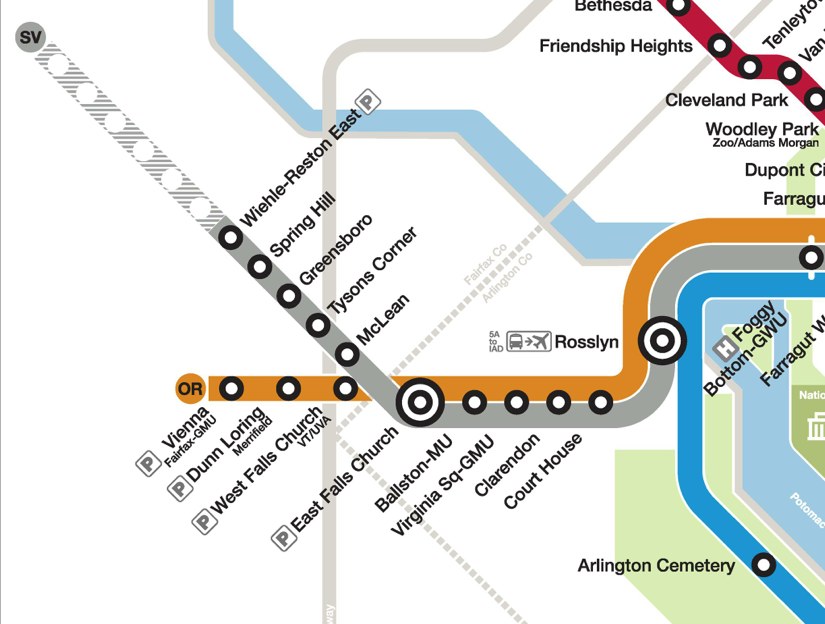
After months of delays, the Silver Line’s Phase 1 — the 11-mile extension from East Falls Church to Reston’s Wiehle Avenue — is tentatively slated to open by summer’s end, though Metro has not set an opening date.
Metro began a 90-day testing and training period on May 27. Troup said Metro’s testing and training is proceeding on schedule. Metro conducted a public safety exercise at Wiehle-Reston East 10 days ago.
Troup said on Monday Metro is concerned that Dulles Transit Partners, the division of Bechtel contracted by the Metropolitan Washington Airports Authority to construct the $2.9 billion Phase 1, is behind schedule on its remaining punch list items. DTP has only completed “about 4 or 5” of the 33 items, and all must be finished before passengers can board the trains, Troup said.
New Metro hiring breaks down to 302 new employees in maintenance; 102 in operations; 41 transit police; 10 in IT; 2 in customer service; 3 in finance. Additionally, 48 train operators and 23 station managers have already been hired.
Not all new employees will work on the Silver Line, Troup added.
Metro will conduct simulated service for a week prior to opening. No passengers will ride the trains during the training runs, said Metro spokesman Dan Stessel. Trains will run on the Blue and Orange Lines from Largo Town Center to East Falls Church, but at East Falls Church they will go out of service and run on the Silver Line from East Falls Church to Wiehle-Reston East.
Metro will conduct a second public safety drill at the Spring Hill Station on June 29, Stessel said.
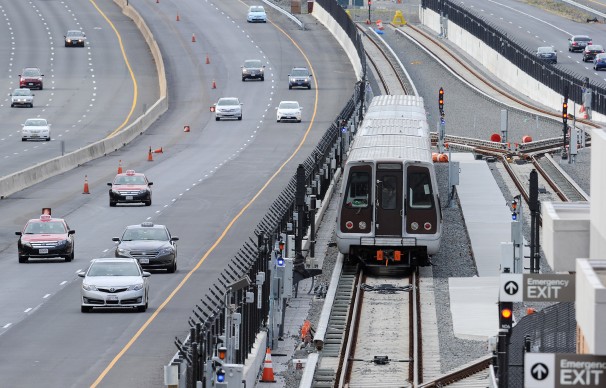 Contractors for the Washington Metropolitan Airports Authority have been slow to repair post-Operational Readiness issues for Metro’s Silver Line, and that could slow progress in getting the rail extension ready to open.
“DTP [Dulles Transit Partners] and Bechtel are behind schedule on half the items,” Metro deputy general manager Rob Troup said in a conference call with reporters on Monday. “We expected them to be further along.”
MWAA, which built the $5.6 billion rail extension that will run from East Falls Church to Reston’s Wiehle Avenue, and Metro agreed in April to allow the airports authority extra time to complete some punch list items, even after Metro took control of the project.
Metro took over the project on May 27, and as of last week it was saying things were progressing on track towards an expected summer opening.
While the Silver Line is more than six months behind schedule, an opening date for service has never been set. WAMU, citing transit union sources, reported on Monday that the Silver Line would conduct simulated service the week of July 20 and begin passenger service a week later. Troup dismissed that information, however.
“We did not set any specific date,” he said. “That date is TBD.”
Some of the items that have been fixed are fencing, a faulty elevator at the Tysons Corner station and equipment at Wiehle-Reston East that will prevent work equipment from rolling on to the track, said Troup. An audit of the re-installed station speakers is now being conducted.
One of the items that needs attention before service can begin include painting of a tunnel handrail “that we are concerned about the effort,” said Troup. Also of concern: ponding and drainage issues in some stations have not been fixed.
“We don’t want to start service and then be out there regrading platforms,” said Troup. “It is not unusual to have to go back and do some re-work on some items. Bechtel is a good contractor, it is just a matter of getting focus and getting the work completed.”
A Bechtel spokeswoman said the contractor continues “to work diligently in collaboration” with the MWAA and Metro and that “good progress is being made.”
Meanwhile, at Thursday’s Metro Board of Directors meeting, the board will vote on authorizing general manager Richard Sarles the authority to set the Silver Line’s opening date.
The law enforcement drill at Metro’s Wiehle-Reston East station went off as planned Sunday, with more than 100 public safety officers taking part in the exercise, a Metro spokesman said.
The next drill, a larger one that will include fire and rescue personnel will take place later this month, said Metro spokesman Dan Stessel.
In Metro’s weekly conference call with the media on Monday, the organization said that progress has been satisfactory in all areas as the rail line moves toward a potential summer opening date.
“Nothing has come up that has put off the goal of opening this summer,” said Lynn Bowersox, Metro Assistant General Manager of Customer Service, Communications and Marketing. ”
She added that reviews from the Federal Transit Administration began as soon as Metro received the project from the Metropolitan Washington Airports Authority (MWAA) last week.
MWAA and its contractors built the $2.9 billion extension, which will have five stops from McLean to Reston’s Wiehle Avenue.
While officials never set a specific opening date, it was hoped first riders would board in late 2013 or early 2014. Metro began a 90-day training and review period, which puts the line on track to open by late August.
 If you see a police presence near Wiehle Avenue and Sunset Hills Road Sunday morning, don’t be alarmed. It’s only a test.
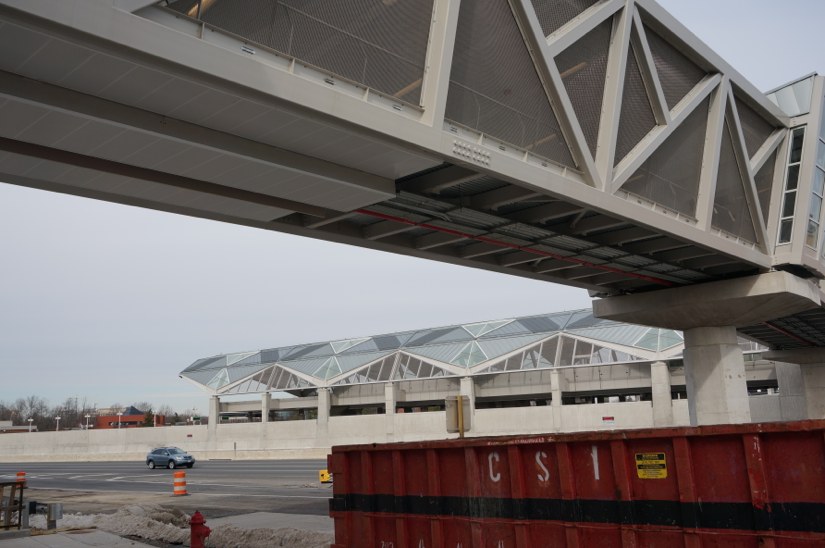
Metro Transit Police and other law enforcement agencies are holding a security exercise at Wiehle-Reston East Station Sunday at 8 a.m.
Metro officials said earlier this week they would be conducting two emergency scenarios on the new Silver Line.
Said Metro:
“The goal of the exercise is to build coordination and provide an opportunity to practice unified command in preparation for the opening of the Silver Line, which includes a number of jurisdictions who share responsibility for the areas surrounding the five new Metrorail stations.
In addition to Metro Transit Police, participants in the exercise will include the Fairfax County Police Department, Virginia State Police, and the Metropolitan Washington Airports Authority Police. The Fairfax County Fire and Rescue Department will provide support.”
The exercise, which is closed to media and public, will take several hours.
Later in the month, public safety groups will conduct an emergency drill on one of the aerial Metro platforms near the Spring Hill station.
The Silver Line reached operational readiness on Tuesday, transferring from Metropolitan Washington Transit Authority’s control to Metro’s control. Metro is now in a 90-day testing and training period, which puts the $2.9 billion, five-station extension on pace to open in August.
Metro General Manager Rob Troup said this week there is still no official projected opening day.
“We feel we are in a very good position,” Troup said in response to a question about opening this summer. “We are working closely with MWAA, and they have allowed us to get our personnel in there early and we have done training for station managers [and other personnel]. I don’t want to give anything definitive. We may have to push [the opening] beyond if we find something of concern to us.”
Washington Metropolitan Area Transit Authority (Metro) officially took possession of the Silver Line Tuesday morning, marking a significant milestone in the rail extension’s timeline towards opening this summer.
The handoff took place at 5:30 a.m., said Metro deputy general manager Rob Troup.
The opening of Phase 1, which will run from East Falls Church to Reston’s Wiehle Avenue, is more than six months behind its projected opening schedule, though neither Metro nor the Metropolitan Washington Transit Authority (MWAA) announced a firm opening date.
Operational readiness (ORD) means that MWAA, which built the $2.9 billion extension, is finished with its part and Metro can now begin a 90-day training and inspection period.
“We are very, very pleased to get to ORD,” Troup said in a conference call with reporters. “Service is going to be significant to the people in Northern Virginia.”
There was no announcement about when the line will be open for service, however.
“We feel we are in a very good position,” Troup said in response to a question about opening this summer. “We are working closely with MWAA, and they have allowed us to get our personnel in there early and we have done training for station managers [and other personnel]. I don’t want to give anything definitive. We may have to push [the opening] beyond if we find something of concern to us.
“But we are testing, hiring and training and feel we are in a very good position.”
Troup said there are a few small items that MWAA contractor Dulles Transit Services needs to address in the coming days. Among them: contract progress and paperwork; drainage systems in stations; and fencing work that needs to be finished.
The bobbing track issue and faulty station speakers have been fixed, Troup said.
Other news of note:
About a week prior to opening, there will be simulated rail service, where trains will run on their regular schedule. The simulated service will not include passengers. When the line opens, trains will run every six minutes during rush hour and every 12 to 20 minutes at other times.
Metro security has been working with local law enforcement (Fairfax County Police, Virginia State Police and Airport Authority Police) for a year, said Metro Transit Police Chief Ron Pavlik. Eight hundred first responders have been trained.
There will be two full-scale emergency exercises with law enforcement agencies, Fairfax County Fire Rescue, Virginia Department of Transportation and D.C. Department of Transportation, Pavlik said.
One will be a drill simulating a “real life scenario,” he said. The other will simulate an emergency on the aerial tracks near the Spring Hill station. The drills will likely occur on a weekend, but no date has been announced.
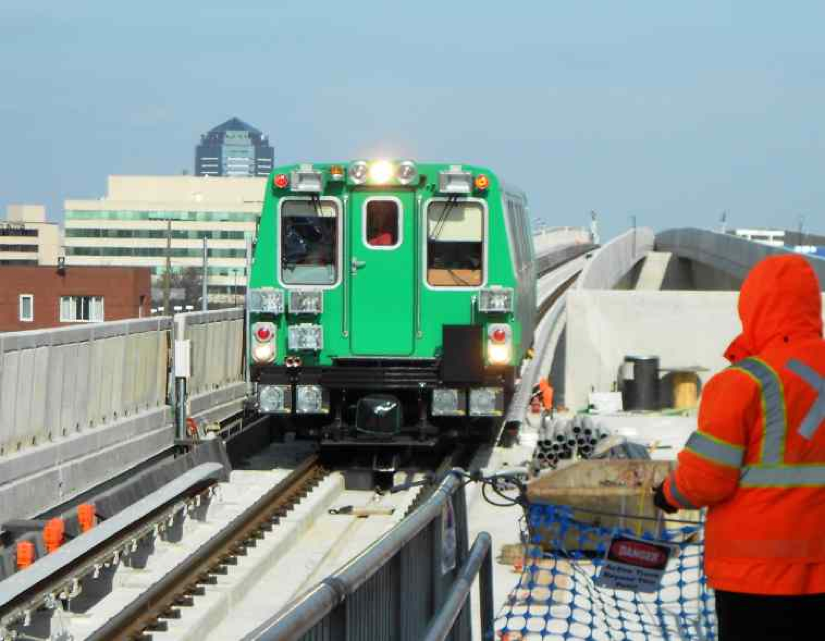 The Metropolitan Washington Airports Authority’s (MWAA) Board of Directors this week finalized the bond sale that will complete the financing of the Silver Line.
The $422 million in Dulles Toll Revenue bonds, which were priced on May 14, will close on May 22, MWAA’s Board of Directors announced at its monthly meeting on Wednesday.
From MWAA:
High investor interest helped drive down interest rates for the bonds, which were rated Baa1 by Moody’s and Baa1 by Standard & Poor’s. Drivers on the Dulles Toll Road will ultimately benefit from the low interest rates achieved on these bonds.
With the completion of the bond sale and the May 1 announcement of federal approval of the application for a low-interest loan through the Transportation Infrastructure Finance and Innovation Act (TIFIA) program, major financing for the Airports Authority’s portion of the Silver Line project will soon be complete.
“Our pledge from the beginning of our stewardship of the Silver Line and the Dulles Toll Road has been to limit the impact on drivers,” said Airports Authority Chairman Frank M. Conner III.
“This final bond sale in a low interest-rate environment, as well as other efforts such as the recently approved low-interest federal loan and the $300 million committed by the Commonwealth of Virginia for the project, allow us to fulfill that pledge. And we will continue working to find cost savings that can be passed along to Toll Road users.”
The board has said that when the financing is in place, toll road users can count on toll rates to remain frozen until 2018. Some had predicted that rates would rise as high as $18 in the next several years without additional sources of financing. Read More
 While I enjoy watching college athletic competitions, I do not watch many professional sports on television. For sure I do not watch any of the post-game shows. Panels for these shows seem carefully selected to ensure controversy and banter to fill the time slot.
I have the same feeling about post-election panels that provide an instant analysis with conflicting views of why the voters voted as they did. Some thoughtful commentary after the fact can be useful to understand the mood of voters and implications for the future, but a panel of so-called experts who continue to talk well after they have made their point can get to be irritating. I suppose the same could be said about weekly columnists!
In weeks (not months), the Silver Line extension of Metro will be opening. For someone who has been working on this project for nearly two decades, the setting of the actual date to start service is particularly exciting.
I share the frustration of many that the stations and tracks have appeared to be ready for about six months, yet pesky but important details have prevented the announcement of a start date. As Chairman of the Board of the Dulles Corridor Rail Association, an organization I formed nearly 20 years ago to boost the project when I was the only elected official to endorse it, I am especially eager to see the trains start running.
With the delay in opening, a post-construction analysis has been underway. Contrary to some suggestions, there is no great conspiracy delaying the opening; no one profits from a delay. The system must be deemed safe for it to open. Yes, Bechtel was part of the “big dig” in Boston and its problems, and Bechtel is one of the partners in Dulles Transit Partners that built the Silver Line, but the Silver Line work and outcomes have no correlation to what happened in Boston. Yes, the project manager left early, but he left to take over as head of the Long Island Rail Road.
The Silver Line is the largest infrastructure project underway in this country. The budget is $2.9 billion, and the project will be finished on budget. Some argue that a $150 million increase in the budget to cover costs of updated standards should be considered an overrun. If so, the project would exceed budget by less than two percent. Know any other project of this magnitude that has come that close?
The opening date for the project will be set by the Washington Metropolitan Area Transit Authority (WMATA) which will operate the Silver Line as part of the larger Metro system. The opening date will be seven months beyond the best case projection but still before the December 2014 date the Federal Transit Administration had set for the project.
I continue to nudge the process along to ensure that public dollars are appropriately spent and contractual obligations are met, but you will not see me as part of any panel speculating what may have been. The project will bring immense benefits to our region.
Ken Plum represents Reston in Virginia’s House of Delegates. He writes weekly on Reston Now.
The Silver Line will be considered at operational readiness by May 27, Metro General Manager Richard Sarles said on Monday.
That date — which may change by a few days on either end — will mean Metro has taken control of the project from the Metropolitan Washington Airports Authority. It will also mark the beginning of a 90-day testing and training window for Metro, meaning the rail extension from East Falls Church to Reston’s Wiehle Avenue is expected to open by the end of August.
However, Sarles would not speculate on an exact opening date — or even an exact opening month.
“We will be good to go when all the work is done,” he said on Metro’s weekly call with reporters. “When [MWAA contractor] Bechtel’s work is done, when the Tri-State Oversight Committee and the FTA [Federal Transit Administration] have done their inspections and when we say we are good to go.”
Sarles said the 90 days is a maximum, and there is a chance Metro will not need the whole time period.
“We are going to assume 90 days or we will improve on 90 says,” he said.
The opening of the Silver Line’s Phase 1 is more than six months behind schedule.
Sarles said that the vast majority of issues found in late April, when Metro agreed to allow MWAA (and its contractor) more time to fix outstanding issues, such as faulty station speakers, loss of speed readouts and glitches in tracking software.
Sarles said “less than a handful of items” remain to be fixed. Among them: final speaker improvements, fixes to a track gauge and installation of a protective guard on for an escalator. A bobbing track issue discovered last week has been found to be a component issue and will be fixed today, said Sarles.
Operational readiness will happen at a specific time and date, said Sarles.
Once Metro takes control, it will be able to conduct inspections, testing and emergency drills. Training will include a large simulated emergency drill featuring law enforcement officials.
Photo: Metro file
A spokesman for Washington Metropolitan Area Transit Authority (Metro) says that the Silver Line bobbing track issue officials had expressed concern with earlier this week has been determined to be a component issue rather than a systemic one.
That means the faulty component will be replaced, and Metro will likely announce the rail extension’s operational readiness date on Monday, said Metro’s Dan Stessel.
“That news alleviates the concern we had with MWAA’s progress towards an operational readiness date,” he said.
Operational readiness means the outstanding issues have been addressed and Phase 1 of the $5.6 billion project is ready to be turned over to Metro. Metro will then have up to 90 days to conduct its own testing and training.
The opening of the Silver Line, which will run from East Falls Church to Tysons Corner to Reston’s Wiehle Avenue, is more than six months behind schedule.
In a call with reporters on Monday, Rob Troup, Metro’s Deputy GM of Operations, said there was an issue with the bobbing track circuit, which connects the Silver and Orange lines east of the East Falls Church Station. When there is an issue, a circuit will read a false sense of occupancy and the approaching train will go into a braking mode, said Troup.
The April 23 agreement between Metro and Metropolitan Washington Airports Authority, which is building the Silver Line, called for adding four blocking capacitors to address the issue. The fixes fared well in testing, but over the weekend one failed, said Troup.
Even with the outstanding issues — Metro had a list of 33 items in 13 categories that MWAA needed to fix — Troup said this week he was “encouraged by the progress and projected ridership “sometime this summer.”
Graphic: Metro file
A Metro official says the Metropolitan Washington Airports Authority (MWAA) is making progress on pre-operational fixes to the Silver Line, however he still cannot pinpoint an opening date for the first phase of the $5.6 billion rail extension.
“We are tracking to be able to provide service sometime this summer,” Rob Troup, Metro Deputy General Manager of Operations said Monday in a media conference call. “A lot depends on progress MWAA makes in resolving issues. I can’t tell you an operational readiness date, but I am encouraged by the progress.”
Troup said that MWAA is “at the more than the halfway point for the pre-ORD items.”
On April 23, MWAA and Metro agreed to accept the project as “substantially complete,” but to also allow MWAA additional time to complete certain items. Without this agreement, MWAA would have been required to complete all items before Metro takes control, meaning an opening date that would be later in the year.
The project is already nearly eight months behind schedule.
Troup said there are 13 pre-operation readiness (ORD) categories, and those categories have 33 subsets of fixes. Among those deemed fixed are station leaks (including some at Wiehle-Reston East) and a loss of speed readout issue. Faulty wiring in the station speakers is on its way to being fixed, as is an issue with the Horton Remote Terminal Units (RTUs), which help run the crucial Automatic Train Control software, said Troup.
“The RTU issue…is not a vital safety issue,” said Troup. “It is a reliability issue.”
Troup said Metro wants 98 percent RTU reliability. After Metro accepts operational readiness, there will be a complete changeout of the system.
Over the weekend, an issue arose with the bobbing track circuit, said Troup. Bobbing Track Circuits have to do with the junction of the Silver and Orange lines east of the East Falls Church Station. A circuit will go into a false sense of occupancy and the approaching train will go into a braking mode, said Troup.
The April 23 agreement called for adding four blocking capacitors to address the issue. The fixes fared well in testing, but over the weekend one failed, said Troup. He said this is also a reliability issue and not a safety issue, and after operational readiness this will also have a system upgrade.
Additional testing is being performed to see if the failure was a system issue or a component failure. Those test results should be available on Tuesday, Troup said.
Once Metro and MWAA agree on pre-operational readiness, Metro will have 90 days to complete its own testing and training.
Photo: Metro file photo
The Silver Line received final approval Thursday of nearly $1.9 billion in Transportation Infrastructure Finance and Innovation Act (TIFIA) loans, paving the way for Phase 2 of the rail project to be built with a lower impact to Dulles Toll Road users.
This will be the largest loan in the TIFIA program’s history, said members of the Virginia congressional delegation.
“Today’s final approval of the TIFIA loan is great news for the future economic growth of Northern Virginia,” Senator Mark Warner (D) said in a statement. “Our bipartisan congressional delegation has been unified in pushing to get this critical piece of financing, which will provide welcome and meaningful relief for commuters using the Dulles Toll Road. This is a huge step forward for a project that has been decades in the making.”
The loan is expected to close in the coming weeks. TIFIA is a program of the U.S. Department of Transportation that provides federal credit assistance to finance major surface transportation projects of national and regional significance.
Construction of Phase 2, which will run from Reston’s Wiehle Avenue to Reston Parkway, Herndon, Dulles International Airport and Loudoun County, should begin later this year.
Phase 1 of the $5.6 billion project will likely open this summer. Construction on Phase 1 has been deemed complete. MWAA and Metro are conducting final testing, but no opening date has been set. Phase 1 is currently running about seven months behind schedule.
While Phase 1 of the rail line received $900 million in federal funding, Phase 2 received none, and many observers predicted a large spike in tolls to make up the difference. Tolls have risen the last three years, but now will remain frozen for five years, MWAA officials said. Phase 2 will also receive $300 million from the Commonwealth of Virginia.
In a statement, MWAA called the loan approval “a victory for users of the Dulles Toll Road, whose toll payments help fund construction of the Silver Line extension of the Washington region’s Metrorail public transit system.”
“The Airports Authority’s objective has always been to keep tolls on the Dulles Toll Road as low as possible, and the TIFIA loan is a major factor in meeting that objective. Thanks to the favorable interest rates the loan provides, as well as $300 million committed by the Commonwealth of Virginia, the Airports Authority will be able to hold tolls at current levels through 2018 and to limit future toll increases.”
Phase 2 is expected to begin operations in 2018.
Photo: MWAA/File photo
When the Metropolitan Washington Airports Authority and Metro came to an agreement on Silver Line turnover on Thursday, it was hailed from Capitol Hill to Dulles Airport as a major step towards getting the rail extension open this summer.
But at what cost?
The project is already seven months behind schedule and will be missing a project manager since Pat Nowakowski announced last week he is leaving the job. It is also $150 million over budget.
And those are just the issues before one starts to look at the list featured in the agreement, which includes more than 50 items, some of them major system woes that need to be addressed before passengers can safely ride the line.
The Silver Line’s Phase 1 will run from East Falls Church to Reston’s Wiehle Avenue. Dulles Transit Partners, the contractor building the line, submitted for “substantial completion” on April 9, the same day $25,000-a-day penalties were slated to begin under the terms of the contract with MWAA.
The submission was actually a resubmission as DTP, a division of Bechtel, also filed on Feb. 7 — and MWAA found issues of 7 of 12 areas in its review.
Those issues were supposed to be fixed before MWAA could accept the project to turn over to Metro. MWAA said Thursday it was accepting the project as substantially complete, even if dozens of punchlist items were, in fact, not complete.
Metro said if the agency waited until MWAA completed all the necessary work before taking custody of the project, passenger service probably wouldn’t begin until late 2014 — about a year behind schedule.
But there is still no opening day in site and fixes ranging from “ponding in stations” to automatic train control glitches to “waterproofing at Wiehle Station are not exactly quick cosmetic fixes.
“The deal MWAA struck with WMATA yesterday makes a farce of the concept of ‘substantial completion,’ ” says Terry Maynard, co-chair of Reston Citizens Association’s Reston 2020 Committee. “Instead of verifying and certifying that DTP has built the Silver Line to contract specifications before turning it over to WMATA for testing and training, MWAA is passing off a poorly and incompletely constructed rail line with a 50-item laundry list of work that needs to be done before WMATA may accept it. Some of that work is simple, but some of it will be difficult, expensive, and time consuming to complete.”
Maynard is concerned about what the cost to MWAA — and ultimately the taxpayer — will be to make the fixes. Under the terms of the agreement, MWAA must:
- Reimburse WMATA (Metro) for costs it has incurred in providing technical advisory services as a direct result of the line not being completed on Sept. 9, 2013.
- Cover Metro’s cost of having two employees, 24 hours a day, seven days a week, monitoring the Horton Remote Terminal Units (RTUs), which help run the crucial Automatic Train Control software. As mentioned in a $1.8 million contract MWAA awarded last week to a New York company, the current controls are below par and replacing and upgrading could take a year.
- MWAA will also pay Metro the costs of managing said contract with Alstom Signaling.
“The delays, repairs, and new construction requirements in the MWAA-WMATA deal will all cost money, probably tens of millions of dollars although no one has told the public what the cost will be,” said Maynard. “Worse, we don’t have any idea who will pay for all this. “
Maynard says if the costs are shared under the funding partners agreement among MWAA, Loudoun, and Fairfax counties, it means that Dulles Toll Road users will end up paying about two-thirds of the added cost.
“It makes no sense whatsoever that toll road users should pay for the failure of DTP to meet its contractual obligations or the failure of MWAA to make sure that it did.”
MWAA officials said last week about $23 million is available in its contingency fund.
Metro General Manager Richard Sarles said Thursday that Metro will likely take control of the line next month and that allowing MWAA to complete the items after that will help get the line open this summer.
Sen. Mark Warner (D), who met with MWAA officials this week, says both agencies need to get the project done correctly and quickly.
“I strongly encourage MWAA and WMATA to maintain a sense of urgency so that we will see the Silver Line up and running before the end of summer,” he said in a statement. Warner has been critical of the Silver Line’s delays for months.
“I urge everyone involved to pull together to get the remaining punch-list issues resolved quickly so we can move forward to the crucial safety testing. Too many travelers and taxpayers have waited too long for these final steps not to be resolved as quickly and efficiently as possible.”
