
Before we head off into the weekend, let’s take a look back at the biggest stories on Reston Now in recent days.
If you have ideas on stories we should cover, email us at [email protected] or submit an anonymous tip.


Before we head off into the weekend, let’s take a look back at the biggest stories on Reston Now in recent days.
If you have ideas on stories we should cover, email us at [email protected] or submit an anonymous tip.

People across the U.S. are expected to hit record levels for traveling this holiday season.
According to AAA, 115.6 million people across the U.S. will travel between this Saturday and New Year’s Day — roughly 104 million will drive while around 7 million flying and 4 million taking trains, buses or cruise ships.

In the oddities of the Virginia government calendar, the one-term limited governor spends the first two years of the term implementing a biennial budget proposed by the previous governor and passed by the General Assembly in the first two months of his term.
It is only after serving nearly two years that the governor has the opportunity to propose a budget reflecting the priorities on which he was elected. The governor then has two years to implement his budget before proposing a budget that will be implemented by his successor.

Public schools in Fairfax County are open today (Monday). But a lot of people on social media think they shouldn’t be.
With snow and icy rain last night and this morning, several counties, including Prince William and Loudoun, in the D.C. area have closed or delayed start times today for their public schools.

Before we head off into the weekend, let’s take a look back at the biggest stories on Reston Now in recent days.
If you have ideas on stories we should cover, email us at [email protected] or submit an anonymous tip.

Want to get in touch with the team bringing you news about Reston, Herndon and Great Falls?
Send us your news tips, press releases and feedback to [email protected] or use our anonymous message form. Our news team does not have a phone line for inbound calls.
Taking down Confederate monuments is but one part of a continuing story in Virginia as the Commonwealth tries to come to grips with its racist history. The story is in no way a pretty one. Africans who were brought to the colony as enslaved people were kept in bondage with cruelty and repression. They were stripped of their names and given names that had no meaning to them. Slaves were for the most part not taught to read and their ability to congregate together was severely restricted. They were overlooked in the Declaration of Independence and considered only three-fifths of a person in the Constitution. When Virginia plantations no longer found their labor needed with the depletion of the soil in the state, slaves were sold into the deep South with their families being broken up. The Civil War brought emancipation, but repression of Black people continued with the rise of the Ku Klux Klan, lynching, and Jim Crow laws. It was not until the Civil Rights Act of 1965 that African Americans started to realize what equal protection of the laws really meant.
During this history the General Assembly of Virginia passed laws that make those of us interested in the state’s history hang our heads in shame at the racism they embodied. Earlier this year Governor Ralph Northam appointed The Commission to Examine Racial Equality in Virginia Law to take a look at the language and intent of legislative actions in The Acts of Assembly and the Code of Virginia. The interim report issued this past week was shocking to those of us who study this issue for its sheer volume as well as for the stark language it uncovered of racism in the laws. Take a look for yourself at Racial Inequity Report.
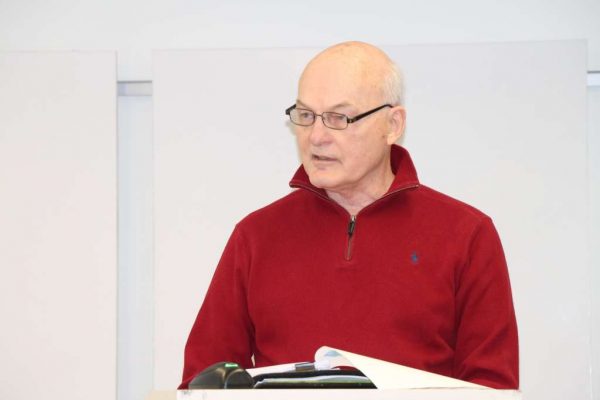
As reported by RestonNow, the Reston Association (RA) Board of Directors held a public information meeting on December 4 to provide a briefing on its “branding” initiative. I, for one, wondered why our assessment fee-driven homeowners association (HOA) needed to have a brand or branding strategy given that we are a captive audience.
Reviewing the video of the nearly two-hour meeting shows why: RA doesn’t even know what “branding” is or, worse, it is intent on misrepresenting branding to its members.

Before we head off into the weekend, let’s take a look back at the biggest stories on Reston Now in recent days.
If you have ideas on stories we should cover, email us at [email protected] or submit an anonymous tip.
Have thoughts about Reston Now’s coverage of Reston, Herndon and Great Falls? Want to share your opinions about local issues?
Reston Now welcomes letters to the editors and op-eds of specific interest to the Reston, Herndon and Great Falls community.
After intensive lobbying by some local governments and private investors during the 2019 session, the General Assembly passed a bill requesting the Joint Legislative Audit Review Commission (JLARC) on which I serve to conduct a review of the impact if resort-style casinos were to be built in Bristol, Danville, Norfolk, Portsmouth, and Richmond. These locations represent a pattern only of local governments that are interested and /or private investors who want to invest there. The JLARC staff along with assistance of private consultants who specialize in gambling operations reported to the Commission last week. A copy of the report is available at jlarc.virginia.gov/landing- 2019-gaming.
Gambling has long been prohibited in Virginia, with the exception of the lottery, charitable gaming such as bingo, and wagering on horse races. Virginians currently wager over $1 billion annually on these forms of gaming, generating about $600 million in revenue for various purposes, primarily K-12 education. Nearby states permit more forms of gambling than Virginia does, including casino gaming, sports wagering, and online casino gaming.

With Cyber Monday behind us, Giving Tuesday is in full swing. During this charitable day of giving, we would love to know how and if you plan to take part.
The movement was created in 2012 to encourage people to give back to their communities after a weekend of consumerism.

Nearly half of all adults the United States say they’re trying to trim widening waistlines, but it’s unclear if that happens during annual Thanksgiving feasts.
On Thanksgiving, roughly 45 million turkeys will be consumed this year, according to the National Turkey Foundation.
Before we head off into the weekend, let’s take a look back at the biggest stories on Reston Now in recent days.
If you have ideas on stories we should cover, email us at [email protected] or submit an anonymous tip.
Since 2013, Reston Now has been reporting news about the Reston and Herndon areas. Recently, we started providing additional coverage of Great Falls.
Keep up with our coverage by signing up for our email subscriptions.